Hot tips for Story Origin, the powerful author platform for book promotion

Image source: Story Origin

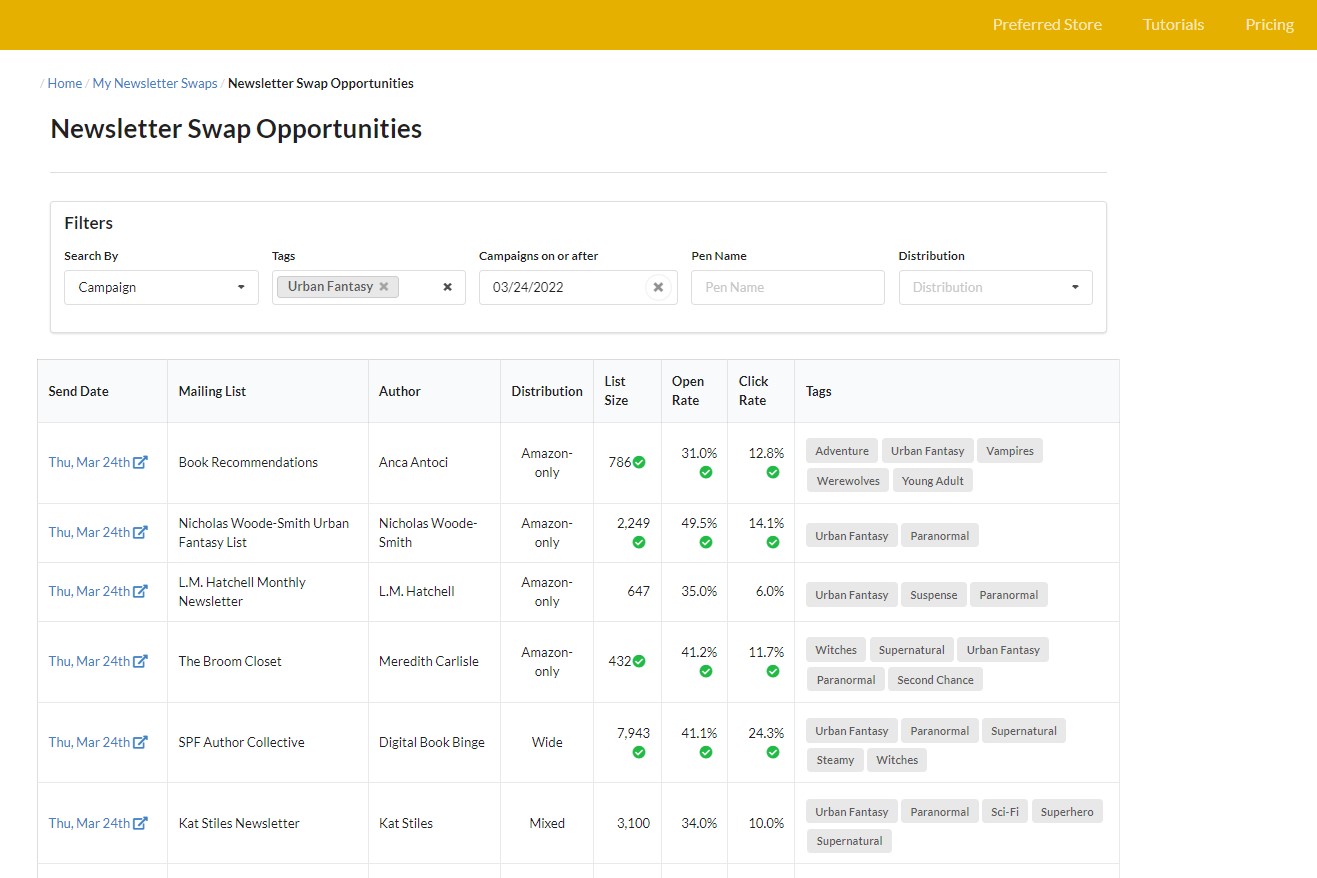
Today, I am writing a detailed introduction to STORY ORIGIN, the author platform that has long changed the way I do book promotion. And I am including my hottest tips!

Story Origin has everything an author needs for their book marketing – landing pages for reader magnets to garner new subscribers, newsletter swaps and group promotions with other authors, goal trackers for writing progress, landing pages for ARCs to find new beta readers and reviewers, and more! I am about to include my hottest tips from my own experience with Story Origin in the past two years, so stick around even if you’re already using it. Who knows? You may gain a new idea or two for your own promotions!

Let’s face it. Being an indie author is hard work. Having organizational skills is a must in order to succeed. Still, it seems that no matter how organized we are, finding time for the mountain of tasks that await us each day is always a challenge. We all could use a little help, but few of us can afford a virtual assistant. This is why, for most of us, promoting becomes a tedious task.

Let me tell you something. I used to be one of those authors. Promotion to me had become an aversion. I could only manage doing major promotion 3-4 times a year tops. I’d spend money on ads that didn’t pay off, and also paid to participate in group promotions with other authors, but they often didn’t result in any significant ROI either.

And then came Story Origin. And just like that, I started to promote without any hassle, because this brilliant author platform helped me organize everything swiftly, saving me hours of work. And I saw a rise in my sales too. The features of Story Origin cover all you need! Before we start, here is a short glossary of the terms Story Origin uses. You could ignore it for now, but it may come in handy  if and when you sign up, in order to understand what each term means:

GLOSSARY

‘Campaign’ = this is your newsletter. You add a new campaign on Story Origin for every newsletter you will be sending out.

‘Mailing list’ = This is just the description of your newsletter. You only register it once.

‘Universal book link’ (UBL) = your book’s Amazon link. You register it once for each book, add any Amazon affiliate tags you may have, and you’re done.

‘Reader magnet’ – a free book that you put up on Story Origin to garner new subscribers.

‘Tracking link’ – this is the unique link that Story Origin assigns to you every time you are to promote a book of another author or a group promotion. This link will be visible to the corresponding authors so they can see how many clicks they gained from your effort.

‘Archive link’ – this is the link to your newsletter. After sending it out (with Madmimi, Mailerlite, or whatever), you are encouraged to go in your ‘campaign’ page and put the archive link in there. This allows the authors who swapped with you to see your newsletter. I always publicize my archive links as I appreciate other authors allowing me to have a look in their newsletters too, if I want to.

Story Origin’s founder and developer is Evan Gow from the USA, who is very nice and friendly – always readily available to help if you have a question or if you stumble upon a technical issue (the latter is very rare). Of course, there’s also an online tutorial, which I didn’t have to use, simply because Story Origin is self-intuitive and thus easy to learn. From the moment you sign up, there’s a fair amount of ‘hand-holding’ on the platform. I’ll also do my best in the following paragraphs to show you how to start!

SETTING UP YOUR MAILING LIST
The first thing you do on Story Origin is set up your mailing list. This is just a description of your newsletter and you only register it once. Here, I have to stress that Story Origin is simply the place where you organize your newsletters. You still get to create the newsletters where you normally do, like MailChimp, AWeber, MailerLite etc.

SETTING UP YOUR FIRST NEWSLETTER (CAMPAIGN)
After you’ve created your ‘mailing list’, Story Origin will prompt you to set up your first newsletter (It’s called a ‘campaign’). You don’t have to choose a frequency for it. You can create the next ones whenever you’re ready. This, in itself, is the best benefit I have reaped from Story Origin. By having to decide on my next newsletter date early on so I can apply for swaps and group promotions, my mind soon got used to thinking far ahead. I never knew before when my next newsletter was coming. Now, I know from one month, even two months in advance, what my newsletter dates will be. And I soon got greedy and found myself sending out two newsletters per month, filling each one to the brim with even 20 swapped books and 4-6 group promo banners!

Did I get punished for my greediness? Not really. Quite the opposite.

What I got was wonderful spikes in my book sales in the USA, something I’d never seen before, as I used to sell mostly in the UK. I even had up to 1,000 KENP spikes on days I did no promo and hence could only attribute these to newsletters of authors I swapped with or group promotions running. What I also got from using Story Origin was sales in many different books in my back list at the same time – books that hardly sold any more. And that’s because every month, thanks to the group promotions, I can promote many books at the same time. I am sure you know how much work it is to do this on your own. But with Story Origin, all you have to do, is register the books in different group promotions, put the banners in your newsletter and tweet about them individually a couple of times. That’s it. And what do you get for this little trouble? While the group promotions run, that’s 2-4 weeks usually, you get sales without having to do a thing from day to day. Great, huh?

HOW TO LOOK FOR GROUP PROMOTIONS
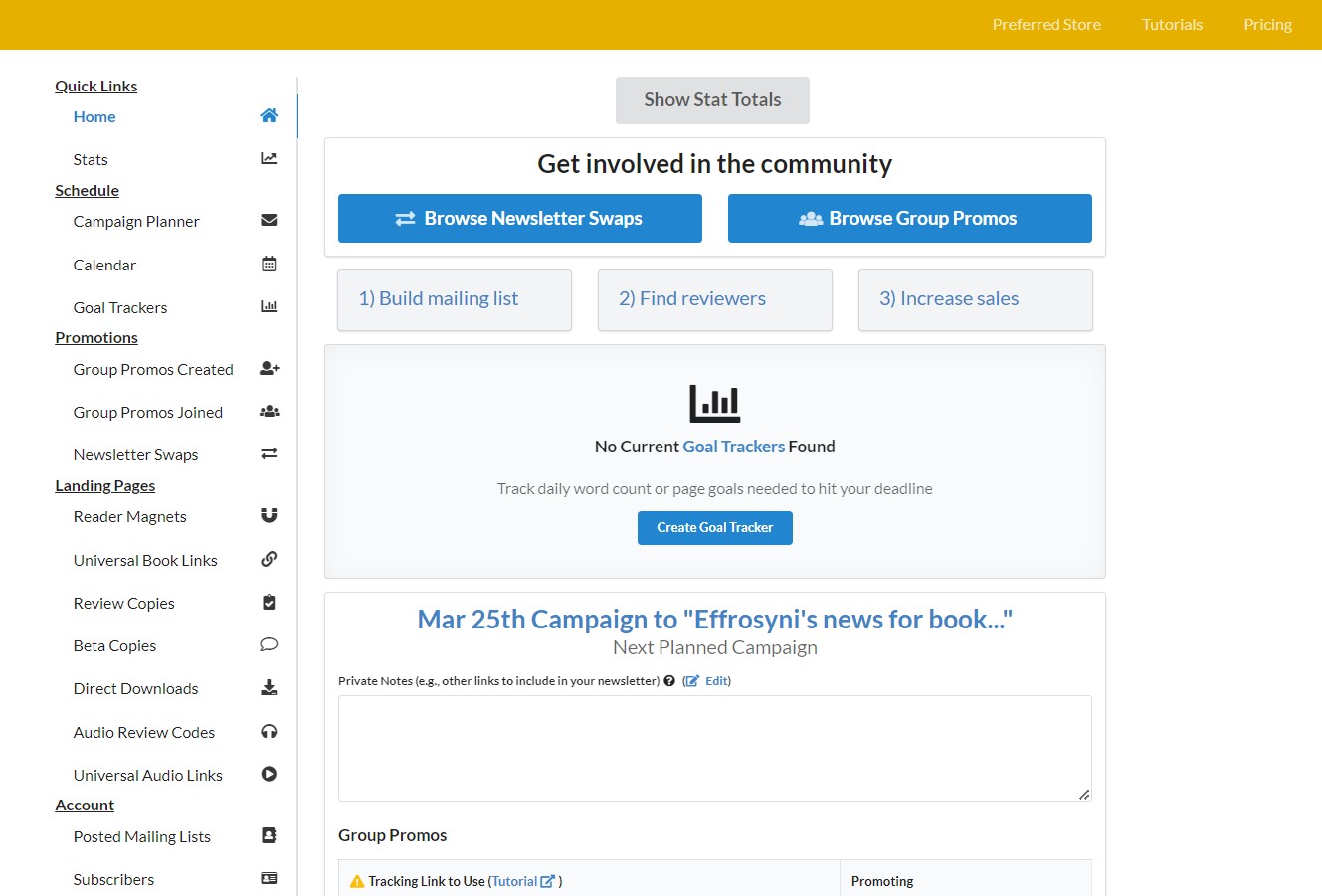
From your Author Dashboard, take the option ‘Browse group promotions’.


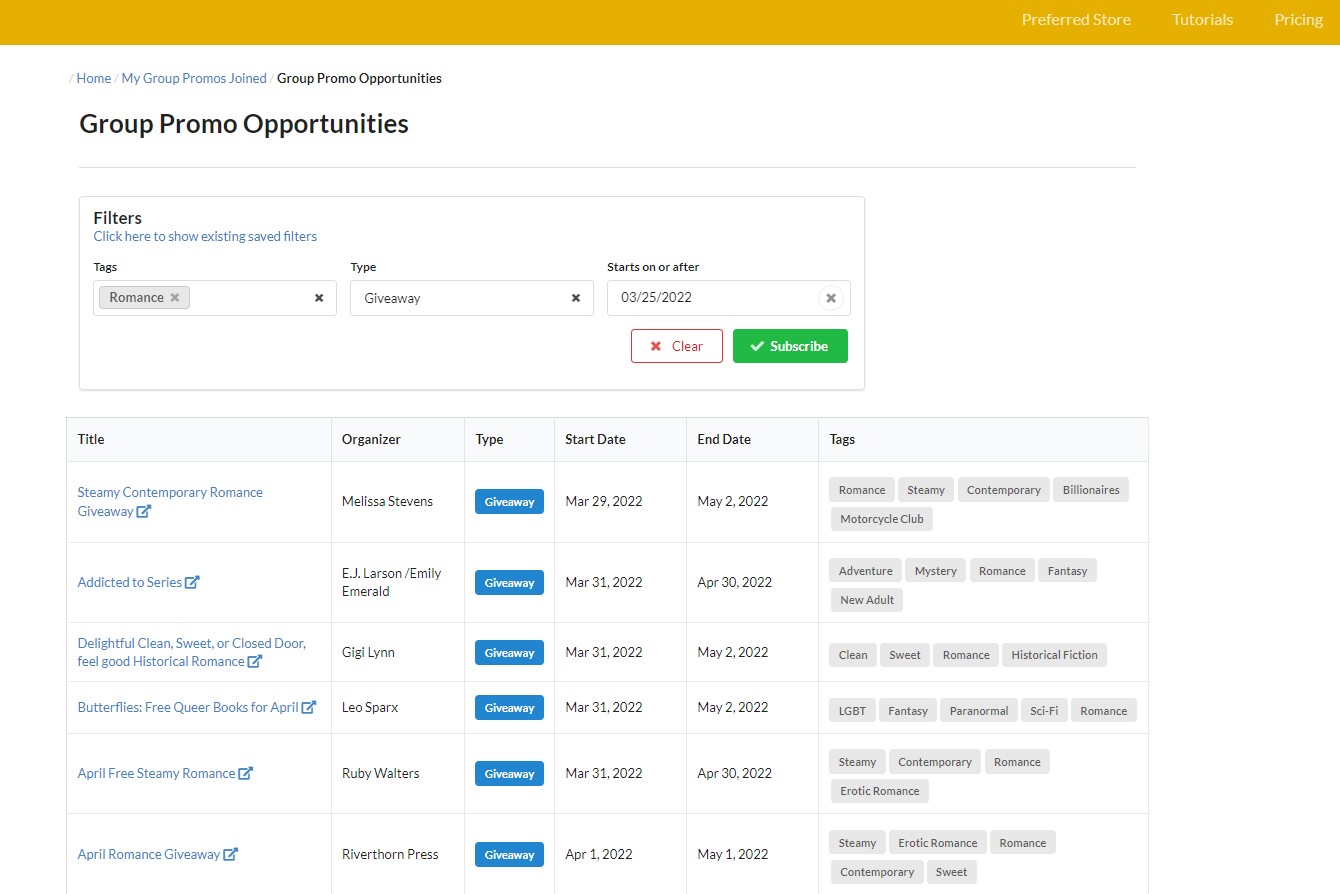
Group promotions can be generic, like… ‘May Romance Sale’ , ‘Beach Reads For a Buck’, or very particular, like… ‘Characters With Protective Instincts’, ‘Love Found in Unusual Places’. Your books don’t have to be discounted (only rarely they do). Make sure to read the rules of each promo to the letter, though, and stick to your commitments. Slowly, you’ll build a good reputation, which means the same group promo organizers will accept your books for their promotions again and again.

Note: When you apply to a group promotion, you’re allowed to put in a little note. If you share your newsletters wide on your social media or on your blog, say it in the notes. If you have a large following on, say, Twitter, and are willing to share the promo there, make sure to mention this too. Some organizers also pose questions to answer in the notes, so make sure to answer them all clearly. Most of the time, they’ll ask you to clarify something, like the heat level of your romance, or to confirm that your book will be on KDP Select for the duration of the promotion.

Before you hit the button to apply to the group promotion, make sure to go to the very bottom of the page and check how many authors have already applied. The more you see on there, the better, obviously. Though, if it’s early on, you may see only a few, but the list may get longer later on.

Make sure to also choose ‘Preview’ to see what the landing page of the group promotion looks like. For me, the banner is very important. If it’s not appealing to the eye, chances are the promotion won’t be successful. One last criterion for me, is how many books the group promotion organizer accepts. Some accept more than one books. So submit them all in one go. I always give high priority to those accepting 3-4 books, for obvious reasons!

So! When you check out a group promotion, these are the important questions to ask:

  • Does it suit my audience? (e.g. don’t go for a steamy book promo if you write clean romance)

  • How many other authors are in this promo?

  • How many books do they accept per author?

  • What does the banner look like?

Check all four points before you decide. This way, you’ll make the best decisions for your books!

YOUR UNIQUE TRACKING LINK
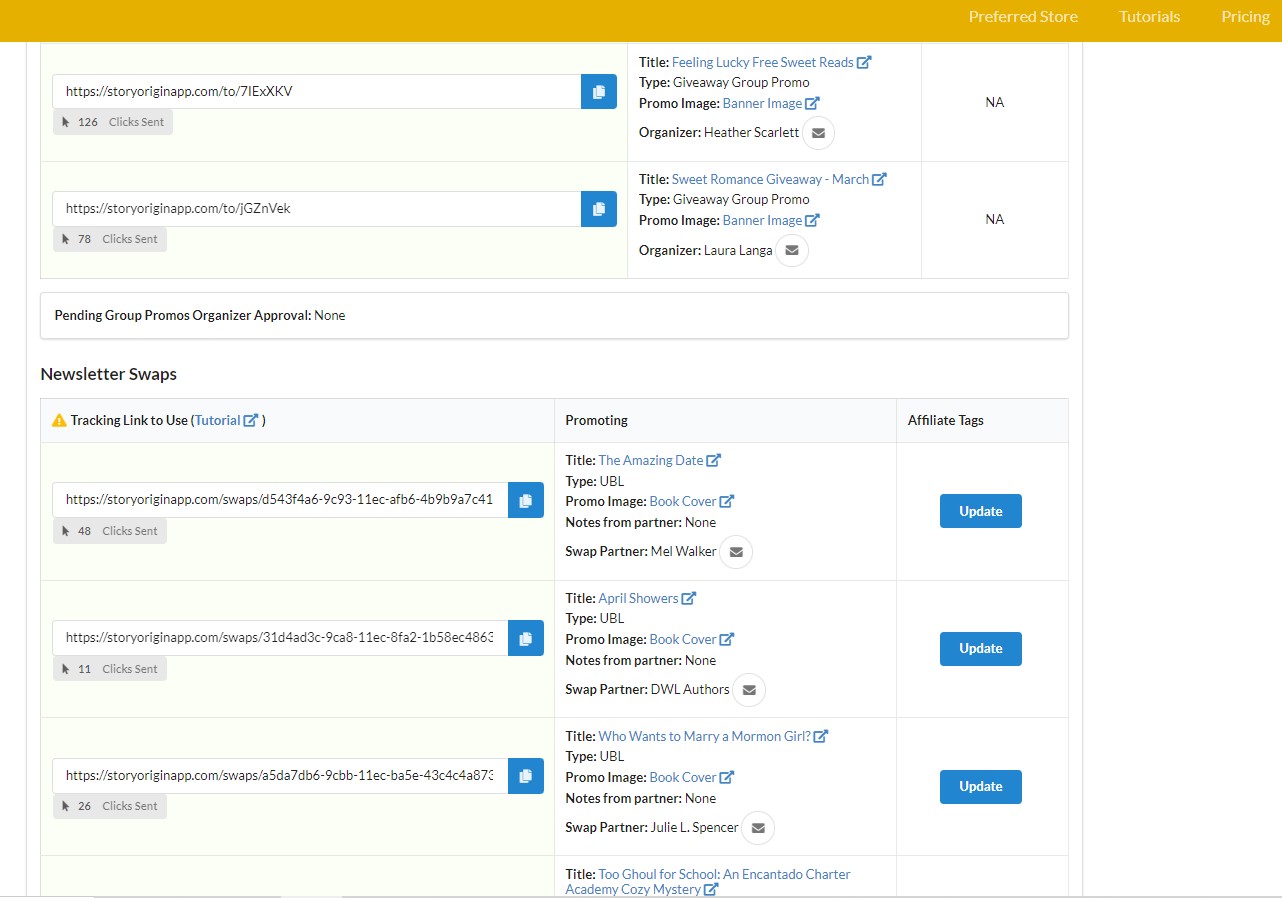
This is the one thing you must not miss! Very important! Make sure to always use in your newsletter the specific tracking link Story Origin assigned to you for each book and group promotion you have committed to feature. This way, the other authors will be able to see how many clicks their book or promo got from your newsletter. And, this is the only way you can prove you’ve kept your end of the bargain. See this detail from my last campaign page:

The campaign page lists–among other things–the books and group promotions that are to be featured in that newsletter. As you can see, each has their own tracking link. You can see how many clicks each one got in this particular newsletter. The authors and organizers also get access to this information so they can check if I fulfilled my obligations to them.

Similarly, on the campaign page, you also get to see how many clicks YOUR books got in the other authors’ newsletters.

HOT TIP #1: On the day of your newsletter, or anytime before that, when you wish to finalize the content, you have to ‘mark the slots full’ and also delete all the pending requests for swaps you made to other authors that never got accepted. If you don’t do that, and if you don’t check your campaign page one last time before sending out your newsletter, you may have a last minute entry you don’t get to notice and thus will not honour with a slot.

HOT TIP #2: If you have registered Amazon affiliate links in your UBLs (Universal Book Links), you need to click on ADD in the campaign page for every book and group promo. This adds your Amazon affiliate link to them. When people click to get to Amazon and buy, you get a small fee. In the above image, it says ‘UPDATE’ instead of ‘ADD’ because I had already added my affiliate links for each book. However, please note it’s not a good idea to add your affiliate link if the book will be FREE on Amazon when you send out your newsletter. I check prices of all books on the day I send out my newsletter, partly for that very reason 🙂

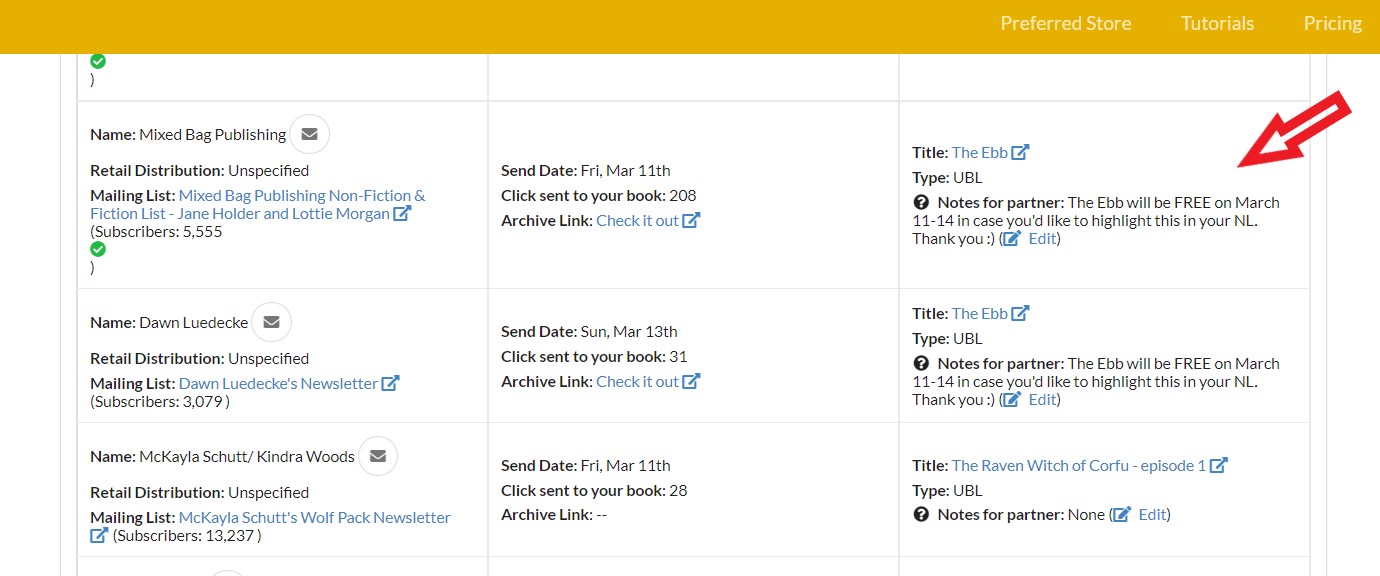
HOT TIP #3: If your book is going to be FREE or 99c on specific dates, go to your Author Dashboard, then to the option ‘Newsletter Swaps’, and leave a note for every author who will feature your book during the days of your promo. Something like this: “Please note my book will be FREE March 20-22. Thank you!” The sooner you do it before their newsletter goes out, the better their chance to see your note on their campaign page, before they get to put their newsletter together. Who knows? They might give your book a top slot to highlight the FREE or 99c offer!

IMPORTANT: After you’ve sent out your newsletter, you need to go back to your campaign page and add your newsletter link (it’s called an ‘archive link’). This way, other authors and the group promotion organizers will be able to view your newsletter. They’ll need to check that you featured their book or group promotion, for example, if your tracking link shows 0 clicks. It’s fine if you put it in the newsletter and it got no clicks, of course. In any case, for me, posting the archive link is common courtesy (if not the mark of a true professional) and I strongly suggest that you provide it.

HOW TO LOOK FOR NEWLETTER SWAPS
From your Author Dashboard, take the option ‘Browse newsletter swaps’.
To look for suitable swaps, you can narrow down the search by using tags that relate to your own work. If you write about witches, angels, or ghosts, use these words as tags. Or use genres, for example, ‘paranormal’, ‘romance’, ‘clean’ etc. When you swap, you swap books that will take readers to Amazon (these are marked as ‘UBL’, i.e. ‘universal book link’) or Reader Magnets or Review Copies. The last two are freebies authors put up on Story Origin. You can cross-swap among these things, no problem. Anything goes, as long as both authors are happy.

Personally, I swap similar things. I think it’s only fair, for example, to ask an author to feature my reader magnet only if I offer to do the same for them (since I’ll be getting some of their subscribers to sign up to my newsletter).

Reader Magnets and Review Copies are books that the authors have uploaded on Story Origin as freebies to get new subscribers or reviewers respectively. The FREE books are offered in three formats: PDF, EPUB and MOBI (PDF is optional, the other two obligatory).

HOT TIP #4:
Amazon no longer provides authors with MOBI files in the bookshelf. You can make your own MOBI by downloading Kindle Previewer from your KDP Bookshelf. Open the app and open your manuscript (word or epub format) then choose EXPORT to export your book in mobi format. This procedure won’t add a cover to your mobi, but what you can do is create a Word file with the cover on the first page, and use that to make your mobi. Then your cover will be a part of the book 🙂

READER MAGNETS
If you have a reader magnet to swap in order to garner new subscribers, your best bet is to pick reader magnets to apply for a swap. The author you apply to will be more likely to accept your reader magnet if they’re looking to promote their own too. To promote your reader magnet more effectively, I advise you to also enter it in the ‘Giveaway’ group promotions.

This worked like a charm for me: I uploaded an ARC copy of my book “Running Haunted” as a reader magnet when it was on preorder on Amazon (but not in KDP Select yet – otherwise I’d be breaking Amazon’s exclusivity rule). I then promoted it for at least two months on Story Origin, both in swaps and giveaway group promotions. I got nearly 900 subscribers (a CSV file download) and it cost me sweet nothing!

Obviously, you don’t have to use your preorder as a reader magnet. You can create a short read, perhaps, to put perma on Story Origin for that purpose. Choose a genre that will attract the readers likely to love your novels. Personally, I don’t swap with reader magnets that are incomplete books (samples). All my reader magnets are complete books. I think it’s only fair (and courteous) to do that in exchange for a reader’s email. Besides, readers are more inclined to sign up if you offer the whole story.

IMPORTANT: All your associated swaps and group promotions must run their course fully before you delete your reader magnet from Story Origin. That includes the newsletter dates of the authors who are featuring your reader magnet, obviously. And only after everything has run its course you may register your preorder book on KDP Select, let us not forget, as Amazon demands exclusivity for all kindle books registered on KDP Select. So double-check your dates when you set up swaps and enter promotions for reader magnets (or review copies.)

THE ONLY FAULT I FOUND WITH STORY ORIGIN: Deleting a reader magnet will delete the record of all associated swaps i.e. the tracking link for your reader magnet and the one of every author’s book it got swapped with. It will result in you not being able to honor any future swaps with other authors associated with this reader magnet. Plus, you won’t be able to see the full history of your stats. A way around this would be to mark the reader magnet as ‘unavailable’ instead of deleting it from Story Origin. Speaking from (unfortunate) experience, I highly recommend you do not delete a reader magnet.

REVIEW COPIES
I haven’t used this feature yet, but from what I can tell, the platform does all the work once again, collecting the readers’ details and distributing your book to them. And you get to screen every single application! Story Origin shows you each reader’s review history on Amazon so you can decide if you’re accepting their application or not. Both reader magnets and review copies are available in MOBI, EPUB and PDF on Story Origin. It is obligatory to upload your book in EPUB and MOBI format. PDF is optional.

Earlier in this post, I gave you a tip on how to get a MOBI for your book. Here are free online converters that work for me to convert books to PDF and EPUB:

WORD to PDF converter: https://www.freepdfconvert.com/
PDF to EPUB: https://www.zamzar.com/convert/pdf-to-epub/

Once you’ve grown familiar with Story Origin, it’s worth checking out all the other options on your author dashboard. You’ll find, among other things, a beta reader feature, goal trackers for your writing and editing progress, as well as great stats from its powerful database.

 I hope this information has given you a good idea of what awaits you on Story Origin, if only you give it a try!

GO HERE TO LEARN MORE ABOUT STORY ORIGIN, SEE THE PRICING OPTIONS, AND SIGN UP!

I am on the Standard plan, which is paid (it costs me $10 per month), but I get my money back, just with my earnings from the Amazon Affiliate tags embedded in my universal links. It all adds up considering all the swaps and group promotions I feature in each newsletter.

If you prefer to start with the FREE plan, please note, it will NOT allow you to do newsletter swaps or participate in group promotions, or to create reader magnets in order to garner new subscribers.

Some of the things you CAN do on a FREE account: You can use goal trackers, create universal links for your Amazon books with your Amazon affiliate links embedded, and you can also create landing pages to give your readers free books. But, this is not the reader magnet feature. It’s called ‘Direct Downloads’ and won’t allow you to collect email addresses. It’s just a landing page to give away a free book in MOBI, PDF and EPUB format.

VISIT STORY ORIGIN NOW AND SEE ALL THE FEATURES YOU CAN GET ON A FREE ACCOUNT

Whether you prefer to find your feet with a FREE account first or to jump straight to a paid plan so you can do swaps and participate in group promotions right off the bat, I urge you to try this wonderful platform.

If you write paranormal, fantasy, humorous, or contemporary romance, I hope to see you there and collaborate with you!

Interested to see how my newsletter looks like with Story Origin’s group promotion banners and swaps?

Go here to see one of my newsletters from March 2022

A note about my own newsletter here, and my ‘strategy’ with Story Origin, which may help you:

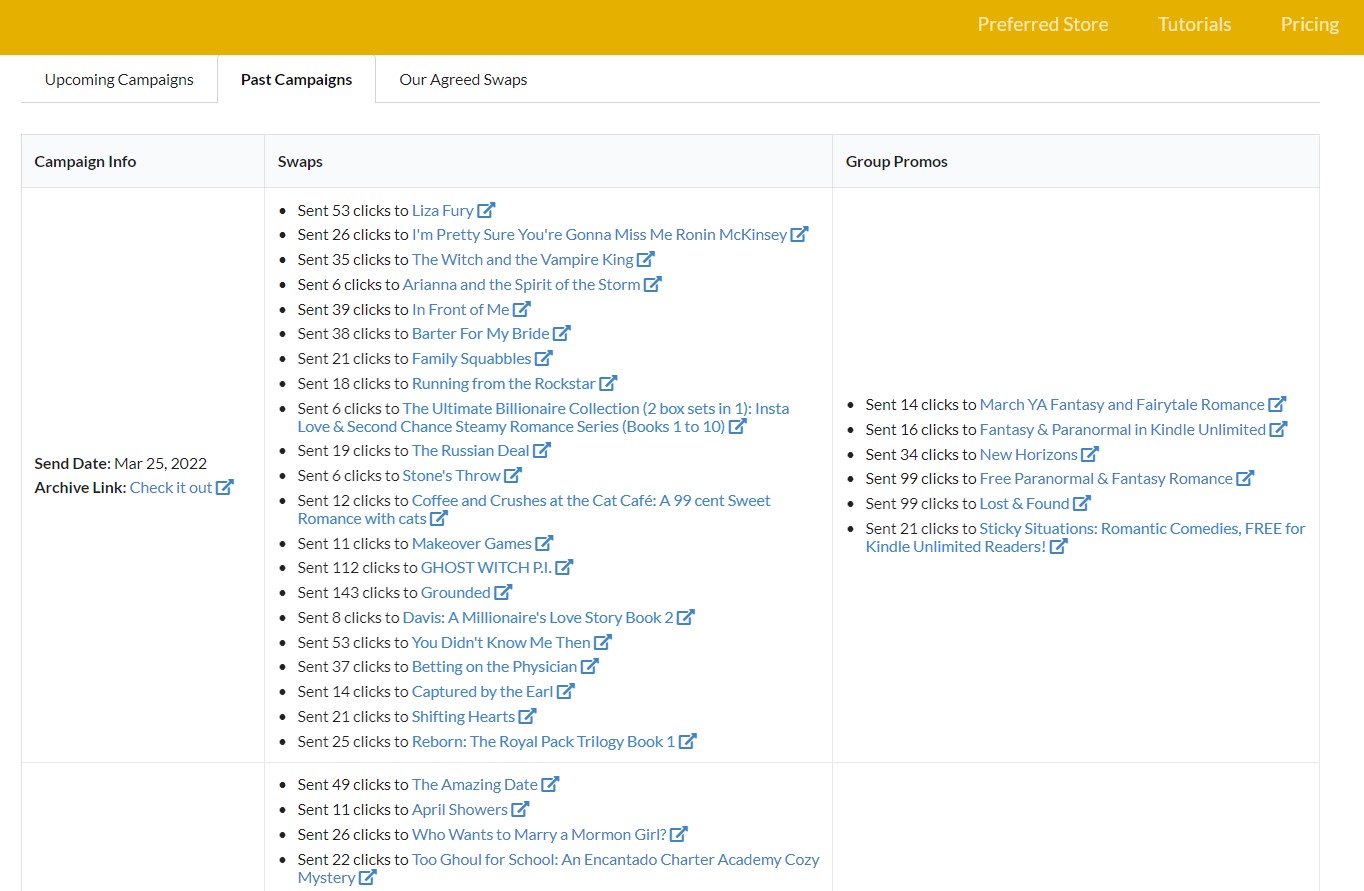
I spoke about my ‘greediness’ earlier in the post. Because I feature 20+ books and 4-6 banners of group promotions in every issue. But, let me tell you something. Not only does this ‘greediness’ work, but I have zero ‘shame’ for it as well. Why? Because despite featuring a lot of books, most of them get clicks in double figures. See some of the click stats from my newsletter of March 25, for example:

That’s a higher click performance than the ones I see in many other authors’ newsletters who only feature a couple of books in their newsletters. So what’s the harm in featuring a lot of books then? I mention this here, because I see a few authors on Story Origin ban those who feature more than a couple of swaps! And yet, when I check their past stats I see really poor figures… (Yes, past stats are visible in Story Origin for all authors so you can check them before you attempt a swap with them. Nice, huh?)

So, obviously, I have a different opinion. And that is because I feel it is not about how many books you feature – but about your efforts to market the newsletter. Authors have better chances to see their books get double figure clicks in my newsletter among 20+ other books than they have in a short newsletter of another author who won’t do much after sending out their newsletter.

I send mine out again to those who don’t open it a couple of days later. And I also share each one widely via my two blogs and social media. One of my blogs is accessible via Goodreads where I have a couple thousand friends. It all adds up!

So, bear my logic in mind, if you use Story Origin… Do not shy away from authors, like me, who feature many books. If you check the stats of an author and most books are getting clicks in double figures (or triple figures if the book is FREE) then their newsletter is a good bet!

This sums up my introduction to Story Origin, and I wish you all good luck with it, if you try it. For me, it’s long become the best way I know to market books. Other than giving me a steady trickle in sales, KENPs and Amazon Affiliate earnings, it has also given me a place where I can get organized, and that, in itself, is golden.

I hope you have found some value in my tips and advice, enough to be inspired to try this awesome platform for yourself. I wish you success! You are welcome to comment below if you have a question or wish to share your own experience.

DISCLAIMER: This post uses an affiliate link. It means Effrosyni Moschoudi will earn a commission for any resulting paid plan subscriptions on Story Origin. This will not affect the price paid on the platform.


YOU KNOW WHAT THEY SAY… SHARING IS CARING! Tweet this to spread some love:

Hot tips for the powerful book promo platform, Story Origin #authors #authorRT #writers Share on X

3 FREE books for you! Sign up below to receive them instantly!

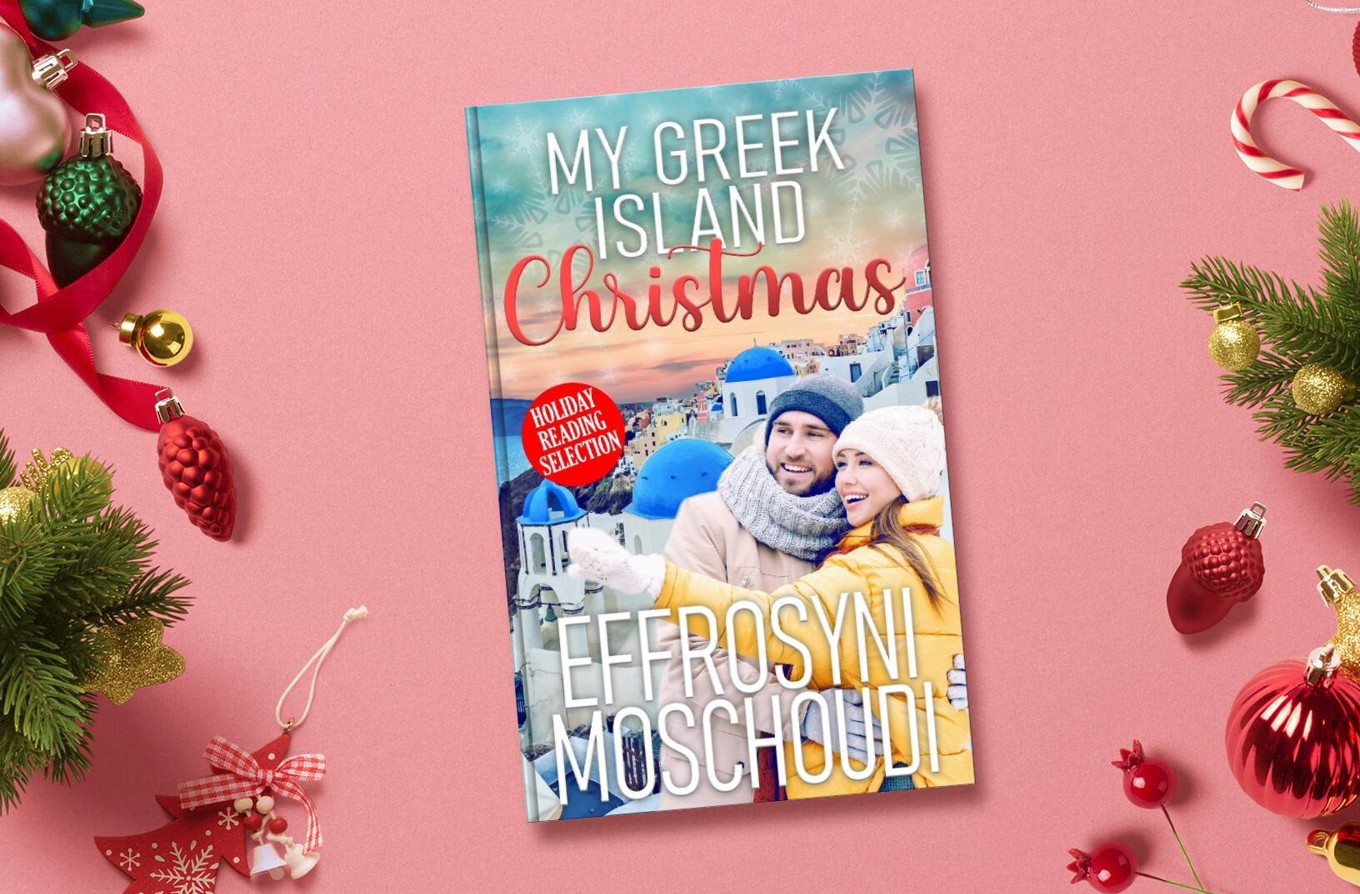
NEW! Clean Christmas romance. Single mother Cathy Roussos gave up on love long ago, and veterinarian Alex Rallis doesn’t believe in it, but one magical Christmas on a Santorini farm might just change everything…
Check it out on Amazon     Read a FREE sample!

March 25th celebrations in Greece, garlic dip, and vegetarian pastichio


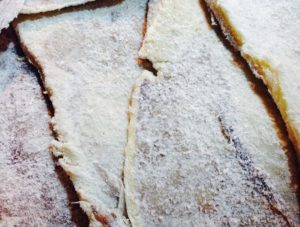
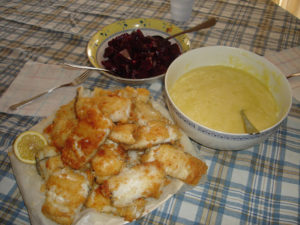
This is salt-cured cod – the traditional food for the 25th of March in Greece, and the one thing I could never serve on my table, even if Greek custom dictates it! Growing up, March 25th has always been a bit of a drag around lunchtime. My mother would be busy battering and frying salt-cured cod (we call it ‘bakaliaros’), and I’d be just as busy behind her back fake-gagging and pulling faces, since even the smell attacked my senses. I was not looking forward at all to the time I’d be asked to eat the fried fillet pieces on my plate.

And because I’d refuse to eat them, I’d wind up having only half a meal – the weeds (dandelions or beetroots with their greens) and, of course, garlic dip (skordalia) with fresh bread to dunk in.

Since I loooove greens and skordalia I wasn’t too put out, I guess!

Nothing’s changed since then, as far as my tastes go. Like every other year, I’m having unsalted cod today with my skordalia, thank you very much 🙂

March 25th is a unique Greek holiday – being both a religious one and a national one! So it’s a two-in-one kind of affair that is celebrated in every home with a patriotic spirit… and salted-cod, of course.

On this day, the Greeks commemorate the War of Independence from Ottoman rule after no less than 400 years of slavery. I guess this explains why the Greeks are so resilient, huh!

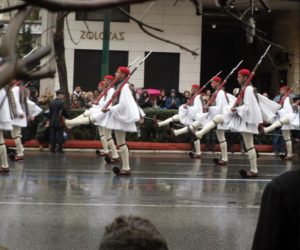
Athens celebrates with a huge military parade which I’ve had the pleasure to attend a few times over the years. Always a thrill, especially when the Tsoliades (the Presidential Guard) pass by in their traditional uniforms, striking one foot down so forcefully it feels like the earth is shaking. The result creates rippling vibes of patriotic pride to rise into the air. The memory brings a lump to my throat just thinking about it!

CHECK OUT THIS POST ABOUT THE ‘EVZONES’ – THE GREEK PRESIDENTIAL GUARD. YOU WILL SEE PHOTOS FROM THE ATHENS PARADE AND A VIDEO OF THE EVZONES. UNMISSABLE STUFF, IF YOU LOVE GREEK CULTURE!

Image copyright: makisgonimo.blogspot.com

As I stated earlier, March 25th is also a religious holiday. It is the feast of the Annunciation of the Virgin Mary, when Archangel Gabriel announced to Her She will give birth to Jesus.

The day calls for a lunch of cod with boiled greens or beetroots and garlic dip (skordalia).

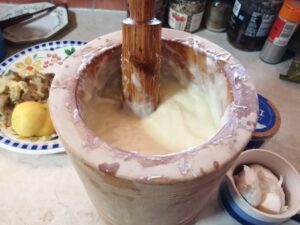
The latter is made with crushed garlic cloves, potato, olive oil and fresh lemon juice. I can vouch for the fact that it’s utterly delicious. Mind you, it’ll give you hot dragon breath for the rest of the day, but boy, is it worth it!

DO YOU LOVE SKORDALIA? GO HERE TO GET MY RECIPE!

As I mentioned earlier, the fish used for this day traditionally is salt-cured cod. Housewives leave it in water overnight to remove the super-salty flavor.

Using salt-cured fish, in case you’re wondering, is a custom that began out of sheer necessity. When the Greeks started to commemorate the Annunciation of Virgin Mary by eating fish back in the 15th century, people had no fridges in their homes, plus, it was imperative for merchants to be able to distribute fish everywhere around Greece, even in areas far away from the sea, in the depths of the mainland, without the fish spoiling. That is what led them to sell this kind of fish instead, which is cheap and can be stored for long periods, too.

So… years, decades, and centuries later, the Greeks continue their tradition of going for salt-cured cod, even though they now have access to superstores, large fish markets, and freezers in their homes. Crazy, huh? But that’s the power of tradition, I guess!

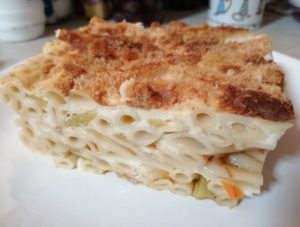
Thinking of new meals to try during the fasting period that extends all the way to Orthodox Easter, I came up with a vegetarian version of Pastichio last week! What started in my head out of the blue wound up steaming on my plate one cold winter’s night, really hitting the spot! It even satisfied my meat-loving hubbie and that’s a feat in itself haha

As you may know, Pastichio (that is essentially an Italian meal adopted by the Greeks yonks ago) is traditionally made with minced meat. This version is just as yummy, cheesy and creamy – a wonderful alternative.

Curious to see what’s in the pasta mix?

GET THE RECIPE!


YOU KNOW WHAT THEY SAY… SHARING IS CARING! Tweet this to spread some love:

Interested in travel, food and books from Greece? Here's a blog you will love! #greek #blogger #Greece Share on X


3 FREE books for you! Sign up below to receive them instantly!

NEW! Clean Christmas romance. Single mother Cathy Roussos gave up on love long ago, and veterinarian Alex Rallis doesn’t believe in it, but one magical Christmas on a Santorini farm might just change everything…
Check it out on Amazon     Read a FREE sample!


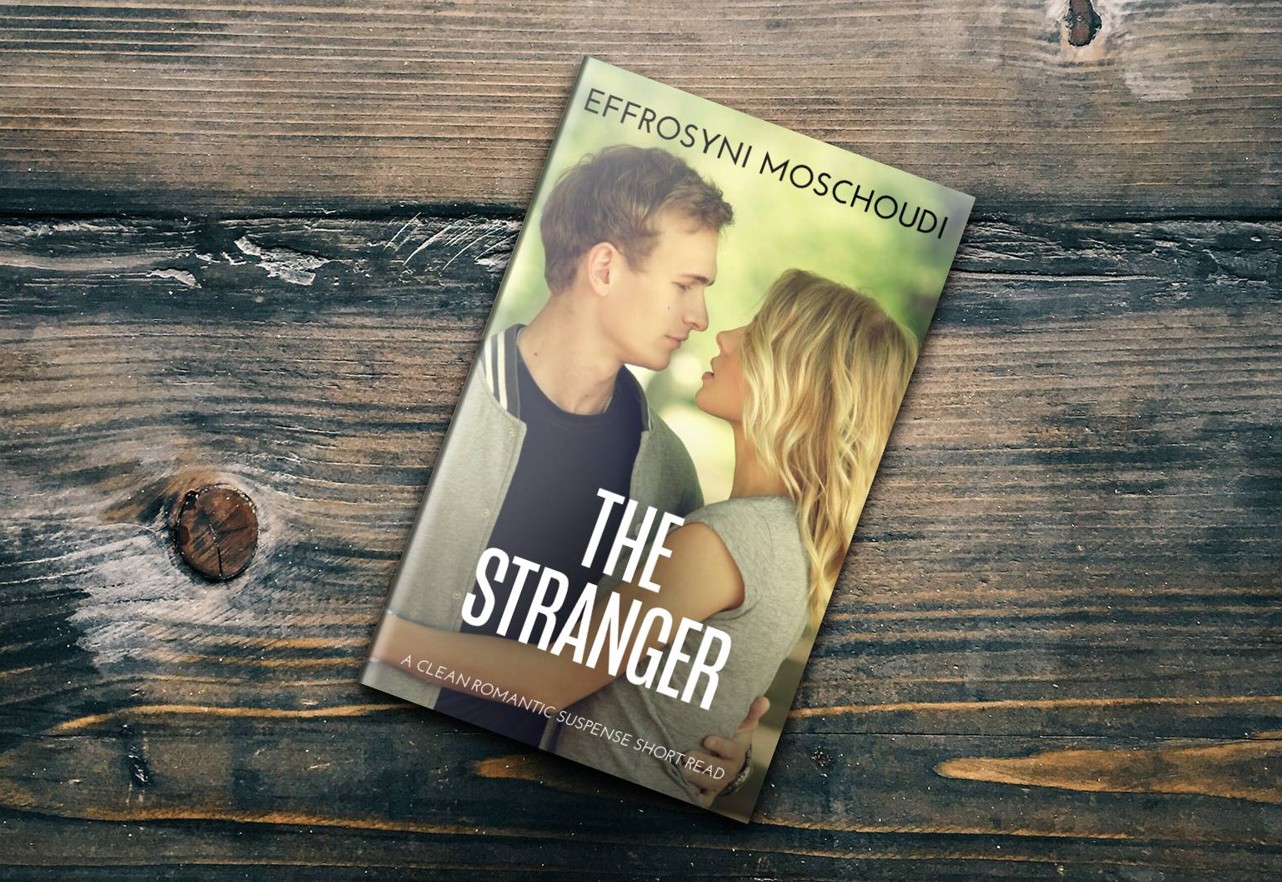
A clean romantic suspense short read with an unreliable narrator that’ll keep you guessing! Vera is losing her mind over famous actor Yannnis Ksenos, except, she isn’t just a fan… Now, she plucks up the courage to ring his doorbell… Visit Amazon


For my delicious Greek recipes, go here
 
Planning to visit Greece? Check out my  FREE guide to south Corfu!


Cheese-eating Sunday and Lent Monday in Greece #Greekculture #healthyliving #healthyfood

“Cheese-eating Sunday” and “Lent Monday” came and went so quickly this year…

And it’s all been a blur of Netflix and yummy homemade food. I say this because I wound up “cocooning” at home for the whole long weekend, since the weather was cold and just yucky. But not to complain, as I said – those excellent Netflix movies, nice meals, and adding wood to the roaring fireplace kept me busy, happy, and warm.

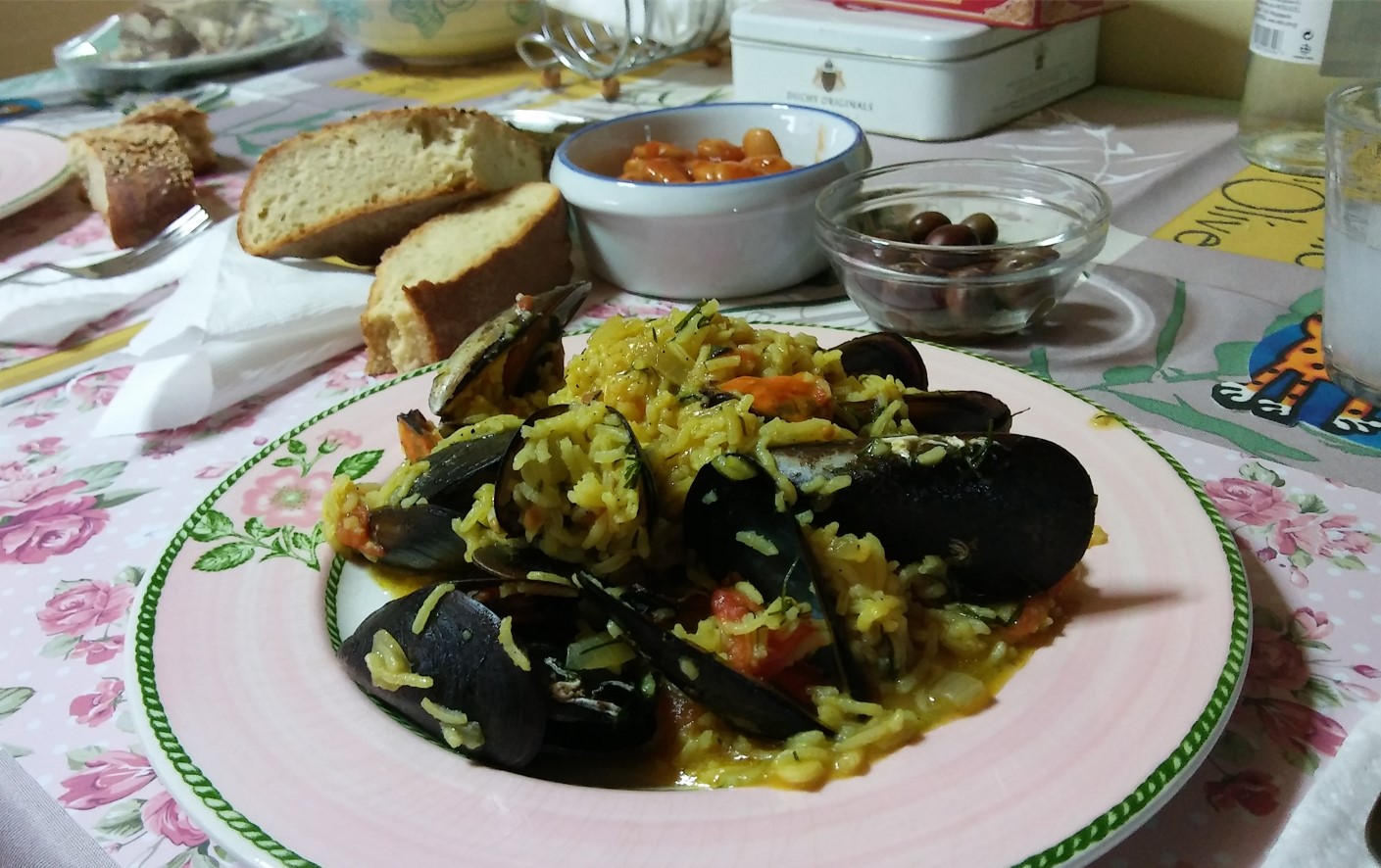
On “Cheese-eating Sunday”, we had this meal photographed here. I guess I honoured my father’s land that day, because the meal consisted of my father’s own organic crop of beans from the island of Limnos where he was born and raised. The cheese pie I accompanied it with was made with the traditional “Kalathaki” cheese of Limnos that is utterly delicious when bought fresh. There is also the dry variety for frying or grating, but I love the fresh one as it’s wonderfully unsalted and makes for the best cheese pie with fresh herbs.

My father ventured to the fields near home and picked organically grown fennel for me to put in the cheese mix. With the greens of fresh onions the mix turned out delicious. I have to admit, though – I cheated! Once again the pastry was shop-bought.

In case you don’t know, “Tyrofagou” (loosely translated as “Cheese-eating Sunday”) is the last Sunday of Carnival in Greece. Tradition dictates the housewives use up the last dairy at home to make pies as the next day, Lent Monday, marks the beginning of the 40-day period of fasting until Orthodox Easter (which, in case you’re wondering, is one week after Catholic Easter again this year, as it often is – on April 24).

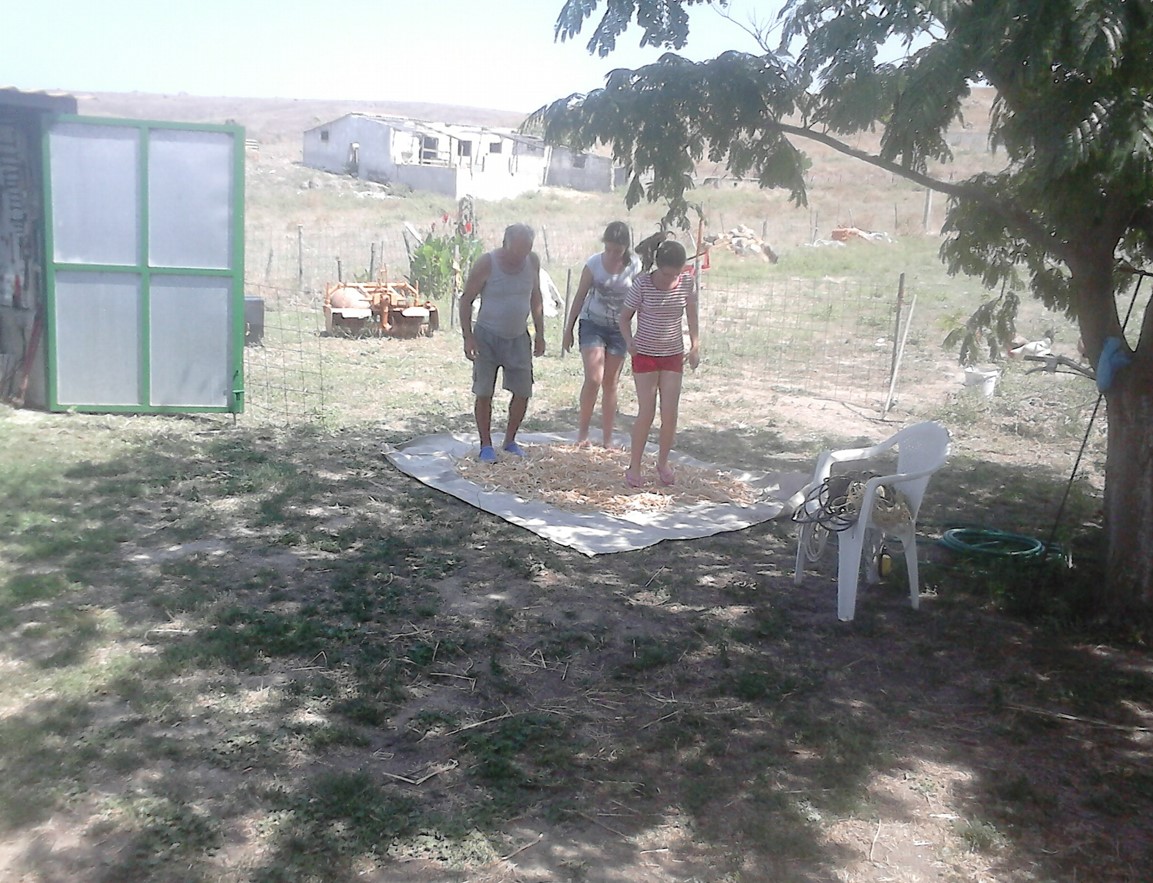
This is an old photo of my dad and his granddaughters separating the beans from the husks in the traditional way in Limnos. It’s done by stepping on the husks once they’ve turned really dry and crunchy. A strong wind serves well too to remove the unwanted debris after the husks have been crushed!

My mussel risotto went down very well on Lent Monday. We accompanied it with the traditional lagana (flat bread), beans in tomato sauce, dolmadakia (vine leaves stuffed with rice), and chalva (semolina cake) for dessert.

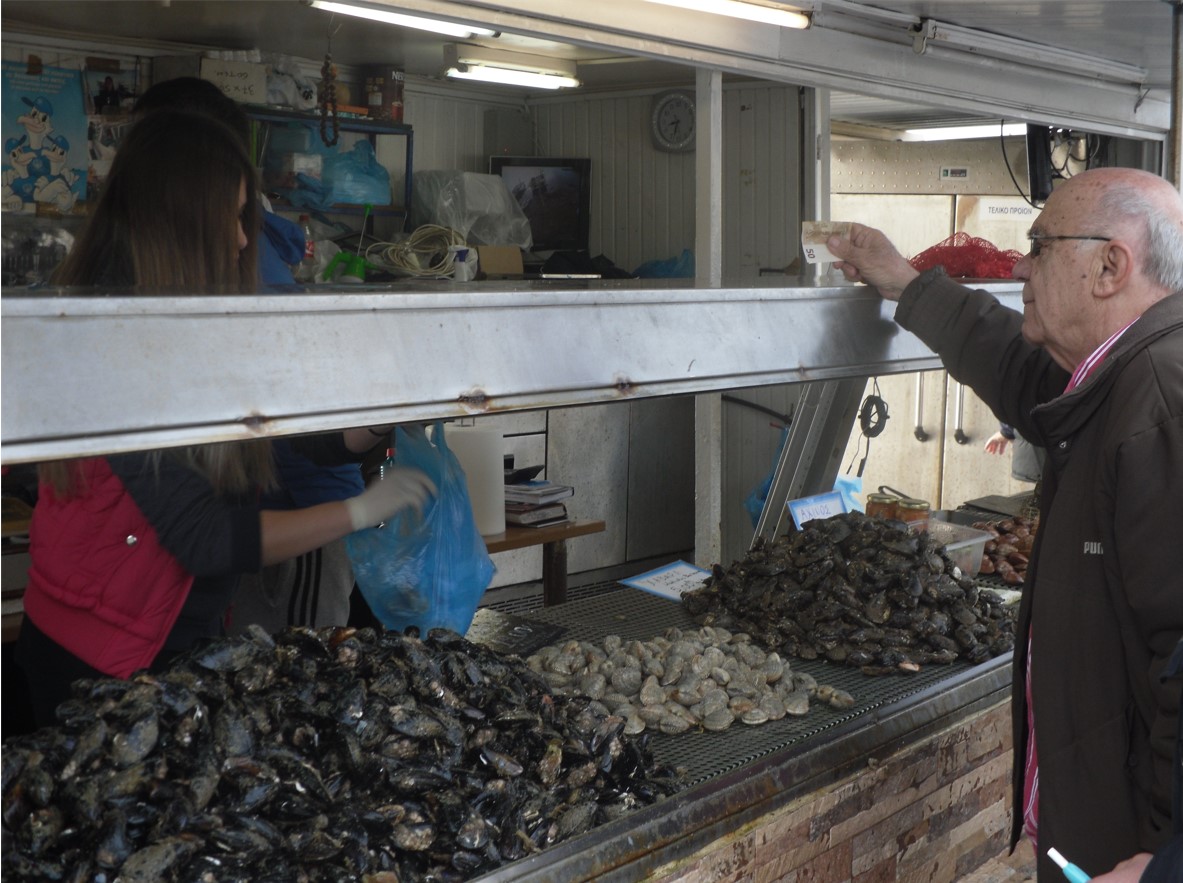
Mussel risotto is not a traditional Lent Monday meal in Greece, but my husband and I have had it for decades now on Lent Monday, so by now it’s our very own family tradition. Especially as we can buy the mussels fresh, all year round, from the local mussel-farmer families. They sell them at permanent kiosks on the roadside (I live in a small coastal town near Athens).

Now that the “Sarakosti” (40-day fasting period) has started, once again I need to muster all of my self-restraint!

I never fast too strictly, but, like every year, I intend to steer clear of meat altogether. Well, I can try. Problem is, I daily sit down to eat with two men (my husband and my father) who love their meat, so I know I’ll be cooking it! Peg on the nose? Cooking on a full stomach? I am still considering the best way to do it this year. Any ideas? LOL!

Wish me good luck, folks, as the temptation is a tough thing to beat, especially when hubbie ‘has the munchies’ and talks of souvlaki pitta LOL!

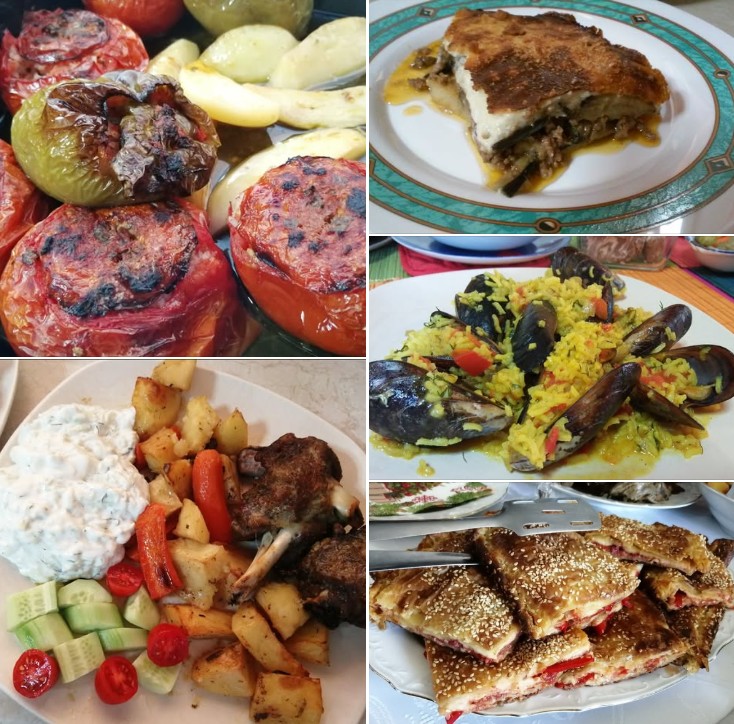
Before, I go. If you’re interested in Greek food, you’re welcome to check out on my blog my favourite recipes. Many traditional Greek dishes among them, like gemista, moussaka, fakes, briam, koukia, bourtheto, chicken soup with avgolemono and lots more!

Till next time, keep smiling, and enjoying fabulous books. Go below to check out my latest newsletter and get a load of free kindle books!


YOU KNOW WHAT THEY SAY… SHARING IS CARING! Tweet this to spread some love:

FREE books, and fun news from a Greek author #authorslife #writers #Greek Share on X

3 FREE books for you! Sign up below to receive them instantly!

NEW! Clean Christmas romance. Single mother Cathy Roussos gave up on love long ago, and veterinarian Alex Rallis doesn’t believe in it, but one magical Christmas on a Santorini farm might just change everything…
Check it out on Amazon     Read a FREE sample!


A clean romantic suspense short read with an unreliable narrator that’ll keep you guessing! Vera is losing her mind over famous actor Yannnis Ksenos, except, she isn’t just a fan… Now, she plucks up the courage to ring his doorbell… Visit Amazon


For my delicious Greek recipes, go here
 
Planning to visit Greece? Check out my  FREE guide to south Corfu!

Vasilopita, the Greek New Year cake with the hidden coin

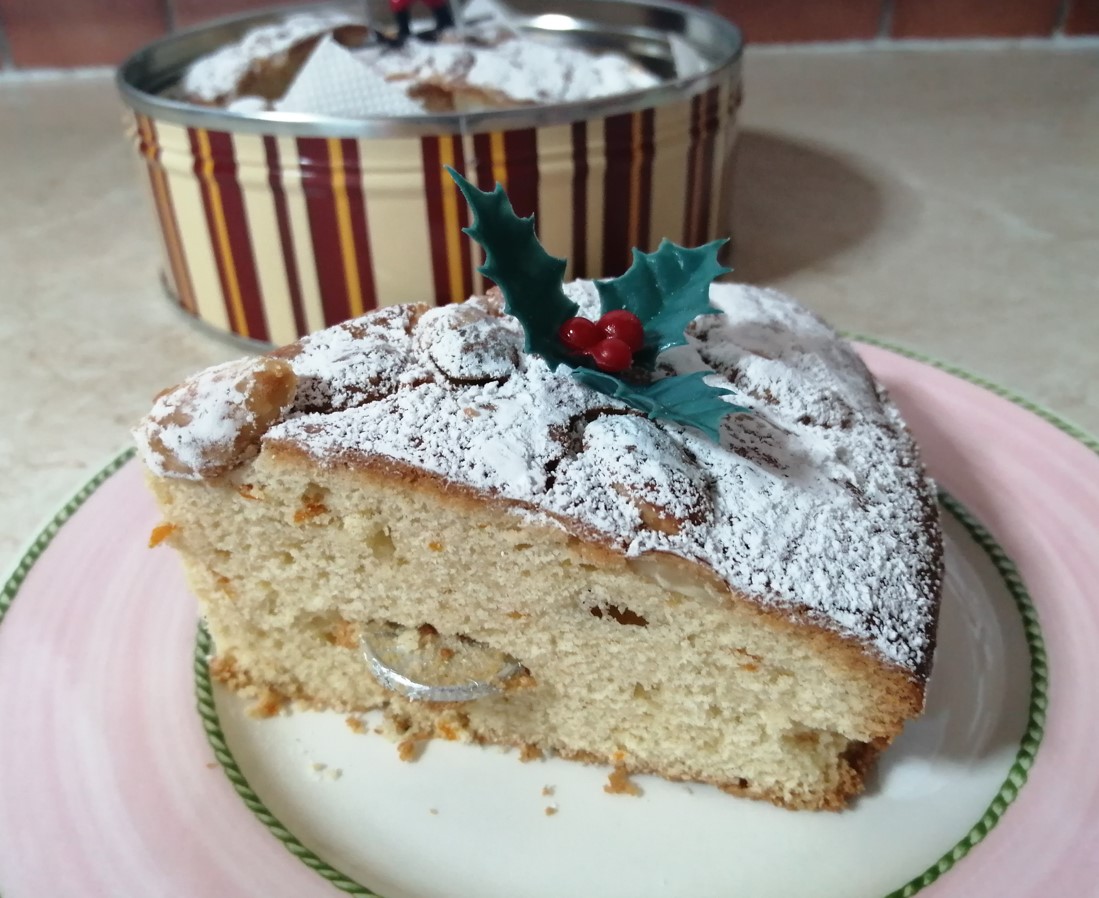
Greek custom dictates that every family cut a Vasilopita on New Year’s Eve, which is a traditional cake with a hidden coin inside. The person who finds the coin in their piece will have good luck all year! The word ‘Vasilopita’ originates from Agios Vasileios (St Basil). It literally means ‘Basil pie’. The Greek Santa is Agios Vasileios, not St Nick. The legend of him bringing gifts started like this…

When Agios Vasileios was the bishop of Caesarea in Asia Minor, a ruthless tyrant and his army threatened all people of Caesaria to hand over their gold or perish. St Basil was forced to ask the poor city folk to bring to him their meagre gold possessions. According to legend, a miracle rid the city of the tyrant in the end so the gold was never handed over to him. When St Basil was presented with the task to return all the gold to the people, he decided to send to every household a little bread, each of which contained one golden coin or item of jewellery picked randomly. This is how the custom of the Vasilopita started!

Traditionally, the father or the mother of the house cuts the cake, naming names as they cut… First, they cut a piece for Christ, a second one for the Virgin Mary, another for the house, which they set aside. And only then do they start naming each person of the household as they cut. This way, if the coin is found during cutting, they know who it belongs to. If the coin is found in one of the first three pieces, it is placed in the corner of the house where the family keeps their icons, for good luck. In Greek homes, this corner is often found in the parents’ (or the couple’s) bedroom.

In my humble opinion, everyone who participates in this custom is a winner… There’s plenty of laughter to be had and a strange excitement blossoms in every home during this process, as if the coin is real – a coveted piece of gold…

Why don’t you have a go to see who wins the coin in your home this year? There’s plenty of time still! In Greece, Vasilopita cakes are baked and cut for good luck all the way till the end of January.

Here’s my recipe. Enjoy!


YOU KNOW WHAT THEY SAY… SHARING IS CARING! Tweet this to spread some love:

Vasilopita, the Greek New Year cake with the hidden coin! #holidayseason #desserts #Greece Share on X

3 FREE books for you! Sign up below to receive them instantly!

NEW! Clean Christmas romance. Single mother Cathy Roussos gave up on love long ago, and veterinarian Alex Rallis doesn’t believe in it, but one magical Christmas on a Santorini farm might just change everything…
Check it out on Amazon     Read a FREE sample!


A clean romantic suspense short read with an unreliable narrator that’ll keep you guessing! Vera is losing her mind over famous actor Yannnis Ksenos, except, she isn’t just a fan… Now, she plucks up the courage to ring his doorbell… Visit Amazon


For my delicious Greek recipes, go here
 
Planning to visit Greece? Check out my  FREE guide to south Corfu!

Delicious Greek Christmas desserts

Hi, All! Today, I am sharing about the Greek traditional desserts for Christmas, the New Year cake with the hidden coin, and some delightful cookies too! These change shape in the oven and are the perfect fun thing to do with kids this holiday season. Enjoy, and happy holidays!

I love the Greek Christmas desserts you can see here but they present a problem for me each year. I can’t help myself and start eating them from very early in the month of December. By the time Christmas arrives, I have to look for trousers one size bigger to wear haha

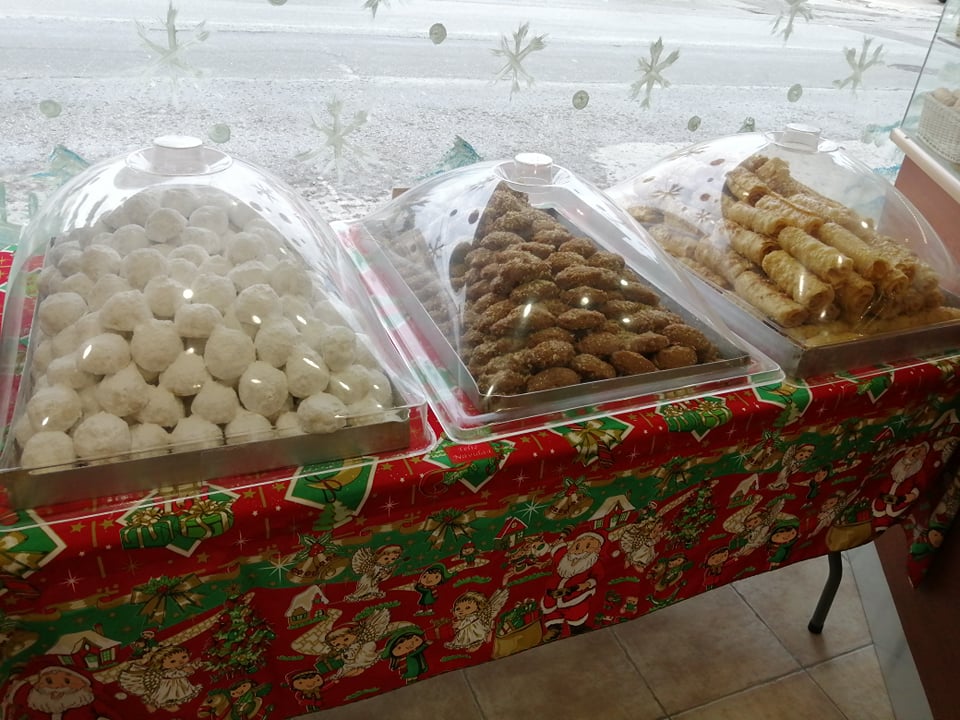
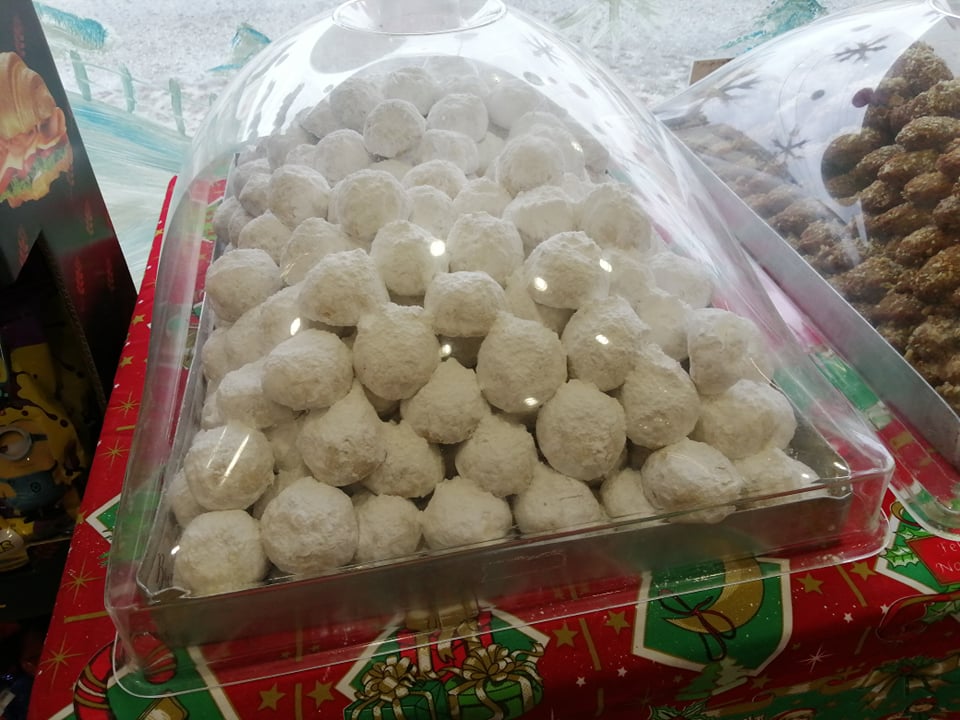
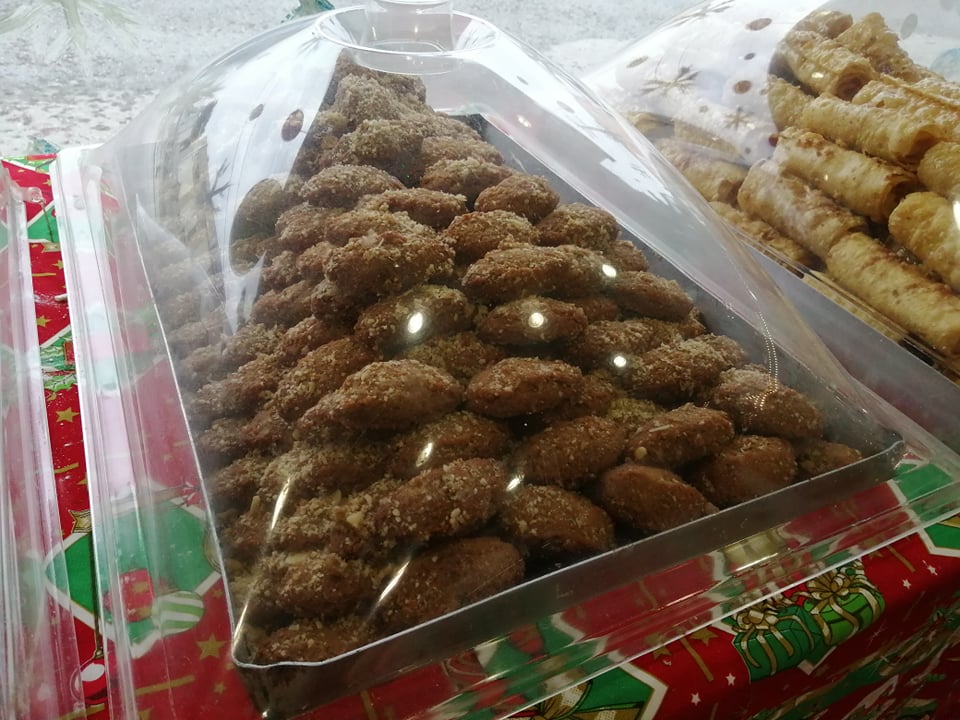
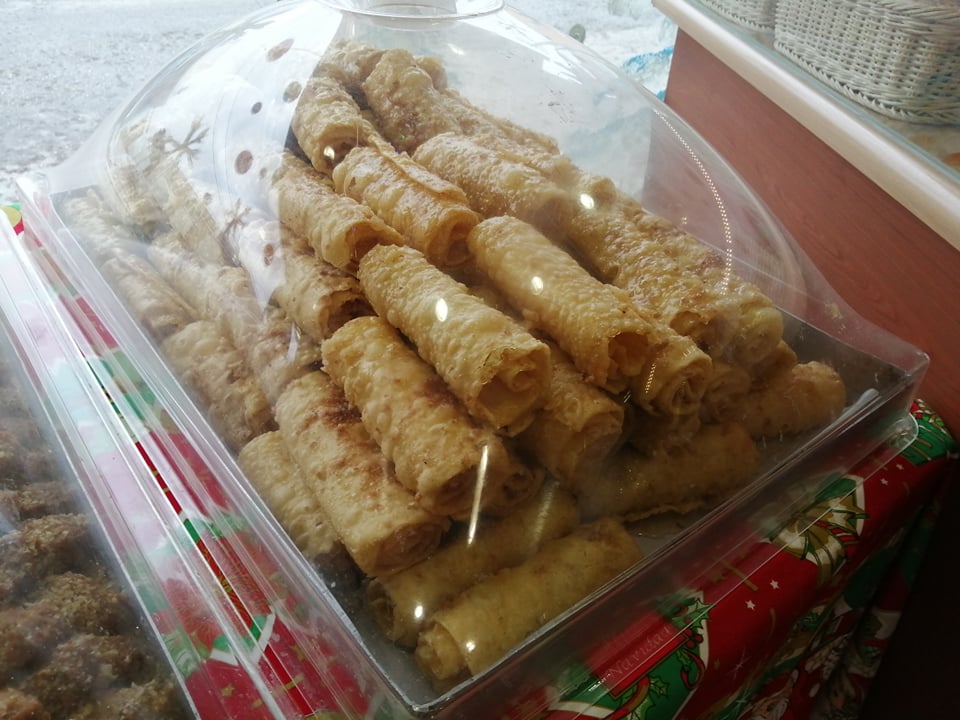
But, looking at this picture from my local bakery, can you really blame me? Especially if you’ve tasted Greek Christmas desserts and know just how yummy they are.

Here they are, in more detail:

KOURABIES (Plural: KOURABIEDES)

These tiny round cakes have a solid dough that’s rich in almond chunks, and they are dusted heavily with icing sugar. They can also be found in the shape of a crescent. A classic festive prank in Greece is to offer someone a kourabies and dare them to say ‘Thothoros’ as they chew. This is just the Greek name for Theodore. It’s not the meaning, but the making of the sound that matters here. The result is always the same! A sprinkle of icing sugar emitted from the person’s mouth to dirty their own clothes. Not recommended in the times of covid – but it has to end sometime, doesn’t it? So keep in mind for later, if you’re a prankster. Trust me. It’s priceless.

MELOMAKARONO (Plural: MELOMAKARONA)

These golden delights can easily become a favorite, especially as in the recent years bakers and sweet shop owners have gone a step further to coat them with milk chocolate or dark chocolate! Personally, I never go for those, as I find them sickly sweet. The classic melomakarona of this picture are more than adequately sweet on their own. The taste is all in the honey syrup and the heavenly woody spices (cinnamon and cloves). Melomakarona come in soft and harder varieties. The softer the better, in my humble opinion.

DIPLA (Plural: DIPLES)

These pastries are fried, then sprinkled with chopped walnuts and drizzled with honey or syrup. The ones my mother used to make looked like short ribbons with serrated edges, and sometimes she’d fold them in thirds. The classic shape one can find in the shop, though, is the rolled up one you see in the picture. After all, the name Dipla is derived from the word Diplono, which means “To fold”. I have to admit that diples, being fried, are not the healthiest option, but they are definitely my favourite of the three, with melomarona following closely behind. Diples are crunchy and fluffy – a temptation I personally find impossible to resist!

Note: This is not a recipe post, as you can see, mainly owed to the fact that I’ve never tried my hand at making any of the main three Christmas desserts. It’s hassle-free at the bakery, if you ask me LOL! But, if you’re feeling eager to try, just google the name of the dessert with ‘Akis’ next to it, and it should take you to the site of famous Greek chef Akis Petretzikis. All his recipes are awesome! This is the one for melomakarona, for example!


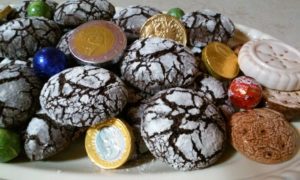
Ok, so these are neither Greek nor Christmas cookies either, but I love to bake them on new year’s eve, then put them on a platter with chocolate coins for good luck. They look fantastic and the added bonus is they are not as punishing to your waistline as you’d think! There is no trace of chocolate or butter in them – instead, they contain cocoa powder and sunflower oil, but taste fluffy and chocolatey as if they were the real thing. I call them Magic Snowballs because when you put them in the oven they look like little white balls and then something whimsical happens! They start to change shape right before your eyes…

GO HERE TO GET THE RECIPE. THEY ARE PERFECT TO BAKE WITH KIDS. ENJOY!


Last but not least, this is the Greek New Year Cake with the hidden coin inside. It is called ‘Vassilopita’ and is baked on new year’s eve in honour of St Basil (the Greek version of Santa Claus). Check out my recipe here!


OOPPAAA! SIGN UP TO MY BIMONTHLY NEWSLETTER AND GET 3 BOOKS FROM ME AS A WELCOME GIFT! SEE BELOW FOR THIS OFFER!

YOU KNOW WHAT THEY SAY… SHARING IS CARING! Tweet this to spread some love:

Greek Christmas desserts are amazing! #Greek #desserts #christmas Share on X


3 FREE books for you! Sign up below to receive them instantly!

NEW! Clean Christmas romance. Single mother Cathy Roussos gave up on love long ago, and veterinarian Alex Rallis doesn’t believe in it, but one magical Christmas on a Santorini farm might just change everything…
Check it out on Amazon     Read a FREE sample!


A clean romantic suspense short read with an unreliable narrator that’ll keep you guessing! Vera is losing her mind over famous actor Yannnis Ksenos, except, she isn’t just a fan… Now, she plucks up the courage to ring his doorbell… Visit Amazon


For my delicious Greek recipes, go here
 
Planning to visit Greece? Check out my  FREE guide to south Corfu!


Porphura: Mollusks with a royal secret


A mollusk with a gift for emperors and kings. Tasty too!

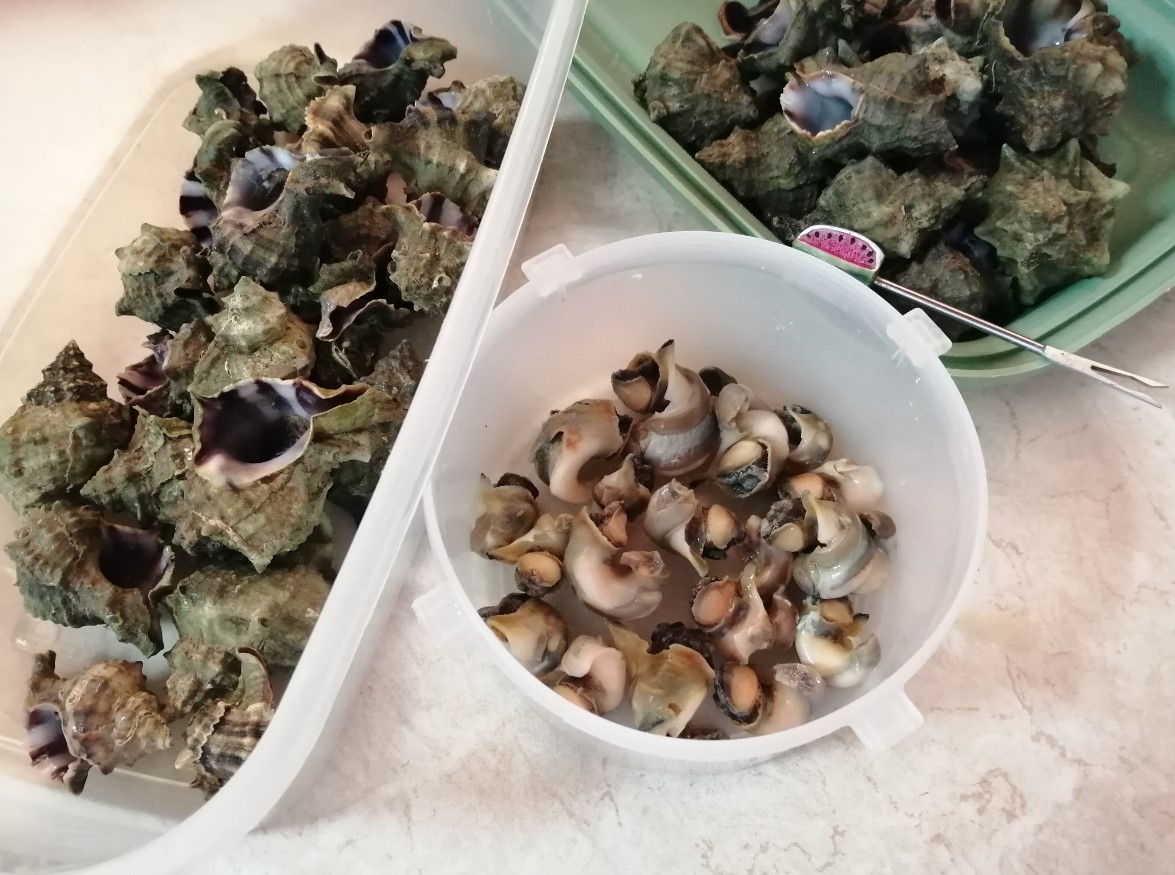
This type of purpura mollusk is called porphura (dated Greek word for ‘purple’, pronounced ‘porfeera’).

In ancient times, these mollusks were used to extract the color purple, which was then used to dye the clothes of kings and emperors. The practice is 3,000 years old.

‘Porfeero’ is the Greek name of this special, royal shade of deep purple. Those with royal blood were once called ‘porfeerogenitos’ which means ‘born of the purple color’. According to Pliny, this color shade resembled coagulated blood. It is recorded in Homer’s works and in Greek mythology too. Zeus recognised and saved Perseus because he wore this color. Theseus proved that he was of royal descent by appearing dressed in this color before King Minos.

Nowadays, the use of the porphura mollusks to the Greeks is limited to being a meze, a rare one I presume, as perhaps it may be illegal to extract them from the sea for trade (like is definitely the case for ‘achinos’, i.e. sea urchins, and the oblong mollusks called ‘petrosolines’).

Still, porphuras often stick to the nets, and the fishermen tend to keep a few when that happens, just enough to enjoy with their ouzo 🙂

I got this small batch from a local fisherman once, as a gift. Never before in my life had I cooked so many and I hadn’t had them in decades. As a child, I was forever looking for porphuras during my swims in the local beaches. Back then, there were many in the shallows, simply sitting on the sand in plain sight. So, I’d catch just two or three, wash them well and boil them at home in a ‘briki,’ the tiny pot for Greek coffee. Then, I’d extract the flesh from the shells and eat it warm with a slice of bread.

As you can see in the photograph, something long and pointy is necessary to extract the flesh from the shell after they’ve been cooked. Those ouzo forks are the best for the job, but one can try with a tweezers too, though I don’t think it would prove as efficient. Smashing the shells after cooking them with a small rock is the last resort. In this case, it is necessary to wash the flesh well to make sure there are no remnants from the shell.

I don’t enjoy eating these cold, but others have them straight from the fridge – after boiling them, of course, because the flesh is very hard to eat raw. The more they boil, the softer they get. Allow at least 1 hour and up to 2 hours. Once cool, they can be kept in the fridge in a tub with olive oil and vinegar. They last for about a week or so. To have them warm straight after boiling, try them neat or with some lemon juice.

They’re also very nice with this dressing prepared in a blender: Olive oil, crushed garlic clove, lemon juice, parsley.

I can almost see some of you flinching right now, LOL! Not everyone would be willing to eat a mollusk, I guess. But, at least, now you know how the kings and queens of the past had their clothes dyed, huh! 😛


YOU KNOW WHAT THEY SAY… SHARING IS CARING! Tweet this to spread some love:

Interested in travel, food and books from Greece? Here's a blog you will love! #Greeklife #bloggerlife #writers Share on X


3 FREE books for you! Sign up below to receive them instantly!

NEW! Clean Christmas romance. Single mother Cathy Roussos gave up on love long ago, and veterinarian Alex Rallis doesn’t believe in it, but one magical Christmas on a Santorini farm might just change everything…
Check it out on Amazon     Read a FREE sample!


A clean romantic suspense short read with an unreliable narrator that’ll keep you guessing! Vera is losing her mind over famous actor Yannnis Ksenos, except, she isn’t just a fan… Now, she plucks up the courage to ring his doorbell… Visit Amazon


For my delicious Greek recipes, go here
 
Planning to visit Greece? Check out my  FREE guide to south Corfu!

Zagori: A Journey Through Time #Zagorochoria #Epirus #Greektravel

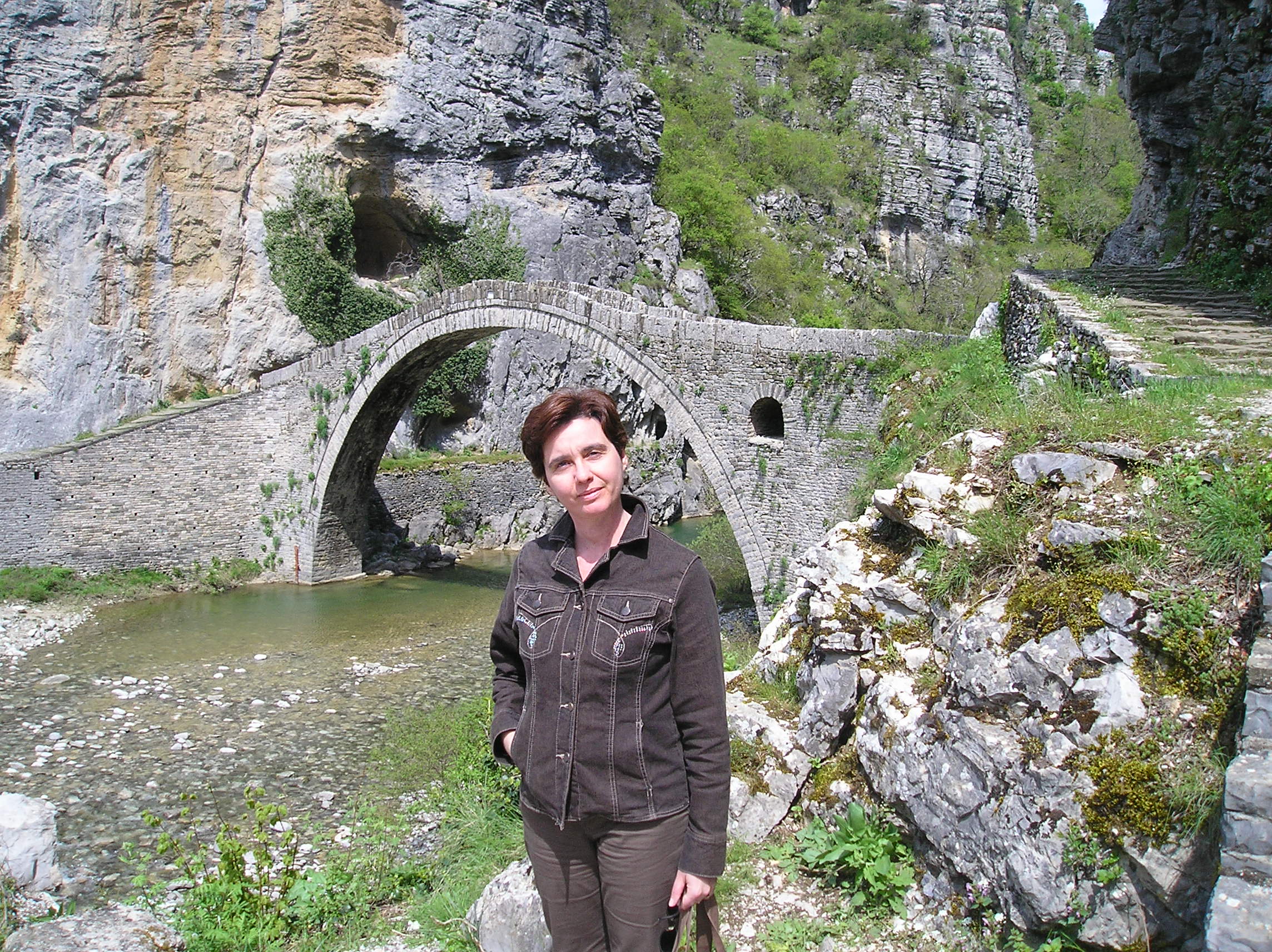
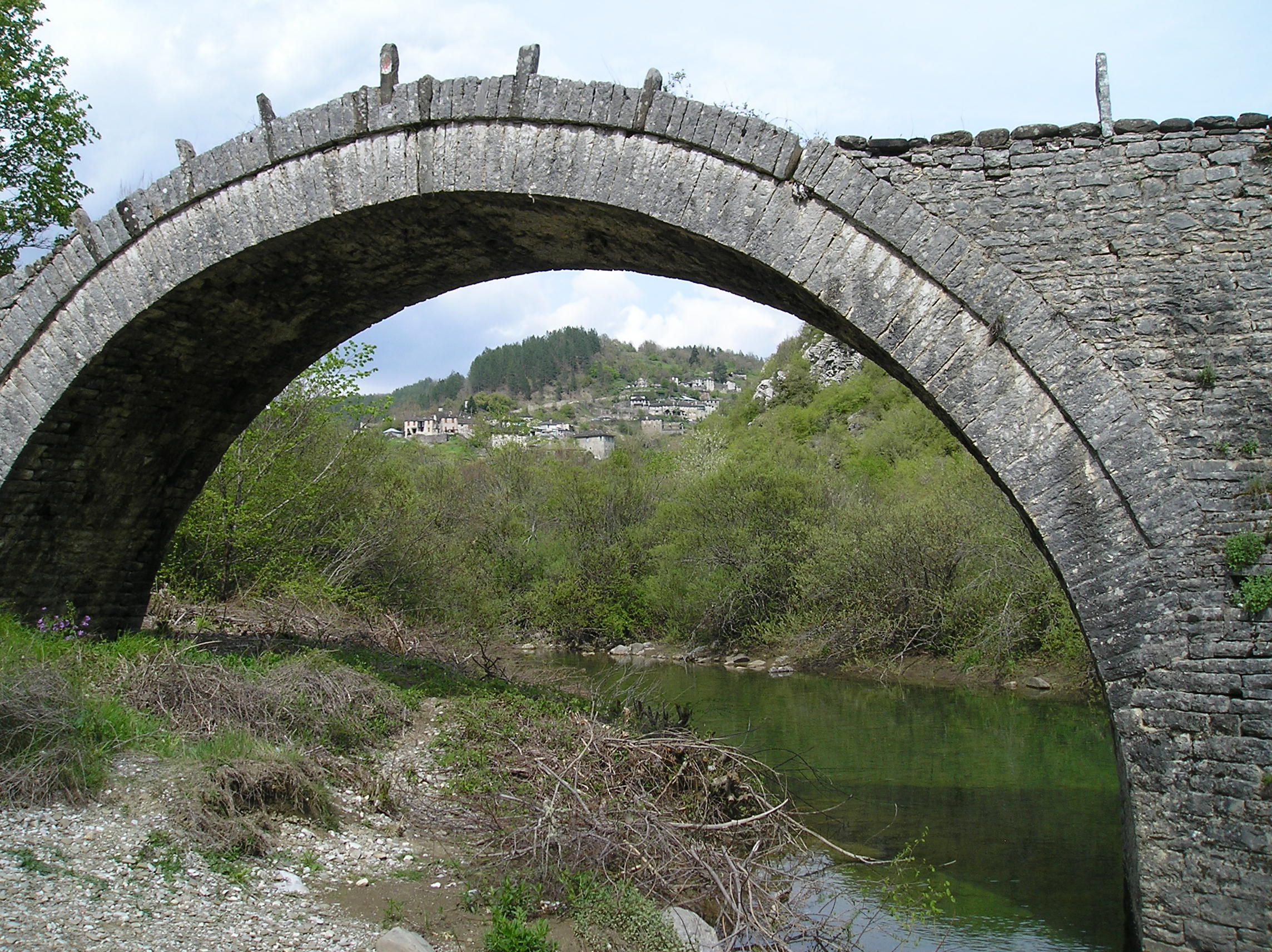
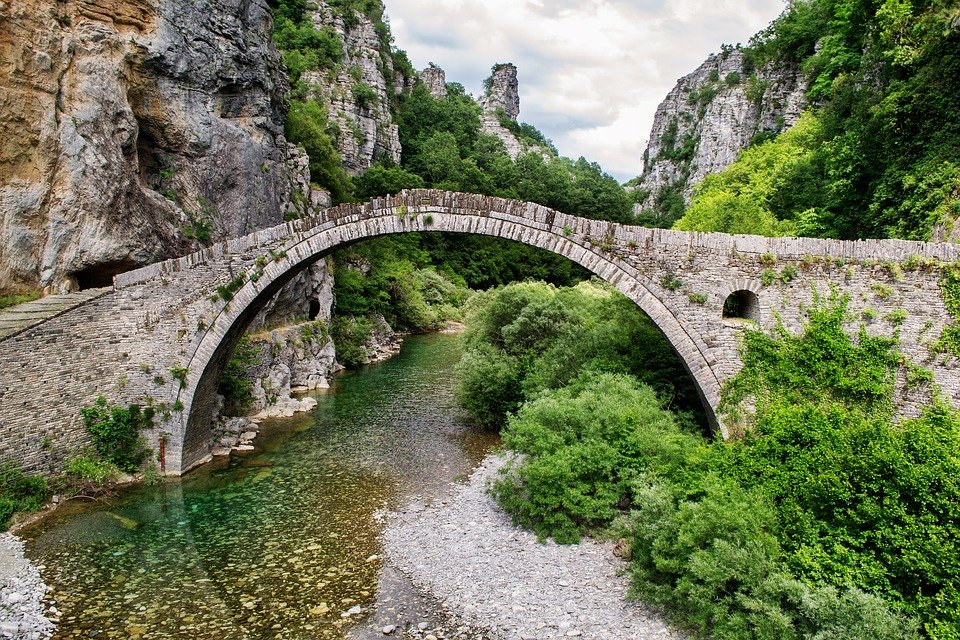
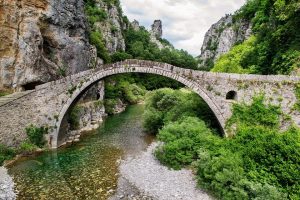
Kokkori bridge, Zagori, Epirus
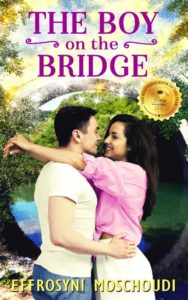
The alluring area of Zagori on the mountains of Epirus is where I set my supernatural romantic suspense novella, “The Boy on the Bridge.” This amazing place of lush greenery and old stone bridges stole my heart away when I visited it with my husband a few years back.

Scroll al the way down to get a FREE copy of this awarded short read!

Zagori is a place of astounding beauty and it’s incredibly peaceful… To visit it, is to become enchanted, and you cannot help but leave a part of your heart forever behind when you depart. Andy and I visited Zagori in the spring when the snow and the ice had melted and the treacherous uphill roads were a pleasure to drive on without distractions, except maybe the frantic clicks of the camera from my enthused husband by my side.

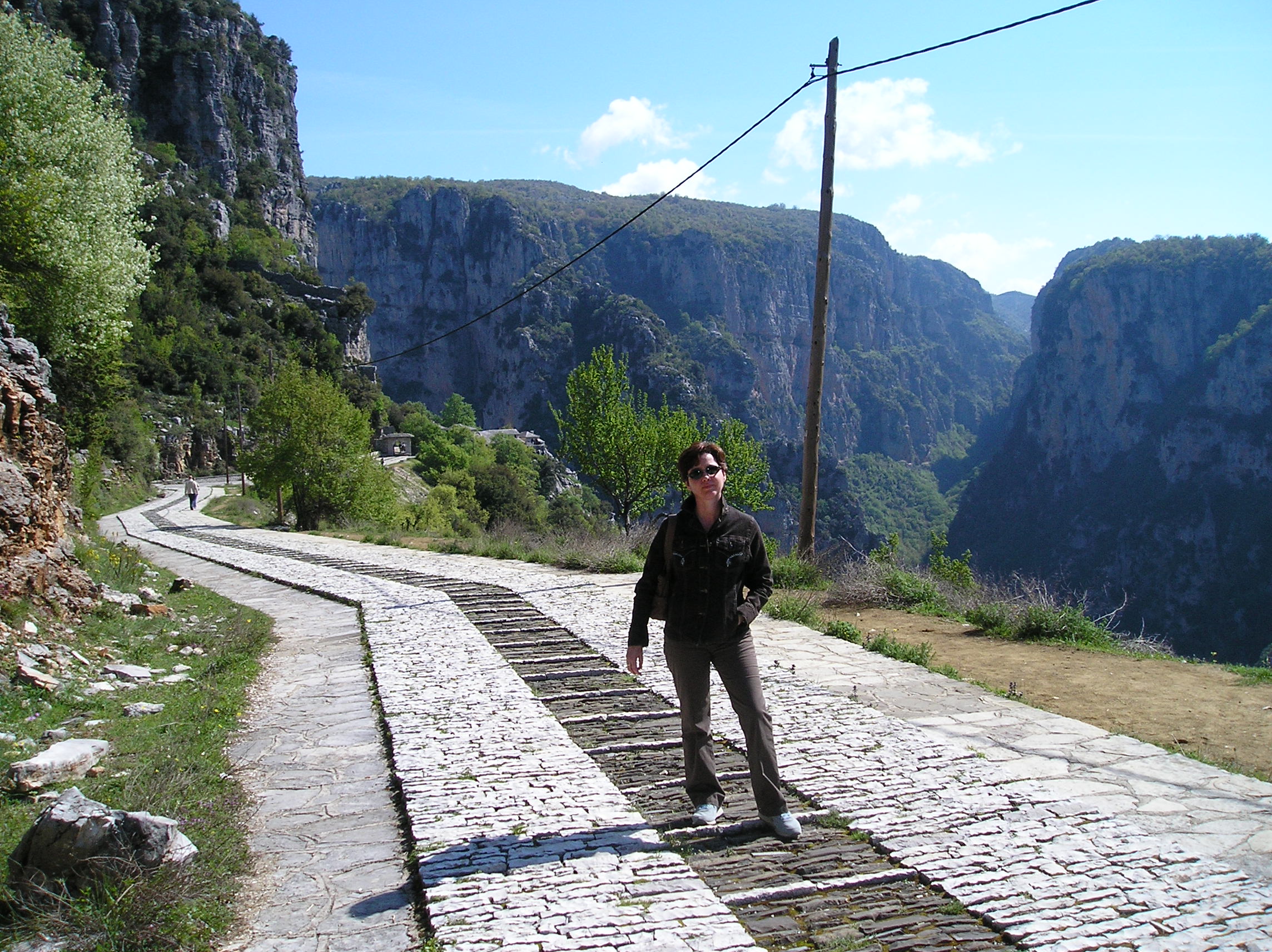
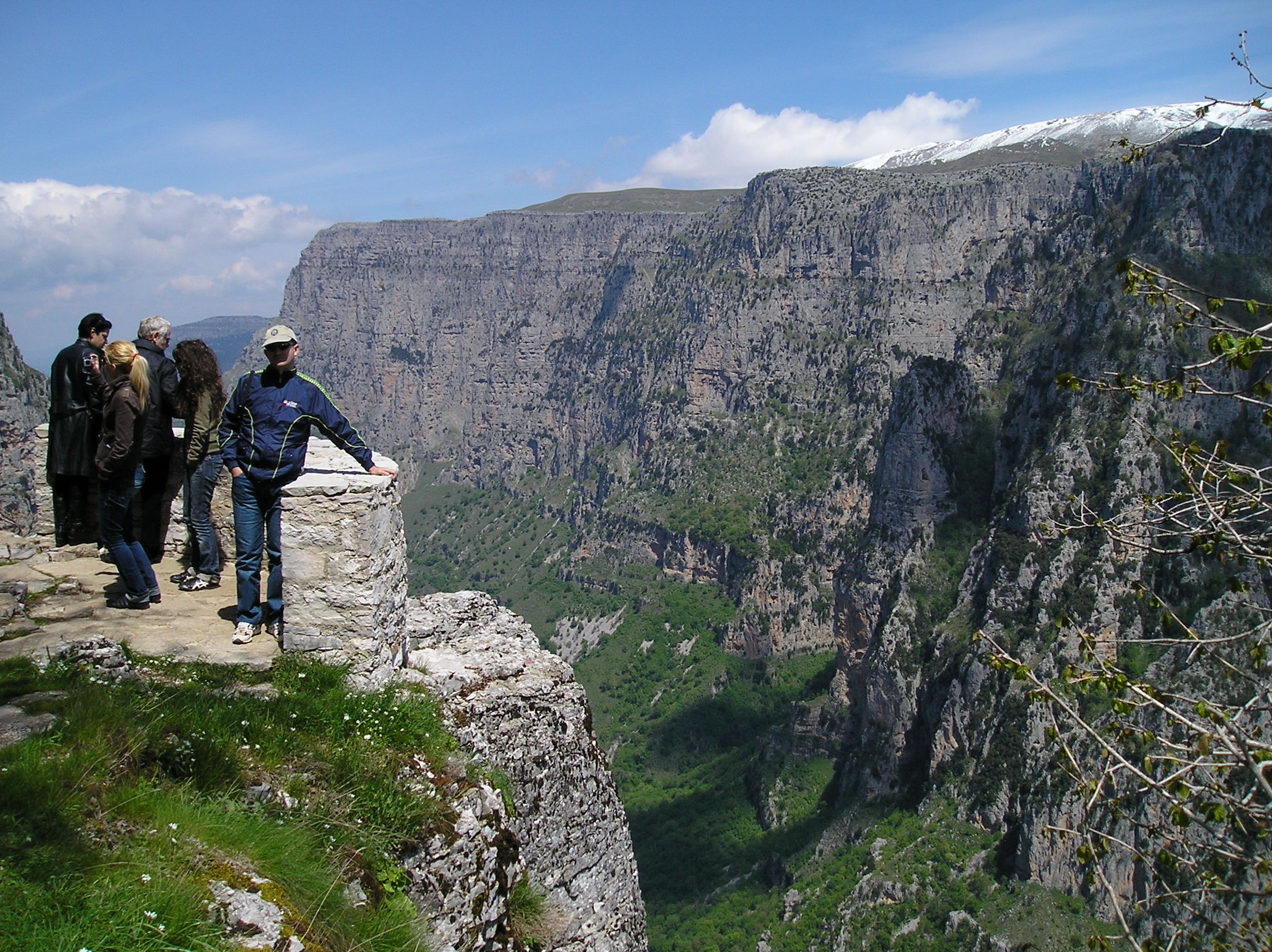
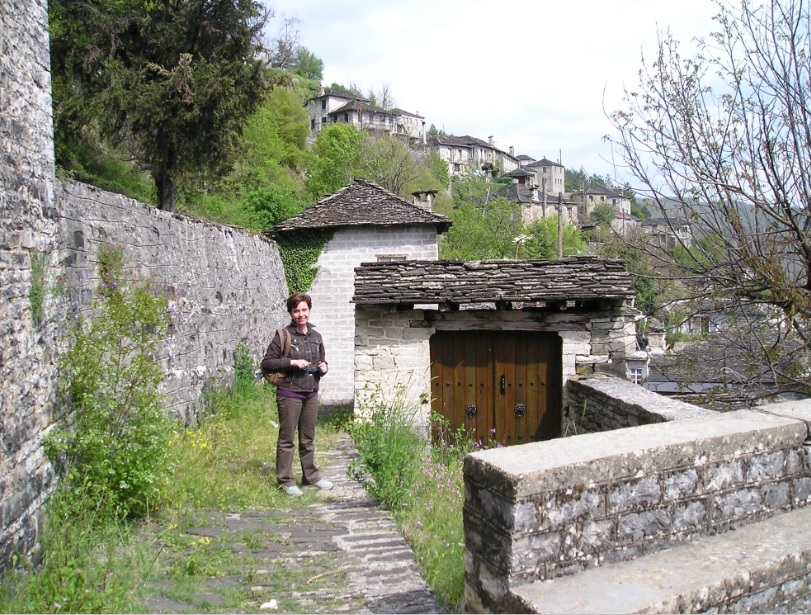
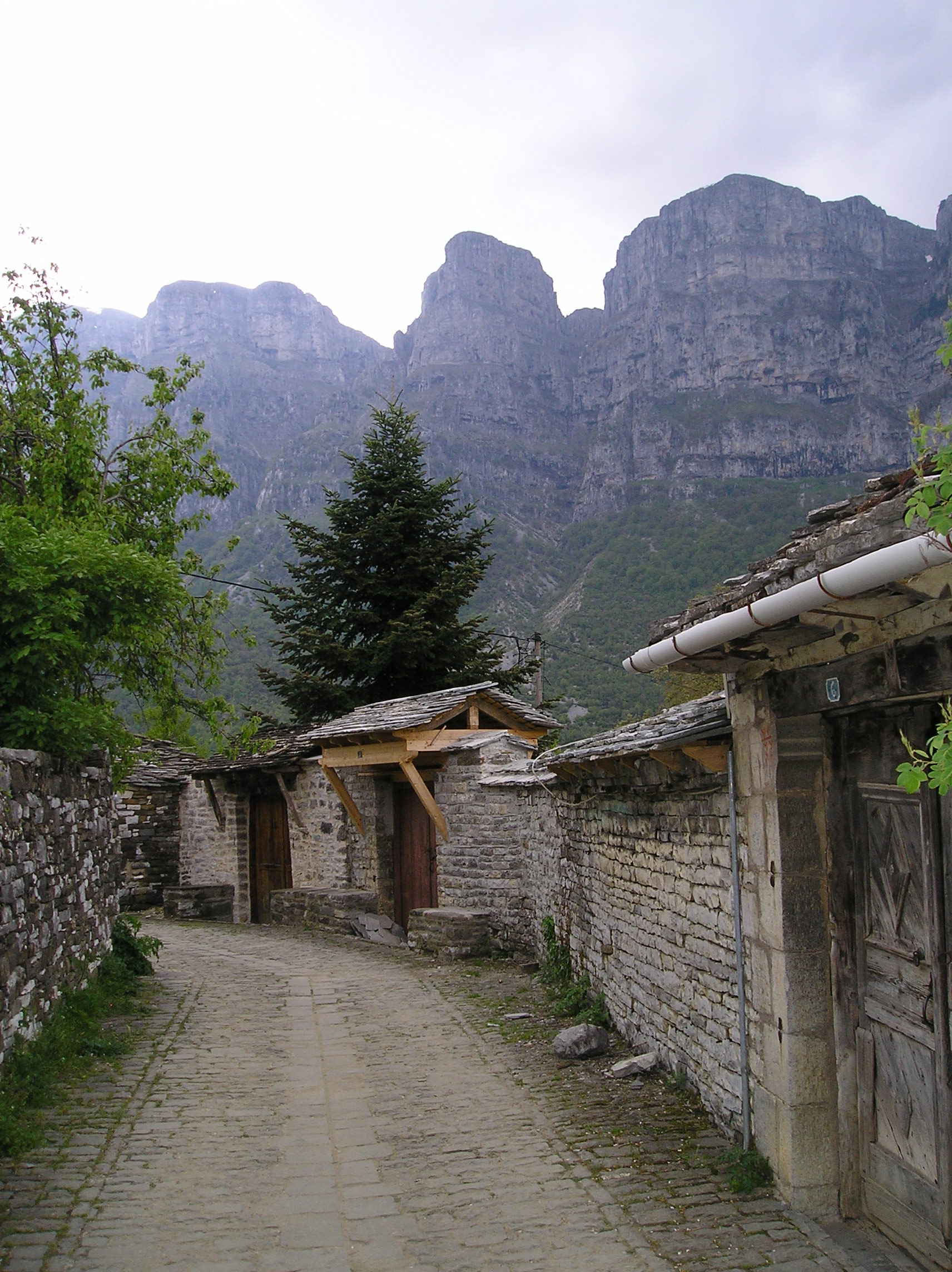
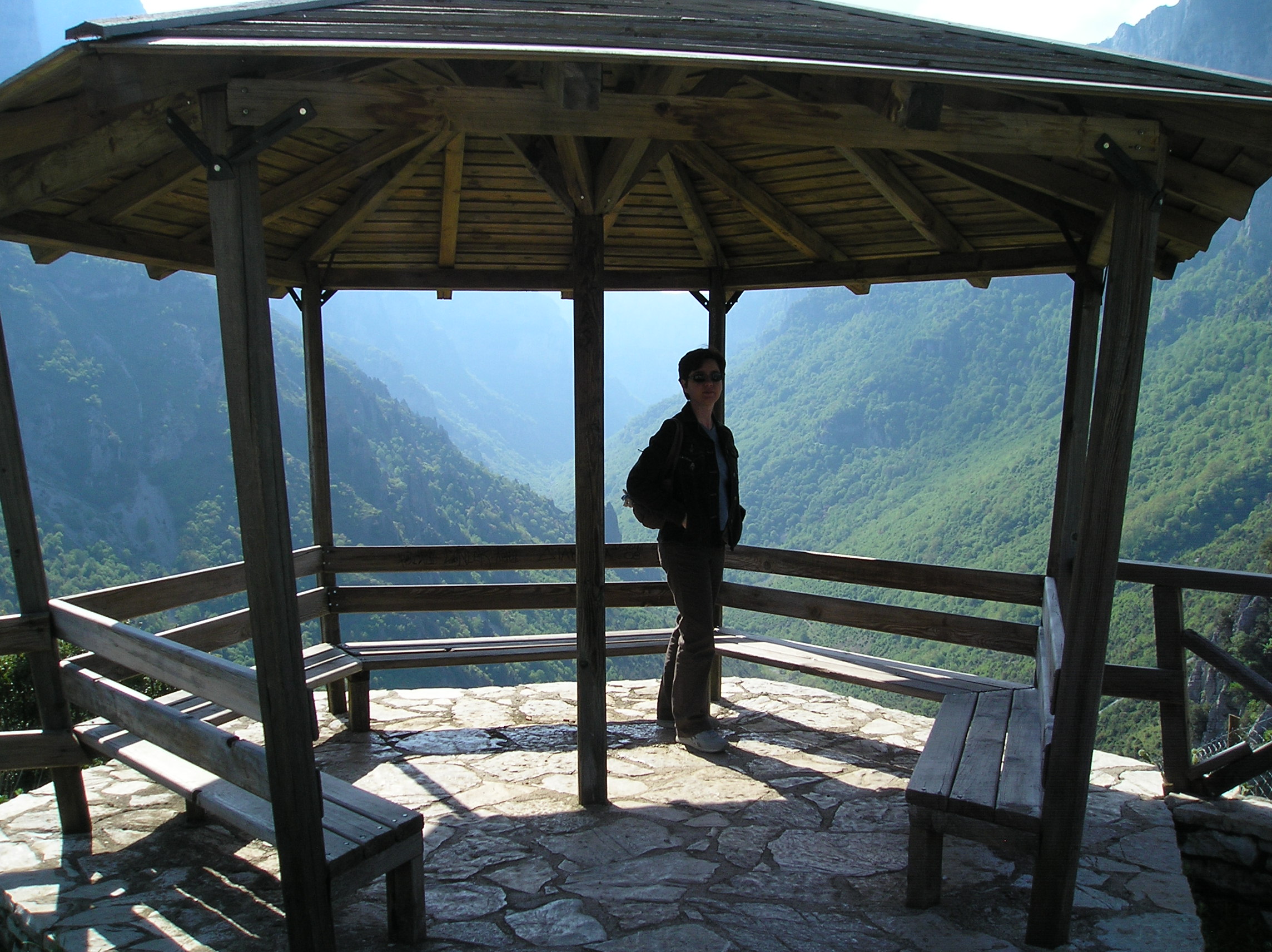
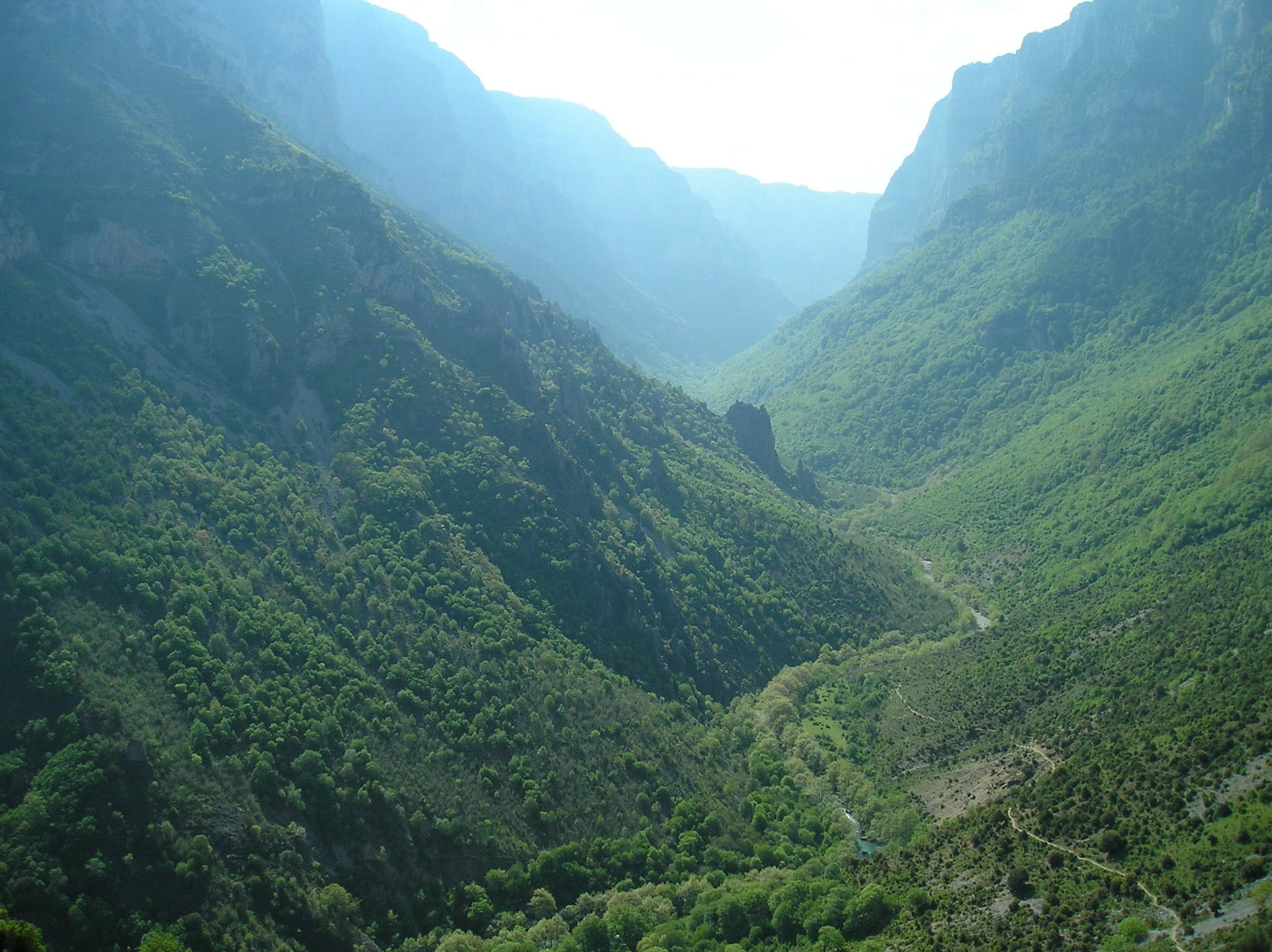
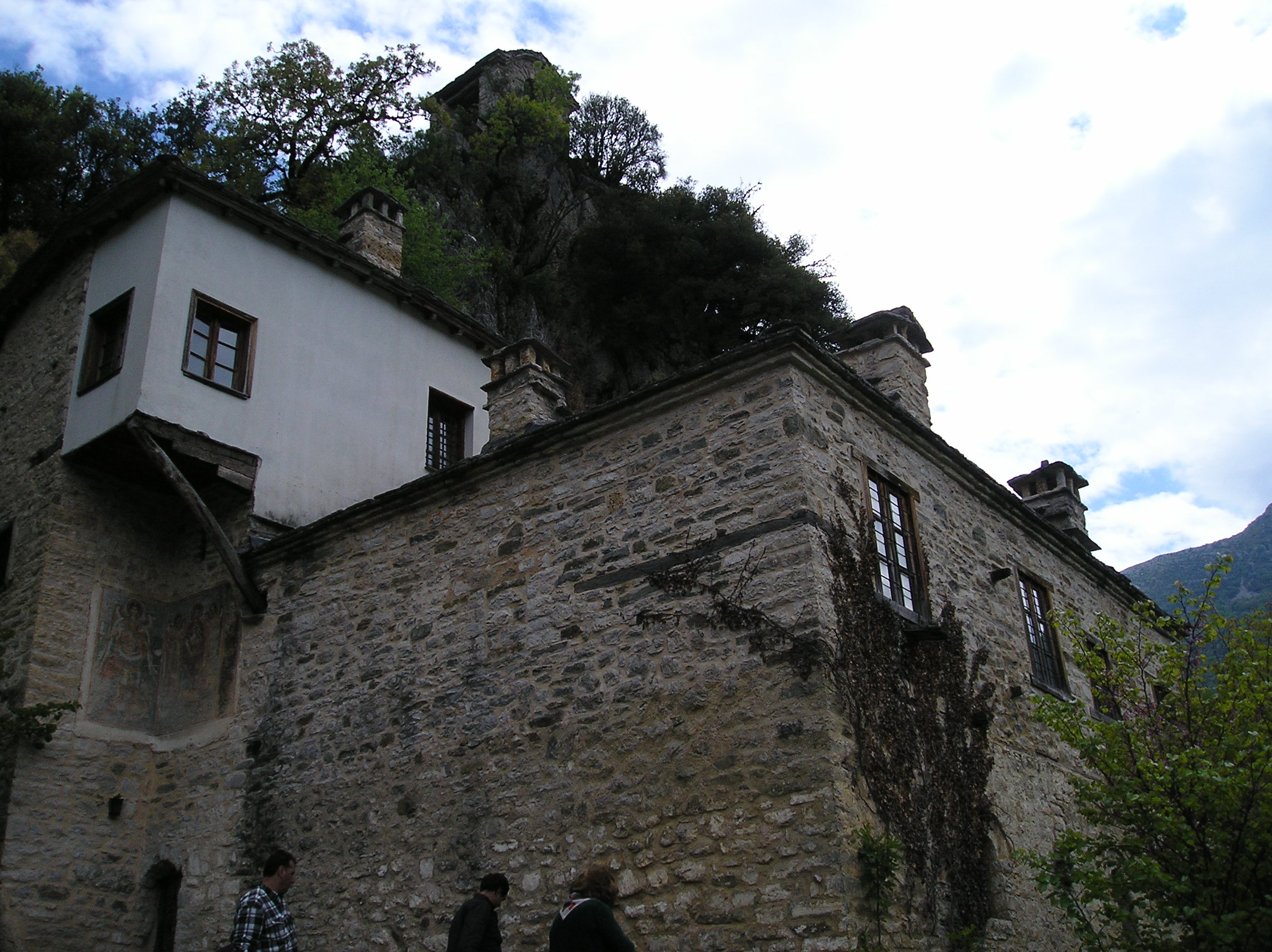
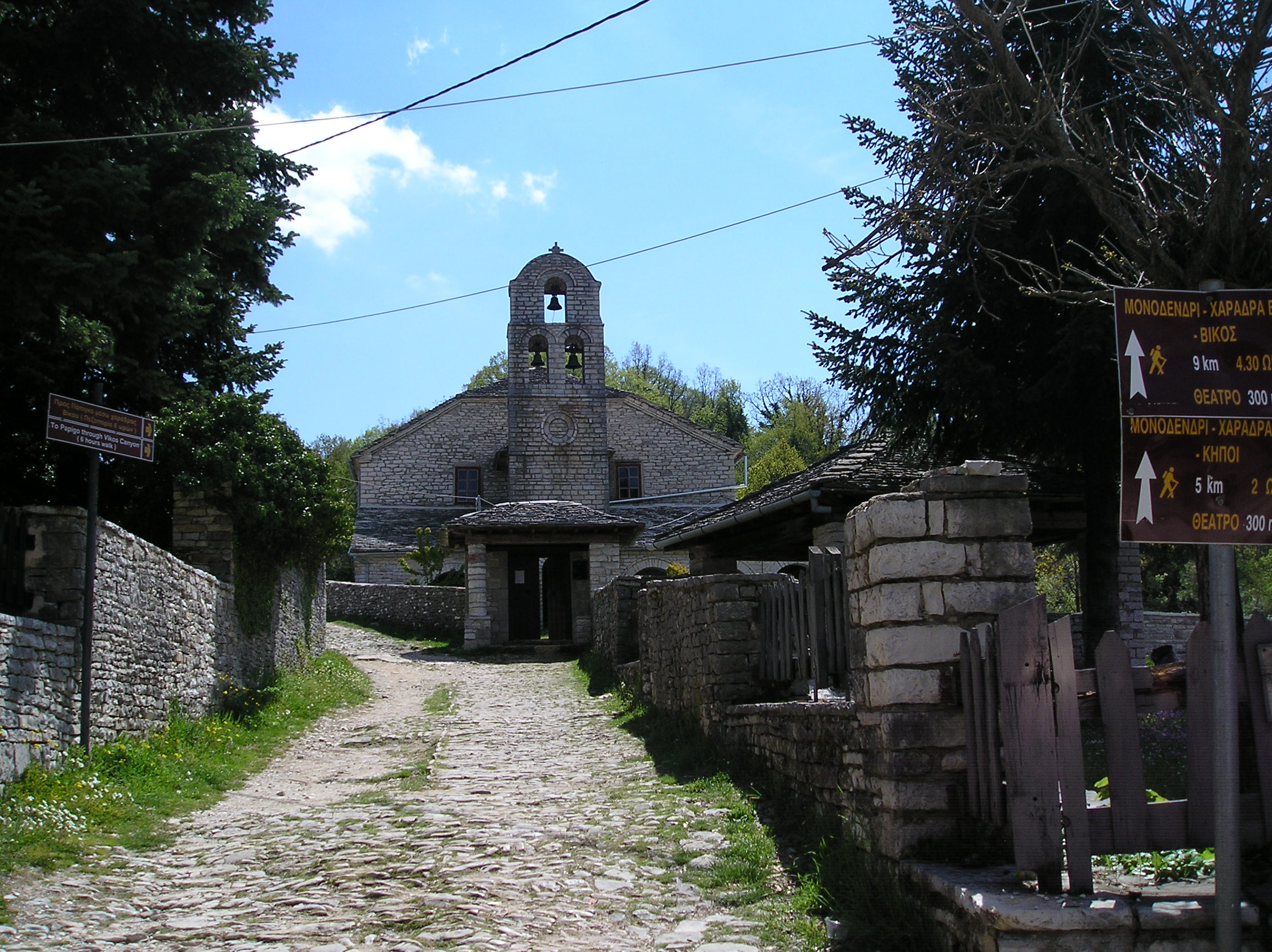
Our first stop was the village of Monodentri so we could visit the Monastery of Agia Paraskevi and enjoy its generous view to the Vikos gorge. As soon as we parked at Monodentri and stepped out, we found ourselves before a maze of cobbled stoned lanes. The village captured our hearts from the very first moment…
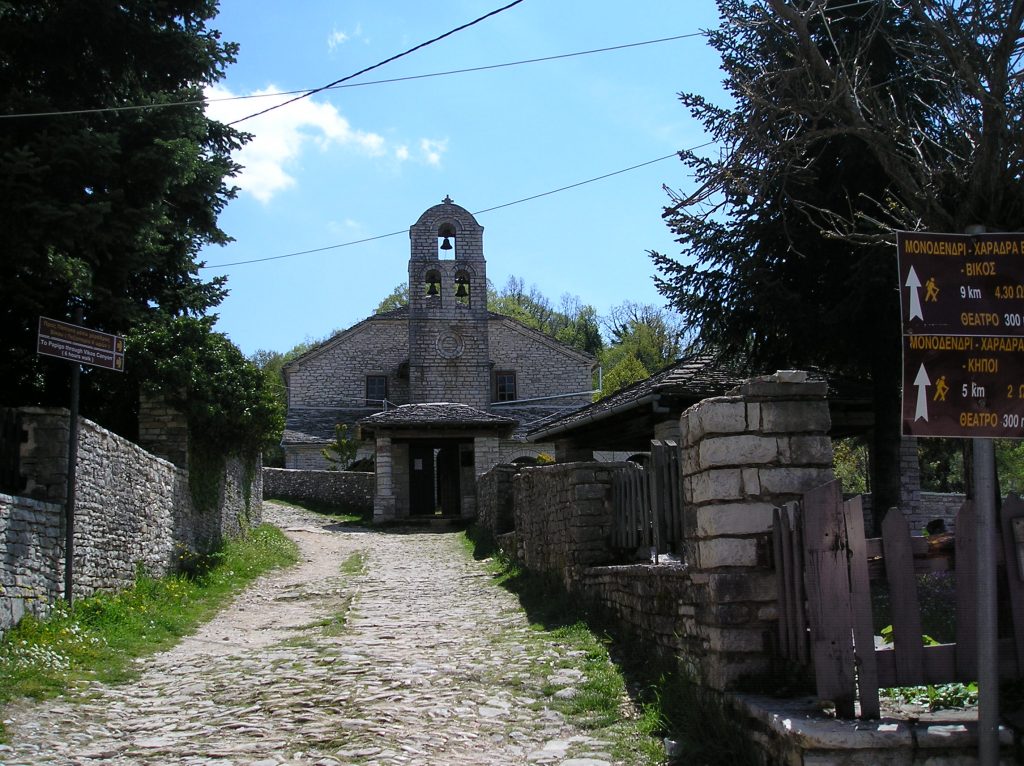
 

We took the cobbled road to the monastery quite early in the day, having set off from the city of Ioannina after a very early breakfast at our hotel. There were not many tourists around and we thought that, at any moment, we’d see a flock of sheep or the odd mule walk up the cobbled road past us, right through the middle of the path where special stonework had been laid for the animals’ passage back in the old days.


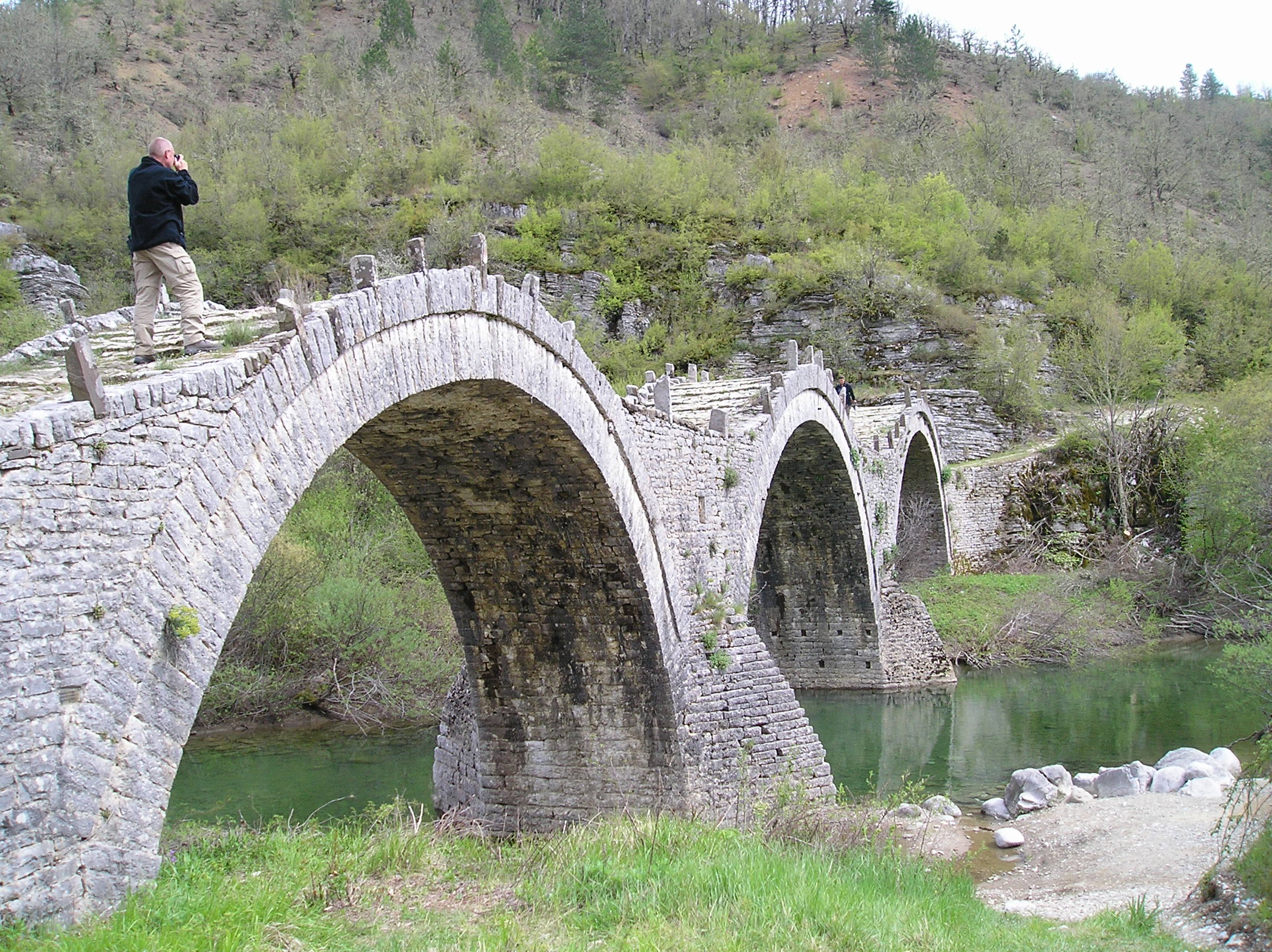
Zagori (or Zagorochoria) is a complex of 45 quaint villages in the prefecture of Epirus in the northwest of Greece. Some of these villages are situated at high altitude offering magnificent views of the Pindus mountaintops. Often, as the visitor travels around the villages, they feel compelled to stop and marvel at the weathered stone bridges that are scattered all over this area. Found in deserted landscapes more often than not, they look rather forlorn but nonetheless, they remain unique landmarks of astounding beauty.

The word Zagori derives from the Slavic words “za” that means “behind” and “gora” that means “mountain”. The ancient Greek name “Paroraioi” has exactly the same meaning, i.e. “The people who live behind the mountains”. The villages of Zagori are a feast to the eyes made of earth and stone and they have been exquisitely preserved through time, ever since their heyday during the country’s occupation by Turkish rule. This period of Greek history has been recorded as particularly bleak, lasting for 400 years until the Greek Revolution in 1821. Despite the devastation that had plagued the country at the time, somehow, Zagori managed to become a focal point of commercial activity.


Many villagers prospered and, as a result, a series of magnificent bridges were erected all across the area to facilitate the passage of merchants. One of the most prosperous villages at the time was Kipi. It is the village that inspired “The Boy on the Bridge” and, indeed, in the old days, there were many bridges around it and in the major area to facilitate the transportation of goods. I visited three of these bridges: ‘Kokkori, ‘Kalogeriko’ and ‘Capetan Arkouda’.


Today, the area of Zagori is a popular holiday destination throughout the year. Hikers often return to this area to explore the mountains or to walk along the paths of the famous Vikos gorge. As well as offering a serene setting for a walk or a picnic, the river Voidomatis (named oddly ‘ox eye’) also provides the enjoyment of rafting expeditions. Visitors can often come across the unexpected opportunity to even swim while hiking across the countryside.

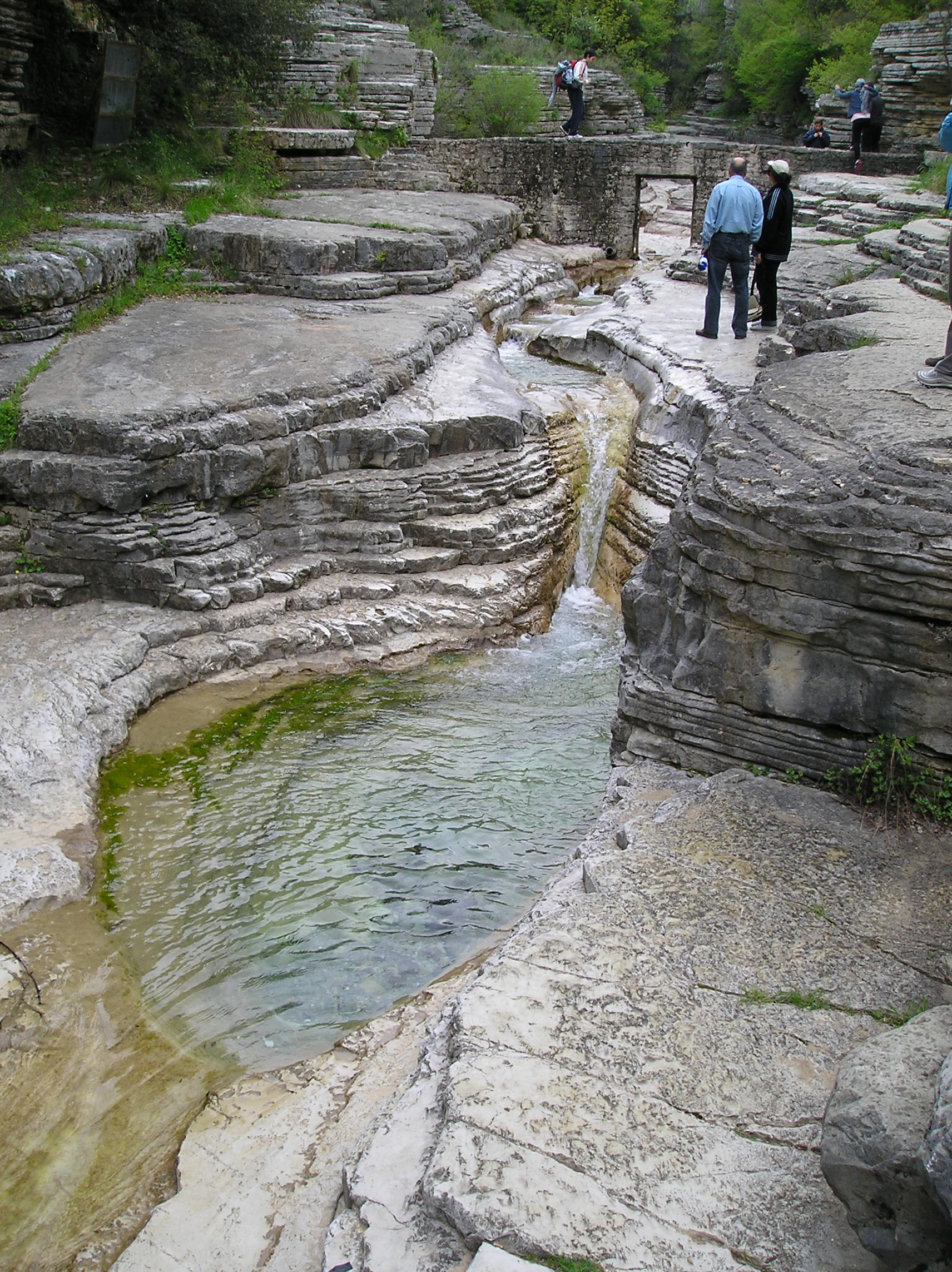
For example, the natural bathtubs of Ovires (or Kolybithres) that are situated between Papigo and Mikro Papigo are popular among local youths who love to cool off here on a hot summer’s day. And that is not all. Just walking around the villages is a unique delight in itself. The remarkably preserved buildings and paths are a joy to photograph and to pose by. And when you sample the local meats and pies at the local tavernas, you will be more than satisfied. There is a series of local organic meats, cheeses and wines on offer here as well as the famous Zagori herbs, syrup sweets, jam and honey.

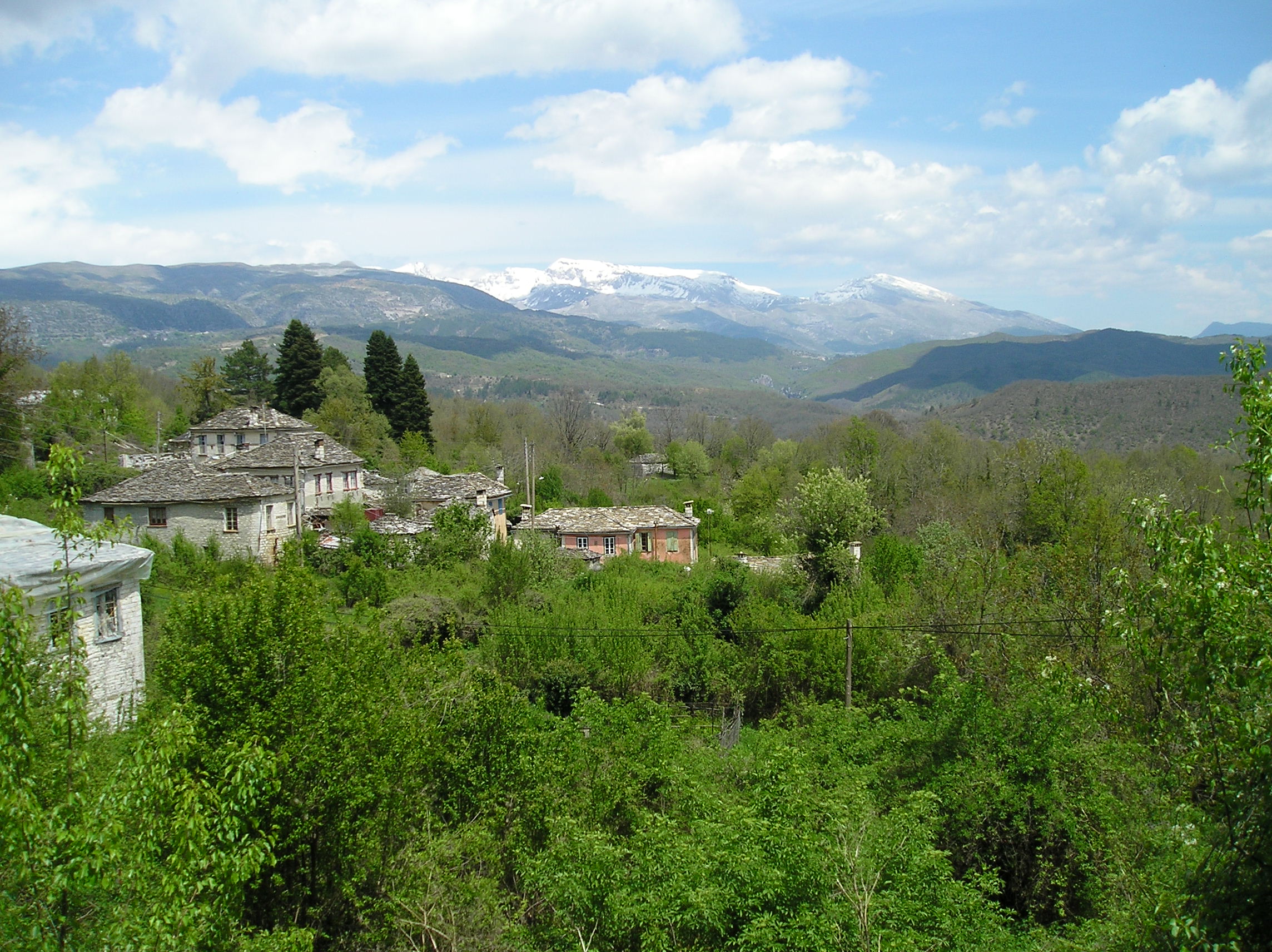
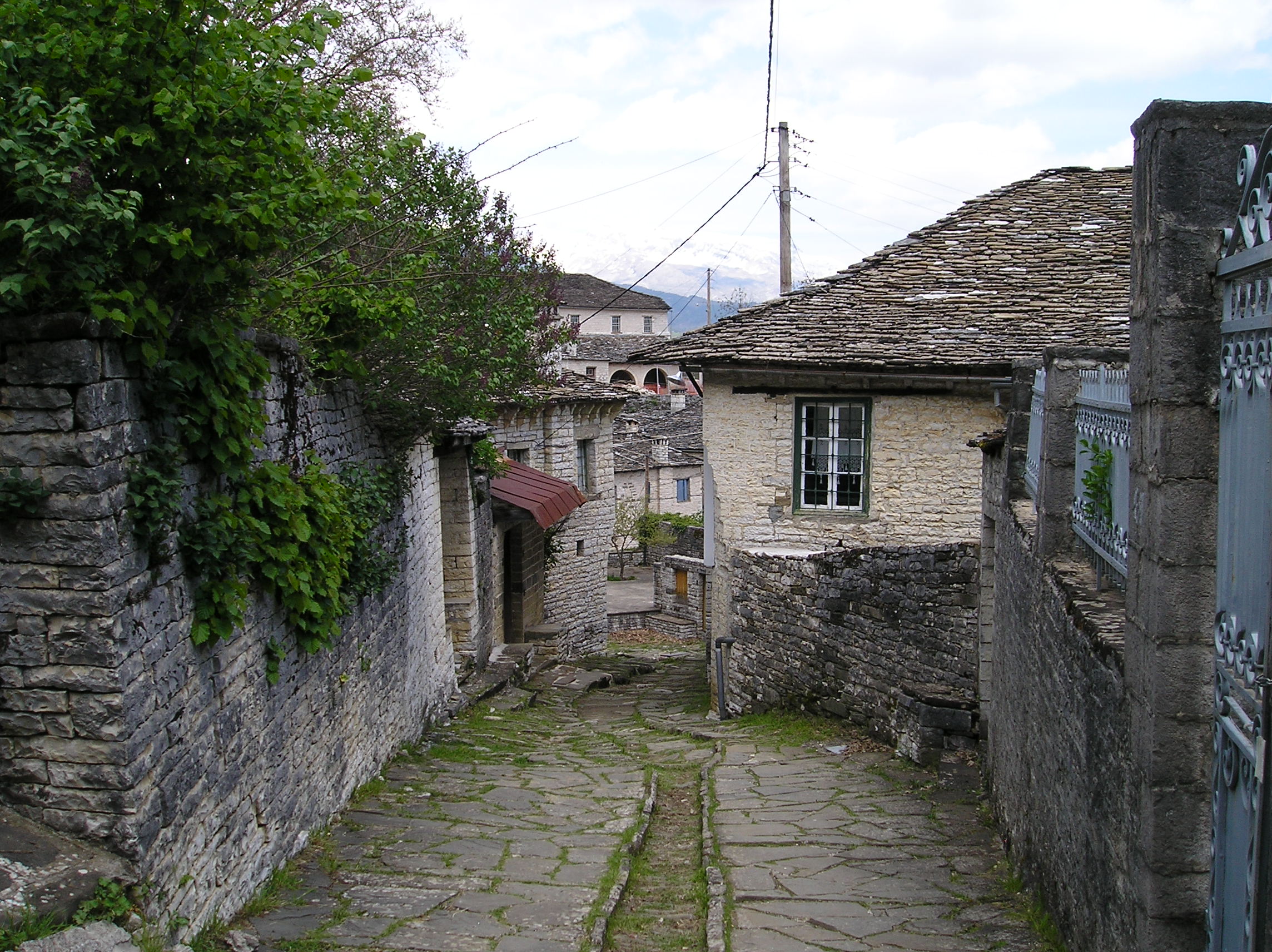
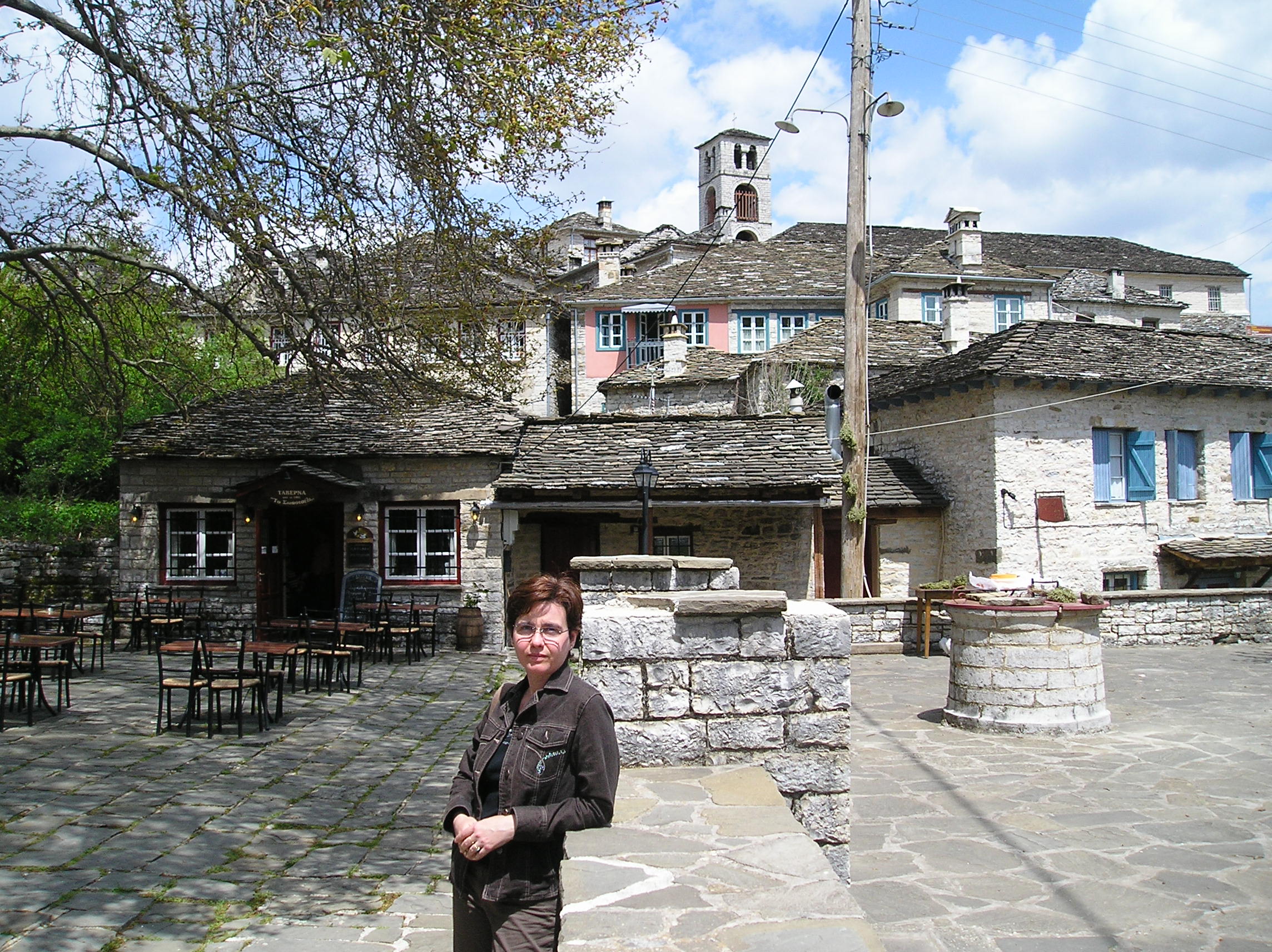
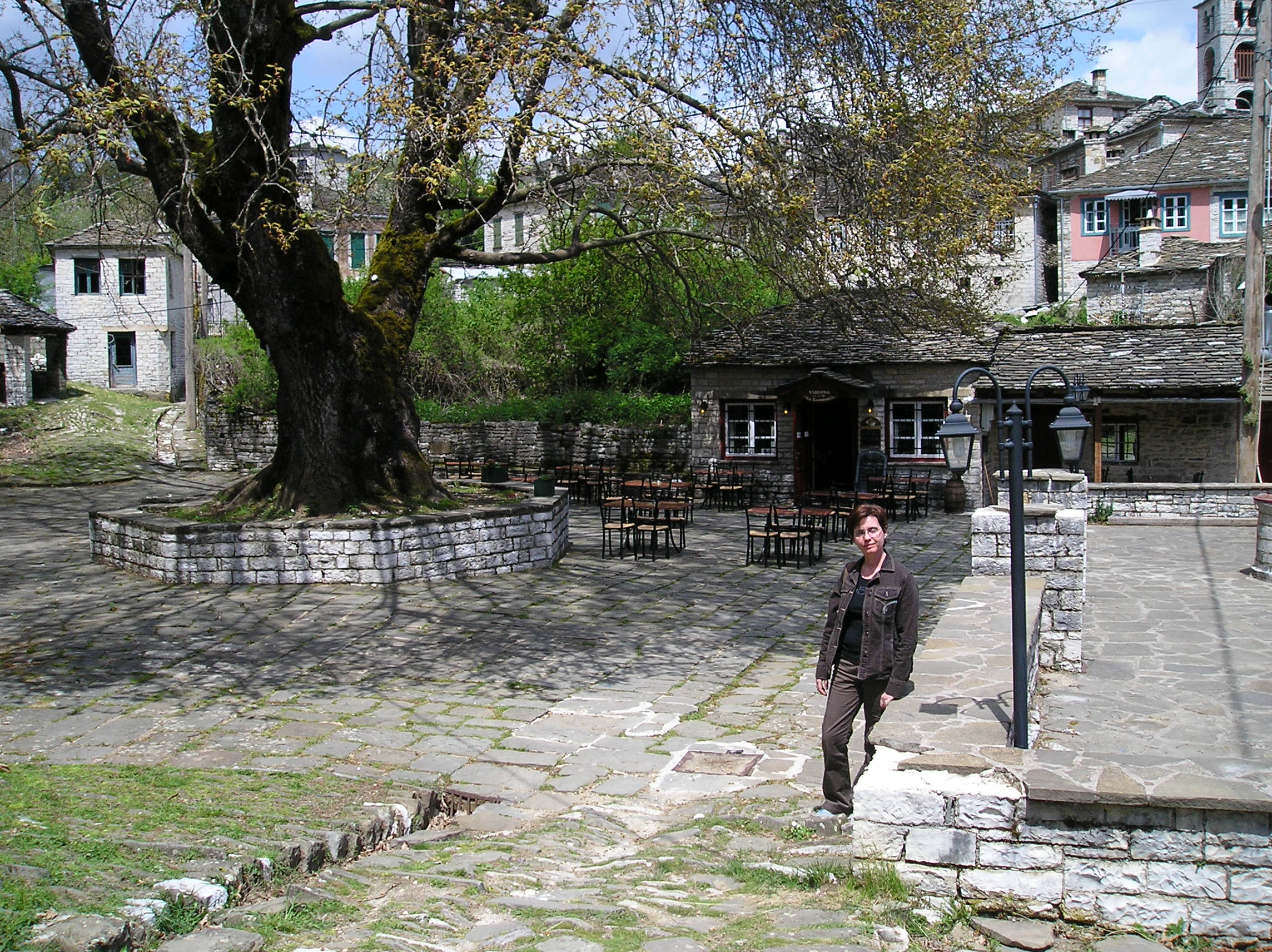
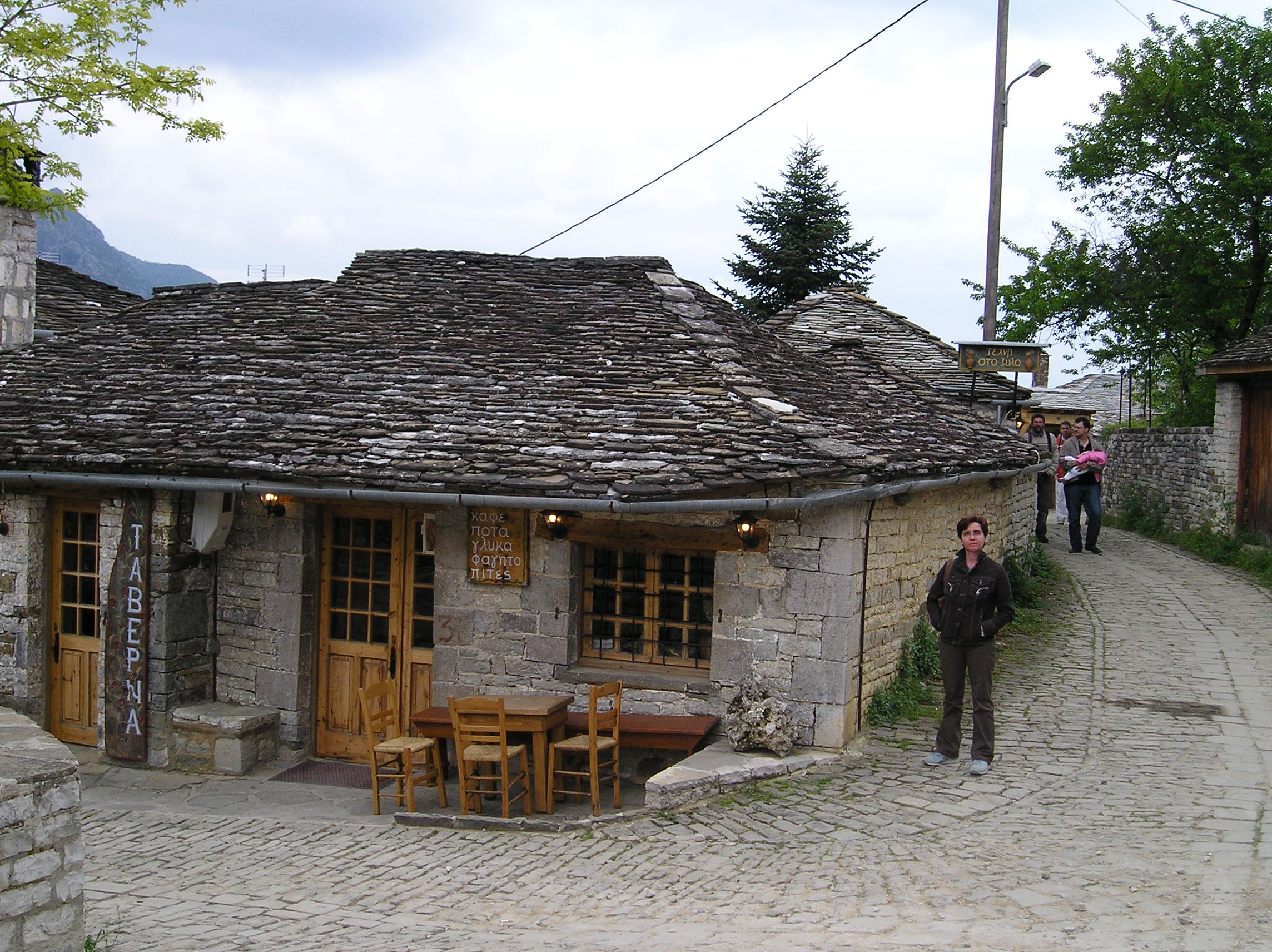
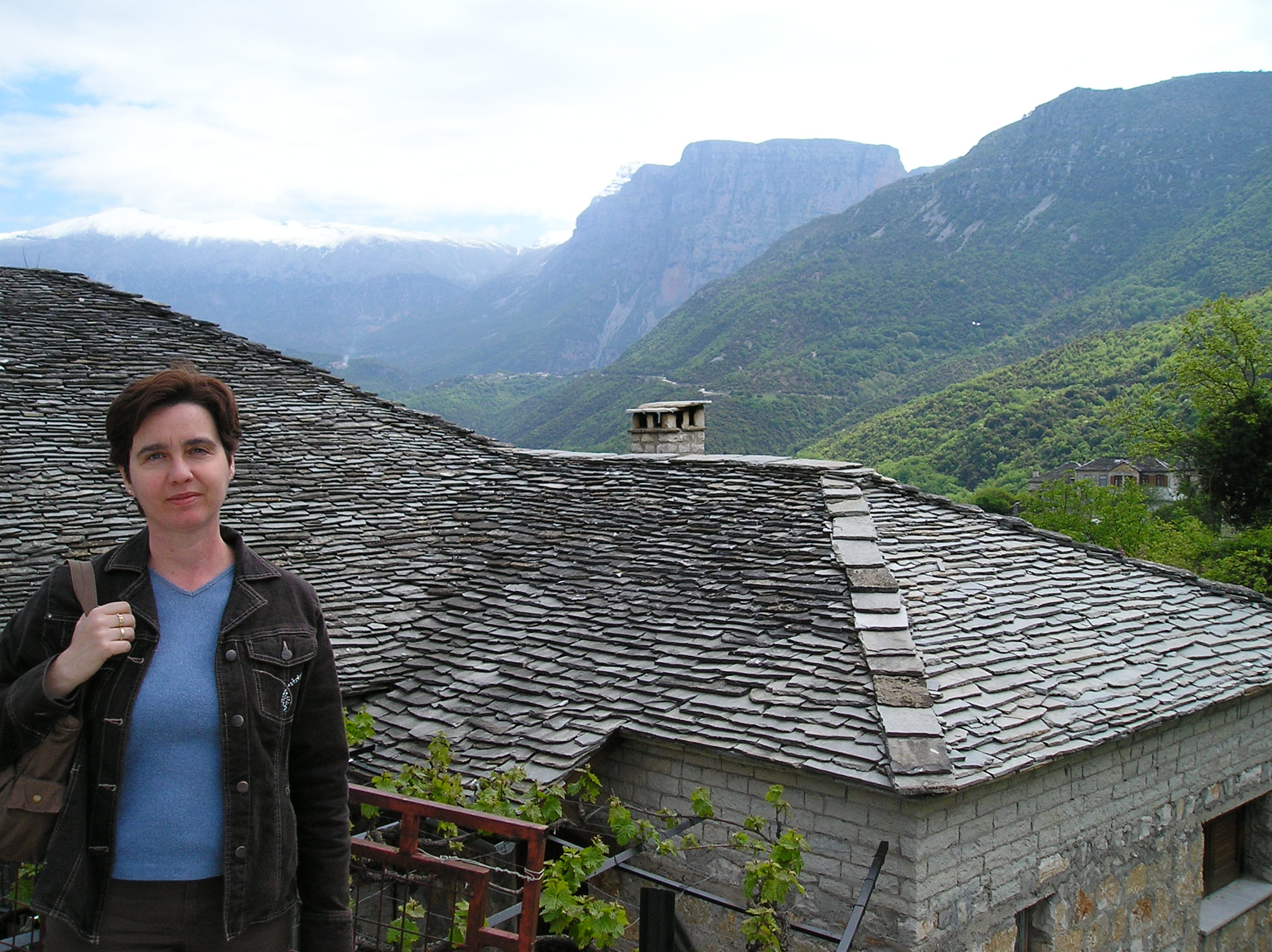
Although my husband Andy and I visited quite a few Zagori villages, only two stand out significantly among the rest. The first one is Dilofo. I count myself lucky to have been tipped off by a friend to seek out that specific village because it is not mentioned in the guidebooks and it’s hardly ever highlighted on the internet. Once we got there, we realized immediately that we were in for a rare treat. From the municipal car park, we took an alluring cobbled path and wound up in a spacious square where we sat to eat at a taverna under a huge plane tree.

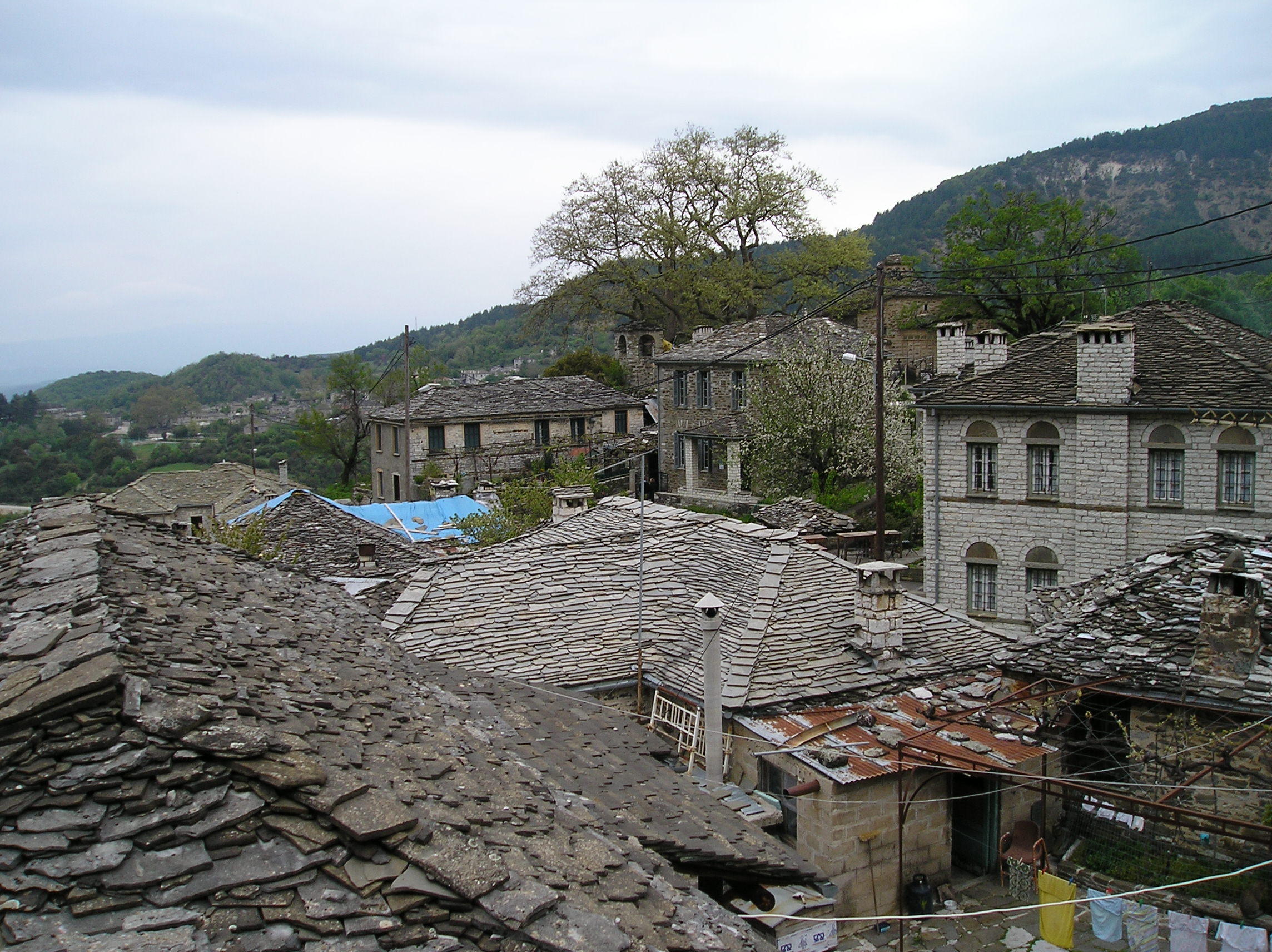
There, quite unexpectedly, we sampled more than the fantastic local cuisine. We sampled a taste of the past too, a world where time stands still for you. It is a place where you suddenly forget that you own a mobile or a camera. Suddenly you find yourself whispering while you chat, as if afraid of breaking the spell of the moment. It feels somewhat foreign to step back in time and at the same time, tremendously familiar, as if you become privy to the life of the people who lived here a long time before you were even born. In an eerie kind of way, it felt like the echoes from the hoofs of the horses were only now dying down, like the area’s renowned builders had only recently laid the tiles on the village house roofs. Dilofo is such a pleasure to discover and to me it is, by far, Zagori’s hidden gem. It is a place that is bound to enthuse and mystify the visitor no matter how many times they’ve been there before.


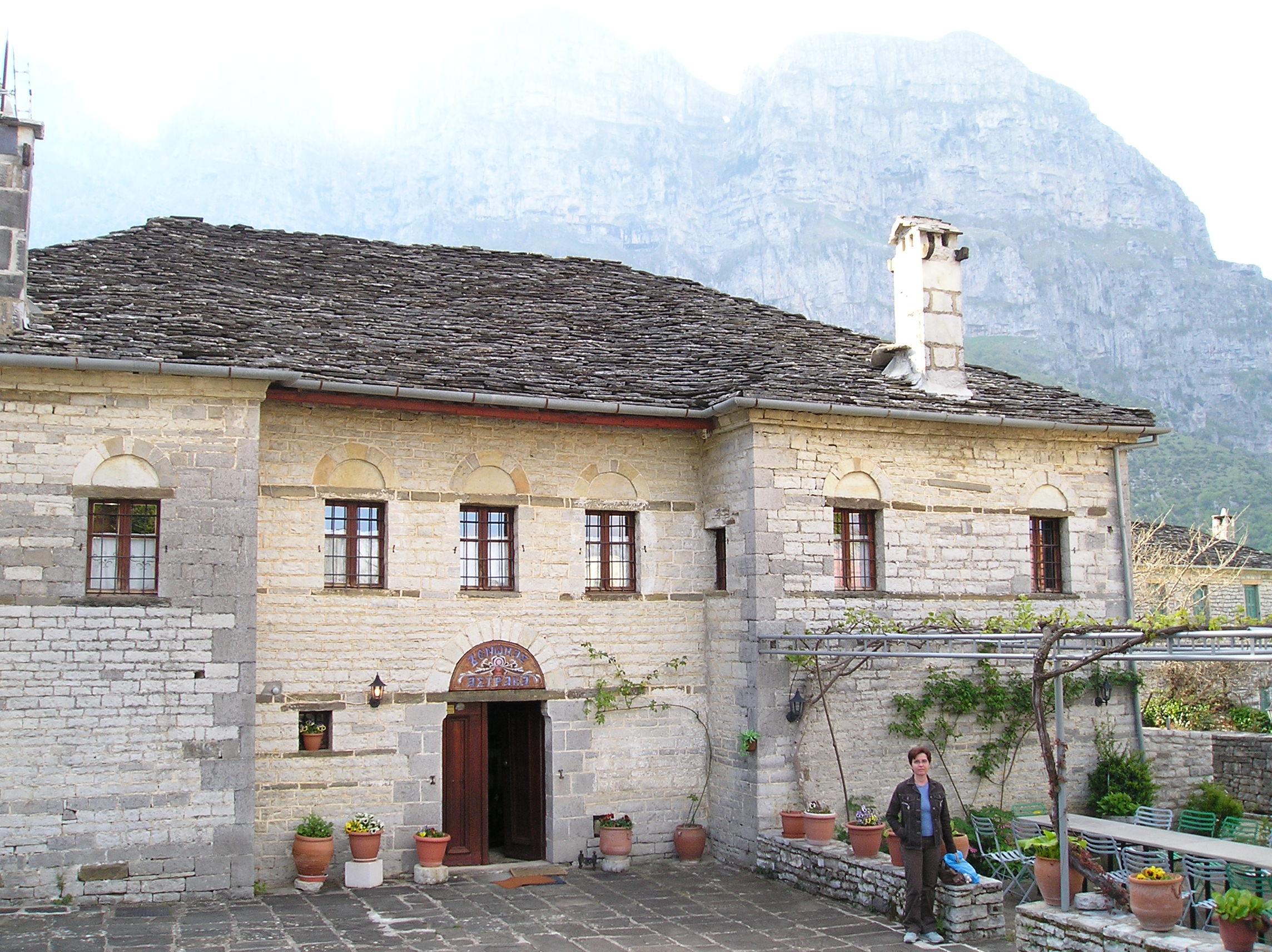
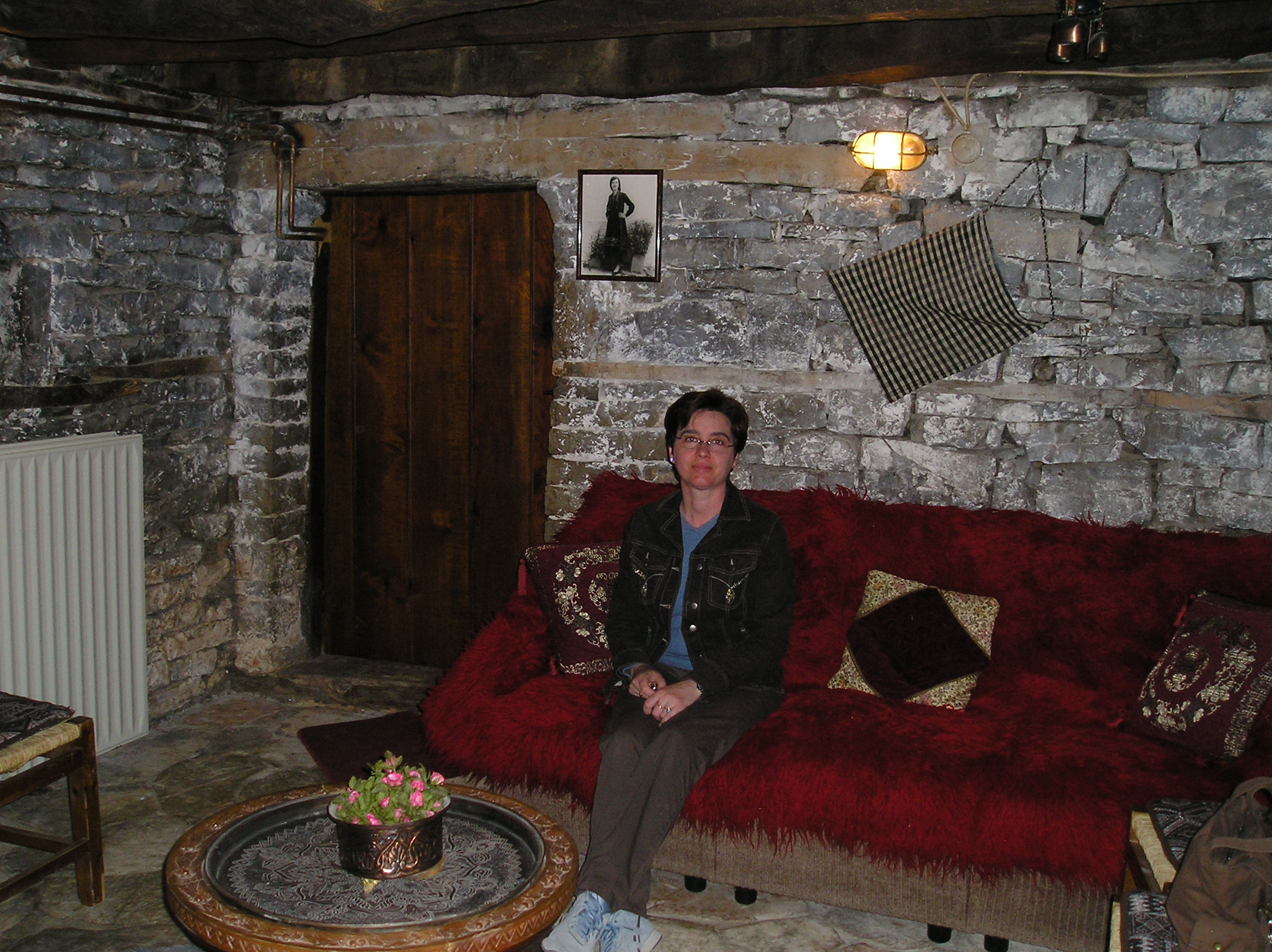
Papigo, on the other hand, is quite well known and also highly popular among tourists. We chose this enchanting village for two overnight stays in a traditional inn called “Astraka”, named after one of the mountains that tower above it. Papigo stands on the top of a mountain itself, at the end of a treacherous road that snakes endlessly uphill in a way that makes someone wonder how the locals travel during the cold, icy months of winter. Papigo is tiny but the beauty of it is indescribable. Anywhere you look, you feel the unstoppable urge to press the camera button. One of the hiking paths that starts here, ends high up in the mountains where hikers can visit the lake Drakolimni (dragon lake) near the summit of mountain Gamila (camel).


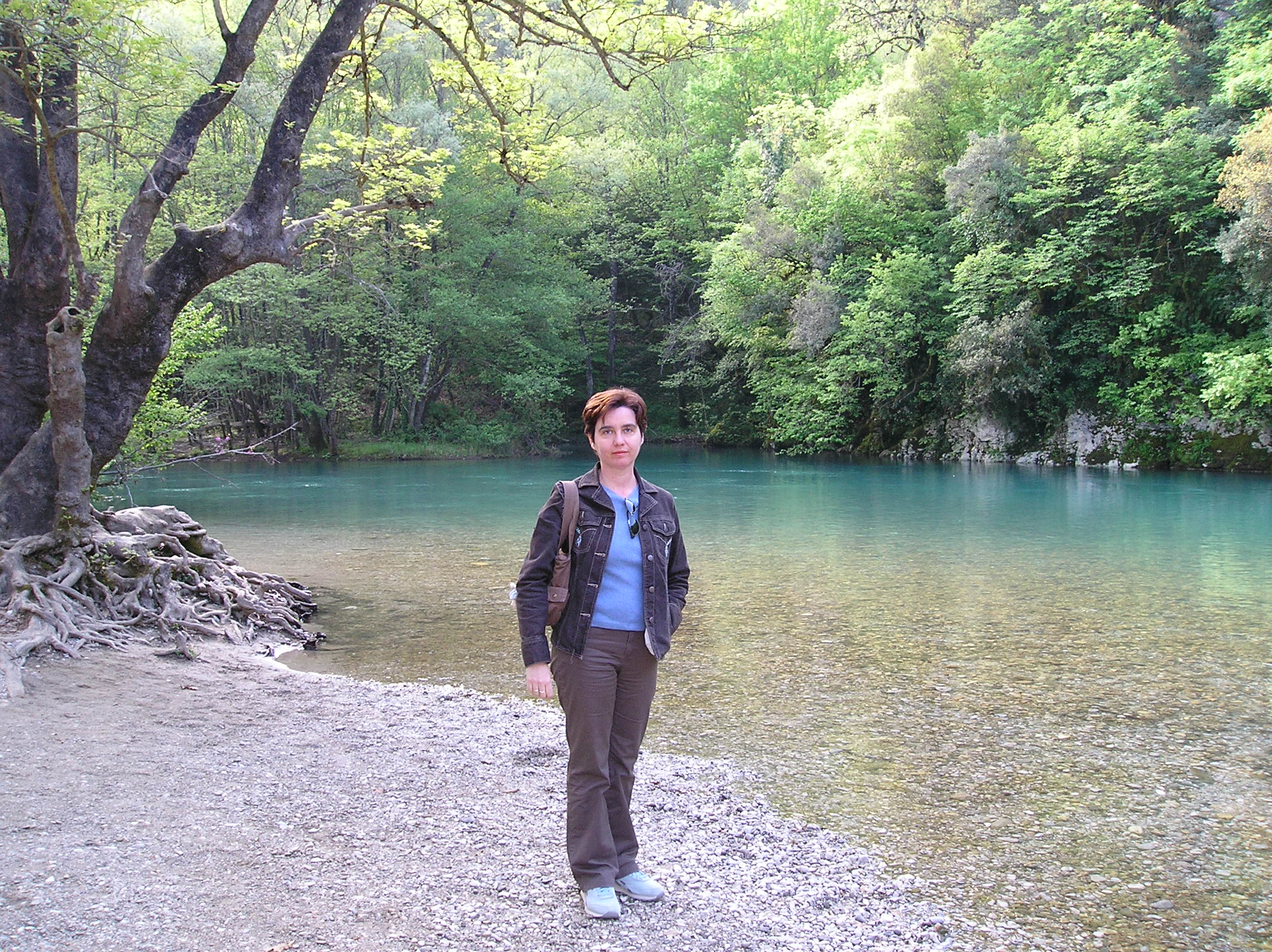
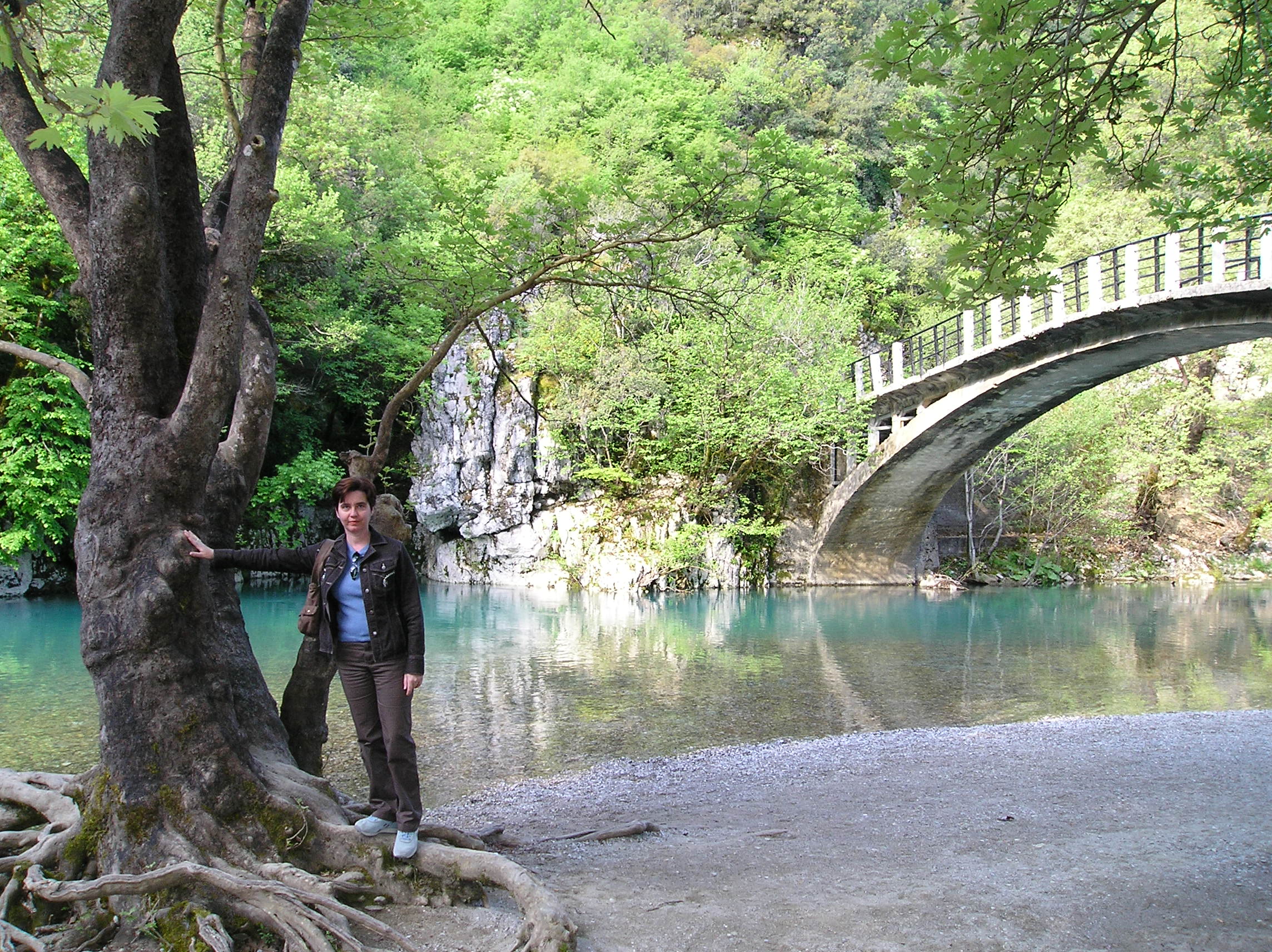
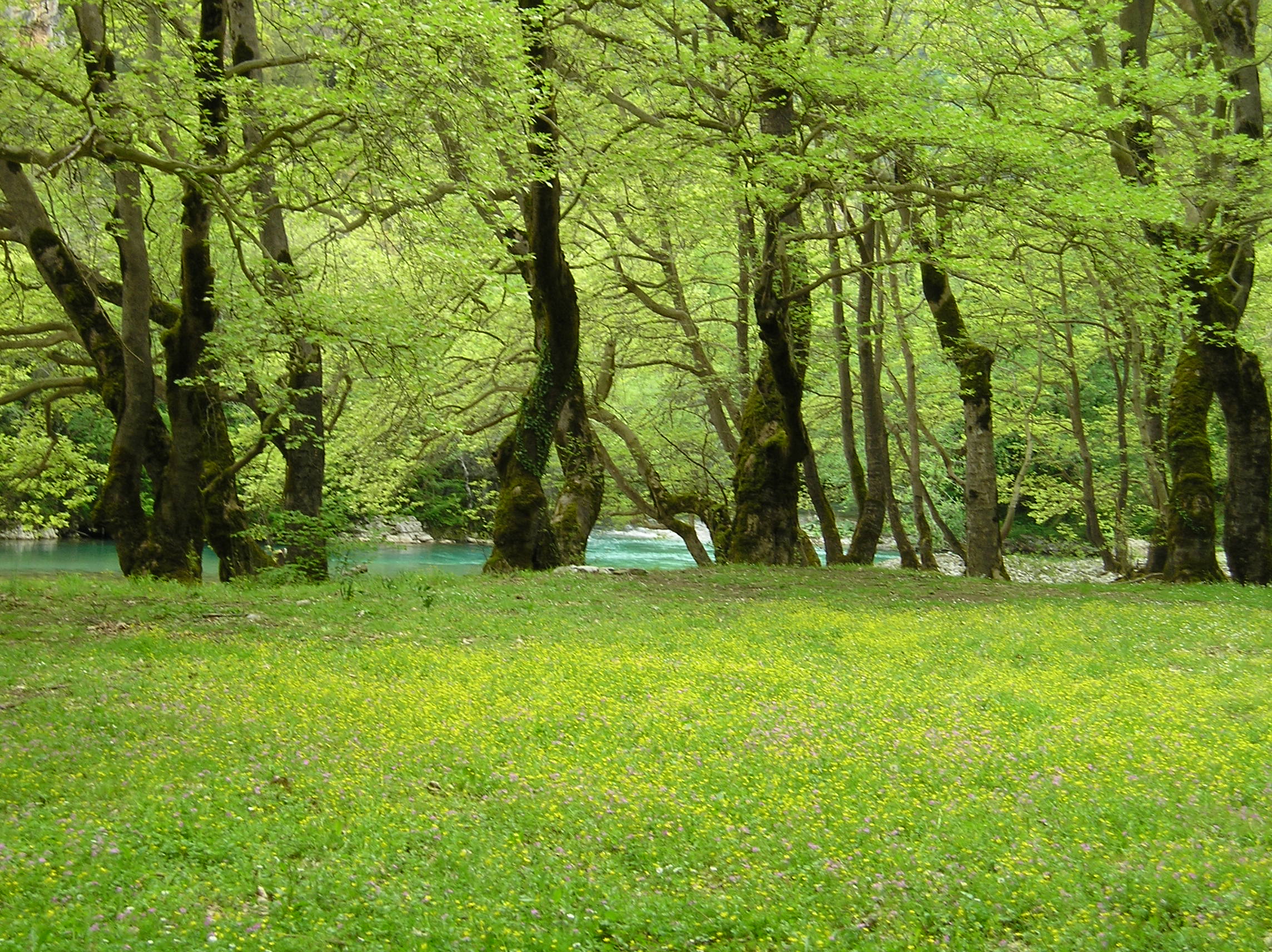
Papigo is situated within easy reach from the river Voidomatis, the village of Aristi, the village of Vikos with its breathtaking view to the gorge, as well as the Monastery of Panagia Spileotissa where the short walk through the forest along the river bank will remain forever indelible in my mind…

The first thing that the visitor is likely to notice about the people of Zagori is that they are uniquely lovely and hospitable. I will mention here the kindly owner at the inn who upon handing us the key to our lovely room, spent a good minute speaking highly of the local water supply, suggesting it makes washing oneself a whole new experience. I took her boasting with a pinch of salt I must admit but I wound up really impressed very soon after all when after a hot shower, I found out that I suddenly had the silkiest hair and skin ever.


People around the restaurants and in the streets all over Zagori were equally eager to direct us and to talk but among them all, one particular local stands out in my memory simply because he was a special delight to talk to. He was an elderly man, an inhabitant of the village of Aristi. When we visited there, taking in the generous views of the snowcapped mountains in the distance, he approached us and offered a kindly greeting. He was very friendly and chatty and he introduced himself as a retired teacher. He took it upon himself to inform us about the sites and the area and he was particularly boastful of Voidomatis river, saying that its water is pure and that the locals still drink it without any qualms.

Then he stretched out his hand and pointed to the hills towering over Aristi, saying that back at the War, the locals took the hill in a battle against the enemy, thus stopping them from taking the village. Having realized at once that he meant WWII and eager to learn more, I then questioned him: “Which enemy is that?” To my surprise, he remained silent and fixed me with a curious stare that lasted a while, finally responding quite oddly: “What education do you have?” I was quite taken aback as you realize! “I am a university graduate,” I replied politely and matter-of-factly. “I am surprised then,” he said, “You should know we were fighting the Germans in the War!” to which I laughed and explained that I had only meant to ask him to clarify if he was referring to the Germans or their allies, the Italians.

I knew only too well that the Greeks were also fighting off the Italians around Epirus at the time, and we were in the heart of Epirus, after all. This seemed to make sense to him and he finally relaxed and continued to talk about the old days. I thought it was hilarious, that he should think me that ignorant, and for the whole day, Andy and I would pose the question to each other: “What education do you have?” – only to burst into the most uncontrollable giggles afterwards.
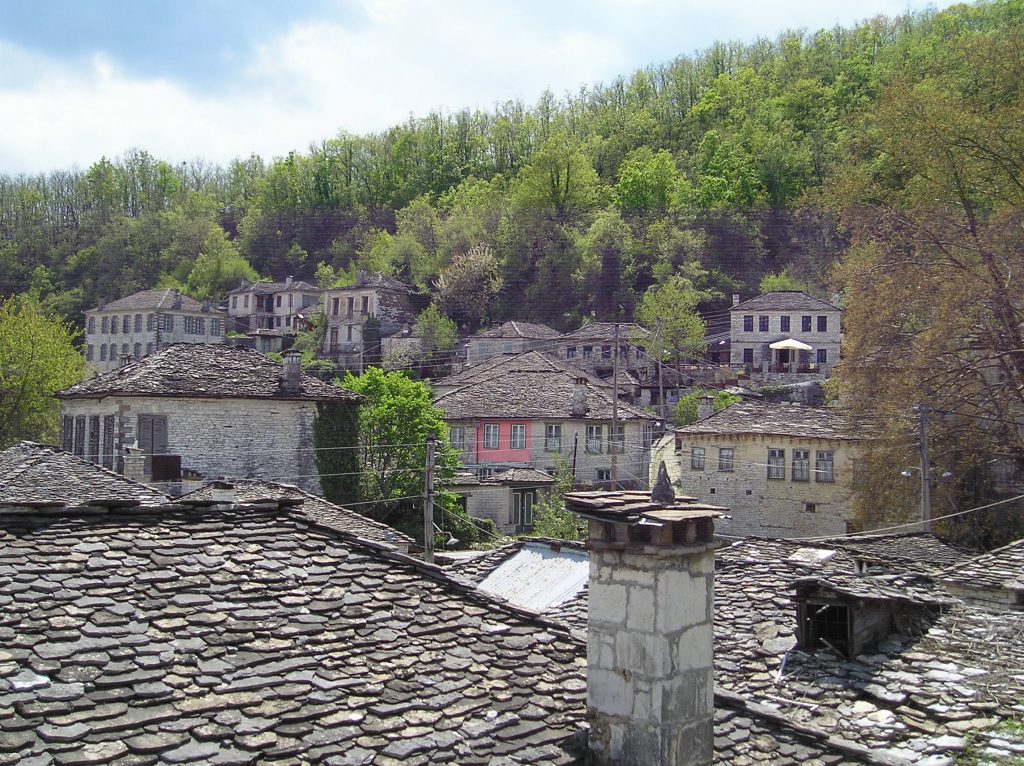
Dilofo

In all, our three-day excursion around Zagori in the spring has been a sheer delight for all the senses and one of the most unforgettable travels I have ever had. It goes without saying that we only saw a fracture of what’s out there to see and that a return there is as desirable as it is inevitable in the years to come.

I’ve shared more photos from each area I visited in Zagori on my Facebook profile, and you’re welcome to check them out here:

Kipi-Kalogeriko Bridge-Kapetan Arkouda Bridge: https://www.facebook.com/efrosini.moschoudi/posts/10225320577262189

Monodentri-Agia Paraskevi Monastery-Oxia-Kokkori Bridge: https://www.facebook.com/efrosini.moschoudi/posts/10225384334376077

Dilofo: https://www.facebook.com/efrosini.moschoudi/posts/10225414582852270

Aristi village & Aristi bridge: https://www.facebook.com/efrosini.moschoudi/posts/10225449406722845

Papigo-Kolymbithres-Mikro Papigo: https://www.facebook.com/efrosini.moschoudi/posts/10225473470204417

View to Vikos gorge from Vikos village-Monastery Panagia Spileotissa: https://www.facebook.com/efrosini.moschoudi/posts/10225513760691654


How to get to Zagori:

CENTRAL ZAGORI: From Ioannina, take the road to Konitsa. At 19 km, after the metal bridge, turn off right for central Zagori. Here you can visit Monodentri and the Monastery of Agia Paraskevi, Oxia, Dilofo, Kipi, the single arch bridge of Kokkori and the three-arch bridge of Plakida (Kalogeriko). In central Zagori, you can enjoy a view to the Vikos gorge both from Monodentri and Oxia.

WEST ZAGORI: From Ioannina, take the road to Konitsa. At 38 km, turn off after Kalpaki and head to Aristi. From there, you can also visit Vikos, the Monastery of Panagia Spileotissa, the Aristi bridge, Papigo, Kolybithres, Mikro Papigo. Vikos offers the most breathtaking view of the Vikos gorge and it is unmissable.  


Some Kilometric distances:

IOANNINA-DILOFO : 32 KM

IOANNINA-KHPOI : 35KM

DILOFO-PAPIGO: 28KM

DILOFO KONITSA : 36KM

IOANNINA-PAPIGO 55 KM (takes approx. 1 hr and 15 mins)

ATHENS-PAPIGO 495 KM  

GET YOUR FREE COPY OF THE BOOK HERE


YOU KNOW WHAT THEY SAY… SHARING IS CARING! Tweet this to spread some love:

Zagori, Epirus. A journey through time... #Greektravel #beautiful #Greece Share on X


3 FREE books for you! Sign up below to receive them instantly!
NEW! Clean Christmas romance. Single mother Cathy Roussos gave up on love long ago, and veterinarian Alex Rallis doesn’t believe in it, but one magical Christmas on a Santorini farm might just change everything…
Check it out on Amazon     Read a FREE sample!


A clean romantic suspense short read with an unreliable narrator that’ll keep you guessing! Vera is losing her mind over famous actor Yannnis Ksenos, except, she isn’t just a fan… Now, she plucks up the courage to ring his doorbell… Visit Amazon


For my delicious Greek recipes, go here
 
Planning to visit Greece? Check out my  FREE guide to south Corfu!

A marathon race in Nafplio inspired my Greek novel, Running Haunted


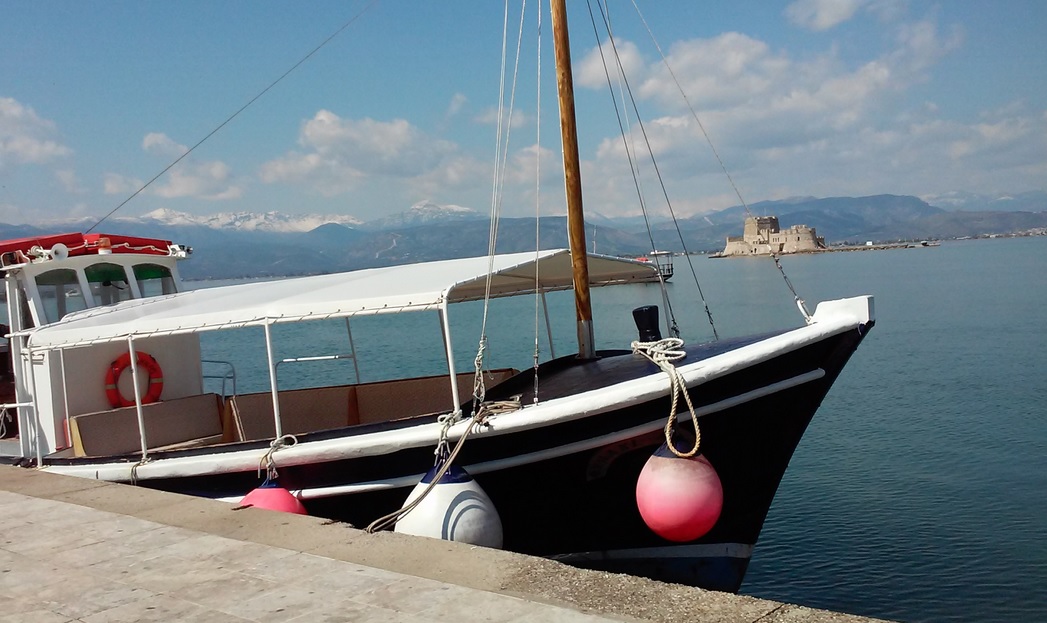
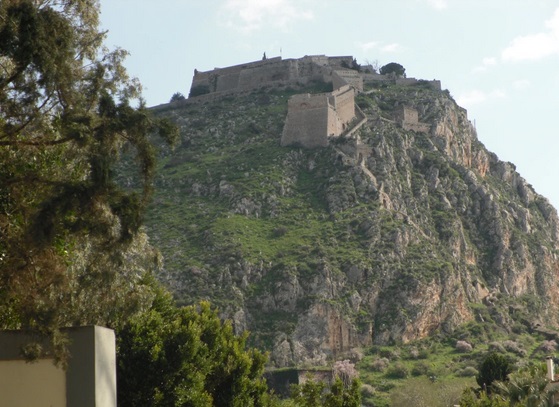
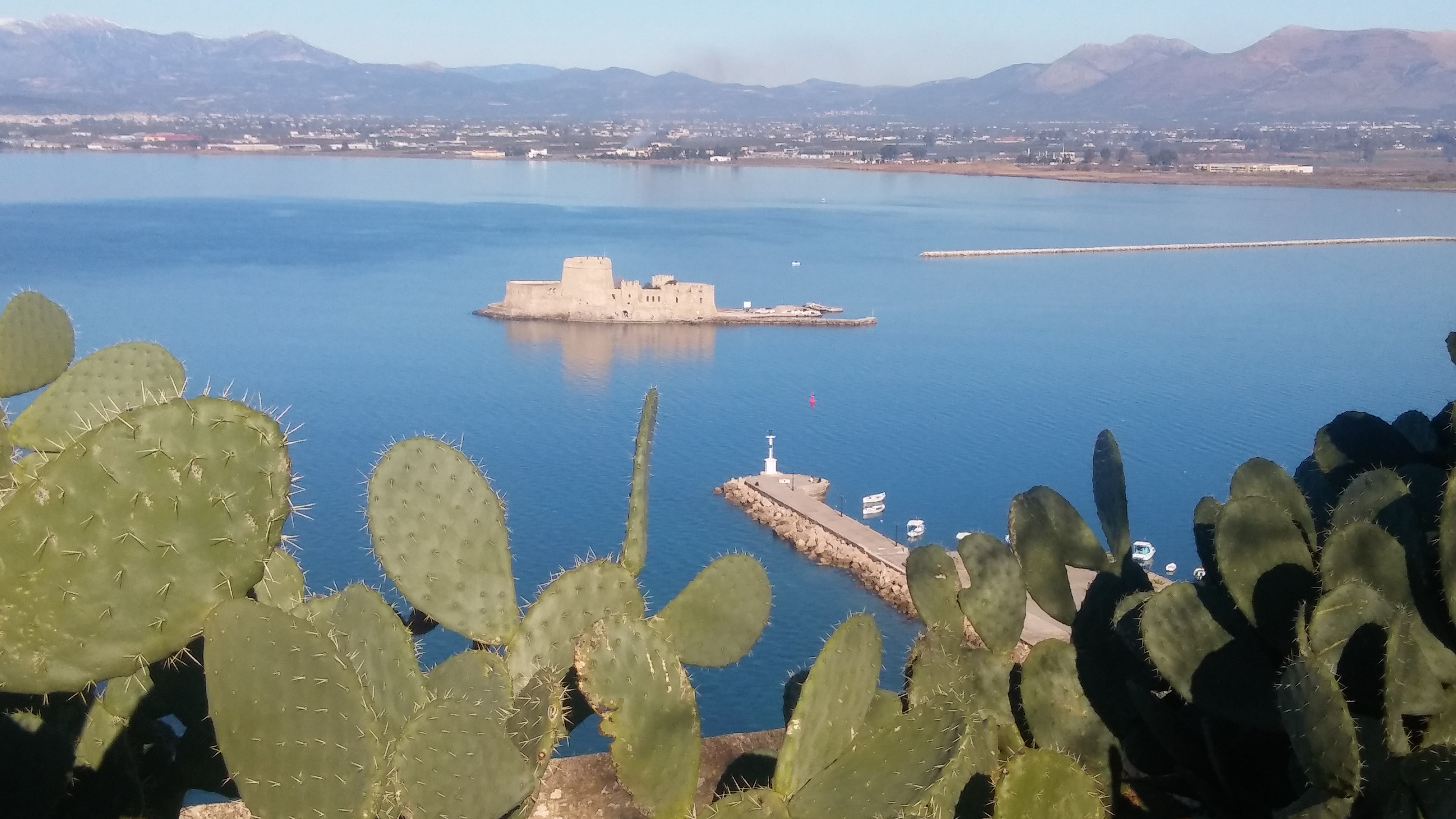
Nafplio was the first capital of Greece after the country’s War of Independence in the 1820s against Turkish rule. As a result, it is a town steeped in history, an element that is present in every corner of the old town center, with its grand neoclassical buildings and the magnificent Venetian fortress, Palamidi, that dominates the town’s skyline with its unparalleled charm. Not to forget, of course, the picturesque waterfront. The tiny fortress of Bourtzi, set in the water like a jewel and a silent sentinel, is an idyllic landmark that visitors love to marvel at from the multitude of cafes and restaurants lining the port.

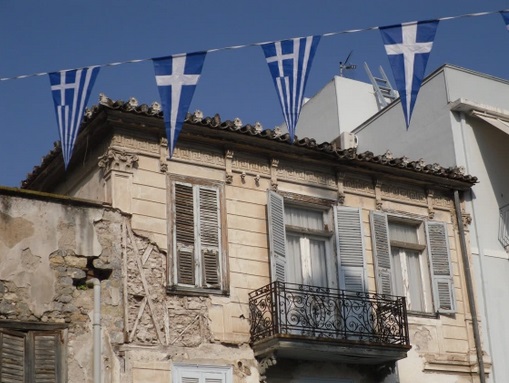
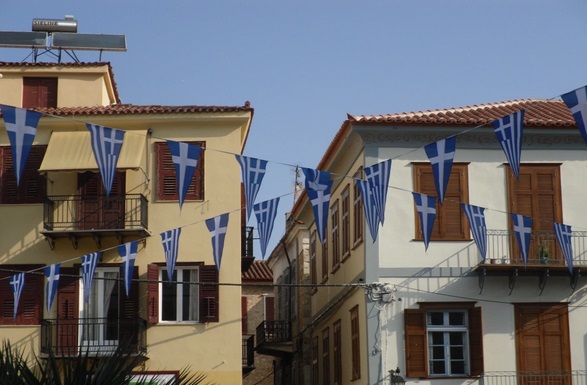
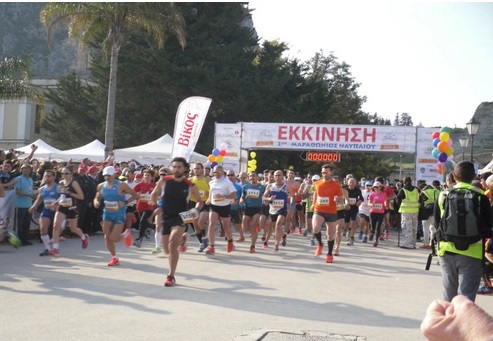
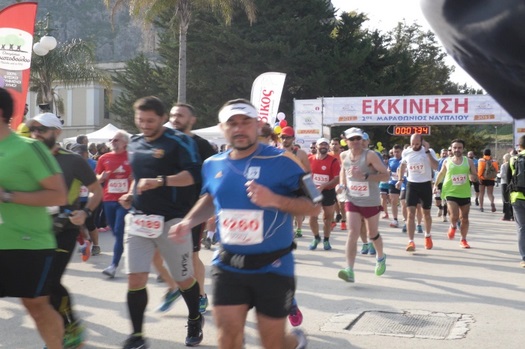
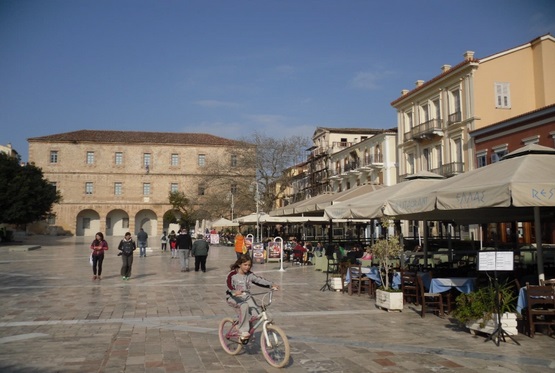
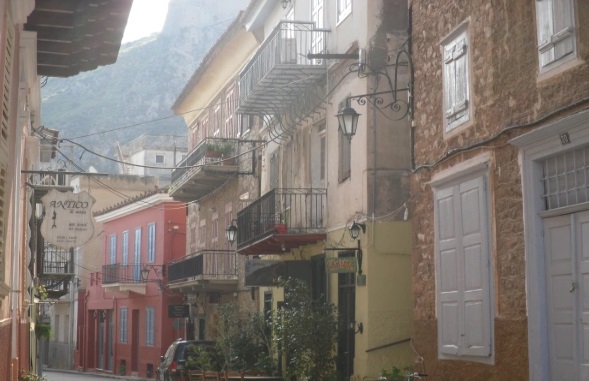
Thought I’d share today some photos from a special weekend break in this magnificent town, which took place a few years back. It was the weekend of the annual Nafplio Marathon race, plus it was in March, very close to Independence Day (March 25). The Greek flags decorating the picturesque lanes of Nafplio added to their inherent charm a touch of national pride.

During our weekend break, my husband and I made sure to walk around the town a lot, to take in the incredible energy of it all, and to fill our minds with the serenity of the setting.

Saturday was a quiet day, but Sunday was a celebration! The town came alive with big crowds that stood expectant and music blaring from massive speakers. The annual Marathon race of Nafplio, a highly successful event, took place that morning, sending both runners and cyclists on a series of races around town and its outskirts to be cheered by excited spectators.

As opposed to the Athens marathon that’s regarded one of the most difficult to participate in (because its last stretch is a continuous climb uphill), the Nafplio marathon proved to be much easier for my husband, who ran the race, seeing that the ground was flat throughout.

Strolling around Nafplio is a unique experience. Magnificent squares, such as Syntagma (Constitution) and Trion Navarchon (Three Admirals), picturesque lanes, cafes and tavernas, curio shops and smart boutiques attract the eye in every corner. Surely, a photographer’s paradise.

For the enthusiasts of history, there is a lot to see and explore. Other than the Archeological museum and the Mosque (that housed the first parliament of Greece after the War of Independence), there are three historical forts around town.

Palamidi is, by far, the most magnificent, set atop a high peak that overlooks Nafplio. On a lower peak beside it, stands the fort of Akronafplia, and last but not least, the tiny fort of Bourtzi is, hands down, the most enchanting, seeing that it’s built on a tiny island at a short distance from the seafront. On a peaceful, sunny day, it’s a mesmerizing sight, seemingly floating on the water like a peaceful, off-white bird.

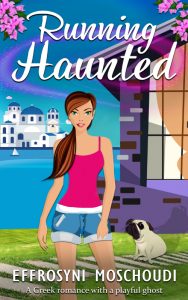
To me, it is no surprise that my great love for Nafplio, coupled with the delightful experience of that Marathon weekend there, in time inspired to write a novel – my romantic comedy, Running Haunted. And, in it, I unfold the allure of Nafplio in all its glory.

The book tells the story of Kelly Mellios, a marathon runner, who visits Nafplio to run the race and winds up getting hired to run a house. With a ghost in it!

MORE INFO:

The stunning and athletic Kelly Mellios runs a marathon in the alluring Greek town of Nafplio and winds up getting hired as a housekeeper by Alex Sarakis, a charming hotelier. Alex lives with his three underage children and a quirky pug, but no one knows there’s an extra inhabitant in the house… It’s the ghost of Alex’s late wife that lingers on with a secret plan.

When Kelly finds out the house is haunted, she freaks out at first, but then finds herself itching to help the ghost settle its unfinished business. It is evident there’s room for improvement in this family… Plus, her growing attraction towards Alex is overpowering…

Will Kelly do the ghost’s bidding? How will it affect her? And just how strange is this pug?

VISIT AMAZON US  UK

Interested to visit the picture-perfect town of Nafplio? My FREE travel guide includes my best recommendations for your sightseeing, including recommended walks for the most panoramic vistas!


YOU KNOW WHAT THEY SAY… SHARING IS CARING! Tweet this to spread some love:

A #Greek rom com about a #Marathon race and... a ghost! #Greece Share on X


3 FREE books for you! Sign up below to receive them instantly!
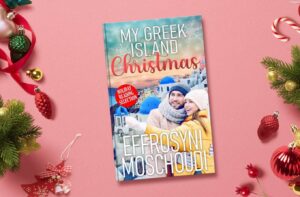
NEW! Clean Christmas romance. Single mother Cathy Roussos gave up on love long ago, and veterinarian Alex Rallis doesn’t believe in it, but one magical Christmas on a Santorini farm might just change everything…
Check it out on Amazon     Read a FREE sample!


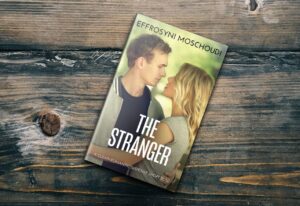
A clean romantic suspense short read with an unreliable narrator that’ll keep you guessing! Vera is losing her mind over famous actor Yannnis Ksenos, except, she isn’t just a fan… Now, she plucks up the courage to ring his doorbell… Visit Amazon
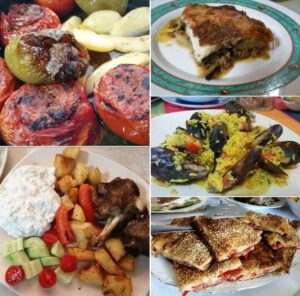
 

For my delicious Greek recipes, go here
 
Planning to visit Greece? Check out my  FREE guide to south Corfu!

Old village life photos #Moraitika #Corfu

The writing says: Cultural center of Moraitika, a calendar of memories from our village. 2020 wishes for health, love and progress.

Late last year, I was contacted on Facebook by Mrs Aglaia Anthi, President of the cultural center of Moraitika, Corfu. She said she’d seen some old photos on my website and asked for permission to use them for the 2020 calendar of the cultural center. I was thrilled and, of course, I said yes.

Last January, she sent me a copy of this beautiful calendar which I am thrilled to share today. I meant to do it back then but, sadly, I was in a bad place at the time, caught up in my late mother’s daily cancer fight. When I received the calendar, I took it to her bed to leaf through, and she cried to see the photo on the first sheet, which depicted her grandparents, Stefanos and Olga Vassilakis. She kissed their faces on the photograph whispering, ‘i nouna mou, o nounos mou…’ (the Corfiot words for ‘my granny, my granddad). The memory still causes my heart to twinge with feeling. My mother passed away on February 12, and I am comforted to think she is in her grandparents’ and her parents’ arms right now.

Without further ado, here is the calendar, sheet by sheet. I hope you will enjoy it.

January-February. Caption: The first priest of Moraitika and his wife (Stefanos and Olga Vassilakis).

My great-grandfather was also a teacher of Moraitika. The house he built for his family still stands on the hill near the church. Part of it was used as the village school at some point. He is buried in the church yard. For more photos and information, see my post about the two churches of Moraitika on the hill.


March-April. Caption: Kato Vrysi.

Or how the locals pronounce it, ‘Katou Vrysi.’ Loosely translated, it means, ‘The tap downhill’. It is situated on the side of the main road outside the dilapidated estate behind the Coop supermarket. There is also an ‘uphill tap’ called ‘Panou Vrysi’ which is at the edge of the village on the hill under a big plane tree. This is why the locals also call it ‘O Platanos’ (The plane tree). For detailed directions to Panou Vrysi, see my guide to Moraitika.


May-June. Caption: Old estate houses of the village.

The building on the left is the Papadatos estate house. This family also owns the little church of Agios Dimitris nearby (my great-grandfather is buried outside the main door of this church). The building on the right is the Koukouzelis estate house. Today, the grounds are used by the council for cultural events (concerts mainly). For more info and photos, see the same post about the churches.


July-August. Caption: Moraitika wedding of Kostas and Eleni Vlachos.

My uncle Kostas passed away a couple of years ago, but Aunt Leni remains active at her old age (born 1933), and still helps out at her seaside apartments of ‘Nea Zoi’ (beside Caldera on the beach). See my guide to Moraitika for these establishments. Here, below, follows an excellent commentary about this photo by my Aunt Leni as relayed by her daughter-in-law, Spyridoula Vlachos:

‘The wedding took place in 1953 in the village of Episkopiana. This picture was taken at the look out near the St Nikolaos church in Episkopiana that no longer stands. This is the area of the old estate home of Patsos that is now inhabited by the Tata family. After the wedding took place, everyone set off to Moraitika on foot, where the reception party would take place on the village square. On the front, walked the organ players and the priest who held the bible, then followed the bride and the groom, with everyone else behind walking them. Back then, the way to Moraitika was via the estate of the Kapodistrias family. In this photo, Stamatis Vassilakis’s daughter, Marika, is pictured beside the bride dressed in white. She had got married just a week earlier and was pregnant with her first child.’

Re my Aunt Marika (daughter of Great-Uncle Stamatis Vassilakis): She was one of my favourite relatives of the Vassilakis family. She had the heart and the soul of a child. I still recall so vividly the last time I saw her, visiting her in her house after a long while during my short stay in the village. It was a couple of years earlier, just months before she died. She was confused with dementia and didn’t recognize me when I approached her. Still, her good heart must have done, because she kept holding me, her eyes sparkling with love and delight while saying, ‘I love you! I love you!’ I’ll never forget her face that day; so innocent, so loving. Somehow, she is the only one whose name I didn’t have the heart to change in my largely autobiographical novel set in Moraitika, The Ebb.

Back to the wedding photo: Great-Uncle Lilis, a teacher, stands behind Aunt Marika. Behind Aunt Leni, the bride, on the right, is the groom, Uncle Kostas. To his right, stand Aunt Olga, and Great-Uncle Kotsos with Great-Aunt Rini Tsatsanis from Messonghi. The girl with the frizzy hair beside them is Maria, Lefteris Kosmas’s sister (he runs Leftis Romantica). My mother, Ioanna, is pictured further right as a little girl with her hands on her waist.  

September-October. Caption: Group photo of members of the Vlachos and Vassilakis family.

My great-grandmother’s maiden name was Vlachos, and her wedding to Stefanos Vassilakis bound the two families together as one with great relations. This photograph was taken outside the Vassilakis house (late 40s to early 50s). She sits at the center dressed in black, as befitted a widow at the time. My great-grandfather passed away in 1944, and she did in 1953. The building shown in the background is the Koukouzelis estate house as mentioned earlier. The mulberry tree they’re sitting under still stands today and so does the olive tree on the right.

Pictured from left to right: Back row: Great-Uncle Antonis Vassilakis, Aunt Olga (Lilis’s daughter), Great-Aunt Irini, Aunt Dina (or Beba, Lilis’s daughter), Christos Vlachos, Tsantis Vlachos. Middle row: Great-Uncle Kotsoris (Kotsos) Tsatsanis, Great-Grandmother Olga Vlachos, Angelina Vlachos, Great-Uncle Lilis Vassilakis and his wife, Great-Aunt Fotoula. Front row: Great-Uncle Stamatis Vassilakis. Behind them, the children Petros and Sofia Vlachos. Petros used to run The Crabs restaurant on the beach (now Caldera, run by his son Christos). On the right of my great-grandmother, you can see Evgenia Vassilakis (wife of Stamatis) and her grandchildren, Vasso and Stefanos Moraitis (both, Marika’s children).

November-December. Caption: Washing in the ‘mastello (old Venetian word for ‘wooden tub’).

If my memory serves me well, ‘Forena’ is a nickname for the woman pictured  here. I think she lived or had a shop in the old days on the upper square of Moraitika where the Village Taverna is. This square was always referred to by my grandparents as ‘Foros’ (a Venetian word meaning market or square, in my understanding).

The rest of the caption reads: ‘Open-air barber shop (Pippis, Kapouas, Tatsos, Lopi, Sofia).

For more photos and info on the Vassilakis family and my old summers in Corfu, see this post.  To follow my blog and be notified of my new posts, go here.

This is it for now, everyone. I wish you a wonderful summer, and hope you’ll get to make lots of new and exciting memories – be it in Corfu, or your own corner of heaven 🙂


YOU KNOW WHAT THEY SAY… SHARING IS CARING! Tweet this to spread some love:

Old village-life photos from Moraitika #Corfu #villages Share on X


3 FREE books for you! Sign up below to receive them instantly!

NEW! Clean Christmas romance. Single mother Cathy Roussos gave up on love long ago, and veterinarian Alex Rallis doesn’t believe in it, but one magical Christmas on a Santorini farm might just change everything…
Check it out on Amazon     Read a FREE sample!


A clean romantic suspense short read with an unreliable narrator that’ll keep you guessing! Vera is losing her mind over famous actor Yannnis Ksenos, except, she isn’t just a fan… Now, she plucks up the courage to ring his doorbell… Visit Amazon


For my delicious Greek recipes, go here
 
Planning to visit Greece? Check out my  FREE guide to south Corfu!


Moraitika and Messonghi in Corfu: an insider’s travel guide

Messonghi river, Corfu
Messonghi river

Today, I am writing to spread the word about my favorite corners of the world – the stunning villages of Moraitika and Messonghi in Corfu. Having holidayed there most summers since the late 1970s, I’ve written an insider’s travel guide to spread the word about them.

My guide will tell you everything you need to know if you’re planning a visit, or if you’re simply hoping to do that sometime in future. ‘Cos who doesn’t like to daydream about beautiful exotic locations, right?
Messonghi beach, Corfu
Messonghi beach

In my travel guide you will find among other things:

Traditional Greek tavernas, recommended family hotels and apartments, the best beaches in the area, where to go for live shows and a great night out (lots of family fun!), the best boat trips (setting off from Messonghi river or Lefkimmi port), places of interest and fun things to do in the greater area and more.
Moraitika beach
Moraitika beach, view to the mountains of Chlomos and Martaouna

Did you know?

Moraitika’s old village quarter is nestled on a hill and is full of picturesque lanes you’ll love to explore and revisit. My insider’s guide will give you intriguing facts and history tidbits as well as offer tips on places of interest off the tourist trail.

And did you know there are three wonderful family tavernas up on the hill, all offering exquisite Greek dishes? One of them has this stunning view that overlooks the bay!

Speaking of stunning views, there’s another taverna that overlooks the same bay, but this one is on the side of Messonghi. The taverna is situated on Martaouna, one of the two iconic mountains of both the Moraitika and Messonghi skyline.  For details, visit the guide!

Messonghi beach
Messonghi beach

Moraitika and Messonghi are great destinations for beach fun! Moraitika offers some water sports, pedaloes and canoes for hire, and a water park that’s great for both adults and kids alike. The beach at Messonghi is quieter, with a greater proximity to the iconic lush mountains on the peninsula, and is graced by a weather-beaten, yet much loved pier that is a must to walk or sunbathe on, if only to marvel at the crystal clear waters under it.

Are you a Durrells fan? The guide will tell you how to book a great boat trip from Messonghi river that will take you to both Kalami (to visit the White House) and to Kontokali to see the film house of the Durrells TV show (from the boat). In the guide, you’ll also find out how you can book an exclusive guided tour (specific dates and times only!) to visit Danilia, where many village scenes of the show were filmed!

Moraitika and Messonghi are perfect choices for fun in the sun, whether you’re traveling with children, as a quiet couple, with friends, or even alone. It’s a safe place to be in and the locals are exceptionally friendly.

So what are you waiting for? Visit my guide now and start planning your perfect beach holiday!

VISIT THE GUIDE TO MORAITIKA AND MESSONGHI

Have you visited Moraitika and Messonghi? What did you think? Comment below or on my guide and let me know. I’d love to hear from you!

YOU KNOW WHAT THEY SAY… SHARING IS CARING! Tweet this to spread some love:

Visit #Corfu and explore #Moraitika and #Messonghi this #summer Share on X


3 FREE books for you! Sign up below to receive them instantly!

NEW! Clean Christmas romance. Single mother Cathy Roussos gave up on love long ago, and veterinarian Alex Rallis doesn’t believe in it, but one magical Christmas on a Santorini farm might just change everything…
Check it out on Amazon     Read a FREE sample!


A clean romantic suspense short read with an unreliable narrator that’ll keep you guessing! Vera is losing her mind over famous actor Yannnis Ksenos, except, she isn’t just a fan… Now, she plucks up the courage to ring his doorbell… Visit Amazon


For my delicious Greek recipes, go here
 
Planning to visit Greece? Check out my  FREE guide to south Corfu!