Greek Orthodox traditions and beliefs about the dead

The first ‘Psychosavato’ of the year was kept recently in churches all over Greece.

Psychosavato means ‘Soul Saturday’ and there are three in the Greek calendar each year. This is when the Greeks commemorate their dead.

I am sharing something extraordinary today – and I hope it will not chill your blood much 🙂

The Greeks are very serious about the spiritual world, especially when it comes to the deceased. As a result, they have a series of traditions that they dutifully honour. This is so they may ensure the rest of the souls of the departed in their family.

I guess some people don’t like to think about death, let alone to talk about it, but, being Greek, I am not one of them 🙂

Below, you will find information of various practices and customs that honor and aid the departed.

THE OFFERING OF KOLIVA

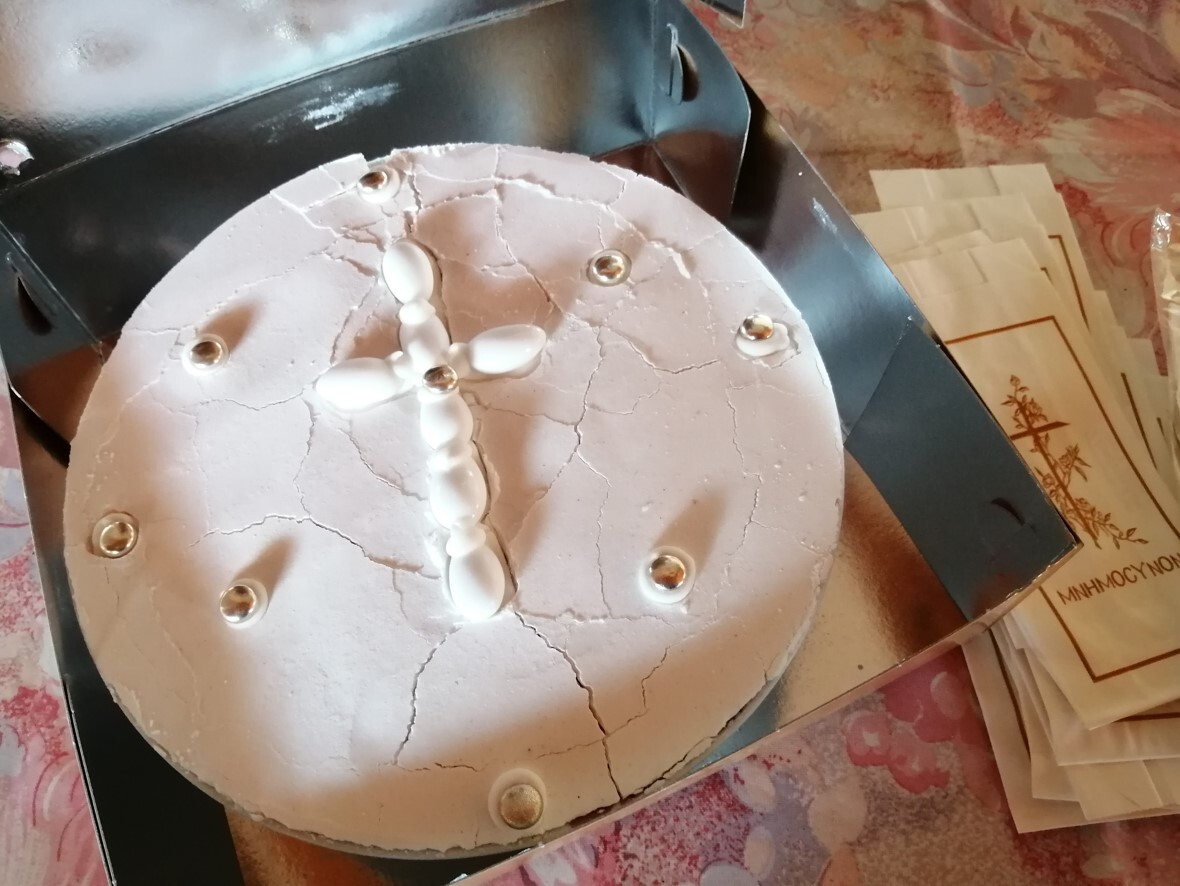
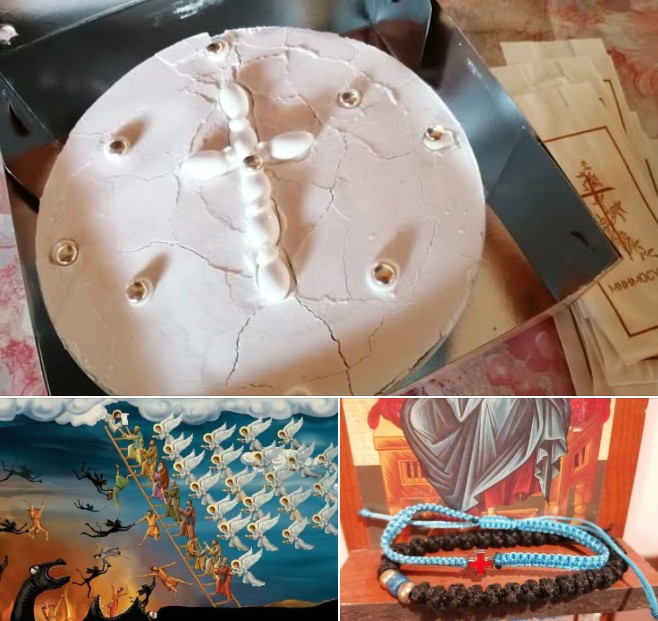
One of the most common practices is the offering of “koliva” (wheat berry memorial food) at the local church, to ensure the soul remains in peace and suitably “fed”.

The koliva is blessed at the church, where the priest mentions the deceased’s first name.

Many housewives make koliva at home, but I find that the ones that are bought are often tastier. I’ve offered koliva at the church many times, both for my mother and father’s souls, and I’ve always bought them. When you buy them, they come inside a deep bowl or a square tray.


In case you’re wondering, one does not simply walk into a supermarket or a bakery to buy koliva. This is something that only specific outlets prepare and are purchased by funeral parlors on behalf of the family of the deceased. The funeral services company will then deliver the koliva at the church in time for the mass, for the blessing to be made.

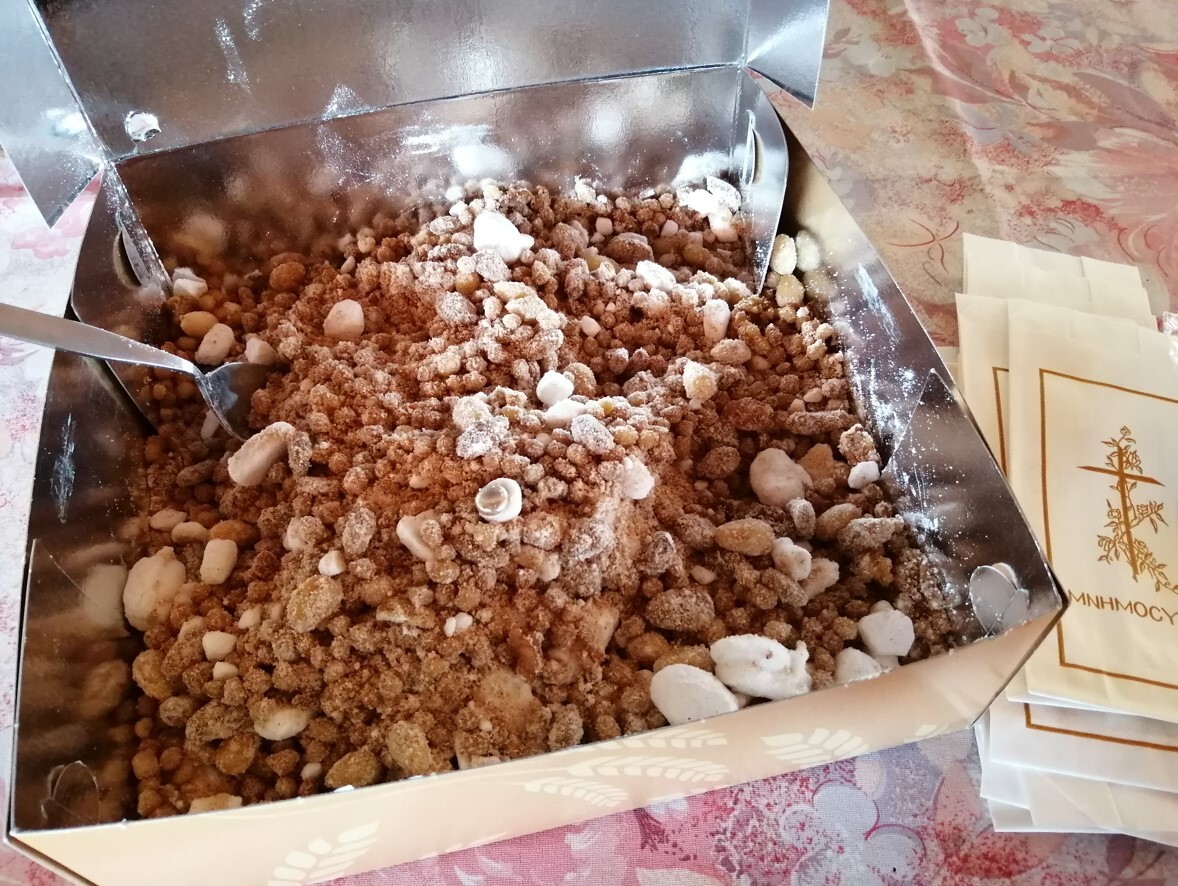
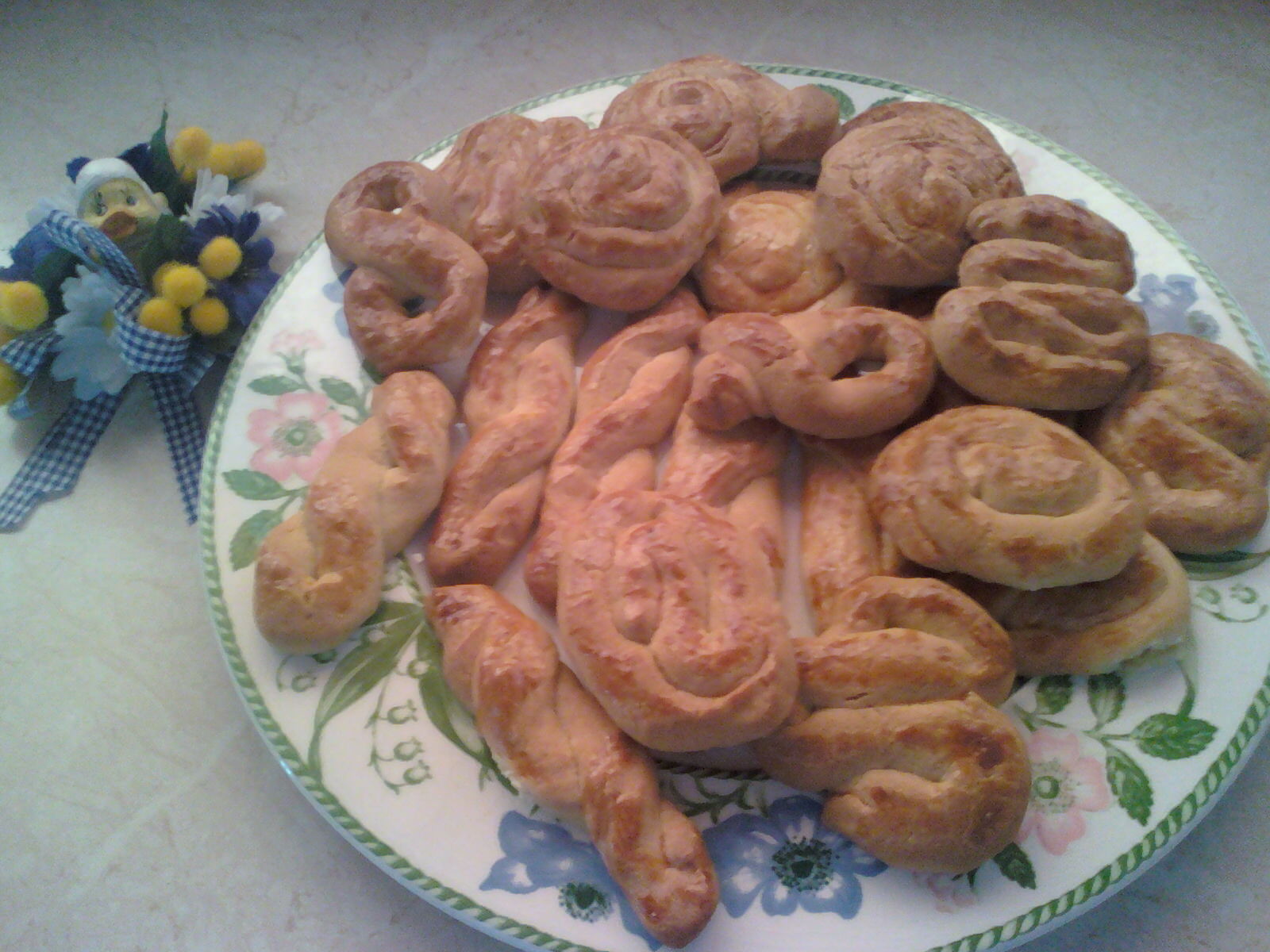
After the mass, you break up the sugary crust on the top and mix it all up to hand out the koliva in individual paper bags with plastic spoons. In memorial services this is also accompanied by a little sweet bun (tsourekaki).

“Koliva” (pronounced, ko-lee-va) is handed out to people at the church in the memory of a family member that has passed away. Traditionally, families offer koliva around the 9th day of the passing, then again around the 40th day, then once a year around the anniversary of the passing. The 3rd year anniversary is particularly important.

But there are other days in the year when families can offer koliva. One of these days is “Psychosavato” (Soul Saturday) which is not always the same date, seeing that it depends on the dates of Carnival and Easter.

There are 3 “Psychosavata” (Soul Saturdays) in any given year. The first one is in February, the second one is around Easter, and the third one is in June. Between the second and third Psychosavato, the Greeks believe that the souls stay on Earth, free to roam and to visit their loved ones. On the Psychosavato of June, when the koliva are referred to as “golden”, the souls are eager more than ever to hear their names at the church before “the gate closes” – i.e. when they leave the Earth plane to return to Heaven.

Now, about the koliva, one word of warning: If you’re offered some, take it only if you feel like eating it there and then. It doesn’t keep well, unless you put it in the fridge and eat it within 1 day tops. The wheat goes hard quickly out of the fridge, and then, it’s unedible. And please, whatever you do, do not throw it in the trash. Because it is blessed in the church for the dead, this is not recommended.

So, if you are stuck with more than you can eat, take it to your garden or anywhere in nature and throw it on the ground for the birds to have 🙂

When someone offers you koliva, you say “Theos horeston” if the deceased was a man, or “Theos horestin” if it was a woman. This basically means “May God forgive him” (or her). It is nice to spare a thought for the deceased when you eat the koliva, wishing for them to be forgiven for their sins and to be granted peace.

The basic ingredient of koliva is wheat berry (i.e. boiled wheat), which symbolizes the human body. It also contains almonds, walnuts, cinnamon, pomegranate, icing sugar, sugared almonds, raisins, and parsley. Oftentimes, the mix will have extra things like grated coconut or pine kernels.

No matter the mix, it always tastes sweet. For me, it is always a treat to be handed out some koliva, be it at church or at home by a neighbor. When I was a little girl in the 70s, I used to walk to school and back with my sister and we’d walk past a church. Oftentimes, we’d see old ladies dressed in black, standing outside the church and beckoning frantically to us to come over. We always ran eagerly to them as they’d offer us koliva on a napkin. A wonderful treat for us, every time!

If you are looking for a recipe to make koliva yourself, here is one by popular Greek chef, Akis Petretzikis.

THE TWO PAPERS

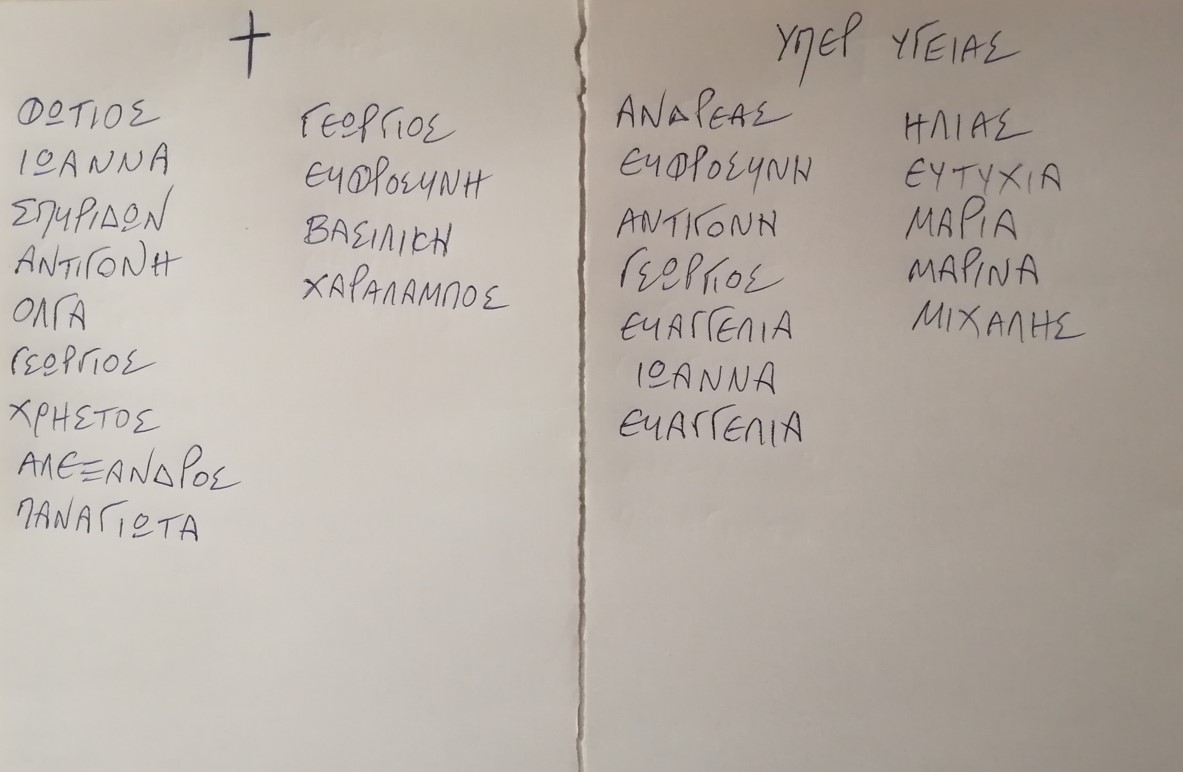
When you offer koliva at the church, you also hand two pieces of paper to the priest. One is for blessing all the deceased in the family and the other is for the health of those living. Only first names go on there. Surnames are not used.

So, even though you offer koliva for one person, in the papers you can request a blessing for a long list of souls and people. Family, friends, neighbours. Anyone really, that you care to bless. Including any people (or souls) who have no one else to do this for them 🙂

On the piece of paper where you put in the first names of the deceased you must draw a cross at the top.

You do not draw anything on the paper that contains the names of the living – you just write the words ‘YPER YGEIAS’ on top, which means ‘For health’. 

During the Psychosavato (Soul Saturday), the priest mentions the names privately during prayer before the mass begins, when the Holy Communion is being prepared. On the contrary, in the case of a Mnimosino (a memorial service), the names are read during mass before the congregation.

OFFERINGS OF BREAD, OLIVE OIL AND WINE FOR THE HOLY COMMUNION

It is customary to offer the priest a ‘prosforo’ (bread for the Holy Communion) and wine/olive oil as well when you request a ‘mnimosino’, where of course, you offer koliva as well. A ‘mnimosino’ is basically a memorial service that can be part of any Saturday or Sunday mass, where the name of the deceased is mentioned for the peace of their soul.

At the mnimosino, you offer all the above I mentioned earlier, and it is also customary to sit at the front pews before the altar where the koliva trays of various families are laid out on a table. You may choose to put a picture of the deceased by the koliva tray you are offering.

During the mnimosino, if you sit up front before the koliva trays, you will see people you know, and even strangers, approach to leave unburnt candles by the koliva trays. They do this to bless the dead. You use these candles by lighting them and placing them successively on the koliva. Once they burn a little, you put them out and throw them in the provided bin, then carry on with lighting the next ones people have left there, and so on, until they are all used during the service.

EFCHELEO – THE BLESSING AT THE GRAVE

At the cemetary here in my town, every afternoon, priests arrive to bless the dead at their graves upon the request of the relatives.

This blessing is called an ‘efchelaio’ which is a simple and short service for peace for the deceased soul. You do not have to book this in advance; it is requested and done on the spot. If my memory serves me well, the first efchelaio takes place on the 3rd day after the passing, then on the 9th day, and there are more milestones that I do not recall. On some of these milestones, it is necessary to pour koliva on the grave as it is believed that the dead require food to eat.

For the same reason, during Greek funerals, the priest will pour koliva and wine over the casket once it is put in the grave.

TAKE HEED IF THE DECEASED COME IN YOUR DREAMS…

The belief that the soul requires food and drink was solidified in me earlier last year, just before Easter. One night, I saw my father in my dream (he’d died the year before). In the dream, he was in his kitchen, cooking on the stove. All of a sudden, he turned to me and said: “Will you please take some bread and deep it in the sauce you made? I am hungry!” When I woke up, I gulped and felt my blood grow cold. There was something about the way he had said he was hungry. It had so much feeling in it! I had never seen a dream before where the dead would ask for something, and I panicked. I had not offered koliva at all for him since his 40-day post-death mnimosino the previous year and now I was kicking myself.

I had clearly overestimated my father’s blissful condition in Heaven. As churches do not perform mnimosino services during Easter, I had to wait about ten days and did it straight after. Phew! I had no more dreams from my father needing a thing ever since. And I was glad, because if one of your dead relatives needs something, they will surely come to your dreams to tell you about it! Take it from me. I have had more weird and meaningful dreams from dead relatives than I can count with the fingers of my two hands. I take them very seriously.

THE TOUR OF HEAVEN, HELL, AND THE ABYSS

According to Greek Orthodox tradition, the soul of the deceased does not migrate to Heaven at once. First, for a period of 3 days, it is allowed to roam free. During this time, the soul feels utterly blissful as it is suddenly free from the body and thus feeling super-powerful in a world of physical limitations. But then, an angel appears to give the soul a tour of the spiritual realm… I don’t remember the details in terms of timing, but here’s what I know:

First, the angel takes the soul to see Heaven, but the soul cannot interact with those inside it in this instance. It is more like peeking through a thick glass, where you cannot be heard or seen by those inside.

The soul is then shown Hell too, in the same manner, without interaction with those inside it. All they can do is observe. And, on the 9th day, the angel takes the soul to the Abyss, that is the bottomless pit, reserved for the most wicked.

As I write these words, I feel shivers coursing down my spine, because on the 9th day after my mother’s passing something freaky happened in my home.

A DVD fell out of the blue from my DVD shelf when no one was around. No windows were open that would explain a sudden gust of wind. I heard the sound and went to see and I freaked out. The DVD on the floor was the movie “The Abyss”! I believe it was a message from my mother, and it wasn’t the only one…

When my mother died, back in 2020, I slept in a couch in my parents’ house the first ten nights to keep my father company as he was a mess. The first night, I’d wake up every now and then hearing my father sobbing in his bed. In the morning, as I awoke, with my eyes still closed, I felt my mother’s presence. It was as if she were alive, leaning over me, and then I heard a whisper, clear as a bell. ‘Thank you for being here…’ 

I am not jesting. This really happened. So, how can you not believe, right?

I guess all this may sound weird to someone who doesn’t have my understanding. But, I am a Greek devoted Christian, who believes the spiritual world is real, so this ‘weirdness’, if you like, goes with the territory for me. And, believe me, compared to other people I know personally, who have seen visions of angels or saints, my Christian life is more ‘sane’ by comparison 😛 

Anyway, as I mentioned earlier, the soul is totally blissful during the first 3 days, while it is allowed to roam the Earth on its own. Then, an angel appears to give it a tour of Heaven, Hell, and then the Abyss (on the 9th day).

What happens after that is the scariest part.

The angel takes the soul and they begin their ascend to Heaven. But the Heavens in between are treacherous territory as they are guarded by legions of demons ready to snatch the soul away.

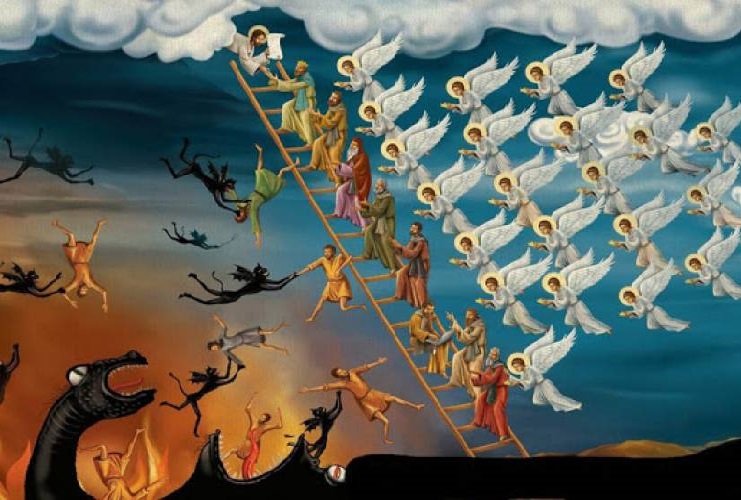
If you consider different levels of heavenly realms all the way up to Paradise and imagine them like a ladder with rungs, then at every rung on the way up, the soul and the angel will meet demons that are called “Teloneia” (a word that is identical to the Greek word for ‘customs office’. These are checkpoints of sorts where the soul is judged. Their good and bad deeds are put to the balance, each time, considering a different sin. Some of these sins are: witchcraft, blasphemy, sexual immorality, gluttony, divination, judgement, anger, jealousy, lying etc – basically anything that does not align with the will of God.

Every time the soul is found guilty of a sin the demons will claim the soul, but the angel will then counter the accusations by putting forth the good deeds that this person did in life. Thus, the demons become the accusers and the angel becomes the defense lawyer in this heavenly court situation of sorts. This happens again and again, as the soul ascends with the angel. There are 23 checkpoints in total, all the way to the Paradise Gate.

If, at any time, the soul is found guilty of sin and the angels do not have enough good deeds to counter the accusation, then the demons snatch the soul and take it to Hell.

Those who make it all the way to the top of the ladder get to enter Heaven.

Because of the risk of the soul getting taken to hell by the teloneia from the 9th day onward, the faithful among the Greeks may resort to praying (sometimes, fasting too) during this time. They do it in the hope that their prayers will be heard in Heaven, thus saving their loved one from a sad fate in Hell.

This is the reason why a wake (agrypneia, in Greek) used to take place in the old days, so the collective prayers could help determine the deceased’s fate for a happy outcome.

PRAYERS WITH A KOBOSKINI

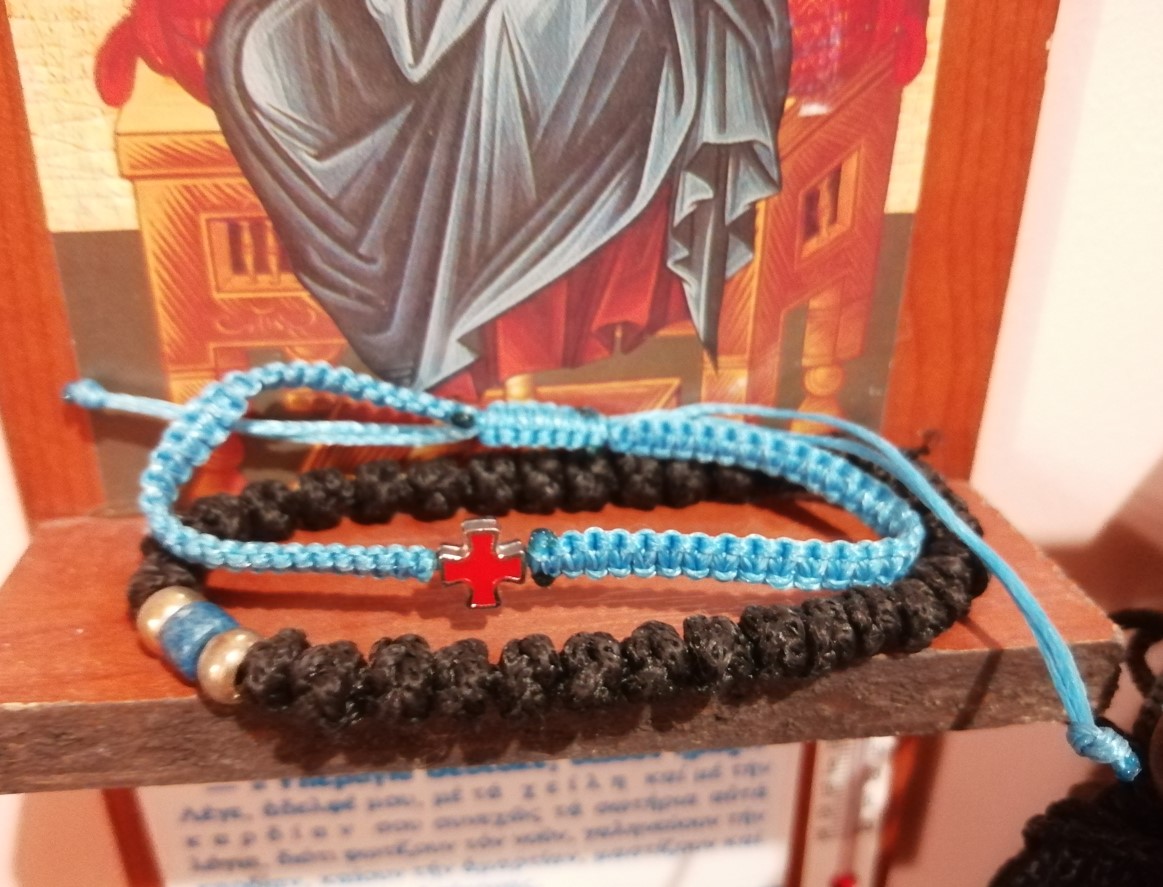
The Greek Orthodox use the ‘koboskini’, a bracelet that traditionally has knots on it, to pray for the soul of the deceased. The word literally means ‘rope made of knots’.

The prayer you say is short and simple: ‘Kyrie Iisou Christe, Ie tou Theou, anapafse ton <FIRST NAME>

If it’s a woman, you say ‘tin’ instead of ‘ton’ before you say the first name of the deceased. This is just the Greek article that aligns with the gender of the name.

This simple but very powerful prayer means, ‘Lord Jesus Christ, Son of God, rest <FIRST NAME>

Each time you say this prayer, you hold another knot in succession between your thumb and index finger, and you keep going as you repeat the prayer, until you go all around the bracelet. You can do as many rounds as you can endure, the more the better, as it gets you in a higher mental place over time, which makes the prayer, due to your focus, more effective. If you have been fasting, again, you will be more effective spiritually.

It is believed that the souls come as you do this and grab hold of the koboskini, the way someone drowning at sea might grab a lifesaver. And, often times, as you pray, you will get the notion to pray for other souls too – those that find this opportunity while you are in this focused – and thus heightened – state of mind to connect with you spiritually so you might pray for them, too.


KEEPING A SHRINE AT HOME

Back in 2023, both my husband and I lost a parent. Andy’s mother passed away and then my father did, one and a half month later.

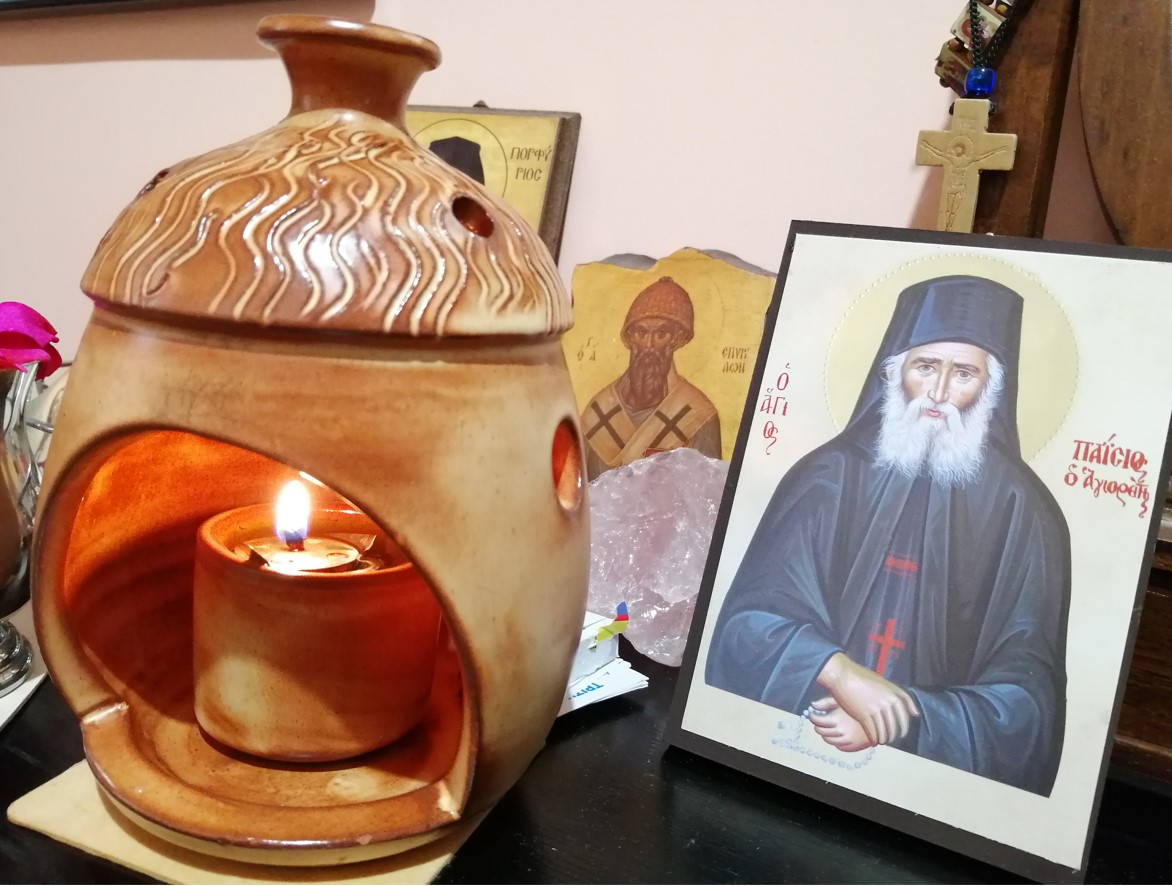
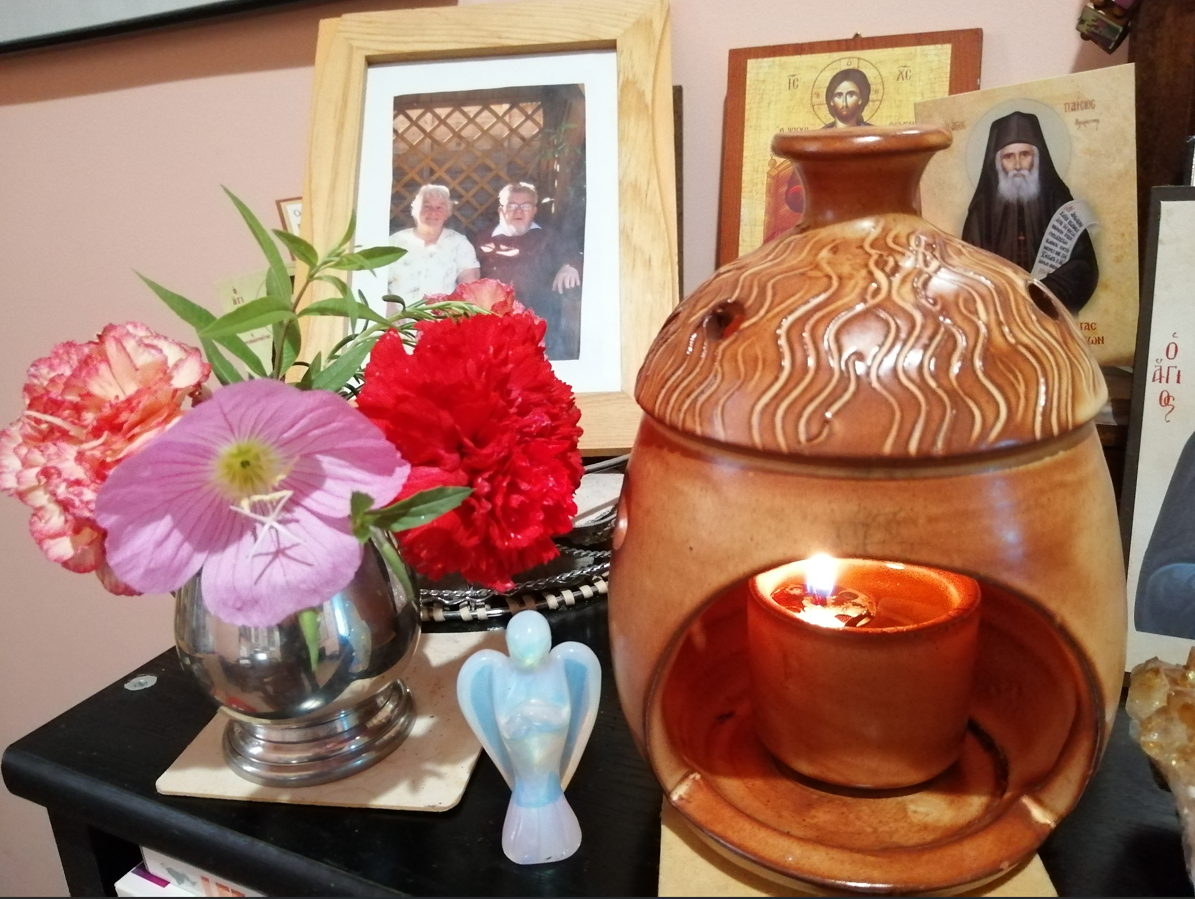
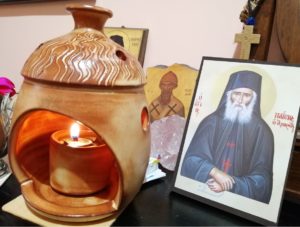
His father and my mother had already left us too, a few years earlier. So, now, we have a few memorial days to honor at home, if we consider lost grandparents too. I have thus created a permanent shrine in my study where I’ve hung many icons on the wall and put photos of our deceased parents and other family members, too. I light a vigil lamp on Sundays and on special days, and a little vase remains there at all times with fresh flowers from the garden. Occasionally, I also burn incense to clear the house from bad energy. I have shared about this in a different post, by the way. Find out here how to use insense (and sound) to clear the energy in your home.

TRADITIONS FOR THE DAY OF THE PASSING

When my father passed away, a friend was at the house. She had lost her father as a child and is very religious. Immediately, she rattled off a list for things for me to do, since my father had passed away at home. I had no idea, and felt thankful she could guide me! People may think that this sort of thing is just superstition, but I don’t think like that. And, at the end of the day, it doesn’t hurt to follow these ‘superstitions’, just in case. Right?

The things she guided me to do have three uses: They are good for the soul of the deceased, they inform the neighboorhood that someone has passed away, and also protect the other members of the family from any negative energy left in the house.

So, I followed her advice and did all the things she prompted me to do. They all provided comfort at a difficult time, somehow, so I do recommend them:

  • When the body is removed from the house (by the funeral parlor crew), you must take a plate and throw it at the threshold shortly after. The loud crashing noise is said to cause any lingering evil spirits to scatter, which protects the other people living in the home.

  • Only on the first night, all the external lights of the house must be left on.

  • At the gate or on the balcony, tie a black ribbon and leave it there throughout the first 40 days until the first ‘mnimosino’ takes place.

  • Prepare a shrine in the room where your loved one died and put these things on it: a picture of the deceased, an icon (Jesus or the Virgin Mary or a saint you feel close to you), a glass full of water, a vigil lamp (or you can buy a tall votive candle that burns for days), and a morsel of bread. If you like, you can add an angelic figurine or a vase with flowers, whatever you feel conveys a feeling of peace and harmony.

The shrine must be maintained in the room for 40 days.

Refill the water whenever the level goes down in the glass as the soul will be returning to this place from time to time and will be thirsty. Leave the bread there, throughout the 40 days. It will naturally mould, then crumble. Put any remains in the garden. Do not throw in the trash.

Keep the flame burning for as long as possible throughout this time. Every day, you must leave a window open in this room. My friend says the soul will take the form of a white butterfly and come in to drink.

My friend said she actually got to see one of them come in through her window and go drink from the glass she and her mother had left for her dad. She was so comforted by that, and believed this was indeed her dad that had taken this form to come in.

Call me naive, but I believe this too, as I have had white butterflies approach me everywhere, even on the beach, and, more often than not, on the days I was upset and needed comfort the most. And this only started happening after my mother passed away in 2020. As I said, my life can get pretty weird at times 😉


Sharing is caring! Here’s a ready tweet for you to spread some love:

Greek memorial food and other practices for the dead. A weird but thoughtprovoking post #Greek #christian #spiritual Share on X


3 FREE books for you! Sign up below to receive them instantly!

NEW! Clean Christmas romance. Single mother Cathy Roussos gave up on love long ago, and veterinarian Alex Rallis doesn’t believe in it, but one magical Christmas on a Santorini farm might just change everything…
Check it out on Amazon     Read a FREE sample!


A clean romantic suspense short read with an unreliable narrator that’ll keep you guessing! Vera is losing her mind over famous actor Yannnis Ksenos, except, she isn’t just a fan… Now, she plucks up the courage to ring his doorbell… Visit Amazon


For my delicious Greek recipes, go here
 
Planning to visit Greece? Check out my  FREE guide to south Corfu!

The Greek custom of Lady Lent and my Lent Monday traditions

Greek Lent Monday and seafood go hand in hand…

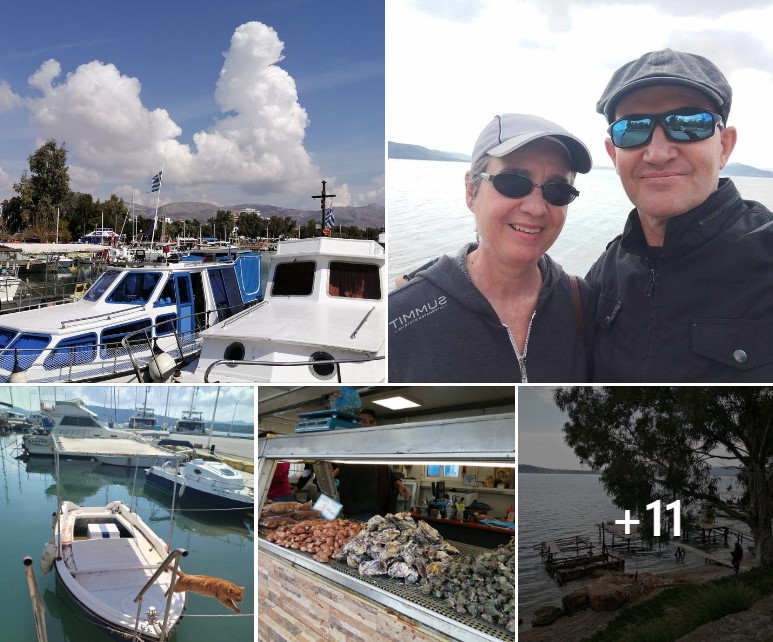
My husband and I are creatures of habit. Lent Monday always finds us having the same kind of day, and we wouldn’t have it any other way. We are blessed to live in a small seaside town and other than a beautiful seafront and a lovely beach near home, we also have a mussels farm in the area and roadside stalls that sell all sorts of seafood all year round.

The latter comes in handy on Lent Monday more than any other time of year.

We always start the day with a walk on the seafront, we buy the traditional unlevened bread (Lagana) from the bakery and get some fresh seafood from the stalls, for our special ouzo feast and lunch of the day.

Lent Monday is a day of reminisching for me. In the old days, when I was young and living with my parents, my grandparents from Corfu tended to be visiting this time of year.  Mum would be tethered to the kitchen stove all weekend preparing a feast for the big day. I’d never seen so many dishes on one single table before, folks, and it only happened once a year, on Lent Monday!

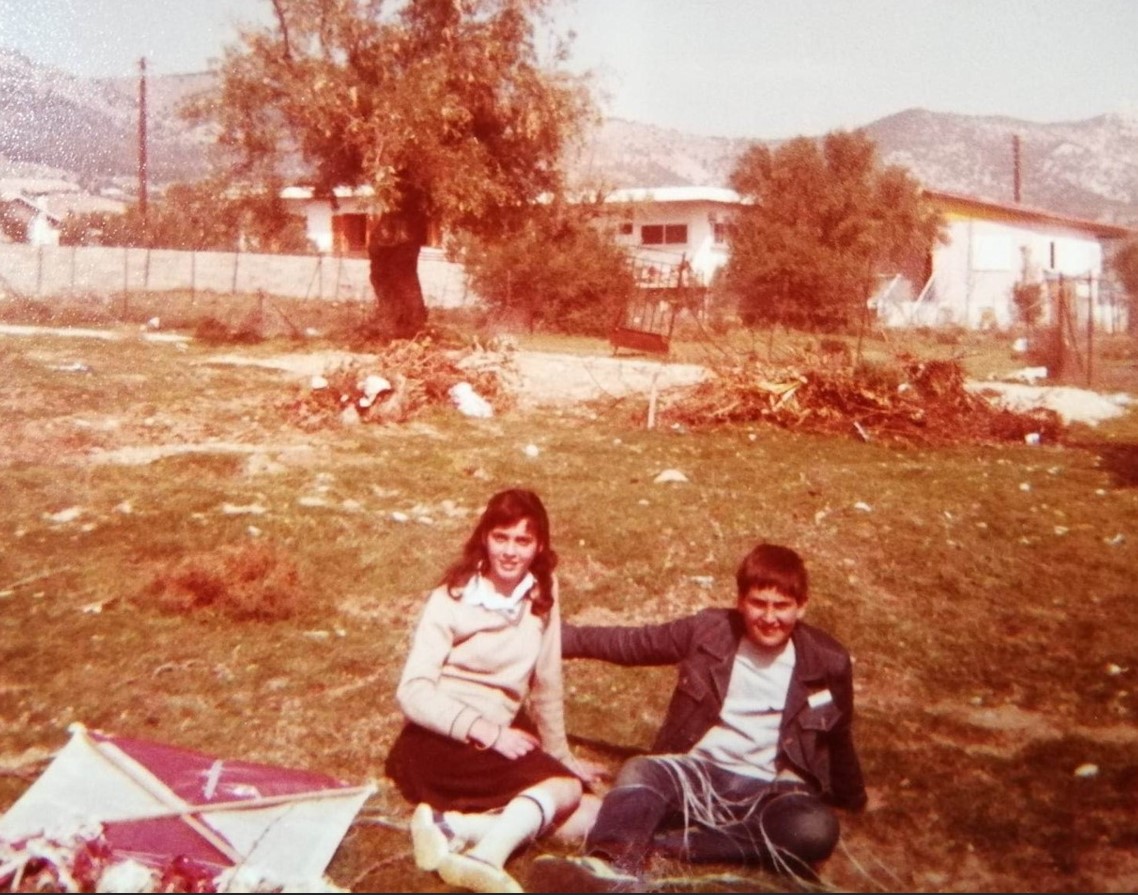
My sister, two male cousins and I would spend the whole weekend flying kites in the nearby fields. The boys would teach us how to mend them, and we always wound up running to Mum to get us some flour so we could make glue with water to mend the broken sails with newspaper. Ah… Those were the days!

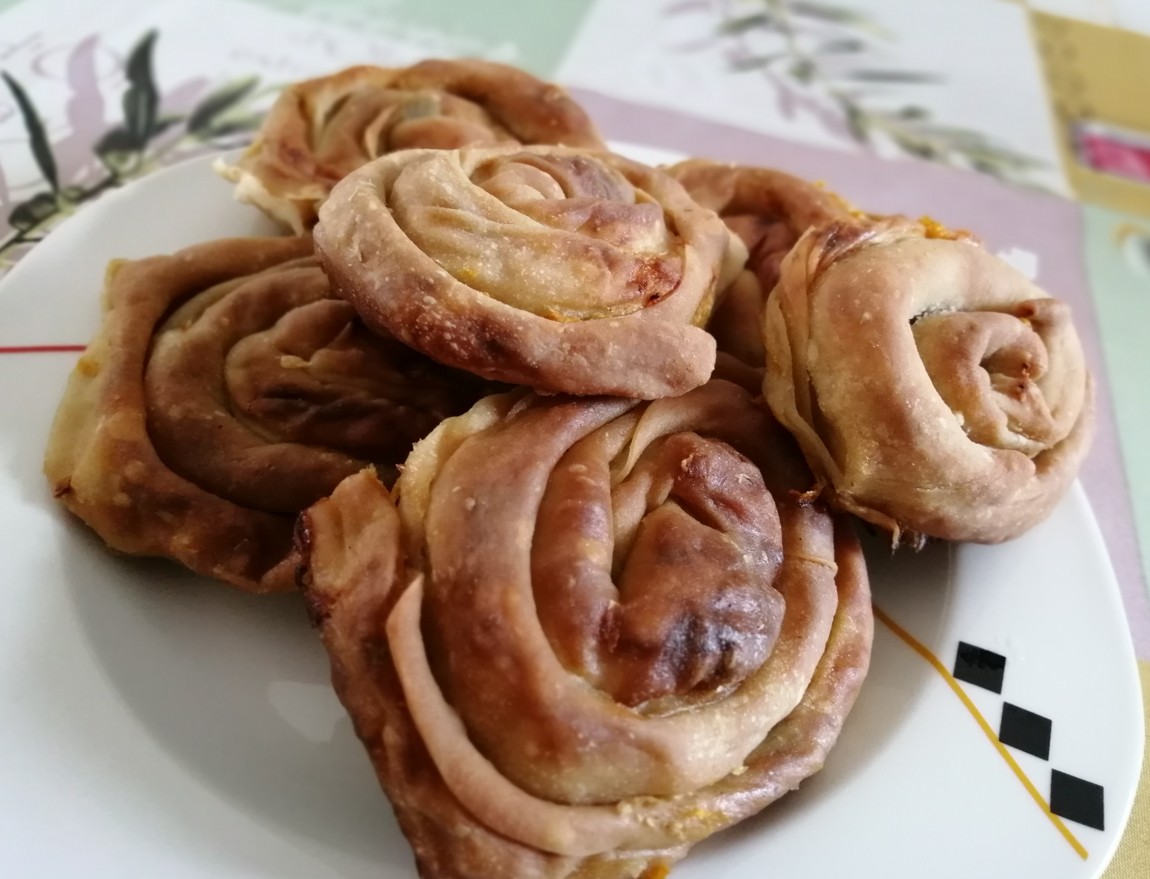
Mum made rolled up cheesepies from scratch (as well as spinach pies and pumpkin pies, sometimes) on the eve of Lent Monday. This is called Tyrini Sunday and it’s a day to eat cheese, as the name suggests. This is an old tradition from the days when it was practical to use up all the cheese in the pantry as the fasting back then was strict and no cheese would be eaten until Easter. It was a total abstention from all animal products, to be exact.

On Lent Monday we fasted strictly, to honour the tradition.

Neraki is a small town next to my town of Nea Peramos, and this is the place where the roadside stalls are.

We buy mussels there all year round but on Lent Monday we also get clams (cockles) to enjoy with some ouzo. 

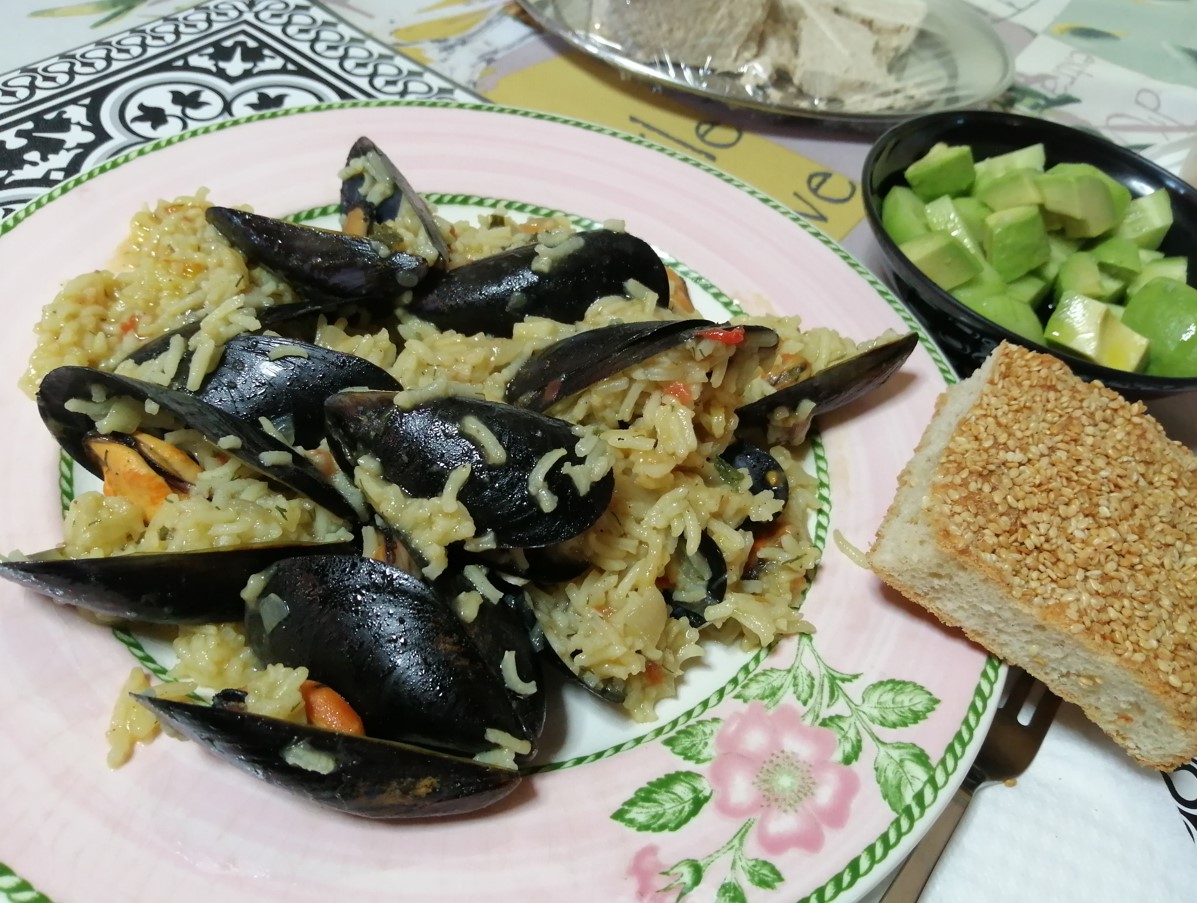
The cockles go down nicely with lashings of lemon juice, the lemons just cut from the tree in our front yard. Lunchtime, I always make my signature mussels risotto, using the super-fresh locally farmed mussels we buy from Neraki.

It makes for a perfect celebratory meal accompanied by the various treats of the day, like dolmadakia (vine leaves stuffed with rice), broad beans in tomato sauce, pickles, lagana (flat bread with sesame seeds), and chalva (semolina cake).

Here are some photos from the seafront, the stalls and the typical Lent Monday lunch at my place

If you’d like to try my Greek mussel risoto with ouzo, go here for the recipe!

Lady Lent (Kyra Sarakosti)

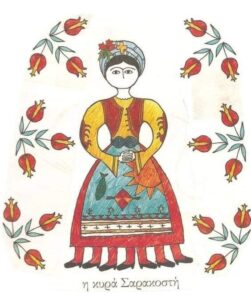
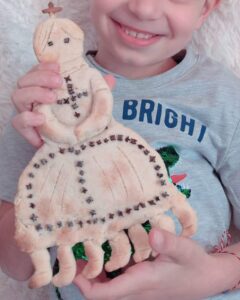
The Greek custom of Kyra Sarakosti entails hanging in the home a picture of a lady, just like this one, which serves as a calendar during the perood of Lent. It is a rather rare custom these days, but some Greek families do still keep it with their children.

Lady Lent is depicted with a scarf and a cross on her head (because she attends church), with her hands laced together (because she is praying) without a mouth (because she is fasting), and, most importantly, with seven legs – one for each Lent weekend.

According to custom, Lady Lent is hung on a wall and each Saturday the family cuts off one leg – the first one on the Saturday after Lent Monday and the last one on Holy Saturday.

Housewives in the old days would hide the last paper leg inside a dried fig and serve it to the family with other figs. The person who found it would be considered very lucky. In some parts of Greece, the last paper leg would be put inside the ‘Anastasi’ bread (Ressurection) made for Holy Saturday dinner. Again, luck was said to follow the person who got to find the paper piece in their bread.

In some parts of Greece, Lady Lent would be made with a salty dough instead of paper. It was inedible, but it helped to preserve the dough during those 7 weeks. In other parts of the country, Lady Lent would be made using fabric and feathers.

I found this beautiful photograph on the site Workingmoms.gr while looking for a dough recipe for ‘Kyra Sarakosti’ to share with you. Thought you may like to bake it with your kids like some Greek families still do today.

Visit their post on Lady Lent and get a quick and easy recipe for the salty dough. Just make sure the kids don’t try to eat it, LOL

To get more ideas on how to make Lady Lent, even with coloured dough, go to this Google images page


Check out more of my posts on Greek culture here: https://effrosyniwrites.com/category/greek-culture/


OOPPAAA! SIGN UP TO MY BIMONTHLY NEWSLETTER AND GET 3 BOOKS FROM ME AS A WELCOME GIFT! SEE BELOW FOR THIS OFFER!

YOU KNOW WHAT THEY SAY… SHARING IS CARING! Tweet this to spread some love:

Interested in travel, food and books from Greece? Here's a blog you will love! #Greek #blogger #writer Share on X


3 FREE books for you! Sign up below to receive them instantly!

NEW! Clean Christmas romance. Single mother Cathy Roussos gave up on love long ago, and veterinarian Alex Rallis doesn’t believe in it, but one magical Christmas on a Santorini farm might just change everything…
Check it out on Amazon     Read a FREE sample!


A clean romantic suspense short read with an unreliable narrator that’ll keep you guessing! Vera is losing her mind over famous actor Yannnis Ksenos, except, she isn’t just a fan… Now, she plucks up the courage to ring his doorbell… Visit Amazon


For my delicious Greek recipes, go here
 
Planning to visit Greece? Check out my  FREE guide to south Corfu!

Greek Epiphany customs and a scary Santa!

Hi, All! Today, I am sharing about the Greek customs of Epiphany, and a little from Italy too. 

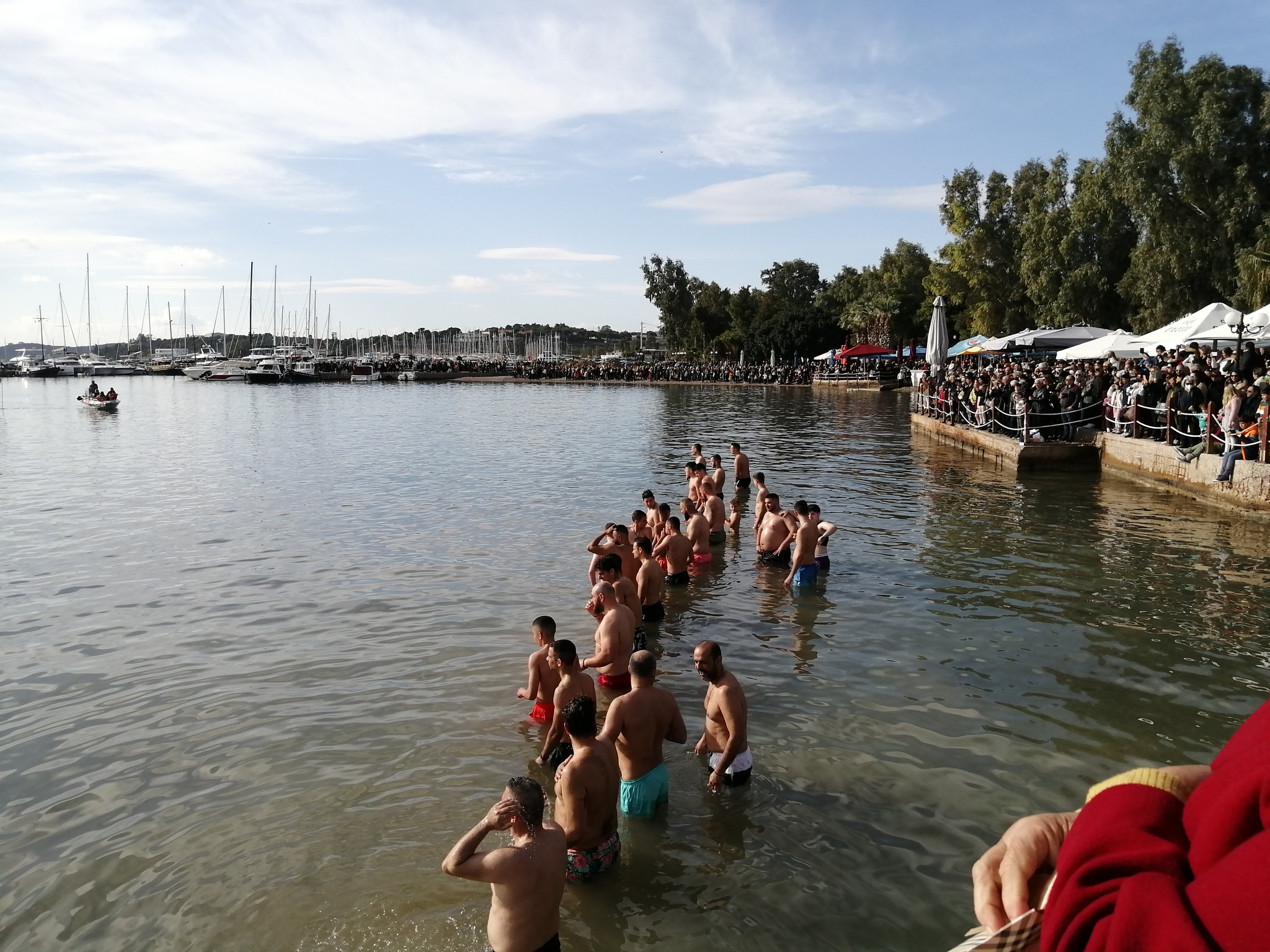
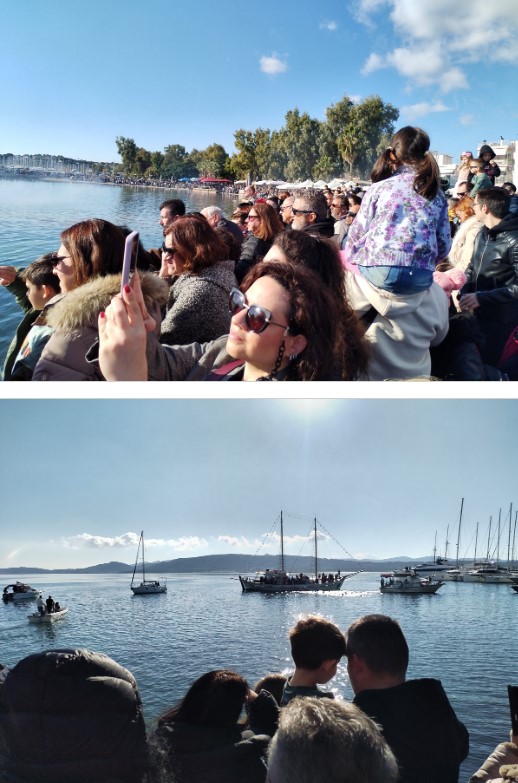
This is a pic from my little town’s seafront last Saturday, and as you can see it was packed!

Crowds had gathered once again to watch the annual Blessing of the Waters ceremony.

It was Epiphany, you see, January 6, and we were standing near St George’s church, waiting for the mass to finish, as we listened from the speakers.

These brave lads you can see in the photo got in the cold water well beforehand and stood there, I presume to get used to the freezing temperature before it was time to start swimming.

In case you’re not familiar with this Greek custom, I must explain that the Blessing of the Waters takes place in every church all over Greece on Epiphany (‘Theofania’, in Greek).

The mass of the day commemorates the baptism of Jesus in the river Jordan by John the Baptist, who is honoured by the Greek church the next day, January 7.

During mass, when the priest chants about the Holy Spirit appearing in the form of a pigeon during the baptism of Jesus, the priest frees from his hands three pigeons that typically take to the skies at once, circling over the church, as the crowd marvels.

The three pigeons signify the Holy Trinity and the ‘Theofania’ itself, i.e. ‘The appearance of God’, as the full Holy Trinity was present on the day Jesus was baptised. The Holy Spirit showed itself as a pigeon, and God’s voice was heard from the sky too, to declare Jesus as His beloved Son.

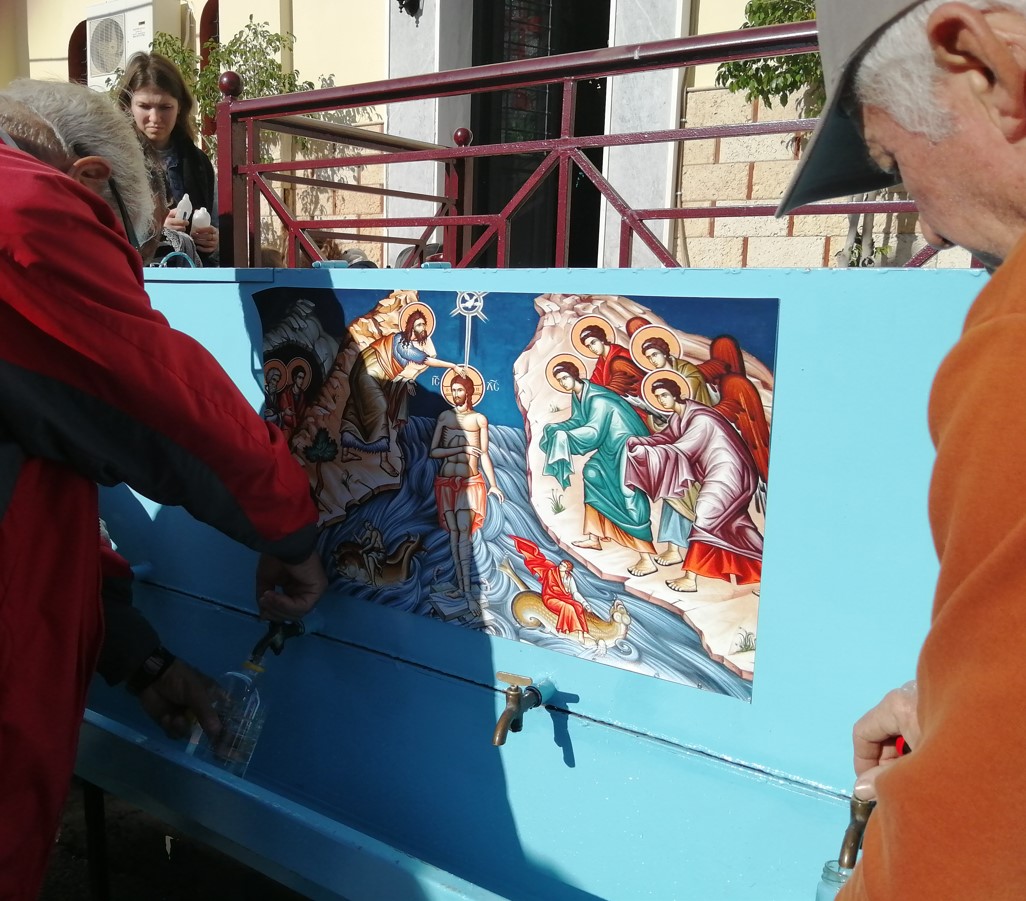
In every church around Greece, the priest blesses the water in a tank at the church yard. It usually has little taps on it, and after the ceremony it stays at the church yard for a couple days so that people can come and collect the holy water (Agiasmos) in bottles.

Many Greeks will take this ‘Agiasmos’ home and everyone in the family will drink some, careful not to spill any. They will then keep the remainder in the bottle all year round to be able to drink some when ill or to drizzle around the home when they wish to bless it.

Personally, I go around the house once a year and spill a little on each of four corners of the house, then go outside in the garden and do it again in the four corners of the outside walls. I also sprinkle some holy water on the wheels of my car each time, before a long trip somewhere. As I use the holy water in these instances, I will say a quick prayer to Jesus or to the angels, asking for protection in His name.

Being holy, the ‘Agiasmos’ is not supposed to be thrown in the drain or the trash, but it is okay to sprinkle some in the bowl where animals drink water.

Back to the ceremony of the Blessing of the Waters:

When there is a large body of water near the church, the priest will bless that too. So, in our seaside town, the priest leaves the church ceremoniously after the mass is finished, accompanied by a brass band, and gets on a fishing boat…


By that time, the swimmers are in the sea waiting in the shallows, and there are many other boats in the water, including one of the port police.

The priest gives the signal to the swimmers and throws the cross in the sea. It is usually made of wood so it can float, and is always attached to a string.

The swimmer who gets to the cross first is believed to be blessed all year round.

This year, the lad who got to the cross first to lift it high and cause the crowds to erupt into applause, did so 5th year in a row! Amazing!

GO HERE TO WATCH A SHORT VIDEO OF THE RACE!

Nuh-uh. I wouldn’t like to be a kid in Italy. With the wild imagination that I have, I’d be going mental throughout the Christmas season, never catching a wink he he

This is Befana, the Italian Santa Claus. She doesn’t go ‘Ho ho ho!’ and she arrives riding something much less glorious than a sleigh led by reindeer. This santa rides a broomstick, folks!

Befana comes on the eve of Epiphany to leave candy inside the socks of the good kids. If they’re bad she’ll leave them a lump of coal, or dark candy at best. Sometimes, she may also leave the bad kids onion or garlic. Admittedly, that won’t be tasty at all haha

And what do you know? This witch is very tidy! She will sweep the floor before leaving! This symbolizes a wish for all things bad to be swept away from the home at the start of a new year.

Italian children are taught to leave a glass of wine and a few morsels of food for Befana overnight.

I spent New Year’s in Rome once, and the stalls on the streets were full of Befanas on their broomsticks.

By the way, I wrote a post upon my return, giving my readers a virtual tour of the most beautiful churches of Rome. They kept me awestruck throughout my short stay, and I was oohing and aahhing all day long. Truly, I am still to see a church half as awe-inspiring than the average church in Rome!

GO HERE TO SEE THE POST


Interested in Greek customs and culture? Check out this blog reel where you’ll find a few of my best posts on these subjects. The New Year’s cake with the hidden coin, the plant that brings good luck in the new year, St George and the ‘Red Egg’, Greek memorial food for the dead, the use of vigil lamps and more. Enjoy!


OOPPAAA! SIGN UP TO MY BIMONTHLY NEWSLETTER AND GET 3 BOOKS FROM ME AS A WELCOME GIFT! SEE BELOW FOR THIS OFFER!

YOU KNOW WHAT THEY SAY… SHARING IS CARING! Tweet this to spread some love:

Greek epiphany customs and a scary Santa! #greek #authors #authorslife Share on X


3 FREE books for you! Sign up below to receive them instantly!
NEW! Clean Christmas romance. Single mother Cathy Roussos gave up on love long ago, and veterinarian Alex Rallis doesn’t believe in it, but one magical Christmas on a Santorini farm might just change everything…
Check it out on Amazon     Read a FREE sample!
 

A clean romantic suspense short read with an unreliable narrator that’ll keep you guessing! Vera is losing her mind over famous actor Yannnis Ksenos, except, she isn’t just a fan… Now, she plucks up the courage to ring his doorbell… Visit Amazon


For my delicious Greek recipes, go here
 
Planning to visit Greece? Check out my  FREE guide to south Corfu!

Majestic views in Lake Doxa and a secret school

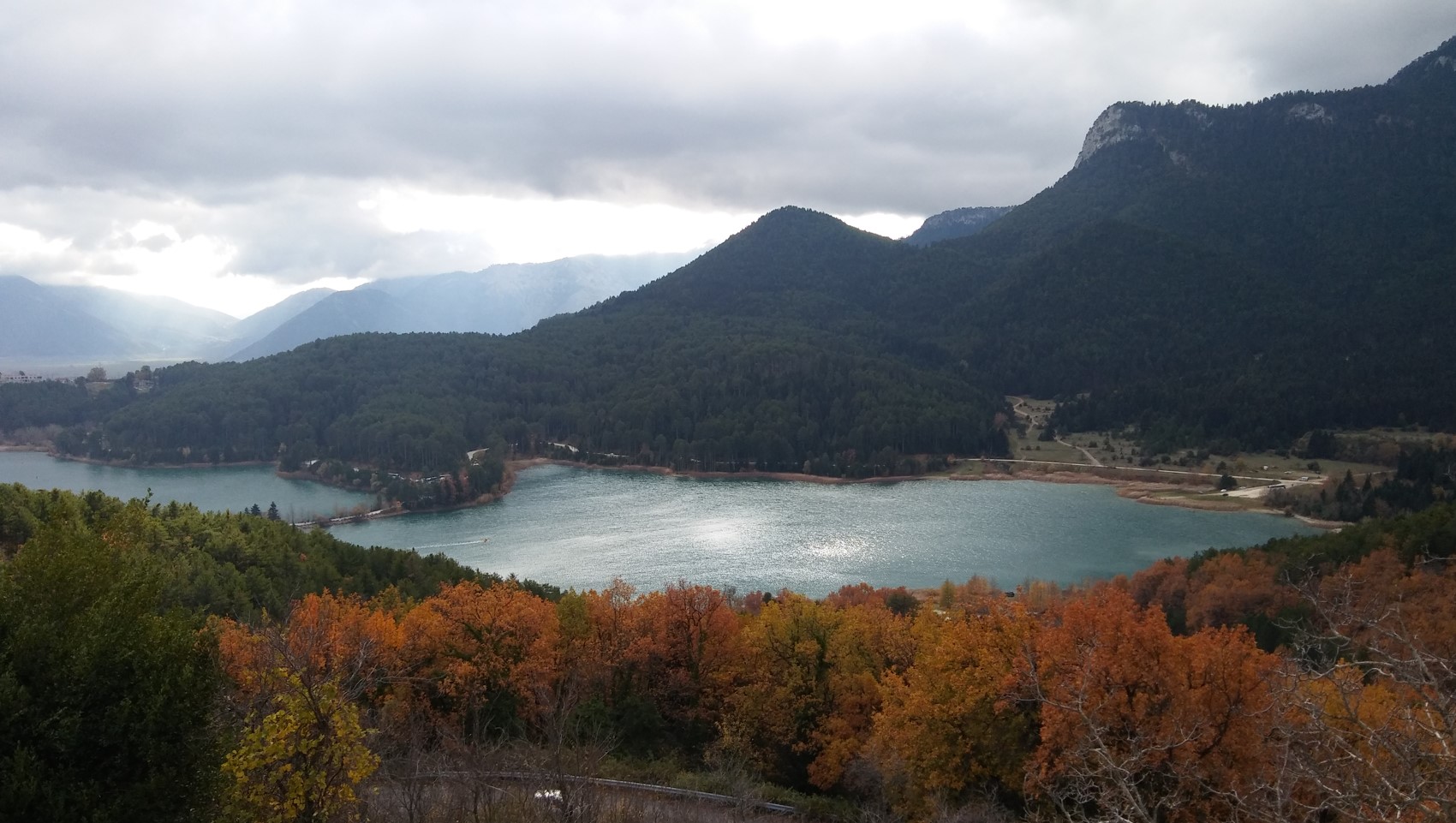
This view took my breath away…

My husband, Andy, and I spent one cold Sunday at the end of November filling our minds with images of breathtaking beauty at the mountains and plains of Feneos in Korinthia (i.e. the prefecture of ‘Korinthos’ – Corinth, in English).

I took this photo from the top level balcony of the stunning St George’s Monastery which overlooks Lake Doxa. The monastery of St George was originally built by the lake, but in 1693 the water level rose much too quickly and the monks fled, barely having time to save themselves. The ruins of that monastery are still underwater today. The same year, upon losing their home, the monks got to work building a new monastery high up on the mountain, to make sure history will not not repeated. In the monastery’s garden today, the monks grow a special variety of roses from the Peloponnese that are particularly aromatic.

Once a year, at harvesting season, they get to work using the fragrant flowers to make a syrupy sweet, which they sell at the monastery’s gift shop in jars. They also welcome the guests with a free treat of this sweet, and I can attest to the fact it is highly aromatic and delicious (albeit a little too sweet for my liking). Walking around the charming court of the monastery (that’s decked in stone everywhere you look) and around its different levels and corridors is a pleasure in itself. I was also impressed by the seemingly tireless tour given by an elderly monk. He was such a sweet soul and kept welcoming coachfuls of guests inside the tiny church, sharing about the history of the place in a low soft-spoken voice that rang with kindness and humility.

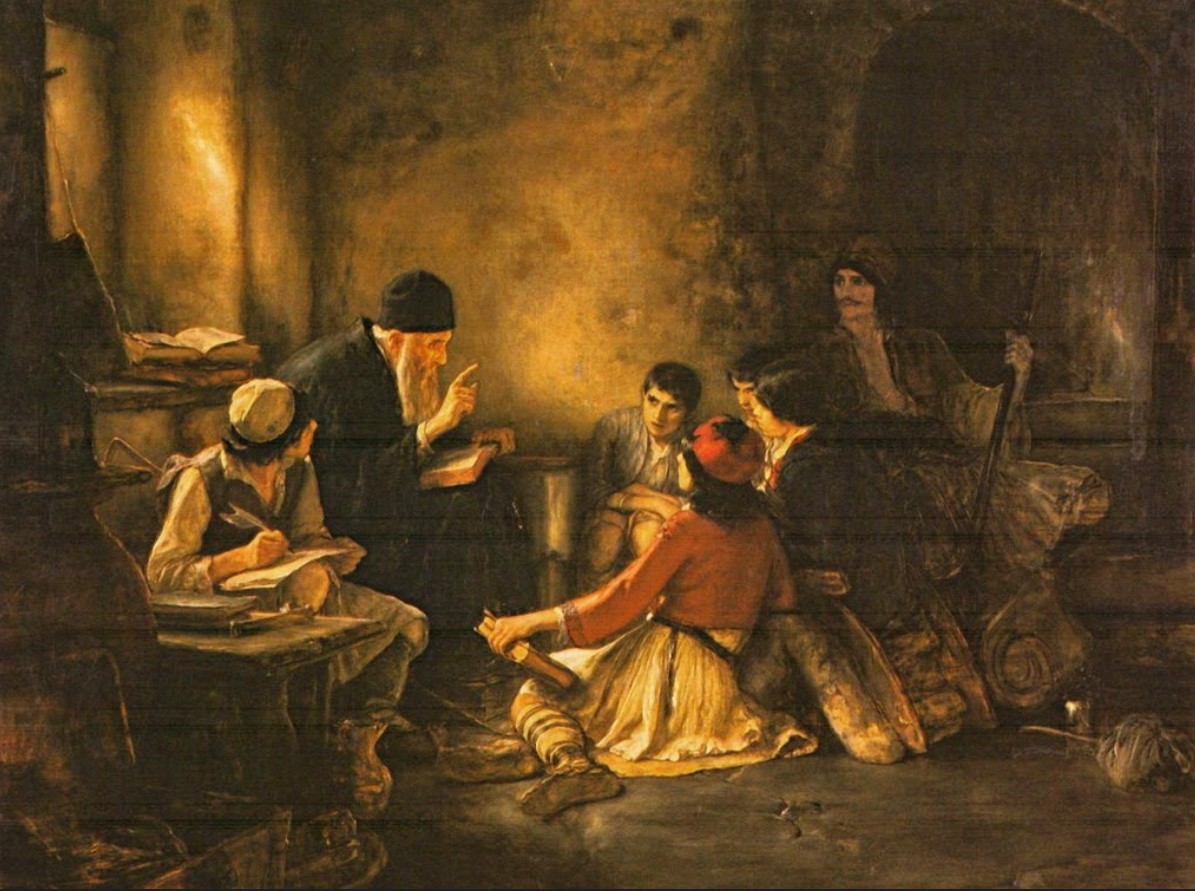
A depiction of krifo skolio by painter, Nikolaos Gyzis

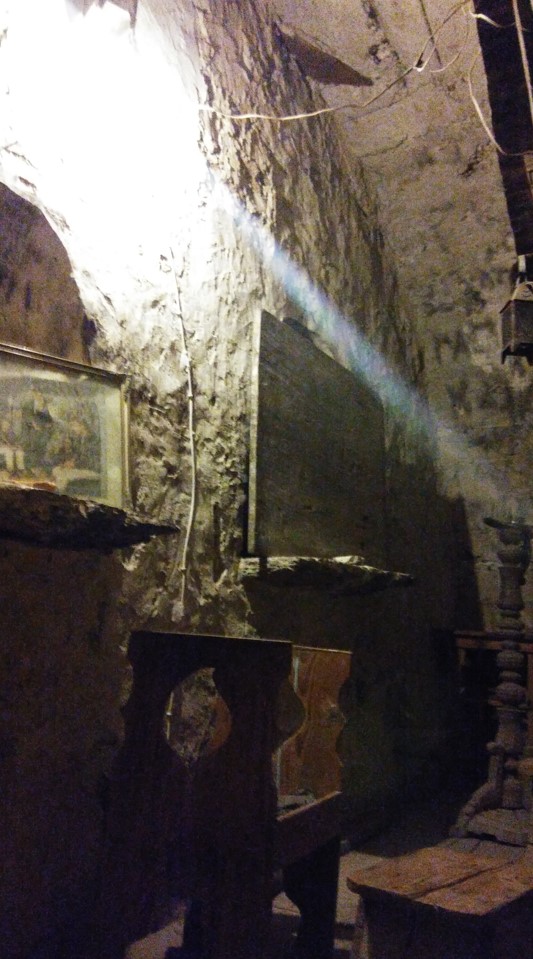
But, above anything else, for me, the highlight was, by far, my chance to see the tiny nook inside the roof of the monastery that used to serve as a ‘krifo skolio’ (secret school) during the time when Greece was occupied by the Ottoman Empire (1453-1821). To get to the roof, one has to take two short stairs that are more like ladders and thus require a lot of attention. The wood they are made off, and the tiny landing in between, creaked with every step, so guests had to allow up to two people to be up there at a time. Time was precious once you got to the top to admire this precious little space.

The first time, out of respect for everyone waiting below, I took a quick look and felt embarrassed to take out my camera. Luckily, the crowd dispersed later, before it was time to leave on our coach, so I was able to go back up again, my camera in hand this time, to drink in the small space a little better, more reverently as it deserved, and to take a couple of photos. I didn’t go over the high wooden hurdle to venture inside, taking the hint that the place was off limits.

Two elderly men had stepped inside earlier to take a closer look and I thought it was a bit of a naughty thing to do… but also potentially dangerous (creaking floors and all that). But anyway, the photos came out clearer than I’d expected, since the place was deeped in semi-darkness. I love the ray of light captured by the lens, which wasn’t visible with the naked eye. It gives the space that reverence I believe it has. Truly, the ‘krifo skolio’ is romanticised enough in art, just like it is in the famous painting by Nikolaos Gyzis, and it does deserve to be.

After all, every priest and every monk during the Ottoman rule in Greece must have taken it upon themselves to keep the Christian faith and the Greek language alive during those dark 400 years. Had they not decided to organize these meetings in the dark of night to teach Greek children how to read and write in their own language, as well as all about Christian doctrine, chances are the Greeks would not be today the kind of people they are – i.e. people who regard their ancestry something to be proud about and also people that keep God alive in their hearts.

The following stanza from the Greek poet Polemis illustrates the atmosphere of ‘krifo skolio’ perfectly. This is my best effort to translate it into English:

“Outside, black-cloaked desperation

The tangible darkness of a bitter slavery

And inside the vaulted church

The church that every night morphs into a school

The apprehensive light of the oil lamp

Stirs the dreams while trembling

And gathers the little slave children all around.”

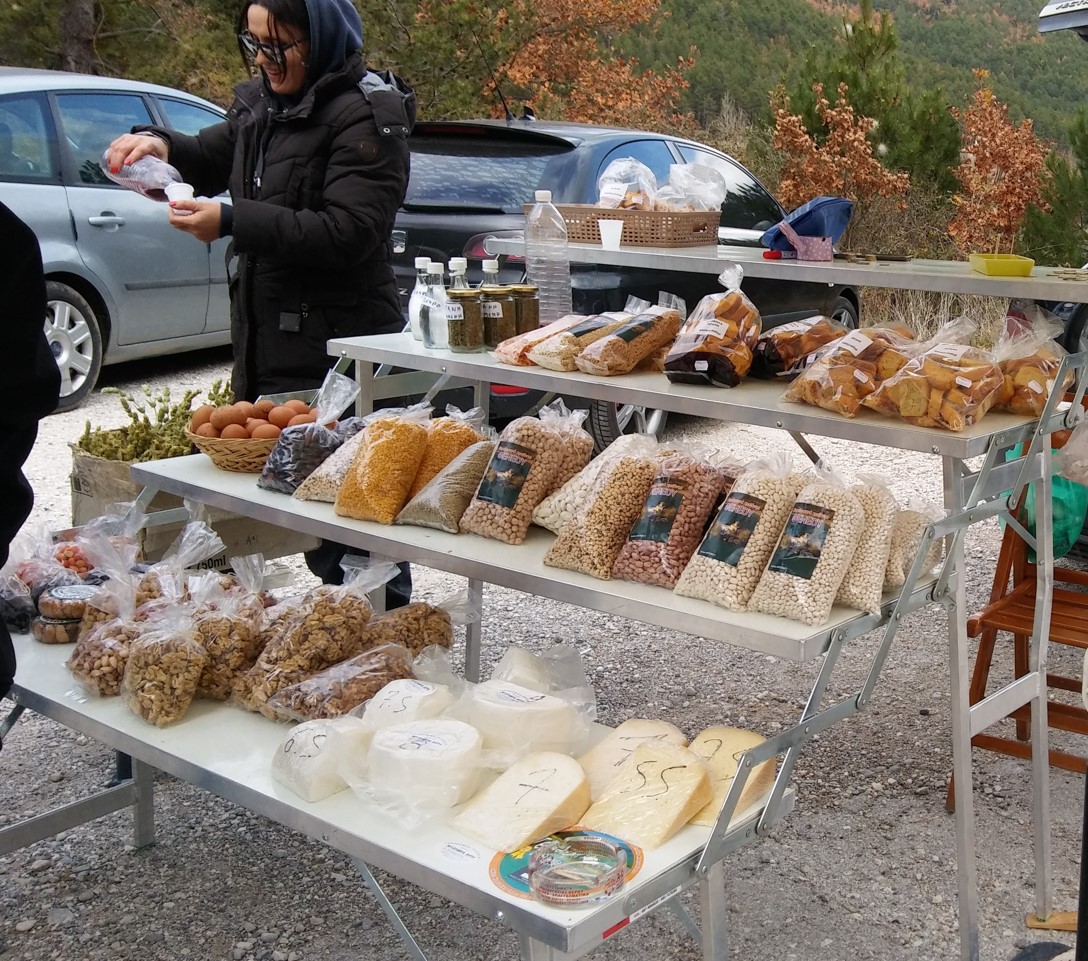
When we visited the lake, I quickly turned around to realize my hubbie was nowhere to be found. Crowds had gathered everywhere to admire the local produce on offer that was laid out across many stands along the bank.

I spotted Andy again a little later emerging through the wandering tourist crowds, and he was singing the praises of the locals, saying how hospitable they all were acting. Turned out he’d only gone on a little tour by himself while I was buying all sorts of lentils from the local plains at amazing prices. He was over the moon, having been offered in that short time various kinds of rusks, cheeses and tsipouro to try. I quickly followed his advice and tried some of the samples on offer as well. He was right; it was all delicious. If you’re ever in the area, make sure to try everything. I think we did haha. And we did go away with a couple of big bags. What a saving it all was haha

I’ve already cooked beans and fava and they were both as delicious as they had promised they’d be. I am still to rub the wild oregano I got off the stalks and put it in a jar. That was incredible timing as my longstanding stock of wild oregano from Moraitika, Corfu had recently been depleted 🙂

The lake itself is phenomenally beautiful. I’d love to go back one day and go around it to drink in its beauty at my leisure. In the summer, one can even rent boats (or is it pedalos?). People can cycle along the bank all year round or rent horses and ponies. We only had a short time to enjoy the views as it was quite cold and threatening with rain, but we managed a short walk to the Agios Fanourios church. It is tiny and sits at the end of a long strip of land extending far into the lake.

Our beautiful day out continued with lunch at the village of Feneos – we had roasted lamb, Choriatiki salad, and a side dish of local butter beans in tomato sauce. All enjoyed with fresh bread as we sat by the fireplace. We couldn’t have been taken to a better place for lunch. After all the walking around in the cold, everything hit the spot perfectly.

It’s been almost two weeks since that day and my mind is still full of beautiful images. The colors on the forest trees, the sparkling lake waters, the ancient woodwork and stonework of the monastery, and, last but not least, the sunrays reaching down to the plains as they pierced through dramatic dark clouds. It all helped to take pictures I will cherish forever. This part of Greece is not well known but well worth a visit.

SEE ALL MY PHOTOGRAPHS HERE


OOPPAAA! SIGN UP TO MY BIMONTHLY NEWSLETTER AND GET 3 BOOKS FROM ME AS A WELCOME GIFT! SEE BELOW FOR THIS OFFER!

YOU KNOW WHAT THEY SAY… SHARING IS CARING! Tweet this to spread some love:

Majestic views in Lake Doxa and a secret room in a monastery #Greece #travel #blogger Share on X


3 FREE books for you! Sign up below to receive them instantly!

NEW! Clean Christmas romance. Single mother Cathy Roussos gave up on love long ago, and veterinarian Alex Rallis doesn’t believe in it, but one magical Christmas on a Santorini farm might just change everything…
Check it out on Amazon     Read a FREE sample!


A clean romantic suspense short read with an unreliable narrator that’ll keep you guessing! Vera is losing her mind over famous actor Yannnis Ksenos, except, she isn’t just a fan… Now, she plucks up the courage to ring his doorbell… Visit Amazon


For my delicious Greek recipes, go here
 
Planning to visit Greece? Check out my  FREE guide to south Corfu!

St Efraim of Nea Makri. A Greek saint’s chilling tale

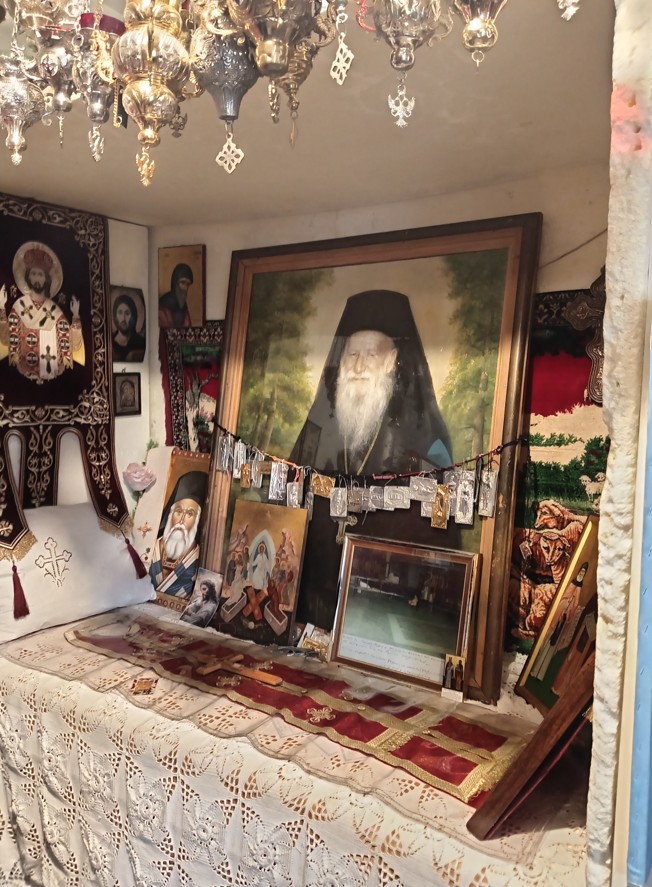
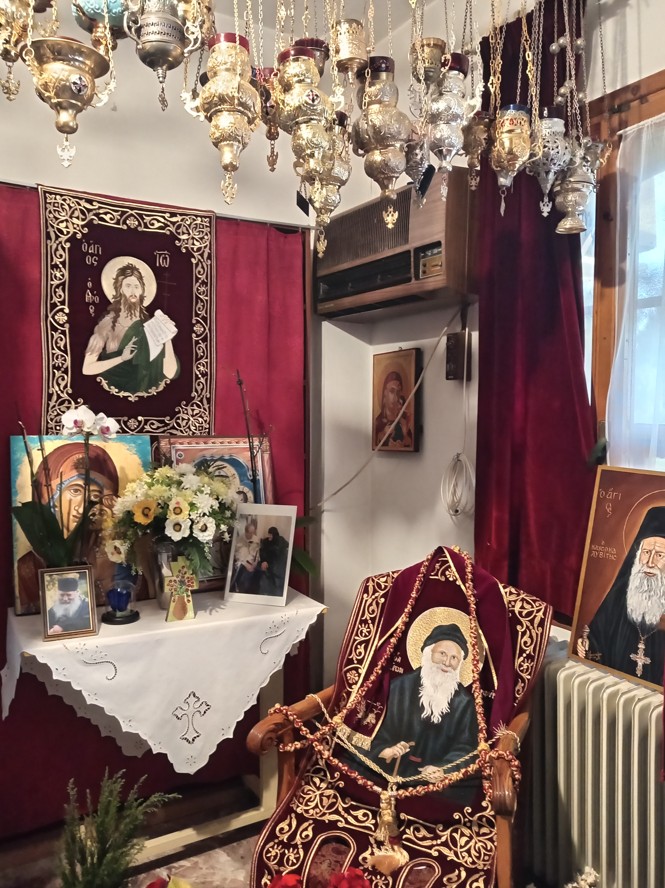
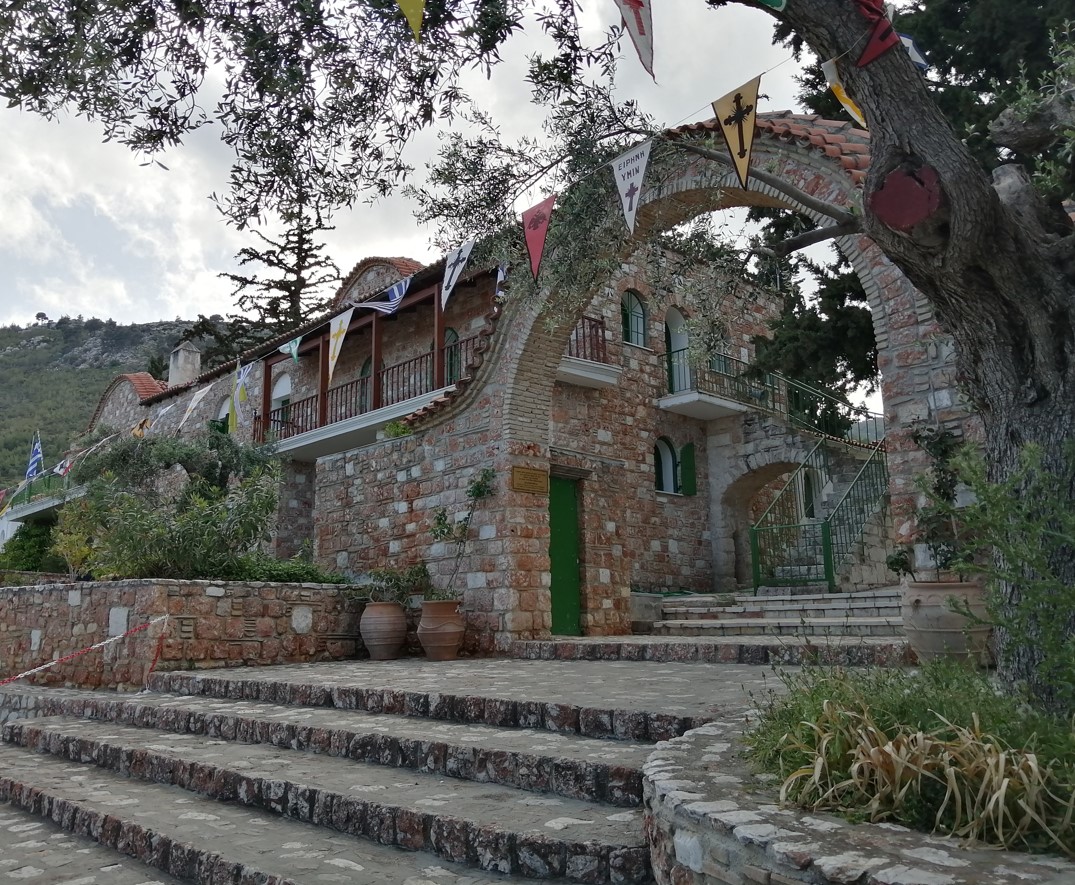
St Efraim Monastery is world famous for the saint’s chilling tale and the miraculous healings connected to his name… Earlier this month, I had the chance to visit St Efraim’s monastery one quiet afternoon. It is located on a mountain overlooking the beautiful seaside town of Nea Makri in East Attica. I was lucky enough to find only a small crowd in the monastery. From what I’d heard, the norm is an endless trail of coachfuls coming and going all day.

St Efraim monastery is visited by Orthodox Christians throughout the year, many going to pay their respects and to pray for a healing for them or their loved ones. The saint is famous for the many visions that the faithful have had of him over time – and still do today. He has appeared in apparent human form even before unsuspecting people who had never heard of him. The saint gave these people advice for their health, and sometimes simply prompted them to get some oil from the lamps at the monastery to put on the part of the body that needed healing… And healings happened every time, apparently. The monastery still receives a multitude of healing testimonies from many parts of Greece and abroad.

Inside the monastery, cotton wool drenched in oil from the lamps are offered in individual tiny plastic bags to the visitors. Those hoping for a healing or just asking for protection are able to buy tall candles, as tall as a person, to light up and leave inside a chapel.

St Efraim’s body is in skeletal form and is kept in a beautiful open casket for people to pay their respects too.

If you’re interested to know more about the saint’s life, his terrible death at the hands of Turkish invaders, and the miraculous way in which his remains were found hundreds of years later, you’re welcome to find out everything in the next segment.

Either way, I hope you will enjoy the photographs I took around the monastery. It’s so peaceful a setting, high on a mountain top, edged by olive groves and overlooking the town of Nea Makri and the coast.

The monastery itself is decorated with beautiful stonework. The court is particularly quaint!

I am including some photos of the seafront at Nea Makri, too. It was the quietest I’ve ever seen it, but it makes sense as it was a weekday. Every weekend, and especially in the summer season, it’s always packed.

GO HERE TO SEE THE PHOTOS 

Who is St Efraim?

St Efraim was born in Trikala on September 14 (Cross Day) in 1,384 A.D. He was one of 8 children and was given the name Constantinos. When his father died, Constantinos was still a small boy, and his mother took on all the challenges of raising her children on her own. Constantinos expressed a love for God and Christianity from a very young age.

When he was 14 years old, his mother feared the Turks would take him during another of their raids where they took young boys to raise them as Genitsari (Note: Genitsari was a brutal rank of ‘Turkish’ soldiers that hated Greeks with passion. All of them had been taken away when they were small boys (Greek Orthodox children) to be given a strict military upbringing while brainwashed to hate their own nation).

Heeding his mother’s advice, Constantinos left Trikala to seek another part of Greece that would be safe from Turkish raids. She had also advised him to find a monastery and become a monk since he had so much affinity for the monastic life. After many wanderings, Constantinos wound up on Mount Amomon (Mountain of the Clean), which is the very place where his monastery now stands.

Constantinos settled well in the monastery. When he turned 18, he was declared a monk and was given the name Efraim. After a few years, he became a priest. By then, he much preferred to live in natural caves on the mountain as opposed to the monastery.

In 1424, Turkish troops arrived on the mountain and raided the monastery looking for gold. They found next to nothing and slaughtered everyone they found. That day, Efraim was spared as he wasn’t in the monastery. When he returned the next day, he found everyone dead and buried them on his own, then went back to his cave. After that, he returned to the monastery only on special days to do mass in the church.

On such a day (Cross Day), September 14, 1425, the Turks returned and this time they caught him. What followed was 8 months of imprisonment and they tortured him from time to time, insisting to find out where the gold was, but there was none to give.

Finally, on May 5, 1526, the Turks hung St Efraim upside down from a mulberry tree in the courtyard of the monastery and killed him by stabbing him in the stomach with a lit torch.

Fast forward 419 years later…

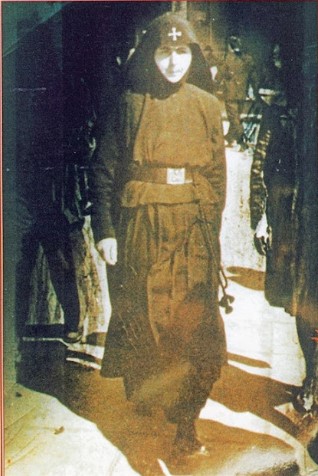
In 1945, a nun called Makaria, driven by divine inspiration, decided to go to Mount Amomon and settle in one of the old cells of the ruined old monastery. Soon, she began to clear the rubble of the old church inside it, hoping to make it operational again. She asked a local, whom she hired as a worker, to dig at a specific spot, as she had been receiving insistent advice in the form of an eerie whispering voice to do so.

The man was difficult and refused to dig in the specific spot, but the nun insisted so he finally gave up. Digging at about 1.70 meter deep, they found what looked like an old cell and the remains of a man. He wore the robe of a priest, and it was intact. A divine fragrance filled the air as soon as the skeleton came to light.

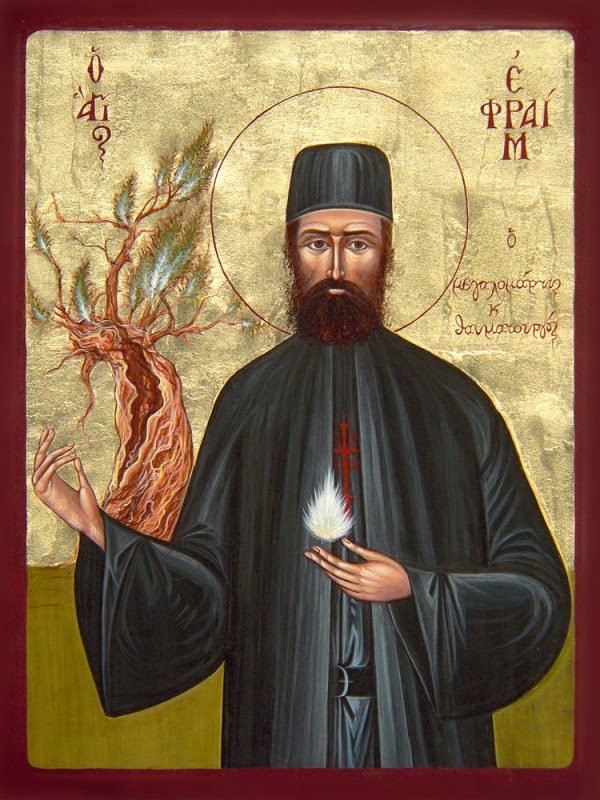
That same night, while she prayed, Makaria heard footsteps. They were coming from where she had found the remains. On her way there, at the entrance of the church, she saw a vision. It was a tall and thin man, with a long black beard that reached down to his neck. He had dark eyes, and he was wearing the robes of a monk. One hand emitted fire, while the other was positioned in a gesture of blessing. He spoke to her then, asking her to move his remains away from the crypt near the grave where she had placed them.

The next day, Makaria cleared the bones and placed them in a crypt inside the church. That night, St Efraim appeared in her dream to thank her. That was also when he gave her his name.

Over time, St Efraim disclosed to her all the details of what had happened with the Turks and how he had been murdered.

According to the Greek Orthodox Church, the miracles of St Efraim to this day are in the thousands. He is honoured twice a year. On May 5, where his assassination is commemorated, and on January 3, the anniversary of the discovery of His remains.

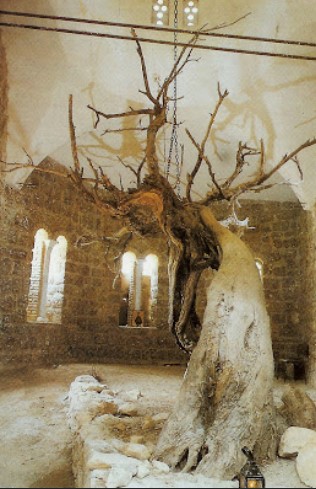
The mulberry tree where Efraim gave up his spirit has been preserved over the centuries, or, rather, what is left of its dried up frame. Kept safe in an enclosed space in the monastery, it stands as a silent witness to St Efraim’s brutal and untimely death.

Interested in Greek saints and their miracles? Check out my posts about St Spyridon (patron saint of Corfu), St Vasileios (the Greek ‘Santa Claus’!) and St George.

Greek vigil lamps, frankincense, and how to clean up your house from stale energy https://effrosyniwrites.com/2022/05/13/greek-vigil-lamps-frankincense/   


YOU KNOW WHAT THEY SAY… SHARING IS CARING! Tweet this to spread some love:

St Efraim of Nea Makri. A Greek saint's chilling tale #Greek #Greece #saints Share on X


3 FREE books for you! Sign up below to receive them instantly!

NEW! Clean Christmas romance. Single mother Cathy Roussos gave up on love long ago, and veterinarian Alex Rallis doesn’t believe in it, but one magical Christmas on a Santorini farm might just change everything…
Check it out on Amazon     Read a FREE sample!


A clean romantic suspense short read with an unreliable narrator that’ll keep you guessing! Vera is losing her mind over famous actor Yannnis Ksenos, except, she isn’t just a fan… Now, she plucks up the courage to ring his doorbell… Visit Amazon


For my delicious Greek recipes, go here
 
Planning to visit Greece? Check out my  FREE guide to south Corfu!

Greek vigil lamps, frankincense and how to clean up your house spiritually

Today, I’d like to share about the Greek custom of the vigil lamp. Vigil lamps are lit in Greek homes on all big religious holidays, but in homes where loved ones have passed away they may be found lit every day, especially in the homes of widows.

Traditionally, in every Greek home, there is one corner (usually the bedroom), where icons are placed on the wall (along with the wreaths from the wedding ceremony of the home owners so the marriage can remain blessed). The vigil lamp is often placed in the same corner too. I have such a corner in my bedroom, but in the recent years, following the deaths of my Corfiot grandparents and then my mother, I created a second shrine in my study. I burn my vigil lamp in there amongst icons and photographs of my deceased family members. It all helps to keep their memory alive and my spirit connected to them.

The light of the flame serves to remind us that God is light, and that we have a divine light (our soul) inside us too. When the lamp is lit in the memory of a deceased, it is believed that it promotes the peace of their soul. Traditionally, a lamp is always kept lit on the grave for that very purpose, but those not able to visit the grave daily, may light a vigil lamp at home for the souls of their departed loved ones.

Vigil lamps come with a cup which you may fill with just olive oil, or water and olive oil if you don’t wish to keep burning the lamp all day. For example, if you intend to leave the house, as it’s not really advisable to leave a vigil lamp burning at home unattended.

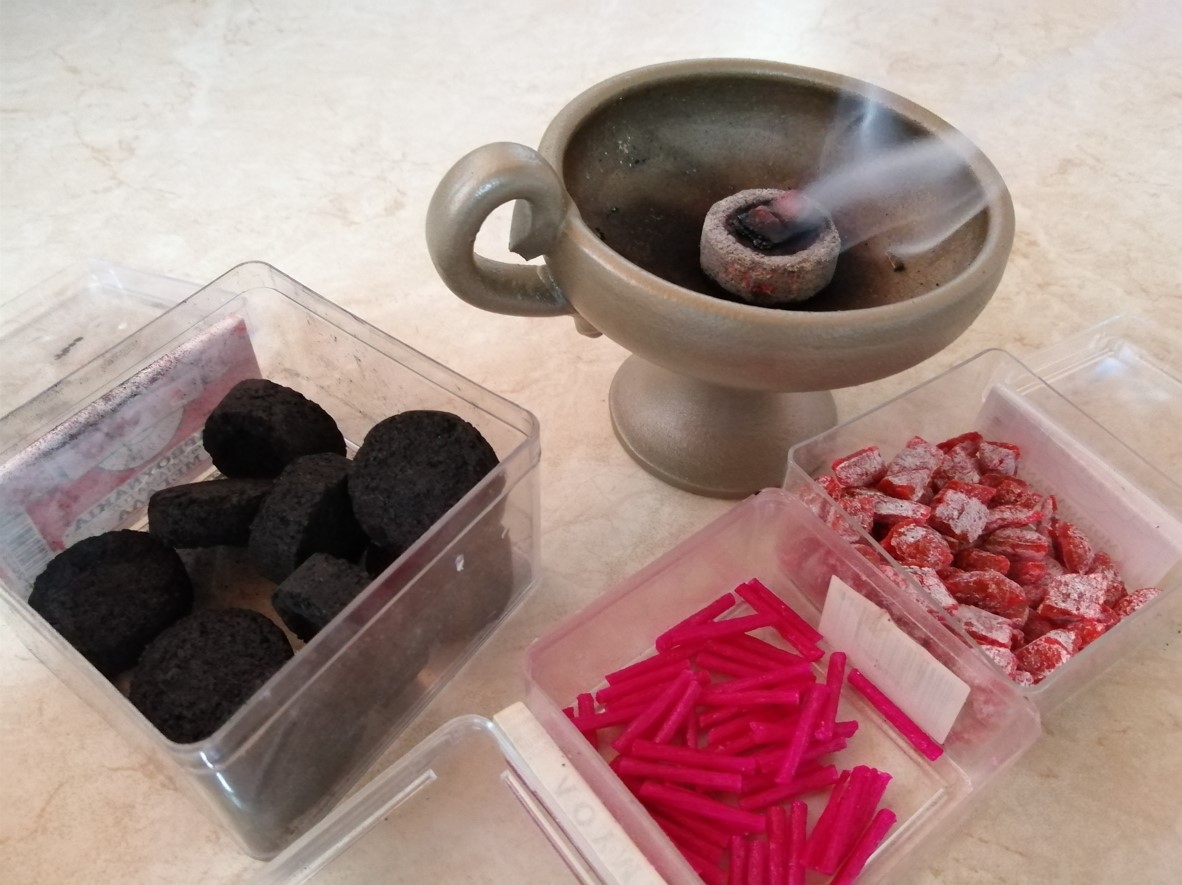
Put in some water first, then the olive oil. The latter will naturally float on top. To use a vigil lamp you will also need a float made of cork and a box of waxed wicks. The wicks look long and pink, as you can see in the photograph below. After you put the wick through the hole in the float, squeeze the wick above the float with your fingernails to flatten it and thus stop it from sinking lower through the hole.

The shorter the wick on top of the float, the smaller the flame and the longer it will burn. Nowadays, tall votive candles are available to buy everywhere in Greece to place on graves. These burn unattended for days on end. However, the traditional burning of olive oil is believed to be the best offering.

The burning of frankincense usually goes together with the lighting of the vigil lamp. Personally, I burn frankincense on the big religious holidays and any other time when the energies in my home seem stuffy, negative or just off kilter. Over the years, I’ve grown quite sensitive to energy and instinctively know when to do this. There is no set interval, so if you want to try this too for your home, just use your instinct to decide when is a good time.

In the above photo, you can see the necessary tools for frankincense burning. i.e a suitable bowl (with a handle, as the bowl itself gets pretty hot), frankincense resin, and charcoal discs to put the resin on. To ignite the disc, hold it in the air between two fingers and place the flame of a lighter under it. As soon as it starts to spark, place it in the bowl and blow on it to encourage it to light up further. I light the charcoal disc in front of my open kitchen window and sometimes turn on the kitchen ventilator too, for good measure.

The reason is that when the charcoal ignites it produces thick white smoke as it starts to spark, a noxious thing to breathe in. So give it a few seconds to let out the worst of it. When it subsides, carefully drop a couple pieces of frankincense resin on the disc, depending on their size.

Depending on the size of the frankincense pieces, you may fit on the disc only 1 piece, or 2 or 3.

As you throw the pieces of frankincense on the disc, if you’re a believer, you may want to do this: If you’re putting on one piece, say, ‘God is one!’ (O Theos ine enas!). If you’re putting on two pieces, say, ‘Two are the natures of Jesus: God and Man!’ (Dio ine i fisis tou Christou. Theos  kai anthropos!). If you’re putting on three pieces, say, ‘Father, Son and Holy Spirit’ (Patir, Ios ke Agio Pnevma!)

Before going around the house with the bowl in your hand, ensure you have opened one window in every room, even if it’s just a tad. Why? Because this will allow your logical mind to accept and understand the notion of ‘sending away’ the demonic aka negative (stale) energy. Negative energy in the home needs to be removed or it will cause all sorts of bad things, like misfortune, disease or disarray…

Now, if you’ve never done this before, here is what I do, and you can adjust the process to your own preferences. The information that follows is my own process, which is quite original for Greek standards. It combines things other Greeks do, along with practices of spiritual people in other countries. Use your intuition, as, for your own home, you surely know best!

Go from room to room with the bowl in your hand making sure that you go to every literal corner, and every nook and cranny. These are the places where stale energy accumulates. In every corner, make a cross in the air with the bowl and say, ‘Jesus Christ wins and makes all evil scatter’ (in Greek: Iisous Christos nika, ke ola ta kaka skorpa). Or, you can simply say, ‘In the name of Jesus Christ, leave now!’ or something similar using the power of His name.

Do not miss the bathroom. Especially the space over the toilet bowl. Honestly. I am not kidding. Do not miss particulatly dusty spaces either. Negative energy loves to accumulate in the spaces that are less than squeaky clean.

As you go around the house, stop at every window and external door, also at every TV or computer screen, every mirror, and the fireplace, if you have one. These are portals from where negative influence may enter the home. So move the bowl in front of them from a distance while vaguely tracing the outline (i.e. that of the window, the TV screen, the computer screen, your bathroom mirror etc). You don’t need to be exact with the lines you draw in the air. It’s the intention that counts.

After you move the bowl around the outline, draw with the bowl an X over the rectangle. This seals the portal and keeps negative influences out.

Stop when you reach your shrine of icons too, if you have one, and do crosses in the air in front of them, offering a brief prayer to God, Jesus, Mary or your beloved saints to help you clear your home and bless it.

When you’re done going around your home, place the bowl in the window sill until the smoke dies away and the disc grows cold, safe enough to throw away. Alternatively, put water from the tap into the bowl to drench the disc and extinguish it.

If you don’t have frankincense discs and the other paraphernalia needed to sanctify your home the Greek way, I am sure you will be able to find similar things in your country. A good choice is the use of frankincense sticks. If you live in Greece, go to your nearest supermarket or search for eshops that sell ‘ekklisiastika products’ (i.e. ‘churchware’) to find higher quality stuff. This eshop, for example, belongs to a monastery, and these tend to offer better quality and thus more aromatic resin, for example.

Is frankincense enough?

Certainly not. Not for me, anyway. I don’t take any chances when ousting stale energy, so I do three ‘sweeps’ of my house back to back! Each time I hold a different thing and always, meticulously, I go in every single corner. If I don’t have much time, I sometimes omit the third ‘sweep’ but I always do the first two.

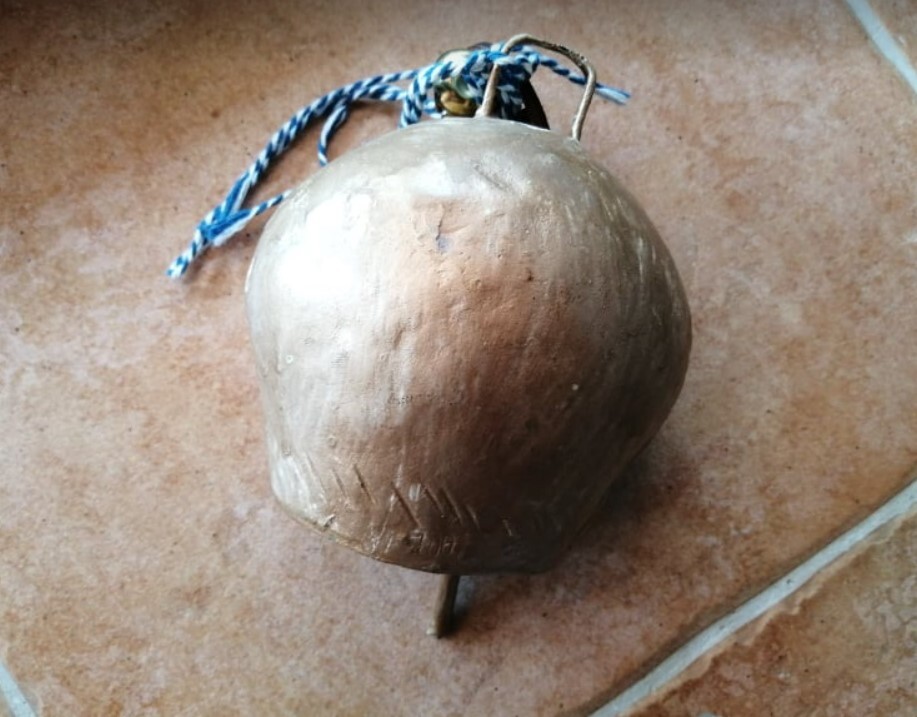
The first one is what I’ve already described, using the frankincense. The second time I use sound. Loud sound makes stale energy run for the hills, so to speak. Bells or gongs work wonderfully for this purpose. More often than not, I use this sheep bell from the island of Limnos that my father gave me. Its sound is very loud so it’s perfect, but sometimes I use my Tibetan bowl instead. This is not as loud but makes a wonderful eerie sound that I find very satisfying and rather mystical. When I use sound, I don’t have to say any words. The loud sound does all the work 🙂

The third time I go around the house, I pick a couple flowers from my garden first. Holding them in my hand with a small icon or a cross, I go around my home to every nook and cranny, and offer blessings, speaking non-stop. “Peace! Love! Prosperity! Radiant health! Balance! Hope! Courage! Joy! Unity! Harmony!” You get the idea 🙂 The power of words is immense!

So there you have it. This is the best way I know to cleanse my home energetically. I swear the air feels lighter after that for days. One last note: It’s best to do this alone in the house. Definitely no one small, sick, weak or vulnerable should be indoors when you do this. No pets, small children and elderly people. When the energy starts to ‘run away’, you don’t want it ‘bumping into’ anyone of the sort, affecting their energy in a bad way.

For the same reason, you must be strong yourself (physically and mentally) when you do this. If unsure, say a little prayer and ask your angels or your favourite saint for protection before you start.

Hey. I know this is not for everybody. If you found this a little ‘out there’ or ‘woo woo’, I totally get it. It’s Greek culture, after all, and we can often act like a crazy bunch. I mean, take that Zorba guy… He certainly was a little loopy, LOL!

Interested in Greek Orthodox traditions? Read here all about the Greeks’ beliefs and traditions for the dead. Hope it won’t chill your blood much, LOL 😛 


YOU KNOW WHAT THEY SAY… SHARING IS CARING! Tweet this to spread some love:

FREE books, and fun news from a Greek author #writerslife #freebies #Greece Share on X

Check out more of my posts on Greek culture here: https://effrosyniwrites.com/category/greek-culture/


3 FREE books for you! Sign up below to receive them instantly!

NEW! Clean Christmas romance. Single mother Cathy Roussos gave up on love long ago, and veterinarian Alex Rallis doesn’t believe in it, but one magical Christmas on a Santorini farm might just change everything…
Check it out on Amazon     Read a FREE sample!


A clean romantic suspense short read with an unreliable narrator that’ll keep you guessing! Vera is losing her mind over famous actor Yannnis Ksenos, except, she isn’t just a fan… Now, she plucks up the courage to ring his doorbell… Visit Amazon


For my delicious Greek recipes, go here
 
Planning to visit Greece? Check out my  FREE guide to south Corfu!

St George’s Easter egg? A Greek tradition, but not for every year!

“St George wants a red egg!”

That’s what my Corfiot grandmother used to say whenever I asked her why St George’s Day is late in any given year. As you may know, St George’s Day is celebrated on April 23rd, but in Greece this is not always the case. The reason for that is because in the Orthodox faith, the hymn used to honour Him in church, mentions Christ’s Ressurection. Therefore, it is not possible to honour the saint unless Greek Easter has come and gone. So, if Easter is later than April 23rd, St George is celebrated on Easter Monday.

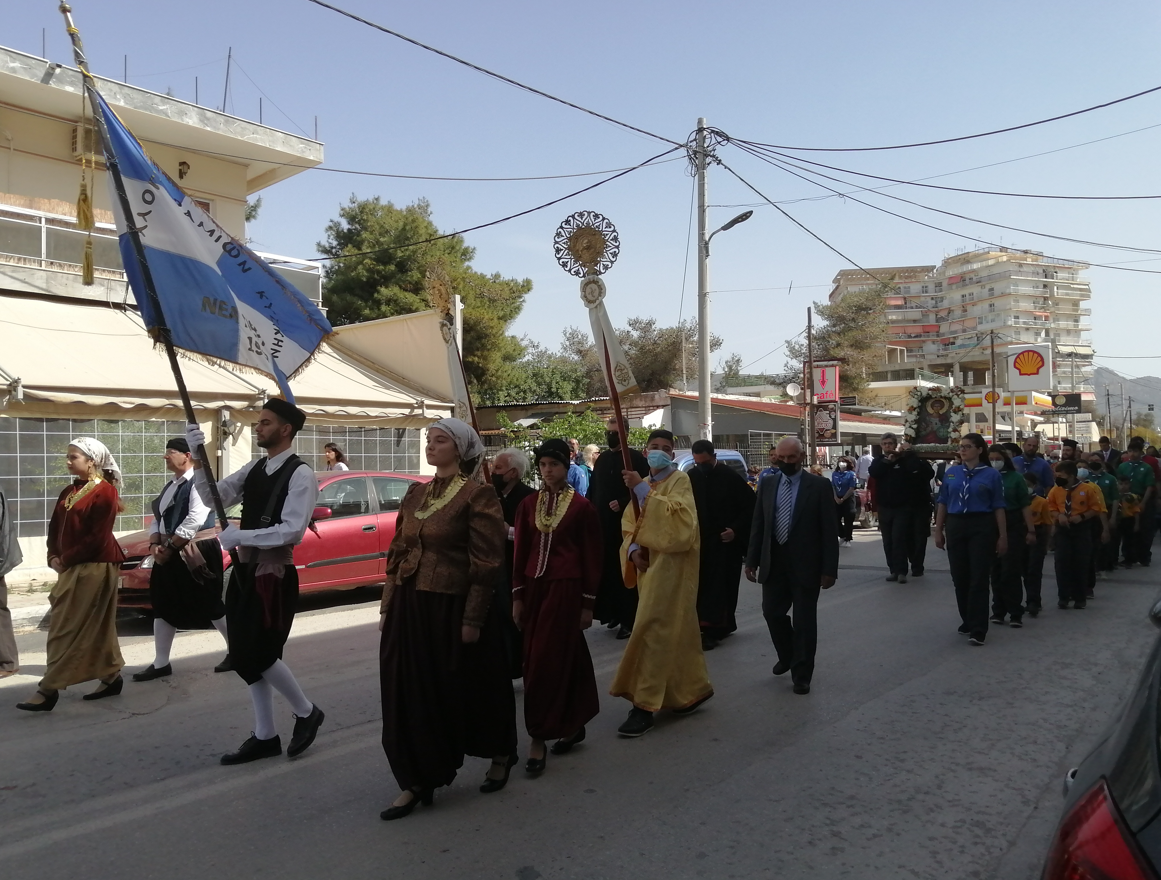
I took this photo on Easter Monday (2022) in the main street of my little town of Nea Peramos (west Attica). After the mass, a procession took place to honour St George. The icon was accompanied by a brass band, the priest and town officials, boy and girl scouts, and other youngsters dressed in traditional Minor Asia costumes.

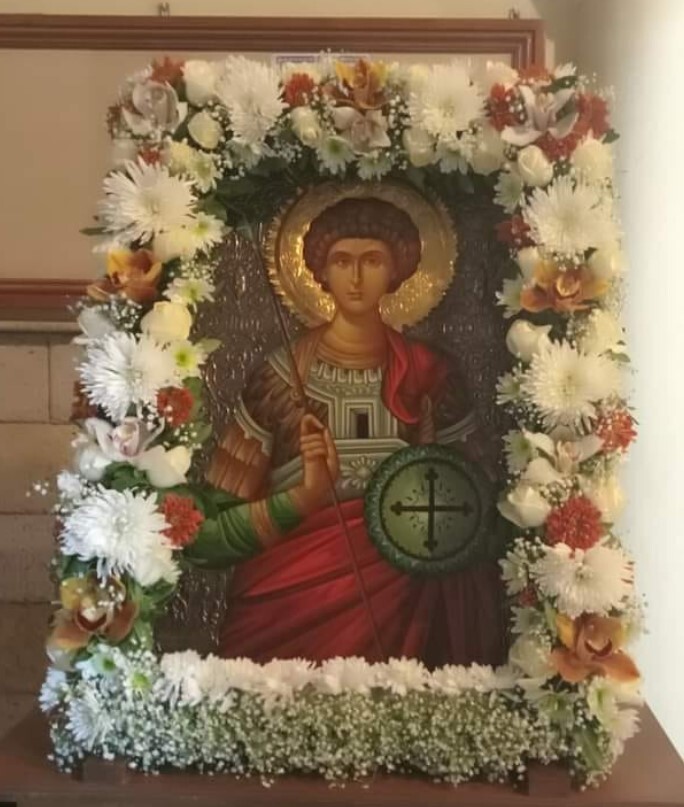
The town of Nea Peramos (‘New’ Peramos) was founded by refugees from Peramos in Asia Minor, who had brought with them an ancient icon of St George – their patron saint. The icon you see in these photos is not it; this is a contemporary one used to worship Him in the town’s church (St George’s church, naturally). The old icon is kept safe in the church as it’s so precious.

St George has always cast his protective gaze over Nea Peramos and its people. The locals speak of sounds of His horse clip-clopping all around town at night. They say the saint was patrolling around town on his horse every night all through WWII, and they believe this is why not one of the people of Nea Peramos lost their life during the war.

As you may know, St George was from Cappadocia, an area now in Turkey that used to be Greek. Legend has it that there was a dragon in Libya that guarded a water spring. Every now and then, people had to pick one of the locals in random to offer for sacrifice so that they could get water from the spring.

When the princess of the land was picked to be sacrificed next, St George, a young officer of the Roman army, arrived on his horse, saved the princess and slayed the dragon with his spear.

Legend or fact? Either way, I am sure you will agree that it makes for a very charming story!


YOU KNOW WHAT THEY SAY… SHARING IS CARING! Tweet this to spread some love:

A St George celebration on Easter Monday. A Greek tradition, but not every year #StGeorge #Christianity #Greece Share on X


Check out more of my posts on Greek culture here: https://effrosyniwrites.com/category/greek-culture/

3 FREE books for you! Sign up below to receive them instantly!

Clean Christmas romance. Single mother Cathy Roussos gave up on love long ago, and veterinarian Alex Rallis doesn’t believe in it, but one magical Christmas on a Santorini farm might just change everything…
Check it out on Amazon     Read a FREE sample!
For my delicious Greek recipes, go here
 
Planning to visit Greece? Check out my  FREE guide to south Corfu!

Tales from Lesvos about Archangel Michael

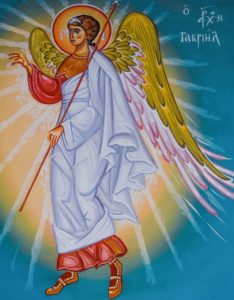
On November the 8th each year, Greece celebrates angels and archangels. The Greeks with angelic names celebrate too. Aggelos, Stamatis, Michael, Gabriel and Stratos are just a few of these names.

To celebrate this big day, I am sharing here a couple of stories about Archangel Michael that locals once shared with me on the island of Mytilene (Lesvos). But first, a brief introduction to angels:

The Greek word for angel is Aggelos, which means ‘messenger’. Different kinds of angels can be found across the angelic ranks of hierarchy. The highest in rank are the Cherubim, The Sherafim and the Thrones. Three of the most revered archangels are Michael, Gabriel and Raphael.

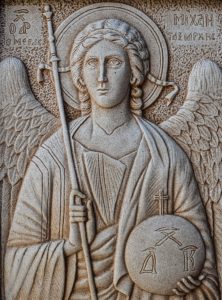
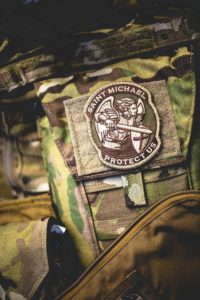
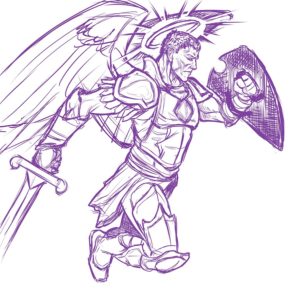
Archangel Michael is the ultimate military ‘superhero’ that the faithful call upon when in need of protection. His name means ‘Who is like God’. All you have to do is say three times ‘Archangel Michael, protect me!’ and He is said to rush to your side to make sure no harm comes your way. Other than protection, He also provides courage and strength.

Archangel Gabriel is said to provide strength and guidance to those who need Him. His name means, ‘God is my strength’.

Archangel Raphael is the one to invoke when healing is required. His name means ‘Healing power of God’ and He responds to prayers to provide healing on a physical, emotional or mental level.

 Now, to share the stories that the locals of Mandamatho in Mytilene shared with me:

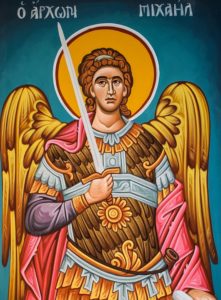
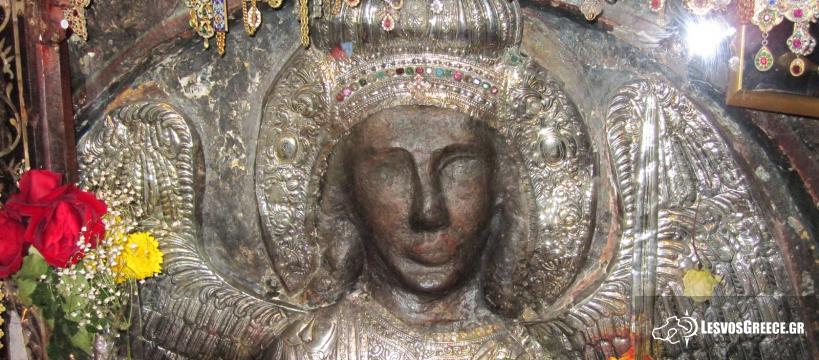
There is a monastery in Mandamatho, which I’ve had the pleasure to visit, and its church is dedicated to Archangel Michael. The church is famous for its ancient icon of the archangel as well as the iron shoes that are also on display there. According to the locals, the archangel wears the iron shoes at night and wanders around their village.

Many claim to have heard loud thuds coming from the roofs at night, and the shared belief is that this is the sound of His iron shoes as He walks around, up on roofs and on the streets, to patrol the village when the sun goes down.

Others claim to have seen His shadow wander around in the church.

The locals replace the iron shoes occasionally, and many offer new pairs from time to time too, seeing that they tend to find signs of wear and tear on them, as if someone actually wears them…

 One of the locals told me this amazing story:

There was a villager who was renowned for being highly blasphemous. All day he’d swear, using sacred names in vain, and Archangel Michael’s was one of his ‘favorites’, seeing that he used His name to swear heavily on a daily basis. One night, he saw a tall man in a dream. He looked very strong and was dressed in a military uniform. The man in the dream began to beat up the blasphemous villager pretty badly. Punches, kicks, slaps, you name it, while telling him of for his blasphemy. When the man woke up, his body was covered in bruises… Needless to say, he quickly realized he had been paid a visit by the Archangel Michael himself and stopped swearing, literally, overnight!

Another local had an even more intriguing story to share with me. It was about a man who had a sick child. One night, Archangel Michael appeared before him in a dream and made a devastating announcement – that he had come to take his sick child away. The man then began to wail, crying and begging the Archangel to reconsider. Then the Archangel said, ‘All right! I will let you choose: Shall I take your child or the cow in your field?’

‘Of course, no need to ask,’ the man replied in the dream, ‘please take the cow!’

When the man awoke, he rushed to his child’s bedside to find it was feeling a lot better, and it was eventually cured. As for the cow, the man found it that morning dead in the field.

(image by LesvosGreece.gr)

The legend surrounding the ancient icon of Archangel Michael goes like this:

The monastery was raided one day by Saracen pirates who attacked the monks and slaughtered them. Only one survived to tell the tale; it was a young monk who managed to hide on a roof and watched the massacre from up there. According to legend, afterwards, he saw a vision of Archangel Michael hovering over the slaughtered bodies of the monks.

Inspired by the vision, and to honor their memory, he took some of the blood-stained soil, mixed it with wax and made the Archangel’s face as he remembered it. Today, only the head of the full-body icon is on display.


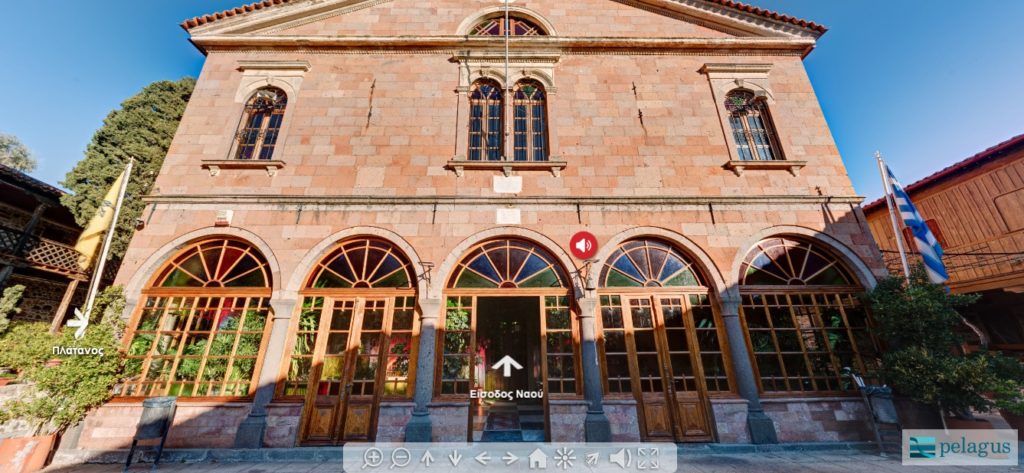
Take a 3D walk around the monastery grounds in Mandamatho, and see the infamous icon and other relics inside the church to the sound of ecclesiastic hymns. GO HERE (Language is Greek)


Other than the protector of Mandamatho (and the island of Mytilene in general), Archangel Michael is also the protector of the Hellenic Air Force. Every year, on November the 8th and for a couple of days earlier, the Hellenic Air Force celebrates with various events to honor Him. If you’re reading this post near the big day, check out their site for any events near you. Go HERE

SPREAD THE WORD WITH A TWEET:

In Greece, an archangel walks around in iron shoes... #angels #archangels #faith Share on X


3 FREE books for you! Sign up below to receive them instantly!

NEW! Clean Christmas romance. Single mother Cathy Roussos gave up on love long ago, and veterinarian Alex Rallis doesn’t believe in it, but one magical Christmas on a Santorini farm might just change everything…
Check it out on Amazon     Read a FREE sample!


A clean romantic suspense short read with an unreliable narrator that’ll keep you guessing! Vera is losing her mind over famous actor Yannnis Ksenos, except, she isn’t just a fan… Now, she plucks up the courage to ring his doorbell… Visit Amazon


For my delicious Greek recipes, go here
 
Planning to visit Greece? Check out my  FREE guide to south Corfu!

An insider’s view of Greek Easter

Easter in Greece is the brightest holiday, even more so than Christmas. The Greeks celebrate it with wonderful customs that make it a huge joy to attend the festivities. No matter where you are in Greece, the evening of Good Friday will find you following the epitaph procession with a lit brown candle in your hand, an experience that always makes my heart swell as the fragrance of jasmine and honeysuckle from the yards waft in the crisp night air, and the solemn melody of the hymn ‘Oh glyki mou aiar’ delights my ears. The epitaph is a wooden structure adorned with a multitude of flowers. A depiction of Christ lies inside and the epitaph serves as His tomb. Seeing that the procession symbolizes His funeral, the mood of this procession is mournful and voices are kept to a respectful low volume.

Midnight on Holy Saturday is the exact opposite experience. Here, the atmosphere is joyful, and how can it not be with the fireworks exploding overhead and the church bells ringing madly! The priest brings out the holy light (flown into the country from Virgin Mary’s tomb in Jerusalem the same day and distributed to every church on time), and people light up their white or red candles as they kiss and exchange the news of Jesus’ rising from the dead. One person will say ‘Christos Anesti’ (Christ has risen) and the other will respond ‘Alithos Anesti’ (indeed, He has) or ‘Alithos, o Kyrios’ (indeed, the Lord has).

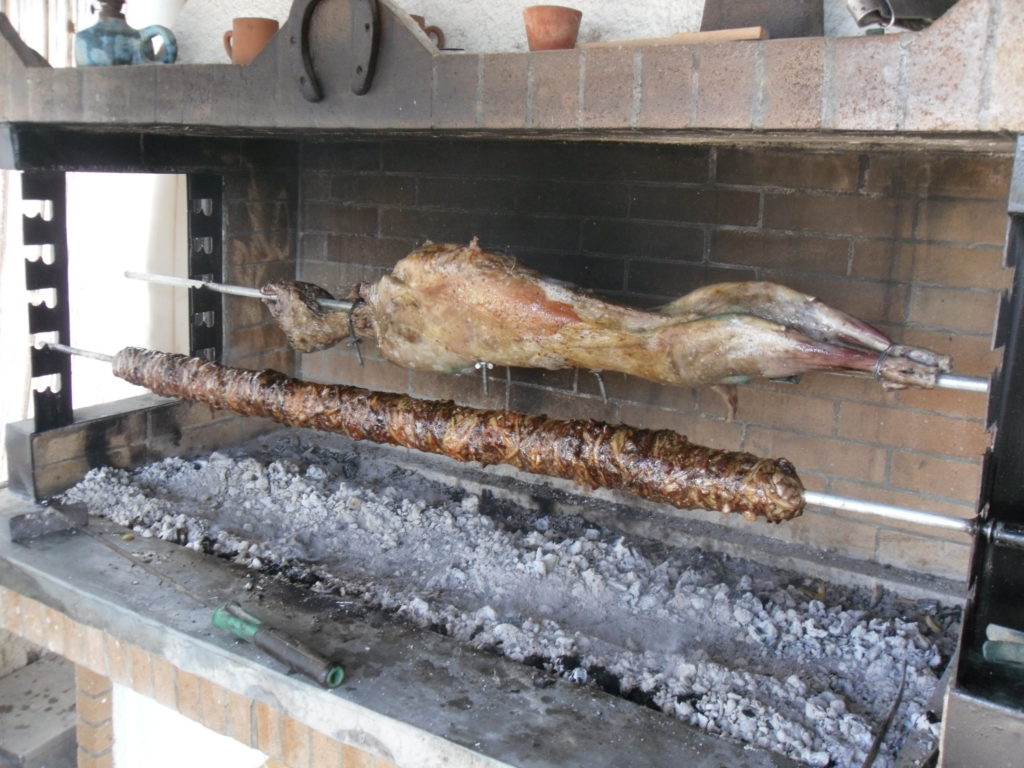
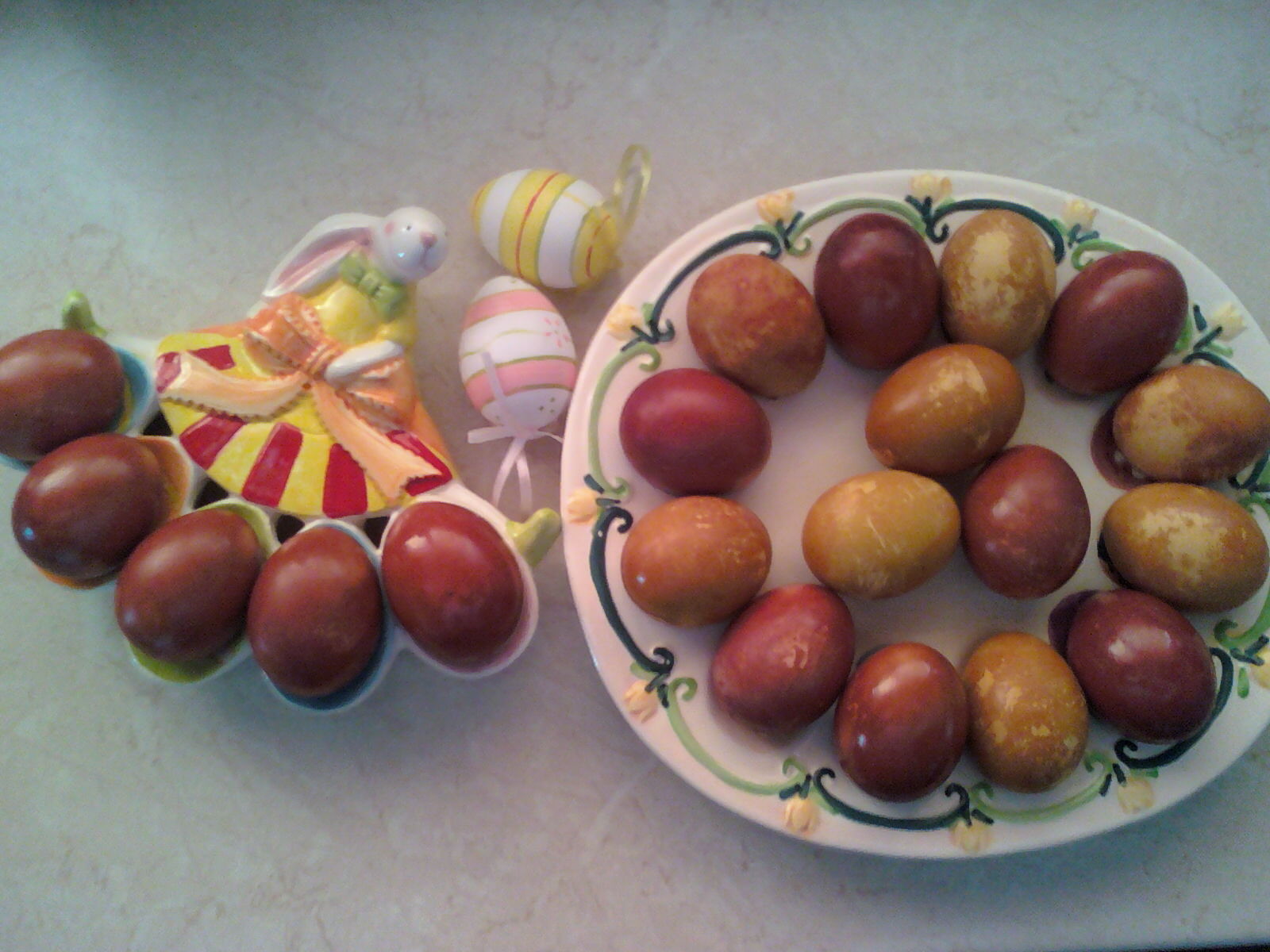
On Easter day, the Greeks get up early to put the lamb and the kokoretsi on the spit. Lunch is a grand celebration that includes bumping together Easter eggs (traditionally dyed red).

Other than the above festivities that can be sampled anywhere in Greece, there are variations in places. For example, on the island of Hydra, the procession of the epitaph is not done on the road but in the sea by boat. Also, there are special customs in other parts, such as the spectacular ‘rocket war’ between two churches on the island of Chios and the burning of effigies of Judas in various parts of the country.

By far, and I am not just saying this because I am biased – everyone agrees here – the brightest Easter you can ever experience in Greece takes place in Corfu town.

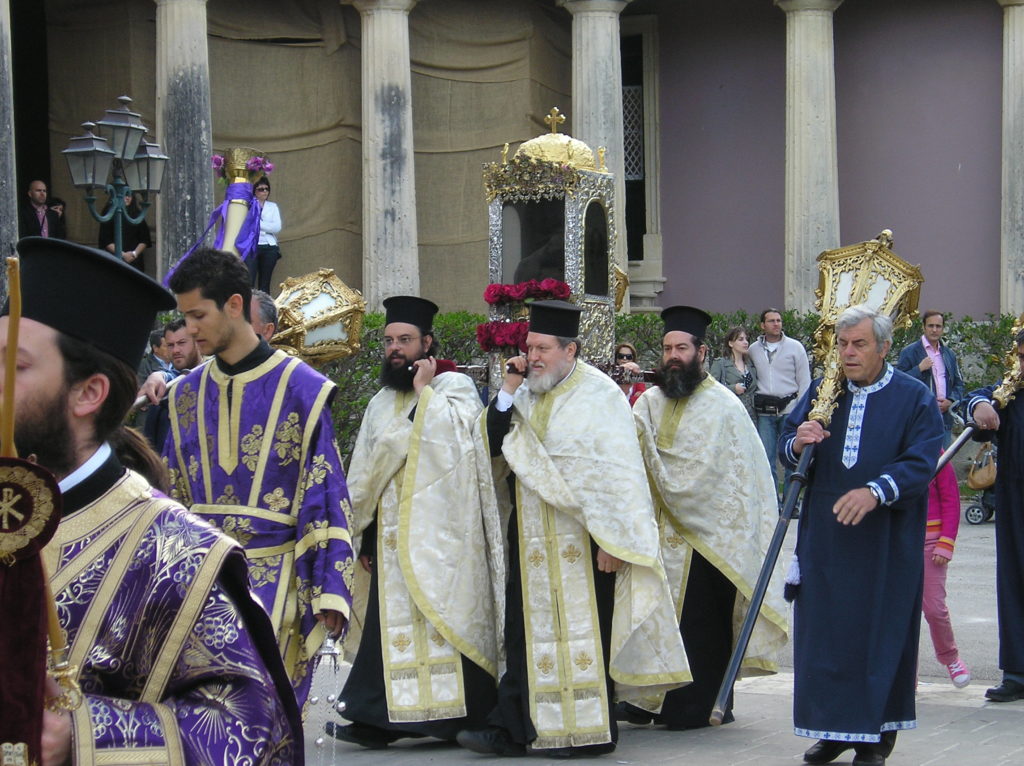
The Holy Relic of St Spyridon is taken around town several times a year during the grand processions.

Other than the multitude of epitaph processions and spectacular fireworks display you’re in for here, Holy Saturday stands out for two things: the grand procession of St Spyridon, schools, boy scouts, and philarmonic orchestras that starts in the old town at 9:00 am, and the ancient custom of ‘botides’ that is a spectacle everyone should behold at least once in their lives.

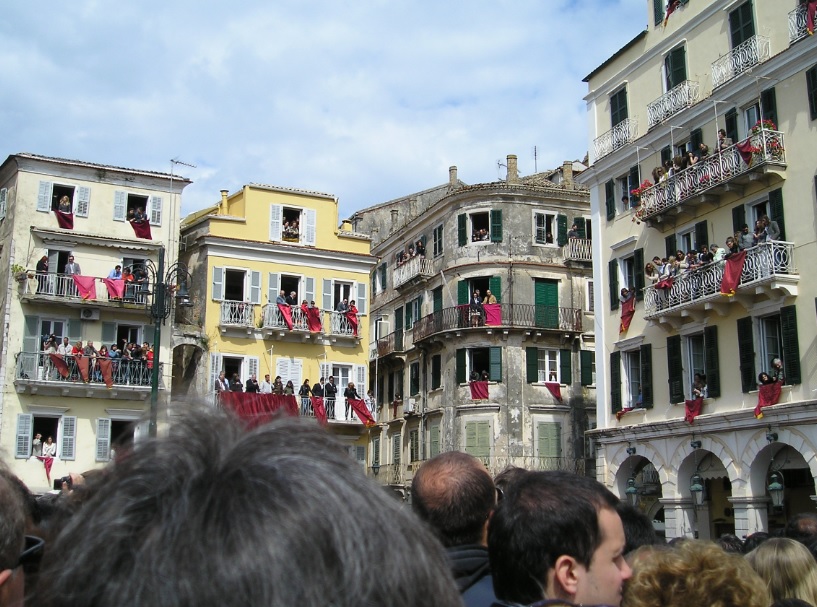
Botides are massive ceramic pots that the Corfiots throw from high balconies when the bell tolls the ‘First Ressurection’ at 11:00 am before a huge crowd. What follows is a pandemonium of cheers and noise that is said to ward off evil and celebrates the victory of Man over death. The atmosphere soon becomes electric and you feel so elated, it almost feels like you’re ready to grow wings on your back and fly. You have to experience it firsthand, I guess, but that’s the best way I can describe the feeling! Here’s a little taste:


Here, I will also share Amleto (Little Hamlet, from Faccio’s opera) – my favorite piece of music played by the Old Philarmonic in Corfu town on Saturday morning during the grand procession I mentioned earlier. Total silence falls among the locals when the band begins to play this song as to enjoy it fully – this is a piece of music adored by the Corfiots, including me, as it has the unique power to compel and to make your heart swell. You be the judge – although again, you have to be there to experience the atmosphere to the max:

And below, a video taken at the square (Spianada) by Liston – Amleto starts at the time mark of 2:10

For the Greeks, Easter is a religious experience that goes on inside their souls. It is a chance to gather hope and strength inside and to keep going, no matter the hardship. It is one of the Greek secrets, if you like, for their ever renewed ability to withstand adversity and to keep the faith. During the Holy Week, the Greeks wish each other ‘Kali Anastasi’ (Happy Resurrection), which doesn’t only mean the enjoyment of the midnight festivities on Holy Saturday – it also means a resurrection in their lives; it wishes the preservation of hope until a better day comes. Therefore, as you appreciate, Easter to the average Greek is not just a cause for celebration but a form of psychotherapy too – a provider of renewed hope. I hope this makes sense. For what it’s worth, this is the best way I can share it with you, what Easter is to a Greek!

And with this, I bid you adieu, wishing you a wonderful Easter no matter where you are and how you plan to celebrate.

Please note: if you ever plan to visit Greece for Easter, do check online for the date of Orthodox Easter first. It coincides with Easter in the rest of the world only once in a few years!


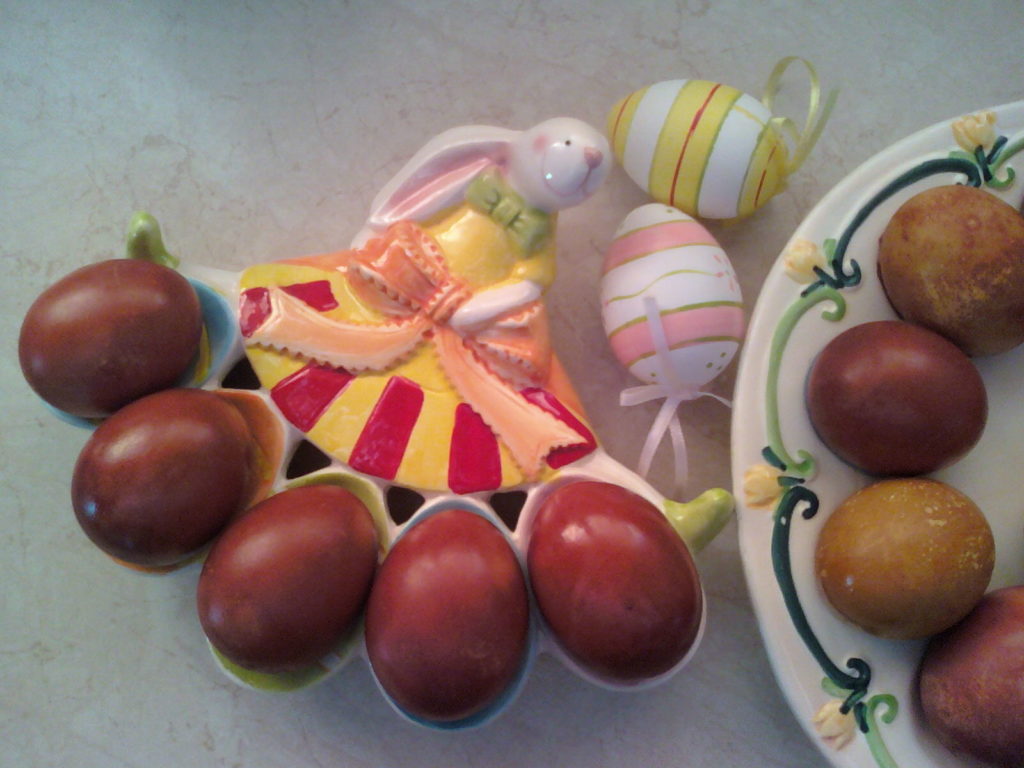
And now, I am off to my kitchen to make Easter cookies. Holy week is a busy one for Greek housewives. Thankfully, I’ve already dyed the Easter eggs! I make mine with red onion leaves and curry to avoid those nasty chemicals. See how I prepare them here

Kali Anastasi & Happy Easter!

Before I go, to announce my first audio book is out!🎧 My Corfu Love Story is a clean summer romance with a paranormal twist. Duration under 2 hours. Listen to the sample on Amazon US or Audible

Also available on kindle and paperback! Visit your Amazon store here


TWEET TO SPREAD THE WORD:

An insider's view of Greek Easter #Orthodox #Easter #GreekEaster Share on X


3 FREE books for you! Sign up below to receive them instantly!

NEW! Clean Christmas romance. Single mother Cathy Roussos gave up on love long ago, and veterinarian Alex Rallis doesn’t believe in it, but one magical Christmas on a Santorini farm might just change everything…
Check it out on Amazon     Read a FREE sample!


A clean romantic suspense short read with an unreliable narrator that’ll keep you guessing! Vera is losing her mind over famous actor Yannnis Ksenos, except, she isn’t just a fan… Now, she plucks up the courage to ring his doorbell… Visit Amazon


For my delicious Greek recipes, go here
 
Planning to visit Greece? Check out my  FREE guide to south Corfu!

Beach fun and sweet romance mixed with magic spells and bird shifters! The Raven Witch of Corfu is an original story that will rivet you with its unrelenting suspense. The final twist will blow your mind! Available in paperback , box set or 4 kindle episodes! Visit Amazon


Saint Spyridon, patron saint of Corfu: his life and miracles

Every year, on December 12, The Greek Orthodox Church commemorates and honors St Spyridon. In Corfu, it is a special day of joyous celebration, seeing that St Spyridon is the patron saint of the island. As you may know, Greeks don’t just have birthdays; they also celebrate their name days with parties, offering desserts and receiving gifts.

Since every Corfiot family has at least one member called Spyridon (Spyros) or Spyridoula (Loula), you can imagine how much partying goes on around the island on December 12!

My family always had my granddad, Spyros Vassilakis, to honor on this day, and so, it’s always been a special day for me, and even more so now that Granddad has passed away.

Here are a few facts and legends surrounding St Spyridon:

SPYRIDON

St Spyridon was born circa 270 A.C. in Askeia, Cyprus. He was a pious man and a shepherd. When his wife died, he entered a monastery and, later in life, became Bishop of Trimythous. He died peacefully of old age in 348 A.C. It doesn’t sound like much, I know, but what if I tell you about the miracles performed by this legendary  man, both when he was alive and centuries after his death? In his life, he performed many miracles and even brought people back from the dead with the fervor of his prayers!

St Spyridon was present in the First Ecumenical Council of Nicaea (325 A.C.) where he took an active role. It is said that he converted a pagan philosopher into a Christian there and, according to legend, he performed a miracle in the process. While talking with this man, he took hold of a potshard to make a point that one thing can be three things at the same time (like The Holy Trinity can be Father, Son and the Holy Ghost). As he held the potshard, it is said that it burst into a flame, water dripping down his hand. All that was left from the shard of pottery in his hand was dust (some sources say he held a brick). It is because of the specific account that St Spyridon is regarded the patron saint of potters (as well as Corfu).

193720.p

This story is just one of many that testify for this pious man’s sanctity; some of them date from when the saint was still alive and others began whole centuries after his death.

For example, when the Arabs took Cyprus (648 A.C.), St Spyridon’s remains were disinterred with the purpose of taking the sacred bones to Constantinople. However, to their surprise, the Cypriots saw that the relic was intact, and a scent of basil emanated from the grave. They took this as a sign of St Spyridon’s sanctity. The relic was taken to Constantinople and when the Turks took the city in 1453, a Corfiot monk called Kaloheraitis took the relic to Corfu and that is where it is still held today, in St Spyridon church.

The Corfiots adore their saint, and that is no surprise, seeing that he has saved their island and its people many times. For example, when a plague swept through the village of Marathias in the 1600s, it is believed that St Spyridon was sighted there and performed a miracle to drive out the plague. There is a big mark like a cross on the ancient walls of the Old Venetian Fortress and, legend has it, that the plague made this mark out of spite for being made to leave the island. The locals know where this mark is and point it out to tourists, although nowadays it’s not as clearly visible.

Another legend related to the plague has it that St Spyridon was sighted in the air dressed as a monk. He was chasing the plague that looked like a cross between a lion and a monkey with bat-like wings. The saint chased her away while beating her with a cross. When they reached the Old Fortress (Capo Sidero), St Spyridon made the plague scratch the sign of the cross on the wall and swear she’d never return.

The Old Venetian Fortress in Corfu Town that is said to carry the mark the plague made on its way out of the island…

This miracle is commemorated on Palm Sunday. The church procession stops in Corfu Town on high ground, faces the south towards Marathias and sends a blessing as a thank you to the saint.

This is the side of the fortress that bears the plague’s mark…


I asked Gran Antigoni about it the other day; she said the mark is visible on the wall under the cross from the Mouragia side (Mouragia is the picturesque coastal way lined with ancient Venetian buildings that leads to the old port). The other interesting bit Gran said is that the plague killed all but one man in the village of Marathias. In time, he had children with many different women, spreading his name across the village over the generations. She couldn’t recall the name but says many people in Marathias still carry this man’s surname today.

More annually celebrated miracles of St Spyridon:

During the second siege of Corfu by the Turkish fleet in July 1716, the Turks managed to take over a couple of forts on the island, including the ones in Mandouki and Garitsa. At the time, the island was under Venetian rule and fights between the rulers and the invaders went on for a month while the Corfiots prayed to their saint to save them from the Ottomans. On August 9, a terrible storm (highly unlikely in the Greek midsummer!) destroyed a great part of the Turkish fleet while several Muslims reported that they saw St Spyridon in the form of a monk rush out of his church, a torch in hand, threatening them. This sighting, along with the freak storm in midsummer and the damage to the fleet, caused panic among the Turks. It spread up the ranks and finally resulted in them leaving the island two days later.

This miracle is commemorated annually on August the 11th. A grand procession takes place in Corfu town and at night brass bands play music in Spianada square by Liston. All over the island, several varkarola (boat processions) take place too, with fireworks and singing, while the locals treat the visitors to fried sardines in many cases. Paleokastritsa and Petriti are two of the places that annually organize a varkarola.

On another occasion, St Spyridon is said to have saved the island from famine. How? He created a storm that caused three Italian boats filled to the brim with a cargo of wheat to change course and come to Corfu to save themselves. The precious cargo saved the people of Corfu from starvation and everyone knew it was a miracle because the men on board reported they saw a monk in a vision speaking in a booming voice, urging them to drop anchor at Corfu. This miracle is commemorated annually, again around Easter, this one on Holy Saturday – perhaps the  most greatly sought after day for a Corfu holiday because of the pot-breaking custom that follows the procession.

cfutown2

And this is where the legends about St Spyridon end.

The following are actual events that happened without a doubt, some in my lifetime, and which were relayed to me. They are well-known all over the island:

  • A man was working on the top of the steeple of St Spyridon church once… He lost his balance and fell to the ground but stood back up, unscathed. I’ve heard this so many times that every time I look at the steeple I can almost see that poor man fall and I cringe 😀
  • Corfu airport is situated very near the sea. As the planes approach to land, if you look out the window, it almost feels like you’re about to land on water – it’s that near to the runway. Back in the 80s, this was out in the papers: a plane was having a hard time landing on Corfu airport (weather or technical trouble, cannot remember) and it was so scary and such a near miss that when the passengers landed safely they headed straight to St Spyridon church to light a candle and thank the saint for saving them. It was also reported that when they next opened his casket in the church, they found seaweed inside…
stspyridoncasket

This is the private place in the church where people are periodically allowed to come in and pay their respects to the saint. Most of the time you leave a kiss on the casket, but I’ve actually kissed his velvet slippers many times too – a rare occasion where the priests actually open the casket and let you get that close to the saint!


  • A little girl who couldn’t walk was taken to St Spyridon’s church to attend Mass. Her parents had brought her from afar, hoping for a miracle. All of a sudden, the girl stood in a trance and began to walk. Her parents were overjoyed and after their excitement had subsided they asked their girl what had happened. She said a monk had come to her in the church and asked her to stand up and walk…
  • Back in the 40s, Corfu town was bombarded numerous times by German planes. My grandmother Antigoni was a teenager then, and she and her loved ones ran to St Spyridon church for protection one fateful morning. It was daytime. Gran said to me the Germans used to drop bombs in the day and fire at night… That morning, as the bombs dropped, the church was full. The people were huddled together, terrified, their eyes pinned to the ceiling as they listened to the bombs dropping and exploding. All at once, they saw the ceiling open up, down its whole length. They saw the blue sky for split seconds and then… just like that… the ceiling was restored. The locals still talk about it in Corfu town. My grandmother, at 91, still remembers it vividly as if it were yesterday.

The Corfiots think of St Spyridon as a living being who walks among them, listening to their troubles, protecting them, providing for them. This is why many jump at the chance to own a tiny piece of his velvet slippers… Periodically, the church replaces the slippers placed at the saint’s feet and the fabric of the old ones is fragmented and offered to the people as a ‘fylakto’ – i.e. a protective charm, if you like. It’s the tiniest bit of red velvet inside a paper envelope with a drawing of St Spyridon on it.

The remains of St Spyridon are carried out of the church and taken around town during many religious processions throughout the year. The most famous perhaps is the one on Holy Saturday just before The First Resurrection (of Christ) at midday – a joyful pot-breaking celebration all over Corfu town.

I hope some of you will leave this page feeling a little enchanted today. If this is so, then my work is done. I feel lucky to have experienced this kind of magic all my life and still can’t get enough of it. I love St Spyridon with all my heart, and like every Corfiot, I speak his name every day. “Agie Spyridona!” is something I tend to say when surprised, annoyed, amused, but especially when needing comfort.

To any of you who have a Spyros or a Spyridoula in your lives, Chronia Polla! I’ll be lighting a candle for my beloved granddad today.

cfutowngrands

Gran Antigoni and Granddad Spyros Vassilakis photographed in Mandouki (a picturesque area of Corfu Town near the new port) back in the late 80s


For me, it’s no surprise I wrote about St Spyridon and his miracles via my character Mrs Sofia, in my debut novel, The Necklace of Goddess Athena. Below, you will find a short, exclusive excerpt from the book that was originally included when the book was first published but was edited out in the second edition. I thought it was apt to publish it here today for posterity.

I hope you will enjoy it.

Mrs. Sofia’s face brightened. “Spyros? Your christian name is Spyridon? Oh, psyche mou, what a beautiful name you have!” She was ecstatic to hear the boy was named after her protector saint. It was a name that had followed her all her life, like every other inhabitant of Corfu.

Everyone on the island has a bunch of family members called Spyridon or the female equivalent, Spyridoula. As baby names in Greece are carried from grandparents to grandchildren, they’re always reminiscent of precious members of one’s family, some of them—as in the case of Mrs. Sofia—no longer living. In Athens, the name is not as common, so it was a special treat for her to hear it, and to be able to savor its sound again, so far away from home. She didn’t let the chance go wasted. She loved to talk about her beloved saint, and when she offered the boy information about him, both he and his mother stood eagerly to listen. Soon, she was telling them about the two miracles he’s mostly revered for on the island: the one where he saved the city from the plague, and the other where he turned his cane into a snake. She told them he still appeared through apparitions to cripples and other patients who prayed to him, curing them beyond any logical explanation. She looked into their eyes, saw wonder, and so she carried on, telling them this time about the miracles she’d witnessed herself in the town of Corfu.

She relayed the story of the worker who’d lost his balance while on the steeple of St Spyridon’s church. He fell to the ground and stood again, unharmed. Then, she recounted the story of that terrible day during the bombarding of the city by enemy planes in the 40’s. She and many others had rushed to St Spyridon’s church for refuge, praying to him to save their lives, their eyes pinned to the ceiling, brimming over with terror. For one terrible moment, they all saw the roof of the church blow up. They saw the sky, and then, miraculously, the roof closed in again within split seconds. Shocked, they asked each other and, to their amazement, they’d all seen the same thing.

The little boy’s mouth was now gaping open, and his mother seemed equally fascinated, her eyes huge and glazed over. Mrs. Sofia had a melodic voice and the unique talent of storytelling. It charmed her listeners and her two new guests couldn’t have been an exception.

The Necklace of Goddess Athena is a Greek myths fantasy adventure that will delight readers of all ages.

Check it out on Amazon!


OOPPAAA! SIGN UP TO MY BIMONTHLY NEWSLETTER AND GET 3 BOOKS FROM ME AS A WELCOME GIFT! SEE BELOW FOR THIS OFFER!

YOU KNOW WHAT THEY SAY… SHARING IS CARING! Tweet this to spread some love:

St Spyridon, patron saint of #Corfu. His life and miracles #Greece #faith Share on X


3 FREE books for you! Sign up below to receive them instantly!

NEW! Clean Christmas romance. Single mother Cathy Roussos gave up on love long ago, and veterinarian Alex Rallis doesn’t believe in it, but one magical Christmas on a Santorini farm might just change everything…
Check it out on Amazon     Read a FREE sample!


A clean romantic suspense short read with an unreliable narrator that’ll keep you guessing! Vera is losing her mind over famous actor Yannnis Ksenos, except, she isn’t just a fan… Now, she plucks up the courage to ring his doorbell… Visit Amazon


For my delicious Greek recipes, go here
 
Planning to visit Greece? Check out my  FREE guide to south Corfu!

Clean romance short read, FREE with Kindle Unlimited. It’ll transport you straight to Corfu to experience summer in an idyllic Greek seaside village. The story is inspired from the author’s love for Moraitika and its people. Now, also available as an audio book! Visit Amazon

Beach fun and sweet romance mixed with magic spells and bird shifters! The Raven Witch of Corfu is an original story that will rivet you with its unrelenting suspense. The final twist will blow your mind! Available in paperback , box set or 4 kindle episodes! Visit Amazon