A Christmas wonderland and masterful stonemasonry under the snow-capped mountains of Tzoumerka, Epirus

The village of Pramanta in Tzoumerka, Epirus is famous for its master stonemasons (known as “mastores” or “mastoroi”).

These skilled craftsmen could produce intricate and durable structures using local stone and traditional methods. The nearby villages of Syrrako and Kalarites, which are absolutely stunning and protected under historic preservation laws, were largely built by these craftsmen.

Perhaps the most famous master stonemason of Pramanta was Kostas Bekas, who constructed the historic Plaka Bridge over the Arachthos River, the largest single-arch stone bridge in Greece.
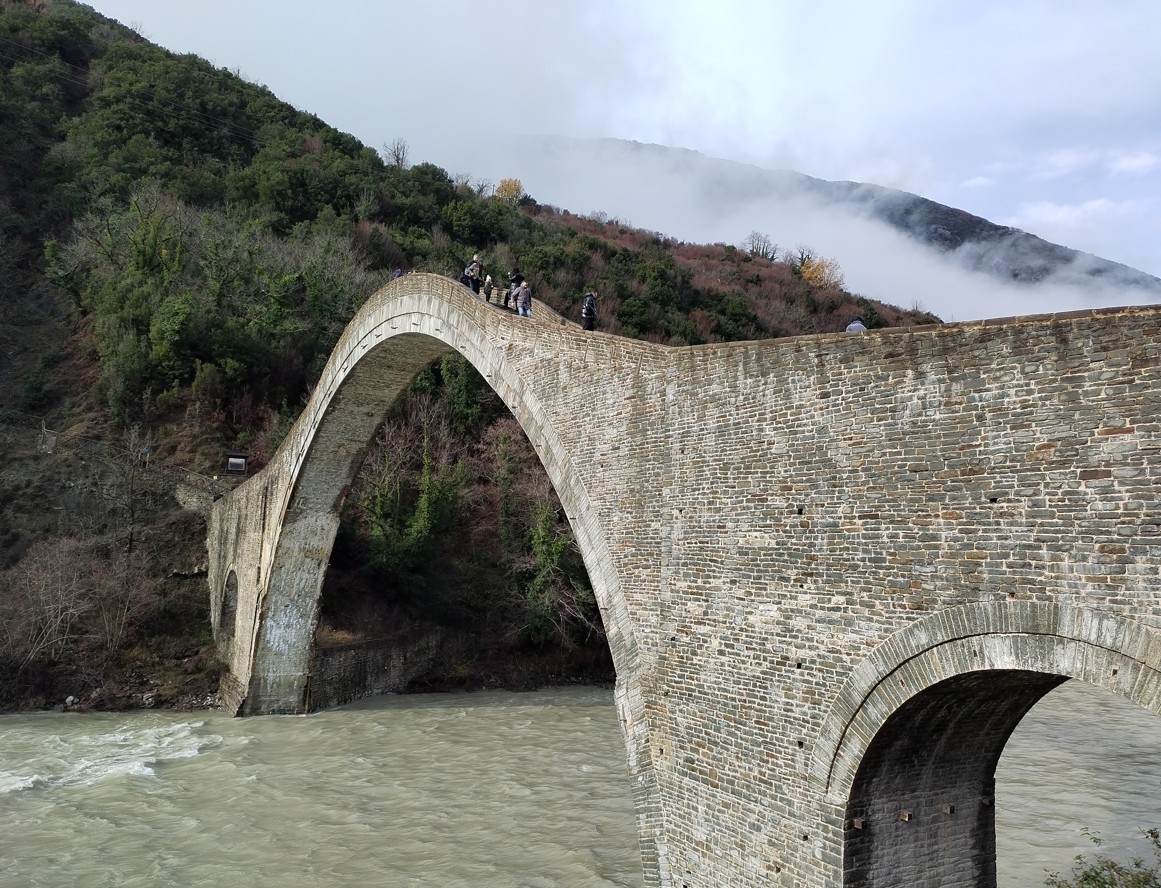


It was completed in 1866 but suffered serious damage during the devastating flood of 2015. Today, it stands complete and accessible again, having been restored by a team of contemporary master stonemasons from Athens.

See more photographs of the Plaka bridge and details about its restoration.

Many of the traditional buildings in Pramanta were destroyed in a major earthquake in the 1970s, but the village still maintains its original charm with its beautiful paved streets and stone buildings.

The legacy of the stonemasons is preserved to this day through traditional building workshops and the work of modern-day masons such as Yiorgos Bekas, a descendant of the famous stonemason family.

As you enter the village, the first monument you see depicts a stone trowel on a rock, but that is just a small taste of the tribute the locals have paid to the huge stonemasonry legacy of the village.
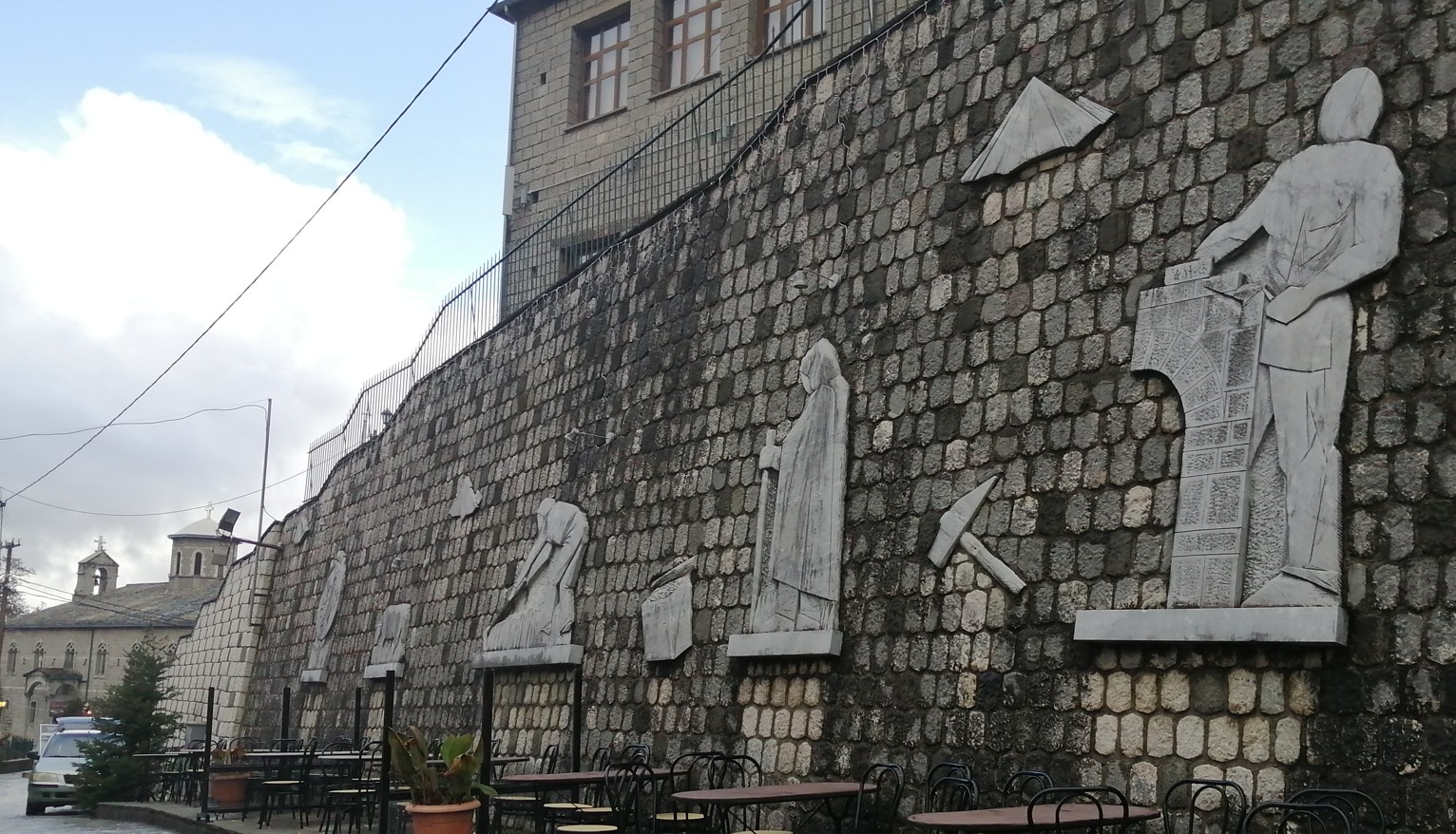


Our coach parked at the edge of the high street at a crossroads. Right at the entrance of that main street, a work of art mounted on the wall depicts stonemasons at work and their various tools.

It leads the eye naturally down the street toward the main square of Pramanta and pays homage to the skillful craftsmen whose works still stand whole and beautiful today, all over the area of Tzoumerka.

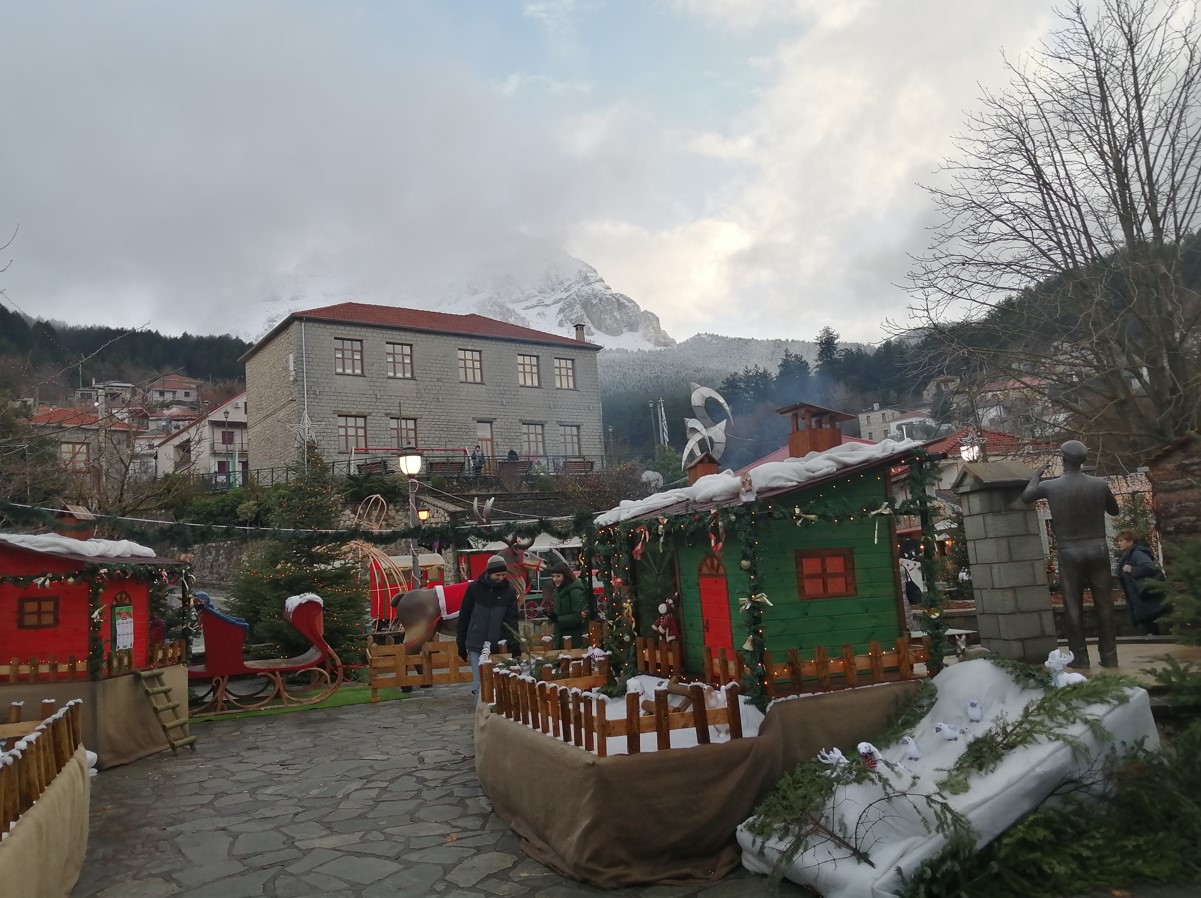
The main square of Pramanta had been transformed during our visit into a Christmas wonderland for the holiday season.
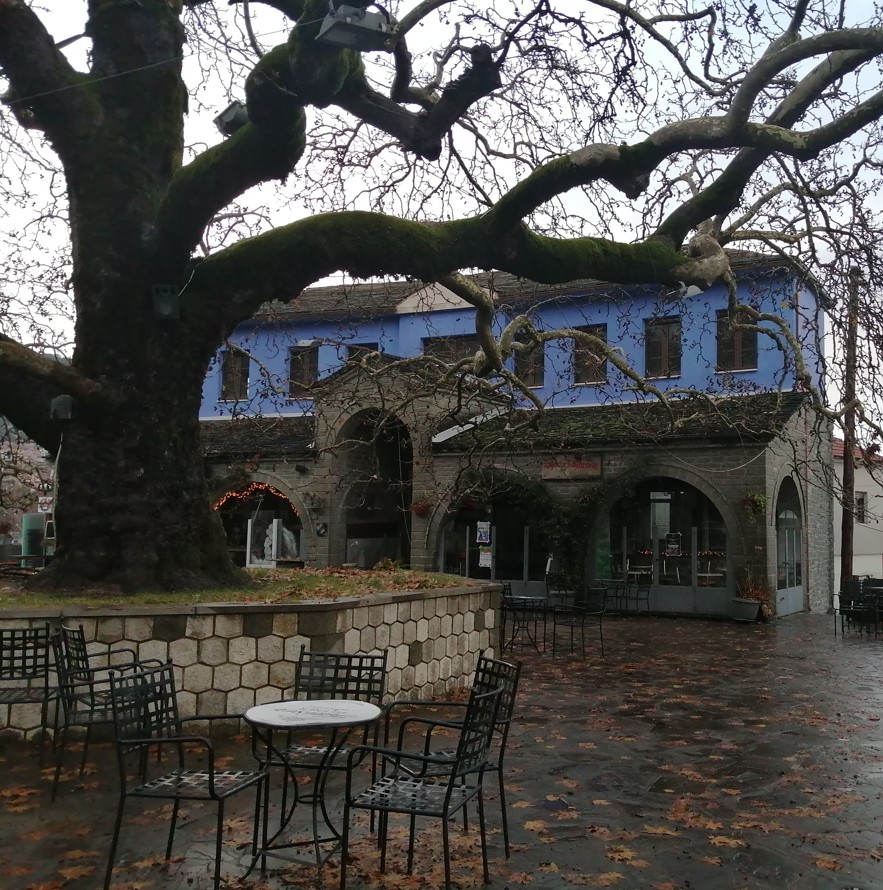
 

On the lower side of the square, we admired a perennial plane tree and the church of Agia Paraskevi. The buildings all around looked whimsical decorated with string lights.

A sign at the square informed us that the Greek saint and avid preacher, Cosmas Aitolos (aka Cosmas the Aitolian), gave a speech to the locals at that very square in the summer of 1779.

The saint dedicated his life to preaching the gospel all over Greece and urged the people to build schools so that the Greek children could learn about the Faith and be well-grounded in Christian values.

He is thus widely cherished and celebrated by the Greek church for helping to preserve the faith and the Greek identity during a centuries-old occupation under a barbaric ruler.

Before visiting Pramanta, we had been tipped to choose the restaurant Boutzas for lunch. We weren’t disappointed. It was quite crowded in there, but we got served soon enough. Sitting by a window with a view to beautiful mountains we sampled local pie and cockerel with ‘hylopites’ pasta in an aromatic tomato sauce.

This restaurant experience was simply divine, and I urge you to visit it too if you’re ever in the area. Boutzas is situated right at the square, across from the plane tree (it is not the blue building in the photo above, but it’s standing to the right from there).

After our hearty lunch, we took some time to walk around the “Christmas wonderland” I mentioned before, which included a Santa’s grotto and a mailbox for posting letters to Santa. It was pretty cold, but fun walking around and exploring every corner of the square and the nearby streets until it was time to leave.
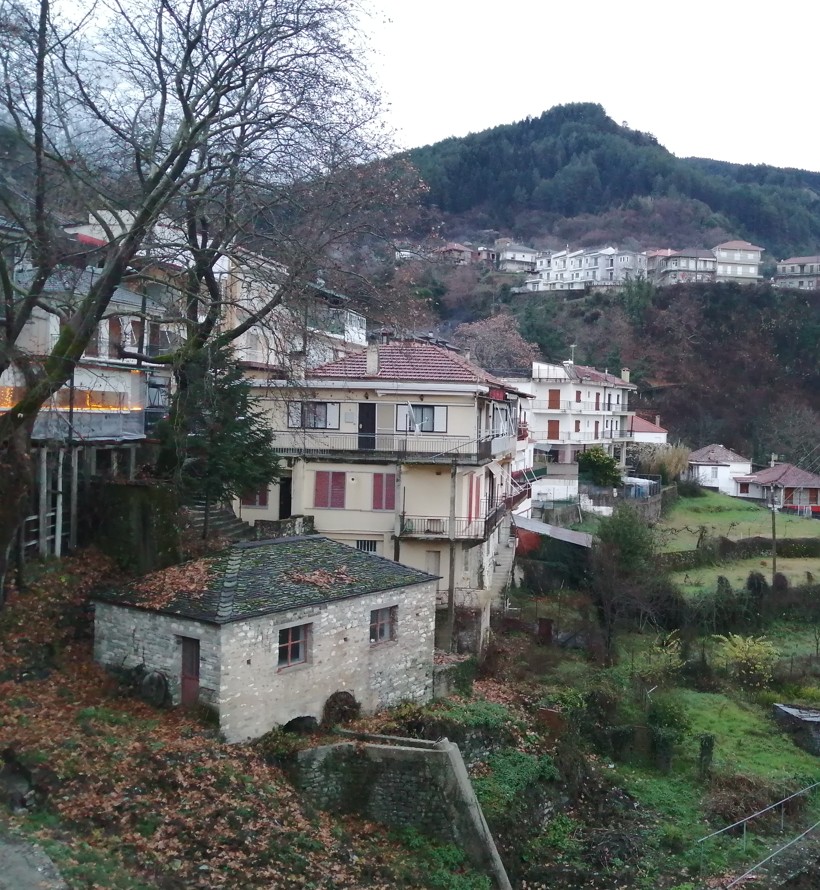


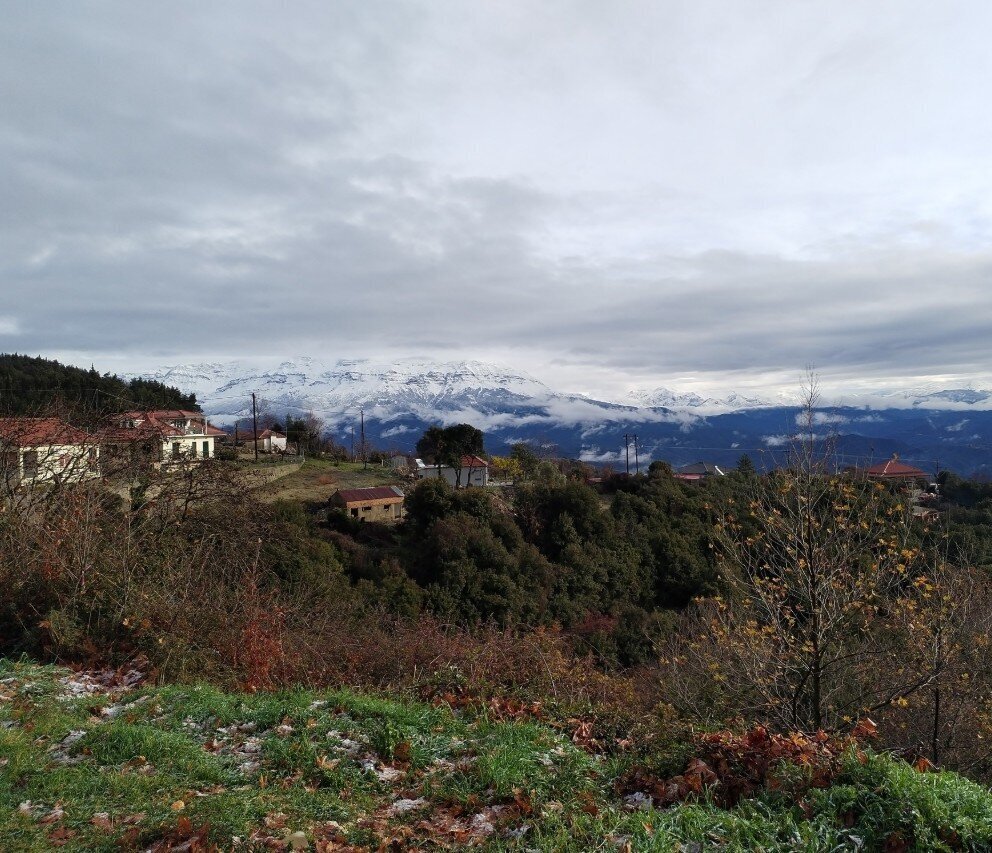
Our next stop was the much quieter village of Agnanta that offers stunning vistas to the mountains and the village itself on the opposite peak. The village is built on multiple levels, some houses standing on much lower ground edged by lush fields.

We had a quick coffee in Agnanta as the light of day waned fast, and soon were on our way back to our hotel in Arta, having admired the Christmas lights and a humble nativity scene once it got dark.

Visit my Facebook page to see all my photos from Pramanta and Agnanta.
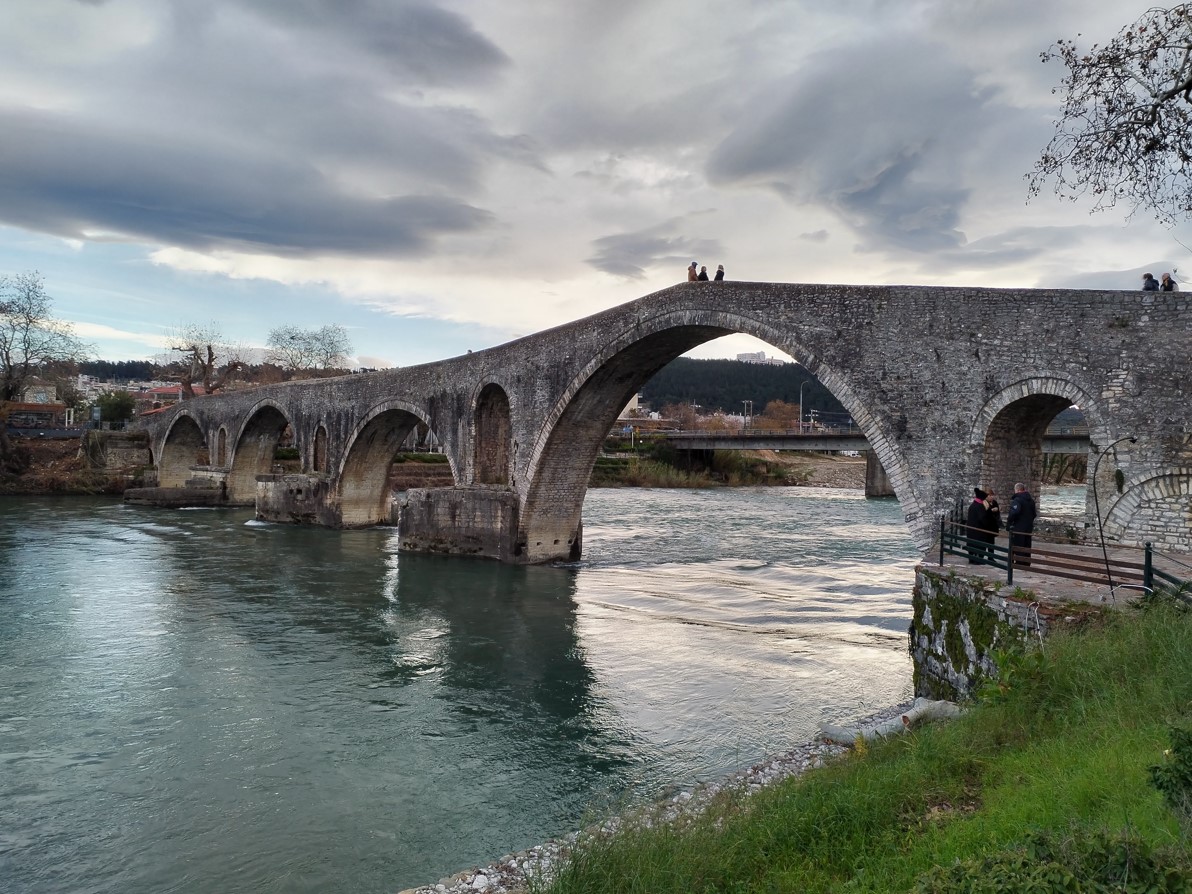
Read all about the historical city of Arta and the chilling legend behind its stone bridge.
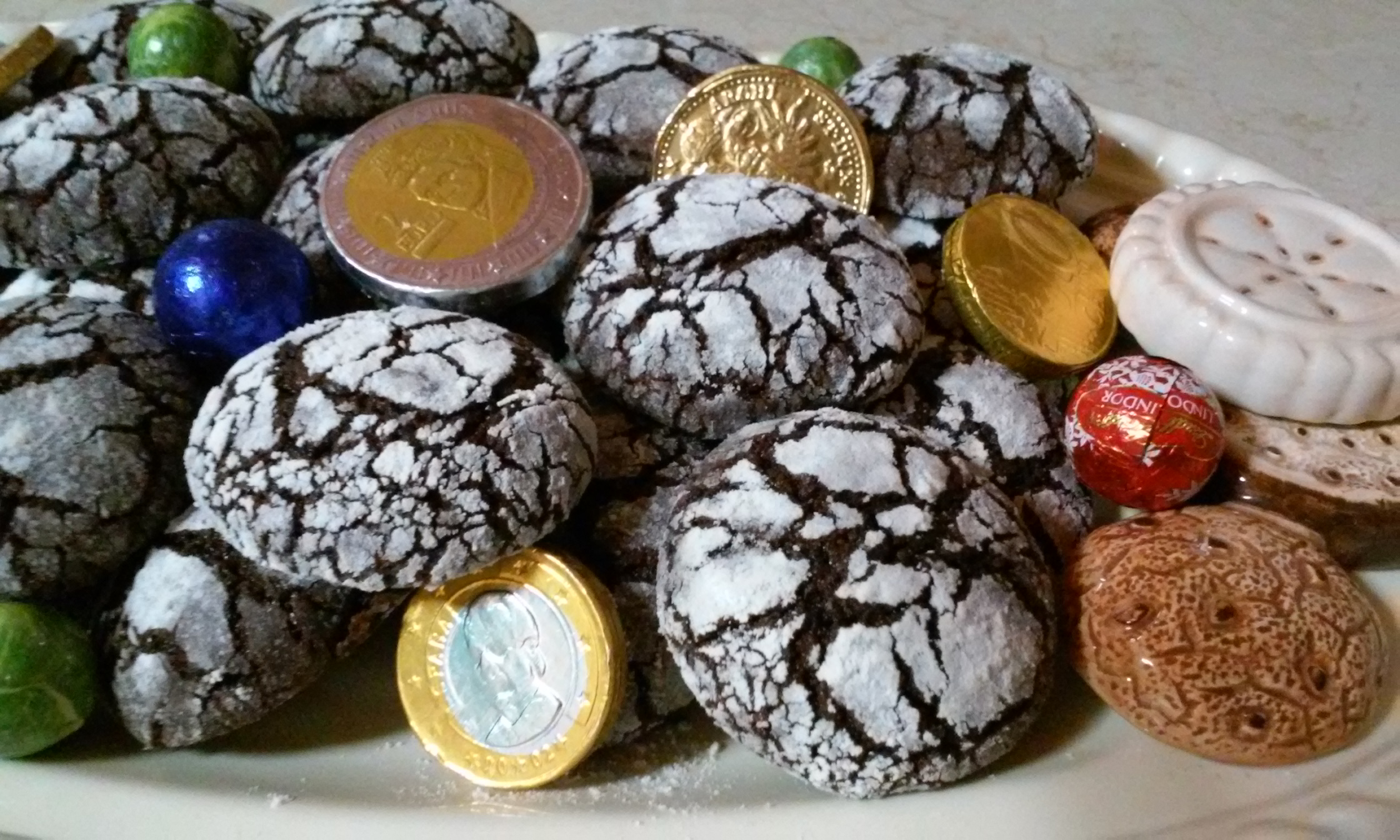
 

All this talk and pictures of snow-capped mountains made me think of these special low-fat cookies that I make every New Year. I call them ‘magic snowball cookies’ because in the oven they flatten and crack and take this mouthwatering shape.

They annually have pride of place on my New Year’s Eve table with the Vassilopita, i.e. the Greek traditional cake that contains a coin inside!

See this post for details and recipes for both these festive delicacies, and others too!
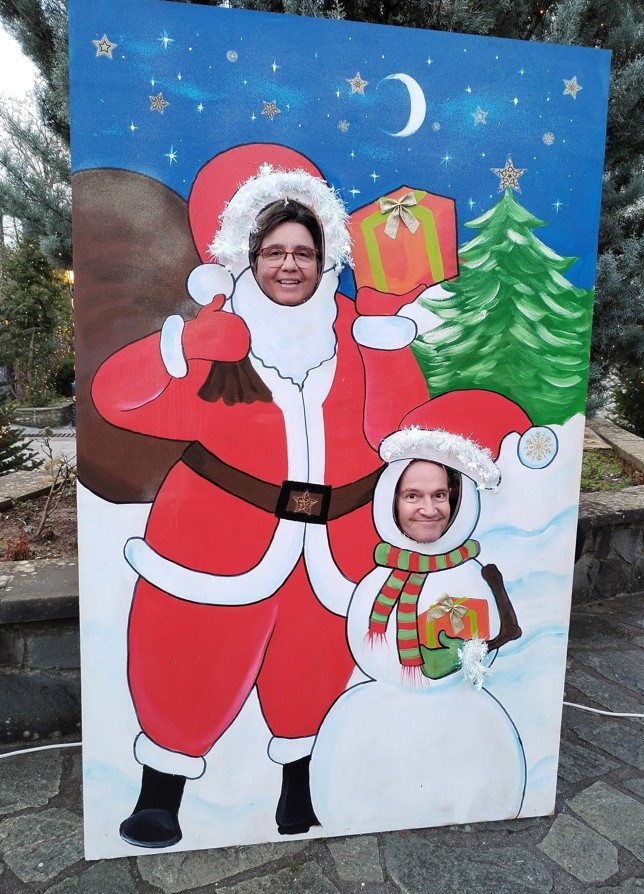
 

I will bid you adieu with this fun photo of my husband and me from the festive square in Pramanta. Merry Christmas, everyone! I will be speaking to you again a year later 😜 (Sorry, old family joke, couldn’t resist!) I meant, in January 😁 Till then, have fun and enjoy all things lovely and warm 🥰


THANK YOU FOR READING! MAKE SURE TO DOWNLOAD MY 3 FREE BOOKS BELOW 🙂 YOU WILL RECEIVE THEM INSTANTLY WITH YOUR SUBSCRIPTION TO MY FUTURE POSTS.

Hey, before you go! In my latest newsletter, I am sharing a plethora of FREE kindle books! Some in PDF format too. Check it out here!


Sharing is caring! Here’s a ready tweet for you to spread some love:

Interested in FREE books, Greek travel and easy recipes? Here's a blog you will love! #Greek #blogger #writer Share on X


3 FREE books for you! Sign up below to receive them instantly!
NEW! Clean Christmas romance. Single mother Cathy Roussos gave up on love long ago, and veterinarian Alex Rallis doesn’t believe in it, but one magical Christmas on a Santorini farm might just change everything…
Check it out on Amazon     Read a FREE sample!


A clean romantic suspense short read with an unreliable narrator that’ll keep you guessing! Vera is losing her mind over famous actor Yannnis Ksenos, except, she isn’t just a fan… Now, she plucks up the courage to ring his doorbell… Visit Amazon


For my delicious Greek recipes, go here
 
Planning to visit Greece? Check out my  FREE guide to south Corfu!

Clean romance short read, FREE with Kindle Unlimited. It’ll transport you straight to Corfu to experience summer in an idyllic Greek seaside village. The story is inspired from the author’s love for Moraitika and its people. Now, also available as an audio book! Visit Amazon

Beach fun and sweet romance mixed with magic spells and bird shifters! The Raven Witch of Corfu is an original story that will rivet you with its unrelenting suspense. The final twist will blow your mind! Available in paperback , box set or 4 kindle episodes! Visit Amazon

Kelly ran a marathon in Nafplio and wound up running a house. With a ghost in it! Both humorous and moving, with tantalising clean romance, it’s just the ticket to lose yourself reading! Read more on Amazon
 

The stone bridge of Plaka in Epirus and Greek baked fish with onions and tomatoes

The most intrepid thing I’ve done in ages…

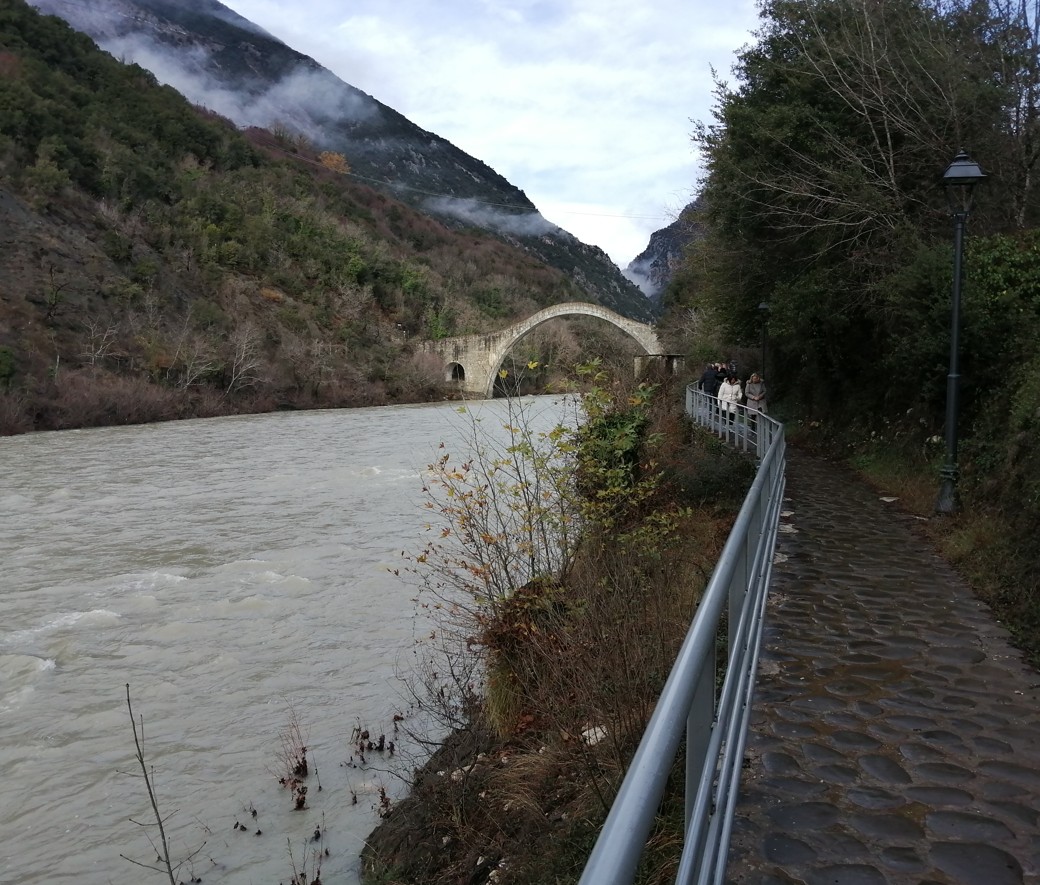
During my Christmas break in Epirus where my husband and I stayed in the historic city of Arta, we visited the mountain area of Tzoumerka for a day. Our first stop was the famous stone bridge of Plaka dating from 1866.

An earlier attempt to build it was made in 1863, but the bridge had collapsed on the day of its inauguration!

During WWII, it was bombed by the Germans near its centre but the damage was easily repaired.

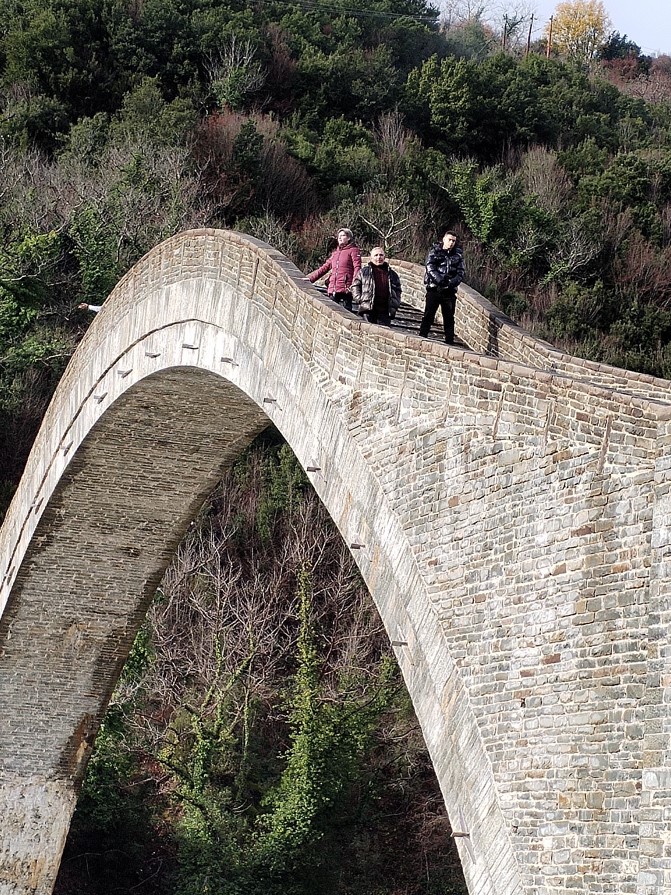
This bridge is the biggest of its kind in the Balkans and the third biggest in Europe. The arch is 40 metres (130 ft) wide and 17.61 m (57 ft 9 in) high.

This marvelous single-arch stone bridge was demolished in February 1, 2015 during a flood caused by a heavy rainfall. Only a small bit on either side remained, only what touched the ground. The rest of the bridge, all parts that hovered in the air, collapsed.

It was on the news in Greece at the time, and everyone got upset about it, seeing that the stone bridges of Tzoumerka, just like those in Zagori, are legendary, unique in their mastery, and it’s not easy to replicate these nowadays.

Still, the architects and engineers at the Athens Polytechnic University stepped in, worked diligently, and were able to reconstruct this magnificent bridge, while trying their best to make it look as similar as possible to the original one.

The undertaking was huge. The university team comprised of 30 professors and 40 researchers. Committed to reconstructing the bridge just as it was originally, they used no modern technology, no hidden supports, and not a single kilo of metal.

As I admired it during my visit, I was particularly impressed by the coloring of the stone. It doesn’t look at all brand new, as one would expect. In fact, if one looks at pictures before and after the collapse, the sight is identical!

The bridge was given back to the public in 2020, a little over five years since its destruction.

I was thrilled on the day of my visit to find out that I was actually traveling on the coach with one of the people who had made the reconstruction of the bridge possible! That person was a reporter who works in one of the major Athens newspapers. She read a published article of hers to everyone on the coach, which she’d written about the bridge of Plaka, as we made our way there on the mountains.

It was a treat for everyone to listen to her article as we traveled up and down on windy mountain roads, amidst a lush landscape that was crowned with heavily snowcapped mountains and thick cloud formations.

At the end of her beautiful and highly descriptive article, the lady reporter informed us that she had last visited the bridge a few days before it collapsed. She had taken several photographs that day, and, would you believe, those wound up playing an integral part in the reconstruction of the bridge!

This is because when the professors at the Athens Polytechnic University heard about her article they contacted her, hoping to acquire photographs of the bridge, so they could reconstruct it as closely as possible to its original design.

It turned out she had a wealth of photographs from all possible angles from surface level to give them, and these photographs made up the model they managed to recreate.

Sadly, I do not know the name of the reporter to give her credit here, but I am sure those who used her photos have already honored her by name for her contribution to this amazing reconstruction. I cannot help but think it was fate she had visited just a few days before the catastrophe to take all these photos.


As we took the beautiful paved path alongside the river Arachthos from the large parking area to the bridge, we couldn’t help but marvel at both its size and its beauty.

The lush mountains crowned by the fog that quiet Christmas eve morning when we visited served as the ideal backdrop that encouraged everyone to keep taking photographs and made the atmosphere even more enchanting.

Walking on this bridge remains to this day an unforgettable experience for me. I have walked on several stone bridges in Zagori, but the incline on this one towards the center was that something else. The top of the arch is on a much higher level than one would expect, because of the steep incline leading up to it near the center from both sides.

I found walking on the bridge very difficult near the top, especially coming down from it.

Plus, seeing that the ledge was low, there was nothing to hold on to up there. Therefore, I wouldn’t recommend walking on this bridge near the top unless you are confident on your feet, or, at least, without having someone strong to hold on to.


Just look at me on this photo. It may not show, but I was getting ready to faint😵‍💫hehe

No, seriously now, it was a wonderful experience. The view from up there was fantastic.

Go here for a super-short video that shows a 360-degree view from the top of the bridge.

But getting up there wasn’t the only reason why I used the word ‘intrepid’ on the heading earlier!

The more important reason is related to a sign that stands at the entrance of the bridge. According to it, the architects who rebuilt it in the recent years did not apply any modern reinforcement techniques whatsoever. This was so they could maintain the exact look that the stone bridge had always had.

Thus, they simply couldn’t vouch that it was safe! As a result, the sign warns visitors that by walking on the bridge they do so at their own risk!

I tell you, I haven’t taken that many risks in one day since I was a reckless teen 😂

GO HERE for all my photographs from the bridge as well as for beautiful vistas along the mountain roads.

My travel report from Epirus isn’t finished yet, by the way. See you in the next newsletters for the final two parts!


The secret of “Psari Plaki” is in the layers…

In Greek cuisine, “Plaki” is a type of cooking that involves either fish (psari plaki) or lentils, like broad beans (fasolia plaki).

Today, I am pleased to share my family recipe for ‘psari plaki’, meaning ‘fish plaki’. The word ‘plaki’ is probably derived from ancient Greek, as ‘plakion’ was the name of a marble or iron slab used for baking, a tradition that still survives today in some parts of Greece where housewives still use iron pans to bake breads or savory pancakes that they call ‘plakopitta.’

In the Greek language today, the word ‘plaka’ means a marble slab or a tile, and thus, in my understanding, ‘plaki’ means baking that requires some kind of laying, as in setting the food in layers.

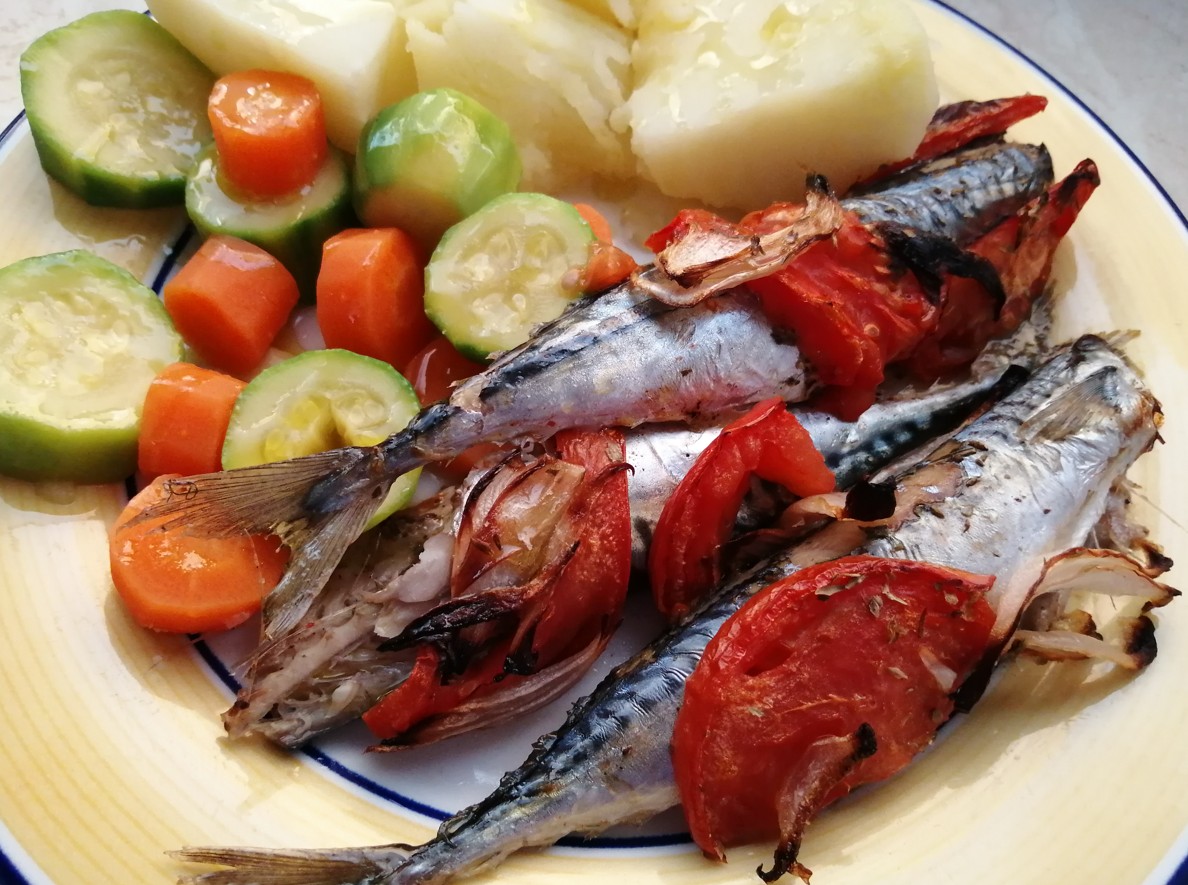
Such is the case in my recipe, where the fish is cooked whole, covered with thick slices of tomato and onion, in this particular order. Under this covering, the fish absorbs the aromas and the juices of these vegetables and, thus, is kept soft during baking. The result is a succulent fish that tastes phenomenal, especially as this recipe also involves the rich aromas of dried oregano and garlic.

Please note that there isn’t one standard recipe of plaki, and that there are infinite varieties from all around Greece. Some recipes involve a rich tomato sauce and no vegetable covering for the fish, and others include potato and carrot chunks in the pan. My recipe is basic, and, thus, quicker to rustle up.

This is the classic ‘psari plaki’ recipe. My mother and her own mother never made it any other way.

The fish should be baked whole and thus only small to medium-sized fish must be used. I use mackerel in this recipe, but you can also try scorpaena, plaice, haddock, swordfish, sea bream etc. Basically, any fish with white flesh that comes from the sea will do.

So, what do you say? Will you try it?

GO HERE to get the recipe and enjoy!


Sharing is caring! Here’s a ready tweet for you to spread some love:

Interested in travel, food and books from Greece? Here's a blog you will love! #Greek #blogger #writer Share on X

3 FREE books for you! Sign up below to receive them instantly!
NEW! Clean Christmas romance. Single mother Cathy Roussos gave up on love long ago, and veterinarian Alex Rallis doesn’t believe in it, but one magical Christmas on a Santorini farm might just change everything…
Check it out on Amazon     Read a FREE sample!
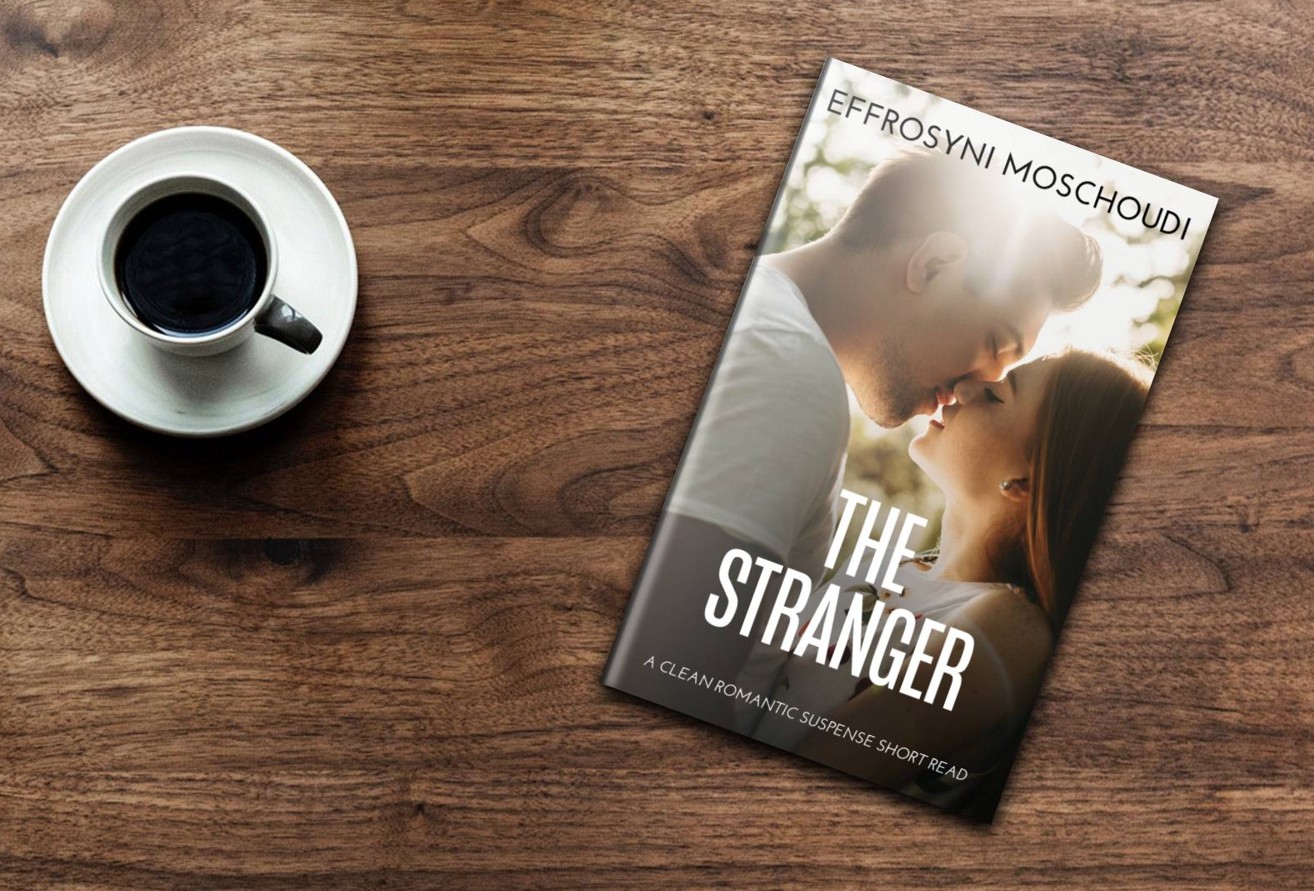
 

A clean romantic suspense short read with an unreliable narrator that’ll keep you guessing! Vera is losing her mind over famous actor Yannnis Ksenos, except, she isn’t just a fan… Now, she plucks up the courage to ring his doorbell… Visit Amazon
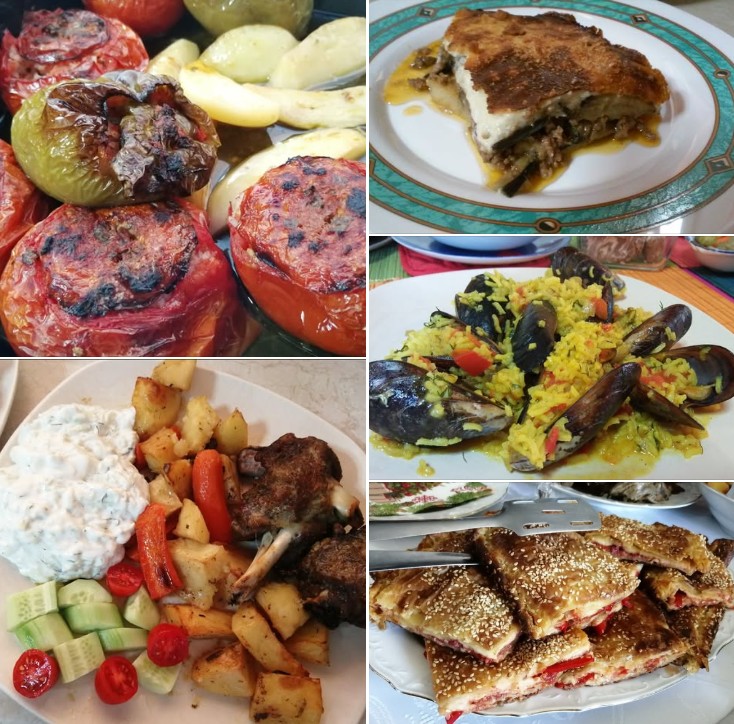
 

For my delicious Greek recipes, go here
 
Planning to visit Greece? Check out my  FREE guide to south Corfu!