A trip to Arachova, aka Mykonos of the Winter


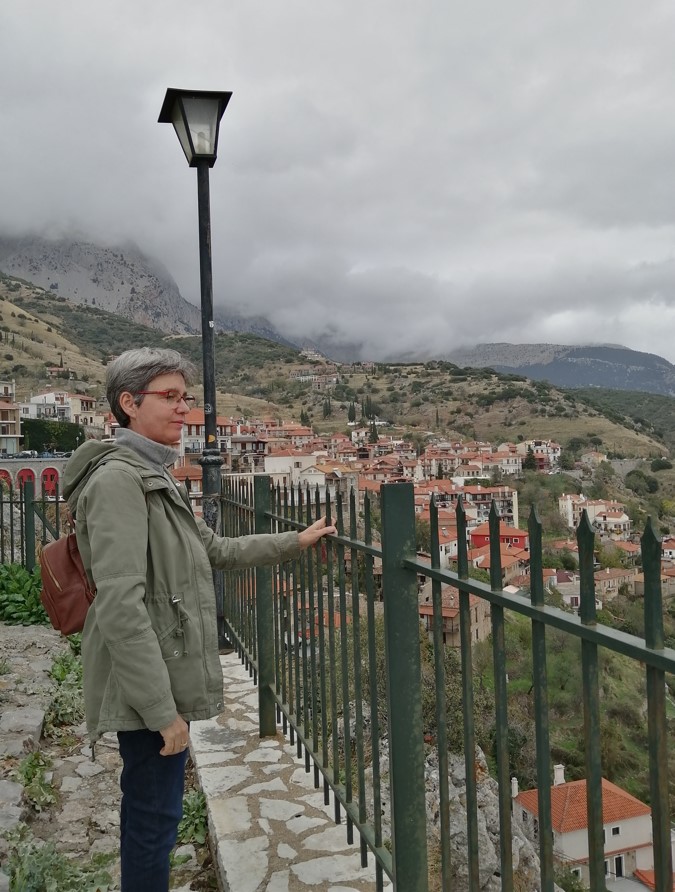
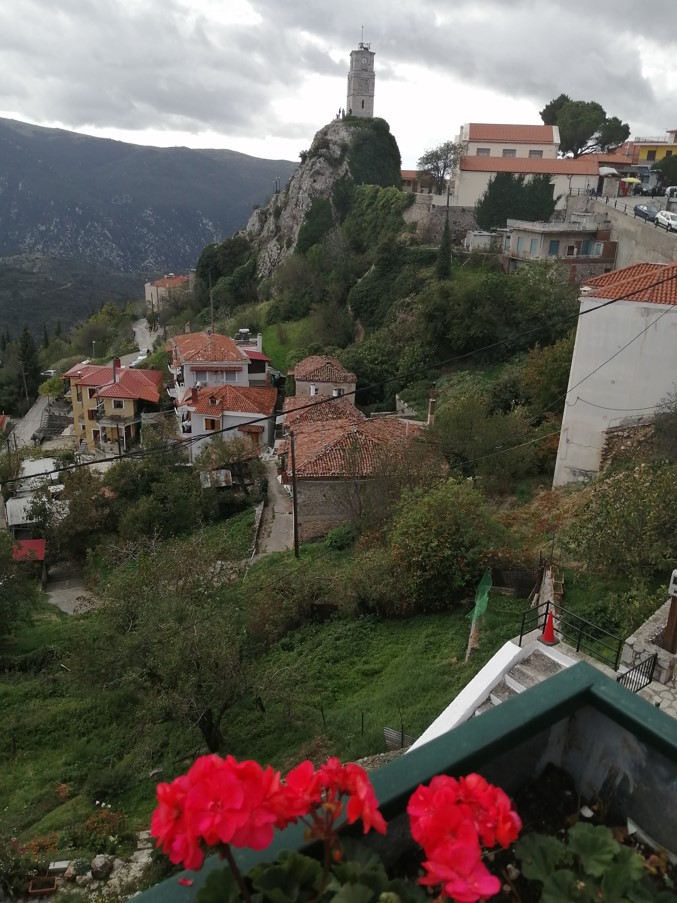
The view from the clock tower is fabulous from all sides

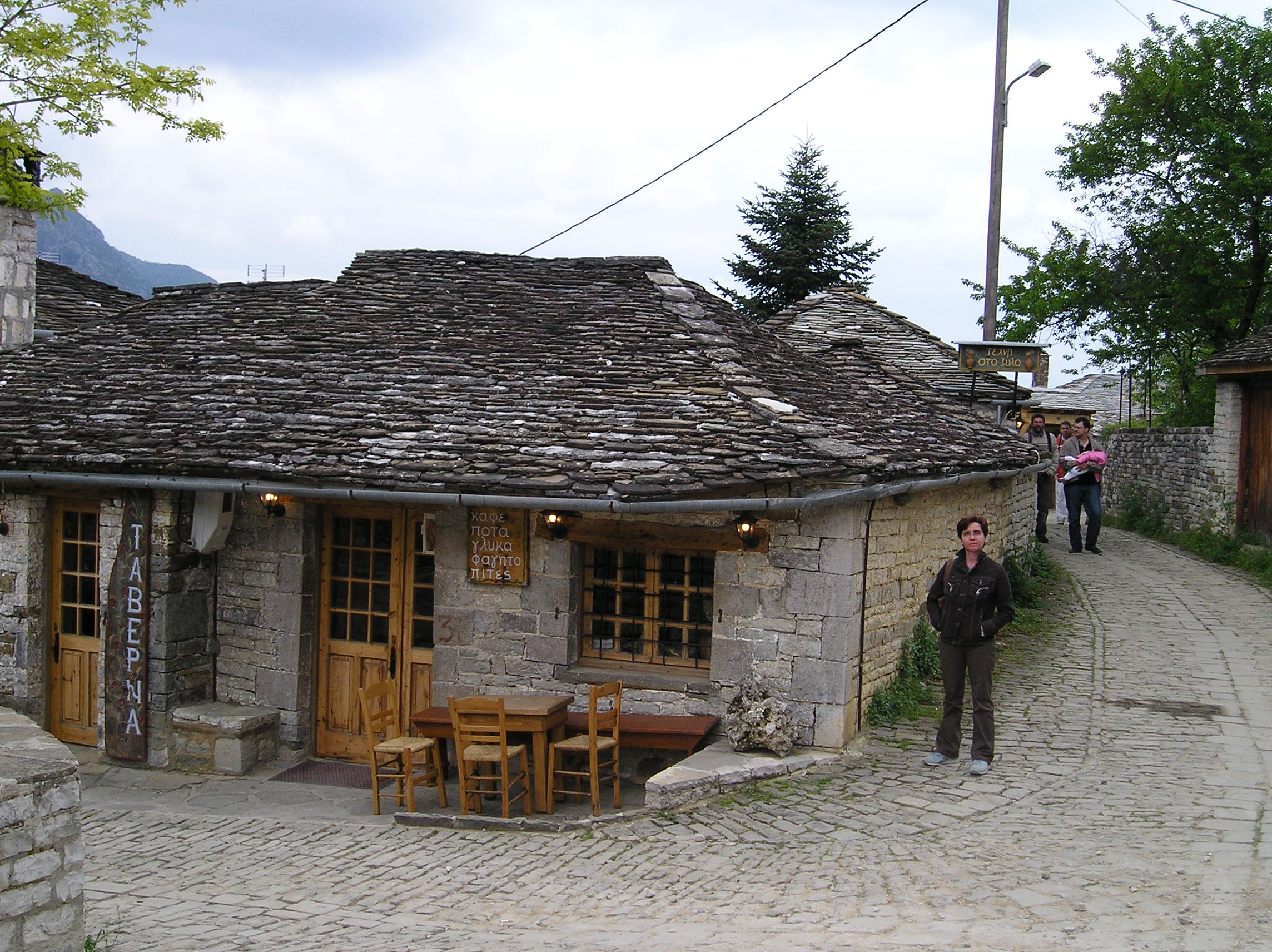
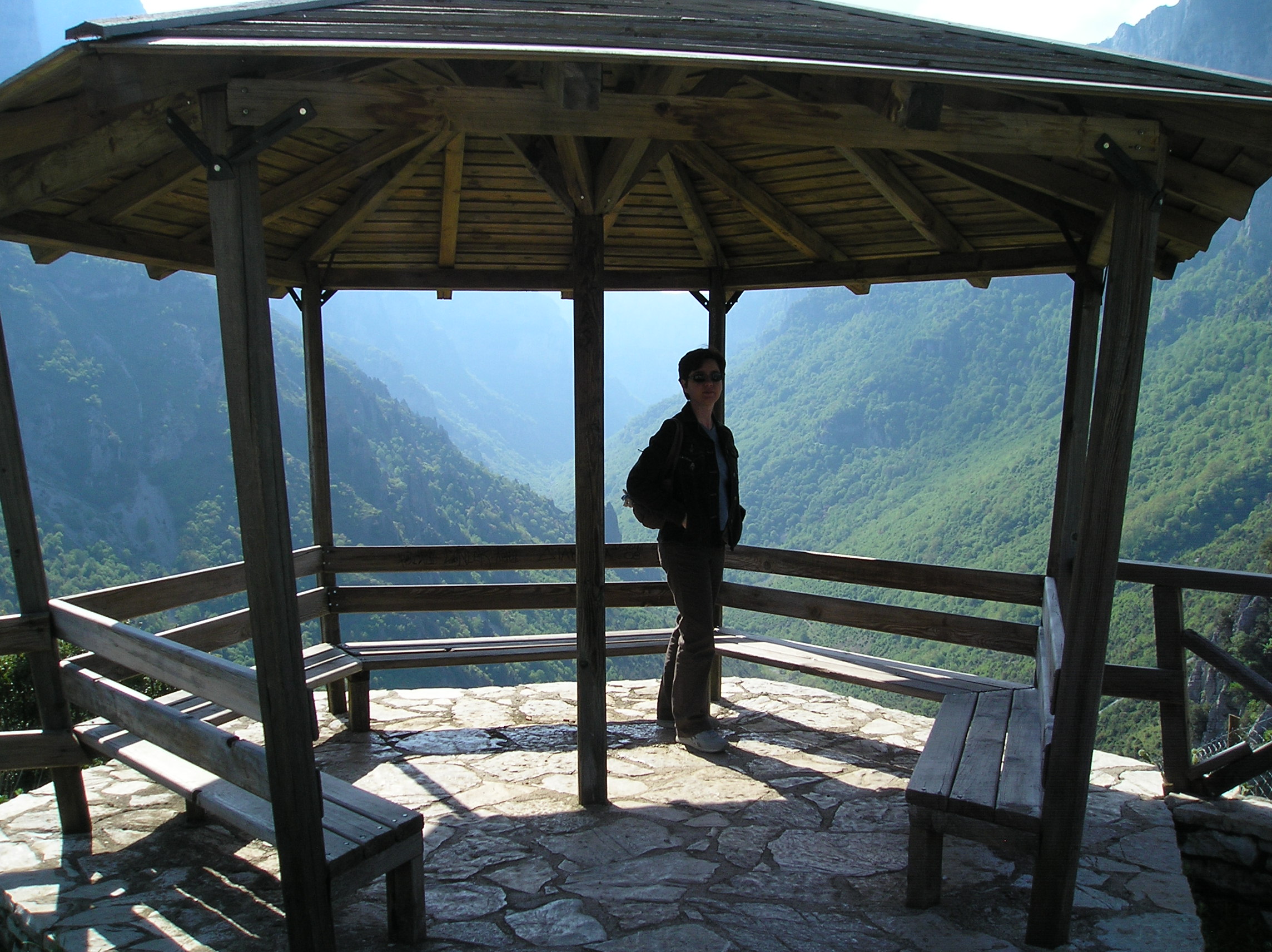
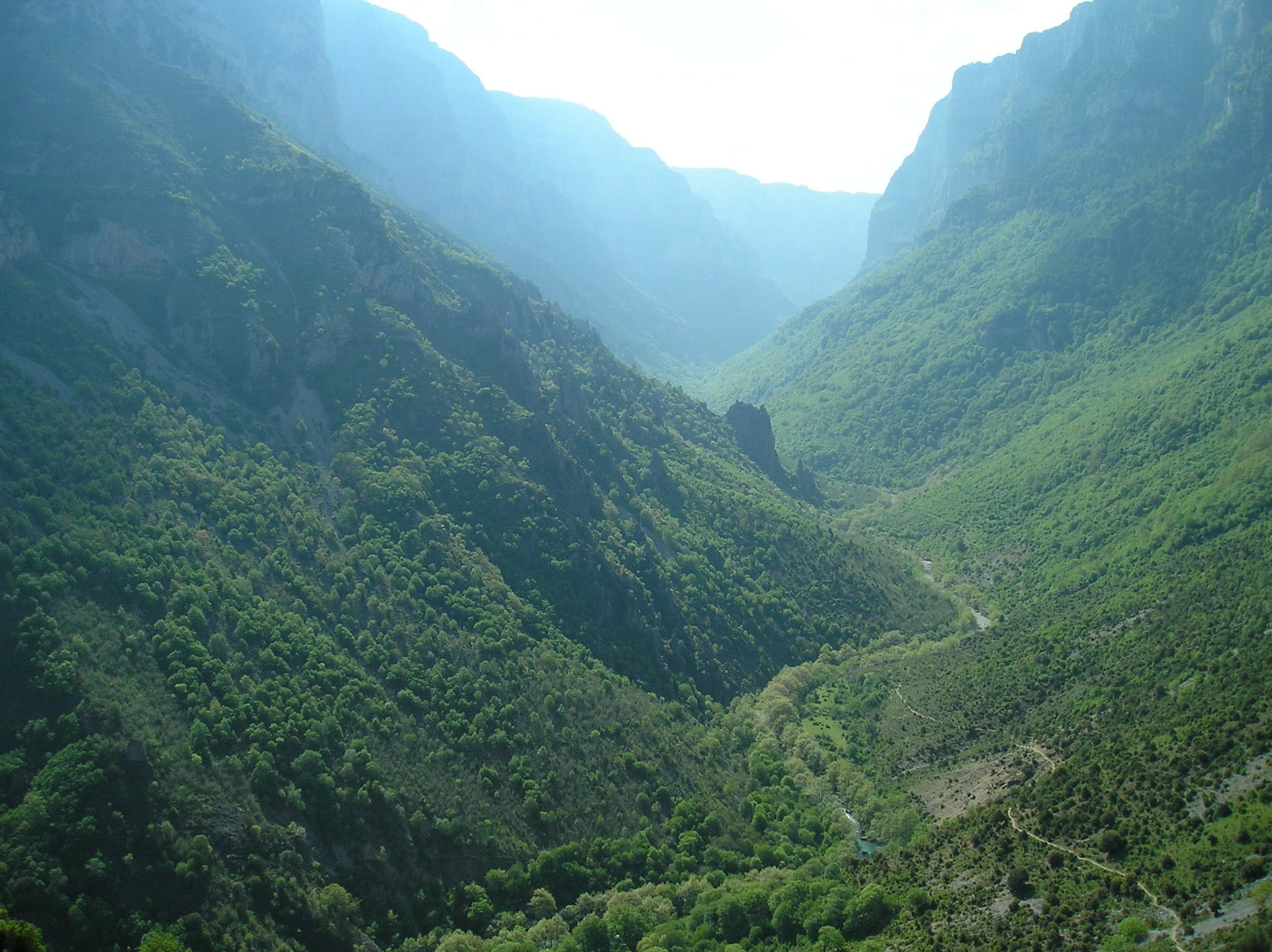
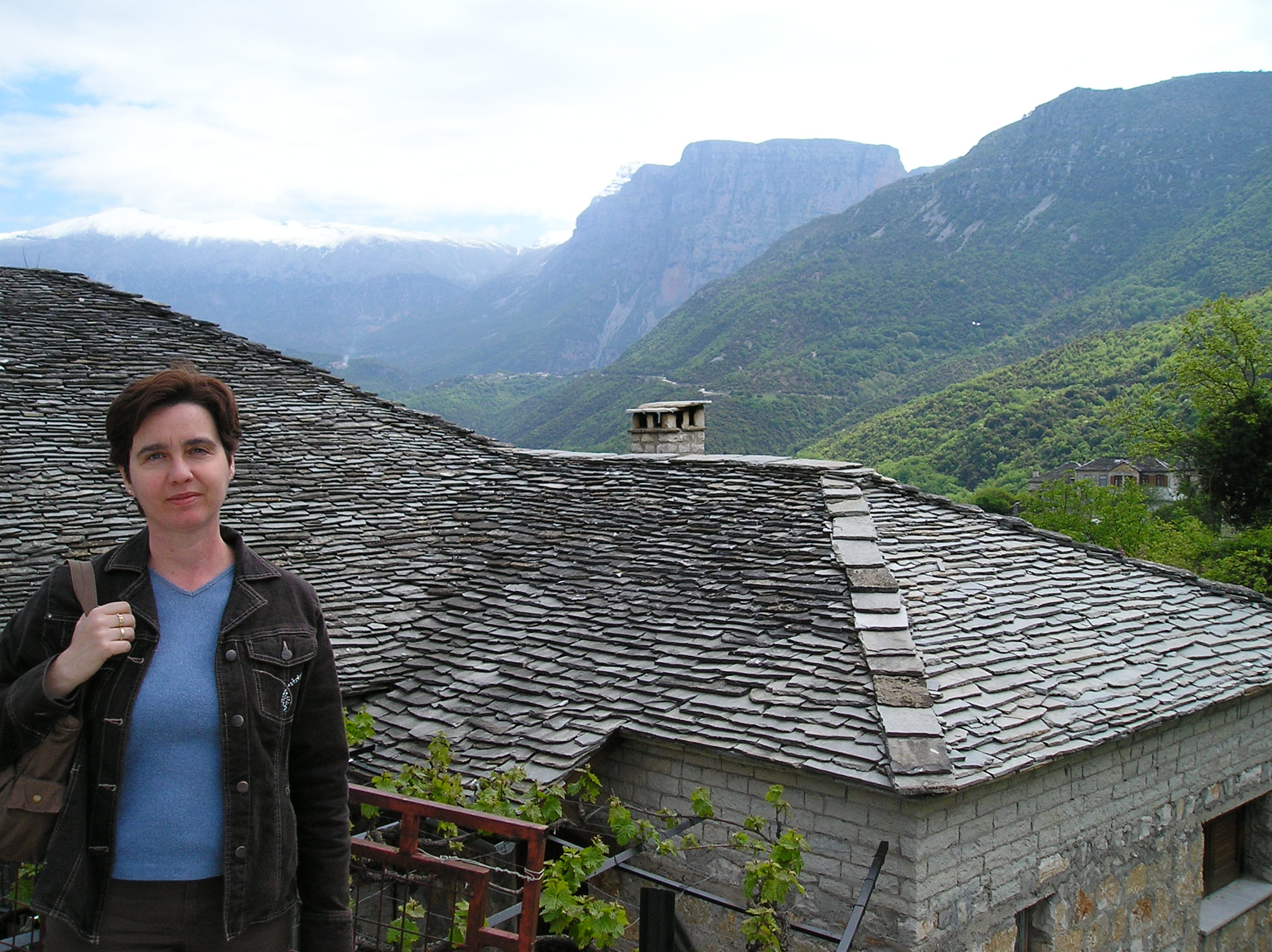
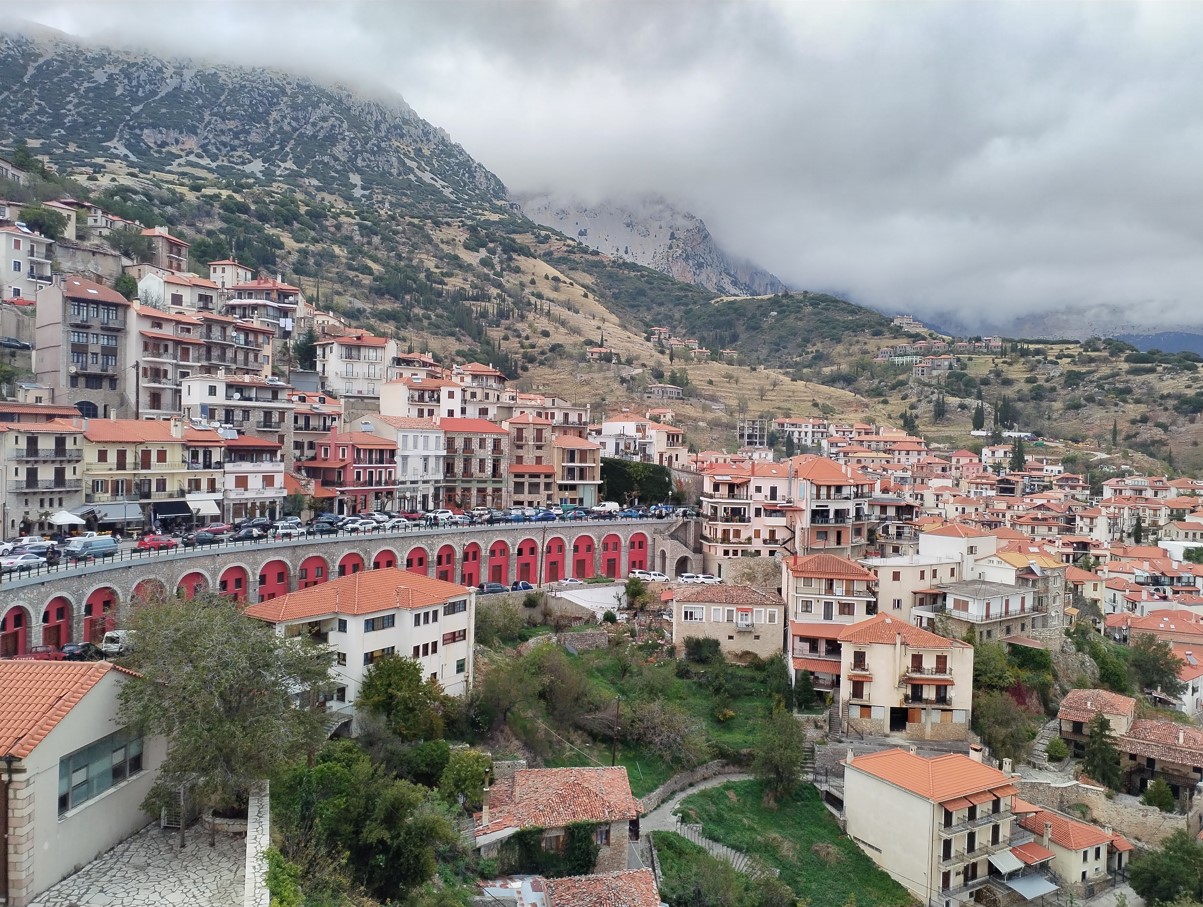
I recently had the pleasure to visit Arachova, a cosmopolitan town up in the mountains that the Greeks have nicknamed Mykonos of the Winter.

The same VIPs that flood Mykonos all summer do the same all winter in Arachova. It heaves with tourists from all walks of life, every hotel bed occupied on all the bank holiday or festive weekends during the winter season.

Having said that, it’s not like Mykonos at all when it comes to the ridiculously high prices. Thank goodness. Nor did I see any nudists walking around he he

We were lucky to visit Arachova on a dry and partly sunny day. Although there were many tourists around, it was comfortable to walk about and to find a table in its restaurants and cafes.

We were tipped off by someone in the know that we’d better try to eat our lunch quickly at the restaurant lest the waiter would start to give us dirty looks as the crowds are usually so big they’re used to serving fast to clear the tables for the next customers.

Yet, somehow, we found this perfect, reasonably priced restaurant with the most exquisite food where we had the chance to eat at our leisure. What’s more, our table was by the window, allowing us to enjoy a partial view to a church and the valley. It was just perfect.

Others in our coach group confessed they were less fortunate, winding up in an upmarket restaurant that served gourmet food rather than traditional Greek food (we always go for the latter – the genuine local experience) and they wound up paying way more than they were prepared to part with.

So, word of caution: If you visit Arachova do check the prices before you sit somewhere for food or drink. It’s not as bad as Mykonos as I stated earlier, but some places ARE pricey. Check the menu before entering and you’ll be fine 🙂

For what it’s worth, the restaurant we picked is called To Agnandio and you can see it in two of the photographs I posted on Facebook. On the back side, the building is flanked by a beautiful church. In the photo where the facade is showing (the wall is beautiful, decked with stonework), you can see the church behind it.

The town’s folklore museum is right next to it, and from within its yard, you’ll also find the short upward path that leads up to the Clock (Roloi), an important landmark that you must visit, if only for the panoramic views of the town, the valley, and the mountain of Parnassus.

A view to the clock tower of Arachova

We had ample time in Arachova to walk along it’s main street back and forth a couple times. This street is a rather narrow space for such a busy town, the pavements so tiny they might as well not be there at all. They provide a false sense of safety, in my opinion, and you can never take away your eyes from the traffic. It can be dangerous if you don’t, and extra care must be taken if you are visiting with children or elderly people.

The highlights for us were the short ascend up to the clock tower summit as well as the visit to the folklore museum (free admission).

Among the interesting artifacts on display in the museum, we were pleasantly surprised to find a few robotic structures that we learned were made and donated by a local pensioner. Having worked all his life for the Greek telephone company (OTE), he had a lot of old telephone equipment in his possession and had put it all in good use recycling it in this ingenious artistic manner (see the photos on Facebook).

The exhibits also included old pictures, and handiwork from traditional looms. It was an interesting glimpse into this town’s distant past, that was harrowing too, as it included references to the Nazi massacre of the Greek locals at the nearby town of Distomo during WWII.

Last but not least, Andy and I were pleasantly surprised to find among the beautiful shops one dedicated to tea! I was enamoured by the small decorative teapots and have regretted never buying one of them now that I see them in the photos. I did buy a bag of loose jasmine tea, though, that I enjoy in the afternoons as a special treat.

All in all, it was an unforgettable fun day. Arachova is very close to the major archeological site of Delphi. So, if you’re visiting Athens, do enquire at the travel agents offering daily trips. Chances are that if the destination of a coach excursion is Delphi you’ll have a stopover at Arachova for lunch. Both are must places to see. Highly recommended for a day out by coach or car!

Go HERE to see all the photos I took in Arachova. Enjoy!


OOPPAAA! SIGN UP TO MY BIMONTHLY NEWSLETTER AND GET 3 BOOKS FROM ME AS A WELCOME GIFT! SEE BELOW FOR THIS OFFER!

YOU KNOW WHAT THEY SAY… SHARING IS CARING! Tweet this to spread some love:

A trip to Arachova, a cosmopolitan mountain town of Greece #traveler #writer #Greece Share on X


3 FREE books for you! Sign up below to receive them instantly!

NEW! Clean Christmas romance. Single mother Cathy Roussos gave up on love long ago, and veterinarian Alex Rallis doesn’t believe in it, but one magical Christmas on a Santorini farm might just change everything…
Check it out on Amazon     Read a FREE sample!


A clean romantic suspense short read with an unreliable narrator that’ll keep you guessing! Vera is losing her mind over famous actor Yannnis Ksenos, except, she isn’t just a fan… Now, she plucks up the courage to ring his doorbell… Visit Amazon


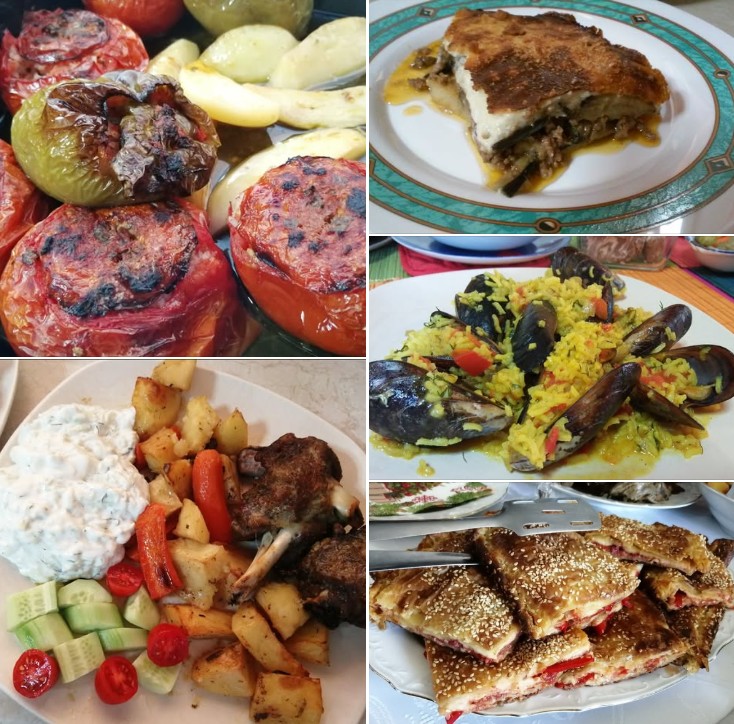
For my delicious Greek recipes, go here
 
Planning to visit Greece? Check out my  FREE guide to south Corfu!

A boat trip from Corfu to Paxos and Parga

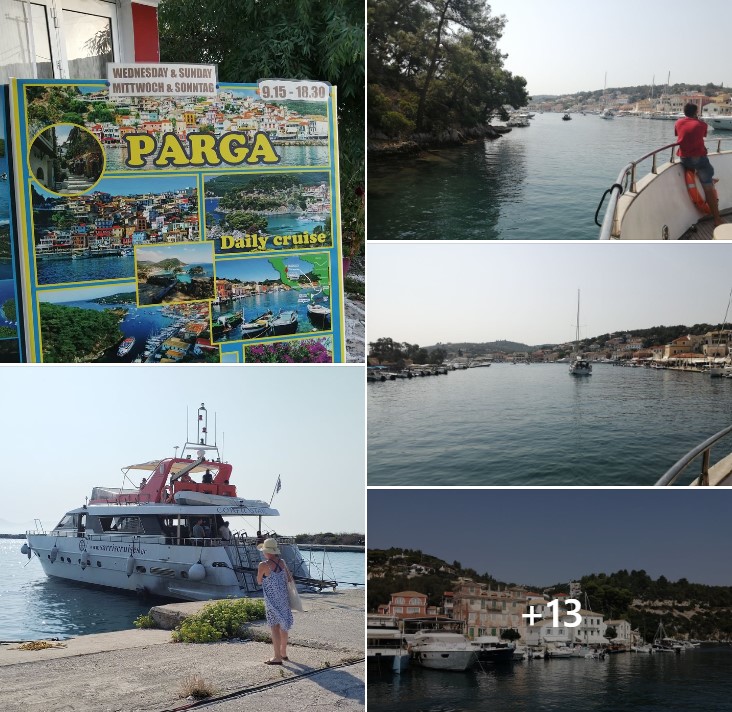
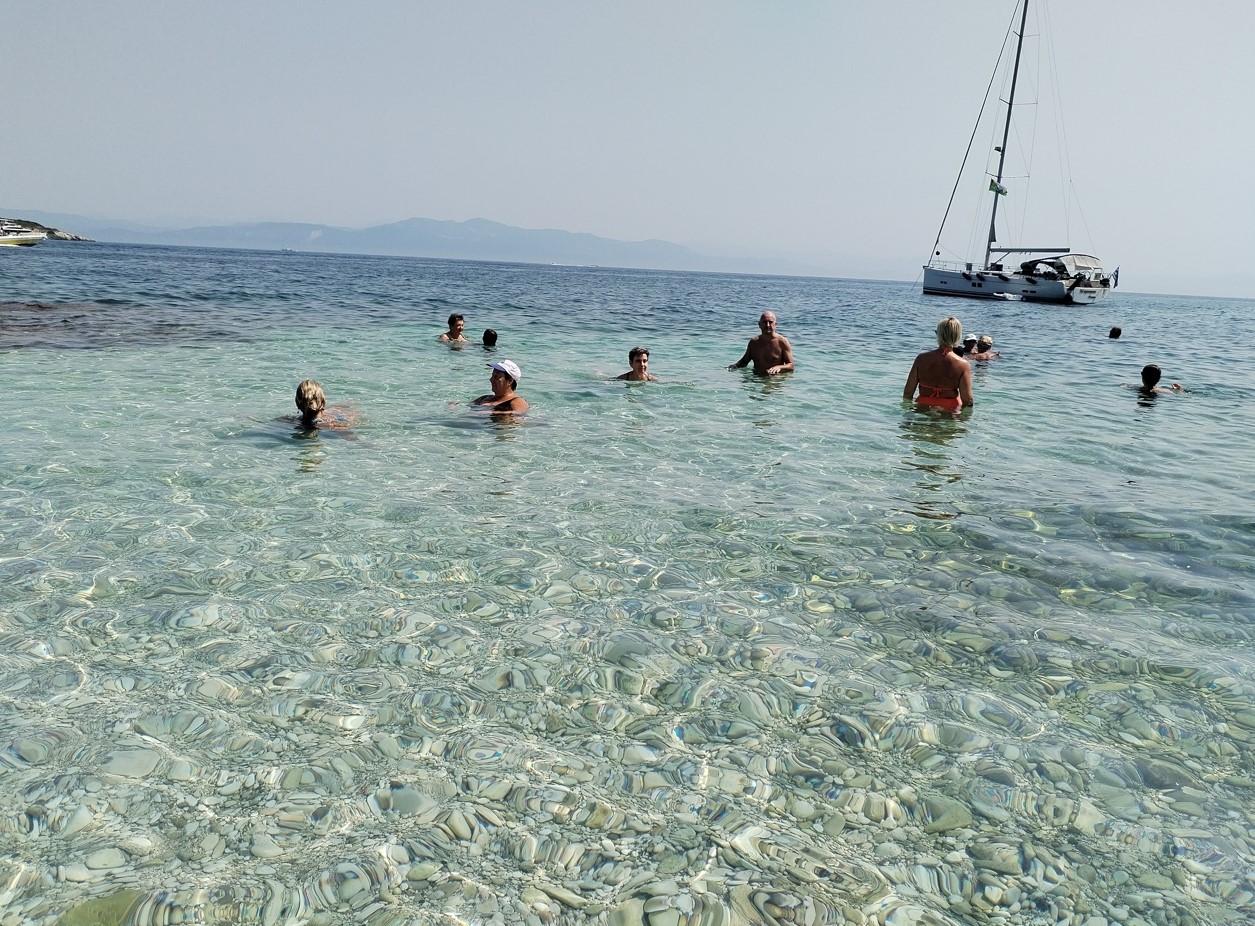
Pleased to share today photos from a boat trip my husband and I did last August during our stay on the island of Corfu. The excursion boat you see in the photo took us to the island of Paxos first, where we had a cooling swim a short walk away from the port of Gaios. The quiet little bay where we swam was as magical as I remembered from our first visit there in 1998 during our honeymoon vacation on Corfu.

SEE ALL THE PHOTOS HERE

The water is so crystal clear in that tiny bay that you can see every detail on the sea bed. And the rustle the water makes as it laps on the shore and scrapes the shingles makes this pleasing sound to the ears that I can never have enough of… Here is a short video I took to show you, guys. Have a listen!

You’re welcome he he 🙂

After our swim, we barely had time to grab a quick bite to eat before it was time to leave. Leaving Paxos, we set sail to the seaside town of Parga in the mainland of Epirus.

The beautiful architecture of Parga and the picturesque island at a short distance away from the shore made up a perfectly quaint landscape that just begged for photographs. Parga is such a stunning town for a vacation, with beautiful beaches nearby that can be visited by boat. I regret to say we didn’t have time to visit the island or the castle. We only had time for a quick lunch at one of the many tavernas on offer and a quick wander around the beautiful lanes before it was time to head back to Corfu.

Though the boat trip was fun, filling our senses with sheer delight, it was rather exhausting. We spent a good part of the day on the boat as the distances are great.

What I really wanted to do was visit Parga and head straight uphill to visit the castle, but as I said, there was no time. Plus, it was 3 pm by the time we arrived and the sun was hammering. What can I say? I am just a Greek – haha. So I ran towards the nearest awning for shelter (and a very nice souvlaki) 😛


OOPPAAA! SIGN UP TO MY BIMONTHLY NEWSLETTER AND GET 3 BOOKS FROM ME AS A WELCOME GIFT! SEE BELOW FOR THIS OFFER!

YOU KNOW WHAT THEY SAY… SHARING IS CARING! Tweet this to spread some love:

A boat trip from Corfu #bloggers #Corfu #Greece Share on X


3 FREE books for you! Sign up below to receive them instantly!
 
For my delicious Greek recipes, go here
 
Planning to visit Greece? Check out my  FREE guide to south Corfu!

Clean romance short read, FREE with Kindle Unlimited. It’ll transport you straight to Corfu to experience summer in an idyllic Greek seaside village. The story is inspired from the author’s love for Moraitika and its people. Now, also available as an audio book! Visit Amazon

Beach fun and sweet romance mixed with magic spells and bird shifters! The Raven Witch of Corfu is an original story that will rivet you with its unrelenting suspense. The final twist will blow your mind! Available in paperback , box set or 4 kindle episodes! Visit Amazon


Fun in Athens at Christmas: Monastiraki and the Stavros Niarchos Foundation (SNFCC)

Two wonderful days in Athens… 

(See the photos on my Facebook page)

During the holidays back in 2023, my husband and I headed over to Athens for two days, and we were determined to visit new places while aiming to get as much festive fun as possible. We chose a tiny hotel at the heart of Monastiraki. It was an old neoclassical building without any staff on site – which was a novelty for us and a little unnerving, but the place was clean and beautiful, with the typical neoclassical high ceilings, tall windows and wooden floors.

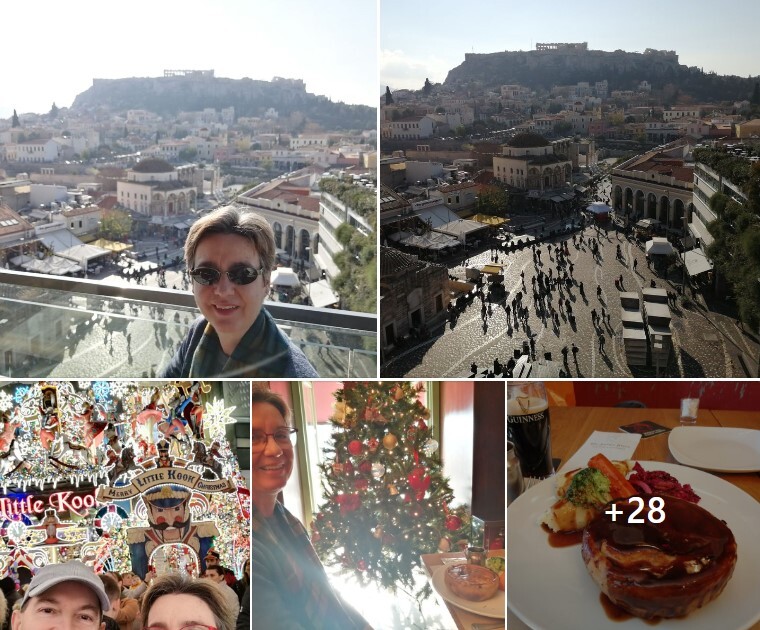
Monastiraki itself felt safe to walk around in, even late into the night, and the streets were packed, especially in Psyrri where we went to admire the Christmas lights outside the whimsical cafe, “Little Kook”. During that first day, we did quite well in our quest to try new experiences! We went to A for Athens for coffee – a café that’s part of the hotel of the same name. It’s on a terrace and overlooks Monastiraki Square with the Acropolis on the opposite hill. As you can see from the first two pictures above, the view was as spectacular as we had imagined it to be!

After visiting a few shops, we wound up at our favourite haunt – the Irish ‘James Joyce Pub’ at the heart of Monastiraki, but committed to make it a new experience, we both ordered new things on the menu. Andy had sausage with onions and I utterly enjoyed a meal I had come to miss from my days living in the UK in the 90s. It was a dish of steak and Guinness pie and it was absolutely delicious.

The evening found us  having  dinner on Athinas street,  near  the  Athens market.  We  walked  a lot  around  Monastiraki,  Plaka  and  Psirri  afterwards, enjoying  the  lights  and  taking  in  the  city  vibe.

Even though by bedtime we thought we’d had an absolutely perfect day, little did we know that the next day would impress and please us even more! For a while now we both wanted to visit the Stavros Niarchos Foundation Cultural Centre (SNFCC) but never seemed to get the chance. It is situated south of Athens by the sea, on the grounds where the old Hippodrome (race horse track) used to be. The free shuttle picked us up from Syntagma Square early in the morning. We were at our destination in just 10 minutes.

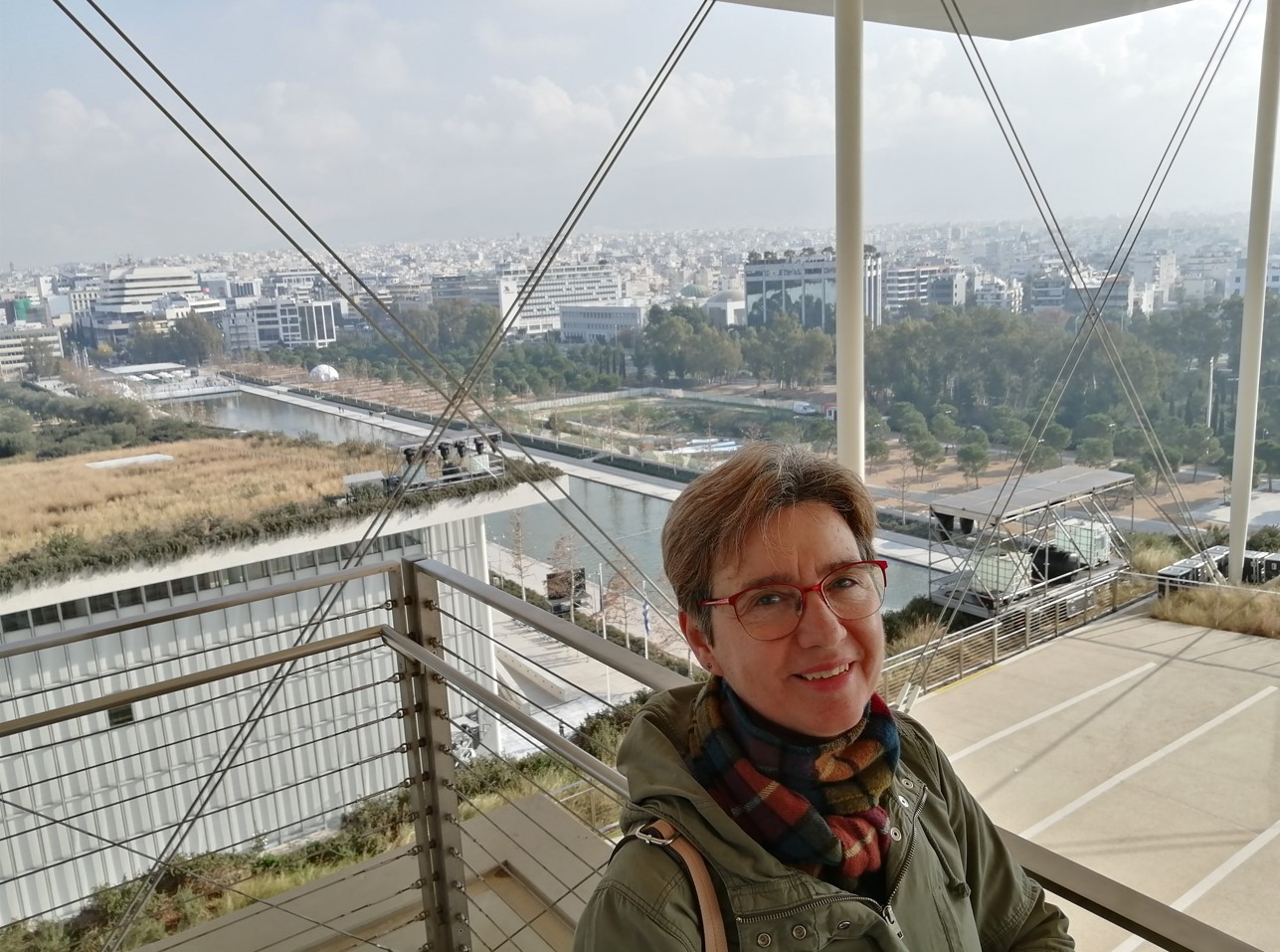
To say that our mouths were gaping open, on and off, as we discovered the place would be an understatement. It wasn’t just because of the grandeur of the National Opera and the National Library that are housed in the SNFCC. It wasn’t even the beautiful canal with the musical fountains that operate to the sound of music. It was the sheer GENIUS of the whole undertaking and the design of the place. I chose this picture above to show you the one thing that impressed me more than anything else:

In the picture, I am standing on top of an edifice called Faros (Lighthouse) at the SNFCC. From there, visitors have a generous view of Athens and the Acropolis. On the other side, people can admire the sea view. Faros stands on the highest ground of the Foundation. Behind me, you can see the edifice of the National Opera and the canal. Do you see what’s on top of the Opera? Grounds! Gardens! I could not believe, as Andy and I were making our way downhill after seeing that, now realizing that we were basically stepping along the top of the opera building. It was just too mind-blowing to wrap my head around it.

The gardens were beautiful, to say the least. There are pine trees, an olive grove, planted herbs and vegetables of many kinds, and a large clearing in the midst of it all that is perfect for family picnics and open-air cinema viewings throughout the summer. Amidst the greenery, one finds surprises as they walk around. Delightful features and fun things for the kids to do, and some also for the adults. ‘The Maze’ impressed me the most, but as the ground was soggy from an earlier rain we gave it a miss. Perhaps next time!

People can cycle in the park or jog or just sit and enjoy nature or the beautiful canal that uses sea water, being in direct connection with the sea. Events take place in the summer period in many parts of the Foundation outdoors. It’s just a fun place to be, and I’m certainly going back – probably in the spring, when I hear it’s beautiful with the flowers in bloom.

I’d also love to combine my visit next time with one at the Eugenides Foundation with its state-of-the-art planetarium – it’s literally across Syggrou avenue from the SNFCC via an underground passage (under said avenue). The educational shows there about astronomy and nature are said to be spectacular.

If you’re planning a trip to Athens, I highly recommend you visit the SNFCC. In case you intend to use the free shuttle service, please note it does not depart from Syntagma, but only comes and stops briefly at the corner bus stop, just in front of ‘Public’ superstore. Timetables for the shuttle and all sorts of information you will find at the SNFCC website.

OOPPAAA! SIGN UP TO MY BIMONTHLY NEWSLETTER AND GET 3 BOOKS FROM ME AS A WELCOME GIFT! SEE BELOW FOR THIS OFFER!

YOU KNOW WHAT THEY SAY… SHARING IS CARING! Tweet this to spread some love:

Christmas fun in #Athens #Greece, a #Greek writer reports... Share on X


3 FREE books for you! Sign up below to receive them instantly!

NEW! Clean Christmas romance. Single mother Cathy Roussos gave up on love long ago, and veterinarian Alex Rallis doesn’t believe in it, but one magical Christmas on a Santorini farm might just change everything…
Check it out on Amazon     Read a FREE sample!
 

A clean romantic suspense short read with an unreliable narrator that’ll keep you guessing! Vera is losing her mind over famous actor Yannnis Ksenos, except, she isn’t just a fan… Now, she plucks up the courage to ring his doorbell… Visit Amazon
 

For my delicious Greek recipes, go here
 
Planning to visit Greece? Check out my  FREE guide to south Corfu!

Majestic views in Lake Doxa and a secret school

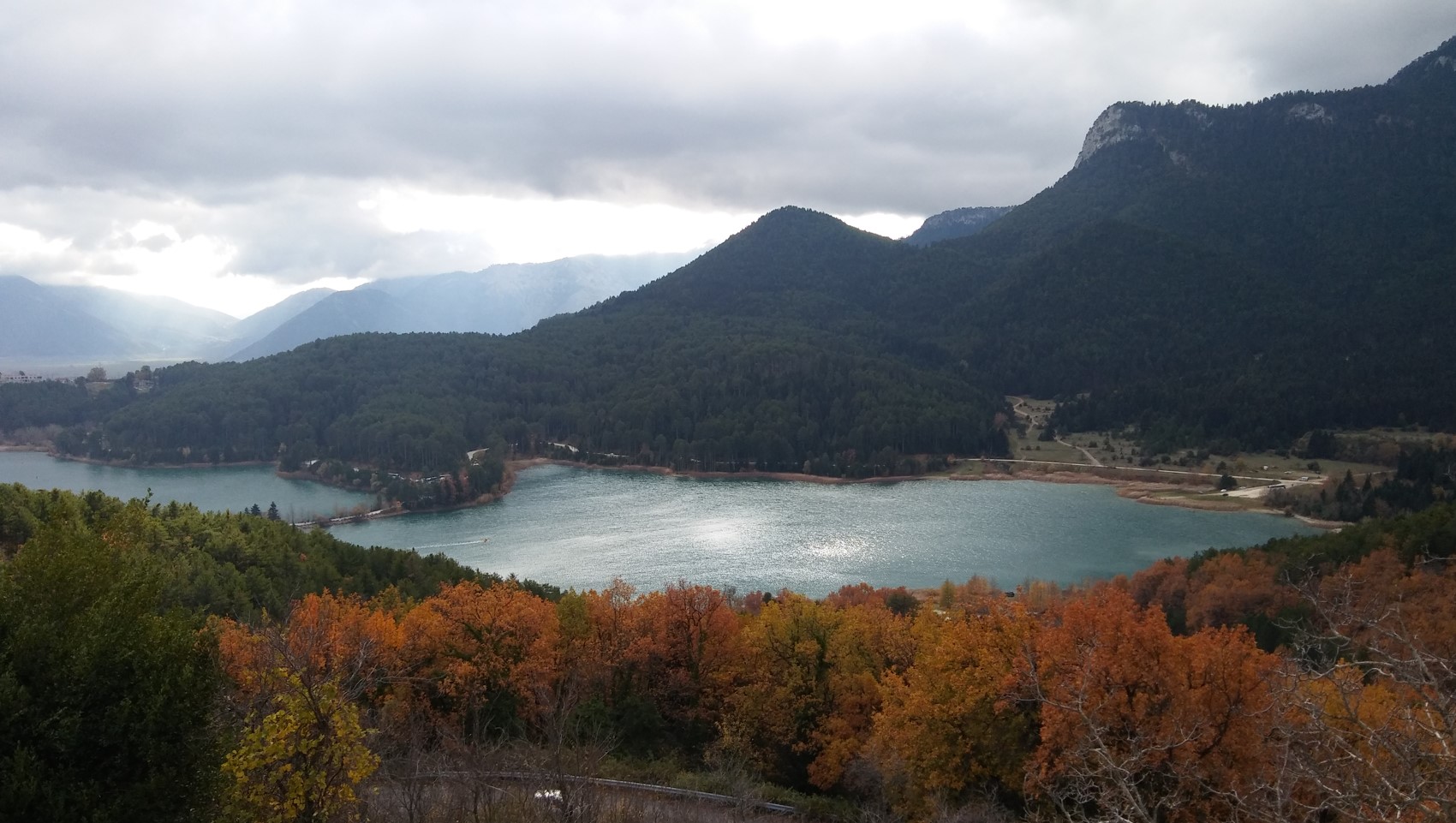
This view took my breath away…

My husband, Andy, and I spent one cold Sunday at the end of November filling our minds with images of breathtaking beauty at the mountains and plains of Feneos in Korinthia (i.e. the prefecture of ‘Korinthos’ – Corinth, in English).

I took this photo from the top level balcony of the stunning St George’s Monastery which overlooks Lake Doxa. The monastery of St George was originally built by the lake, but in 1693 the water level rose much too quickly and the monks fled, barely having time to save themselves. The ruins of that monastery are still underwater today. The same year, upon losing their home, the monks got to work building a new monastery high up on the mountain, to make sure history will not not repeated. In the monastery’s garden today, the monks grow a special variety of roses from the Peloponnese that are particularly aromatic.

Once a year, at harvesting season, they get to work using the fragrant flowers to make a syrupy sweet, which they sell at the monastery’s gift shop in jars. They also welcome the guests with a free treat of this sweet, and I can attest to the fact it is highly aromatic and delicious (albeit a little too sweet for my liking). Walking around the charming court of the monastery (that’s decked in stone everywhere you look) and around its different levels and corridors is a pleasure in itself. I was also impressed by the seemingly tireless tour given by an elderly monk. He was such a sweet soul and kept welcoming coachfuls of guests inside the tiny church, sharing about the history of the place in a low soft-spoken voice that rang with kindness and humility.

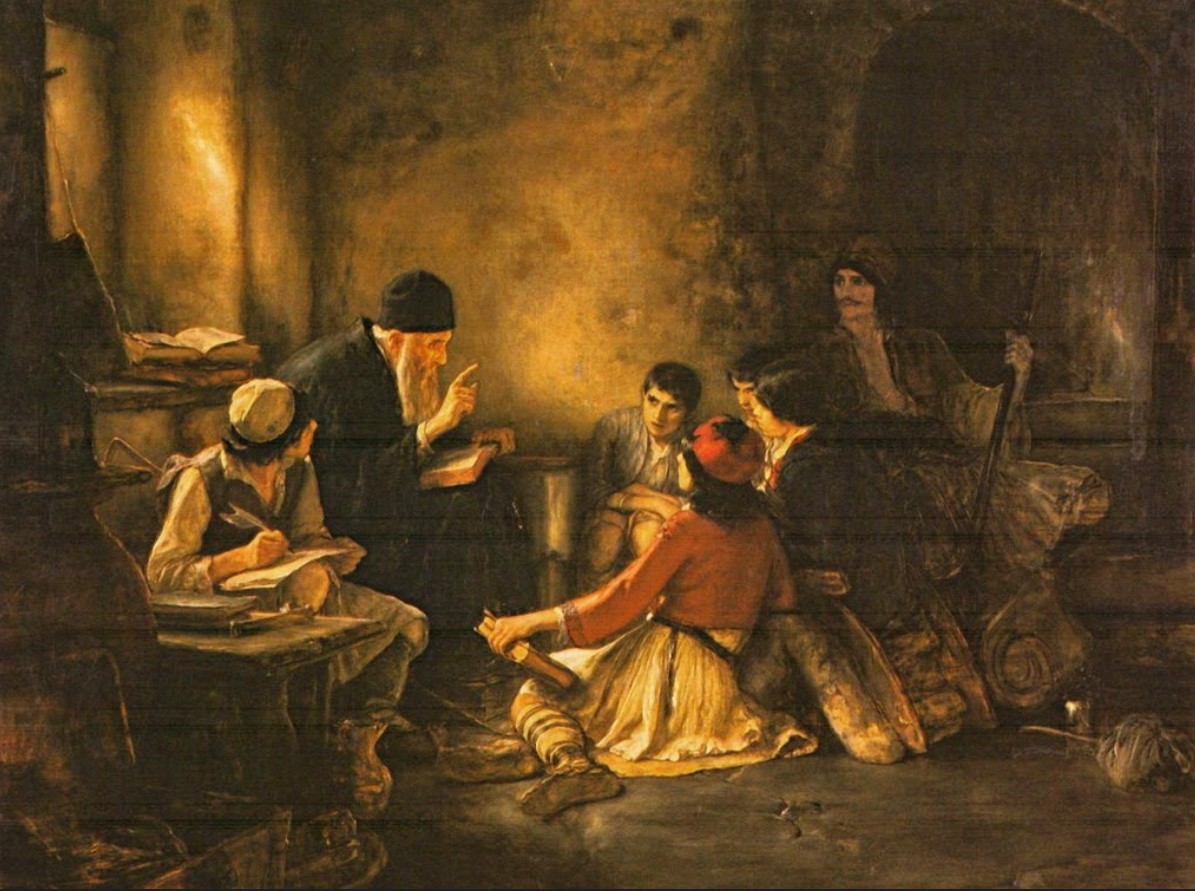
A depiction of krifo skolio by painter, Nikolaos Gyzis

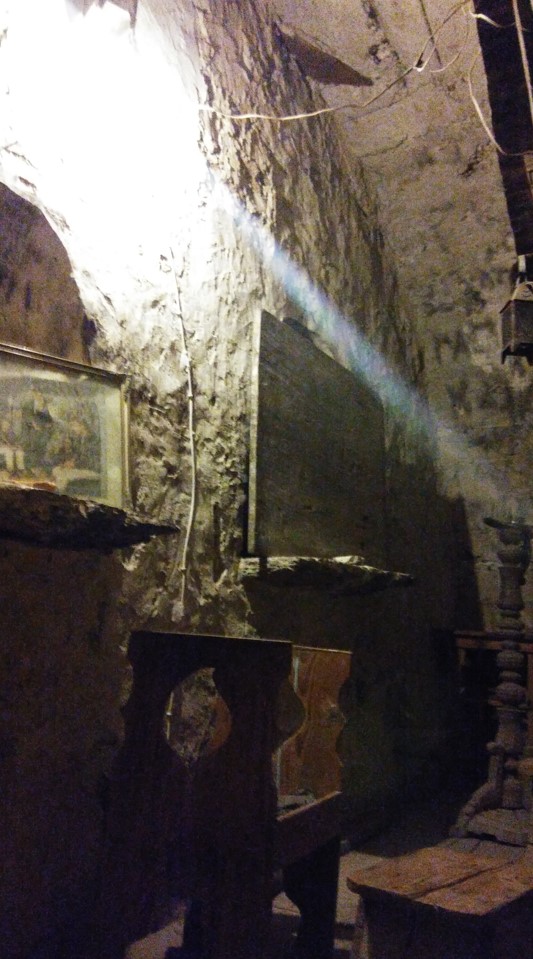
But, above anything else, for me, the highlight was, by far, my chance to see the tiny nook inside the roof of the monastery that used to serve as a ‘krifo skolio’ (secret school) during the time when Greece was occupied by the Ottoman Empire (1453-1821). To get to the roof, one has to take two short stairs that are more like ladders and thus require a lot of attention. The wood they are made off, and the tiny landing in between, creaked with every step, so guests had to allow up to two people to be up there at a time. Time was precious once you got to the top to admire this precious little space.

The first time, out of respect for everyone waiting below, I took a quick look and felt embarrassed to take out my camera. Luckily, the crowd dispersed later, before it was time to leave on our coach, so I was able to go back up again, my camera in hand this time, to drink in the small space a little better, more reverently as it deserved, and to take a couple of photos. I didn’t go over the high wooden hurdle to venture inside, taking the hint that the place was off limits.

Two elderly men had stepped inside earlier to take a closer look and I thought it was a bit of a naughty thing to do… but also potentially dangerous (creaking floors and all that). But anyway, the photos came out clearer than I’d expected, since the place was deeped in semi-darkness. I love the ray of light captured by the lens, which wasn’t visible with the naked eye. It gives the space that reverence I believe it has. Truly, the ‘krifo skolio’ is romanticised enough in art, just like it is in the famous painting by Nikolaos Gyzis, and it does deserve to be.

After all, every priest and every monk during the Ottoman rule in Greece must have taken it upon themselves to keep the Christian faith and the Greek language alive during those dark 400 years. Had they not decided to organize these meetings in the dark of night to teach Greek children how to read and write in their own language, as well as all about Christian doctrine, chances are the Greeks would not be today the kind of people they are – i.e. people who regard their ancestry something to be proud about and also people that keep God alive in their hearts.

The following stanza from the Greek poet Polemis illustrates the atmosphere of ‘krifo skolio’ perfectly. This is my best effort to translate it into English:

“Outside, black-cloaked desperation

The tangible darkness of a bitter slavery

And inside the vaulted church

The church that every night morphs into a school

The apprehensive light of the oil lamp

Stirs the dreams while trembling

And gathers the little slave children all around.”

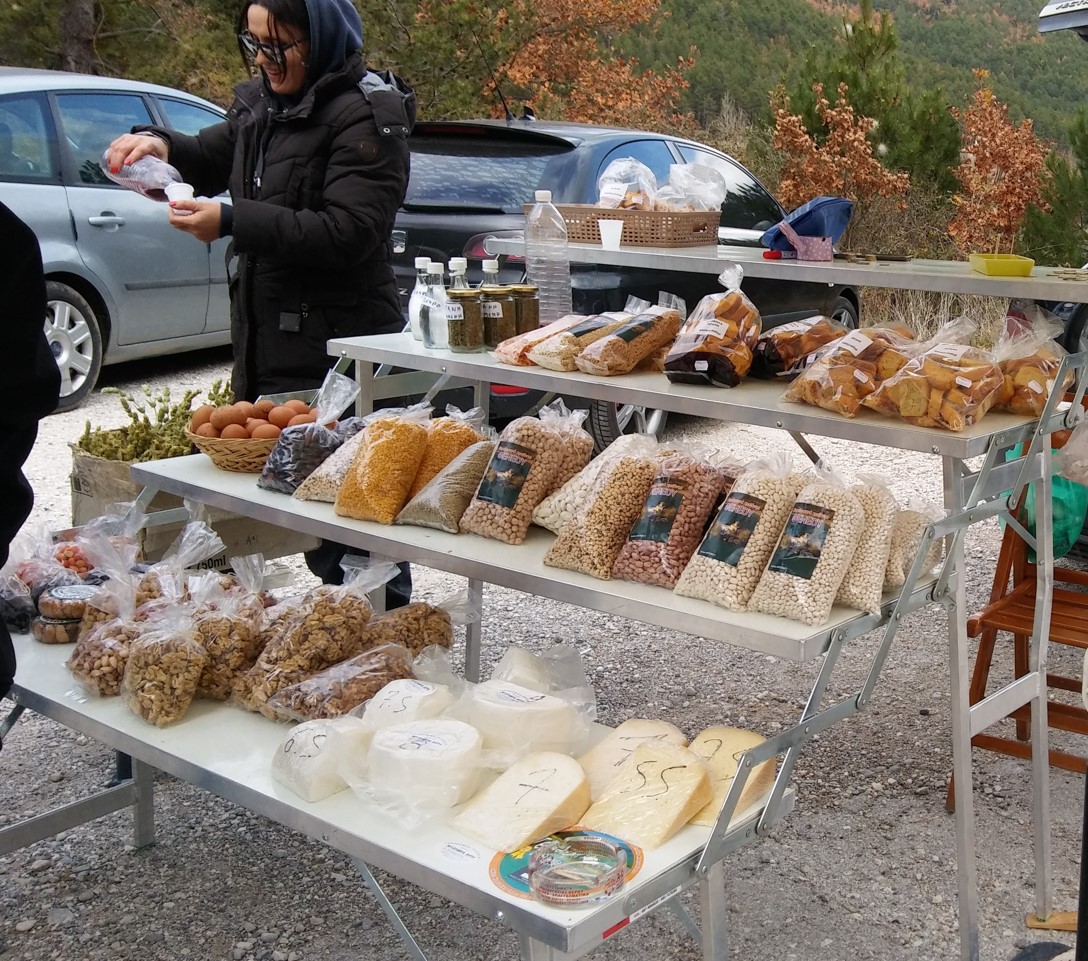
When we visited the lake, I quickly turned around to realize my hubbie was nowhere to be found. Crowds had gathered everywhere to admire the local produce on offer that was laid out across many stands along the bank.

I spotted Andy again a little later emerging through the wandering tourist crowds, and he was singing the praises of the locals, saying how hospitable they all were acting. Turned out he’d only gone on a little tour by himself while I was buying all sorts of lentils from the local plains at amazing prices. He was over the moon, having been offered in that short time various kinds of rusks, cheeses and tsipouro to try. I quickly followed his advice and tried some of the samples on offer as well. He was right; it was all delicious. If you’re ever in the area, make sure to try everything. I think we did haha. And we did go away with a couple of big bags. What a saving it all was haha

I’ve already cooked beans and fava and they were both as delicious as they had promised they’d be. I am still to rub the wild oregano I got off the stalks and put it in a jar. That was incredible timing as my longstanding stock of wild oregano from Moraitika, Corfu had recently been depleted 🙂

The lake itself is phenomenally beautiful. I’d love to go back one day and go around it to drink in its beauty at my leisure. In the summer, one can even rent boats (or is it pedalos?). People can cycle along the bank all year round or rent horses and ponies. We only had a short time to enjoy the views as it was quite cold and threatening with rain, but we managed a short walk to the Agios Fanourios church. It is tiny and sits at the end of a long strip of land extending far into the lake.

Our beautiful day out continued with lunch at the village of Feneos – we had roasted lamb, Choriatiki salad, and a side dish of local butter beans in tomato sauce. All enjoyed with fresh bread as we sat by the fireplace. We couldn’t have been taken to a better place for lunch. After all the walking around in the cold, everything hit the spot perfectly.

It’s been almost two weeks since that day and my mind is still full of beautiful images. The colors on the forest trees, the sparkling lake waters, the ancient woodwork and stonework of the monastery, and, last but not least, the sunrays reaching down to the plains as they pierced through dramatic dark clouds. It all helped to take pictures I will cherish forever. This part of Greece is not well known but well worth a visit.

SEE ALL MY PHOTOGRAPHS HERE


OOPPAAA! SIGN UP TO MY BIMONTHLY NEWSLETTER AND GET 3 BOOKS FROM ME AS A WELCOME GIFT! SEE BELOW FOR THIS OFFER!

YOU KNOW WHAT THEY SAY… SHARING IS CARING! Tweet this to spread some love:

Majestic views in Lake Doxa and a secret room in a monastery #Greece #travel #blogger Share on X


3 FREE books for you! Sign up below to receive them instantly!

NEW! Clean Christmas romance. Single mother Cathy Roussos gave up on love long ago, and veterinarian Alex Rallis doesn’t believe in it, but one magical Christmas on a Santorini farm might just change everything…
Check it out on Amazon     Read a FREE sample!


A clean romantic suspense short read with an unreliable narrator that’ll keep you guessing! Vera is losing her mind over famous actor Yannnis Ksenos, except, she isn’t just a fan… Now, she plucks up the courage to ring his doorbell… Visit Amazon
 

For my delicious Greek recipes, go here
 
Planning to visit Greece? Check out my  FREE guide to south Corfu!

A day out in the alluring Greek island of Spetses #summertime #Spetses #Greece

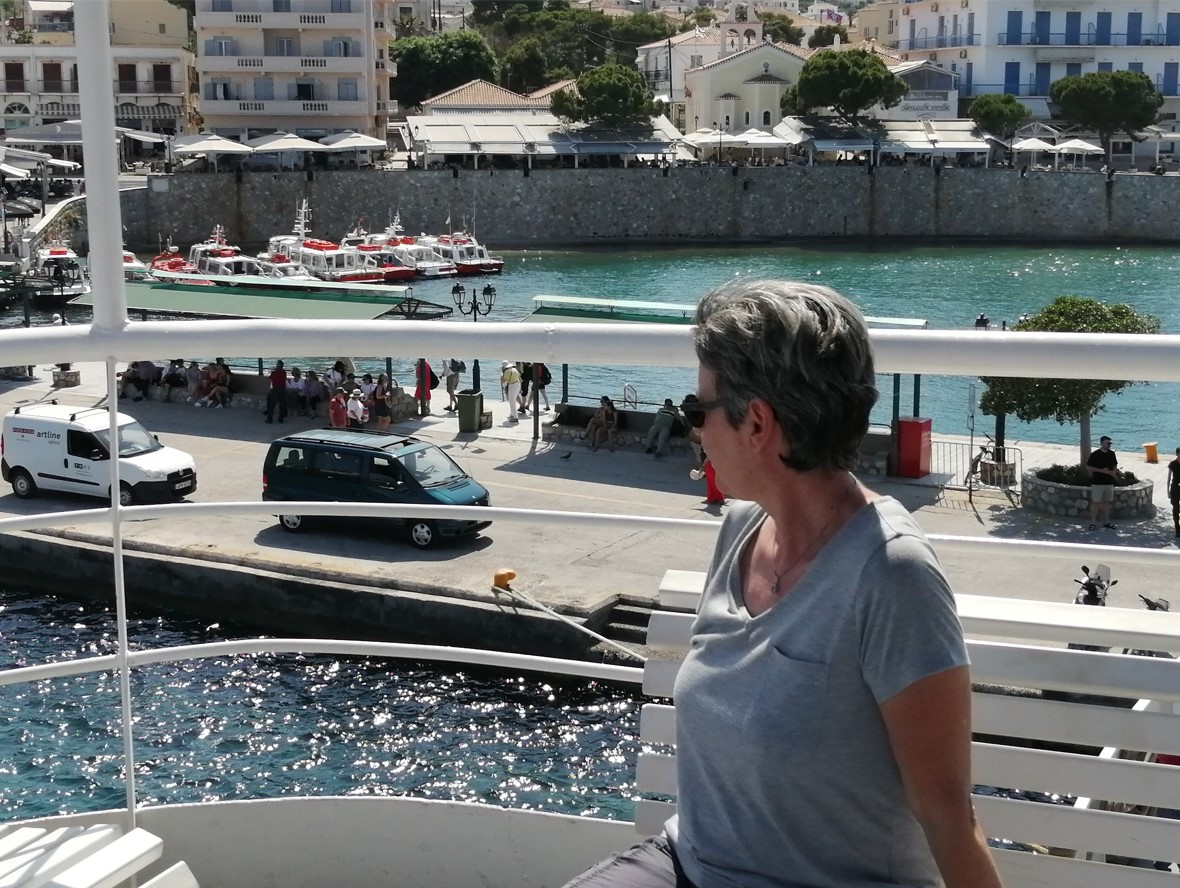
Hi, All! I jumped at the chance to visit Spetses on a daily trip last weekend and I am thrilled to share about it today.

First time I visited Spetses was at the age of nineteen with my Uni friends, so it is very close to my heart. I visited it again for short breaks in the 90s and the 00s. Even though this visit was only for a day, it was just as exciting and my husband and I had six whole hours to catch the vibe of it all.

Spetses is an island of the Saronic gulf (close to Athens) that has a huge naval history thanks to Laskarina Bouboulina, the admiral of the Greek Navy, who was a heroine of the Greek War of Independence.

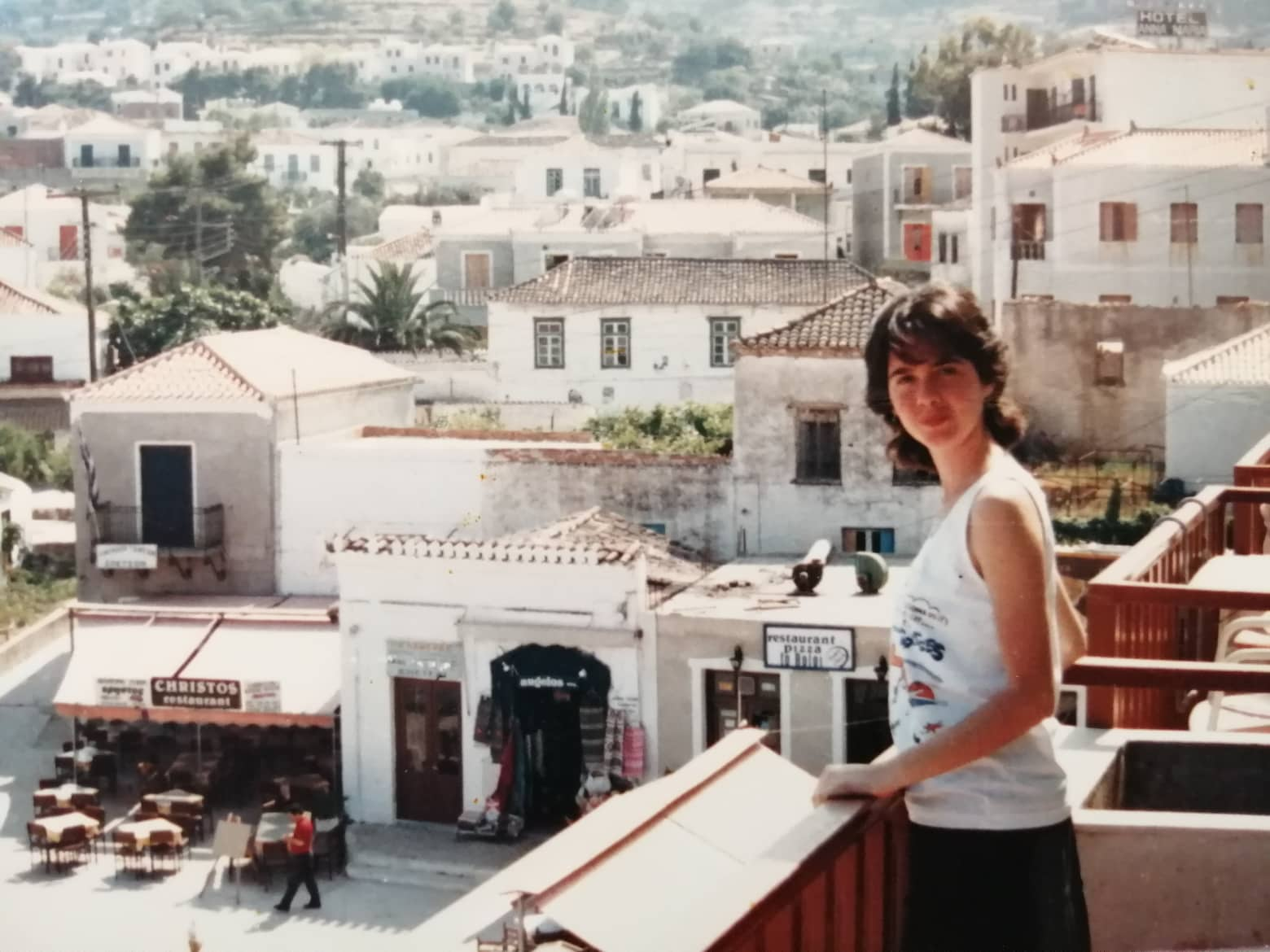
Oh my goodness. This picture makes me feel so old, LOL. But that was 1986 and I was a student at Athens Uni. And I had to show you this picture as it makes the island of Spetses look so idyllic, exactly as I remember it that first time I saw it. My hotel room had a view to the old clock square. It was so built up when I saw it again the other day it was heart-breaking. The middle space was almost taken on completely by restaurant seating areas, and two of them were not even traditional tavernas. They were serving pizza and pasta instead. I found them so out of place. So I like this old, quiet square better… and if you’ve been to any Greek islands in the 80s, you know what I’m talking about and what exactly it is they lack these days. Just looking at this photo makes me hear bouzouki chords in my mind, and my friends from Uni and I even spent an evening dancing in a bouzouki club!

The t-shirt I am wearing says, “If you’re gonna do it, do it right. Do it in Spetses!” and it featured Garfield laid out on a deckchair, sunglasses on, drink in had. So 80s! I was a huge George Michael fan back then so the slogan was perfect; I had to buy the t-shirt LOL. I wore it every summer after that for decades. It was only last year that it’d got so many holes in it I had to throw it away, much to my grief. RIP Garfield of Spetses, LOL!

Credit for the image to athensattica.com

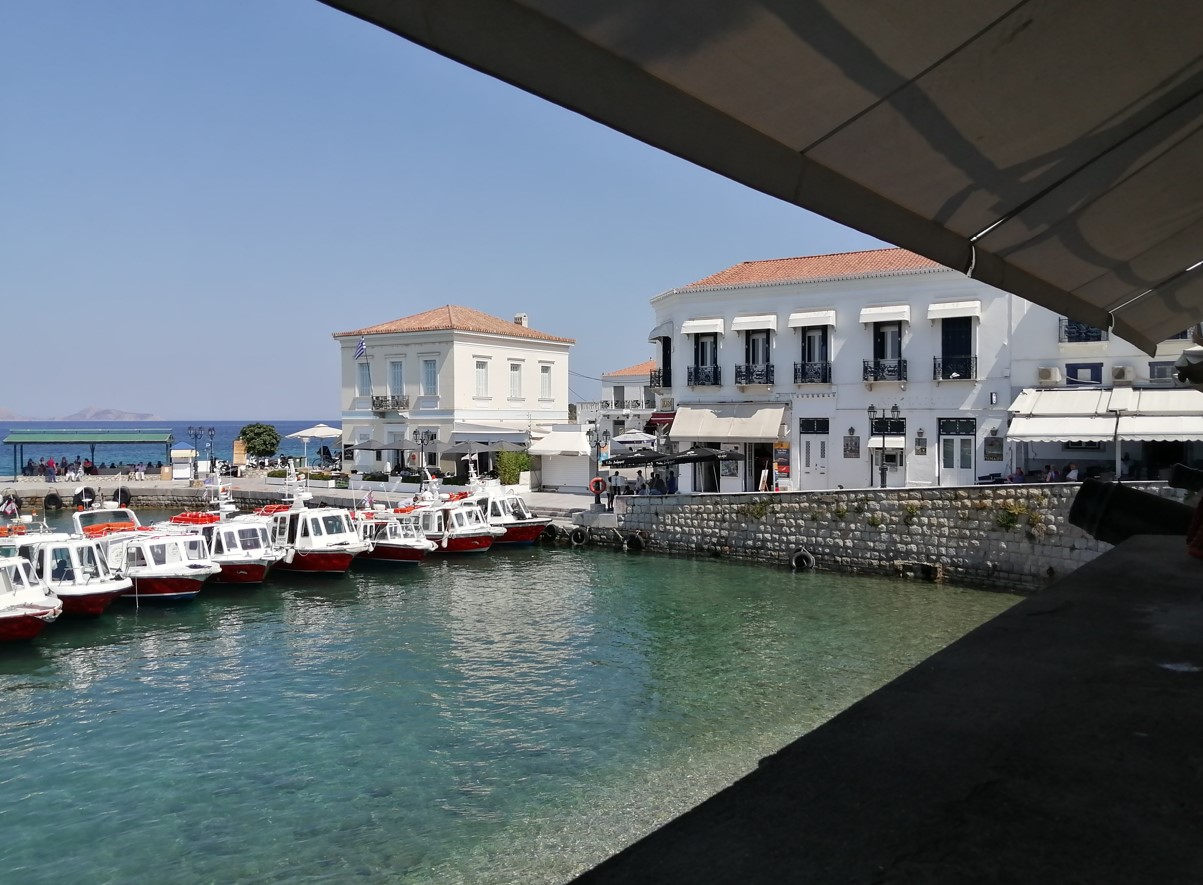
But I digress. Back to my wonderful day out… After a hearty breakfast at the Dappia, the beautiful stone-paved port of Spetses, my husband and I went exploring. On the back streets of Dappia, across from a tiny park, we found Bouboulina’s stately home, now a museum.

Laskarina Bouboulina was a sea captain, and one of the greatest heroines of the Greek War of Independence in the 1820s against the Ottoman rule. 

Inside her home, we saw personal artefacts and beautiful furniture dating from many centuries ago.

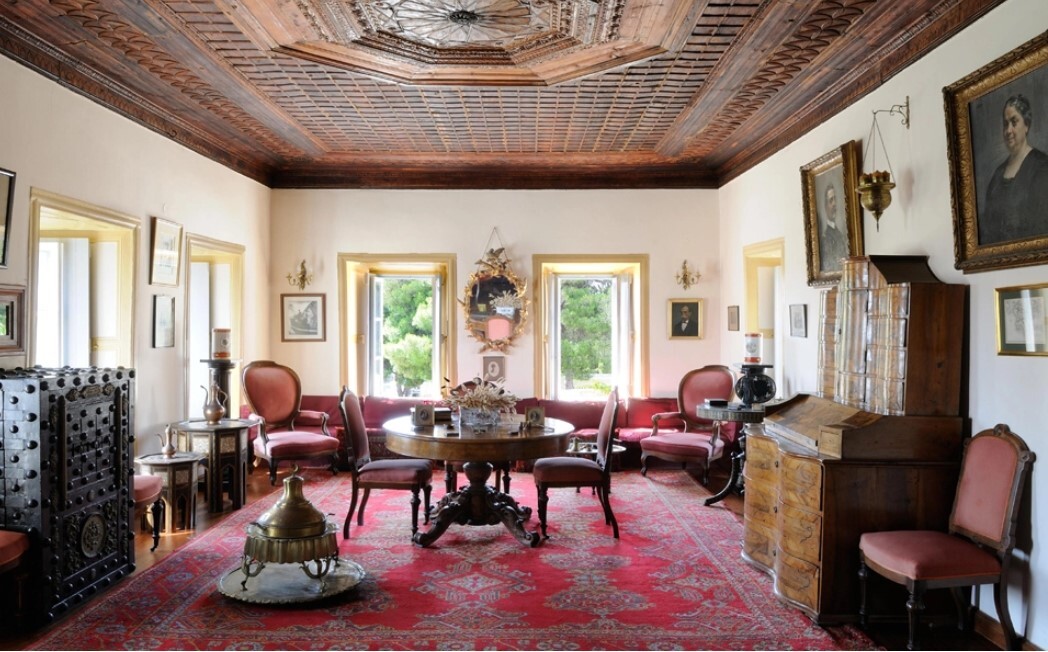
Taking pictures wasn’t allowed inside but I was able to find online this photograph of the exquisite living room of the mansion. The wooden ceiling stole my heart. It came from Florence in pieces, apparently, and was assembled at the mansion piece by piece. The intricate designs carved on the wood were breathtaking. And so was the room itself. Just the idea that I was standing at the place where Boubloulina planned the next naval battles with other captains for the liberation of Greece made the hairs on my spine stand on end. It was an experience that made the Greek War of Independence come alive, and I felt the kind of awe I have only felt once before – at Agia Lavra monastery, standing before the legendary banner that started the same war in 1821.

How easy it was to picture Bouboulina in her own spaces! It was a huge privilege to be there. I was deeply moved as I admired her own ancient icon of St Nicholas – the protector of seafarers. It was a beautiful wooden icon with intricate carvings – gold plated. I could imagine how many times she must have prayed before it for the victory of her naval battles so she could save her beloved country. Wow. Just that artefact was enough reward for visiting that special place.

The pictures I’m sharing today from my trip feature the beautiful exterior of Bouboulina’s mansion, and also Spetses’s port (the famous Dappia), the imposing Poseidonion Hotel, and other areas. It was 36 degrees C and we were melting, so the horse and carriage ride and the walk to the end of the peninsula to visit the small marina and the shipyard had to be postponed for another time. All we could do was keep sitting here and there in the shade with food and drink for sustenance and refreshment, LOL.

I am also sharing pictures from other areas we visited on the way – the Corinth Canal, Costa (near the cosmopolitan Porto Heli) where we took the ferry across to Spetses, and the enchanting little town of Ancient Epidavros where we stopped over for coffee on our way back home.

GO HERE TO SEE ALL MY PHOTOS


YOU KNOW WHAT THEY SAY… SHARING IS CARING! Tweet this to spread some love:

A day out in the alluring Greek island of Spetses #summertime #Spetses #Greece Share on X


3 FREE books for you! Sign up below to receive them instantly!

NEW! Clean Christmas romance. Single mother Cathy Roussos gave up on love long ago, and veterinarian Alex Rallis doesn’t believe in it, but one magical Christmas on a Santorini farm might just change everything…
Check it out on Amazon     Read a FREE sample!


A clean romantic suspense short read with an unreliable narrator that’ll keep you guessing! Vera is losing her mind over famous actor Yannnis Ksenos, except, she isn’t just a fan… Now, she plucks up the courage to ring his doorbell… Visit Amazon
 

For my delicious Greek recipes, go here
 
Planning to visit Greece? Check out my  FREE guide to south Corfu!

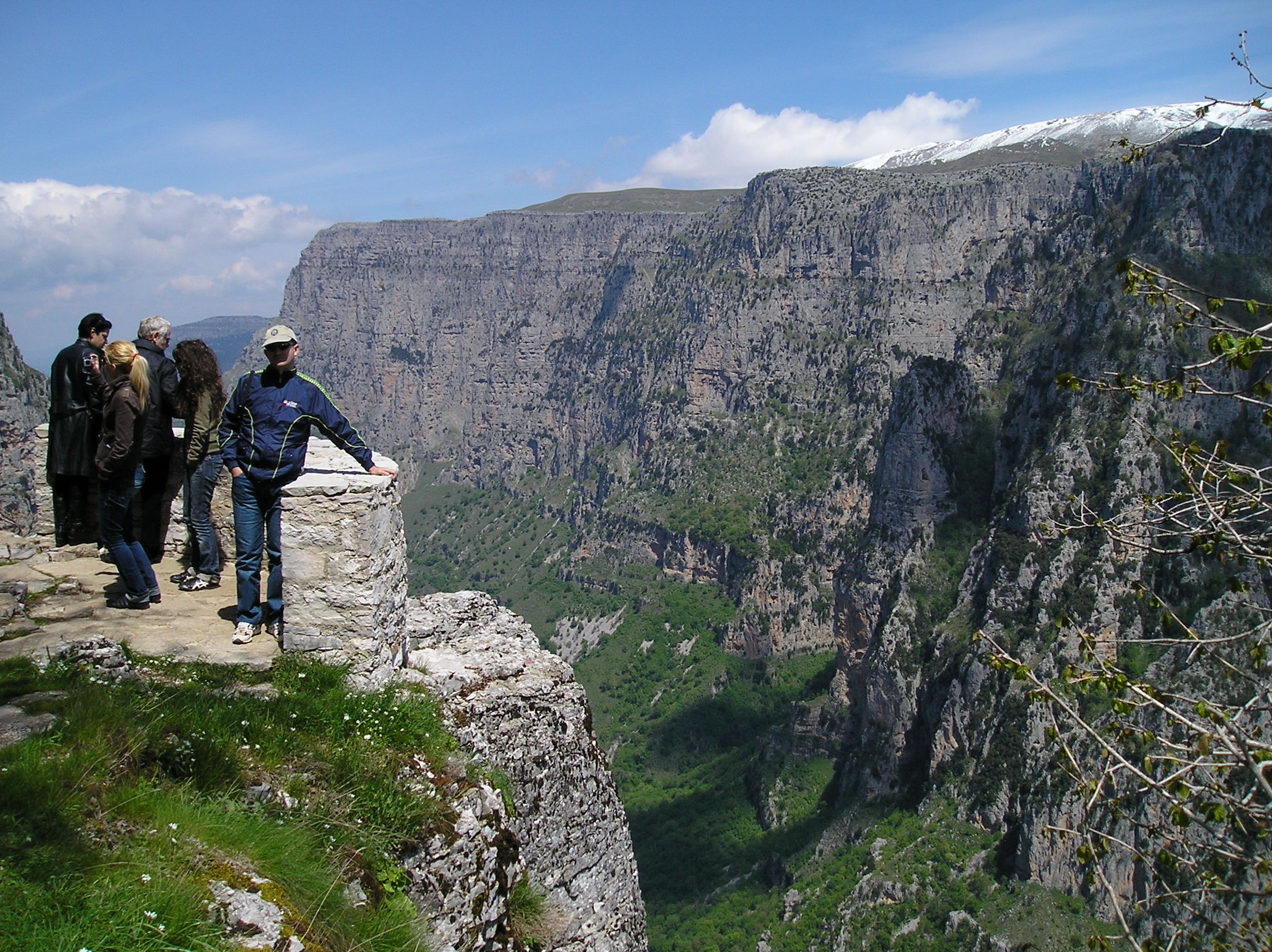
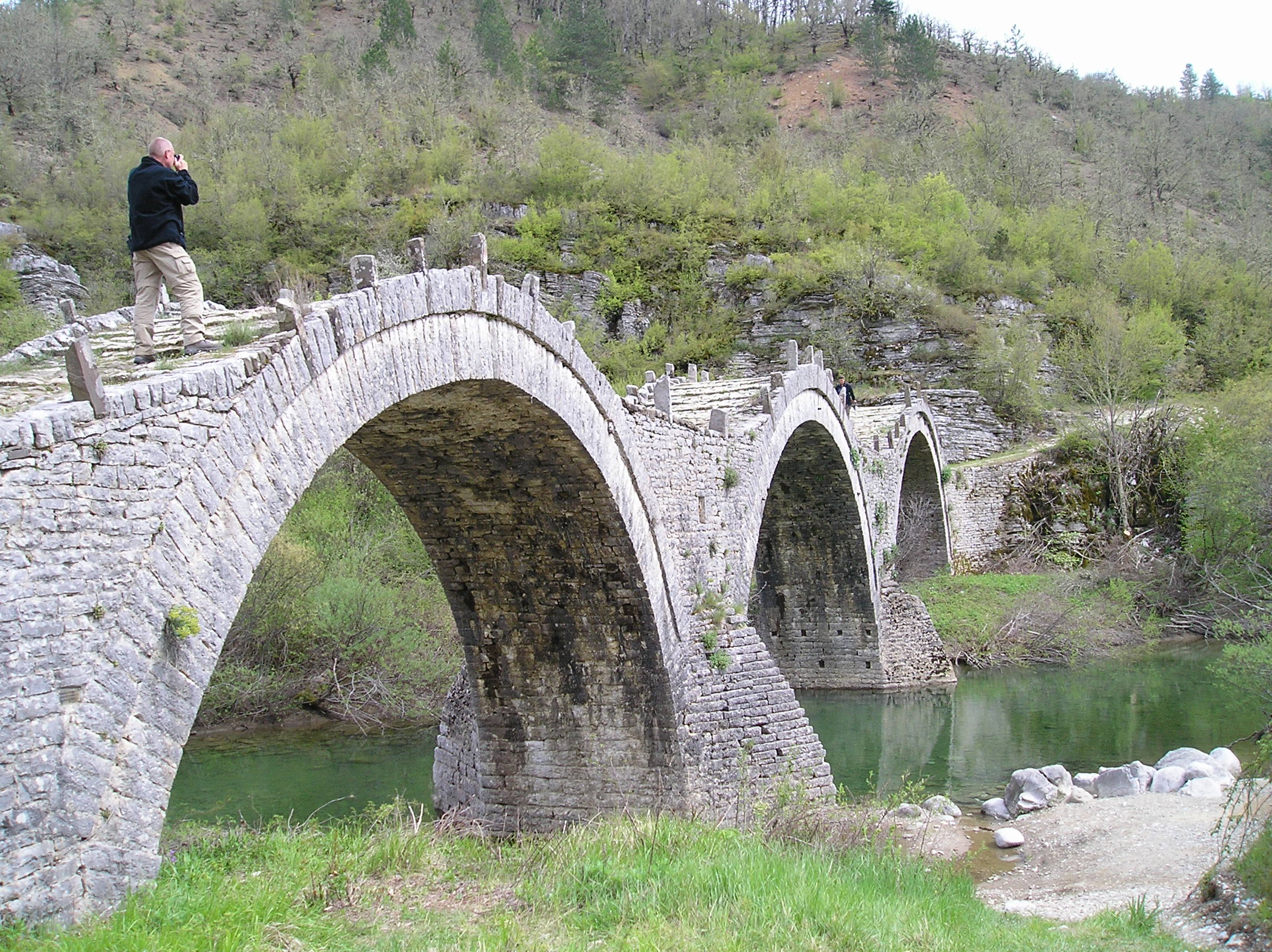
Zagori: A Journey Through Time #Zagorochoria #Epirus #Greektravel

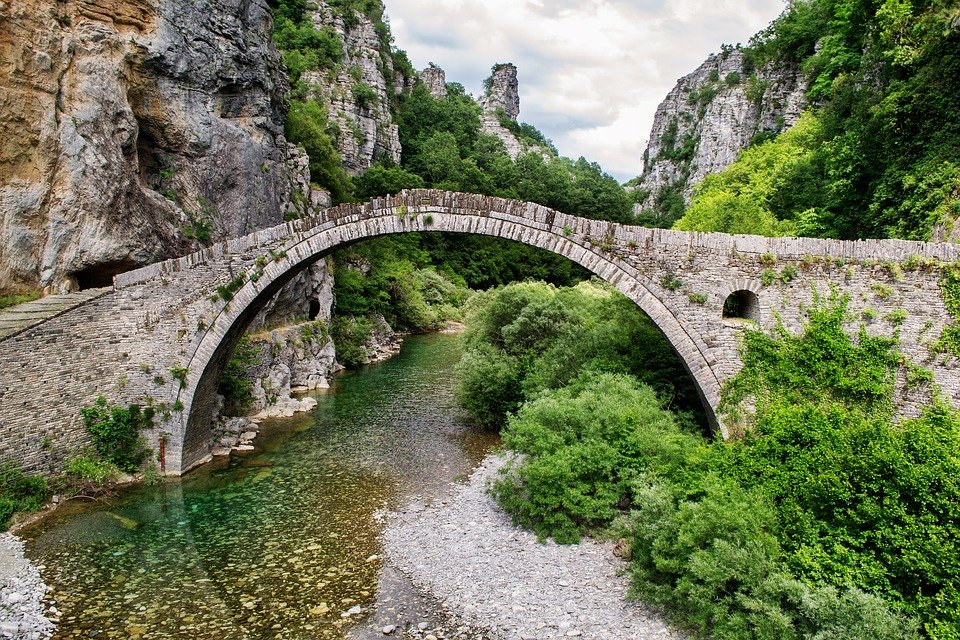
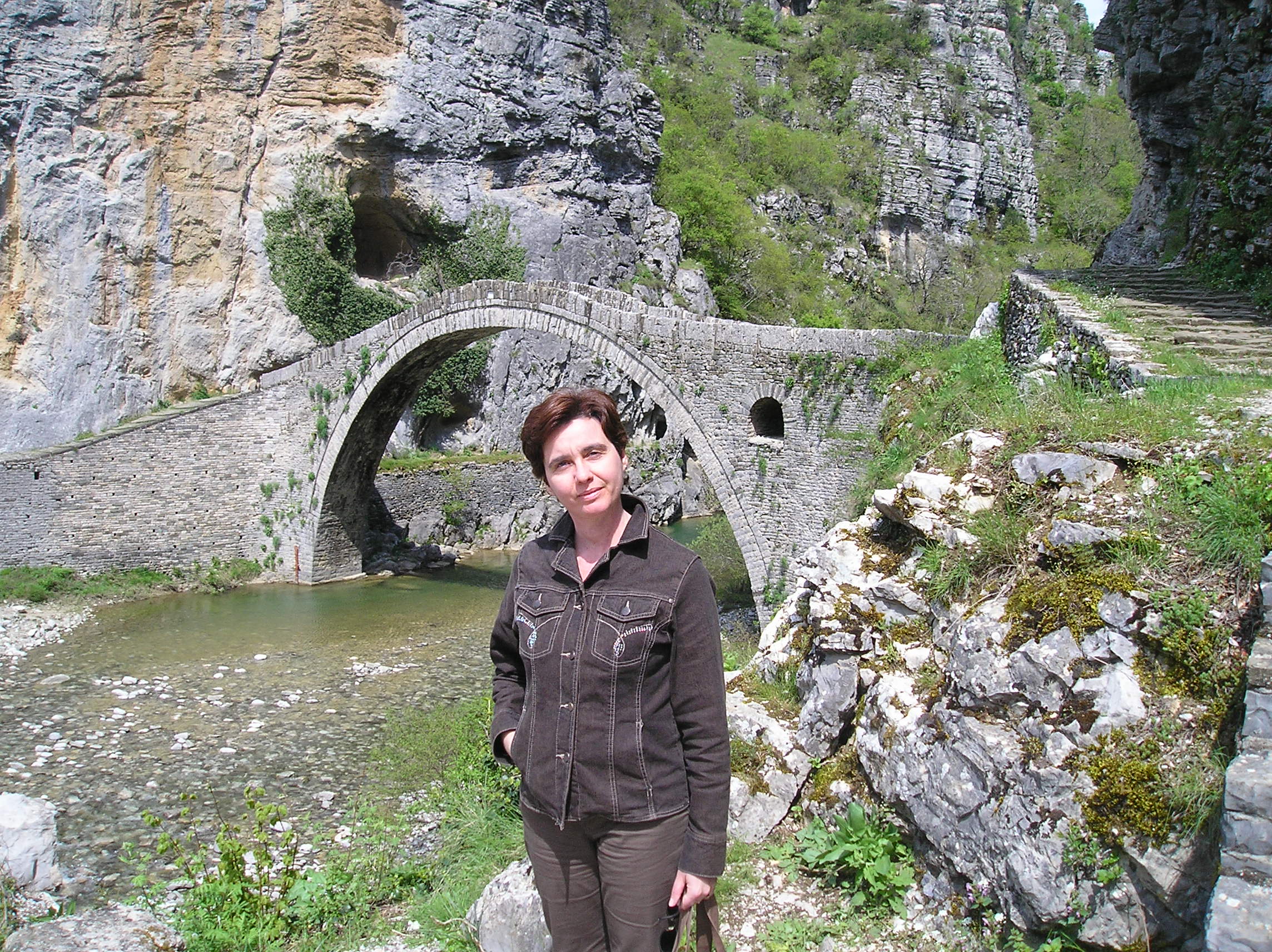
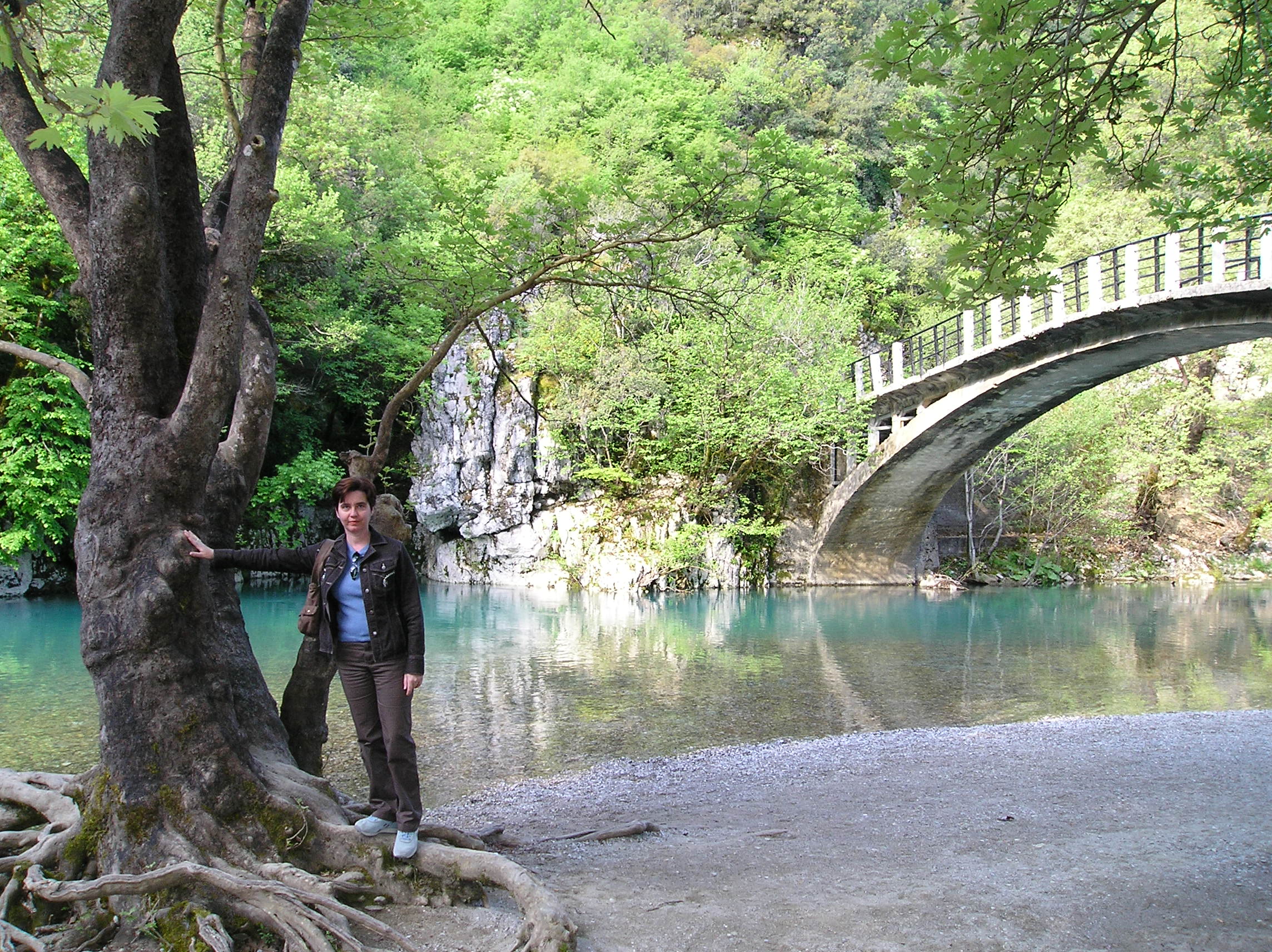
Kokkori bridge, Zagori, Epirus

The alluring area of Zagori on the mountains of Epirus is where I set my supernatural romantic suspense novella, “The Boy on the Bridge.” This amazing place of lush greenery and old stone bridges stole my heart away when I visited it with my husband a few years back.

Scroll al the way down to get a FREE copy of this awarded short read!

Zagori is a place of astounding beauty and it’s incredibly peaceful… To visit it, is to become enchanted, and you cannot help but leave a part of your heart forever behind when you depart. Andy and I visited Zagori in the spring when the snow and the ice had melted and the treacherous uphill roads were a pleasure to drive on without distractions, except maybe the frantic clicks of the camera from my enthused husband by my side.

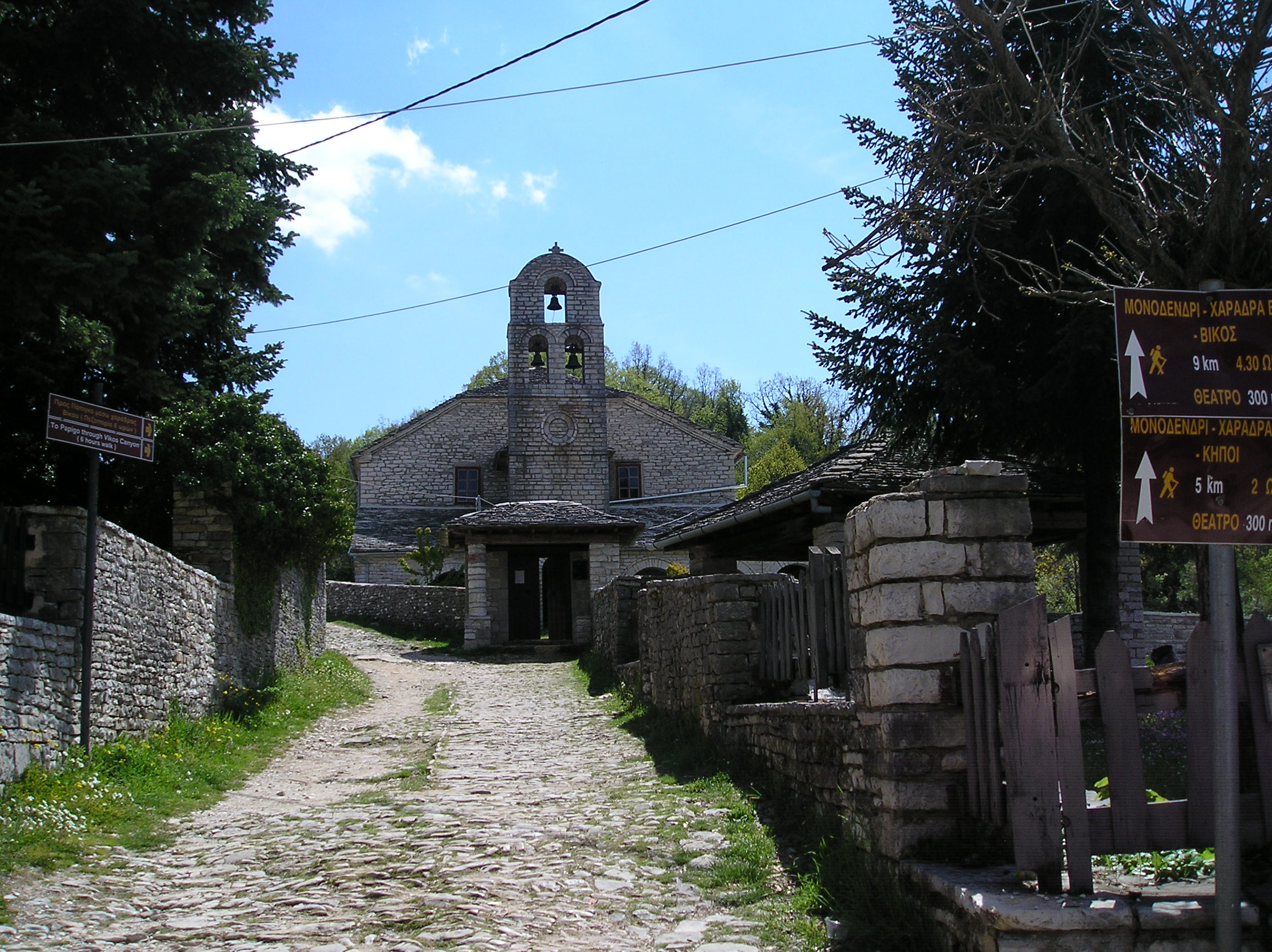
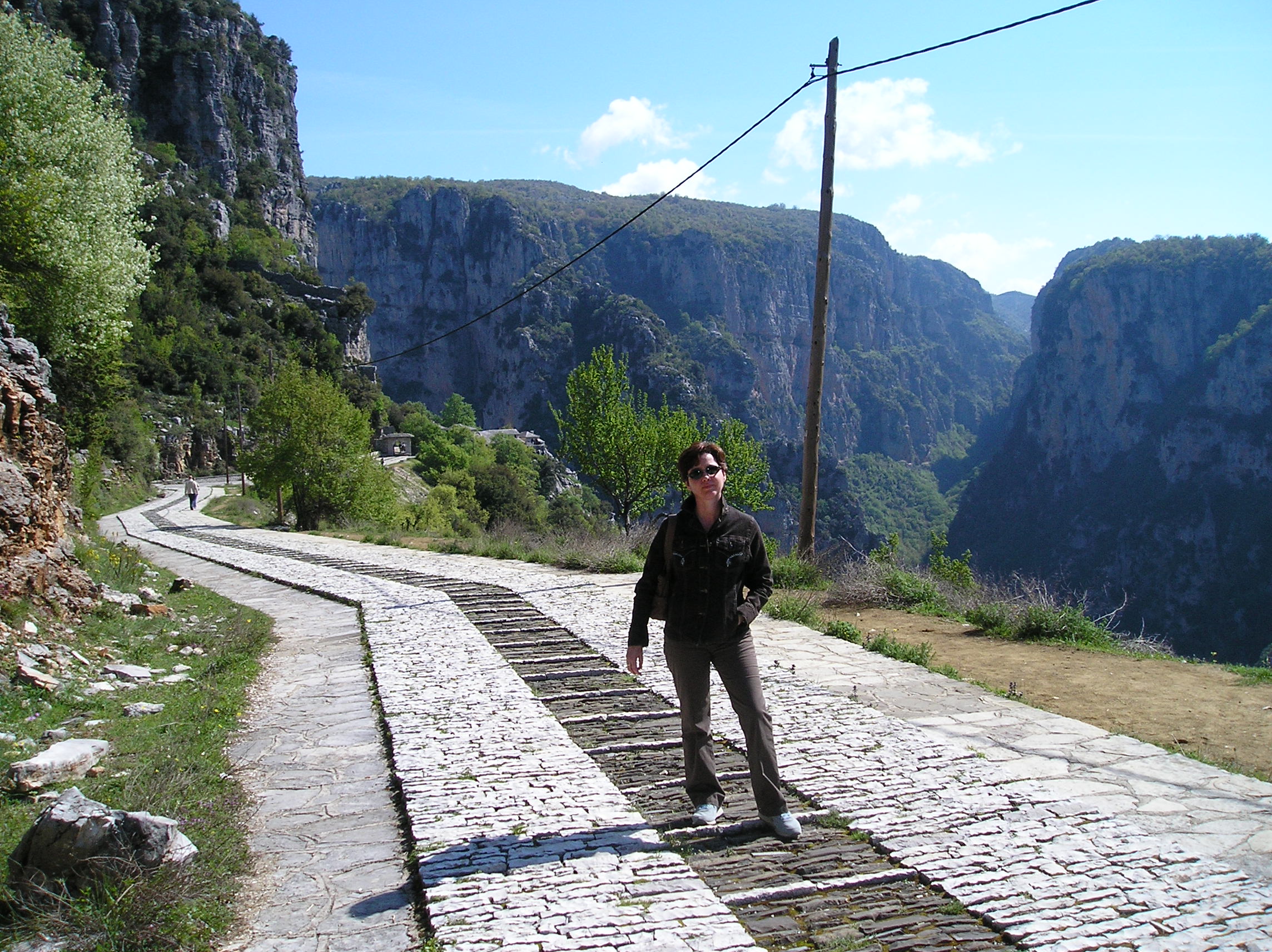
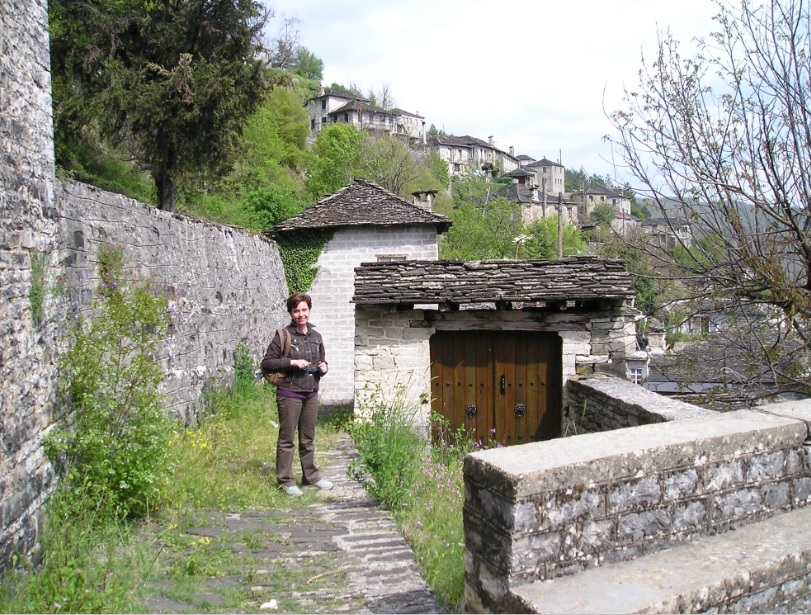
Our first stop was the village of Monodentri so we could visit the Monastery of Agia Paraskevi and enjoy its generous view to the Vikos gorge. As soon as we parked at Monodentri and stepped out, we found ourselves before a maze of cobbled stoned lanes. The village captured our hearts from the very first moment…


We took the cobbled road to the monastery quite early in the day, having set off from the city of Ioannina after a very early breakfast at our hotel. There were not many tourists around and we thought that, at any moment, we’d see a flock of sheep or the odd mule walk up the cobbled road past us, right through the middle of the path where special stonework had been laid for the animals’ passage back in the old days.


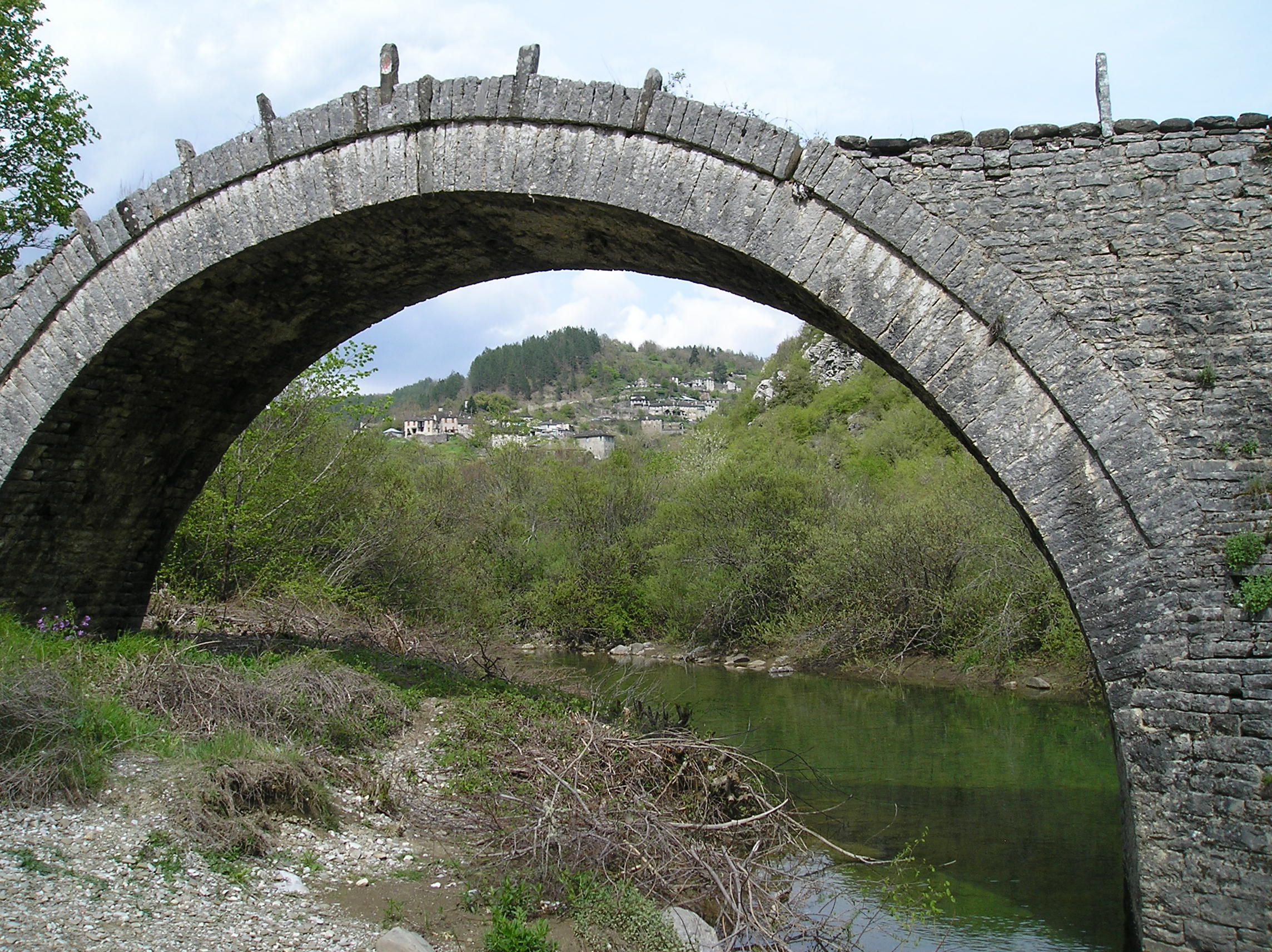
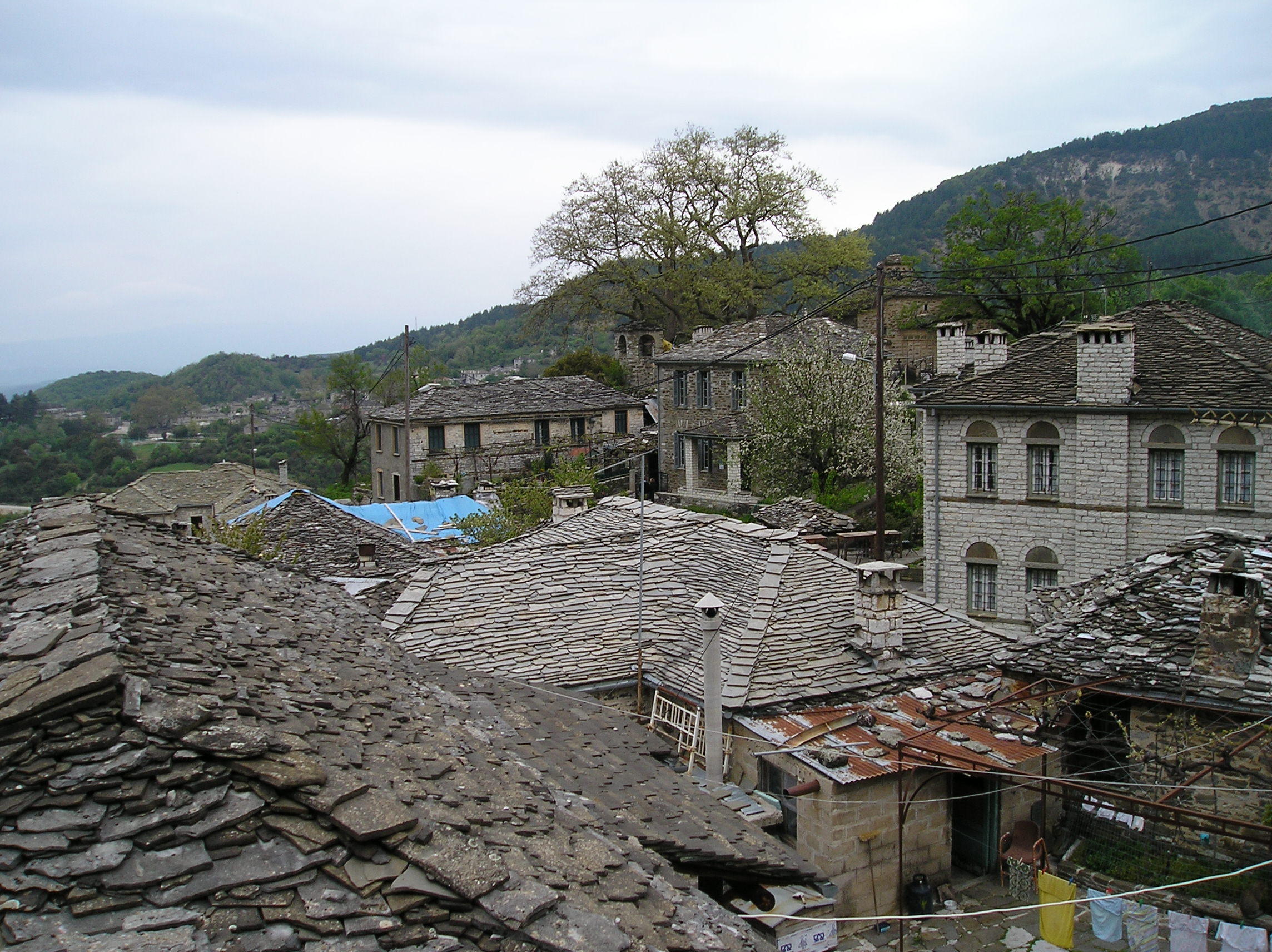
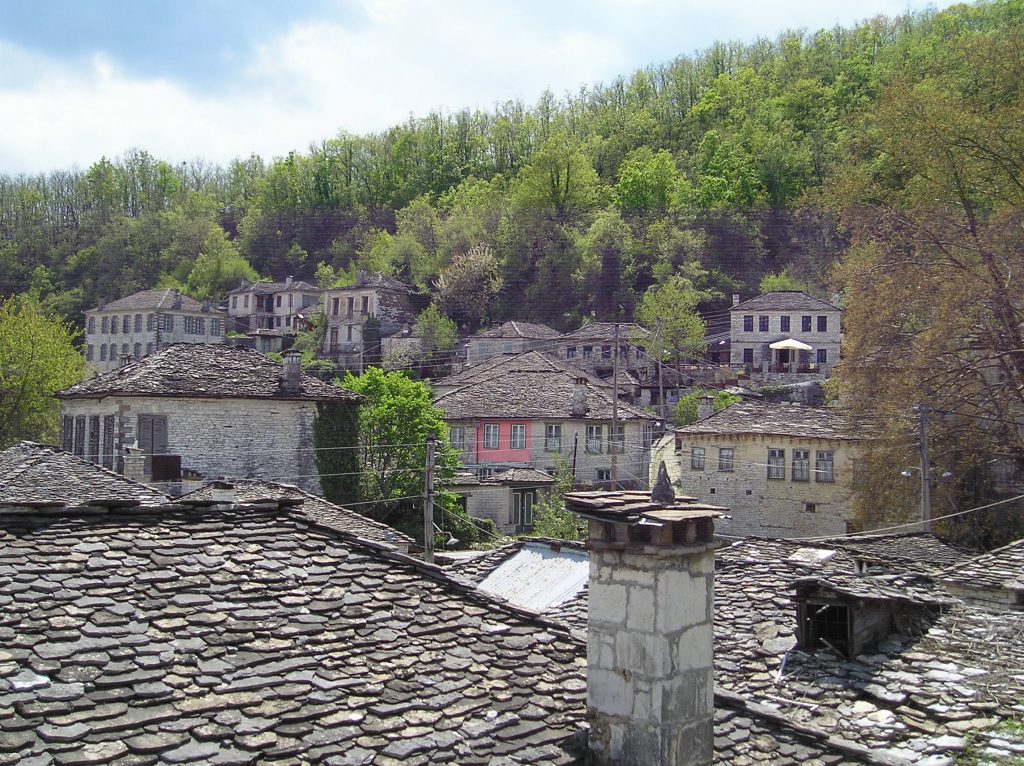
Zagori (or Zagorochoria) is a complex of 45 quaint villages in the prefecture of Epirus in the northwest of Greece. Some of these villages are situated at high altitude offering magnificent views of the Pindus mountaintops. Often, as the visitor travels around the villages, they feel compelled to stop and marvel at the weathered stone bridges that are scattered all over this area. Found in deserted landscapes more often than not, they look rather forlorn but nonetheless, they remain unique landmarks of astounding beauty.

The word Zagori derives from the Slavic words “za” that means “behind” and “gora” that means “mountain”. The ancient Greek name “Paroraioi” has exactly the same meaning, i.e. “The people who live behind the mountains”. The villages of Zagori are a feast to the eyes made of earth and stone and they have been exquisitely preserved through time, ever since their heyday during the country’s occupation by Turkish rule. This period of Greek history has been recorded as particularly bleak, lasting for 400 years until the Greek Revolution in 1821. Despite the devastation that had plagued the country at the time, somehow, Zagori managed to become a focal point of commercial activity.


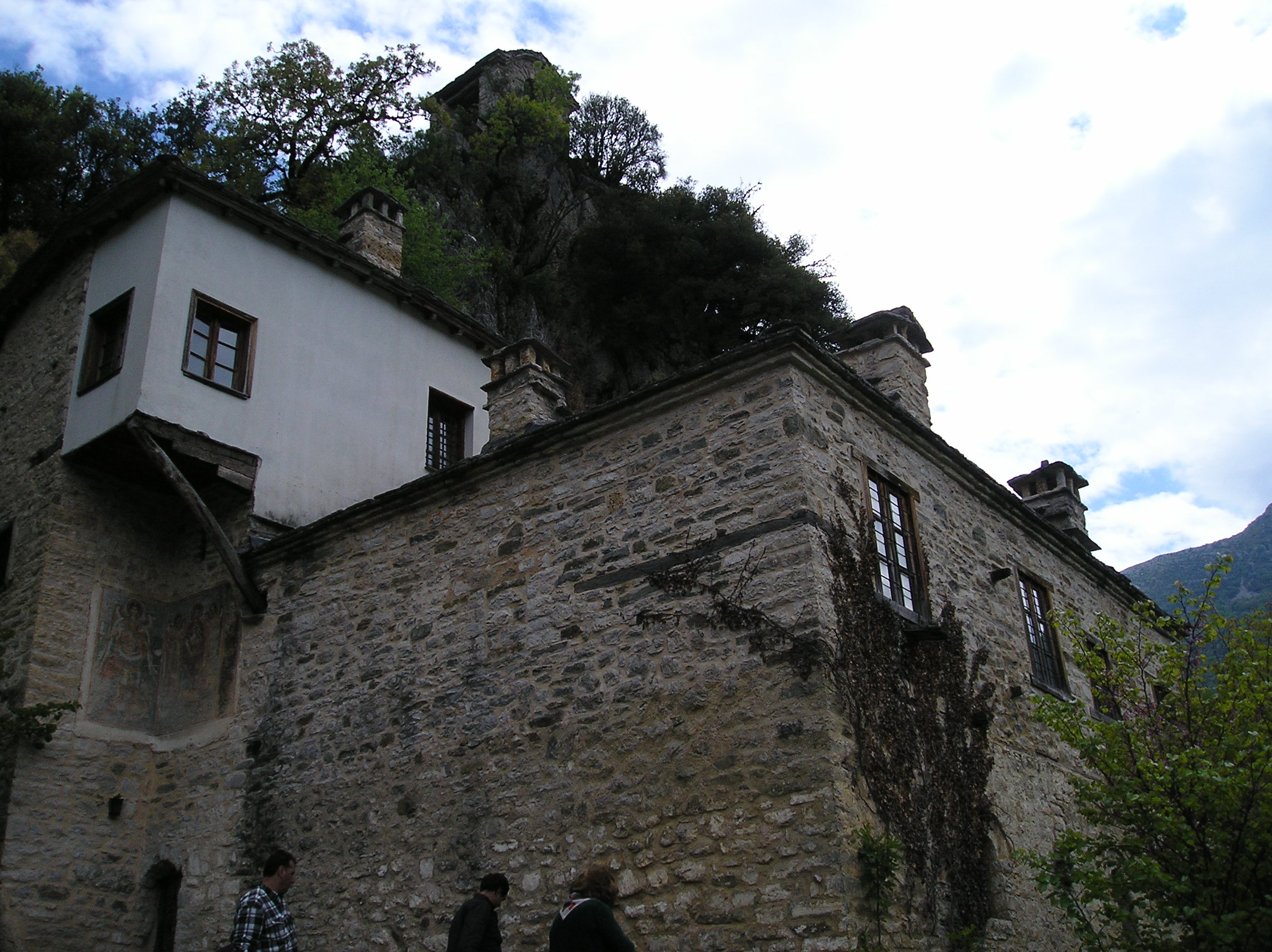
Many villagers prospered and, as a result, a series of magnificent bridges were erected all across the area to facilitate the passage of merchants. One of the most prosperous villages at the time was Kipi. It is the village that inspired “The Boy on the Bridge” and, indeed, in the old days, there were many bridges around it and in the major area to facilitate the transportation of goods. I visited three of these bridges: ‘Kokkori, ‘Kalogeriko’ and ‘Capetan Arkouda’.


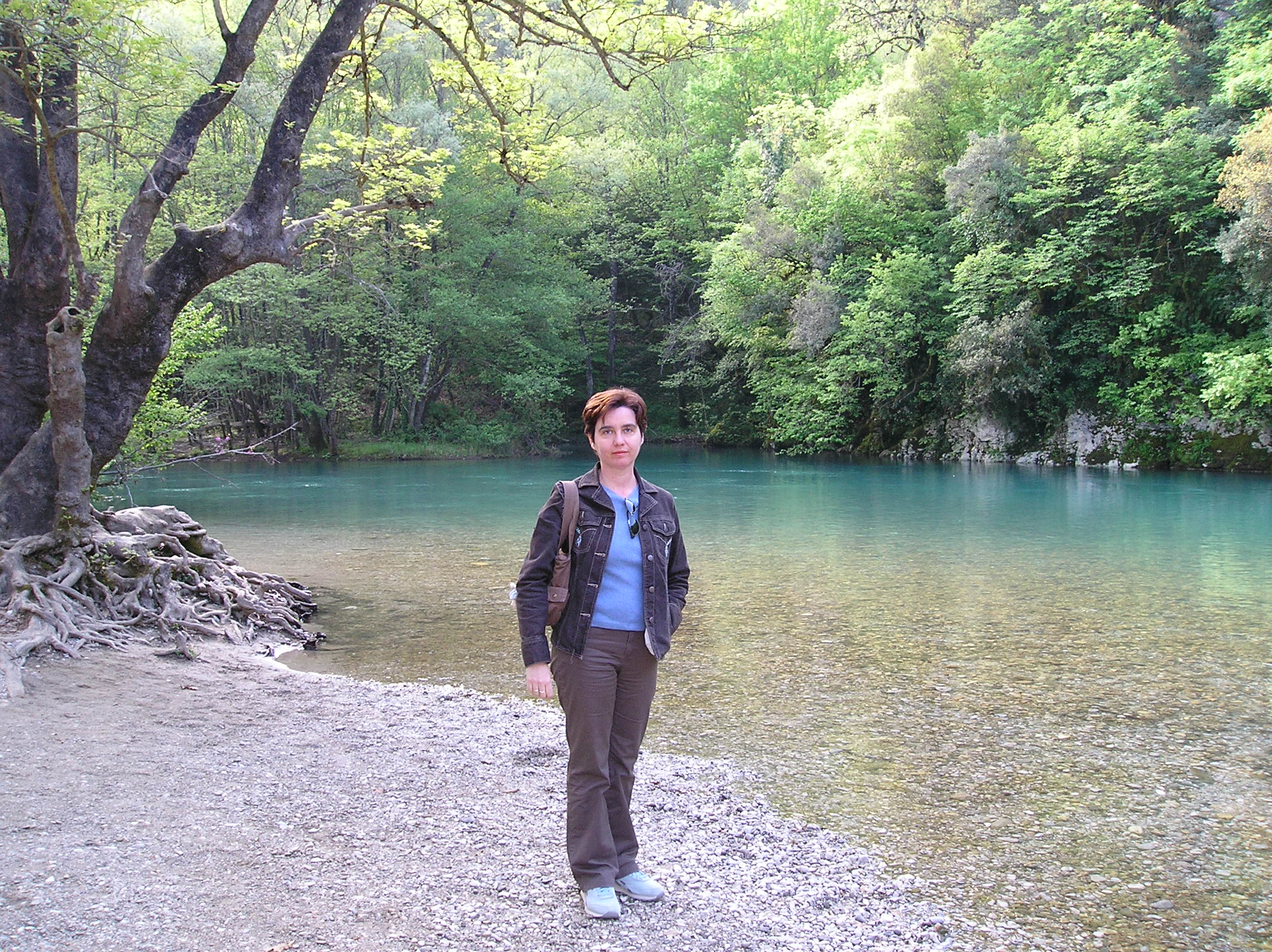
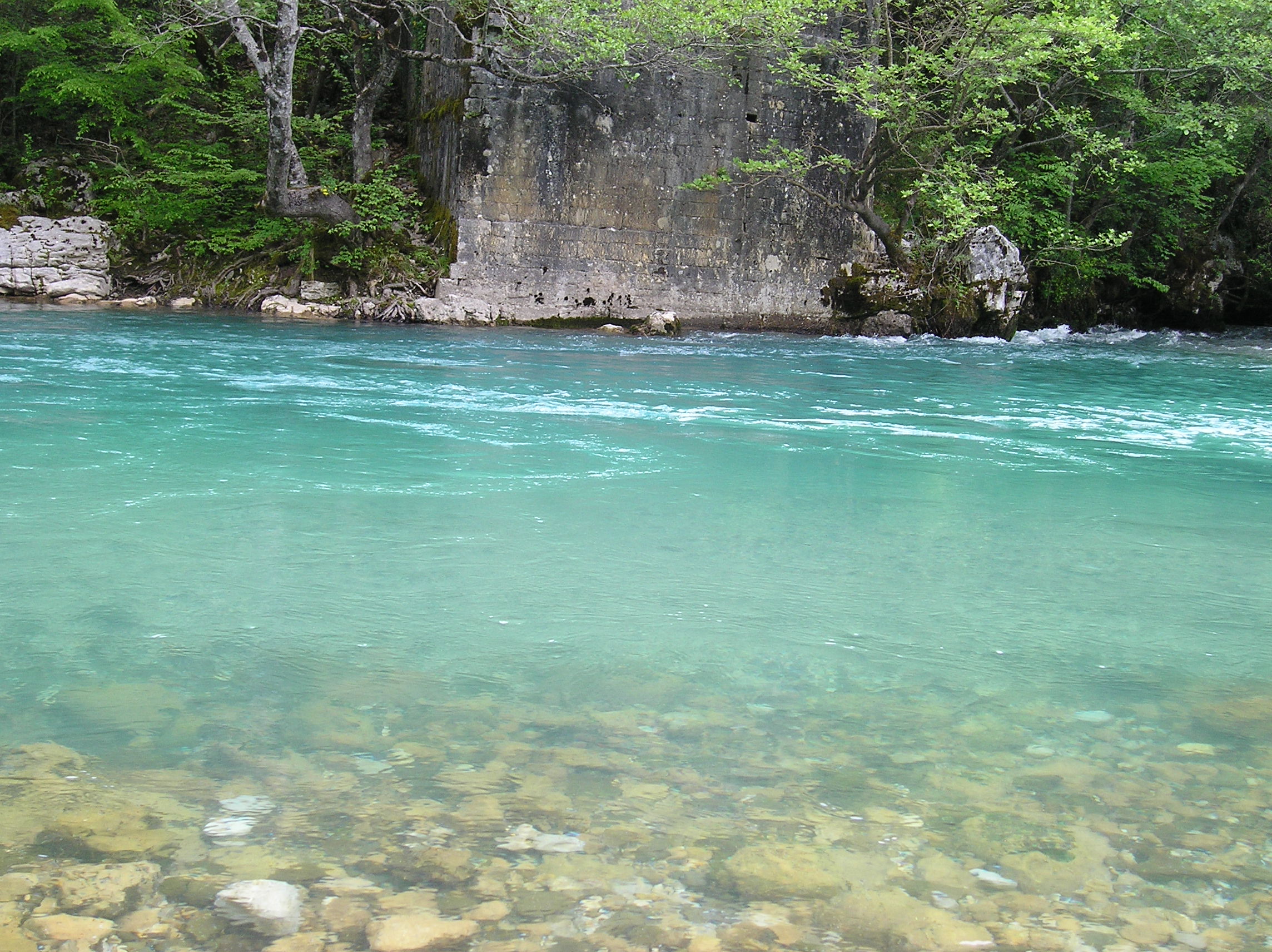
Today, the area of Zagori is a popular holiday destination throughout the year. Hikers often return to this area to explore the mountains or to walk along the paths of the famous Vikos gorge. As well as offering a serene setting for a walk or a picnic, the river Voidomatis (named oddly ‘ox eye’) also provides the enjoyment of rafting expeditions. Visitors can often come across the unexpected opportunity to even swim while hiking across the countryside.

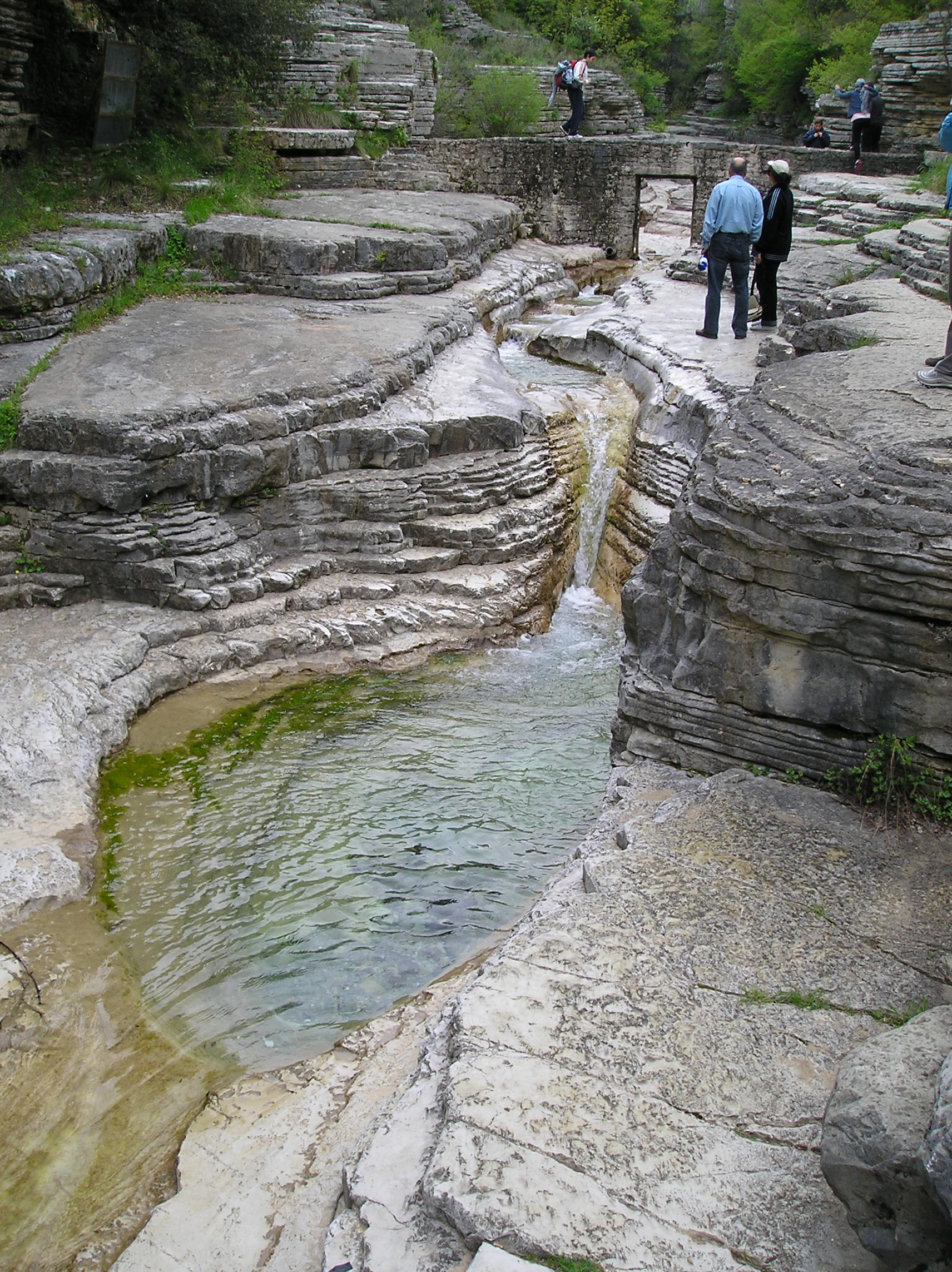
For example, the natural bathtubs of Ovires (or Kolybithres) that are situated between Papigo and Mikro Papigo are popular among local youths who love to cool off here on a hot summer’s day. And that is not all. Just walking around the villages is a unique delight in itself. The remarkably preserved buildings and paths are a joy to photograph and to pose by. And when you sample the local meats and pies at the local tavernas, you will be more than satisfied. There is a series of local organic meats, cheeses and wines on offer here as well as the famous Zagori herbs, syrup sweets, jam and honey.

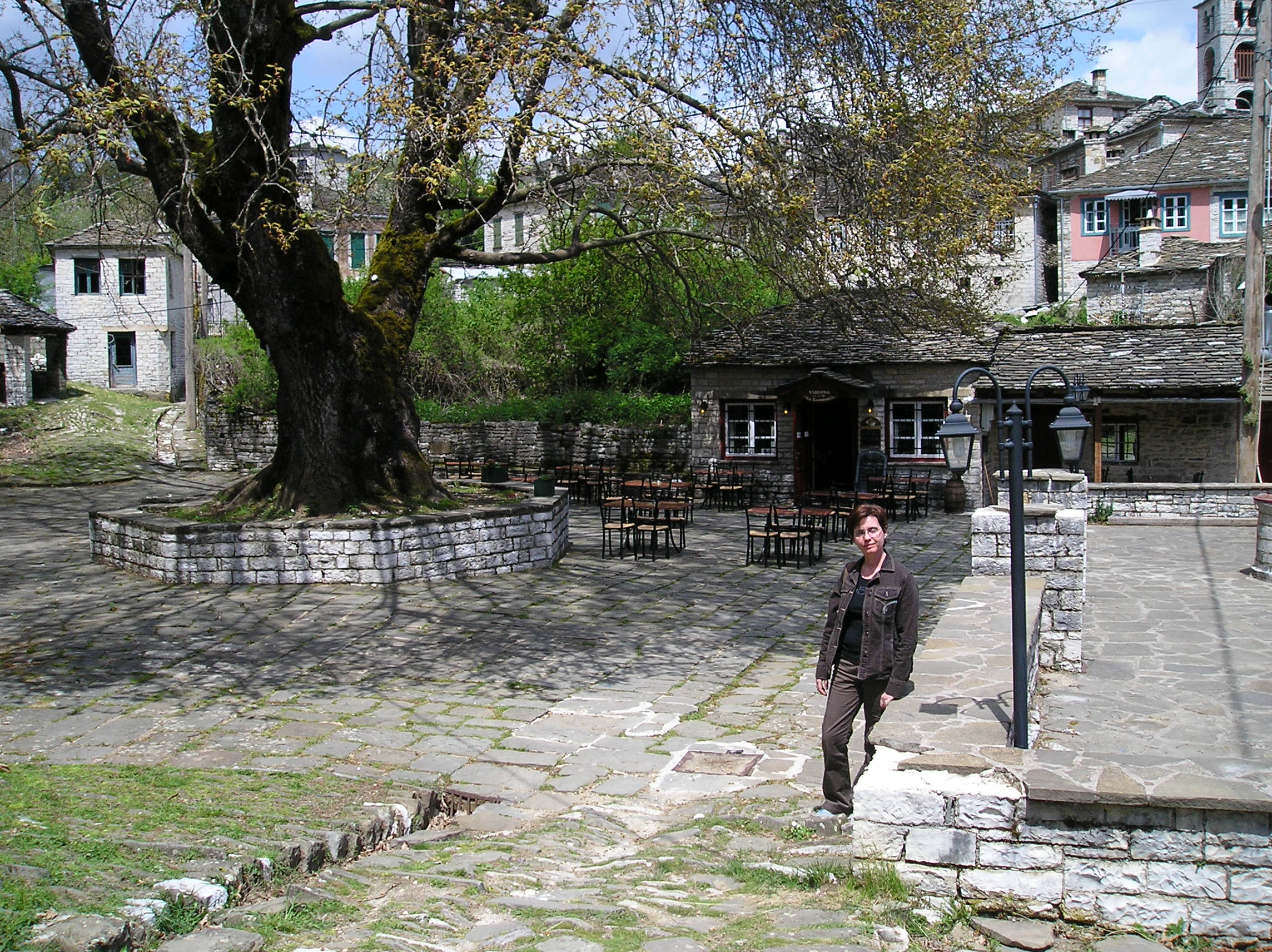
Although my husband Andy and I visited quite a few Zagori villages, only two stand out significantly among the rest. The first one is Dilofo. I count myself lucky to have been tipped off by a friend to seek out that specific village because it is not mentioned in the guidebooks and it’s hardly ever highlighted on the internet. Once we got there, we realized immediately that we were in for a rare treat. From the municipal car park, we took an alluring cobbled path and wound up in a spacious square where we sat to eat at a taverna under a huge plane tree.

There, quite unexpectedly, we sampled more than the fantastic local cuisine. We sampled a taste of the past too, a world where time stands still for you. It is a place where you suddenly forget that you own a mobile or a camera. Suddenly you find yourself whispering while you chat, as if afraid of breaking the spell of the moment. It feels somewhat foreign to step back in time and at the same time, tremendously familiar, as if you become privy to the life of the people who lived here a long time before you were even born. In an eerie kind of way, it felt like the echoes from the hoofs of the horses were only now dying down, like the area’s renowned builders had only recently laid the tiles on the village house roofs. Dilofo is such a pleasure to discover and to me it is, by far, Zagori’s hidden gem. It is a place that is bound to enthuse and mystify the visitor no matter how many times they’ve been there before.


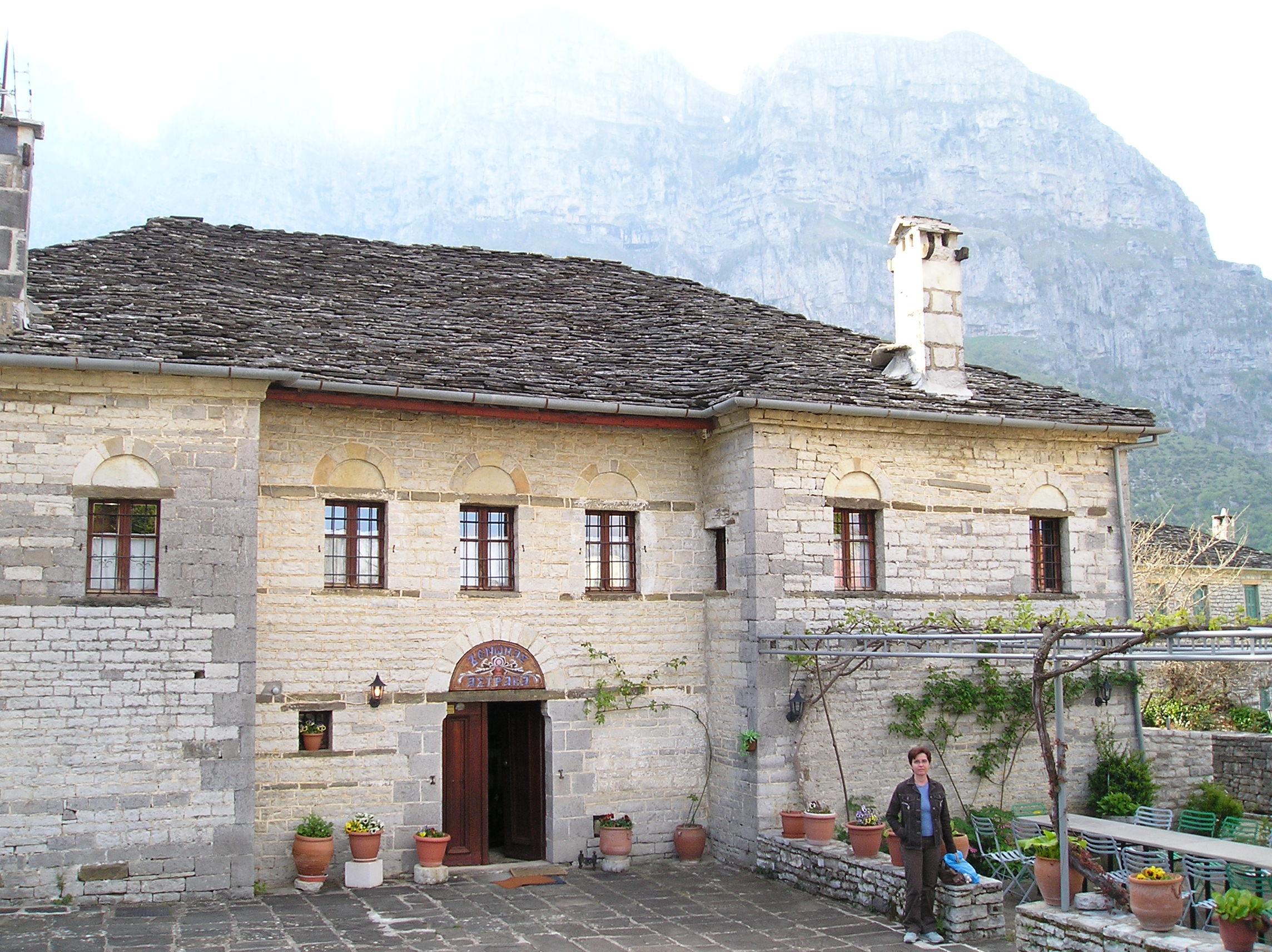
Papigo, on the other hand, is quite well known and also highly popular among tourists. We chose this enchanting village for two overnight stays in a traditional inn called “Astraka”, named after one of the mountains that tower above it. Papigo stands on the top of a mountain itself, at the end of a treacherous road that snakes endlessly uphill in a way that makes someone wonder how the locals travel during the cold, icy months of winter. Papigo is tiny but the beauty of it is indescribable. Anywhere you look, you feel the unstoppable urge to press the camera button. One of the hiking paths that starts here, ends high up in the mountains where hikers can visit the lake Drakolimni (dragon lake) near the summit of mountain Gamila (camel).


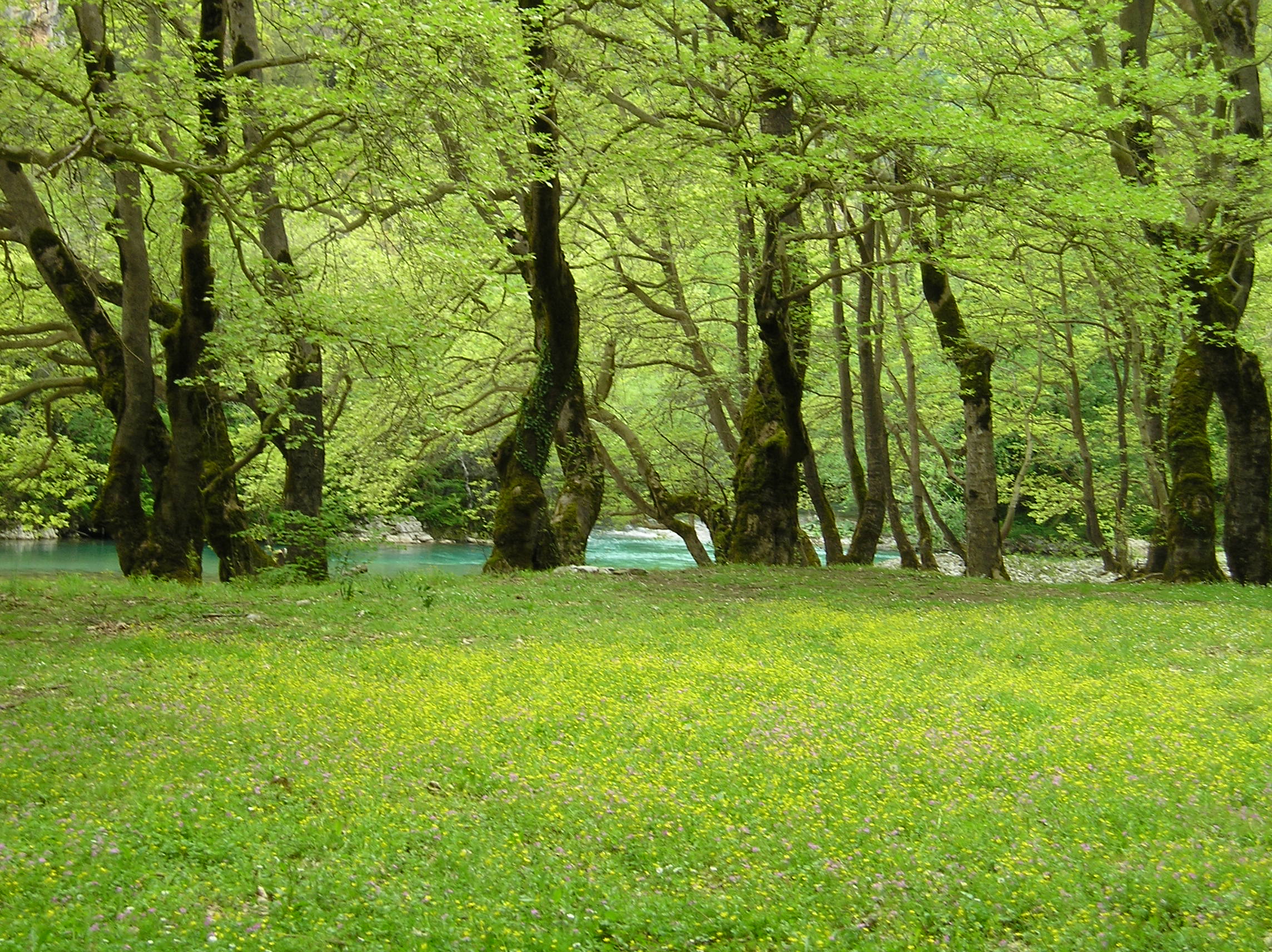
Papigo is situated within easy reach from the river Voidomatis, the village of Aristi, the village of Vikos with its breathtaking view to the gorge, as well as the Monastery of Panagia Spileotissa where the short walk through the forest along the river bank will remain forever indelible in my mind…

The first thing that the visitor is likely to notice about the people of Zagori is that they are uniquely lovely and hospitable. I will mention here the kindly owner at the inn who upon handing us the key to our lovely room, spent a good minute speaking highly of the local water supply, suggesting it makes washing oneself a whole new experience. I took her boasting with a pinch of salt I must admit but I wound up really impressed very soon after all when after a hot shower, I found out that I suddenly had the silkiest hair and skin ever.


People around the restaurants and in the streets all over Zagori were equally eager to direct us and to talk but among them all, one particular local stands out in my memory simply because he was a special delight to talk to. He was an elderly man, an inhabitant of the village of Aristi. When we visited there, taking in the generous views of the snowcapped mountains in the distance, he approached us and offered a kindly greeting. He was very friendly and chatty and he introduced himself as a retired teacher. He took it upon himself to inform us about the sites and the area and he was particularly boastful of Voidomatis river, saying that its water is pure and that the locals still drink it without any qualms.

Then he stretched out his hand and pointed to the hills towering over Aristi, saying that back at the War, the locals took the hill in a battle against the enemy, thus stopping them from taking the village. Having realized at once that he meant WWII and eager to learn more, I then questioned him: “Which enemy is that?” To my surprise, he remained silent and fixed me with a curious stare that lasted a while, finally responding quite oddly: “What education do you have?” I was quite taken aback as you realize! “I am a university graduate,” I replied politely and matter-of-factly. “I am surprised then,” he said, “You should know we were fighting the Germans in the War!” to which I laughed and explained that I had only meant to ask him to clarify if he was referring to the Germans or their allies, the Italians.

I knew only too well that the Greeks were also fighting off the Italians around Epirus at the time, and we were in the heart of Epirus, after all. This seemed to make sense to him and he finally relaxed and continued to talk about the old days. I thought it was hilarious, that he should think me that ignorant, and for the whole day, Andy and I would pose the question to each other: “What education do you have?” – only to burst into the most uncontrollable giggles afterwards.

Dilofo

In all, our three-day excursion around Zagori in the spring has been a sheer delight for all the senses and one of the most unforgettable travels I have ever had. It goes without saying that we only saw a fracture of what’s out there to see and that a return there is as desirable as it is inevitable in the years to come.

I’ve shared more photos from each area I visited in Zagori on my Facebook profile, and you’re welcome to check them out here:

Kipi-Kalogeriko Bridge-Kapetan Arkouda Bridge: https://www.facebook.com/efrosini.moschoudi/posts/10225320577262189

Monodentri-Agia Paraskevi Monastery-Oxia-Kokkori Bridge: https://www.facebook.com/efrosini.moschoudi/posts/10225384334376077

Dilofo: https://www.facebook.com/efrosini.moschoudi/posts/10225414582852270

Aristi village & Aristi bridge: https://www.facebook.com/efrosini.moschoudi/posts/10225449406722845

Papigo-Kolymbithres-Mikro Papigo: https://www.facebook.com/efrosini.moschoudi/posts/10225473470204417

View to Vikos gorge from Vikos village-Monastery Panagia Spileotissa: https://www.facebook.com/efrosini.moschoudi/posts/10225513760691654


How to get to Zagori:

CENTRAL ZAGORI: From Ioannina, take the road to Konitsa. At 19 km, after the metal bridge, turn off right for central Zagori. Here you can visit Monodentri and the Monastery of Agia Paraskevi, Oxia, Dilofo, Kipi, the single arch bridge of Kokkori and the three-arch bridge of Plakida (Kalogeriko). In central Zagori, you can enjoy a view to the Vikos gorge both from Monodentri and Oxia.

WEST ZAGORI: From Ioannina, take the road to Konitsa. At 38 km, turn off after Kalpaki and head to Aristi. From there, you can also visit Vikos, the Monastery of Panagia Spileotissa, the Aristi bridge, Papigo, Kolybithres, Mikro Papigo. Vikos offers the most breathtaking view of the Vikos gorge and it is unmissable.  


Some Kilometric distances:

IOANNINA-DILOFO : 32 KM

IOANNINA-KHPOI : 35KM

DILOFO-PAPIGO: 28KM

DILOFO KONITSA : 36KM

IOANNINA-PAPIGO 55 KM (takes approx. 1 hr and 15 mins)

ATHENS-PAPIGO 495 KM  

GET YOUR FREE COPY OF THE BOOK HERE


YOU KNOW WHAT THEY SAY… SHARING IS CARING! Tweet this to spread some love:

Zagori, Epirus. A journey through time... #Greektravel #beautiful #Greece Share on X


3 FREE books for you! Sign up below to receive them instantly!

NEW! Clean Christmas romance. Single mother Cathy Roussos gave up on love long ago, and veterinarian Alex Rallis doesn’t believe in it, but one magical Christmas on a Santorini farm might just change everything…
Check it out on Amazon     Read a FREE sample!


A clean romantic suspense short read with an unreliable narrator that’ll keep you guessing! Vera is losing her mind over famous actor Yannnis Ksenos, except, she isn’t just a fan… Now, she plucks up the courage to ring his doorbell… Visit Amazon
 

For my delicious Greek recipes, go here
 
Planning to visit Greece? Check out my  FREE guide to south Corfu!

A marathon race in Nafplio inspired my Greek novel, Running Haunted


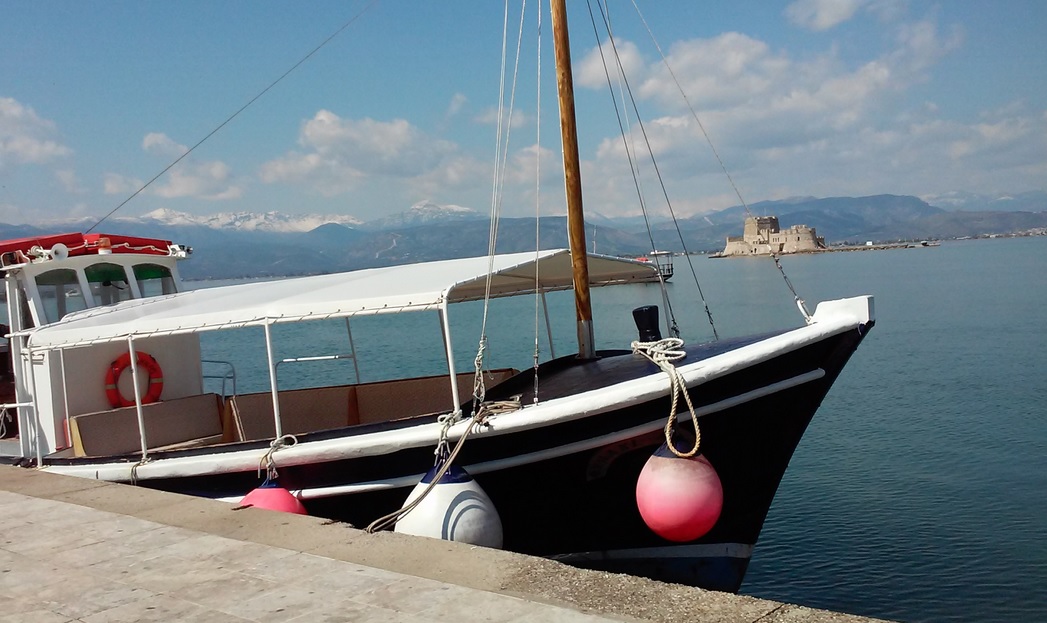
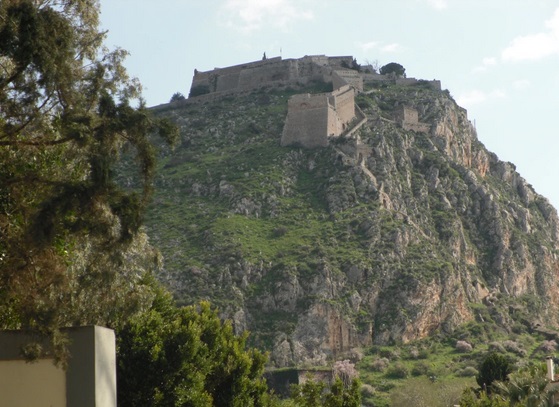
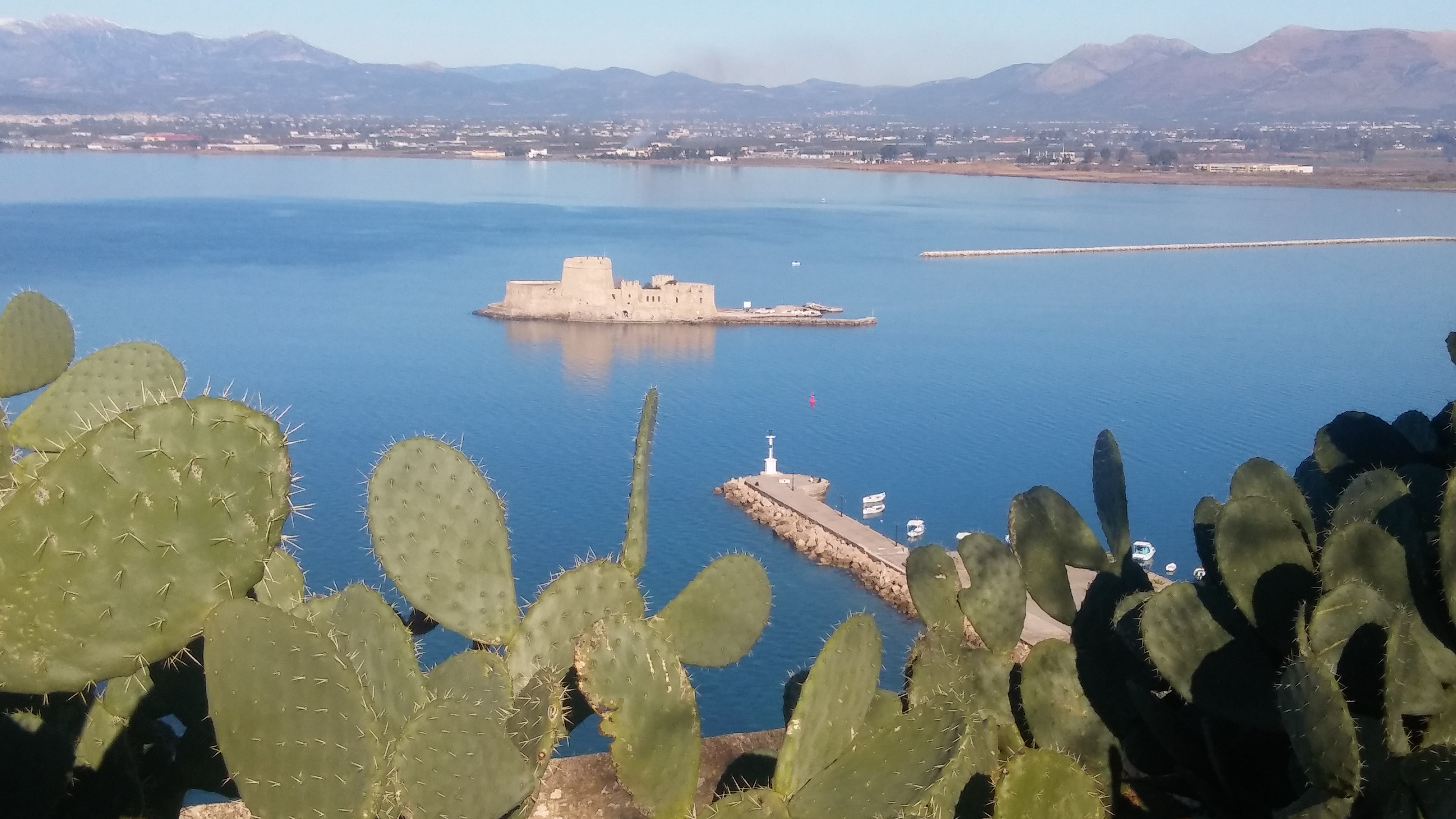
Nafplio was the first capital of Greece after the country’s War of Independence in the 1820s against Turkish rule. As a result, it is a town steeped in history, an element that is present in every corner of the old town center, with its grand neoclassical buildings and the magnificent Venetian fortress, Palamidi, that dominates the town’s skyline with its unparalleled charm. Not to forget, of course, the picturesque waterfront. The tiny fortress of Bourtzi, set in the water like a jewel and a silent sentinel, is an idyllic landmark that visitors love to marvel at from the multitude of cafes and restaurants lining the port.

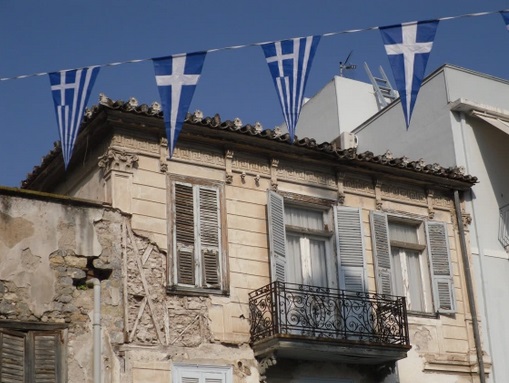
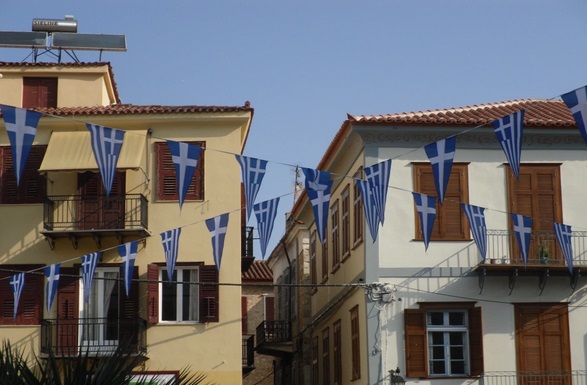
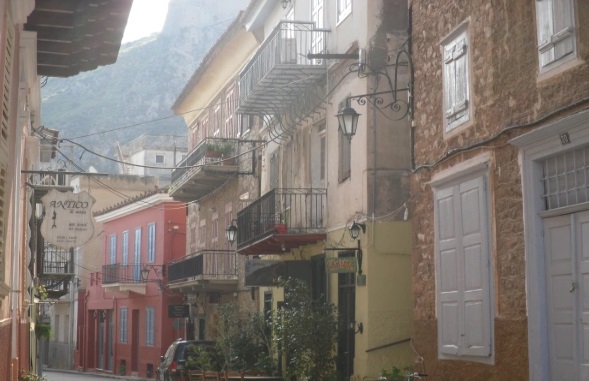
Thought I’d share today some photos from a special weekend break in this magnificent town, which took place a few years back. It was the weekend of the annual Nafplio Marathon race, plus it was in March, very close to Independence Day (March 25). The Greek flags decorating the picturesque lanes of Nafplio added to their inherent charm a touch of national pride.

During our weekend break, my husband and I made sure to walk around the town a lot, to take in the incredible energy of it all, and to fill our minds with the serenity of the setting.

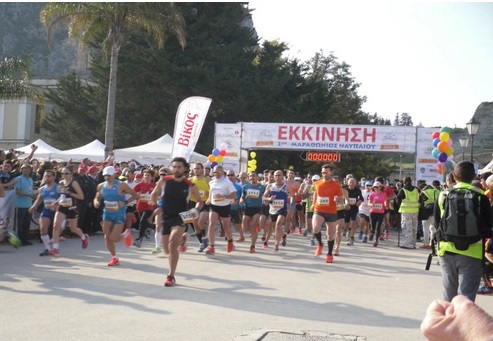
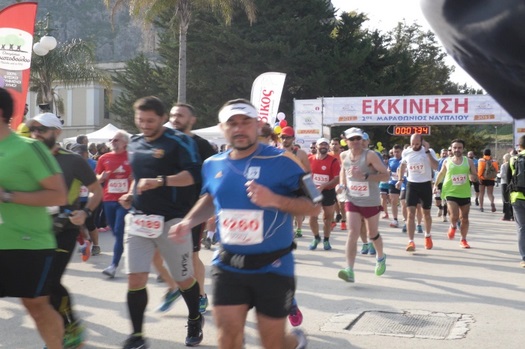
Saturday was a quiet day, but Sunday was a celebration! The town came alive with big crowds that stood expectant and music blaring from massive speakers. The annual Marathon race of Nafplio, a highly successful event, took place that morning, sending both runners and cyclists on a series of races around town and its outskirts to be cheered by excited spectators.

As opposed to the Athens marathon that’s regarded one of the most difficult to participate in (because its last stretch is a continuous climb uphill), the Nafplio marathon proved to be much easier for my husband, who ran the race, seeing that the ground was flat throughout.

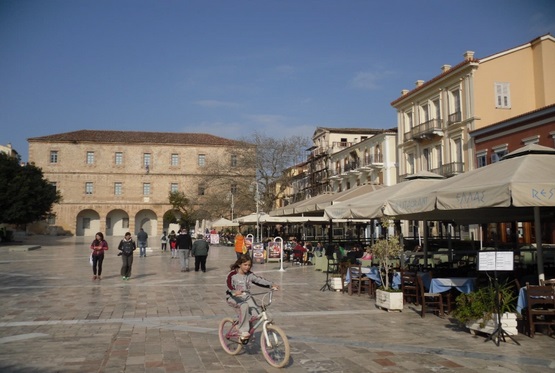
Strolling around Nafplio is a unique experience. Magnificent squares, such as Syntagma (Constitution) and Trion Navarchon (Three Admirals), picturesque lanes, cafes and tavernas, curio shops and smart boutiques attract the eye in every corner. Surely, a photographer’s paradise.

For the enthusiasts of history, there is a lot to see and explore. Other than the Archeological museum and the Mosque (that housed the first parliament of Greece after the War of Independence), there are three historical forts around town.

Palamidi is, by far, the most magnificent, set atop a high peak that overlooks Nafplio. On a lower peak beside it, stands the fort of Akronafplia, and last but not least, the tiny fort of Bourtzi is, hands down, the most enchanting, seeing that it’s built on a tiny island at a short distance from the seafront. On a peaceful, sunny day, it’s a mesmerizing sight, seemingly floating on the water like a peaceful, off-white bird.

To me, it is no surprise that my great love for Nafplio, coupled with the delightful experience of that Marathon weekend there, in time inspired to write a novel – my romantic comedy, Running Haunted. And, in it, I unfold the allure of Nafplio in all its glory.

The book tells the story of Kelly Mellios, a marathon runner, who visits Nafplio to run the race and winds up getting hired to run a house. With a ghost in it!

MORE INFO:

The stunning and athletic Kelly Mellios runs a marathon in the alluring Greek town of Nafplio and winds up getting hired as a housekeeper by Alex Sarakis, a charming hotelier. Alex lives with his three underage children and a quirky pug, but no one knows there’s an extra inhabitant in the house… It’s the ghost of Alex’s late wife that lingers on with a secret plan.

When Kelly finds out the house is haunted, she freaks out at first, but then finds herself itching to help the ghost settle its unfinished business. It is evident there’s room for improvement in this family… Plus, her growing attraction towards Alex is overpowering…

Will Kelly do the ghost’s bidding? How will it affect her? And just how strange is this pug?

VISIT AMAZON US  UK

Interested to visit the picture-perfect town of Nafplio? My FREE travel guide includes my best recommendations for your sightseeing, including recommended walks for the most panoramic vistas!


YOU KNOW WHAT THEY SAY… SHARING IS CARING! Tweet this to spread some love:

A #Greek rom com about a #Marathon race and... a ghost! #Greece Share on X


3 FREE books for you! Sign up below to receive them instantly!

NEW! Clean Christmas romance. Single mother Cathy Roussos gave up on love long ago, and veterinarian Alex Rallis doesn’t believe in it, but one magical Christmas on a Santorini farm might just change everything…
Check it out on Amazon     Read a FREE sample!


A clean romantic suspense short read with an unreliable narrator that’ll keep you guessing! Vera is losing her mind over famous actor Yannnis Ksenos, except, she isn’t just a fan… Now, she plucks up the courage to ring his doorbell… Visit Amazon
 

For my delicious Greek recipes, go here
 
Planning to visit Greece? Check out my  FREE guide to south Corfu!

A tour of the best churches of Rome


There are a thousand and one posts out there about the Eternal City… but I’m not here to tell you about The Fontana Di Trevi, the quaint lanes of Trastevere or the shopping experience in Via Veneto…

Instead, I’m here to share with you a different side of Rome: the beauty of its grandiose churches which I indulged on to the max a few years ago during a short holiday break for the New Year.

I do confess, though, that as I set off on my sightseeing tour my original intention had been somewhat different. Other than the indispensable city guide, I had also packed a paperback edition of Dan Brown’s “Angels and Demons”. I had already read the book from cover to cover and was eager to follow the trail of its main character, Robert Langdon.

Having sought every nook described in the book to find the clues, I can vouch that the author has his descriptions accurate down to a ‘t’ – or should I say, down to the last star, pyramid and obelisk! I was particularly thrilled to visit two specific churches as I “followed” Robert Langdon around.

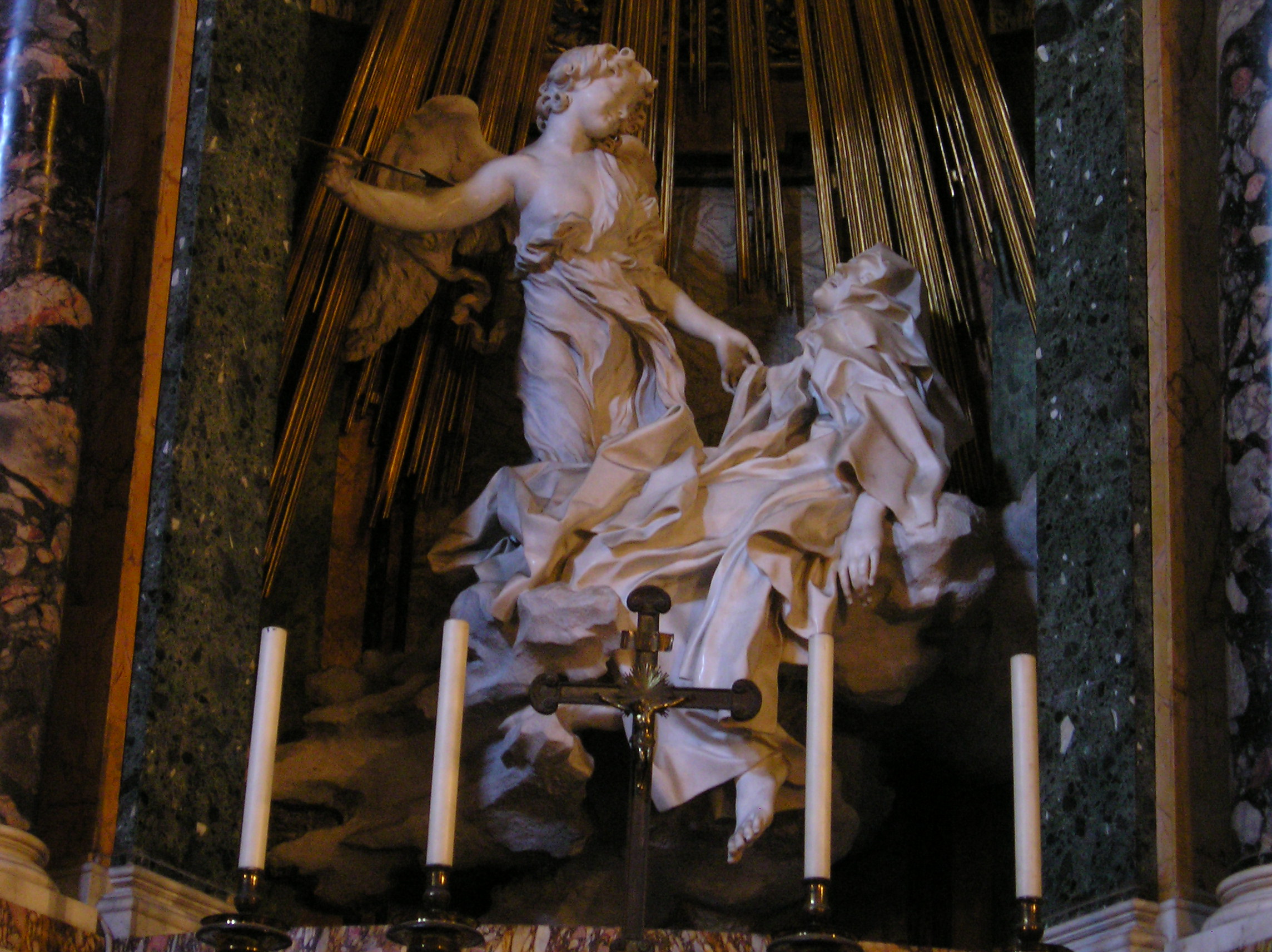
The first church is Santa Maria Della Vittoria, where the statue of “The Ecstasy of Santa Teresa” delivered with an uncanny accuracy all that my imagination had conjured up while reading the book.

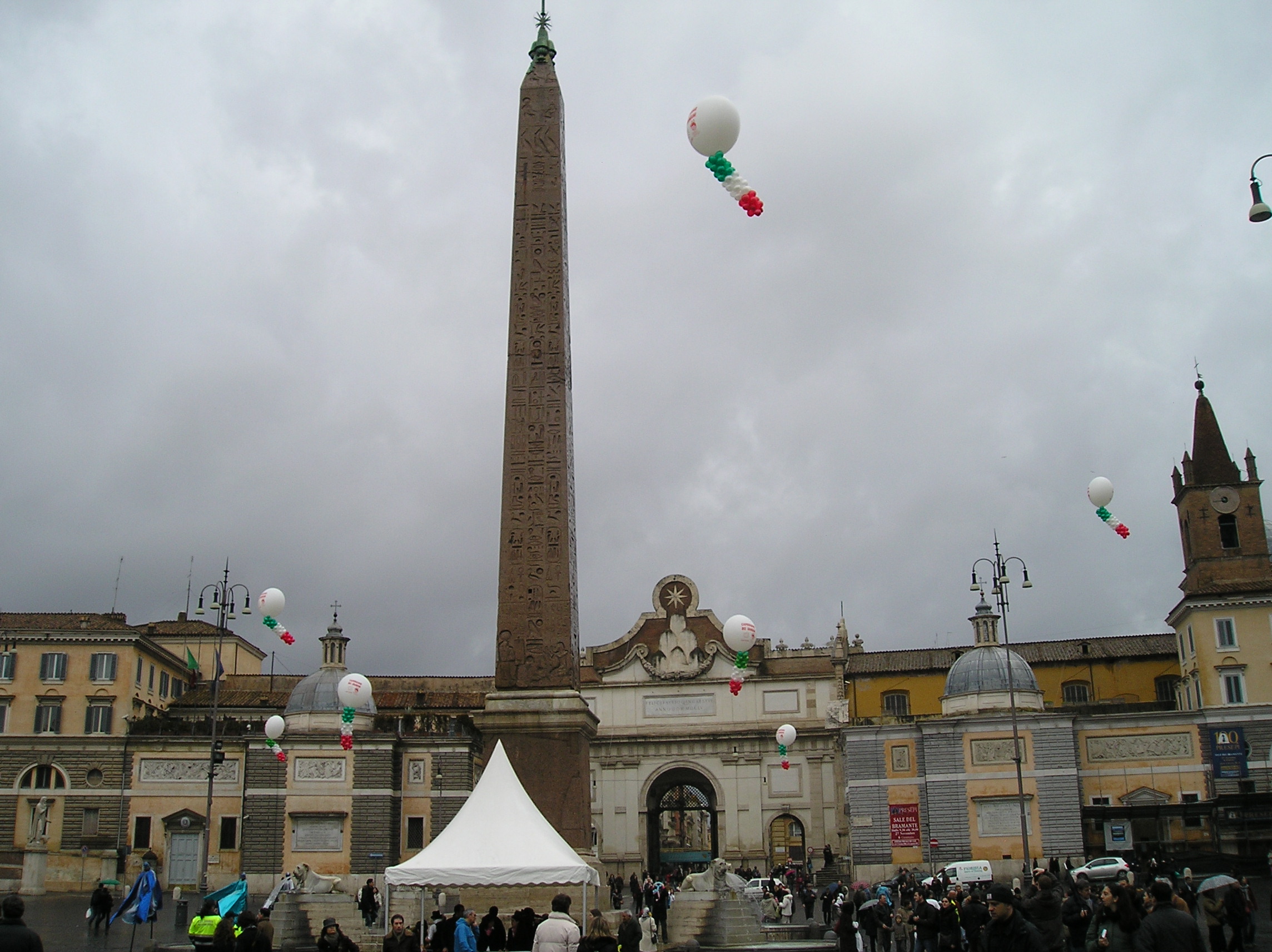
The other church was Santa Maria Del Popolo at the far end of Piazza Del Popolo where I located the Chigi Chapel and again, found the mystifying shapes on the coat of arms exactly as Mr. Brown had claimed them to be.

Looking for one of Robert Langdon’s clues in Piazza del Popolo… (and if you’re a fan of the books you can see it now, can’t you?)

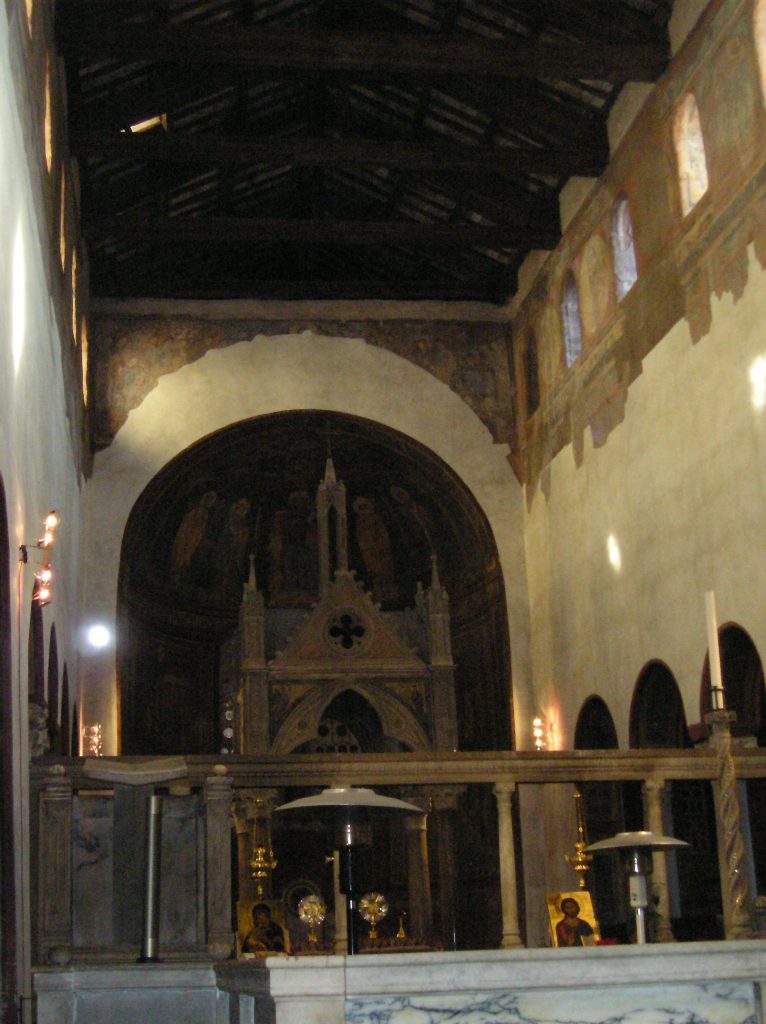
Visiting Rome’s churches proved to be an exhilarating process for me. I never knew what to expect after a while. Each one was unique in some way. In the end, I wound up entering every single one I came across as I quickly grew addicted to the awe-inspiring atmosphere they delivered effortlessly each time, without fail.

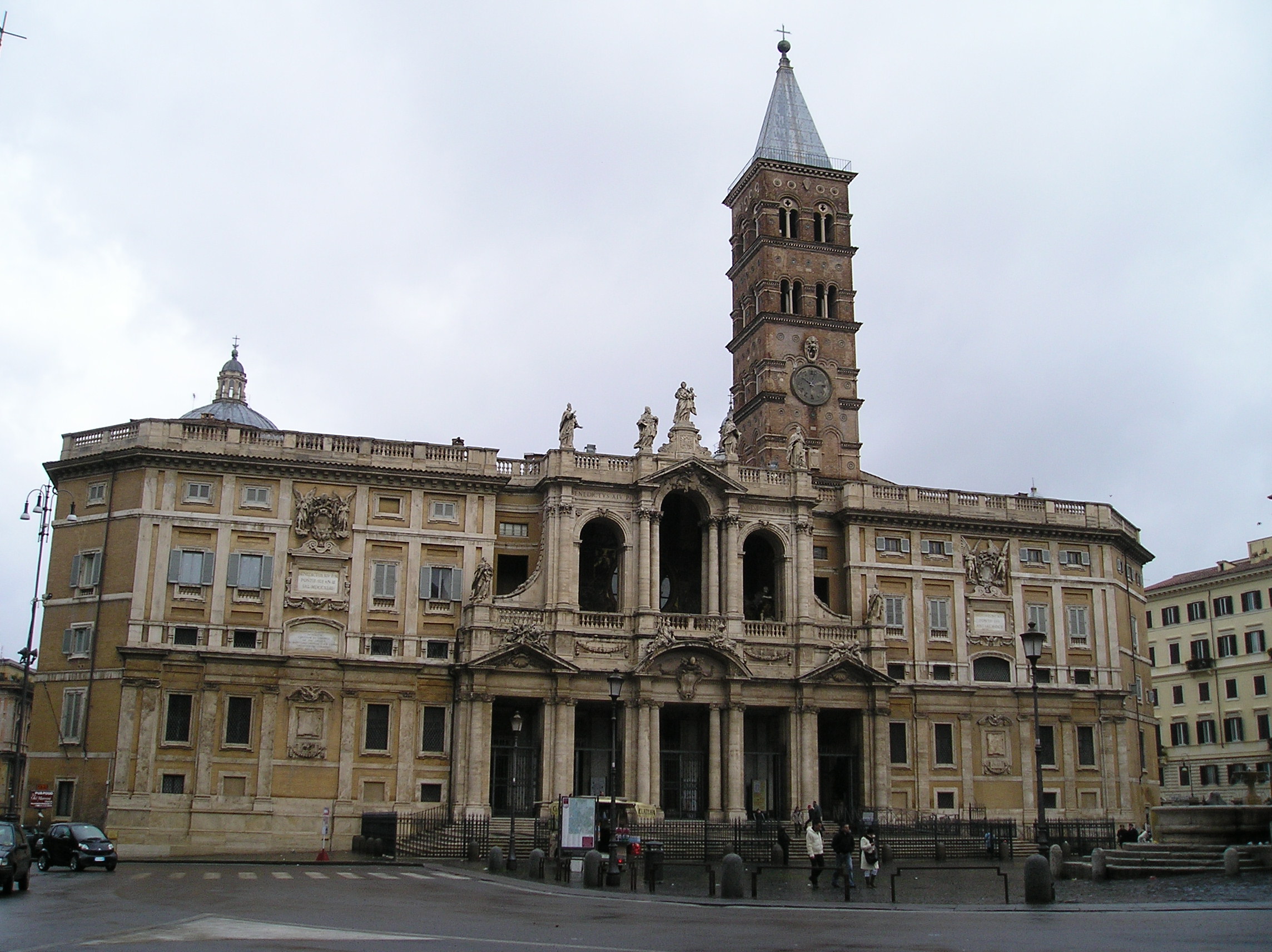
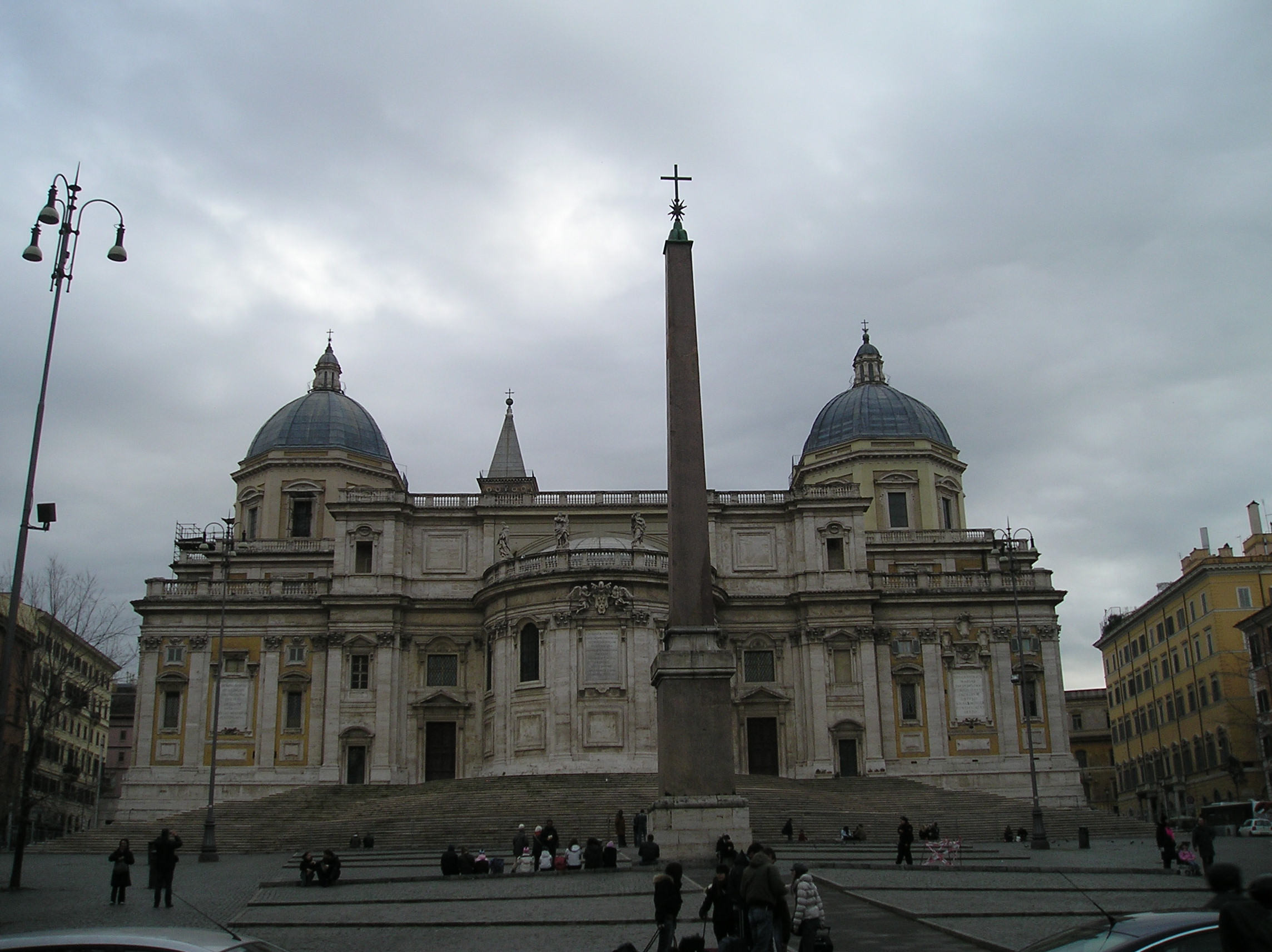
Santa Maria Maggiore
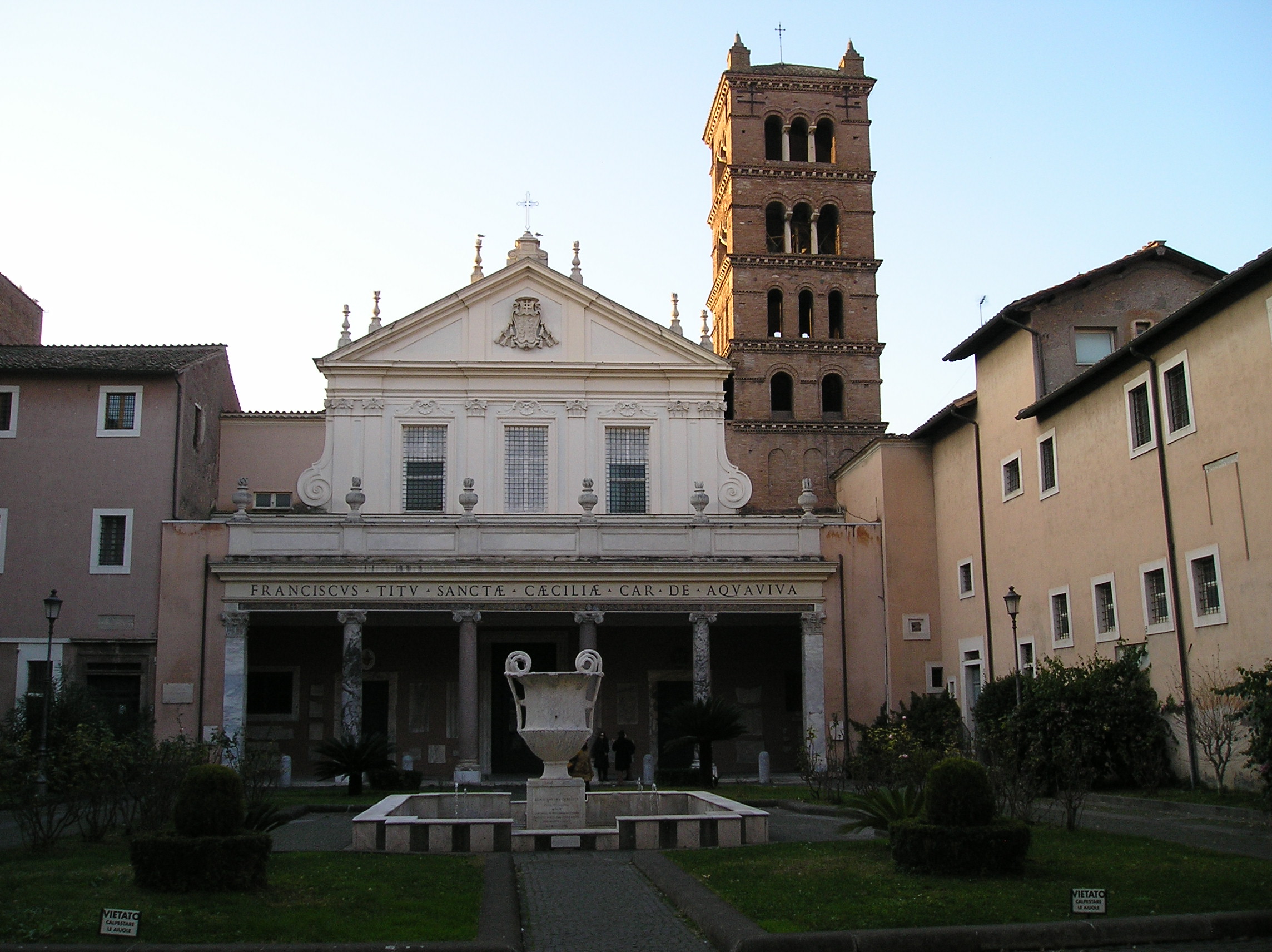
Santa Secilia
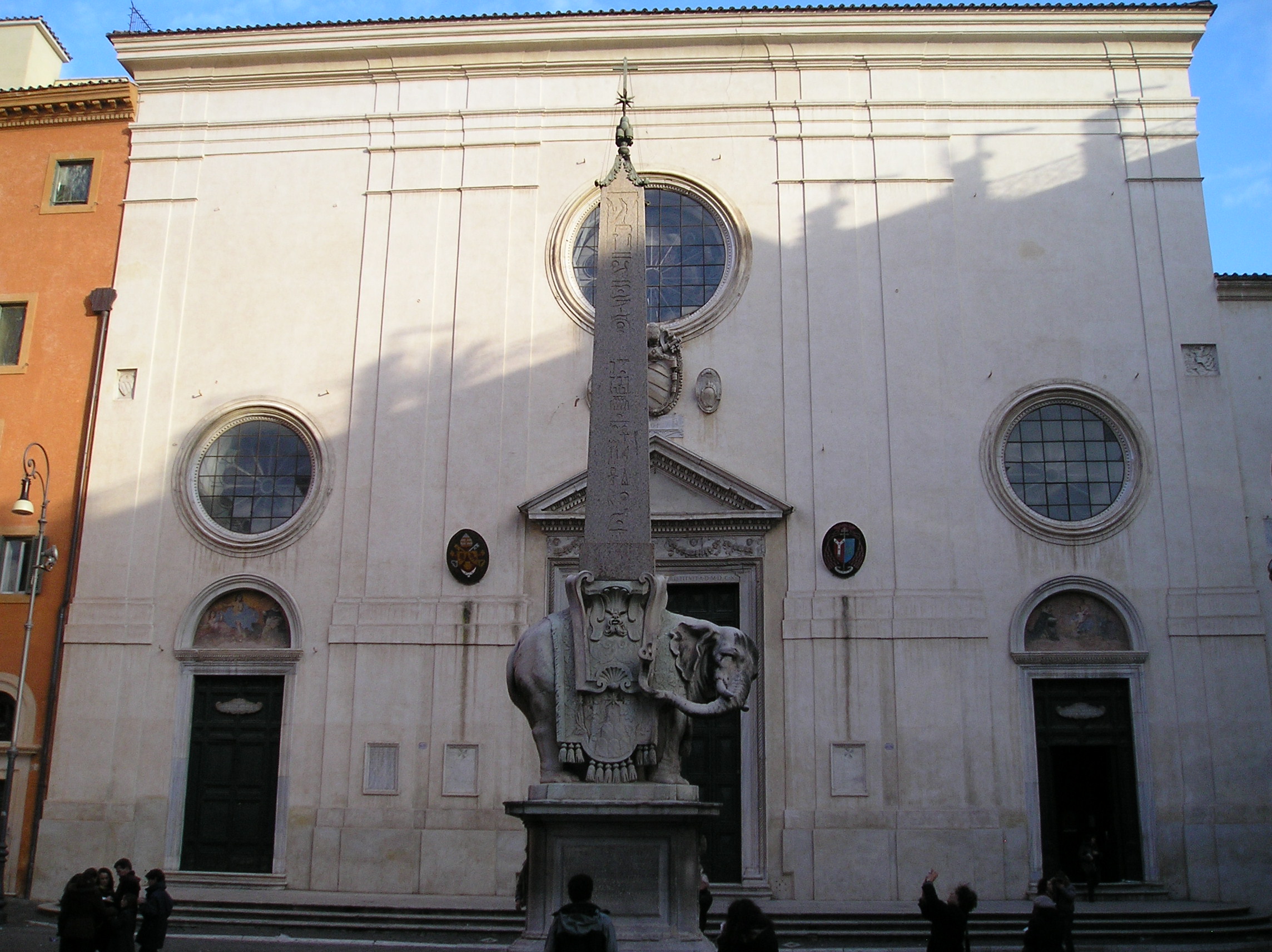
Santa Maria Sopra Minerva

I fell in love with their beautiful facades, for one. Some of them had fabulous statues standing before them, and I particularly loved the delightful elephant outside Santa Maria Sopra Minerva. Still, beyond the beauty of the exterior of any given church, it was what awaited me inside that truly made my jaw fall slack.

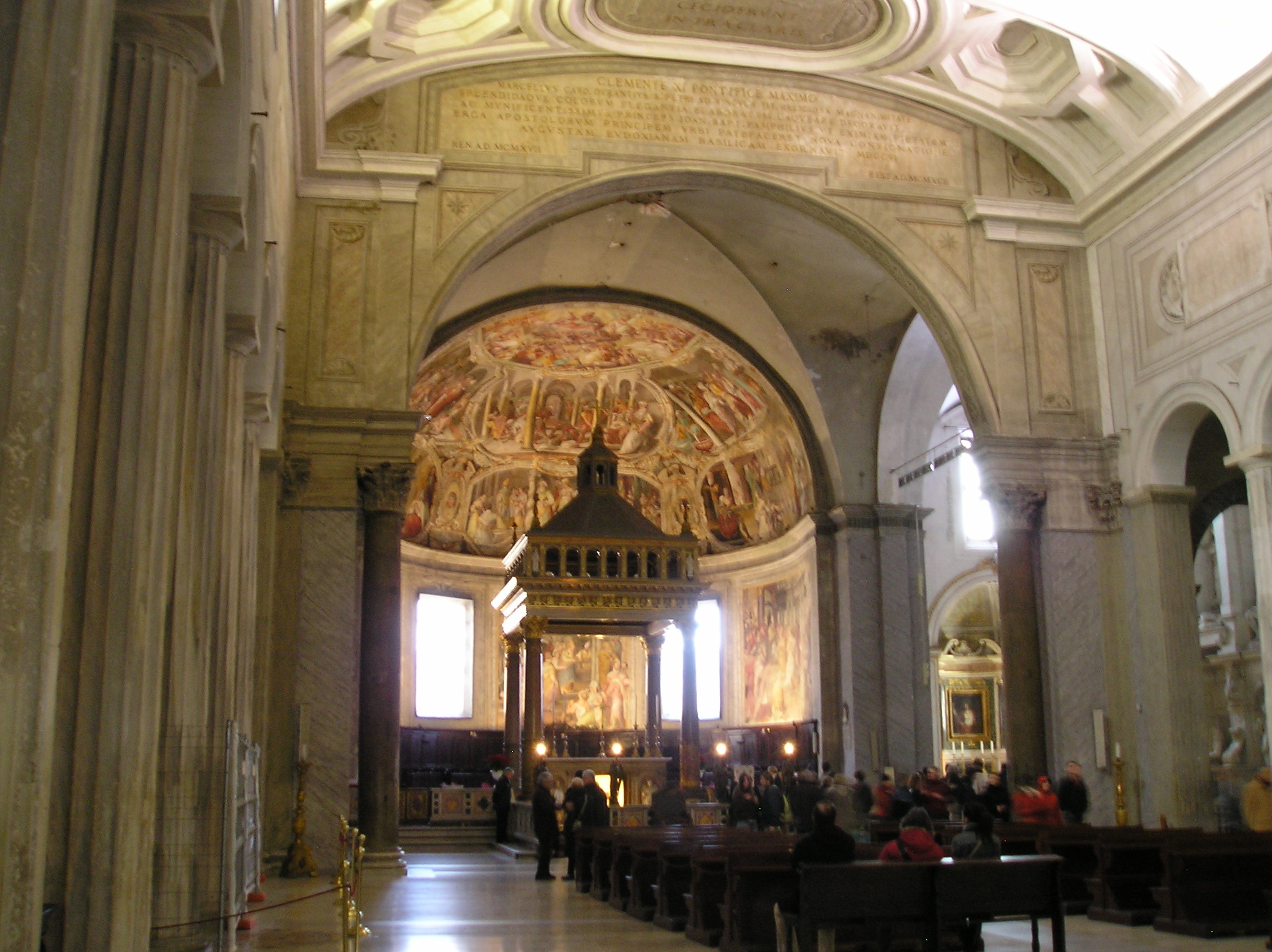
Everywhere I looked, I found beauty and reverence. As the world around me expanded in vast, imposing spaces, I started to feel increasingly humble and small, but the experience, far from intimidating, proved surprisingly empowering.

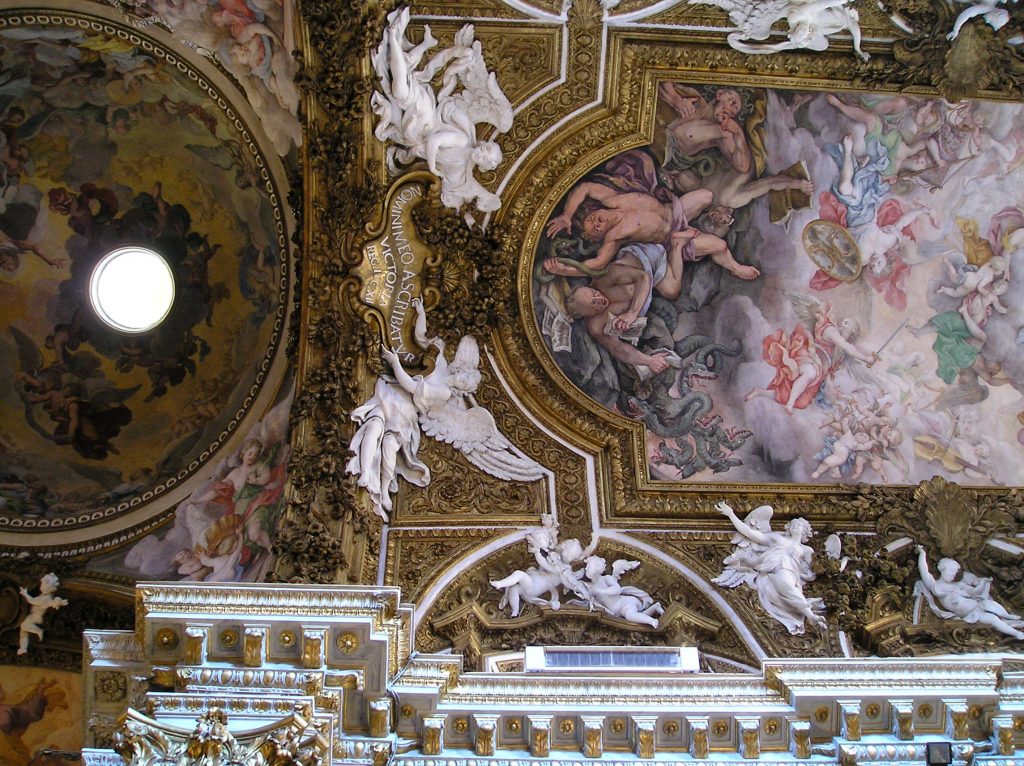
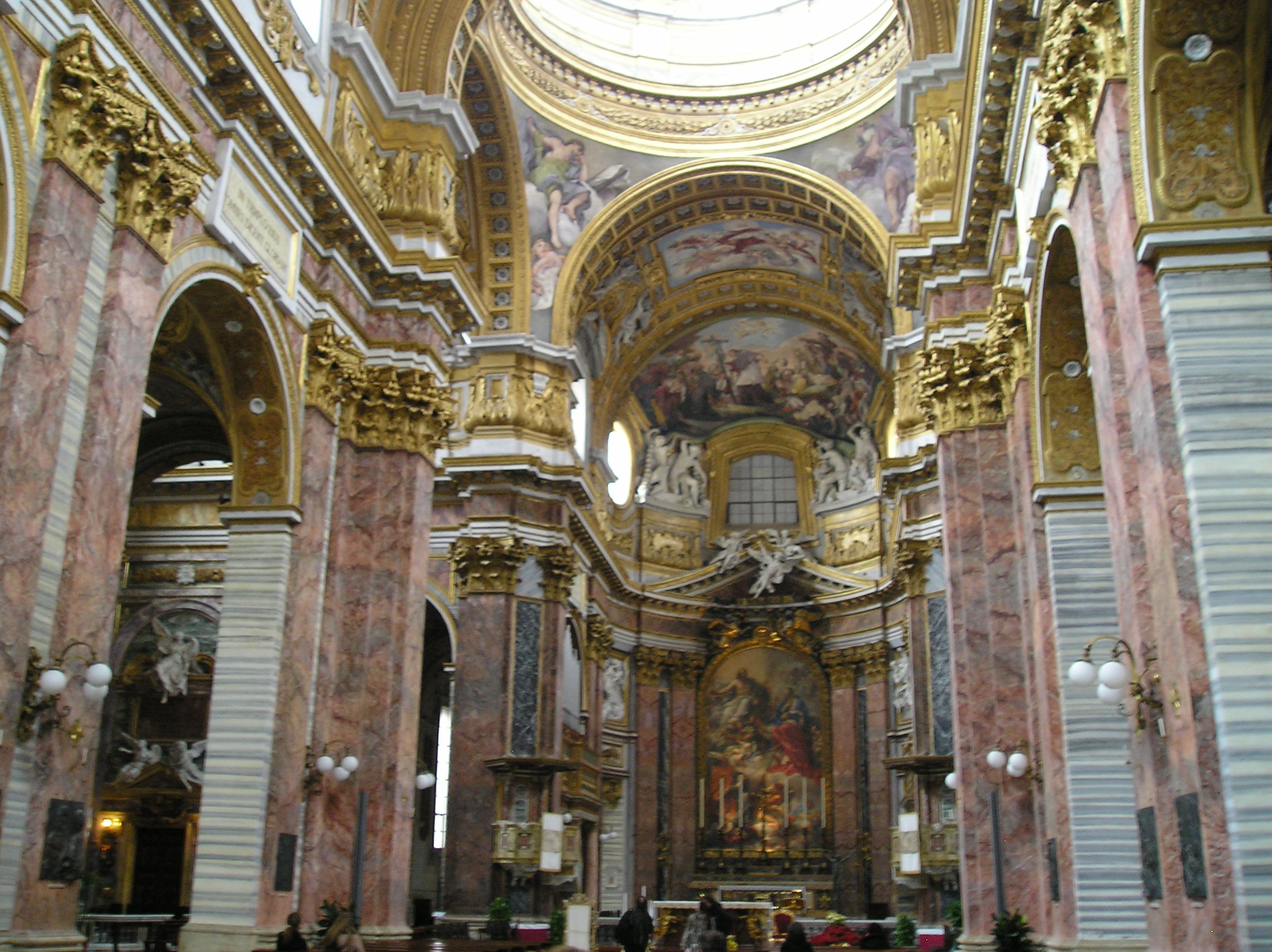
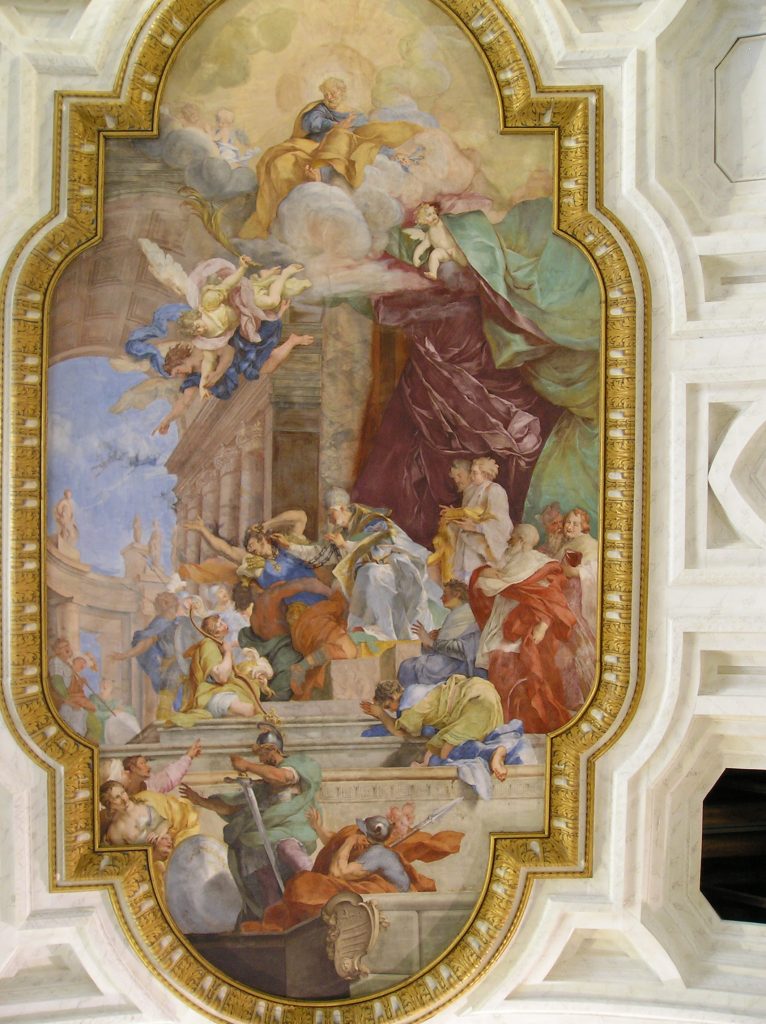
One of many magnificent Baroque ceilings that I’ve had the pleasure to see in Rome

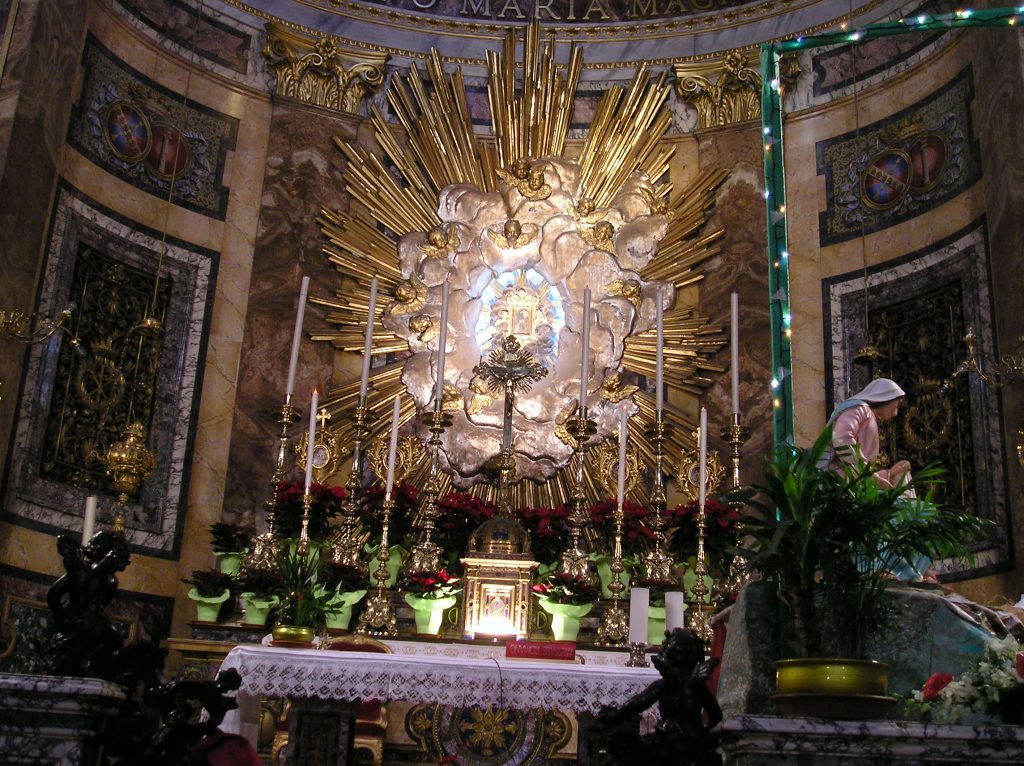
Lifelike statues of saints and angels, high Baroque ceilings and gigantic columns rising from the floor induce a feeling of communion with the heavens. The candle-lit shrines of serene humility offer moments of peace and an opportunity for a quiet prayer. At the main church halls, the gold-decked walls, luxurious marbles and breathtaking frescos convey a sense of grandeur. As you sit on a pew to rest for a few moments, you can’t help but think that the natural light that comes through the multitude of tall windows, might as well be the warm, blessing hand of the Divine.

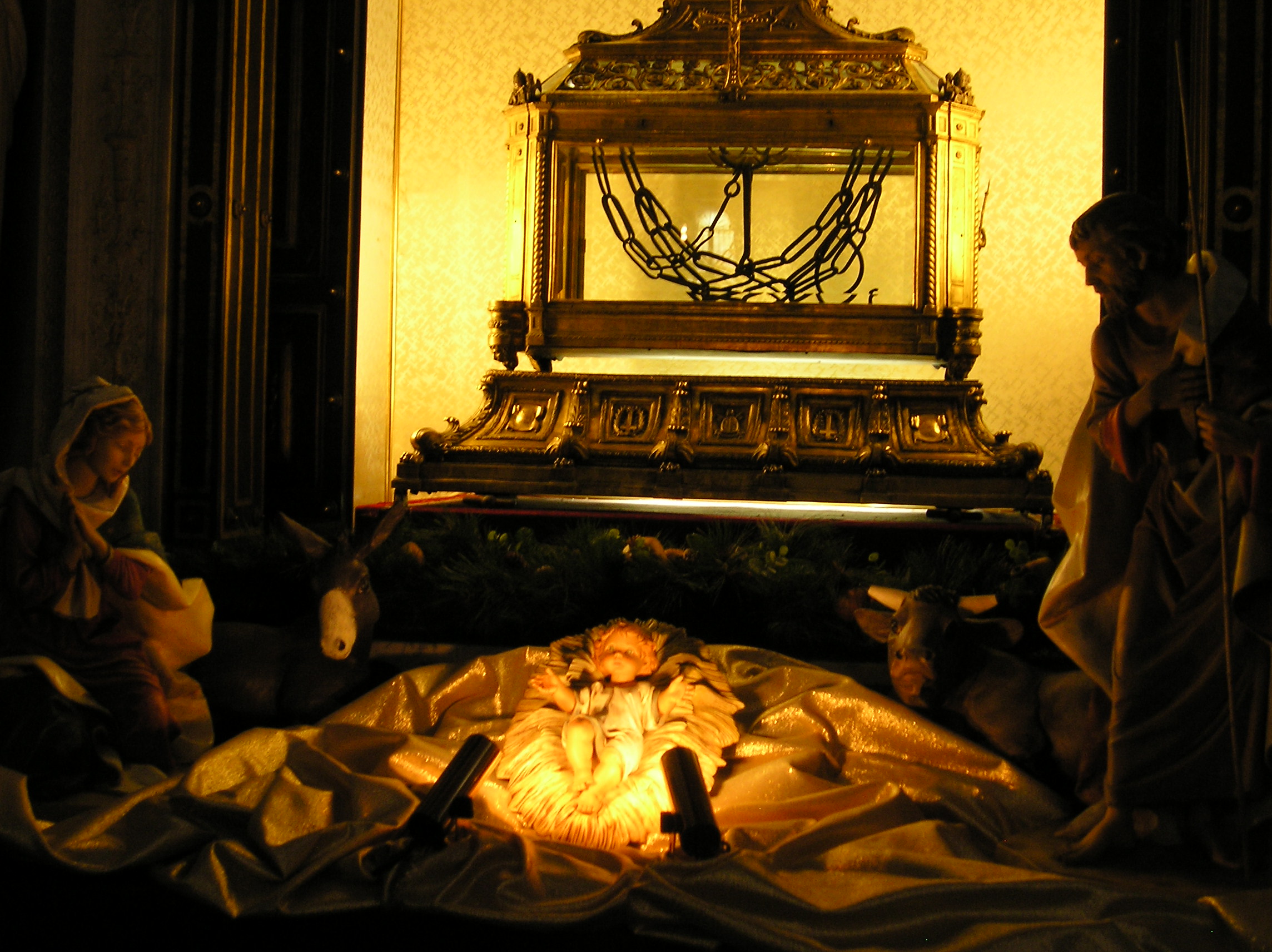
The famous chains of St Peter in San Pietro in Vincoli (St Peter in Chains)

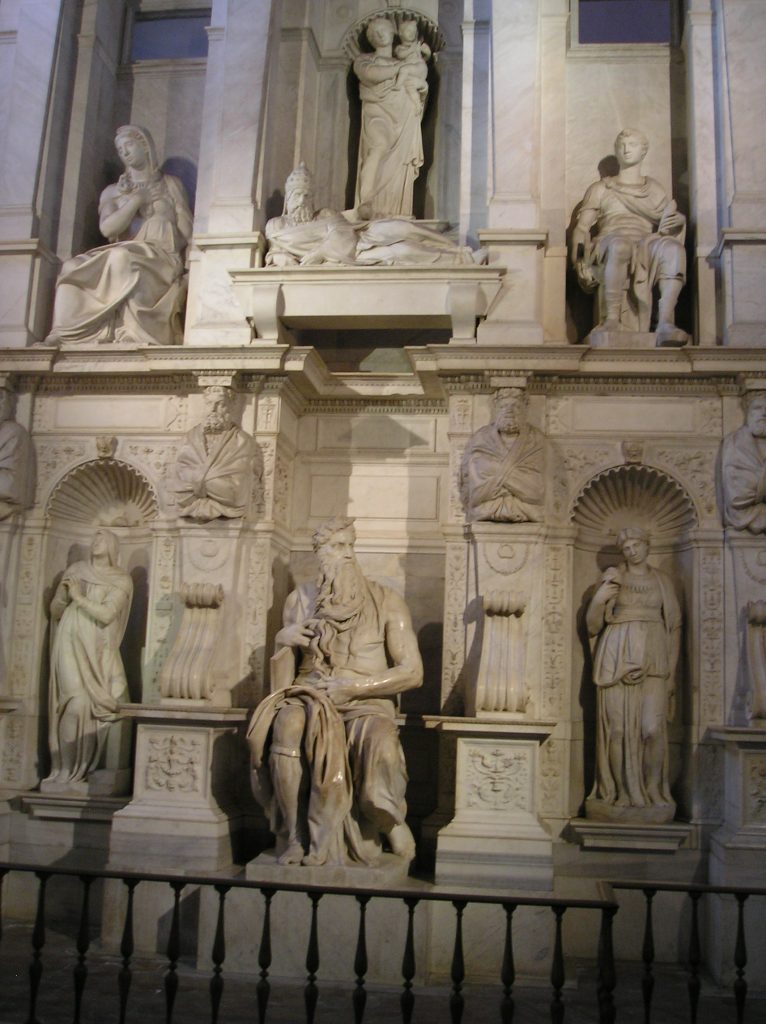
Some of the churches are a must for the holy relics that they house, such as San Pietro in Vincoli where the original chains that once bound Saint Peter remain on display.

The knowledgeable tourists among the hoards of visitors to this church will not leave until they have duly witnessed the chipped surface on the marble on Moses’s knee where, according to legend, Michelangelo accidentally dropped his chisel while working on this statue.

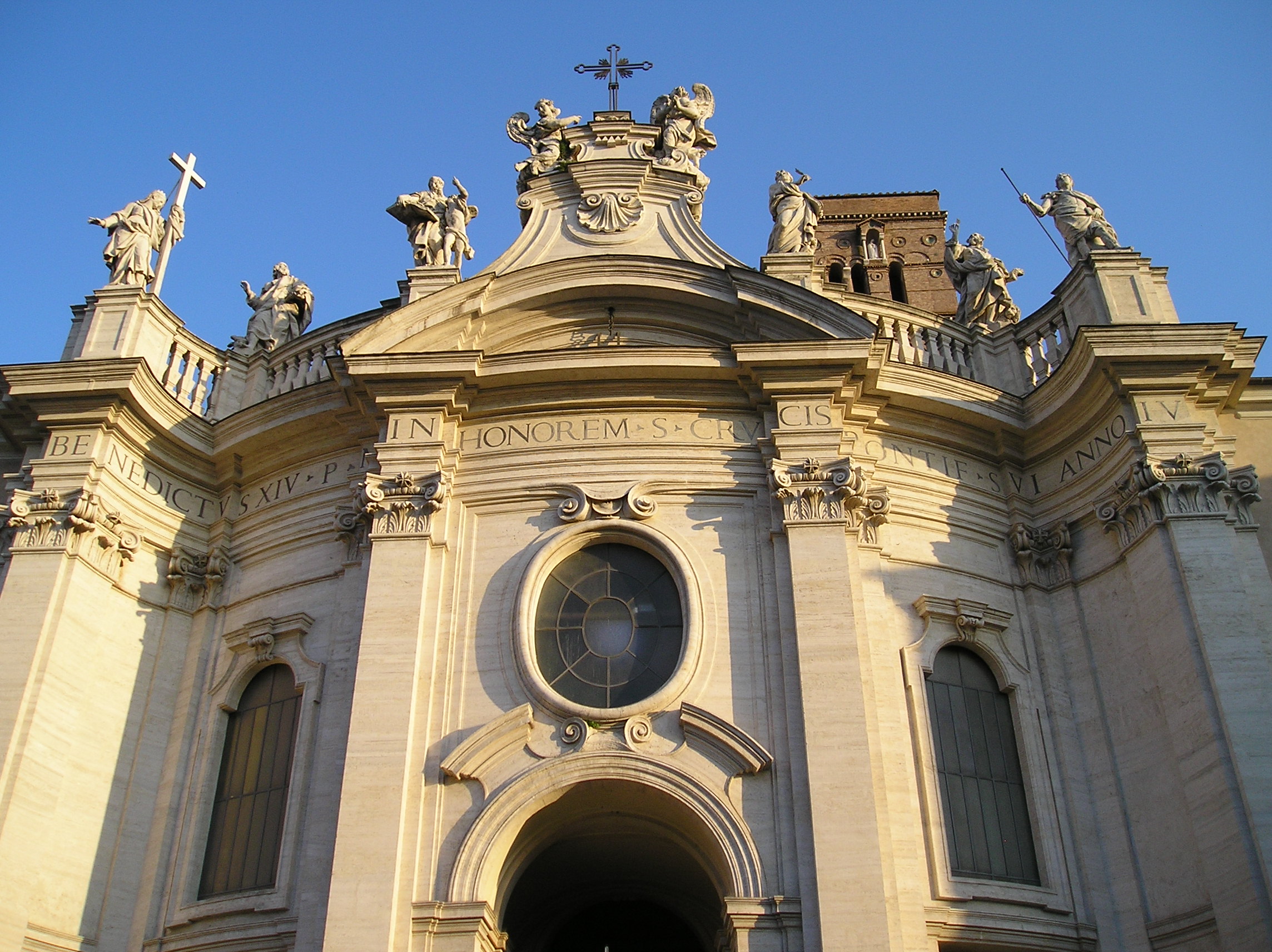
Santa Croce in Gerusaleme (St Cross in Jerusalem) is another must for its holy relics

Another famous church for its holy relics is Santa Croce in Jerusaleme (Saint Cross in Jerusalem) which was built to house the fragments from Jesus’s cross that Saint Helen had brought back from the Holy Land. Today, visitors will marvel there at the said pieces as well as the tiny thorns from Jesus’s thorn crown, one nail from His Cross and a finger that belonged to Saint Thomas.

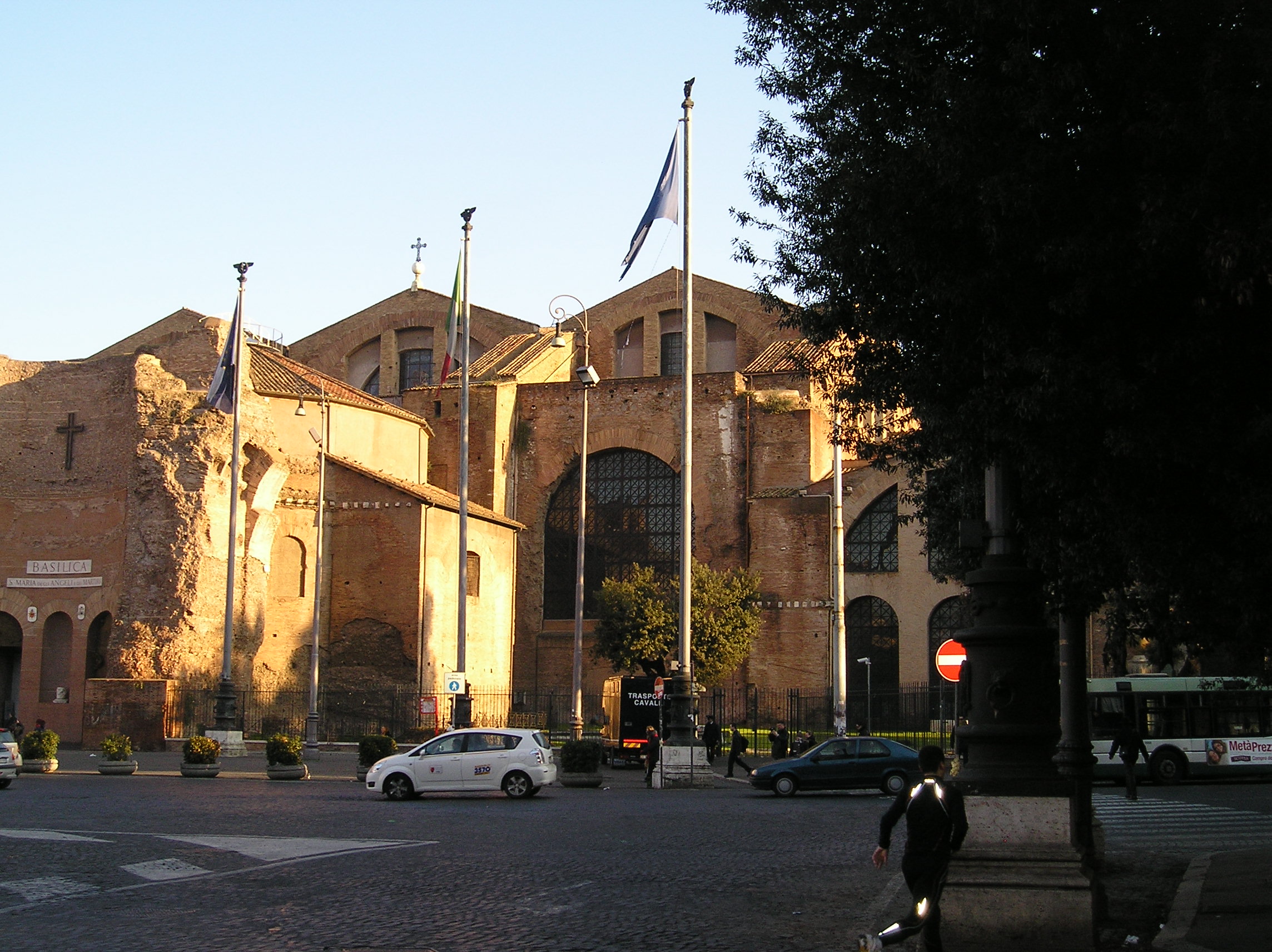
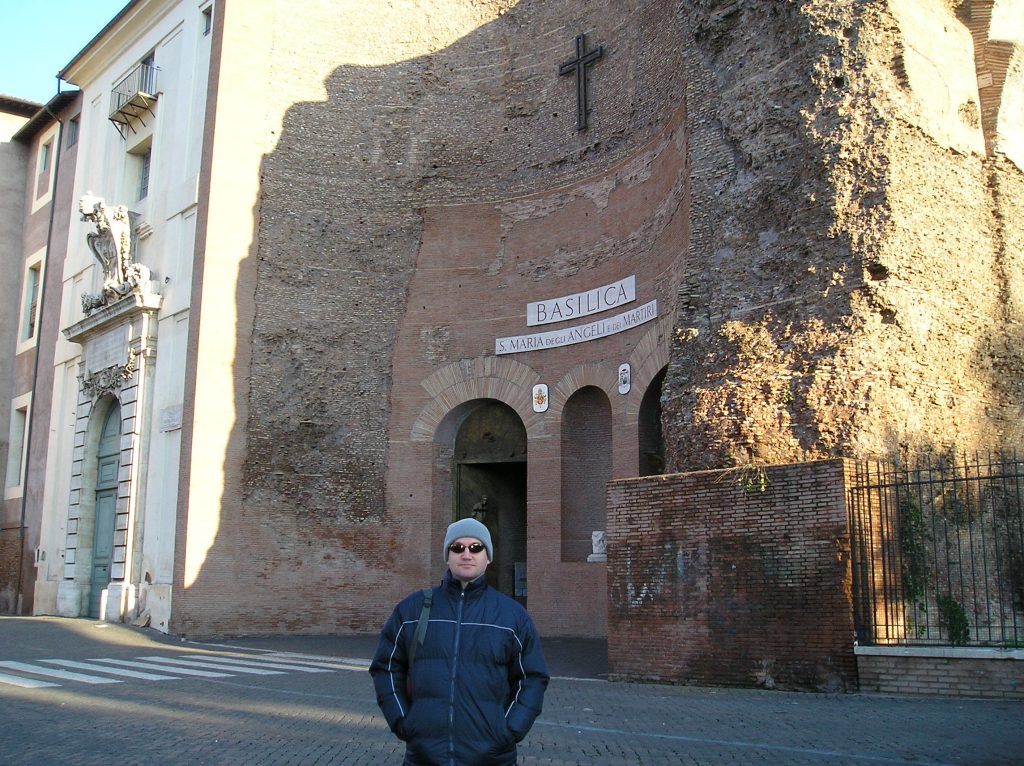
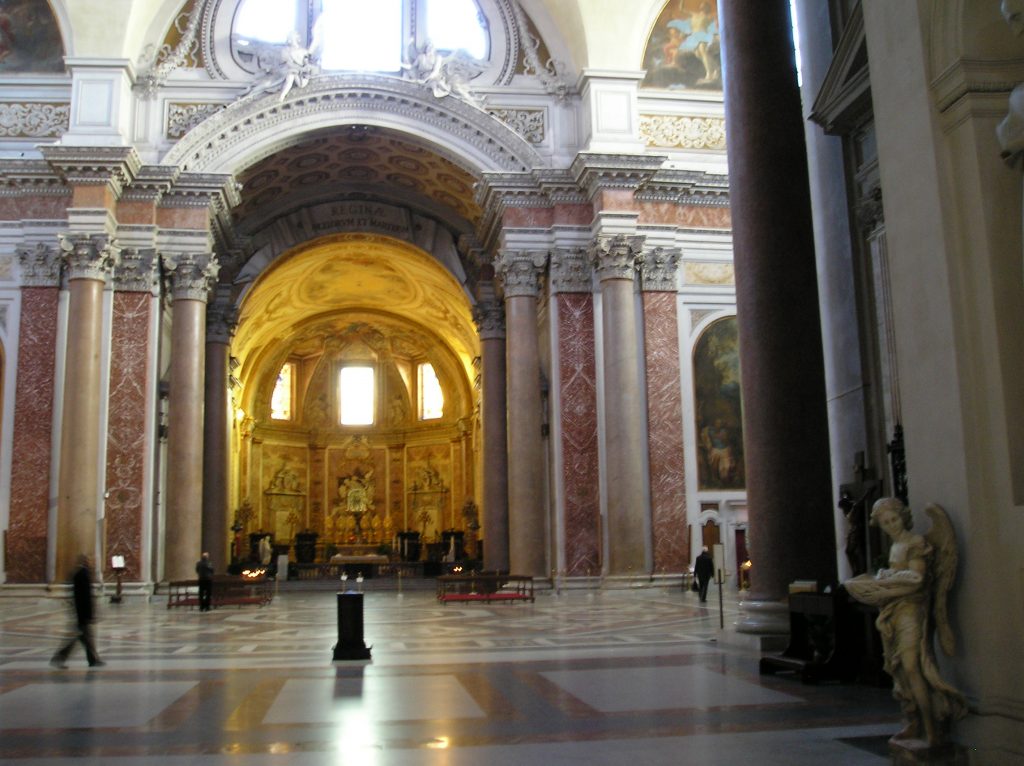
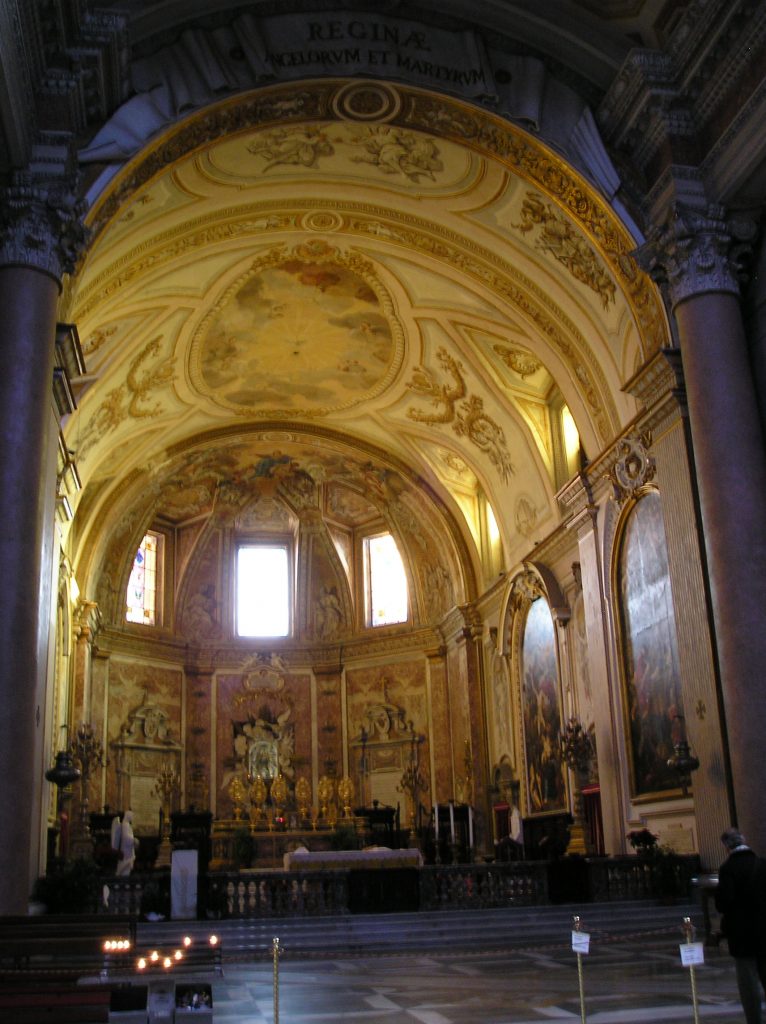
Santa Maria Degli Angeli E Gli Martiri (St Mary of the Angels and the Martyrs)

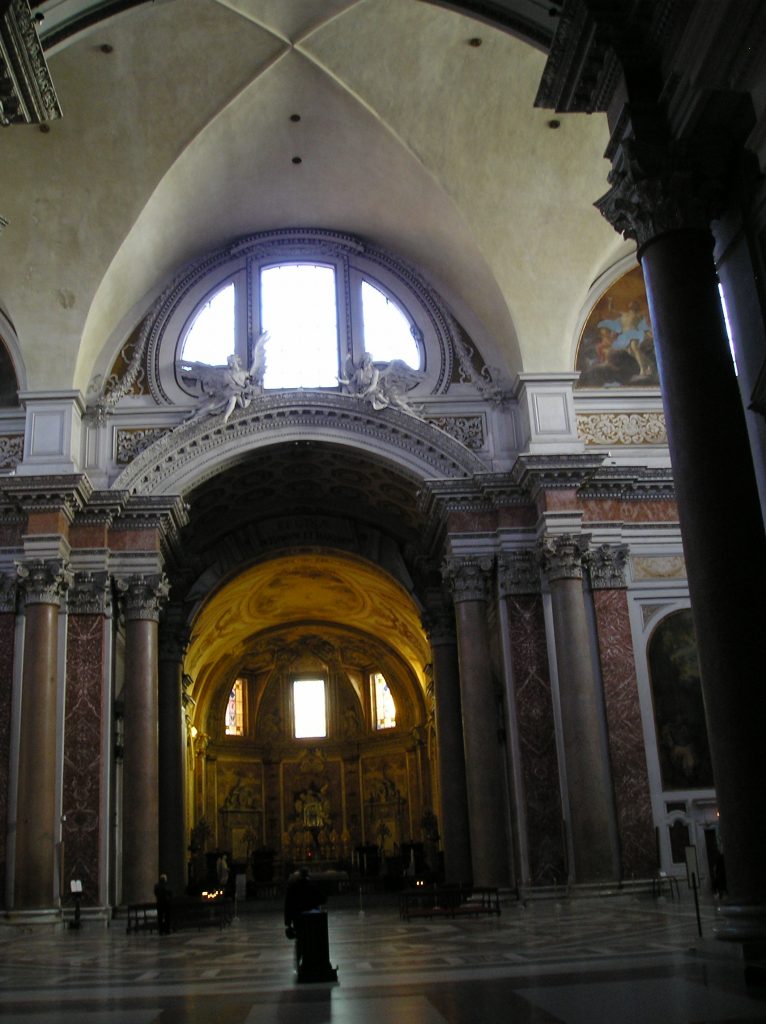
I found the peculiar facade of Santa Maria Degli Angeli E Gli Martiri utterly fascinating. Inside, I was speechless by how huge it seemed. The effect was particularly humbling. I hope the pictures help to convey some of its beauty and reverence.

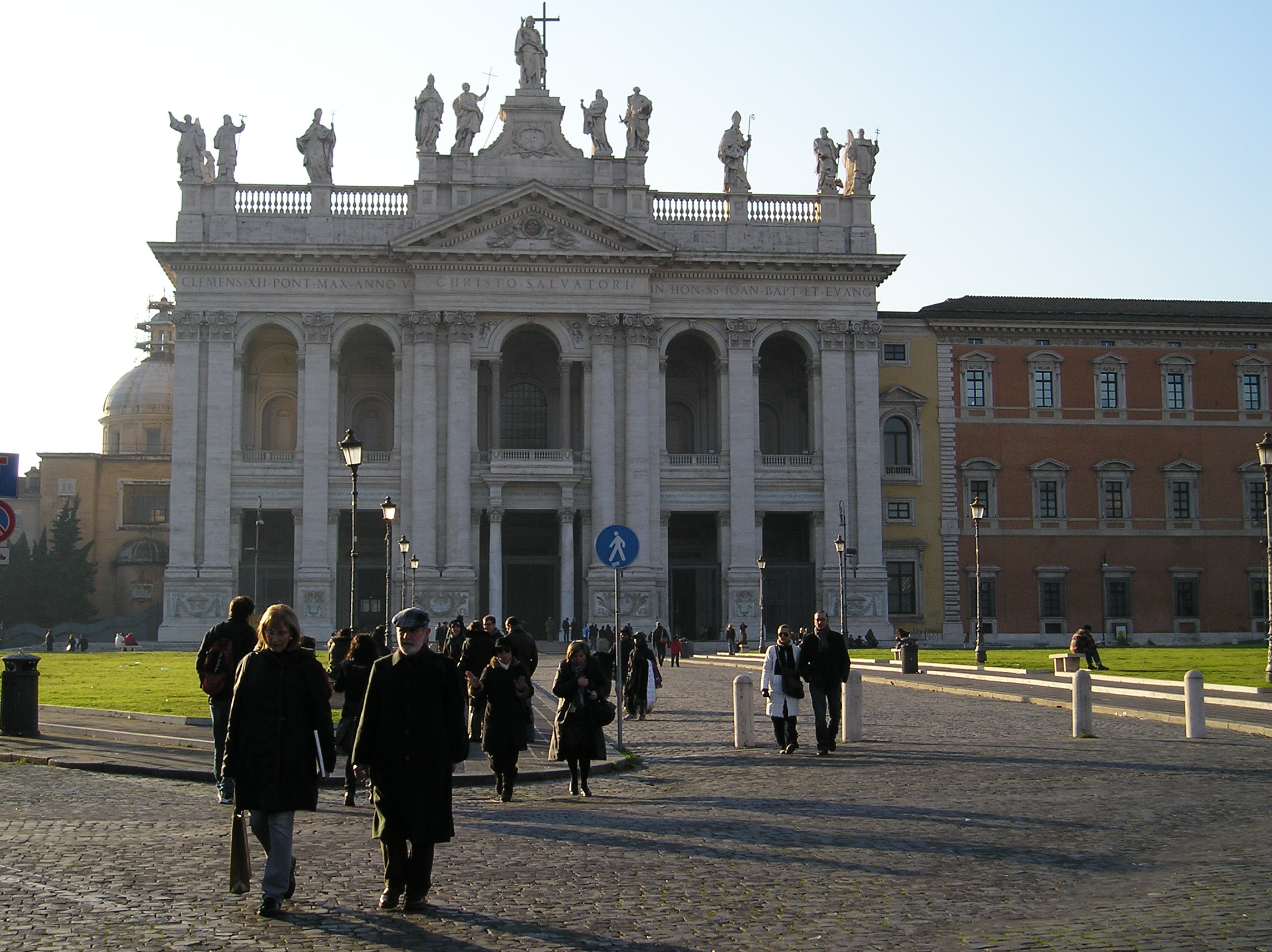
San Giovanni in Laterano
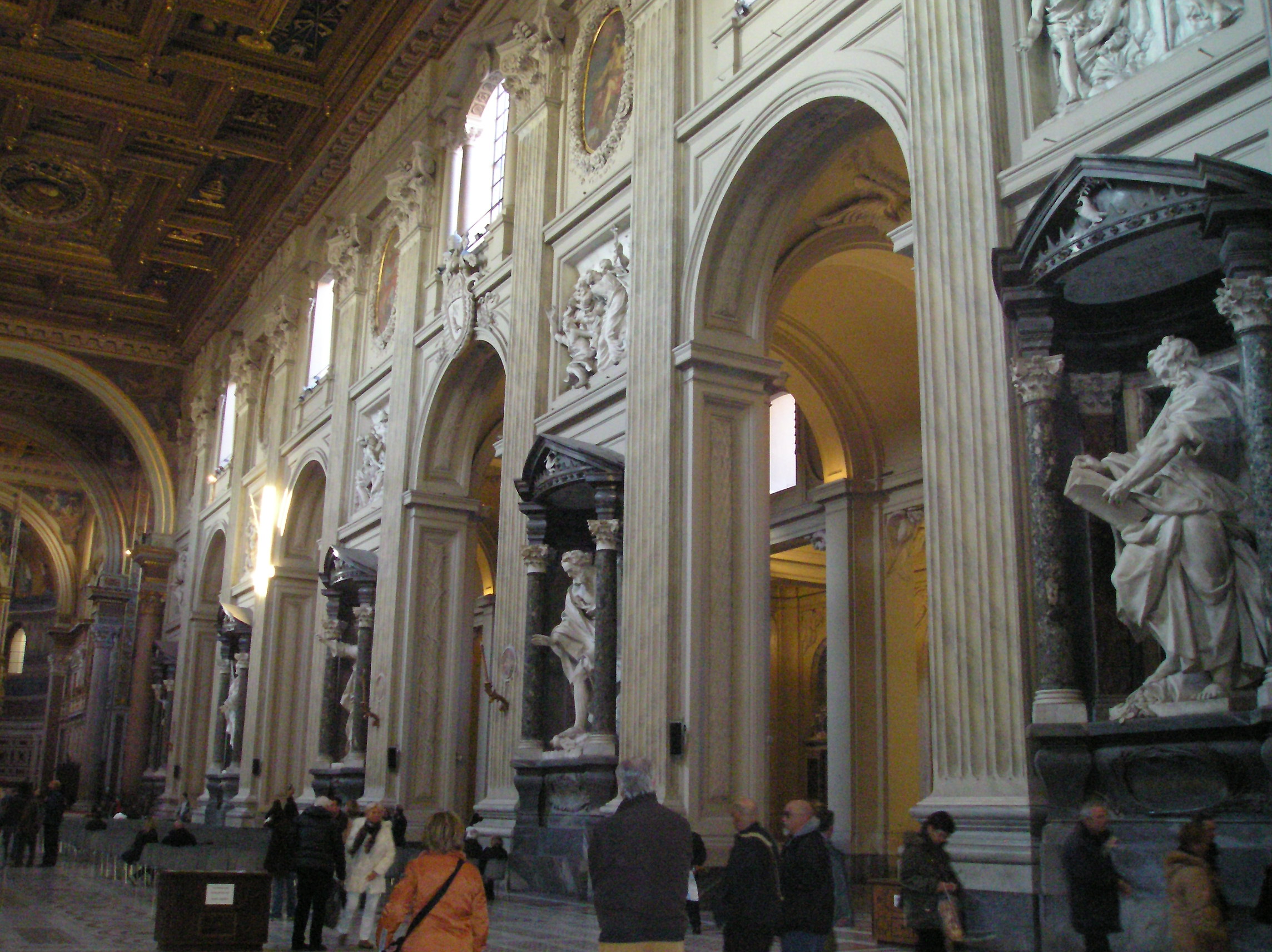
Statues of the twelve apostles dominate the interior
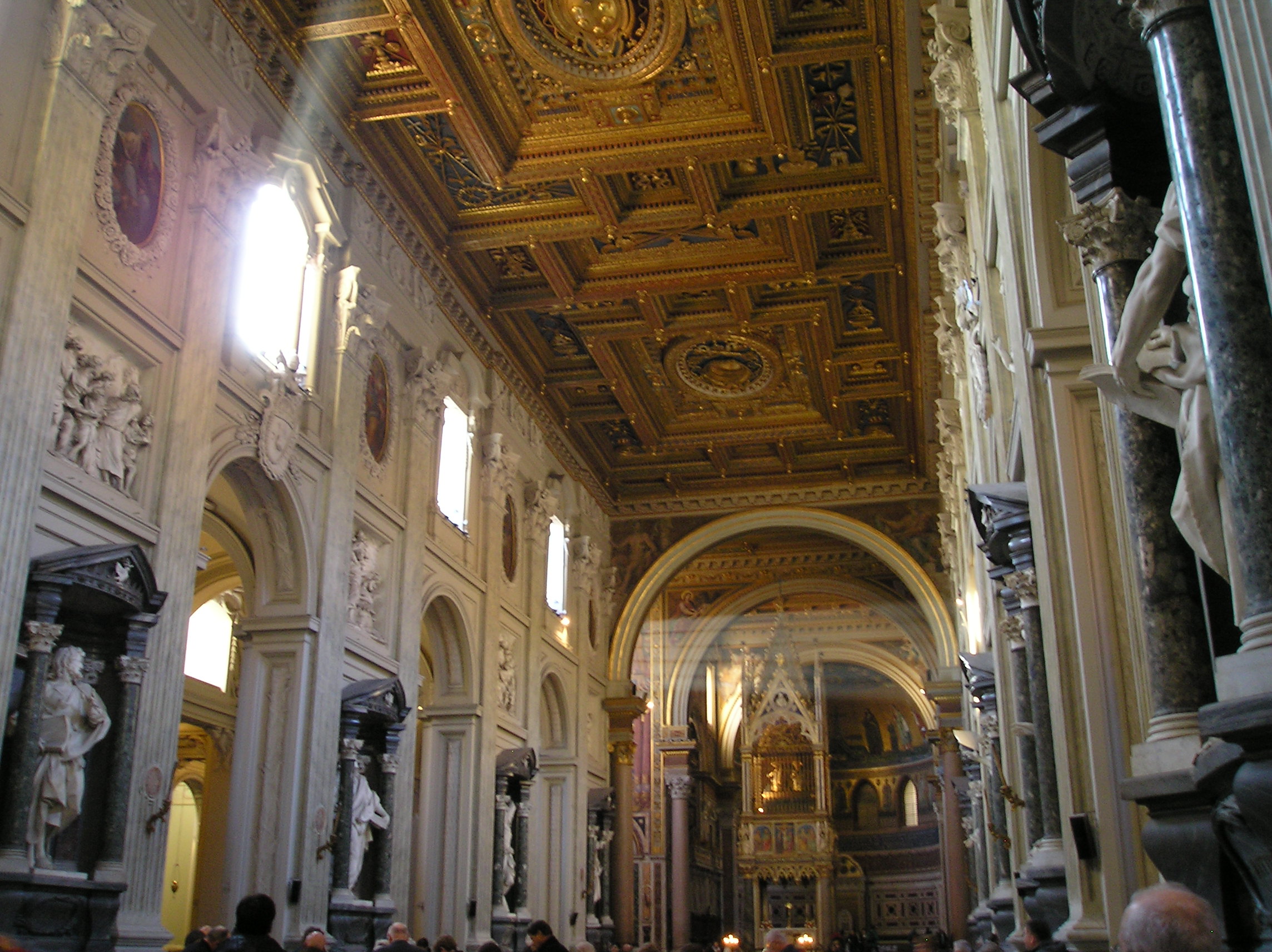
The light streaming in rendered my visit unforgettable to this day. This is my favorite photo among the hundreds I took in Rome.

The main hall in San Giovanni in Laterano depicts twelve statues of the Apostles. The windows let in the natural light beautifully, and it made for a truly awe-inspiring visit I will never forget.

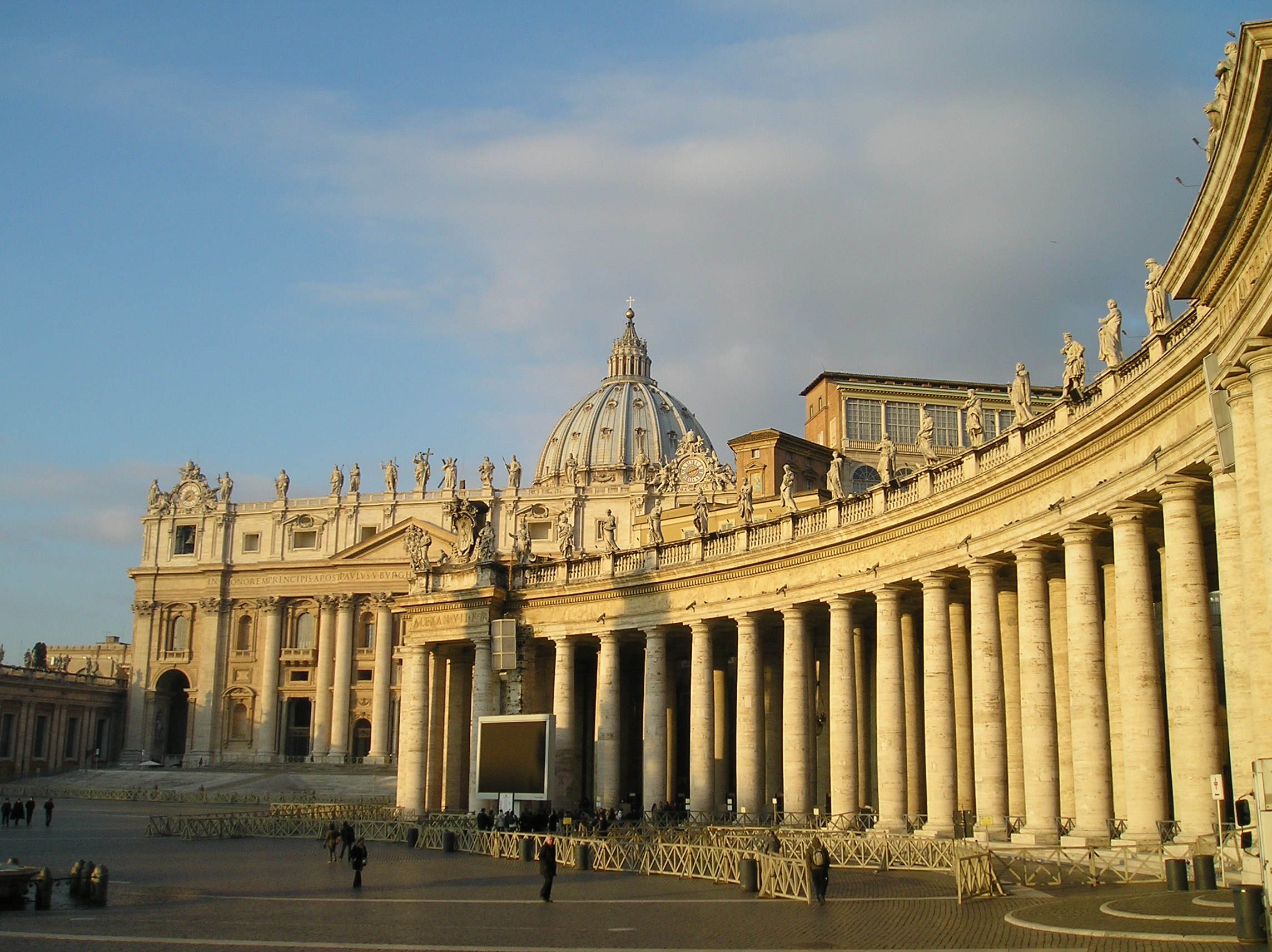
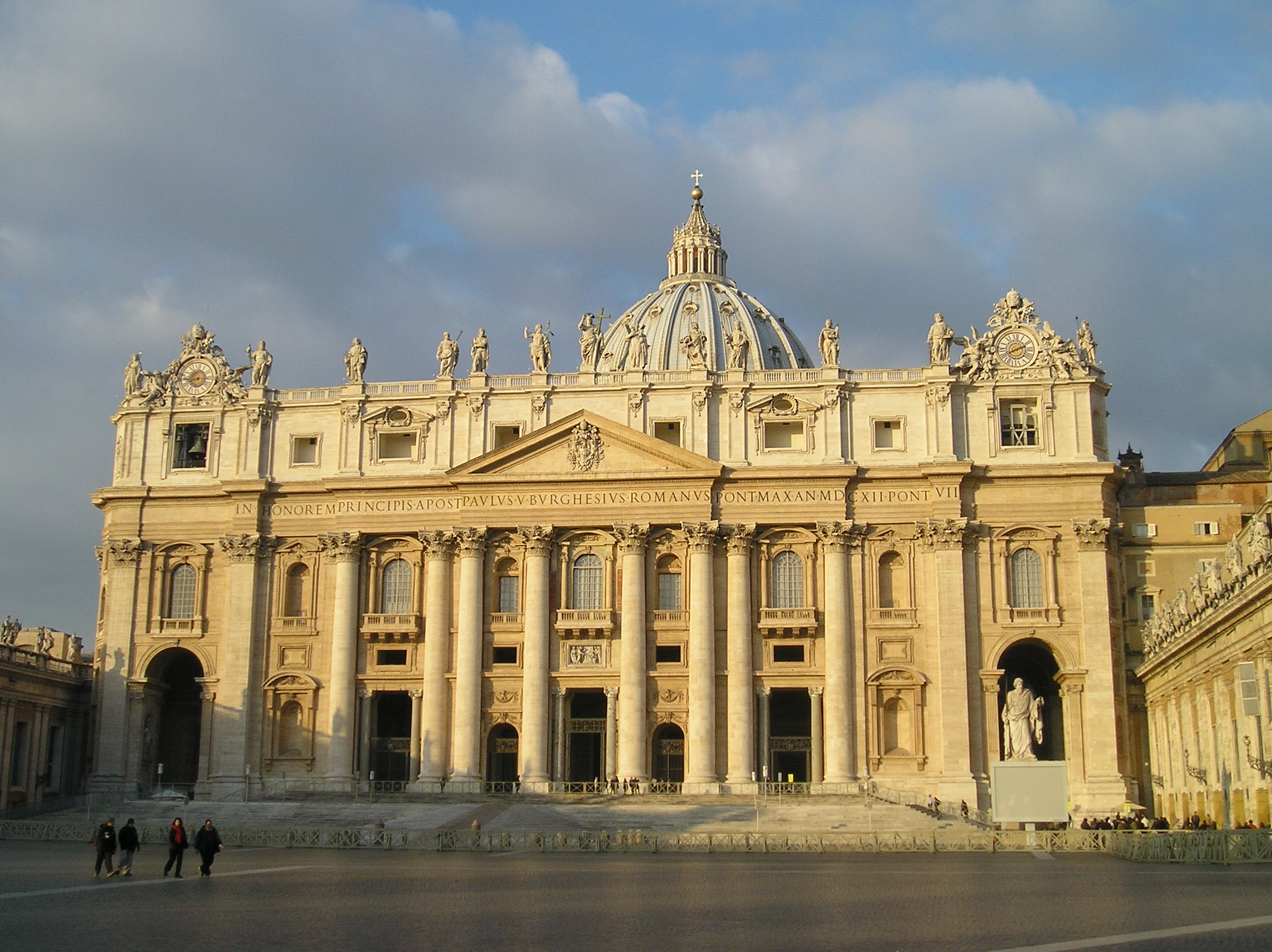
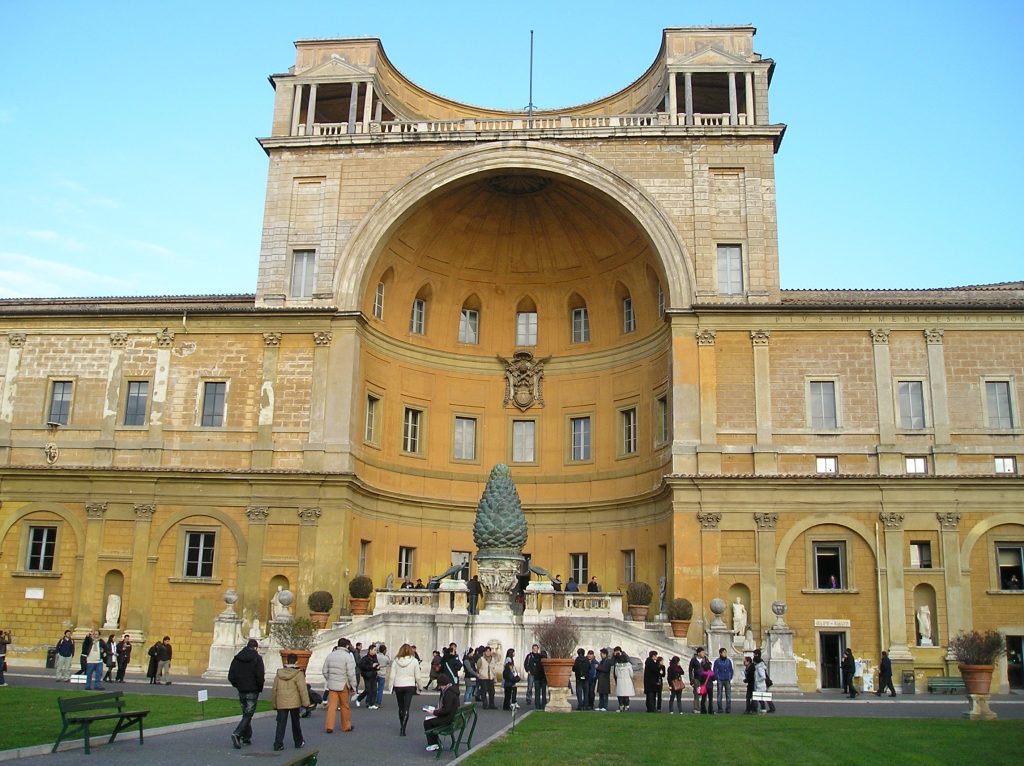
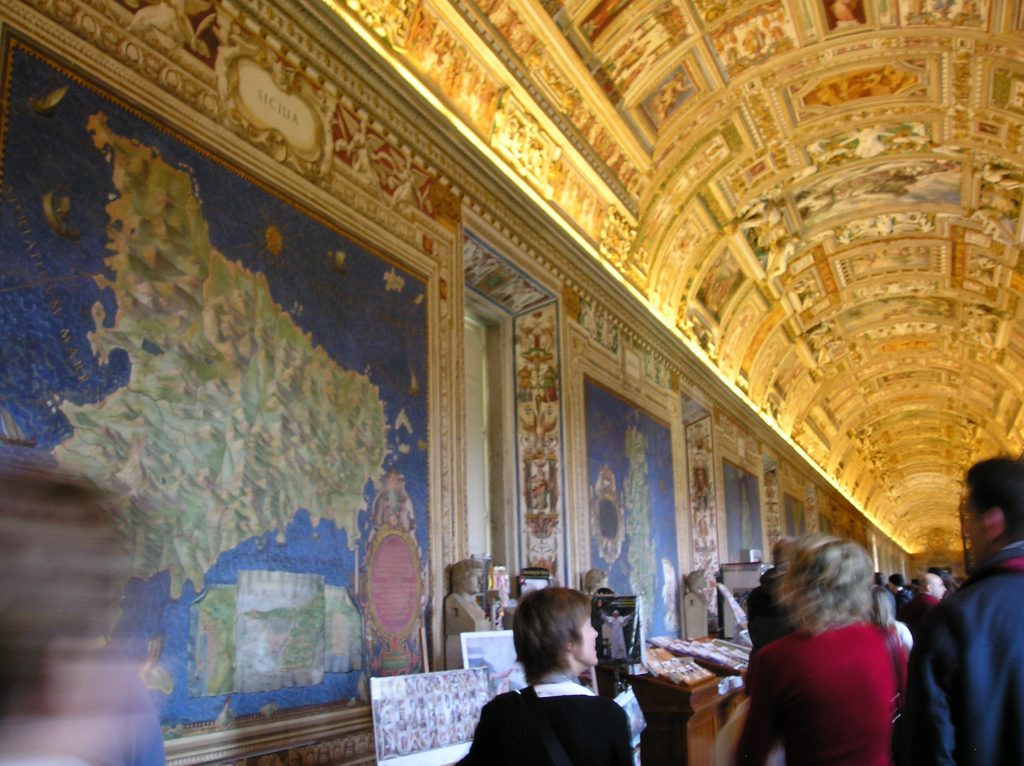
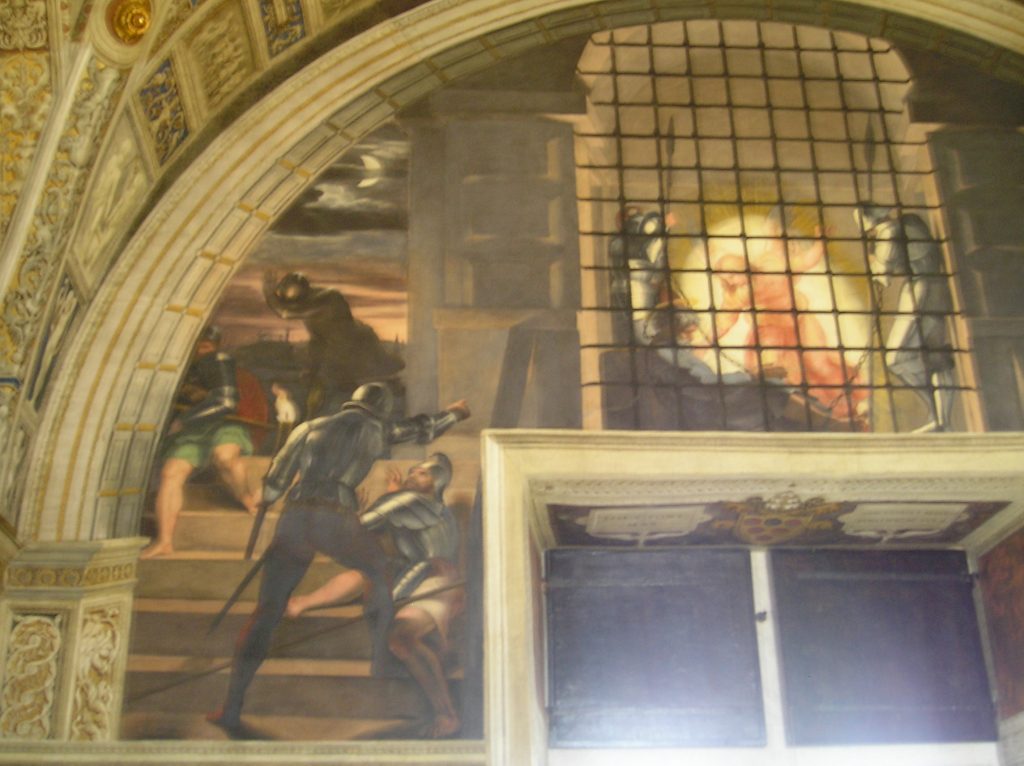
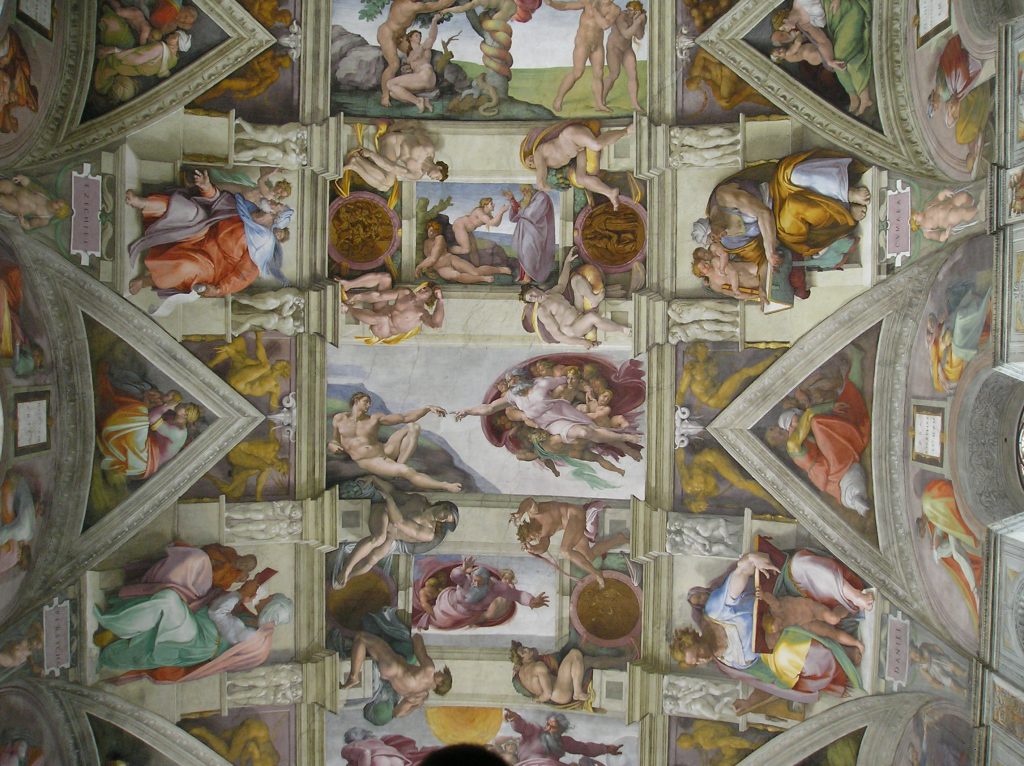
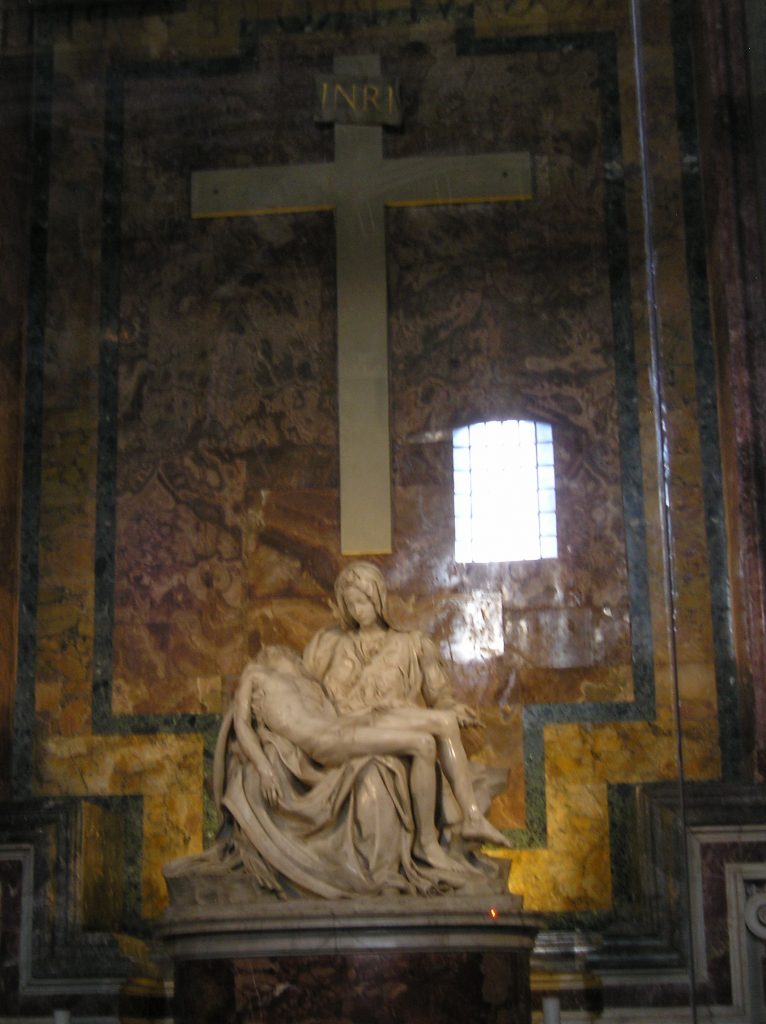
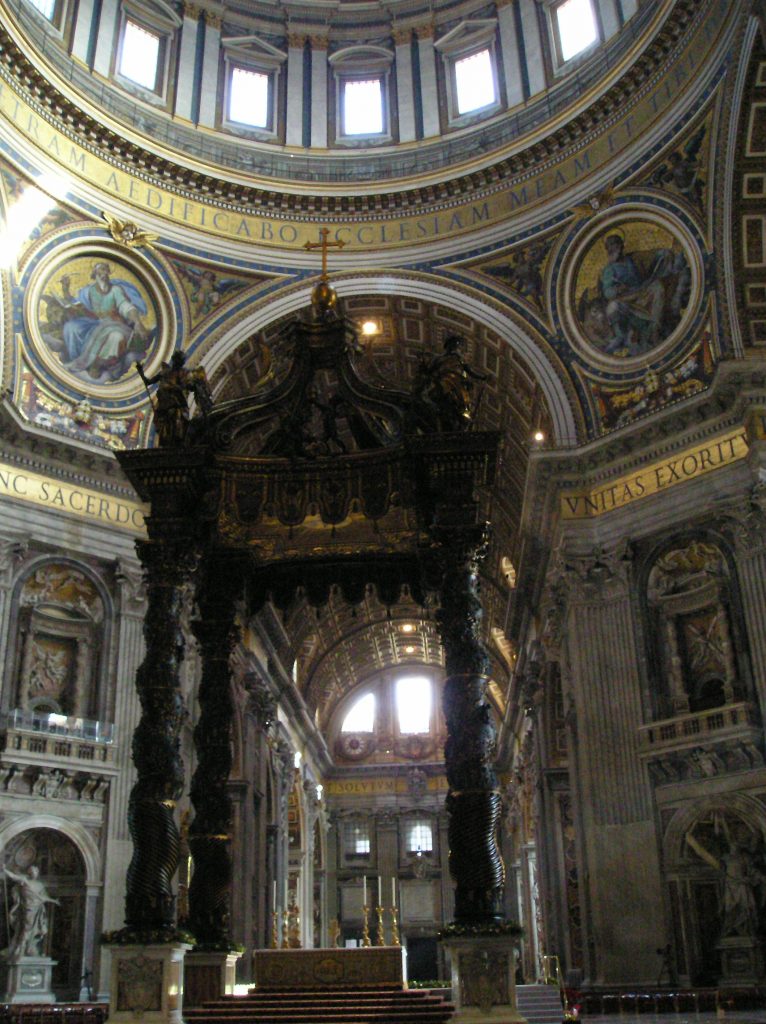
Of course, I also visited the Vatican museums and St Peter’s. The artistic perfection involved in the whole experience makes it hard to find the right words to describe it, though. Even at the time, the feeling of awe stole my breath away, and I grew silent as my eyes caressed St Peter’s Dome, Michelangelo’s Pieta, and the frescoes in the Sistine Chapel…

I do not think that anyone who is not an art expert can ever speak about these legendary works of art effectively and I will not shame myself by making a feeble attempt. Instead, I will say that my life feels substantially more complete since my eyes rested blissfully upon these eternal treasures.

Bocca Della Verita (Mouth of the Truth)

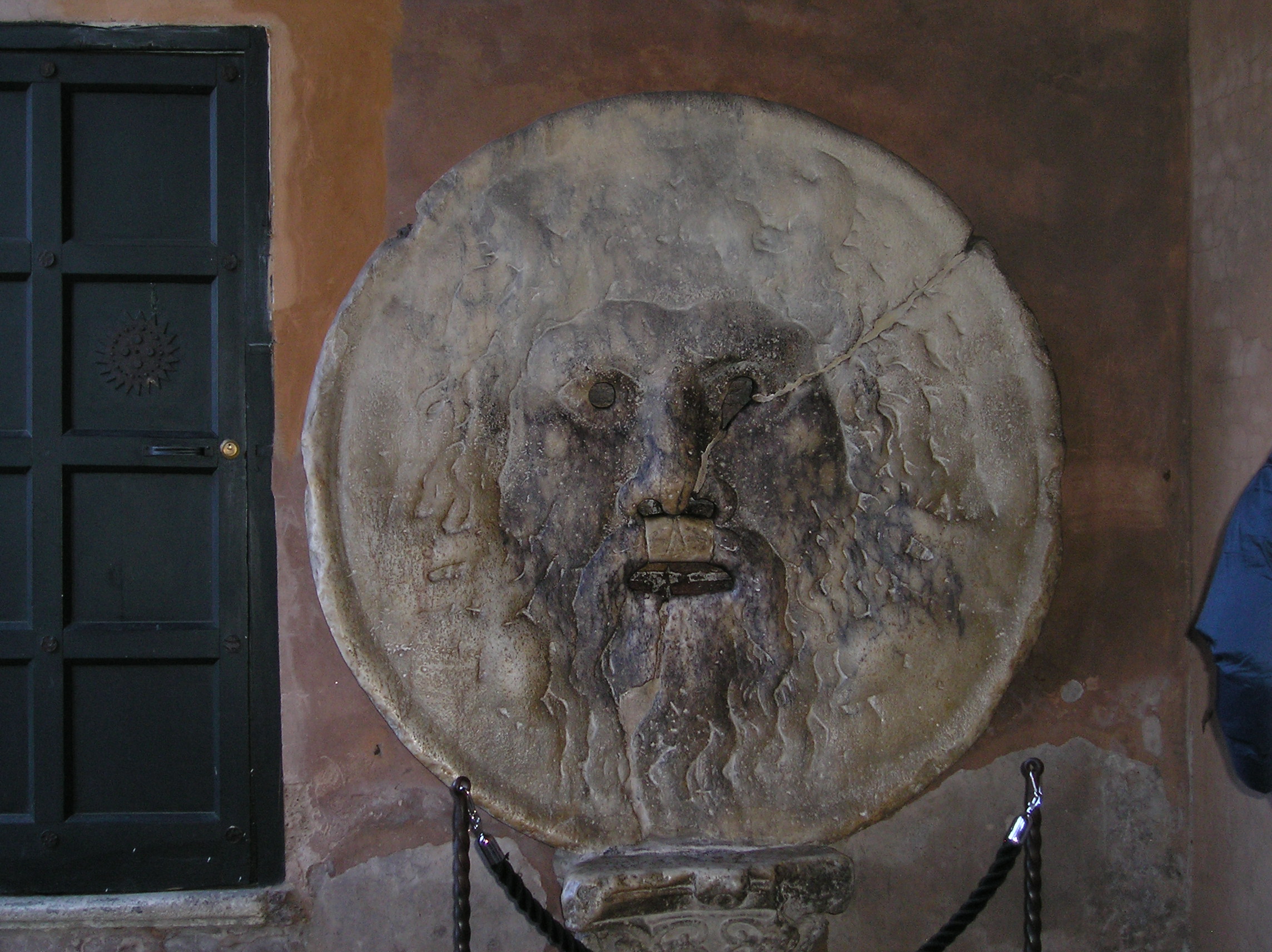
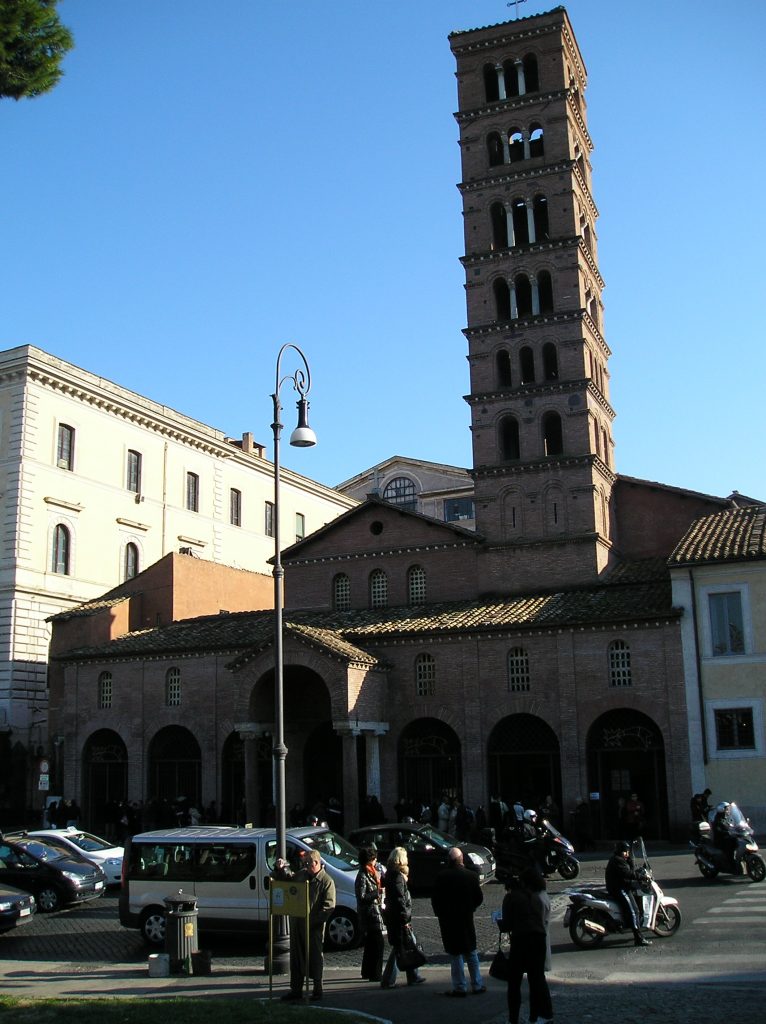
Santa Maria in Cosmedin is a modest basilica that proved a little tricky to locate. Still, it was worth the effort as I really wanted to see the famous “Bocca Della Verita” that stands on the left wall if its portico. If you’ve seen the classic movie “Roman Holiday”, you may recall the scene where Gregory Peck used it to do a prank on his co-star, Audrey Hepburn.

https://www.youtube.com/watch?v=6af1dAc9rXo
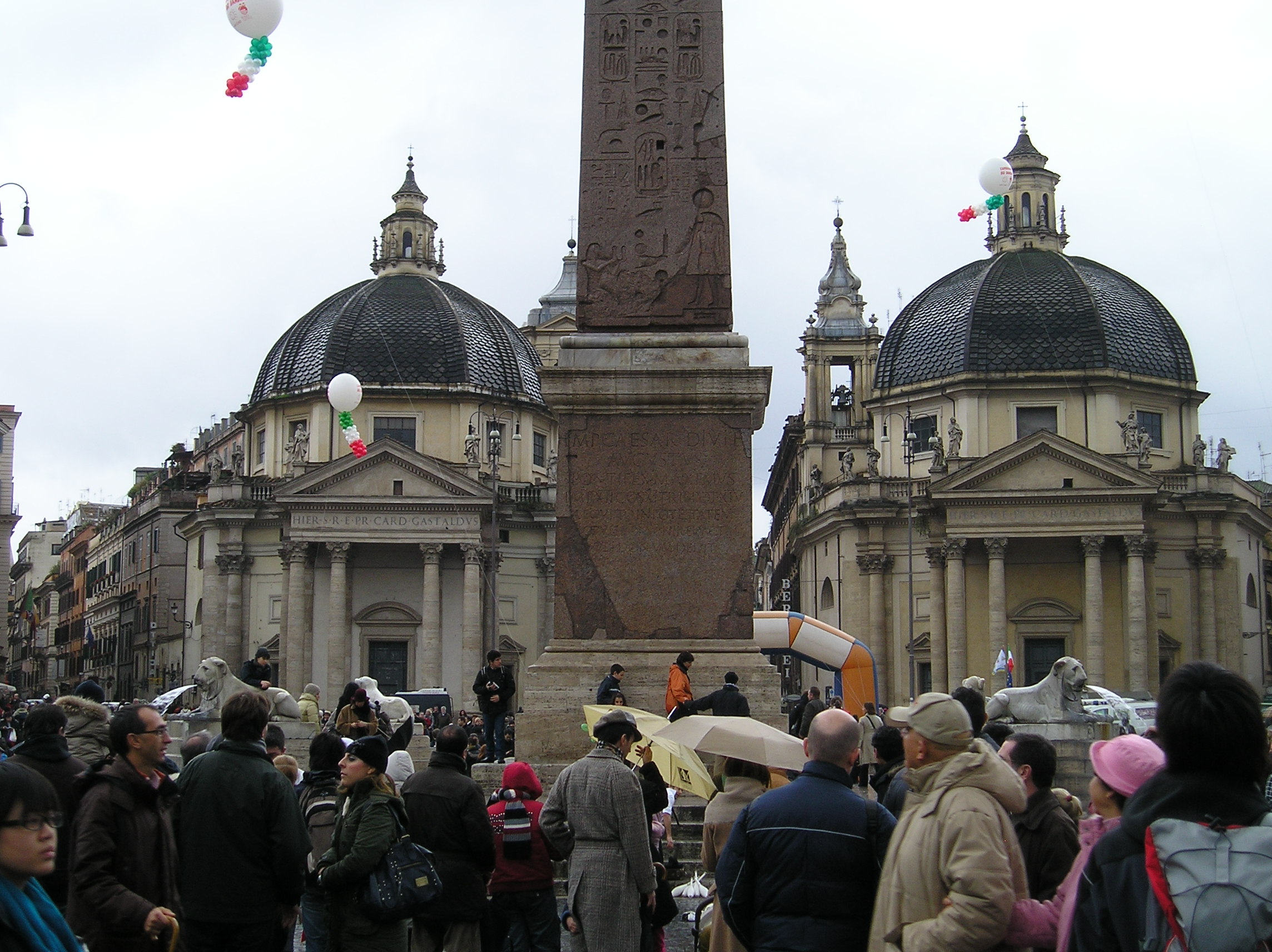
Piazza del Popolo (The People’s Square) on New Year’s Day

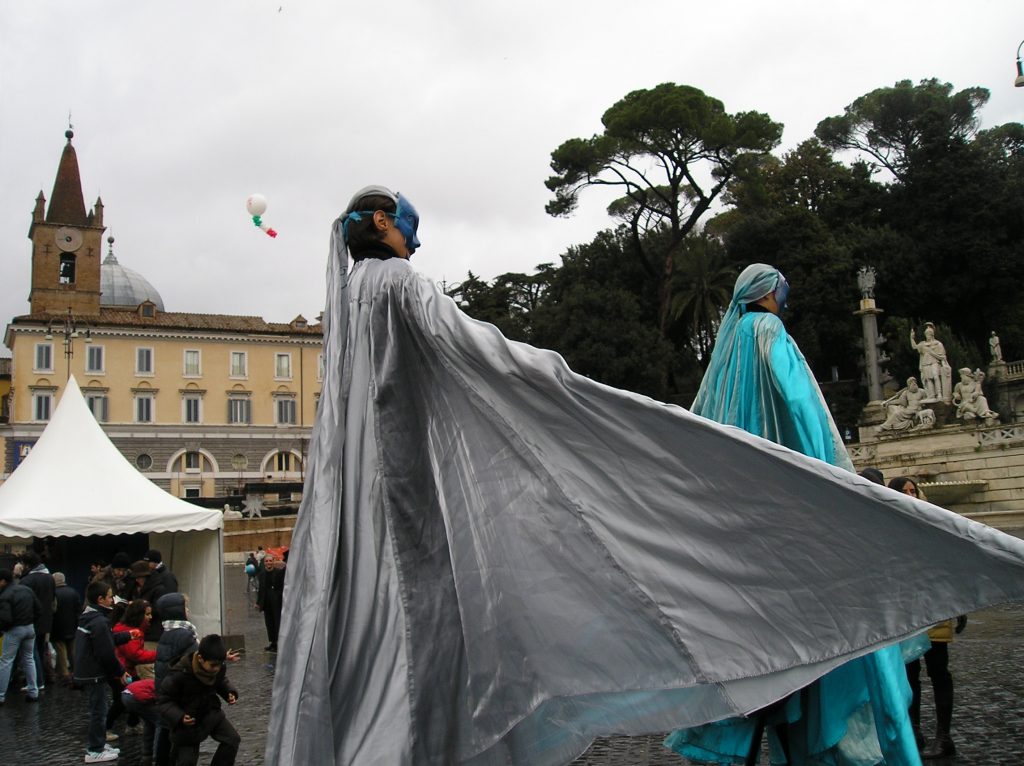
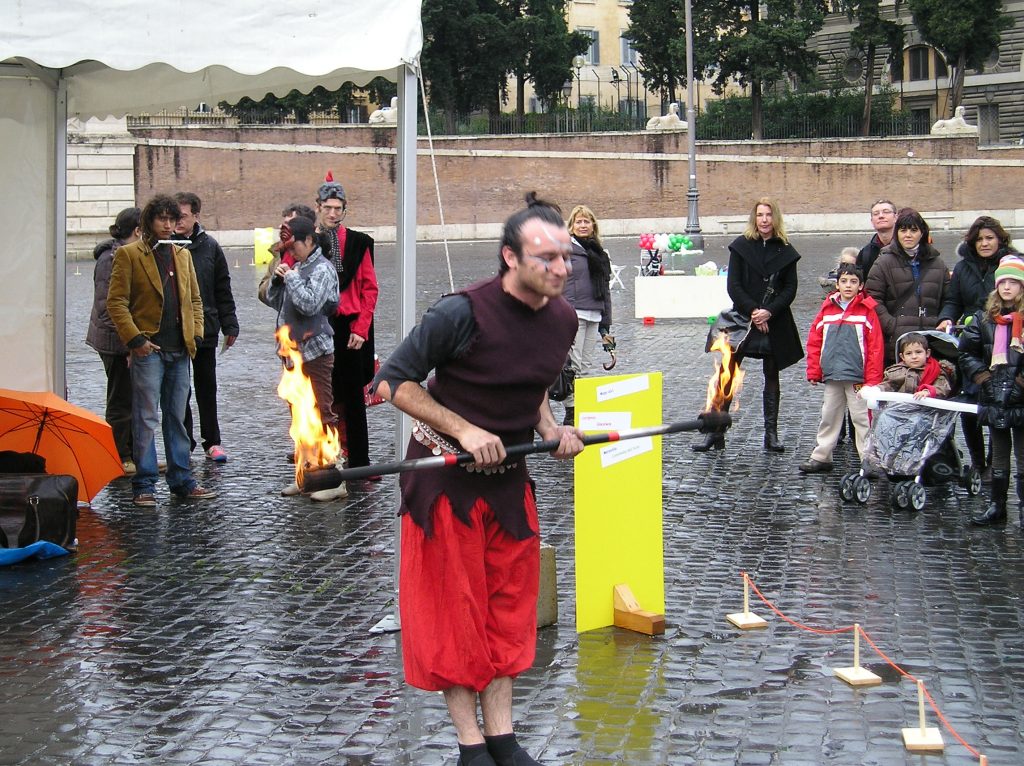
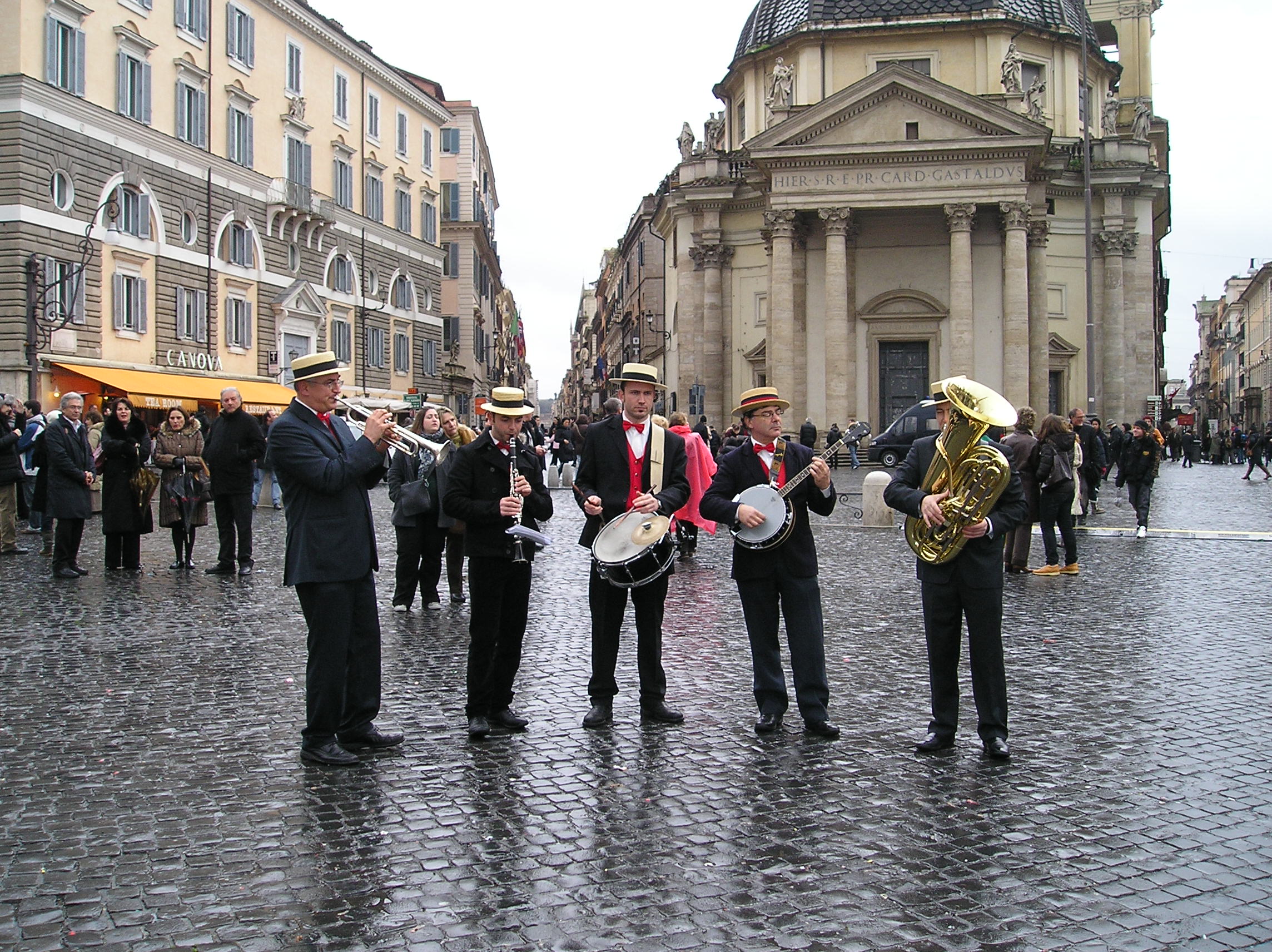
As my visit to Rome coincided with the new year, I was able to enjoy the city’s famous piazzas beautifully illuminated and decorated for the New Year celebrations. On New Year’s Day, the vibe in Piazza del Popolo (The People’s Square) was that of an open air party with street bands and performers entertaining visitors while dozens of balloons flew in the air in the colors of the Italian flag.

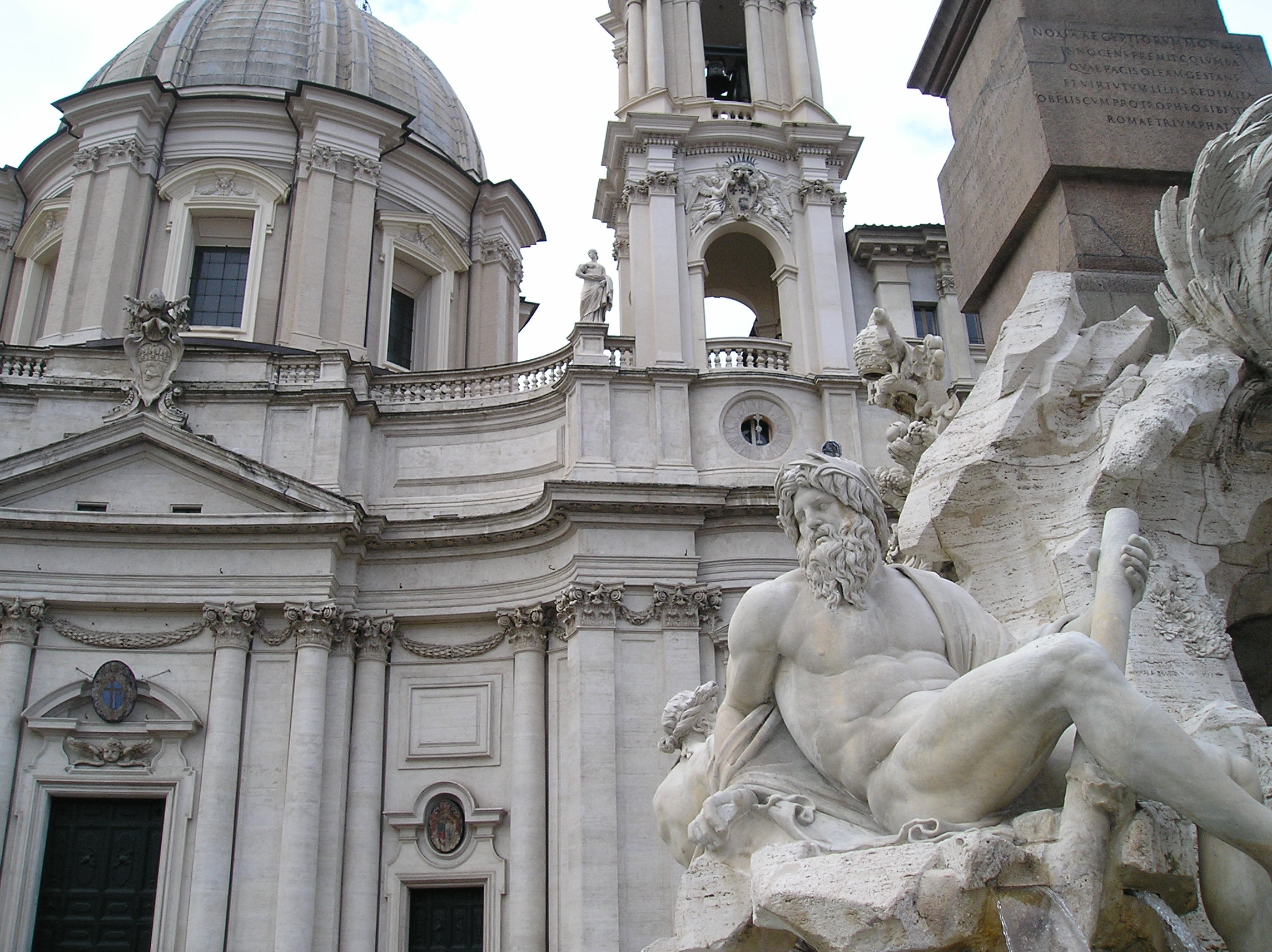
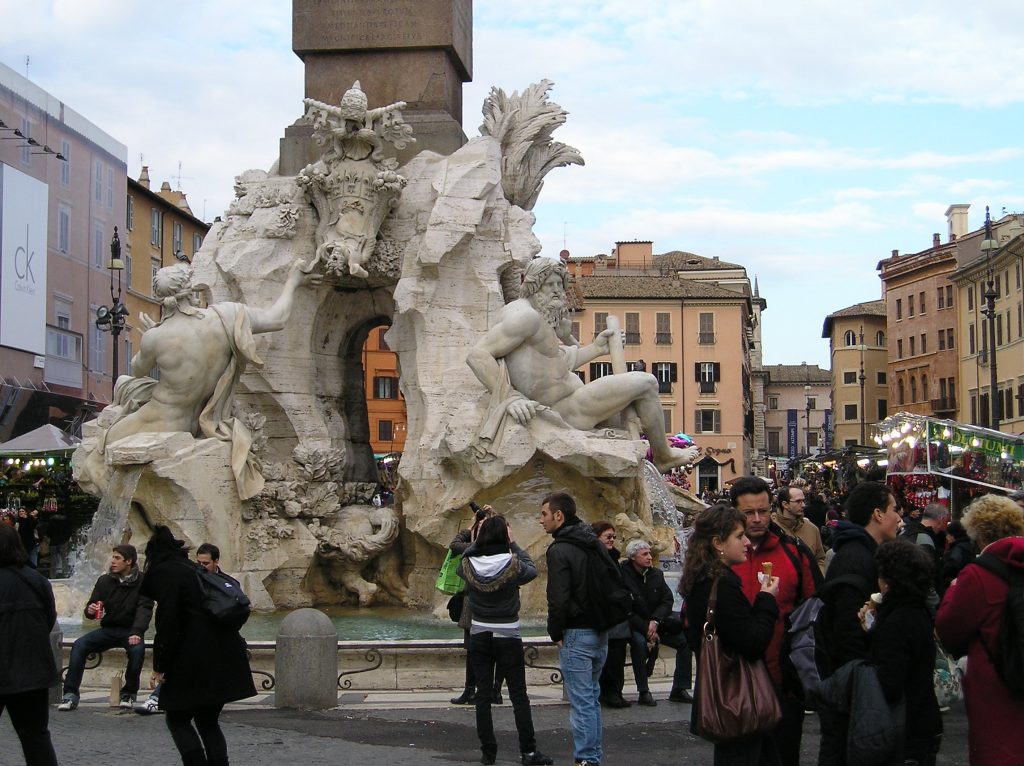
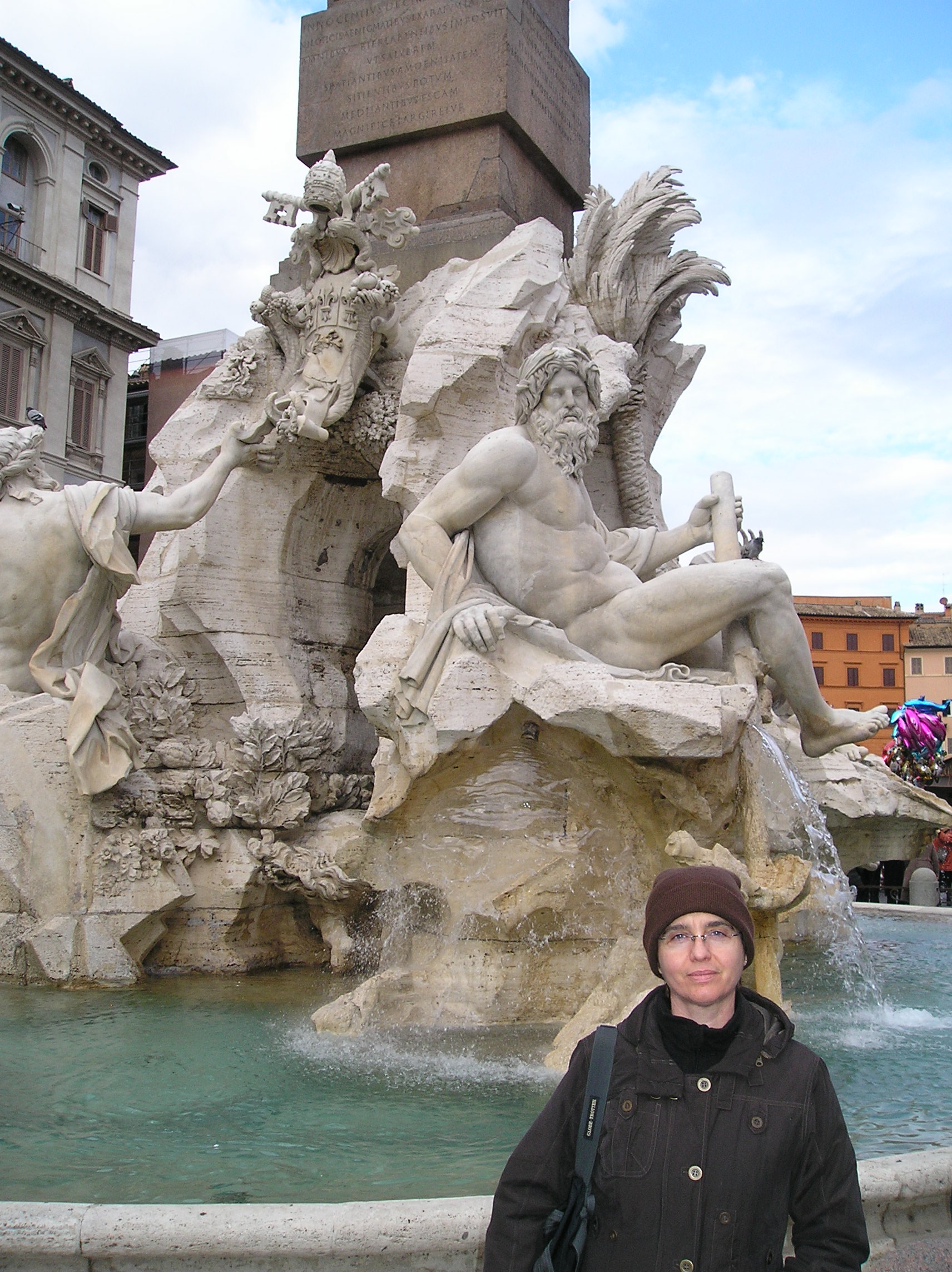
Piazza Navona

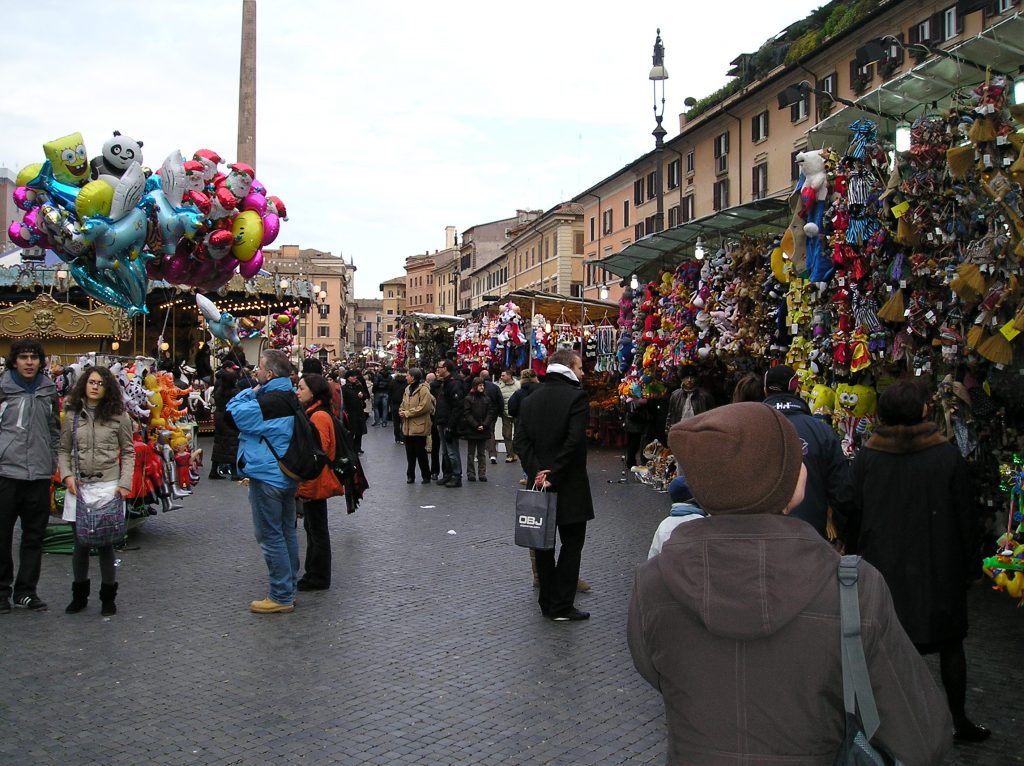
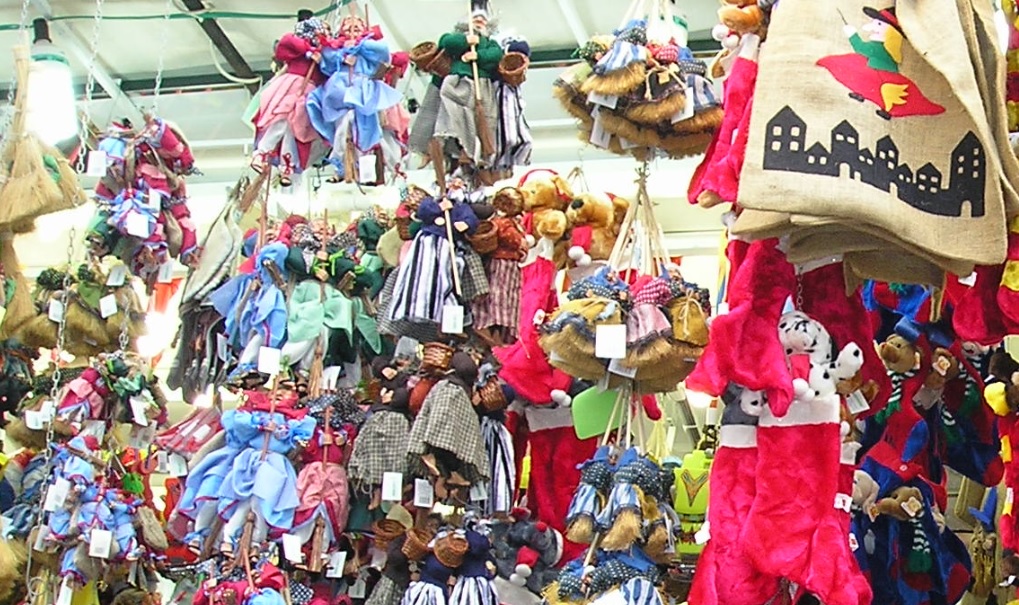
Piazza Navona was particularly lively as well, attracting even more visitors than its famous fountains do from day to day, as people walked around the stalls set up there to browse through bountiful merchandise for the festive season. I quickly noticed that nearly every stall seller seemed to display figurines of witches on broomsticks in one form or another. I used a mixture of basic Italian and confident English to question a local and, as it turned out, the witches on the broomsticks were Italian versions of Santa Claus!

Befana, depicted as an old hag, rides her broom and brings Italian children gifts on the eve of Epiphany day, January 5th. To naughty kids, instead of gifts, she leaves a stick or a piece of coal. Being a good housekeeper, she often sweeps the house on her way out!

Befanas on their broomsticks are displayed everywhere in Italy in the New Year

May your houses be duly swept and your lives enriched with the most precious gifts this new year!

SPREAD THE WORD WITH A TWEET:

#traveler A tour of the best #churches of #Rome Share on X


3 FREE books for you! Sign up below to receive them instantly!

NEW! Clean Christmas romance. Single mother Cathy Roussos gave up on love long ago, and veterinarian Alex Rallis doesn’t believe in it, but one magical Christmas on a Santorini farm might just change everything…
Check it out on Amazon     Read a FREE sample!


A clean romantic suspense short read with an unreliable narrator that’ll keep you guessing! Vera is losing her mind over famous actor Yannnis Ksenos, except, she isn’t just a fan… Now, she plucks up the courage to ring his doorbell… Visit Amazon
 

For my delicious Greek recipes, go here
 
Planning to visit Greece? Check out my  FREE guide to south Corfu!

A highly recommended walk around Corfu town

I picked a cloudy day last August to take a long walk around Corfu town, aiming to visit places I hadn’t been to since I was a child. Also, I intended to find two old houses where I knew my grandmother and mother had been living in as children. One is situated just behind Liston and the other is in the old quarter of Campielo. I was pleased to find all the places I was after and I’m delighted to share my experience in detail today.

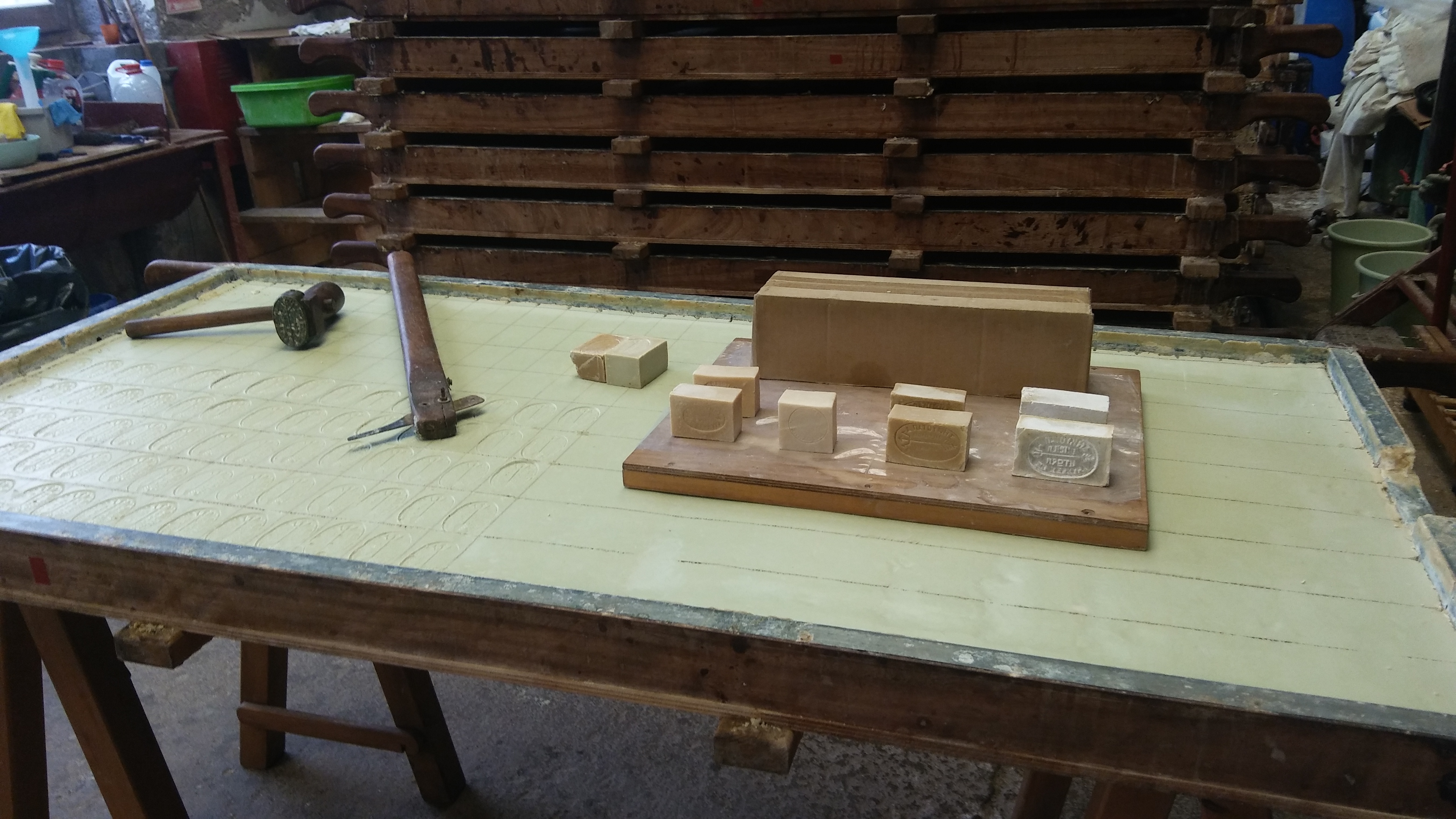
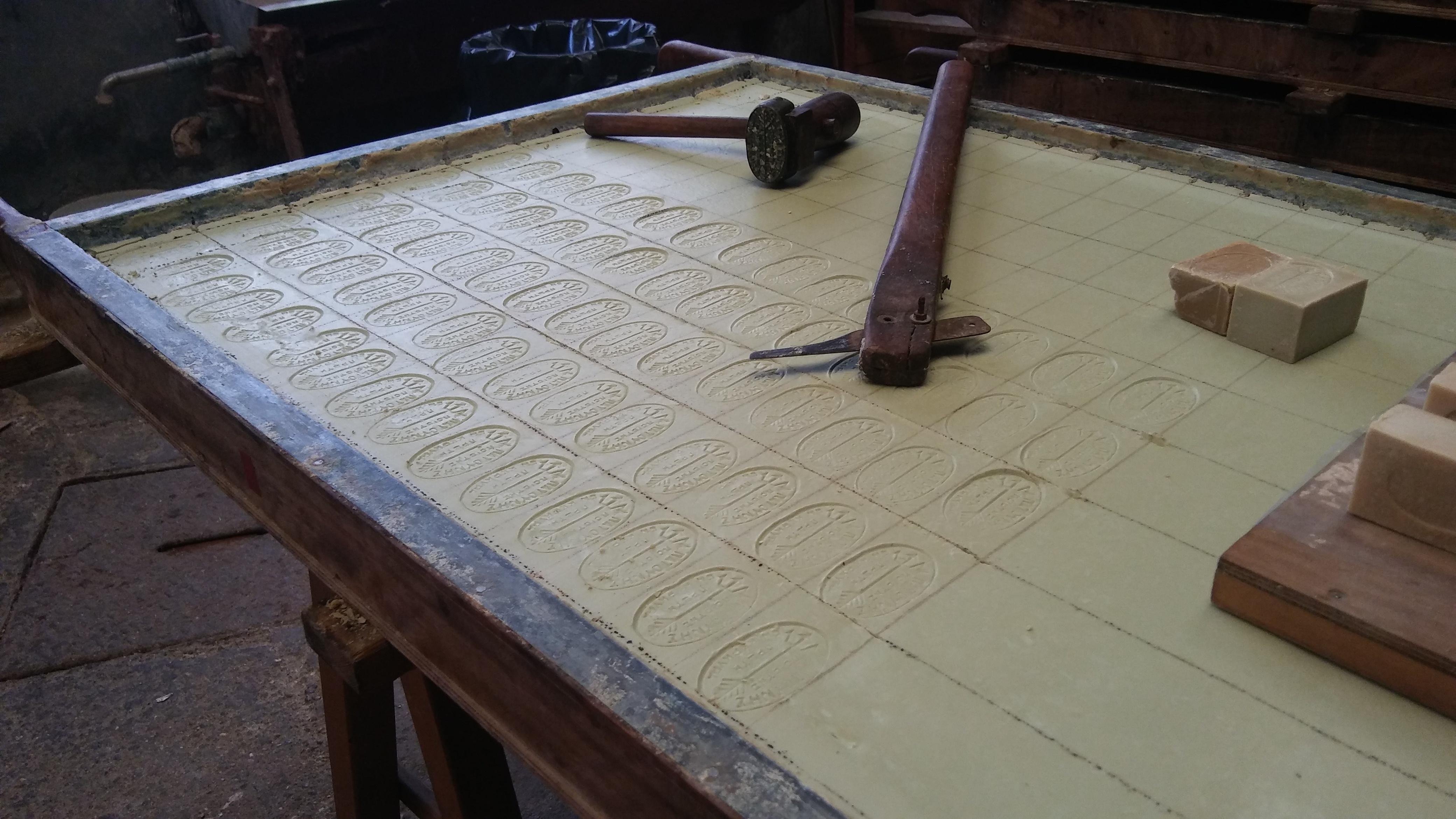
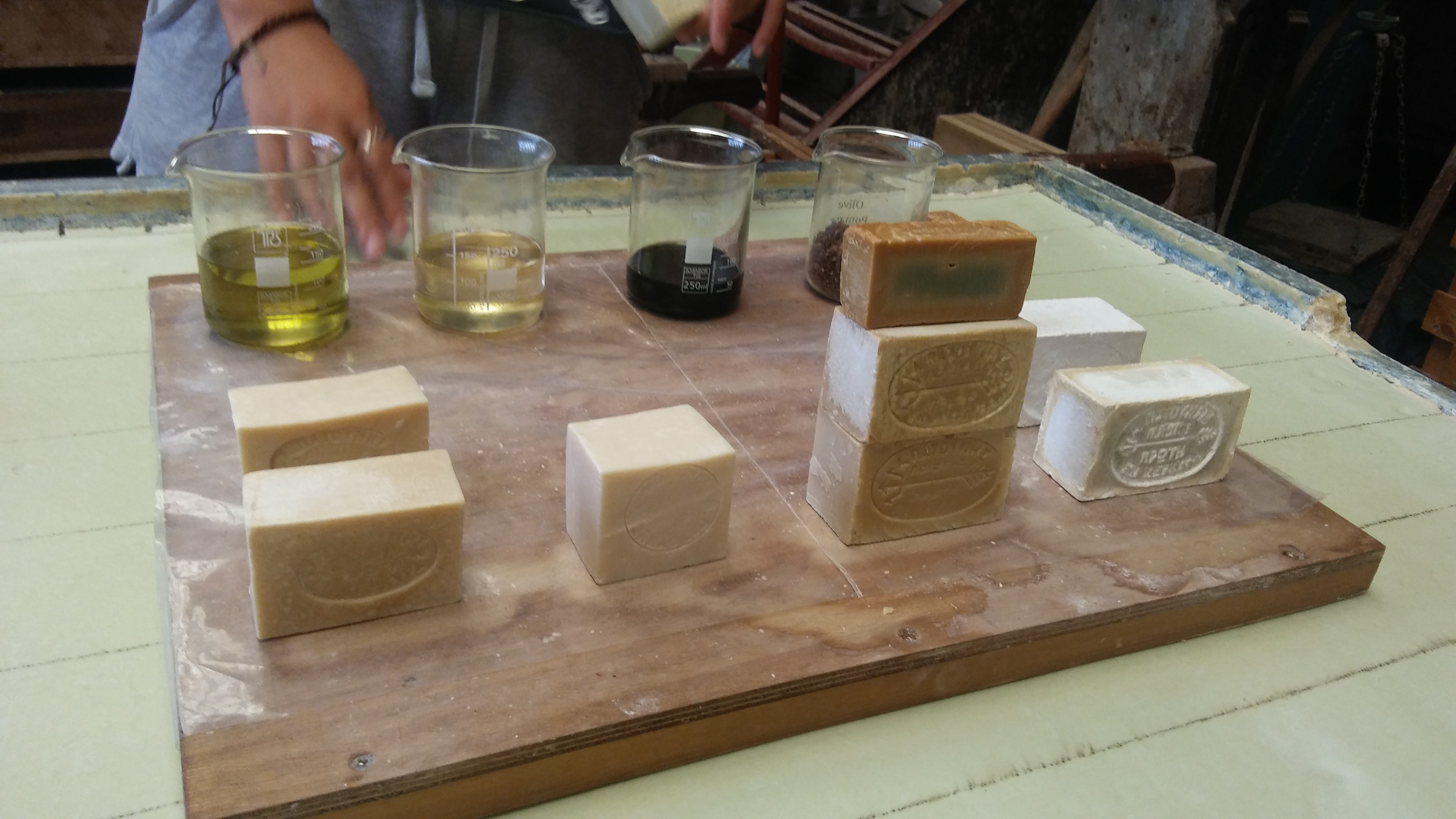
During the same walk, I also visited the Patounis Soap Factory for the first time, having discovered it in Hilary Paipeti’s excellent book, Corfu Off the Map. Its owners were very hospitable and even gave my husband and me a quick tour of the place.

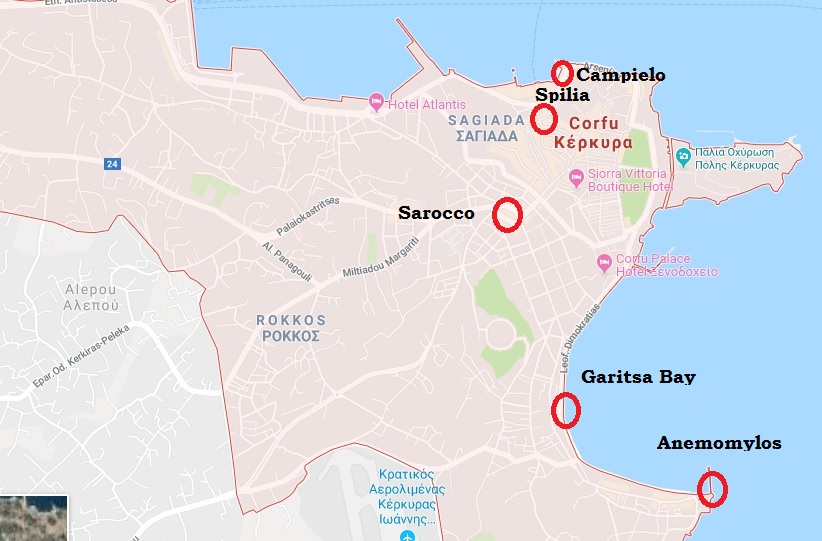
Before I set off on this virtual tour with you, here’s a map of the town to give you an idea of our route:

The walk I did that day (with my husband, Andy) took us via the following places of interest in this order:

Sarocco Sq. –> Garitsa Bay  –> Anemomylos (Nautilus Cafe & the windmill) –> Liston & Pentofanaro –> Agion Panton Church –> St Spyridon Church –> Campielo (Venetian Well and Ypapanti Church) –> Spilia (New Venetian Fortress, Holocaust Monument and old coach station) –> Jewish quarter & Synagogue –> back to Sarocco Sq.

Andy and I parked near Sarocco (or Saroko – originally named ‘San Rocco’ by the Venetians). It is a big shopping area built around a square. It is also an open-air bus terminal for civic buses to the north and the south. From there, we took Alexandras Avenue past the post office, until we hit the water at Garitsa Bay.


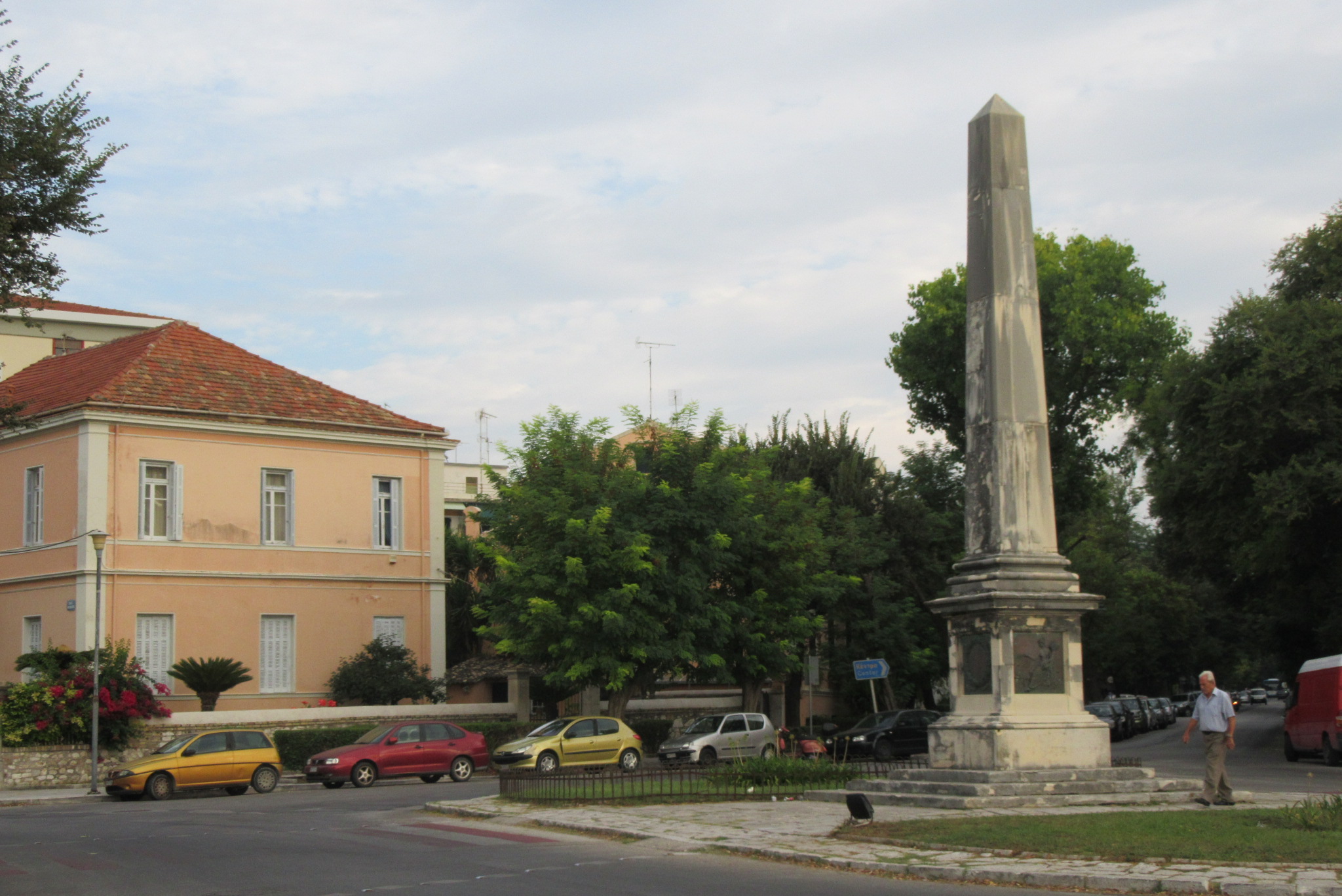
This is where Douglas’s Column stands. Or, as the locals call it, “I Kolona tou Dougla”.

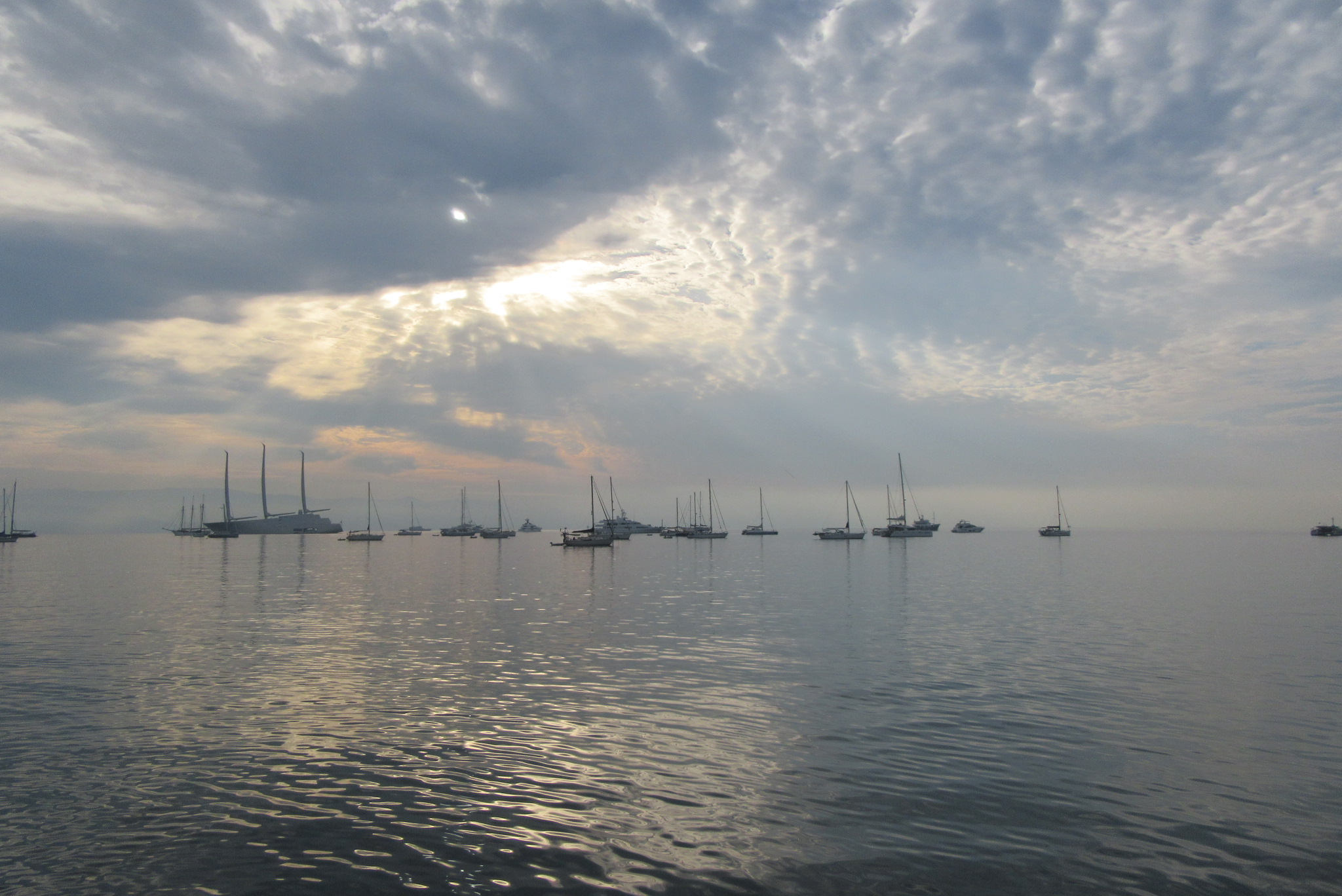
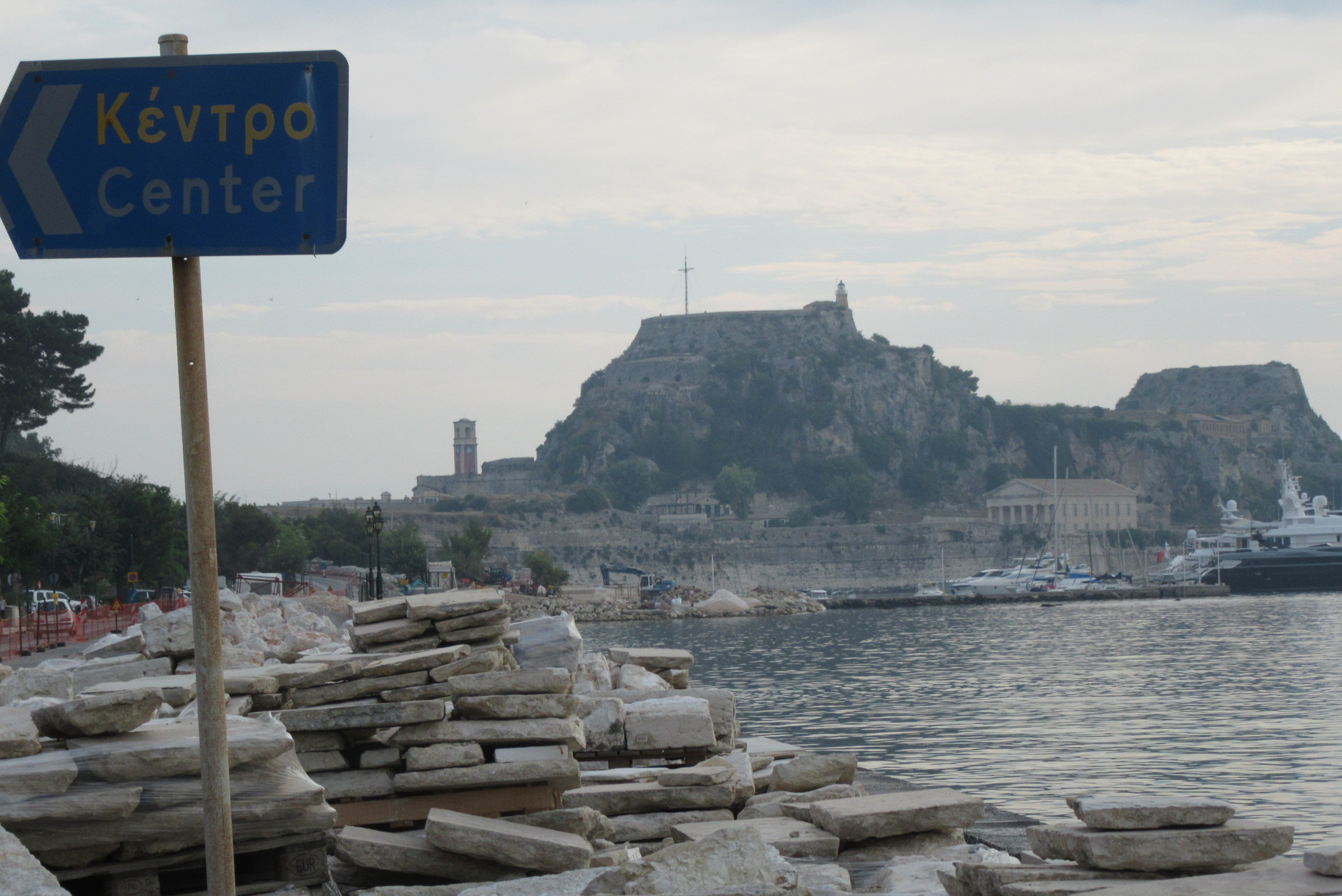
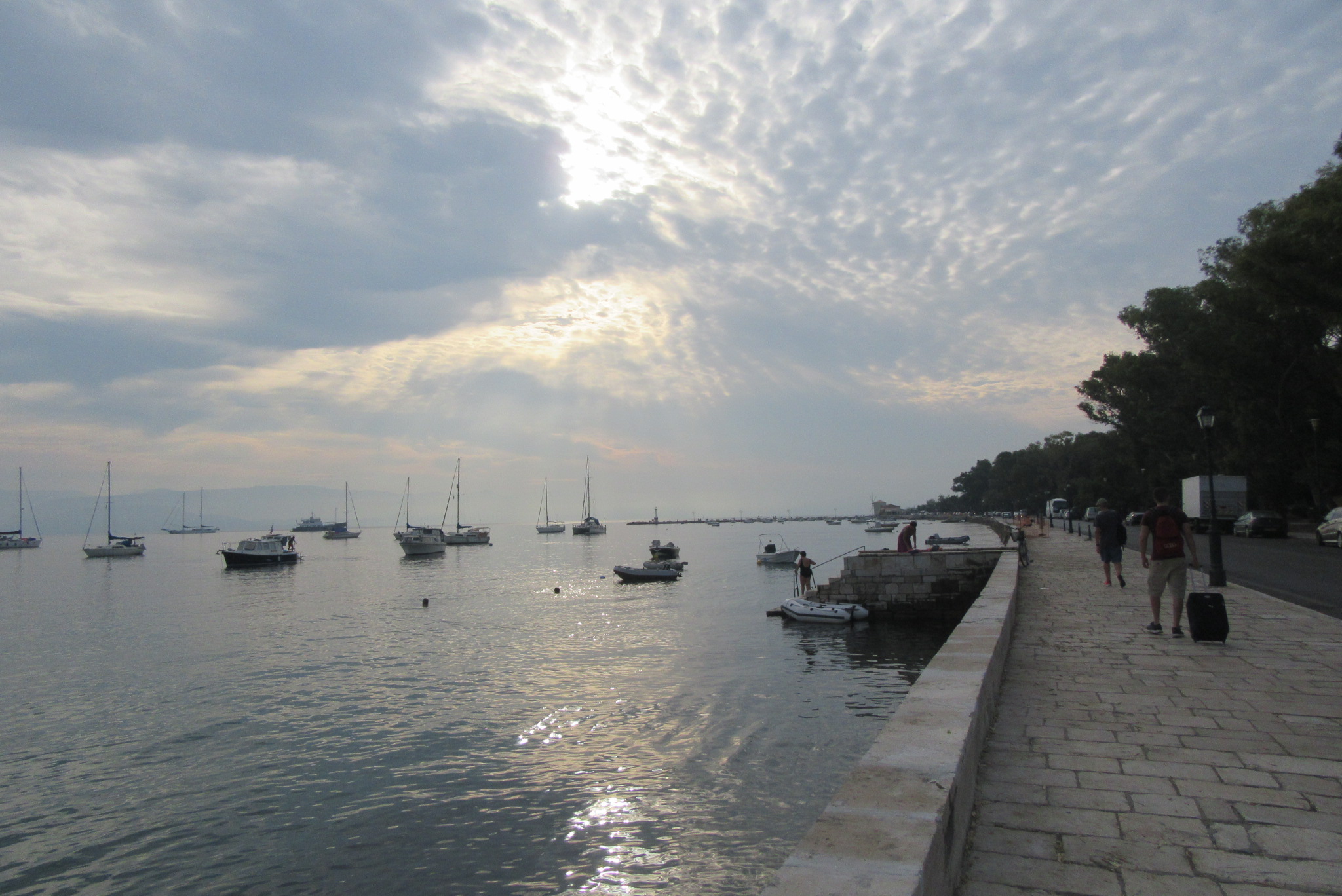
The sea view from this spot is phenomenal on any given day, but the clouds on the sky that morning made the view simply breathtaking… Not even the ongoing roadworks and the stacks of tiles we found there didn’t spoil the magic.


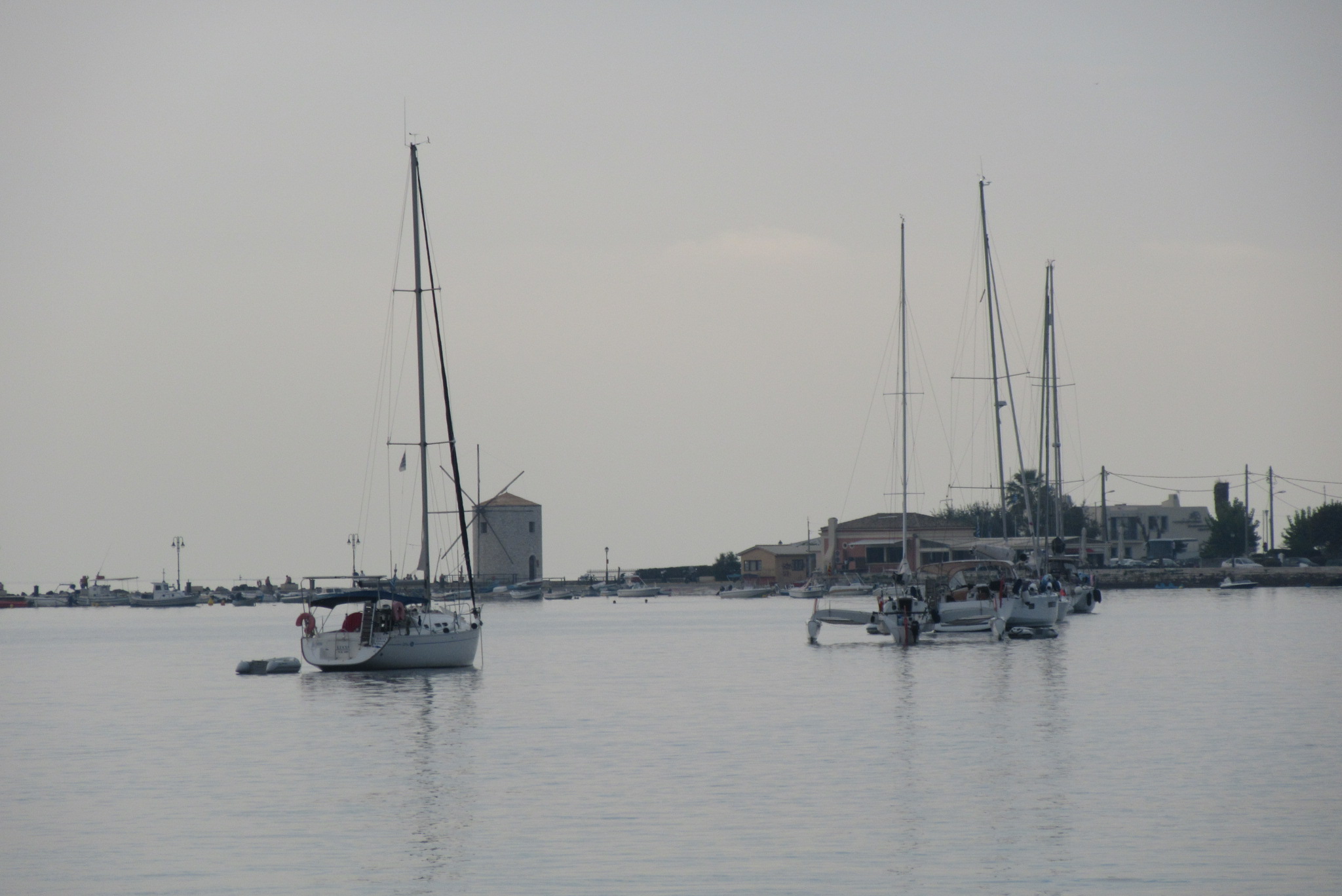
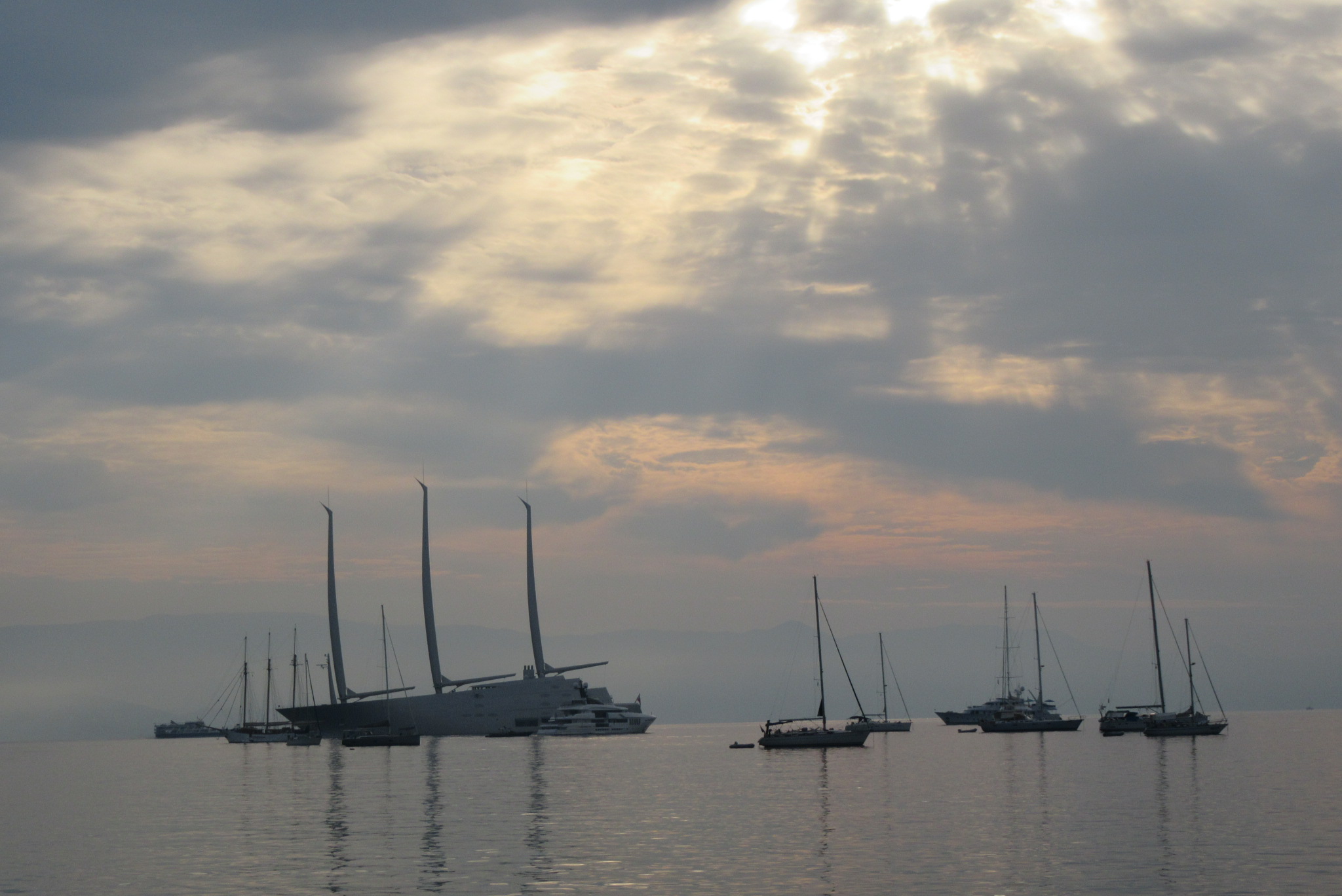
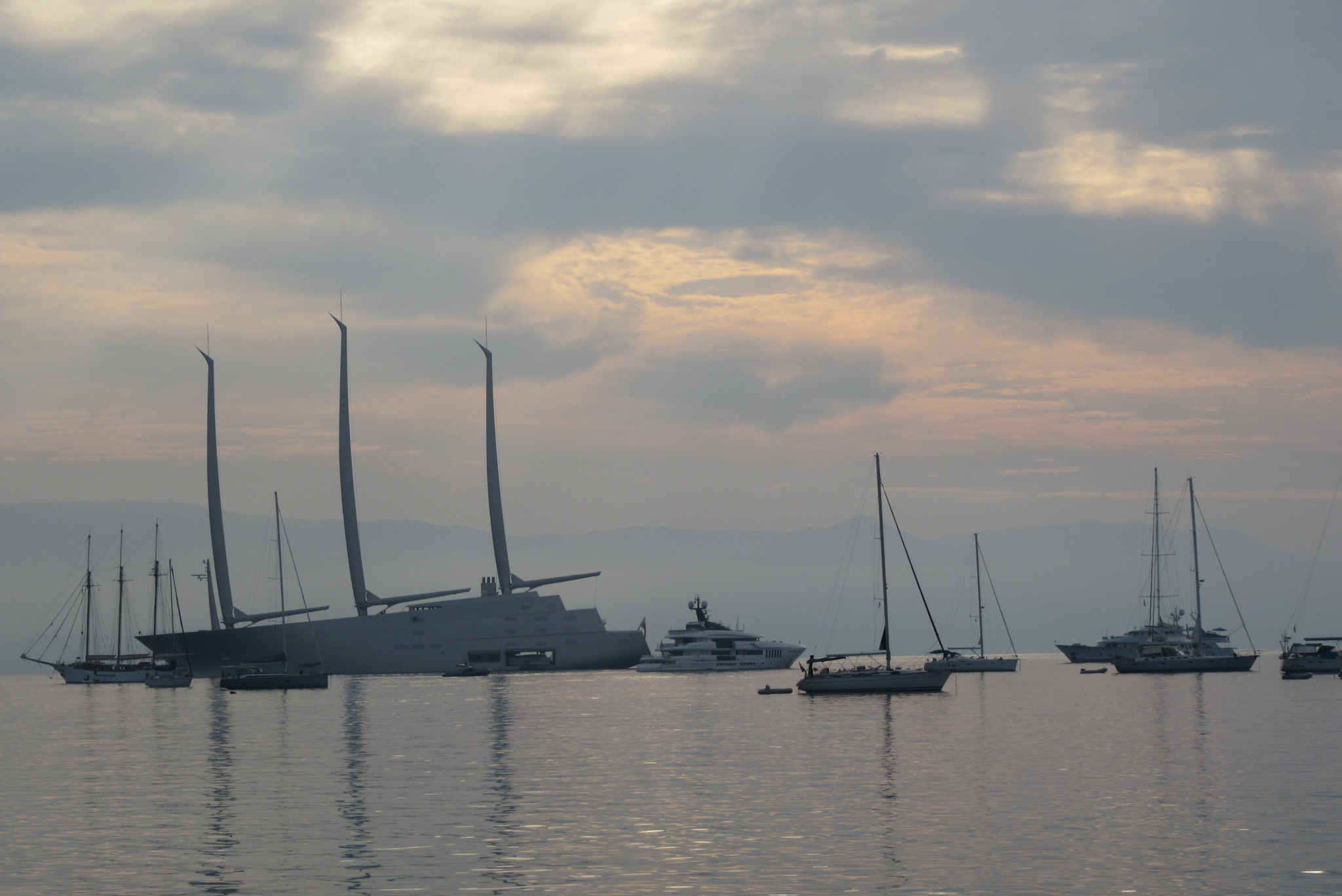
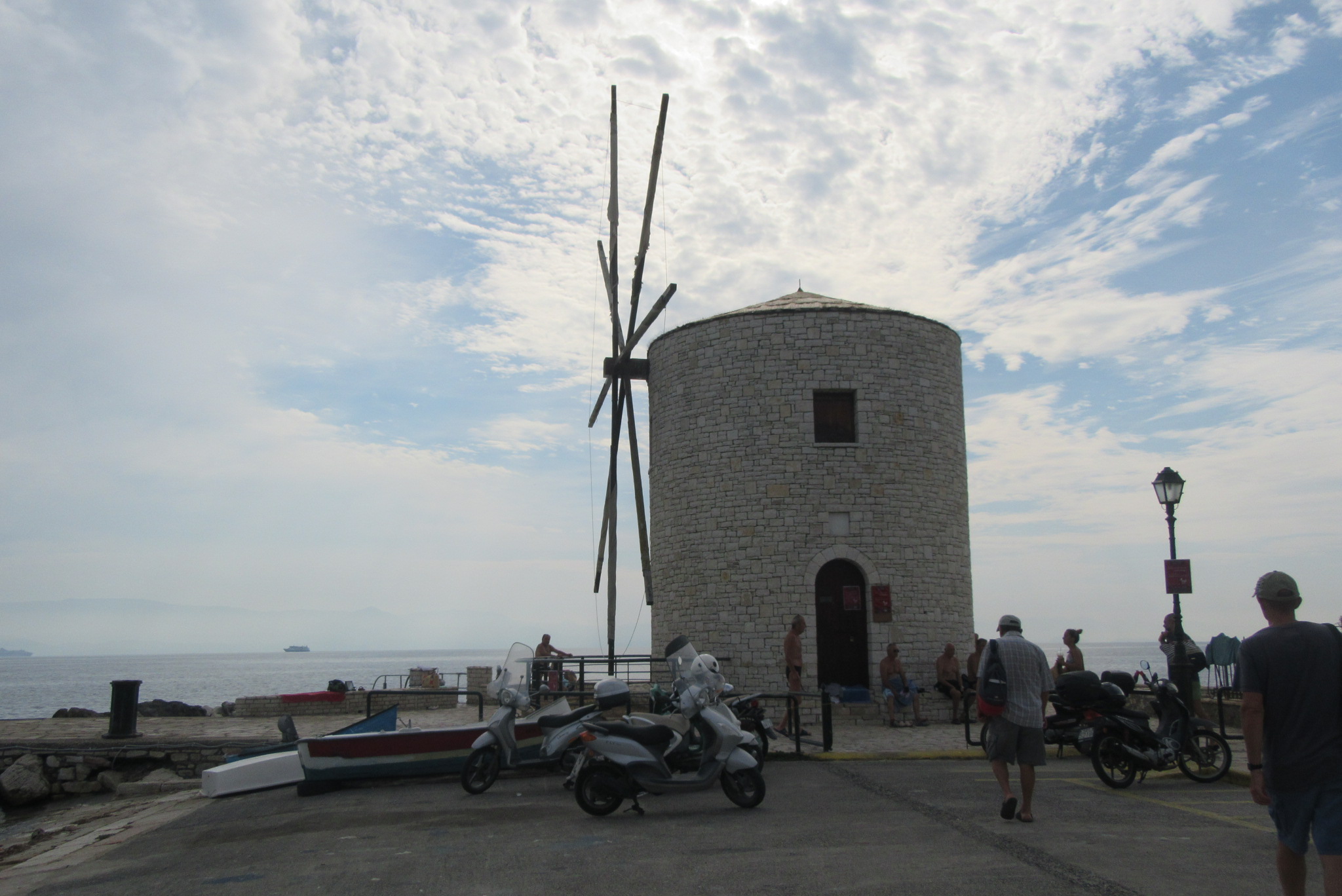
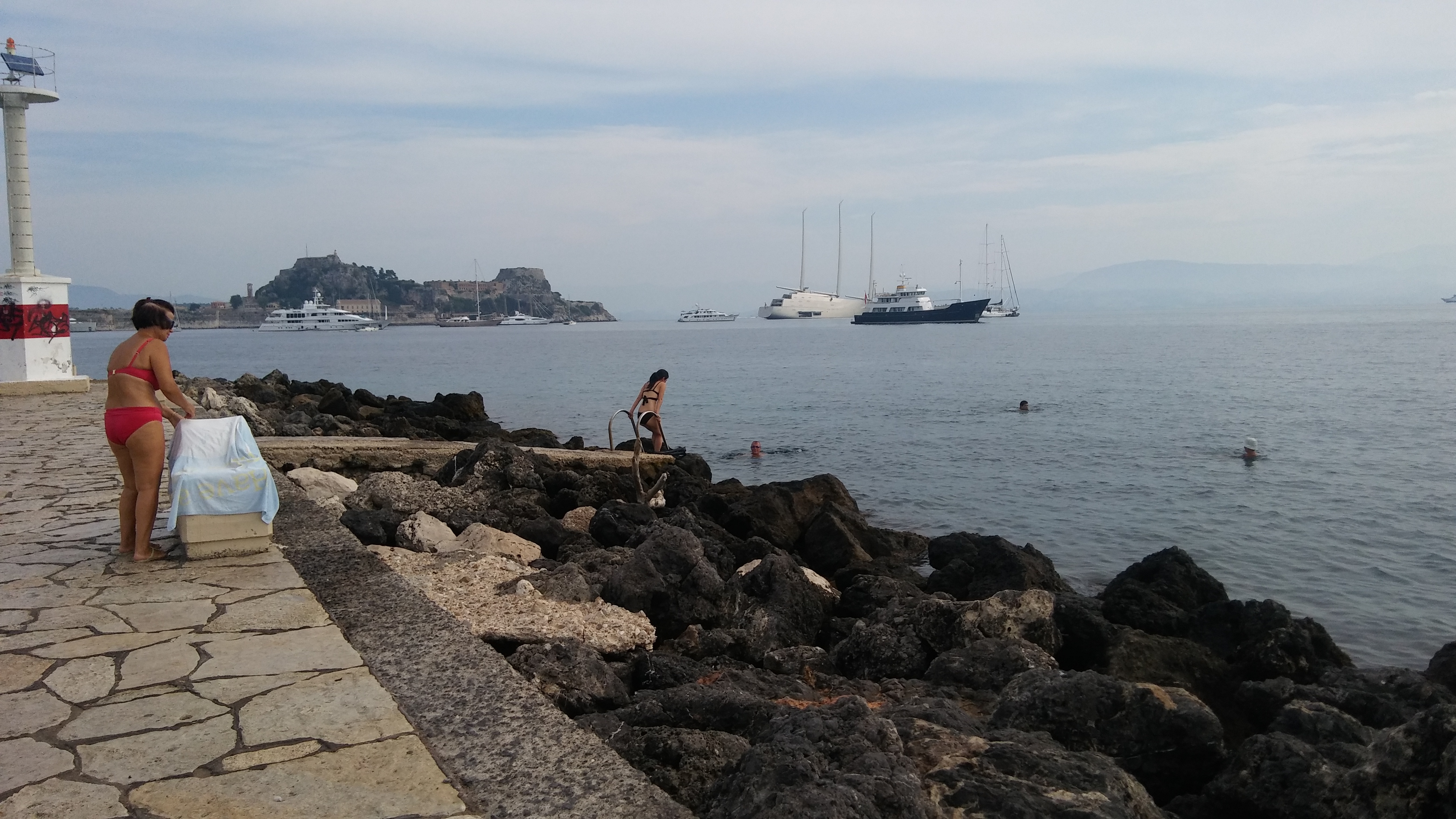
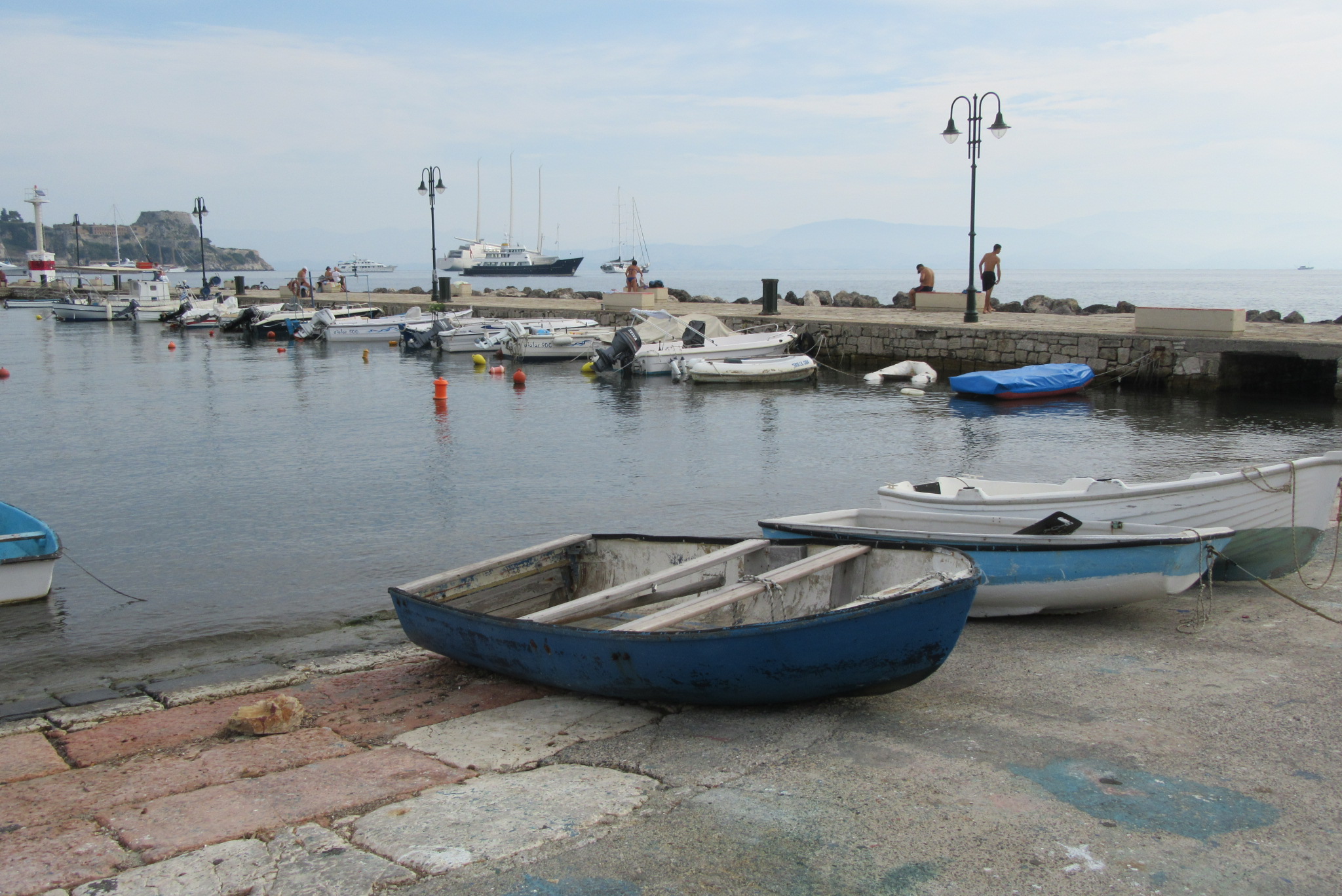
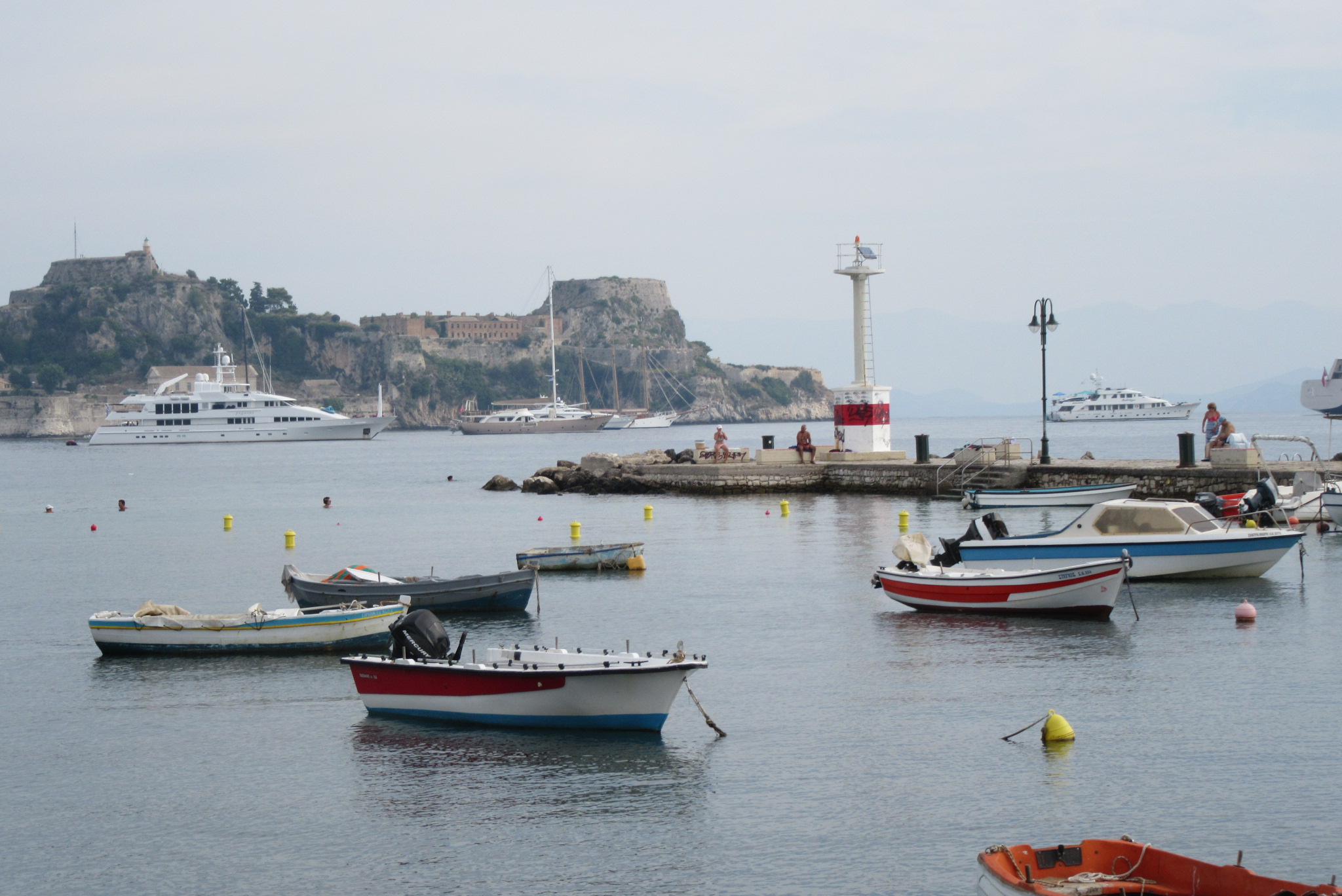
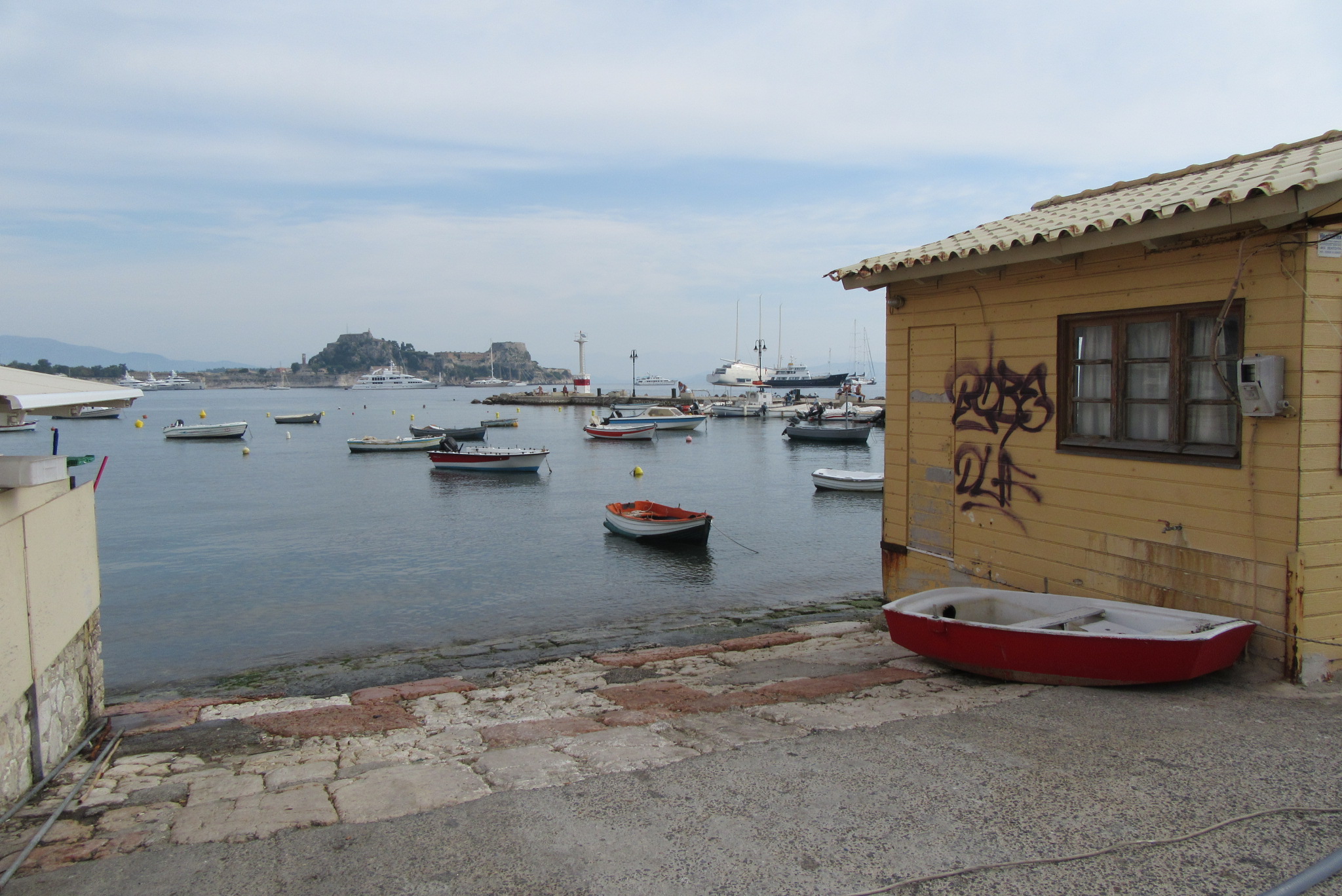
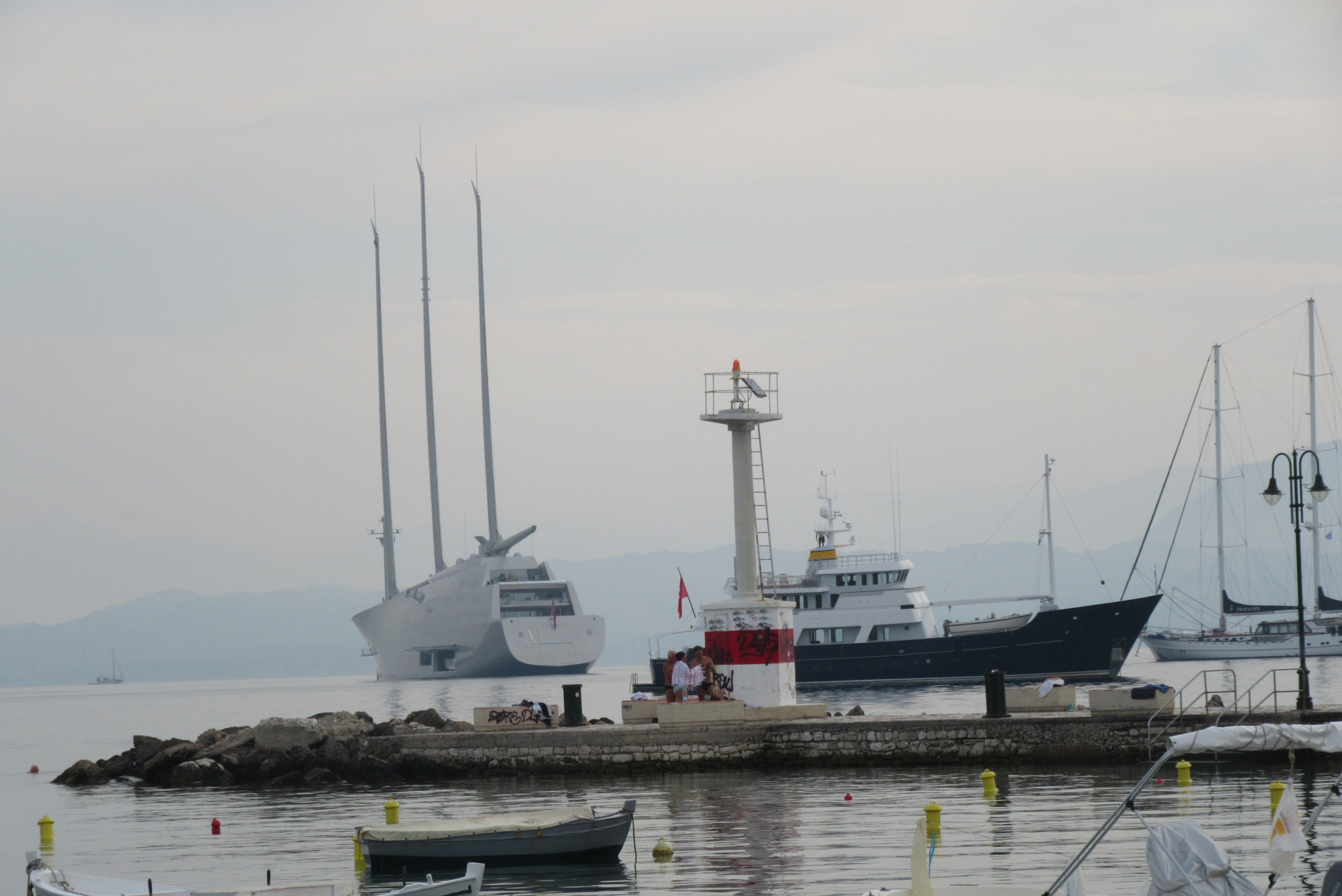
The view on the left from there is to the Old Venetian Fortress. On the other side, the coastal road reaches down to the end of the bay at Anemomylos (windmill). The windmill is situated at the base of a pier. At Garitsa bay, the sea is dotted with sailboats of all kinds. The fabulous zoom of my Canon Powershot SX610HS even captured the famous Yacht A that day, for which I was really pleased!

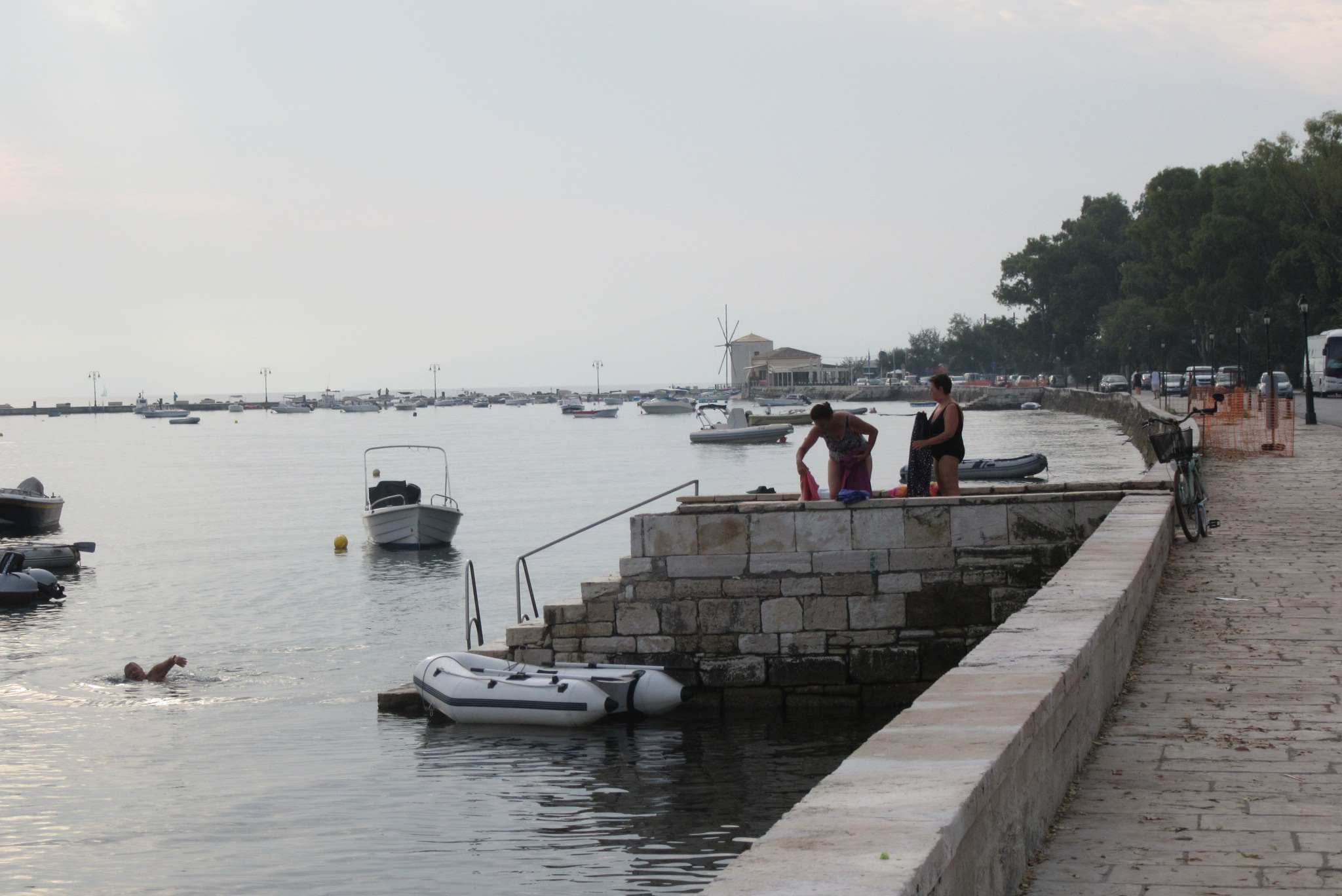
A walk around Garitsa is a joy of quiet, fresh air and enchanting vistas. On our way to the windmill, we encountered many locals dipping in the water for a cooling swim.


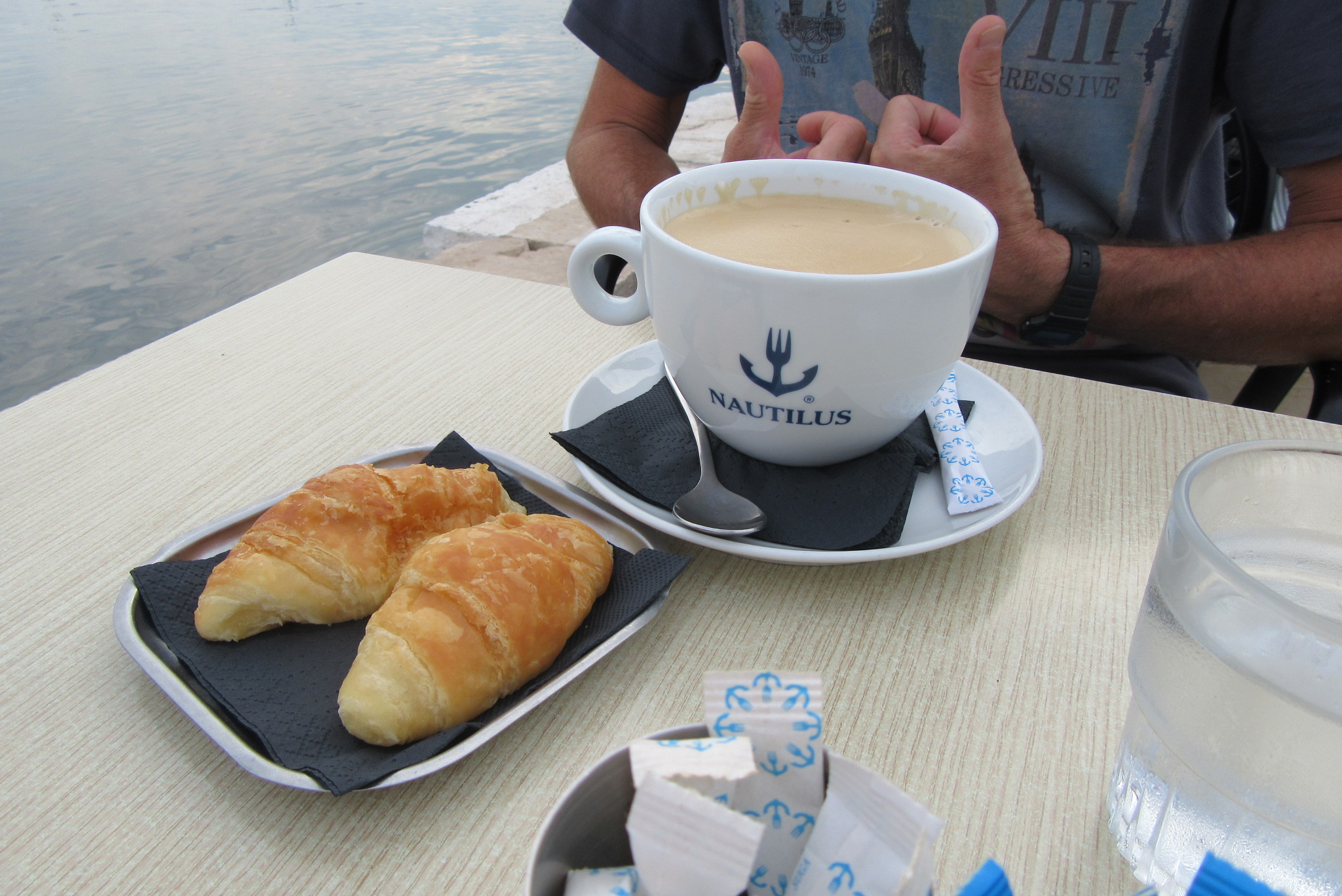
Just before the windmill, we stopped at Nautilus cafe for a coffee. It came with croissants, much to our delight. I highly recommend a venture inside the cafe, if only to see if you’ll sweat at all when crossing over the threshold (I did, but I’m weird like that, and I’m not telling why. You’ll just have to find out for yourselves 😛 )


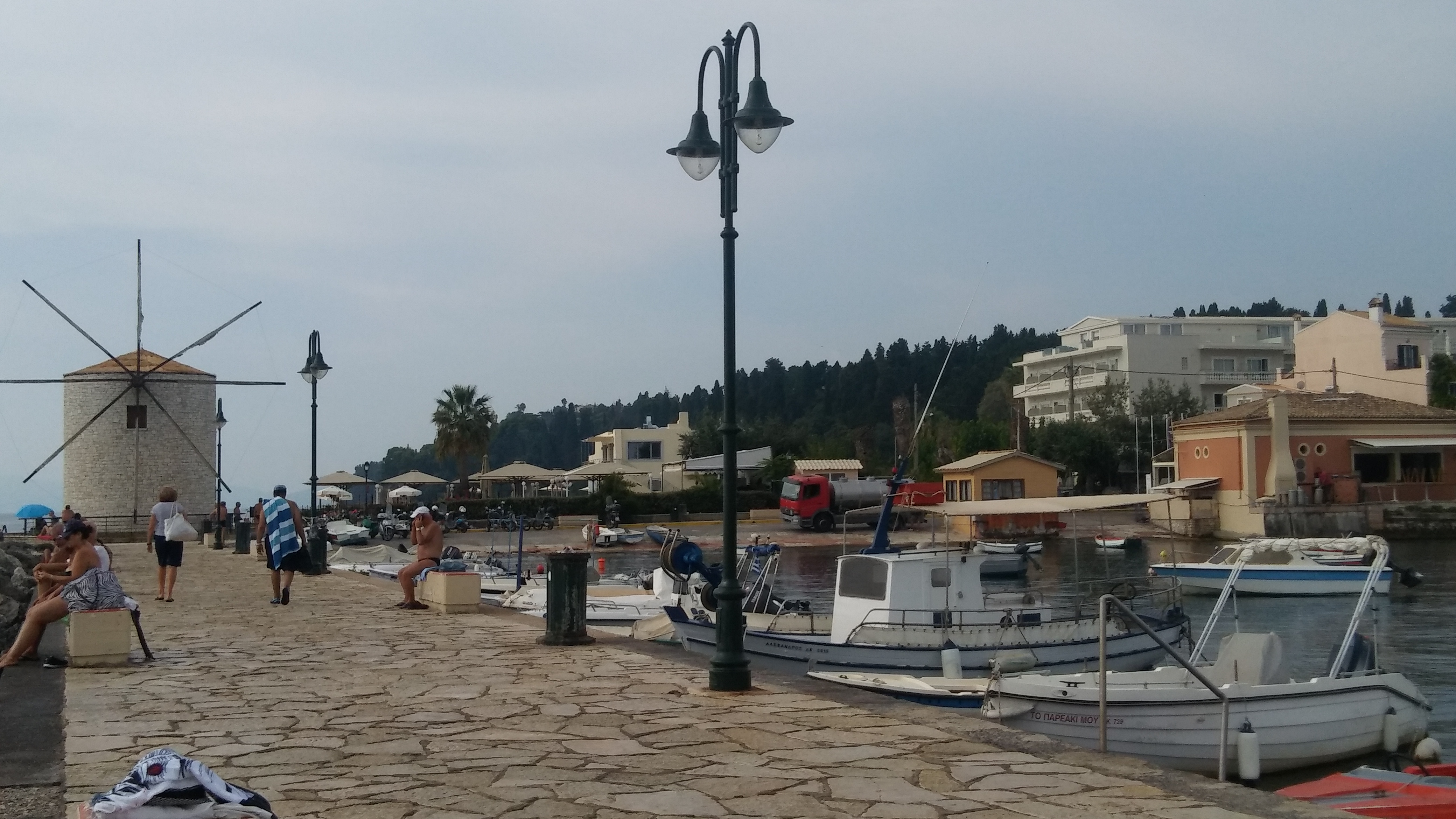
Anemomylos offers equally spectacular views. Just like in Garitsa, the locals keep coming and going for their daily swim.

Here, I’ll give you a tip that a local gave me. See the picture above? After visiting the pier, carry on behind the windmill along the coast and you will soon get to a bathing area that was once accessible only to the Greek king and the rest of the royal family! It is situated near Mon Repos and was recently opened by the council. It is not possible to access Mon Repos from that side, but you’ll be able to visit the spot on the beach where the Greek royals once descended from the palace to dip in the sea. The booth where they used to change into their bathing costumes still stands! I didn’t get the chance to visit it this year as I was tipped off too late. I hope to visit next time, though, and I will share photos and more info then.

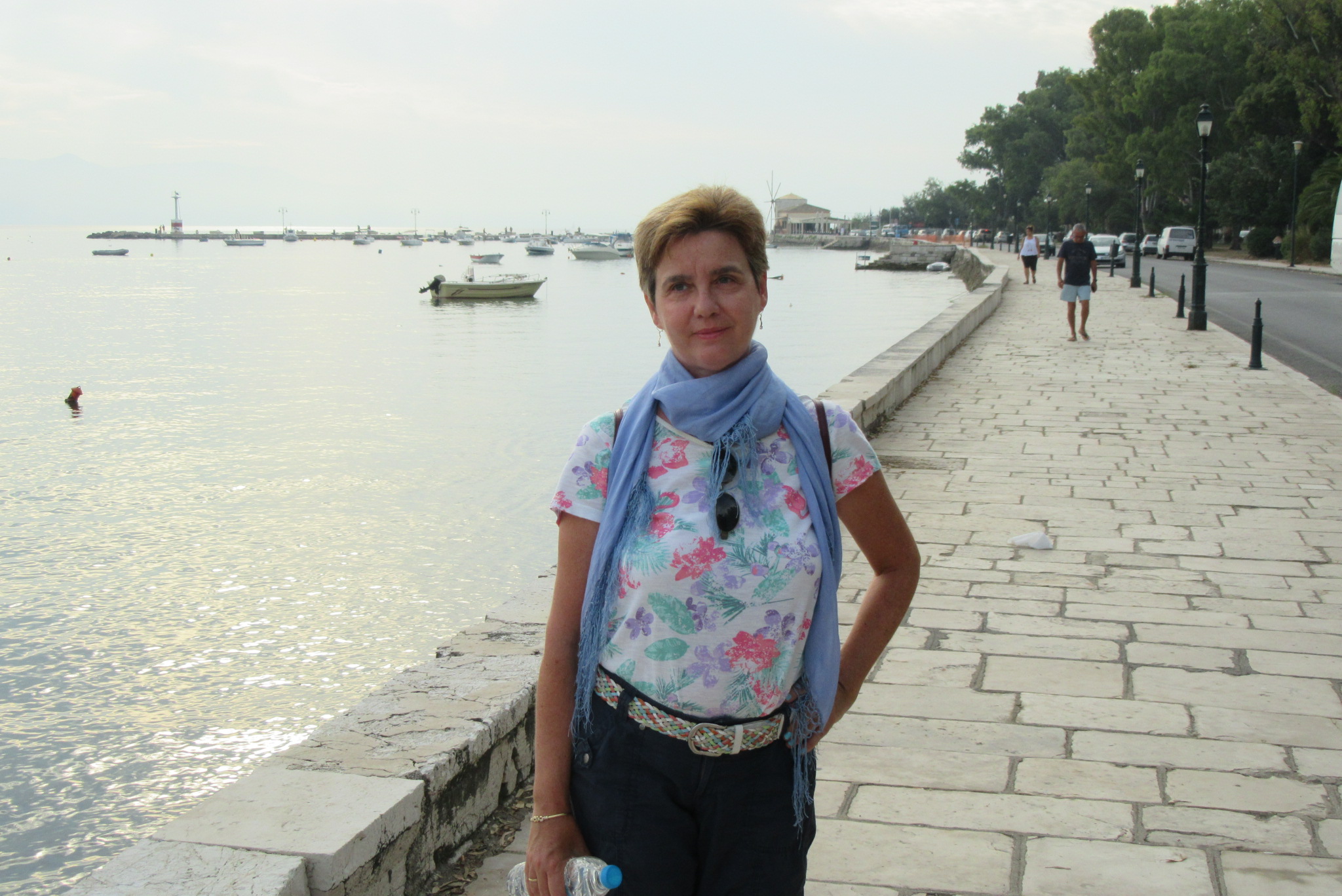
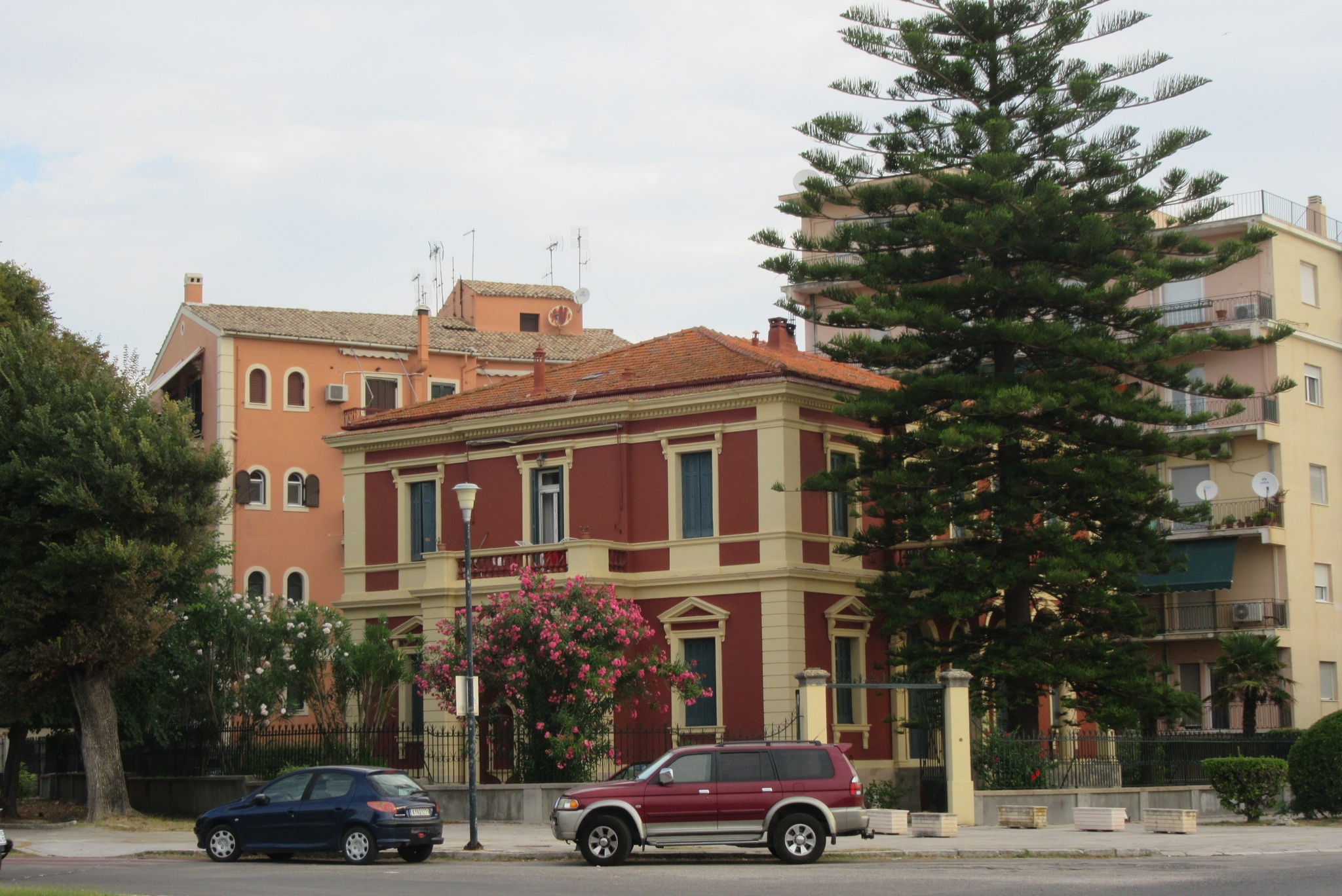
From Anemomylos, we headed back to Garitsa so we could get to Liston in town. On the way, I was delighted to identify the old house in Garitsa where I used to holiday with my granny as a small child. We were staying with her daughter (my aunt Stephania) and her family, who rented a flat there at the time. It was in the tall building on the left of this photo. On the green where I stood to take the picture, there used to be swings back in the day and I remember that it was very lush and shady there.

Granny used to take me there daily while feeding me ‘kolatsio’ (a snack between breakfast and lunch). It consisted of boiled egg and bread, more often than not. Almost fifty years later, the sense of place was so strong that when I stood in the middle of the now barren land gazing out to the Old Fortress like I used to as a child, the melodic cadences of Granny’s speech almost reached my ears again. It was an emotional moment for me as I miss her every day. That morning, she felt close. So very close again.

When we reached Liston and the Pentofanaro beside it (Five Lantern Post), we turned right behind Liston and then turned left at the first corner. That’s Agion Panton street, named after the church of the same name that you soon come across on the right.

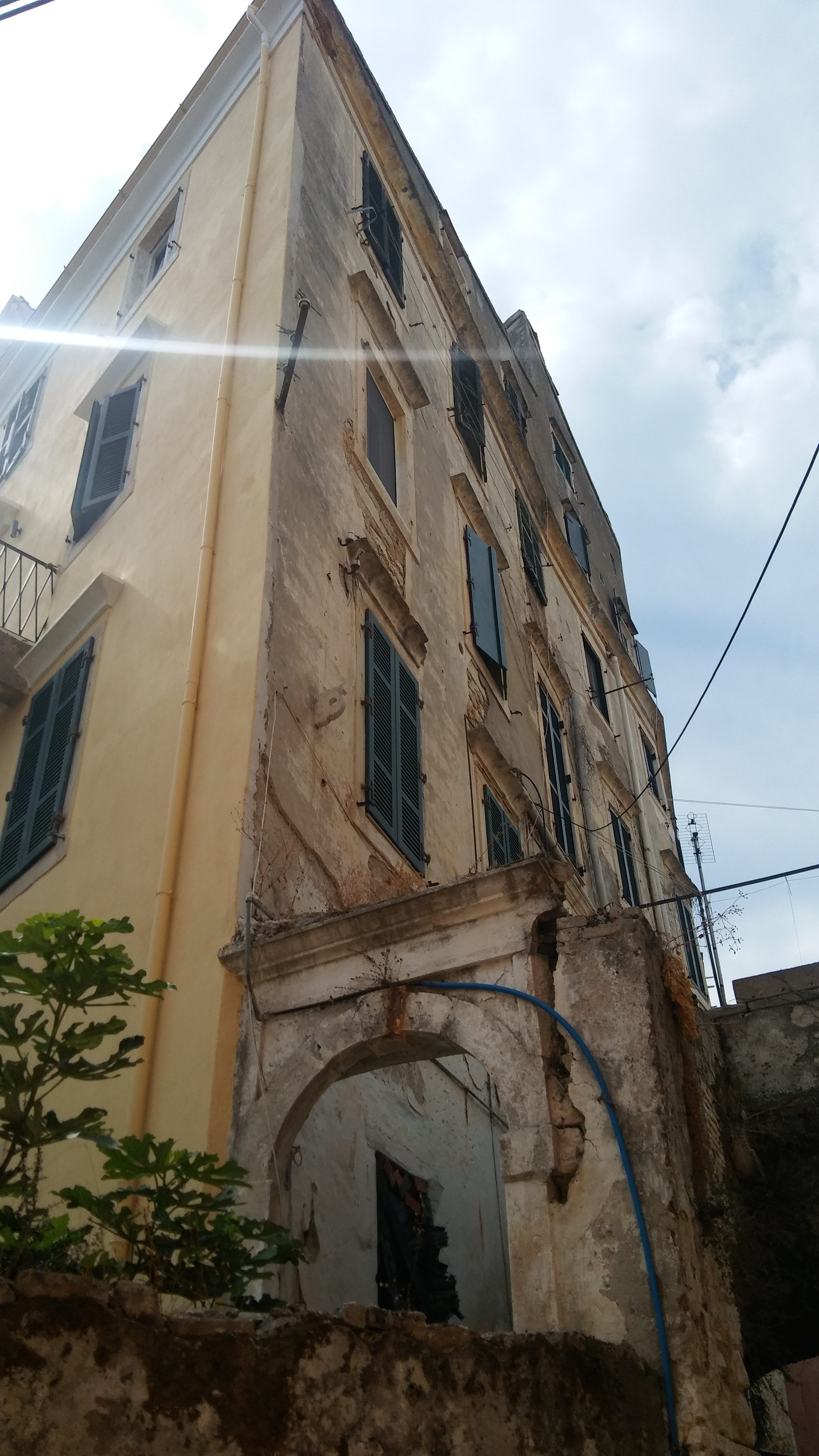
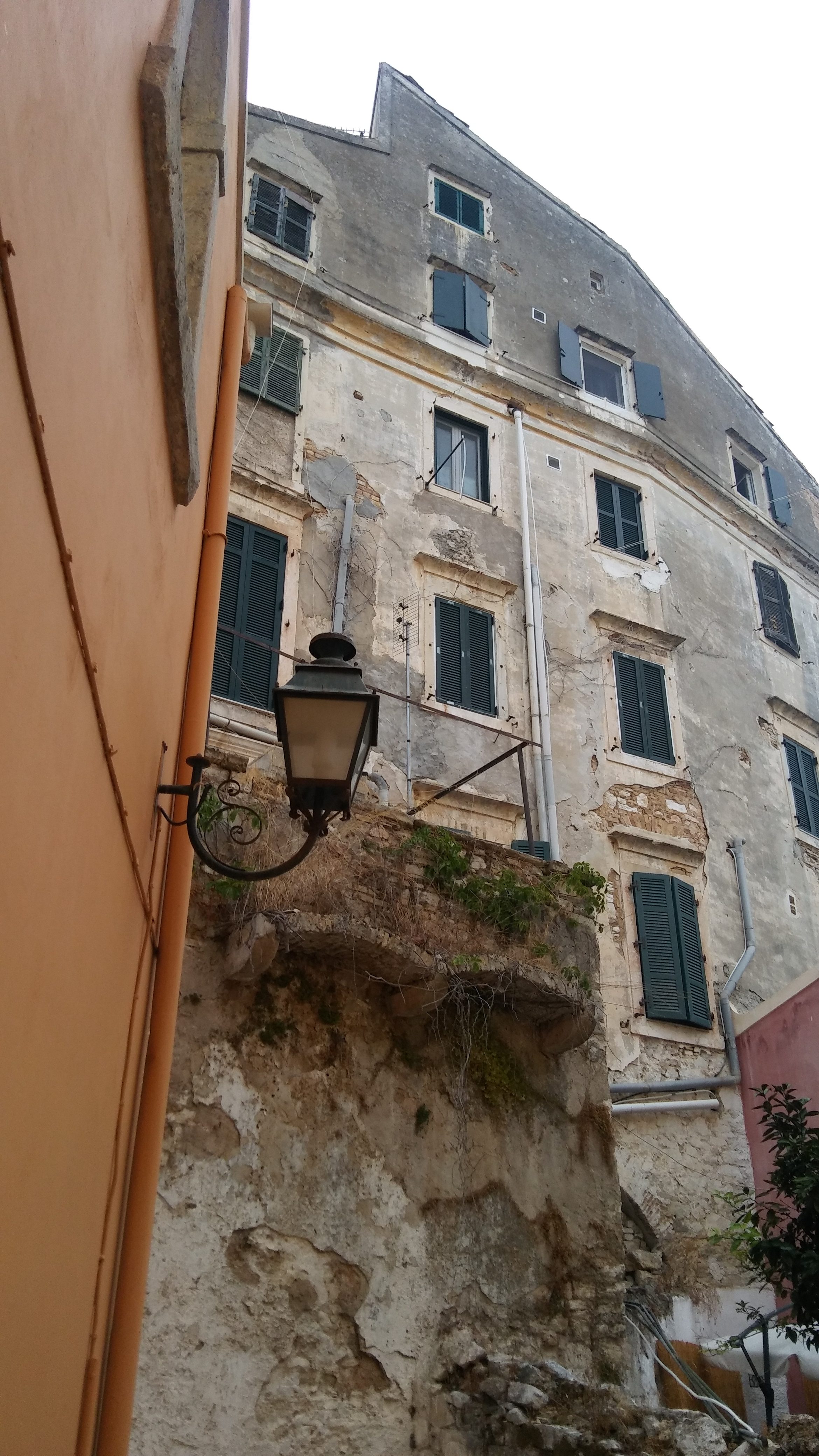
Just after the church, I came across the old edifice that Granny had pointed out to me in the past – the house where she grew up, and which my mother also knew as she used to visit her grandparents often there as a child. Her grandfather (my great-grandfather, Nikos Kopsidas from the island of Lefkas) would meet her at Pentofanaro every Sunday (when she’d arrive from the house in Campielo that I’ll show you later), then escorted her to this house for lunch.


Many a time over the years when Granny and I walked past the house, she’d point to the door, then up to the 5th floor to tell me this was where she ran from to St Spyridon Church whenever the town was being bombed during WWII. One fateful morning a miracle took place in the church to protect the people inside from the bombs. My granny was inside, a teenager then, and witnessed it. She loved to tell the tale, which in time I’ve also heard from other locals in the town. To hear all about it, you’re welcome to read this post that shares other miracles of St Spyridon too.


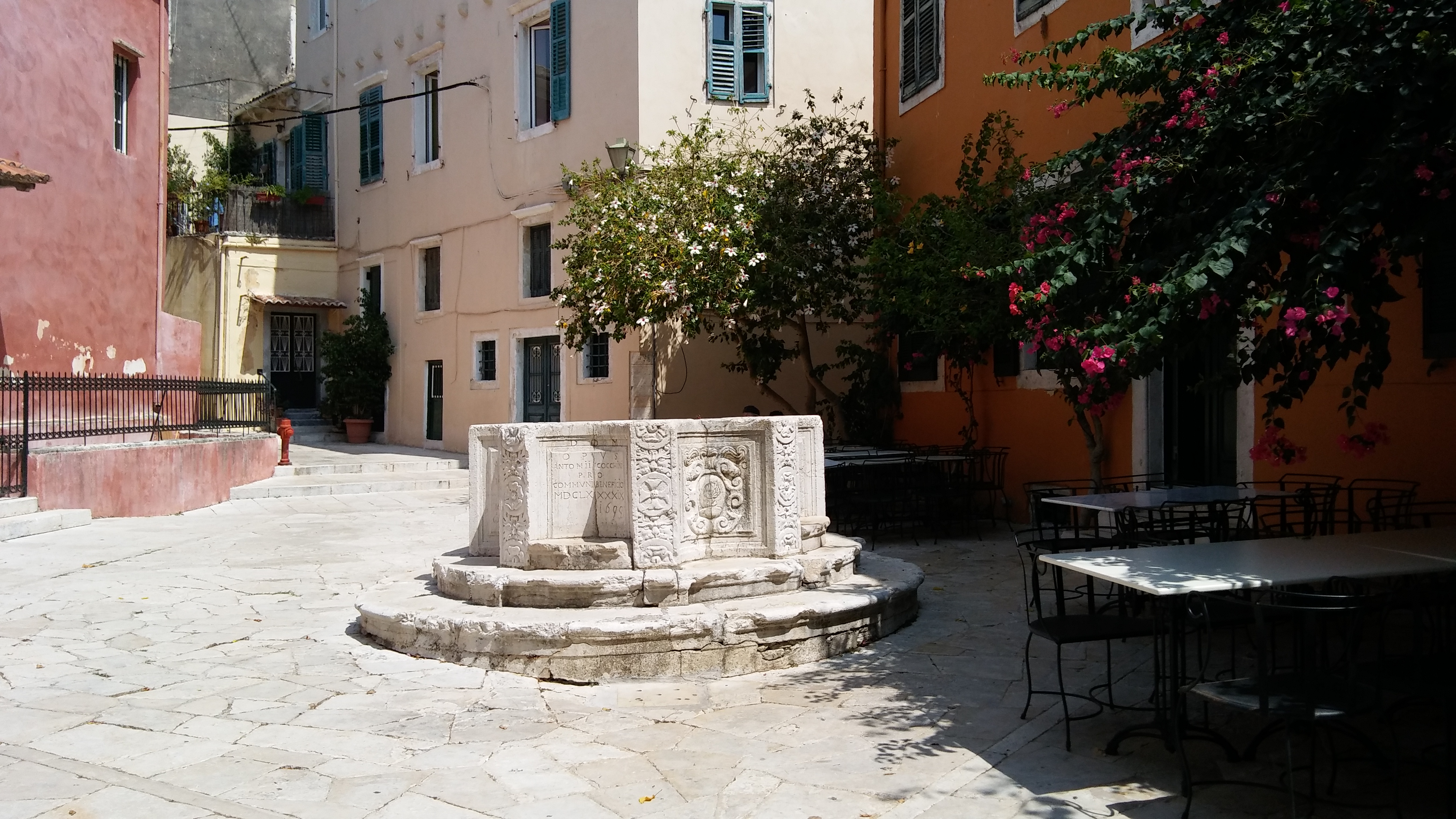
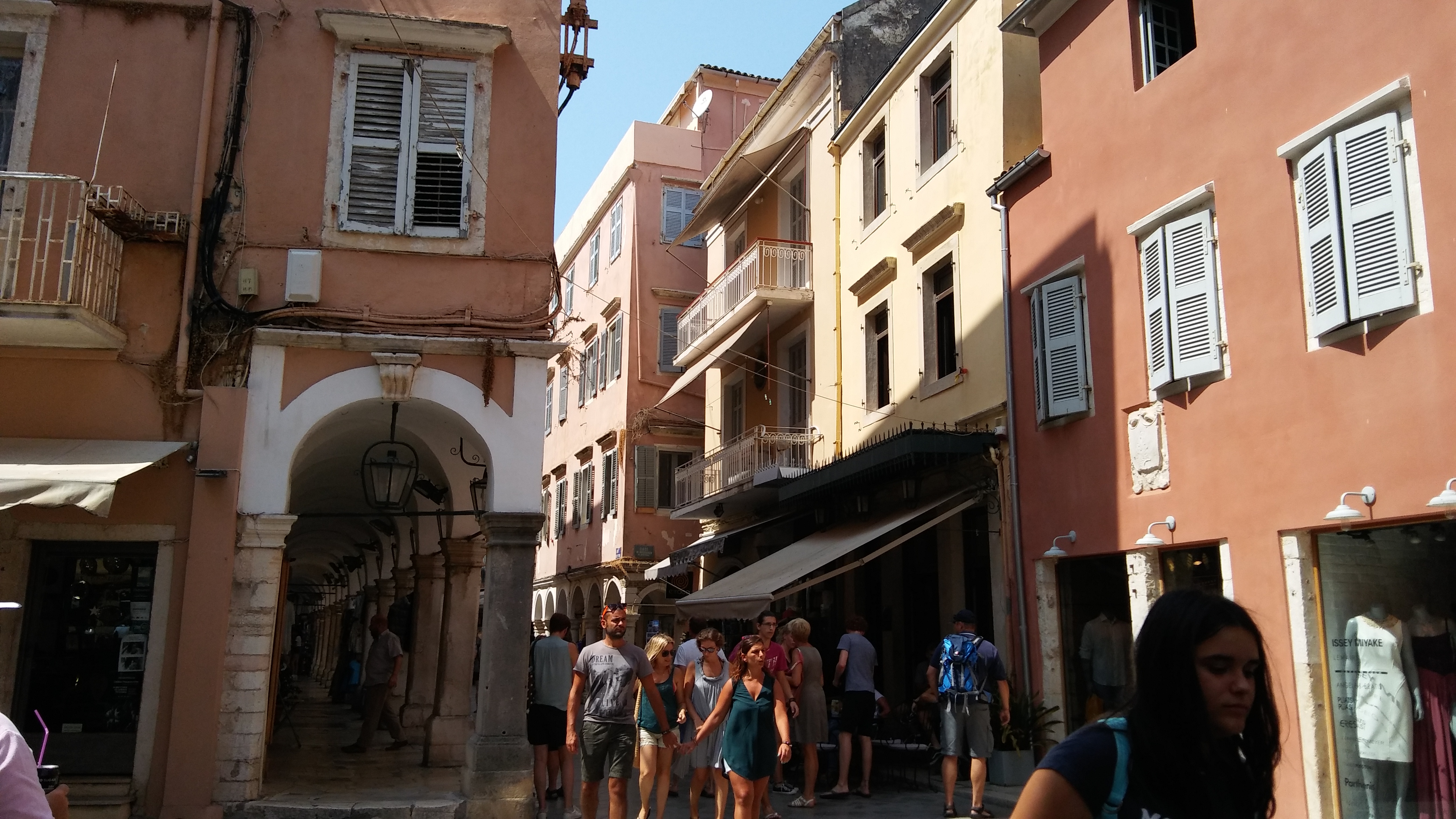
Going back on ourselves from Agion Panton street, we headed for the lane that runs past the back of St Spyridon’s church. From there, we hurried past the busy olive wood artifact shops to follow the sign to ‘The Venetian Well’. It was just a few seconds away from there, at the heart of the stunning old quarter of the town called Campielo with its picturesque lanes and antiquated Venetian edifices.

Next, we had to ask a local or two in order to find Ypapanti Church in the same area. My mother had told me that the house she was raised in stood right across from that church. I’d never seen either before and was getting excited as I followed the locals’ directions ambling along picturesque lanes and down old marble steps.

Finding the church proved easy enough, and it was quite close to the Venetian well.


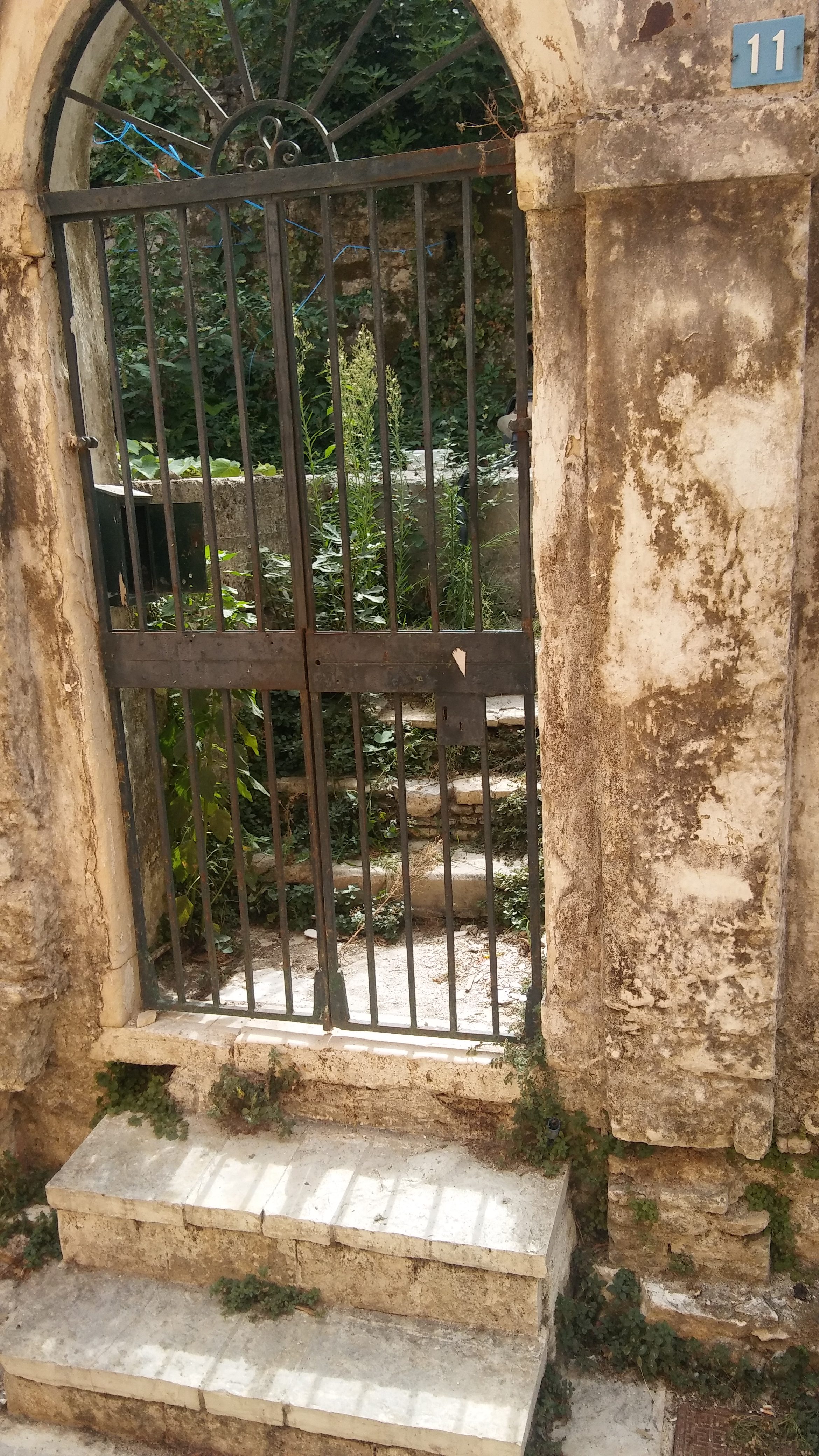
I identified the house easily. My mother had mentioned there were vaults and an external staircase, as well as steps behind the front gate. I took the third picture standing at the front door of Ypapanti Church.


Moved by the forlorn spectacle and the realization that I was treading on the footsteps of loved ones from another era, I went on my way reduced to silence and, through the back of old hotels, quickly emerged onto this stunning square.

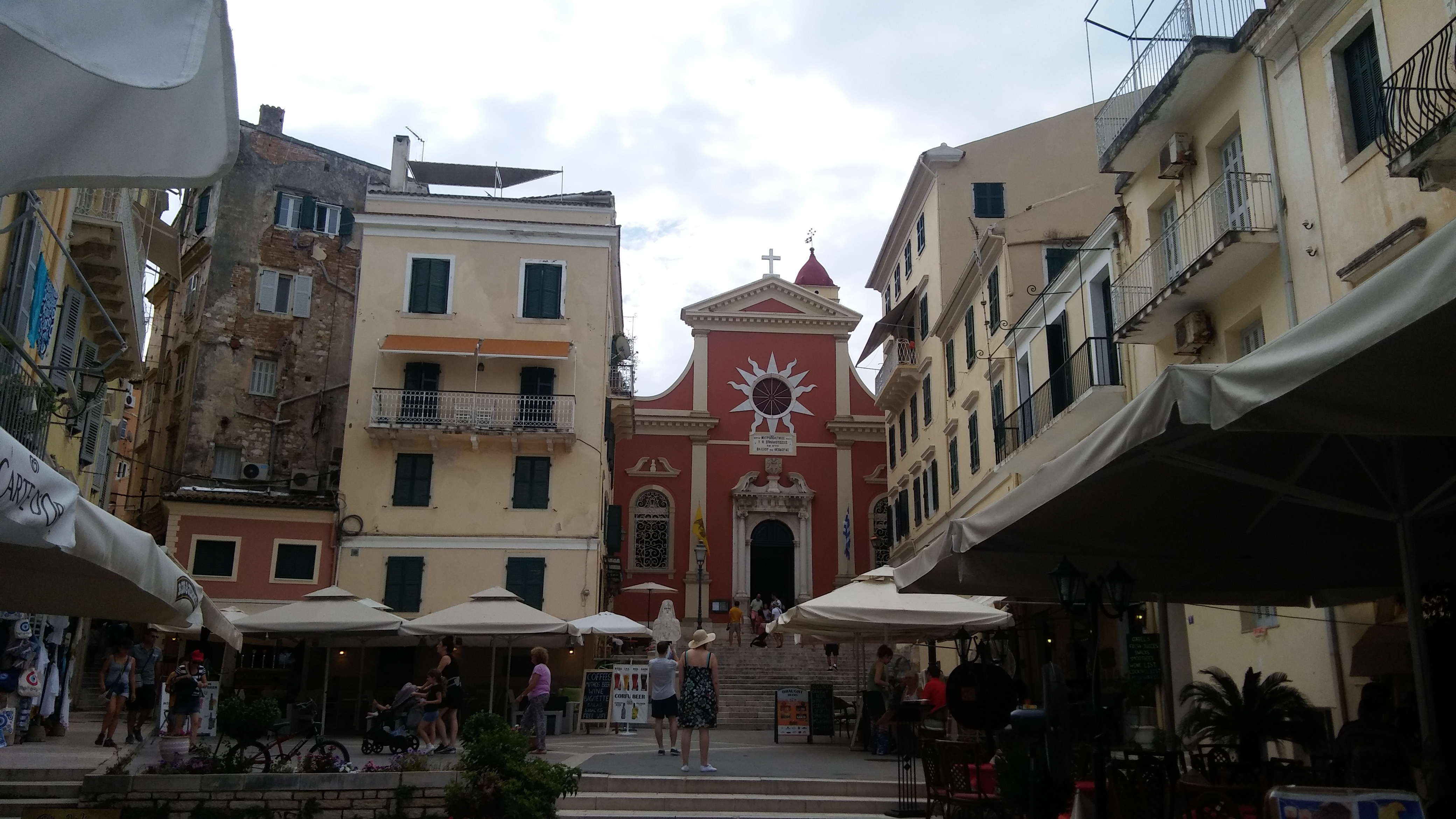
You may recognize the setting from one of the scenes from The Durrells. Supposedly having traveled to Athens, Lawrence Durrell was having a coffee at the square in said scene. In reality, this is the square of the Metropolitan Church of Corfu (or Mitropoli). It is the beautiful pink building in this photo.


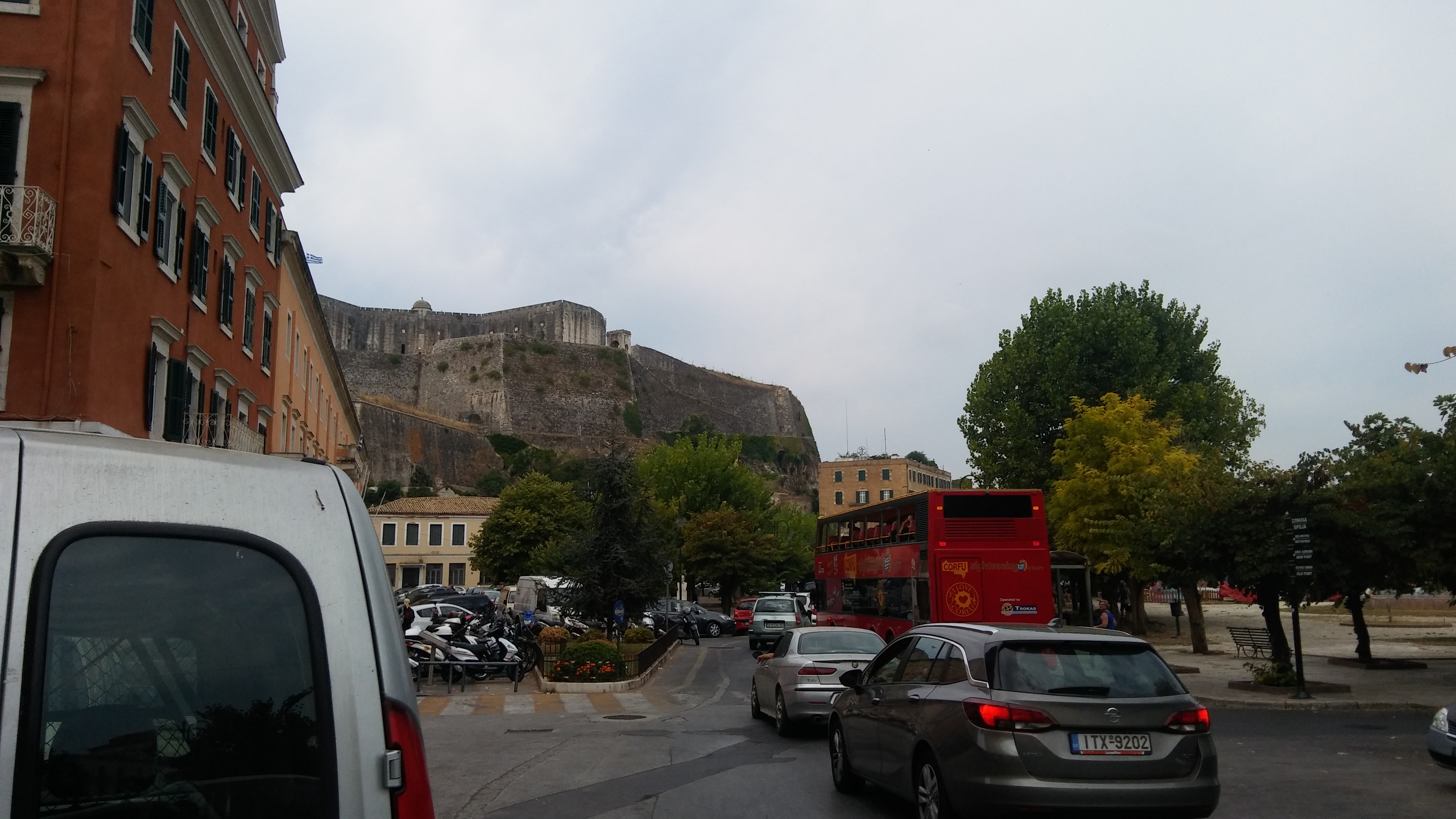
By that time, Andy and I were parched from the long walk so we headed towards the old port. At the New Fortress we turned left into Spilia. This used to be the coach station of Corfu back in the 80s. I have myriads of fond memories from arriving here on the coach from Athens every summer with my sister. The moment we’d step off the ferry, we’d rush to Spilia to take our luggage off the coach and we’d be met by a sky full of starlings chirping overhead. These moments used to signal for me every time the beginning of a long blissful summer.

I hadn’t visited Spilia in years and was astounded by the change of the setting. The coach station building is now derelict, and the place where the coaches used to park side-by-side was now taken up by tables and chairs from a number of cafes. A monument of the Holocaust also stands there now, honoring the memory of the multitudes of Corfiot Jews that lost their lives under the Nazi regime. This place was apt for this awe-inspiring monument, seeing that to the left of the square, stretches out the Jewish quarter of the town that’s built around a Synanogue.

FACT: The name Spilia (cave, in Greek) is owed to a known cave in the vicinity. It is situated near the New Fortress that towers over this area.

After a much-earned stop at Spilia for ice cream, we took the lane past Marina’s Tavern (used heavily for lunch meetings by the Durrells production team, or so I heard!) to the Jewish quarter and the Synagogue. The road led us up ahead to Theotoki Street (where Hondos Center and Public are). From there, we turned right, back to Sarocco.

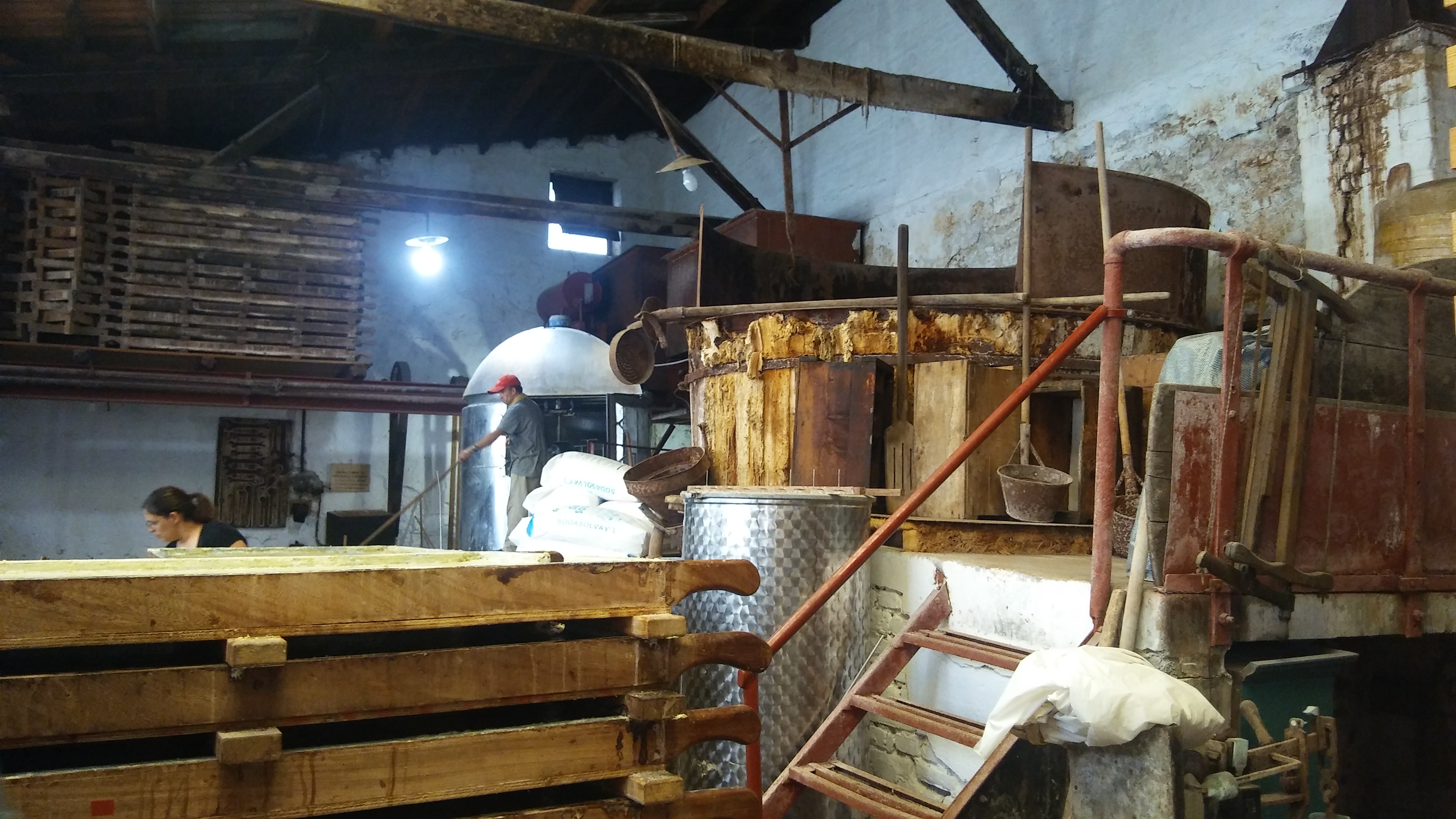
With Alexandras Avenue and the post office behind us, we headed up, along the right side of Sarocco square. Asking at a cafe for directions, we found the Patounis Soap Factory just a couple of doors away. I say ‘factory’ but its facade is only small with a typical shop front door so keep your eyes peeled.

This traditional family business has operated in Corfu since 1891 and is still being run today by the descendants of the founder (5th generation), who use the same methods and tools as in the olden days. To our delight, they welcomed us warmly and offered us a tour of the place, during which a lovely young lady of the Patounis family gave us a proper presentation as well.


Luckily for us, we caught them on a production day. The factory’s main worker (who, they said, is a bit of a gem and quite irreplaceable to them) was working hard in the background as the very interesting presentation took place.

There is a shop at the front, where we chose some products to take home before leaving. The company produces 4 different types of soap. We learned there are locals who can’t do without them, and not just for washing themselves. Depending on the type, some are good for washing dishes, others for doing the laundry. All soaps are made with pure ingredients, including natural oils. For more info on the company and its products, go HERE.

I urge you to visit the Patounis Soap Factory at first opportunity, if only to sample the truly warm hospitality of its owners. And, if you have a book to spare, ideally short reads for kids or picture books, consider donating one for the small library that operates in the factory!

I hope you have enjoyed taking this walk with me around my favorite town. I highly recommend that you try it too, as it combines the bustle of market areas and touristy lanes with the charm of quiet, forlorn streets that have the power to take you back in time. And let us not forget the ample sea air you would be getting at Anemomylos and Garitsa Bay! Even if you follow my advice to walk to there and back from Sarroco (or Liston) and leave the rest for another time, I am sure you will consider your time well spent. As for how long it takes to visit Anemomylos from town, I’d say about 30-40 minutes either side at a comfortable speed.


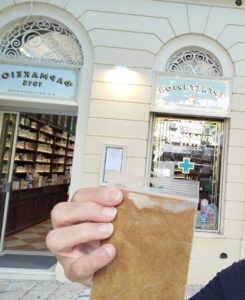
Hey, before you go! Have you ever heard of Spitseriko, Corfu’s secret spice mix for pasta? Centuries ago, it was made and sold only by pharmacists in Corfu town. Find out all about it IN THIS POST and where you can get it today!

OOPPAAA! SIGN UP TO MY BIMONTHLY NEWSLETTER AND GET 3 BOOKS FROM ME AS A WELCOME GIFT! SEE BELOW FOR THIS OFFER!

YOU KNOW WHAT THEY SAY… SHARING IS CARING! Tweet this to spread some love:

Take this wonderful walk around Corfu town #Greece #Corfu #traveller Share on X

3 FREE books for you! Sign up below to receive them instantly!

NEW! Clean Christmas romance. Single mother Cathy Roussos gave up on love long ago, and veterinarian Alex Rallis doesn’t believe in it, but one magical Christmas on a Santorini farm might just change everything…
Check it out on Amazon     Read a FREE sample!


A clean romantic suspense short read with an unreliable narrator that’ll keep you guessing! Vera is losing her mind over famous actor Yannnis Ksenos, except, she isn’t just a fan… Now, she plucks up the courage to ring his doorbell… Visit Amazon
 

For my delicious Greek recipes, go here
 
Planning to visit Greece? Check out my  FREE guide to south Corfu!

Clean romance short read, FREE with Kindle Unlimited. It’ll transport you straight to Corfu to experience summer in an idyllic Greek seaside village. The story is inspired from the author’s love for Moraitika and its people. Now, also available as an audio book! Visit Amazon

Beach fun and sweet romance mixed with magic spells and bird shifters! The Raven Witch of Corfu is an original story that will rivet you with its unrelenting suspense. The final twist will blow your mind! Available in paperback , box set or 4 kindle episodes! Visit Amazon


Nea Peramos – a picturesque little town near Athens

The seaside town of Nea Peramos is situated along the Athens-Corinth highway 36 kms west of Athens and across from the island of Salamina. It’s a heavenly little place,  especially along the seafront. Today, I’m sharing many of my own photos from my walks there, as well as some info about the town and its history.

The sea was like a sheet of glass the day I took these photos, and the atmosphere clear, which offered a good view of the Monastery of Panayia Faneromeni across the water on the island of Salamis (or Salamina).

In case you’re wondering if the infamous Battle of Salamis relates to this place, the answer is yes; to the left, the bay towards Athens and Pireas leads to an even more narrow strip of sea where the Battle of Salamis took place in 480 B.C. This is where the small and flexible vessels of the Greek fleet trapped the massive Persian ships of Xerxes. The vain Persian king was so sure he was going to defeat the Greeks that he ventured up the mountain Egaleo and set up his throne there to watch his fleet devour the Greek one – but was destined to watch his own ships burn and go under. As I sit at the seafront, I often imagine the Persians sailing by my part of the world on their way to their fateful demise, reminding myself that too much arrogance makes one susceptible to weakness and failure.

I like to start my walk around the town from the artillery camp (pyrovoliko). This is where the beach and the umbrellas of the previous photos are situated. Walking along the seaside towards the marina I always look forward to getting to my favourite stretch –  this small pier with these quaint fishing boats on the beach and in the water. A tiled walkway starts here, which leads to the open-aired ‘theatraki’ (little theatre) where small events take place in the summer time (all big ones take place at the heart of the marina a little further down).

Past the theatraki, the road leads to the square of St George Church. Carrying on the coastal walkway, we arrive at a little arcade and a line of cafes and traditional tavernas.

At the end of the tavernas you arrive at a decorative beached boat and the ‘home’ of a multitude of ducks and geese. These are a delightful recent addition to the seafront’s charm that visitors, and especially the children, love to watch.

In the devastating and deadly flash flood of November 2017 a part of the marina was claimed by dirt that came with the water from the Gerania mountains. It created a beach where the water and boats used to be – a devastating sight. Thankfully, all the restorative works were completed early in 2018 and the marina is now back to its normal, stunning, and fully functional state. On one side of it you will find all styles of yachts and pleasure boats, while on the other one there is a multitude of fishing boats.

At the end of the marina, there is another small beach with a couple more restaurants and a pier with even more fishing boats moored on it.

If you carry on walking down the beach from here, you will end up in a tiny shipyard and, ultimately, at the gate of the other military camp of the town – this one being one that trains paratroopers and navy seals. Oftentimes, all year round and in all sorts of weather, the men jump from airplanes in their parachutes, or take part in drills in the sea that involve helicopters and inflatable boats.

The latter I often get to watch during the summer from the beach while I swim and sunbathe, as strange as this sounds!

The day I took these photos it was my birthday, and the loveliest thing happened as I reached the pier  at the far end of the marina. A fisherman saw me taking photos and called me over. Then, he handed me a seahorse as a gift! Because it was a surprise from a stranger, it made for the best birthday present 🙂 The seahorse was dried up in the sunshine and I kept it as a lucky charm. You can see the fisherman in the above photos. He was mending his nets as two seals had broken them earlier that morning.

In the marina, the fishermen have stands where people can buy fresh fish. That said, it is also possible to buy fish directly from the boats. Fresh fish of the day, directly from the man who caught it in a matter of hours earlier. Doesn’t get better than this!

From the marina, I often sit on one of the benches to enjoy the view of the Monastery of Agia Faneromeni in Salamina across the water. As you can see in the photo on the right above, there is a ferry crossing (in the area of Perama) and you can get to Salamina in a matter of a few minutes. In August, during the festival of the monastery, oftentimes small passenger vessels are commissioned to carry people across for a visit straight from the marina and exactly from this spot that you can see above where the benches are.

This is also the ‘venue’ where many cultural events are held throughout the year. Theater shows, charity events, folklore dances, military band concerts etc, as well as the annual Lent Monday festivities, and the sardine festival in late August.

The town of Nea Peramos was formed and first inhabited by refugees from Peramos in Asia Minor in the 1920s (Nea Peramos means “New Peramos”). Their culture and history hold strong still; old songs and dances of Asia Minor are often performed in schools and in public events throughout the year.

The town is also known as Megalo Pefko (big pine tree). The name survives from the time when Greece was under Turkish rule (1400s-1800s). A large pine tree stood where the town is today. Travelers from Megara to Athens would walk past it to get to the city. Fearing the Kleftes (armed thieves who lived in the wild and robbed whoever used the roads) the locals in the area used the pine tree as a meeting point so they can travel to the city in large numbers for their protection.

Nea Peramos offers a multitude of delights to the visitor. Families and quiet couples, as well as whole coachfuls of schoolchildren arrive here for a day out all year round. In the summer time, Saturday nights on the marina feel like a touristy Greek island, the tavernas and cafes packed.

On sunny Sundays and big holidays all year round the establishments are often full to the last table and chair.

HOW TO GET TO NEA PERAMOS

To visit by road from Athens, take the Athinon (Kavalas) highway and follow signs to Aspropyrgos and Corinth.  Just before the toll booths at Elefsina there is an exit to Nea Peramos. Take this exit to avoid the toll cost and to take a picturesque coastal route to the town. The windy coastal road offers generous views to the bay and Salamina. It runs past Loutropyrgos, then Neraki with its clam farms and seafood stands, and ultimately leads to the artillery camp in Nea Peramos.

When you see its stony wall on your left hand side, expect to see a ‘My Market’ store on the other side of the road. Turn off the road on the first or second turn on your left and you’ll find ample parking on the seafront. From here,  a walk to the tavernas and the marina will take 5-10 minutes depending on your pace. If you prefer not to walk, then carry on the road after ‘My Market’ and keep watching your left. You will pass the church of St George and after a couple of blocks you will arrive at a small square. Turn left into the square. Where the road ends, turn left, then right, which will lead you to the marina’s ample parking area.

To ask for directions, the Greek word for the marina is ‘limani’.

If you prefer to arrive at Nea Peramos by train, you can take the suburban railway (Proastiakos) from Athens airport, the port of Pireas, and the metro stations of Larissa, Plakentias, and Neratziotissa. Note: The most convenient are the Pireas and Larissa stations as they are on a direct line to Nea Peramos. The end of the line is KIATO (its way after Corinth) so look out for the line PIREAS-KIATO when you look up timetables for Proastiakos.

There are no taxis at the station in Nea Peramos, which is out of town, and I wouldn’t recommend a walk to it for a number of reasons. There are multiple routes and you could lose your way – the roads are also deserted in places and best avoided.

Instead, I advise you to call the local taxi company in advance (an hour earlier or even half hour will do) so they wait for you at the station when you arrive. Just let them know what time you’re arriving – or if you’re already on the train they will know when it will arrive. 

From the church of St George (as mentioned and pictured earlier in this post) you can take a taxi back to the station at the end of your visit to the town.

Phone the taxi company to arrange for a pickup here:

Landline: +30 22960 44557

What’s up or mobile number: +30 6978 167500

The Greek word for ‘marina’ is ‘limani’. For ‘train’, it is ‘treno’.

Another way to reach Nea Peramos is by bus. The buses depart from Thissio in Athens and run frequently throughout the day. You’ll find them beside the Metro station of the same name. Here’s the site for bus times and contacts: http://ktelattikis.gr/en/

If you’re driving to Nea Peramos, I recommend you venture a little further too. Drive down the old highway towards Megara and visit Pahi too (takes about 15 minutes to drive there from Nea Peramos). It is a tiny village with a picturesque harbor where you can sit at a fish taverna or a cafe. Pahi is crowned by a hill that has a chapel on the top and offers spectacular views.

In the summer, I also recommend you sample the cosmopolitan beaches of Kineta (pebbly) or Psatha (sandy). Both are on toll-free roads if you use the highway that runs past the town of Nea Peramos. Kineta is closer, about 15-20 minutes by car from Nea Peramos. Psatha would be about 30-35 minutes. For any questions, or more detailed directions, just use my contact page anytime.

IMPORTANT: When searching for Nea Peramos online, make sure to specify “Nea Peramos, Attica”. Some of the refugees from Asia Minor arrived at Kavala in the north of Greece as well, creating a second Nea Peramos there!

WHERE TO EAT

For a meal in town I recommend Ef Kouzin, Kaldera, Psistiri, and Argo. I am listing them in order of the location as one walks from the church towards the marina.

All the tavernas have tables outside by the water where you can sit under umbrellas.

Just to clarify, I don’t know the owners or take commissions from any of the establishments – but I love the friendly service and the food in all of them. I recommend the kolokithokeftedes (courgette patties), the chicken souvlaki and the bifteki especially. 

‘Psistiri’ is a great choice for grilled meat.

‘Argo’ is where I make a beeline for when in the mood for pizza. They make them fresh and they are delicious. Make sure to order a starter of their keftedes too! You’ll spot ‘Argo’ easily. It’s by the decorative boat on the beach and its seating area is laid out under and around a large tree.

‘Ef Kouzin’ offers a complimentary tsipouro shot as a welcome and a yummy dip for your bread.

For a coffee, I recommend ‘Excite’ and ‘Wave’. Both are on the seafront side by side near the church of St George.

Last, in case you visit in the summer and wish to swim, there is a beach in town but personally I no longer swim in town or in any of the other beaches in the outskirts. Since the flood of 2017, a lot of mountain dirt wound up in the sea and so the beaches are nowhere near as clean as they used to be.

If I want to have a quick swim I always go to Neraki. The sea here is constantly refreshed by underwater fresh water springs. Neraki is a small town just before Nea Peramos as you drive from Athens on the Old Athens-Corinth highway. You will locate the beach easily as on the road there  are many stalls where the local mussel farmers sell mussels and many kinds of shellfish too. The beach is right where the stalls are, on a lower ground. Find one of the many stairs that take you down to sea level, and voila! You’ll be in a small but perfect beach paradise instantly. It even offers pine trees for shade. You can combine your visit with a lunch on the fish taverna there that has tables by the water.

I hope you’ve enjoyed this little presentation, and that you will get to visit Nea Peramos during your next visit to Athens. You will be glad you did!

What did you think of this article? Have you ever been to Nea Peramos? What did you most enjoy there? Comment and  let me know! I’d love to hear from you.

SPREAD THE WORD WITH A TWEET:

Visit this quaint seaside town near #Athens ! #Greektravel #Greece Share on X


3 FREE books for you! Sign up below to receive them instantly!

NEW! Clean Christmas romance. Single mother Cathy Roussos gave up on love long ago, and veterinarian Alex Rallis doesn’t believe in it, but one magical Christmas on a Santorini farm might just change everything…
Check it out on Amazon     Read a FREE sample!


A clean romantic suspense short read with an unreliable narrator that’ll keep you guessing! Vera is losing her mind over famous actor Yannnis Ksenos, except, she isn’t just a fan… Now, she plucks up the courage to ring his doorbell… Visit Amazon
 

For my delicious Greek recipes, go here
 
Planning to visit Greece? Check out my  FREE guide to south Corfu!