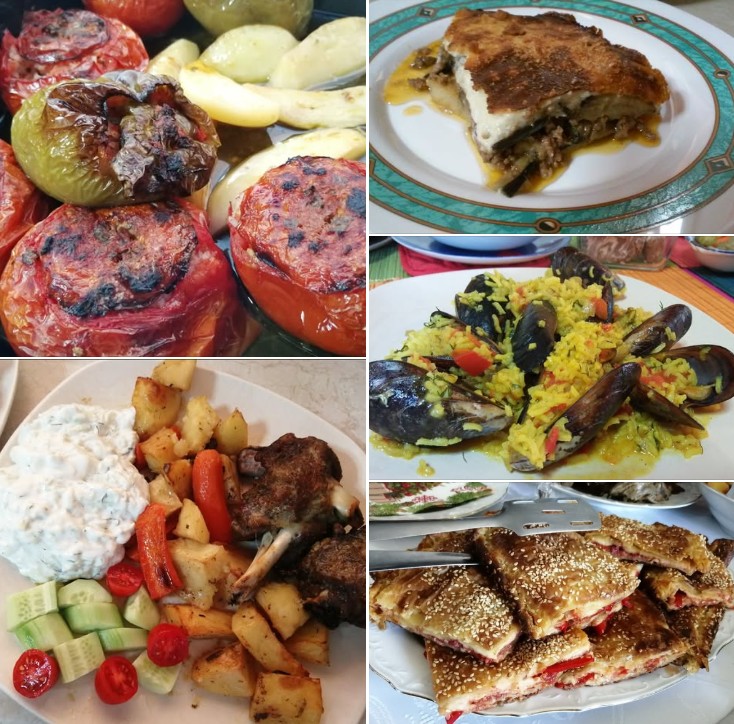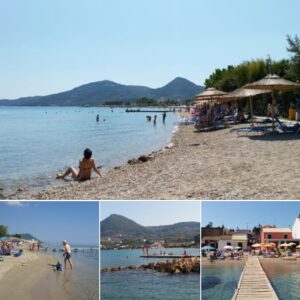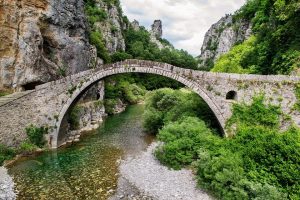
This is the website of Greek author, Effrosyni Moschoudi. Go to the 'FREE STUFF' page on the menu to get her FREE books! Also, her travel guide to Moraitika and Messonghi in Corfu and the Greek recipes are unmissable if you love all things Greek!
A mollusk with a gift for emperors and kings. Tasty too!
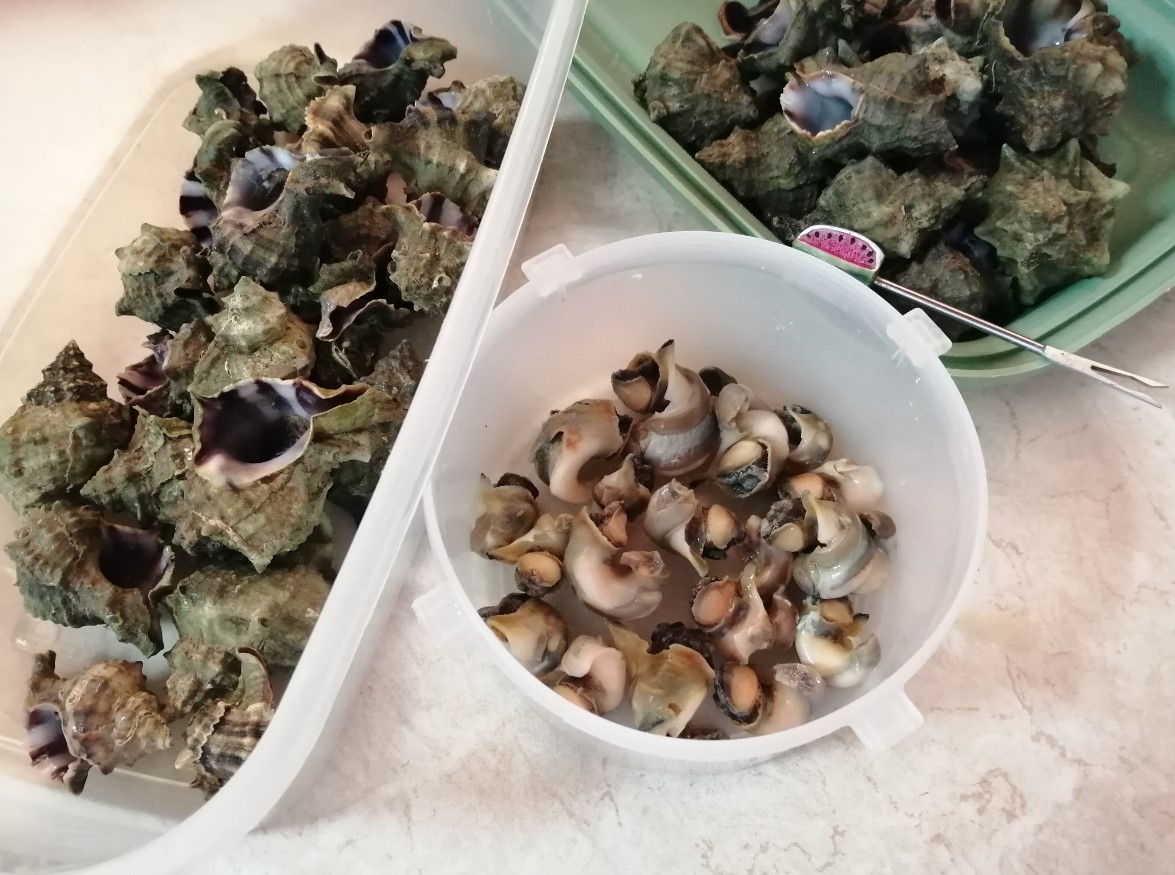
This type of purpura mollusk is called porphura (dated Greek word for ‘purple’, pronounced ‘porfeera’).
In ancient times, these mollusks were used to extract the color purple, which was then used to dye the clothes of kings and emperors. The practice is 3,000 years old.
‘Porfeero’ is the Greek name of this special, royal shade of deep purple. Those with royal blood were once called ‘porfeerogenitos’ which means ‘born of the purple color’. According to Pliny, this color shade resembled coagulated blood. It is recorded in Homer’s works and in Greek mythology too. Zeus recognised and saved Perseus because he wore this color. Theseus proved that he was of royal descent by appearing dressed in this color before King Minos.
Nowadays, the use of the porphura mollusks to the Greeks is limited to being a meze, a rare one I presume, as perhaps it may be illegal to extract them from the sea for trade (like is definitely the case for ‘achinos’, i.e. sea urchins, and the oblong mollusks called ‘petrosolines’).
Still, porphuras often stick to the nets, and the fishermen tend to keep a few when that happens, just enough to enjoy with their ouzo 🙂
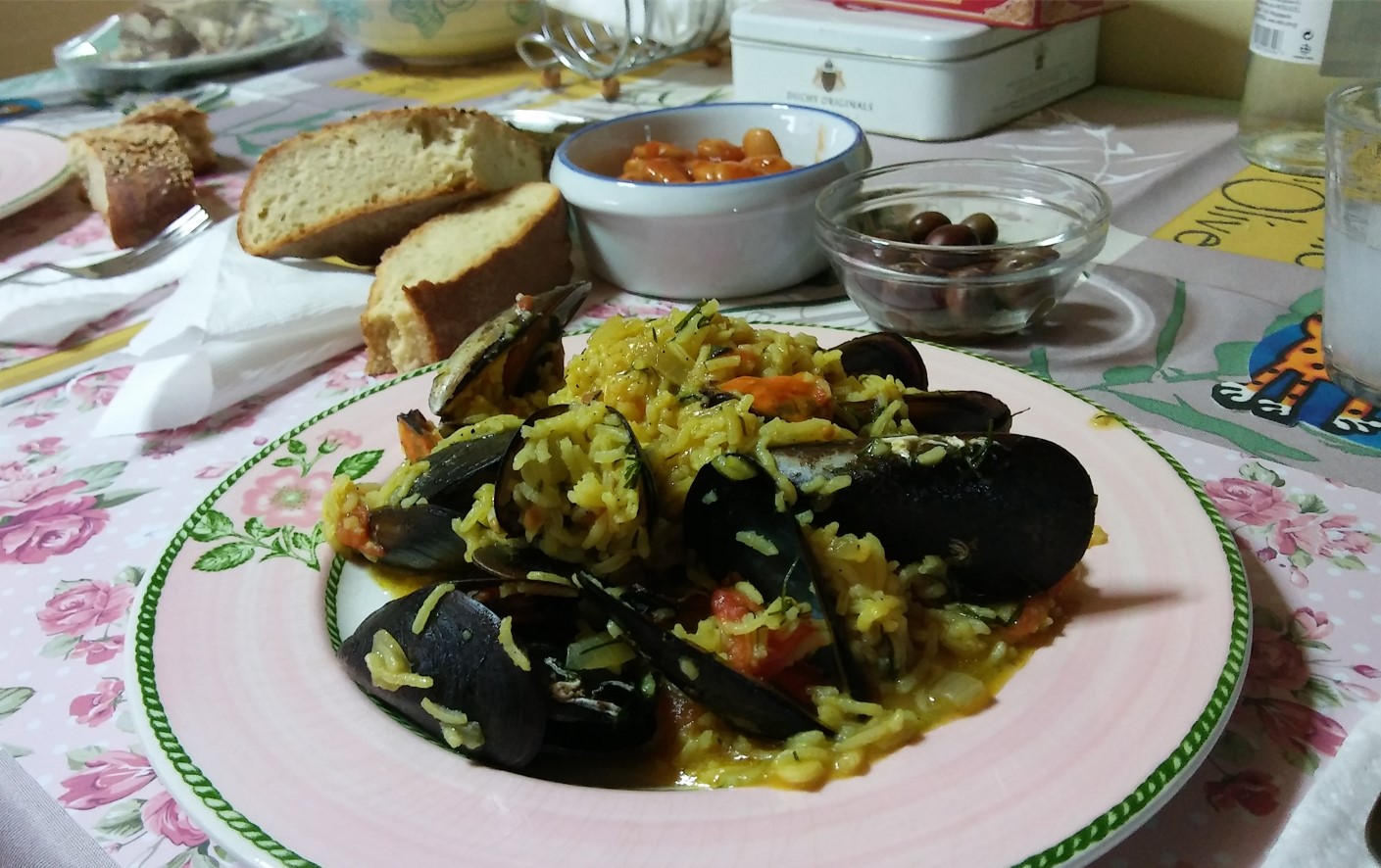
I got this small batch from a local fisherman once, as a gift. Never before in my life had I cooked so many and I hadn’t had them in decades. As a child, I was forever looking for porphuras during my swims in the local beaches. Back then, there were many in the shallows, simply sitting on the sand in plain sight. So, I’d catch just two or three, wash them well and boil them at home in a ‘briki,’ the tiny pot for Greek coffee. Then, I’d extract the flesh from the shells and eat it warm with a slice of bread.
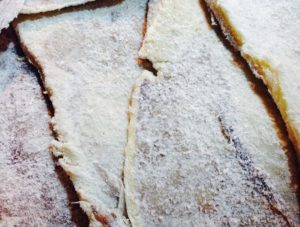
As you can see in the photograph, something long and pointy is necessary to extract the flesh from the shell after they’ve been cooked. Those ouzo forks are the best for the job, but one can try with a tweezers too, though I don’t think it would prove as efficient. Smashing the shells after cooking them with a small rock is the last resort. In this case, it is necessary to wash the flesh well to make sure there are no remnants from the shell.
I don’t enjoy eating these cold, but others have them straight from the fridge – after boiling them, of course, because the flesh is very hard to eat raw. The more they boil, the softer they get. Allow at least 1 hour and up to 2 hours. Once cool, they can be kept in the fridge in a tub with olive oil and vinegar. They last for about a week or so. To have them warm straight after boiling, try them neat or with some lemon juice.
They’re also very nice with this dressing prepared in a blender: Olive oil, crushed garlic clove, lemon juice, parsley.
I can almost see some of you flinching right now, LOL! Not everyone would be willing to eat a mollusk, I guess. But, at least, now you know how the kings and queens of the past had their clothes dyed, huh! 😛
YOU KNOW WHAT THEY SAY… SHARING IS CARING! Tweet this to spread some love:
3 FREE books for you! Sign up below to receive them instantly!
NEW! Clean Christmas romance. Single mother Cathy Roussos gave up on love long ago, and veterinarian Alex Rallis doesn’t believe in it, but one magical Christmas on a Santorini farm might just change everything…
A clean romantic suspense short read with an unreliable narrator that’ll keep you guessing! Vera is losing her mind over famous actor Yannnis Ksenos, except, she isn’t just a fan… Now, she plucks up the courage to ring his doorbell… Visit Amazon
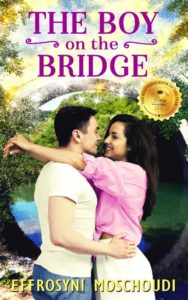
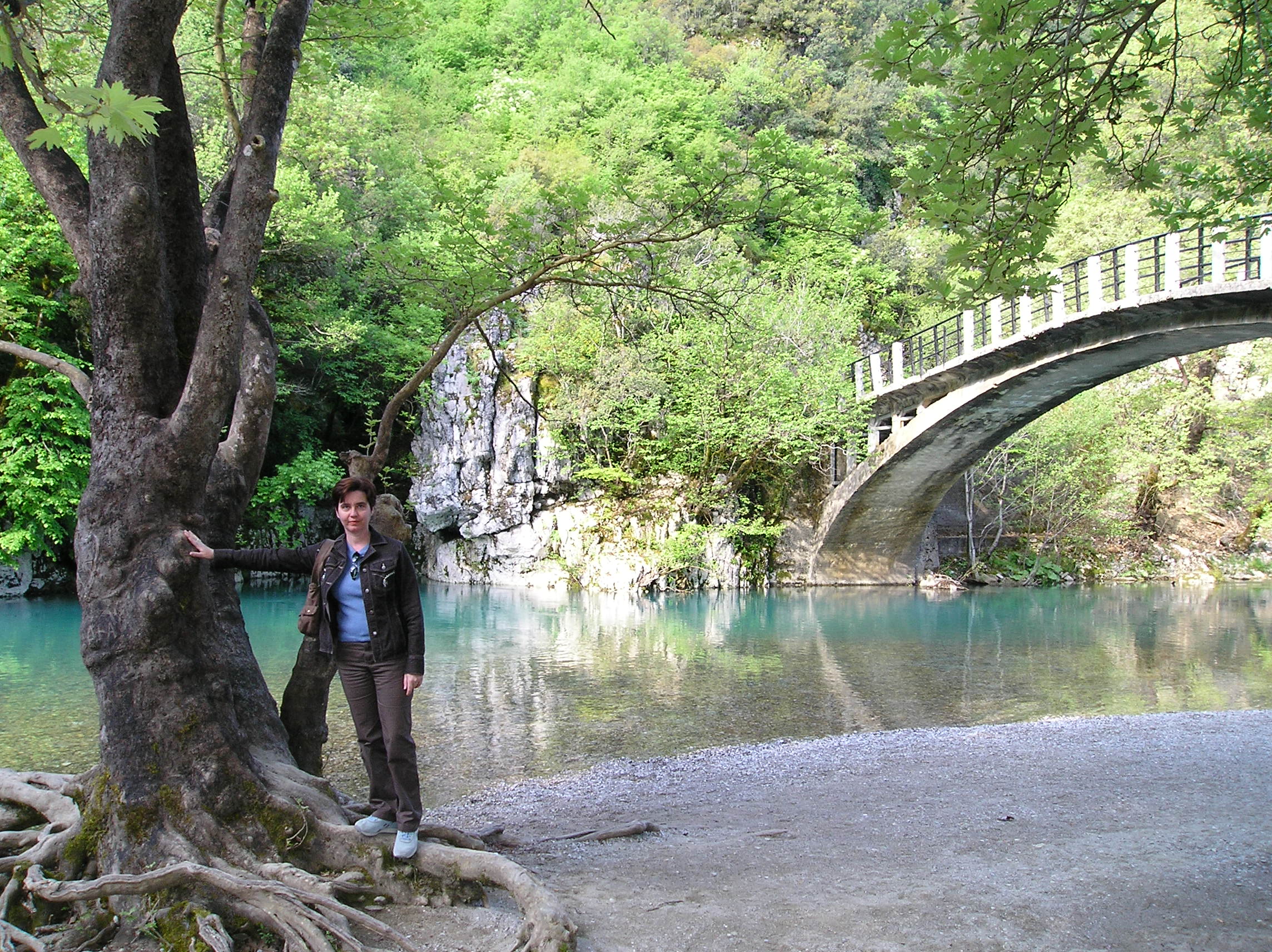
The alluring area of Zagori on the mountains of Epirus is where I set my supernatural romantic suspense novella, “The Boy on the Bridge.” This amazing place of lush greenery and old stone bridges stole my heart away when I visited it with my husband a few years back.
Scroll al the way down to get a FREE copy of this awarded short read!
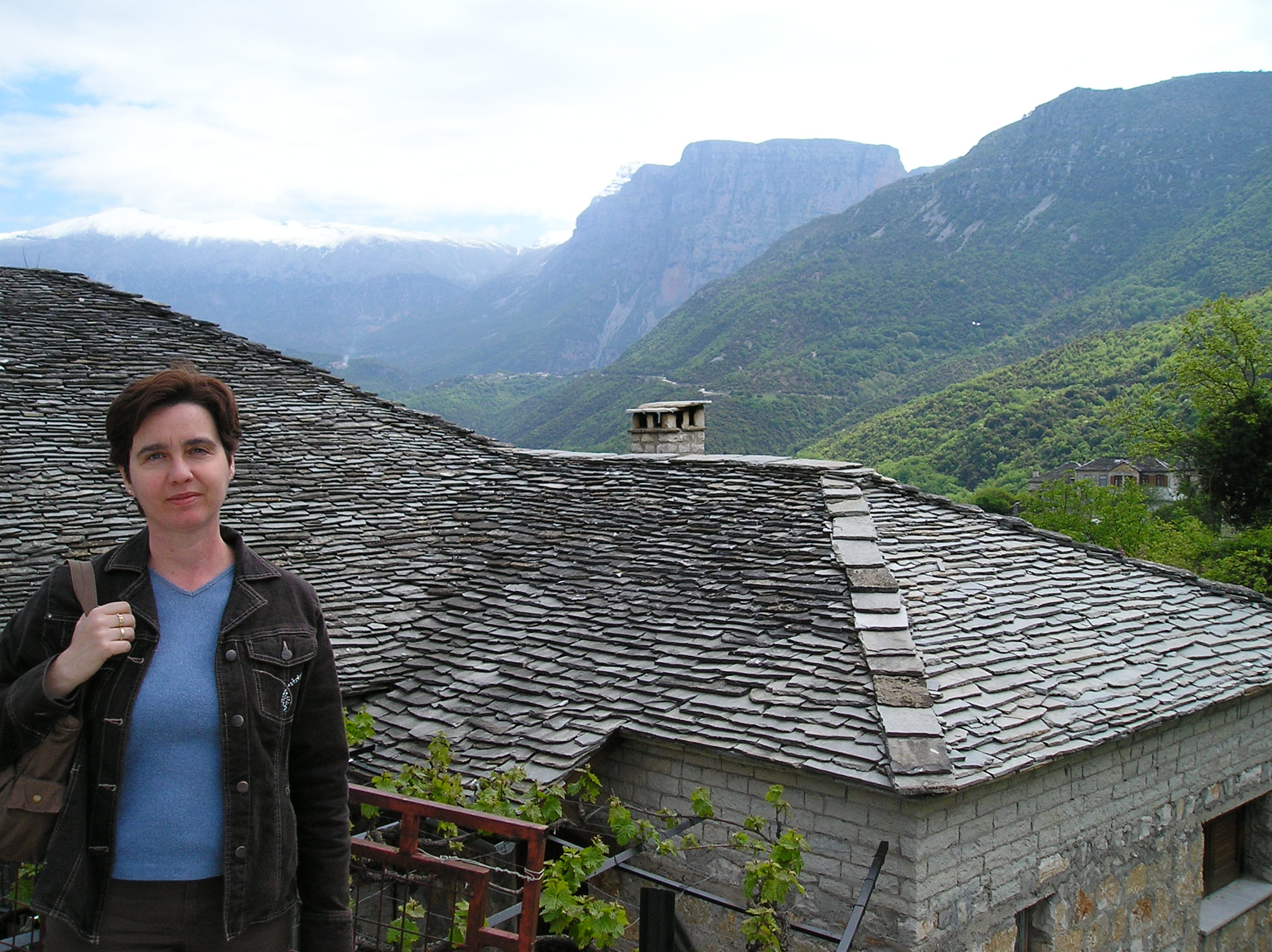
Zagori is a place of astounding beauty and it’s incredibly peaceful… To visit it, is to become enchanted, and you cannot help but leave a part of your heart forever behind when you depart. Andy and I visited Zagori in the spring when the snow and the ice had melted and the treacherous uphill roads were a pleasure to drive on without distractions, except maybe the frantic clicks of the camera from my enthused husband by my side.
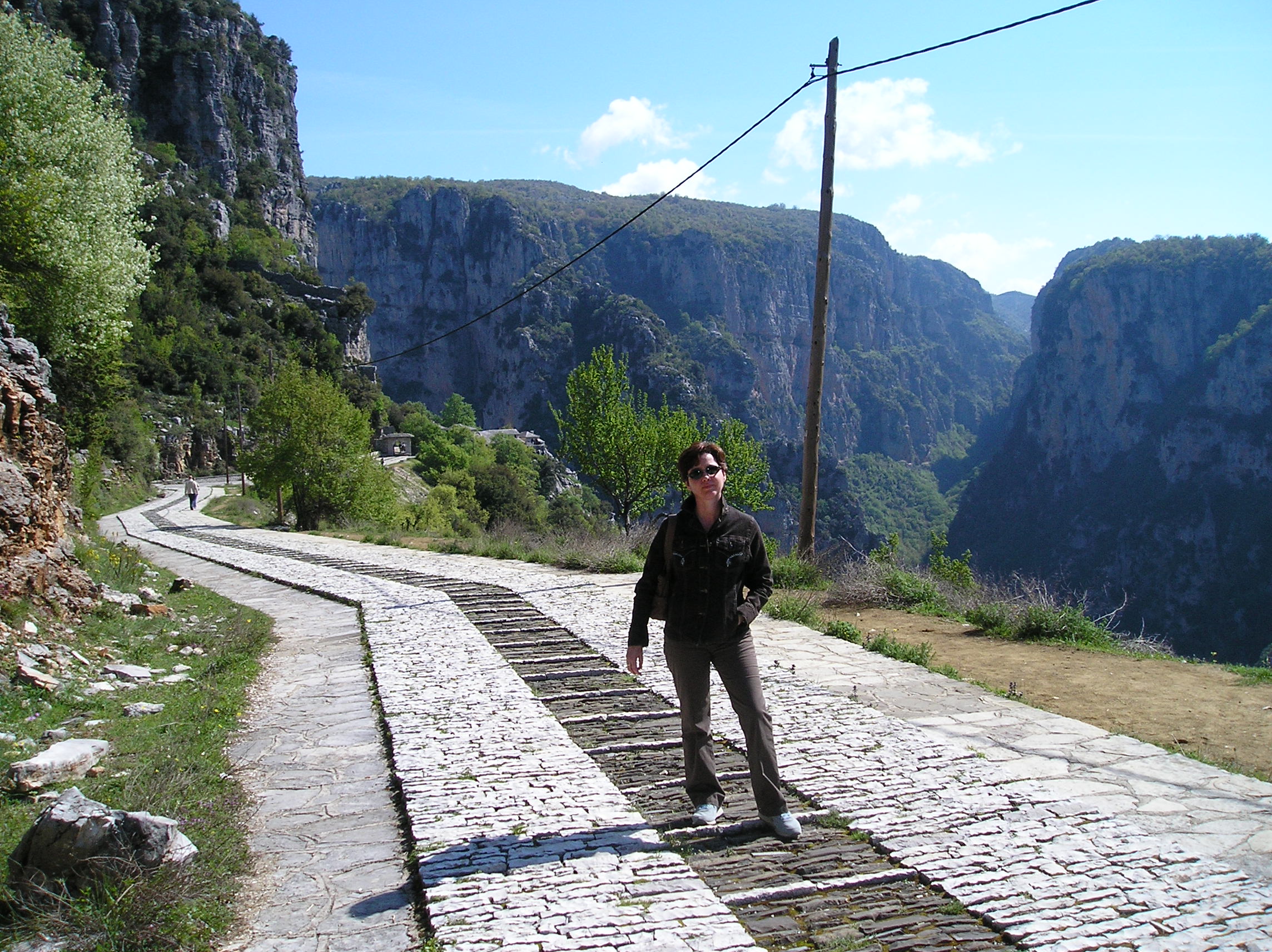
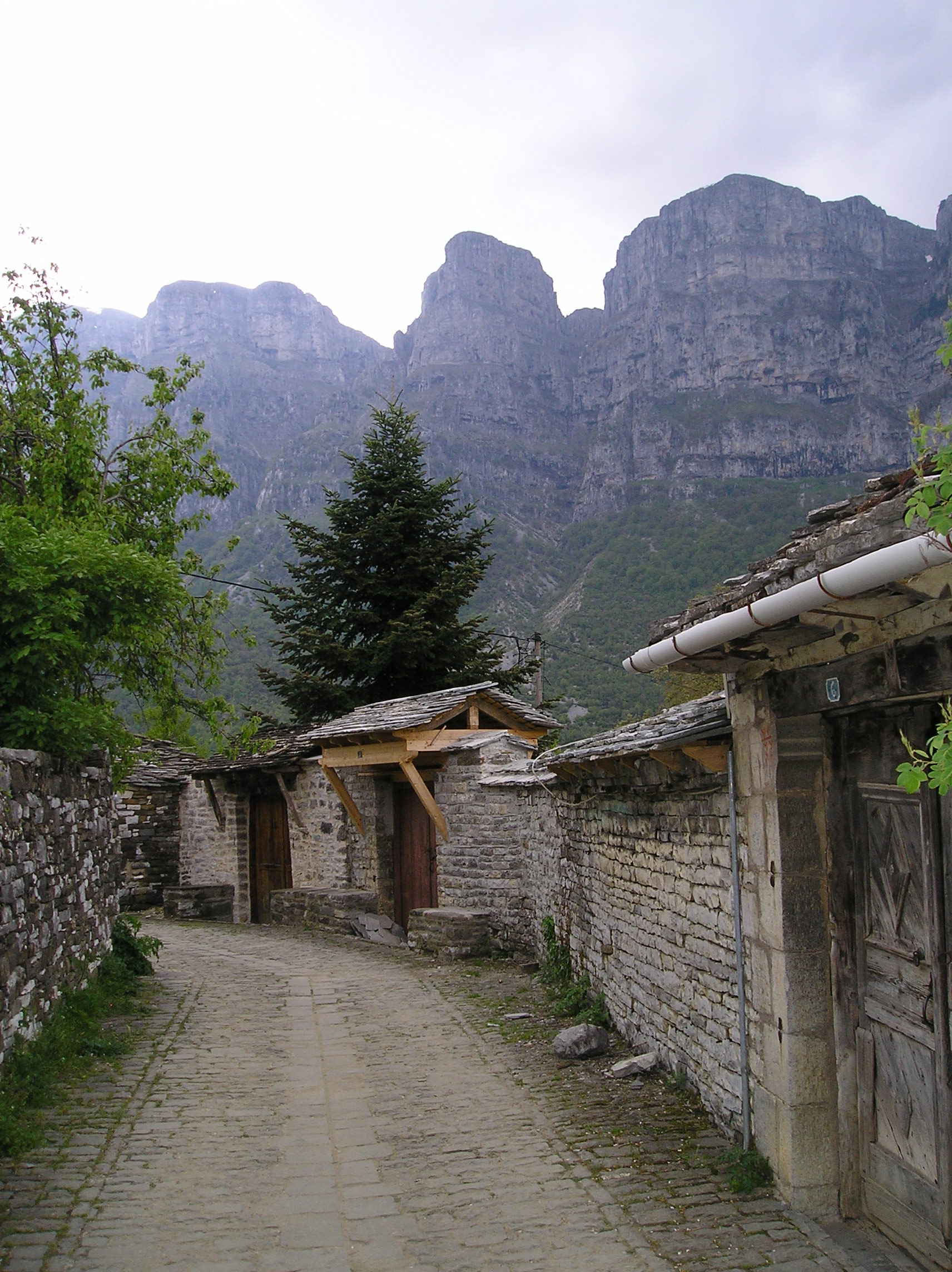
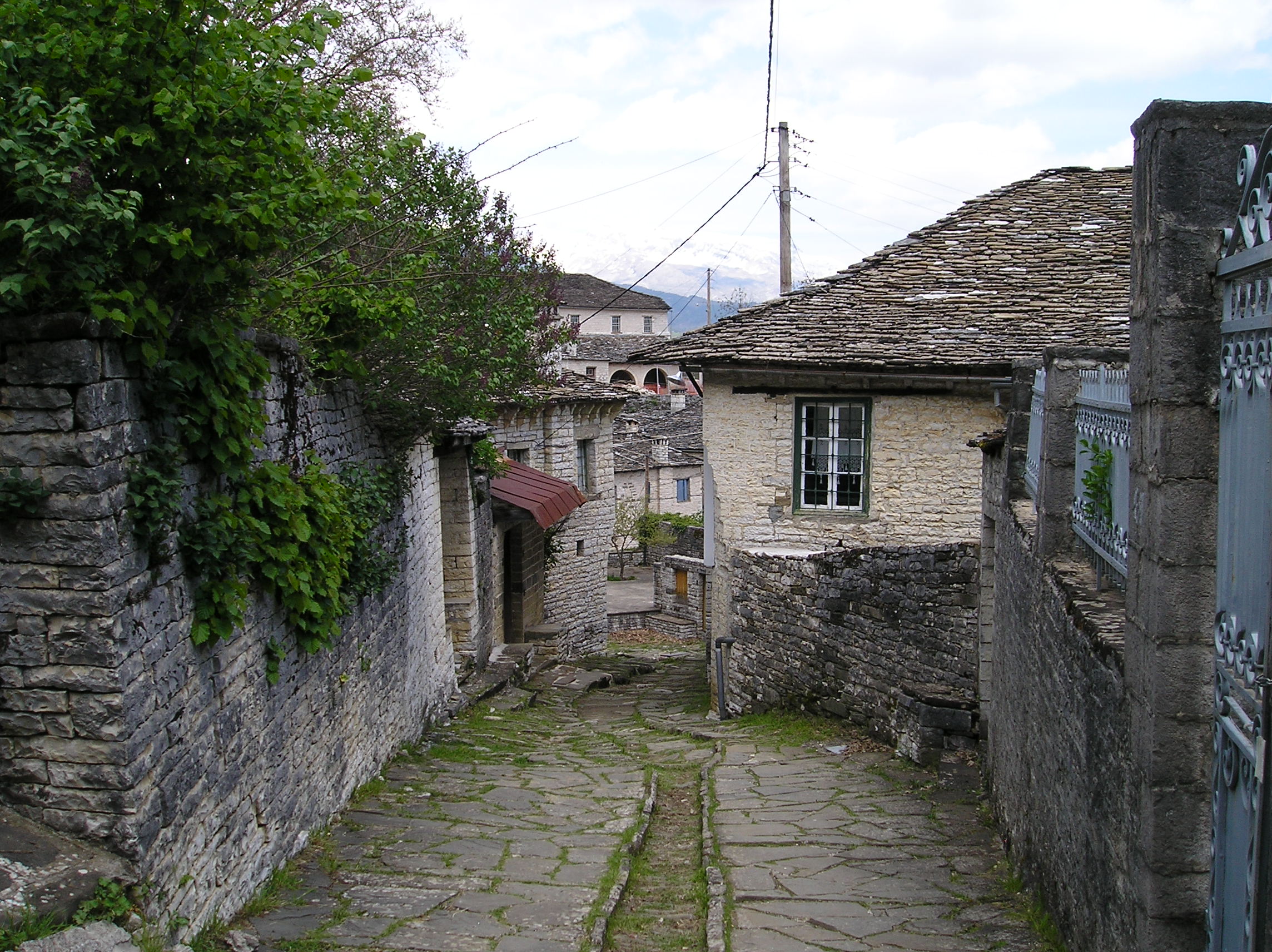
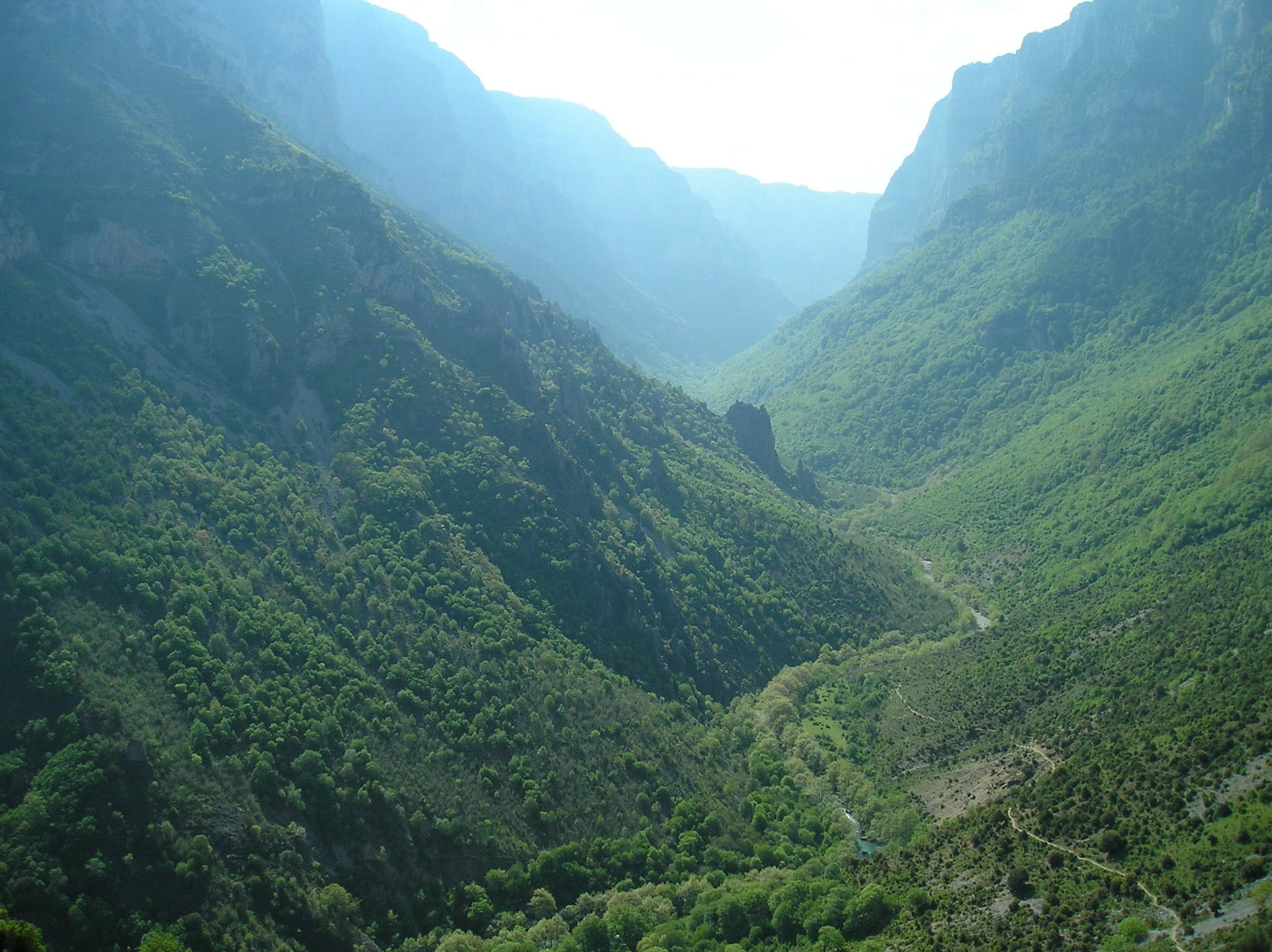
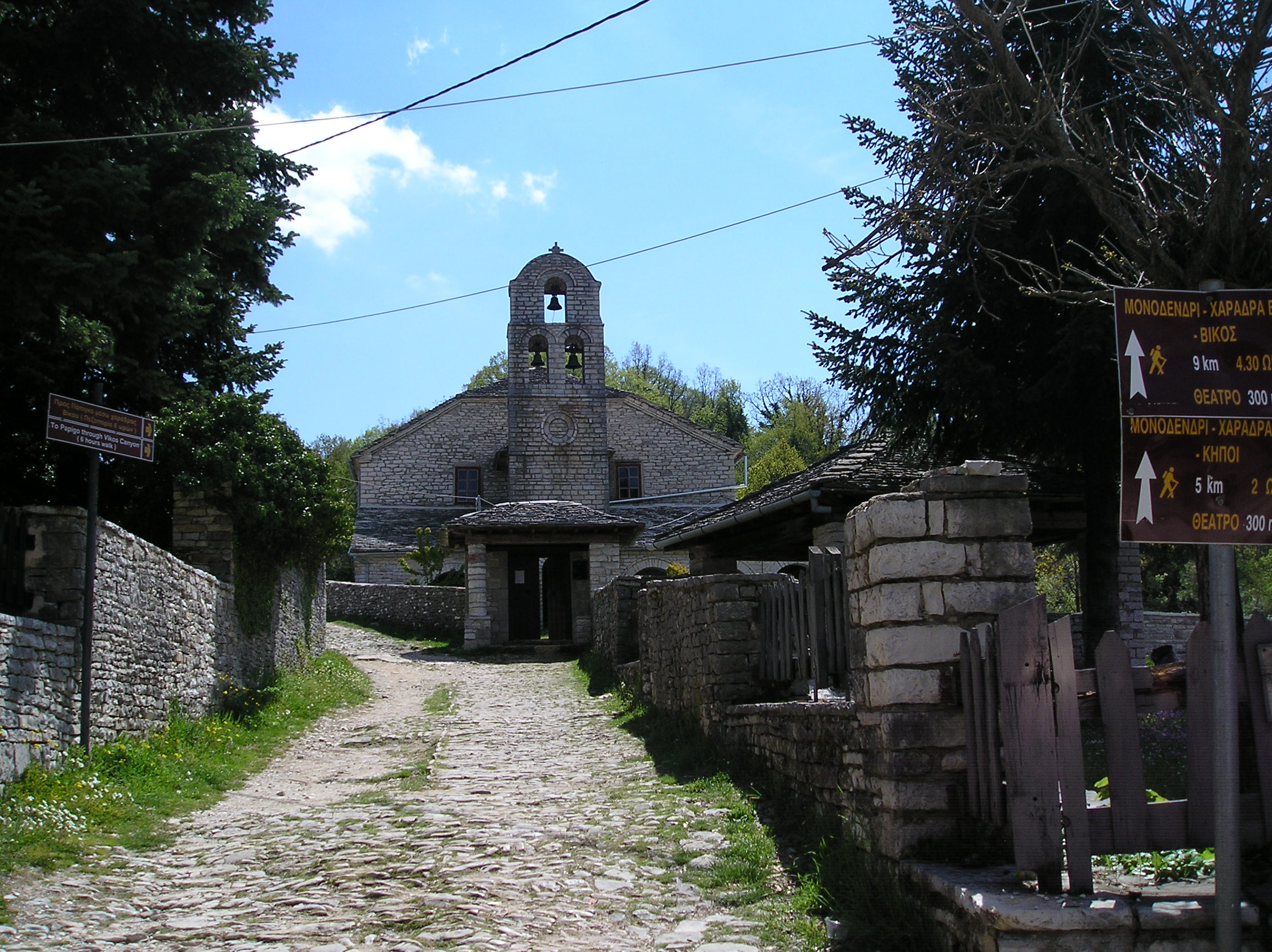
Our first stop was the village of Monodentri so we could visit the Monastery of Agia Paraskevi and enjoy its generous view to the Vikos gorge. As soon as we parked at Monodentri and stepped out, we found ourselves before a maze of cobbled stoned lanes. The village captured our hearts from the very first moment…
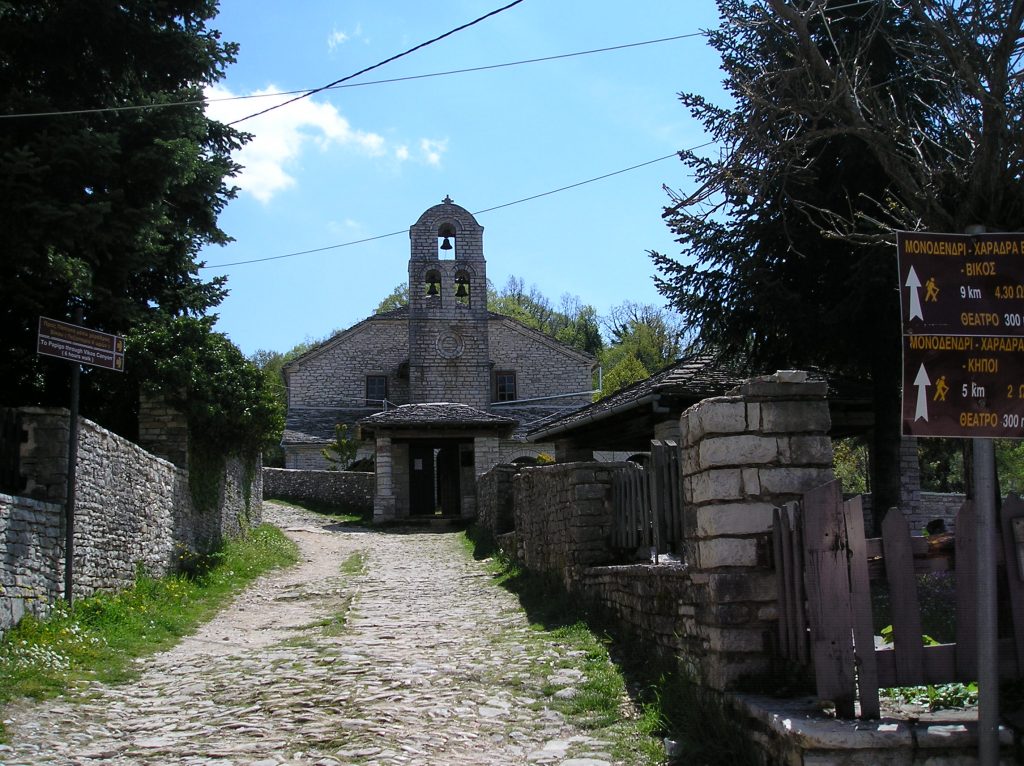
On the way to the monastery at Monodentri
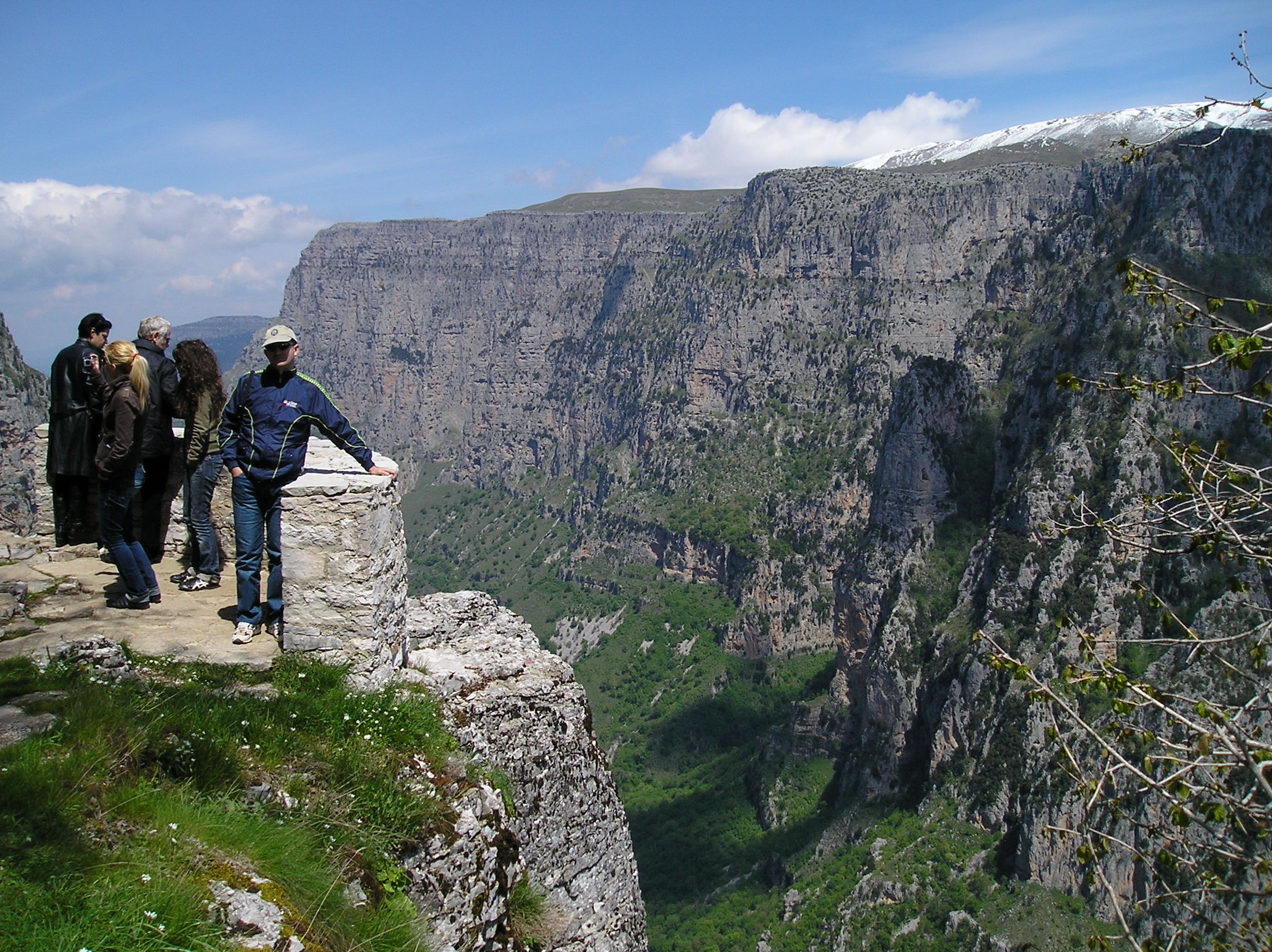
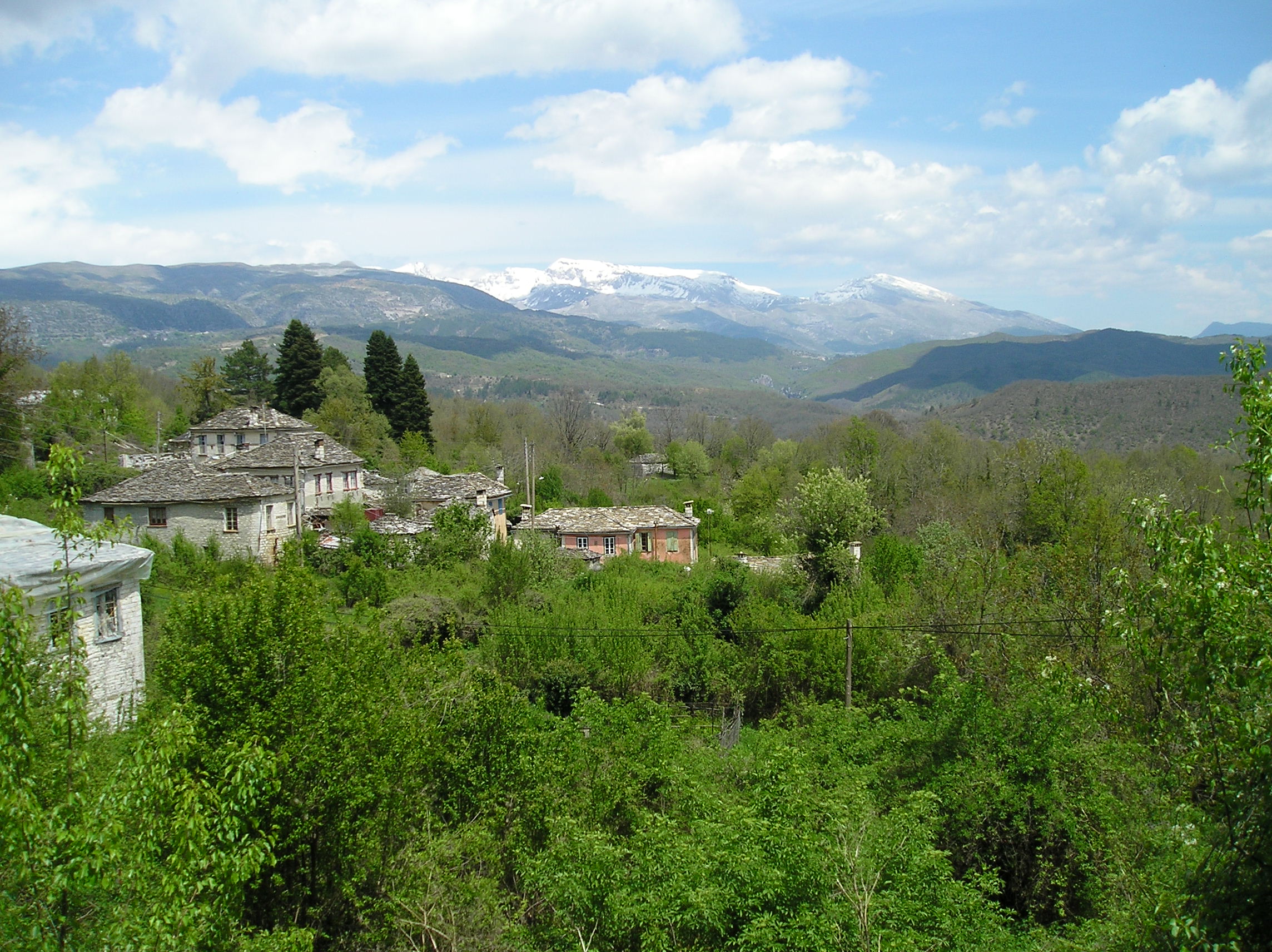
View to Vikos Gorge from Oxia (near Monodentri)
We took the cobbled road to the monastery quite early in the day, having set off from the city of Ioannina after a very early breakfast at our hotel. There were not many tourists around and we thought that, at any moment, we’d see a flock of sheep or the odd mule walk up the cobbled road past us, right through the middle of the path where special stonework had been laid for the animals’ passage back in the old days.
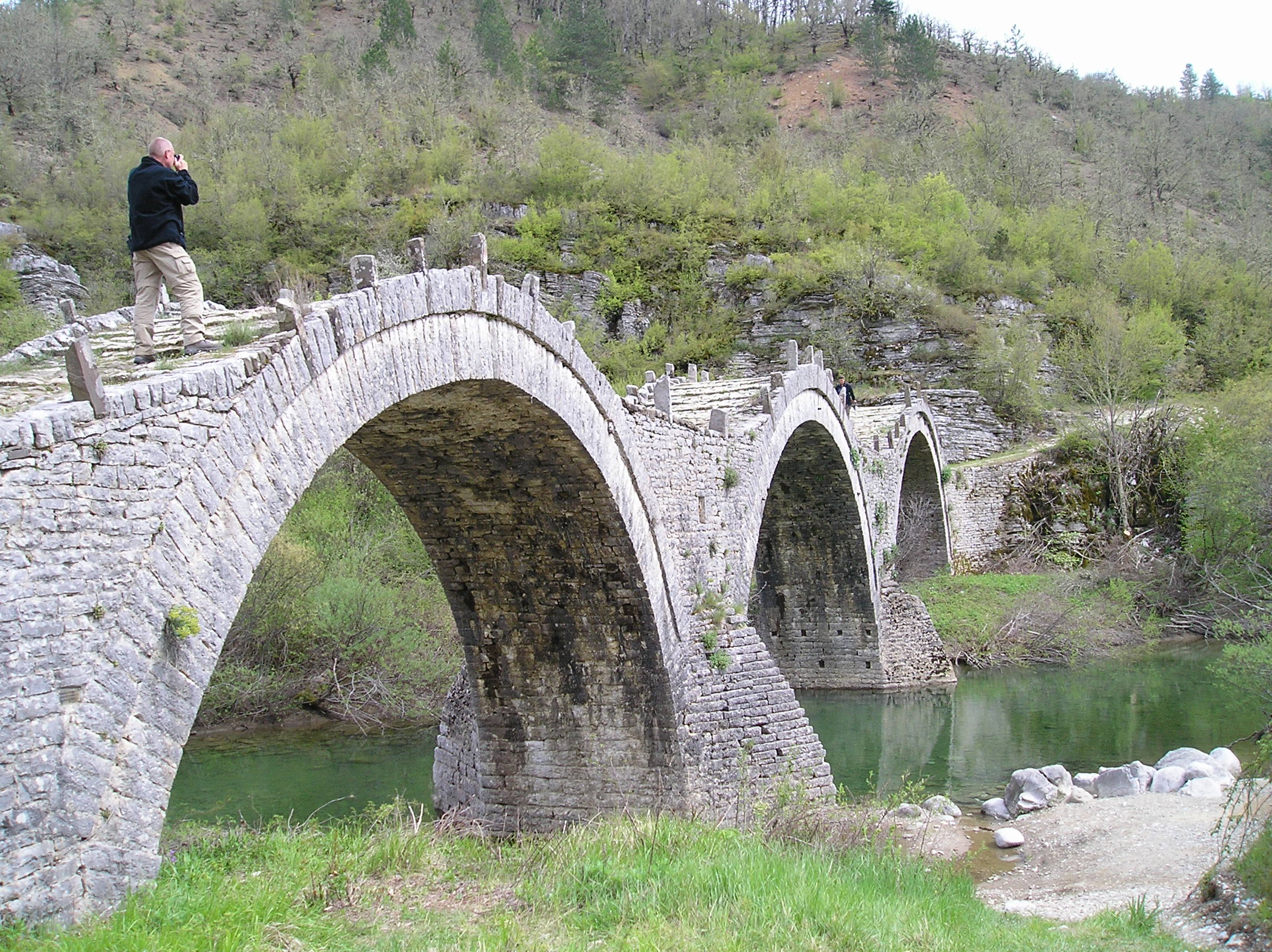
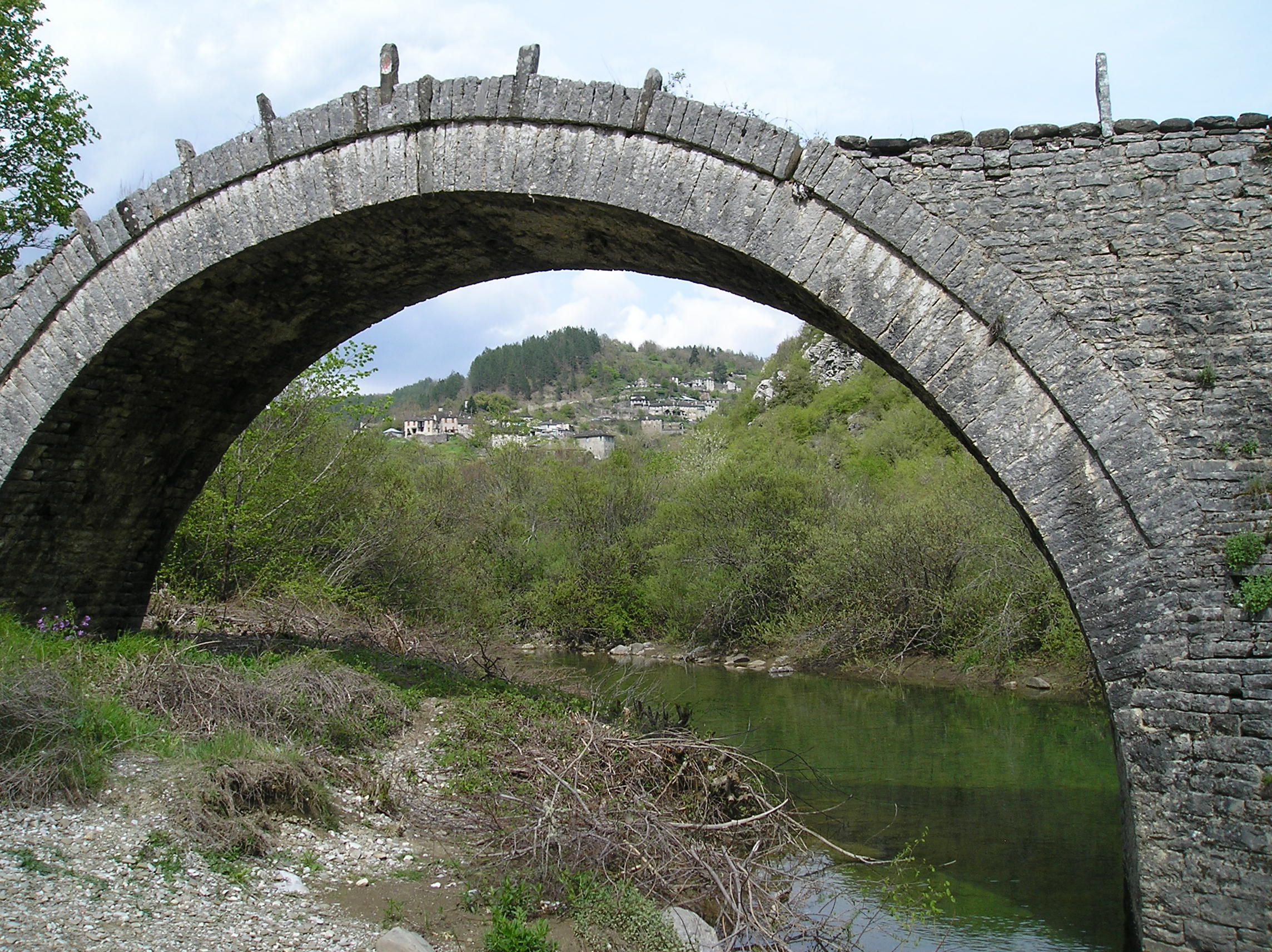
Kalogeriko bridge near the village of Kipi
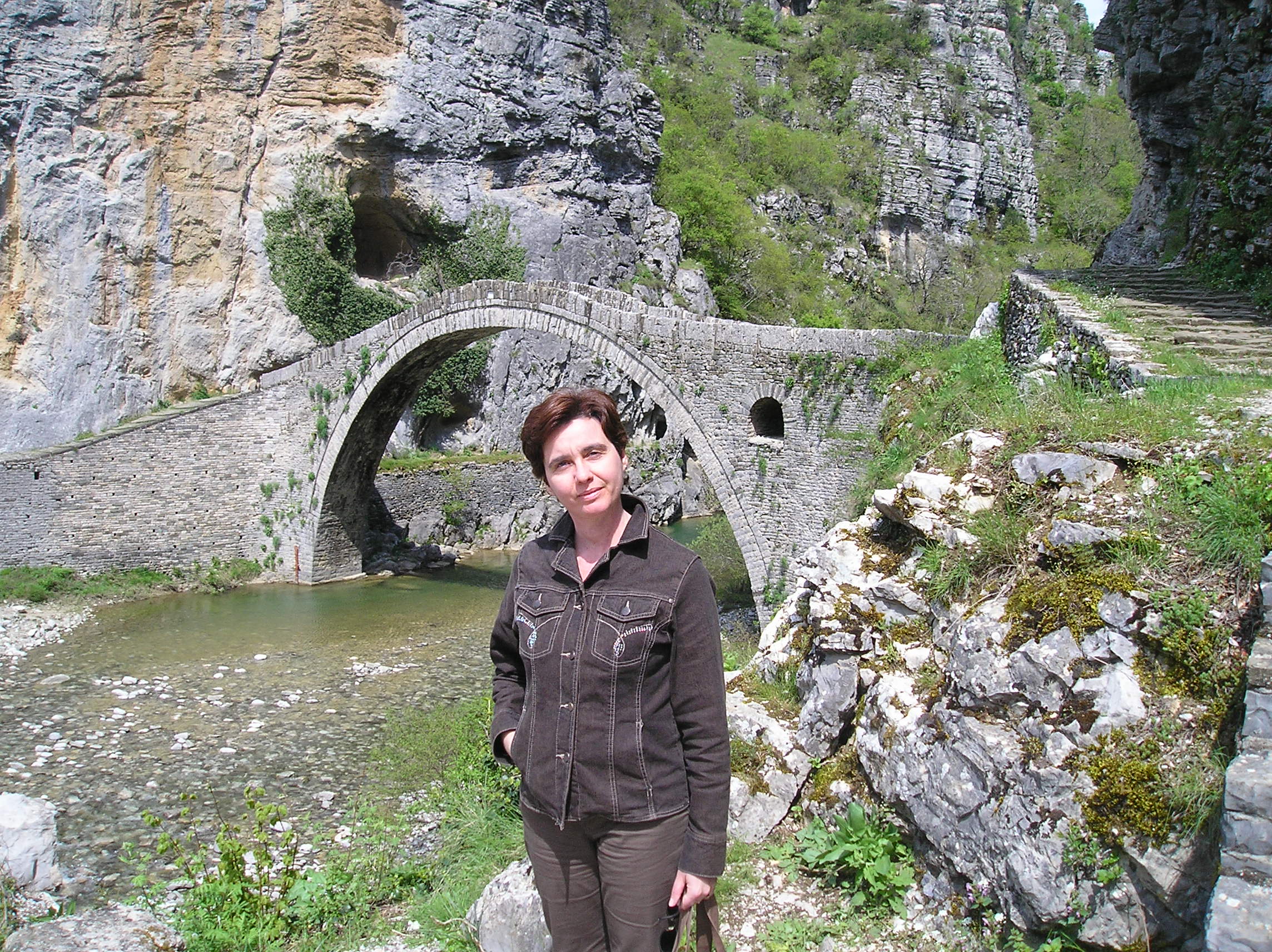
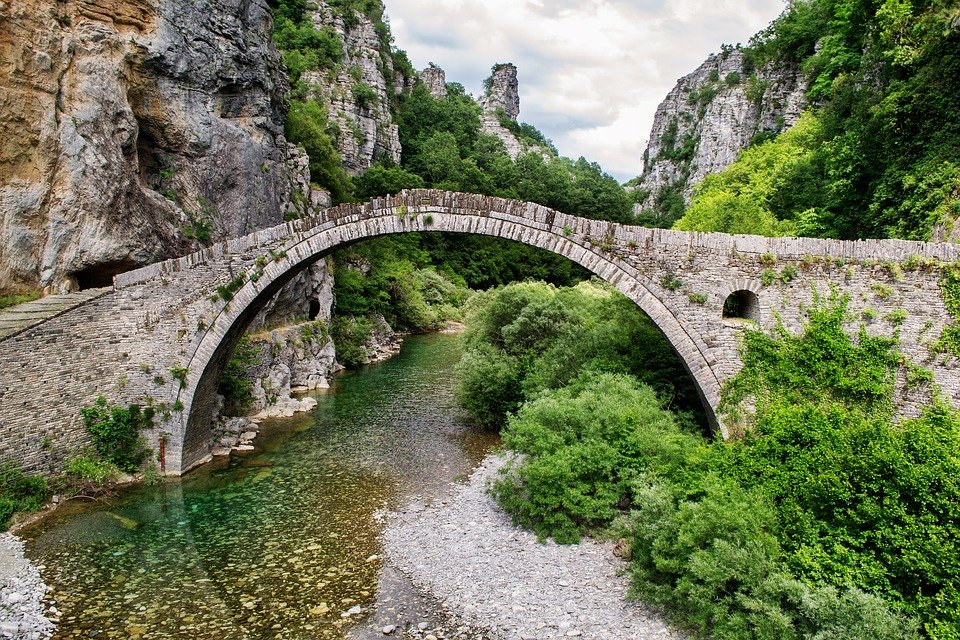
Kokkori bridge near Dilofo and Kipi
Zagori (or Zagorochoria) is a complex of 45 quaint villages in the prefecture of Epirus in the northwest of Greece. Some of these villages are situated at high altitude offering magnificent views of the Pindus mountaintops. Often, as the visitor travels around the villages, they feel compelled to stop and marvel at the weathered stone bridges that are scattered all over this area. Found in deserted landscapes more often than not, they look rather forlorn but nonetheless, they remain unique landmarks of astounding beauty.
The word Zagori derives from the Slavic words “za” that means “behind” and “gora” that means “mountain”. The ancient Greek name “Paroraioi” has exactly the same meaning, i.e. “The people who live behind the mountains”. The villages of Zagori are a feast to the eyes made of earth and stone and they have been exquisitely preserved through time, ever since their heyday during the country’s occupation by Turkish rule. This period of Greek history has been recorded as particularly bleak, lasting for 400 years until the Greek Revolution in 1821. Despite the devastation that had plagued the country at the time, somehow, Zagori managed to become a focal point of commercial activity.
Kipi viewed from ‘Kapetan Arkouda’ bridge
Kipi
Many villagers prospered and, as a result, a series of magnificent bridges were erected all across the area to facilitate the passage of merchants. One of the most prosperous villages at the time was Kipi. It is the village that inspired “The Boy on the Bridge” and, indeed, in the old days, there were many bridges around it and in the major area to facilitate the transportation of goods. I visited three of these bridges: ‘Kokkori, ‘Kalogeriko’ and ‘Capetan Arkouda’.
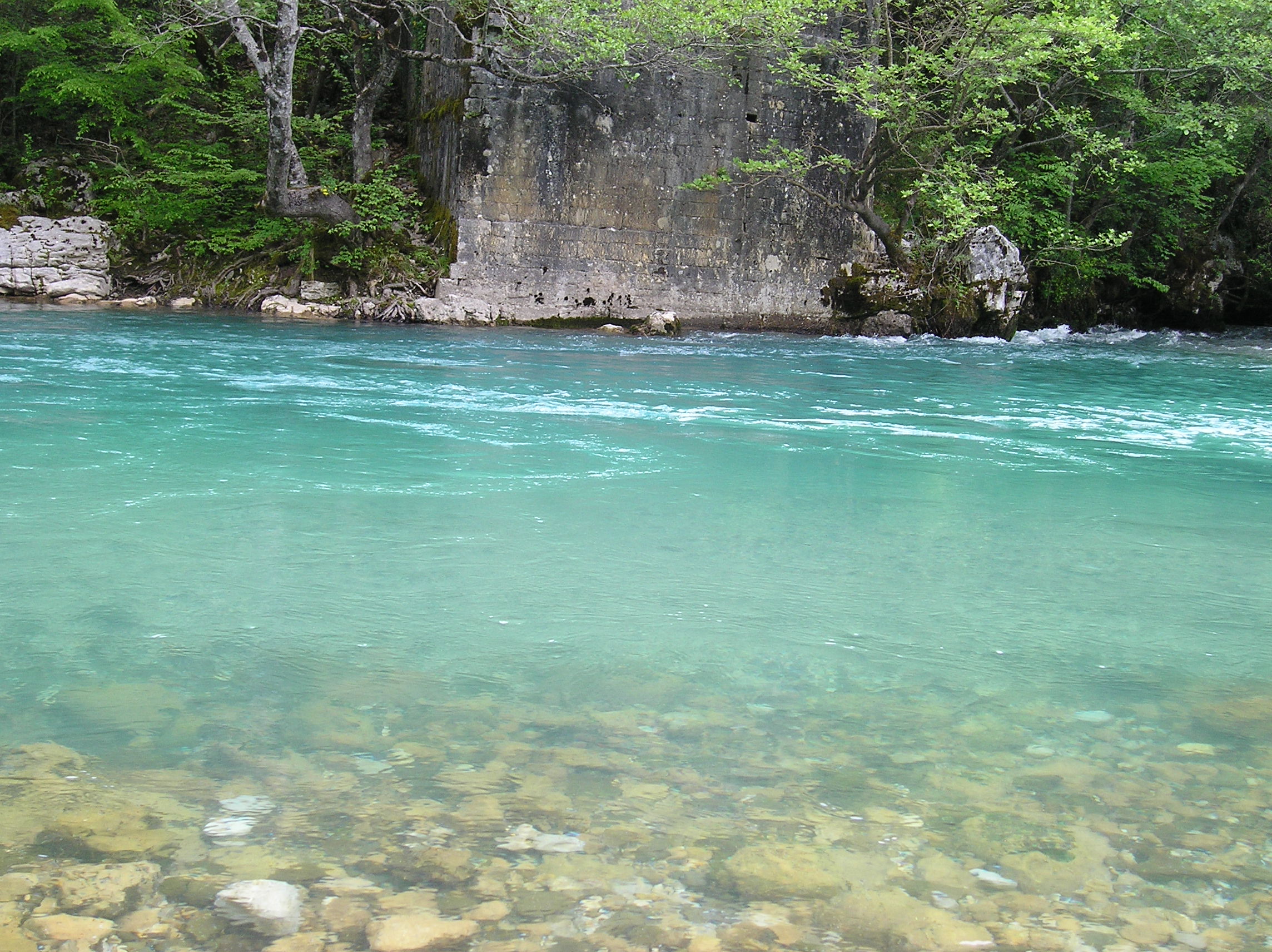
The enchanting waters of Voidomatis river at Aristi bridge
Aristi bridge
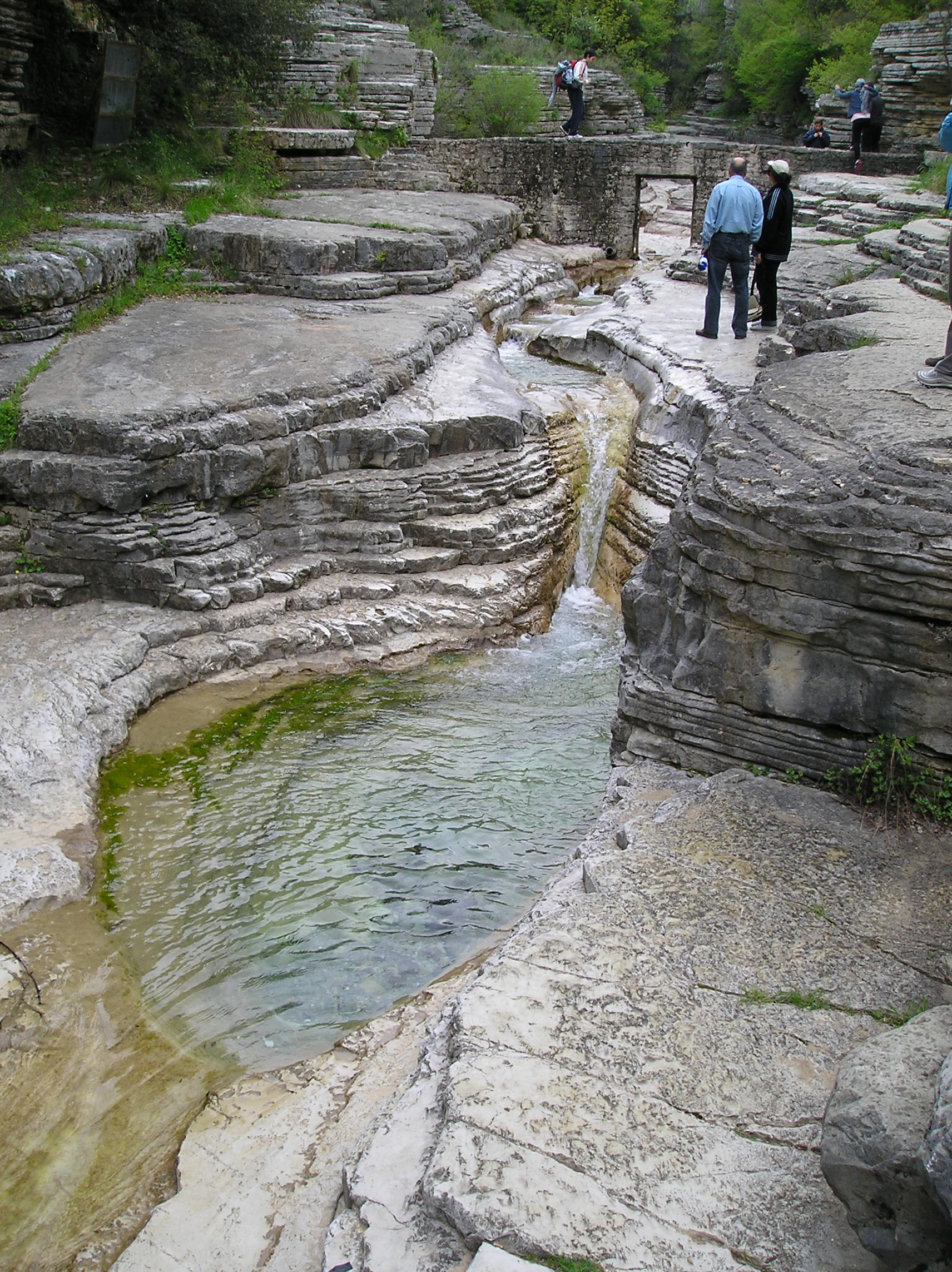
‘Kolybithres’ (a place of natural springs) near Mikro Papigo
Papigo
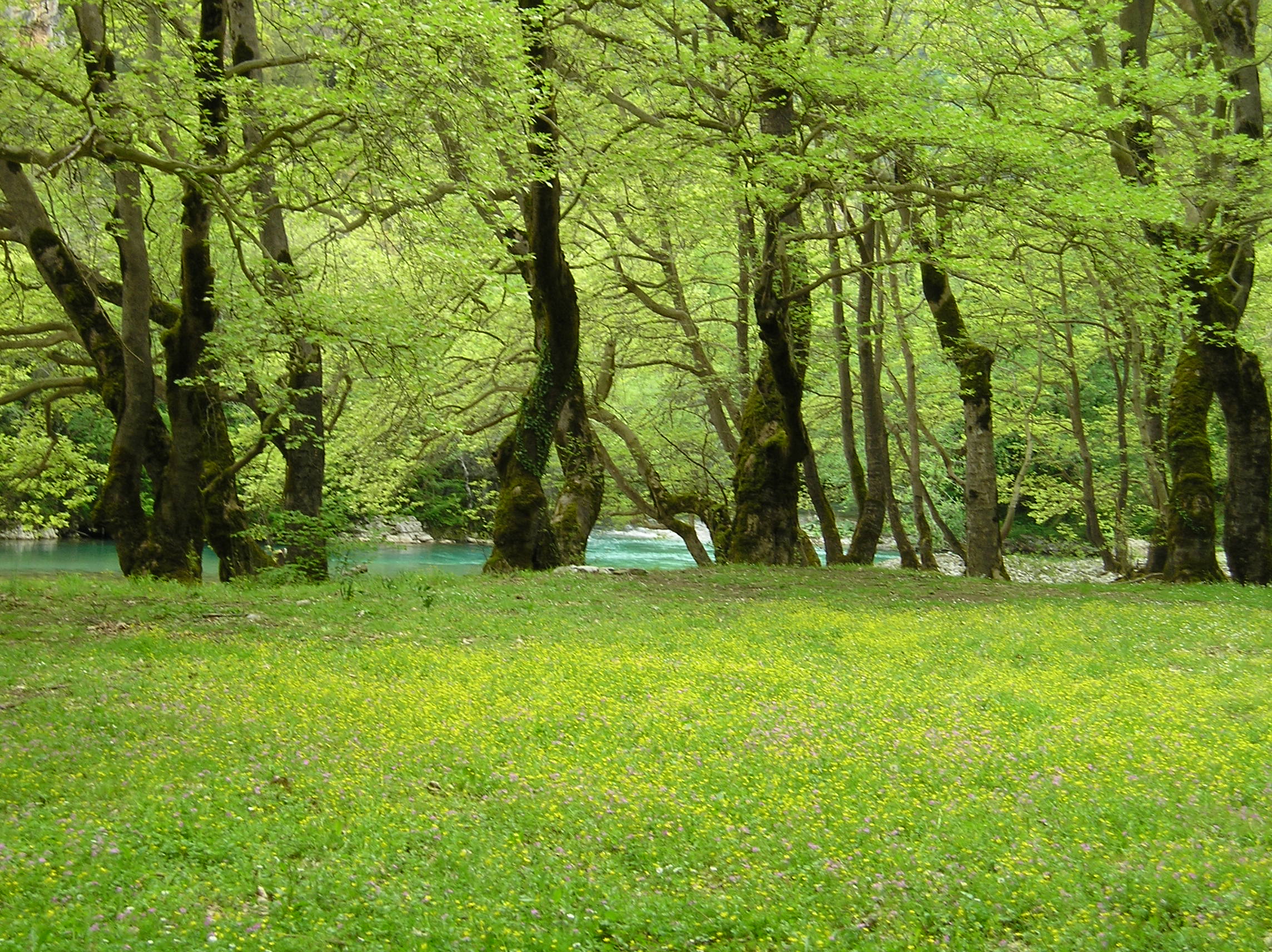
Today, the area of Zagori is a popular holiday destination throughout the year. Hikers often return to this area to explore the mountains or to walk along the paths of the famous Vikos gorge. As well as offering a serene setting for a walk or a picnic, the river Voidomatis (named oddly ‘ox eye’) also provides the enjoyment of rafting expeditions. Visitors can often come across the unexpected opportunity to even swim while hiking across the countryside.
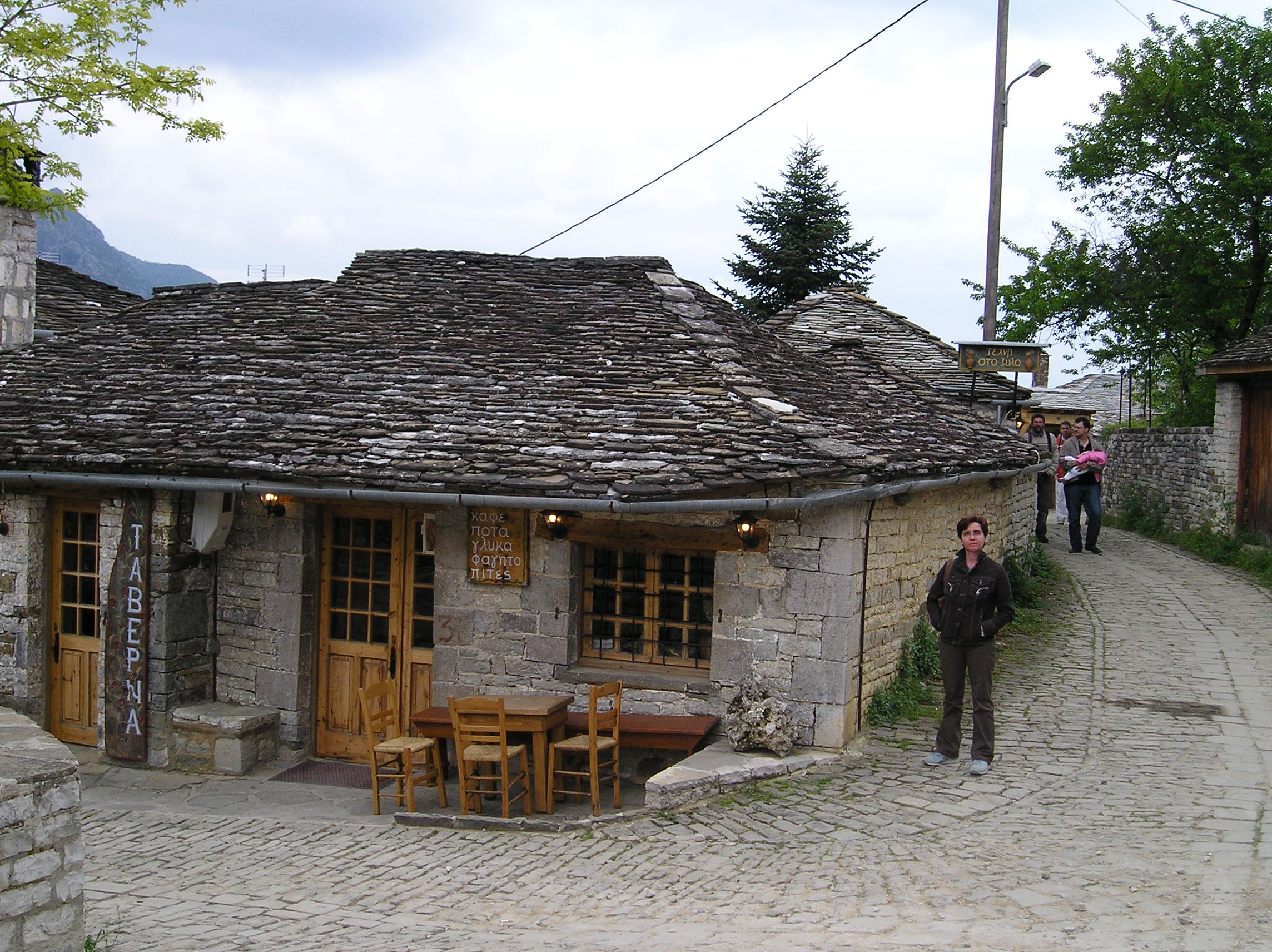
For example, the natural bathtubs of Ovires (or Kolybithres) that are situated between Papigo and Mikro Papigo are popular among local youths who love to cool off here on a hot summer’s day. And that is not all. Just walking around the villages is a unique delight in itself. The remarkably preserved buildings and paths are a joy to photograph and to pose by. And when you sample the local meats and pies at the local tavernas, you will be more than satisfied. There is a series of local organic meats, cheeses and wines on offer here as well as the famous Zagori herbs, syrup sweets, jam and honey.
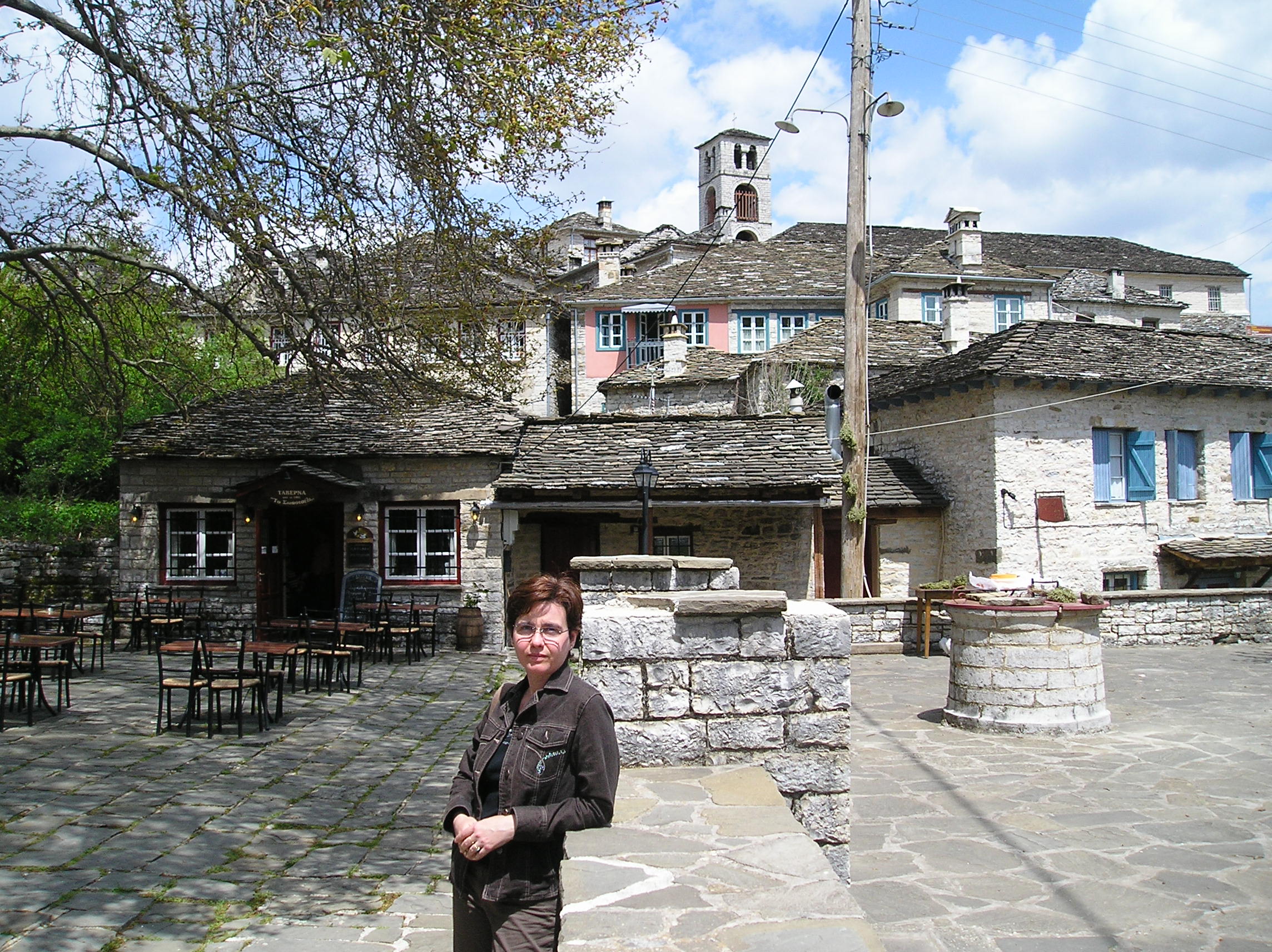
I left my heart in Dilofo….
My love for this place found its way into my book…
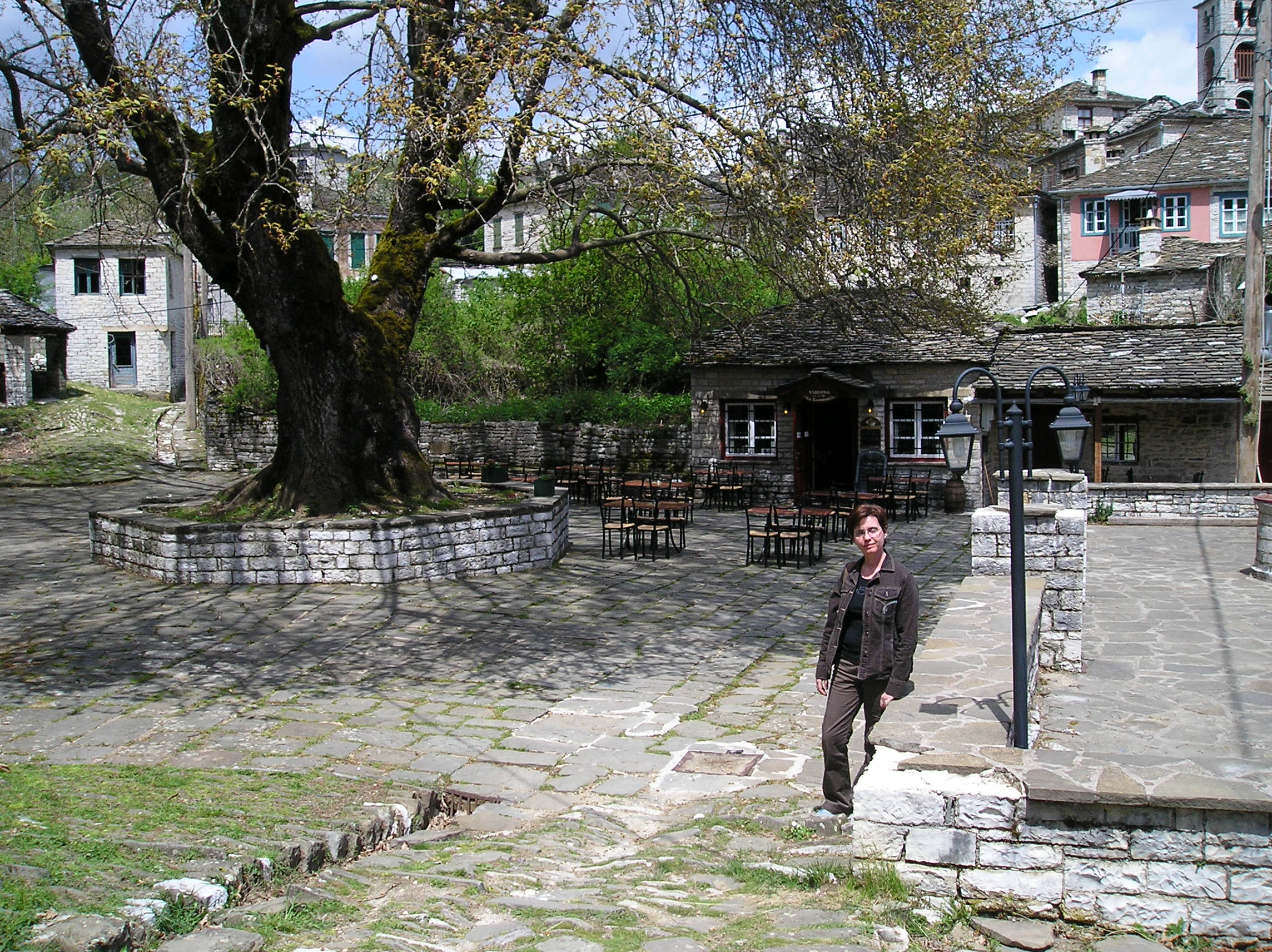
The last scene of The Boy of the Bridge is set at this square!
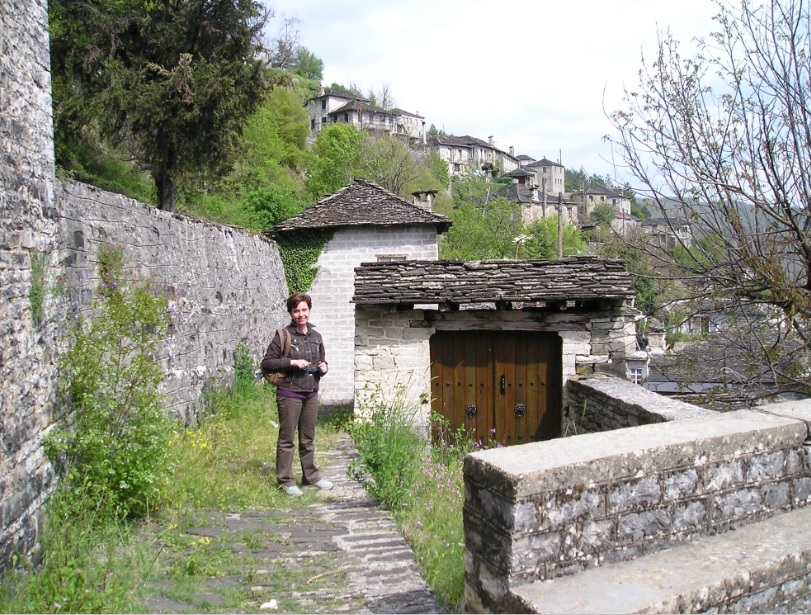
Although my husband Andy and I visited quite a few Zagori villages, only two stand out significantly among the rest. The first one is Dilofo. I count myself lucky to have been tipped off by a friend to seek out that specific village because it is not mentioned in the guidebooks and it’s hardly ever highlighted on the internet. Once we got there, we realized immediately that we were in for a rare treat. From the municipal car park, we took an alluring cobbled path and wound up in a spacious square where we sat to eat at a taverna under a huge plane tree.
There, quite unexpectedly, we sampled more than the fantastic local cuisine. We sampled a taste of the past too, a world where time stands still for you. It is a place where you suddenly forget that you own a mobile or a camera. Suddenly you find yourself whispering while you chat, as if afraid of breaking the spell of the moment. It feels somewhat foreign to step back in time and at the same time, tremendously familiar, as if you become privy to the life of the people who lived here a long time before you were even born. In an eerie kind of way, it felt like the echoes from the hoofs of the horses were only now dying down, like the area’s renowned builders had only recently laid the tiles on the village house roofs. Dilofo is such a pleasure to discover and to me it is, by far, Zagori’s hidden gem. It is a place that is bound to enthuse and mystify the visitor no matter how many times they’ve been there before.
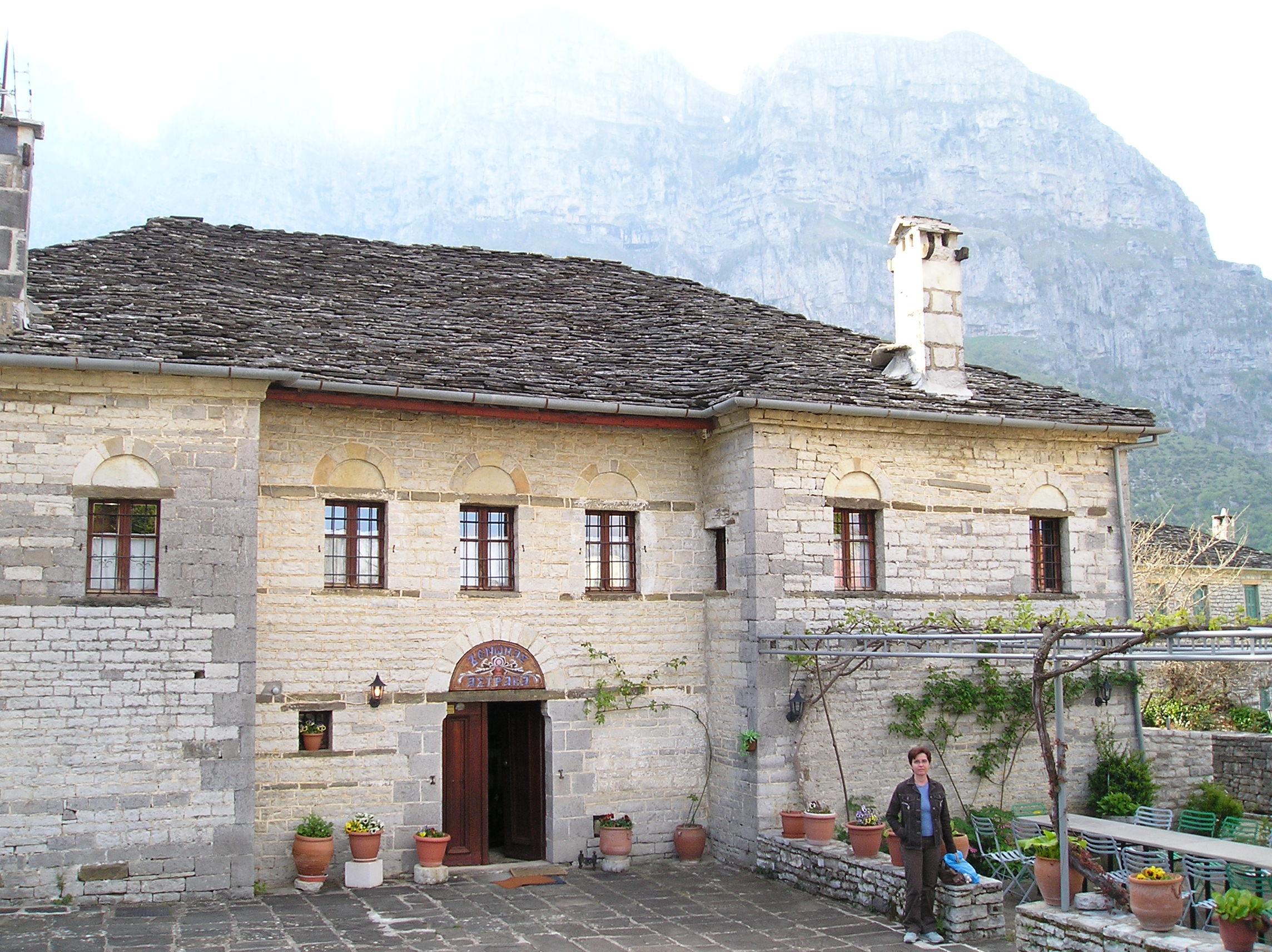
Our hotel at Papigo, ‘Astraka’
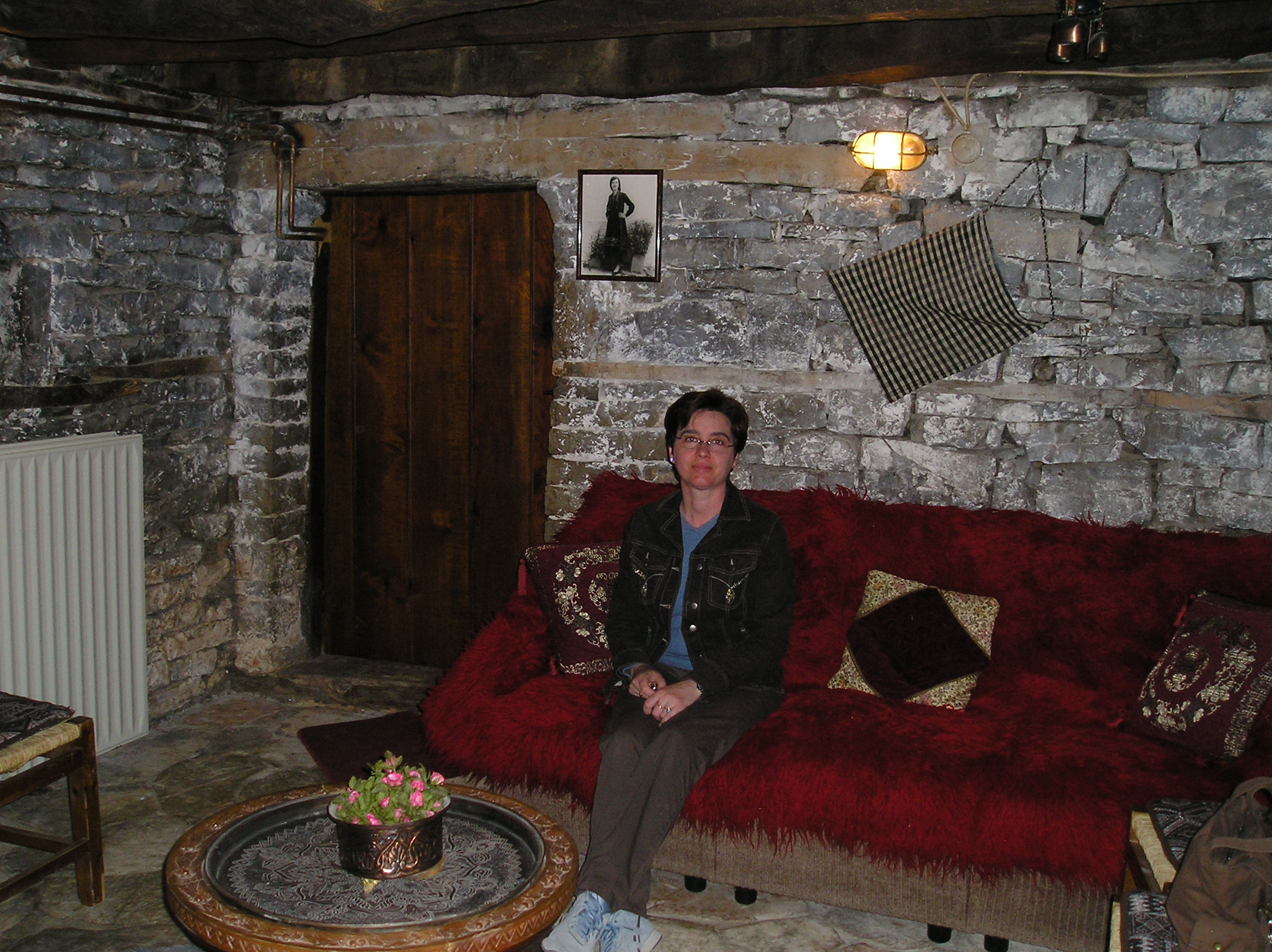
The reception. So cozy!
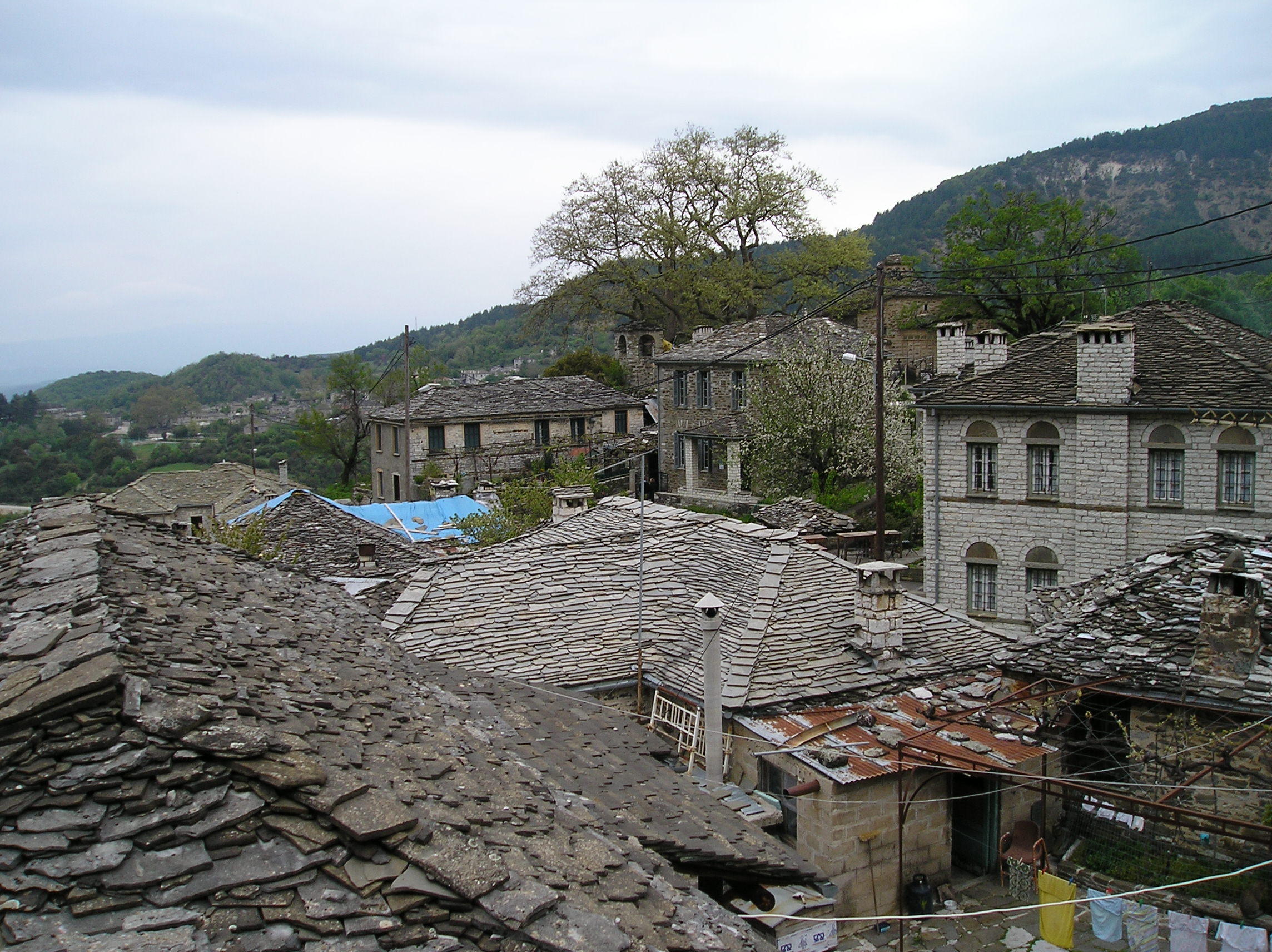
Rooftops at Mikro Papigo
Papigo
Papigo, on the other hand, is quite well known and also highly popular among tourists. We chose this enchanting village for two overnight stays in a traditional inn called “Astraka”, named after one of the mountains that tower above it. Papigo stands on the top of a mountain itself, at the end of a treacherous road that snakes endlessly uphill in a way that makes someone wonder how the locals travel during the cold, icy months of winter. Papigo is tiny but the beauty of it is indescribable. Anywhere you look, you feel the unstoppable urge to press the camera button. One of the hiking paths that starts here, ends high up in the mountains where hikers can visit the lake Drakolimni (dragon lake) near the summit of mountain Gamila (camel).
View to Vikos Gorge from Vikos village
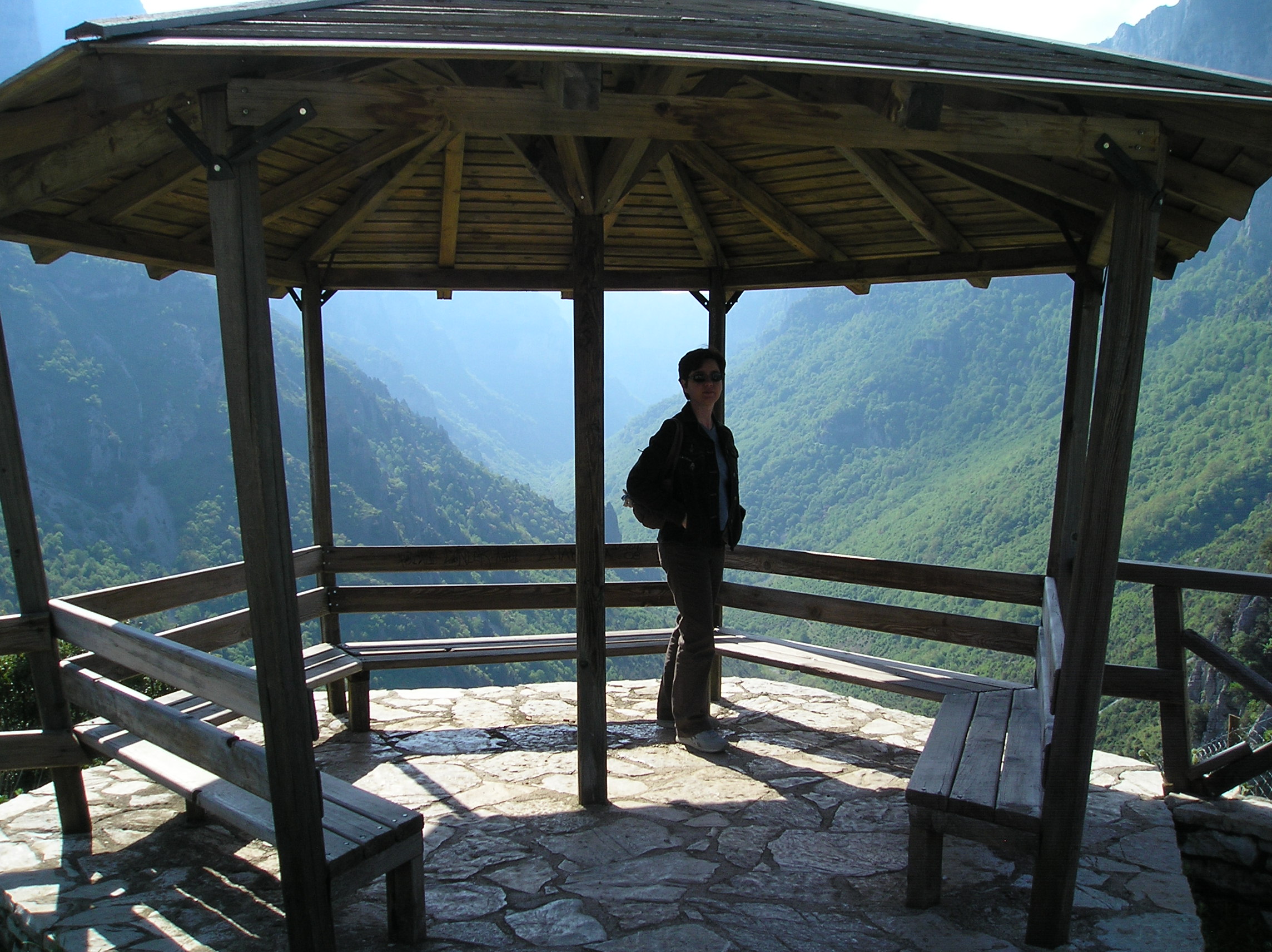
We saw the gorge from three places: Monodentri, Oxia, and Vikos. The view from Vikos was the best!
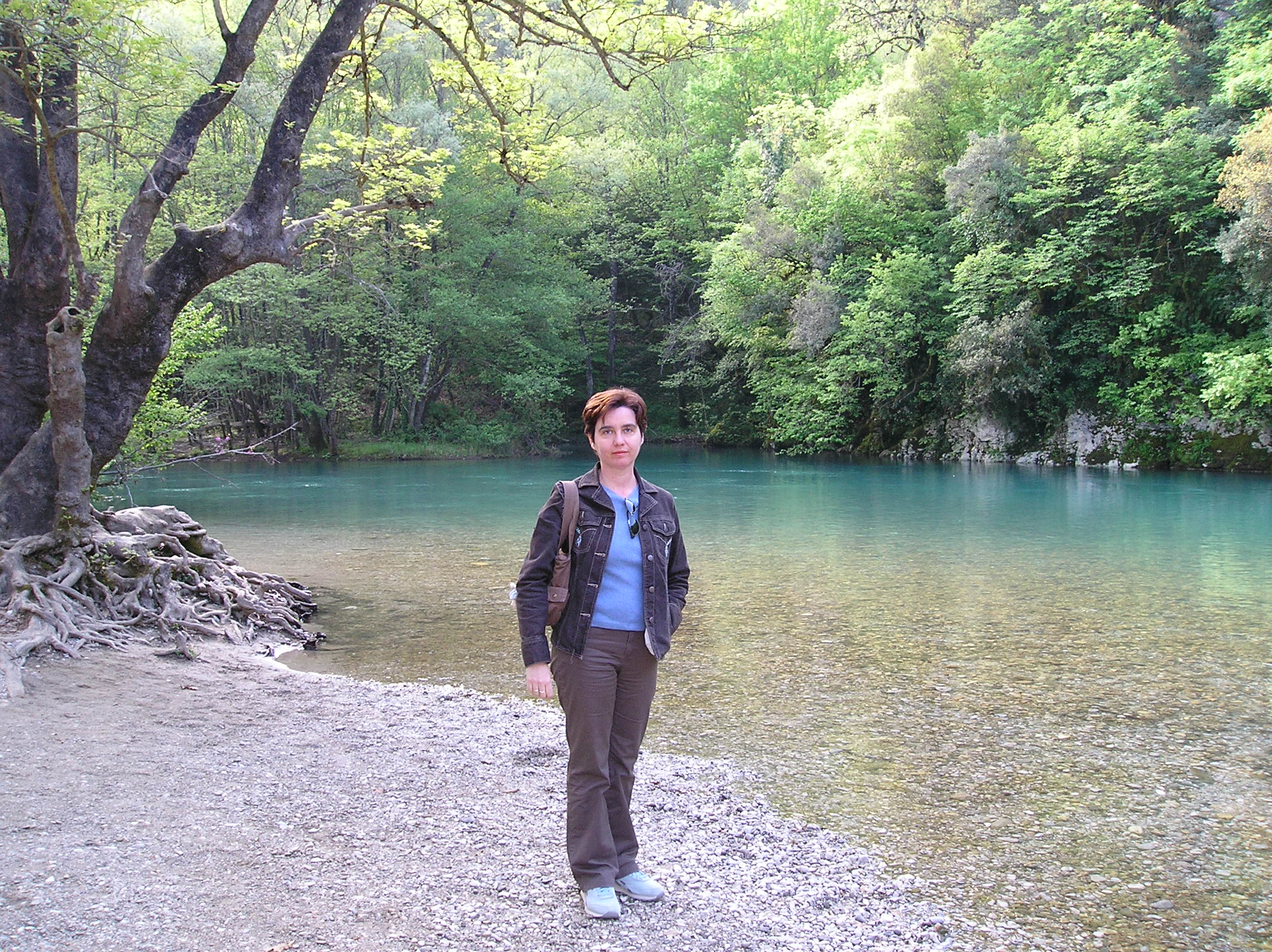
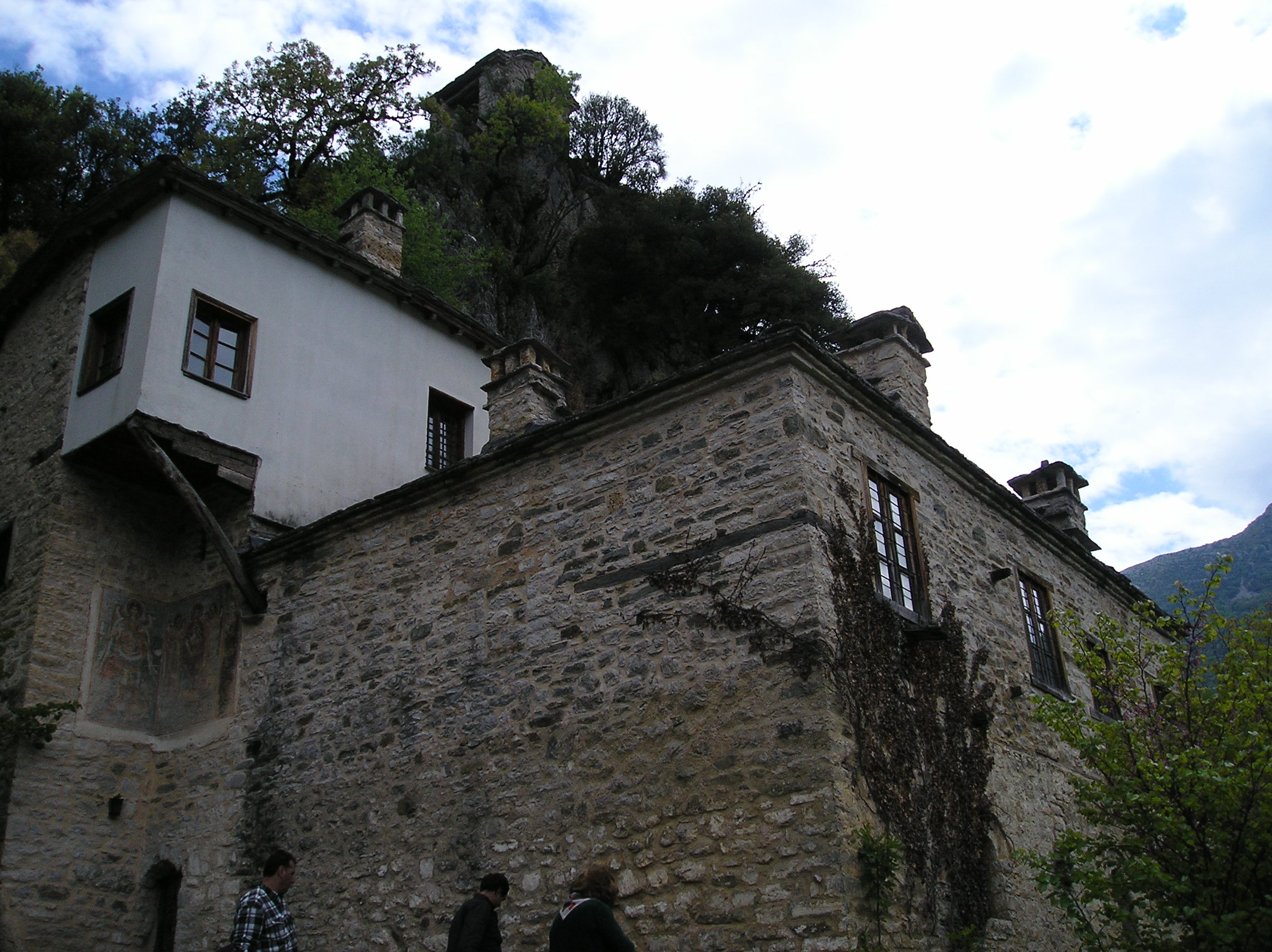
Papigo is situated within easy reach from the river Voidomatis, the village of Aristi, the village of Vikos with its breathtaking view to the gorge, as well as the Monastery of Panagia Spileotissa where the short walk through the forest along the river bank will remain forever indelible in my mind…
The first thing that the visitor is likely to notice about the people of Zagori is that they are uniquely lovely and hospitable. I will mention here the kindly owner at the inn who upon handing us the key to our lovely room, spent a good minute speaking highly of the local water supply, suggesting it makes washing oneself a whole new experience. I took her boasting with a pinch of salt I must admit but I wound up really impressed very soon after all when after a hot shower, I found out that I suddenly had the silkiest hair and skin ever.
Aristi
Monastery Panagia Spileotissa near Aristi Bridge
Beautiful nature near the monastery
The monastery is situated inside an enchanting forest
People around the restaurants and in the streets all over Zagori were equally eager to direct us and to talk but among them all, one particular local stands out in my memory simply because he was a special delight to talk to. He was an elderly man, an inhabitant of the village of Aristi. When we visited there, taking in the generous views of the snowcapped mountains in the distance, he approached us and offered a kindly greeting. He was very friendly and chatty and he introduced himself as a retired teacher. He took it upon himself to inform us about the sites and the area and he was particularly boastful of Voidomatis river, saying that its water is pure and that the locals still drink it without any qualms.
Then he stretched out his hand and pointed to the hills towering over Aristi, saying that back at the War, the locals took the hill in a battle against the enemy, thus stopping them from taking the village. Having realized at once that he meant WWII and eager to learn more, I then questioned him: “Which enemy is that?” To my surprise, he remained silent and fixed me with a curious stare that lasted a while, finally responding quite oddly: “What education do you have?” I was quite taken aback as you realize! “I am a university graduate,” I replied politely and matter-of-factly. “I am surprised then,” he said, “You should know we were fighting the Germans in the War!” to which I laughed and explained that I had only meant to ask him to clarify if he was referring to the Germans or their allies, the Italians.
I knew only too well that the Greeks were also fighting off the Italians around Epirus at the time, and we were in the heart of Epirus, after all. This seemed to make sense to him and he finally relaxed and continued to talk about the old days. I thought it was hilarious, that he should think me that ignorant, and for the whole day, Andy and I would pose the question to each other: “What education do you have?” – only to burst into the most uncontrollable giggles afterwards.
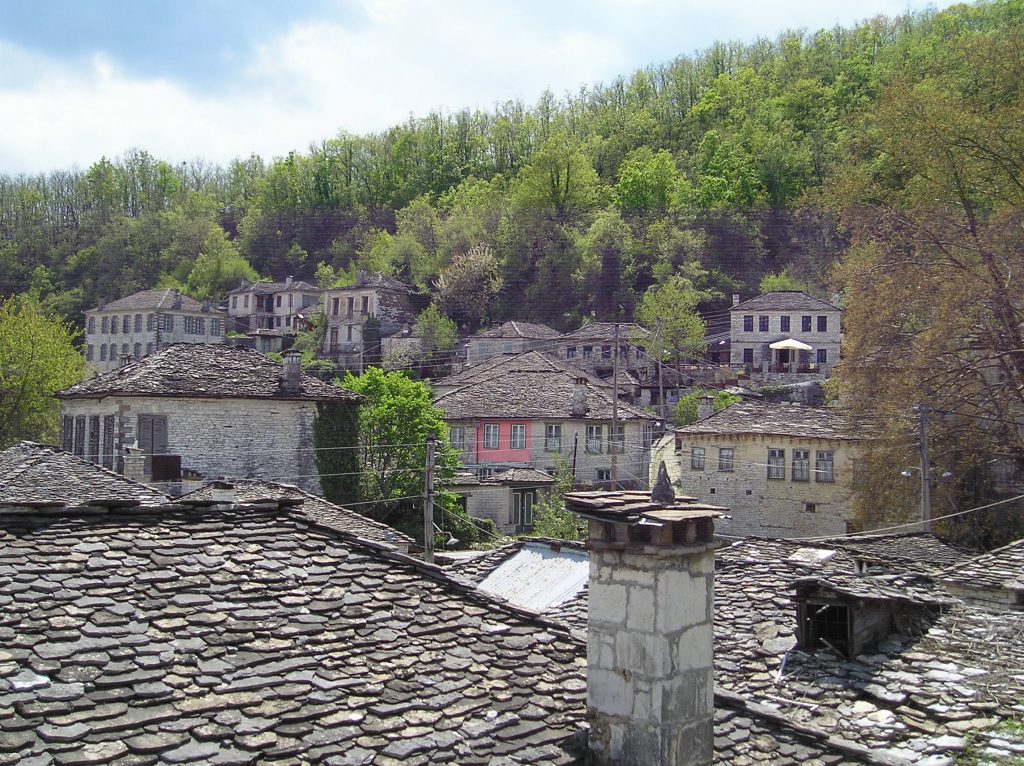
Dilofo
In all, our three-day excursion around Zagori in the spring has been a sheer delight for all the senses and one of the most unforgettable travels I have ever had. It goes without saying that we only saw a fracture of what’s out there to see and that a return there is as desirable as it is inevitable in the years to come.
I’ve shared more photos from each area I visited in Zagori on my Facebook profile, and you’re welcome to check them out here:
CENTRAL ZAGORI: From Ioannina, take the road to Konitsa. At 19 km, after the metal bridge, turn off right for central Zagori. Here you can visit Monodentri and the Monastery of Agia Paraskevi, Oxia, Dilofo, Kipi, the single arch bridge of Kokkori and the three-arch bridge of Plakida (Kalogeriko). In central Zagori, you can enjoy a view to the Vikos gorge both from Monodentri and Oxia.
WEST ZAGORI: From Ioannina, take the road to Konitsa. At 38 km, turn off after Kalpaki and head to Aristi. From there, you can also visit Vikos, the Monastery of Panagia Spileotissa, the Aristi bridge, Papigo, Kolybithres, Mikro Papigo. Vikos offers the most breathtaking view of the Vikos gorge and it is unmissable.
Some Kilometric distances:
IOANNINA-DILOFO : 32 KM
IOANNINA-KHPOI : 35KM
DILOFO-PAPIGO: 28KM
DILOFO KONITSA : 36KM
IOANNINA-PAPIGO 55 KM (takes approx. 1 hr and 15 mins)
3 FREE books for you! Sign up below to receive them instantly!
NEW! Clean Christmas romance. Single mother Cathy Roussos gave up on love long ago, and veterinarian Alex Rallis doesn’t believe in it, but one magical Christmas on a Santorini farm might just change everything…
A clean romantic suspense short read with an unreliable narrator that’ll keep you guessing! Vera is losing her mind over famous actor Yannnis Ksenos, except, she isn’t just a fan… Now, she plucks up the courage to ring his doorbell… Visit Amazon
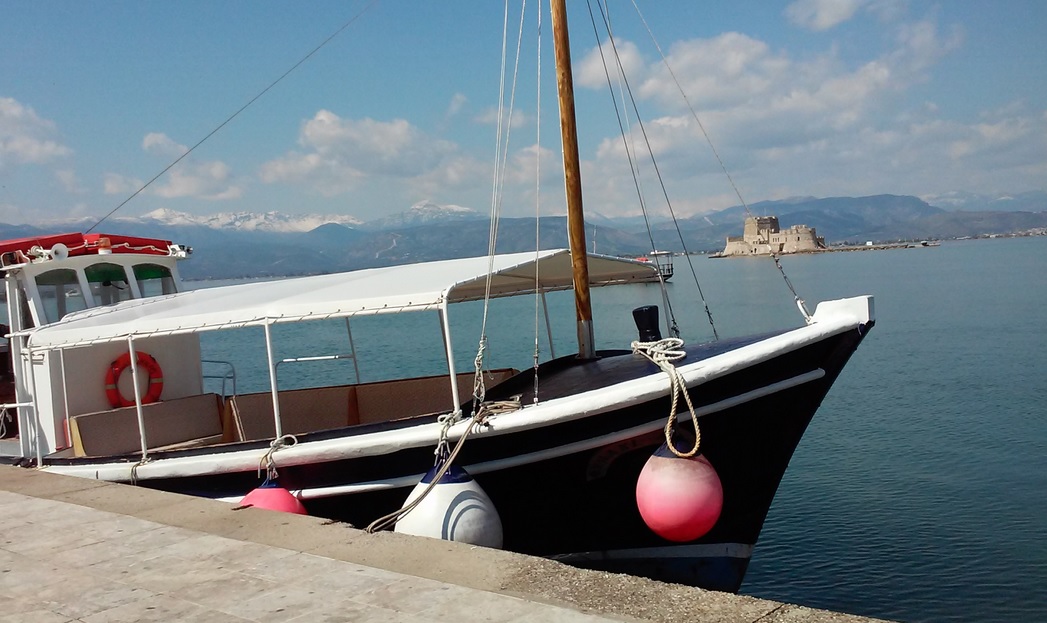
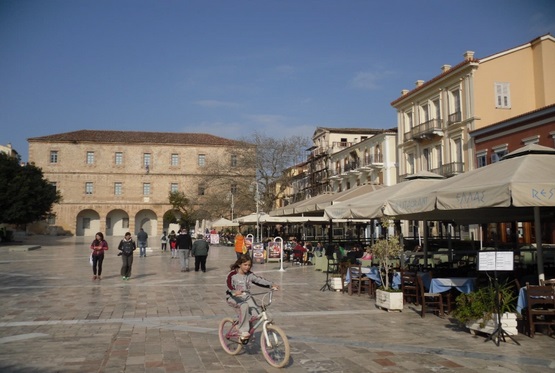
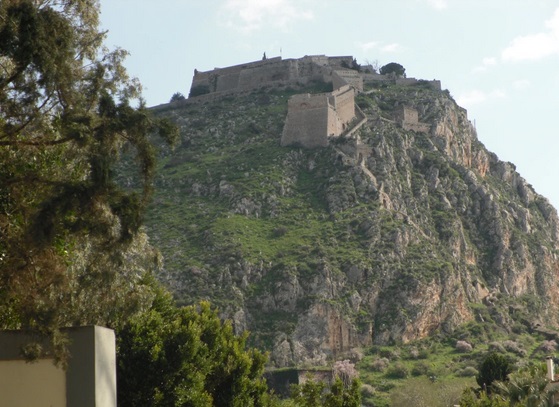
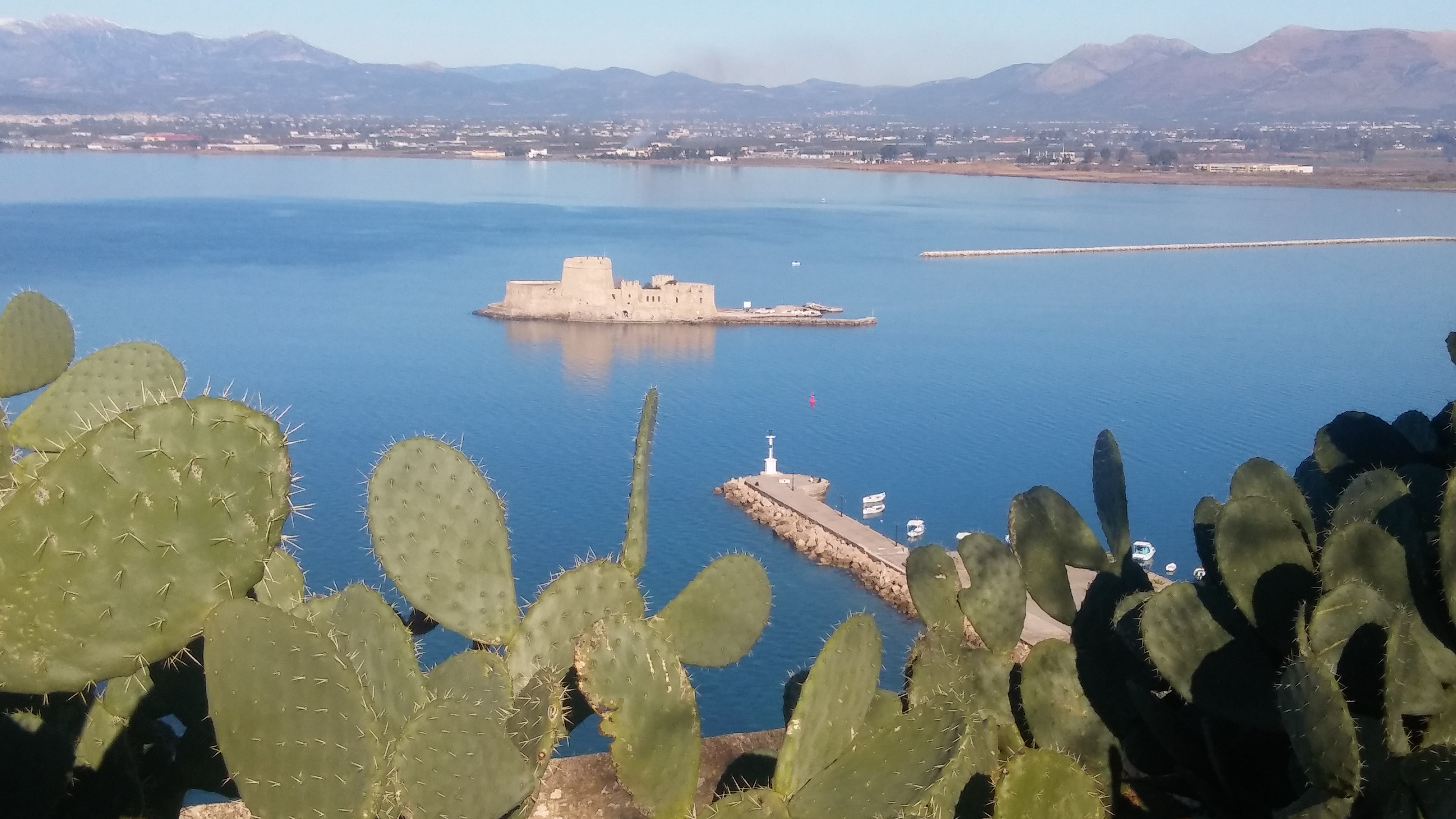
Nafplio was the first capital of Greece after the country’s War of Independence in the 1820s against Turkish rule. As a result, it is a town steeped in history, an element that is present in every corner of the old town center, with its grand neoclassical buildings and the magnificent Venetian fortress, Palamidi, that dominates the town’s skyline with its unparalleled charm. Not to forget, of course, the picturesque waterfront. The tiny fortress of Bourtzi, set in the water like a jewel and a silent sentinel, is an idyllic landmark that visitors love to marvel at from the multitude of cafes and restaurants lining the port.
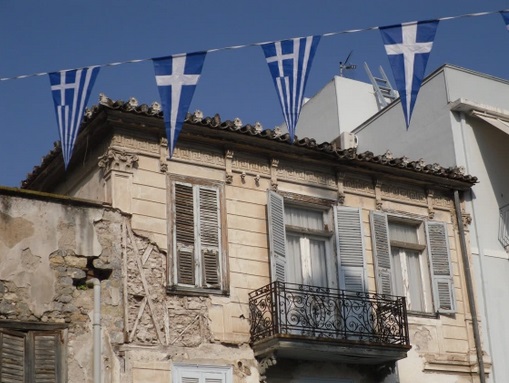
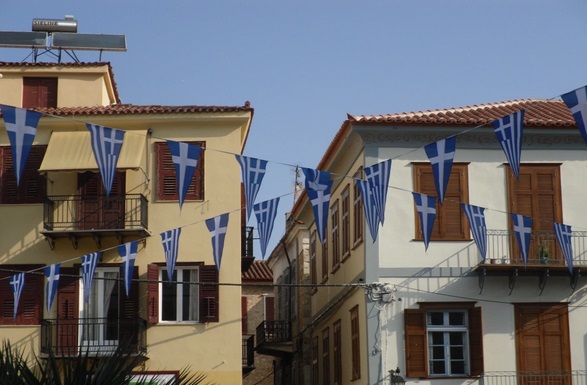
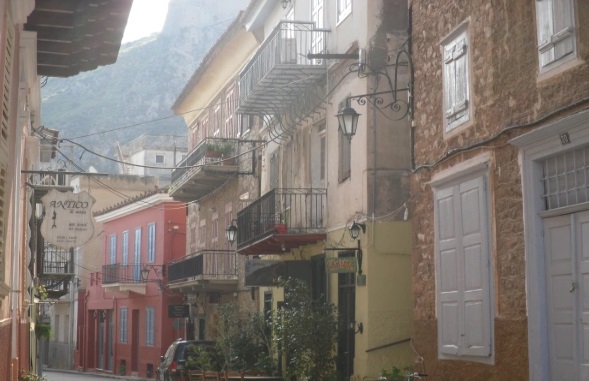
Thought I’d share today some photos from a special weekend break in this magnificent town, which took place a few years back. It was the weekend of the annual Nafplio Marathon race, plus it was in March, very close to Independence Day (March 25). The Greek flags decorating the picturesque lanes of Nafplio added to their inherent charm a touch of national pride.
During our weekend break, my husband and I made sure to walk around the town a lot, to take in the incredible energy of it all, and to fill our minds with the serenity of the setting.
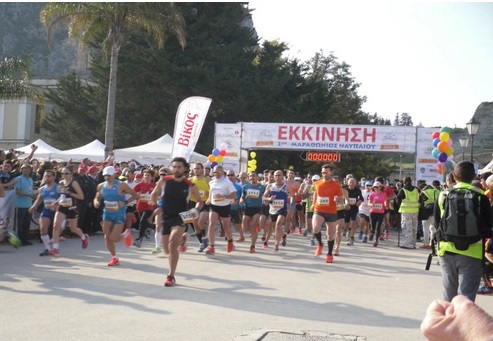
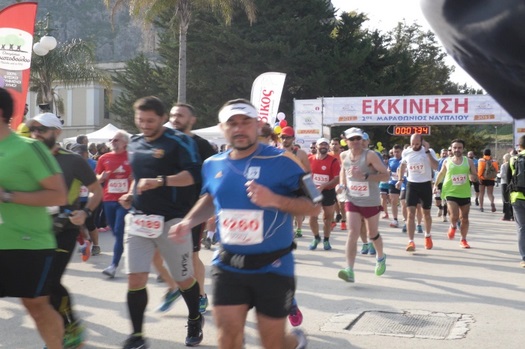
Saturday was a quiet day, but Sunday was a celebration! The town came alive with big crowds that stood expectant and music blaring from massive speakers. The annual Marathon race of Nafplio, a highly successful event, took place that morning, sending both runners and cyclists on a series of races around town and its outskirts to be cheered by excited spectators.
As opposed to the Athens marathon that’s regarded one of the most difficult to participate in (because its last stretch is a continuous climb uphill), the Nafplio marathon proved to be much easier for my husband, who ran the race, seeing that the ground was flat throughout.
Strolling around Nafplio is a unique experience. Magnificent squares, such as Syntagma (Constitution) and Trion Navarchon (Three Admirals), picturesque lanes, cafes and tavernas, curio shops and smart boutiques attract the eye in every corner. Surely, a photographer’s paradise.
For the enthusiasts of history, there is a lot to see and explore. Other than the Archeological museum and the Mosque (that housed the first parliament of Greece after the War of Independence), there are three historical forts around town.
Palamidi is, by far, the most magnificent, set atop a high peak that overlooks Nafplio. On a lower peak beside it, stands the fort of Akronafplia, and last but not least, the tiny fort of Bourtzi is, hands down, the most enchanting, seeing that it’s built on a tiny island at a short distance from the seafront. On a peaceful, sunny day, it’s a mesmerizing sight, seemingly floating on the water like a peaceful, off-white bird.
To me, it is no surprise that my great love for Nafplio, coupled with the delightful experience of that Marathon weekend there, in time inspired to write a novel – my romantic comedy, Running Haunted. And, in it, I unfold the allure of Nafplio in all its glory.
The book tells the story of Kelly Mellios, a marathon runner, who visits Nafplio to run the race and winds up getting hired to run a house. With a ghost in it!
MORE INFO:
The stunning and athletic Kelly Mellios runs a marathon in the alluring Greek town of Nafplio and winds up getting hired as a housekeeper by Alex Sarakis, a charming hotelier. Alex lives with his three underage children and a quirky pug, but no one knows there’s an extra inhabitant in the house… It’s the ghost of Alex’s late wife that lingers on with a secret plan.
When Kelly finds out the house is haunted, she freaks out at first, but then finds herself itching to help the ghost settle its unfinished business. It is evident there’s room for improvement in this family… Plus, her growing attraction towards Alex is overpowering…
Will Kelly do the ghost’s bidding? How will it affect her? And just how strange is this pug?
Interested to visit the picture-perfect town of Nafplio? My FREE travel guide includes my best recommendations for your sightseeing, including recommended walks for the most panoramic vistas!
YOU KNOW WHAT THEY SAY… SHARING IS CARING! Tweet this to spread some love:
3 FREE books for you! Sign up below to receive them instantly!
NEW! Clean Christmas romance. Single mother Cathy Roussos gave up on love long ago, and veterinarian Alex Rallis doesn’t believe in it, but one magical Christmas on a Santorini farm might just change everything…
A clean romantic suspense short read with an unreliable narrator that’ll keep you guessing! Vera is losing her mind over famous actor Yannnis Ksenos, except, she isn’t just a fan… Now, she plucks up the courage to ring his doorbell… Visit Amazon
The writing says: Cultural center of Moraitika, a calendar of memories from our village. 2020 wishes for health, love and progress.
Late last year, I was contacted on Facebook by Mrs Aglaia Anthi, President of the cultural center of Moraitika, Corfu. She said she’d seen some old photos on my website and asked for permission to use them for the 2020 calendar of the cultural center. I was thrilled and, of course, I said yes.
Last January, she sent me a copy of this beautiful calendar which I am thrilled to share today. I meant to do it back then but, sadly, I was in a bad place at the time, caught up in my late mother’s daily cancer fight. When I received the calendar, I took it to her bed to leaf through, and she cried to see the photo on the first sheet, which depicted her grandparents, Stefanos and Olga Vassilakis. She kissed their faces on the photograph whispering, ‘i nouna mou, o nounos mou…’ (the Corfiot words for ‘my granny, my granddad). The memory still causes my heart to twinge with feeling. My mother passed away on February 12, and I am comforted to think she is in her grandparents’ and her parents’ arms right now.
Without further ado, here is the calendar, sheet by sheet. I hope you will enjoy it.
January-February. Caption: The first priest of Moraitika and his wife (Stefanos and Olga Vassilakis).
My great-grandfather was also a teacher of Moraitika. The house he built for his family still stands on the hill near the church. Part of it was used as the village school at some point. He is buried in the church yard. For more photos and information, see my post about the two churches of Moraitika on the hill.
March-April. Caption: Kato Vrysi.
Or how the locals pronounce it, ‘Katou Vrysi.’ Loosely translated, it means, ‘The tap downhill’. It is situated on the side of the main road outside the dilapidated estate behind the Coop supermarket. There is also an ‘uphill tap’ called ‘Panou Vrysi’ which is at the edge of the village on the hill under a big plane tree. This is why the locals also call it ‘O Platanos’ (The plane tree). For detailed directions to Panou Vrysi, see my guide to Moraitika.
May-June. Caption: Old estate houses of the village.
The building on the left is the Papadatos estate house. This family also owns the little church of Agios Dimitris nearby (my great-grandfather is buried outside the main door of this church). The building on the right is the Koukouzelis estate house. Today, the grounds are used by the council for cultural events (concerts mainly). For more info and photos, see the same post about the churches.
July-August. Caption: Moraitika wedding of Kostas and Eleni Vlachos.
My uncle Kostas passed away a couple of years ago, but Aunt Leni remains active at her old age (born 1933), and still helps out at her seaside apartments of ‘Nea Zoi’ (beside Caldera on the beach). See my guide to Moraitika for these establishments. Here, below, follows an excellent commentary about this photo by my Aunt Leni as relayed by her daughter-in-law, Spyridoula Vlachos:
‘The wedding took place in 1953 in the village of Episkopiana. This picture was taken at the look out near the St Nikolaos church in Episkopiana that no longer stands. This is the area of the old estate home of Patsos that is now inhabited by the Tata family. After the wedding took place, everyone set off to Moraitika on foot, where the reception party would take place on the village square. On the front, walked the organ players and the priest who held the bible, then followed the bride and the groom, with everyone else behind walking them. Back then, the way to Moraitika was via the estate of the Kapodistrias family. In this photo, Stamatis Vassilakis’s daughter, Marika, is pictured beside the bride dressed in white. She had got married just a week earlier and was pregnant with her first child.’
Re my Aunt Marika (daughter of Great-Uncle Stamatis Vassilakis): She was one of my favourite relatives of the Vassilakis family. She had the heart and the soul of a child. I still recall so vividly the last time I saw her, visiting her in her house after a long while during my short stay in the village. It was a couple of years earlier, just months before she died. She was confused with dementia and didn’t recognize me when I approached her. Still, her good heart must have done, because she kept holding me, her eyes sparkling with love and delight while saying, ‘I love you! I love you!’ I’ll never forget her face that day; so innocent, so loving. Somehow, she is the only one whose name I didn’t have the heart to change in my largely autobiographical novel set in Moraitika, The Ebb.
Back to the wedding photo: Great-Uncle Lilis, a teacher, stands behind Aunt Marika. Behind Aunt Leni, the bride, on the right, is the groom, Uncle Kostas. To his right, stand Aunt Olga, and Great-Uncle Kotsos with Great-Aunt Rini Tsatsanis from Messonghi. The girl with the frizzy hair beside them is Maria, Lefteris Kosmas’s sister (he runs Leftis Romantica). My mother, Ioanna, is pictured further right as a little girl with her hands on her waist.
September-October. Caption: Group photo of members of the Vlachos and Vassilakis family.
My great-grandmother’s maiden name was Vlachos, and her wedding to Stefanos Vassilakis bound the two families together as one with great relations. This photograph was taken outside the Vassilakis house (late 40s to early 50s). She sits at the center dressed in black, as befitted a widow at the time. My great-grandfather passed away in 1944, and she did in 1953. The building shown in the background is the Koukouzelis estate house as mentioned earlier. The mulberry tree they’re sitting under still stands today and so does the olive tree on the right.
Pictured from left to right: Back row: Great-Uncle Antonis Vassilakis, Aunt Olga (Lilis’s daughter), Great-Aunt Irini, Aunt Dina (or Beba, Lilis’s daughter), Christos Vlachos, Tsantis Vlachos. Middle row: Great-Uncle Kotsoris (Kotsos) Tsatsanis, Great-Grandmother Olga Vlachos, Angelina Vlachos, Great-Uncle Lilis Vassilakis and his wife, Great-Aunt Fotoula. Front row: Great-Uncle Stamatis Vassilakis. Behind them, the children Petros and Sofia Vlachos. Petros used to run The Crabs restaurant on the beach (now Caldera, run by his son Christos). On the right of my great-grandmother, you can see Evgenia Vassilakis (wife of Stamatis) and her grandchildren, Vasso and Stefanos Moraitis (both, Marika’s children).
November-December. Caption: Washing in the ‘mastello (old Venetian word for ‘wooden tub’).
If my memory serves me well, ‘Forena’ is a nickname for the woman pictured here. I think she lived or had a shop in the old days on the upper square of Moraitika where the Village Taverna is. This square was always referred to by my grandparents as ‘Foros’ (a Venetian word meaning market or square, in my understanding).
The rest of the caption reads: ‘Open-air barber shop (Pippis, Kapouas, Tatsos, Lopi, Sofia).
For more photos and info on the Vassilakis family and my old summers in Corfu, see this post. To follow my blog and be notified of my new posts, go here.
This is it for now, everyone. I wish you a wonderful summer, and hope you’ll get to make lots of new and exciting memories – be it in Corfu, or your own corner of heaven 🙂
YOU KNOW WHAT THEY SAY… SHARING IS CARING! Tweet this to spread some love:
3 FREE books for you! Sign up below to receive them instantly!
NEW! Clean Christmas romance. Single mother Cathy Roussos gave up on love long ago, and veterinarian Alex Rallis doesn’t believe in it, but one magical Christmas on a Santorini farm might just change everything…
A clean romantic suspense short read with an unreliable narrator that’ll keep you guessing! Vera is losing her mind over famous actor Yannnis Ksenos, except, she isn’t just a fan… Now, she plucks up the courage to ring his doorbell… Visit Amazon
Today, I am writing to spread the word about my favorite corners of the world – the stunning villages of Moraitika and Messonghi in Corfu. Having holidayed there most summers since the late 1970s, I’ve written an insider’s travel guide to spread the word about them.
My guide will tell you everything you need to know if you’re planning a visit, or if you’re simply hoping to do that sometime in future. ‘Cos who doesn’t like to daydream about beautiful exotic locations, right?
Messonghi beach
In my travel guide you will find among other things:
Traditional Greek tavernas, recommended family hotels and apartments, the best beaches in the area, where to go for live shows and a great night out (lots of family fun!), the best boat trips (setting off from Messonghi river or Lefkimmi port), places of interest and fun things to do in the greater area and more.
Moraitika beach, view to the mountains of Chlomos and Martaouna
Did you know?
Moraitika’s old village quarter is nestled on a hill and is full of picturesque lanes you’ll love to explore and revisit. My insider’s guide will give you intriguing facts and history tidbits as well as offer tips on places of interest off the tourist trail.
And did you know there are three wonderful family tavernas up on the hill, all offering exquisite Greek dishes? One of them has this stunning view that overlooks the bay!
Speaking of stunning views, there’s another taverna that overlooks the same bay, but this one is on the side of Messonghi. The taverna is situated on Martaouna, one of the two iconic mountains of both the Moraitika and Messonghi skyline. For details, visit the guide!
Moraitika beach
Messonghi pier
Messonghi beach
Moraitika and Messonghi are great destinations for beach fun! Moraitika offers some water sports, pedaloes and canoes for hire, and a water park that’s great for both adults and kids alike. The beach at Messonghi is quieter, with a greater proximity to the iconic lush mountains on the peninsula, and is graced by a weather-beaten, yet much loved pier that is a must to walk or sunbathe on, if only to marvel at the crystal clear waters under it.
Are you a Durrells fan? The guide will tell you how to book a great boat trip from Messonghi river that will take you to both Kalami (to visit the White House) and to Kontokali to see the film house of the Durrells TV show (from the boat). In the guide, you’ll also find out how you can book an exclusive guided tour (specific dates and times only!) to visit Danilia, where many village scenes of the show were filmed!
Moraitika and Messonghi are perfect choices for fun in the sun, whether you’re traveling with children, as a quiet couple, with friends, or even alone. It’s a safe place to be in and the locals are exceptionally friendly.
So what are you waiting for? Visit my guide now and start planning your perfect beach holiday!
3 FREE books for you! Sign up below to receive them instantly!
NEW! Clean Christmas romance. Single mother Cathy Roussos gave up on love long ago, and veterinarian Alex Rallis doesn’t believe in it, but one magical Christmas on a Santorini farm might just change everything…
A clean romantic suspense short read with an unreliable narrator that’ll keep you guessing! Vera is losing her mind over famous actor Yannnis Ksenos, except, she isn’t just a fan… Now, she plucks up the courage to ring his doorbell… Visit Amazon
Today I want to talk to you about stress and how to fight it effectively and naturally. This is a revolutionary new method that is free and easy to use, and it works like magic… Millions are using it all over the world every day. It has transformed my life… and so I feel compelled to share my experience with you, hoping it will help you too.
Those who follow my blog are familiar with my harrowing health issues for the past five years. Thankfully, it’s all behind me now and, being one to always see the silver lining, I’ve come to consider it all a precious life lesson.
The great Ernest Hemingway once said, ‘We’re all broken. That’s how the light gets in’.
And it takes one to become truly broken to know how true that is.
Through my five-year-long streak of adversity, I’ve emerged a new, stronger and wiser person. For one, I’ve learned to take it easy, and not to be so hard on myself, fully aware now that all my health issues were triggered by stress and my own wrong attitude.
But you know what? Stress can’t touch me any more. It’s because I’ve learned a new skill that made a huge difference, and I am thrilled to write about it today to share it with you!
I’ve recently had the honor to be invited to Colleen Story’s amazing blog, “Writing and Wellness”. If you’re struggling with stress and overwhelm, by the way, you’ll do well to read her blog (and to check out her books too, if you’re a fellow author.)
Colleen and I chatted about my personal struggles, how it all began for me, why, and what it entailed. In the process, I shared all about the specific skill that helped me to battle stress effectively for a change.
We all have to face stress, and it’s detrimental to our health more than we realize until it’s too late… That’s what happened to me. Don’t let that happen to you too. That’s why I am sharing. Knowledge is power. I urge you to google the stress hormone ‘cortisol’ in relation with cancer and autoimmune diseases, for instance…
Avoiding stress means avoiding mortal risks. And that is why I regard this skill I’ve picked up as the most important one I’ve learned my whole life. And this means a lot, believe me, as it’s coming from someone who, at the tender age of 18, was picking up books like the Jose Silva Mind Control Method and anything I could find on self-hypnosis and meditation. I never stopped picking up mind-hack methods since then, but this one turns out to be the most incredible and the most effective I’ve ever known, including NLP.
Check out my chat with Colleen here and see if my new skill can help you out too! It also works wonderfully to ease physical pain among other things.
Feel free to comment below and share about your own experience with stress. And if you use my method, be sure to return here and let me know how it went 🙂
YOU KNOW WHAT THEY SAY… SHARING IS CARING! Tweet this to spread some love:
3 FREE books for you! Sign up below to receive them instantly!
NEW! Clean Christmas romance. Single mother Cathy Roussos gave up on love long ago, and veterinarian Alex Rallis doesn’t believe in it, but one magical Christmas on a Santorini farm might just change everything…
A clean romantic suspense short read with an unreliable narrator that’ll keep you guessing! Vera is losing her mind over famous actor Yannnis Ksenos, except, she isn’t just a fan… Now, she plucks up the courage to ring his doorbell… Visit Amazon
Yippee! Our TV screens are about to fill again with stunning Corfiot landscapes of sparkling azure waters and cypress green hills as the sweet chords of mandolin and the chirpy voices of our favourite TV characters delight our ears. Yes, the fourth series of The Durrells of Corfu is upon us, and nothing seems to dampen our excitement, even though this is going to be the very last one… But thank goodness for DVD, I always like to say, so we can watch it all again and again in perpetuity. The other day, our beloved superintendent in the show, Greek actor and author Kostas Krommydas, gave me a new bunch of behind the scenes photos and I am thrilled to share them below along with our chat. Enjoy!
Hi, Kostas! The fourth and last season of The Durrells is about to be broadcasted in the UK. How do you feel about it?
Excited, of course! And I am delighted that I could participate in the third and fourth series of this wonderful British TV series. Sadly, it has come to an end, but I will always think back with fondness at this amazing experience and my cooperation with the cast – both the British and the Greek actors. I certainly hope more similarly high quality productions will come to film in Greece in future.
Tell me, has anyone among the British actors you worked with read any of your novels?
*Chuckles* I have handed out copies of my paperbacks to almost everyone among them and, yes, some of them have read them. However, most of them preferred to read on their kindles so they downloaded the books from Amazon. I am pleased, because I’ve received wonderful feedback from them all, and this honours me because I am aware that the British read a lot, and quality books too.
Actually, I’ve discussed one of my stories with the Durrells production team and they loved it. It is probable that in future we’ll discuss the story again in more detail in the hope it might become a new tv series, or perhaps a movie.
Wow, that sounds wonderful, Kostas! What are your future plans as an actor and author?
My impeccable experience with The Durrells has whetted my appetite for more. Now, I am always on the lookout for new productions that involve filming in Greece and abroad. Other than that, I continue to write new material and, in the near future, will be publishing my seventh book in Greek, which will be translated into English to be published on Amazon later on too. Nowadays, writing is my top priority. Acting has taken a back seat – it is something I plan to do only selectively from now on.
Your forthcoming book takes place in Tuscany, if I’m not mistaken?
Yes, that’s correct!
*Eyes him mischievously* Is this the book you discussed with the Durrells production team, by any chance? Come on, out with it!
*Laughs out loud* You guessed it, Fros. Yes, that’s the one.
Oh, super. No pun intended! *giggles* And I’ve heard some wonderful praise about this book from your beta readers on Facebook. I can’t wait to read it… Now, back to the last series of The Durrells. Can you tell us what to expect?
All I can tell you is that I appear in the first episode. A lot! And that the ending of the series will be very moving… The production has done a marvellous job to create the perfect ending that will remain unforgettable to the viewers.
Oh brilliant! I understand your novels are currently discounted on Amazon?
Yes! They’re all only 99c/99pp for a limited time.
Ooh. Great timing with the series! I’m sure your fabulous Greek tales will keep the readers happy while waiting for the next Durrells episode on the telly! *laughs* Thank you for this wonderful chat, Kostas!
Thank you too, Fros, for the opportunity to talk about my work!
Get Effrosyni’s FREE books with your signup to her bimonthly newsletter! Fun news from her life in Greece and a load of FREE kindle books in every issue! http://bit.ly/2yA74No
Beach fun and sweet romance mixed with magic spells and bird shifters… The Raven Witch of Corfu is an original story that will rivet you with its unrelenting suspense. The final twist will blow your mind!
Today, I am thrilled to share a legend from Corfu by kind permission of Aleko Damaskinos. His post as per below was published in the FREE Corfu newspaper, The Agiot and in his wonderful Facebook group about Corfu’s history, culture, wildlife and flowers: Only Corfu Society. It tells a tragic tale of love and revenge from Corfu in the bygone days of the Ottoman Empire.
The Legend of Nikolaos Pierris and Nazli Hanum by Aleko Damaskinos
In the beginning of the 18th century two foreigners, Nikolaos Pierris and his wife accompanied by a black servant Mehmet arrived on Corfu in a Venetian ship.
They made many enquiries about buying a property until they eventually found what they were looking for. Even today this property exists and it is where the “Club Mediterranee” used to be. It is by the sea on the right before reaching Ipsos. One of the most spectacular areas of Corfu.
The couple built a house in the Eastern style and settled there with their black servant. They had no communication with the Corfu society and lived a quiet and lonely life, cultivating their land, planting trees and flowers.
This self-inflicted exile had its own story.
Nikolaos was of Greek origin, but from his early childhood was in the employ of a Turkish Pasha, Tzanoum Kotzia, who was totally trusted by the Sultan.
Tzanoum brought him up like his own son, but when he reached manhood Nikolaos betrayed his benefactor by revealing to the Venetian Governor the secrets of the Ottoman Court which he was entrusted with by the pasha. His betrayal did not end here.
On one of his expeditions to Asia Minor, Tzanoum Kotzia brought back with him a stunning sixteen-year-old girl with blond hair and brown eyes named Nazli.
One day, Nikolaos saw her through the shuttered windows of the harem. He approached her and talked to her with the help of the servant Mehmet who kept the keys to the girl’s apartment.
The two, very much in love now, decided to go to far away places together. Nikolaos was issued with a double passport by the Venetian Governor in the assumed name of Pierris. Mehmet joined them as they boarded a boat bound for Corfu.
Two years after they were well-established on the island, Nikolaos’ wife became seriously ill. Pierris asked a local woman to come and help. It was from this woman that it became known that the couple spoke a different language and the woman’s name was Nazli.
Nazli’s health deteriorated further and Nikolaos, day and night, stood at her bedside. One night, Nazli died. The next morning, Pierris realized that a small rowing boat was not in its place and Mehmet had disappeared. In his deep sorrow he did not give it another thought or worry. He buried his beloved in the garden and on the newly dug grave he planted many flowers.
Very quickly the ground was totally covered with dense foliage and flowers. Only the heart-broken lover knew where his beloved was resting.
One year later, the Turkish fleet under Tzanoum Pasha Kotzia sailed to Corfu.
Pierris, like all other nobles of the island, offered his services to Field Marshall Count von Schulembourg and was given a position in the bastions. A while later, the pasha and his army disembarked at Ipsos and a slave led Tzanoum to Pierris’ property. For many hours the pasha walked around the property looking for Nazli’s grave in vain.
He then headed for Corfu town. They showed him the place Pierris was defending and he gathered there a great army force and attacked. In the evening after the battle he inspected the prisoners and the wounded. Accompanied by Mehmet, who was now his official guide, he looked for his enemy amongst the dead. Luck, though, did not help him that day to take his revenge.
One evening, they brought a heavily wounded man to the pasha’s tent. It was Nikolaos Pierris. In a rage, the pasha grabbed him by the hair, lifted his head and then let it drop, while at the same time he kicked the almost dead man without mercy. The prisoner opened his eyes and once again saw his old master.
“Ungrateful bastard!” roared the Turk. “Where is the woman you stole from me?”
“She died…” Pierris whispered.
“You will pay for this, you dog!”
The pasha ordered his men to tie Pierris up on a horse. Despite the foul weather he took him himself to Ipsos. The lightning was lighting the way. When they arrived, he untied him and ordered him to reveal the place where Nazli’s grave was. Pierris refused and so the whip of the raging Turk hastened his death. Before closing his eyes for good, he looked for the last time at the cypress and oak trees in his garden.
Not even Mehmet avoided the pasha’s wrath. He ordered that they should hang him from a window of the house. Then he totally burnt down the house.
Nazli’s resting place remains a secret until this very day!
Do you enjoy old tales about Corfu? In this post I share a little about my Corfiot family history, old photos, and some interesting facts about the two churches on the hill in Moraitika. Fact: Aleko Damaskinos is one of the remaining members of the Papadatos family who own the old church ‘Agios Dimitris’ in Moraitika. My great-grandfather, Stefanos Vassilakis, is buried outside this church where he served as the priest of the village in the early 20th century. Read more HERE
3 FREE books for you! Sign up below to receive them instantly!
NEW! Clean Christmas romance. Single mother Cathy Roussos gave up on love long ago, and veterinarian Alex Rallis doesn’t believe in it, but one magical Christmas on a Santorini farm might just change everything…
Clean romance short read, FREE with Kindle Unlimited. It’ll transport you straight to Corfu to experience summer in an idyllic Greek seaside village. The story is inspired from the author’s love for Moraitika and its people. Now, also available as an audio book! Visit Amazon
Beach fun and sweet romance mixed with magic spells and bird shifters! The Raven Witch of Corfu is an original story that will rivet you with its unrelenting suspense. The final twist will blow your mind! Available in paperback , box set or 4 kindle episodes! Visit Amazon
On the hill in Moraitika, at the center of the old village, there is a small church that I used to visit occasionally for Sunday mass during my long summers in Corfu in the 1980s.
This old church — Agios Dimitris — was still in operation back then, and it was the only one in the village at the time. It was erected by the Papadatos family, whose (now derelict) estate house is situated behind it.
One of its early priests was my great-grandfather, Stefanos Vassilakis. He and his wife Olga built a house for their big family a stone’s throw away from the church. Part of their house was used as the school of the village. Other than his two main professions, my busy great-grandfather also worked his own land (situated in two different parts around Moraitika: behind the Coop supermarket, and on the side of the mountain over Miramare Hotel).
Many of the elderly locals still remember him working his land. Apparently, he did this wearing his priest’s robe!
During the German occupation, he was in his bedroom on the upper floor one night when he heard the unmistakable heavy footfalls of military boots echoing from outside. It sounded like a band of soldiers rushing down the lane. This was a scary time for the locals so, unsettled, he hurried down the internal staircase so he could peek through the front door. In the commotion he missed his step and fell down the stairs, breaking his leg. Sadly, he suffered complications from the fall which led to his death at the age of 70.
This is a picture of my great-grandmother, Olga Vassilakis (nee Vlachos), with other family members. Being a widow at the time, she was wearing black and the traditional headscarf. She is pictured with her son-in-law (left) and two of her children at the doorstep of the house in the 1950s. The locals referred to her as the ‘Presvytera’ or the ‘Pappadia’ – both names meaning ‘wife of the priest’, with the latter title being less formal.
This photo was taken in the 1970s on the same doorstep. Sadly, I never met either of my great-grandparents, but it’s a consolation to know I have lived all my life treading their footsteps. In this photo, I am photographed with my sister and a few members of the Vassilakis family.
Interesting tidbit: According to my grandmother, the name Vassilakis originates from Crete. Other than Moraitika, the name is also met in the villages of Zygos, Valanio and Sinarades. The Vassilakis of Moraitika originate from Sinarades where there’s a legend about the family name! According to Granny’s story, at some point the Vassilakis were split into the ‘rich’ ones and the ‘poor’ ones (our family came from the latter sadly 😛 )
So how did some of the Vassilakis got rich? Well, legend has it that a man from the family once found pirate treasure in a chest on Agios Gordis beach and took it home! The pirates came back to get it and searched high and low but never found it…
Here, my great-grandmother is pictured with family (both Vassilakis and Vlachos) before the Koukouzelis estate. Again, sometime in the 1950s. Would you believe, the mulberry tree on the left and the olive tree on the right still stand today. This yard has been both my ‘dining room’ and playground as a child for many blissful summers, more often than not, under the generous shade of the mulberry tree from the 70s onwards.
Interesting tidbit: If you’ve visited Moraitika in the 80s-90s, you may be able to identify in the above photo the late Petros Vlachos who ran The Crabs (Kavouria) on the beach at the time. He’s a little boy in this picture (front row, crouched on the left of my great-grandmother.
Visitors to the hill in Moraitika today may recognize the Koukouzelis Estate House in this photo. The whole property was acquired by the council in the recent years to be used for cultural events. It is situated very near the church.
Interesting tidbit: The name ‘Moraitika’ is derived from the word ‘Morias’ which is another name for the Peloponnese (the part of Greece that looks like an inverted hand). The first inhabitants of Moraitika were emigrants from Morias, and the people were referred to as ‘Moraites’, hence the name.
This picture was taken in the lane that leads from the old church to the Koukouzelis Estate.
The derelict stone wall with the window is part of the estate. According to one of my cousins who ventured inside once as a child, there was a large library behind this wall. Now, with the overgrowth of bushes and creeping vines that have accumulated over the years it is impossible to decipher anything when peeking through the window.
This is the same lane looking towards the old church (yellow wall). You can also see the belfry of the current church of Moraitika that stands beyond it. This one was under construction for at least one year back in the 1980s, something that used to worry my grandmother a great deal… You see, she was convinced that it attracted all sorts of evil spirits while it stood as a building site.
Oftentimes, we’d hear the shrill cry of a certain kind of owl at night that Granny called a ‘strigglopouli’ (screeching bird). She’d always say it was a bad omen as, apparently, it signified an impending death in the village. She’d also say the sound was coming from the church building, which made sense as its roof was incomplete and thus open to the elements at the time, making it easy for all sorts of night birds to nest there.
The church of Moraitika is called “I Koimisi tis Theotokou” (The Dormition of Mary)
When the church was sanctified and began operating, Granny said she never heard those birds’ bloodcurdling cries echo from the church again. I never really believed any of that, but Granny had a way to tell these things and they always had my vivid imagination going!
This is a photo of my grandparents, Spyros and Antigoni Vassilakis. Granddad was a proper ‘papadopaidi’, i.e. the son of a priest, meaning he was an avid churchgoer and loved to chant at the church given half the chance. Throughout my childhood in Athens I remember him chanting on Sunday mornings as he listened to mass on his portable little radio. My grandparents lived in the city at the time but once they relocated to Moraitika in the late 1970s, Granddad became a regular visitor and an occasional ‘psaltis’ (church singer that chants the gospel) at the old church of the village and, later, at the new one as well.
The private church of Agios Dimitris opens only once a year these days – on its festival day on October 26.
This is the belfry of the old church. The year of its erection is 1905 according to the plaque you can see here. I find it a real pity that it was left to deteriorate in this manner – same goes for the old estate houses (Koukouzelis and Papadatos) beside it that barely stand. At least, the facade of the old church is kept tidy and freshly painted, and the tourists seem to be interested in my great-grandfather’s grave a lot…
I often see people taking pictures of it when I pass it by. Other times, I find flowers on there, and in the recent years, oddly enough, even scattered coins! I can only assume it is customary in a country somewhere to throw coins on graves. In any case, it’s a nice gesture and always makes me smile.
If you ever visit Moraitika, make sure to venture uphill to see the church yard and do take a walk towards the Koukouzelis Estate as well, if only to enjoy the sea view. The sunrise is always a good time!
Many thanks to my cousins Evgenia Vassilakis and Sofia Tsatsanis who provided the old family photos!
YOU KNOW WHAT THEY SAY… SHARING IS CARING! Tweet this to spread some love!
3 FREE books for you! Sign up below to receive them instantly!
NEW! Clean Christmas romance. Single mother Cathy Roussos gave up on love long ago, and veterinarian Alex Rallis doesn’t believe in it, but one magical Christmas on a Santorini farm might just change everything…
Clean romance short read, FREE with Kindle Unlimited. It’ll transport you straight to Corfu to experience summer in an idyllic Greek seaside village. The story is inspired from the author’s love for Moraitika and its people. Now, also available as an audio book! Visit Amazon
Beach fun and sweet romance mixed with magic spells and bird shifters! The Raven Witch of Corfu is an original story that will rivet you with its unrelenting suspense. The final twist will blow your mind! Available in paperback , box set or 4 kindle episodes! Visit Amazon
There are a thousand and one posts out there about the Eternal City… but I’m not here to tell you about The Fontana Di Trevi, the quaint lanes of Trastevere or the shopping experience in Via Veneto…
Instead, I’m here to share with you a different side of Rome: the beauty of its grandiose churches which I indulged on to the max a few years ago during a short holiday break for the New Year.
I do confess, though, that as I set off on my sightseeing tour my original intention had been somewhat different. Other than the indispensable city guide, I had also packed a paperback edition of Dan Brown’s “Angels and Demons”. I had already read the book from cover to cover and was eager to follow the trail of its main character, Robert Langdon.
Having sought every nook described in the book to find the clues, I can vouch that the author has his descriptions accurate down to a ‘t’ – or should I say, down to the last star, pyramid and obelisk! I was particularly thrilled to visit two specific churches as I “followed” Robert Langdon around.
The first church is Santa Maria Della Vittoria, where the statue of “The Ecstasy of Santa Teresa” delivered with an uncanny accuracy all that my imagination had conjured up while reading the book.
The magnificent ceiling
Santa Maria Della Vittoria
The other church was Santa Maria Del Popolo at the far end of Piazza Del Popolo where I located the Chigi Chapel and again, found the mystifying shapes on the coat of arms exactly as Mr. Brown had claimed them to be.
Looking for one of Robert Langdon’s clues in Piazza del Popolo… (and if you’re a fan of the books you can see it now, can’t you?)
Visiting Rome’s churches proved to be an exhilarating process for me. I never knew what to expect after a while. Each one was unique in some way. In the end, I wound up entering every single one I came across as I quickly grew addicted to the awe-inspiring atmosphere they delivered effortlessly each time, without fail.
Santa Maria MaggioreSanta SeciliaSanta Maria Sopra Minerva
I fell in love with their beautiful facades, for one. Some of them had fabulous statues standing before them, and I particularly loved the delightful elephant outside Santa Maria Sopra Minerva. Still, beyond the beauty of the exterior of any given church, it was what awaited me inside that truly made my jaw fall slack.
Everywhere I looked, I found beauty and reverence. As the world around me expanded in vast, imposing spaces, I started to feel increasingly humble and small, but the experience, far from intimidating, proved surprisingly empowering.
One of many magnificent Baroque ceilings that I’ve had the pleasure to see in Rome
Lifelike statues of saints and angels, high Baroque ceilings and gigantic columns rising from the floor induce a feeling of communion with the heavens. The candle-lit shrines of serene humility offer moments of peace and an opportunity for a quiet prayer. At the main church halls, the gold-decked walls, luxurious marbles and breathtaking frescos convey a sense of grandeur. As you sit on a pew to rest for a few moments, you can’t help but think that the natural light that comes through the multitude of tall windows, might as well be the warm, blessing hand of the Divine.
The famous chains of St Peter in San Pietro in Vincoli (St Peter in Chains)
Some of the churches are a must for the holy relics that they house, such as San Pietro in Vincoli where the original chains that once bound Saint Peter remain on display.
Michelangelo dropped his chisel on Moses’s knee accidentally…
Detail from the ceiling
The knowledgeable tourists among the hoards of visitors to this church will not leave until they have duly witnessed the chipped surface on the marble on Moses’s knee where, according to legend, Michelangelo accidentally dropped his chisel while working on this statue.
Santa Croce in Gerusaleme (St Cross in Jerusalem) is another must for its holy relics
Another famous church for its holy relics is Santa Croce in Jerusaleme (Saint Cross in Jerusalem) which was built to house the fragments from Jesus’s cross that Saint Helen had brought back from the Holy Land. Today, visitors will marvel there at the said pieces as well as the tiny thorns from Jesus’s thorn crown, one nail from His Cross and a finger that belonged to Saint Thomas.
Santa Maria Degli Angeli E Gli Martiri (St Mary of the Angels and the Martyrs)
My husband Andy before the same church
I found the peculiar facade of Santa Maria Degli Angeli E Gli Martiri utterly fascinating. Inside, I was speechless by how huge it seemed. The effect was particularly humbling. I hope the pictures help to convey some of its beauty and reverence.
San Giovanni in LateranoStatues of the twelve apostles dominate the interiorThe light streaming in rendered my visit unforgettable to this day. This is my favorite photo among the hundreds I took in Rome.
The main hall in San Giovanni in Laterano depicts twelve statues of the Apostles. The windows let in the natural light beautifully, and it made for a truly awe-inspiring visit I will never forget.
Vatican Museum
Vatican Museum
Deliverance of St Peter, Raphael Rooms, Vatican
Michelangelo’s famous ceiling fresco in the Sistine Chapel
Of course, I also visited the Vatican museums and St Peter’s. The artistic perfection involved in the whole experience makes it hard to find the right words to describe it, though. Even at the time, the feeling of awe stole my breath away, and I grew silent as my eyes caressed St Peter’s Dome, Michelangelo’s Pieta, and the frescoes in the Sistine Chapel…
Michelangelo’s Pieta
Inside St Peter’s Basilica in the Vatican
I do not think that anyone who is not an art expert can ever speak about these legendary works of art effectively and I will not shame myself by making a feeble attempt. Instead, I will say that my life feels substantially more complete since my eyes rested blissfully upon these eternal treasures.
Bocca Della Verita (Mouth of the Truth)
Santa Maria in Cosmedin
Santa Maria in Cosmedin is a modest basilica that proved a little tricky to locate. Still, it was worth the effort as I really wanted to see the famous “Bocca Della Verita” that stands on the left wall if its portico. If you’ve seen the classic movie “Roman Holiday”, you may recall the scene where Gregory Peck used it to do a prank on his co-star, Audrey Hepburn.
https://www.youtube.com/watch?v=6af1dAc9rXo
Piazza del Popolo (The People’s Square) on New Year’s Day
As my visit to Rome coincided with the new year, I was able to enjoy the city’s famous piazzas beautifully illuminated and decorated for the New Year celebrations. On New Year’s Day, the vibe in Piazza del Popolo (The People’s Square) was that of an open air party with street bands and performers entertaining visitors while dozens of balloons flew in the air in the colors of the Italian flag.
Piazza Navona
Stalls on Piazza Navona during the holidays
Piazza Navona was particularly lively as well, attracting even more visitors than its famous fountains do from day to day, as people walked around the stalls set up there to browse through bountiful merchandise for the festive season. I quickly noticed that nearly every stall seller seemed to display figurines of witches on broomsticks in one form or another. I used a mixture of basic Italian and confident English to question a local and, as it turned out, the witches on the broomsticks were Italian versions of Santa Claus!
Befana, depicted as an old hag, rides her broom and brings Italian children gifts on the eve of Epiphany day, January 5th. To naughty kids, instead of gifts, she leaves a stick or a piece of coal. Being a good housekeeper, she often sweeps the house on her way out!
Befanas on their broomsticks are displayed everywhere in Italy in the New Year
May your houses be duly swept and your lives enriched with the most precious gifts this new year!
3 FREE books for you! Sign up below to receive them instantly!
NEW! Clean Christmas romance. Single mother Cathy Roussos gave up on love long ago, and veterinarian Alex Rallis doesn’t believe in it, but one magical Christmas on a Santorini farm might just change everything…
A clean romantic suspense short read with an unreliable narrator that’ll keep you guessing! Vera is losing her mind over famous actor Yannnis Ksenos, except, she isn’t just a fan… Now, she plucks up the courage to ring his doorbell… Visit Amazon