This is the website of Greek author, Effrosyni Moschoudi. Go to the 'FREE STUFF' page on the menu to get her FREE books! Also, her travel guide to Moraitika and Messonghi in Corfu and the Greek recipes are unmissable if you love all things Greek!
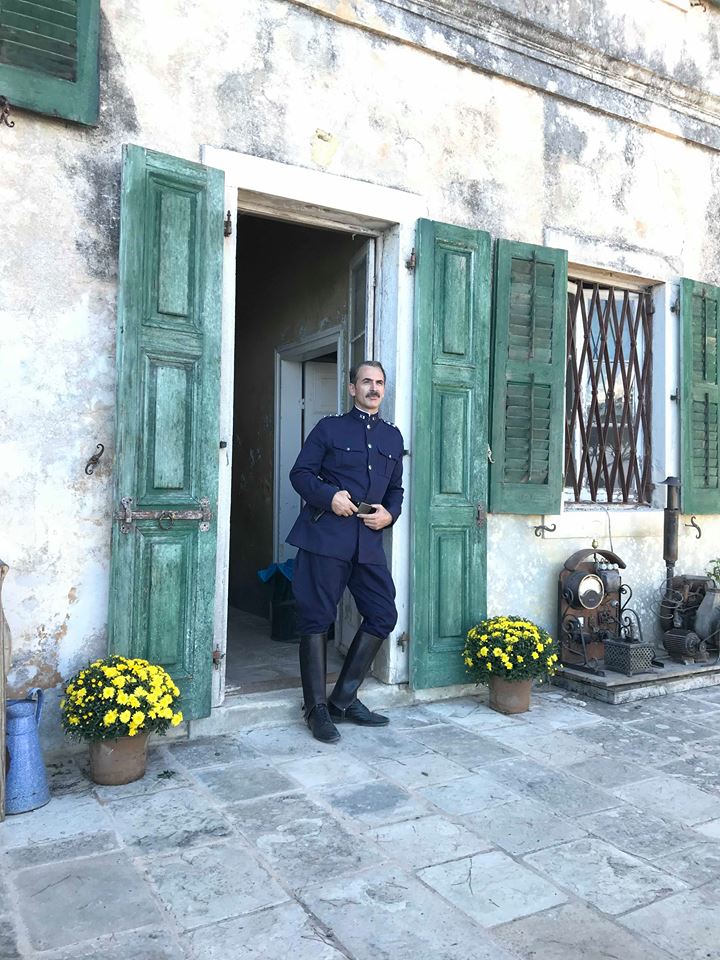
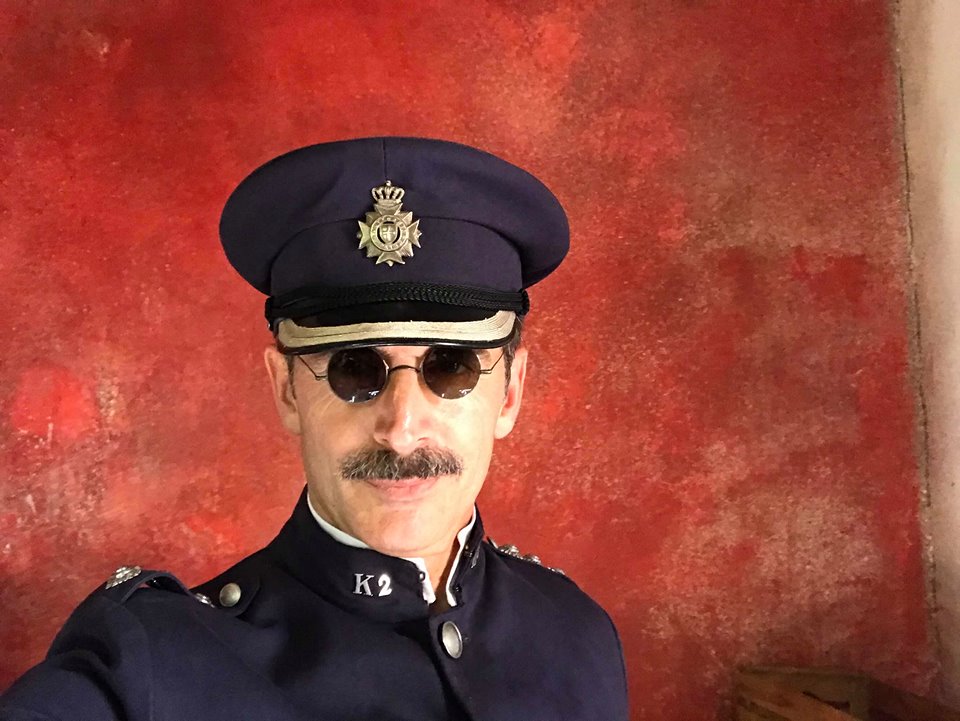
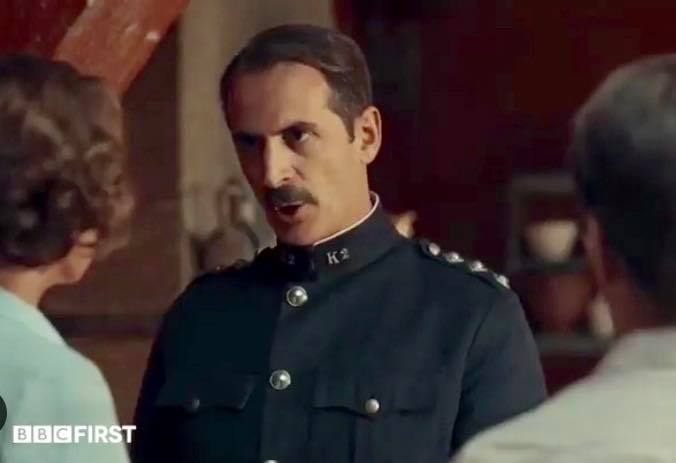
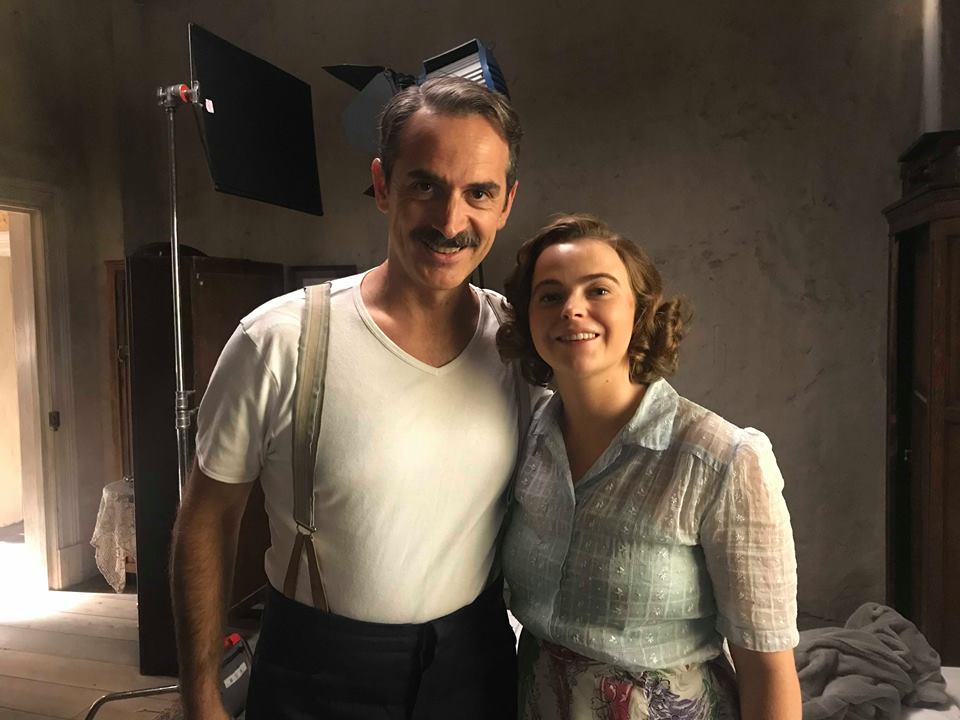
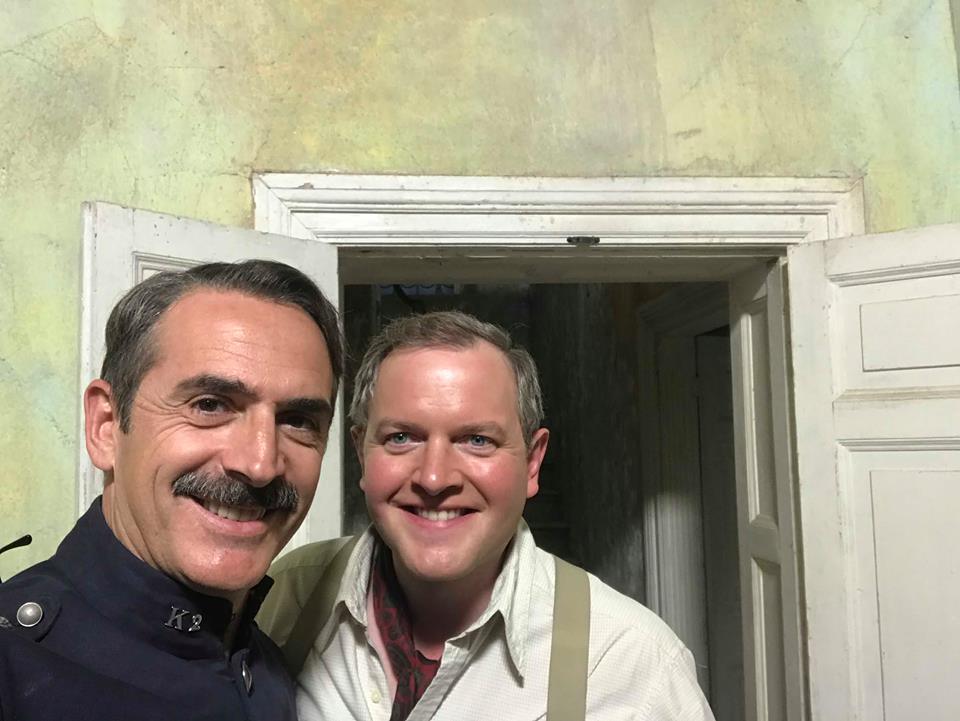
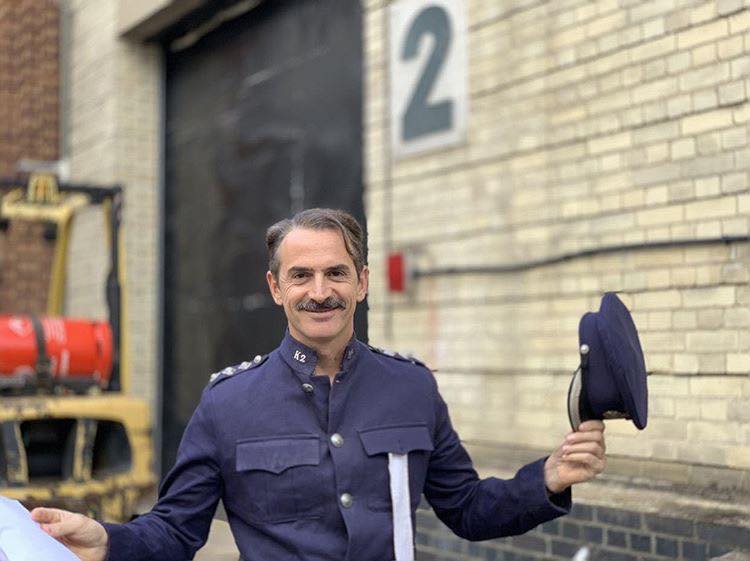
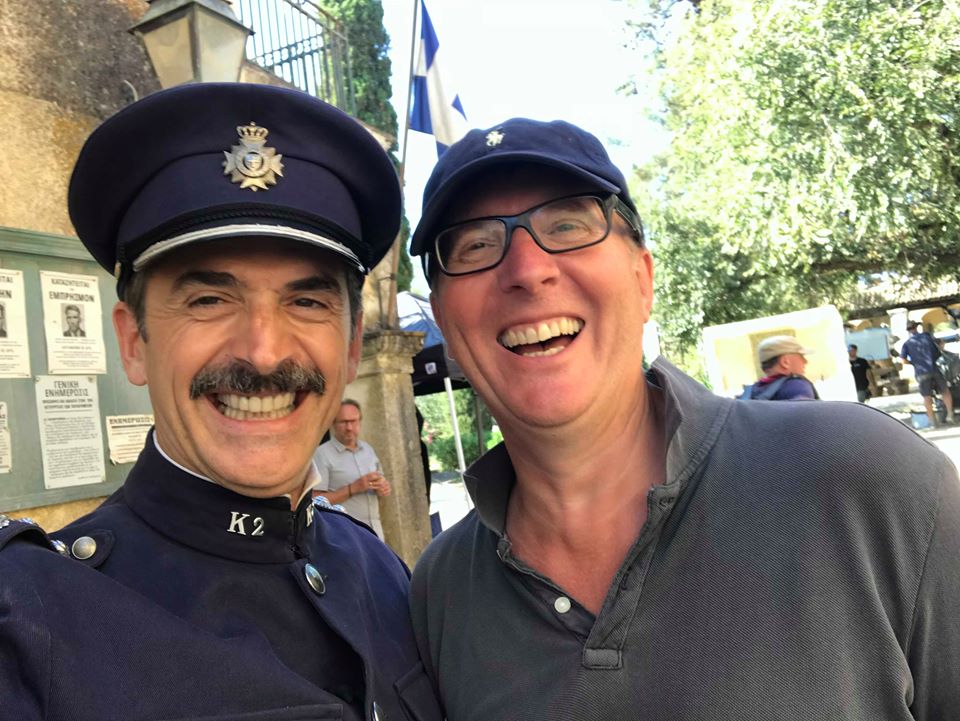
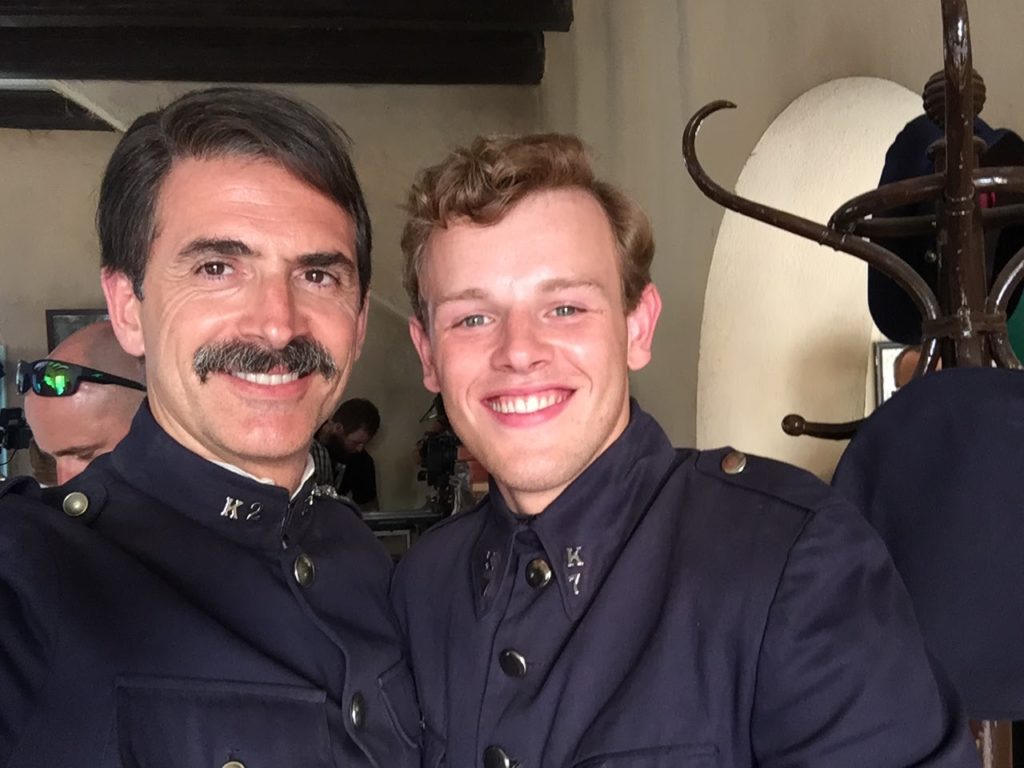
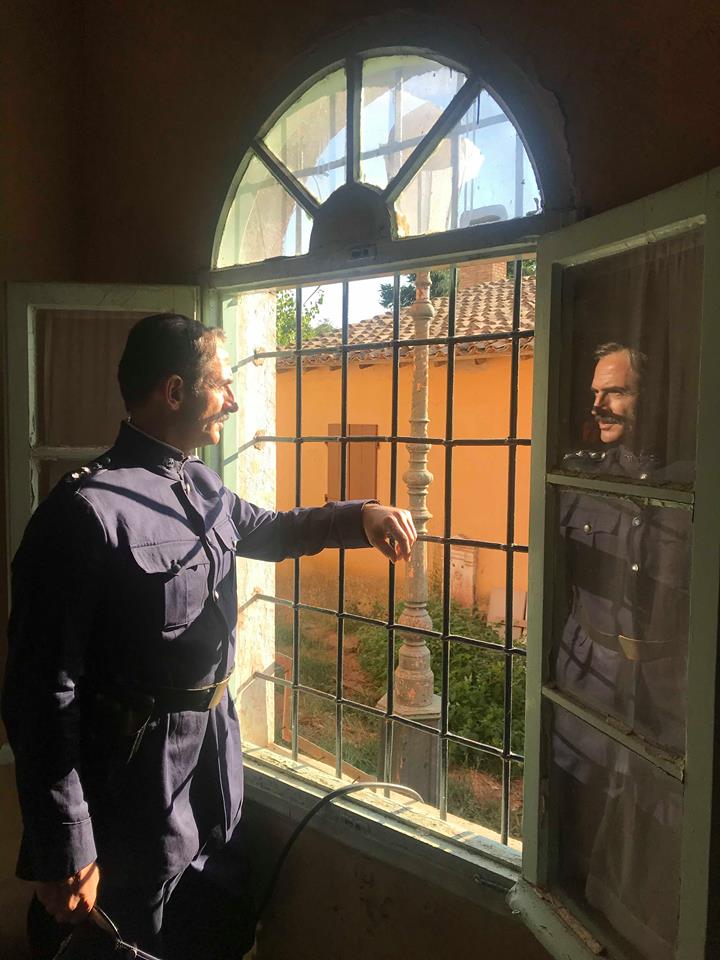
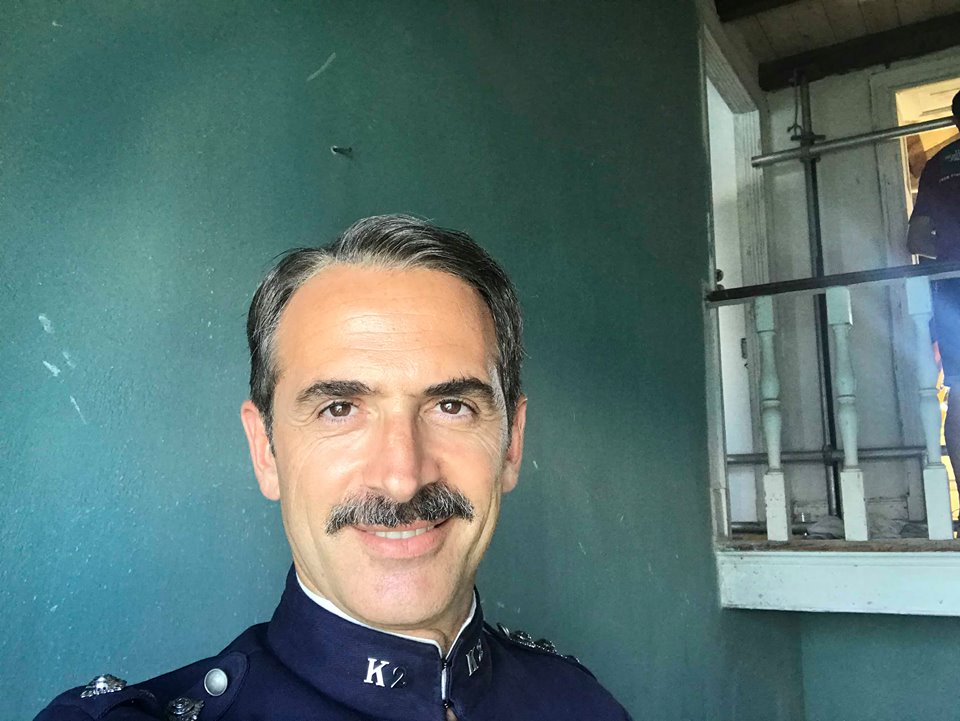
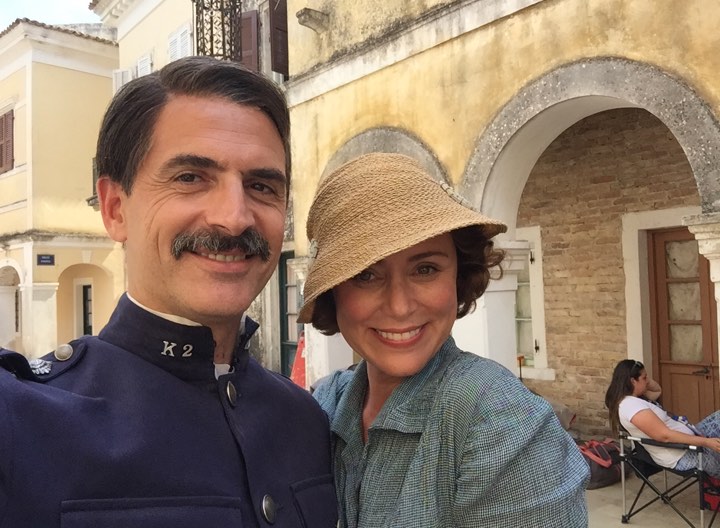
Yippee! Our TV screens are about to fill again with stunning Corfiot landscapes of sparkling azure waters and cypress green hills as the sweet chords of mandolin and the chirpy voices of our favourite TV characters delight our ears. Yes, the fourth series of The Durrells of Corfu is upon us, and nothing seems to dampen our excitement, even though this is going to be the very last one… But thank goodness for DVD, I always like to say, so we can watch it all again and again in perpetuity. The other day, our beloved superintendent in the show, Greek actor and author Kostas Krommydas, gave me a new bunch of behind the scenes photos and I am thrilled to share them below along with our chat. Enjoy!
Hi, Kostas! The fourth and last season of The Durrells is about to be broadcasted in the UK. How do you feel about it?
Excited, of course! And I am delighted that I could participate in the third and fourth series of this wonderful British TV series. Sadly, it has come to an end, but I will always think back with fondness at this amazing experience and my cooperation with the cast – both the British and the Greek actors. I certainly hope more similarly high quality productions will come to film in Greece in future.
Tell me, has anyone among the British actors you worked with read any of your novels?
*Chuckles* I have handed out copies of my paperbacks to almost everyone among them and, yes, some of them have read them. However, most of them preferred to read on their kindles so they downloaded the books from Amazon. I am pleased, because I’ve received wonderful feedback from them all, and this honours me because I am aware that the British read a lot, and quality books too.
Actually, I’ve discussed one of my stories with the Durrells production team and they loved it. It is probable that in future we’ll discuss the story again in more detail in the hope it might become a new tv series, or perhaps a movie.
Wow, that sounds wonderful, Kostas! What are your future plans as an actor and author?
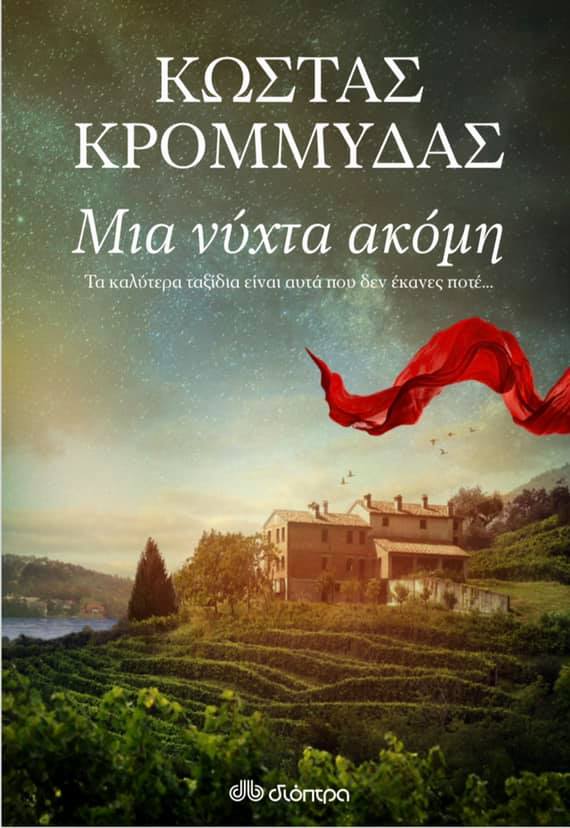
My impeccable experience with The Durrells has whetted my appetite for more. Now, I am always on the lookout for new productions that involve filming in Greece and abroad. Other than that, I continue to write new material and, in the near future, will be publishing my seventh book in Greek, which will be translated into English to be published on Amazon later on too. Nowadays, writing is my top priority. Acting has taken a back seat – it is something I plan to do only selectively from now on.
Your forthcoming book takes place in Tuscany, if I’m not mistaken?
Yes, that’s correct!
*Eyes him mischievously* Is this the book you discussed with the Durrells production team, by any chance? Come on, out with it!
*Laughs out loud* You guessed it, Fros. Yes, that’s the one.
Oh, super. No pun intended! *giggles* And I’ve heard some wonderful praise about this book from your beta readers on Facebook. I can’t wait to read it… Now, back to the last series of The Durrells. Can you tell us what to expect?
All I can tell you is that I appear in the first episode. A lot! And that the ending of the series will be very moving… The production has done a marvellous job to create the perfect ending that will remain unforgettable to the viewers.
Oh brilliant! I understand your novels are currently discounted on Amazon?
Yes! They’re all only 99c/99pp for a limited time.
Ooh. Great timing with the series! I’m sure your fabulous Greek tales will keep the readers happy while waiting for the next Durrells episode on the telly! *laughs* Thank you for this wonderful chat, Kostas!
Thank you too, Fros, for the opportunity to talk about my work!
Get Effrosyni’s FREE books with your signup to her bimonthly newsletter! Fun news from her life in Greece and a load of FREE kindle books in every issue! http://bit.ly/2yA74No
Beach fun and sweet romance mixed with magic spells and bird shifters… The Raven Witch of Corfu is an original story that will rivet you with its unrelenting suspense. The final twist will blow your mind!
Today, I am thrilled to share a legend from Corfu by kind permission of Aleko Damaskinos. His post as per below was published in the FREE Corfu newspaper, The Agiot and in his wonderful Facebook group about Corfu’s history, culture, wildlife and flowers: Only Corfu Society. It tells a tragic tale of love and revenge from Corfu in the bygone days of the Ottoman Empire.
The Legend of Nikolaos Pierris and Nazli Hanum by Aleko Damaskinos
In the beginning of the 18th century two foreigners, Nikolaos Pierris and his wife accompanied by a black servant Mehmet arrived on Corfu in a Venetian ship.
They made many enquiries about buying a property until they eventually found what they were looking for. Even today this property exists and it is where the “Club Mediterranee” used to be. It is by the sea on the right before reaching Ipsos. One of the most spectacular areas of Corfu.
The couple built a house in the Eastern style and settled there with their black servant. They had no communication with the Corfu society and lived a quiet and lonely life, cultivating their land, planting trees and flowers.
This self-inflicted exile had its own story.
Nikolaos was of Greek origin, but from his early childhood was in the employ of a Turkish Pasha, Tzanoum Kotzia, who was totally trusted by the Sultan.
Tzanoum brought him up like his own son, but when he reached manhood Nikolaos betrayed his benefactor by revealing to the Venetian Governor the secrets of the Ottoman Court which he was entrusted with by the pasha. His betrayal did not end here.
On one of his expeditions to Asia Minor, Tzanoum Kotzia brought back with him a stunning sixteen-year-old girl with blond hair and brown eyes named Nazli.
One day, Nikolaos saw her through the shuttered windows of the harem. He approached her and talked to her with the help of the servant Mehmet who kept the keys to the girl’s apartment.
The two, very much in love now, decided to go to far away places together. Nikolaos was issued with a double passport by the Venetian Governor in the assumed name of Pierris. Mehmet joined them as they boarded a boat bound for Corfu.
Two years after they were well-established on the island, Nikolaos’ wife became seriously ill. Pierris asked a local woman to come and help. It was from this woman that it became known that the couple spoke a different language and the woman’s name was Nazli.
Nazli’s health deteriorated further and Nikolaos, day and night, stood at her bedside. One night, Nazli died. The next morning, Pierris realized that a small rowing boat was not in its place and Mehmet had disappeared. In his deep sorrow he did not give it another thought or worry. He buried his beloved in the garden and on the newly dug grave he planted many flowers.
Very quickly the ground was totally covered with dense foliage and flowers. Only the heart-broken lover knew where his beloved was resting.
One year later, the Turkish fleet under Tzanoum Pasha Kotzia sailed to Corfu.
Pierris, like all other nobles of the island, offered his services to Field Marshall Count von Schulembourg and was given a position in the bastions. A while later, the pasha and his army disembarked at Ipsos and a slave led Tzanoum to Pierris’ property. For many hours the pasha walked around the property looking for Nazli’s grave in vain.
He then headed for Corfu town. They showed him the place Pierris was defending and he gathered there a great army force and attacked. In the evening after the battle he inspected the prisoners and the wounded. Accompanied by Mehmet, who was now his official guide, he looked for his enemy amongst the dead. Luck, though, did not help him that day to take his revenge.
One evening, they brought a heavily wounded man to the pasha’s tent. It was Nikolaos Pierris. In a rage, the pasha grabbed him by the hair, lifted his head and then let it drop, while at the same time he kicked the almost dead man without mercy. The prisoner opened his eyes and once again saw his old master.
“Ungrateful bastard!” roared the Turk. “Where is the woman you stole from me?”
“She died…” Pierris whispered.
“You will pay for this, you dog!”
The pasha ordered his men to tie Pierris up on a horse. Despite the foul weather he took him himself to Ipsos. The lightning was lighting the way. When they arrived, he untied him and ordered him to reveal the place where Nazli’s grave was. Pierris refused and so the whip of the raging Turk hastened his death. Before closing his eyes for good, he looked for the last time at the cypress and oak trees in his garden.
Not even Mehmet avoided the pasha’s wrath. He ordered that they should hang him from a window of the house. Then he totally burnt down the house.
Nazli’s resting place remains a secret until this very day!
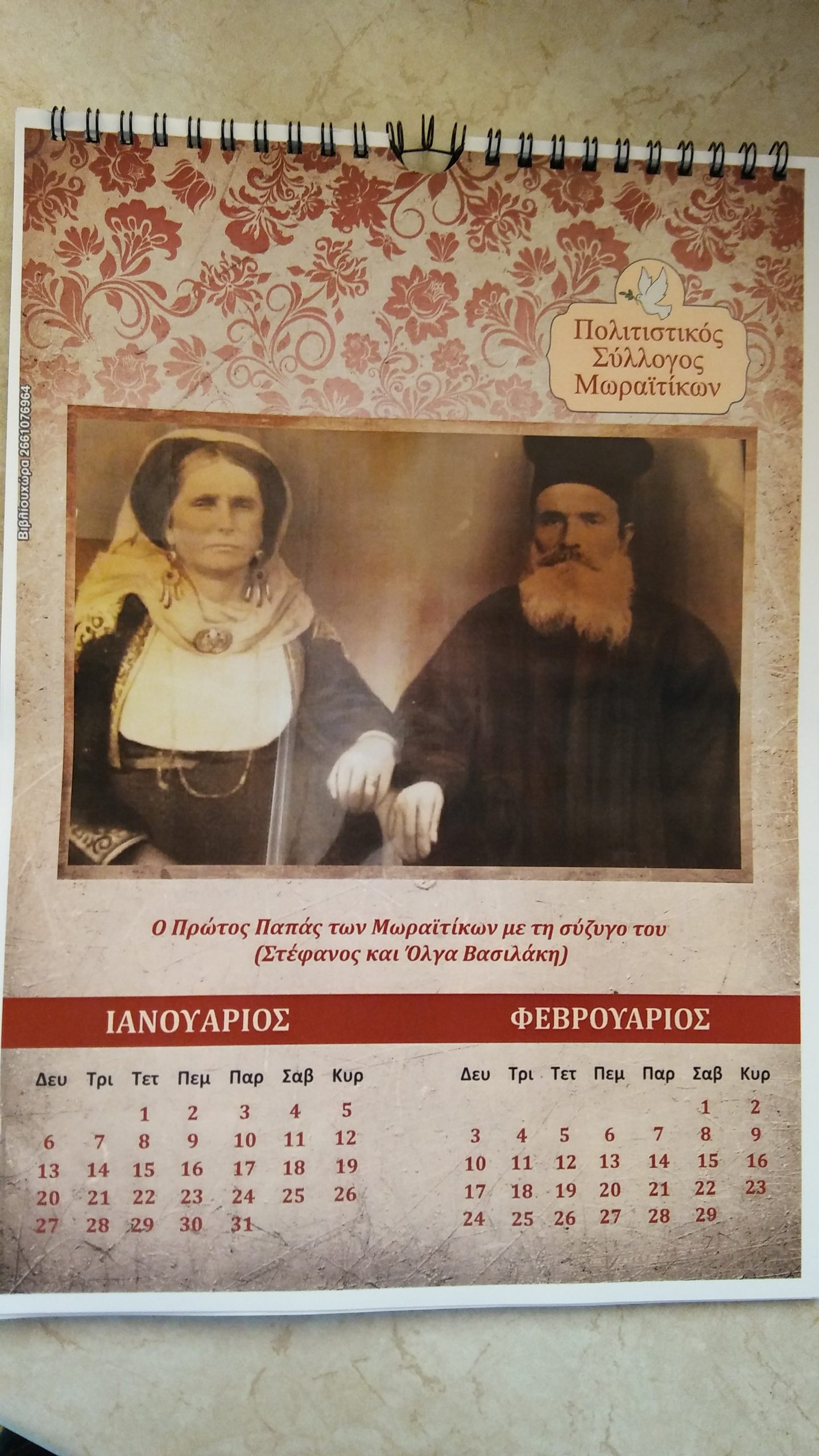
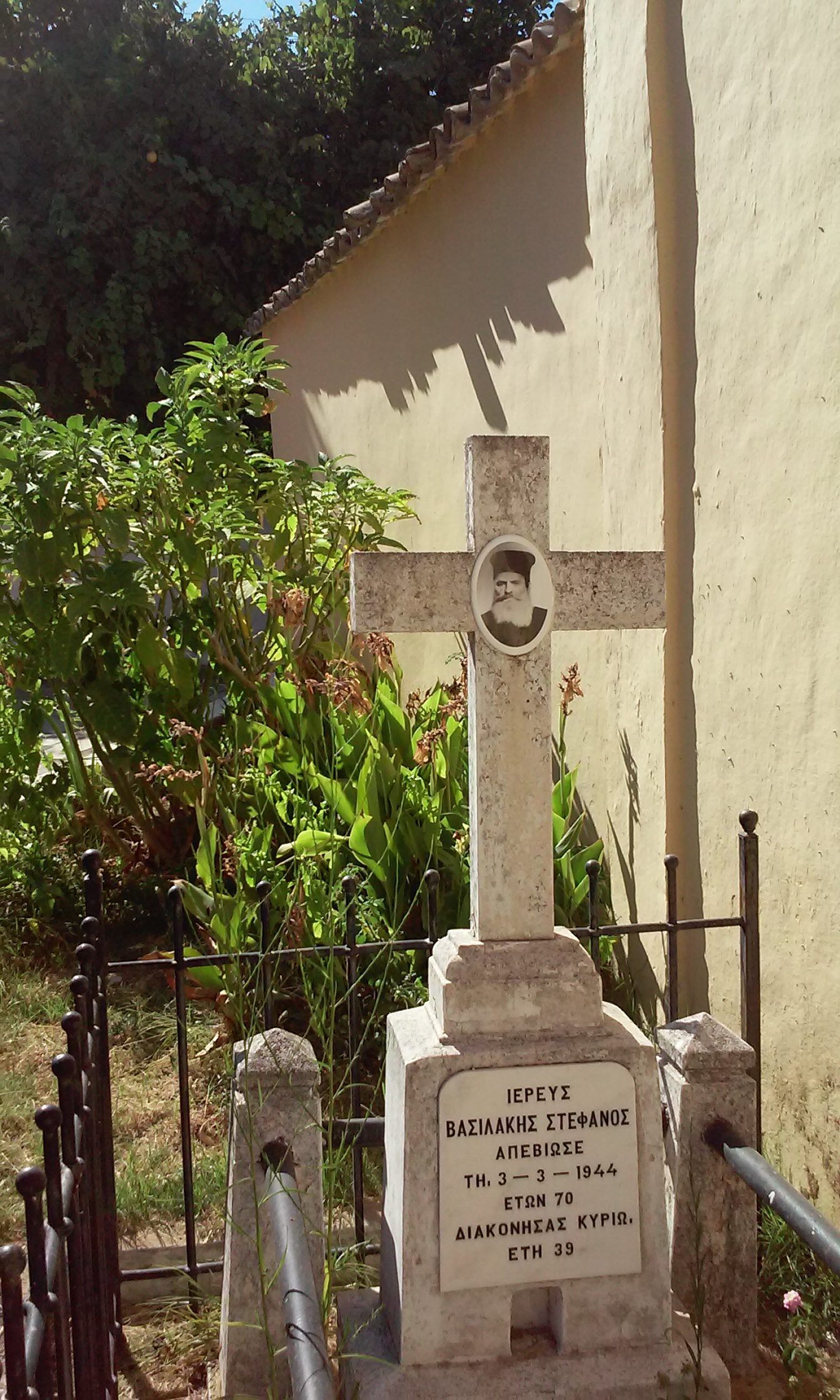
Do you enjoy old tales about Corfu? In this post I share a little about my Corfiot family history, old photos, and some interesting facts about the two churches on the hill in Moraitika. Fact: Aleko Damaskinos is one of the remaining members of the Papadatos family who own the old church ‘Agios Dimitris’ in Moraitika. My great-grandfather, Stefanos Vassilakis, is buried outside this church where he served as the priest of the village in the early 20th century. Read more HERE
3 FREE books for you! Sign up below to receive them instantly!

NEW! Clean Christmas romance. Single mother Cathy Roussos gave up on love long ago, and veterinarian Alex Rallis doesn’t believe in it, but one magical Christmas on a Santorini farm might just change everything…
Clean romance short read, FREE with Kindle Unlimited. It’ll transport you straight to Corfu to experience summer in an idyllic Greek seaside village. The story is inspired from the author’s love for Moraitika and its people. Now, also available as an audio book! Visit Amazon
Beach fun and sweet romance mixed with magic spells and bird shifters! The Raven Witch of Corfu is an original story that will rivet you with its unrelenting suspense. The final twist will blow your mind! Available in paperback , box set or 4 kindle episodes! Visit Amazon
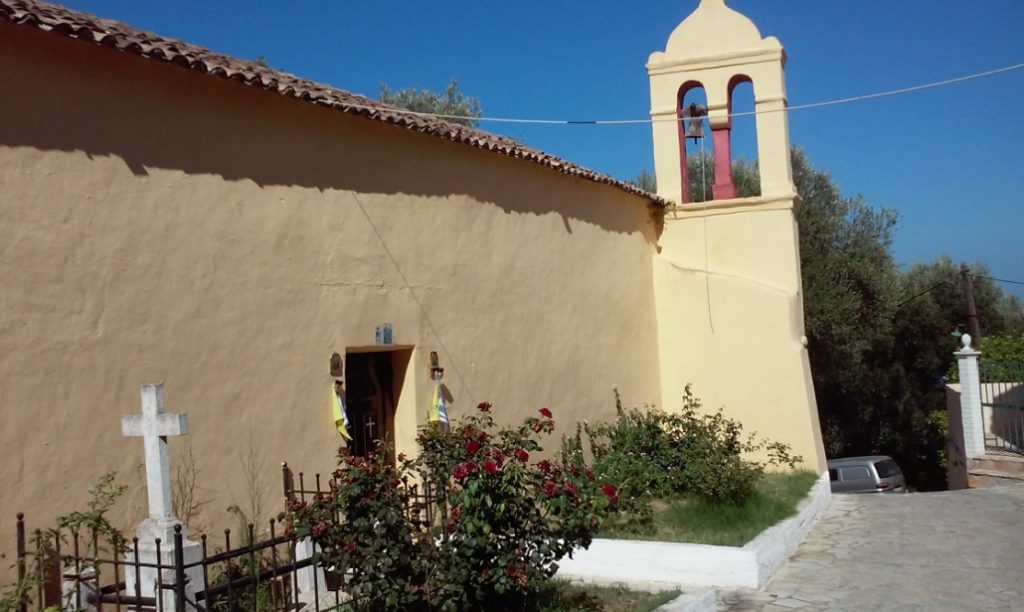
On the hill in Moraitika, at the center of the old village, there is a small church that I used to visit occasionally for Sunday mass during my long summers in Corfu in the 1980s.
This old church — Agios Dimitris — was still in operation back then, and it was the only one in the village at the time. It was erected by the Papadatos family, whose (now derelict) estate house is situated behind it.
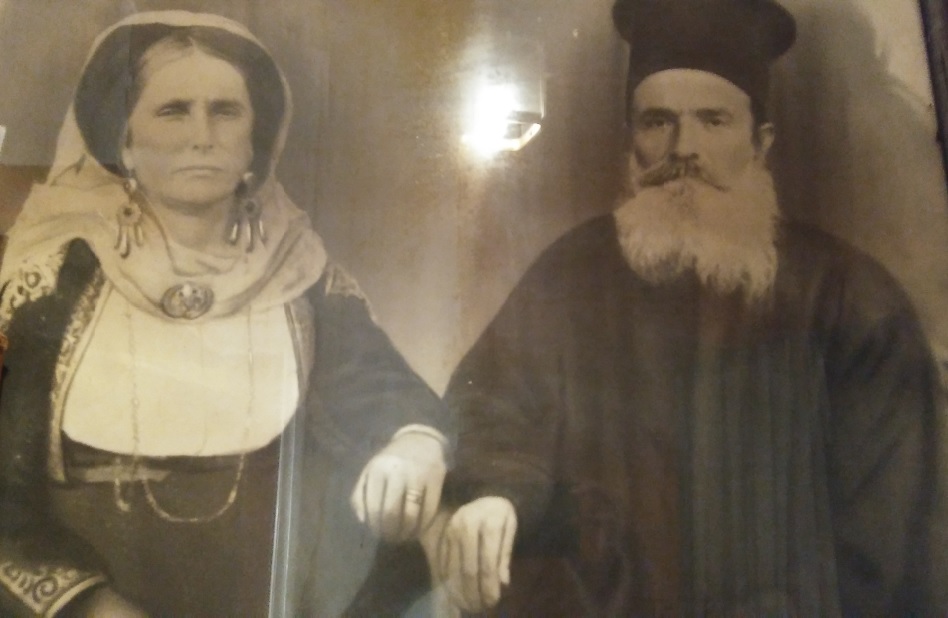
One of its early priests was my great-grandfather, Stefanos Vassilakis. He and his wife Olga built a house for their big family a stone’s throw away from the church. Part of their house was used as the school of the village. Other than his two main professions, my busy great-grandfather also worked his own land (situated in two different parts around Moraitika: behind the Coop supermarket, and on the side of the mountain over Miramare Hotel).
Many of the elderly locals still remember him working his land. Apparently, he did this wearing his priest’s robe!
During the German occupation, he was in his bedroom on the upper floor one night when he heard the unmistakable heavy footfalls of military boots echoing from outside. It sounded like a band of soldiers rushing down the lane. This was a scary time for the locals so, unsettled, he hurried down the internal staircase so he could peek through the front door. In the commotion he missed his step and fell down the stairs, breaking his leg. Sadly, he suffered complications from the fall which led to his death at the age of 70.
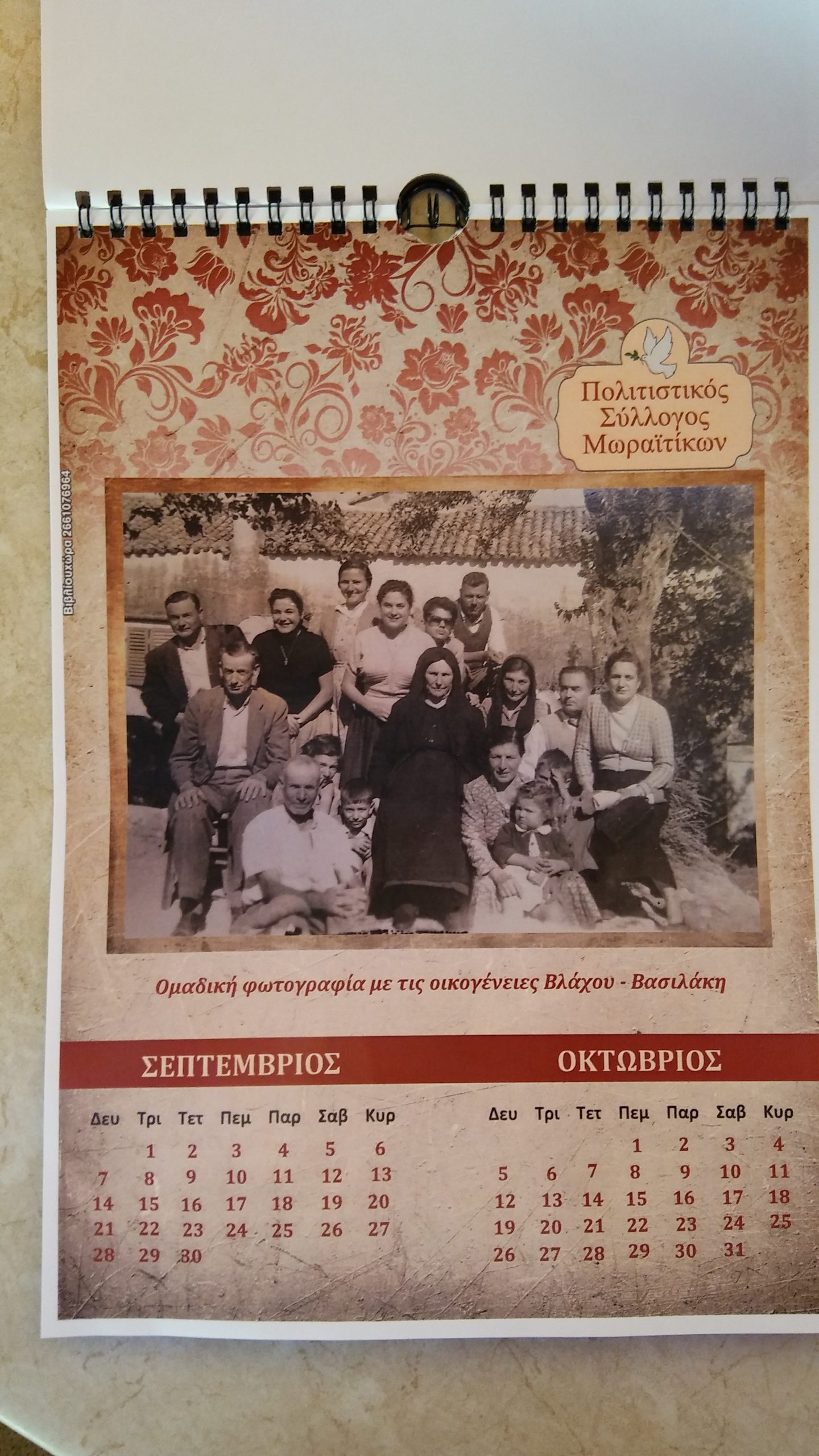
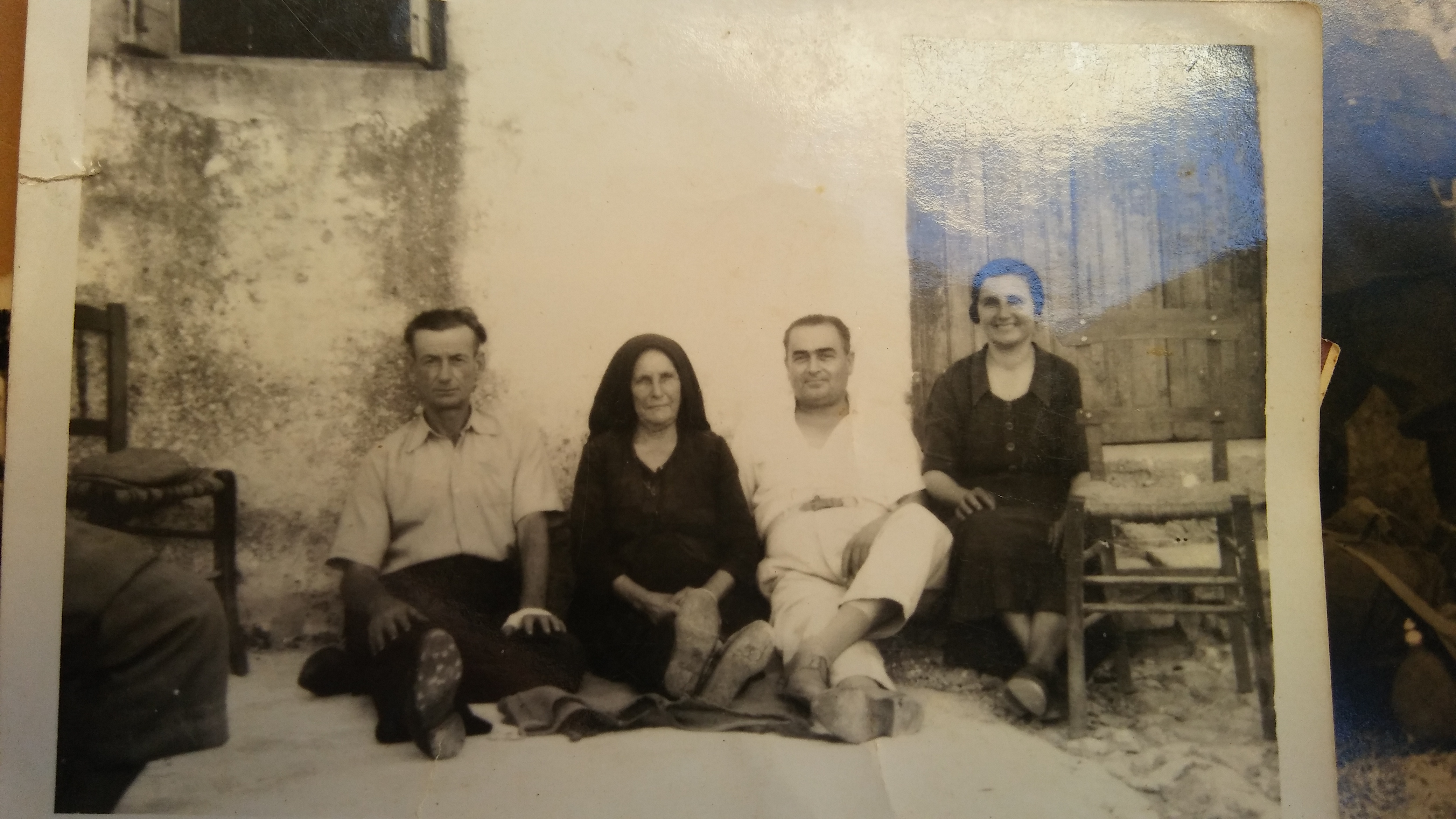
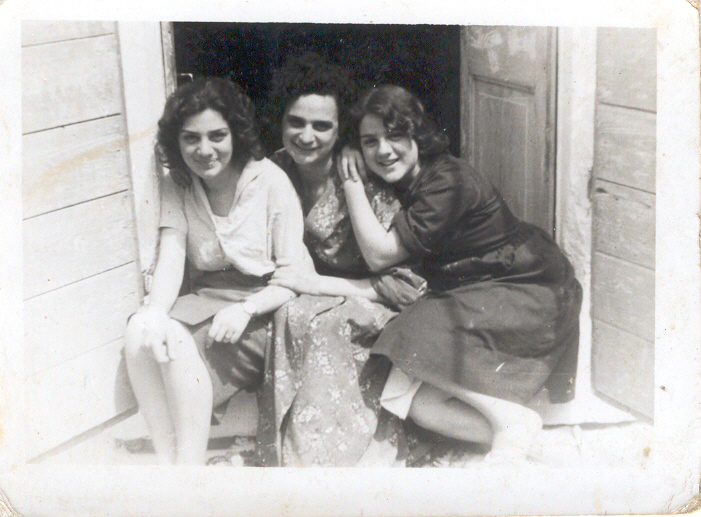
This is a picture of my great-grandmother, Olga Vassilakis (nee Vlachos), with other family members. Being a widow at the time, she was wearing black and the traditional headscarf. She is pictured with her son-in-law (left) and two of her children at the doorstep of the house in the 1950s. The locals referred to her as the ‘Presvytera’ or the ‘Pappadia’ – both names meaning ‘wife of the priest’, with the latter title being less formal.
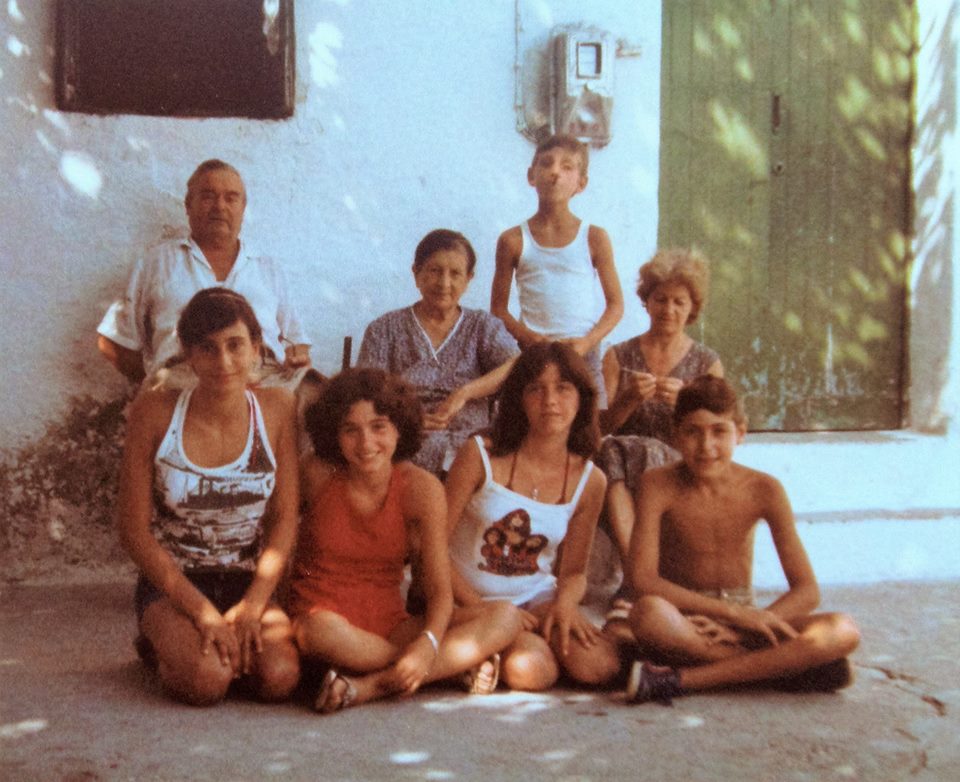
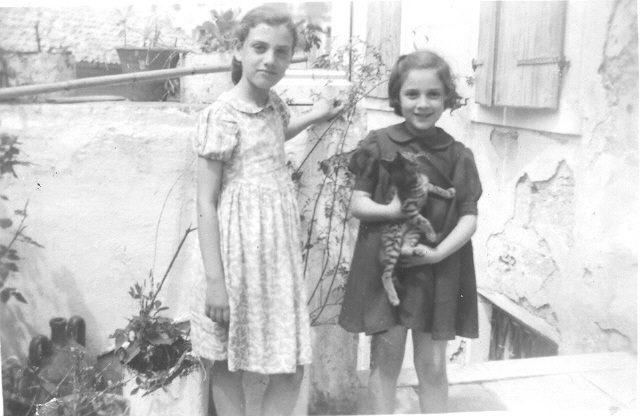
This photo was taken in the 1970s on the same doorstep. Sadly, I never met either of my great-grandparents, but it’s a consolation to know I have lived all my life treading their footsteps. In this photo, I am photographed with my sister and a few members of the Vassilakis family.
Interesting tidbit: According to my grandmother, the name Vassilakis originates from Crete. Other than Moraitika, the name is also met in the villages of Zygos, Valanio and Sinarades. The Vassilakis of Moraitika originate from Sinarades where there’s a legend about the family name! According to Granny’s story, at some point the Vassilakis were split into the ‘rich’ ones and the ‘poor’ ones (our family came from the latter sadly 😛 )
So how did some of the Vassilakis got rich? Well, legend has it that a man from the family once found pirate treasure in a chest on Agios Gordis beach and took it home! The pirates came back to get it and searched high and low but never found it…
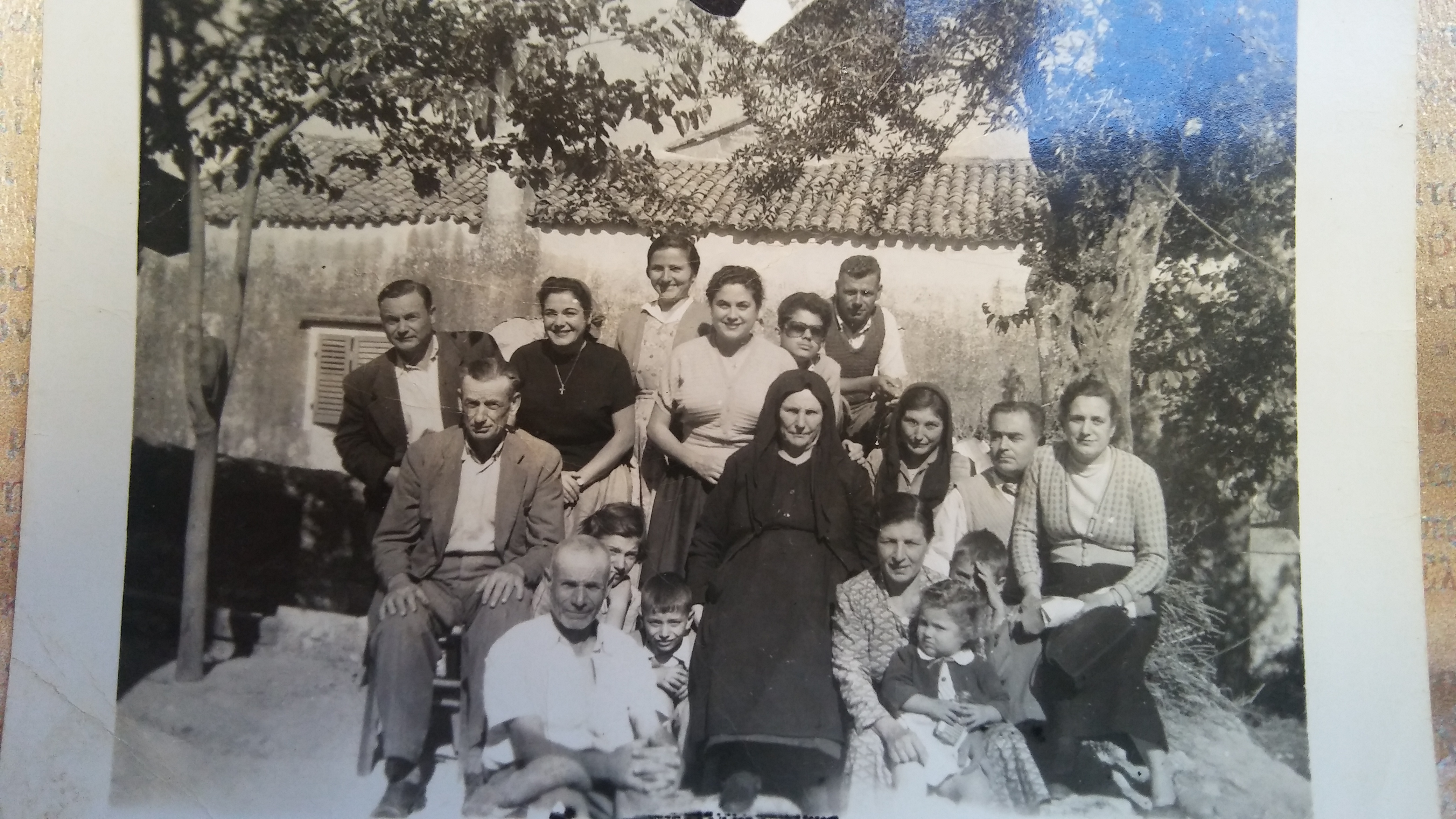
Here, my great-grandmother is pictured with family (both Vassilakis and Vlachos) before the Koukouzelis estate. Again, sometime in the 1950s. Would you believe, the mulberry tree on the left and the olive tree on the right still stand today. This yard has been both my ‘dining room’ and playground as a child for many blissful summers, more often than not, under the generous shade of the mulberry tree from the 70s onwards.
Interesting tidbit: If you’ve visited Moraitika in the 80s-90s, you may be able to identify in the above photo the late Petros Vlachos who ran The Crabs (Kavouria) on the beach at the time. He’s a little boy in this picture (front row, crouched on the left of my great-grandmother.
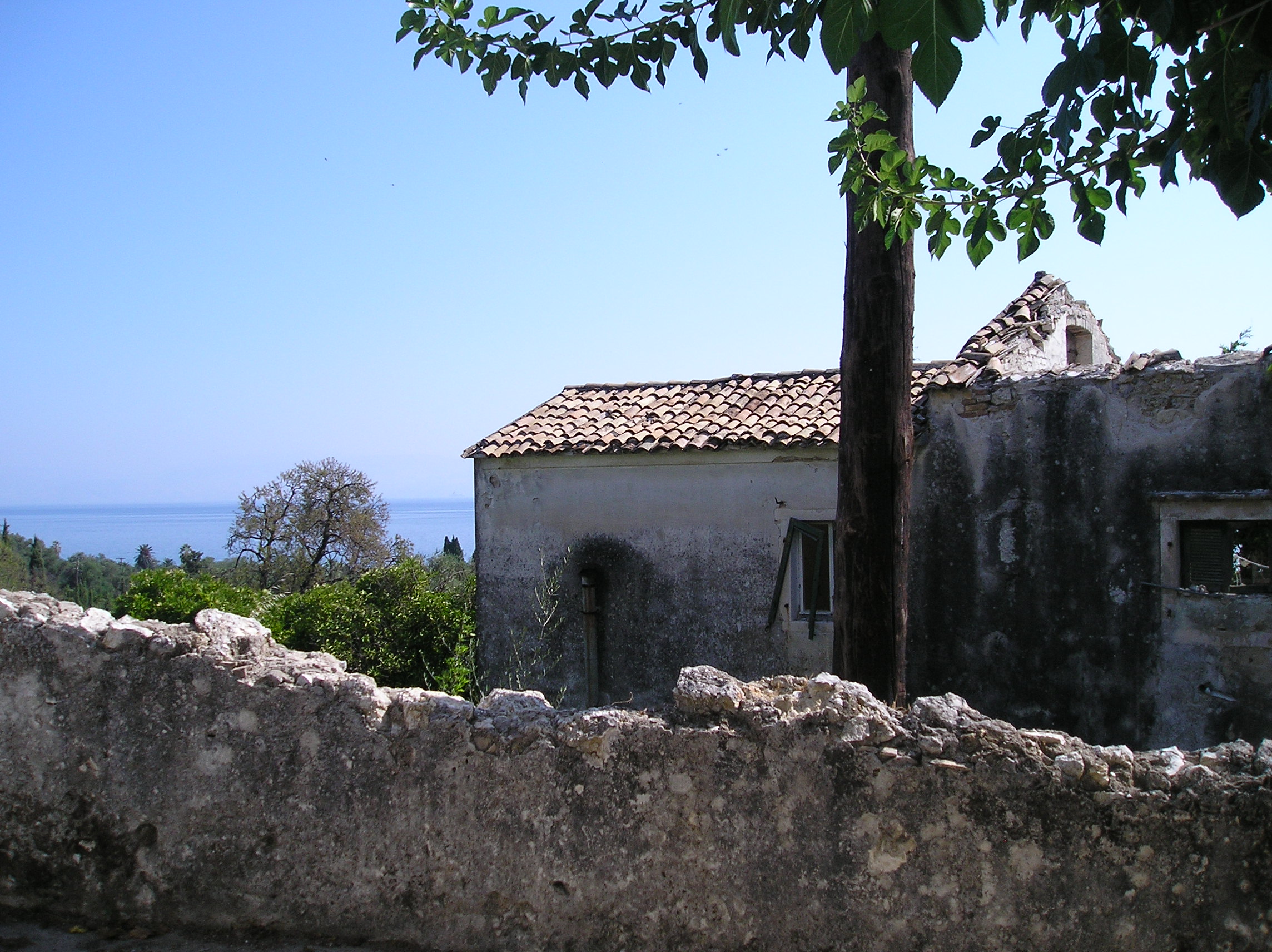
Visitors to the hill in Moraitika today may recognize the Koukouzelis Estate House in this photo. The whole property was acquired by the council in the recent years to be used for cultural events. It is situated very near the church.
Interesting tidbit: The name ‘Moraitika’ is derived from the word ‘Morias’ which is another name for the Peloponnese (the part of Greece that looks like an inverted hand). The first inhabitants of Moraitika were emigrants from Morias, and the people were referred to as ‘Moraites’, hence the name.
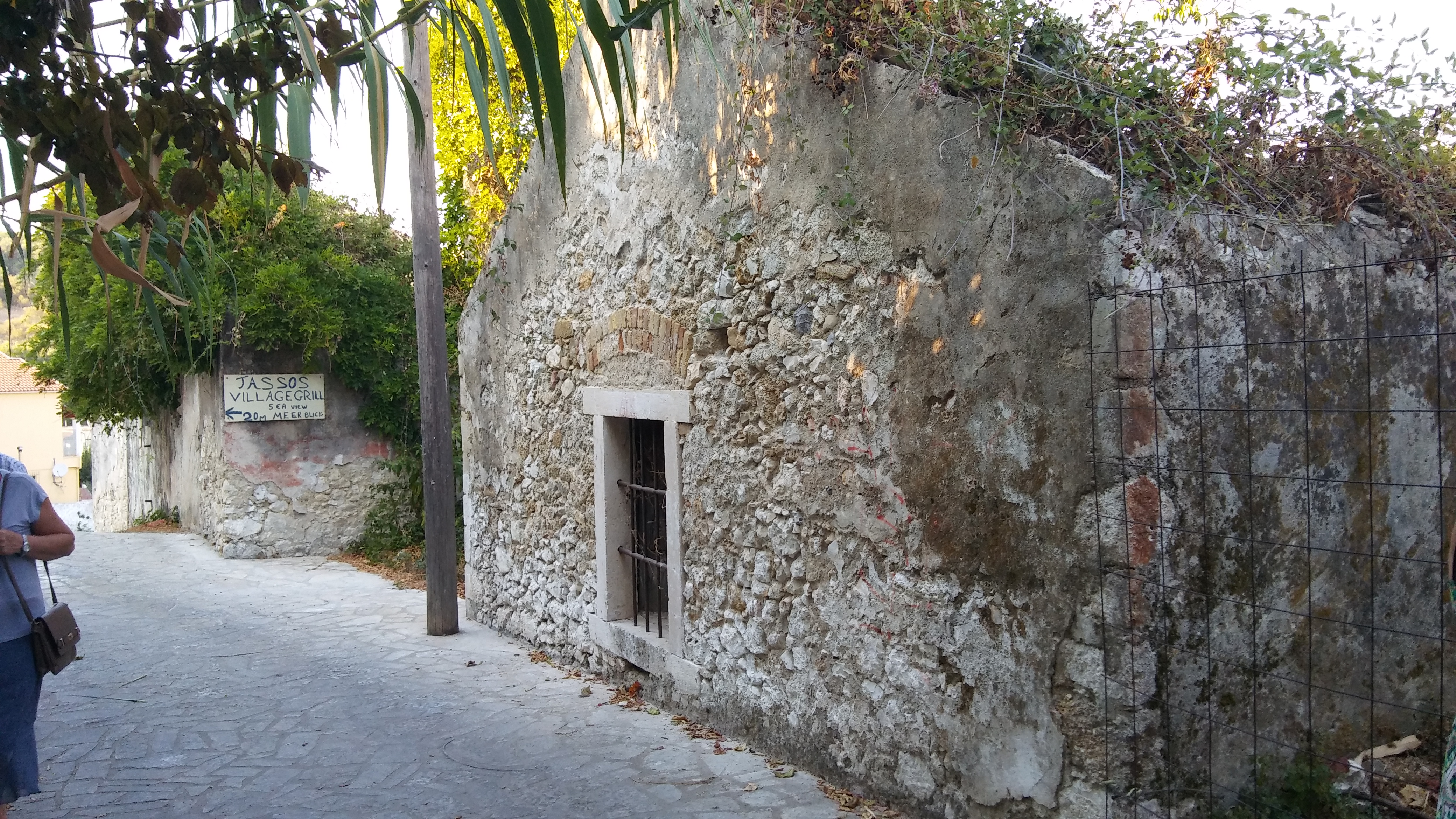
This picture was taken in the lane that leads from the old church to the Koukouzelis Estate.
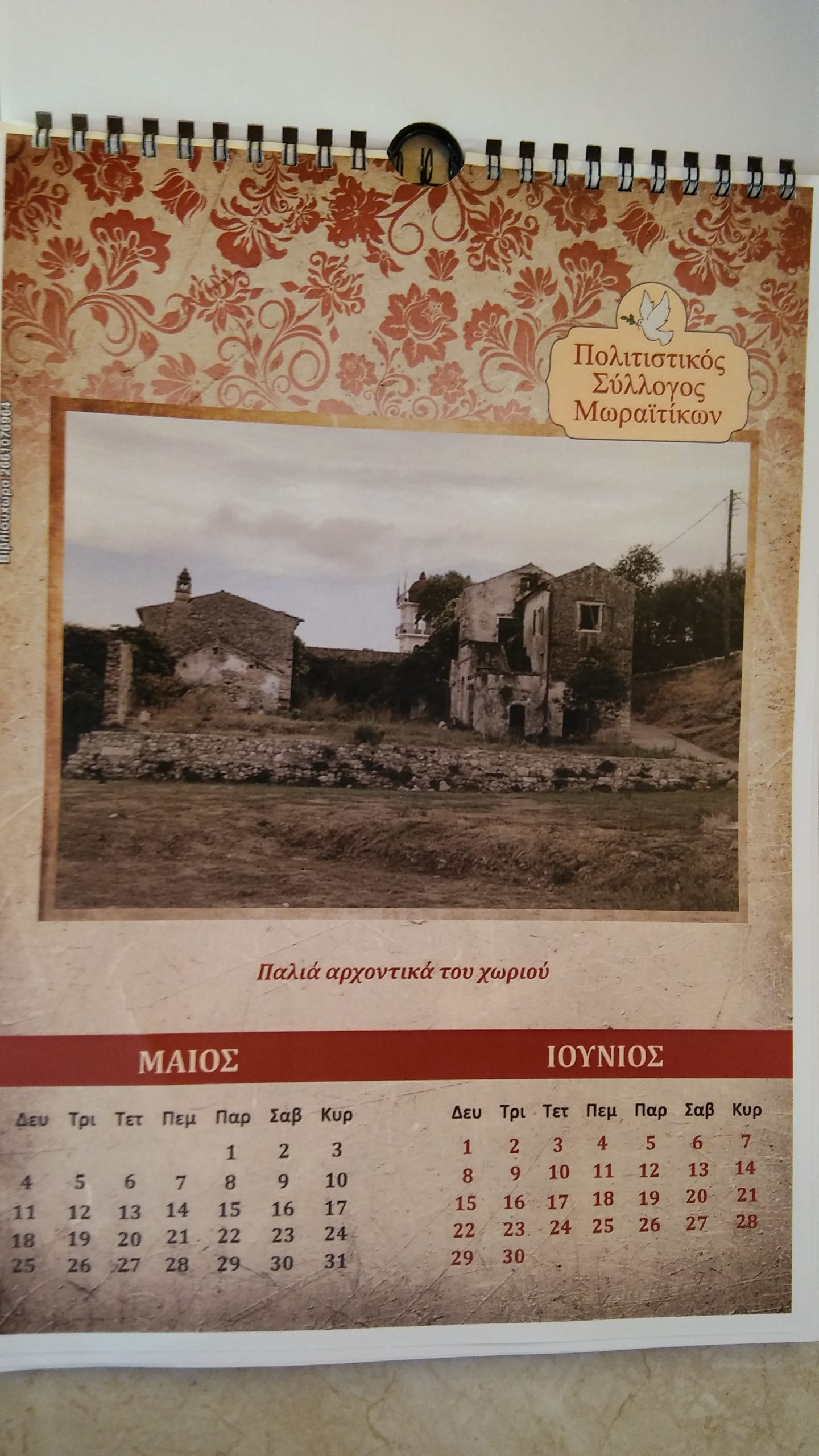
The derelict stone wall with the window is part of the estate. According to one of my cousins who ventured inside once as a child, there was a large library behind this wall. Now, with the overgrowth of bushes and creeping vines that have accumulated over the years it is impossible to decipher anything when peeking through the window.
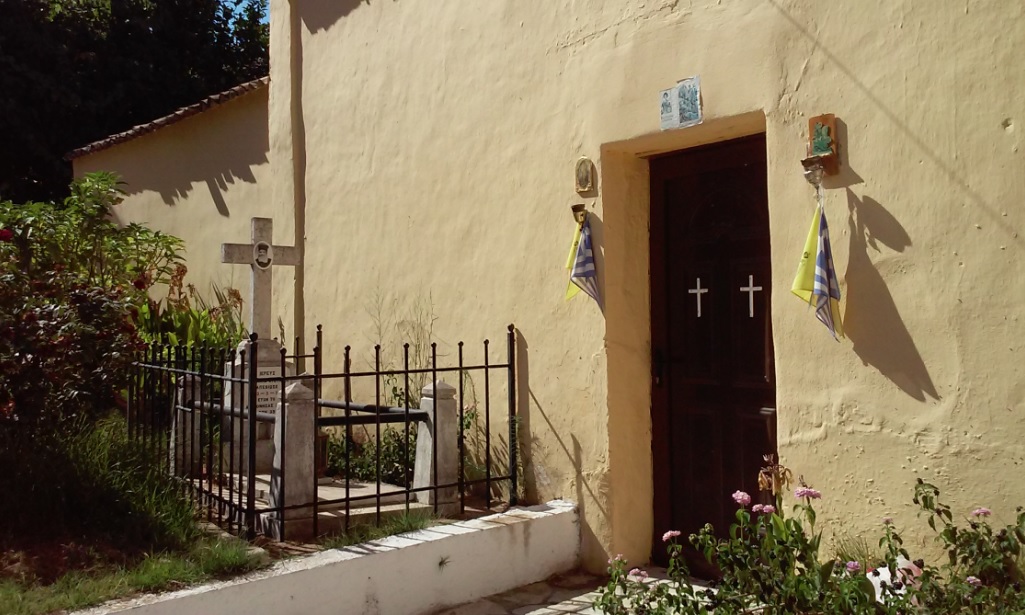
This is the same lane looking towards the old church (yellow wall). You can also see the belfry of the current church of Moraitika that stands beyond it. This one was under construction for at least one year back in the 1980s, something that used to worry my grandmother a great deal… You see, she was convinced that it attracted all sorts of evil spirits while it stood as a building site.
Oftentimes, we’d hear the shrill cry of a certain kind of owl at night that Granny called a ‘strigglopouli’ (screeching bird). She’d always say it was a bad omen as, apparently, it signified an impending death in the village. She’d also say the sound was coming from the church building, which made sense as its roof was incomplete and thus open to the elements at the time, making it easy for all sorts of night birds to nest there.
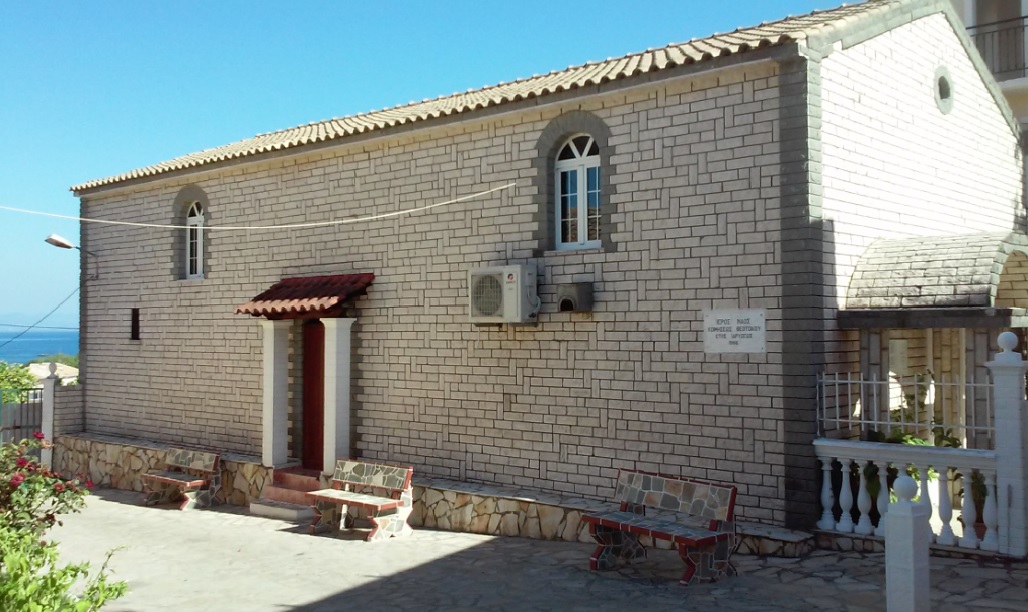
The church of Moraitika is called “I Koimisi tis Theotokou” (The Dormition of Mary)
When the church was sanctified and began operating, Granny said she never heard those birds’ bloodcurdling cries echo from the church again. I never really believed any of that, but Granny had a way to tell these things and they always had my vivid imagination going!
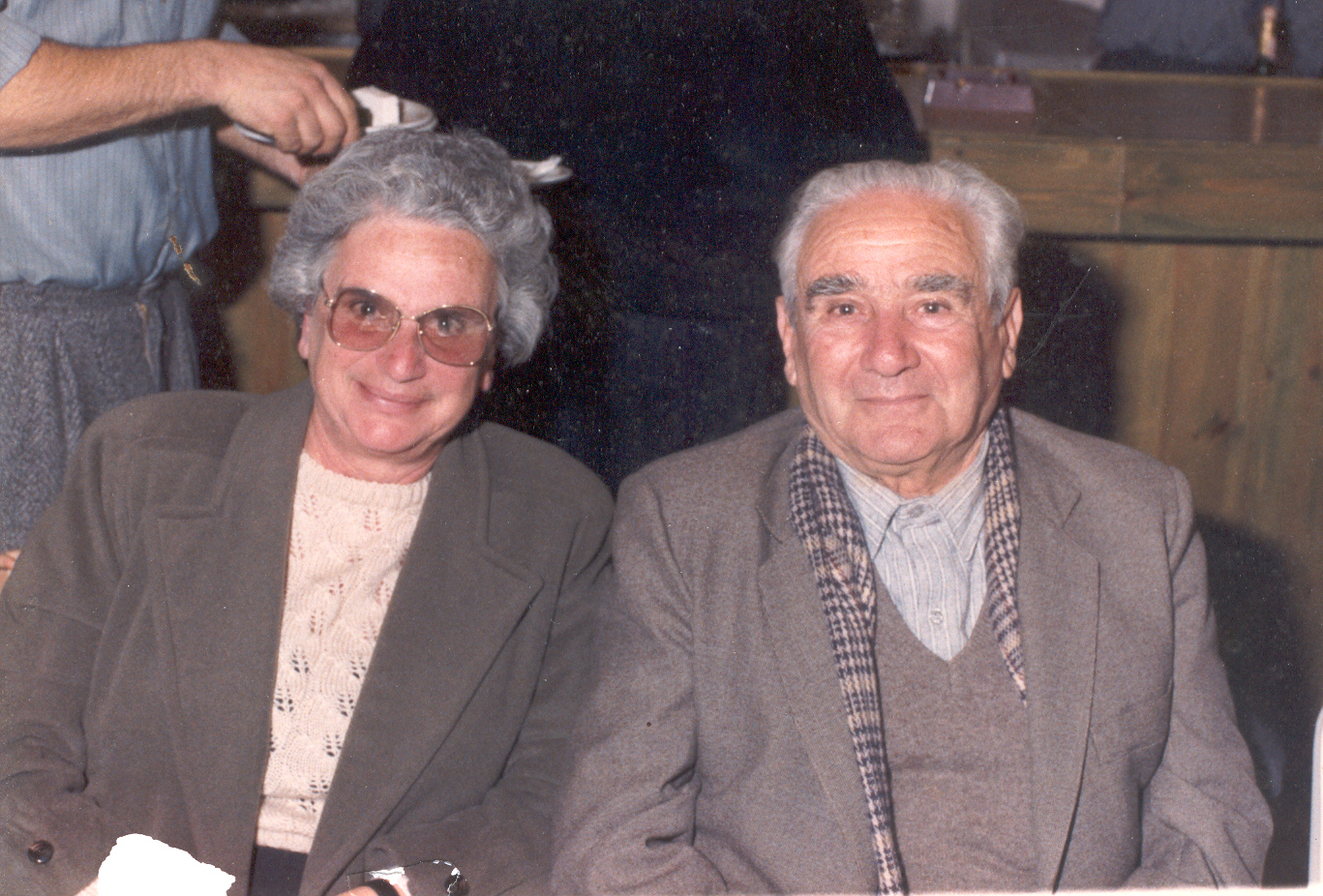
This is a photo of my grandparents, Spyros and Antigoni Vassilakis. Granddad was a proper ‘papadopaidi’, i.e. the son of a priest, meaning he was an avid churchgoer and loved to chant at the church given half the chance. Throughout my childhood in Athens I remember him chanting on Sunday mornings as he listened to mass on his portable little radio. My grandparents lived in the city at the time but once they relocated to Moraitika in the late 1970s, Granddad became a regular visitor and an occasional ‘psaltis’ (church singer that chants the gospel) at the old church of the village and, later, at the new one as well.
The private church of Agios Dimitris opens only once a year these days – on its festival day on October 26.
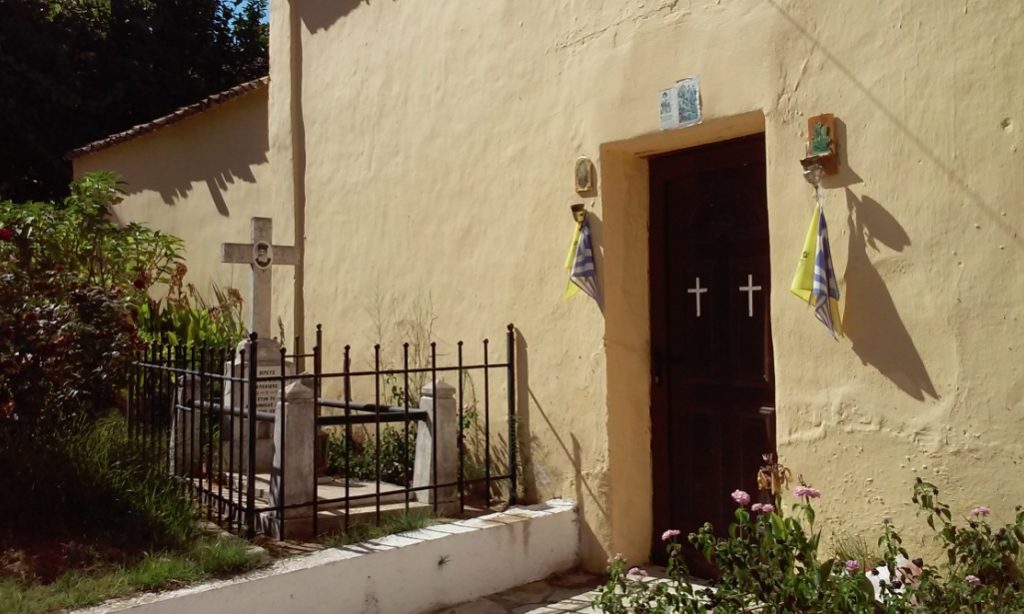
This is the belfry of the old church. The year of its erection is 1905 according to the plaque you can see here. I find it a real pity that it was left to deteriorate in this manner – same goes for the old estate houses (Koukouzelis and Papadatos) beside it that barely stand. At least, the facade of the old church is kept tidy and freshly painted, and the tourists seem to be interested in my great-grandfather’s grave a lot…
I often see people taking pictures of it when I pass it by. Other times, I find flowers on there, and in the recent years, oddly enough, even scattered coins! I can only assume it is customary in a country somewhere to throw coins on graves. In any case, it’s a nice gesture and always makes me smile.
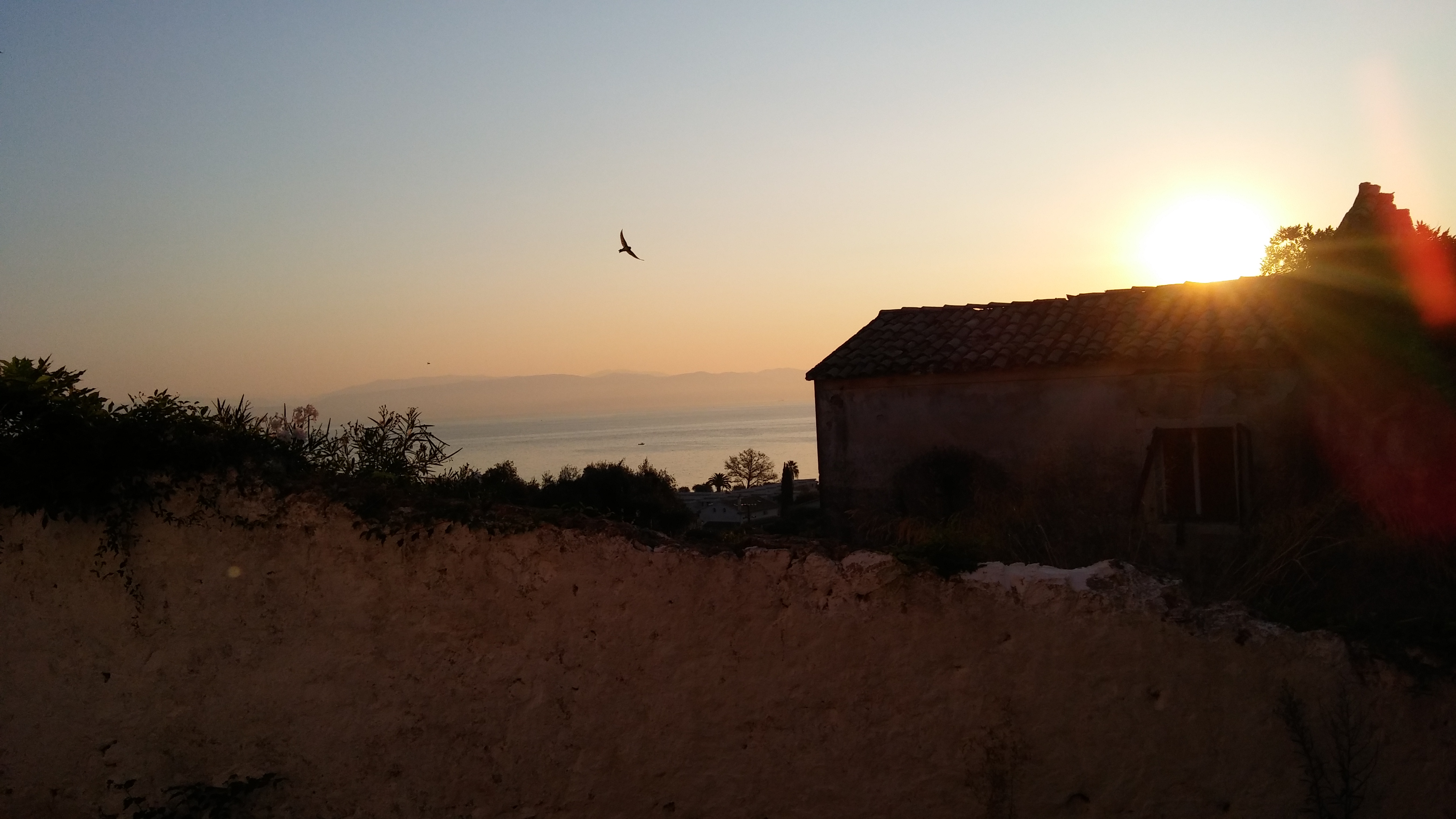
If you ever visit Moraitika, make sure to venture uphill to see the church yard and do take a walk towards the Koukouzelis Estate as well, if only to enjoy the sea view. The sunrise is always a good time!
Many thanks to my cousins Evgenia Vassilakis and Sofia Tsatsanis who provided the old family photos!
YOU KNOW WHAT THEY SAY… SHARING IS CARING! Tweet this to spread some love!
3 FREE books for you! Sign up below to receive them instantly!
NEW! Clean Christmas romance. Single mother Cathy Roussos gave up on love long ago, and veterinarian Alex Rallis doesn’t believe in it, but one magical Christmas on a Santorini farm might just change everything…
Clean romance short read, FREE with Kindle Unlimited. It’ll transport you straight to Corfu to experience summer in an idyllic Greek seaside village. The story is inspired from the author’s love for Moraitika and its people. Now, also available as an audio book! Visit Amazon
Beach fun and sweet romance mixed with magic spells and bird shifters! The Raven Witch of Corfu is an original story that will rivet you with its unrelenting suspense. The final twist will blow your mind! Available in paperback , box set or 4 kindle episodes! Visit Amazon
I picked a cloudy day last August to take a long walk around Corfu town, aiming to visit places I hadn’t been to since I was a child. Also, I intended to find two old houses where I knew my grandmother and mother had been living in as children. One is situated just behind Liston and the other is in the old quarter of Campielo. I was pleased to find all the places I was after and I’m delighted to share my experience in detail today.
During the same walk, I also visited the Patounis Soap Factory for the first time, having discovered it in Hilary Paipeti’s excellent book, Corfu Off the Map. Its owners were very hospitable and even gave my husband and me a quick tour of the place.
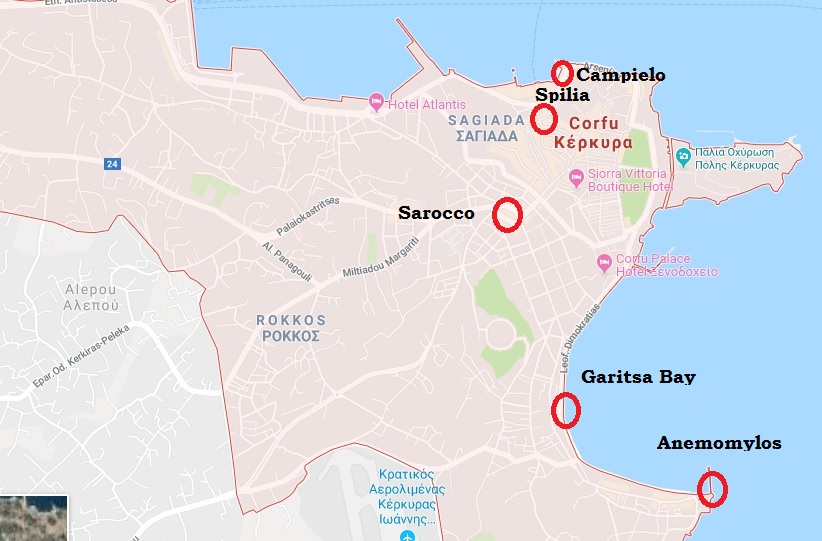
Before I set off on this virtual tour with you, here’s a map of the town to give you an idea of our route:
The walk I did that day (with my husband, Andy) took us via the following places of interest in this order:
Sarocco Sq. –> Garitsa Bay –> Anemomylos (Nautilus Cafe & the windmill) –> Liston & Pentofanaro –> Agion Panton Church –> St Spyridon Church –> Campielo (Venetian Well and Ypapanti Church) –> Spilia (New Venetian Fortress, Holocaust Monument and old coach station) –> Jewish quarter & Synagogue –> back to Sarocco Sq.
Andy and I parked near Sarocco (or Saroko – originally named ‘San Rocco’ by the Venetians). It is a big shopping area built around a square. It is also an open-air bus terminal for civic buses to the north and the south. From there, we took Alexandras Avenue past the post office, until we hit the water at Garitsa Bay.
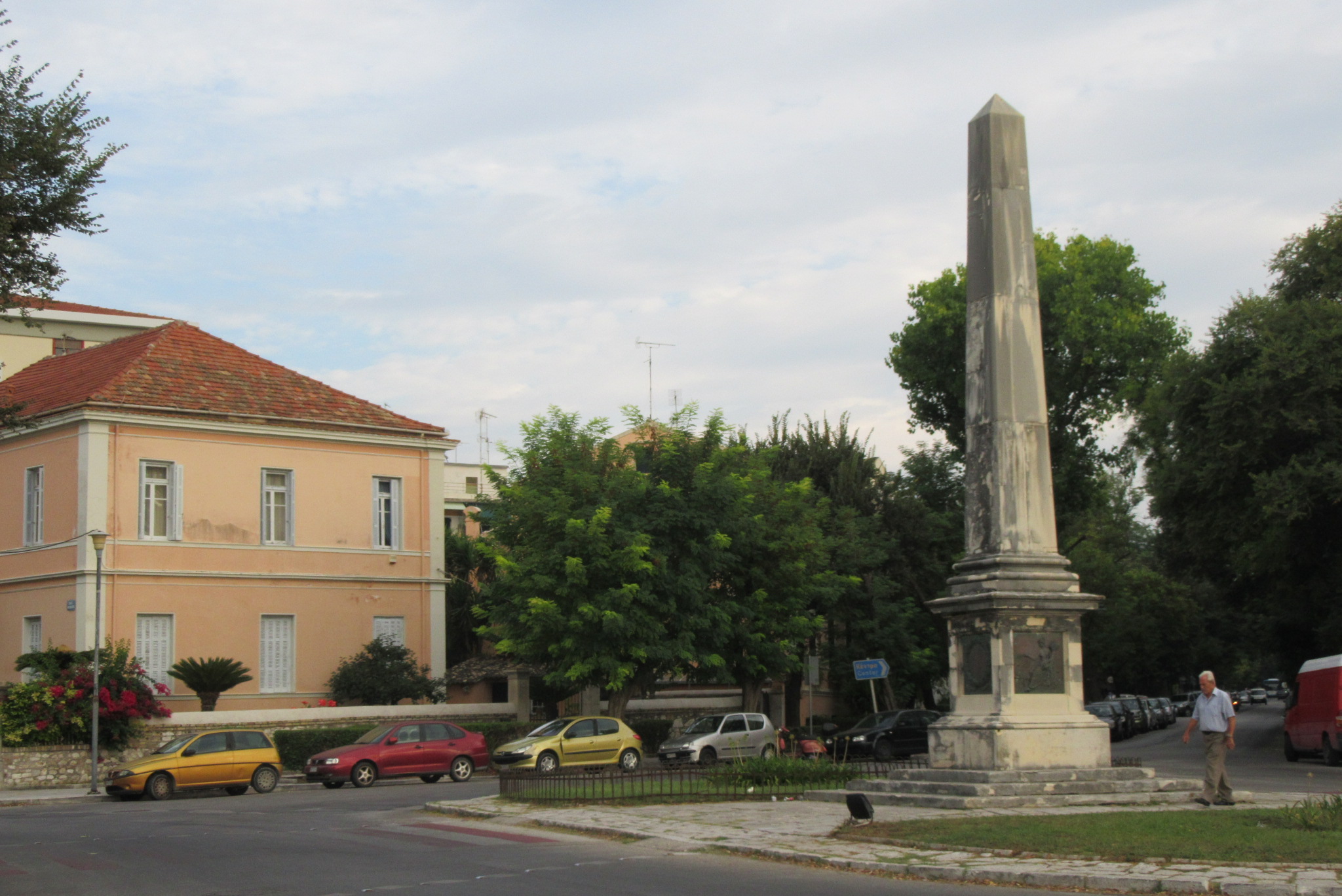
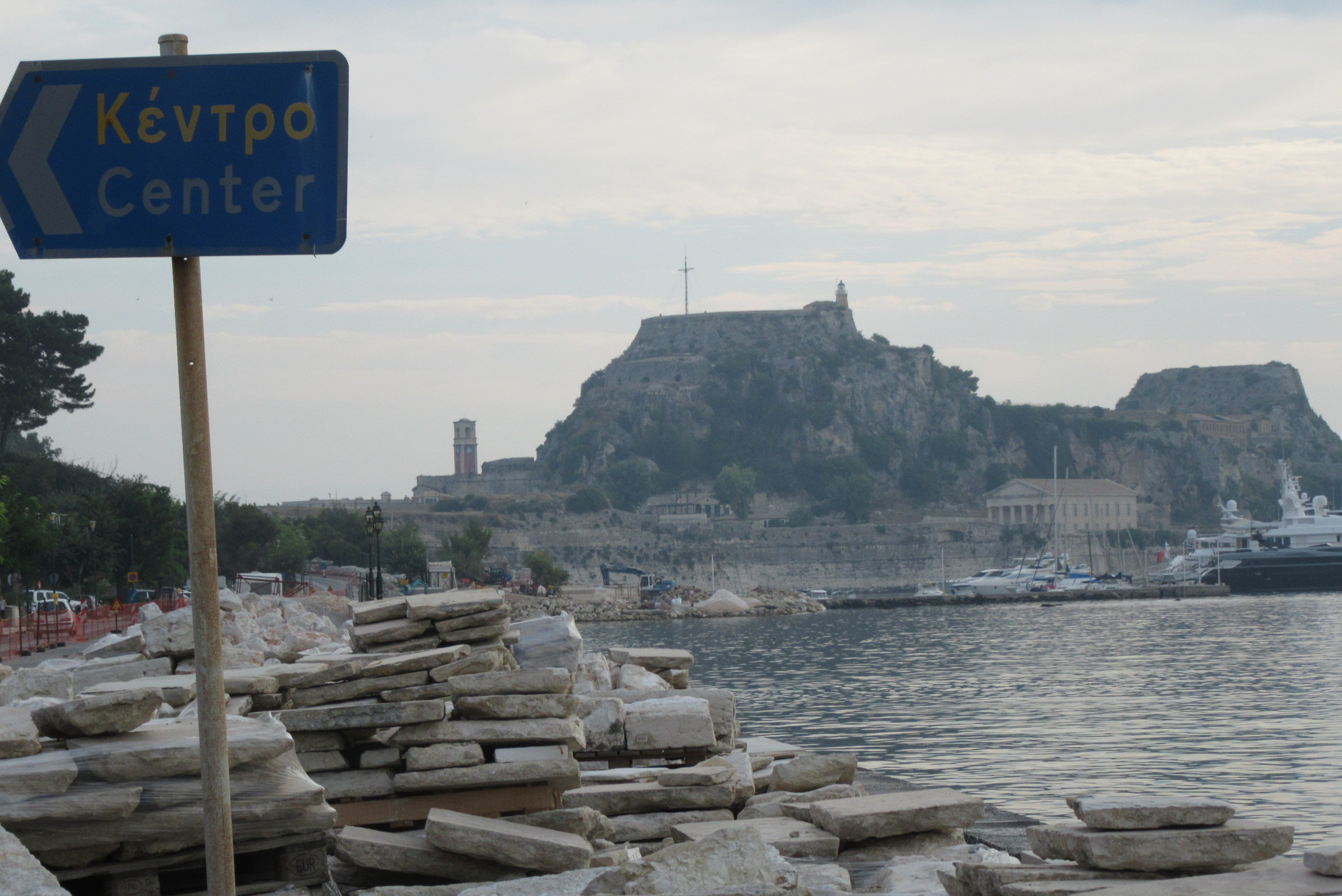
This is where Douglas’s Column stands. Or, as the locals call it, “I Kolona tou Dougla”.
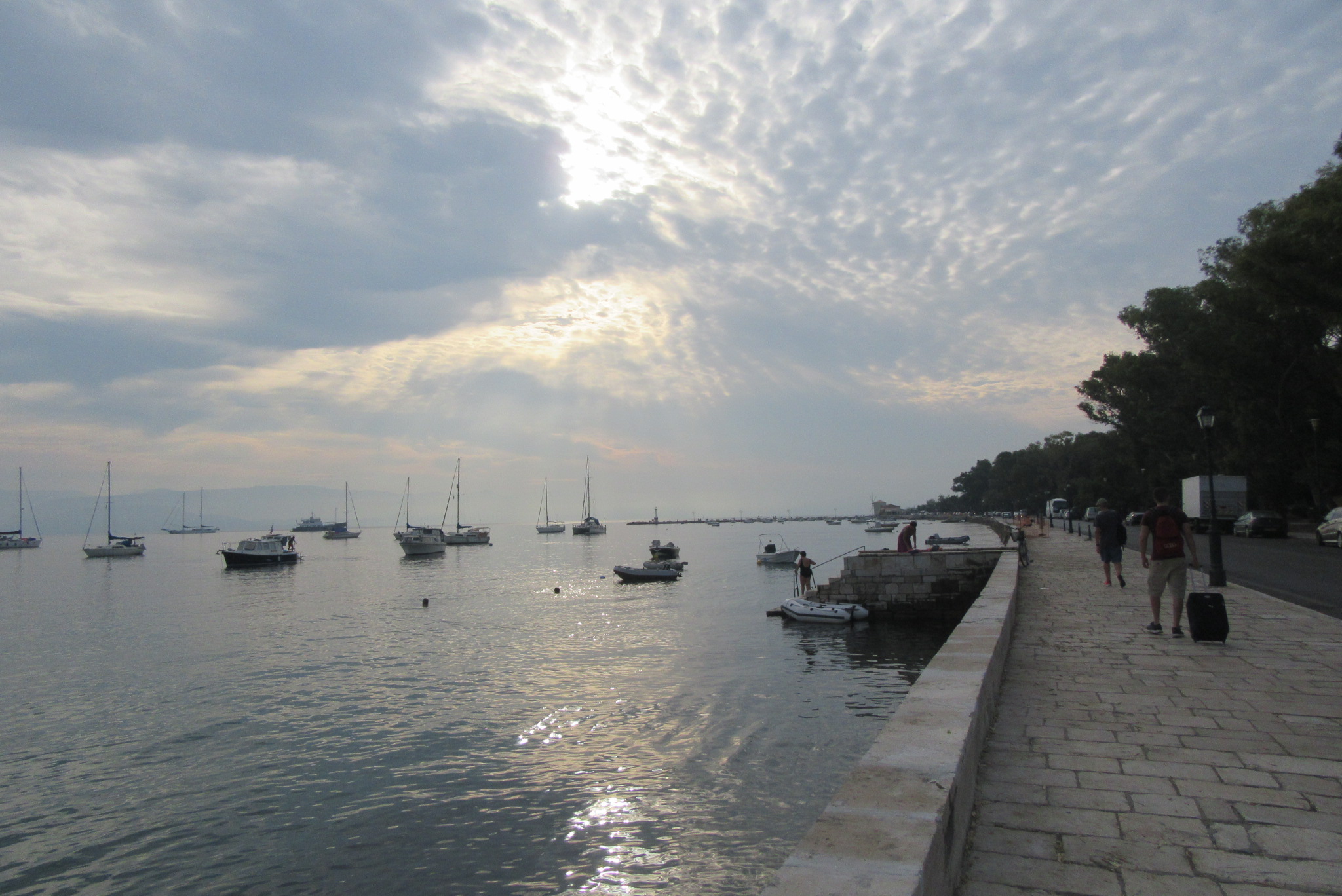
The sea view from this spot is phenomenal on any given day, but the clouds on the sky that morning made the view simply breathtaking… Not even the ongoing roadworks and the stacks of tiles we found there didn’t spoil the magic.
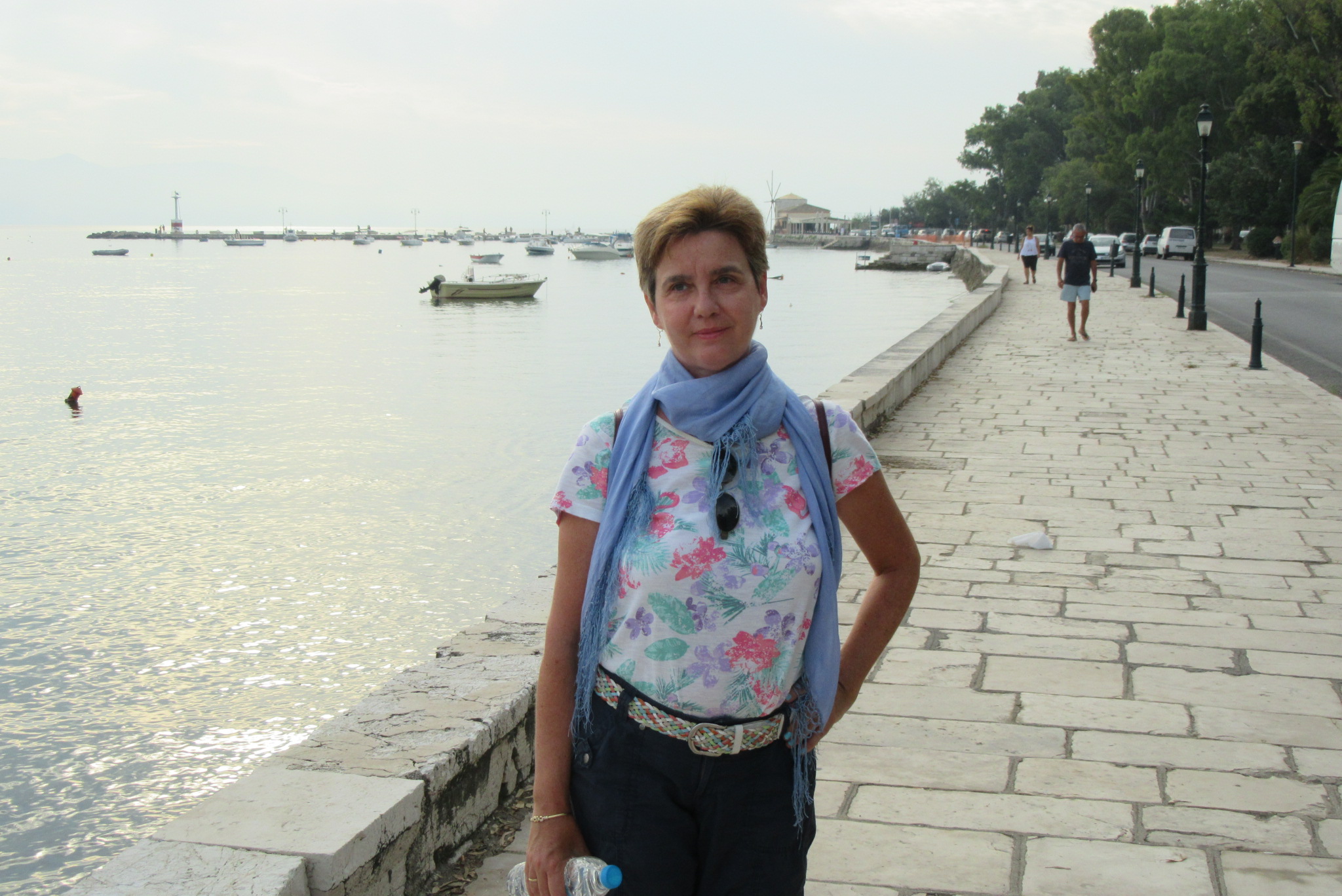
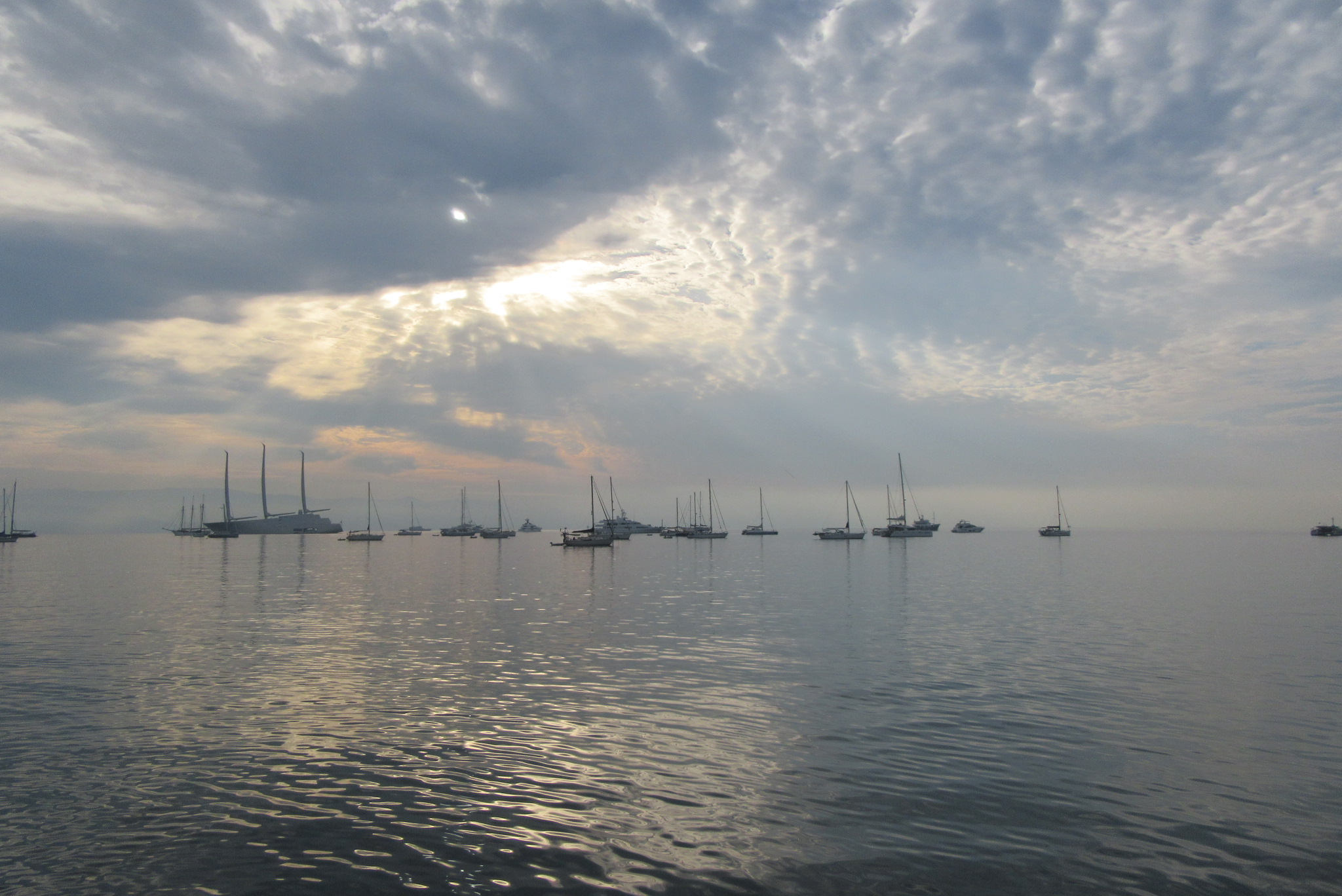
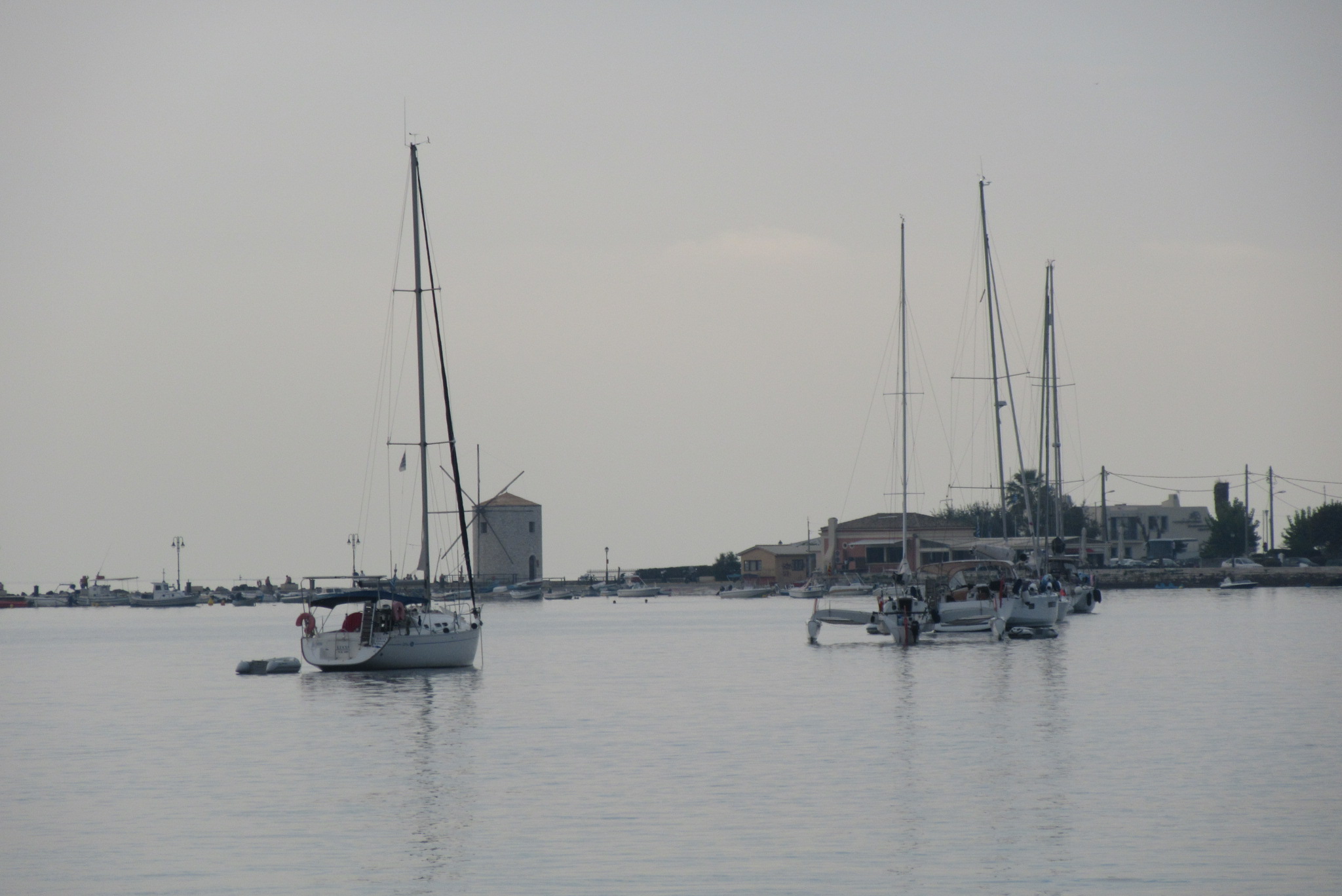
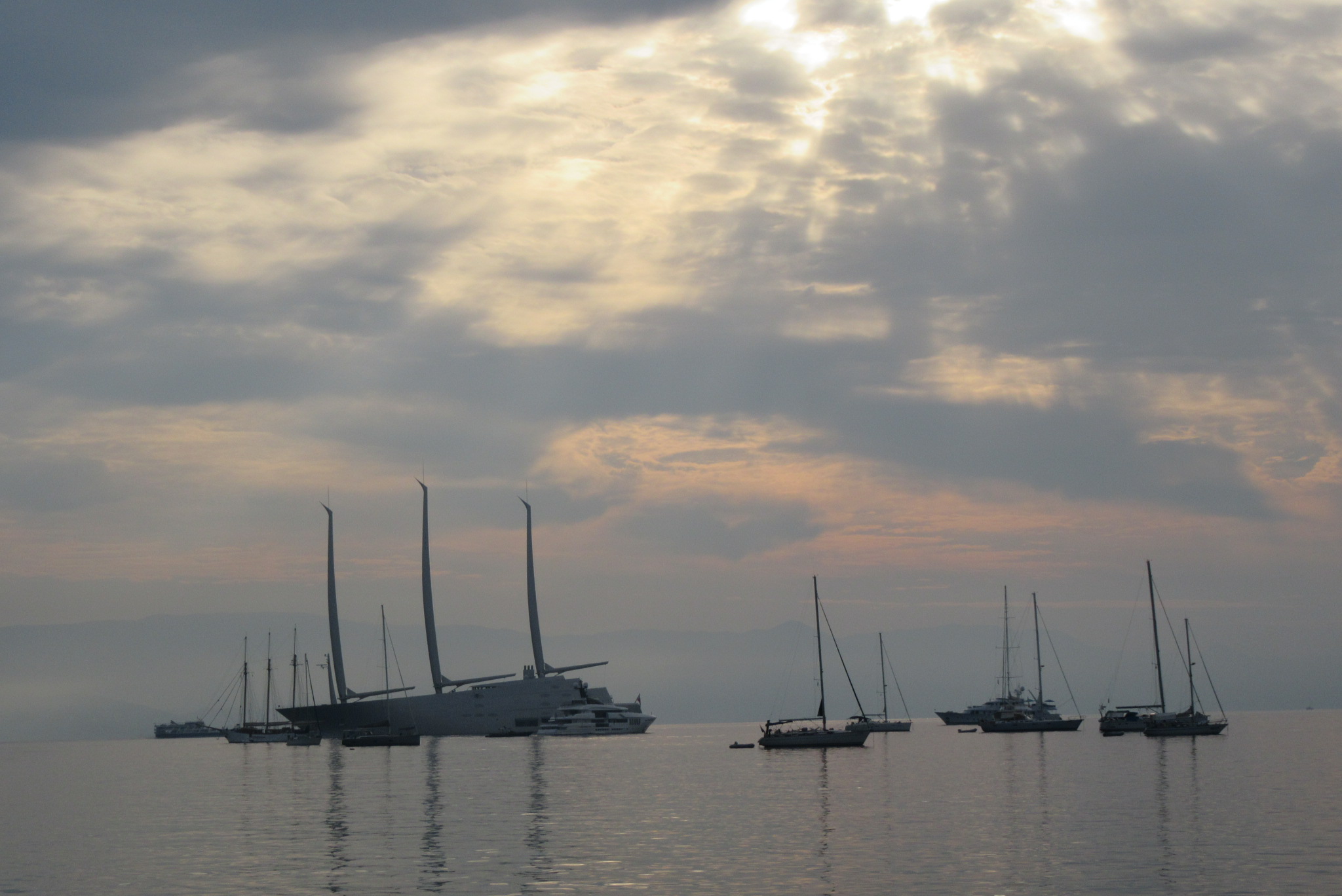
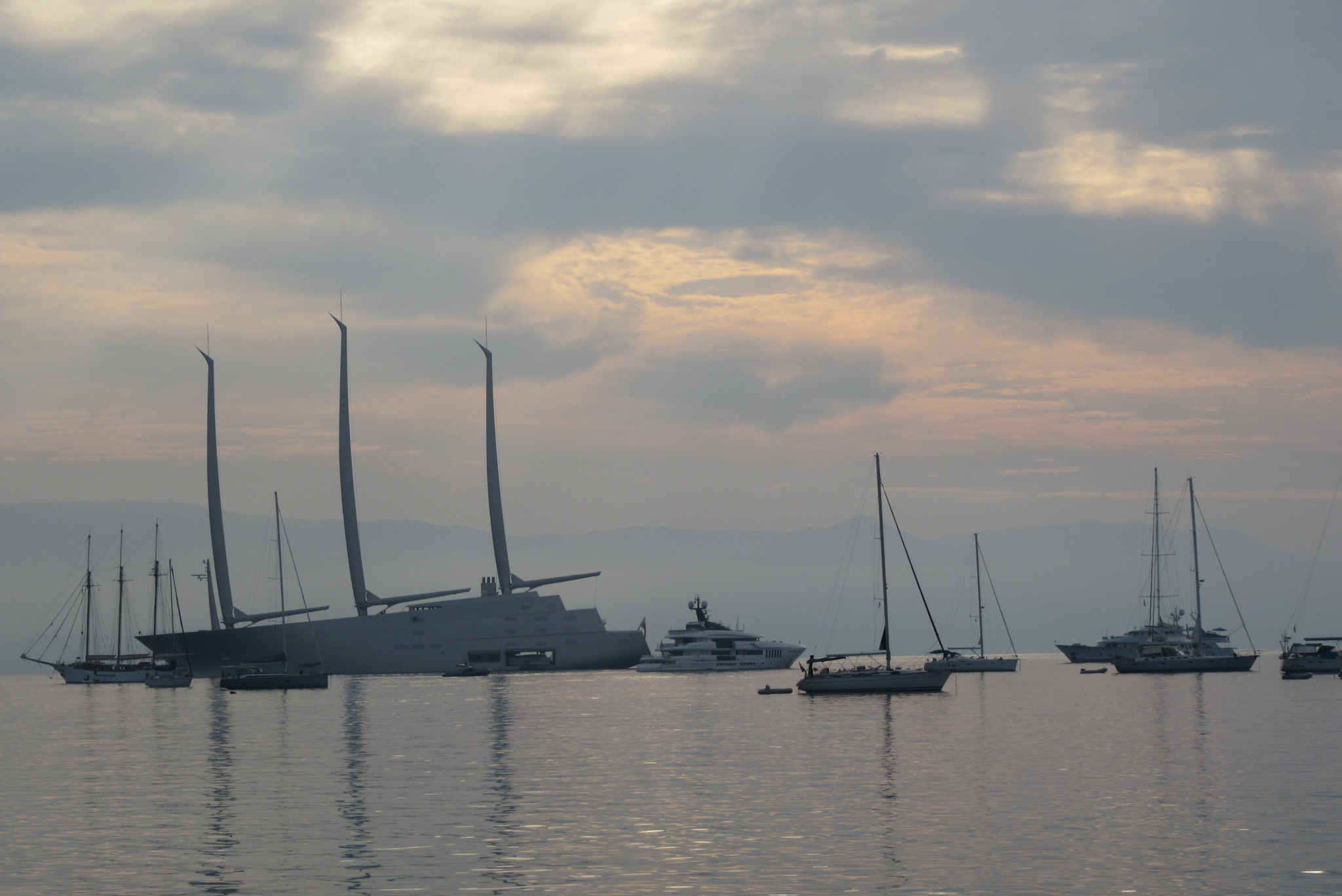
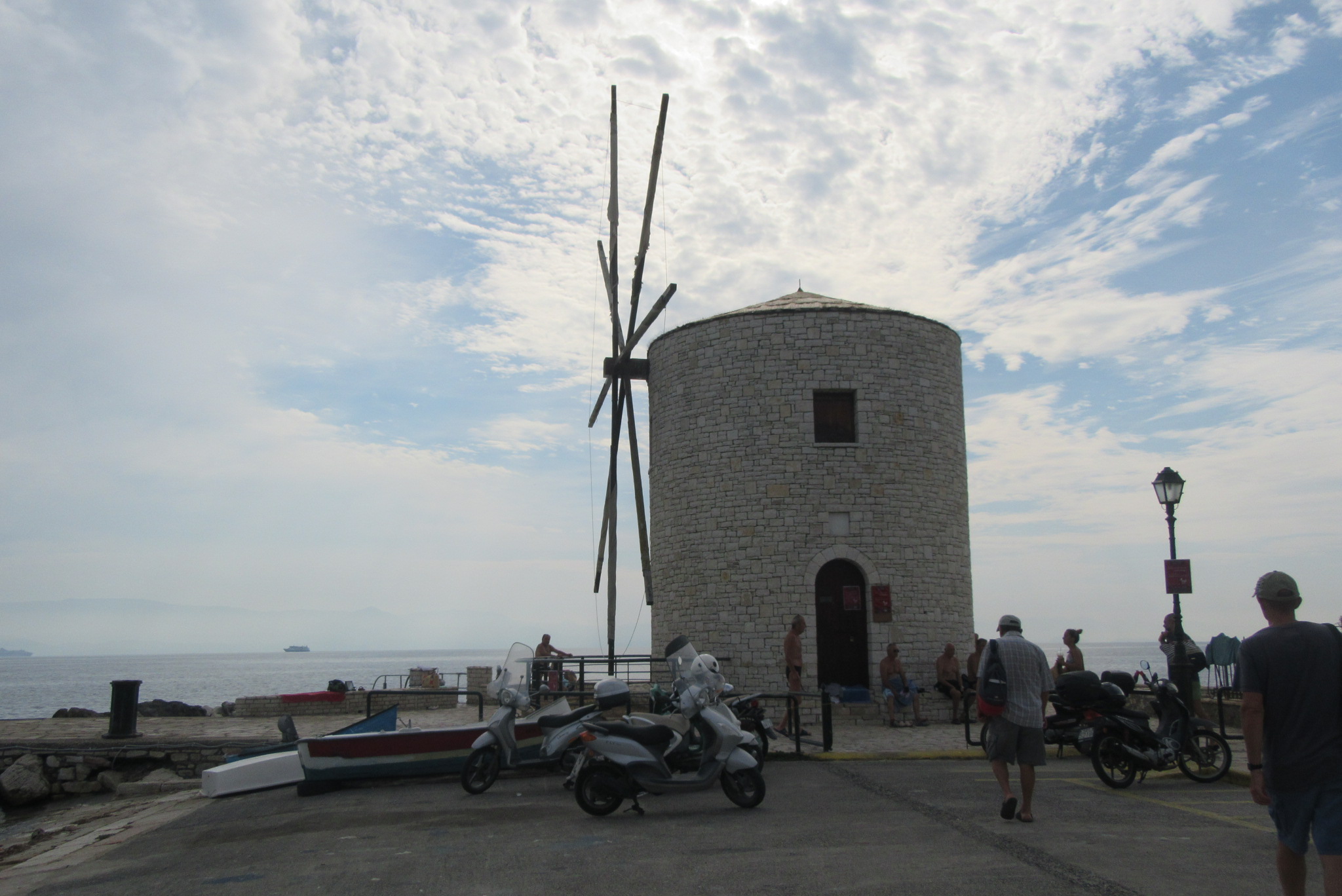
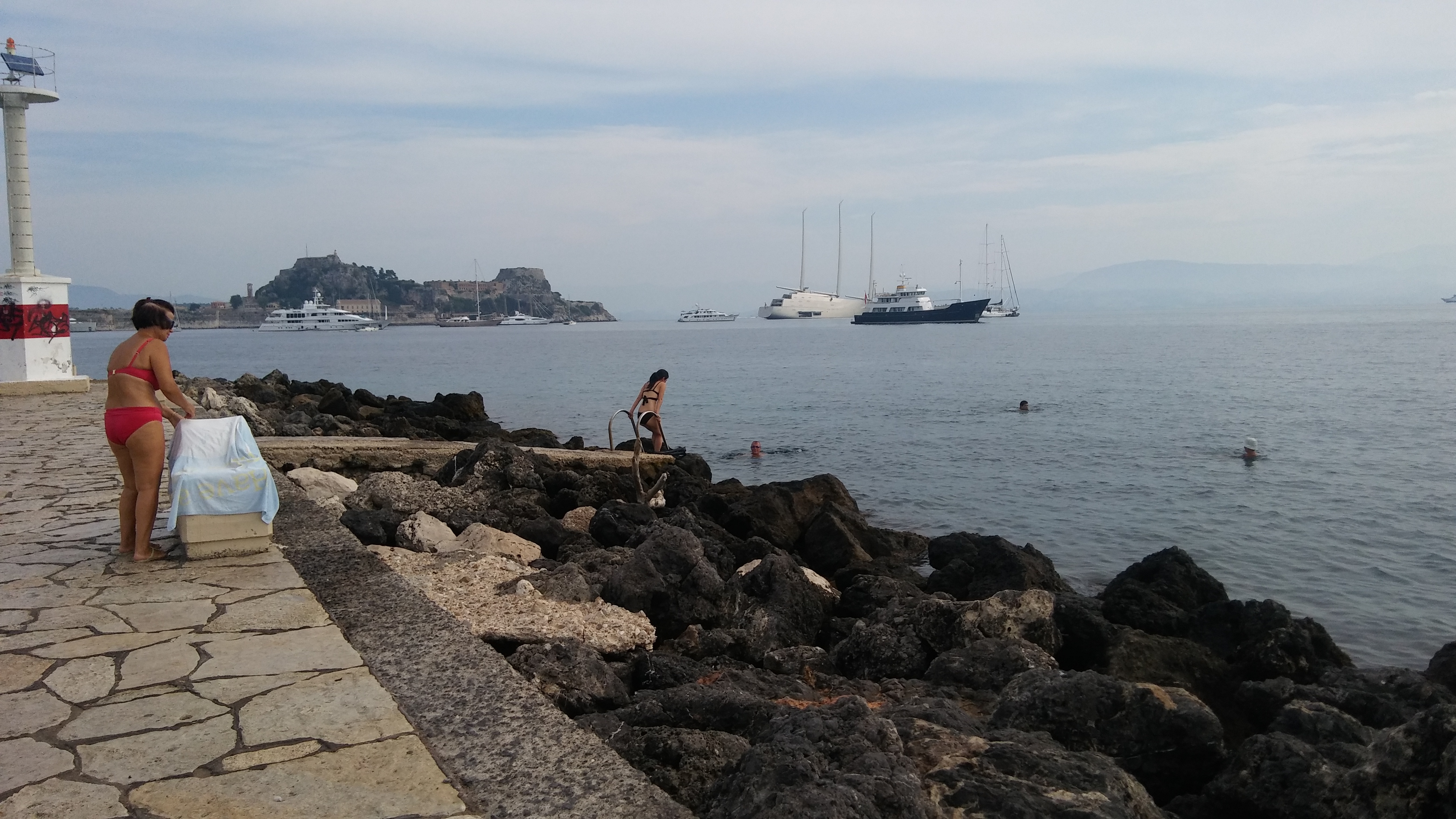
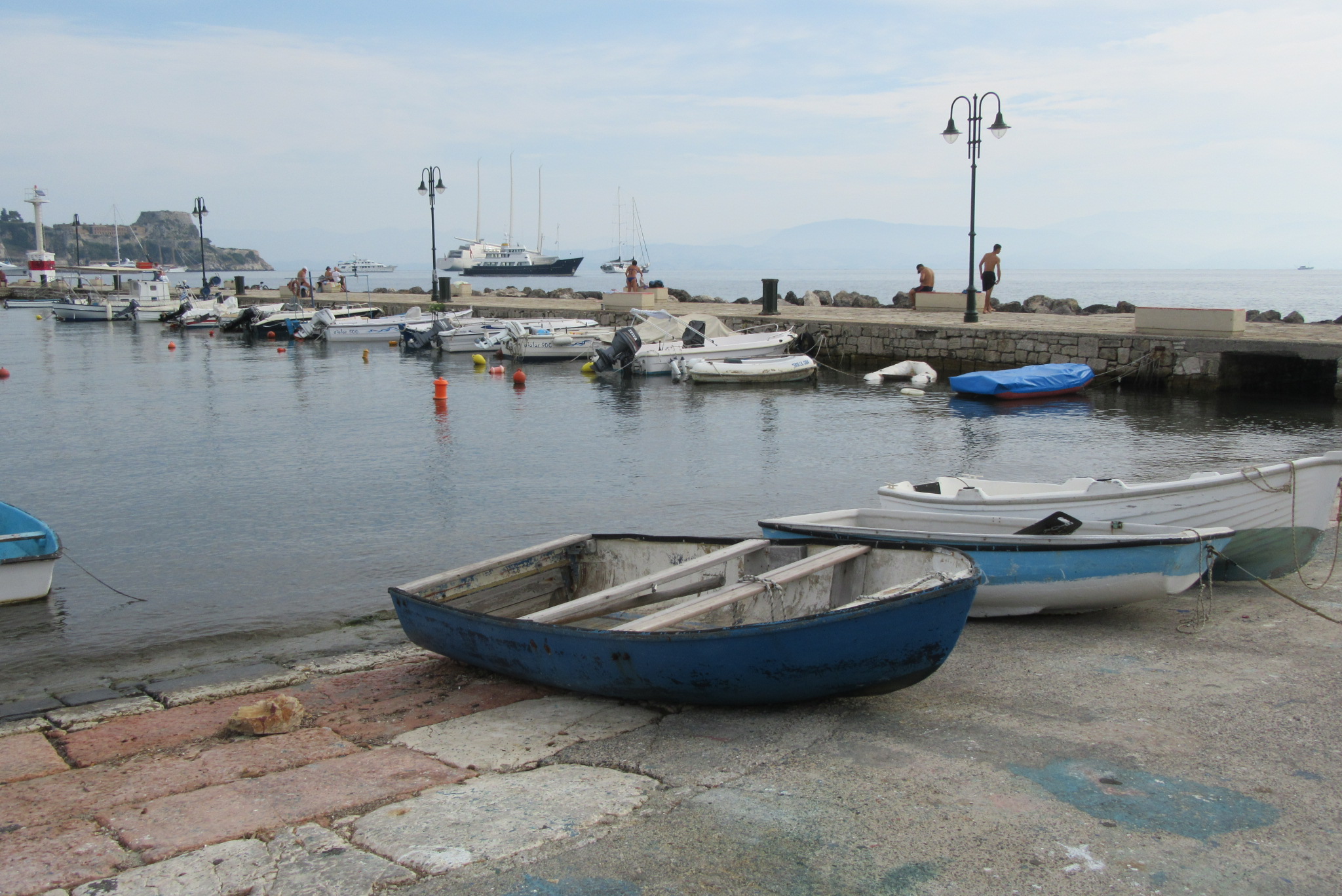
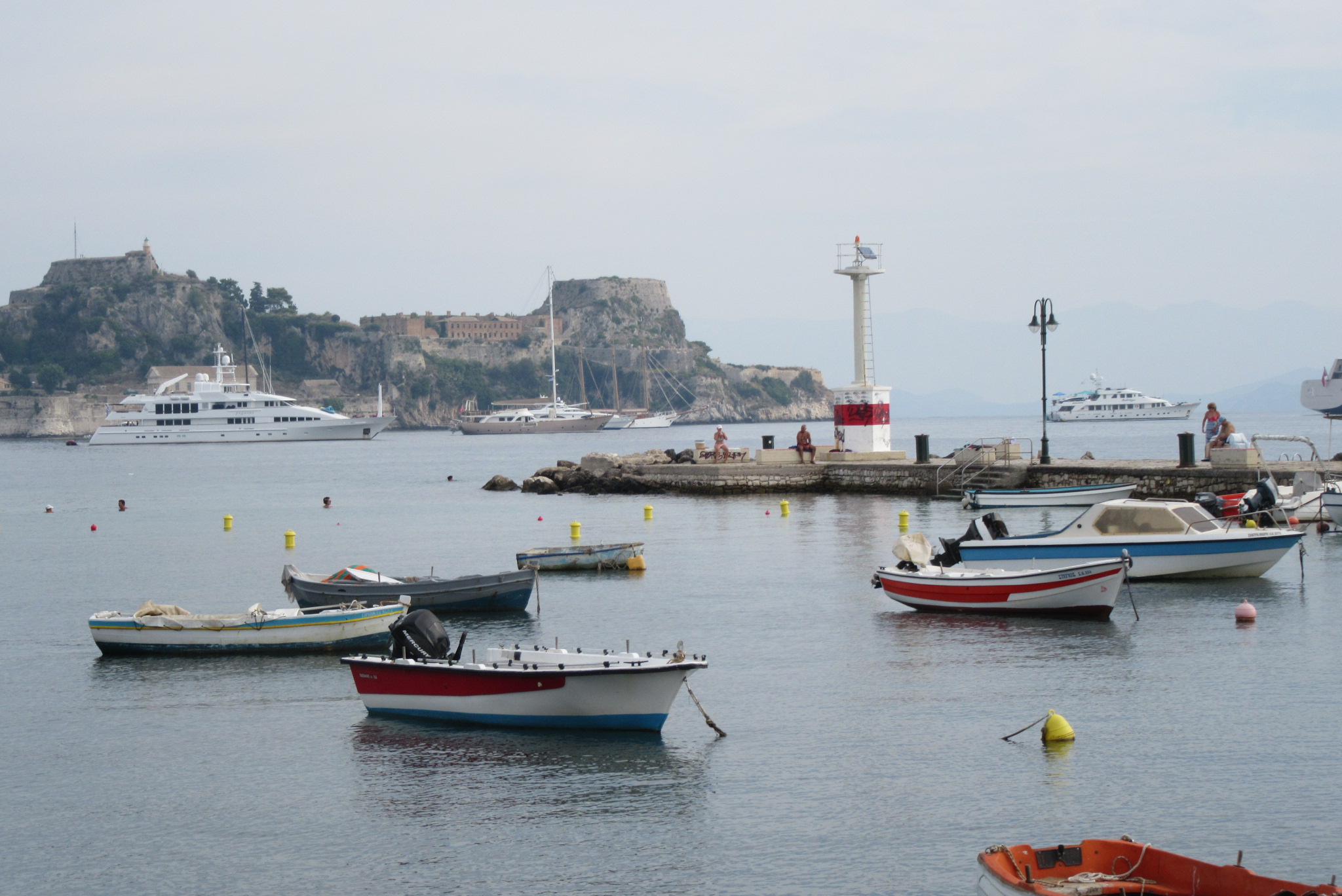
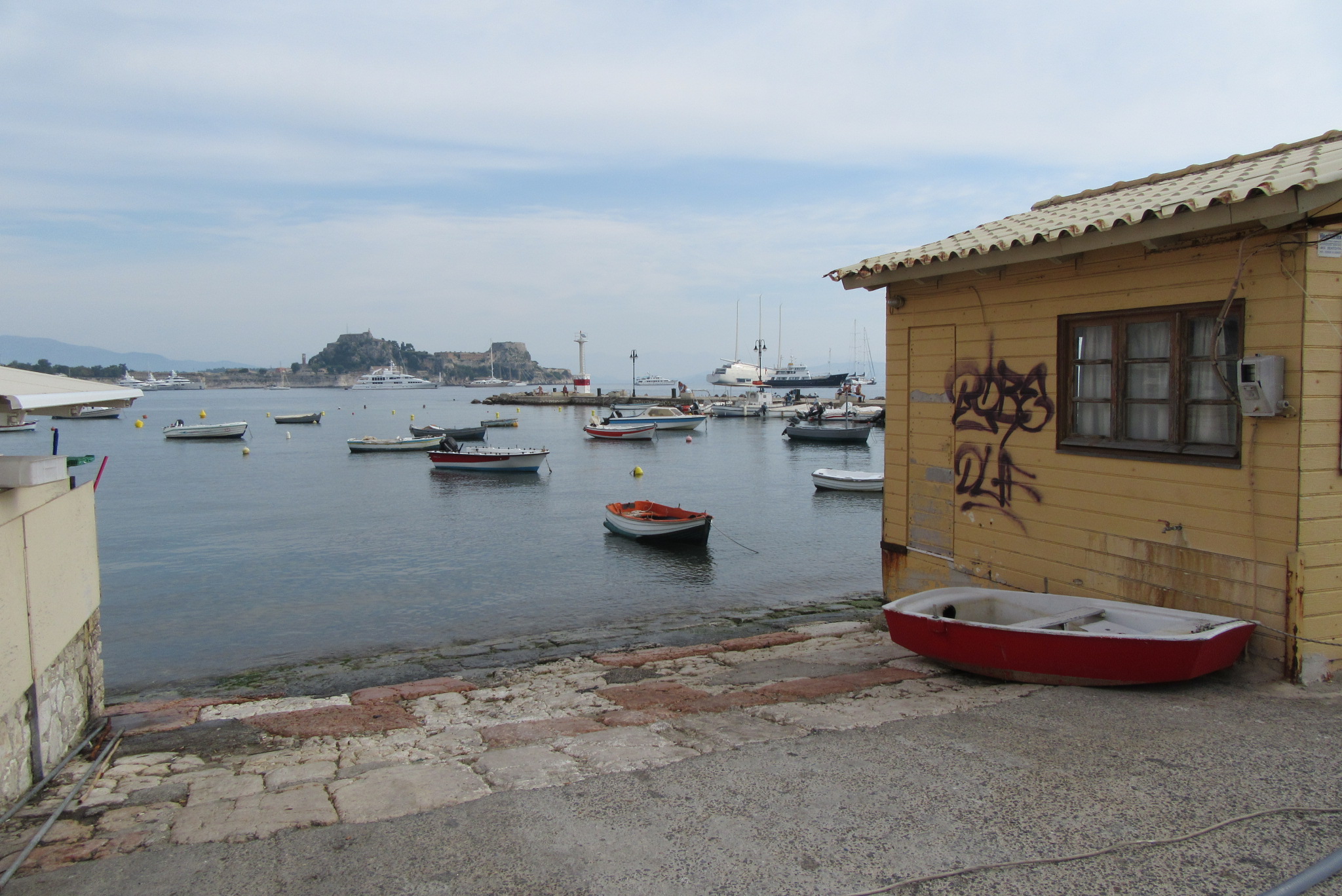
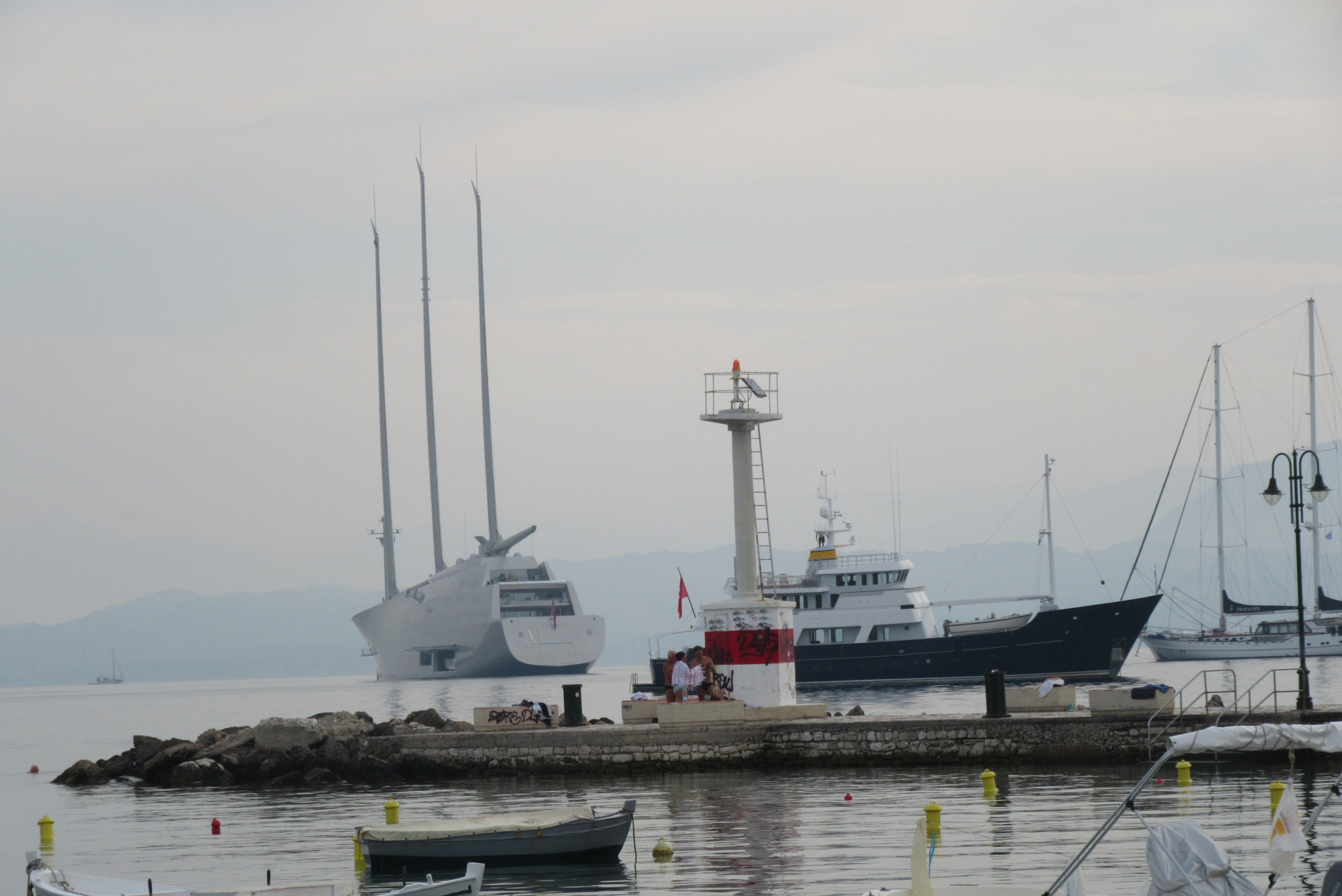
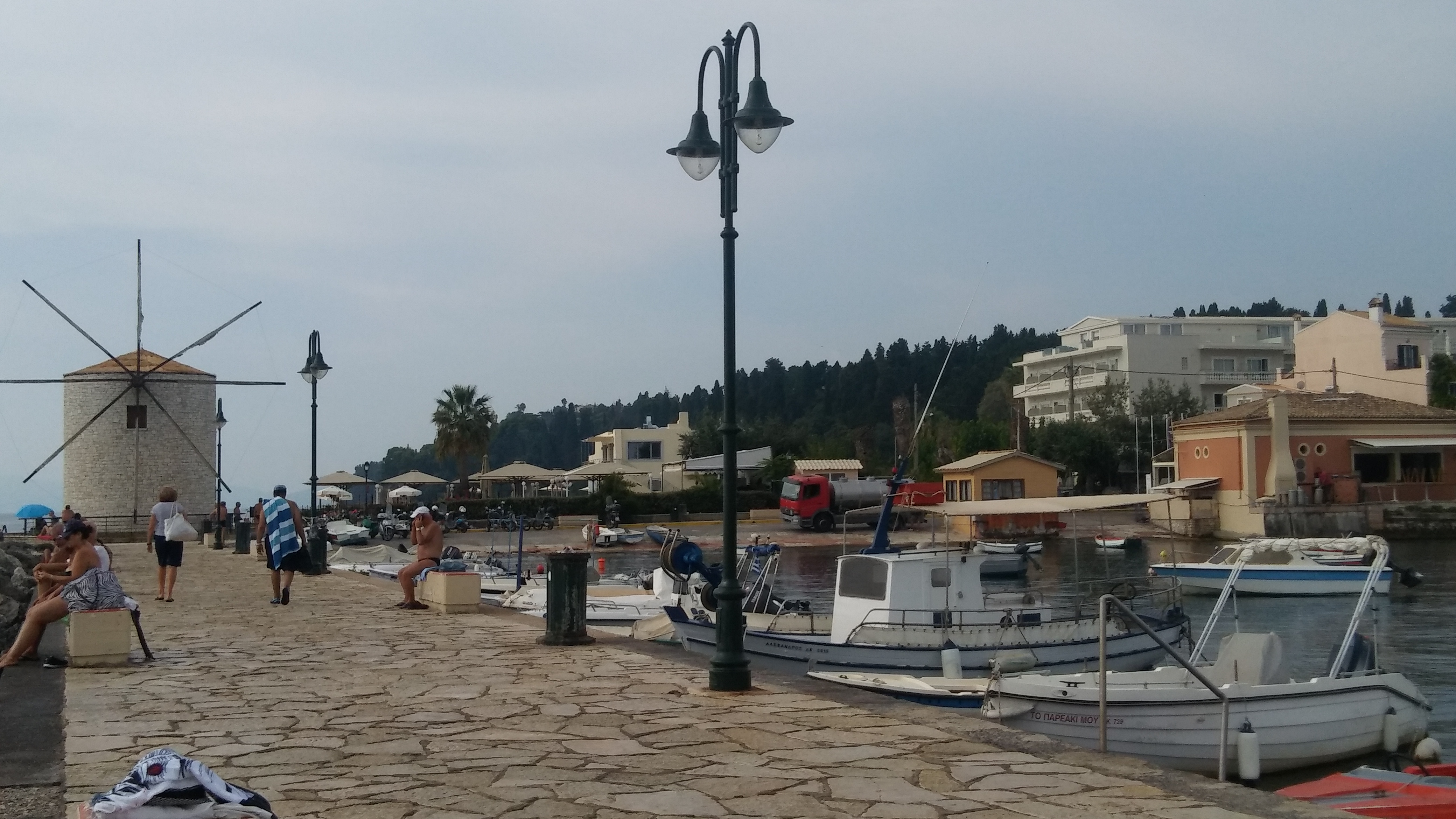
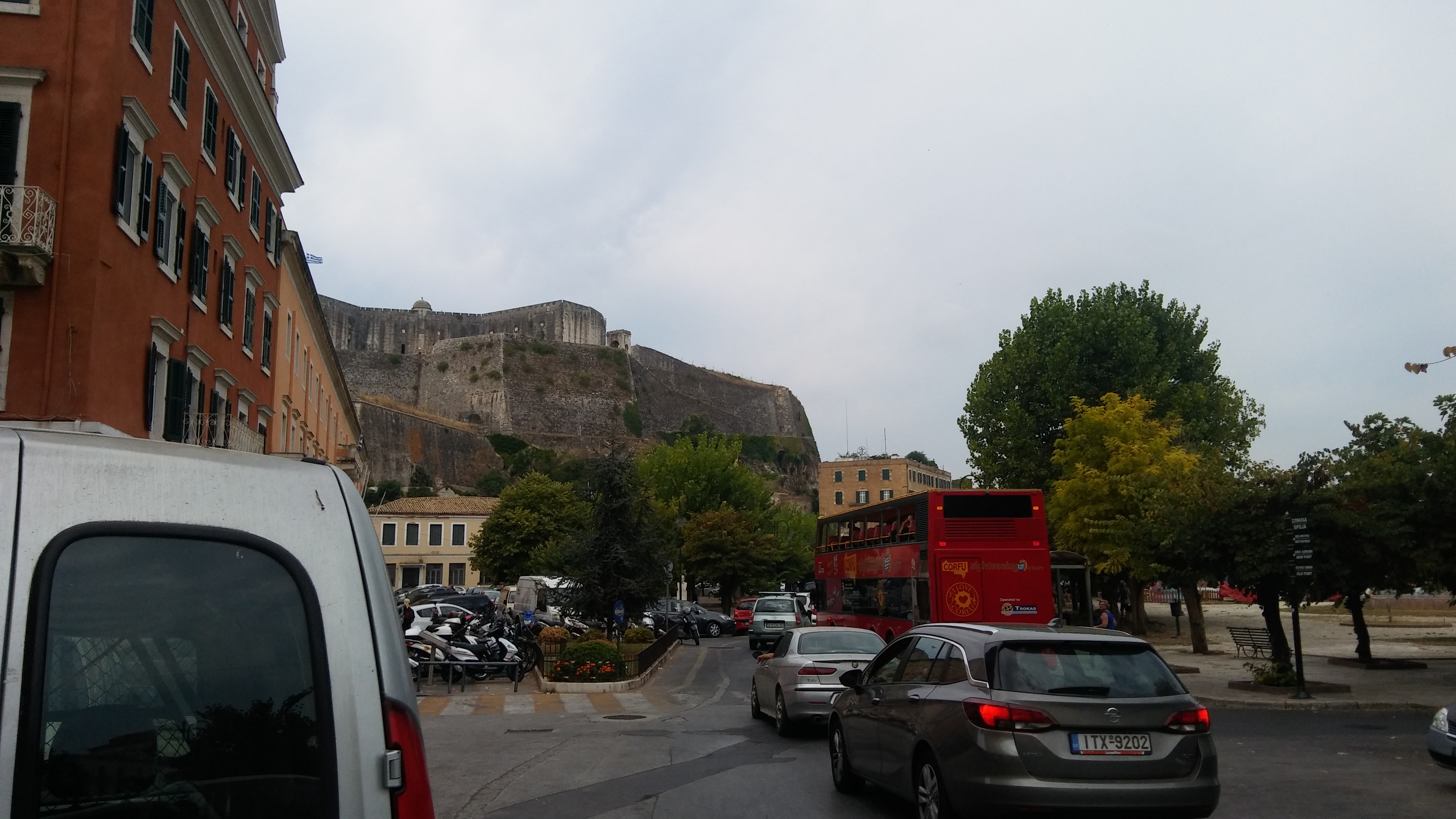
The view on the left from there is to the Old Venetian Fortress. On the other side, the coastal road reaches down to the end of the bay at Anemomylos (windmill). The windmill is situated at the base of a pier. At Garitsa bay, the sea is dotted with sailboats of all kinds. The fabulous zoom of my Canon Powershot SX610HS even captured the famous Yacht A that day, for which I was really pleased!
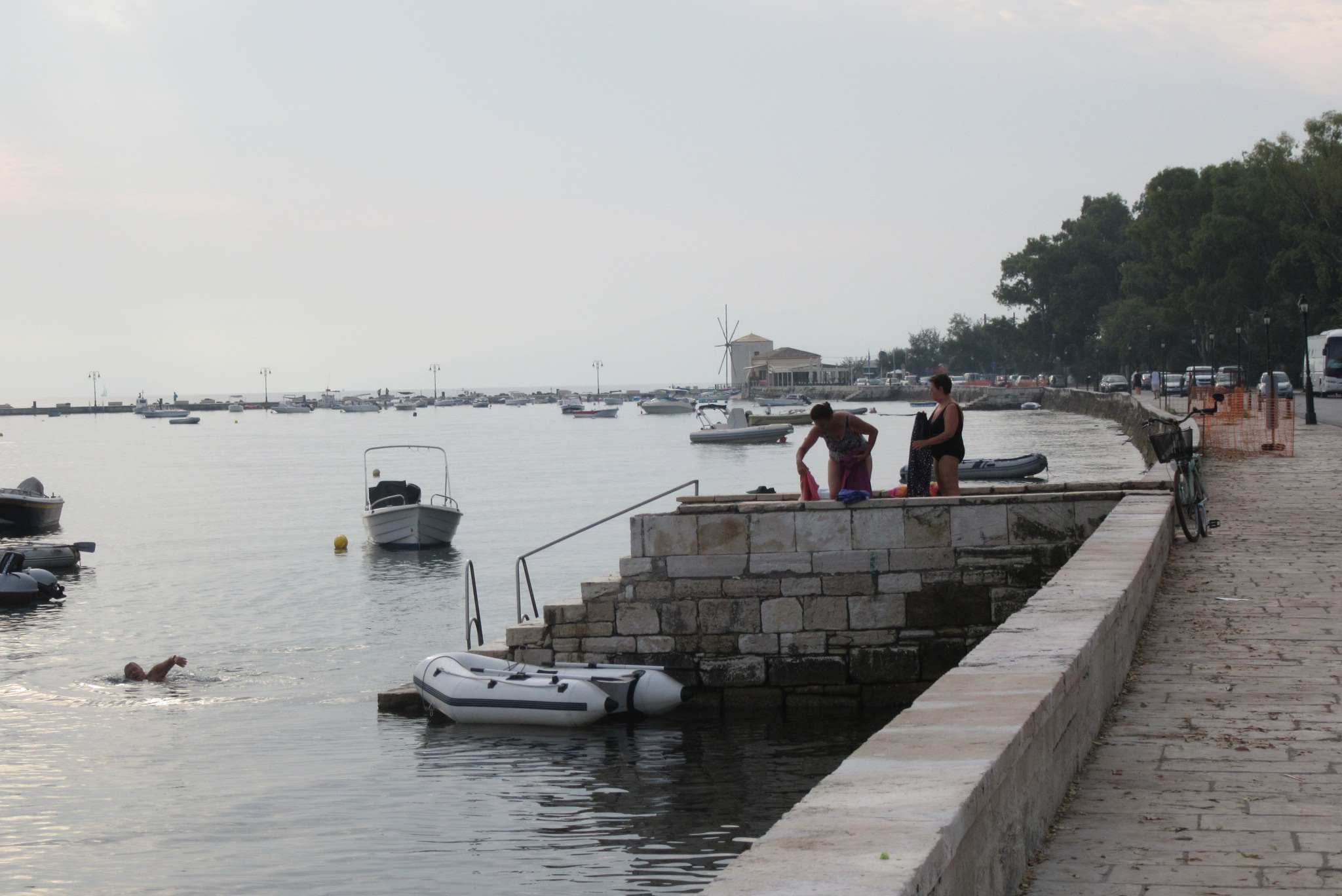
A walk around Garitsa is a joy of quiet, fresh air and enchanting vistas. On our way to the windmill, we encountered many locals dipping in the water for a cooling swim.
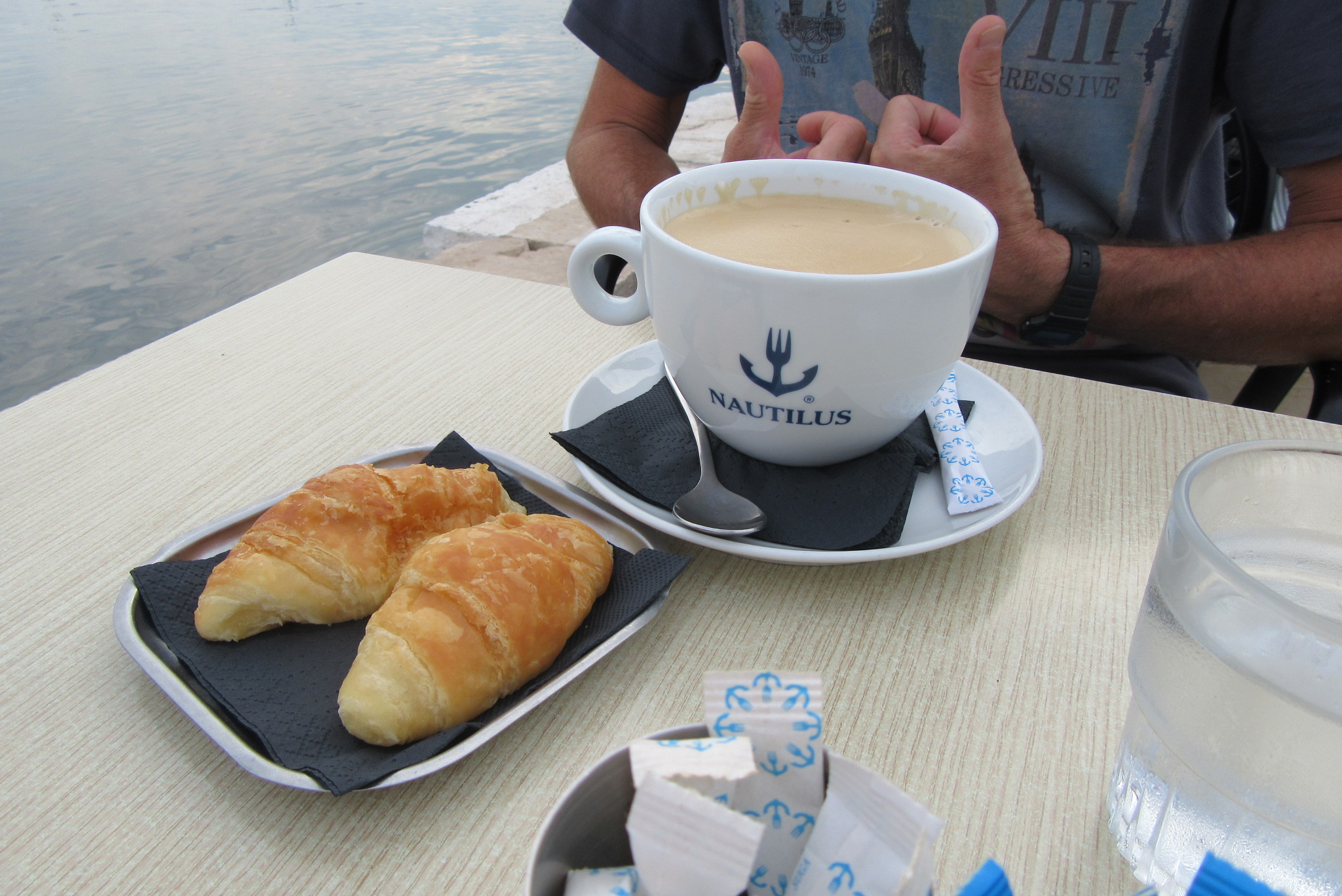
Just before the windmill, we stopped at Nautilus cafe for a coffee. It came with croissants, much to our delight. I highly recommend a venture inside the cafe, if only to see if you’ll sweat at all when crossing over the threshold (I did, but I’m weird like that, and I’m not telling why. You’ll just have to find out for yourselves 😛 )
Anemomylos offers equally spectacular views. Just like in Garitsa, the locals keep coming and going for their daily swim.
Here, I’ll give you a tip that a local gave me. See the picture above? After visiting the pier, carry on behind the windmill along the coast and you will soon get to a bathing area that was once accessible only to the Greek king and the rest of the royal family! It is situated near Mon Repos and was recently opened by the council. It is not possible to access Mon Repos from that side, but you’ll be able to visit the spot on the beach where the Greek royals once descended from the palace to dip in the sea. The booth where they used to change into their bathing costumes still stands! I didn’t get the chance to visit it this year as I was tipped off too late. I hope to visit next time, though, and I will share photos and more info then.
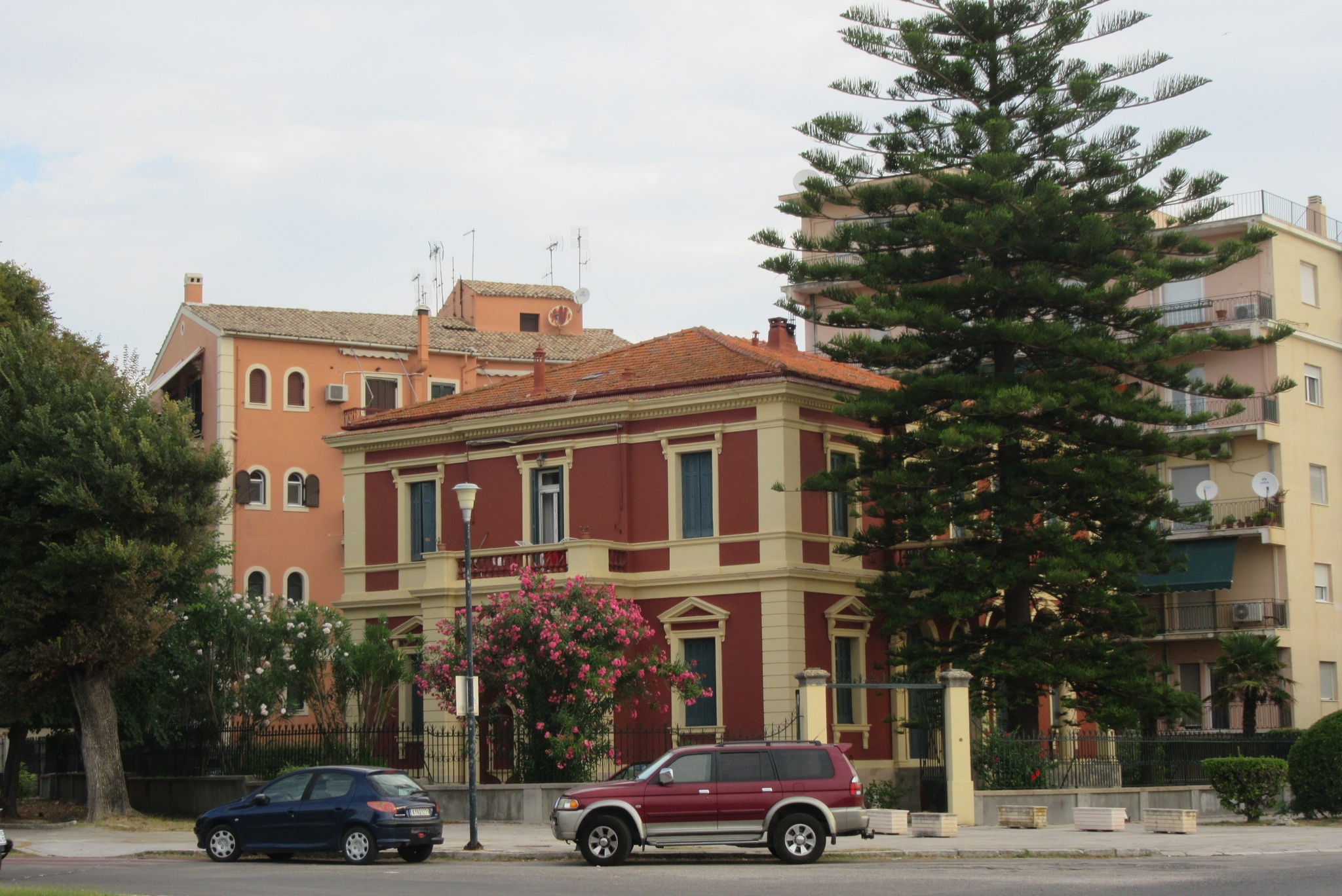
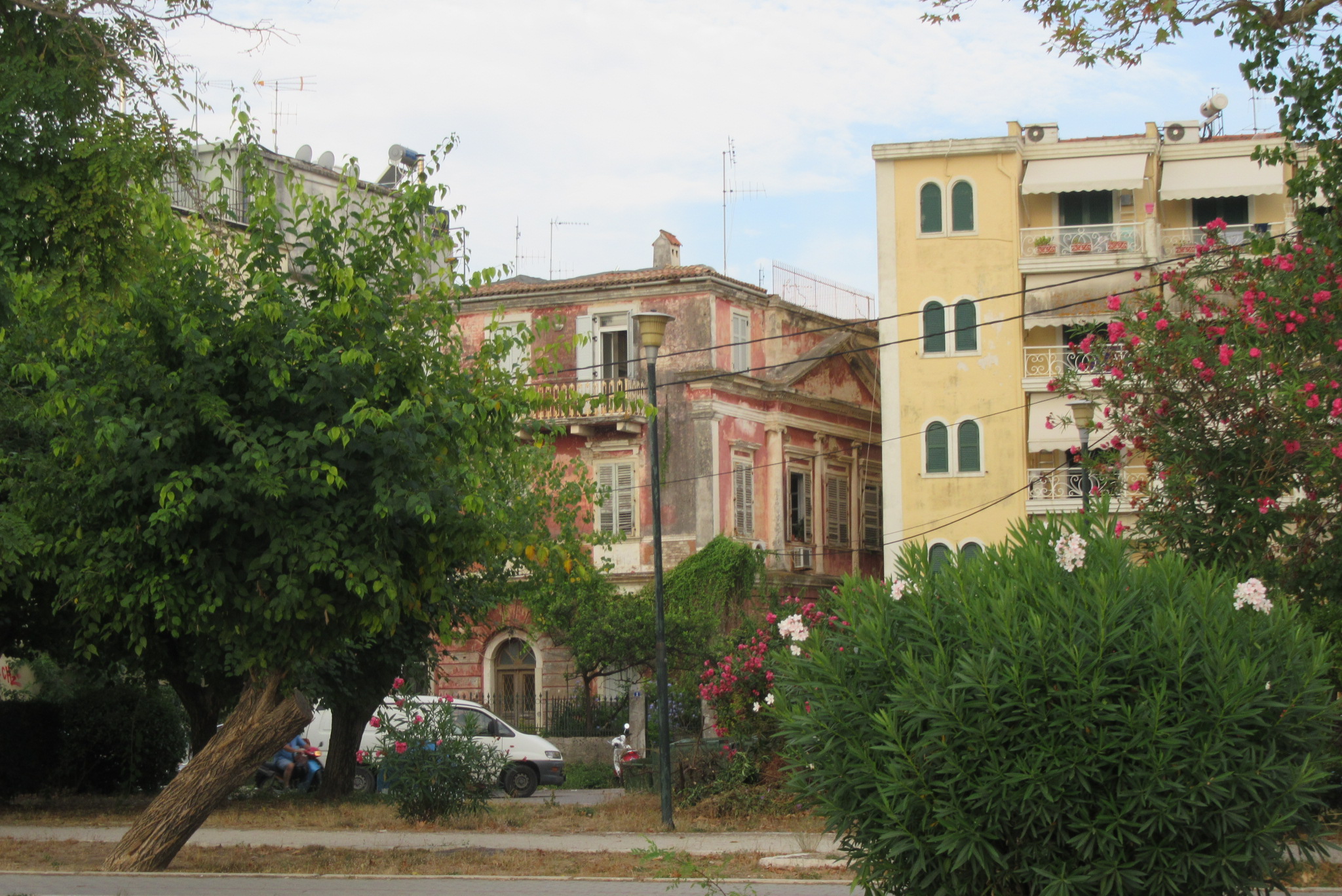
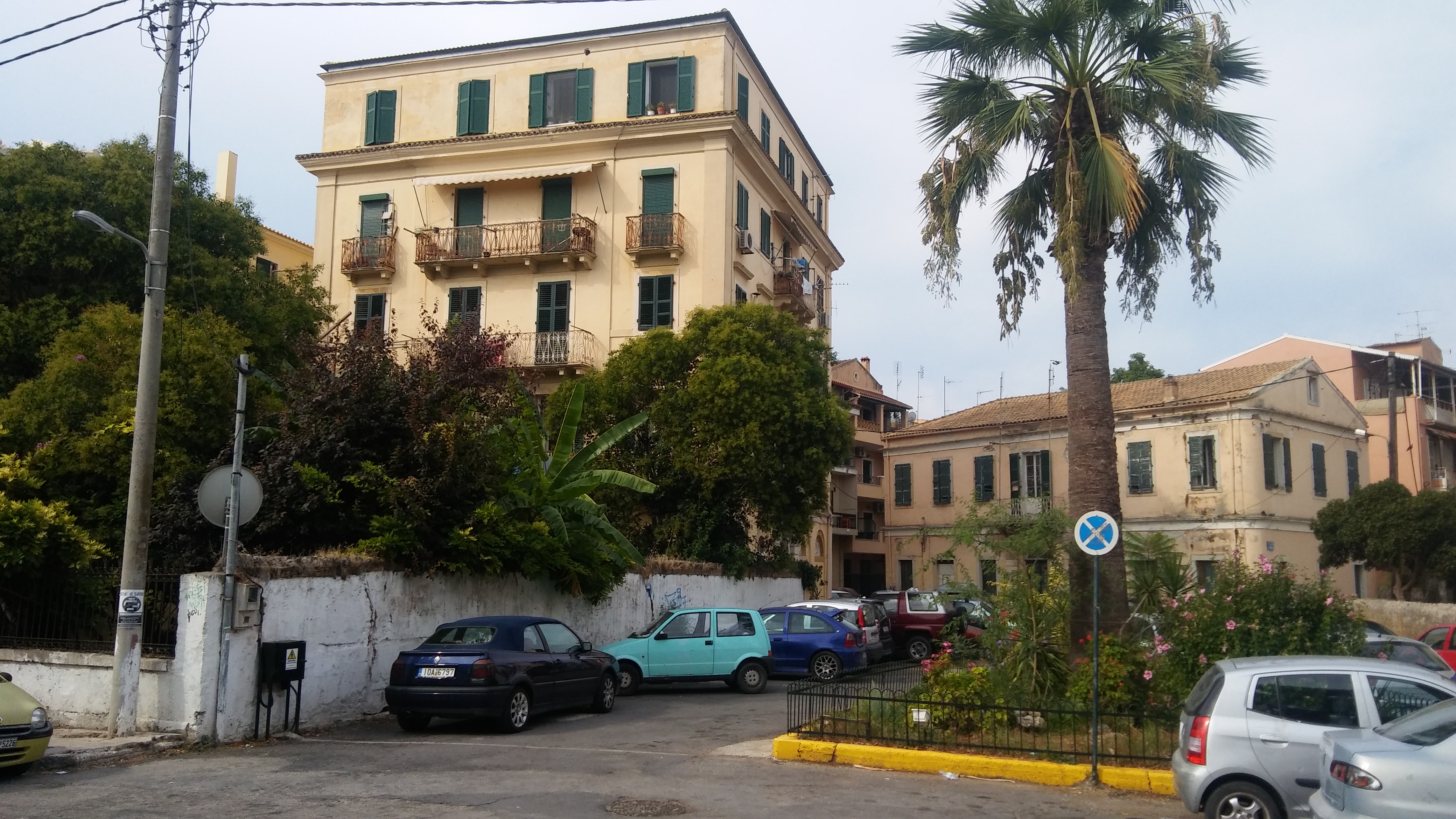
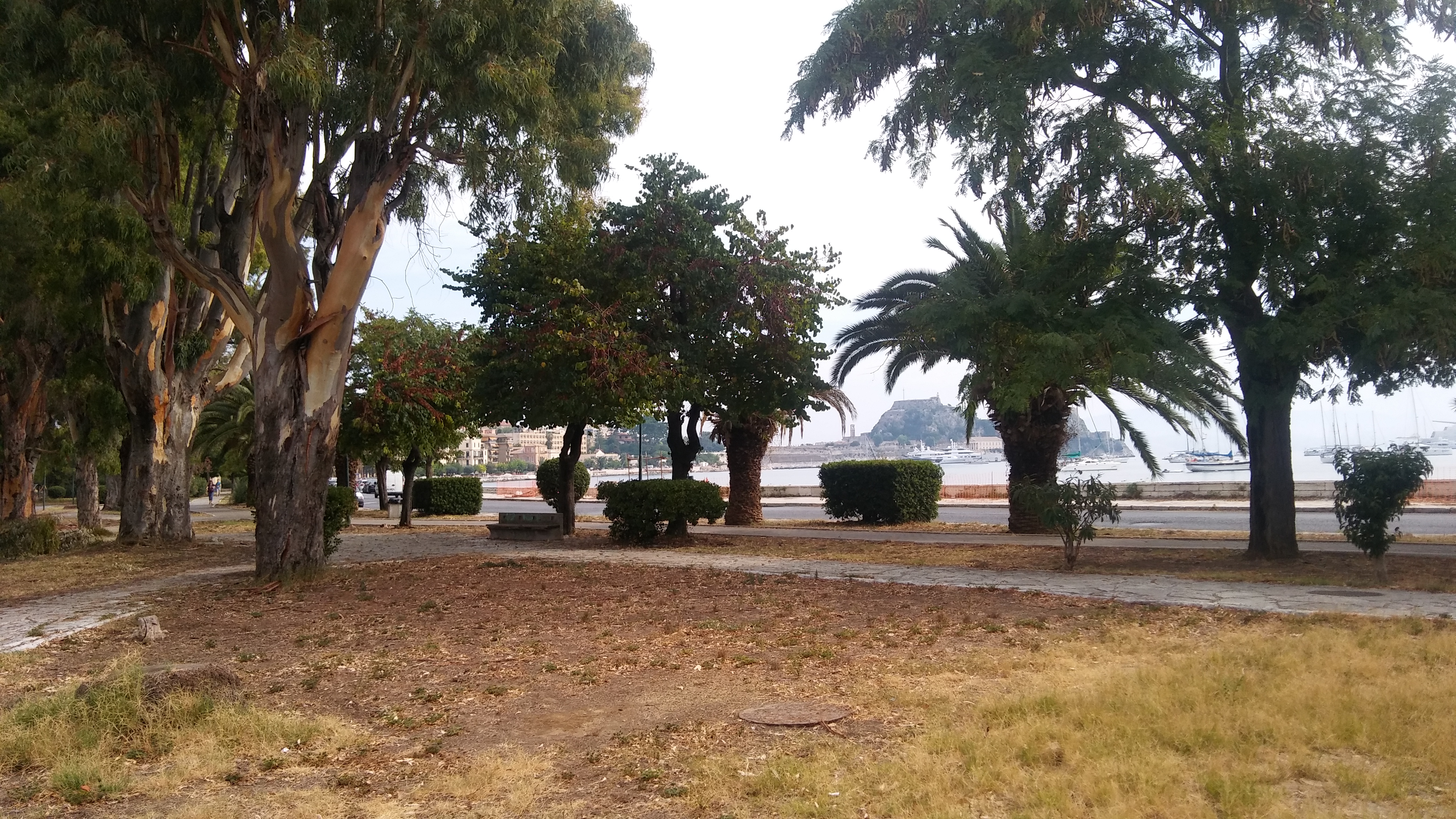
From Anemomylos, we headed back to Garitsa so we could get to Liston in town. On the way, I was delighted to identify the old house in Garitsa where I used to holiday with my granny as a small child. We were staying with her daughter (my aunt Stephania) and her family, who rented a flat there at the time. It was in the tall building on the left of this photo. On the green where I stood to take the picture, there used to be swings back in the day and I remember that it was very lush and shady there.
Granny used to take me there daily while feeding me ‘kolatsio’ (a snack between breakfast and lunch). It consisted of boiled egg and bread, more often than not. Almost fifty years later, the sense of place was so strong that when I stood in the middle of the now barren land gazing out to the Old Fortress like I used to as a child, the melodic cadences of Granny’s speech almost reached my ears again. It was an emotional moment for me as I miss her every day. That morning, she felt close. So very close again.
When we reached Liston and the Pentofanaro beside it (Five Lantern Post), we turned right behind Liston and then turned left at the first corner. That’s Agion Panton street, named after the church of the same name that you soon come across on the right.
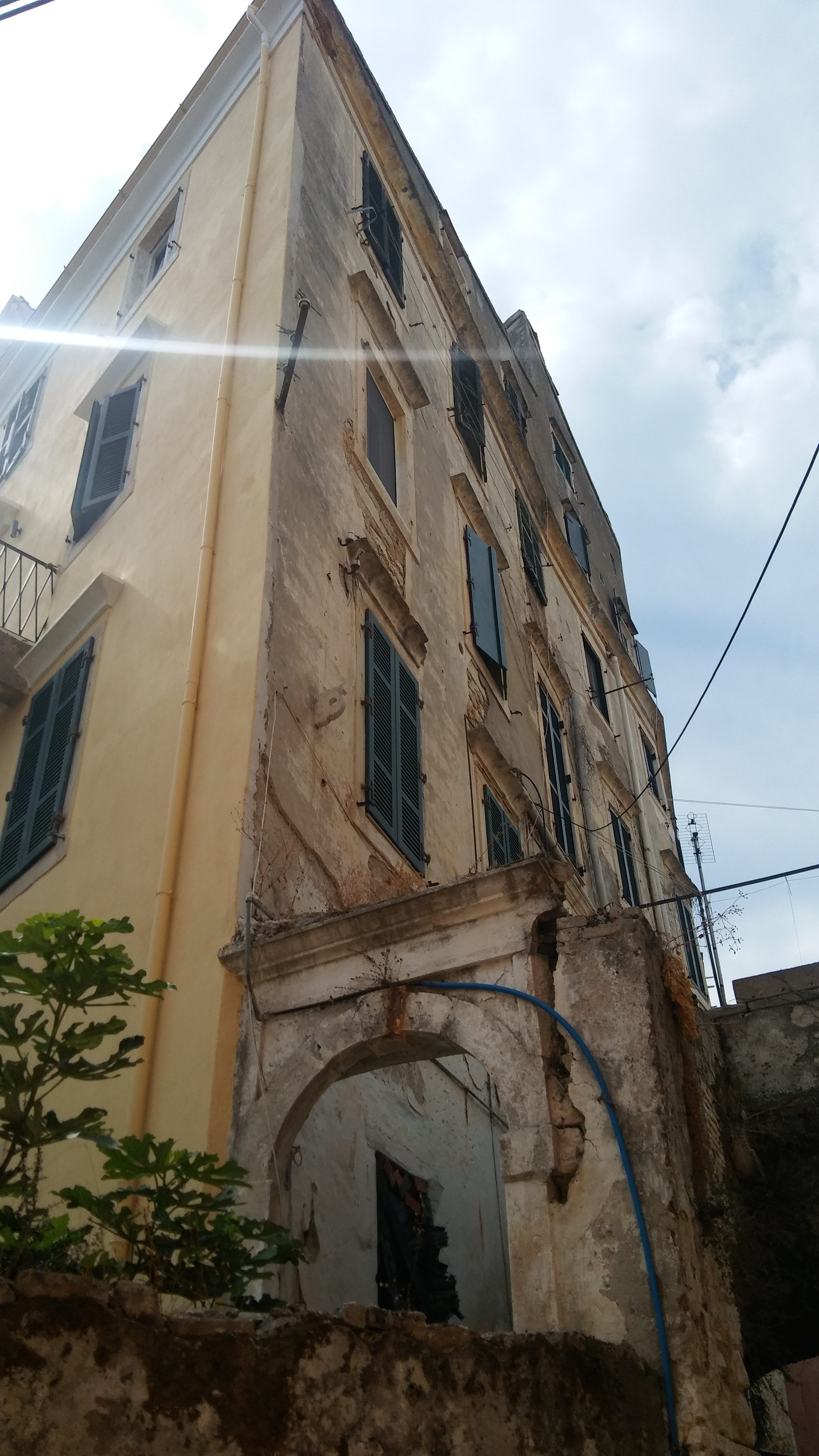
Just after the church, I came across the old edifice that Granny had pointed out to me in the past – the house where she grew up, and which my mother also knew as she used to visit her grandparents often there as a child. Her grandfather (my great-grandfather, Nikos Kopsidas from the island of Lefkas) would meet her at Pentofanaro every Sunday (when she’d arrive from the house in Campielo that I’ll show you later), then escorted her to this house for lunch.
Many a time over the years when Granny and I walked past the house, she’d point to the door, then up to the 5th floor to tell me this was where she ran from to St Spyridon Church whenever the town was being bombed during WWII. One fateful morning a miracle took place in the church to protect the people inside from the bombs. My granny was inside, a teenager then, and witnessed it. She loved to tell the tale, which in time I’ve also heard from other locals in the town. To hear all about it, you’re welcome to read this post that shares other miracles of St Spyridon too.
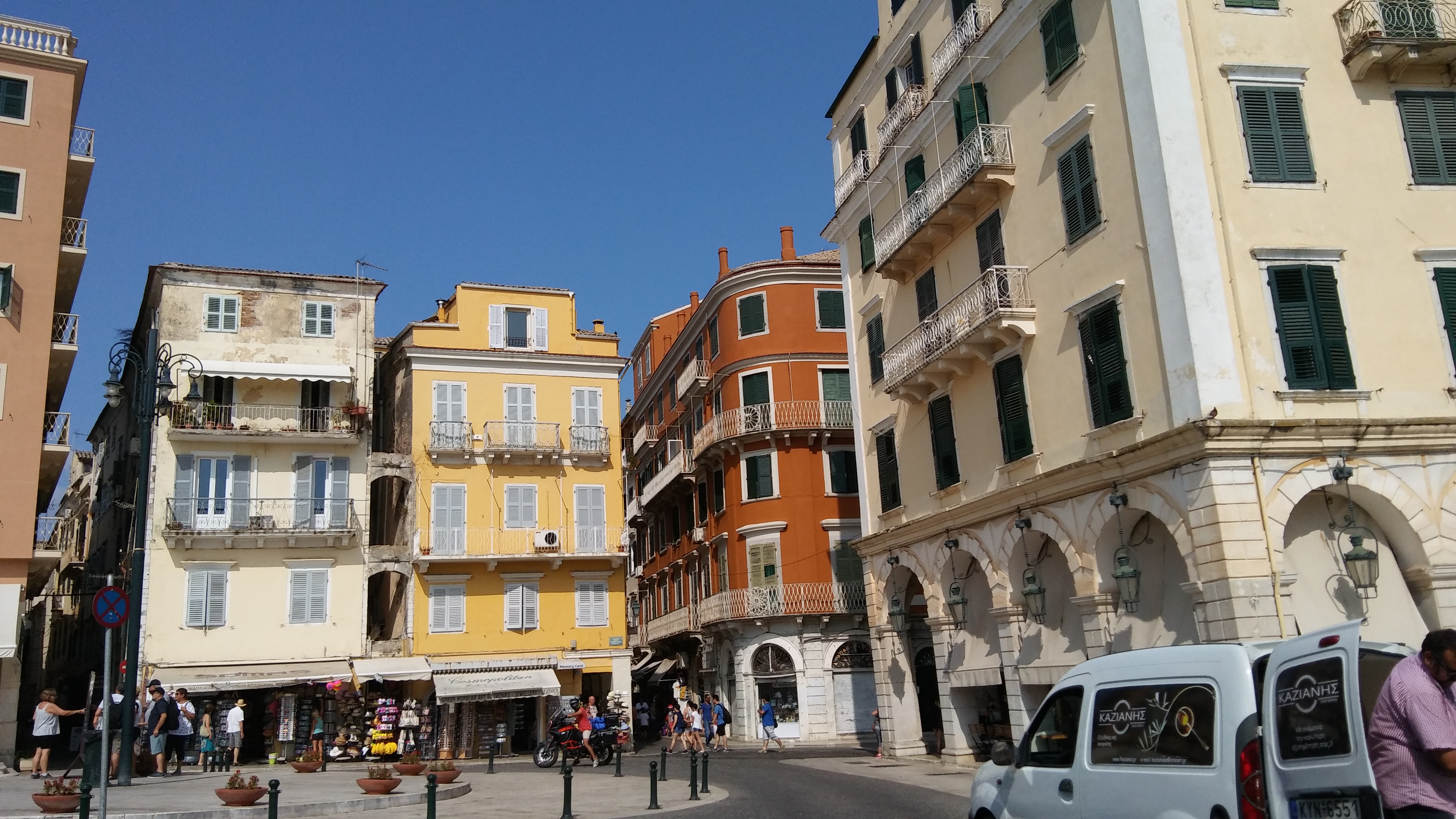
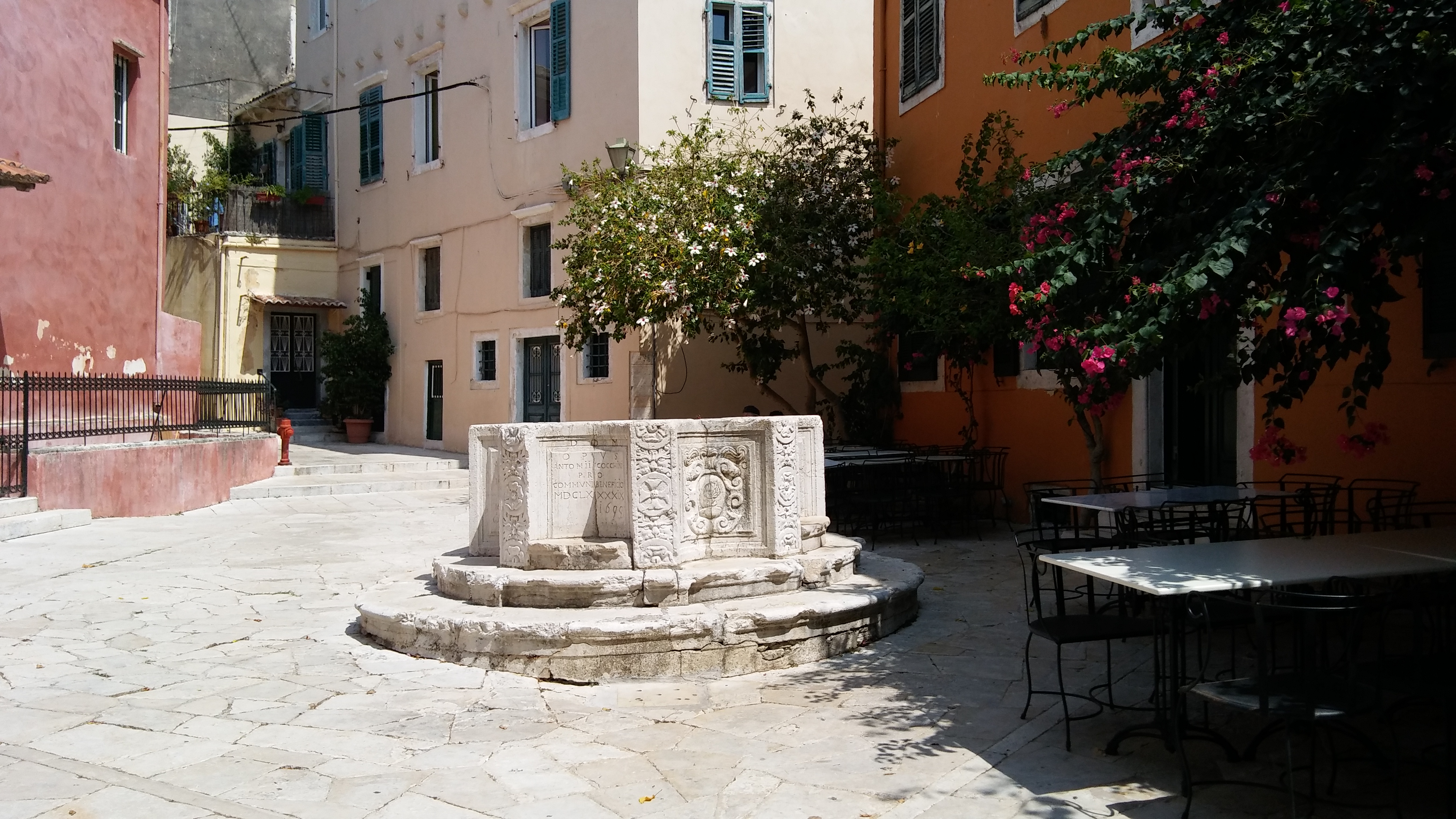
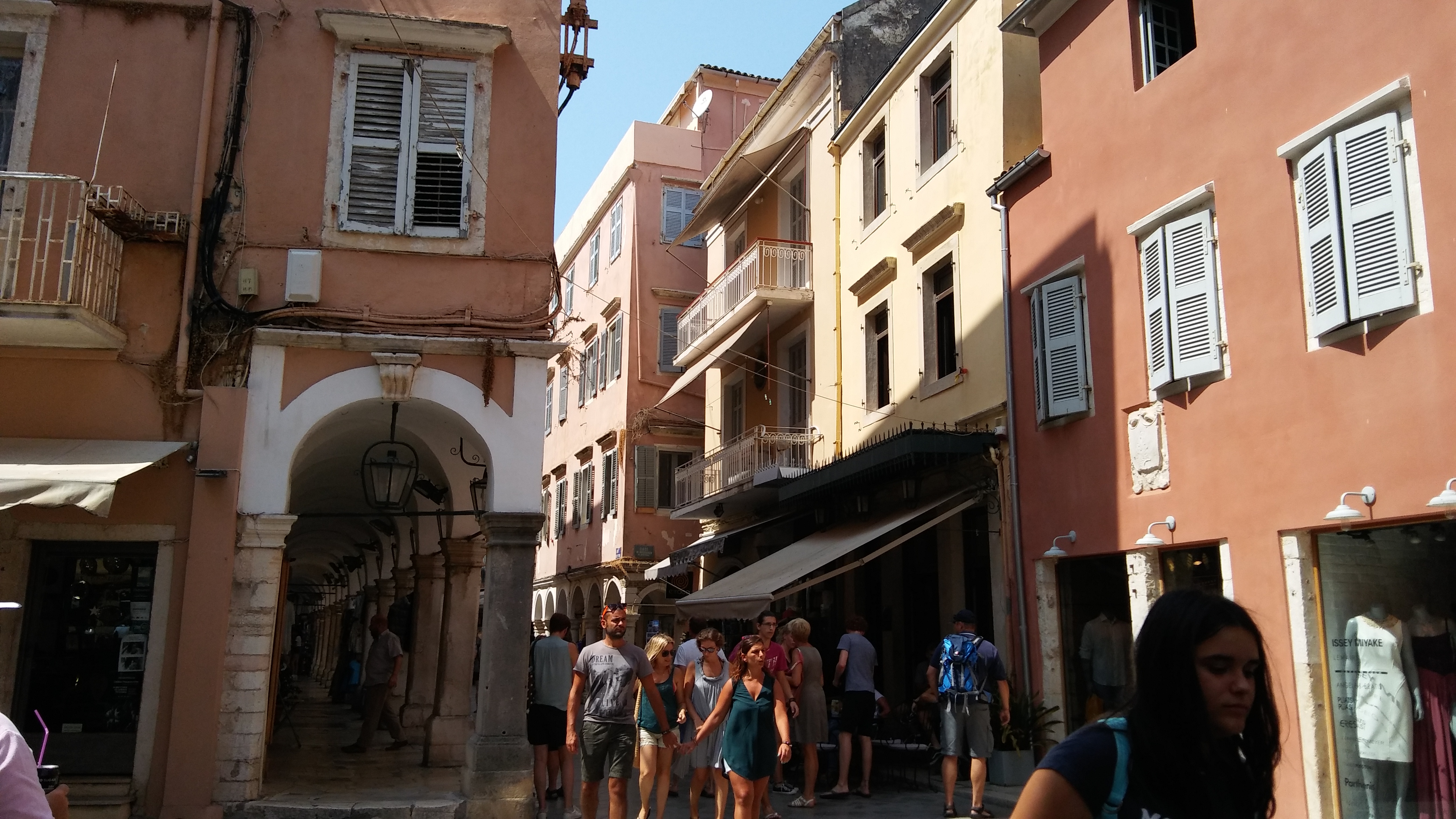
Going back on ourselves from Agion Panton street, we headed for the lane that runs past the back of St Spyridon’s church. From there, we hurried past the busy olive wood artifact shops to follow the sign to ‘The Venetian Well’. It was just a few seconds away from there, at the heart of the stunning old quarter of the town called Campielo with its picturesque lanes and antiquated Venetian edifices.
Next, we had to ask a local or two in order to find Ypapanti Church in the same area. My mother had told me that the house she was raised in stood right across from that church. I’d never seen either before and was getting excited as I followed the locals’ directions ambling along picturesque lanes and down old marble steps.
Finding the church proved easy enough, and it was quite close to the Venetian well.
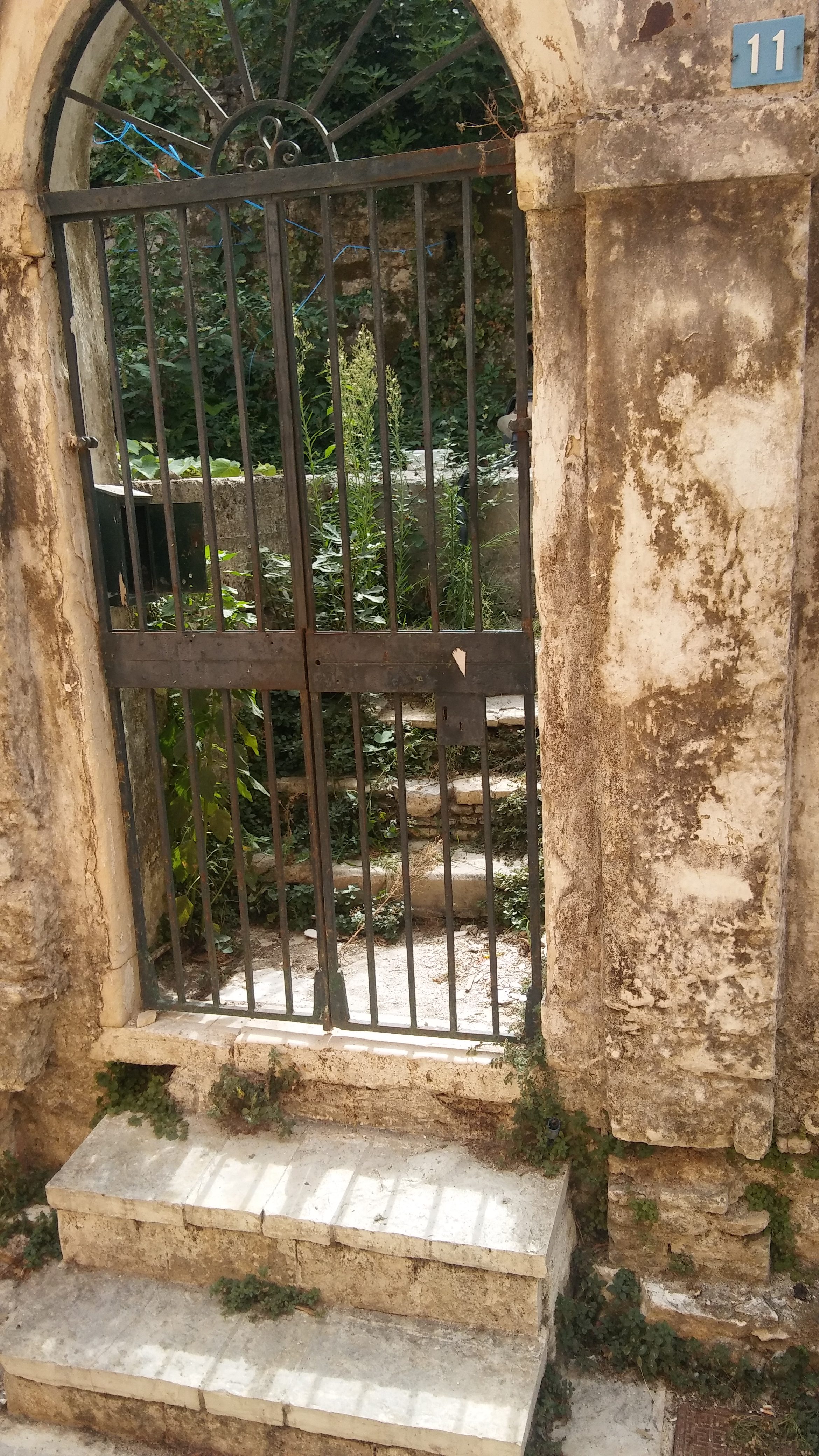
I identified the house easily. My mother had mentioned there were vaults and an external staircase, as well as steps behind the front gate. I took the third picture standing at the front door of Ypapanti Church.
From left to right, my mother (Ioanna), Gran Antigoni, and Aunt Stephania
Ioanna and Stephania
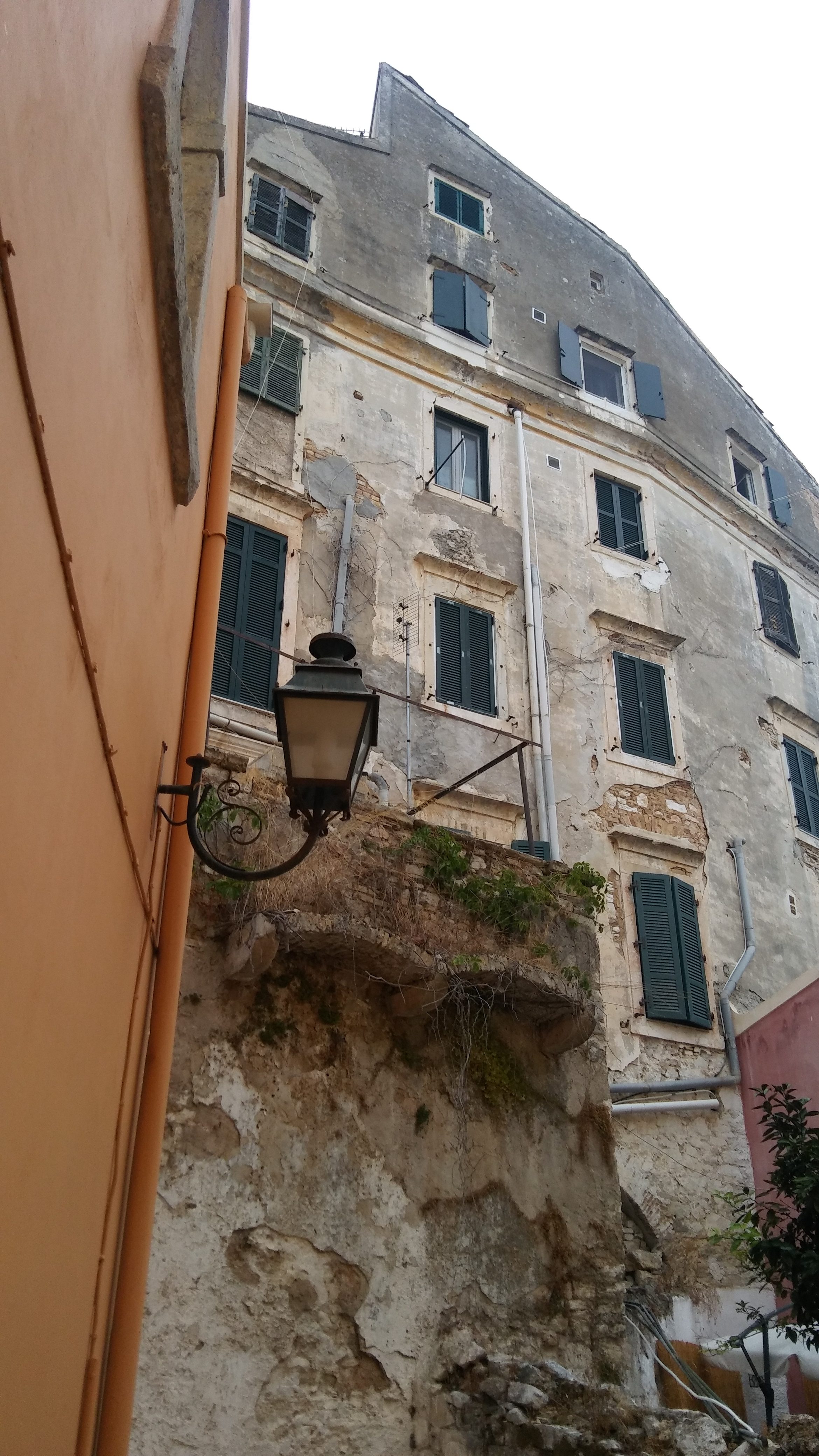
Moved by the forlorn spectacle and the realization that I was treading on the footsteps of loved ones from another era, I went on my way reduced to silence and, through the back of old hotels, quickly emerged onto this stunning square.
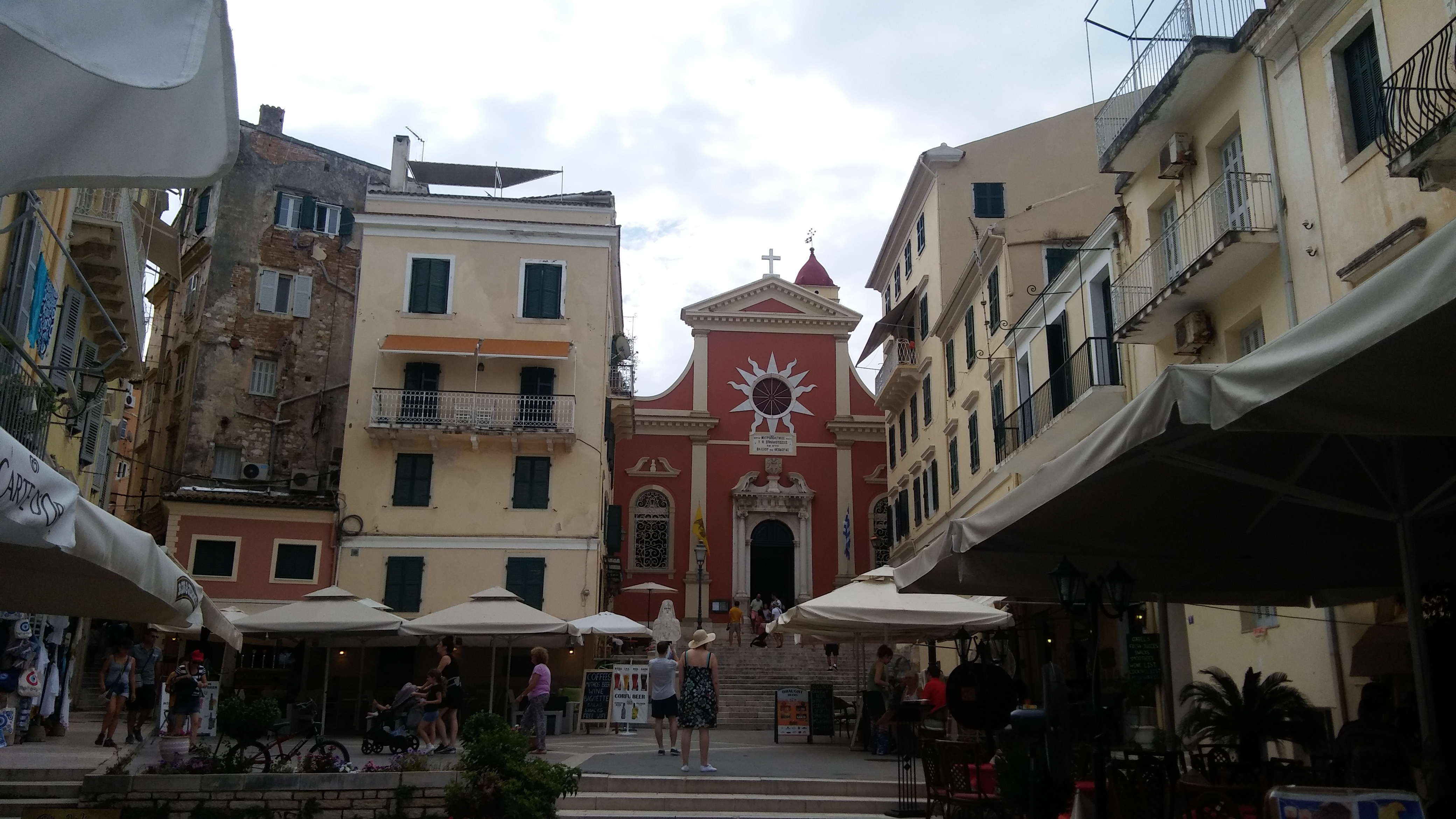
You may recognize the setting from one of the scenes from The Durrells. Supposedly having traveled to Athens, Lawrence Durrell was having a coffee at the square in said scene. In reality, this is the square of the Metropolitan Church of Corfu (or Mitropoli). It is the beautiful pink building in this photo.
By that time, Andy and I were parched from the long walk so we headed towards the old port. At the New Fortress we turned left into Spilia. This used to be the coach station of Corfu back in the 80s. I have myriads of fond memories from arriving here on the coach from Athens every summer with my sister. The moment we’d step off the ferry, we’d rush to Spilia to take our luggage off the coach and we’d be met by a sky full of starlings chirping overhead. These moments used to signal for me every time the beginning of a long blissful summer.
I hadn’t visited Spilia in years and was astounded by the change of the setting. The coach station building is now derelict, and the place where the coaches used to park side-by-side was now taken up by tables and chairs from a number of cafes. A monument of the Holocaust also stands there now, honoring the memory of the multitudes of Corfiot Jews that lost their lives under the Nazi regime. This place was apt for this awe-inspiring monument, seeing that to the left of the square, stretches out the Jewish quarter of the town that’s built around a Synanogue.
FACT: The name Spilia (cave, in Greek) is owed to a known cave in the vicinity. It is situated near the New Fortress that towers over this area.
After a much-earned stop at Spilia for ice cream, we took the lane past Marina’s Tavern (used heavily for lunch meetings by the Durrells production team, or so I heard!) to the Jewish quarter and the Synagogue. The road led us up ahead to Theotoki Street (where Hondos Center and Public are). From there, we turned right, back to Sarocco.
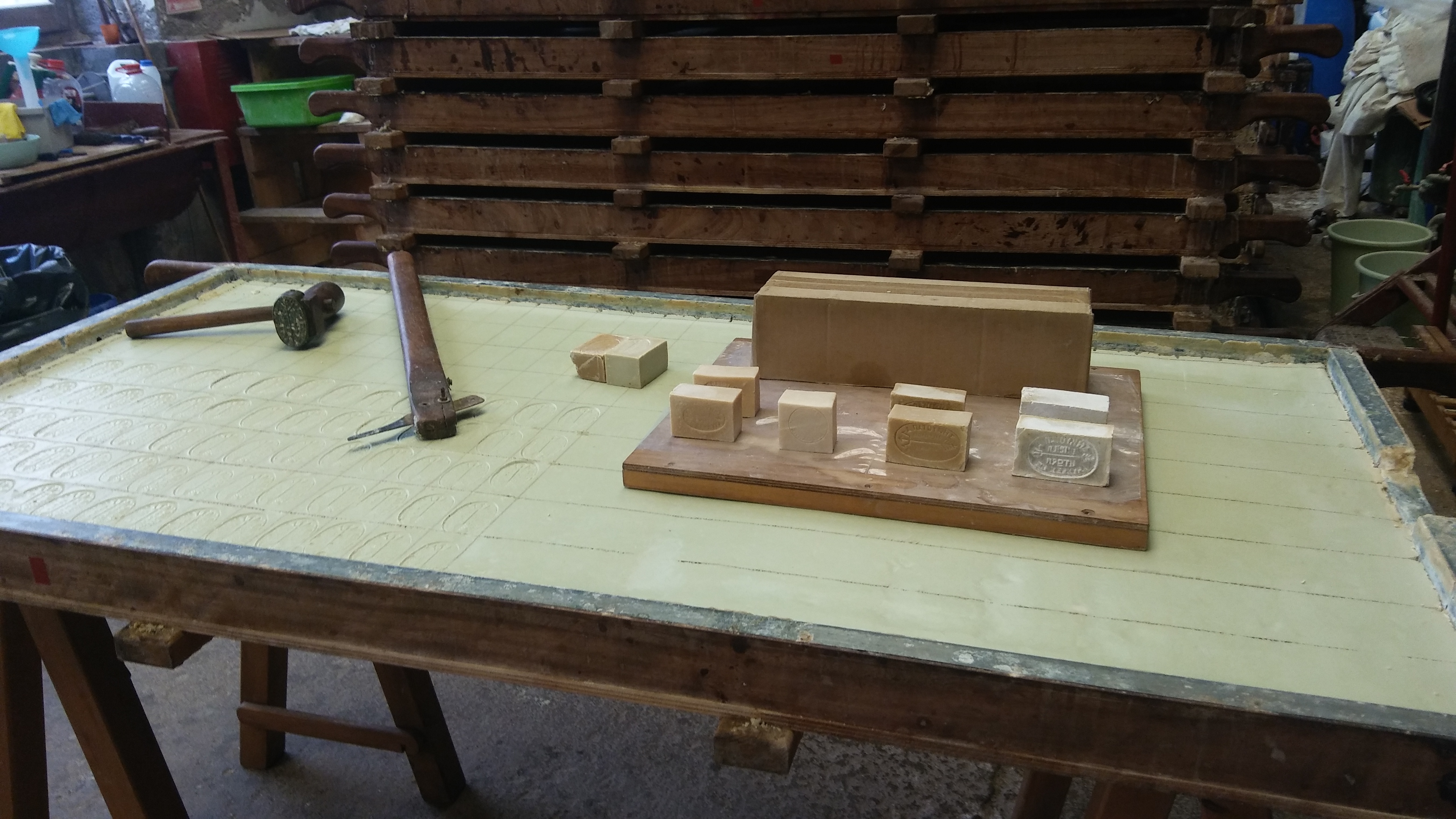
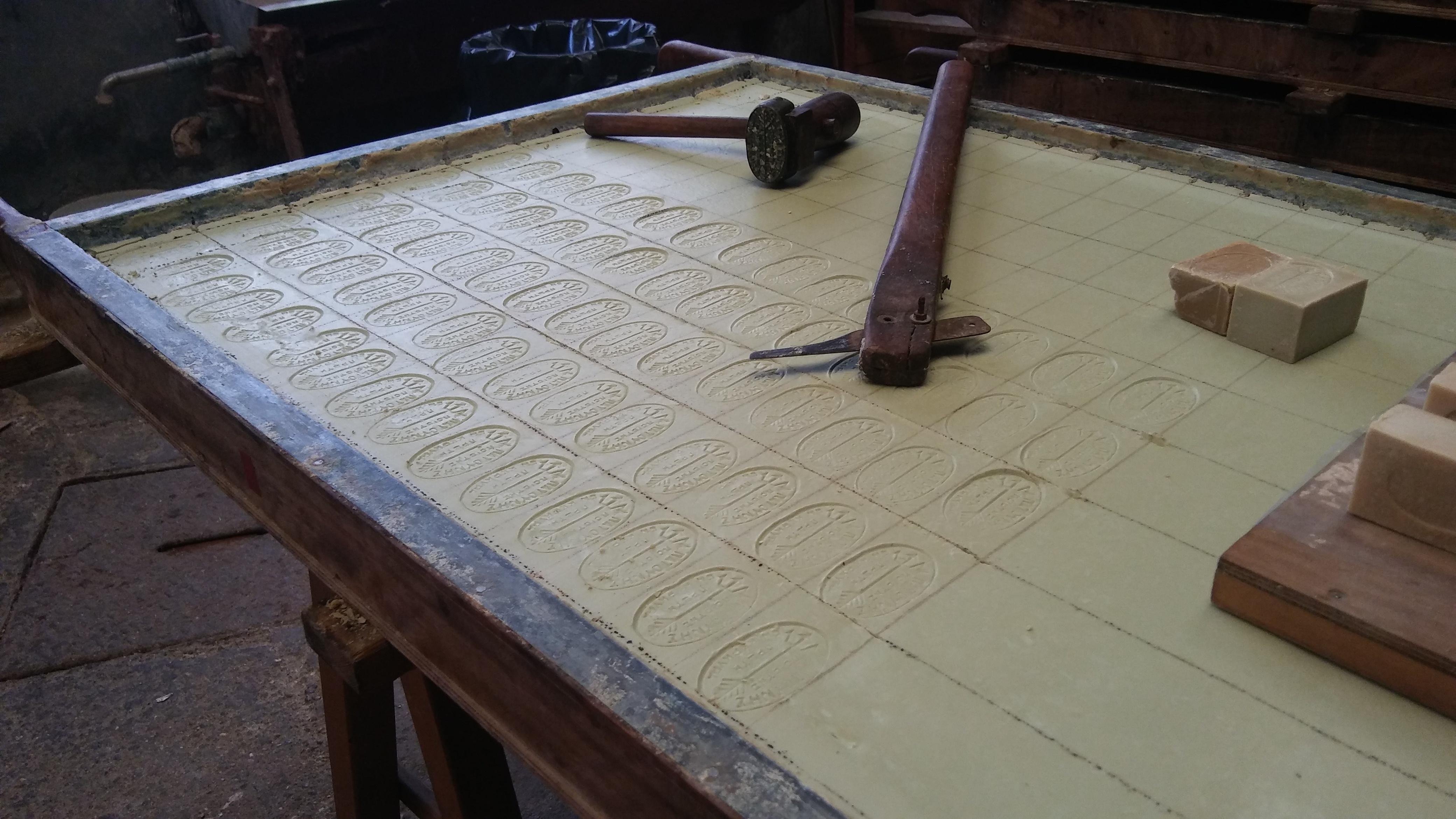
With Alexandras Avenue and the post office behind us, we headed up, along the right side of Sarocco square. Asking at a cafe for directions, we found the Patounis Soap Factory just a couple of doors away. I say ‘factory’ but its facade is only small with a typical shop front door so keep your eyes peeled.
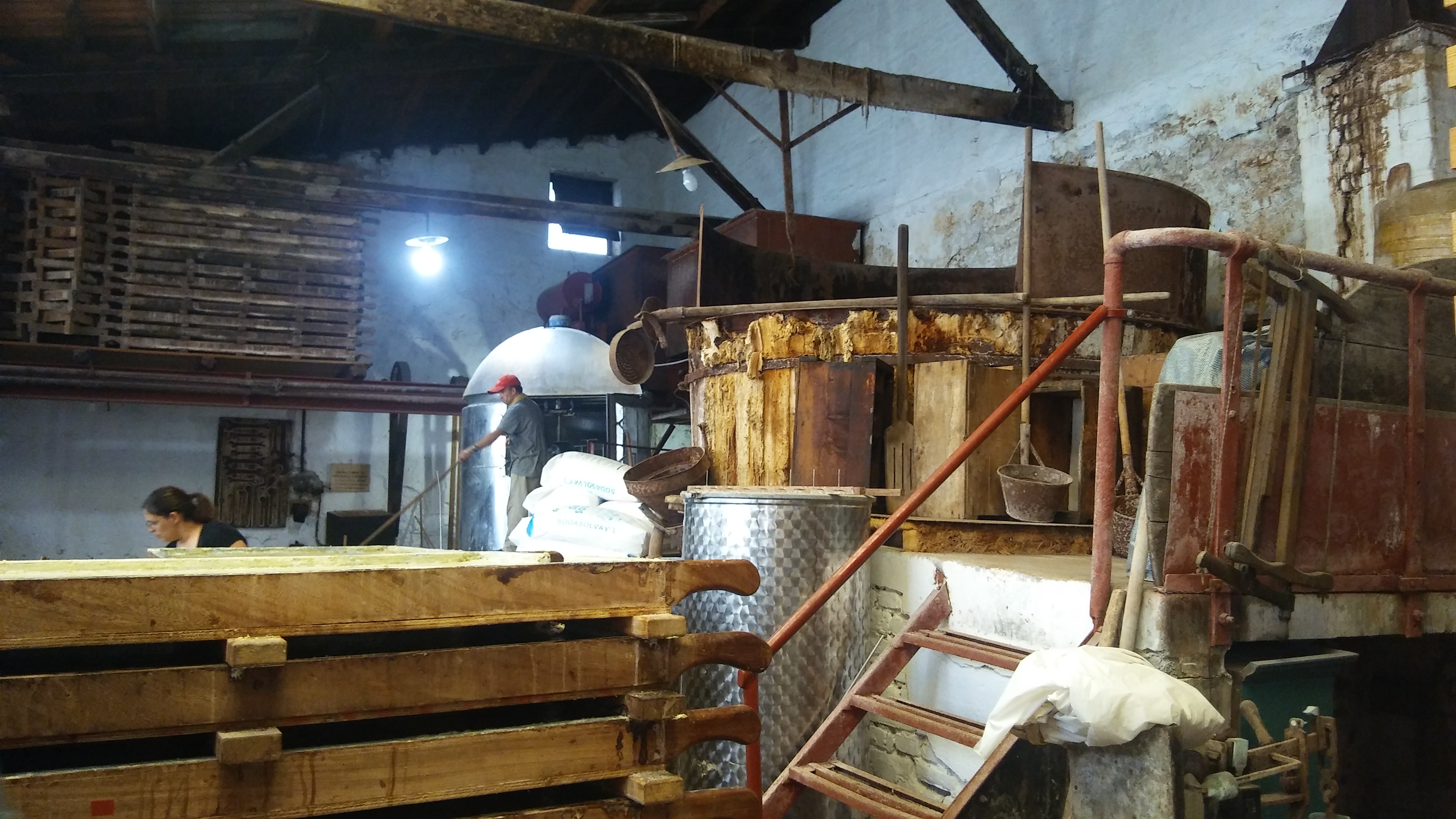
This traditional family business has operated in Corfu since 1891 and is still being run today by the descendants of the founder (5th generation), who use the same methods and tools as in the olden days. To our delight, they welcomed us warmly and offered us a tour of the place, during which a lovely young lady of the Patounis family gave us a proper presentation as well.
Luckily for us, we caught them on a production day. The factory’s main worker (who, they said, is a bit of a gem and quite irreplaceable to them) was working hard in the background as the very interesting presentation took place.
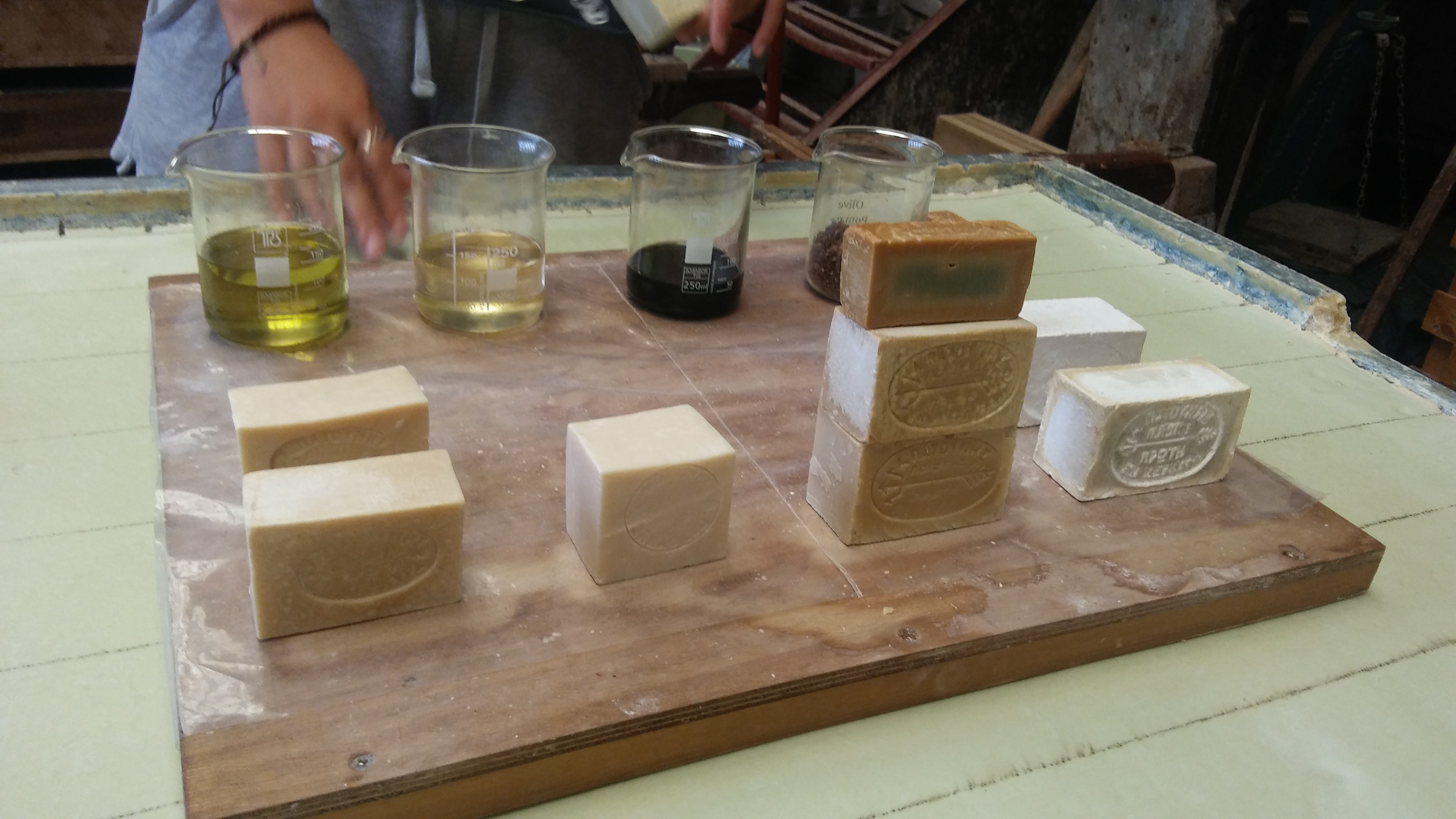
There is a shop at the front, where we chose some products to take home before leaving. The company produces 4 different types of soap. We learned there are locals who can’t do without them, and not just for washing themselves. Depending on the type, some are good for washing dishes, others for doing the laundry. All soaps are made with pure ingredients, including natural oils. For more info on the company and its products, go HERE.
I urge you to visit the Patounis Soap Factory at first opportunity, if only to sample the truly warm hospitality of its owners. And, if you have a book to spare, ideally short reads for kids or picture books, consider donating one for the small library that operates in the factory!
I hope you have enjoyed taking this walk with me around my favorite town. I highly recommend that you try it too, as it combines the bustle of market areas and touristy lanes with the charm of quiet, forlorn streets that have the power to take you back in time. And let us not forget the ample sea air you would be getting at Anemomylos and Garitsa Bay! Even if you follow my advice to walk to there and back from Sarroco (or Liston) and leave the rest for another time, I am sure you will consider your time well spent. As for how long it takes to visit Anemomylos from town, I’d say about 30-40 minutes either side at a comfortable speed.
Hey, before you go! Have you ever heard of Spitseriko, Corfu’s secret spice mix for pasta? Centuries ago, it was made and sold only by pharmacists in Corfu town. Find out all about it IN THIS POST and where you can get it today!
OOPPAAA! SIGN UP TO MY BIMONTHLY NEWSLETTER AND GET 3 BOOKS FROM ME AS A WELCOME GIFT! SEE BELOW FOR THIS OFFER!
YOU KNOW WHAT THEY SAY… SHARING IS CARING! Tweet this to spread some love:
3 FREE books for you! Sign up below to receive them instantly!
NEW! Clean Christmas romance. Single mother Cathy Roussos gave up on love long ago, and veterinarian Alex Rallis doesn’t believe in it, but one magical Christmas on a Santorini farm might just change everything…
A clean romantic suspense short read with an unreliable narrator that’ll keep you guessing! Vera is losing her mind over famous actor Yannnis Ksenos, except, she isn’t just a fan… Now, she plucks up the courage to ring his doorbell… Visit Amazon
Clean romance short read, FREE with Kindle Unlimited. It’ll transport you straight to Corfu to experience summer in an idyllic Greek seaside village. The story is inspired from the author’s love for Moraitika and its people. Now, also available as an audio book! Visit Amazon
Beach fun and sweet romance mixed with magic spells and bird shifters! The Raven Witch of Corfu is an original story that will rivet you with its unrelenting suspense. The final twist will blow your mind! Available in paperback , box set or 4 kindle episodes! Visit Amazon
August is a great time to visit Corfu! The 11th of the month is a day of celebration for the Corfiots seeing that they commemorate one of St Spyridon’s greatest miracles that took place in Corfu town in 1716.
(You can read all about this miracle, and a lot more on St Spyridon in this post.)
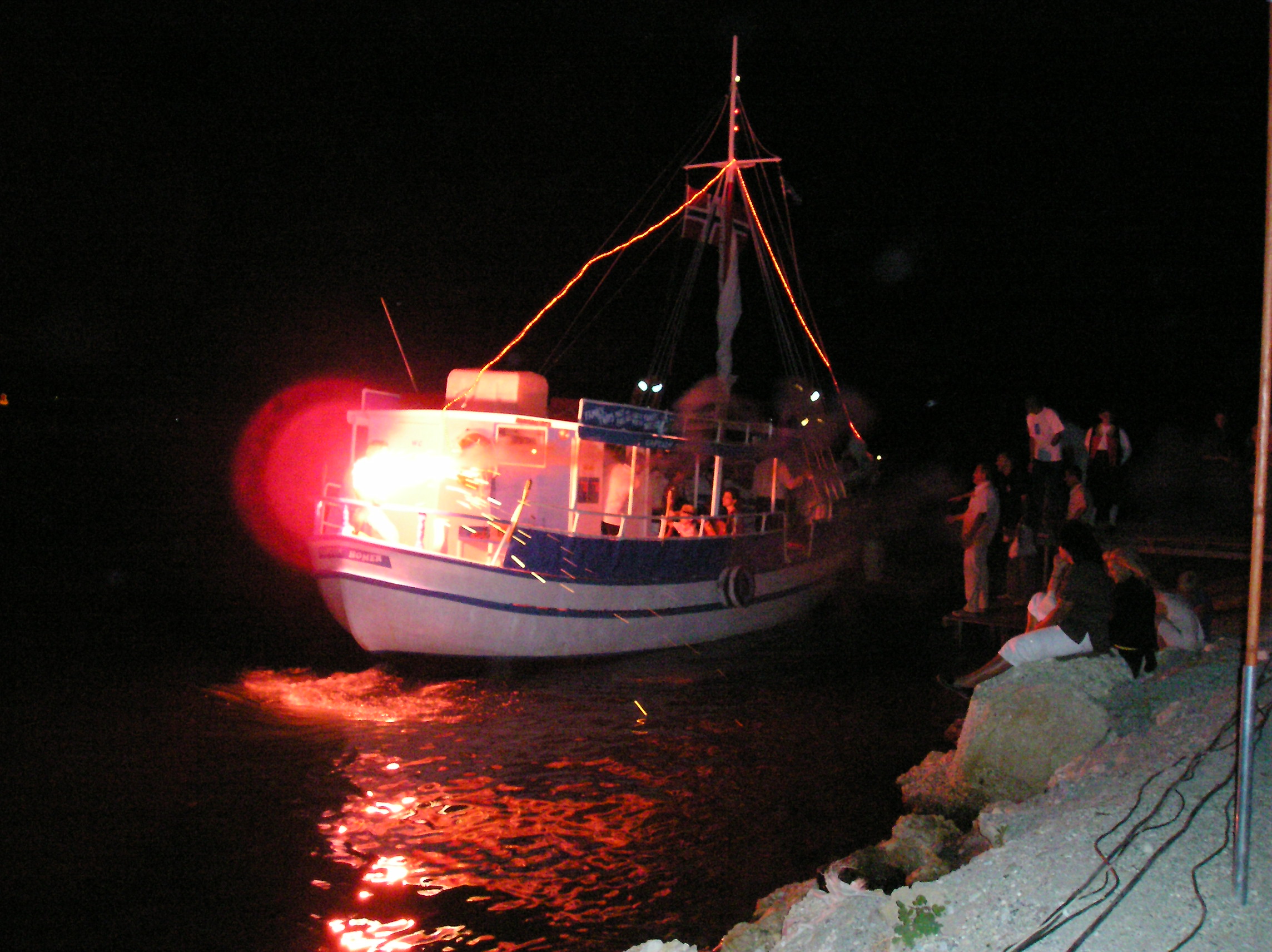
For a few days near August the 11th, the whole island celebrates with public concerts and varkarolas, the latter being whimsical night shows in the sea with illuminated boats and music. Go here to see pictures from a varkarola held at Faliraki (by the Old Venetian Fortress) in Corfu town. Spectacular stuff!
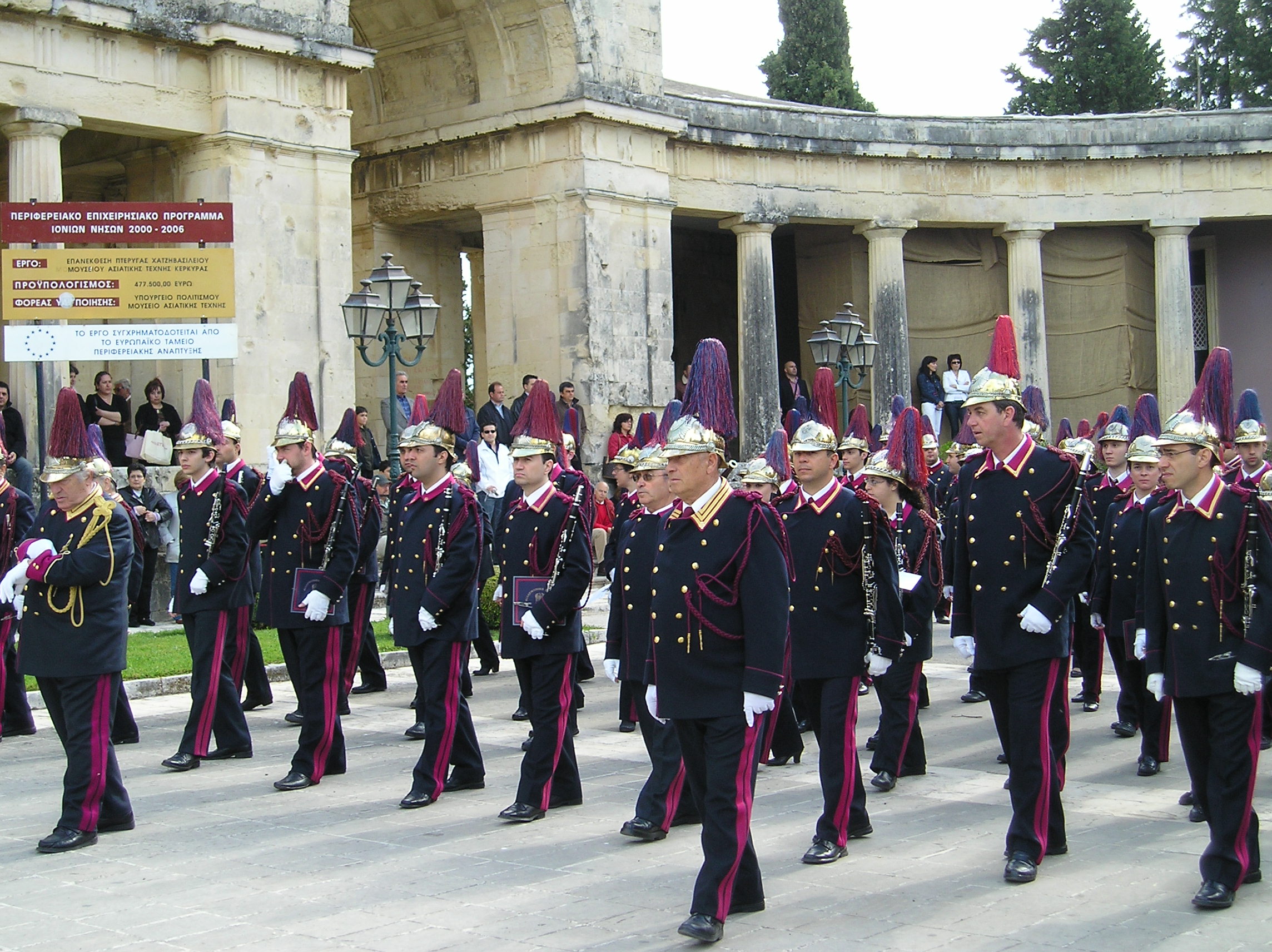
In the morning of August the 11th, there is a grand procession of St Spyridon in Corfu town, and for three consecutive nights the three greatest philharmonic orchestras of the island perform public concerts in the bandstand (Palco), which is in Spianada square near Liston (the bandstand is pictured in the first poster below).
In detail:
PUBLIC CONCERTS IN THE BANDSTAND IN PREVIOUS YEARS:
PERFORMED BY THE ORCHESTRAS, “MANTZAROS”, “KAPODISTRIAS” AND “THE OLD PHILARMONIC (PALIA)”.
I may be partial, but if I were you I wouldn’t miss the one played by “Mantzaros”, which traditionally does their concert in the eve of the big day. They play a piece that is very close to my heart and is quite special in its execution as well.
In one of the ancient Venetian buildings on the side of the square, at an open window, a trumpet player joins the orchestra from afar in what I can only describe as an absolutely magical musical conversation in the still of the night. I highly recommend you witness this at least once! My grandparents used to take me to these concerts in the 80s and 90s, and we always enjoyed this particular piece together.
All concerts start around 21:00-21:30.
VARKAROLAS AROUND THE ISLAND FROM PREVIOUS YEARS:
THEY TAKE PART ANNUALLY IN PETRITI, IN PALEOKASTRITSA AND, SOMETIMES, IN CORFU TOWN TOO – IN GARITSA AND UNDER THE OLD FORTRESS (AKA FALIRAKI).
YOU MAY WANT TO CHECK OUT LOCAL NEWS OUTLETS TO SEE WHERE ELSE THERE WILL BE VARKAROLAS THIS YEAR.
3 FREE books for you! Sign up below to receive them instantly!
NEW! Clean Christmas romance. Single mother Cathy Roussos gave up on love long ago, and veterinarian Alex Rallis doesn’t believe in it, but one magical Christmas on a Santorini farm might just change everything…
A clean romantic suspense short read with an unreliable narrator that’ll keep you guessing! Vera is losing her mind over famous actor Yannnis Ksenos, except, she isn’t just a fan… Now, she plucks up the courage to ring his doorbell… Visit Amazon
Clean romance short read, FREE with Kindle Unlimited. It’ll transport you straight to Corfu to experience summer in an idyllic Greek seaside village. The story is inspired from the author’s love for Moraitika and its people. Now, also available as an audio book! Visit Amazon
Beach fun and sweet romance mixed with magic spells and bird shifters! The Raven Witch of Corfu is an original story that will rivet you with its unrelenting suspense. The final twist will blow your mind! Available in paperback , box set or 4 kindle episodes! Visit Amazon
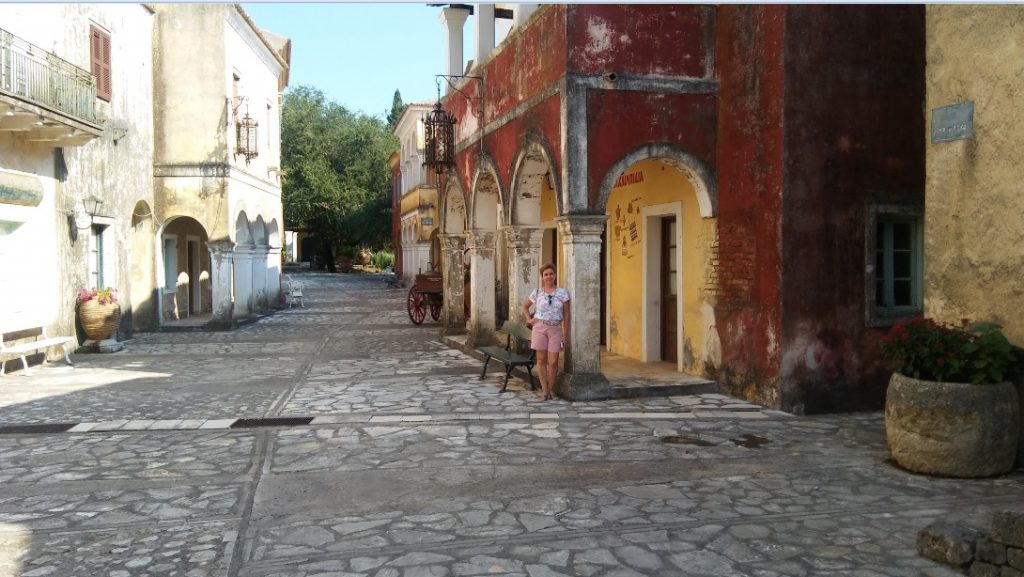
If you’re a fan of The Durrells of Corfu then I bet you’d love to visit Danilia Village where many outdoor scenes of the TV series have been filmed. Today, I’m going to share an awesome tip so you can visit it when you’re next on the island!
Before I go any further, though, to mention that you will find some great behind-the-scenes photos of the cast and my interviews with Kostas Krommydas who plays the super in The Durrells HERE and HERE.
You may also want to check out this nostalgic post where I share about my first visit to Danilia Village in 1985. You will also get to hear the details of its connection with James Bond!
DANILIA VILLAGE IS OPEN TO THE PUBLIC!
Danilia Village was created by the Bouas family. In the 1980s, it became a major tourist attraction on the island. People came in droves to see the displays inside its charming buildings that brought an earlier era on the island and old traditional professions back to life. The family organised Greek dinners for coachfuls of tourists too, with music and dancing, and that made it extremely popular. It was then closed down for many years, once the tourism boom of the 1980s was over. Finally, in 2000, the family sold Danilia Village to the Greek hotel chain, Grecotel. After that, and for quite some time, Danilia Village was accessible only to the guests of the Corfu Imperial Grecotel Resort.
But this changed in the recent years, and since the filming of The Durrells! So now, further to popular demand, it is open to the public for a visit again. The entry fee is 10 euros and it can be redeemed at the village cafe!
Although the helpful staff there do not provide a tour, they do offer some general information, and then the visitor is allowed to roam about at their leisure and explore.
That is exactly what I did and I highly recommend it!
Danilia is open in the summer season – April to October. I urge you to phone before your visit at #30 26610 91345 to double check the gates are open (UPDATE in July 2025: the entry fee recently increased to 20 euro per person, but visitors tell me you get a free drink, a toasted sandwich, and icecream at the cafe! And all that, on top of the experience of a walk about in a location of high cinematographical value. Some may complain, but it sounds like a good deal to me, since, over time, I’ve paid more at cafes and museums that offered much less value than that!)
UPDATE! MORE SIGHTSEEING FOR THE DURRELLS ENTHUSIASTS!
In the summer of 2020, I visited the area of the film house in Kontokali and swam right below it. It was an enthralling experience! The tour was done on a boat called Dimitra J. Not sure if they are still doing it but it’s worth enquiring with them. The boat departs from Messonghi river. That tour also took us to Kalami Bay, where Lawrence Durrell once lived. Here are my photographs from that amazing day, and here’s a short video of me before the film house. Enjoy!
Get Effrosyni’s FREE books with your signup to her bimonthly newsletter! Fun news from her life in Greece and a load of FREE kindle books in every issue! http://bit.ly/2yA74No
Beach fun and sweet romance mixed with magic spells and bird shifters… The Raven Witch of Corfu is an original story that will rivet you with its unrelenting suspense. The final twist will blow your mind!
Bouas Danilia village, where The Durrells of Corfu often film their outdoor scenes, is not a real village. It was built as an open-air museum back in the 1970s.
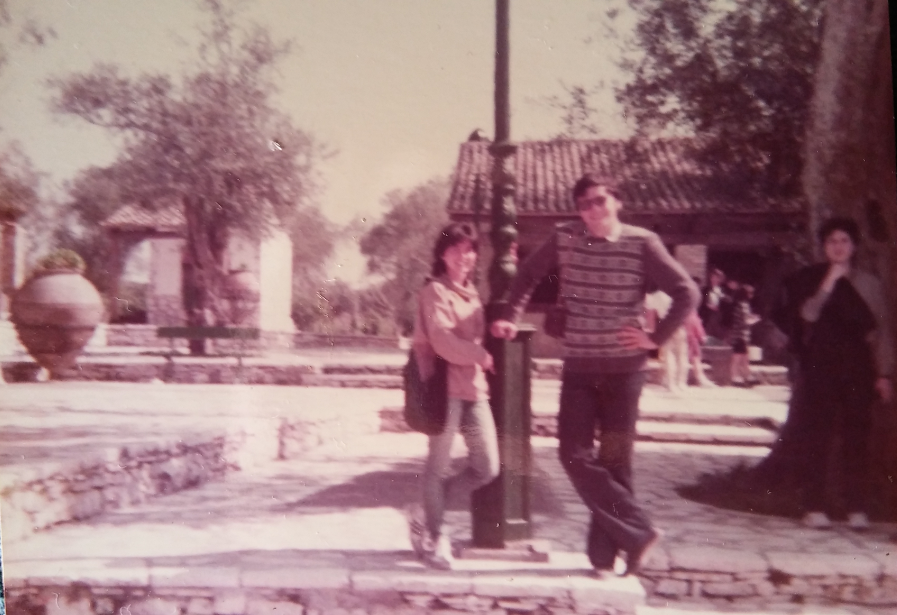
In this picture, I am photographed there (on the left) with school friends in April 1985 during an excursion organized by my school in Athens. Typically in Greece, the pupils in the final class of high school get to vote about where they will get to spend the ‘pentaimeri’ i.e. their eagerly awaited five-day excursion away from home. Being the Greek equivalent of a ‘prom night’ in a way, it is the Greek 18-year-olds’ last chance to enjoy carefree time together with their schoolmates before inevitably taking their separate ways in life.
Back then, the usual choices across all schools in Athens were Rhodes, Corfu or Crete as the destination. The choices in my school were narrowed down to either Corfu or Rhodes. Personally, I was rooting for Rhodes as back then I hadn’t been there yet, but Corfu won. For me, it was still exciting, of course, as I knew I’d be visiting new places around Corfu that I hadn’t seen till then.
As the ferry approached the dock of the old port in Corfu town, I made out on there the shape of a man that seemed familiar. As I soon suspected, it was indeed my grandfather Spyros, waiting to meet me, having arrived all the way from Moraitika on the bus. It was a wonderful surprise! He had even brought a big, round cake for me to share with my friends, a present from my grandmother, Antigoni.
(Those of you who have read The Ebb, that’s full of so many truths about my grandparents, are probably chuckling right now. Yes, that was my grandmother all over).
And with this warm welcome to Corfu from my grandparents, my Corfu school trip began…
Indeed, as expected, during those precious five days we visited a couple of places I hadn’t seen before, including Paleokastritsa’s lovely monastery on the hill, and the traditional village of Bouas in Danilia that I mentioned earlier.
We were the only visitors walking its streets that sunny afternoon and it seemed eerily quiet. It had only been in operation for just a couple of years and hadn’t yet thrown its doors wide open to the multitudes of tourists who flocked to dine, dance and party to the sound of bouzouki songs from all over the island, especially in the 90s.
I remember walking down a main road, peering through the wide open front doors of ‘shops’ and ‘workshops’… A bakery, a blackmith’s… Antique tools and other items lay before the doors… a loom, a spindle, a pitchfork… ceramic pots, sacks, scattered hay…
And even though many of the artifacts on display looked suitably old, the buildings and the whole set up seemed brand new, and so pristine in fact that they didn’t do much to create the illusion of a genuine, liveable village. As a result, I wasn’t particularly impressed by it, which is probably the reason I never took any pictures except for the one above. But now, in retrospect, I regret it, and can appreciate the tremendous work and love that went into this place. It was a monumental feat of the Bouas brothers and, clearly, a lifelong dream too to create this special place from the ground up.
That visit in 1985 was the only one I ever made to the village. Nowadays, thirty plus years later, the humid Corfu winters and the relentless summer sun have done their work to give it the genuine, decrepit look that makes it an enchanting place to be in and, thus, a gem for the film and TV world too.
It’s no wonder that the popular TV series, The Durrells of Corfu, uses it largely these days for the filming of its outdoor scenes. With its decaying walls and picturesque facades, I expect it’s child’s play for the professionals of the set to give every scene the nostalgic 1930s look that we’ve all come to cherish in the series.
Sadly, for most of us, it’s only through the show that we can now admire Bouas Danilia village as it is no longer open to the public. Its creators and owners, the Bouas brothers, have now passed away. Since 2000, the village ownership has been transferred to the Daskalantonakis family of Grecotel.
The Corfu Imperial Grecotel Resort is situated near Bouas Danilia village. Nowadays, guided tours to the village, grand dinners and various other events are offered exclusively to the guests of the resort.
Did you know? Even James Bond has walked the streets of Bouas Danilia village! A Greek wedding scene was filmed there for ‘For Your Eyes Only’.
I highly recommend you check out the first link below to see pictures of Danilia village and more on the filming for the James Bond movie.
If you’re not familiar with The Durrells, the second link below includes a short trailer for your enjoyment, as well as more info on the series.
The Durrells of Corfu series is broadcasted on ITV in the UK, on PBS in the USA and on OTE’s subscription channel in Greece.
I recently interviewed one of the Greek actors who play in series three of The Durrells. Scroll down for details!
3 FREE books for you! Sign up below to receive them instantly!
NEW! Clean Christmas romance. Single mother Cathy Roussos gave up on love long ago, and veterinarian Alex Rallis doesn’t believe in it, but one magical Christmas on a Santorini farm might just change everything…
A clean romantic suspense short read with an unreliable narrator that’ll keep you guessing! Vera is losing her mind over famous actor Yannnis Ksenos, except, she isn’t just a fan… Now, she plucks up the courage to ring his doorbell… Visit Amazon
Clean romance short read, FREE with Kindle Unlimited. It’ll transport you straight to Corfu to experience summer in an idyllic Greek seaside village. The story is inspired from the author’s love for Moraitika and its people. Now, also available as an audio book! Visit Amazon
Beach fun and sweet romance mixed with magic spells and bird shifters! The Raven Witch of Corfu is an original story that will rivet you with its unrelenting suspense. The final twist will blow your mind! Available in paperback , box set or 4 kindle episodes! Visit Amazon
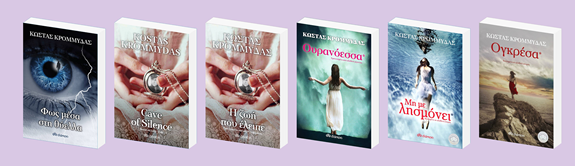
Wuhoo! Today I have a wonderful treat for all you raving fans of The Durrells of Corfu! There I was the other day, inviting wonderful Greek writer and actor Kostas Krommydas to my blog for an interview, and when he brought his photos over for our chat I couldn’t believe my eyes; turns out that Kostas plays in the eagerly awaited, third series of The Durrells! Join me today as I marvel through the behind-the-scenes photos he has brought, and let’s hear all about his fabulous novels too. Check out these fine specimens:
Mystery romance
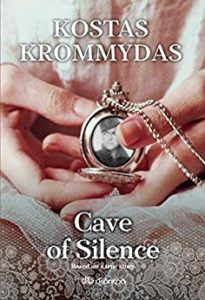
A tourist is found dead in Istanbul, the victim of what appears to be a ritual killing. An elderly man is murdered in the same manner, in his house by Lake Como. The third murder is the most perplexing of all: the priest of a small, isolated Greek island lies dead in the sanctuary, his body ritualistically mutilated.
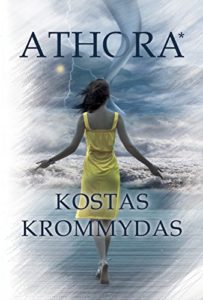
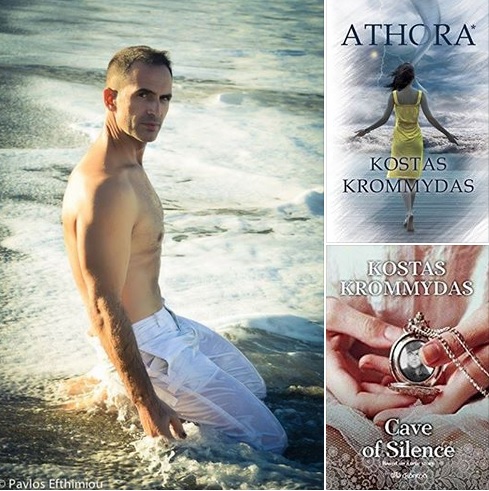
Fotini Meliou is visiting her family on the island of Athora for a few days, before starting a new life in the US. She is looking forward to a brief respite and, perhaps, becoming better acquainted with the seductive Gabriel, whom she has just met. It is not the summer vacation she expects it to be. A massive weather bomb is gathering over the Aegean, threatening to unleash the most violent weather the area has ever seen…
Dimitri, a young actor, is enjoying the lucky break of his life—a part in an international production shot on an idyllic Greek island and a romance with Anita, his beautiful co-star. When his uncle dies, he has one last wish: that Dimitri scatters his ashes on the island of his birthplace. At first, Dimitri welcomes this opportunity to shed some light on his family’s history—a history clouded in secrecy. But why does his mother beg him to hide his identity once there?
Dimitri discovers that the past casts long shadows onto the present when his visit sparks a chain of events that gradually reveal the island’s dark secrets…
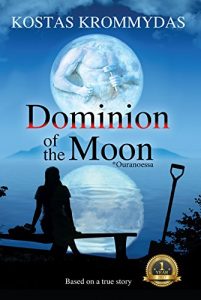
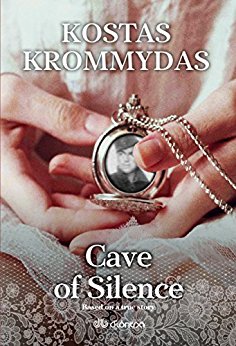
At the present time, two novels by Kostas Krommydas are available in English on Amazon. The rest of them will follow later this year.
Hello Kostas, and welcome to my blog!
Great to be here, Fros. Thank you for inviting me!
You know, I love Greek historical fiction, and Cave of Silence sounds fantastic… Actually, I downloaded it as soon as I read the blurb and look forward to reading it! What inspired you to write this intriguing story?
Cave of silence is based on a true story which took place during the Second World War. I heard it many years ago, way before I started writing novels, from our family lawyer. I told him then that I would write this story one day. He didn’t believe me.
What was the first thing you ever wrote and how old were you then?
I used to write poems when I was in high school, to let the girls know my feelings. It didn’t go that great, and I thought I wasn’t good at it. Little did I know then that a few years later I would be considered in Greece as the male author with the best insight in women’s psychosynthesis!
Wow, that’s amazing! What other writing have you done? Anything else published?
“Cave of Silence” was my first book translated into English and “Athora” has just been released as well. However, I have written four more bestselling novels in Greek, which have been traditionally published by Dioptra Publishing, one of the largest publishing houses of Greece. My next book in Greek is due in the end of April. All of my novels will be published in English in due course as well.
Other than a writer, you are also an actor. I’ve had the pleasure to see you in a couple of wonderful Greek TV series. What is the best/most fun acting job you’ve had so far, be it on TV or the theatre?
For the past five years, I have been committed to my writing. However, every now and then, I’ll pick an acting job that I like the sound of, just to keep active in that field. My last job was in the hit TV series “The Durrells”.
You’re joking!
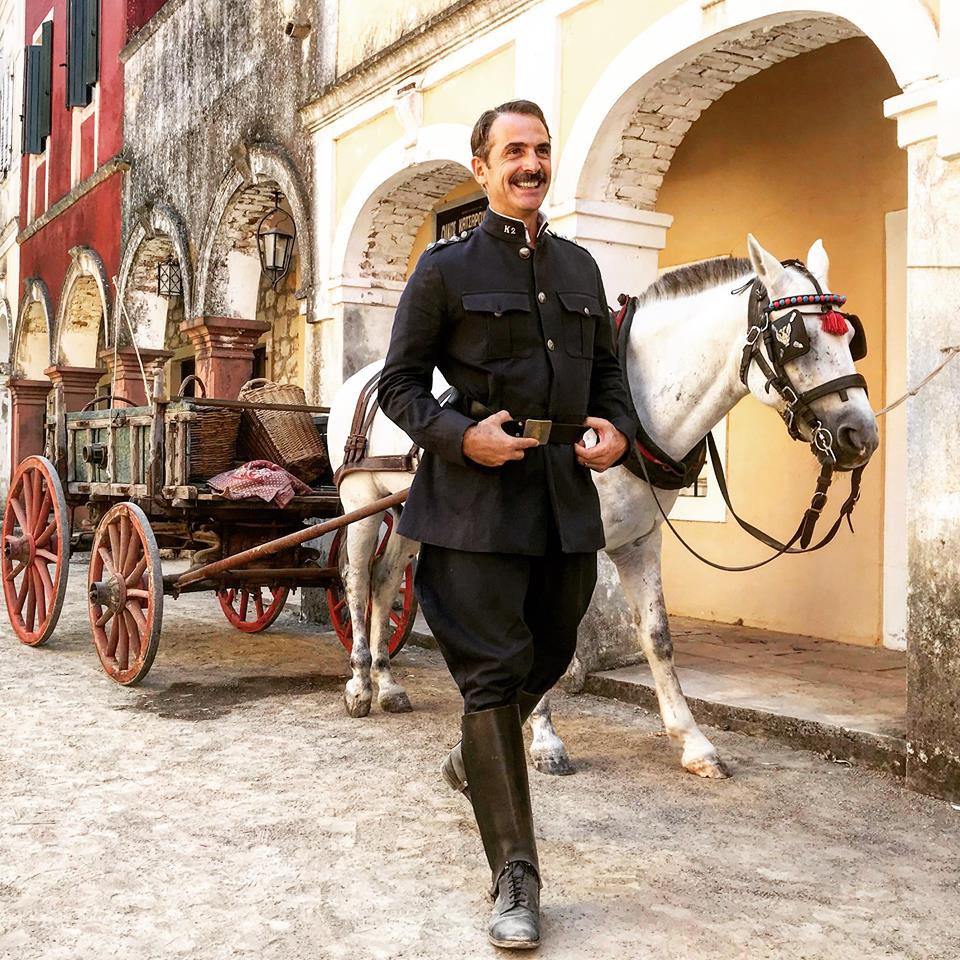
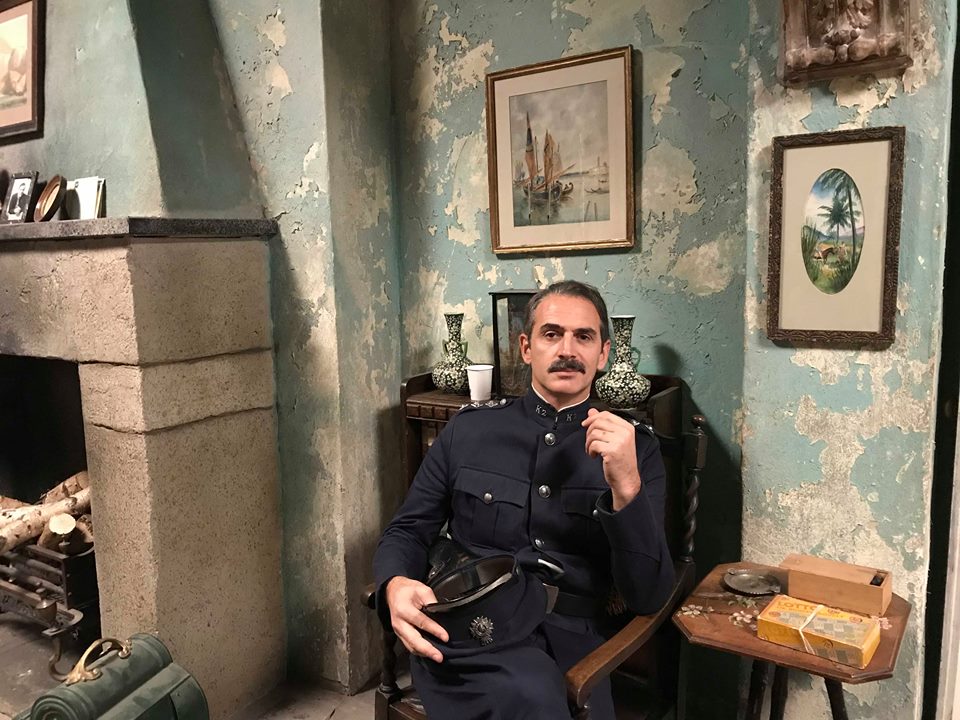
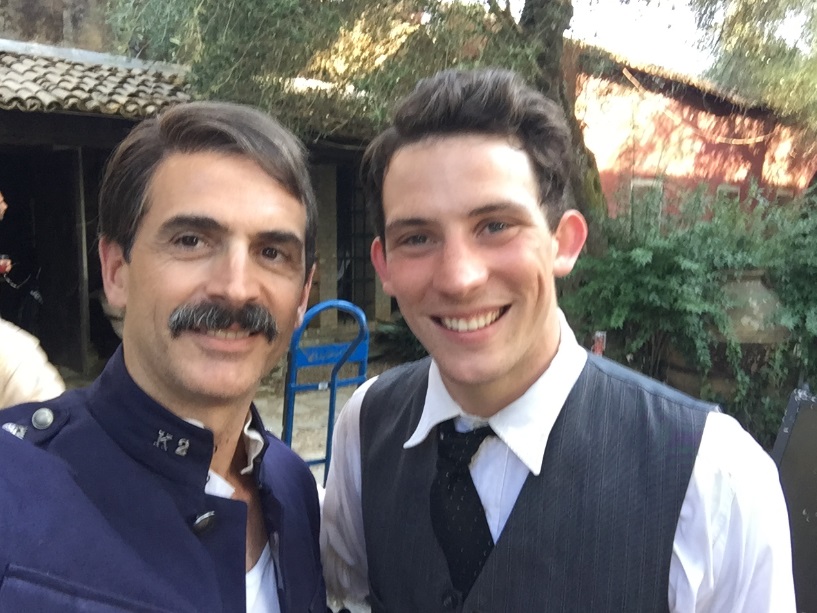
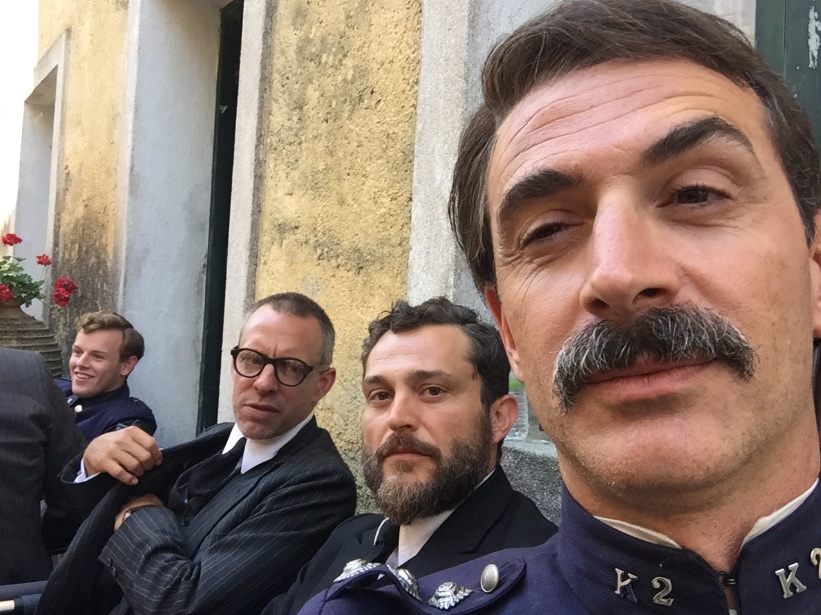
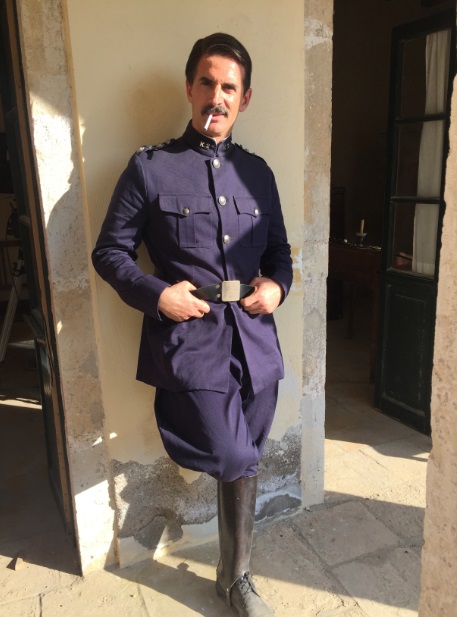
No I am not… *chortles* Here’s proof!
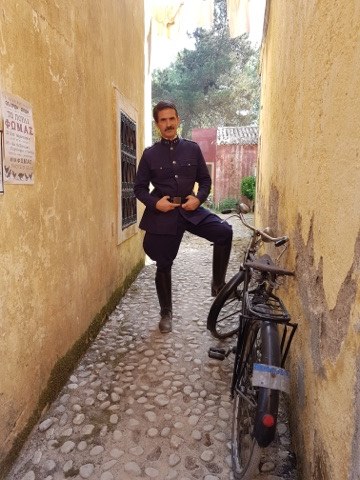
Oh my! Many of my readers love the show as much as I do! You’re in uniform, I see. What role did you have in the series?
I played the role of a police superintendent during the early 1930’s. It was a fantastic experience because the level of professionalism of the entire production was something very new to me. I felt respected as an actor and truly enjoyed every minute of it!
Would you like to tell us a little about the locations where the filming took place? How much work was involved in creating that nostalgic 1930s look that viewers love so much about the series? I imagine it must be easy in Corfu, given its timeless charm, to have this result on film with very little trouble indeed.
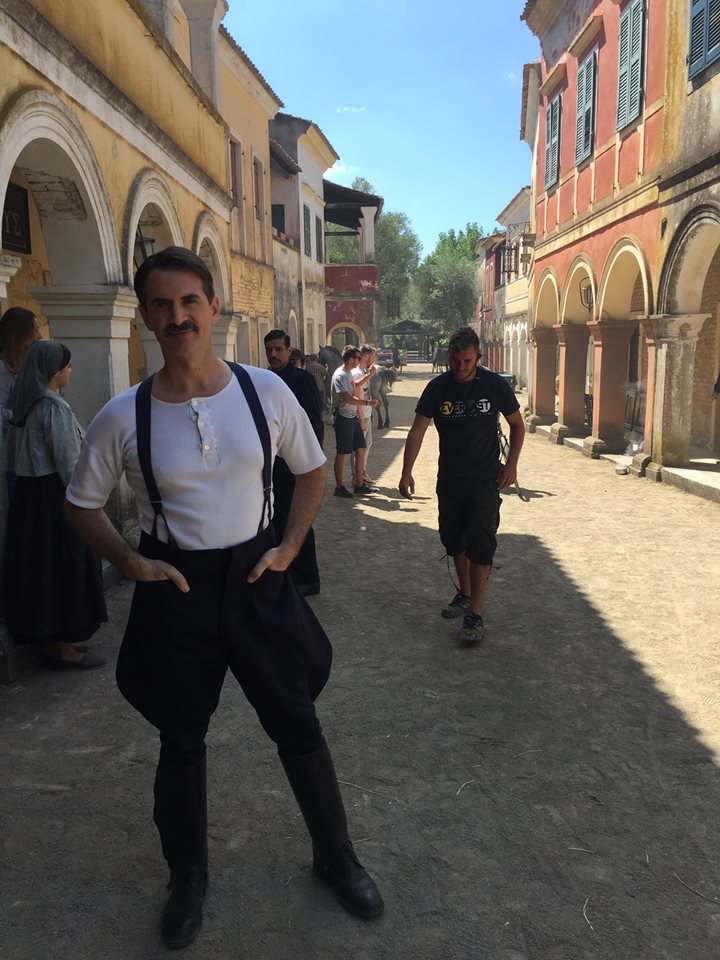
The scenes I did were filmed mainly in Corfu. I also traveled to London for a costume fitting. As you said, it is easy in Corfu to find suitable locations for a story set in a bygone era. Filming mainly took place in Danilia, in Bouas village.
Oh, that makes sense! Now I see why the locations look so authentic…
Yes, it’s an amazing place, quite magical. The buildings, and the whole set up seem so real…they truly make one feel transported back in time. It’s the perfect location for events, and for filming period stories.
Note: Bouas Danilia Village was constructed in the 1970s by the Bouas family as a tourist attraction to showcase the traditional way of living on the island in the old days. Today, it is no longer open to the public; having been acquired by Grecotel it is now exclusively open to the guests of the nearby Corfu Imperial Grecotel Resort. For more information on Bouas Danilia Village, see this post.
What was your experience from playing in The Durrells? Did it feel any different to work with British actors for a change?
My work experience alongside the British cast has been exquisite. Everyone’s professionalism and the way they do things in general, are exemplary. The whole work environment has been very pleasant and everyone seemed to receive an equal measure of respect for their contribution to the whole. Personally, Callum Woodhouse, who plays Leslie, and I developed a special bond, seeing that I did most of my scenes with him. I feel compelled to mention Keeley Hawes too. My scenes with ‘Mrs Durrell’ stand out in my memory as some of the best scenes I’ve done in the series. I am astounded by her professionalism and talent. She is a superb actress and it’s been a great pleasure to work with her.
Were there any entertaining incidents that you could share with us? Did anything go wrong that maybe delayed filming at any point?
Yes, entertaining incidents while filming The Durrells are very common because of the animals that appear largely in the series. During filming my own scenes we had no general problems. That said, donkeys were always within earshot, and we’d often hear one braying loudly half way through a scene, which meant we had to do it all over again (*laughs*)
Were there any adoring fans present when you filmed in public places? How did the people behave? I hope you had no problems or intrusions…
No, no problems at all. People seemed generally impressed when they spotted us shooting scenes in public places. A few approached me from time to time and asked to be photographed with me. I was also invited to appear on local TV for an interview, which was nice.
Thank you, Kostas, for sharing behind-the-scene information and photographs from the Durrells. I am sure the big fans of the series among my readers will love it all as much as I did. Tell us, are there any hobbies or interests that you enjoy in your spare time?
I love sports! I play tennis, I go skiing and also play football with my friends. I enjoy the theater too, and spend a lot of time watching plays in Greece, London and New York.
Do you have any advice for other authors?
Don’t stop chasing your dream and don’t let anyone convince you that you are not good enough. NOW is the best time to make your dreams come true.
That’s so true… Do you have any pets?
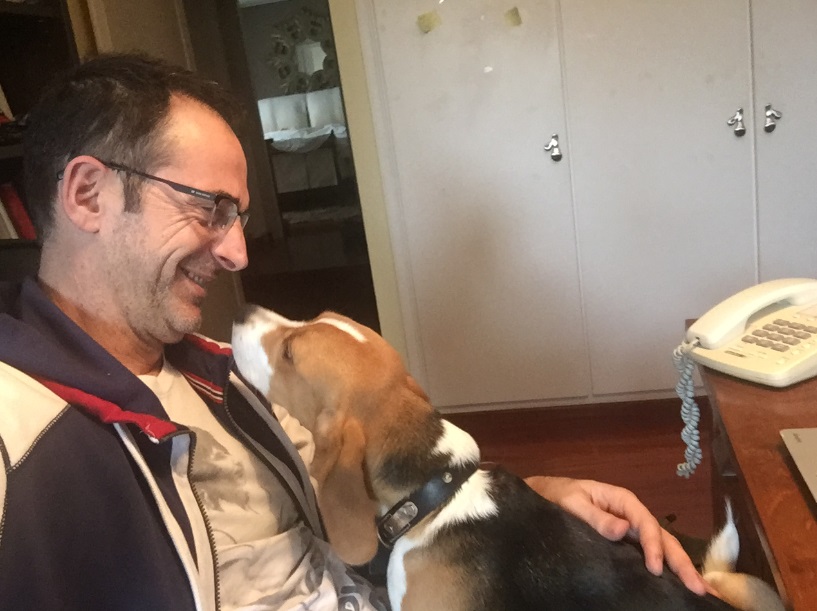
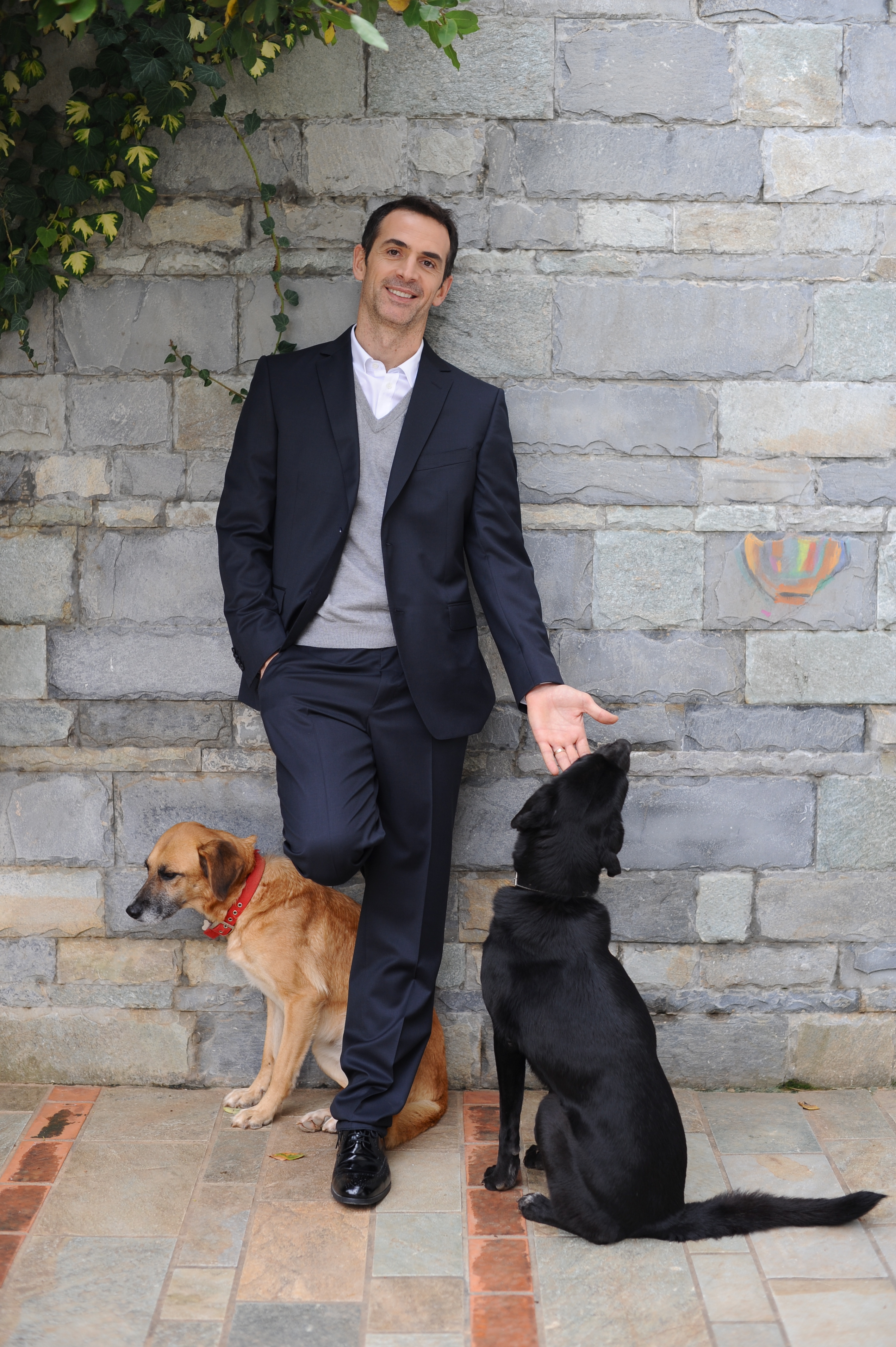
I love dogs. My wife, daughter and I always wind up having stray dogs in our house. We now have a beagle named Cora, and we adore her. She is incredibly smart and cute and is a proper member of our family. Here is also an older photo of me with Naomi and Giselle. Sadly, they’ve both passed away now.
Beautiful little souls. I’ve been there, Kostas, many of my readers too. Enjoy the multitude of loving memories I’m sure they’ve left you with.
Oh they surely have. Thank you, Fros.
Would you describe your workstation for us? Are there any favorite objects you have there for inspiration?
I have a wall of pictures in my office that I draw inspiration from when I write. The pictures are of various characters that I’ve played throughout my acting career. Basically, it’s a mood board with notes of how these people look, their characteristics and what makes them tick. This huge board is very important, because it’s a road map that helps me stay on track while I tell a story.
All authors to some degree find it hard at times to sit down and write. Discipline is required to set aside the time, to battle against inner fear/anxiety, and to block out distractions in order to settle into a regular writing routine. What is your experience with all that? And if you have any tips, resources, or insights for other authors who struggle to put their butt on the chair and write, please share.
Sit down and write! It is pretty much as simple as stepping into your office. As Picasso said: “Inspiration exists, but it has to find you working.” At first, you may have to edit out a lot of your writing, but at some point inspiration kicks in and something wonderful begins to happen.
Do you listen to music while you write and, if so, what kind?
Yes! Each book has a musical theme, and I like to listen to something appropriate while I write. All the senses are important to write a book, and listening to the right music is an integral part of my process.
If you could have one superpower what would it be?
To be able to travel through time.
Oh, that would be awesome, I agree (*chuckles*). Any other photos you wish to share?
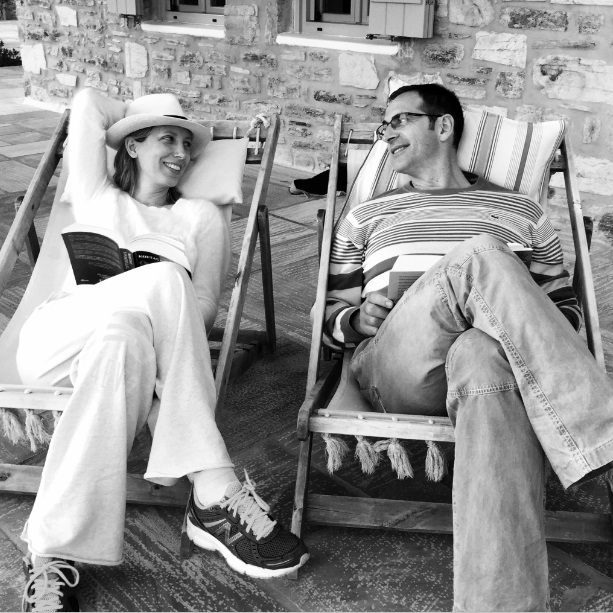
Just one more; a photo of my wife, Marina Gioti, and me.
What a beautiful black-and-white photo… By the way, I look forward to my interview with Marina next month. Her children’s books look amazing, and so do her own illustrations in them… You’re both so talented, and so successful in Greece, I expect English-speaking readers will be glad to discover you both soon as well, now that you have decided to expand your reach beyond the Greek borders. Thank you for your time today, Kostas, and for doing me the honor to share exclusive photos from The Durrells. This was a blast!
It’s my pleasure, Fros. Thank you for the opportunity to talk about my work. I hope you will enjoy the third series of The Durrells; and Cave of Silence too, of course.
Oh, I am sure I will!
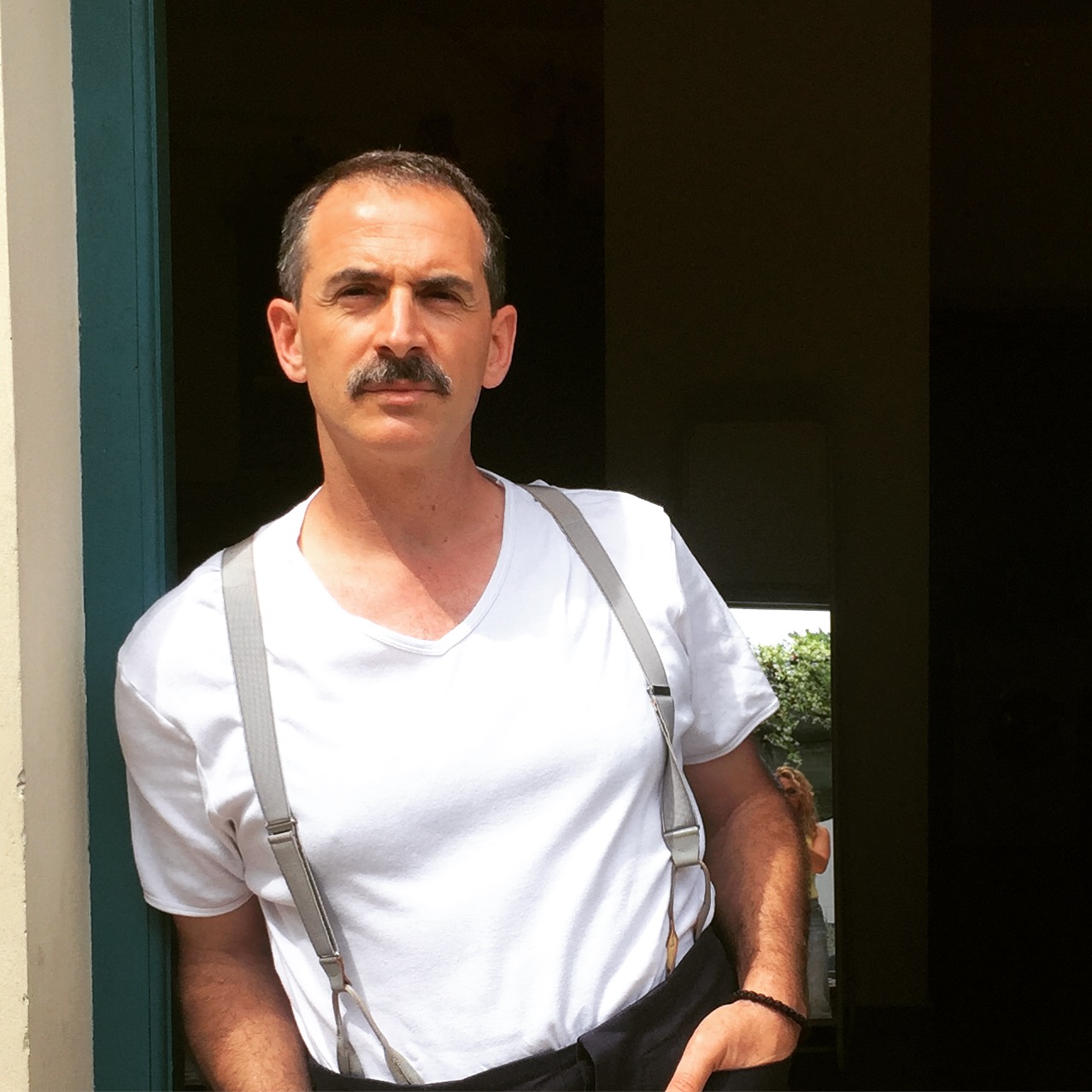
When Kostas Krommydas decided to write his first novel, he took the publishing world of his native Greece by storm. A few years later, he is an award-winning author of five bestselling novels, acclaimed actor, teacher and passionate storyteller. His novels have been among the top 10 at the prestigious Public Book Awards (Greece) and his novel “Ouranoessa” has won first place (2017). He also received the coveted WISH writer’s award in 2013 as an emerging author.
When not working on his next novel at his family beach house in Athens, you will find him acting on theatre/film/TV, teaching public speaking, interacting with his numerous fans, and writing guest articles for popular Greek newspapers, magazines, and websites.
Get Effrosyni’s FREE books with your signup to her bimonthly newsletter! Fun news from her life in Greece and a load of FREE kindle books in every issue! http://bit.ly/2yA74No
Beach fun and sweet romance mixed with magic spells and bird shifters… The Raven Witch of Corfu is an original story that will rivet you with its unrelenting suspense. The final twist will blow your mind!
My mother was born and raised in Corfu, and her parents, Spyridon (Spyros) and Antigoni became in time like second parents to me. Way more than grandparents are, and not just because they have always been visiting us in Athens in the winter, but also because I got to spend 3-month holidays with them in Moraitika, Corfu, on their small home on the hill, mainly throughout the 1980s.
My granny, with whom I shared a very special bond, passed away on May 2, 2016. Granddad died a few years earlier, in on May 5, 2010. As a result, early May for me has become a time that inevitably brings me sadness, but somehow floods my mind with loving memories and fills my heart with blessings at the same time, too.
Having inherited my grandparents’ house in Moraitika, it was hard opening the door and finding an empty house inside for the first time after my grandmother’s passing. What’s more, I was burdened with the gruesome task of having to go through my grandparents’ belongings, deciding what was to keep, what to throw, and what to give to charity. The task took days, and it was a surreal experience.
Being interspersed with short bursts of summer holiday fun, it felt odd to do this too but, somehow, my mission was accomplished. At the end of my holiday, I had given loads of clothes and medical equipment no longer needed to a couple locals, who were grateful to have them, my husband and I had scrubbed dirty and moulded walls and ceilings clean, the house was tidy and aired after having being left uninhabited for a long time, and our minds were enriched with beautiful new holiday memories.
I share with you today a couple photos I took while sorting through my grandparents’ personal belongings. I found these in their aged bedside cabinets.
I quickly recognized all the items in the above photograph from old memories and was deeply moved to see Gran Antigoni had kept a couple of the handkerchiefs I used when I was little. The moment I saw them I remembered them as mine. Those among you who have holidayed in Corfu in the 70s and 80s may recognize the item in the middle as a pill box. They were all the rage in the 80s, being sold in many shapes and with various depictions on them in the souvenir shops at the time.
As for granddad’s things, the only item I didn’t recognize was the binoculars. They are dented, as you can see, and you couldn’t see much through the lenses, but he must have been fond of them as he kept them all the same. I can only imagine how many years he must have had them! As for the torch, Granddad had a few, and this one is the oldest I can remember and probably his favourite! It’s the one he used during our annual ‘pizza nights’ at the beach when the August moon was out – a memory that made its way into The Ebb, the semi-biographical novel I wrote to share my love for my grandparents with the world. Speaking of The Ebb, which is set in 1980s’ Moraitika, this is for my readers: Sofia’s dented fork is also real… and I have proof. Scroll down below to see a photo of it 🙂
Granddad Spyros, born in Moraitika in 1913, was one of the children of Stefanos Vassilakis, the priest and teacher of Moraitika in the early 1900s. Granddad never had an education beyond elementary school but his impeccable manners towards family and friends as well as his loving, giving heart were prominent parts of his character. During the forty odd years that I was blessed to have him in my life he’d always been upbeat, sweet and loving and I never witnessed him lose his temper or fight with anyone, not even when he had every right to. And believe me, in my typically dysfunctional Greek family he had many opportunities to act that way.
Being the son of a preacher, Granddad spent Sunday mornings sitting with a radio and chanting along to the priest and the hymn singers. He also chanted in the church with gladness whenever asked. As I share in The Ebb, he had an odd affinity for the TV remote control, driving Gran to a frenzy. Actually, all his eccentricities that I share in the book are true, and he was a man who loved to laugh and entertain others too. Near the end of his life, he kept asking us to be merry when he dies, saying he wanted people to laugh, not cry, at his funeral. I last spoke to him (on the phone from Athens) three days before his passing at the age of 97. His mind was crystal clear, his voice jovial, like a young boy’s. His answer to my question ‘How are you?’ was a hearty laugh and the typical answer, “Got to be here another day!”
Granddad loved a good joke. Once, when he was well into his 90s, we were sitting around the table and he was laughing his head off with his own morbid joke. He had recently paid the council for a family grave and had had it decorated with the marble top and cross, and even his own picture, ready for the big day! Apparently, a local had passed by and seen the grave and told another: ‘Crikey! When did Spyros Vassilakis die? I never heard!” Someone had told Granddad and he relayed it around the table, laughing heartily at the ridiculous notion someone had thought him dead, even though he had set the scene perfectly for anyone to be fooled! And that was Granddad. He had this wicked sense of humour that often annoyed Gran and led to those ‘fights’ at the table that always caused me and my sister to exchange glances and chuckle no end.
Granddad also loved to joke with his friend Andriana, a local woman, and mother of Leftis from Romantica. Granddad and Mrs Andriana had approximately the same age and often joked with each other, betting who would pass away first! As he lay in his bed towards the end, Granddad heard the church bell toll intermittently in the typical single strike that signalled a death in the village. He turned to Gran and said, ‘Andriana’s gone’, which was indeed the toll of the bell for her passing, but we will never know if it was just a guess or if he knew somehow. The next day he died too.
Above all Granddad’s delightful eccentricities, one stands out for me as the most endearing: he always carried a little plastic comb in his shirt pocket and loved for me and my sister to comb his hair when we were little. Ever since I remember myself this ritual kept going strong. When I stayed or visited his house in Athens as a little girl he’d sit on his armchair, pat his shirt pocket and give me a cunning grin. I’d then rush to him, take the comb from his pocket and begin to comb his hair for a long time, the longer the better for him, but it was something I enjoyed too so much that time just flew. Often, before I knew it, he’d be fast asleep while I did this, sometimes even snoring loudly! He’d often wake up a little later to find he had all sorts of plaits braided on his head with colourful plastic hair clips at the end of them. He had the softest, snow-white thin strands and to this day I remember how they felt in my hands.
Outside the house in Moraitika – early 2000s
When Granddad passed away in 2010, I asked Gran if she had one of his combs to give me. She gave one to me and one to my sister and we both treasure them. Often, when the going gets tough in my life, I take it in my hands and tell Granddad my troubles. It always helps me to soothe any kind of heartache or mental strain – the comb having been established as the ultimate symbol of his love in my heart and mind.
I was deeply moved and very fortunate to find these old documents in an envelope in my granny’s bedside cabinet last summer. Time had rendered them gossamer thin but the writing is still legible in most places and it’s been preserved quite well despite the dozens of humid winters. These documents were my granddad’s call to military duty twice: the first in 1935 and the other in 1945.
The document of 1935, when Granddad Spyros was 22, had him registered as a coffee shop seller who was assigned to serve as a telephonist in the Communications Corp (I translate all this to the best of my ability seeing I am not familiar with military jargon). The rules that were mentioned overleaf state that the person called to duty was obliged to appear on the date specified. It was also stated that a delay of one day in showing up would result in imprisonment, while a delay of two or more days would automatically declare the person a deserter, which was punishable by death, or a life sentence in prison if evidence was put forward for their defense. There was also a clear instruction in bold to treat the assigned post and the document itself as confidential.
The document of 1945 called my granddad to duty in Acharnes, Athens in September 30th, 1945. He was 32 at the time. The document listed the same kind of rules overleaf, although with less severity compared to the other document. It was also stamped in Patra in October 1945 and there’s writing beside it but sadly it’s impossible to make out what it says.
What I do know about granddad’s service during the war was that he fought in Albania and when released from duty he returned to Corfu on foot. I also know that in Corfu he was stationed in two places: the (Venetian) Old Fortress in Corfu Town and in the Palace of Mon Repos in Kanoni. In the latter, he served as a cook and rubbed shoulders with Greek and English officers.
Gran is pictured with one of her brothers and her father in Corfu town
Gran Antigoni was born in Lefkas (Lefkada) in 1924. Her father, Nikolaos Kopsidas from the village of Karya, Lefkas, owned two inns in the island capital but a devastating earthquake that destroyed many buildings in town, including his two businesses, forced him to leave the island and seek a new life for himself and his family in Corfu. Granny was about four when she moved to Corfu. Brought up in the ancient quarter of Campielo of Corfu town, she spoke melodically, her vocabulary rich with unfathomable Italian-sounding words dating from the island’s occupation by the Venetians. When she was nineteen, one of her brothers made friends with my granddad who was thirty years old at the time. Granddad would often say that when he first led eyes on my demure grandmother she was wearing a long pleated skirt and the sight made him loose his mind (‘tin itha ke vourlistika’, were the exact words!). The rest is history, as they say.
From left to right, Ioanna, Gran, and Stephania
Granny lived and breathed for her daughters, Ioanna (my mother) and Stephania, who were also brought up in Campielo.
When I came to be, it was a story of love both ways. Granny and I soon developed a very strong bond. When I was little I’d often stay in her rented house (in Athens back then) and I was so attached to her I called her ‘mama’ (mum) and refused to fall asleep unless she held my hand. Gran would often laugh and say I gave her a hard time back then, seeing that as soon as she moved her hand away from my grasp I’d snap my eyes open, which meant she had to give me her hand and wait for me to fall asleep all over again.
Here I am pictured in Corfu town’s square across from Liston
Corfu town with Granny and cousins (I am the girl in the skirt)
Although my grandparents lived in Athens when I was little, we often visited Corfu in the summer to stay with my aunt Stephanie’s family in Garitsa (coastal quarter of the town next to Anemomylos). My grandparents had inherited a small quarter of my great-grandfather’s house in Moraitika but they needed to build upon it to make it a proper home with the necessary commodities first. They managed this in the early 1980s so I began to spend my summer holidays for three months at a time in the village as of then.
In The Ebb, I share many of the terms of endearment Granny used to address me. There is an entertaining one I didn’t share, which tickled my husband’s funny bone so much he uses it for me now. The term is ‘kontessa’ (countess), my granny’s way of teasing me whenever, as all kids occasionally do, I acted lazy or self-indulgent. Every time my husband Andy calls me that now if, say, I snooze a little longer in bed, there is a tug in my heart, but the feeling is wonderful, knowing the term of endearment survived, somehow.
Nerina was never far from Gran whenever she stayed with us in Athens
In the few last years before her passing at the age of 92, I was been blessed to have had Gran stay in my house in Nea Peramos (near Athens) for a month or so at a time during the winter. Back in 2011, when the above pictures were taken, I had a dog, Nerina, a sweet and benevolent soul. I guess she must have found in Gran a kindred spirit, as she’d follow her around the house, especially when Gran cleaned fish at the sink as you see in the above photo. To stretch her legs, I often took Gran to the seafront for a stroll and as Gran loved eating fish, she often proposed we buy some for lunch straight from the fishing boats.
On sunny days, more often than not, she would suggest a walk in the fields around the house to pick wild greens. You’d think a 90-year-old would cringe at the thought but Granny was tireless. She didn’t mind at all bending over for an hour to pick greens and often did a little gardening too, picking sprouts of spearmint from one place to put them in a new spot, or just watering my plants. She loved to be around plants and did the same in her tiny yard in Moraitika till the day she left it behind the last time.
My grandparents’ children, Ioanna (my mother) and Stephania
When Gran and Granddad started their life together in the 40s, times were hard. If they needed to visit Moraitika from Corfu town, they often walked the whole way. That’s a 45 minute ride in the bus today! As a young married couple they lived in Campielo as I said before where, to make ends meet, Granddad used to do deliveries for a refreshment company. He made the deliveries all over town riding a horse carriage. During the summer, he worked a lot more hours to meet the higher demand, often on all days of the week. He’d leave home at first light and return after dark when the kids were in bed. As a result, his little daughter, Stephania, called him ‘o babas o chimoniatikos’ (winter dad) as this was the only part of the year where she got to see him.
Later in life, to seek a more secure future, my granddad took his family to live in Athens where he worked at the Skaramangha shipyard. In my debut novel, The Necklace of Goddess Athena, I mention the scrap fabric pieces that the workers used to clean their hands from the dirty work. Granddad would often take the odd scrap home and Granny made clothes for their children from them.
Here I am pictured second from right outside the house with cousins, my sister, and other family members.
Back in Moraitika is where sheer bliss began to pour into my life. Roughly from the age of 12, I began to stay with my grandparents nearly every summer from early June to early September. I played and swam daily with a multitude of cousins and village children and as neighbours I had a host of great-uncles and great-aunts who’d each inherited a part of my great-grandfather’s big house. Every morning would find me and the other children playing with a ball or cards under the mulberry tree or on the cemented step that can still be found today outside the house.
The mulberry tree in front of the house always causes myriad fond memories to come to surface. This lane that leads to the village church has been my playground for many happy summers.
Towards midday, we’d all descend to the beach in large numbers for our daily swim. In the afternoons, after our siesta, my cousins and I would go for long walks accompanied by my grandparents or the odd great-uncle. One of them, Great-Uncle Lilis who was a retired teacher at the time accompanied us in our walks military-style, shouting out ‘ena-dyo, en-dyo’ to give the marching rhythm but of course we kids laughed it off. We did find it endearing though so from time to time indulged him by parading like little soldiers for him as he followed last on the side of the road, supervising us.
Most of the time, we’d walk along the Corfu-Lefkimmi highway and stopped at Messonghi past the tiny bridge near the turn off to Agios Mattheos where the petrol station is today. Beside it on the corner, there was a cafe owned by my uncle Thanassis Tsatsanis from Messonghi. This was our resting place for a refreshment or a sweet before our long walk back home on the hill in Moraitika.
All the things fun I just mentioned, interspersed with out-of-this-world good meals prepared by my granny only repeated themselves the next day and the next after that, for three months at a time. I am sure, therefore, you can imagine my joy every time June came when I was a youngster, and the absolute heart-wrenching sorrow that hit me when September arrived each year and it was time to go.
Corfu memories
As I have said many times and also recorded in The Ebb, Gran Antigoni was an amazing cook and prepared her meals in a tiny kitchen barely big enough for two people to stand in it. These photos from the early 2000’s serve as proof!
Speaking of proof, here is a picture of the dented aluminum fork described in The Ebb. Every summer, on my first day in the house, Gran would take it out of her ancient cabinet drawer and set it in front of me at the table with a glint in her eye as Granddad chuckled. You can imagine what it means to me now they are gone. I took this photo last summer, and it was quite emotional when I set it down on the table to eat with my husband, without either of my grandparents present for the very first time. But of course, their love remains inside me, safe, where neither time nor death can ever take it away.
Below, I share a couple videos from happy days with my grandparents. These were taken in the summer of 2004.
The two first videos feature my conversations with my grandparents as I take the video and Andy and Granddad watch Gran BBQ fish for our lunch. During that time we elaborated a lot on the fact Granddad was difficult to cook for because there were many foods he didn’t like much (fish and meat included). I then tried to convince him to have some fish but he seemed intent on only having the boiled greens and skordalia (garlic dip) that were to be served with it. By the time Gran serves at the table, she and I have managed to annoy him somewhat to a hilarious effect right at the end of video 3.
“San polla de lete?” (Don’t you think you’re talking too much?) quips Granddad in his typical mock-stern tone. It made my grandmother and I laugh many times as we watched this video together after his passing. Grandma would laugh while her fingertips caressed his face on my tablet’s screen, the words ‘Spyro mou…’ issued wistfully and repeatedly from her lips.
I hope you’ll find the videos entertaining, even those among you who don’t understand much Greek, if only for the mannerisms and the real-life depiction of a typical ‘row’ between my grandparents at meal times as described in The Ebb.
I truly believe that Granny and Granddad were sister souls. They were married together for 67 years and remained in love till the last day when Granddad died peacefully in his bed in Granny’s arms. Granny often relayed how he opened his eyes and gave her one last, intense look, before he closed them again, this time, forever. Granny said it felt like he was aiming to take her image along with him.
Last year, my grandmother’s parting words to me were said over the phone and during a rare moment of lucid thinking as osteomyelitis had long begun to cloud her mind since her fatal fall. Even though she kept silent or mumbled to herself whenever I phoned the old people’s home in Limnos where she spent her very last days, during that call I was lucky to make out these words: ‘Na eisai kala kyra mou, na eisai panta kala’ (may you be well ‘my lady’, may you always be well). I knew that day this was goodbye. And I was right; she died just a couple days later. I do hope in her heart she knew I was there when that happened, if only in spirit.
Goodbye Grandma. Goodbye Granddad. Until we meet again.
Wondering what Moraitika, Corfu is like? Visit my guide to Moraitika and marvel at the endless possibilities of summer holiday fun on offer.
YOU KNOW WHAT THEY SAY… SHARING IS CARING! Tweet this to spread some love:
3 FREE books for you! Sign up below to receive them instantly!
NEW! Clean Christmas romance. Single mother Cathy Roussos gave up on love long ago, and veterinarian Alex Rallis doesn’t believe in it, but one magical Christmas on a Santorini farm might just change everything…
A clean romantic suspense short read with an unreliable narrator that’ll keep you guessing! Vera is losing her mind over famous actor Yannnis Ksenos, except, she isn’t just a fan… Now, she plucks up the courage to ring his doorbell… Visit Amazon
Clean romance short read, FREE with Kindle Unlimited. It’ll transport you straight to Corfu to experience summer in an idyllic Greek seaside village. The story is inspired from the author’s love for Moraitika and its people. Now, also available as an audio book! Visit Amazon
Beach fun and sweet romance mixed with magic spells and bird shifters! The Raven Witch of Corfu is an original story that will rivet you with its unrelenting suspense. The final twist will blow your mind! Available in paperback , box set or 4 kindle episodes! Visit Amazon
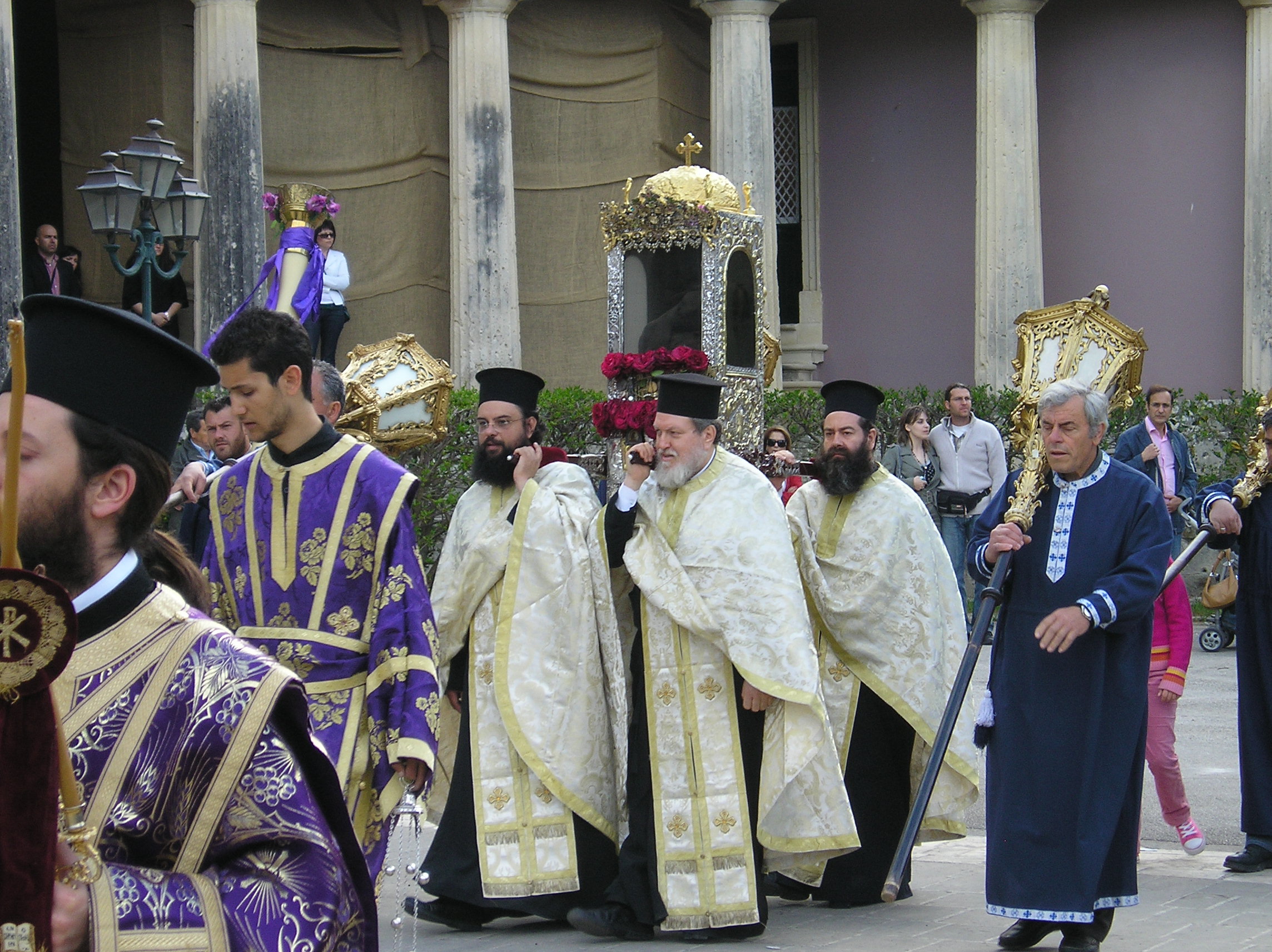
Easter in Greece is the brightest holiday, even more so than Christmas. The Greeks celebrate it with wonderful customs that make it a huge joy to attend the festivities. No matter where you are in Greece, the evening of Good Friday will find you following the epitaph procession with a lit brown candle in your hand, an experience that always makes my heart swell as the fragrance of jasmine and honeysuckle from the yards waft in the crisp night air, and the solemn melody of the hymn ‘Oh glyki mou aiar’ delights my ears. The epitaph is a wooden structure adorned with a multitude of flowers. A depiction of Christ lies inside and the epitaph serves as His tomb. Seeing that the procession symbolizes His funeral, the mood of this procession is mournful and voices are kept to a respectful low volume.
Midnight on Holy Saturday is the exact opposite experience. Here, the atmosphere is joyful, and how can it not be with the fireworks exploding overhead and the church bells ringing madly! The priest brings out the holy light (flown into the country from Virgin Mary’s tomb in Jerusalem the same day and distributed to every church on time), and people light up their white or red candles as they kiss and exchange the news of Jesus’ rising from the dead. One person will say ‘Christos Anesti’ (Christ has risen) and the other will respond ‘Alithos Anesti’ (indeed, He has) or ‘Alithos, o Kyrios’ (indeed, the Lord has).
On Easter day, the Greeks get up early to put the lamb and the kokoretsi on the spit. Lunch is a grand celebration that includes bumping together Easter eggs (traditionally dyed red).
Other than the above festivities that can be sampled anywhere in Greece, there are variations in places. For example, on the island of Hydra, the procession of the epitaph is not done on the road but in the sea by boat. Also, there are special customs in other parts, such as the spectacular ‘rocket war’ between two churches on the island of Chios and the burning of effigies of Judas in various parts of the country.
By far, and I am not just saying this because I am biased – everyone agrees here – the brightest Easter you can ever experience in Greece takes place in Corfu town.
The Holy Relic of St Spyridon is taken around town several times a year during the grand processions.
Other than the multitude of epitaph processions and spectacular fireworks display you’re in for here, Holy Saturday stands out for two things: the grand procession of St Spyridon, schools, boy scouts, and philarmonic orchestras that starts in the old town at 9:00 am, and the ancient custom of ‘botides’ that is a spectacle everyone should behold at least once in their lives.
Botides are massive ceramic pots that the Corfiots throw from high balconies when the bell tolls the ‘First Ressurection’ at 11:00 am before a huge crowd. What follows is a pandemonium of cheers and noise that is said to ward off evil and celebrates the victory of Man over death. The atmosphere soon becomes electric and you feel so elated, it almost feels like you’re ready to grow wings on your back and fly. You have to experience it firsthand, I guess, but that’s the best way I can describe the feeling! Here’s a little taste:
Here, I will also share Amleto (Little Hamlet, from Faccio’s opera) – my favorite piece of music played by the Old Philarmonic in Corfu town on Saturday morning during the grand procession I mentioned earlier. Total silence falls among the locals when the band begins to play this song as to enjoy it fully – this is a piece of music adored by the Corfiots, including me, as it has the unique power to compel and to make your heart swell. You be the judge – although again, you have to be there to experience the atmosphere to the max:
And below, a video taken at the square (Spianada) by Liston – Amleto starts at the time mark of 2:10
For the Greeks, Easter is a religious experience that goes on inside their souls. It is a chance to gather hope and strength inside and to keep going, no matter the hardship. It is one of the Greek secrets, if you like, for their ever renewed ability to withstand adversity and to keep the faith. During the Holy Week, the Greeks wish each other ‘Kali Anastasi’ (Happy Resurrection), which doesn’t only mean the enjoyment of the midnight festivities on Holy Saturday – it also means a resurrection in their lives; it wishes the preservation of hope until a better day comes. Therefore, as you appreciate, Easter to the average Greek is not just a cause for celebration but a form of psychotherapy too – a provider of renewed hope. I hope this makes sense. For what it’s worth, this is the best way I can share it with you, what Easter is to a Greek!
And with this, I bid you adieu, wishing you a wonderful Easter no matter where you are and how you plan to celebrate.
Please note: if you ever plan to visit Greece for Easter, do check online for the date of Orthodox Easter first. It coincides with Easter in the rest of the world only once in a few years!
And now, I am off to my kitchen to make Easter cookies. Holy week is a busy one for Greek housewives. Thankfully, I’ve already dyed the Easter eggs! I make mine with red onion leaves and curry to avoid those nasty chemicals. See how I prepare them here
Kali Anastasi & Happy Easter!
Before I go, to announce my first audio book is out!🎧 My Corfu Love Story is a clean summer romance with a paranormal twist. Duration under 2 hours. Listen to the sample on Amazon US or Audible
3 FREE books for you! Sign up below to receive them instantly!
NEW! Clean Christmas romance. Single mother Cathy Roussos gave up on love long ago, and veterinarian Alex Rallis doesn’t believe in it, but one magical Christmas on a Santorini farm might just change everything…
A clean romantic suspense short read with an unreliable narrator that’ll keep you guessing! Vera is losing her mind over famous actor Yannnis Ksenos, except, she isn’t just a fan… Now, she plucks up the courage to ring his doorbell… Visit Amazon
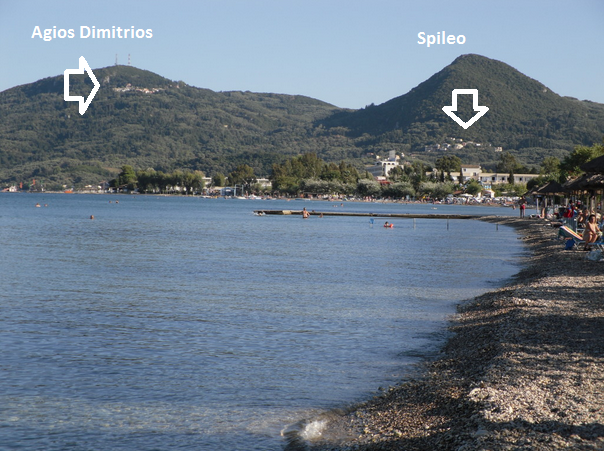
Beach fun and sweet romance mixed with magic spells and bird shifters! The Raven Witch of Corfu is an original story that will rivet you with its unrelenting suspense. The final twist will blow your mind! Available in paperback , box set or 4 kindle episodes! Visit Amazon