Nafplio, a town steeped in Greek history

Today I am delighted to present to you the historical town of Nafplio (Nafplion) in the Peloponnese.

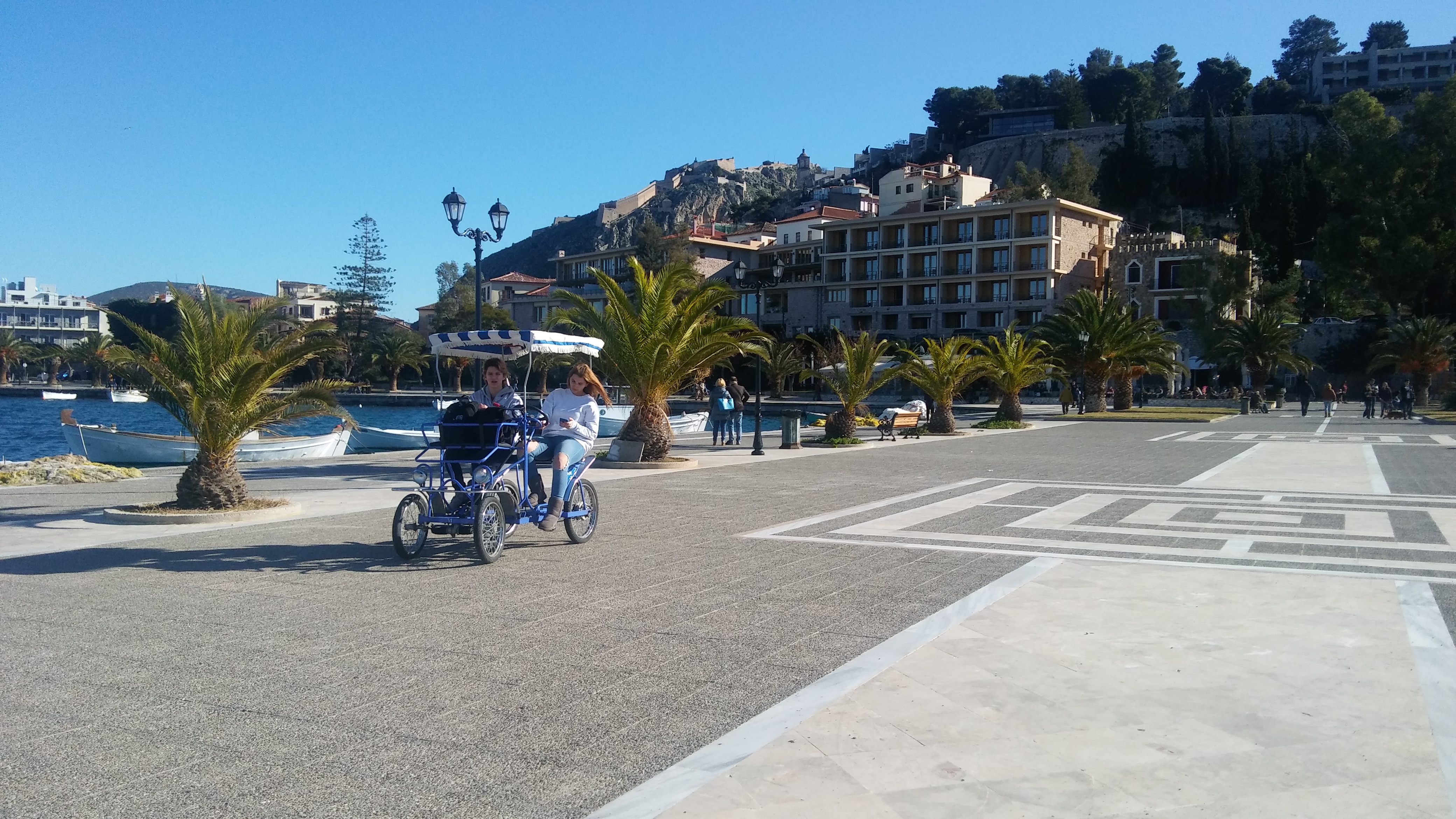
In 1821, the Greeks declared the Greek War of Independence against the Ottoman Empire that plagued the country for 400 years. Eight years later, Nafplio became the first capital of Greece and remains to this day a town steeped in history. The old quarter, situated near the promenade, has retained both its feel and look from the 1800’s. This is largely owed to Nafplio’s antiquated buildings as well as the three Venetian forts that surround it: Bourtzi, Palamidi and ‘Its Kale’.
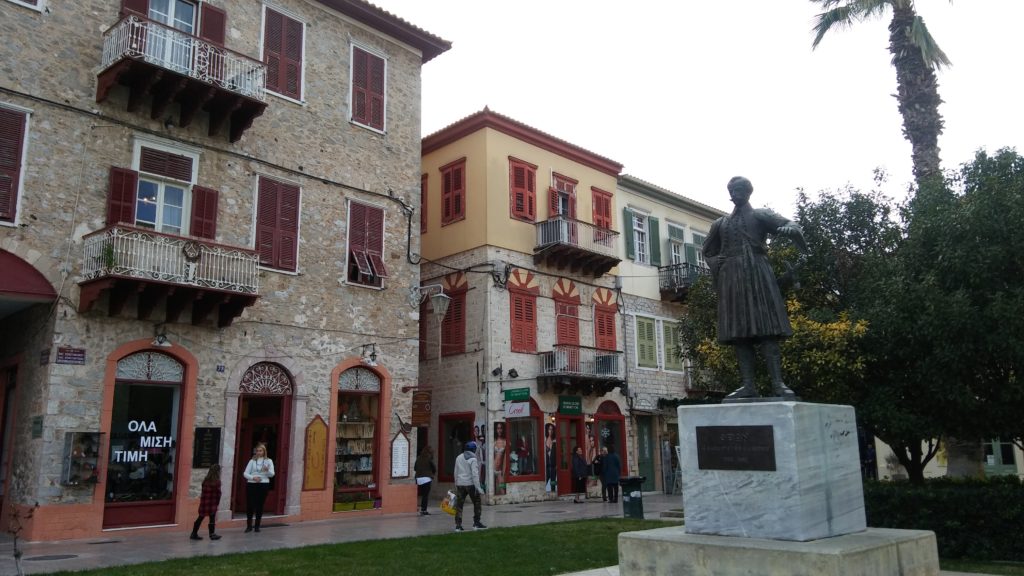
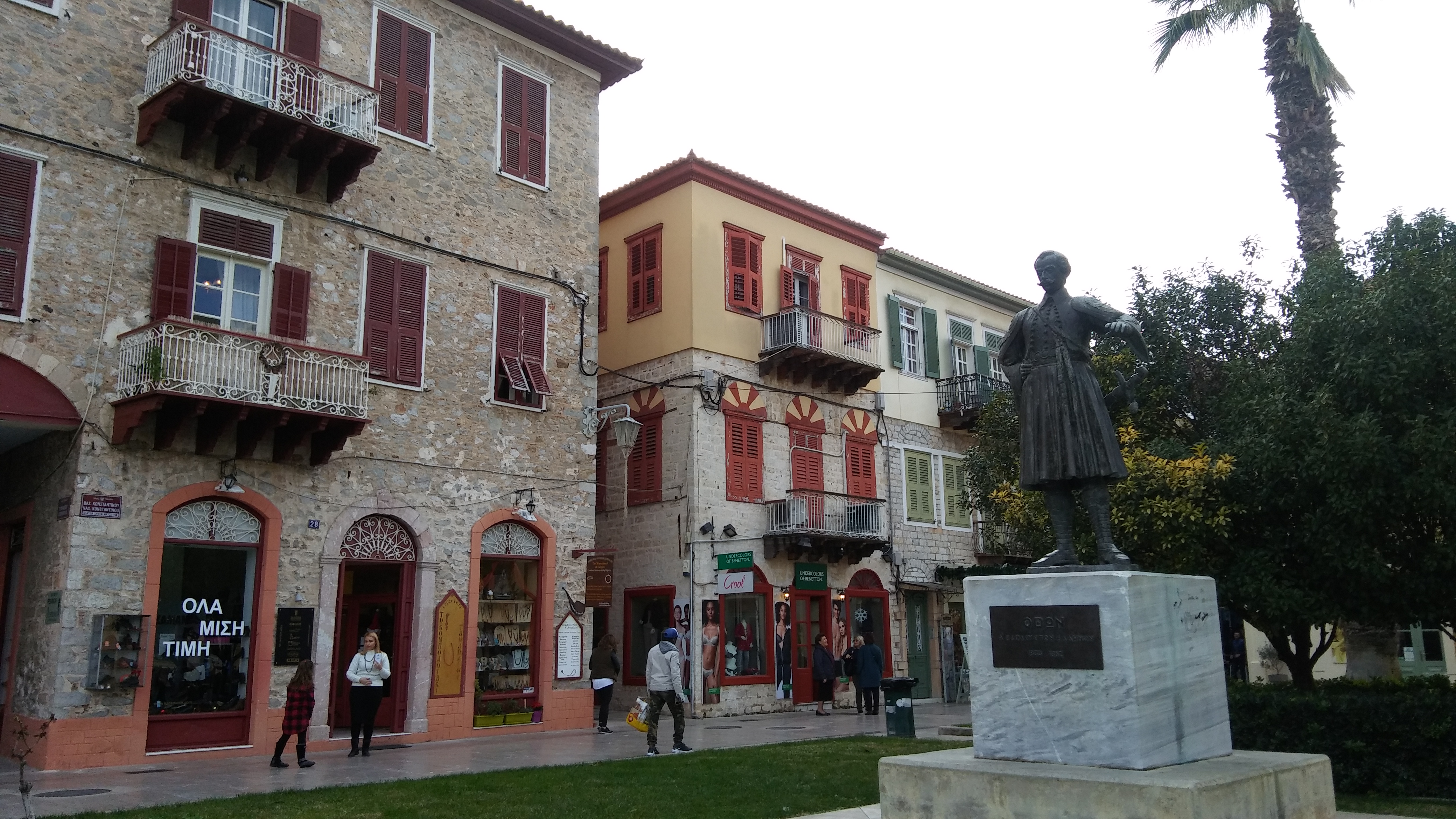
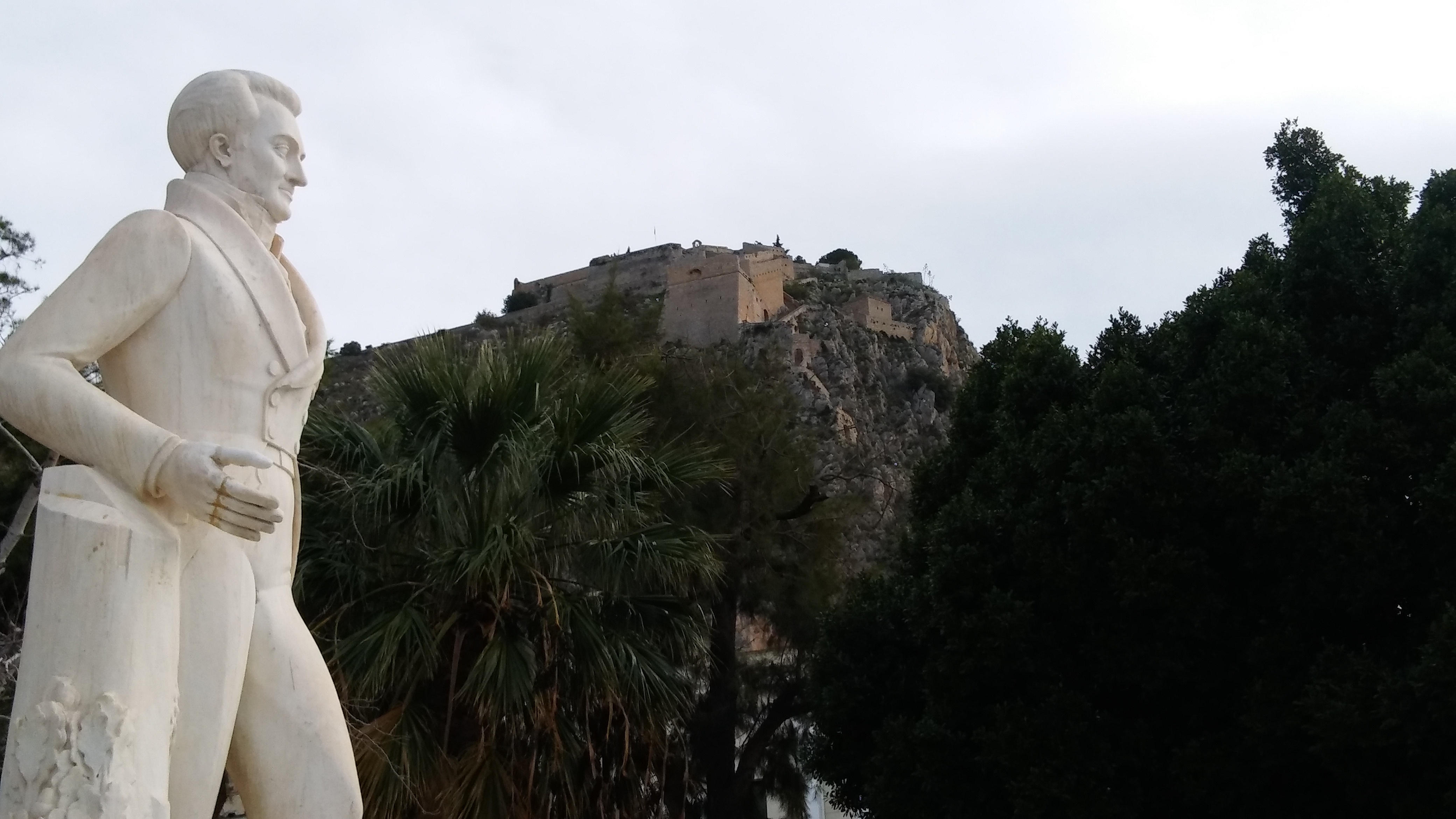
A statue of King Otto in Trion Navarchon square

As you discover the old quarter on foot, the monuments and statues placed everywhere are a constant reminder that you’re in a place once inhabited by war heroes, kings, and gifted leaders of the people. The thought brings chills down my spine every time, and I hope to share that feeling of awe with you today.

So come with me, on this virtual tour of the town, and let’s revel together in Nafplio’s past and present glory. I promise you will be enchanted by its beauty and, if Greek history interests you, chances are you will hear something new 🙂
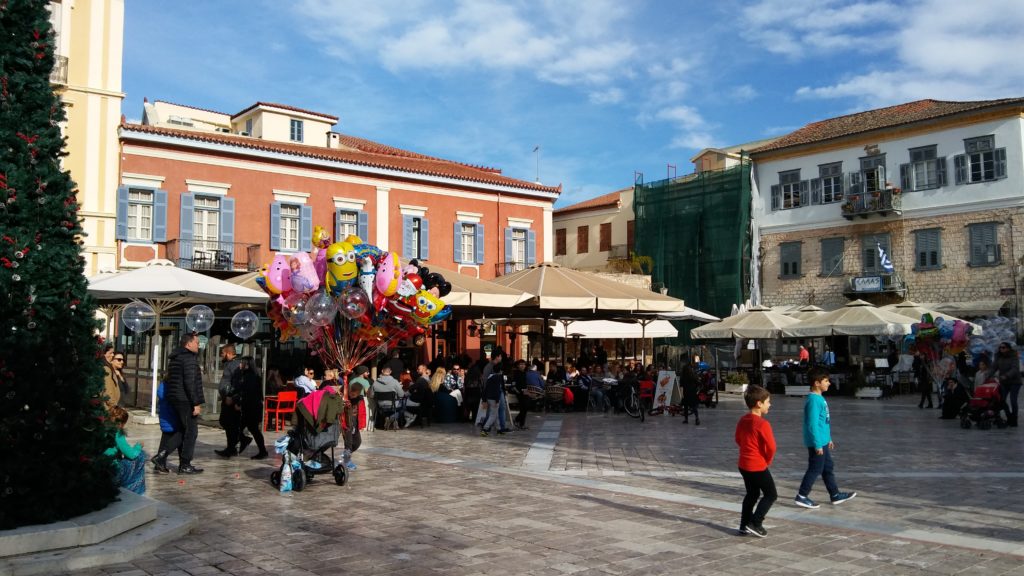
Syntagma (Constitution square)

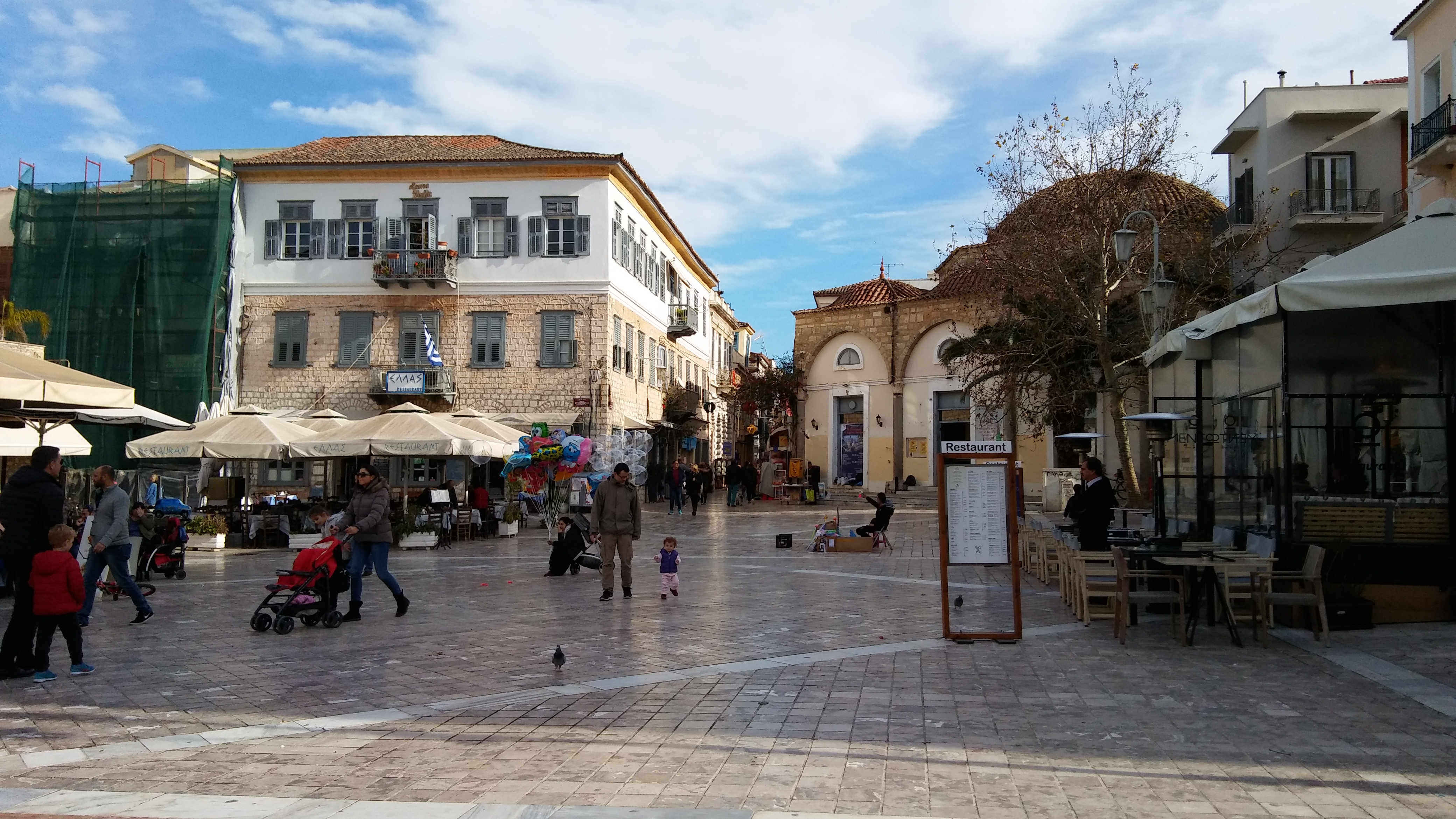
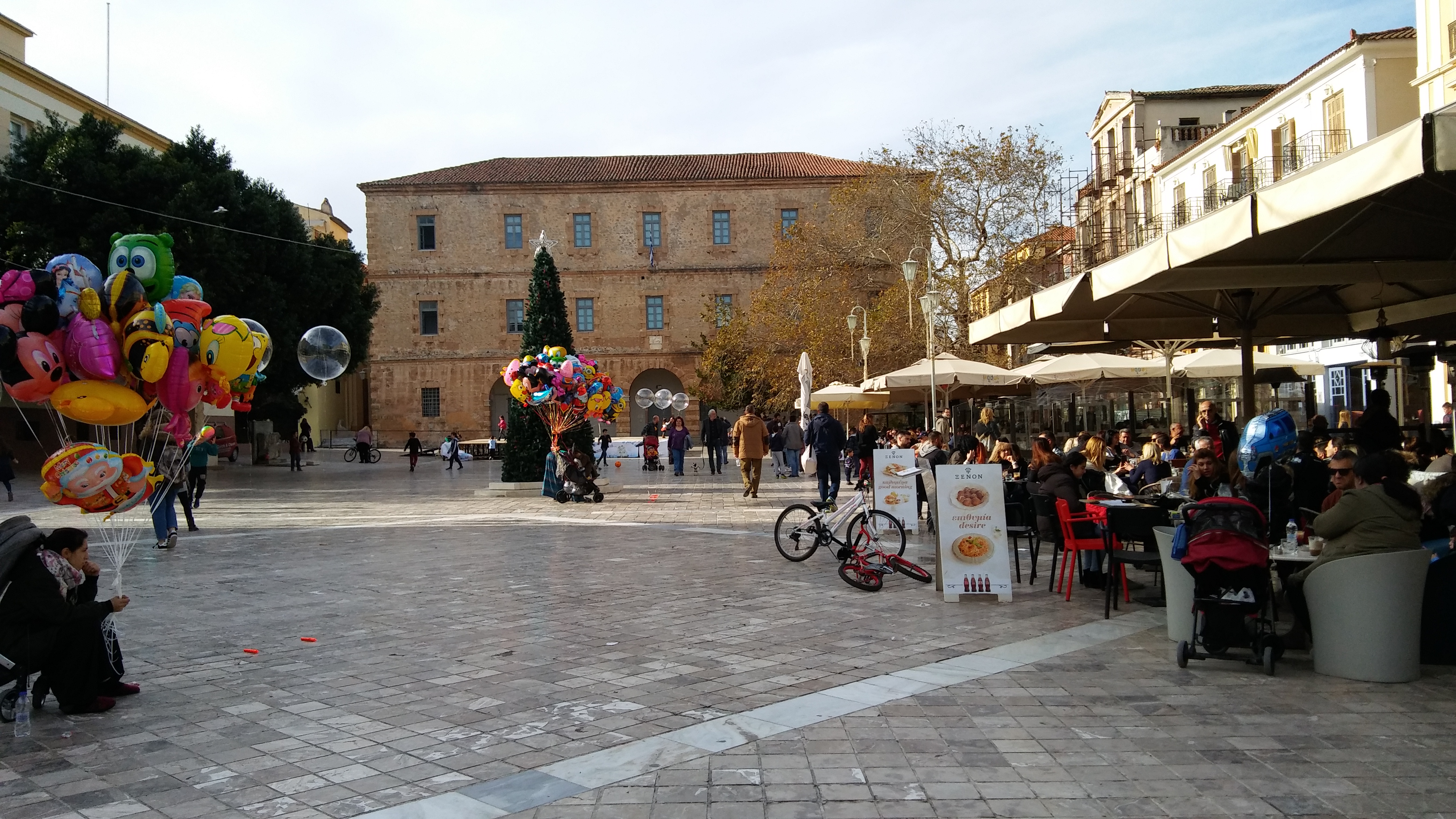
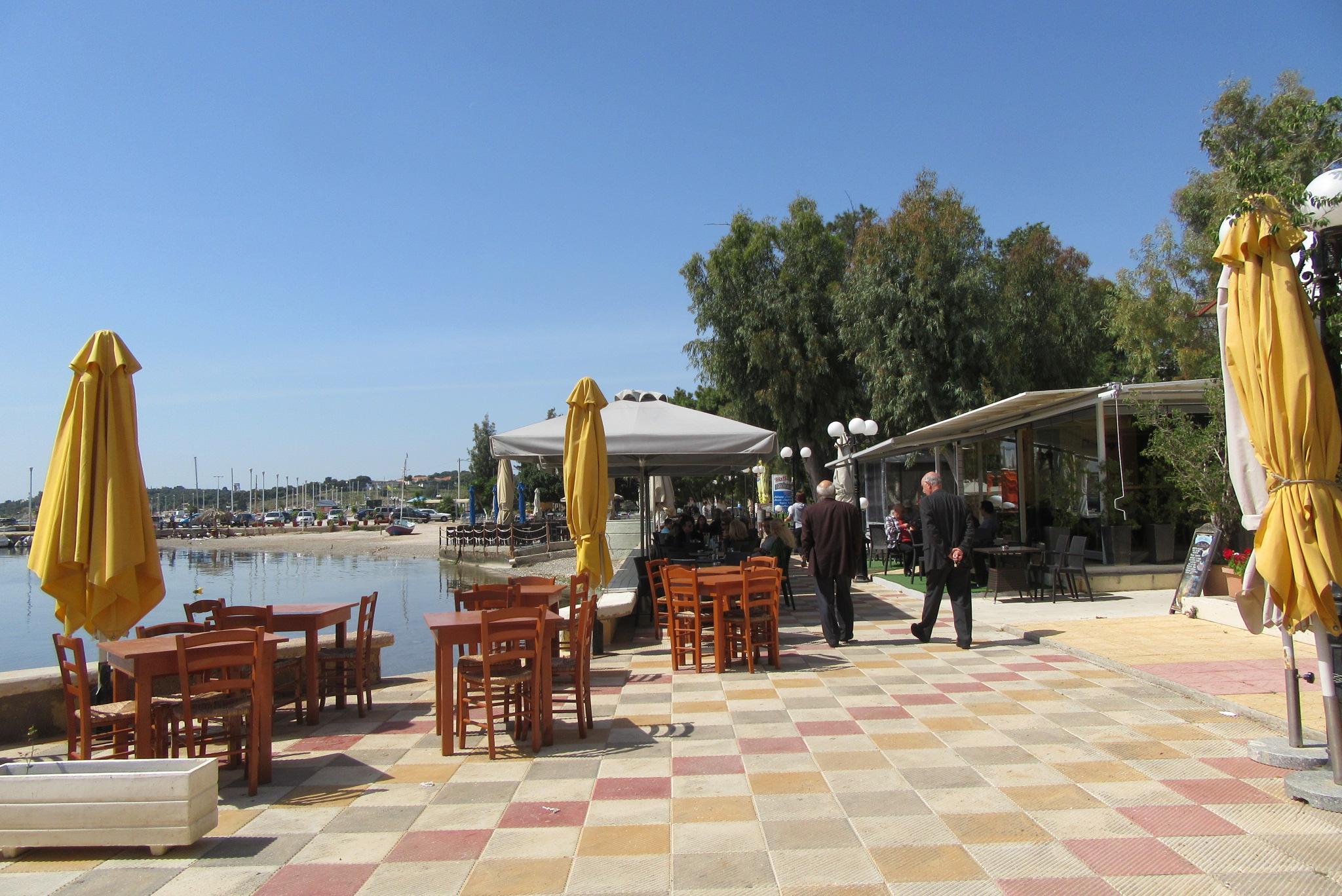
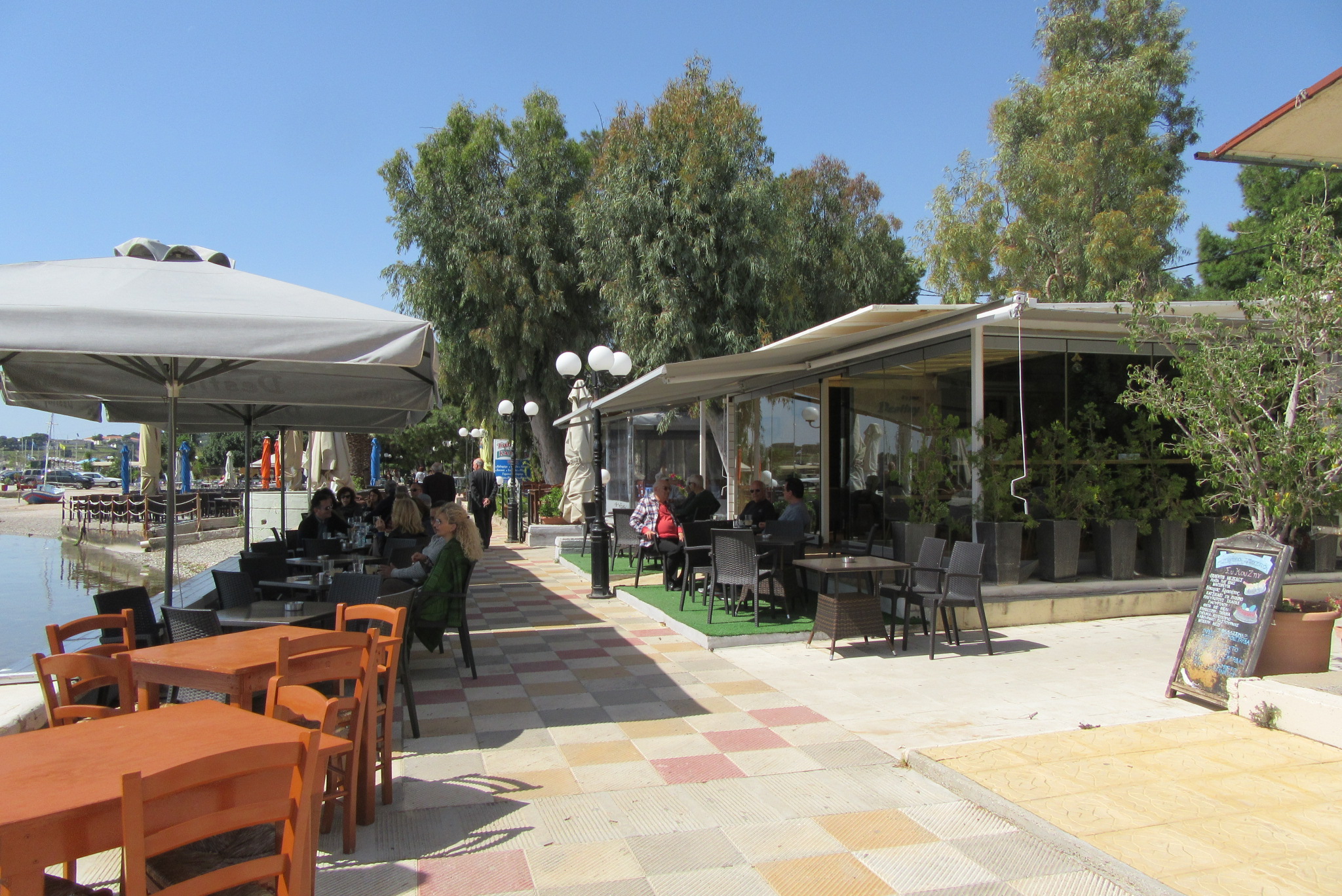
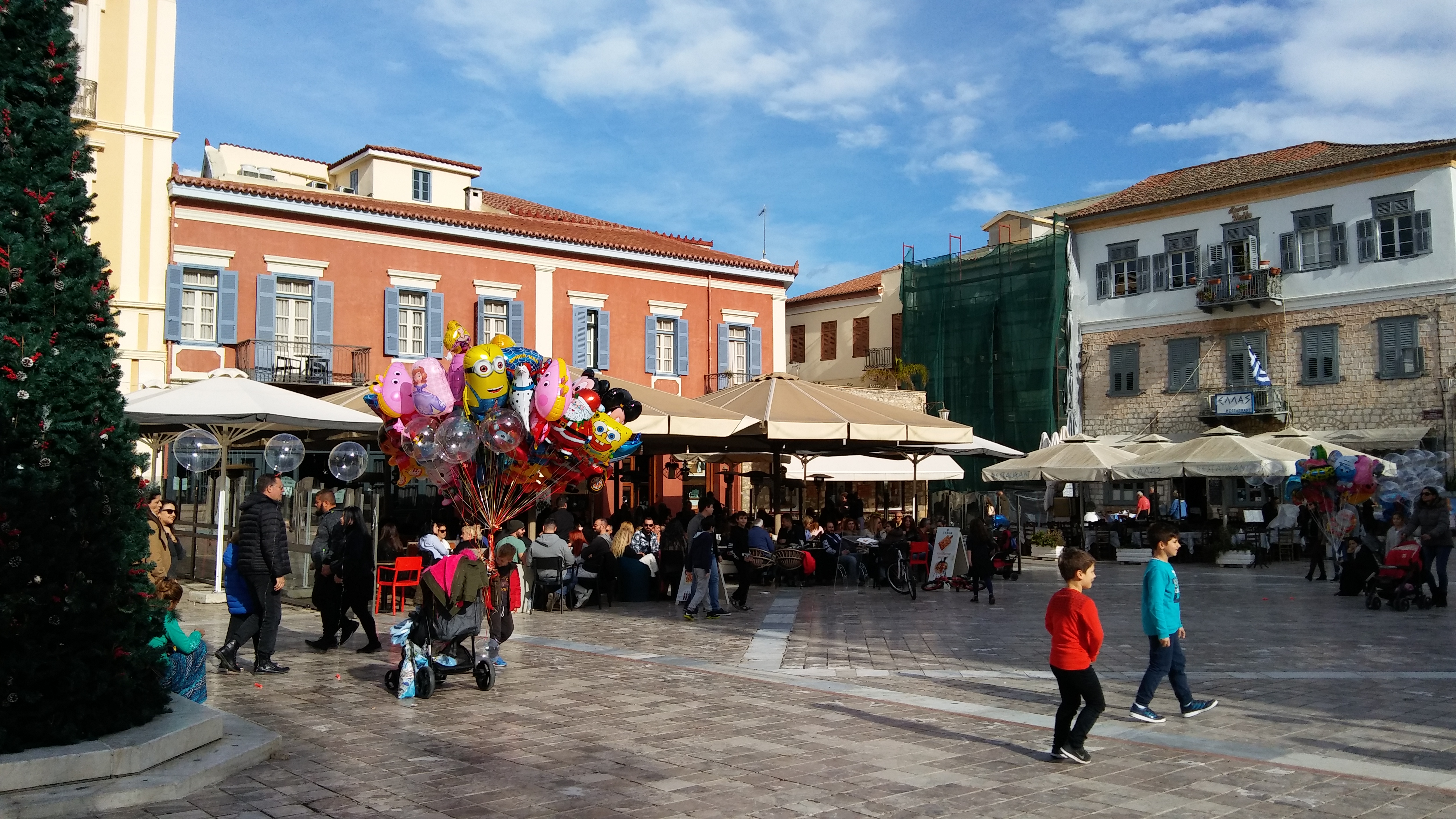
Nafplio is a highly touristy town. As well as having a multitude of visitors from other countries, Greeks, mainly Athenians, descend in droves for weekend breaks throughout the year. Their favorite pastime here, it seems, is to sit at one of the bustling cafes, either on the promenade, or at the historical Syntagma (Constitution) Square.
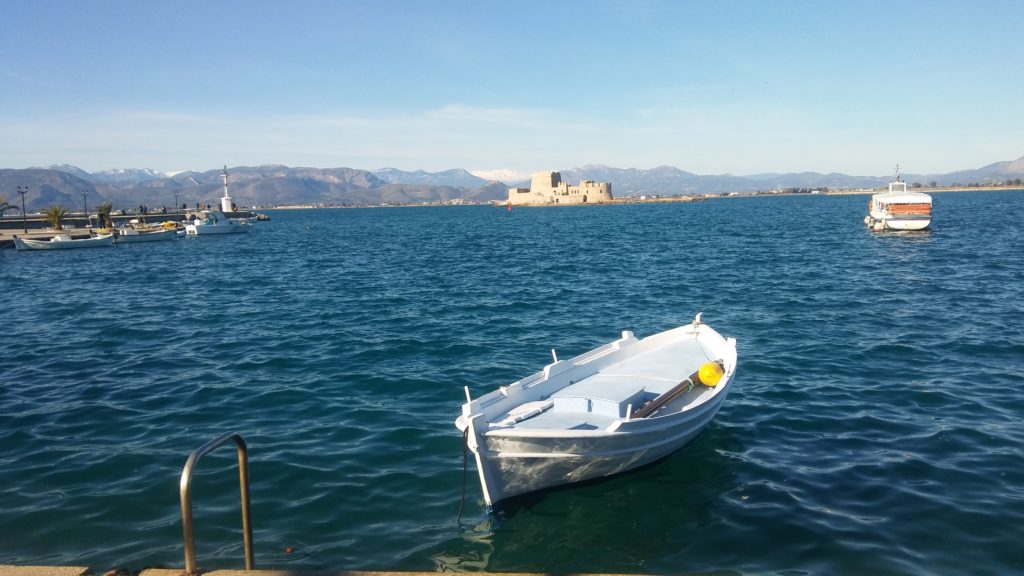
The view of Bourtzi from the promenade (the small lighthouse is visible on the left)

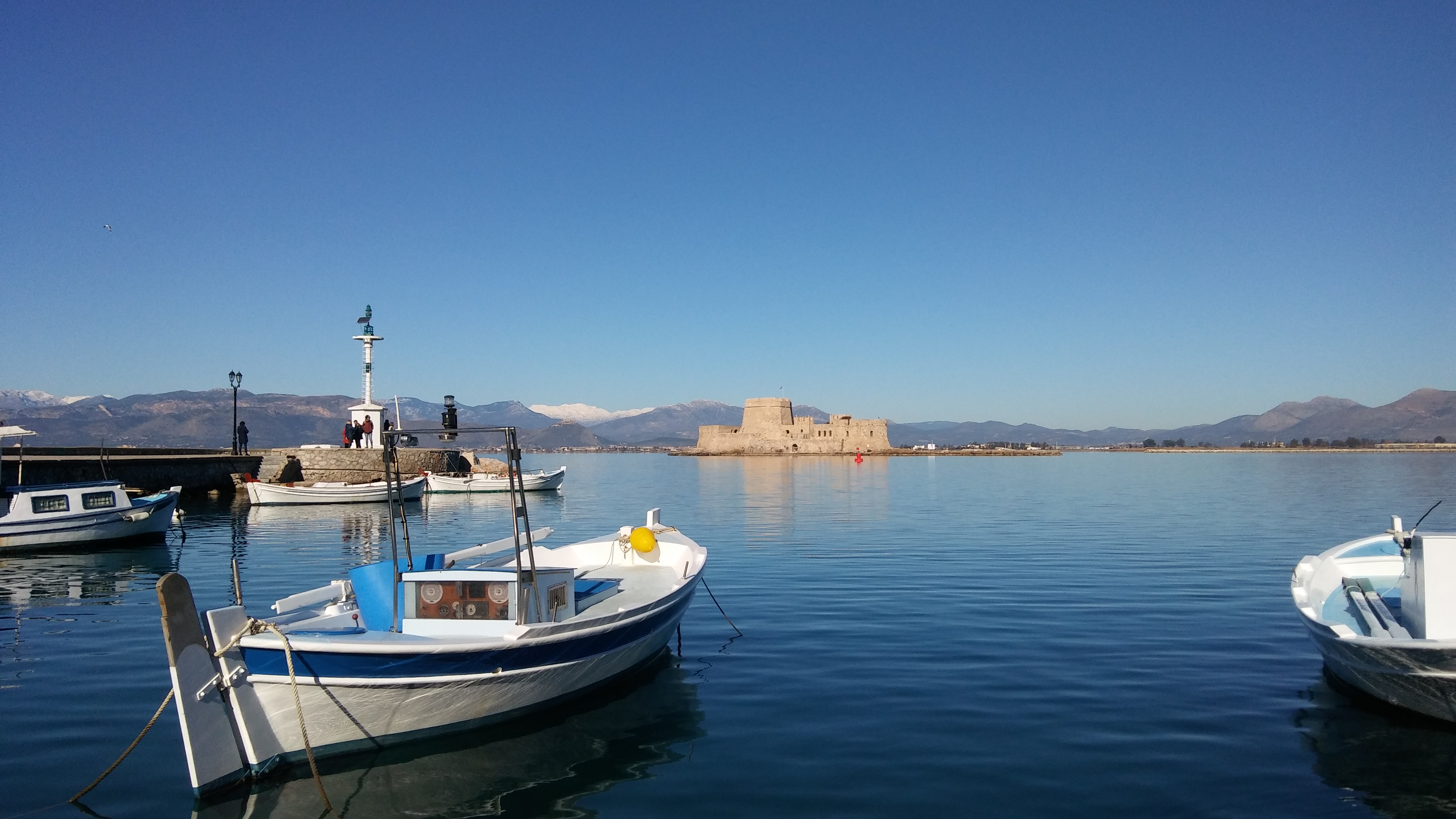
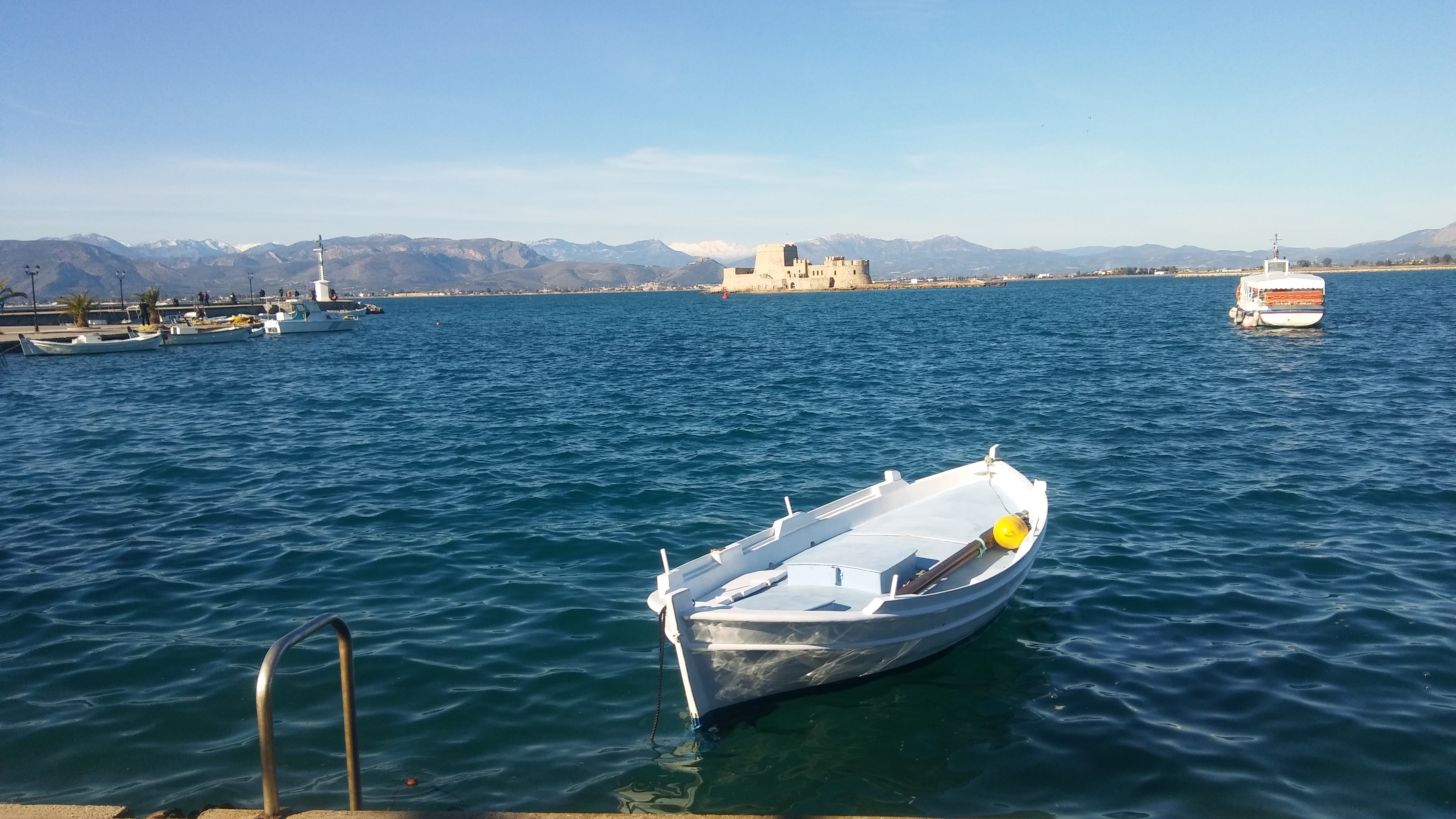
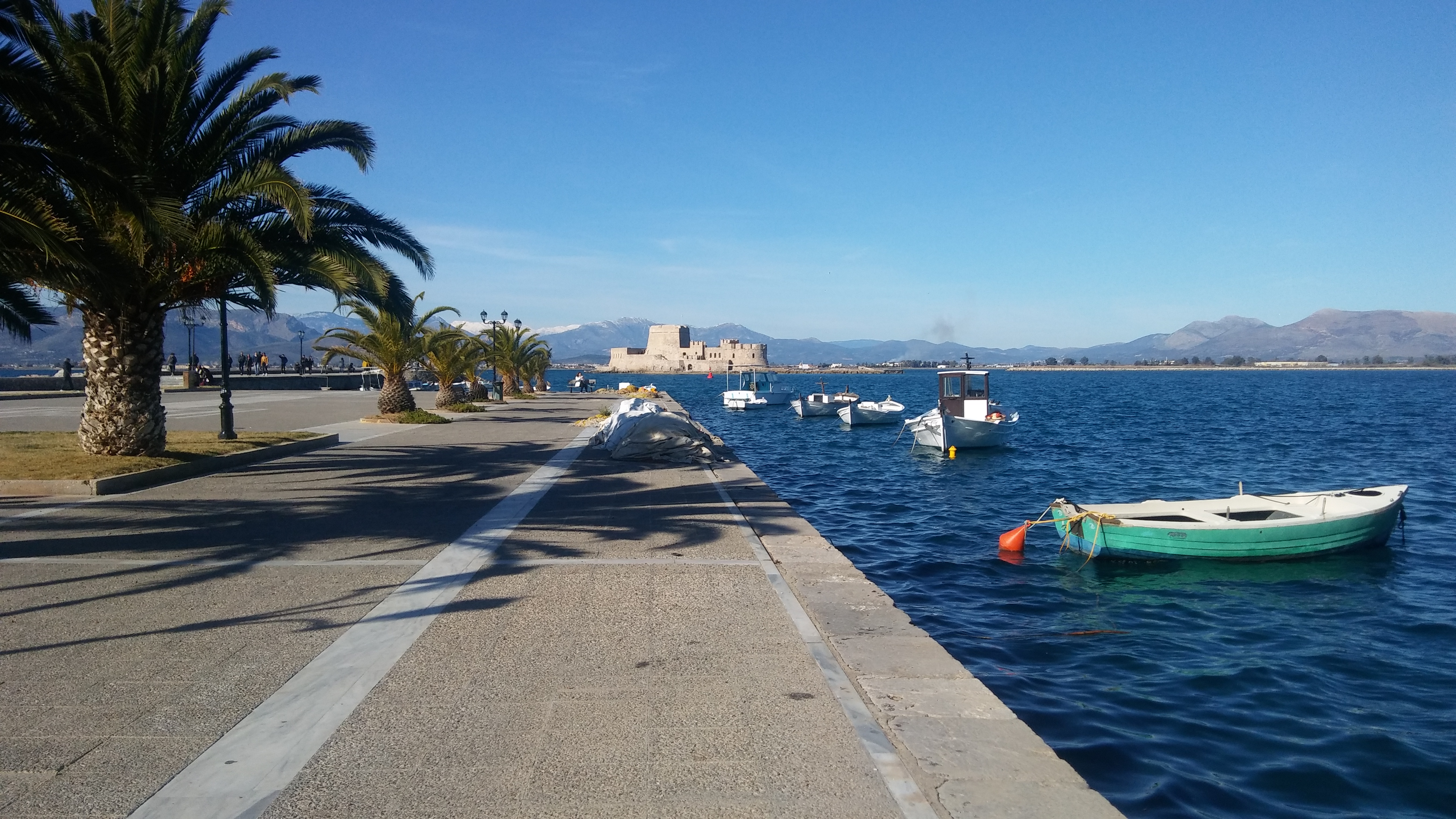
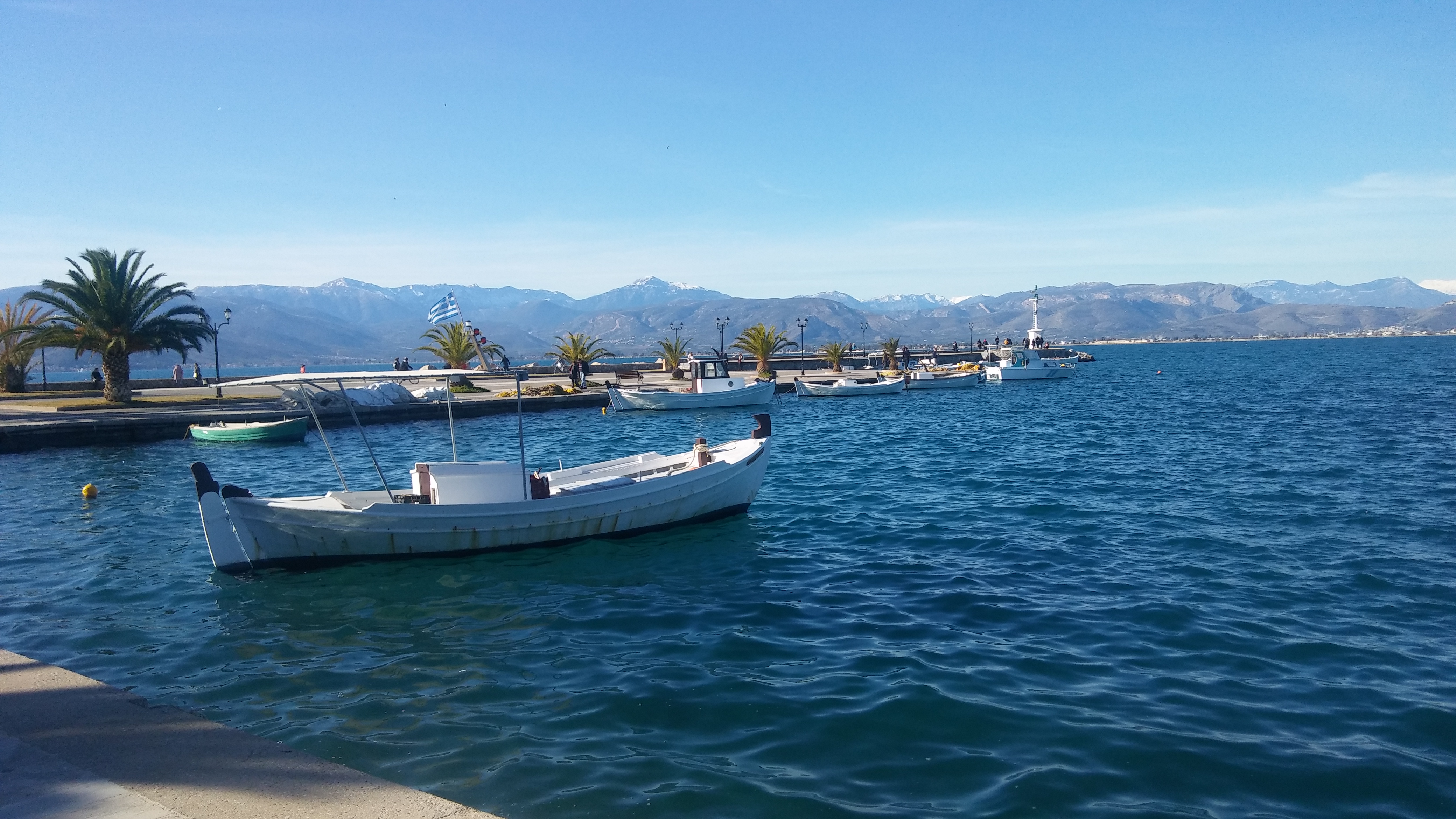
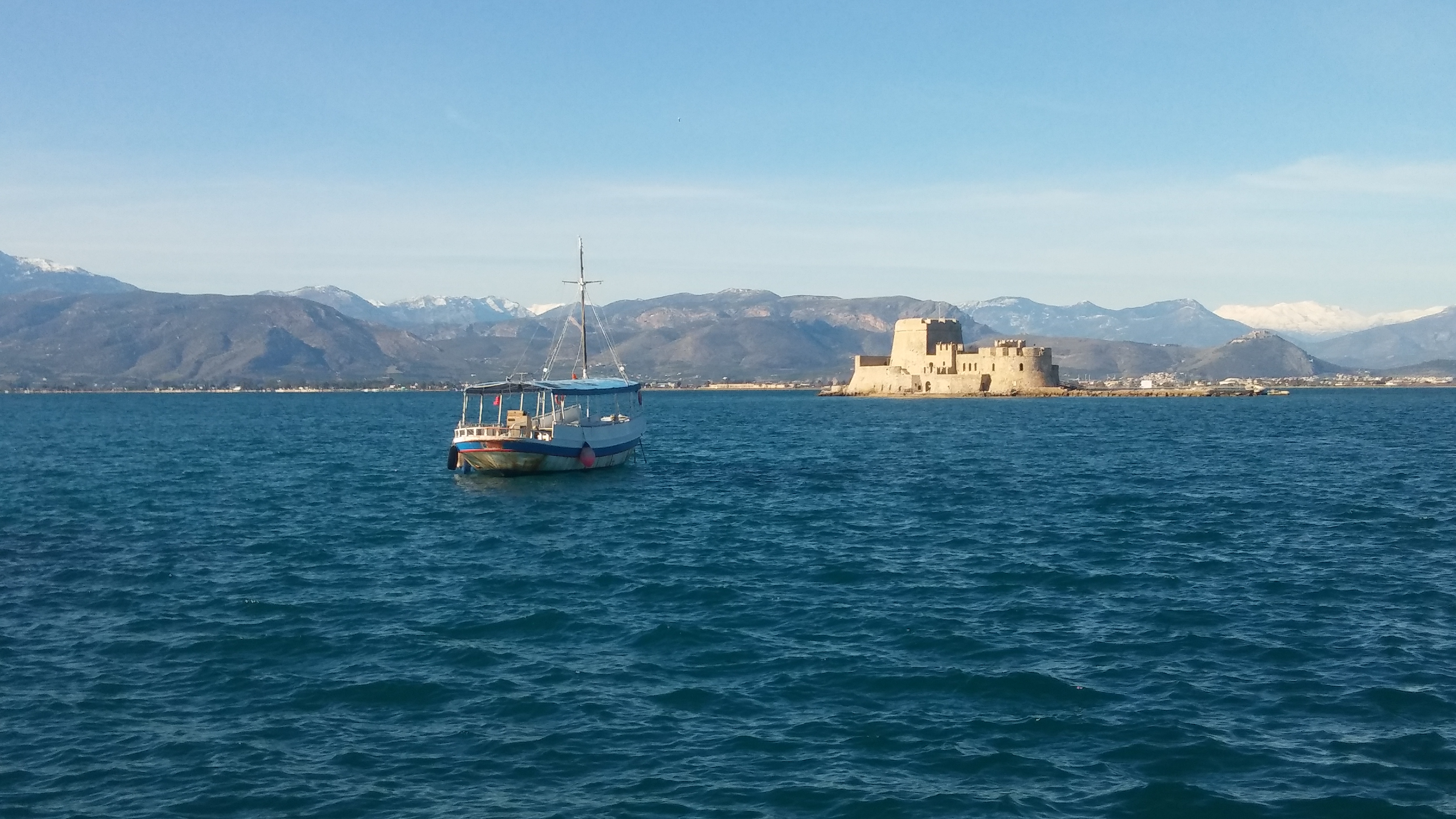
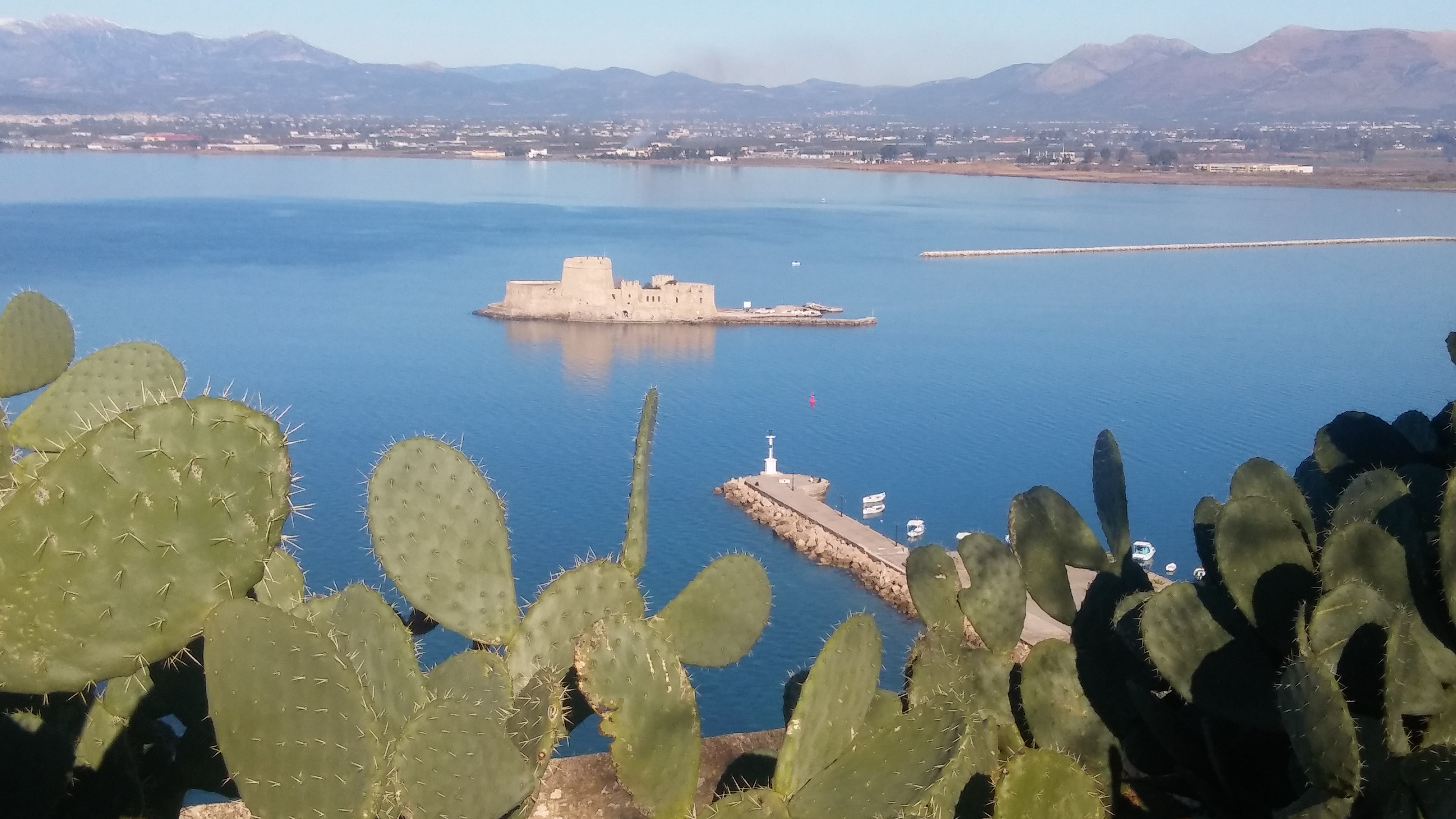
No matter where you are in the old quarter of Nafplio, you will sooner or later wind up in the promenade. Akti Miaouli Street is lined with cafes, all of them offering a picturesque view to the Venetian fort of Bourtzi that stands isolated from town in the middle of the water. Back in the day, a chain connected it to Akronafplia so that unwanted ships could not approach the city. Much later in time, Bourtzi became a prison (the war hero Kolokotronis was jailed here too), then a hotel (19230s – 1960s), and now it’s a popular point of interest for the tourists. Throughout the year, caiques ferry visitors back and forth to it from the promenade. I visited it years ago and took some wonderful pictures, which I plan to share on a separate article. When I do, I will make sure to link up to it from here.
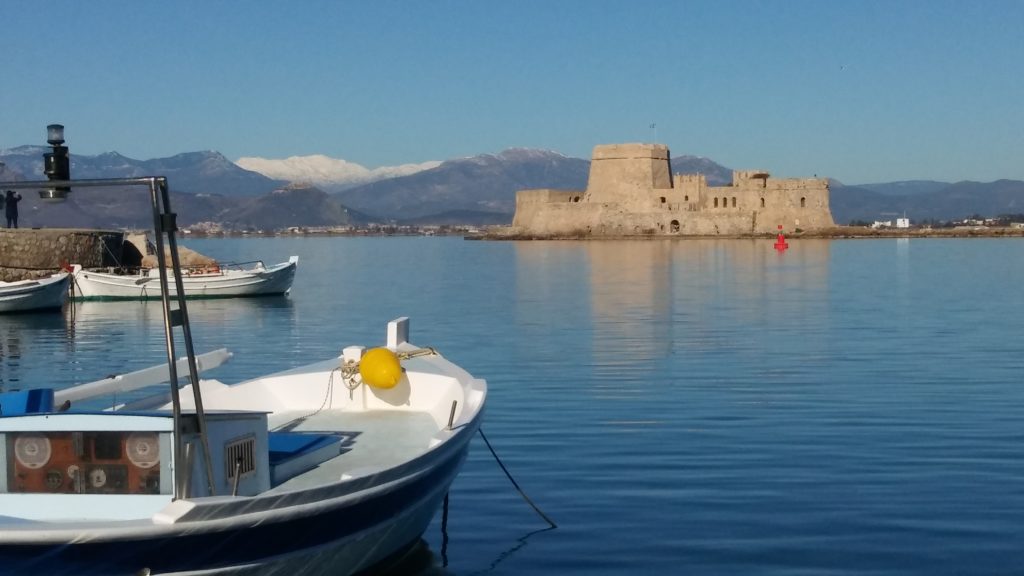
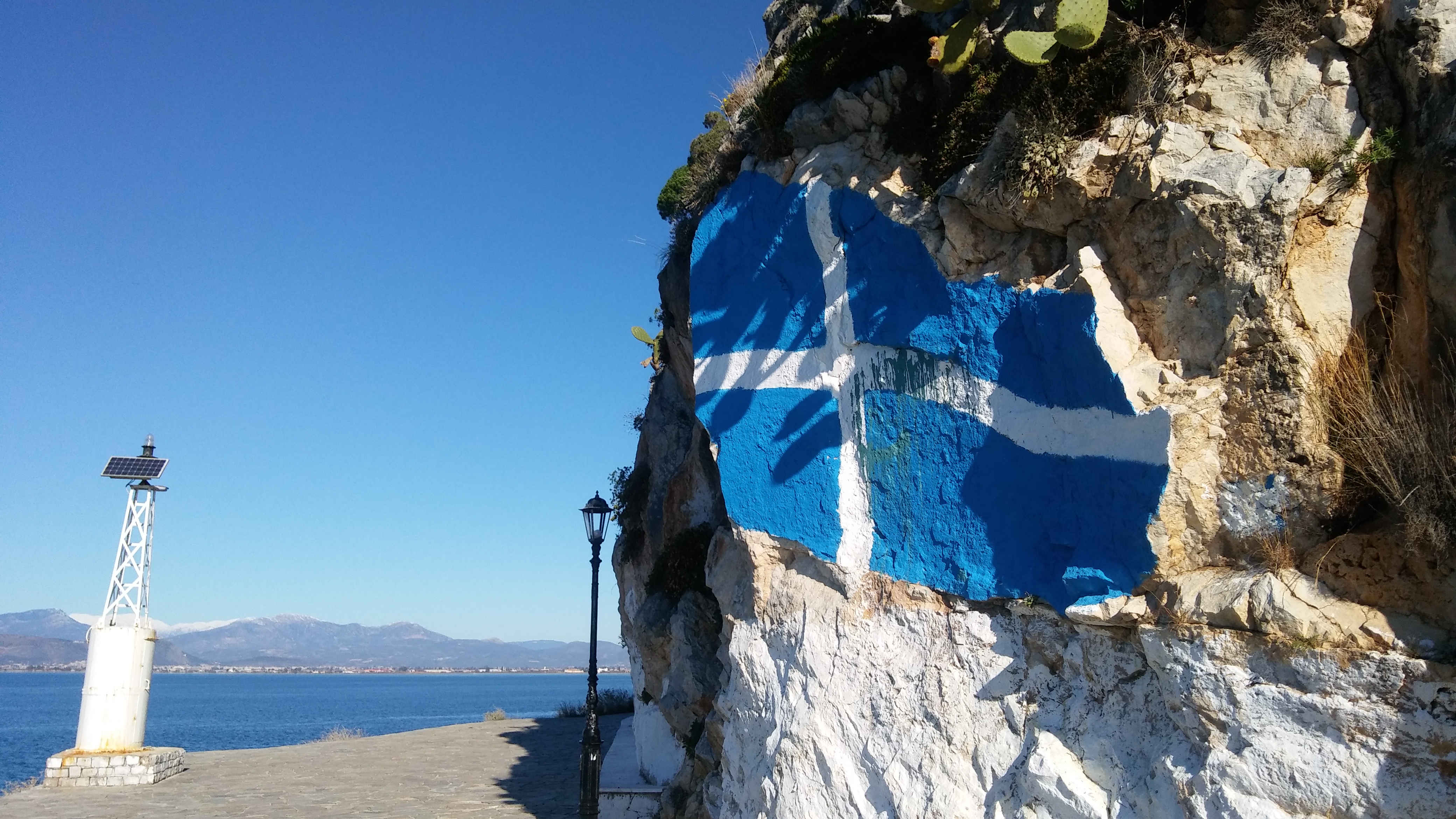
At the end of the promenade there is a tiny lighthouse, where visitors can have a closer view of Bourtzi and the castle of Argos in the distance. On the other side, the view is just as breathtaking:
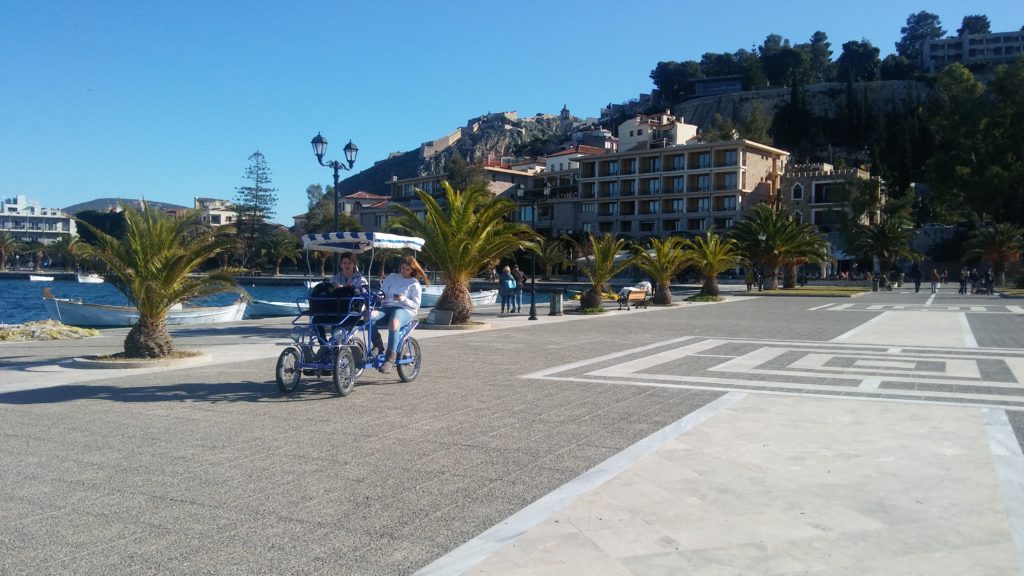
Palamidi and Akronafplia as viewed from the lighthouse

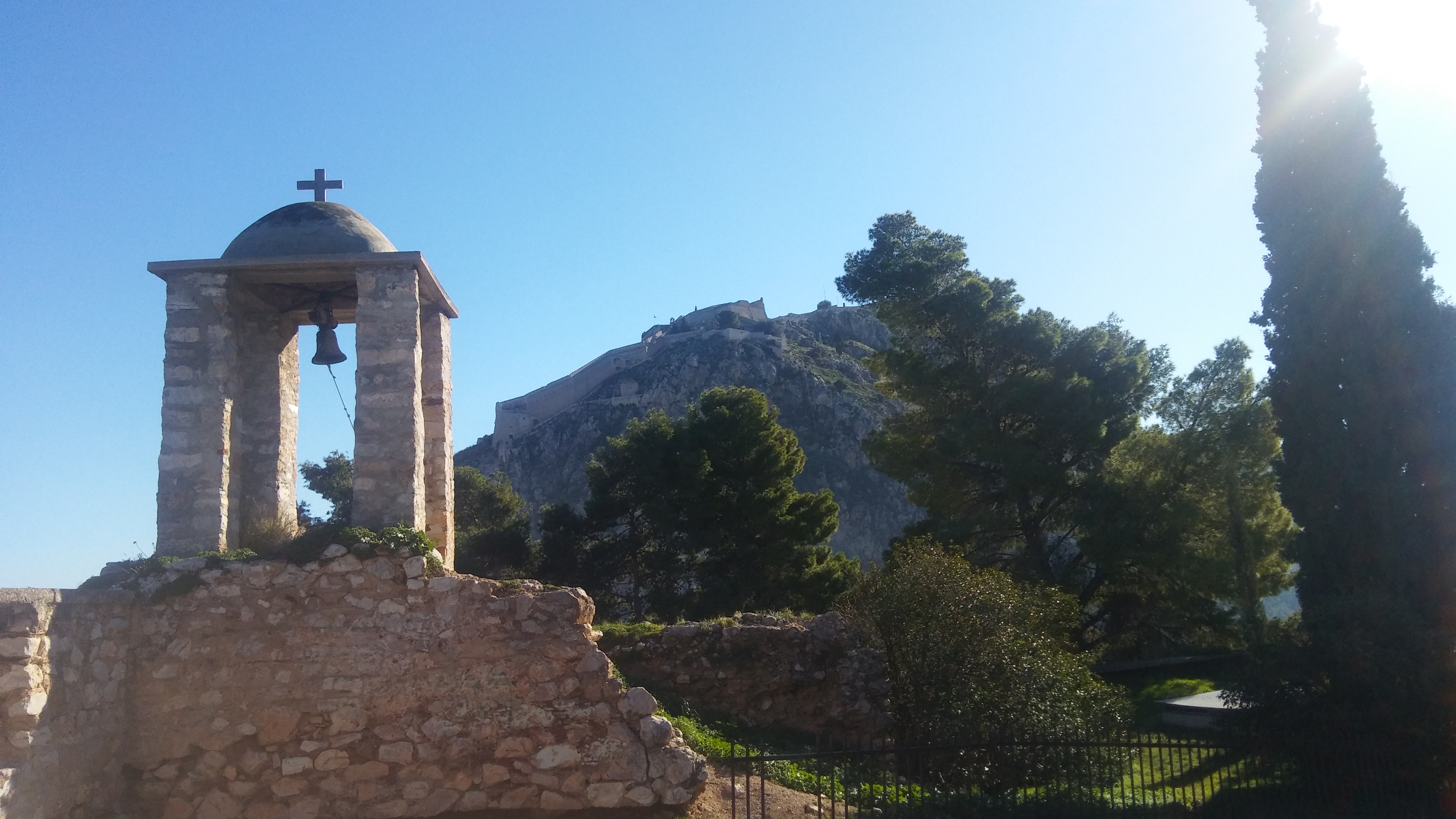
Palamidi castle and the lower hill of Akronafplia crown the old town to an enchanting effect. A visit to Akronafplia is a must, and the ascent on foot is nowhere near as laborious as the one to Palamidi. Actually, I wouldn’t recommend to brave the 999 steps to Palamidi unless you’re seriously fit! On the other hand, Akronafplia should be a peace of cake to get to on foot if you enjoy quiet, long walks.

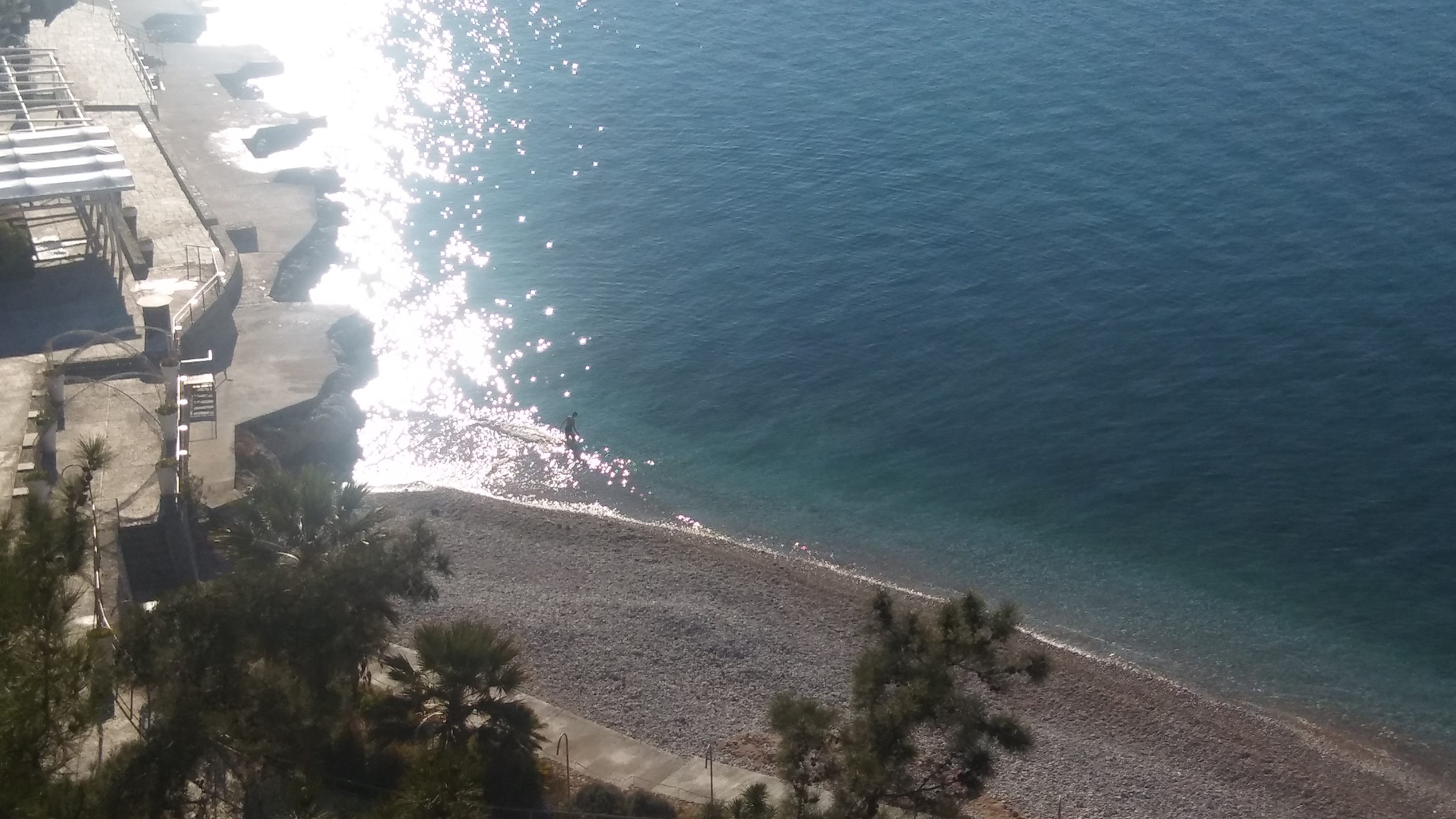
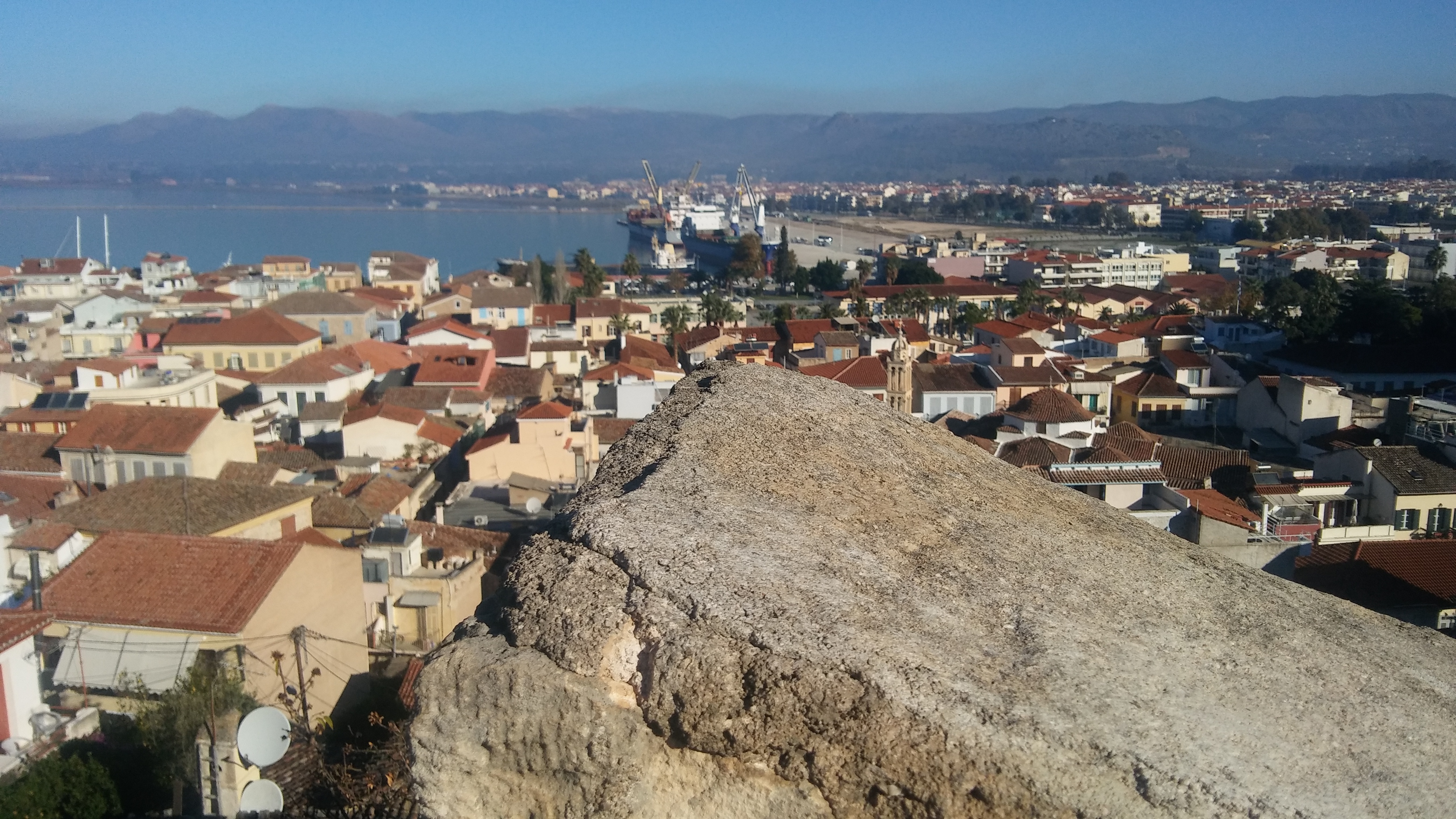
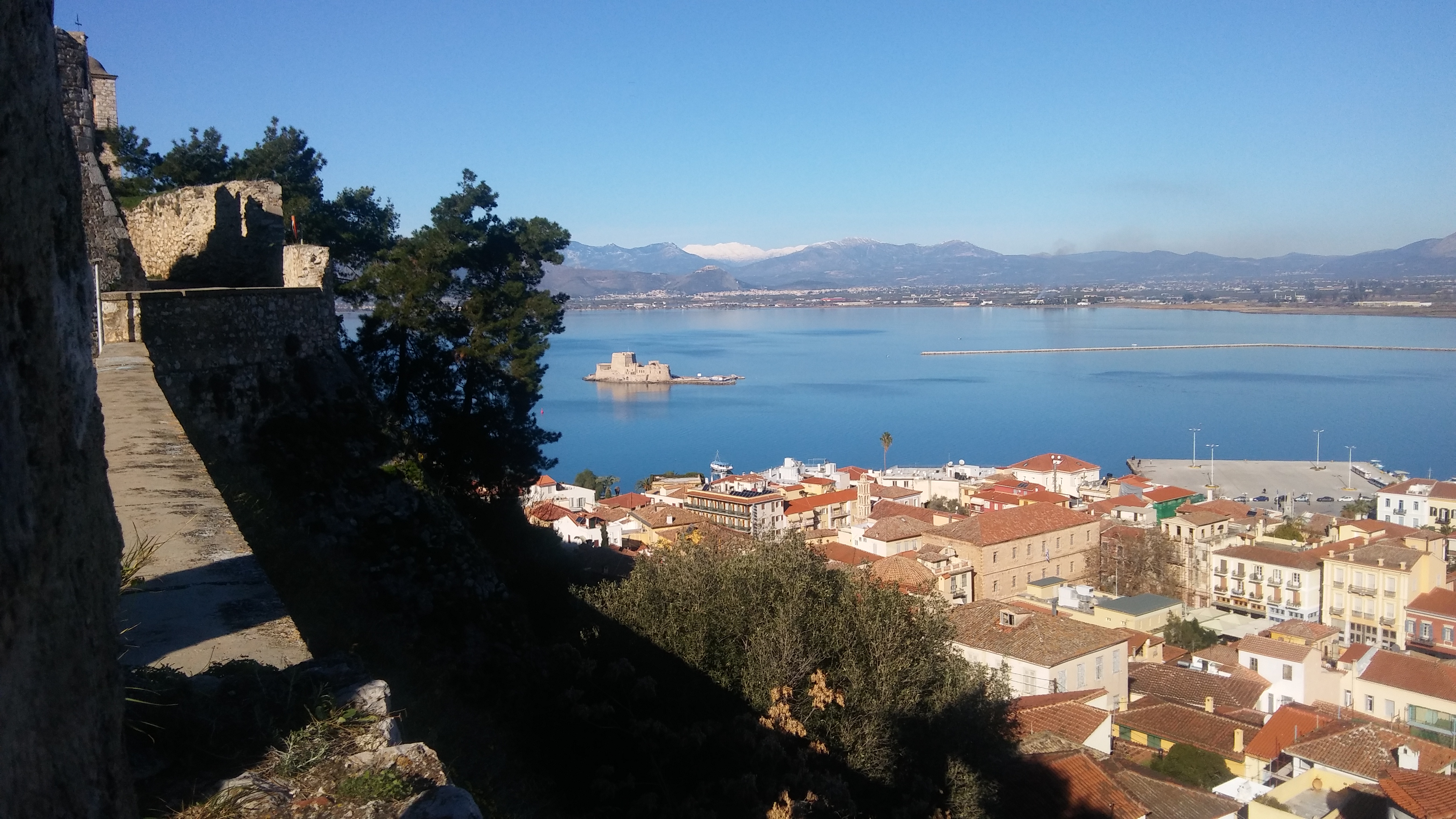
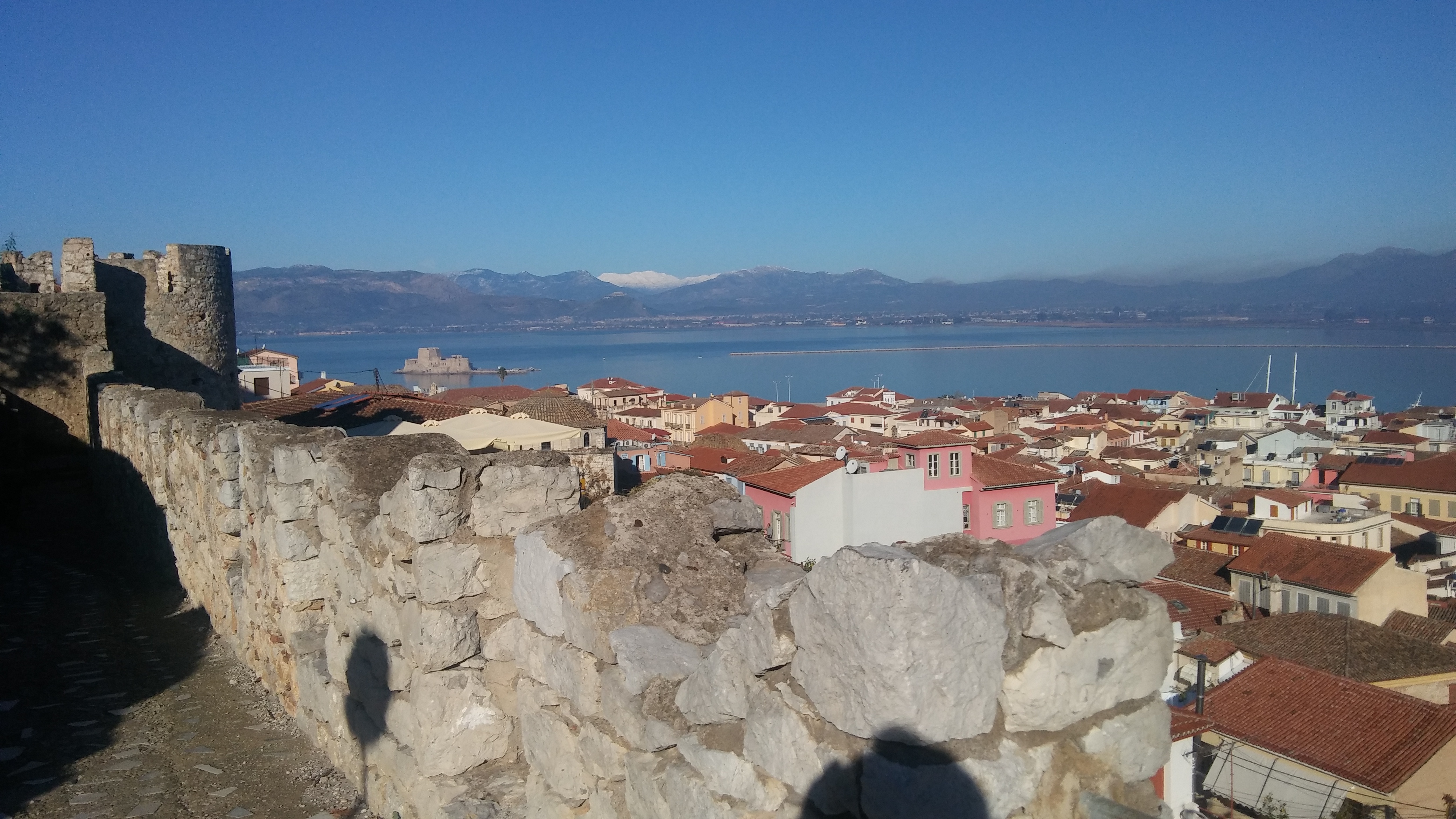
Akronafplia offers spectacular views of the town and the beach of Arvanitia, as well as a couple of places of interest – the most interesting being the clock tower and the fort ruins. See the section ‘Suggested Walks’ later in this post for details and photos of Akronafplia.

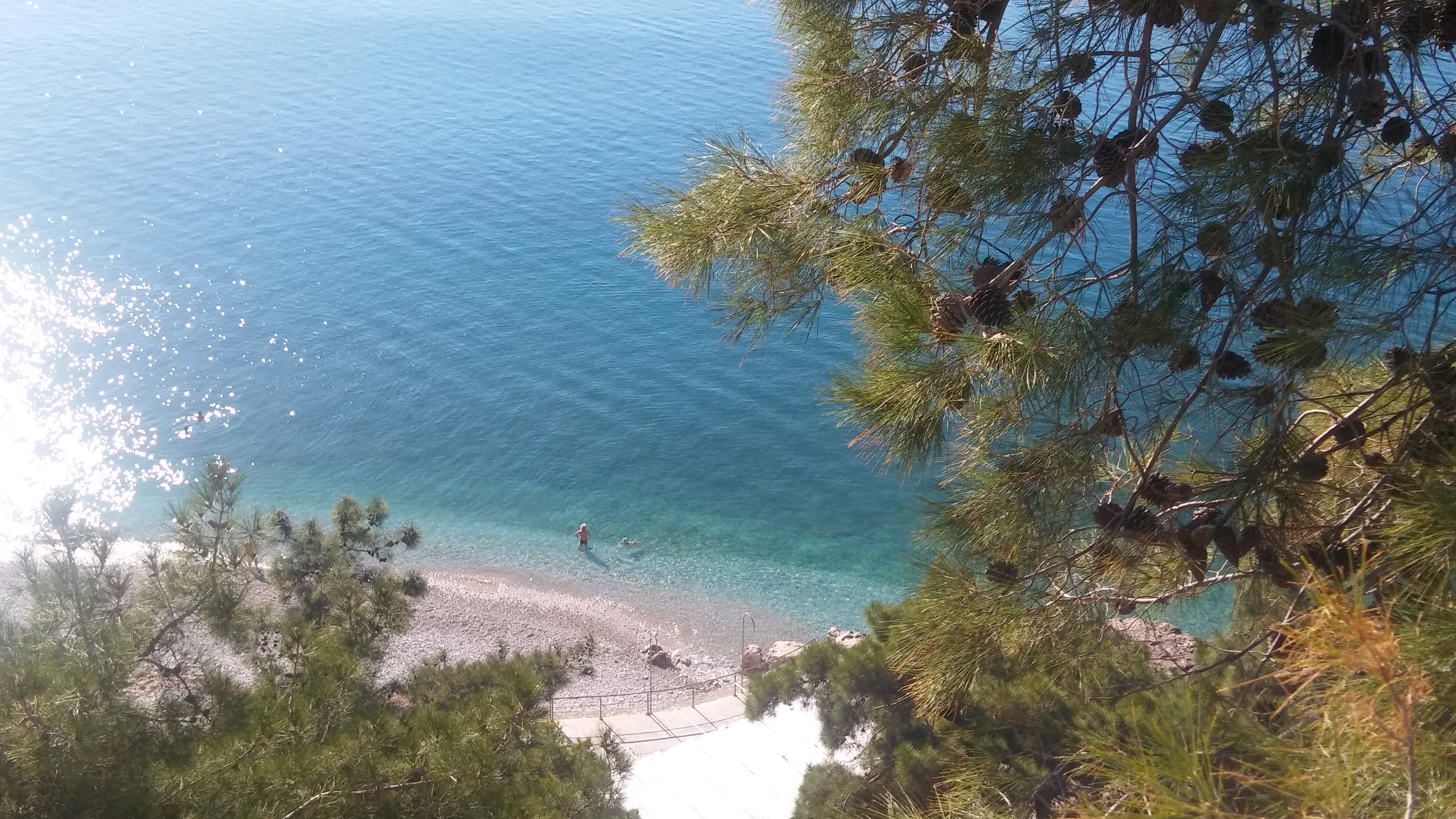
Leaving the lighthouse, one can either head left towards the old town, or head right for a delightful walk to Arvanitia Beach (again, see ‘Suggested Walks’ later in this post for details and photos).


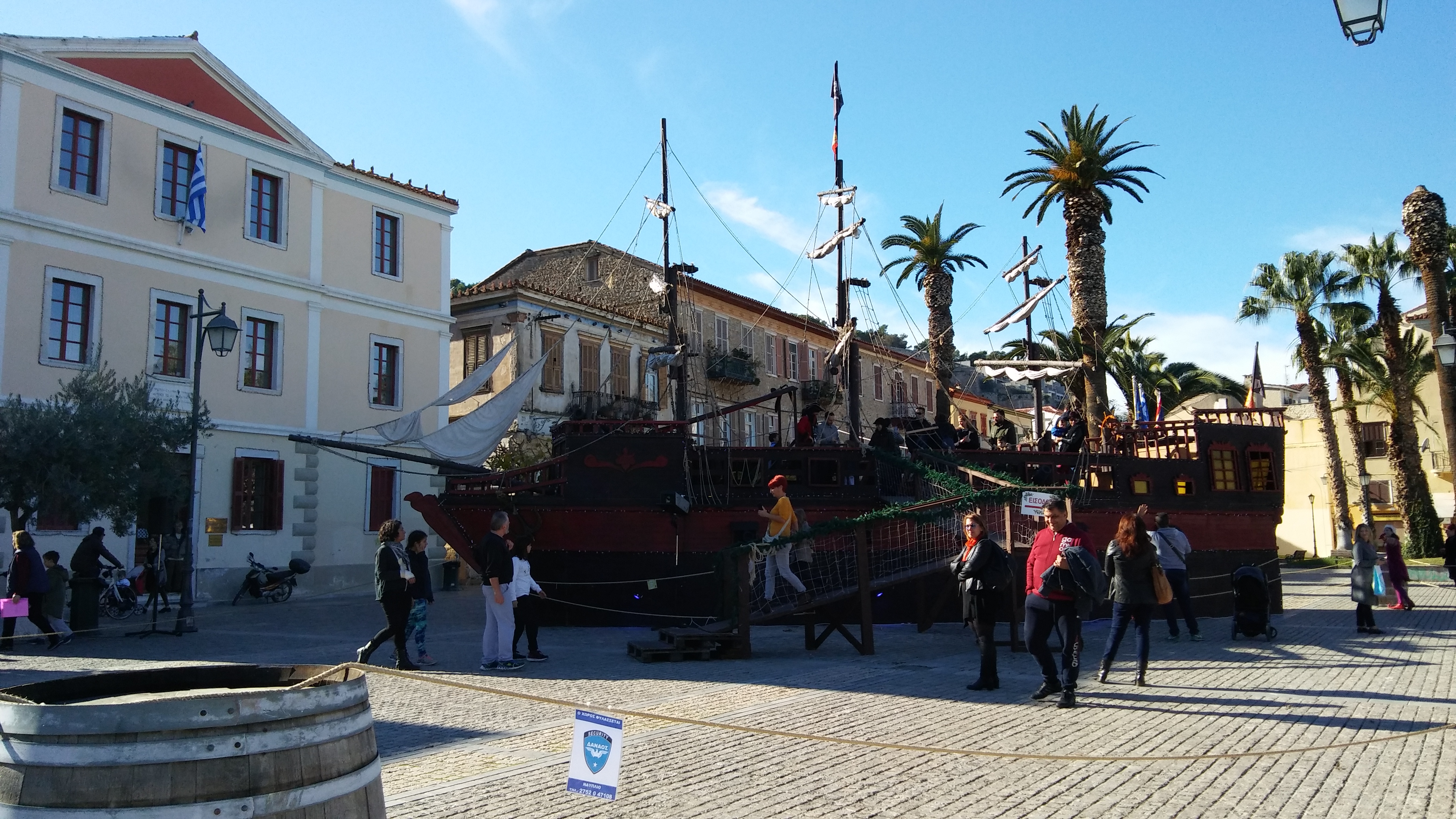
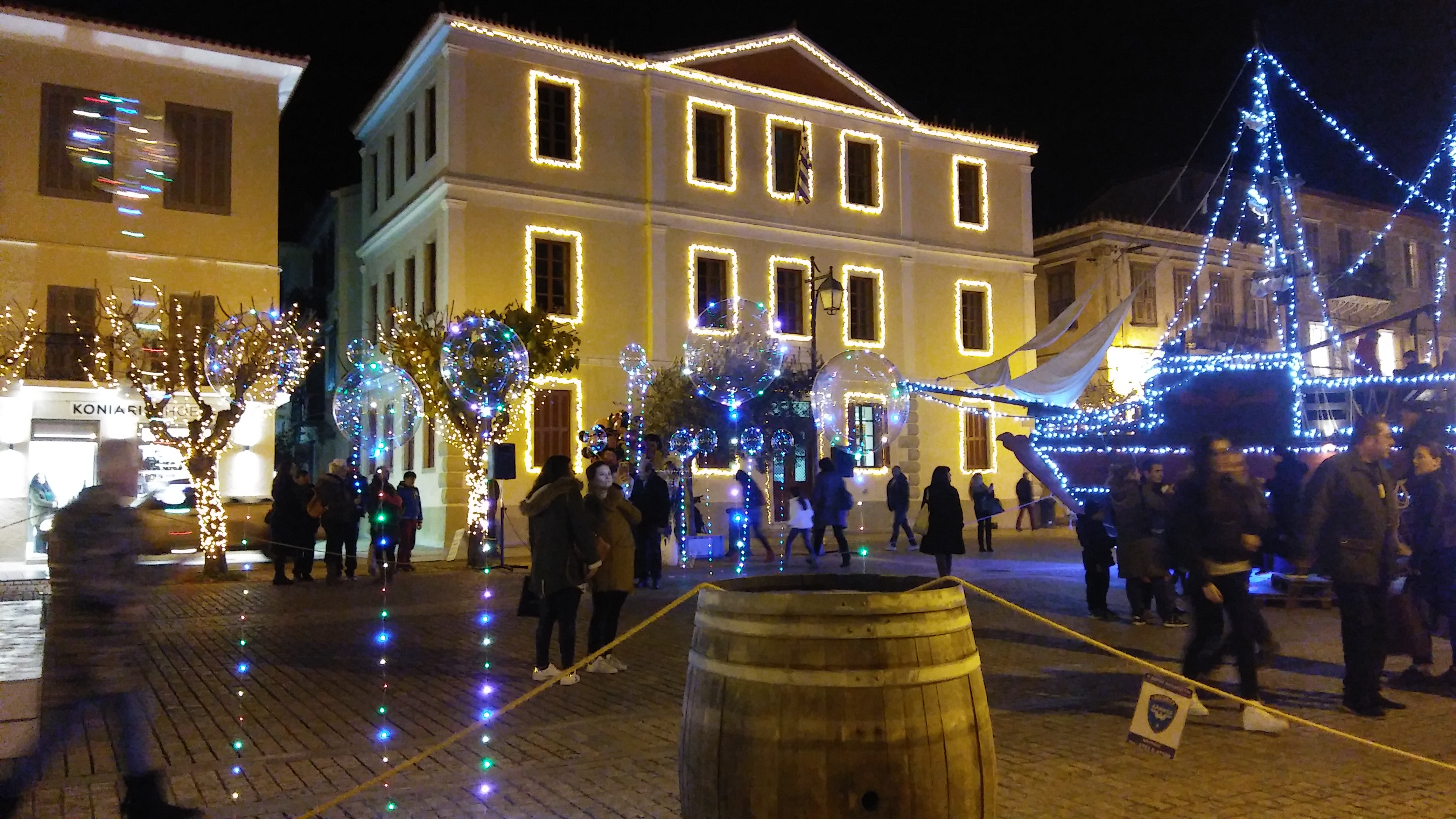
The photos in this post were all taken around New Year’s Day. The city was decorated beautifully, and a pirate ship was put up in Trion Navarchon Square (Three Admirals). Children’s events took place there every day during our stay.
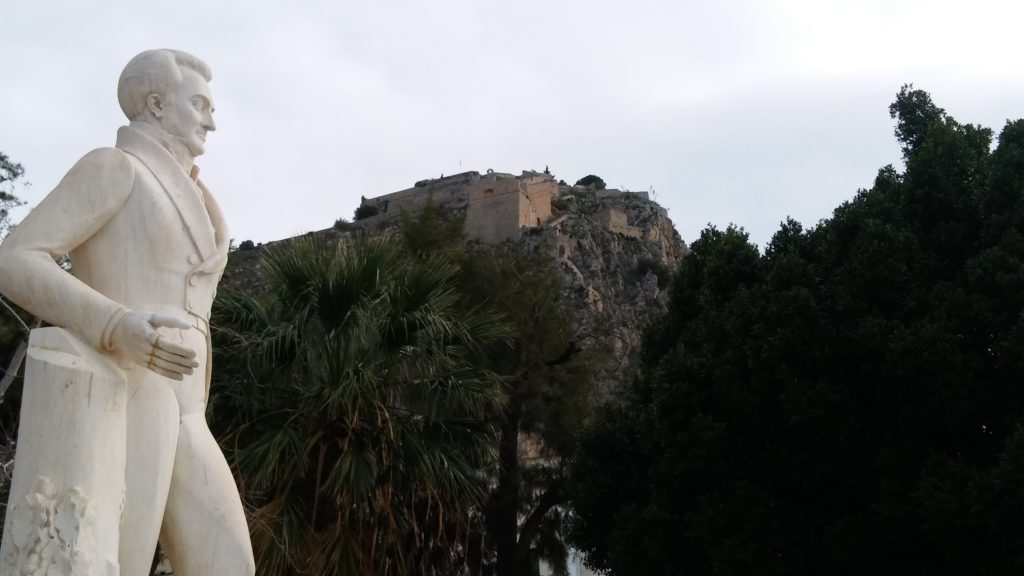
 

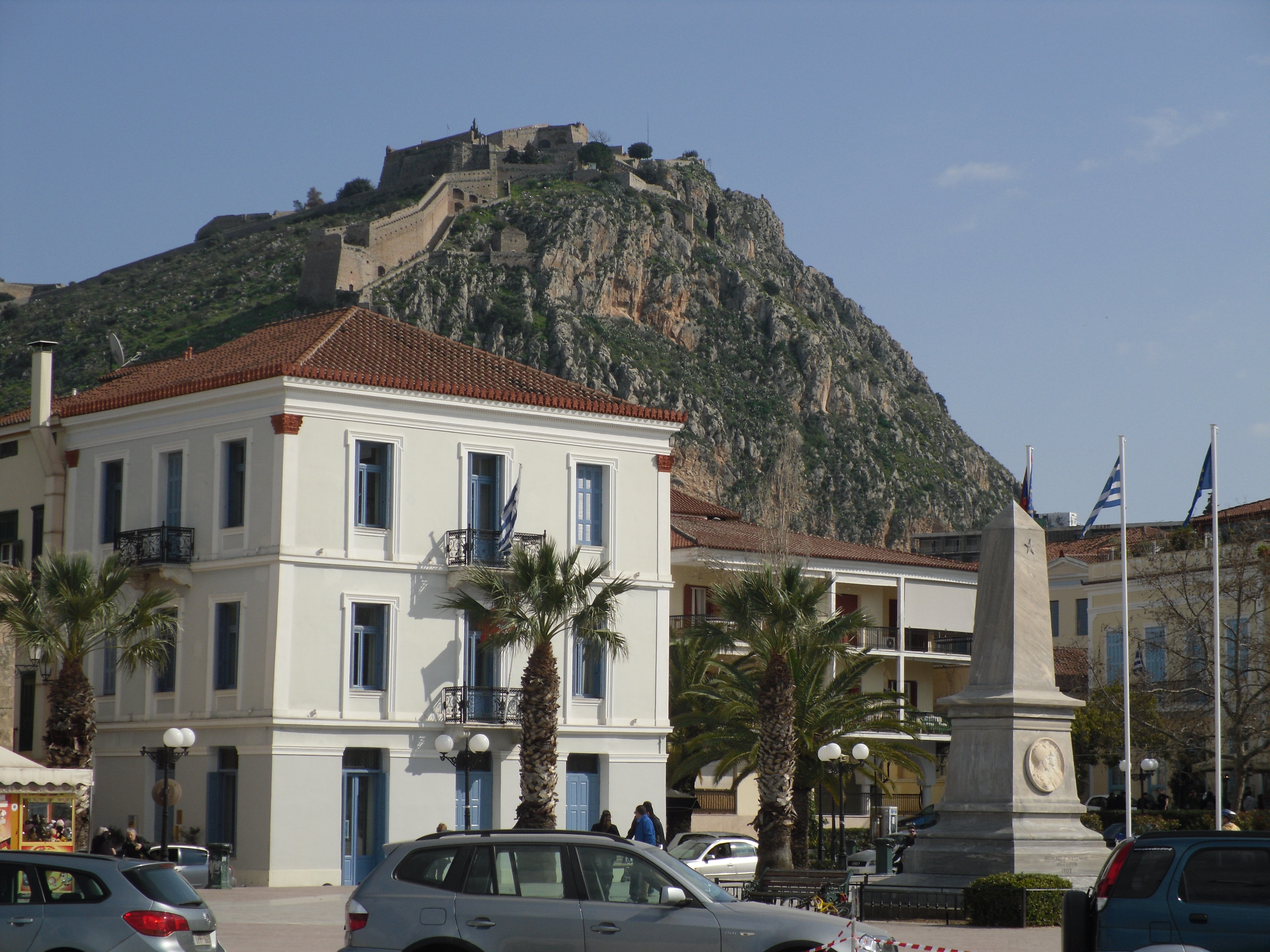
A view of Palamidi from Kapodistrias square. Kapodistrias was the first governor of Greece

The infamous Palamidi is visible from anywhere in Nafplio. To visit it, you can either drive along 25is Martiou Street, then up the hill to its main entrance or, if you dare the exertion, go up its 999 steps that begin from the old quarter near The Land Gate (Pyli Ksiras).
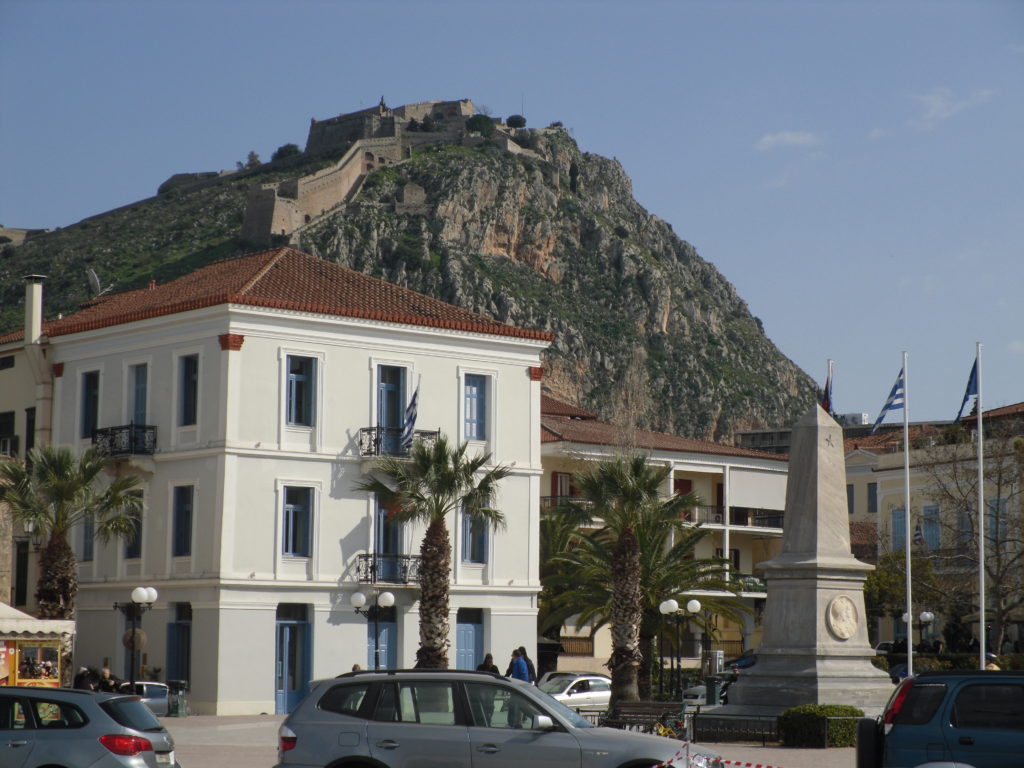
A view of Palamidi castle from Fillelinon (philellenes) square on the promenade

Legend has it that the 999 steps of Palamidi used to be 1,000 but the horse of the war hero Theodoros Kolokotronis broke the 1000th with its hooves. Kolokotronis was one of the prominent war generals of the 1820s who freed Nafplio as well as the town of Tripoli.

In Kolokotronis square in Nafplio, there is a magnificent statue that depicts him on his horse pointing towards Tripoli. A similar statue stands in Stadiou street, Athens, outside the Old Parliament building (now, the National Historical Museum).

Although he was a fervent supporter of Prince Otto of Bavaria and rooted for him to become the king of Greece, when Kolokotronis was an elderly man, and after Otto had become king, he wound up being charged with treason. Even more ironically, he then wound up in a humid, tiny prison in the castle of Palamidi, the very place he once entered as a victor and liberator. The prison is a tiny space carved in the rock and is a claustrophobic sightseeing spot on offer to the visitors of the castle.

Kolokotronis is among the most revered Greek heroes. His infamous love for Greece and his commitment to freedom from Othoman rule brim over in his legendary words – you’ll find them translated into English below to the best of my ability.
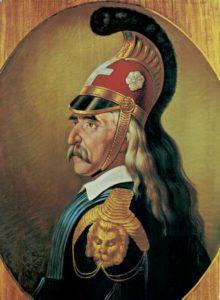
“Are you Greek? What are you bowing for? Stand up! We Greeks talk even to the Gods while standing tall!”

“Greece is what we want, and it doesn’t matter if it means we will be eating stones!”

His infamous red helmet is a remnant of his service as major in Zakynthos (Zante) in the British army. The helmet and his armor are on display in the National Historical Museum (Stadiou street, Athens). For more information on the life of this great Greek, go here
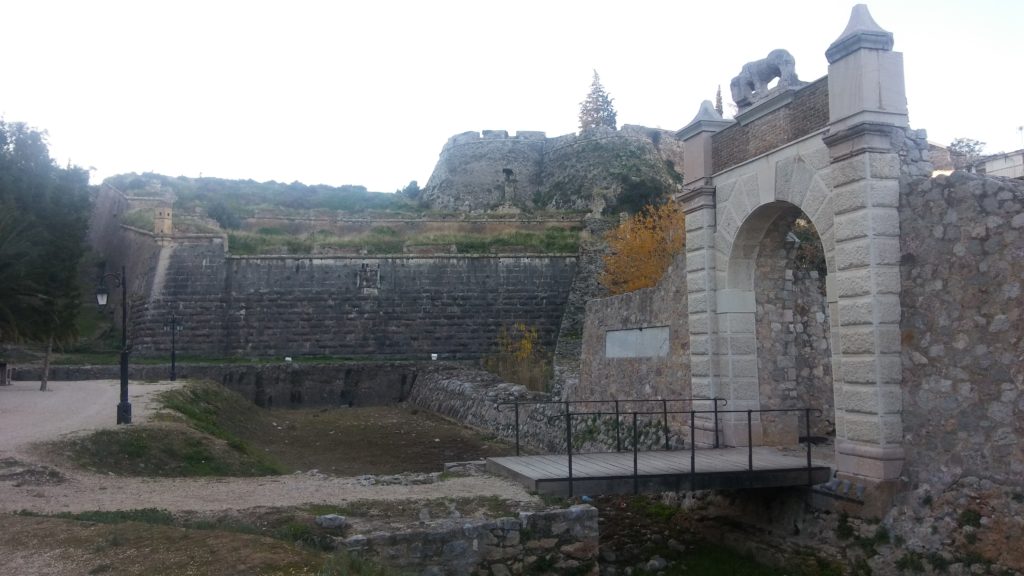
 

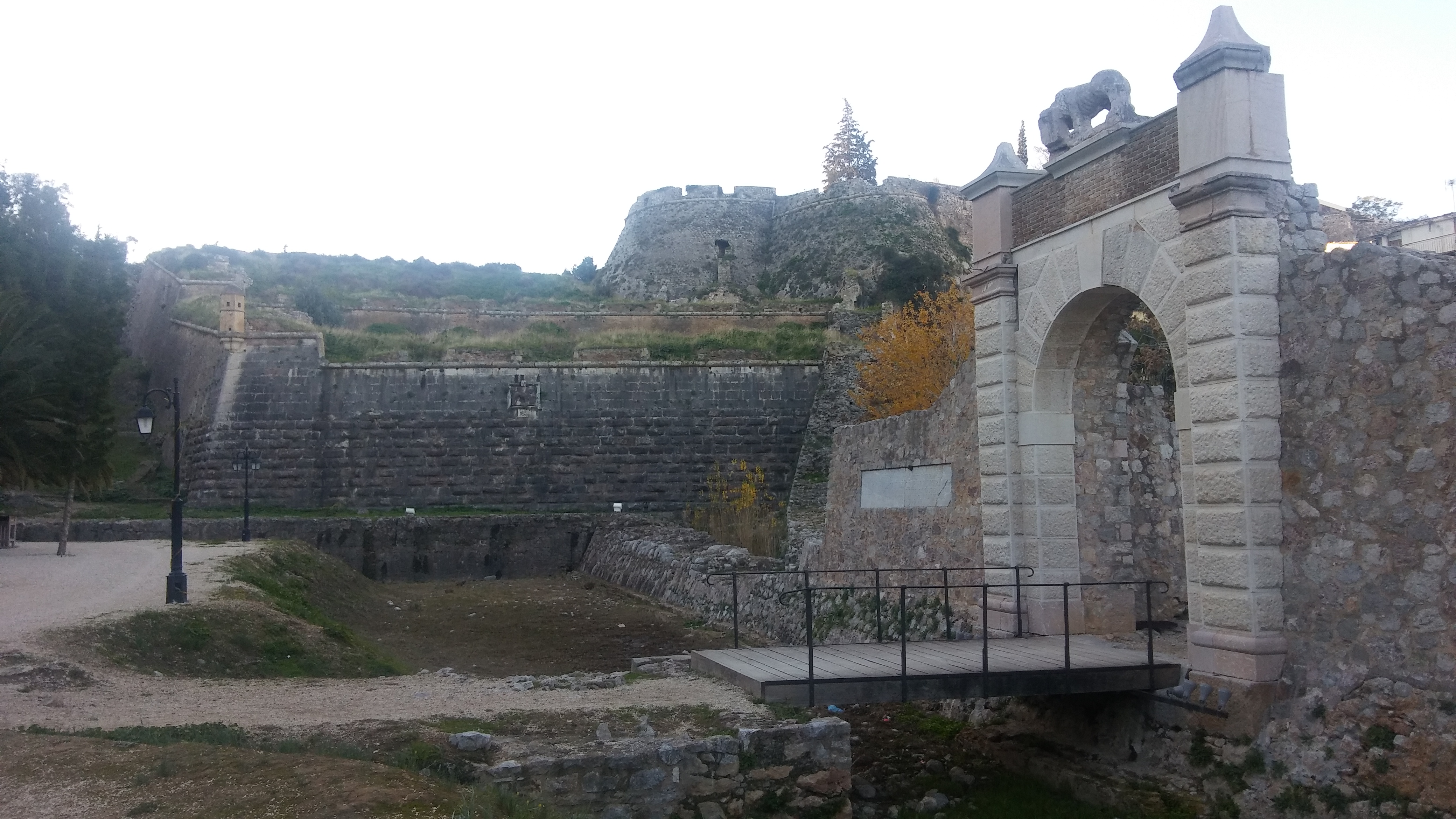
During Venetian rule, Nafplio had the name ‘Napoli di Romania’. The Venetians had fortified the city and had built a single gate one could enter or exit through (1687). A reconstructed version of it survives today and it is called The Land Gate (Pyli Ksiras).

The Venetians had built a canal that ran past the gate and allowed small boats to come in from the sea and moor outside. The gate closed at sun down. Anyone who arrived after that, would have no choice but to spend the night outside. There was a military camp behind the gate – soldiers guarded it  and monitored who came and went.

The first king of Greece, King Otto from Bavaria, was offered the key to Nafplio in front of the Land Gate when he was only eighteen years old (in 1833).
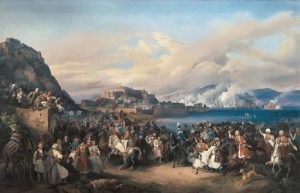
This painting by Peter Von Hess from 1835 depicts the entry of King Otto to the city of Nafplio. The Land Gate is visible in the distance. All three timeless forts of Nafplio are also depicted.

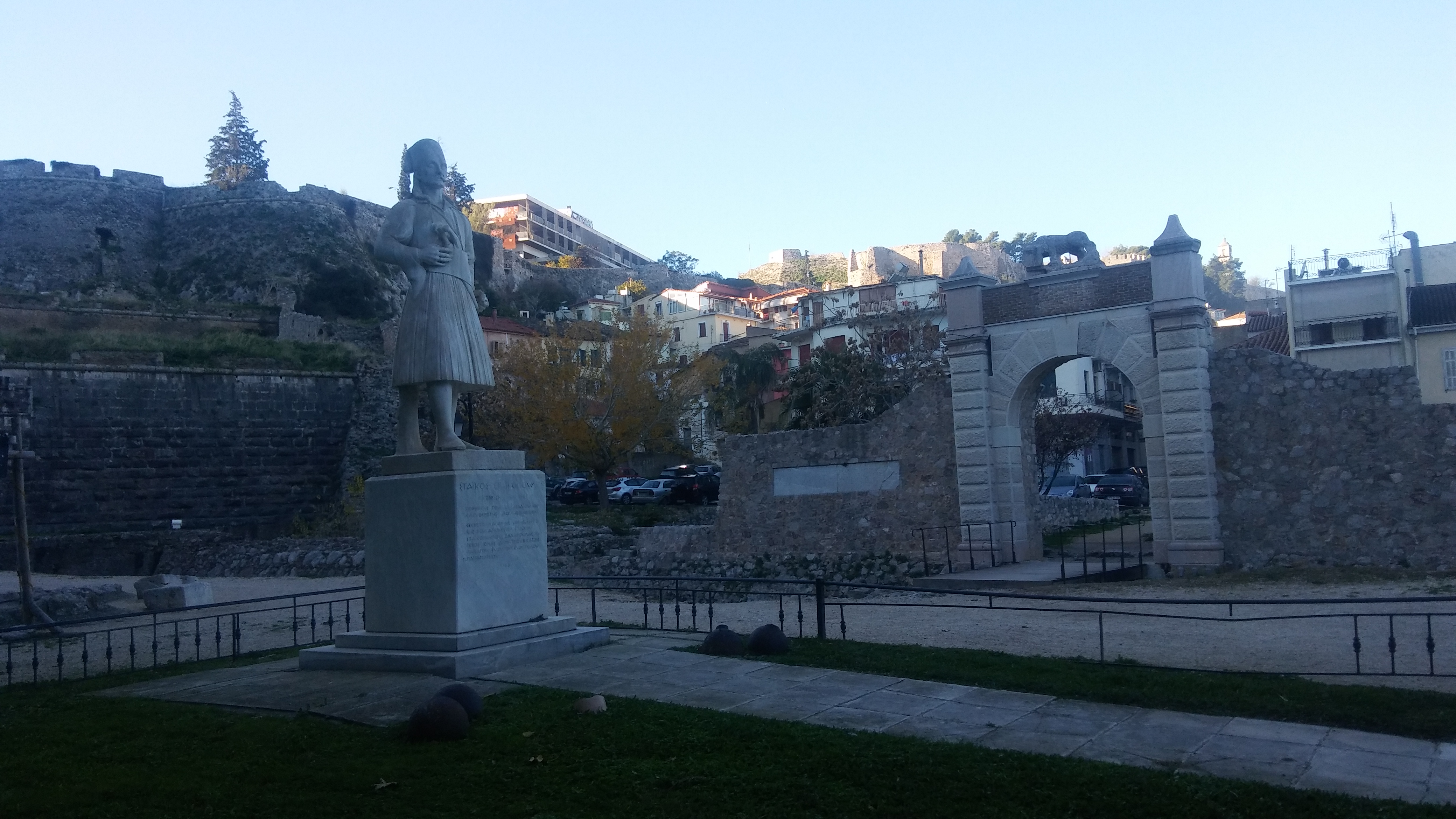
The Land Gate was demolished around 1894 and the canal was gradually filled with soil. Today, it stands reconstructed with the original lion of St Mark on its top, but sadly without its head, wings and tail.
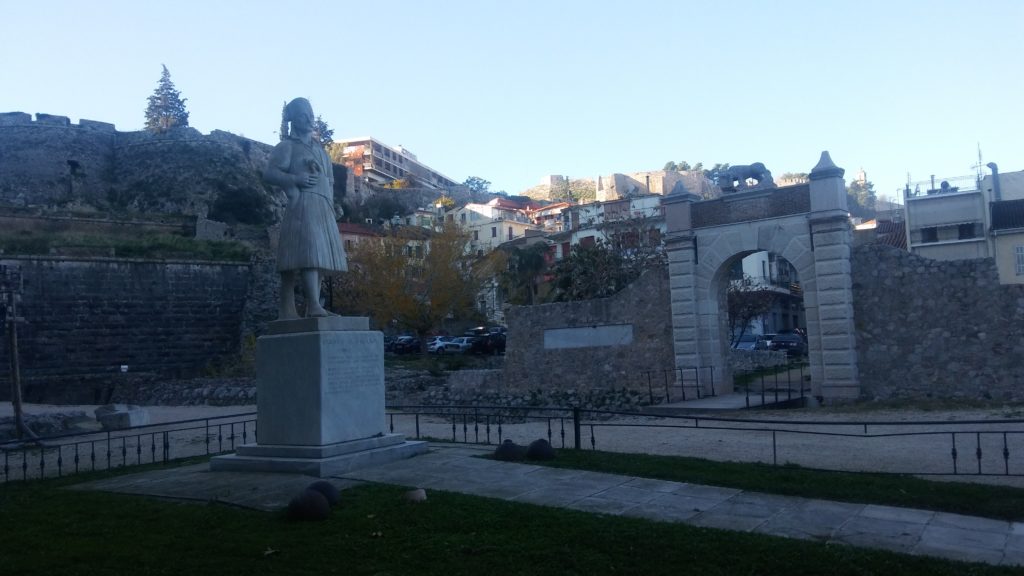
Before the gate stands a monument to a local hero of Nafplio, Staikos Staikopoulos, who freed the fort of Palamidi during the Greek War of Independence.
WHERE TO GO FROM THE LAND GATE?

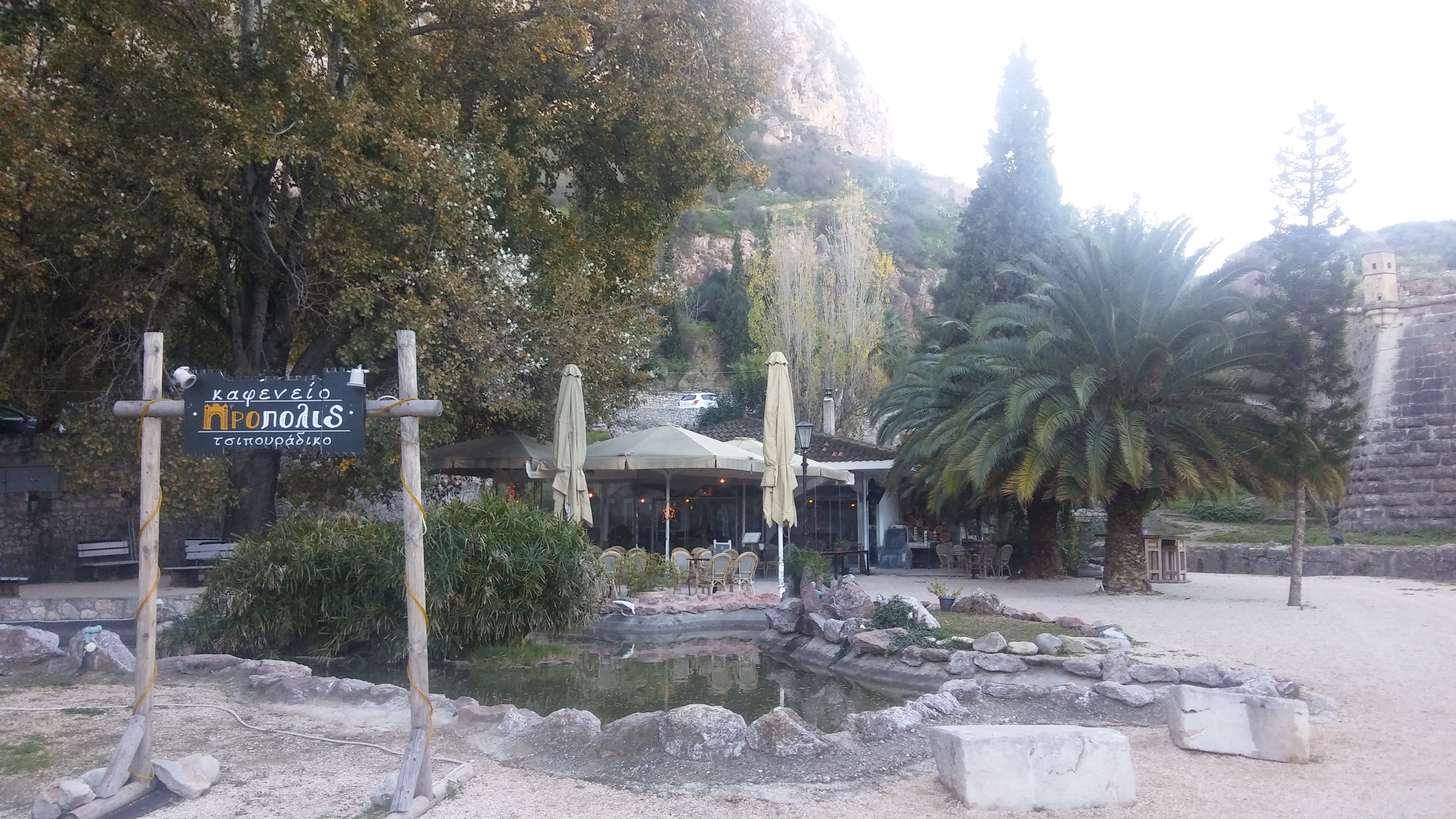
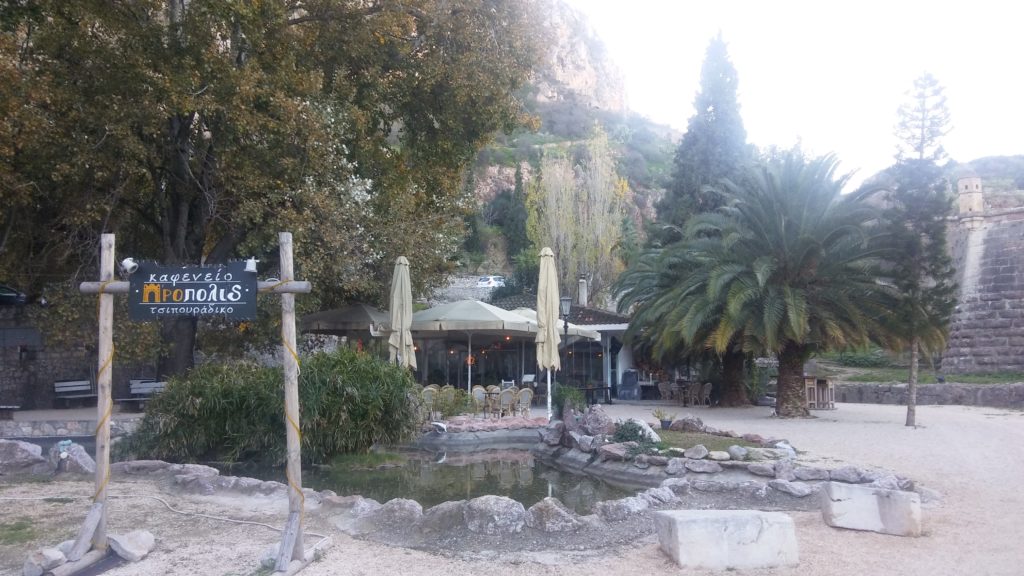
Next to the aforementioned statue is a cafe with artificial waterfalls and a pond. Behind it there are some steps. If you go up to the road from here you can either take the steps to Palamidi (if you dare!!), or bear to the right and carry on uphill to Akronafplia (to the clock tower and the fort ruins) or, where the road divides into two, head down to Arvanitia beach. No matter what you choose, you’re in for unforgettable sea views and scenery (see ‘Suggested Walks’ later in this post for details and photos).


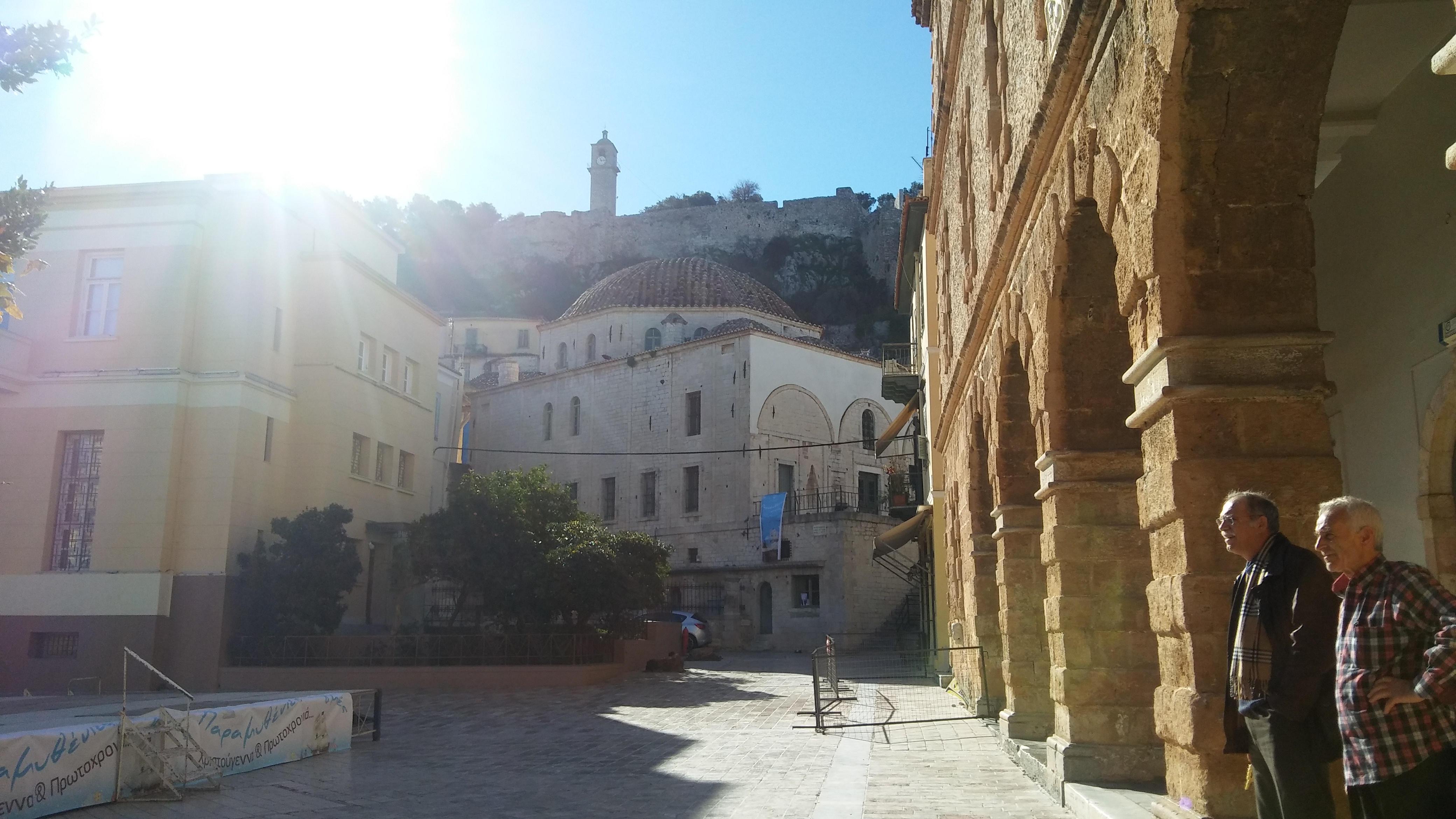
Constitution Square, mentioned earlier for its bustling cafes, is surrounded by magnificent neoclassical buildings, as well as two prominent landmarks: the Archeological museum and the old Mosque (Vouleftikon) with its beautiful dome. The latter was initially a Turkish mosque but when Greece was liberated it housed the first parliament of the newly formed state.
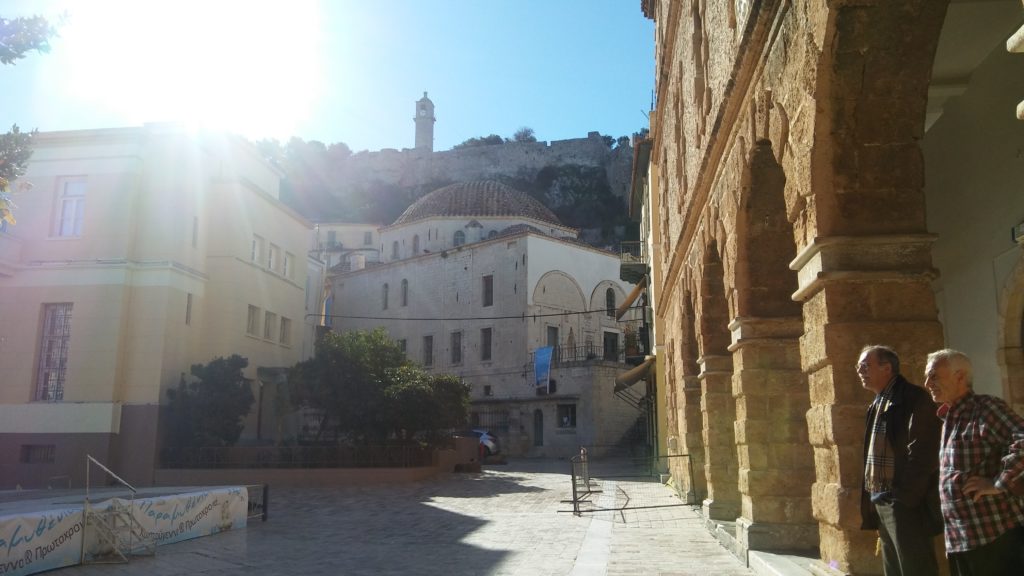
The mosque, which housed the first parliament of Greece, and the old clock on Akronafplia above (picture taken from the facade of the Archeological Museum)

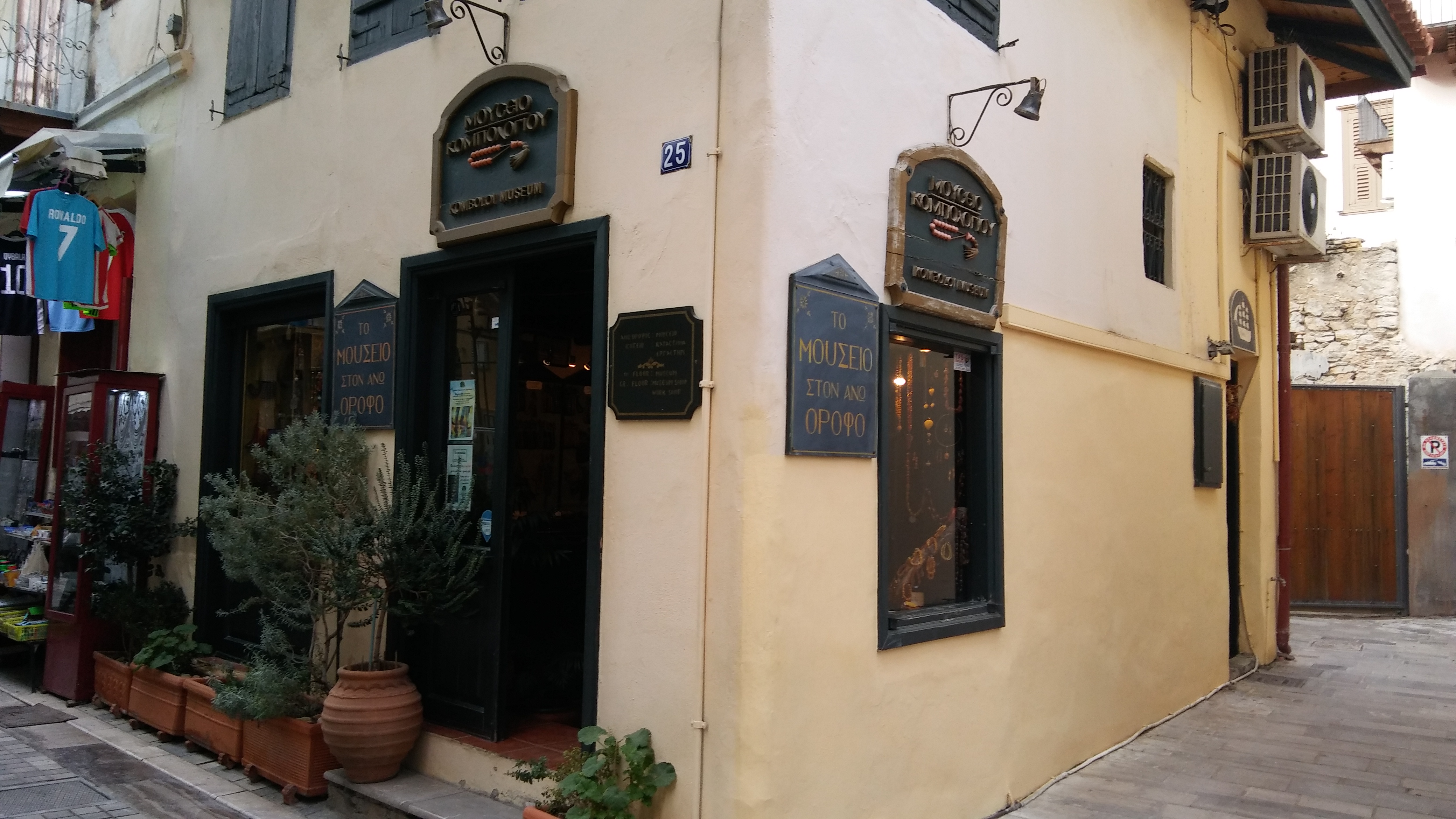
Other museums worth visiting are the War Museum and the Koboloi (worry beads) Museum. Both are situated near Trion Navarchon Square.
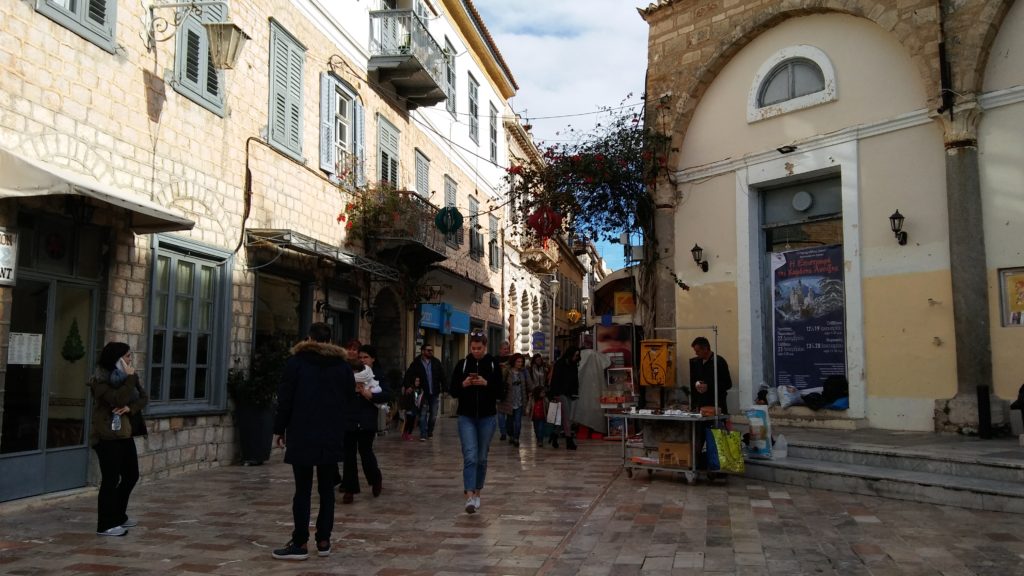
 

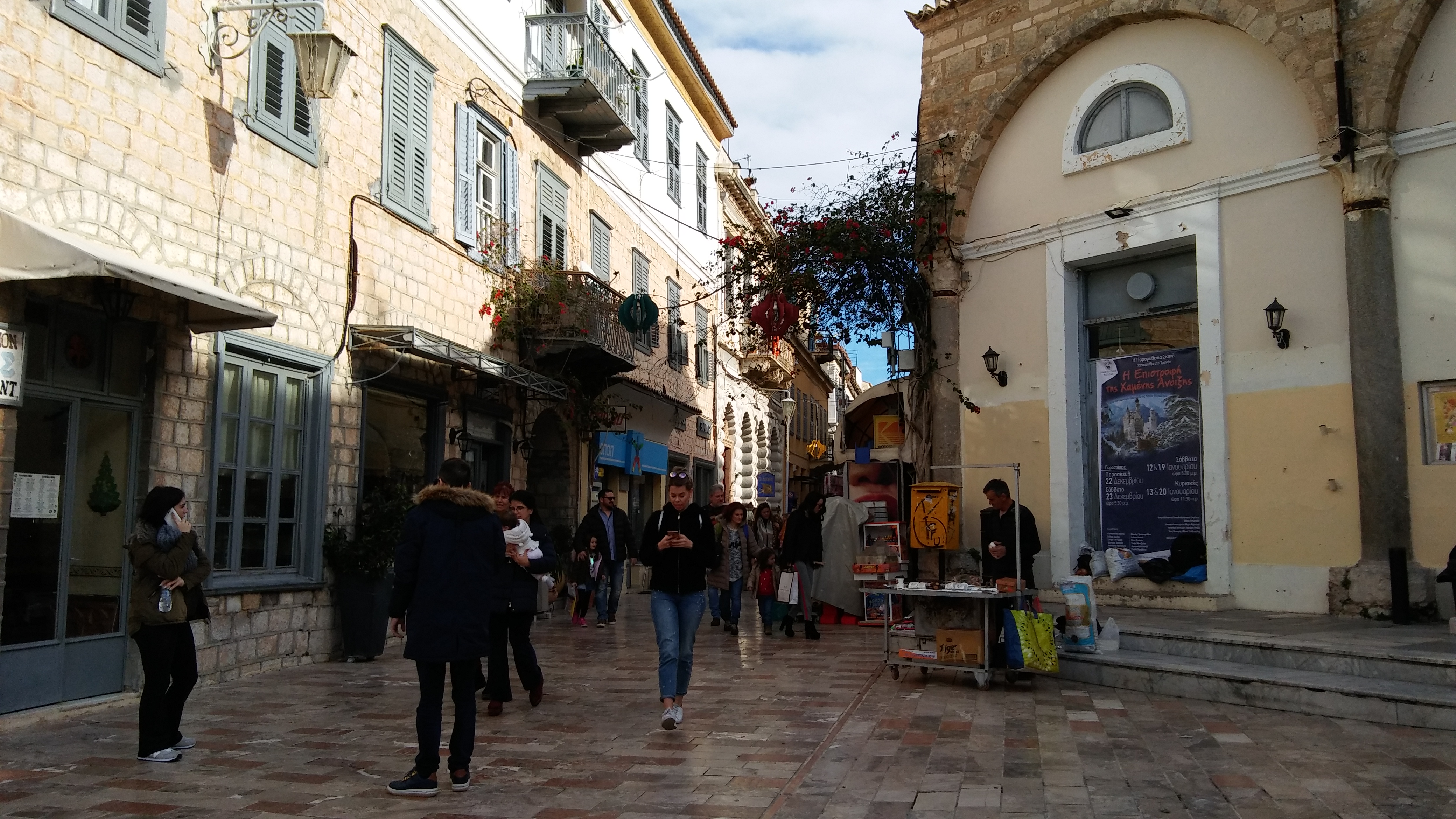
Walking around Nafplio’s lanes is a pleasure in itself. There are many curio shops and wonderful eateries on offer.
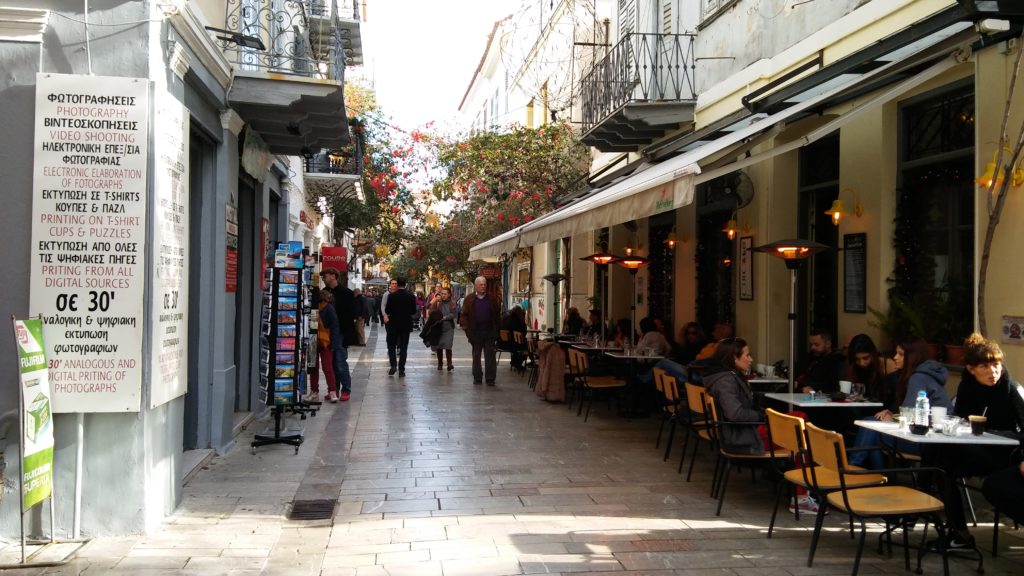
 

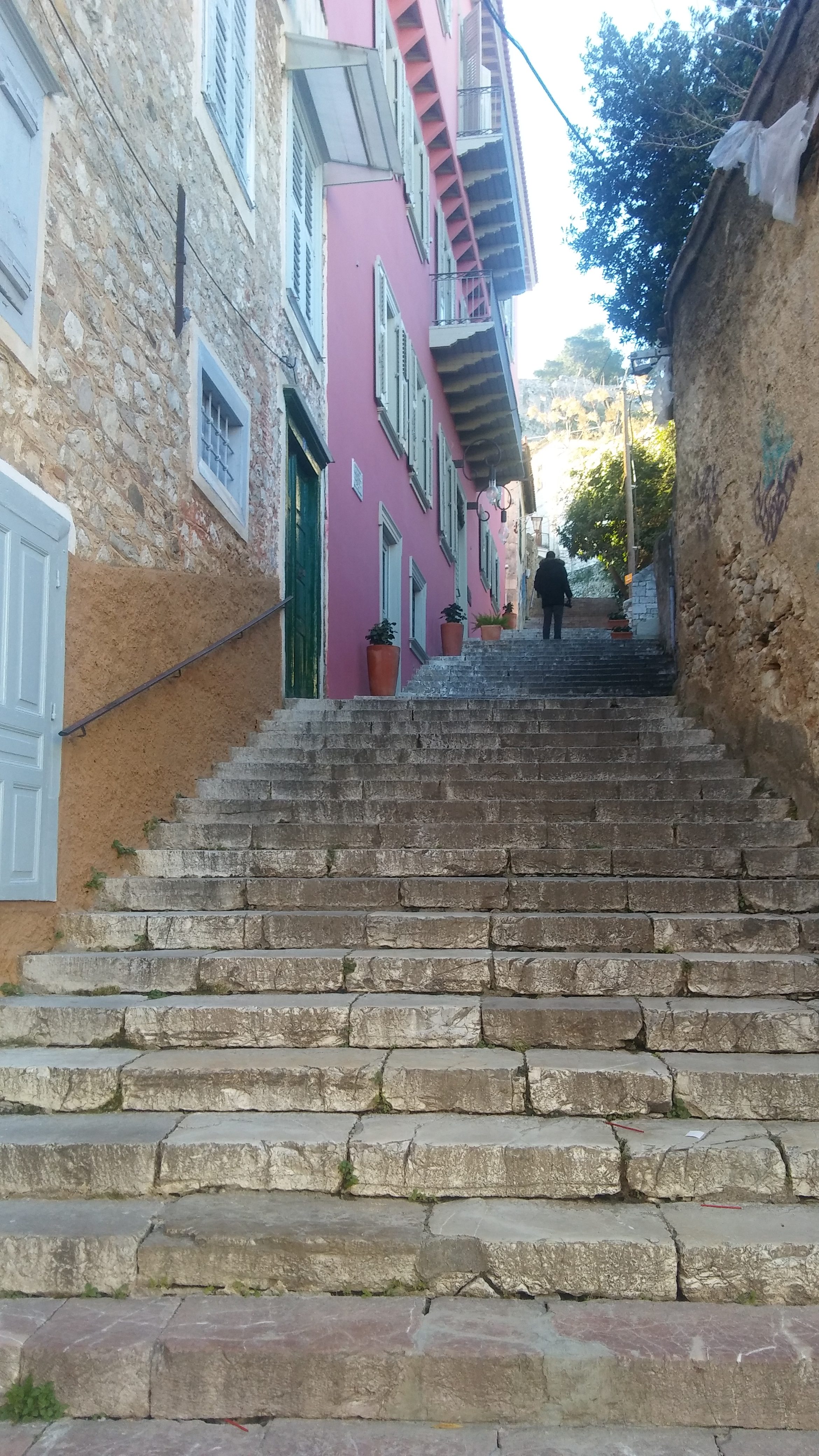
The stepped street of Potamianou near St Spyridon leads to the Catholic church and Akronafplia (clock tower and fort ruins of Its Kale)

Many streets have steps and are so enchanting they simply beg for the amateur photographer to take a snap. These steps on Potamianou Street are situated a little after the infamous St. Spyridon Church (see a little later in this post for the church’s harrowing story!)
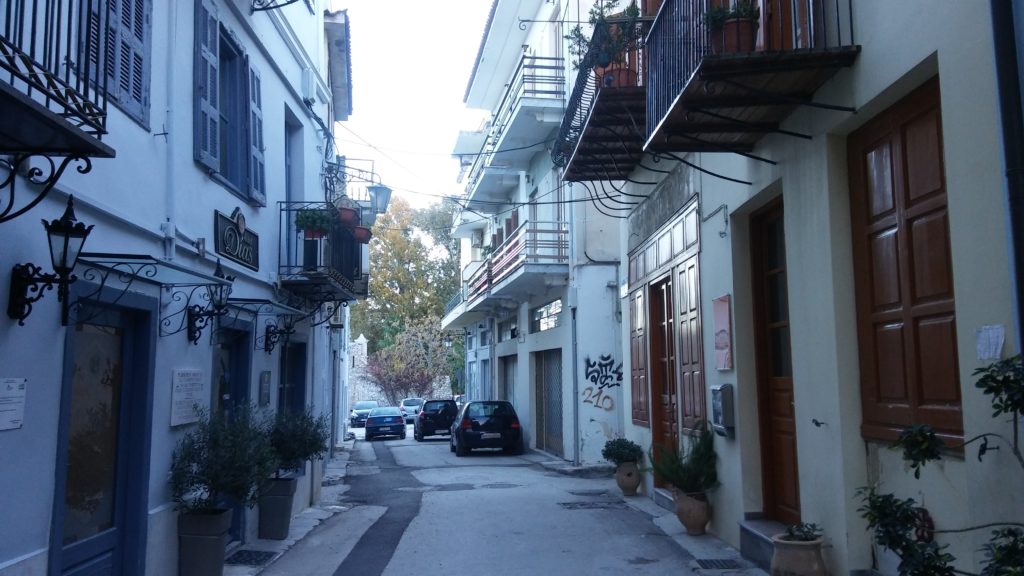
 

It may not look like much at first glance, but this particular corner (just before you get to the Land Gate from St Spyridon’s Church) gave me goosebumps. The signs on the opposite walls informed me that the house on the left, now Dias hotel, was once the home of Alexander Ypsilantis. Across the street, the one with the brown doors and windows used to be the home of Manto Mavrogenous. To think I was standing on the doorsteps of two legends of the Greek War of Independence left me glued to the spot. I just stood and marveled at the facades, reduced to silence for a while, taking it all in.

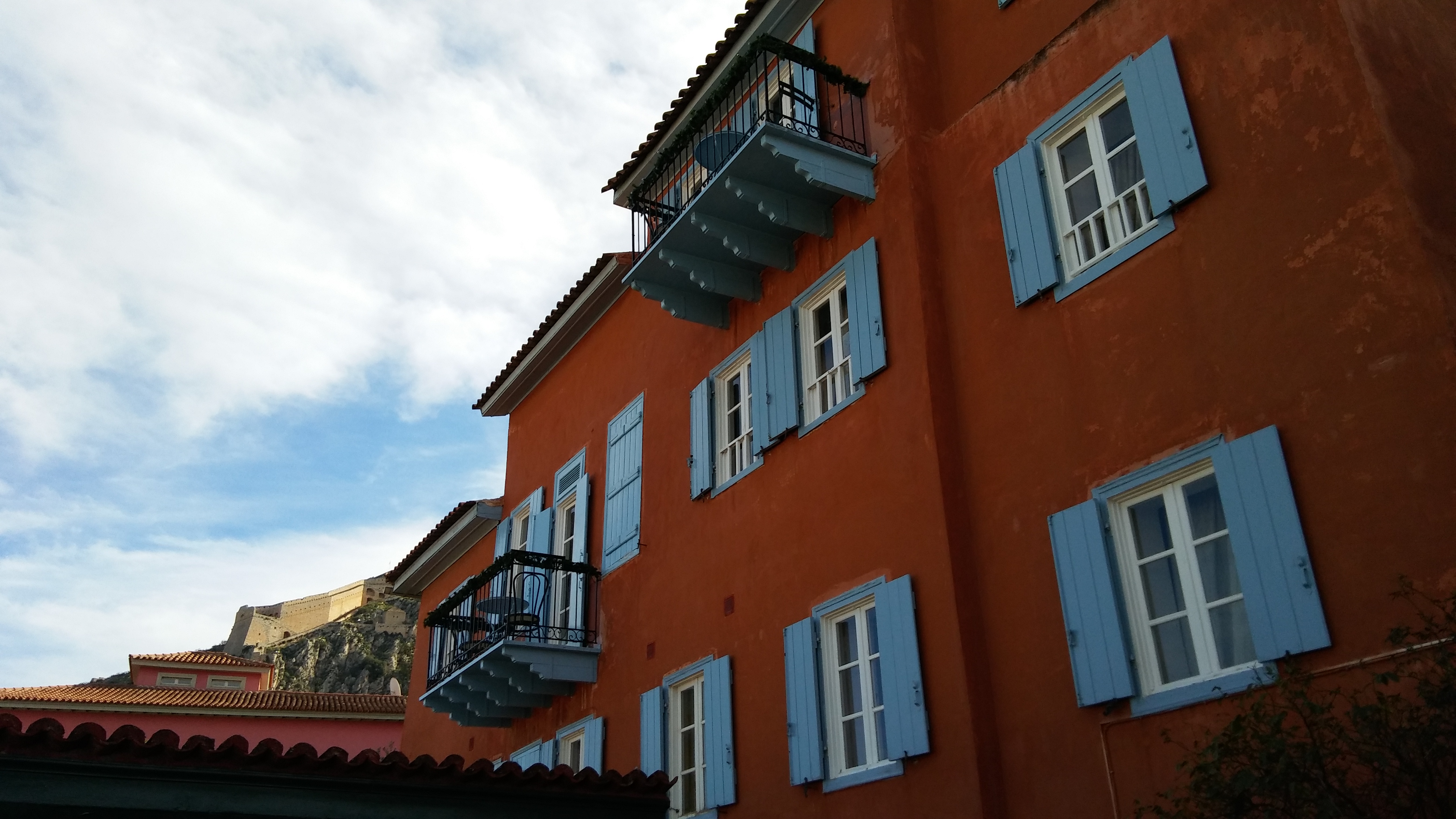
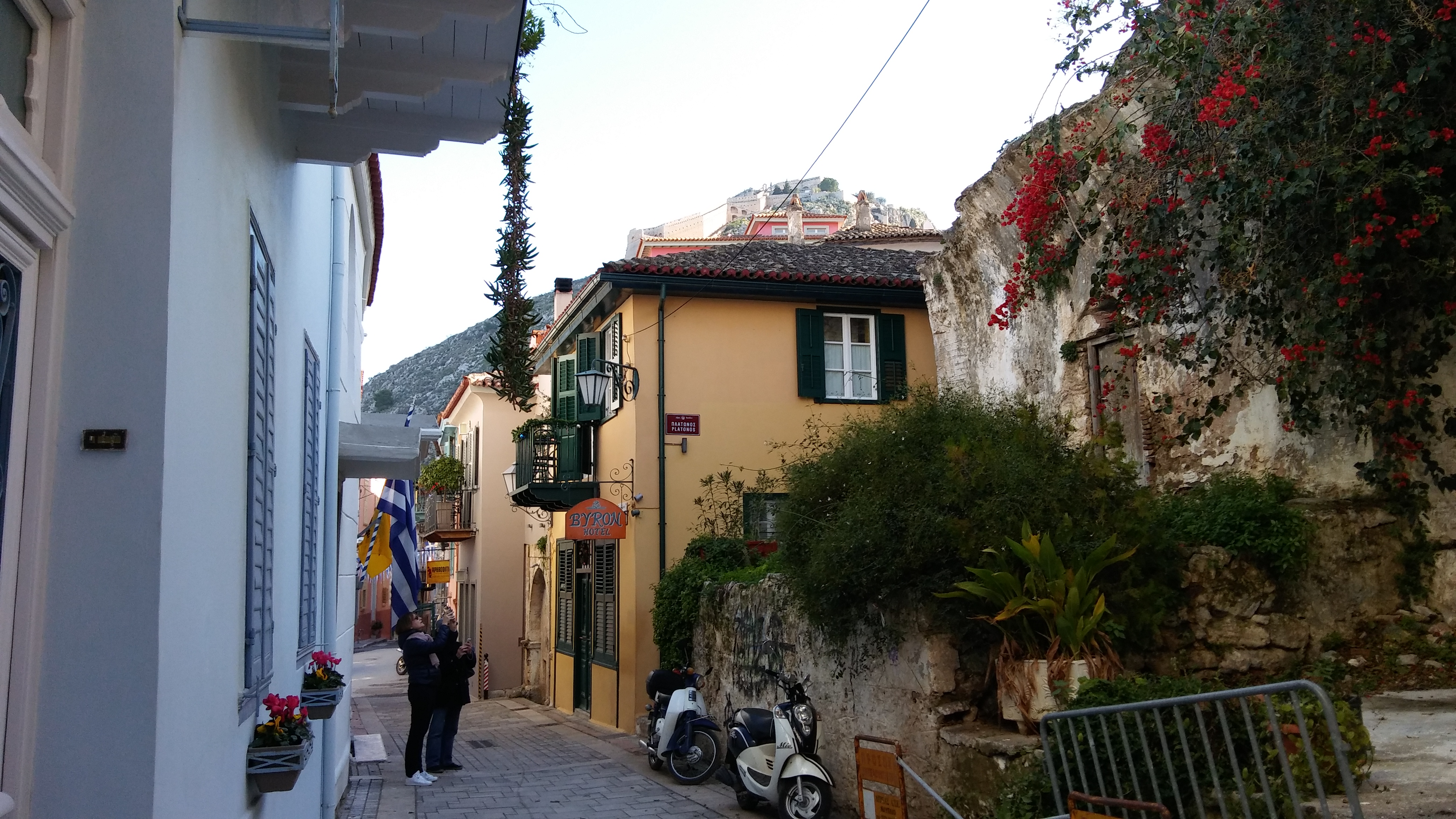
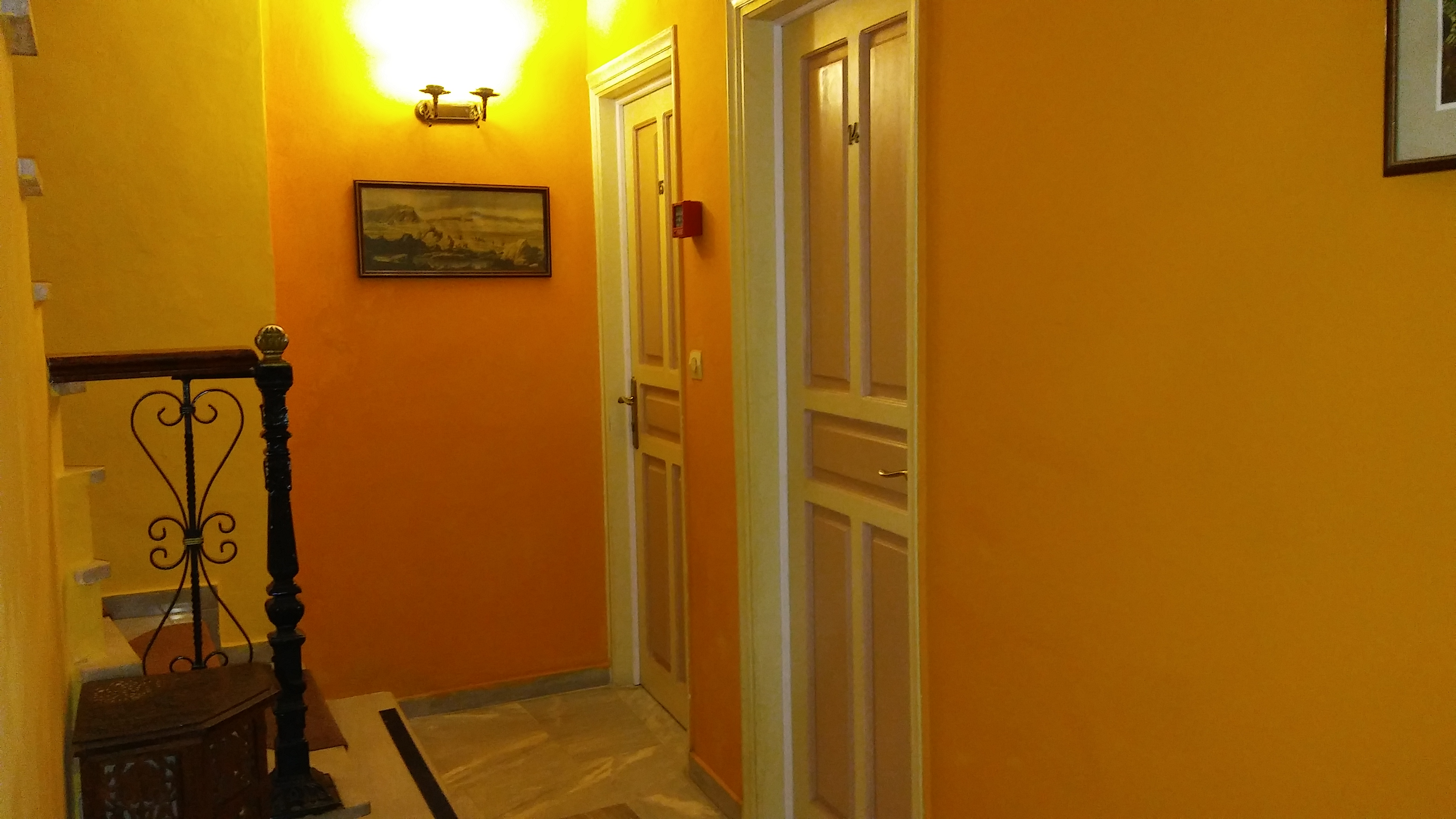
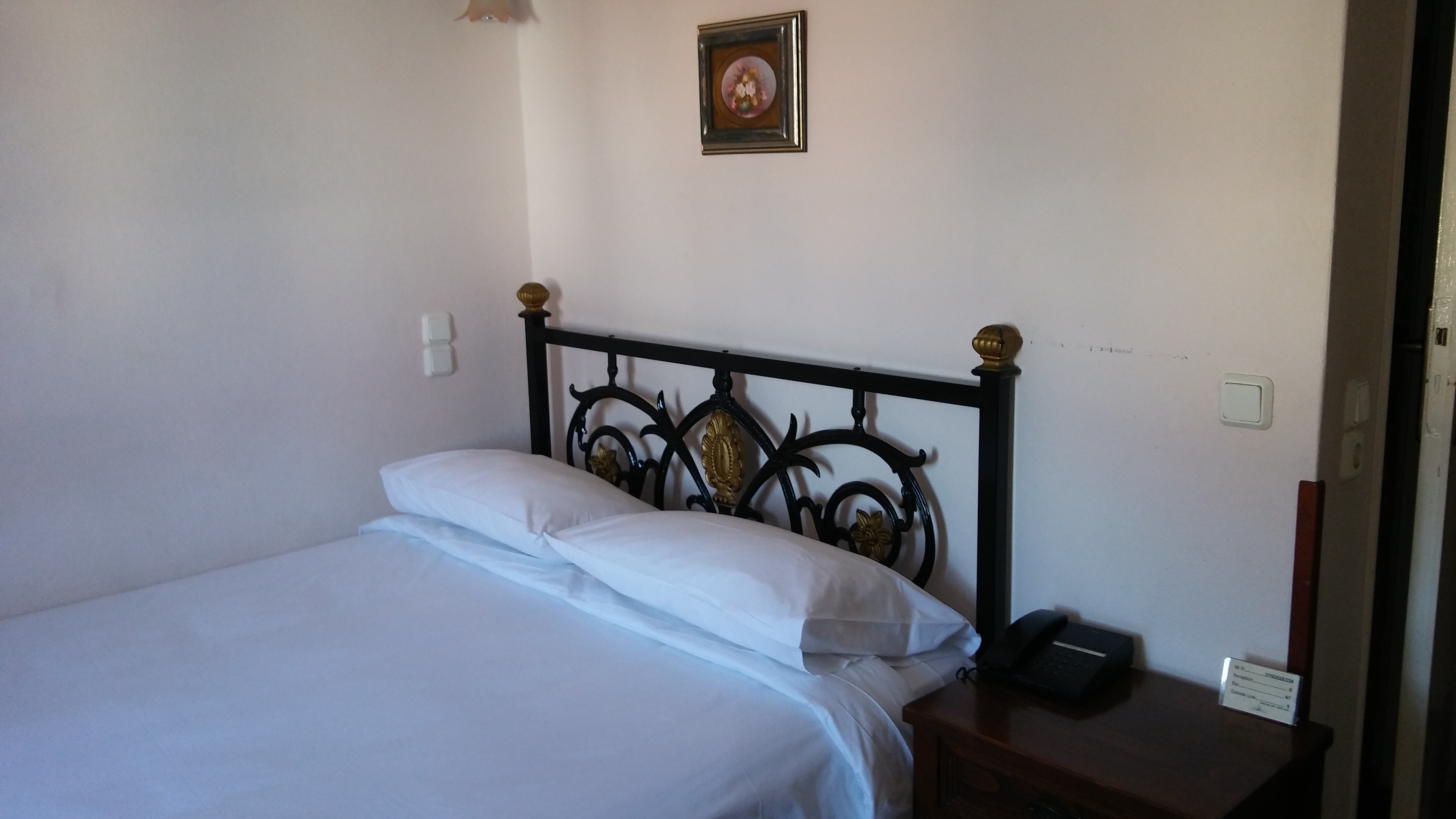
All the quaint streets on higher ground from the busy shops and eateries await to take you back in time, and the antiquated buildings, draped with bougainvillea, take your breath away. This time, I chose to stay at the heart of this district and I am so glad I did. My hotel, Byron Hotel, was the perfect choice and it consists of two old buildings: The one on higher ground (light blue windows) used to be a stately home, then converted into homes for poor families. The owner offered the information that each family would occupy only one room, and the one I stayed in was quite small (albeit uniquely quaint!). It made me very sad to imagine a whole family once had such a tiny space to themselves!
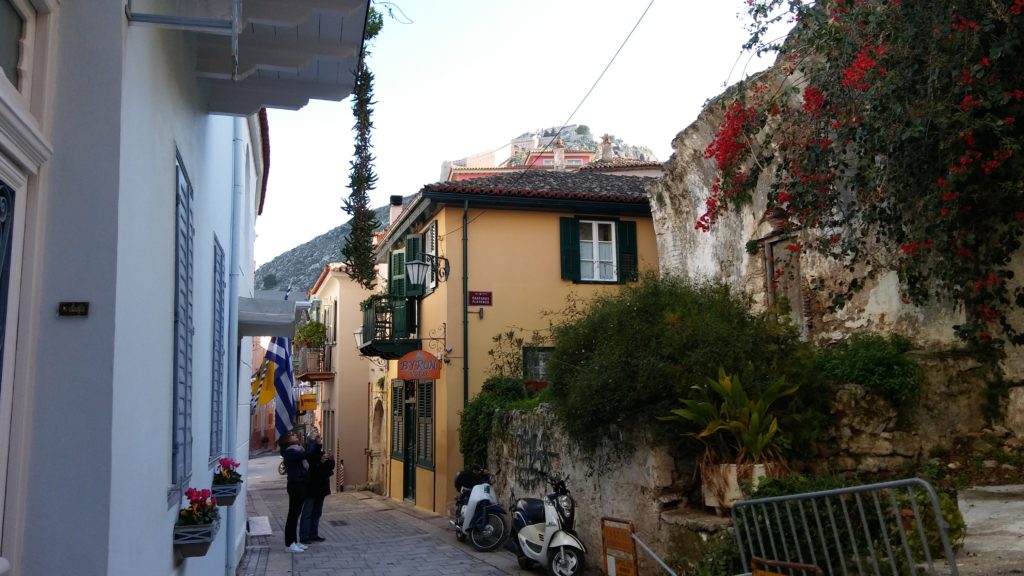
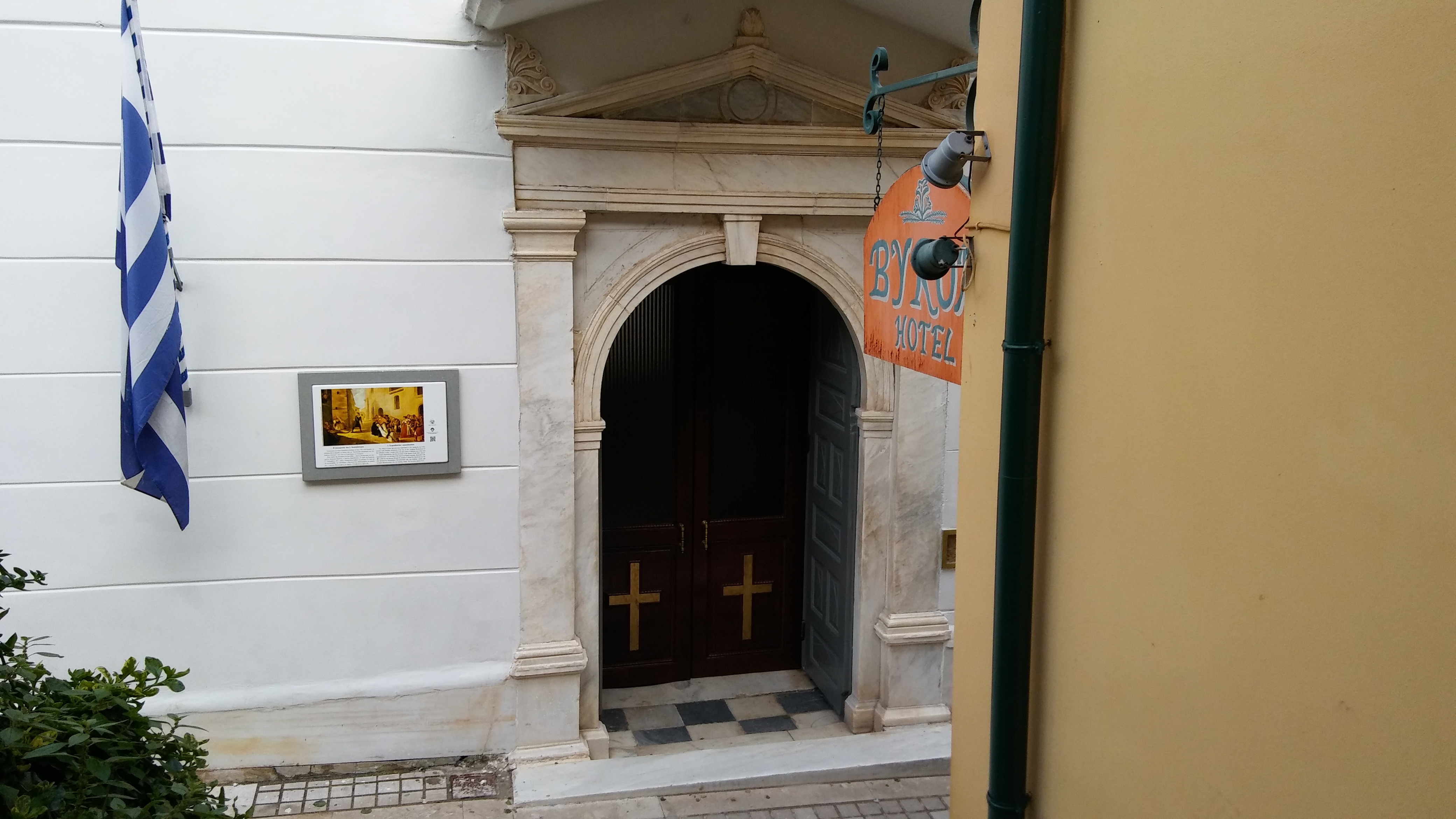
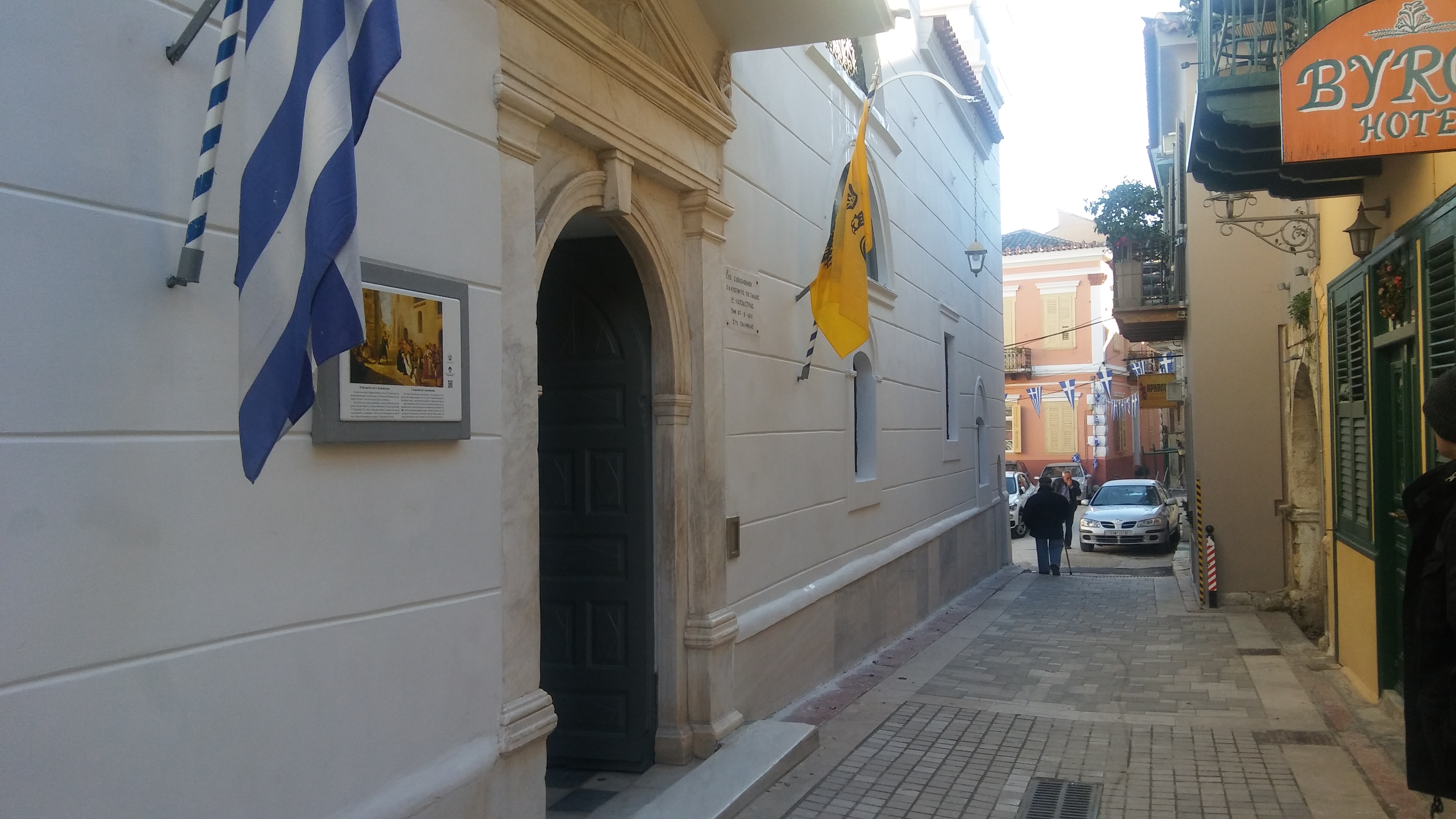
The church of St Spyridon stands opposite the part of Byron Hotel that used to be The French Embassy. After murdering Kapodistrias at the church’s entrance, Mavromichalis found refuge inside the Embassy.

The part of the hotel that stands on street level as well as the church across the street are harrowing parts of Nafplion’s history…

The church of St Spyridon is tiny yet beautiful. Plus, its doorstep has a huge historical value. Kapodistrias, the first governor of Greece, was once murdered at the threshold on his way in to attend mass by two members of a defiant clan of Mani: Konstantin Mavromichalis attacked with a gun and his son Georgios with a dagger. Konstantin was shot on the spot by a witness, and Georgios hid in the French Embassy across the street (Byron Hotel today). He later surrendered and was sent to the firing squad. For a detailed account of Kapodistrias’ assassination, go here
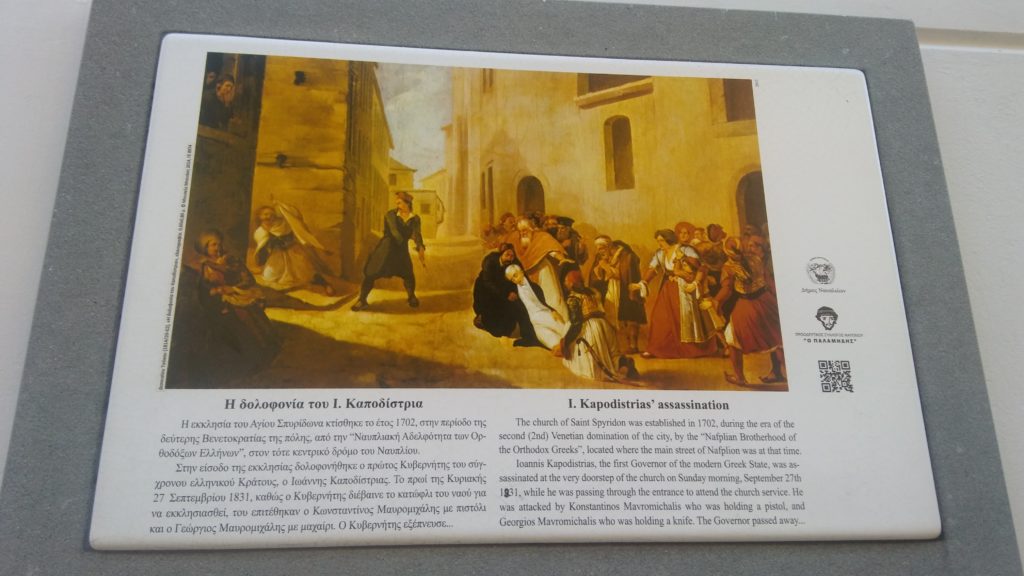
A plaque on the wall near the entry of St Spyridon tells the tale of Kapodistrias’s murder.

Fellow lovers of all things Corfu may recognize Kapodistrias from his statue in Corfu town (as well as from the Kapodistrias Museum in Evropouli, Corfu). Kapodistrias was born in Corfu, and he was a count. After serving  in Russia as the Foreign Minister, he came to Greece and was elected the first head of state when the country was liberated from the Ottoman Empire. Highly educated, an able diplomat and a clever man, he is renowned for his trick that got the locals in Nafplio to eat potato!

Kapodistrias brought potatoes to Greece hoping to feed the starving populace but the locals of Nafplio, who’d never heard of them before, were reluctant to try them. As a result, tons of potatoes began to rot in the stores. This is when Kapodistrias assigned men to unload the potatoes on the Nafplion docks and to guard them night and day, while ordering the men to turn a blind eye should the locals attempt to steal. In a very short time, now realizing they were missing on something that had high value, the locals raided the goods and soon there was nothing left!

As serendipity would have it, I was watching a documentary about Paris the other day, and it mentioned a French pharmacist called Parmentier who used exactly the same trick in Paris (way before the Greek incident with Kapodistrias). The Parisians even thought the potato was the work of the devil, but Parmentier’s ploy, with the use of guards, was a success.  I chuckled no end, and now think it’s quite probable that Kapodistrias, well-read as he was, may have taken a leaf from the French man’s book 😛

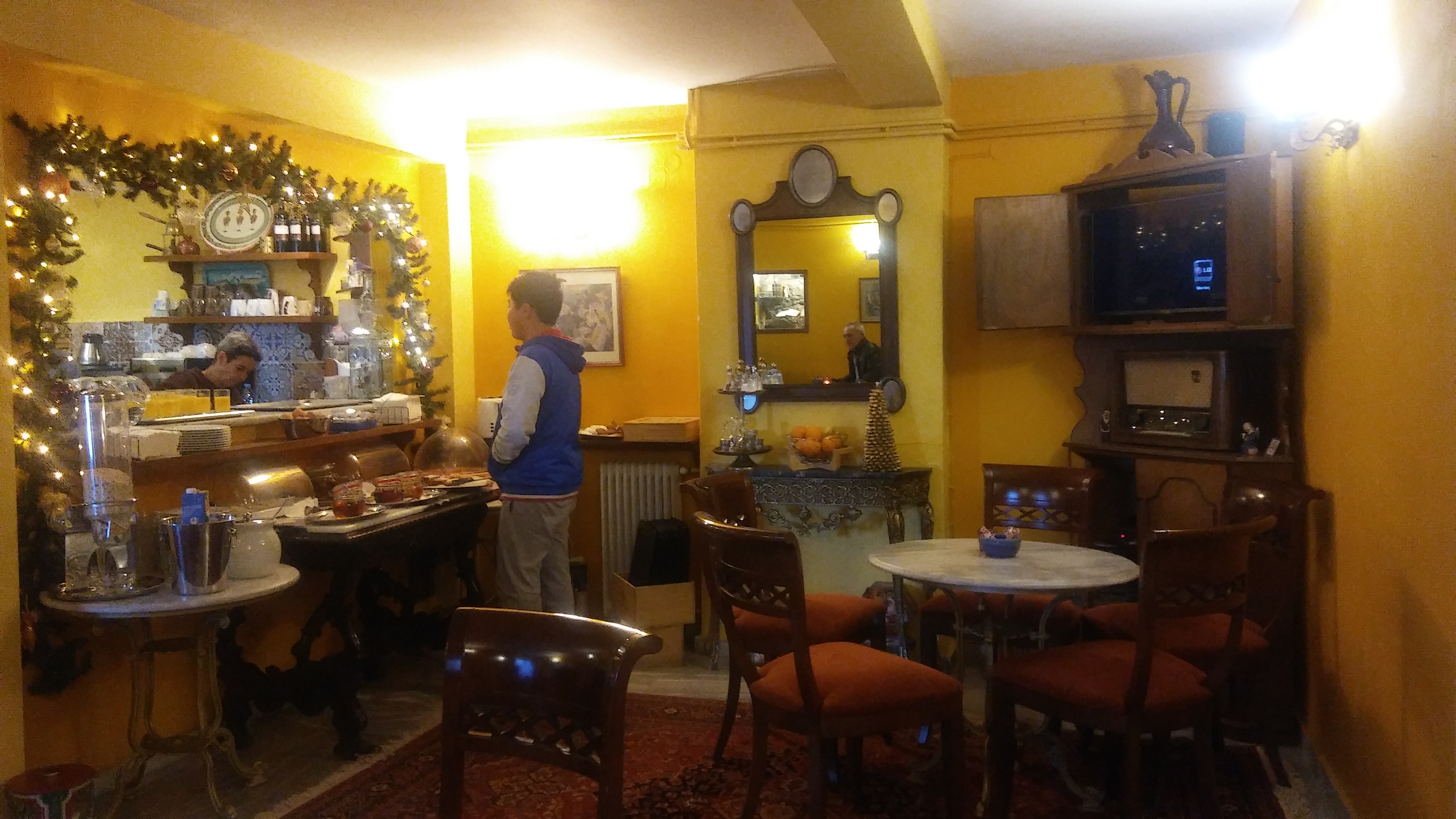
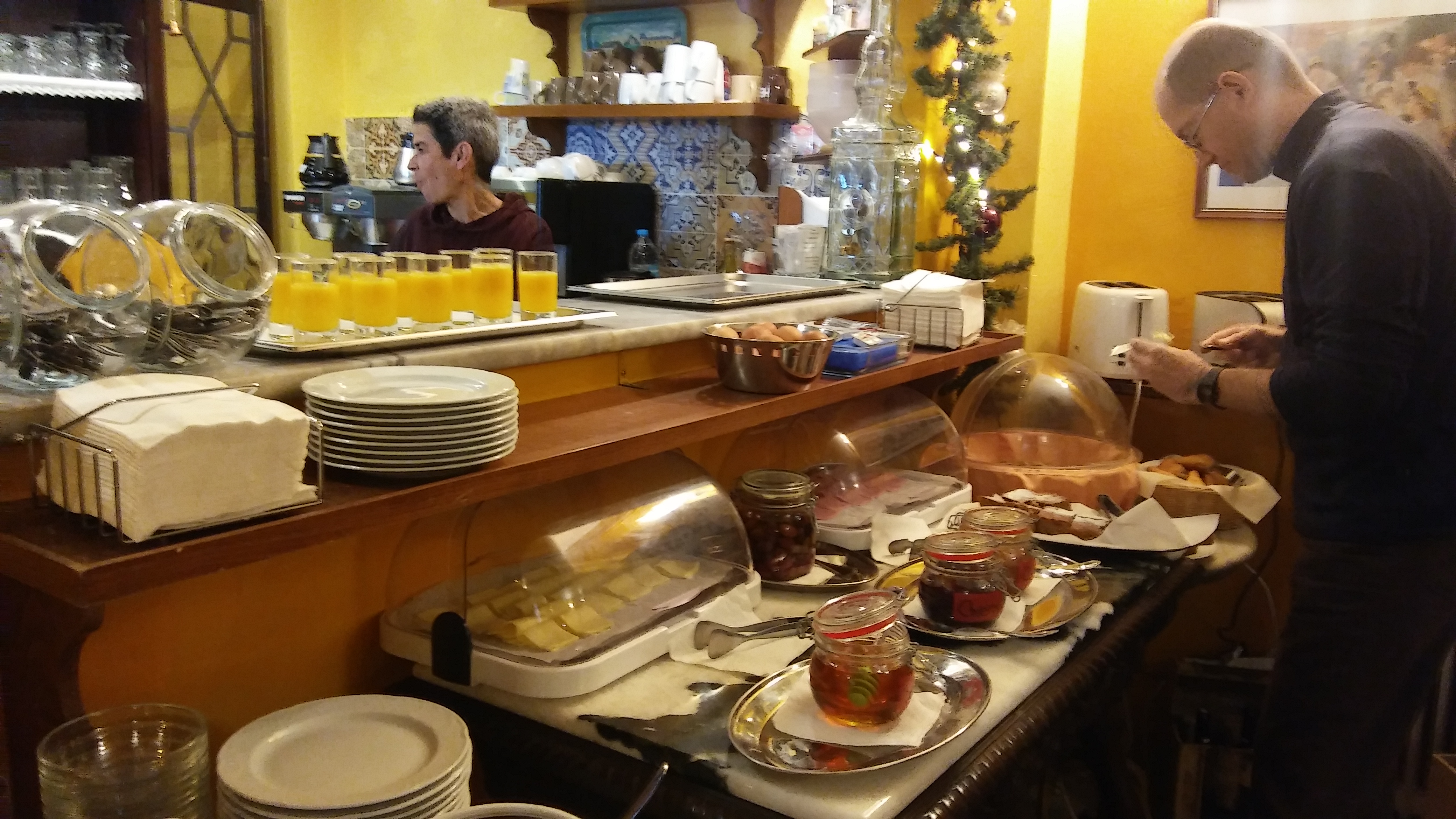
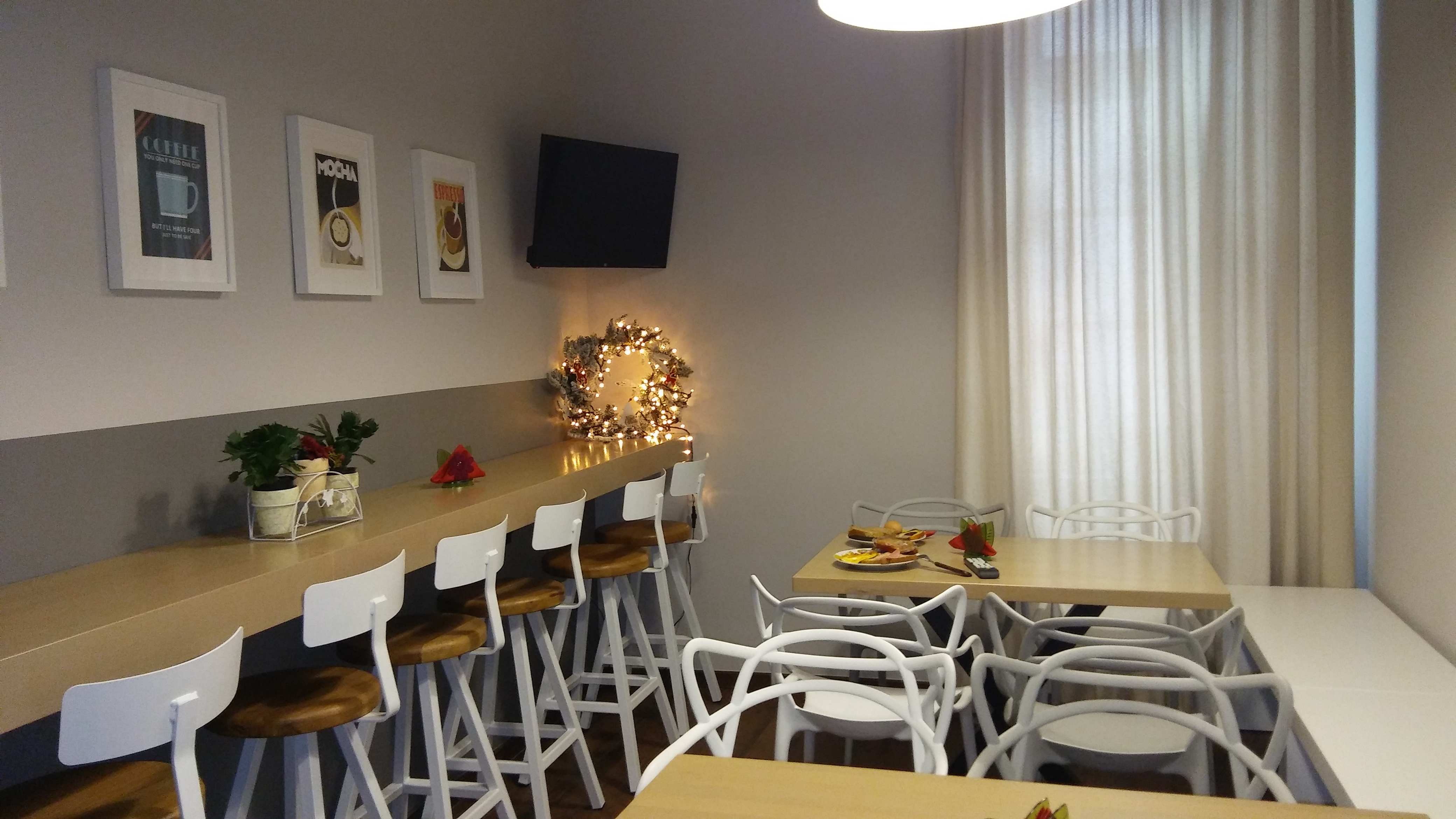
Living in Byron Hotel made it so easy to imagine the bygone era of the 1800’s… the decoration made sure of that, and the total energy of the place did too. Everyone among the staff was hospitable and eager to help. We loved the generous breakfast in the indoor sitting area, and especially the bookshelf! Being typical bookworms, Andy and I always chose to sit by it during breakfast (and in the evening for a gratuitous cup of tea) so we could browse at the books.

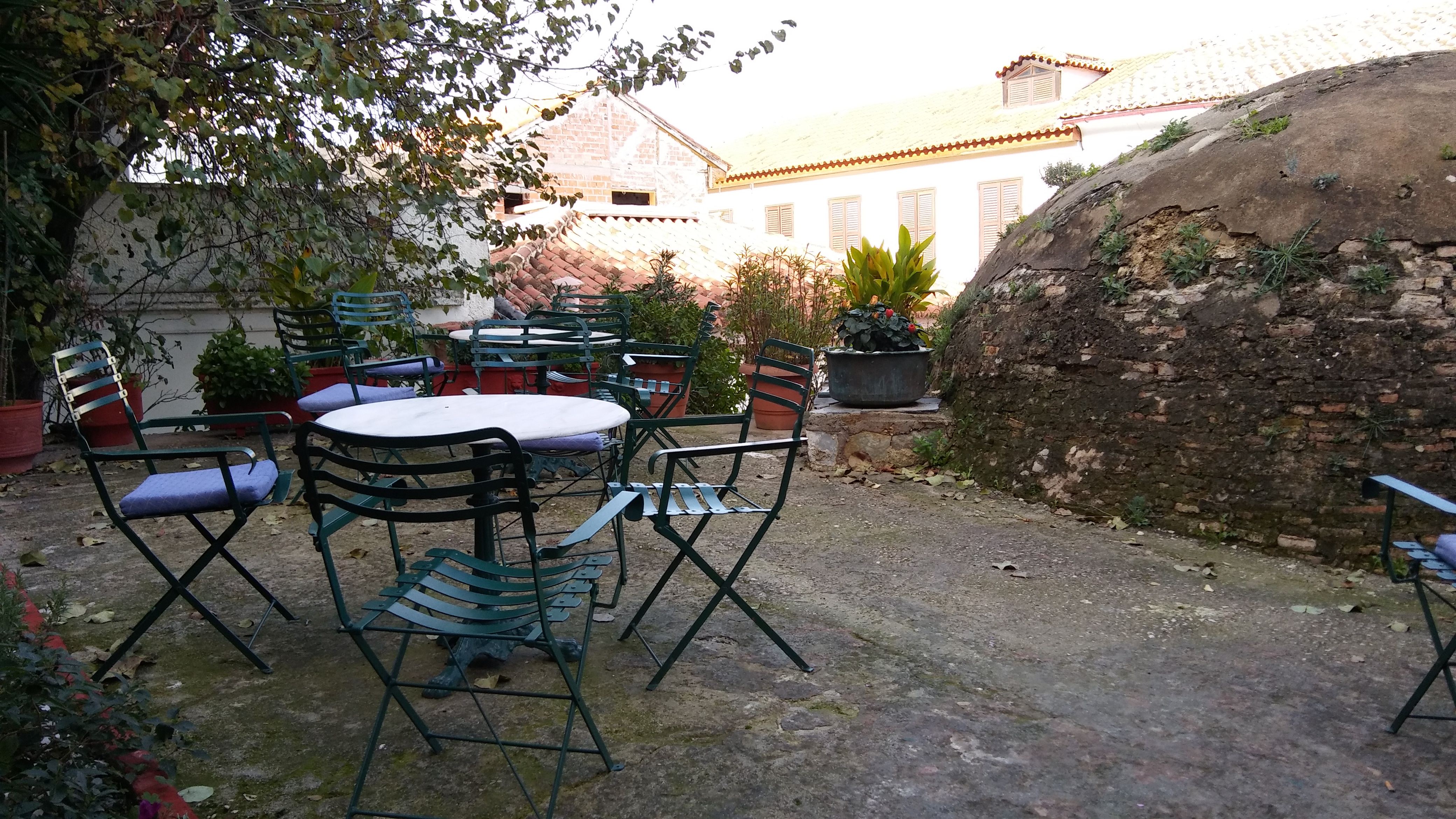
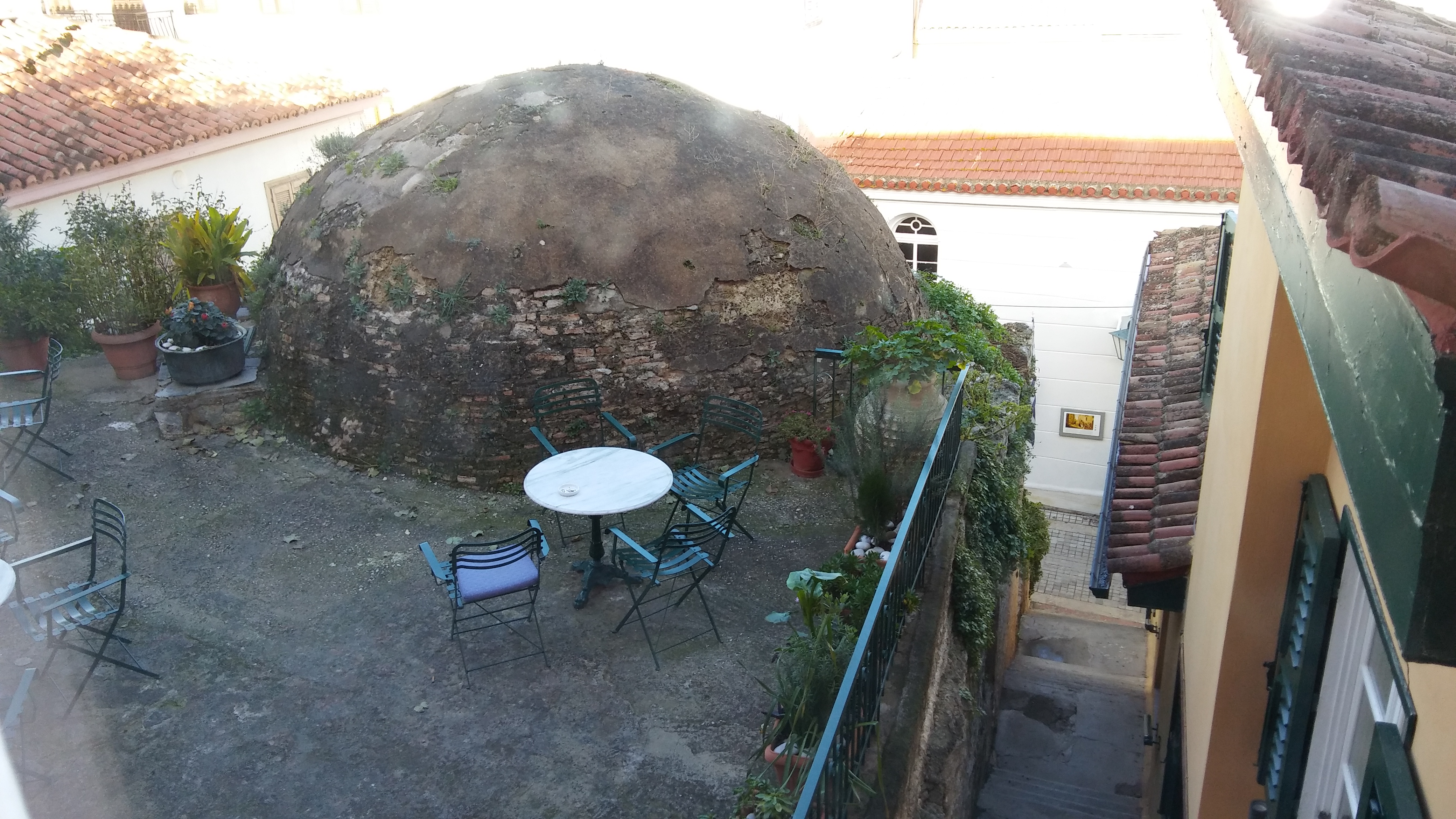
We both felt we should return in the summer, if only to sample the quaint outside sitting area too. It’s on the terrace of a derelict building next door that once housed Turkish baths.
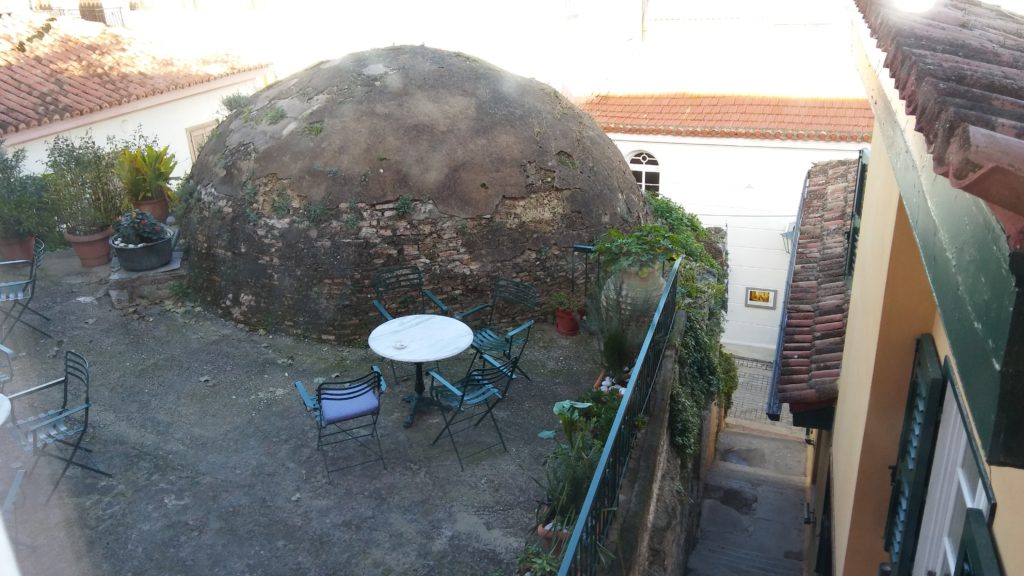
Guests at Byron Hotel can sit out in the summer on the terrace of a derelict building that used to house Turkish baths

SUGGESTED WALKS
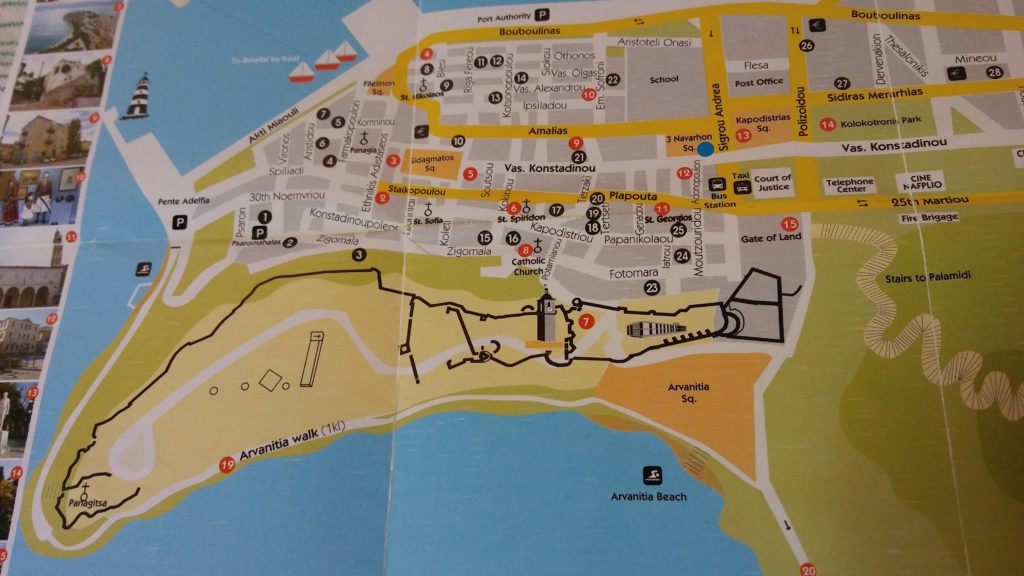
 

A WALK TO AKRONAFPLIA (AND ARVANITIA BEACH), STARTING FROM THE LAND GATE

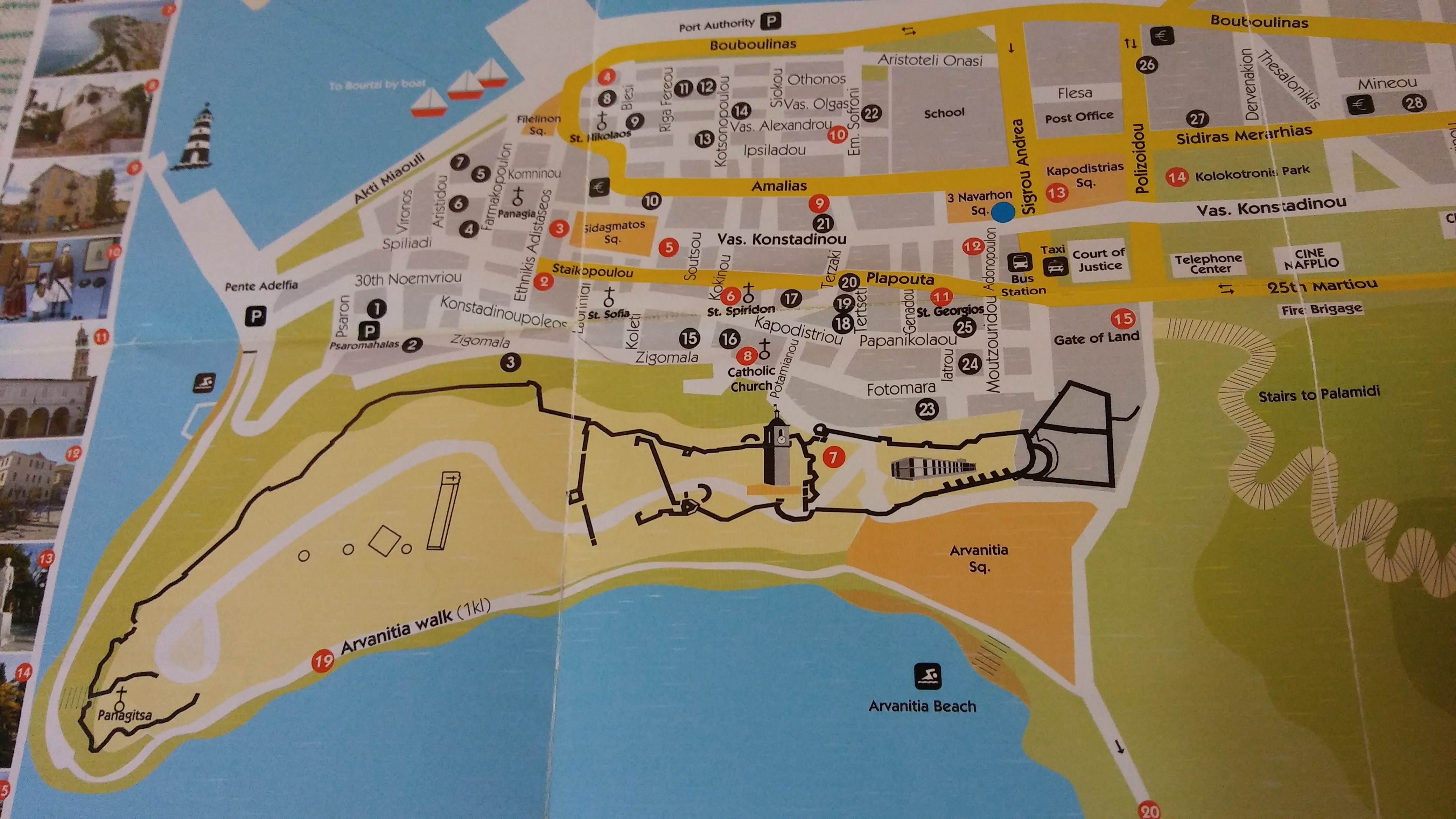
In the above map, the squiggly line on the right represents the 999 steps to Palamidi. The Land Gate stands across from it (‘Gate of Land’ on this map). From there, if you walk alongside the old fortress wall on the right, around the bend the road splits into two (at Arvanitia Sq). From here you can either go left (downhill) to Arvanitia beach, or take the road right (uphill) that leads to Akronafplia (clock tower and the fort ruins of ‘Its Kale’). Arvanitia Square is very plain – just an open asphalted space. See later in this section for the easiest way to go to Arvanitia beach from there as this is not clearly shown on the map.

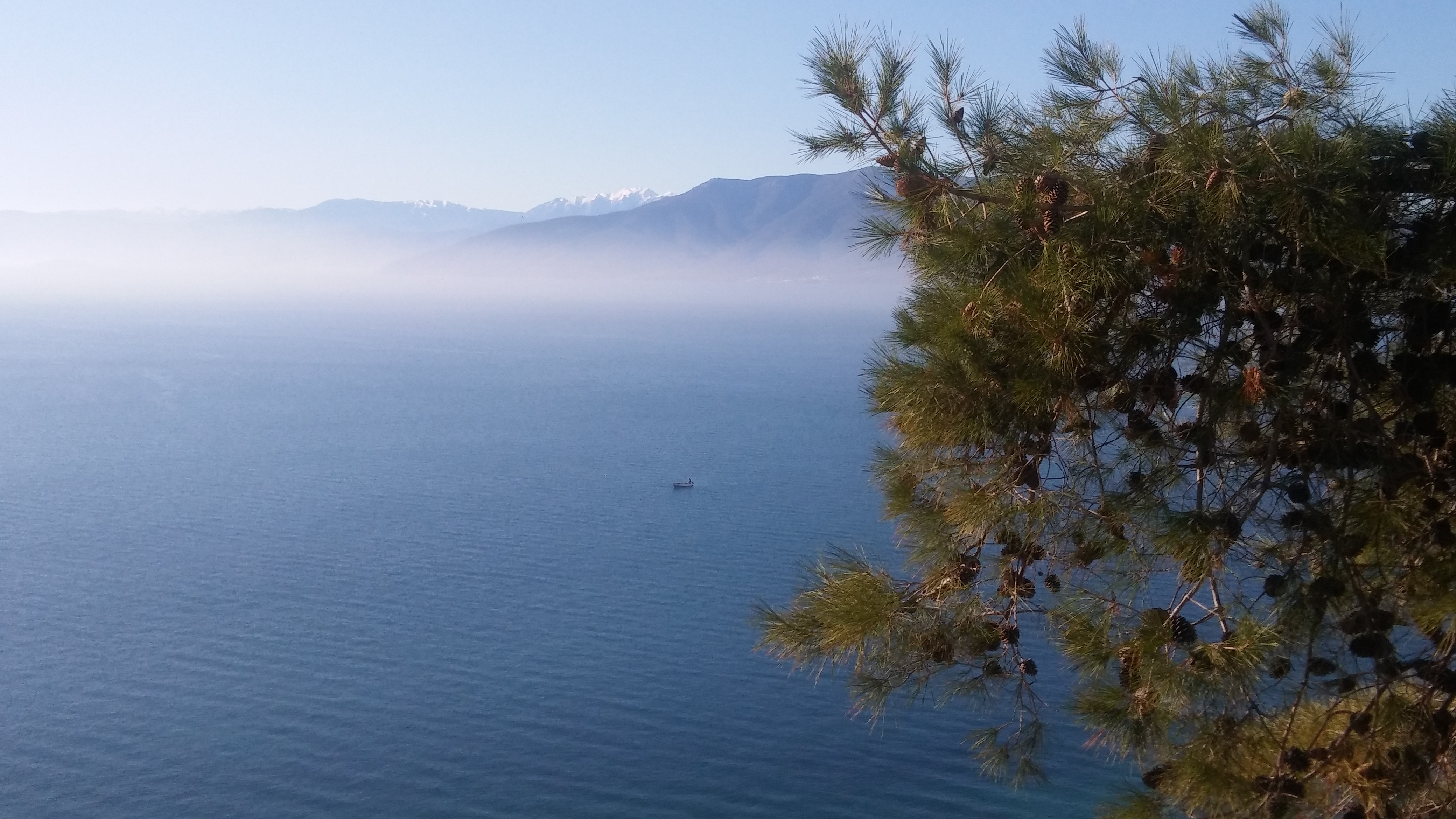
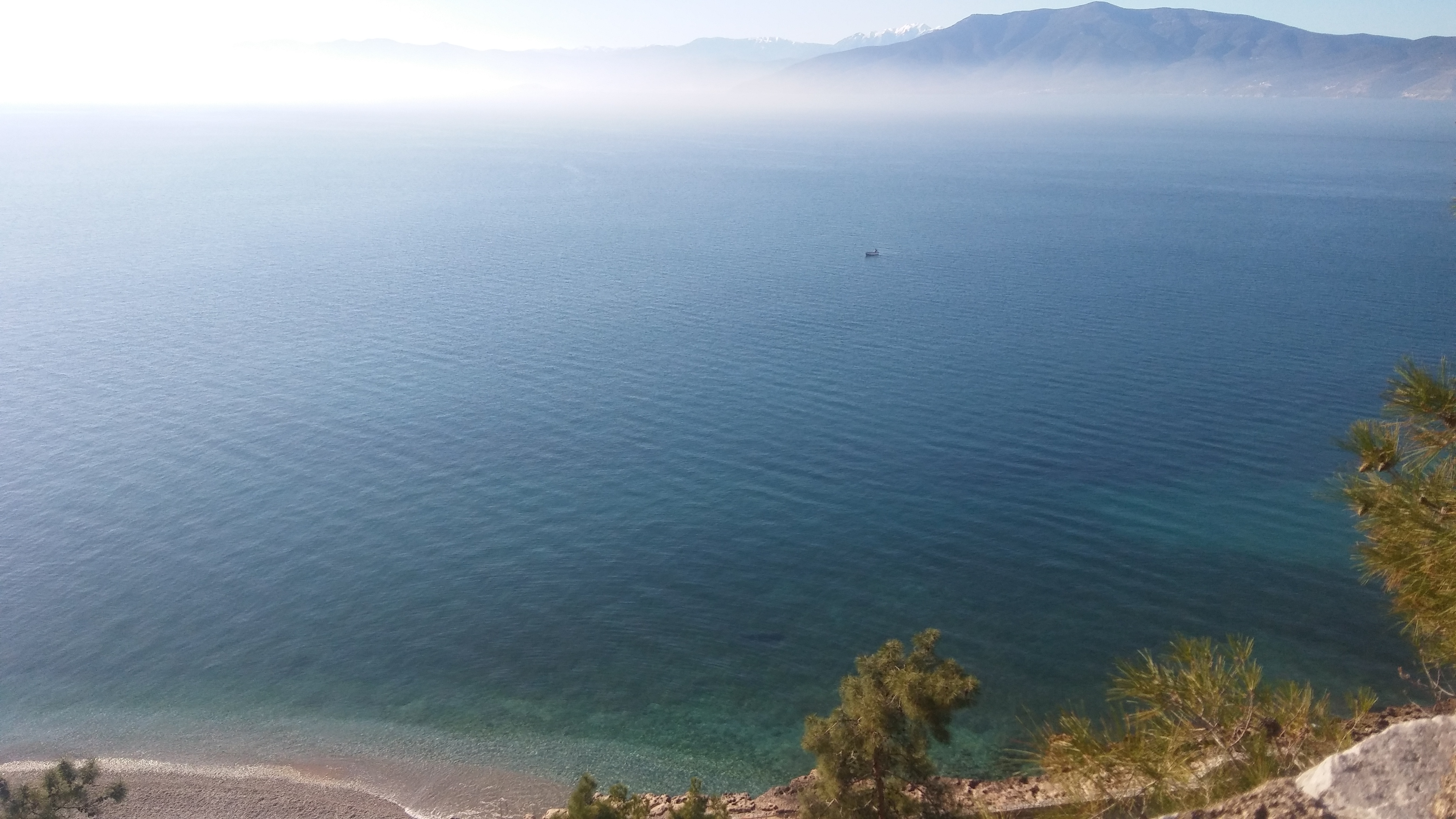
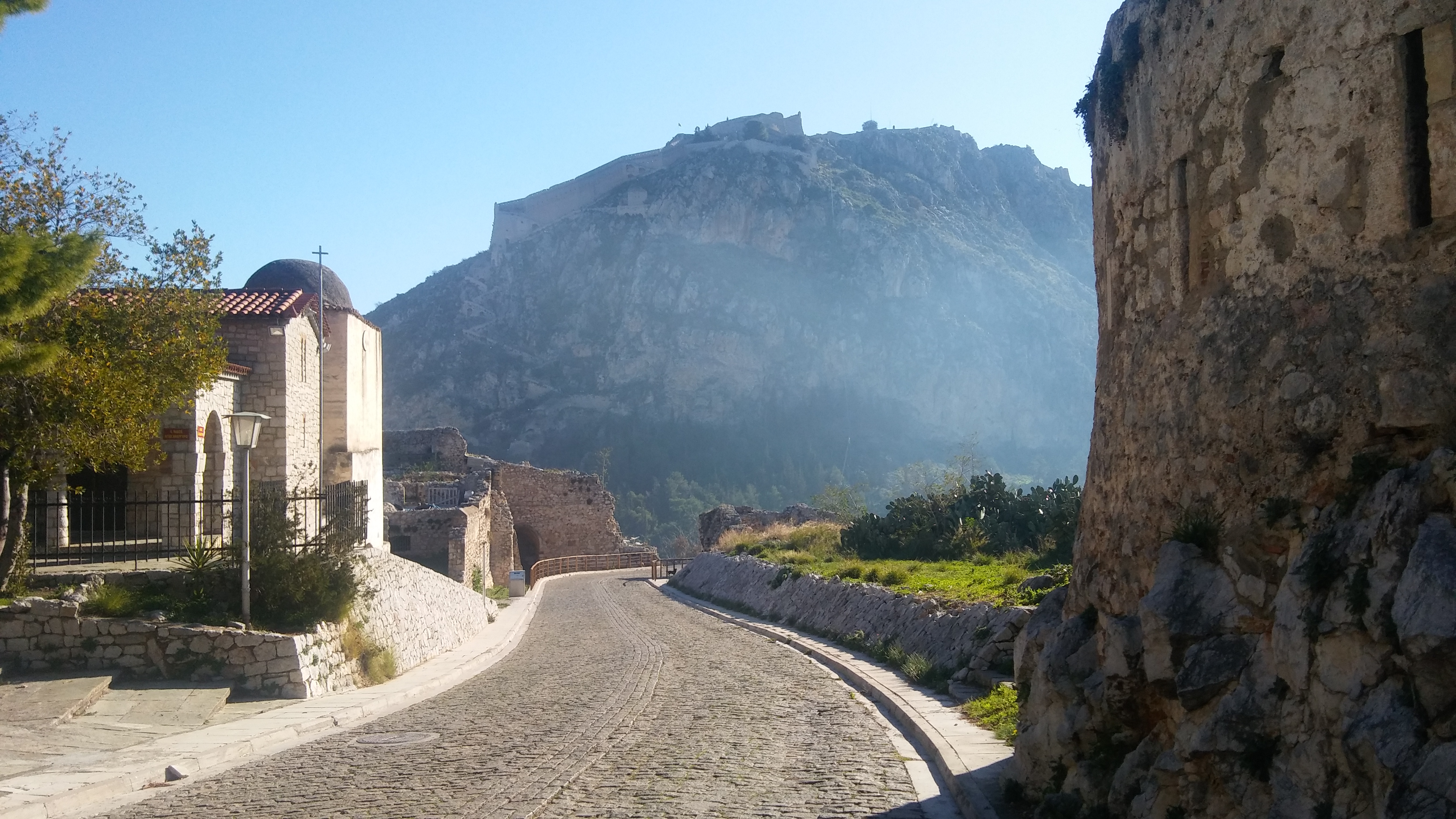
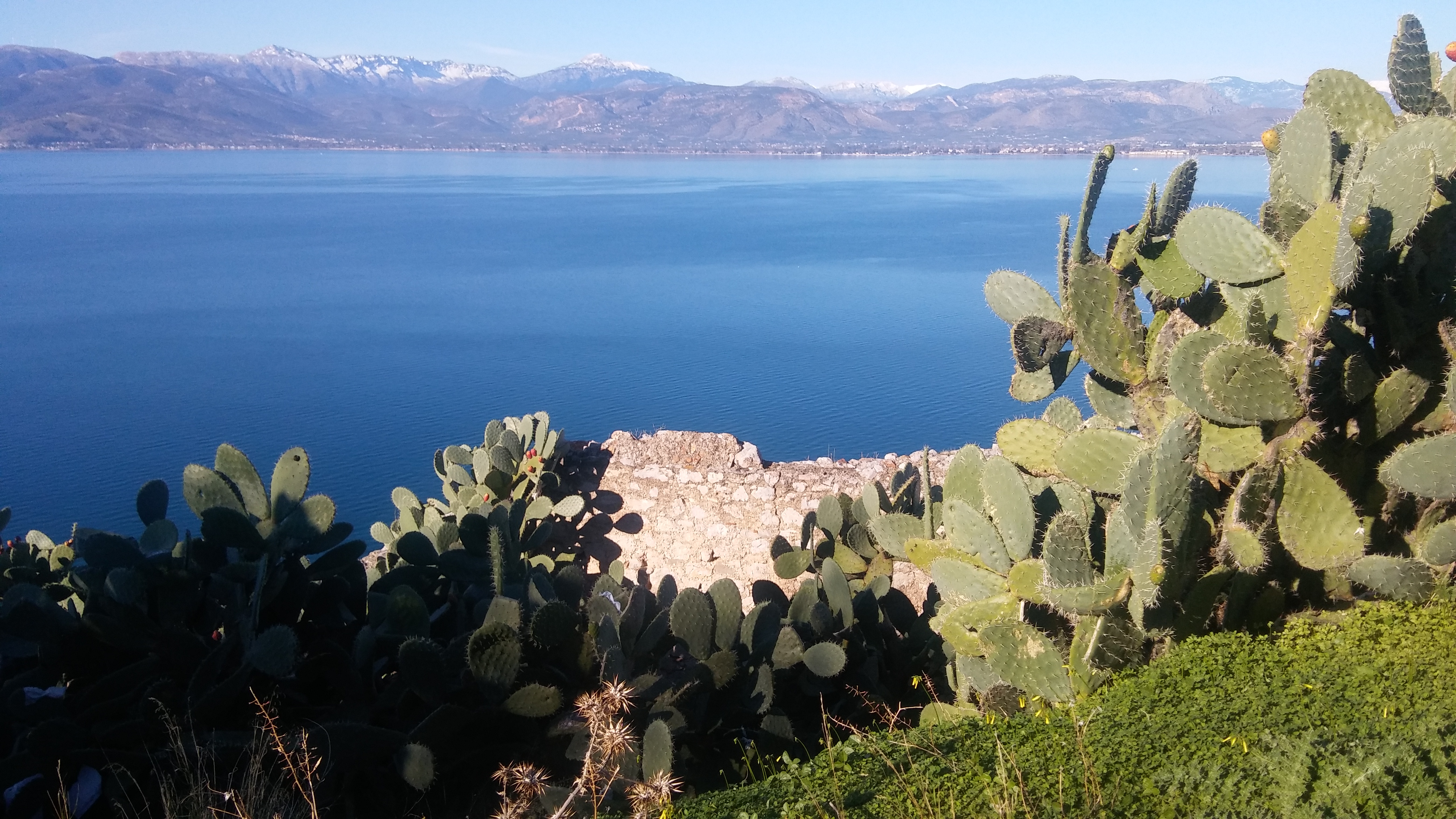
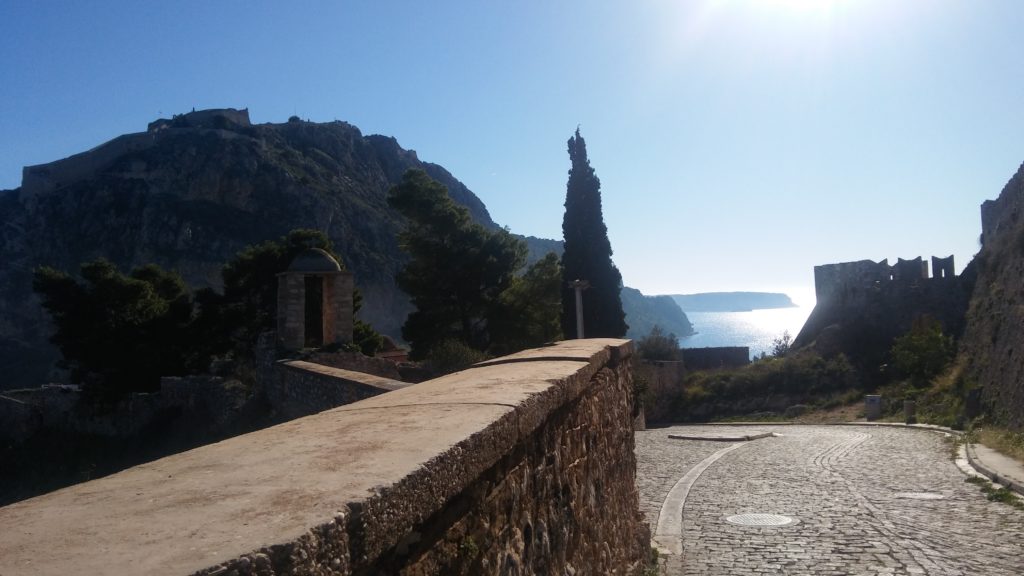
If you take the uphill road to Akronafplia, you are soon rewarded with spectacular sea views…
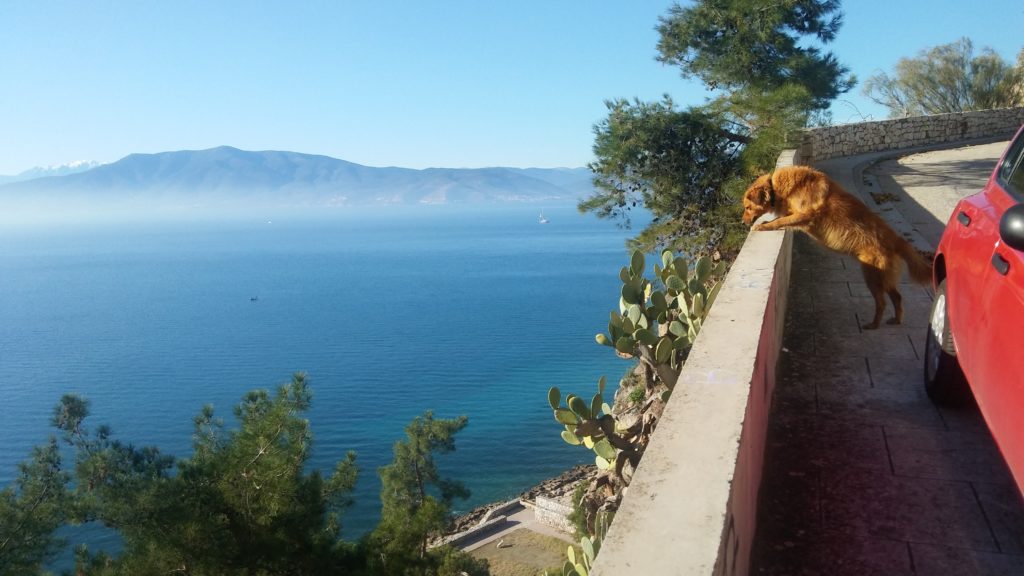
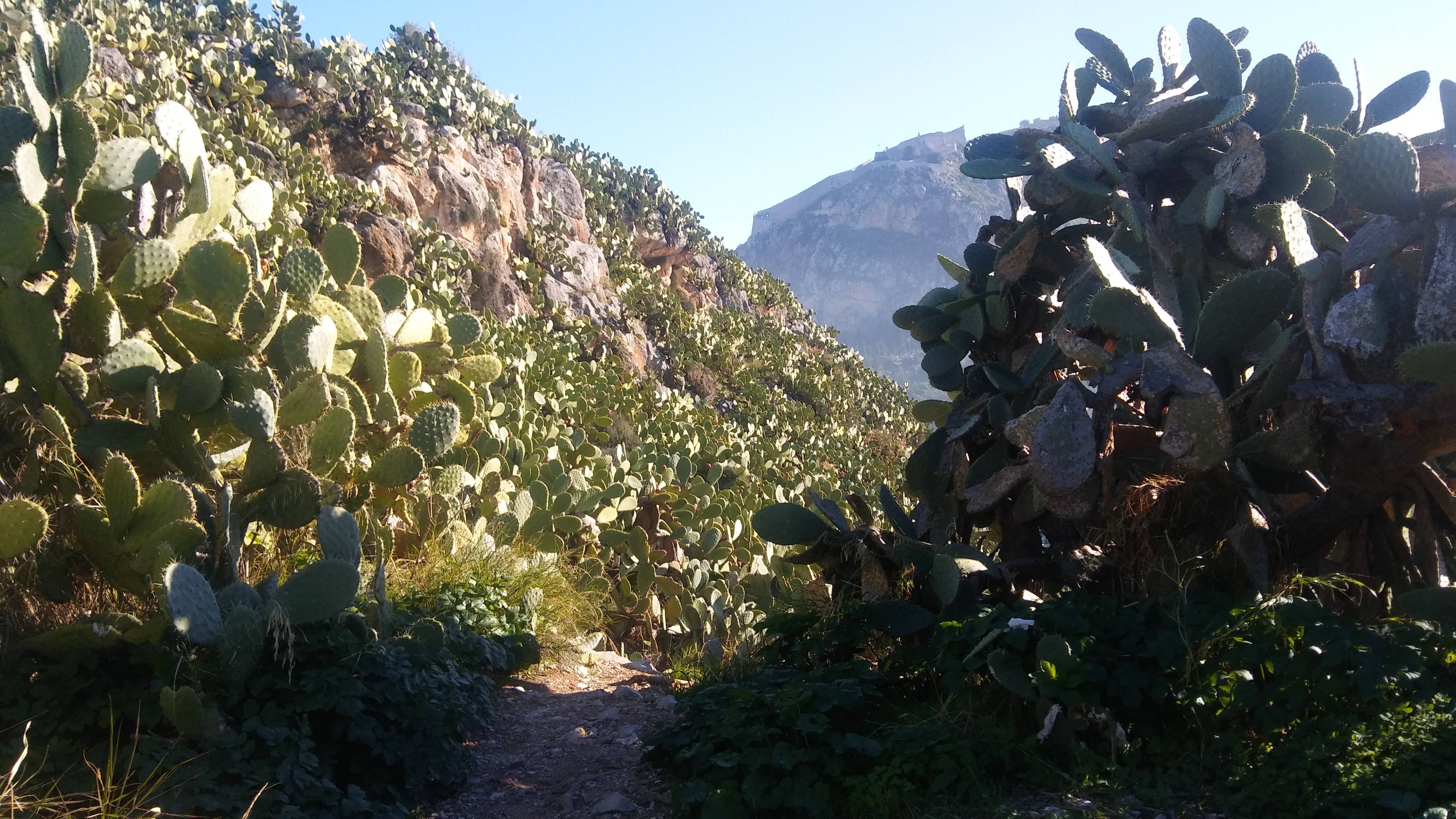
Behind you, the view to Palamidi is just as stunning – a magical place to be!
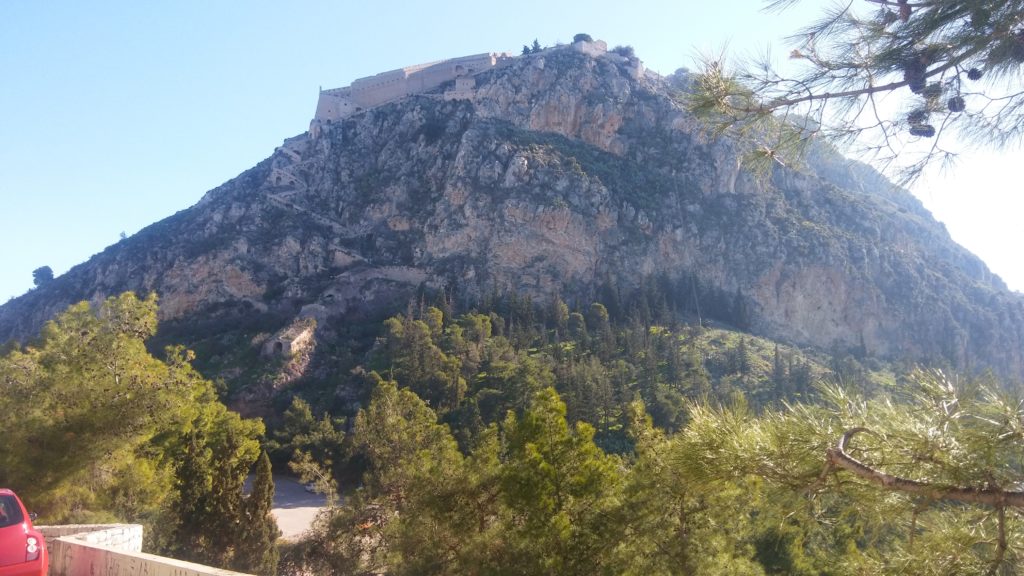
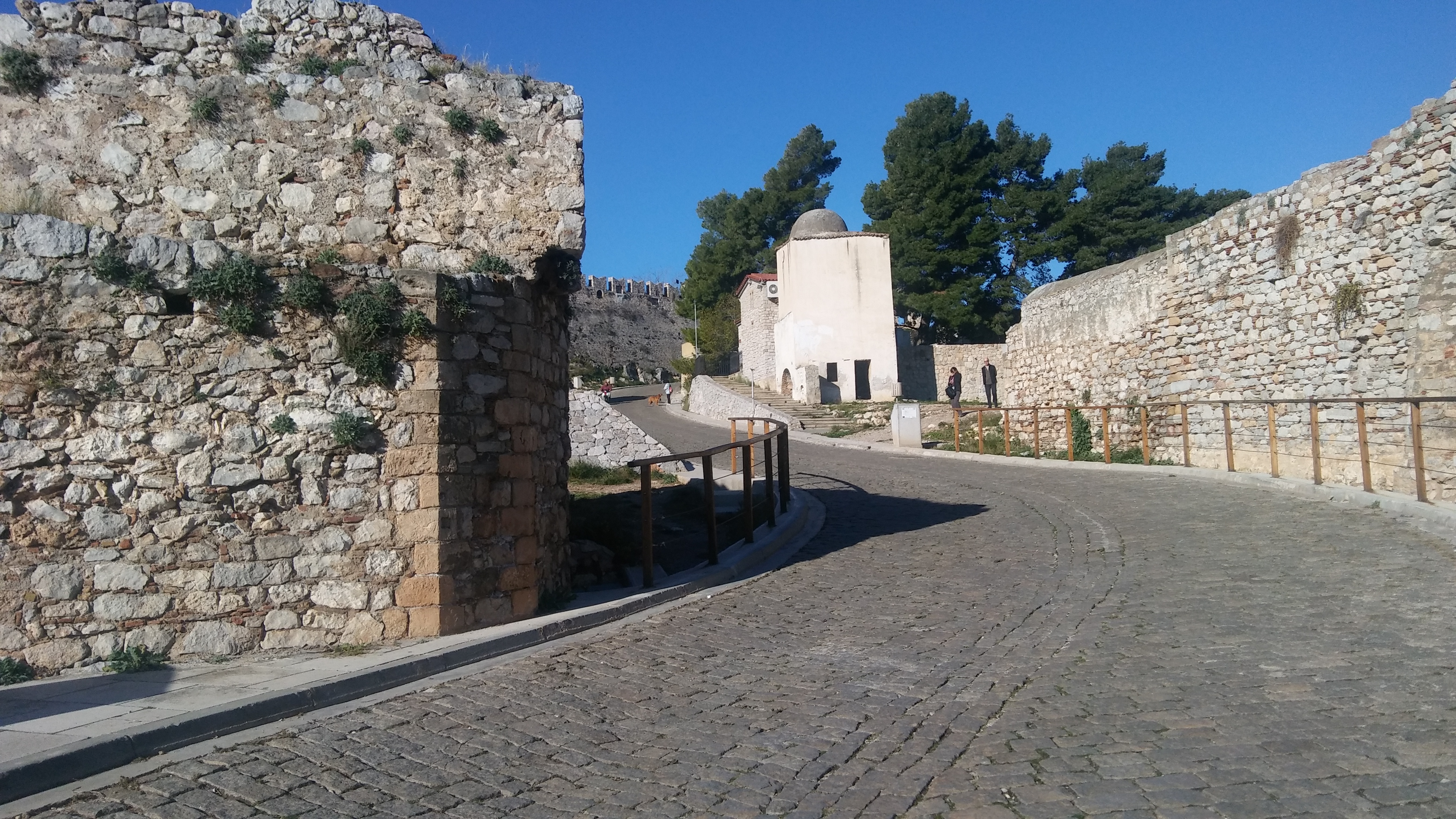
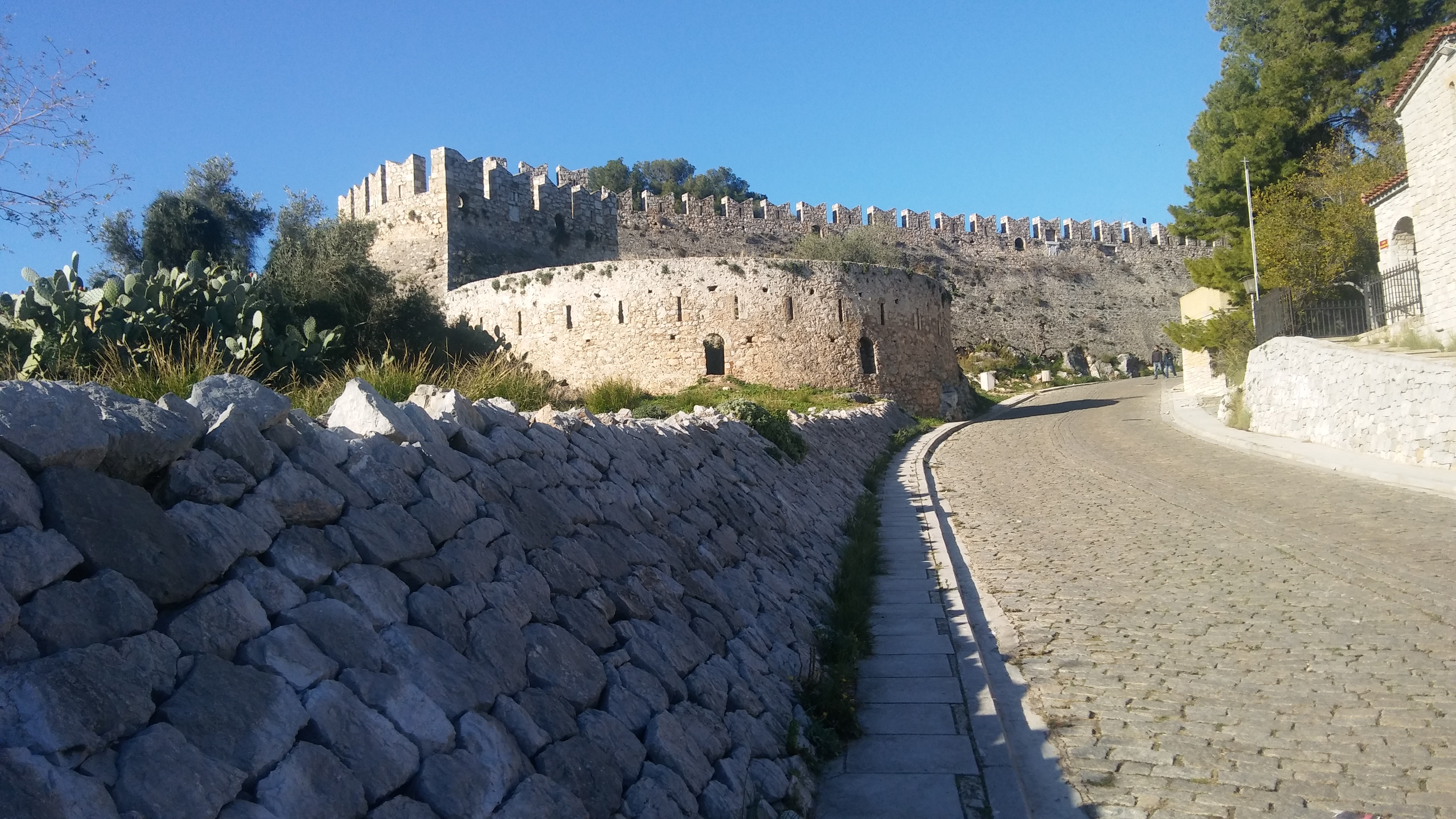
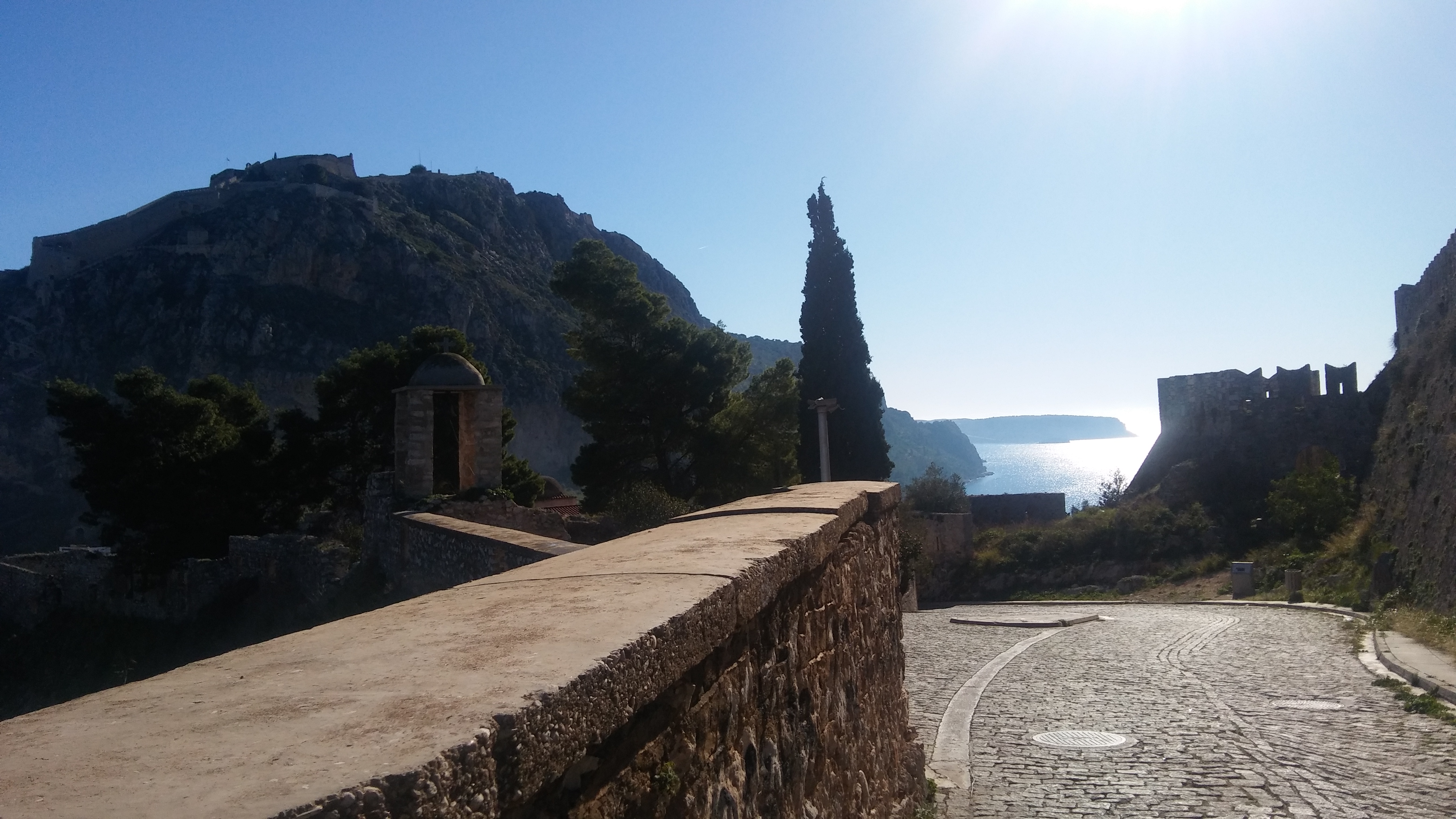
Go past the derelict hotel, and you’ll soon enter the old fortress area. The road is paved here, and your transportation back in time begins…

The fort of Akronafplia (or, Its Kale – ‘inner castle’ – as the Turks called it) has housed armies of various countries over time. Originally built by the Romans and Byzantines, it once housed the city itself. Later, Venetian, Turkish, and Greek armies used it, the Turks conquering it twice. The fort even housed Bavarian soldiers at some point; they were appointed here as the guard of King Otto. When they died during a typhoid epidemic, a cemetery was created for them in town and a beautiful Bavarian Lion was sculpted in the rock at the burial site to honor their memory.

NOTE: The lion still survives today and the old burial site is now a park (the remains of the Bavarian soldiers are now kept in the Catholic Church). To see the lion sculpture, get to 25is Martiou Street, and turn left to Mihail Iatrou Street. The Bavarian lion is past the church of Agion Panton. For pictures and more information about the lion, go here. For a map, go here (marked as ‘sleeping lion’).
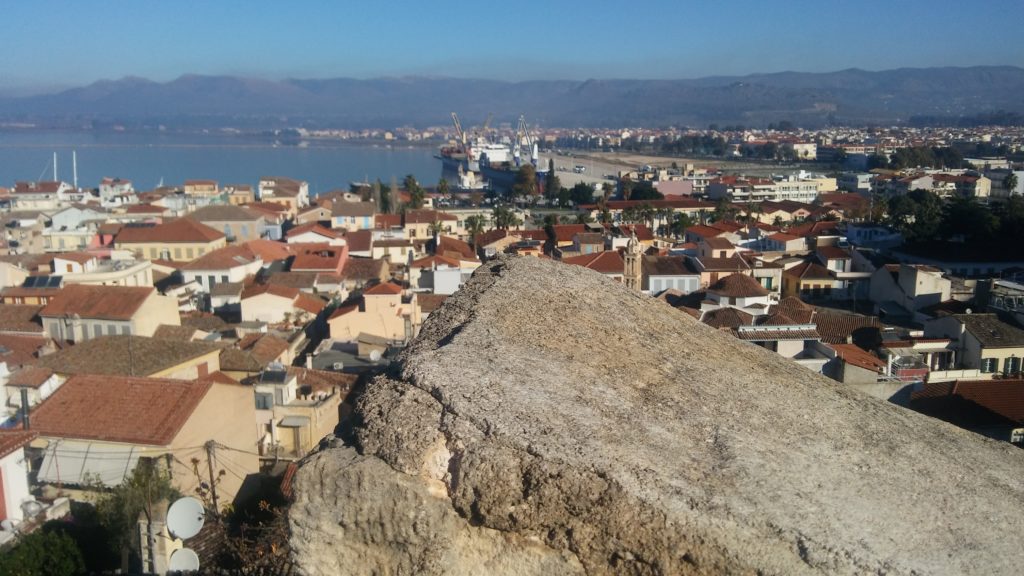
As you continue your uphill climb past the fort ruins of Akronafplia, you’ll soon begin to find spots with breathtaking views to the city. This is also the case when you reach the clock tower.
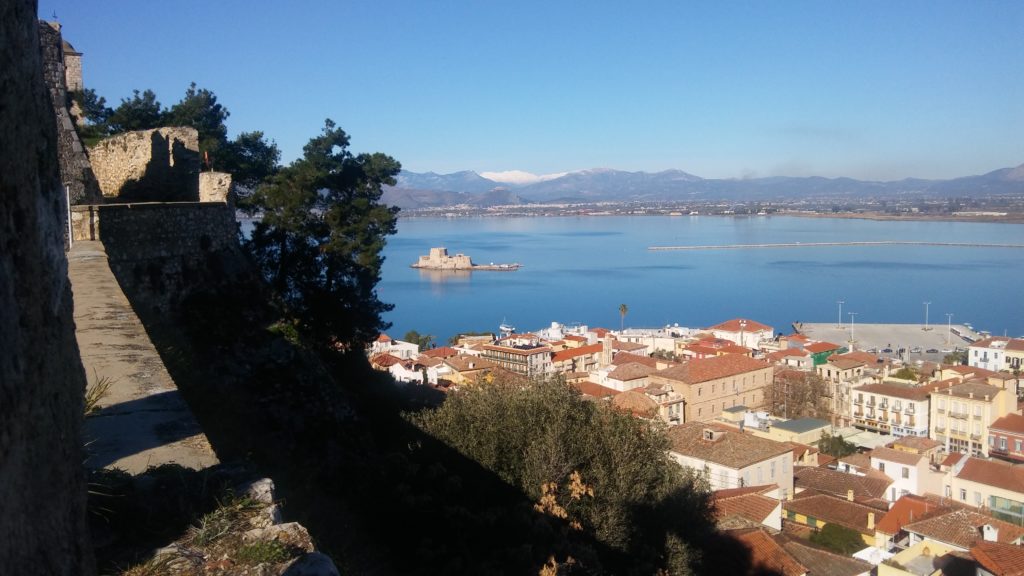
The clock tower is a wonderful spot to enjoy the sunset from. The clock and its original tower were placed here during the rule of King Otto. In 1944 the German Army blasted the tower as it stood in the way of their artillery guns. The locals saved the clock from destruction and Greek poet Terzakis wrote a wonderful poem that spoke of  a day of freedom where the precious clock of the city would sound again. That day came to be in 1949 when a new tower was constructed in the same place and the old clock took pride of place upon it.
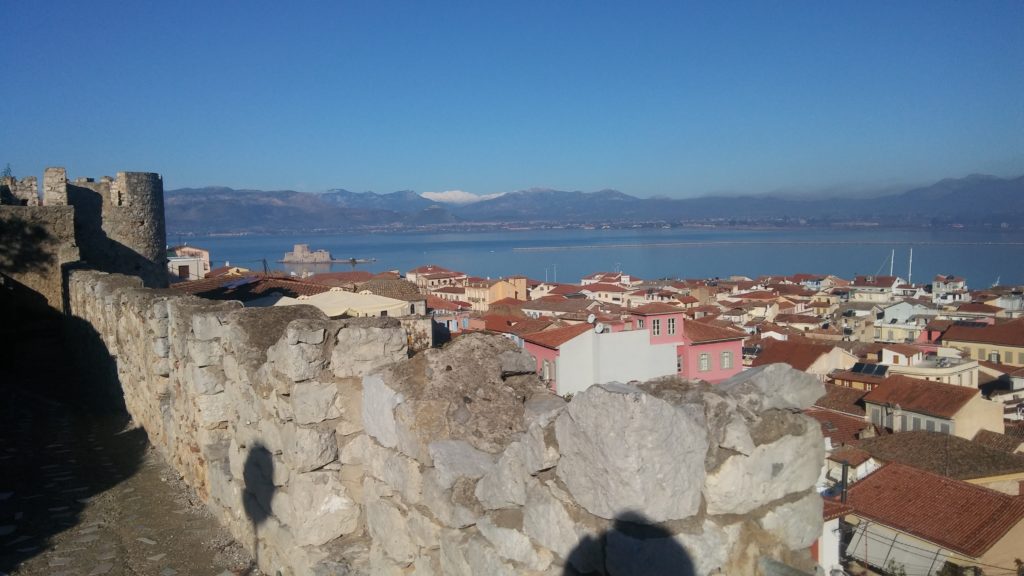
Leaving the clock behind, you soon get to a point where you can either continue downhill (bungalow roofs of a hotel are visible in that direction) or turn left. I suggest you go left. It’s a very short walk from there to the helipad where the road ends. This spot offers, in my opinion, the best views of Akronafplia:
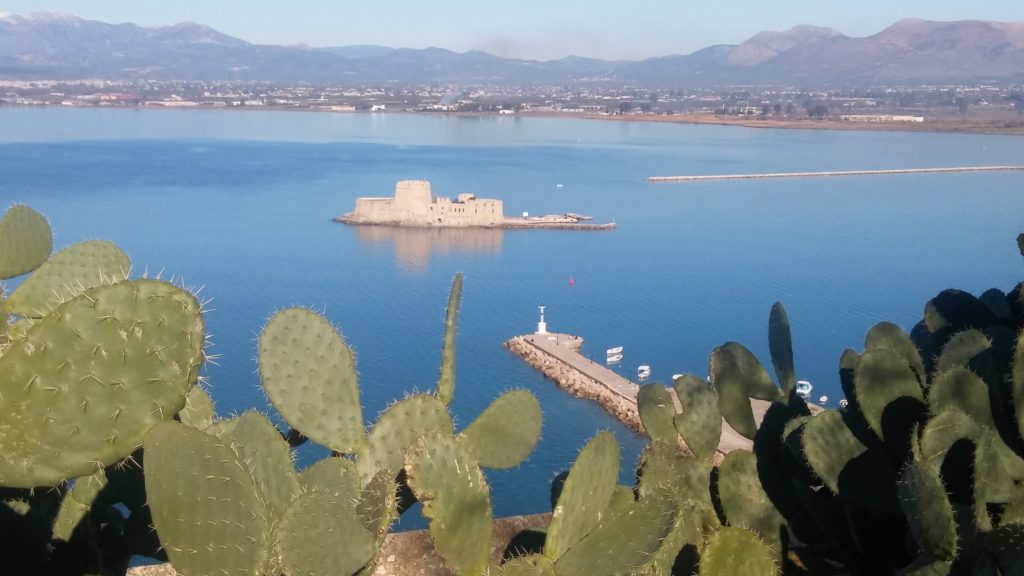
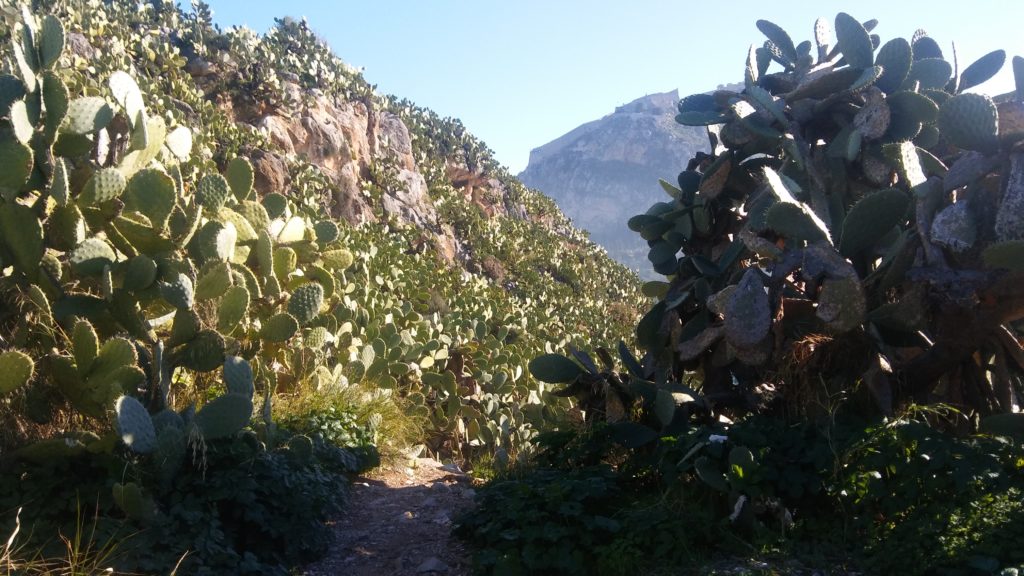
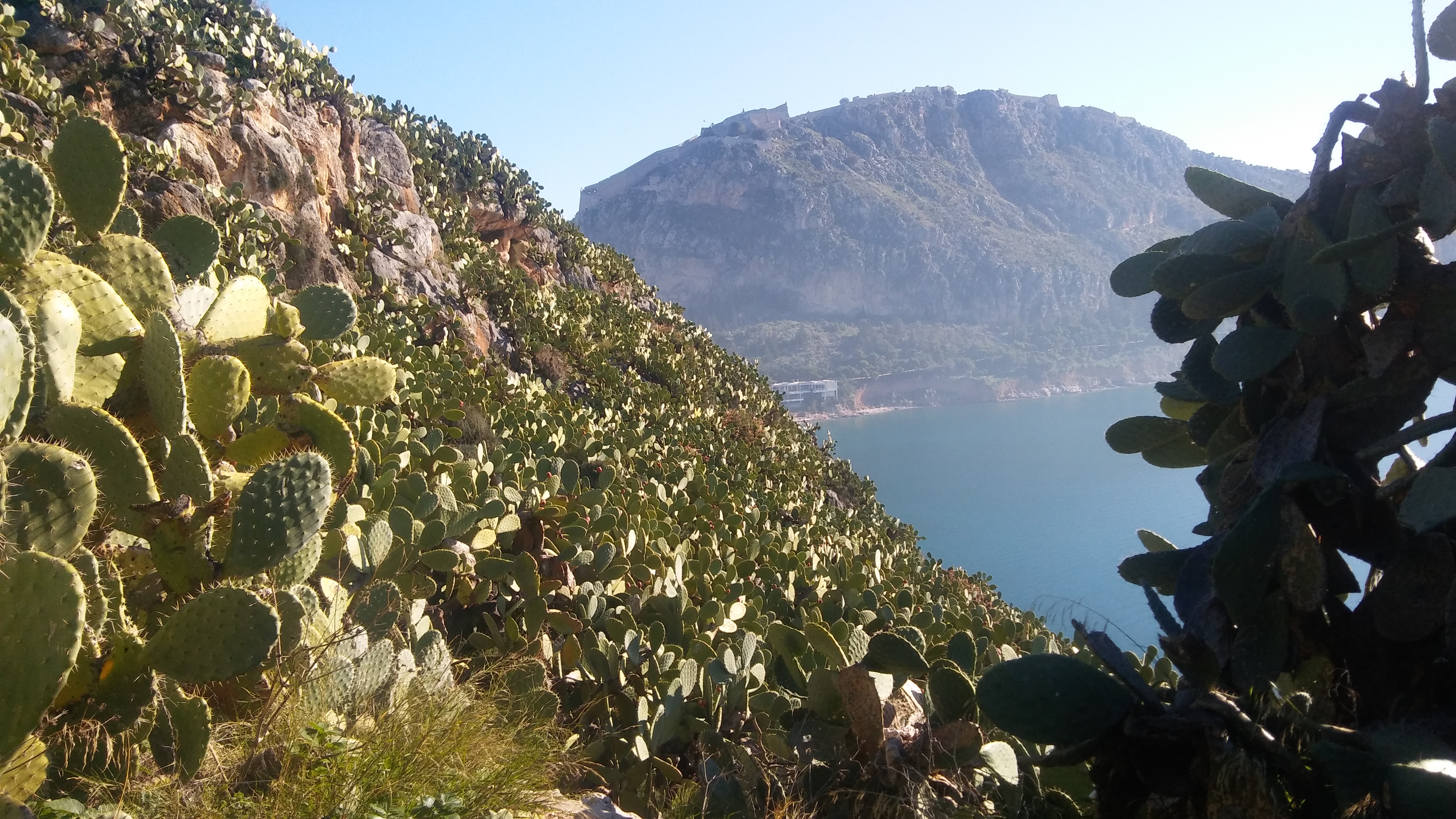
Palamidi as seen from the helipad on the top of Akronafplia

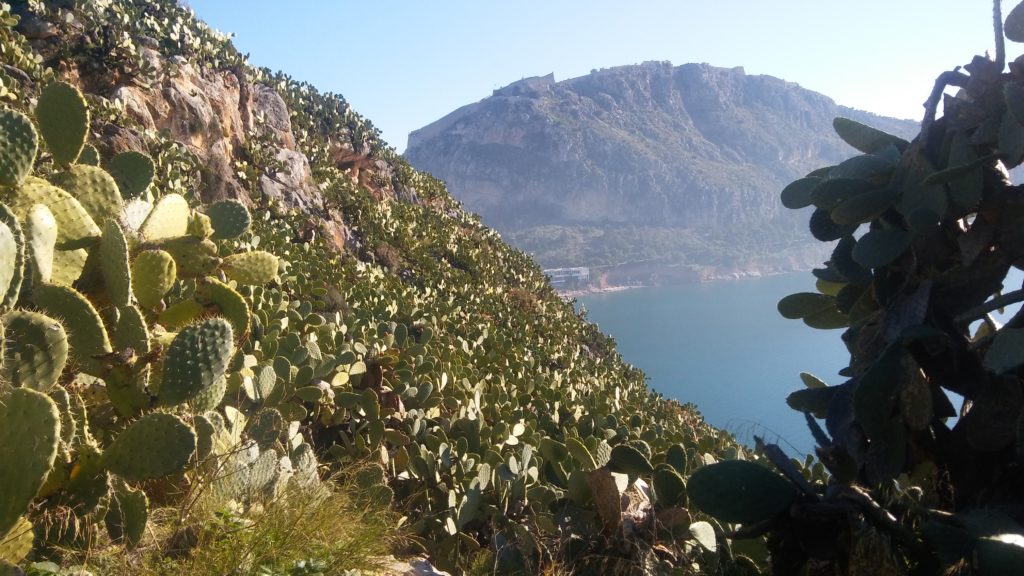
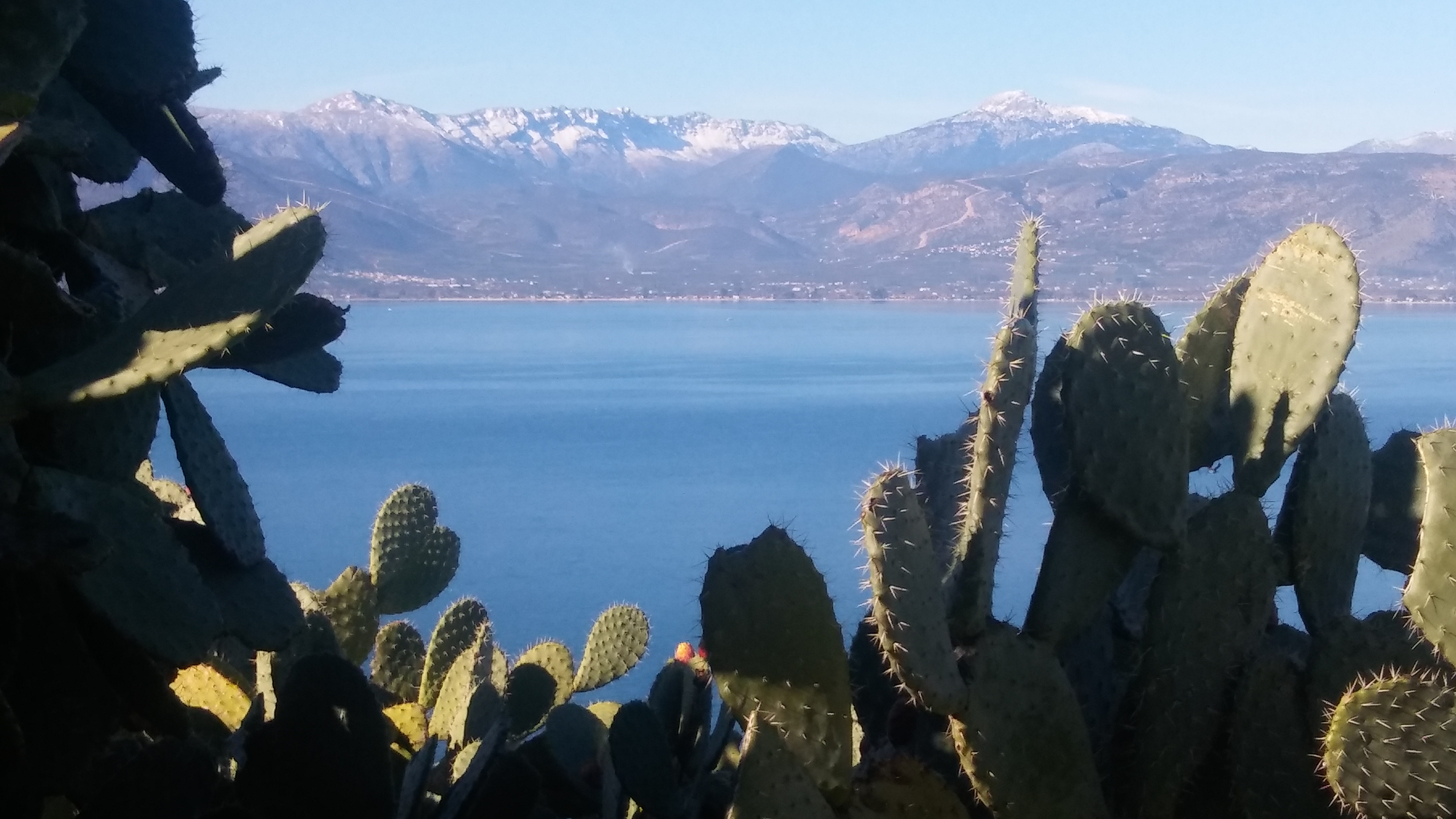
This view of the slope covered by ‘Fragosykies’ (Opuntia ficus-indica) with the Palamidi in the background rendered me mesmerized. I hope the pictures can convey some of its beauty. The plants were laden with ripe fruit, but I doubt anyone would ever dare venturing down that perilous slope to get them! I risked just a few steps in that direction, enough to admire the view, and it left me truly breathless.

Head back down the same way you went…

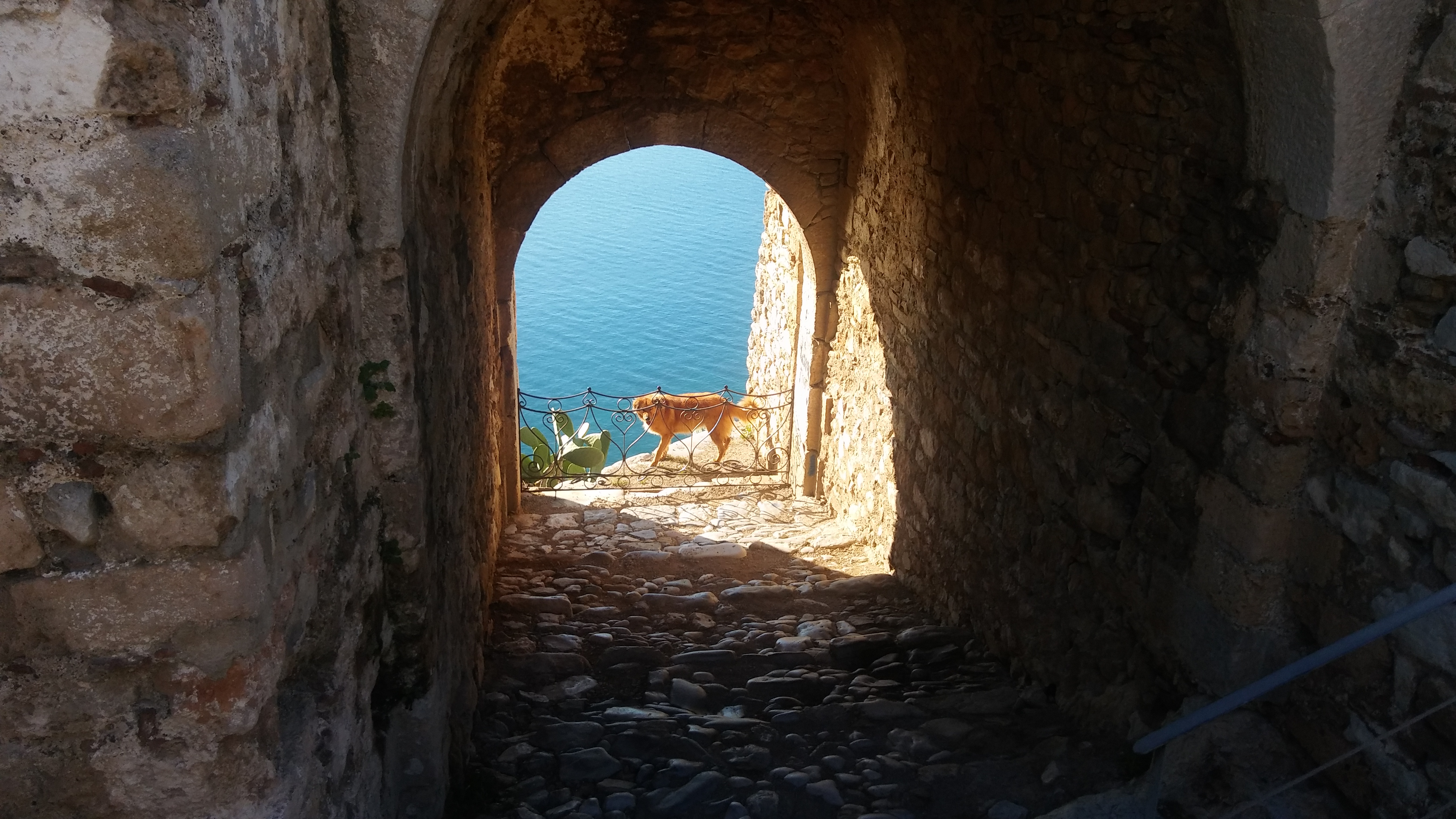
NOTE: Another way to enter the fort of Its Kale (instead of starting your walk from the Land Gate) is to enter through its original gateway that survives today, complete with a Venetian lion emblem. You will find it as you go up the steps of Potamianou Street past the Catholic church (earlier in this post I included a photo of this stepped street that’s near St Spyridon Church).

If you fancy a quick descend down to the beach, go to Arvanitias Sq (see map) and find the path through the trees on the very right of the square.

Most people would be quite tired by this point (I know I was!) so I don’t recommend heading back to town along the beach past the lighthouse (see map – it’s about 1 km away). I suggest therefore that you go back to the Land Gate (a very short walk) where you can sit at a cafe to relax with a drink.

By all means, if you have the stamina to keep going, here’s the way to get to the lighthouse from the beach:  Go down to the rocks by the water’s edge and head right (you can walk easily on the flat rock surfaces but comfortable/non slippy shoes are a must). At some point you will find a few steps that will take you to a coastal road. The walk from here to the lighthouse is very picturesque – I share it with pictures in the next section.


A WALK TO ARVANITIA BEACH STARTING FROM THE LIGHTHOUSE

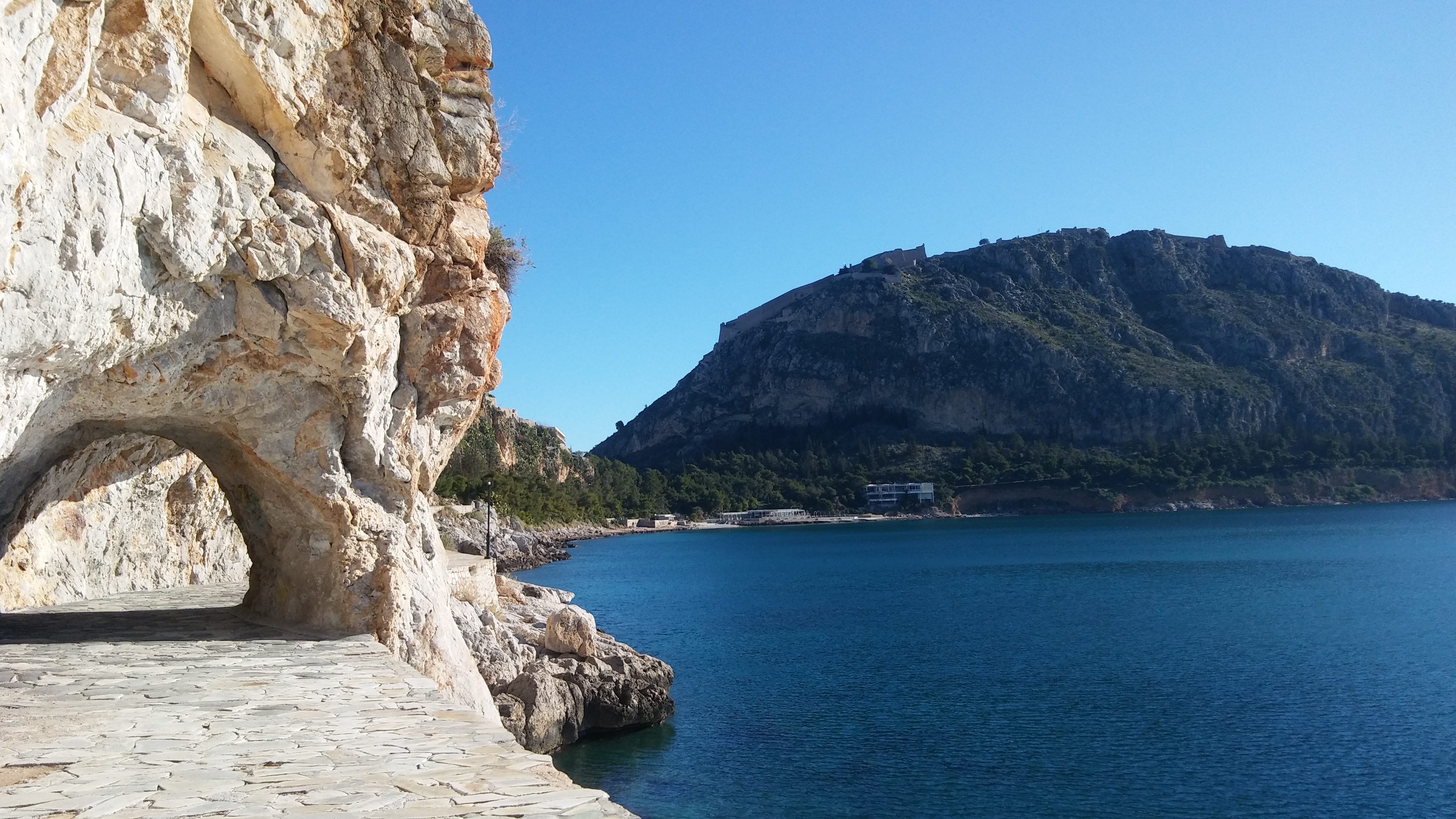
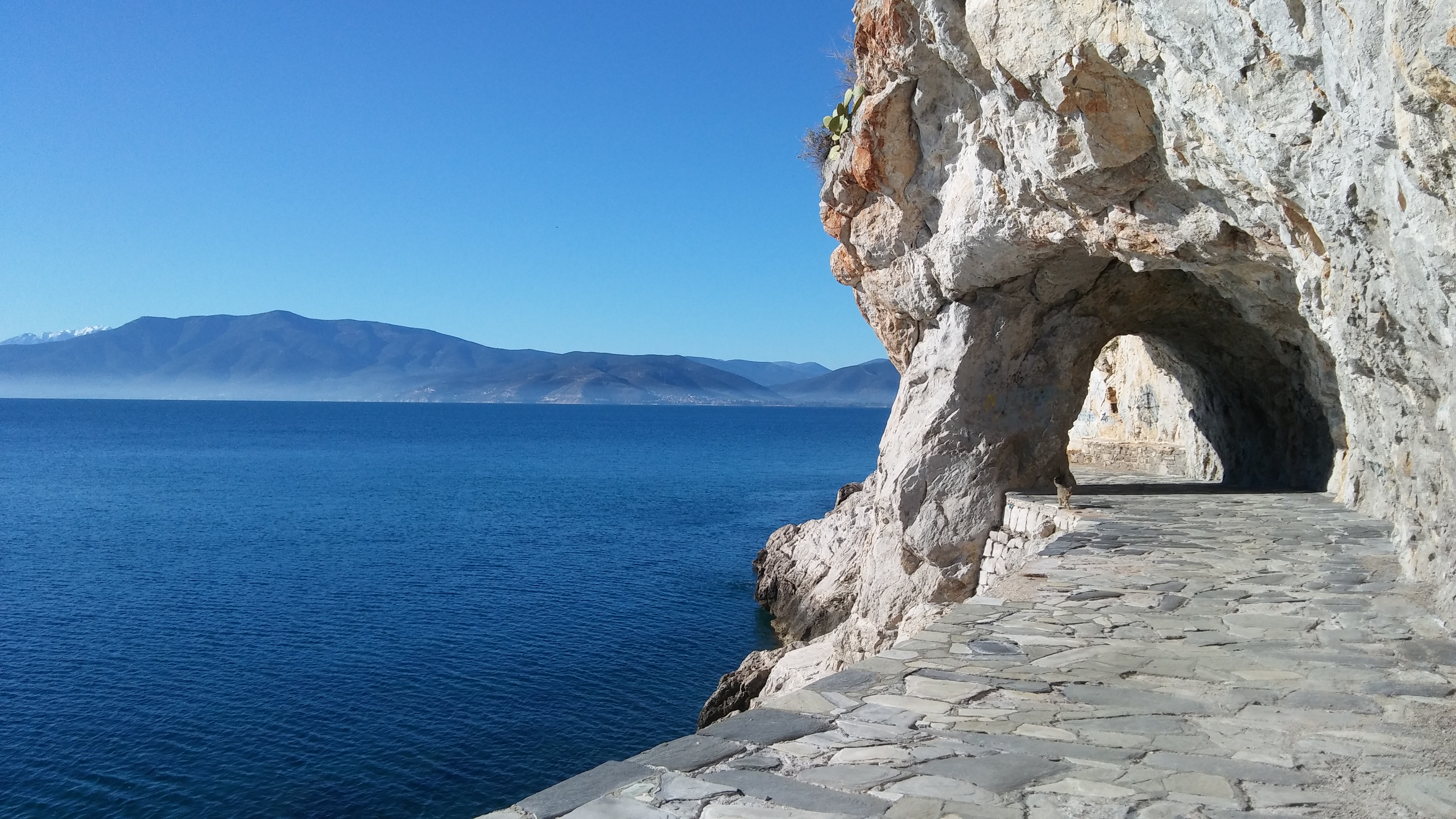
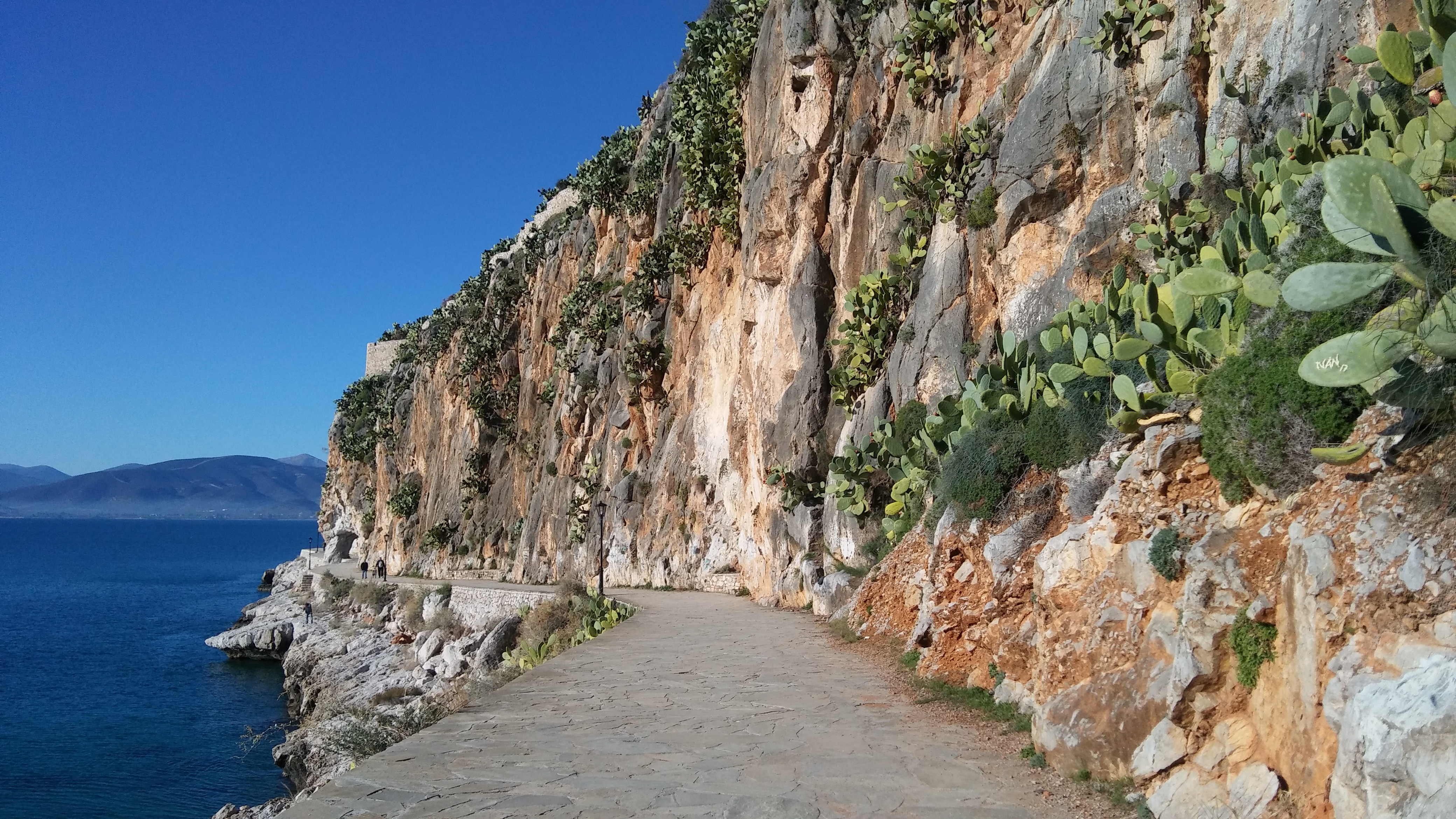
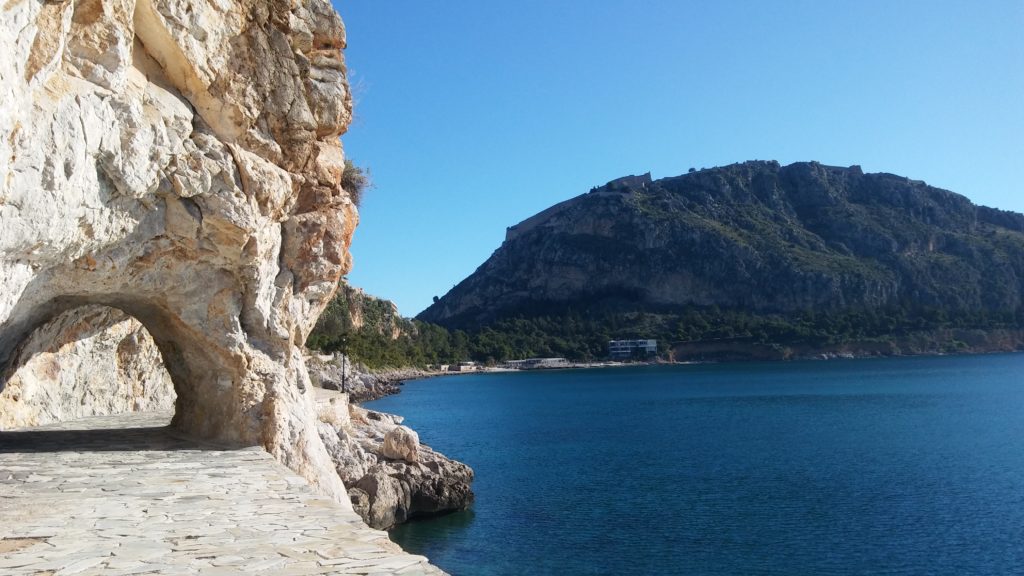
From the lighthouse, turn right (to a quiet coastal road) to get to Arvanitia beach.
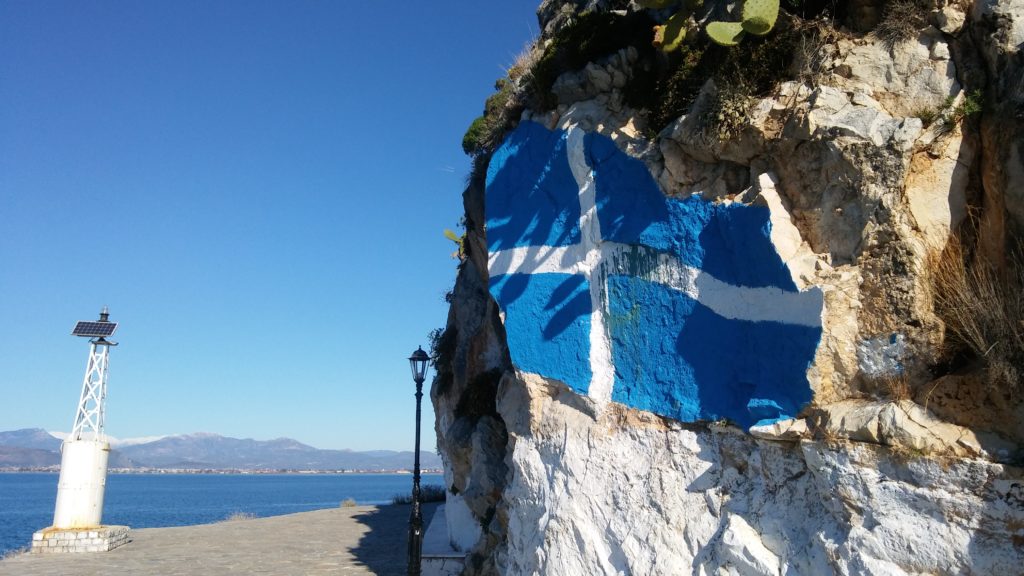
Around the bend, beautiful corners will start to make you smile…
 

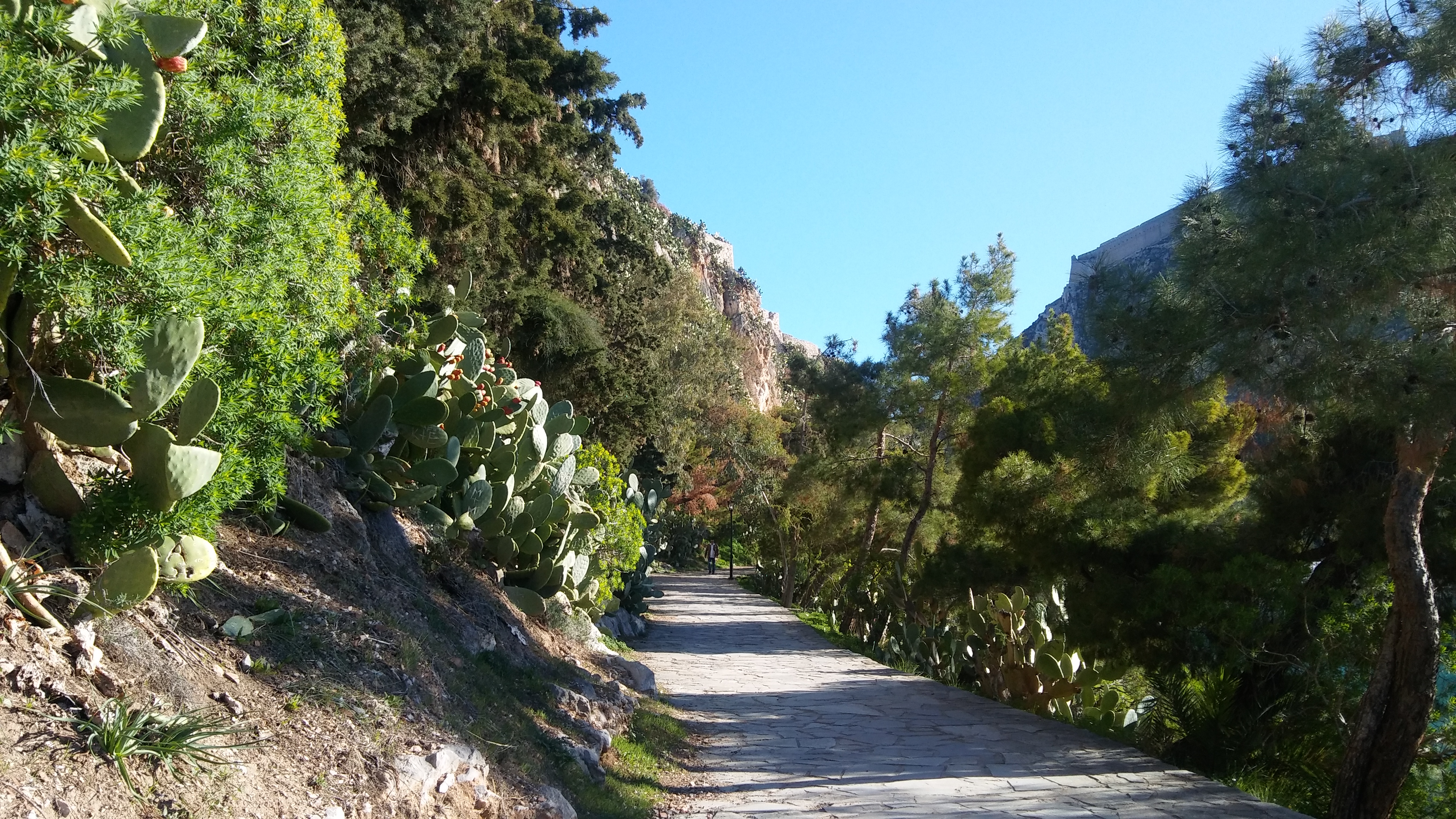
Just like on the top of Akronafplia, the slope here is covered with ‘fragosykies’ too (prickly pear or ‘opuntia ficus-indica’, in Latin). They were laden with fruit during my last visit.
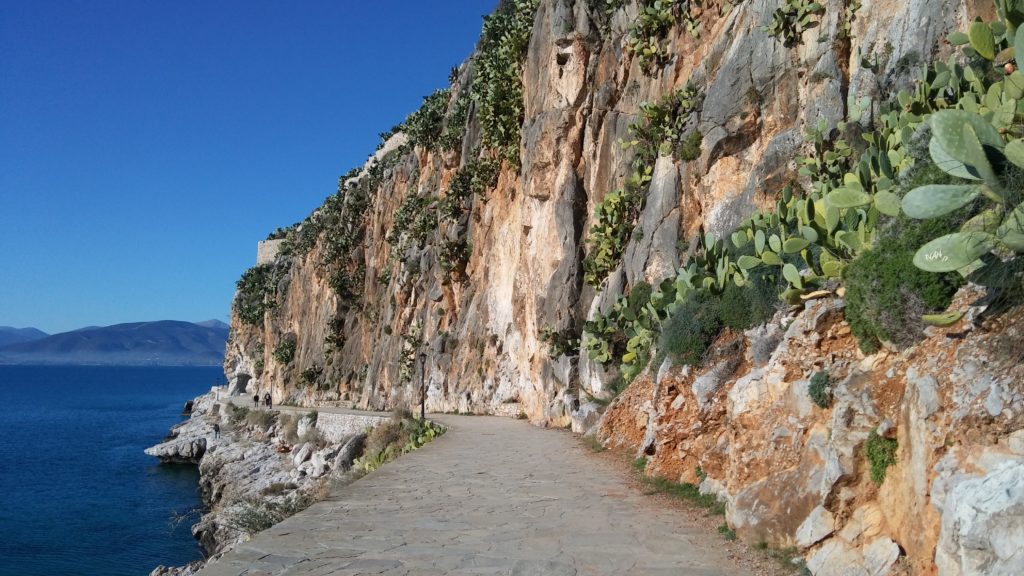
Visitors have carved initials and dates on the plant leaves all over the place so, chances are, they will attract your attention too. If you’re not familiar with this plant, do not attempt to touch its fruit or cut it off. It’s not called a prickly pear for nothing 😛
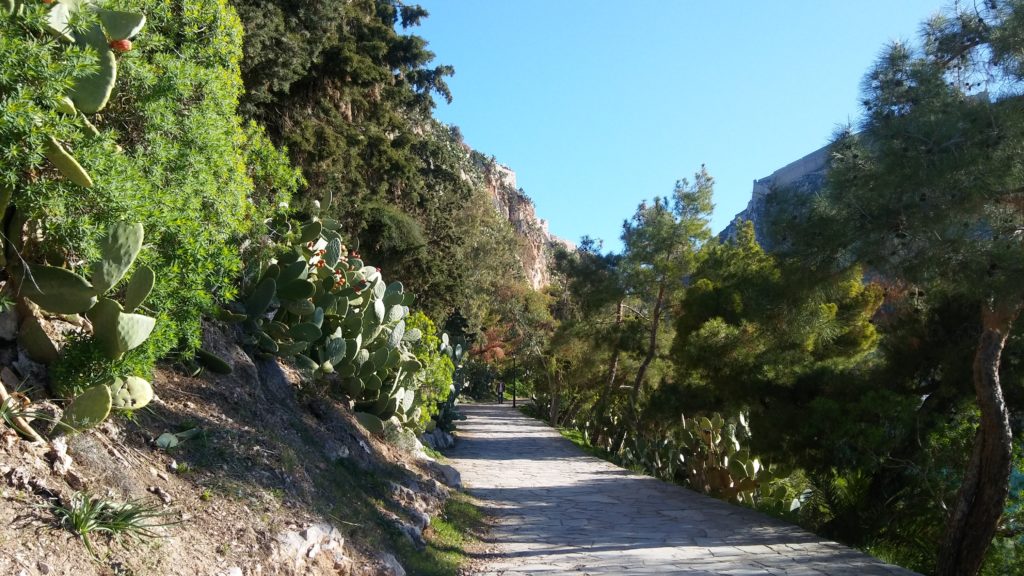
This is quite a short walk that you can enjoy leisurely  on an even slope throughout. Before you know it you will be on the beach. It is frequented by swimmers throughout the year and you’re bound to spot at least one!
 

WHERE TO EAT IN NAFPLIO
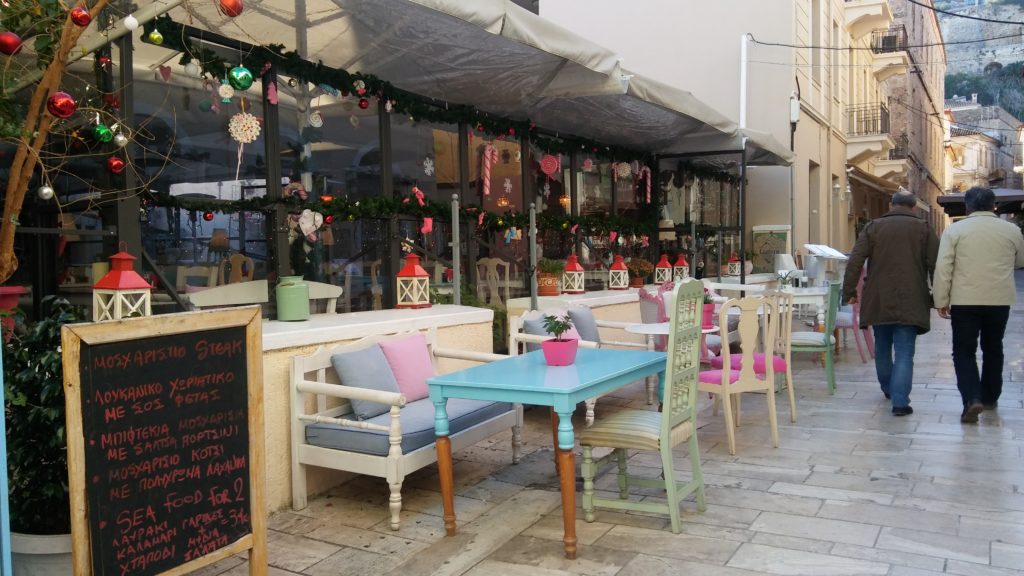
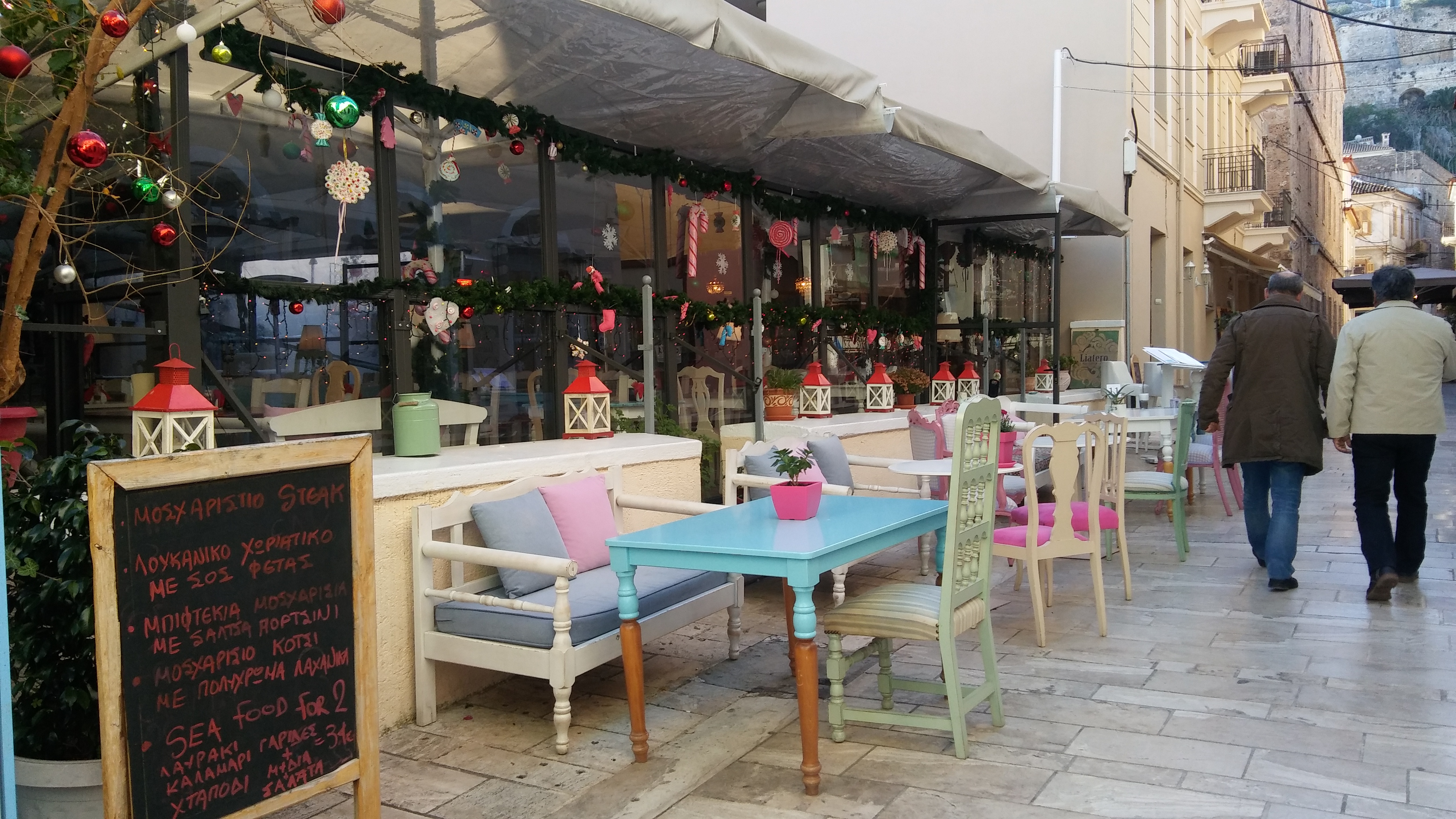
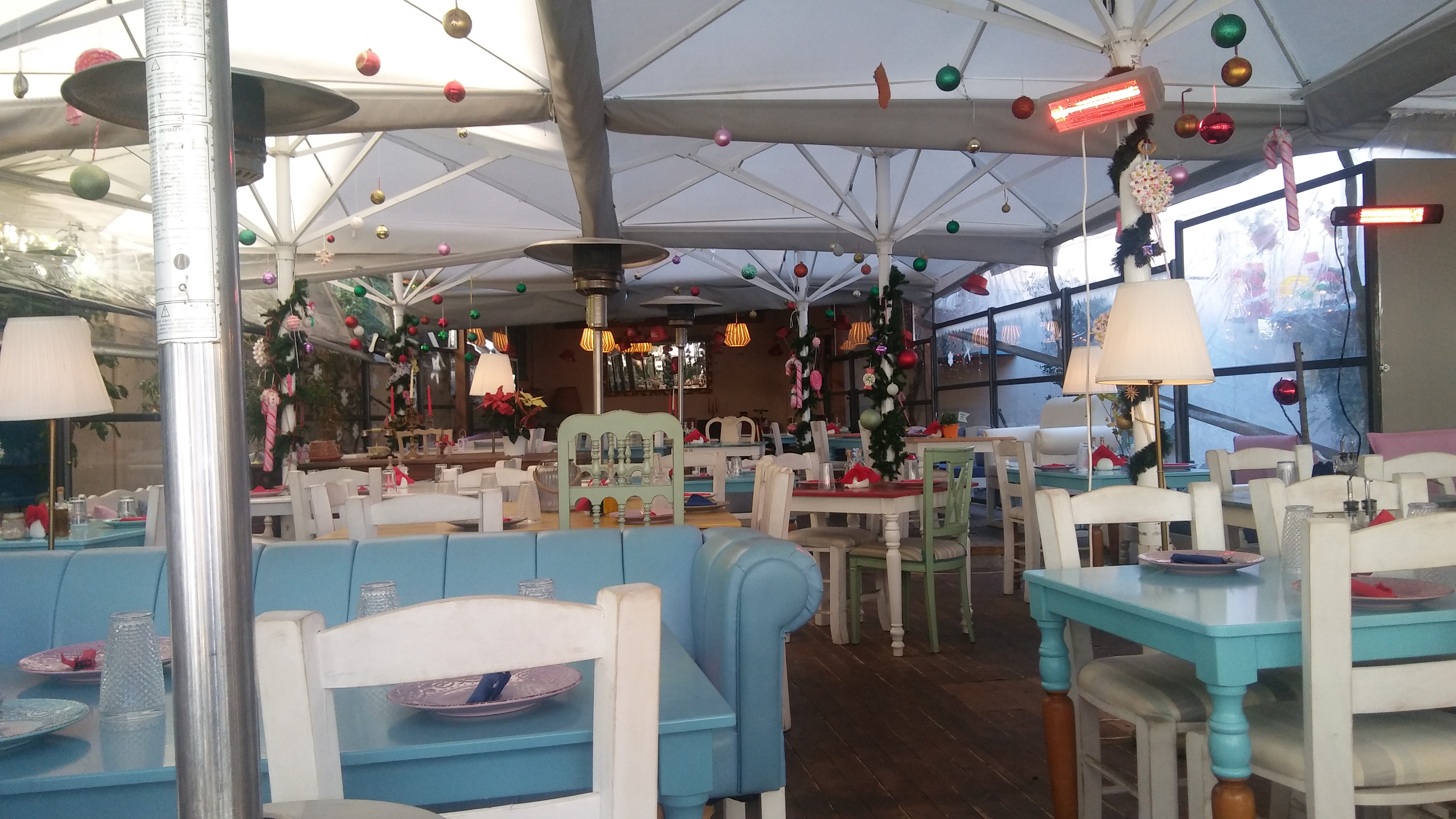
I must start with my favorite – Liatero! It is a new restaurant that brims over with doll-like quaintness. Its pastel colors are bound to catch your eye! The added bonuses are the attentive, courteous stuff and the food that’s out of this world yummy. Try the linguine with sun-dried tomato and rocket, or the hand-made ravioli with spinach and sweet myzithra cheese from Naxos – then you’ll know what I mean! They also serve meat, fish, and seafood dishes.
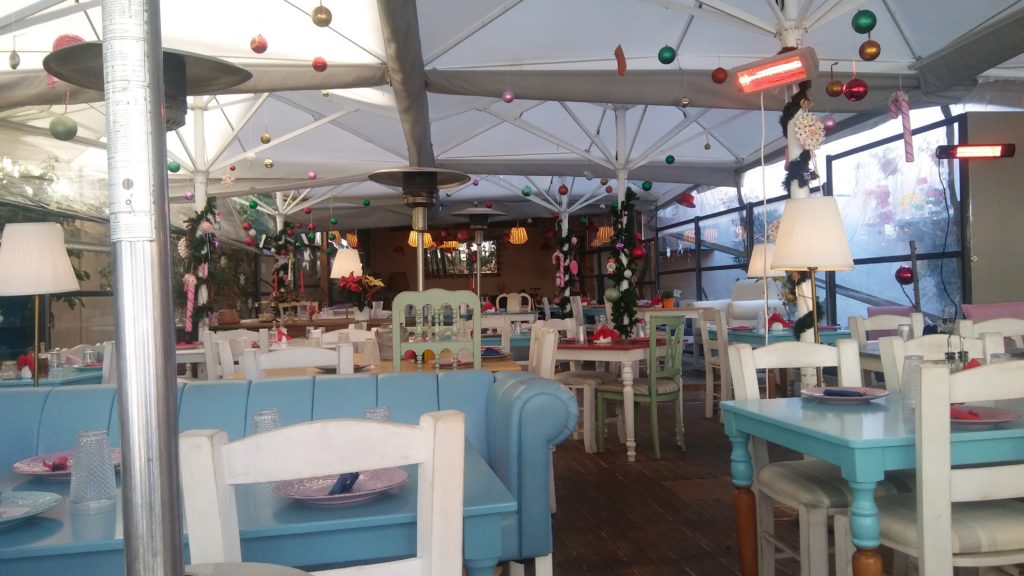
To get to Liatero, leave Syntagma square past the right side of the Archeological Museum and turn right towards the promenade. You will see it in that lane – can’t miss it.
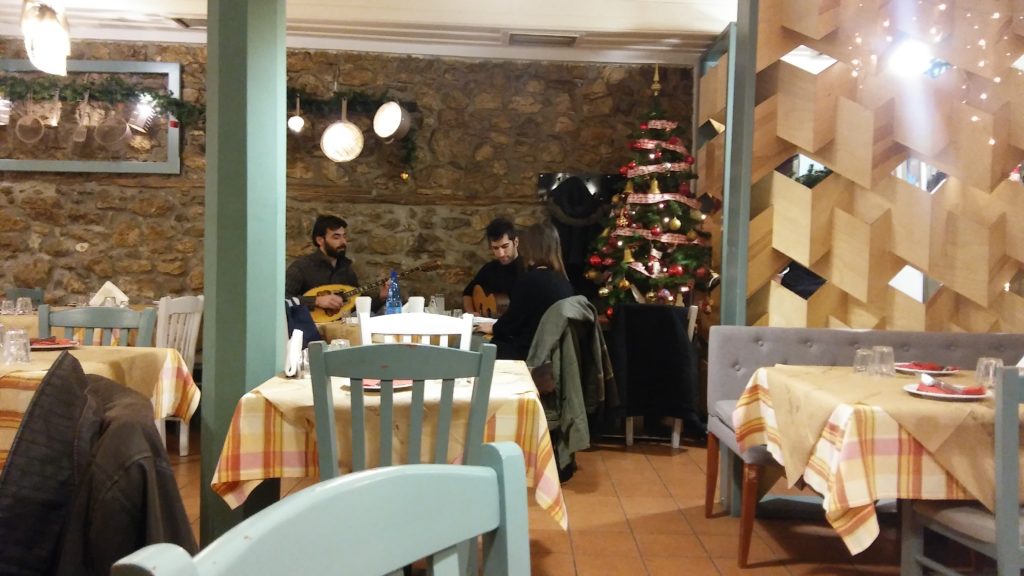
 

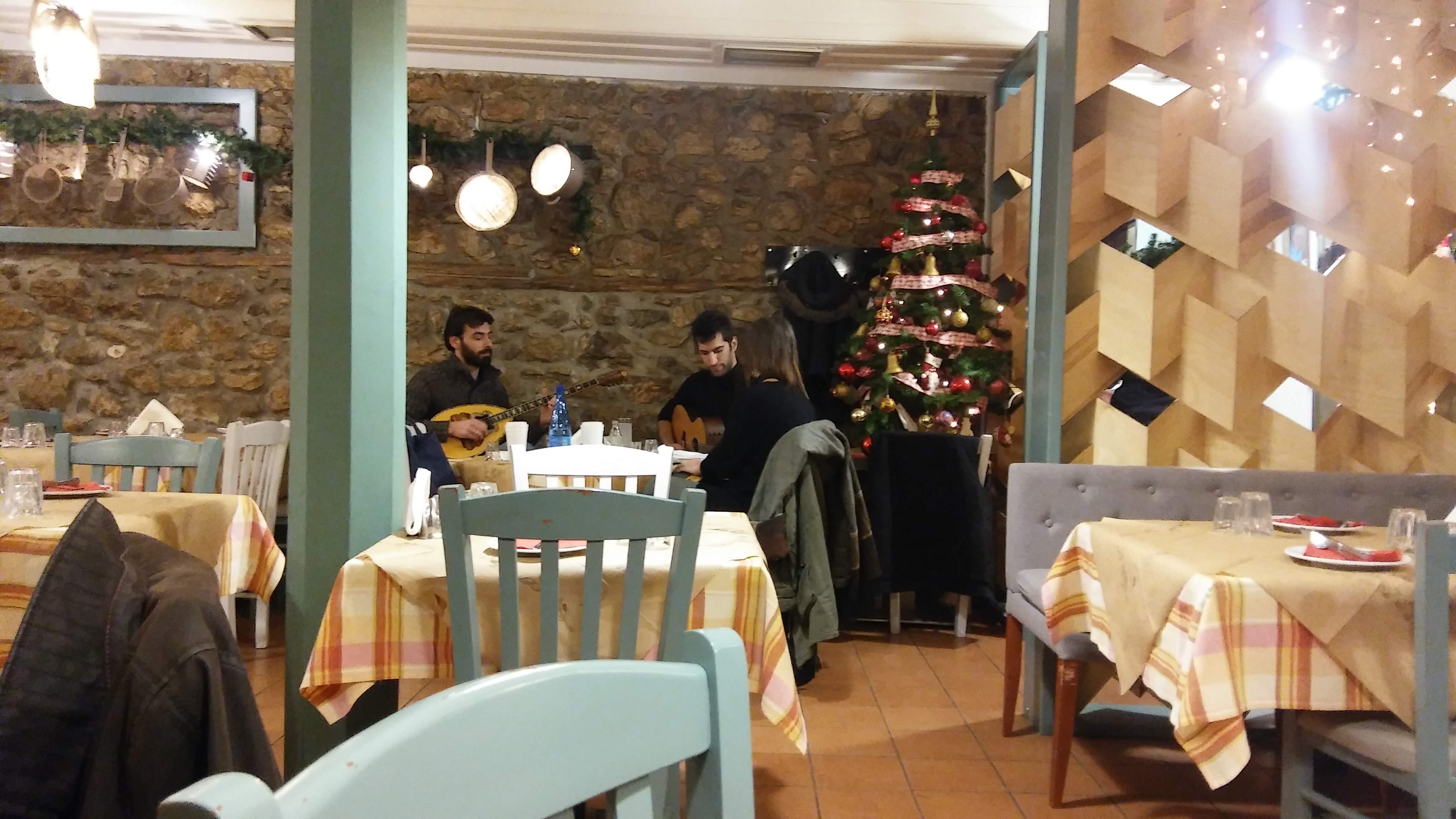
We enjoyed dinner in Vasilis taverna with live laiko and rebetiko music – a wonderful dining experience.

OTHER RECOMMENDED EATERIES:

VASILIS: Family taverna, traditional Greek food. Live music on some nights (Staikopoulou street)

CHRISTOFOROS: Family taverna, traditional Greek food (Staikopoulou street)
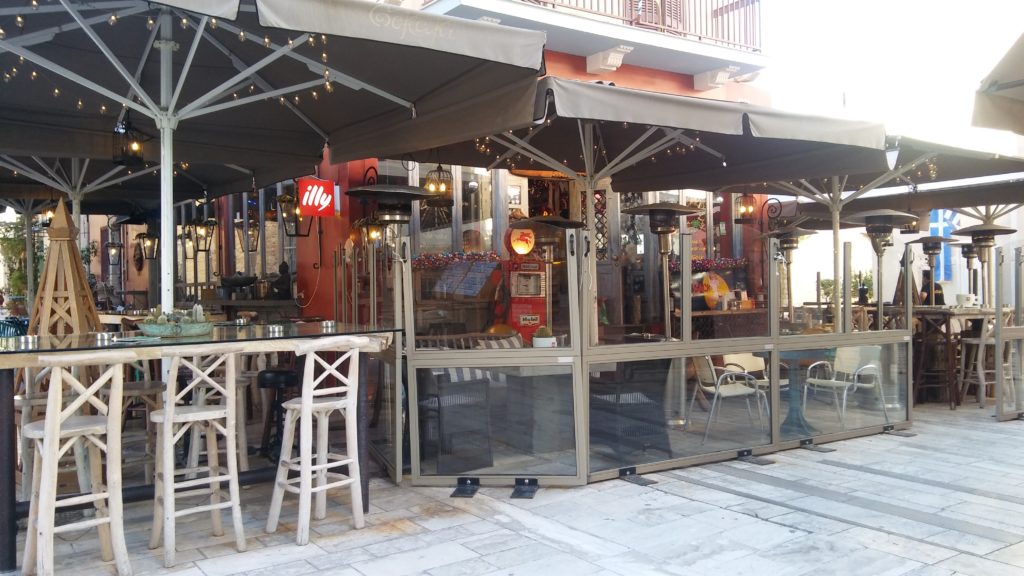
 

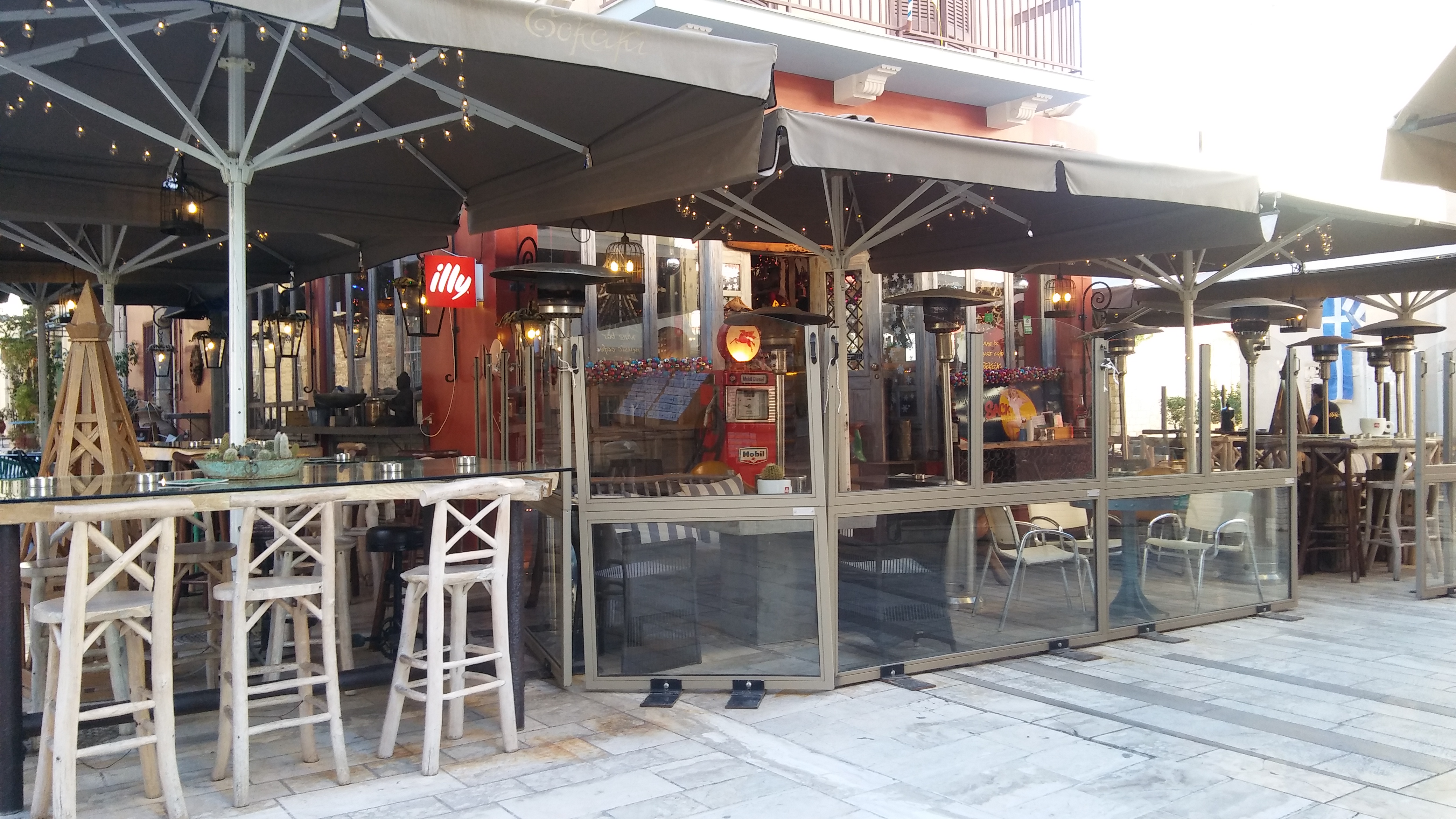
Sokaki cafe/restaurant. Venture inside for its impressive decorative features!

SOKAKI: (Cafe/restaurant) Salads, crepes, quiche lorraine, burgers other dishes. Great indoor decoration. To find it, leave Syntagma square from the right side of the Archeological Museum (as you head to the promenade). You will see it in front of you, standing in a corner.

ARAPAKOS: Family taverna, traditional Greek food – live music on some nights (Bouboulinas Street, on the promenade)

KAKANARAKIS: Housed in the former King Otto Stables (Vasilissis Olgas Street)

GYROKOMEIO GRILL: Souvlaki and other cheap eats. Good value for money! (Sidiras Merarheias street)

SOUVLOMAGIES: Souvlaki and traditional Greek food. Behind the Kapodistrias statue (in Kapodistrias Sq.) is a park. This is the old train station site (OSE company). On the other side of the green you will find the taverna on the left side of the road.

RECOMMENDED CAFES

Relax in the shade with the sound of running water delighting your ears in ‘Propolis’ (meaning, ‘before the city’) by the Land Gate

PROPOLIS: Coffee, tsipouro and meze. Waterfall scenery and sounds – situated by the Land Gate

CAFE STATHMOS: 25is Martiou Street, in the old train station site (OSE company)

NAPOLI DI ROMANIA: Akti Miaouli, on the promenade. Highly recommended. Word of warning: Not all the cafes in the promenade are good value for money (I had the displeasure to visit another, a stone’s throw away from this one, that was way more expensive and offered much lesser value)

XENION: At Syntagma square. Try ‘loukoumades me merenda’ (deep fried dough balls soaked in syrup and covered with hazelnut paste)


HOT TIPS FOR MOTORISTS
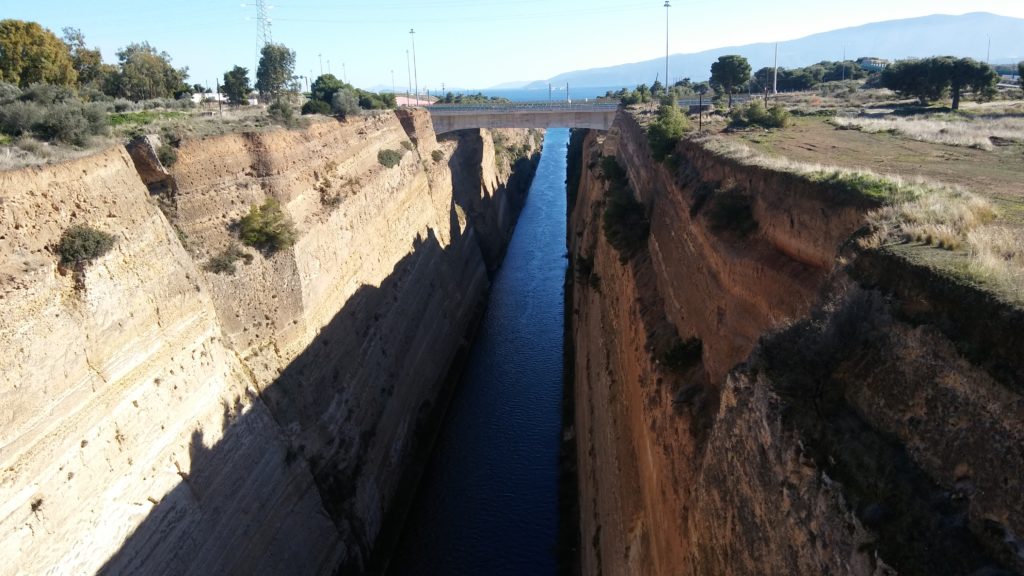
 

If you’re visiting Nafplio by car from Athens, a little diversion from your route to see the Corinth Canal (Isthmos Korinthou) is well worth your trouble! Just follow signs to ‘Isthmos’ or ‘Loutraki’. Here’s a post about an exciting little cruise I’ve had across the canal that’ll tell you all you need to know if you’d like to experience it too!

Places of interest near Nafplio include the seaside town of Tolo and the ancient theatre (and the museum) of Epidavros (Epidaurus). If you’re traveling by car, you can drive back to Athens via Epidavros and the village of Ligourio (Lygourio), that is, if you don’t mind an old scenic route as opposed to the new highways.

Ligourio is before (and close to) the ancient theatre of Epidavros as you leave Nafplio – many visitors stop there for lunch. Plenty of fine tavernas on offer.

If you have more days to explore, the ancient sites of Mykenae and Tiryns are great choices for the archeology enthusiasts.
 

Have you visited Nafplio? Would you like to offer a tip, share a memory, or ask a question? I look forward to your comments!

My supernatural rom com, Running Haunted, is set in Nafplio. Kelly ran a marathon and wind up running a house. With a ghost in it!  Check it out on Amazon US  UK


SPREAD THE WORD WITH A TWEET:

#Nafplio, a stunning town of 3 old fortresses that's steeped in Greek history #greece #nafplio #travellers Share on X


3 FREE books for you! Sign up below to receive them instantly!

NEW! Clean Christmas romance. Single mother Cathy Roussos gave up on love long ago, and veterinarian Alex Rallis doesn’t believe in it, but one magical Christmas on a Santorini farm might just change everything…
Check it out on Amazon     Read a FREE sample!


A clean romantic suspense short read with an unreliable narrator that’ll keep you guessing! Vera is losing her mind over famous actor Yannnis Ksenos, except, she isn’t just a fan… Now, she plucks up the courage to ring his doorbell… Visit Amazon


For my delicious Greek recipes, go here
 
Planning to visit Greece? Check out my  FREE guide to south Corfu!

Travel: Bruges, the stuff of fairytales

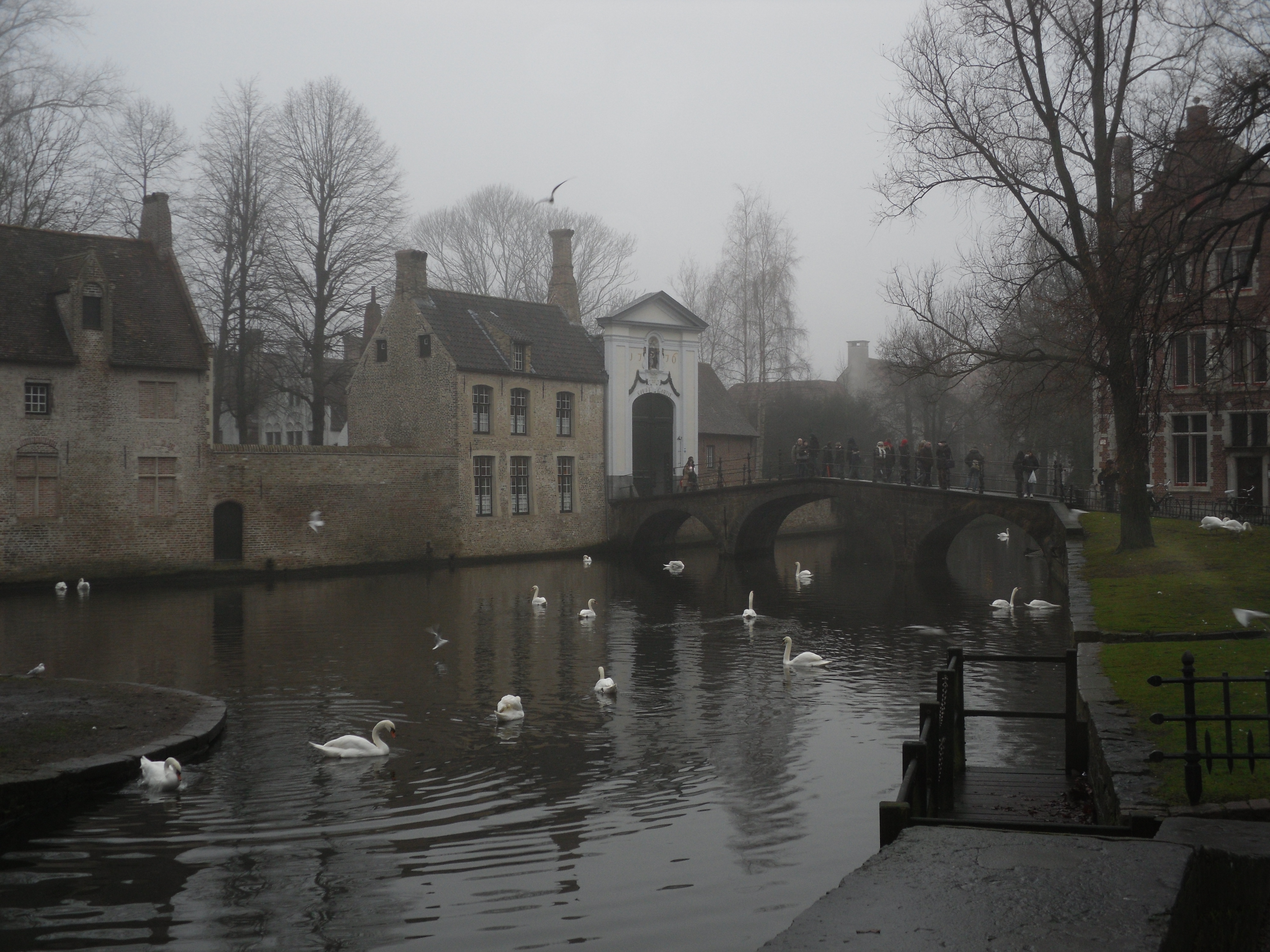
Today, I am thrilled to share my travel experience in the magical town of Bruges (Brugge) in Belgium a few years back, plus, I’m going to sprinkle some extra Hollywood fairy dust on it. If you have watched the movie In Bruges, then you are well acquainted with the hilarious camaraderie between Ken and Ray, two paid hitmen who arrive in this medieval town to await further instructions from their boss.  Bruges welcomes them shrouded in mist like a fairytale land of absolute magic. Yet, Colin Farrell who plays Ray, keeps moaning about everything from the moment he arrives. His constant winging is a brilliant act of comic relief to an otherwise thrilling tale of murder and violence. What makes his grumpiness so entertaining is the ridiculous idea that Bruges could ever be the cause of discontent.

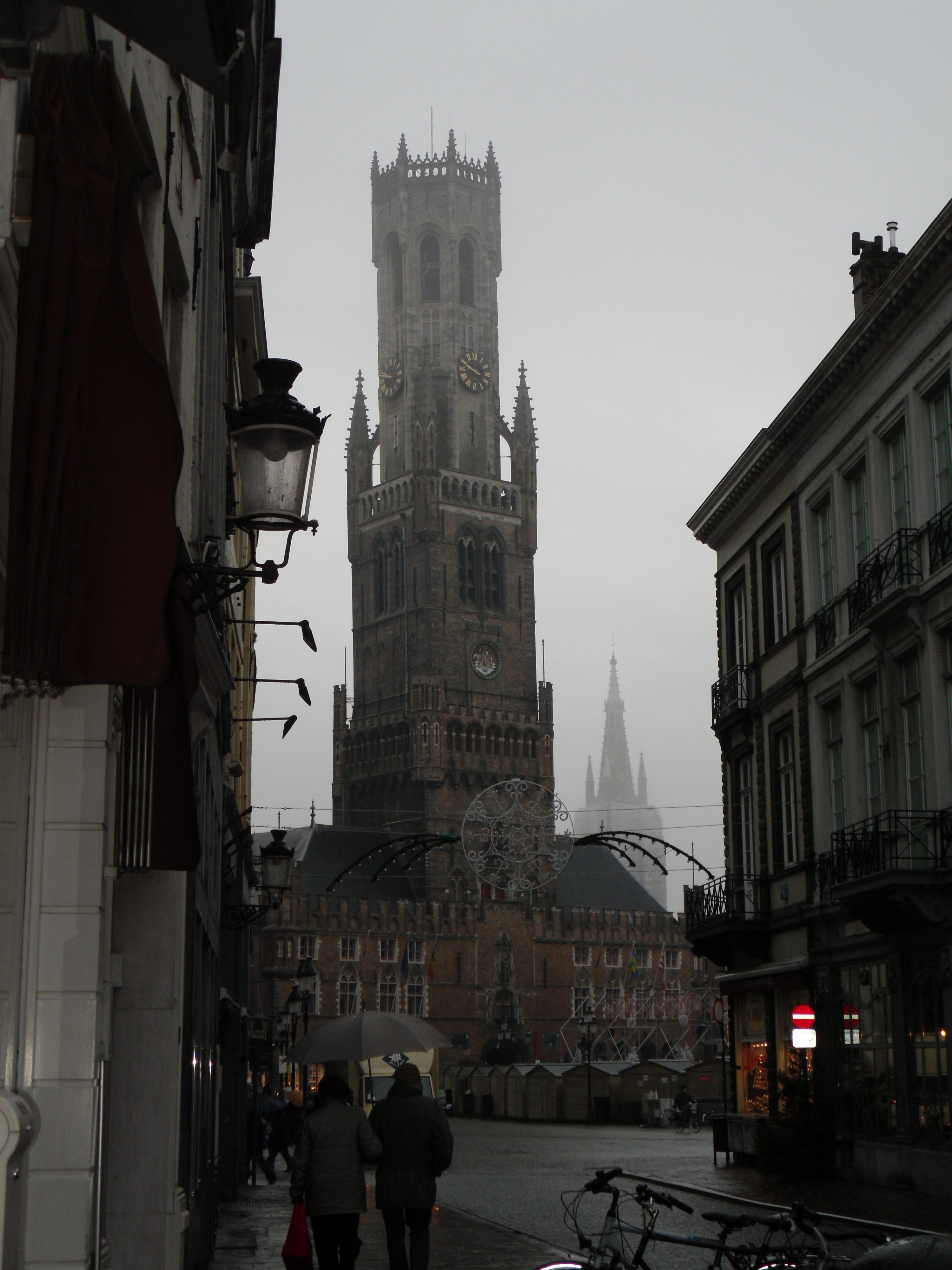
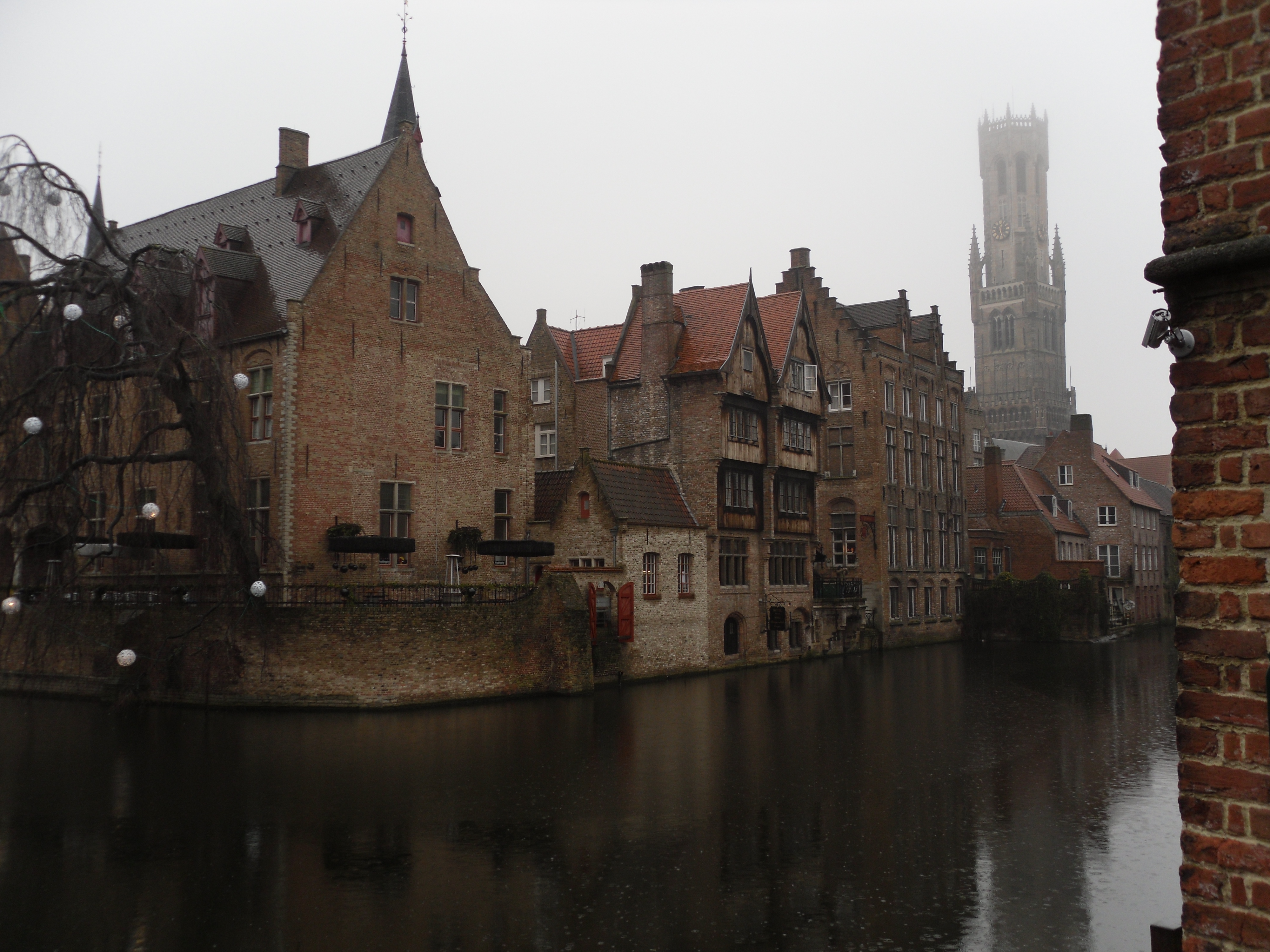
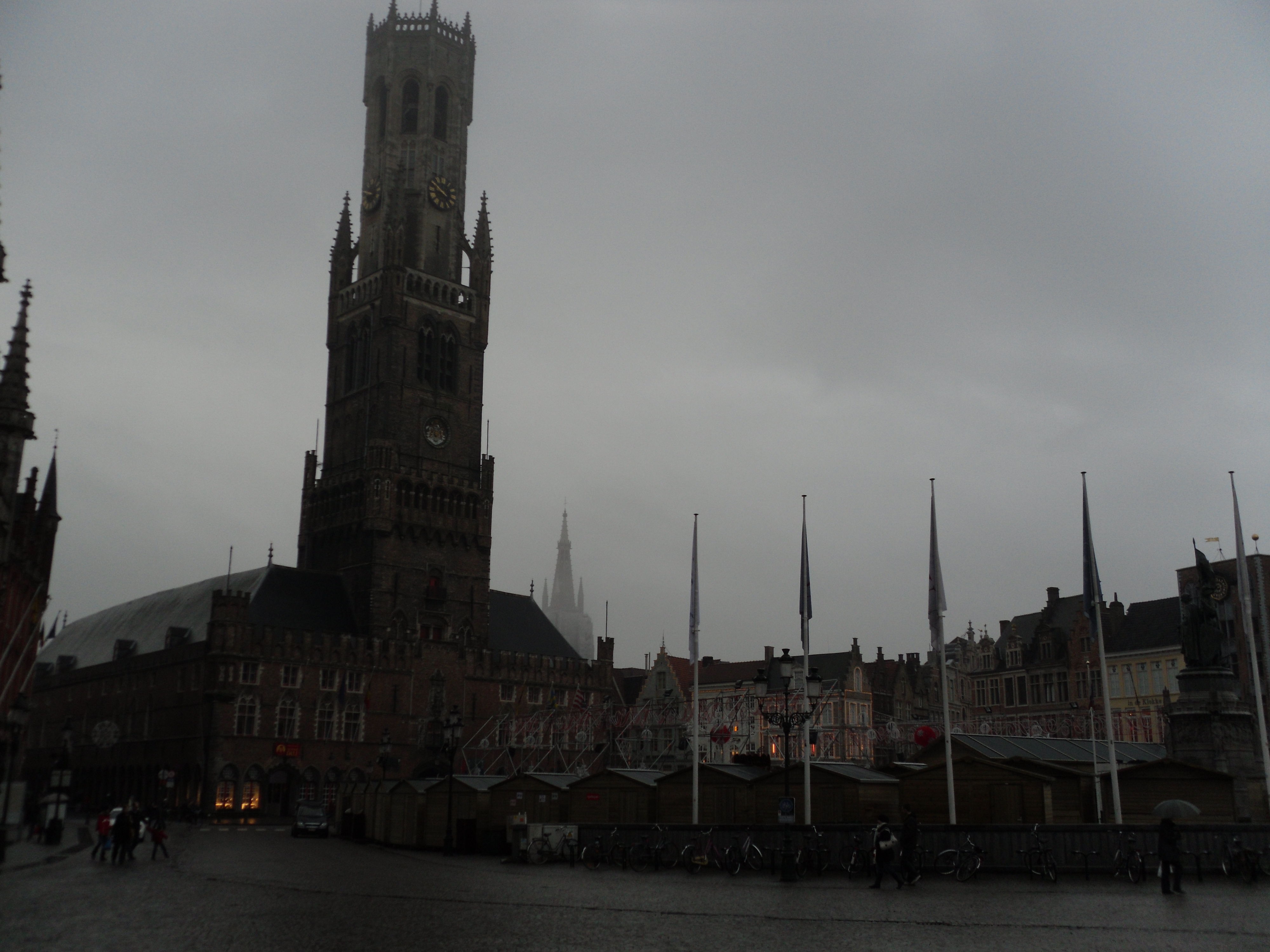
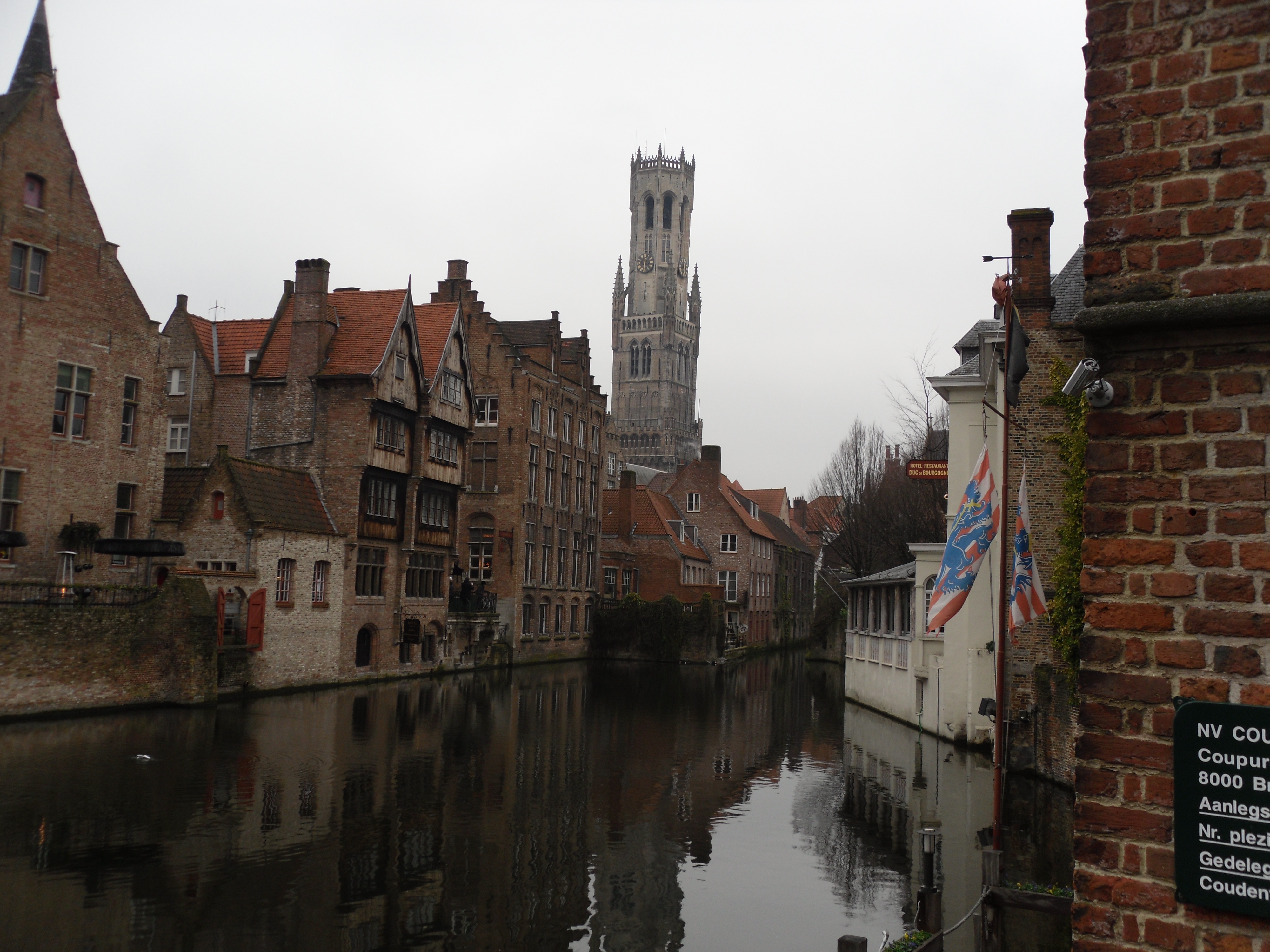
Just an hour’s train ride away from central Brussels, Bruges greets you modestly as you exit the station, as if it were a place like any other. And then, you get to the market square (Markt) and as you raise your eyes to the misty top of the Belfort tower, you start to think that this place is perhaps not like the rest, after all.

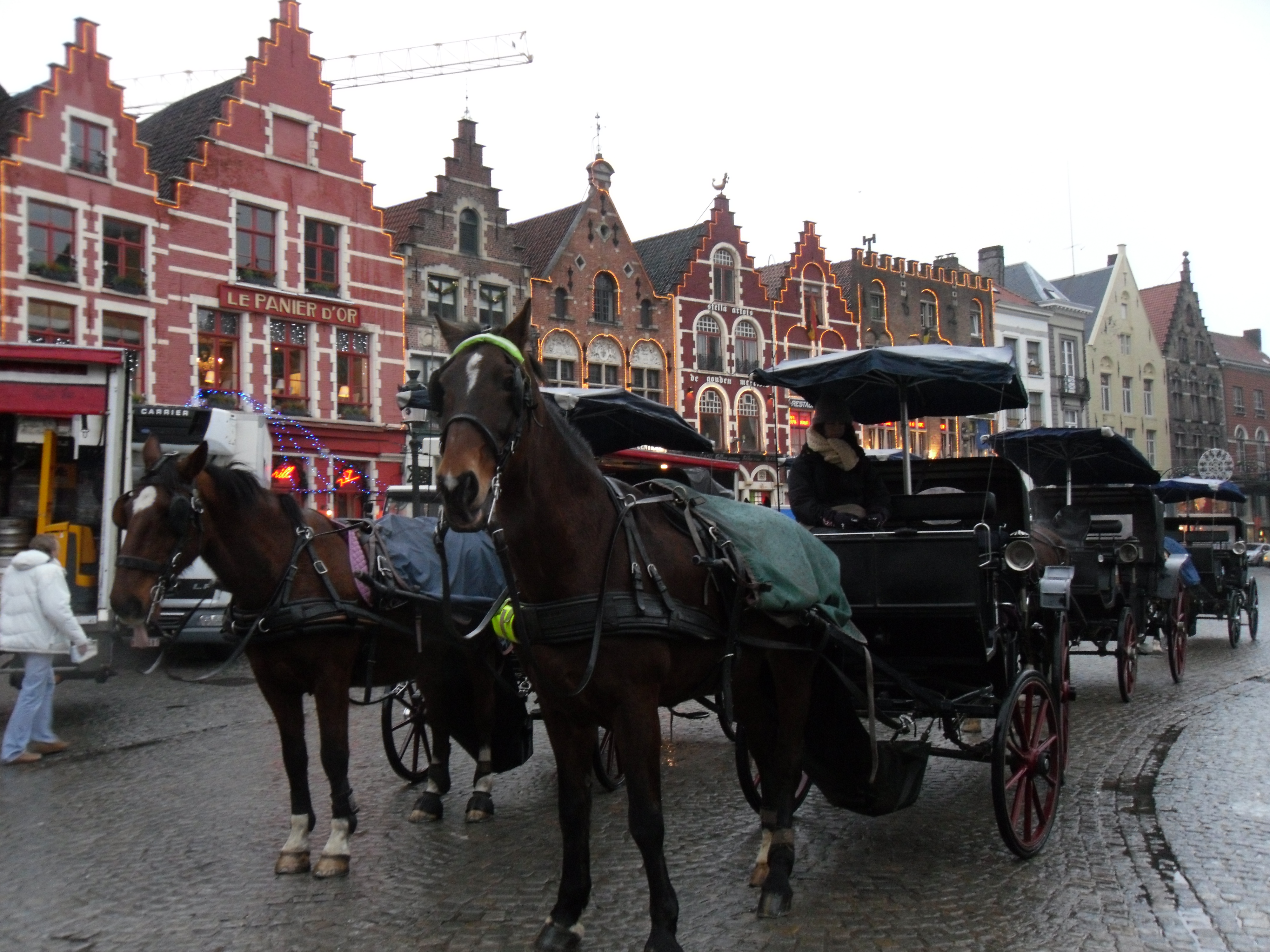
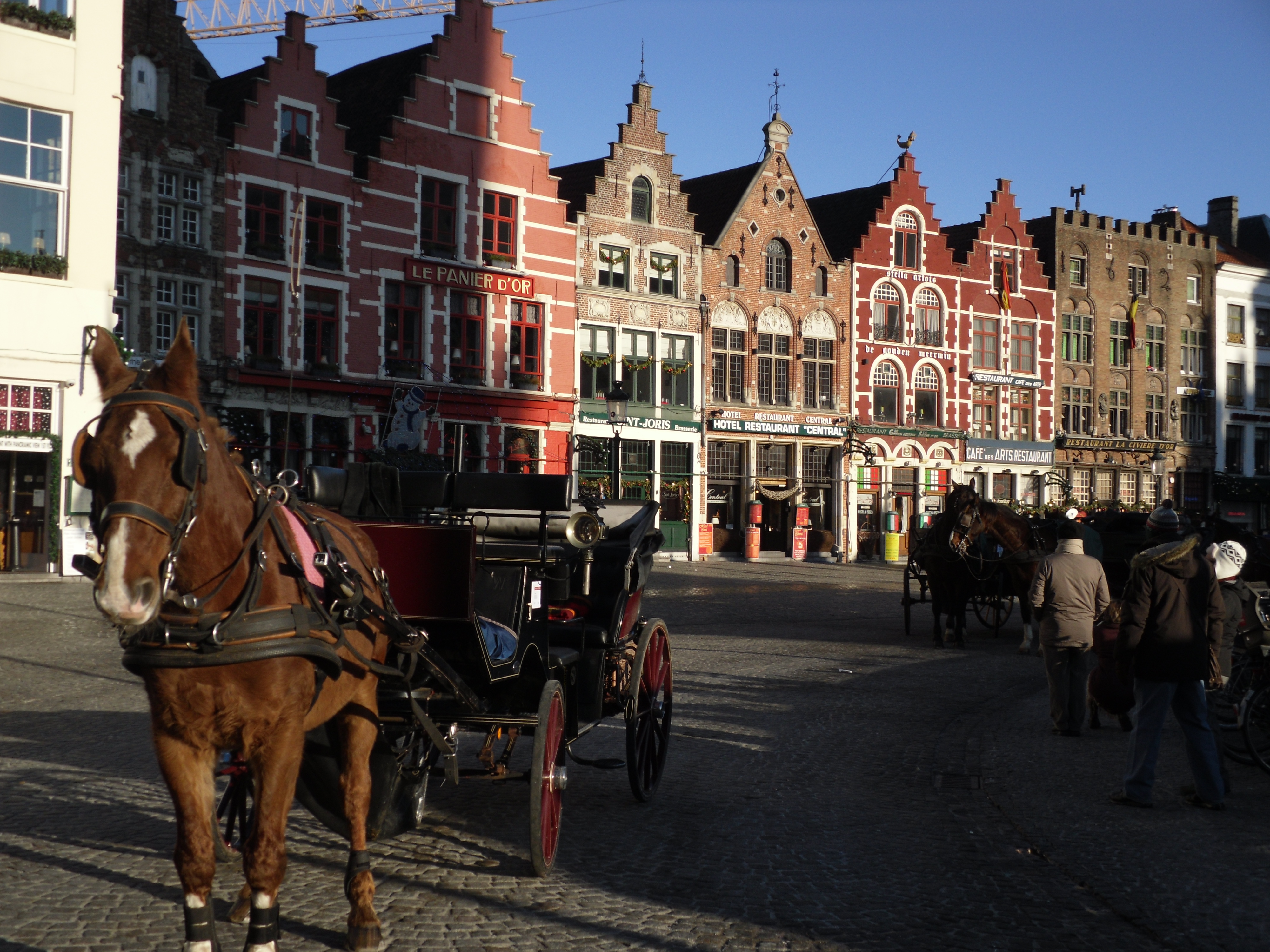
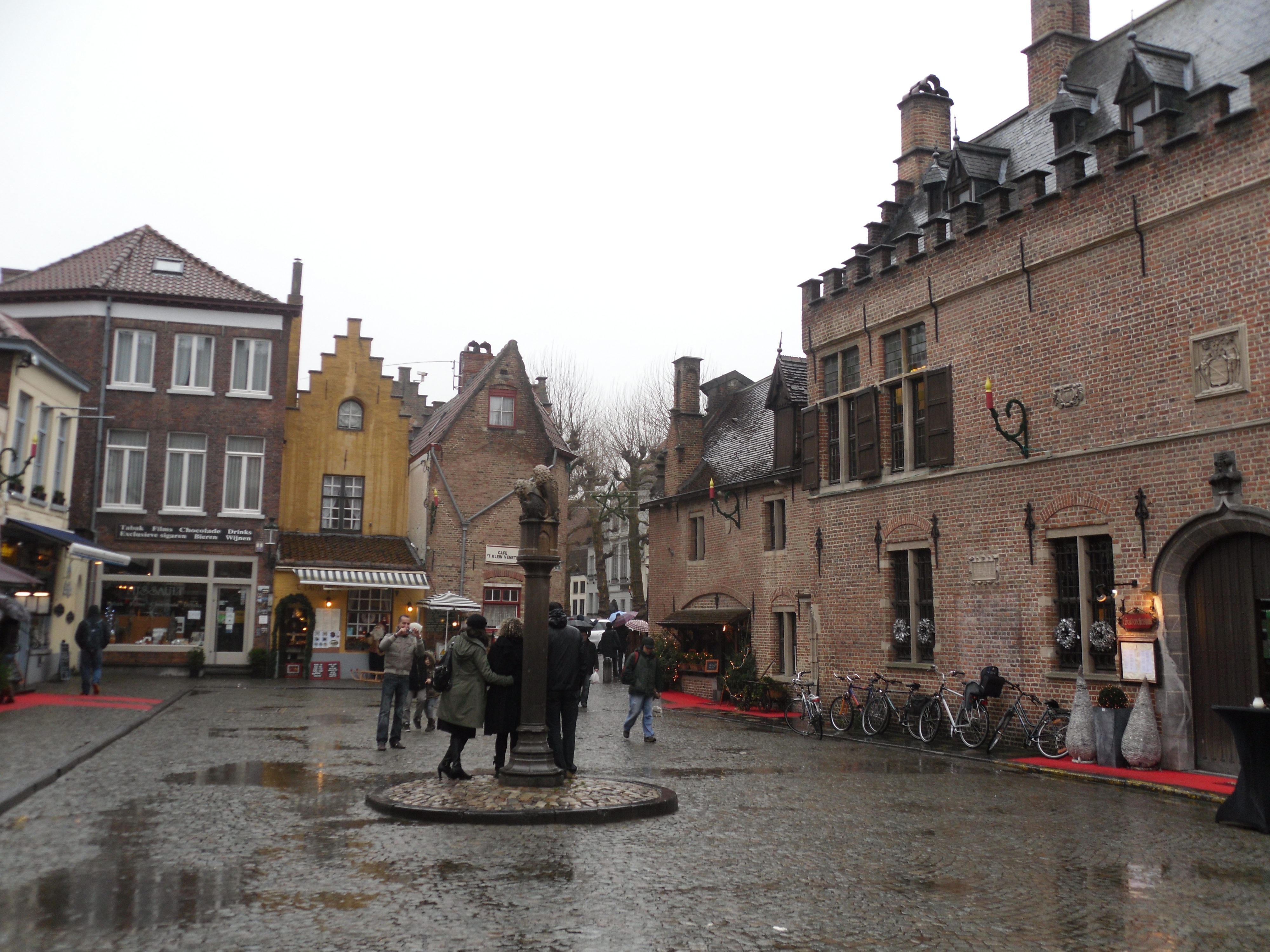
Then you begin to look around properly, your eyes resting with admiration at the quaint buildings that line the square on the other side from the tower. Before you know it, you’re captured by the beauty of the scene, and you begin to smile as the timeless sound of horses’ hooves on cobblestones reaches your ears and carriages of a bygone era pass you by.

This is when it hits you and your eyes truly open. Everyone seems to wander around with a cheerful expression on their faces. Couples of all ages walk hand-in-hand and you decide to follow one of them, picking the one that seems to walk more confidently, guessing that they know where they’re going. Soon enough, you feel pleased with your choice because at the back of the Belfort tower where they’re headed, this is where the real magic awaits!

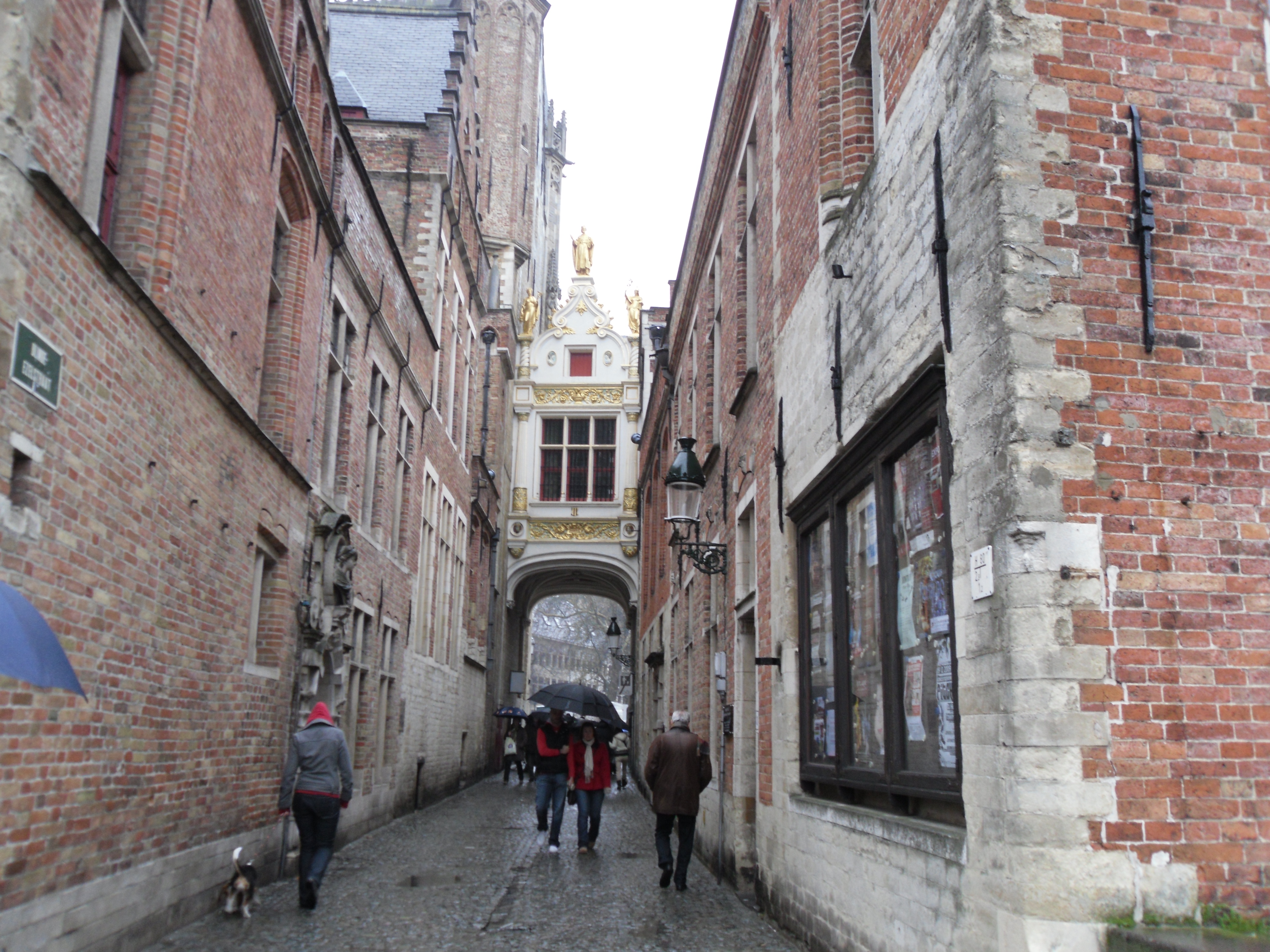
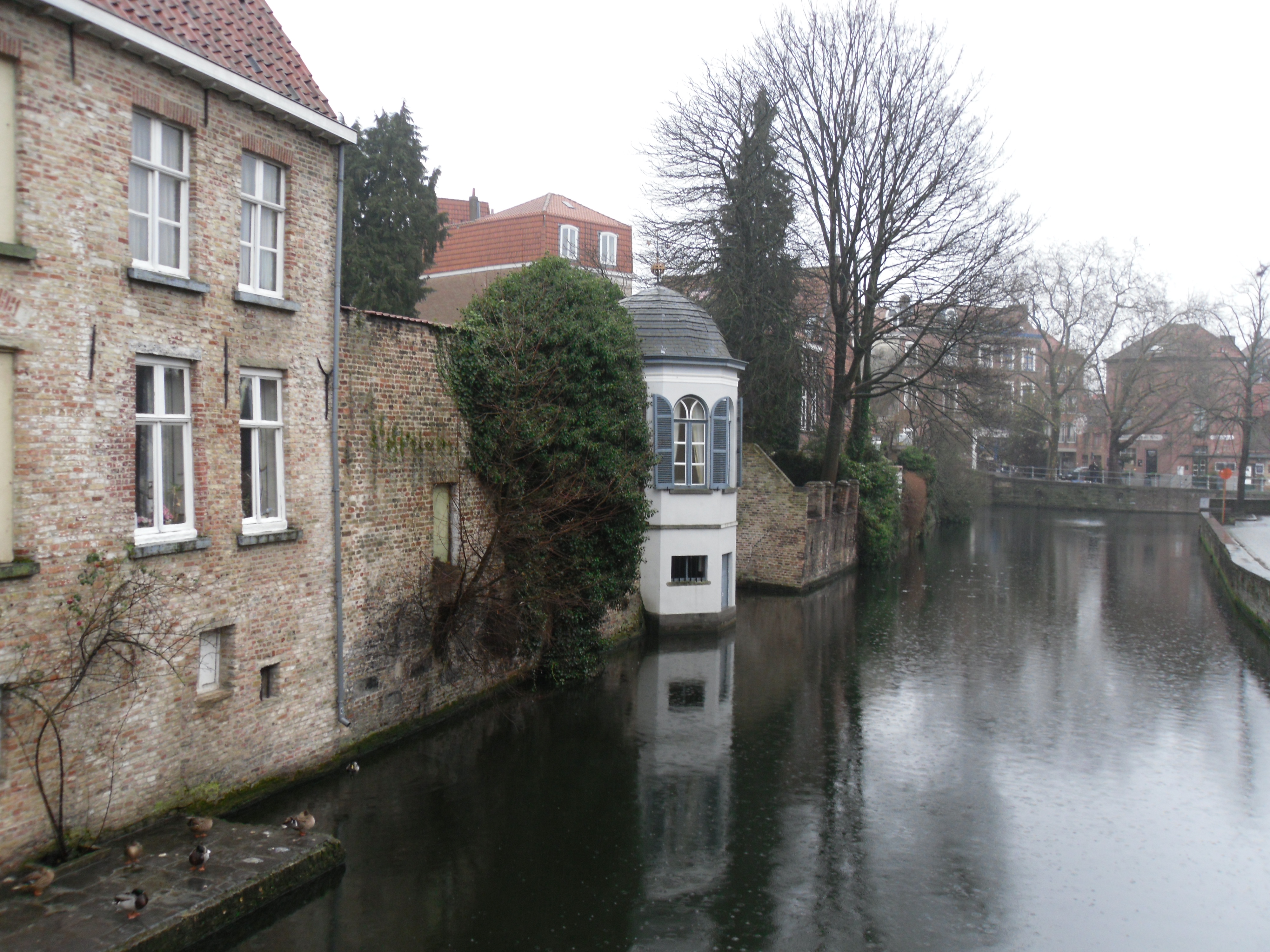
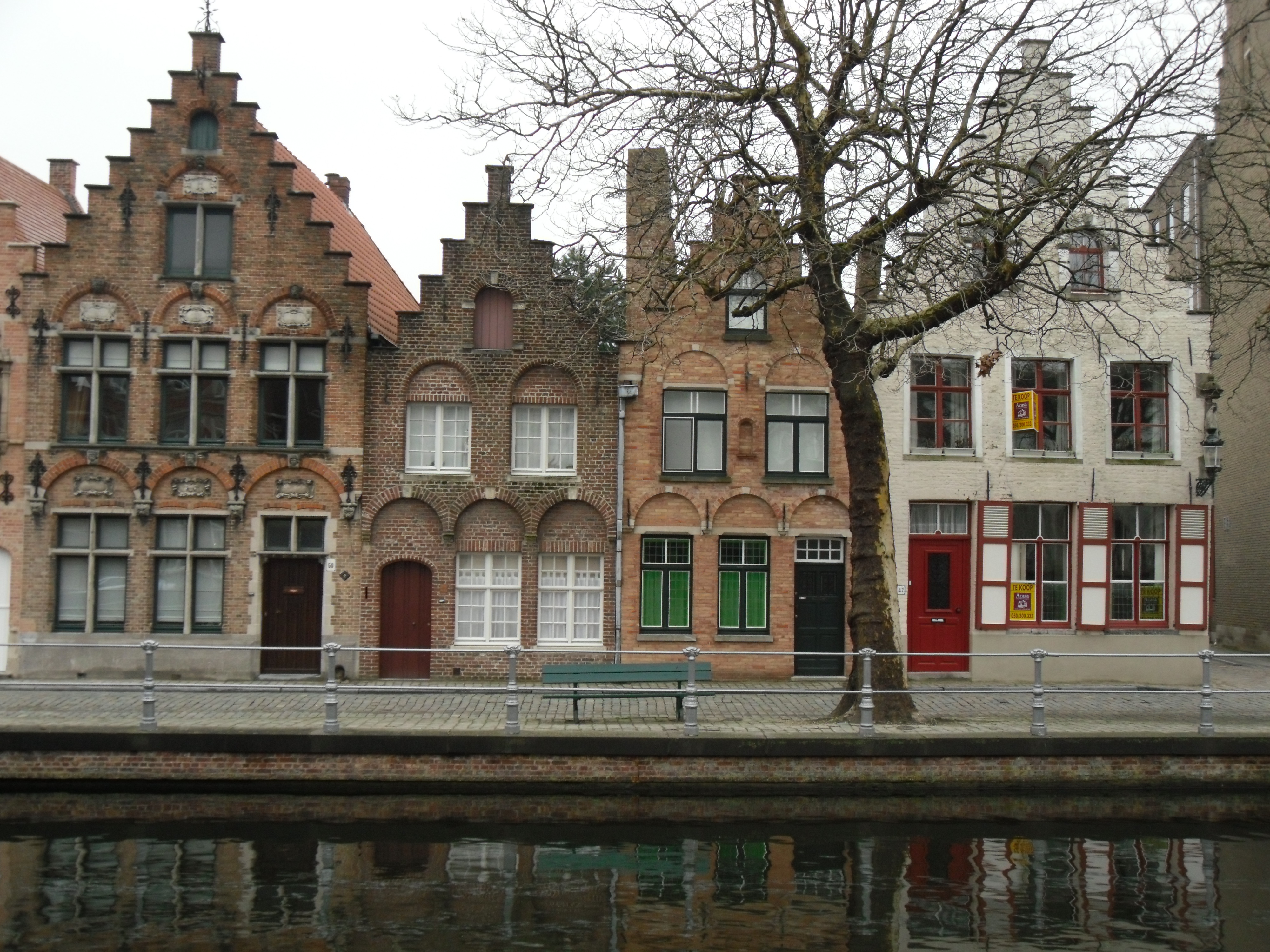
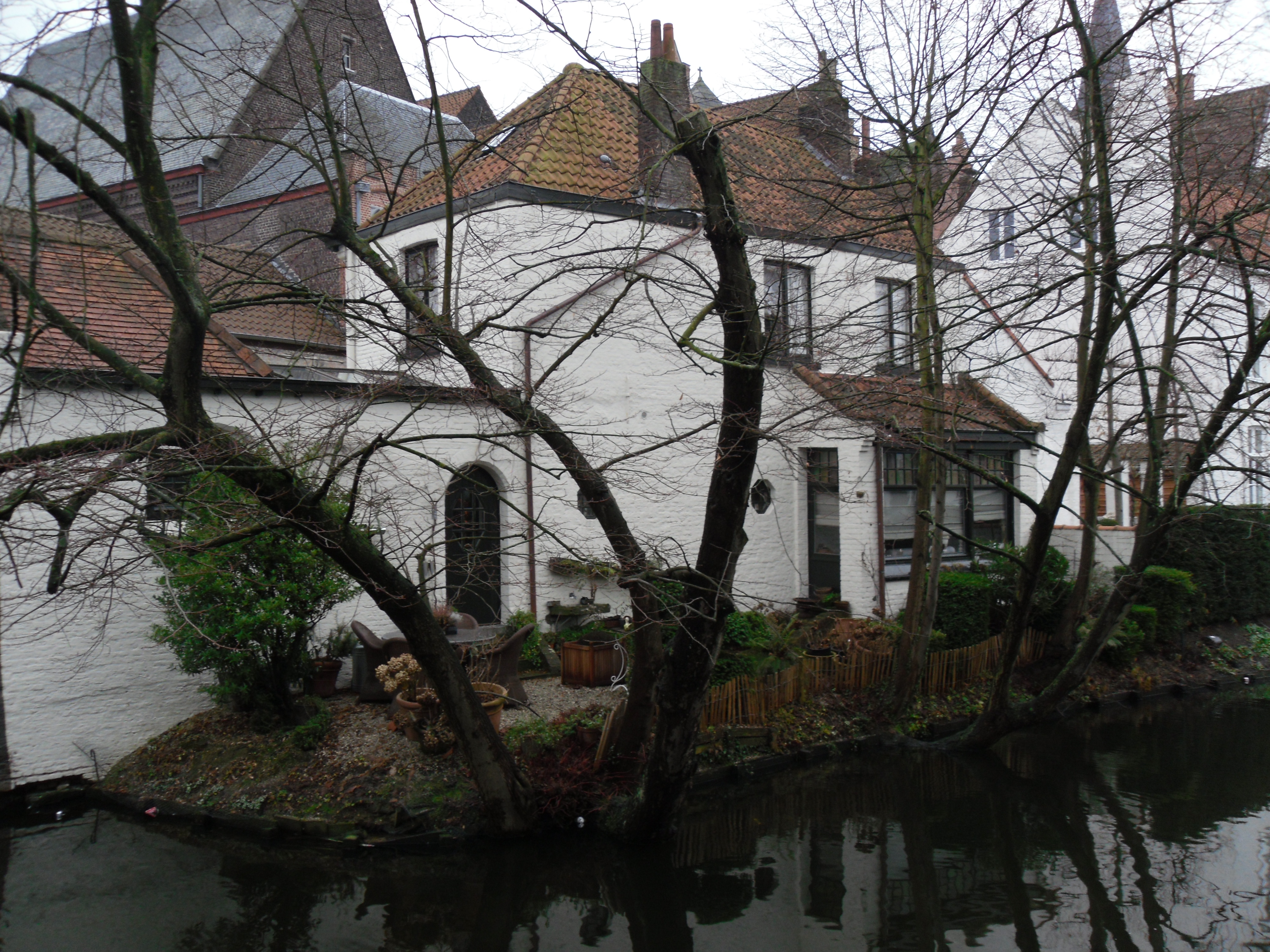
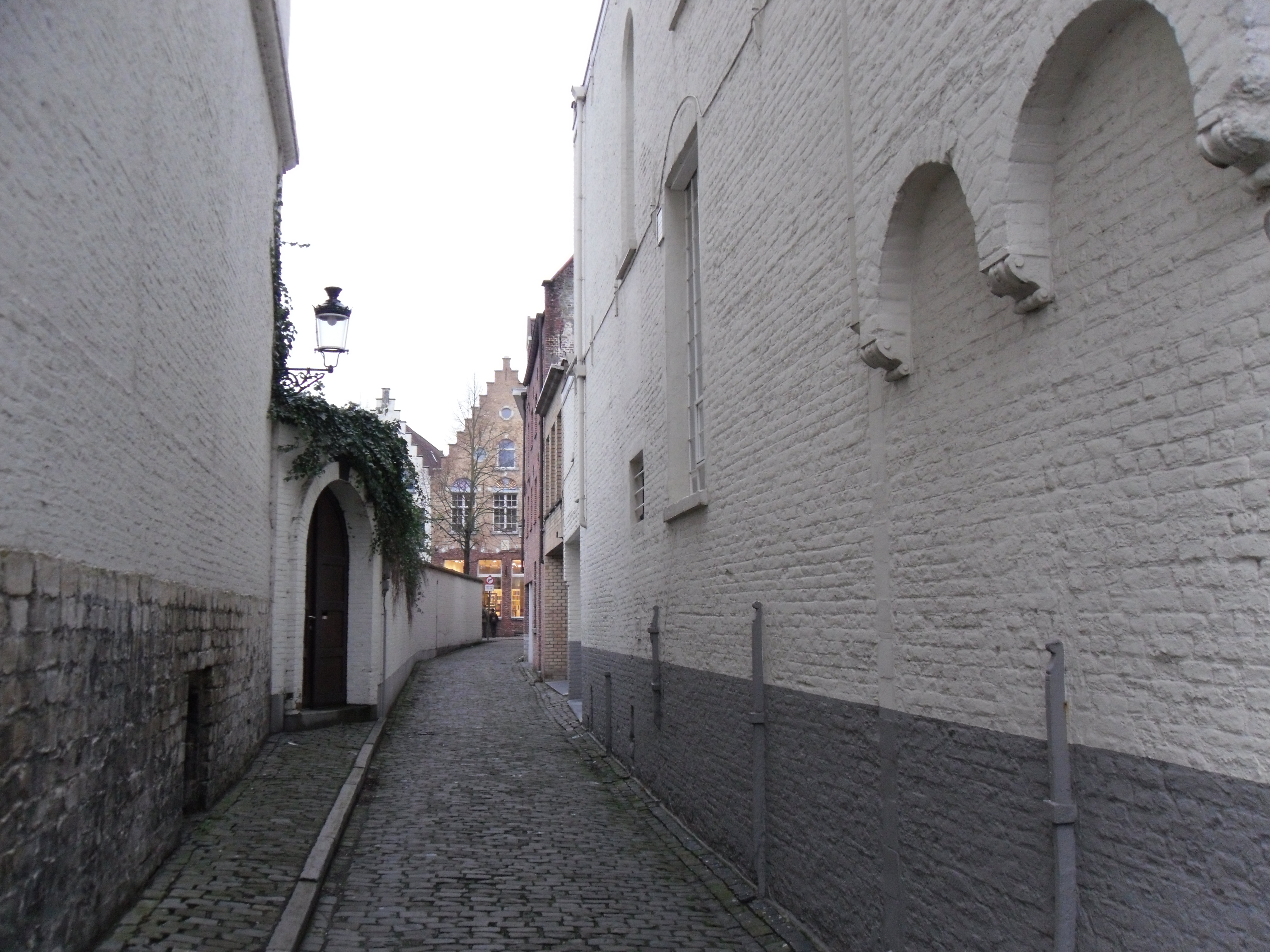
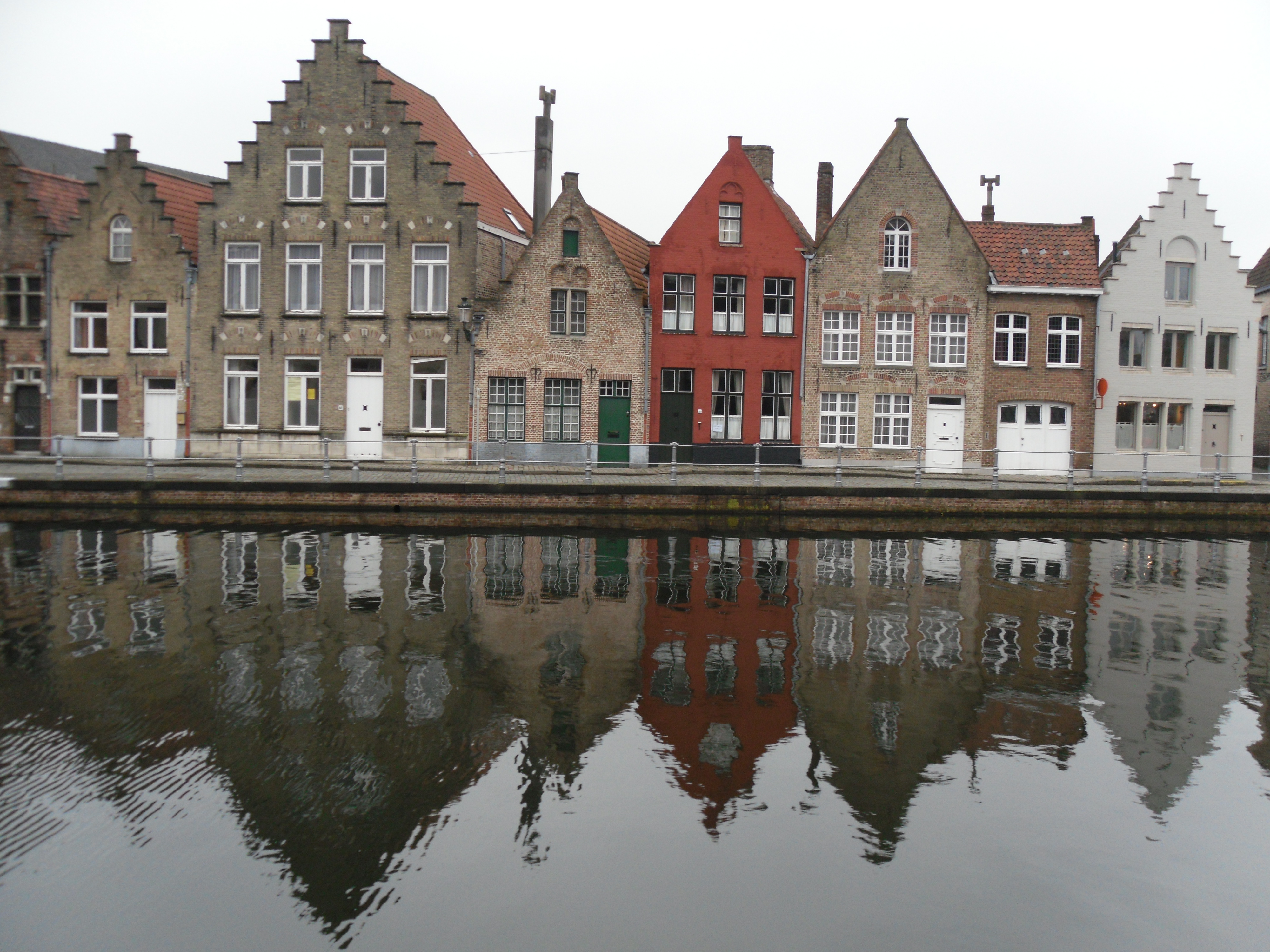
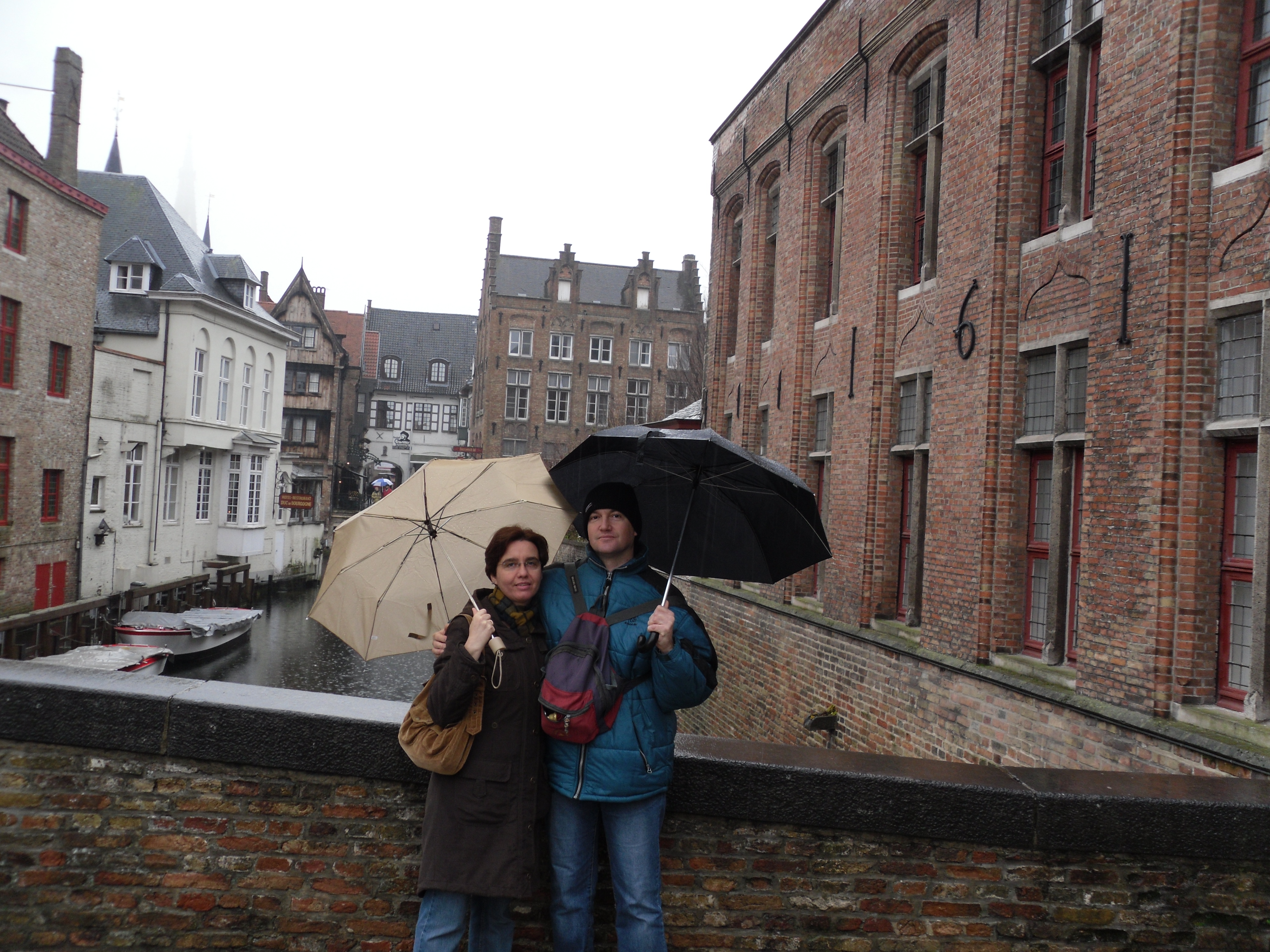
Every lane in that direction will sooner or later lead you to the most enchanting streets and canals. Houses are built on the very edge, walls are covered with moss or draped with ivy and every stone bridge is an invitation to cross to the other side. Andy, my husband, and I chuckled away as we visited this part as so many of these lanes and canals feature in the aforementioned movie!

In the early morning, the Belfort tower is often shrouded by mist while the rooftops below it glisten… The water is perfectly still and, as the first rays of sunshine emerge through the clouds, it begins to sparkle, the beauty of the scene taking your breath away.

It is no surprise that around Bruges, one can come across the most cheerful of tourists. Here, it is impossible not to find joy in one thing or another, such as the stunning vistas, the superb architecture, the lush greenery, or the many wonderful eateries, bars, and shops on offer.

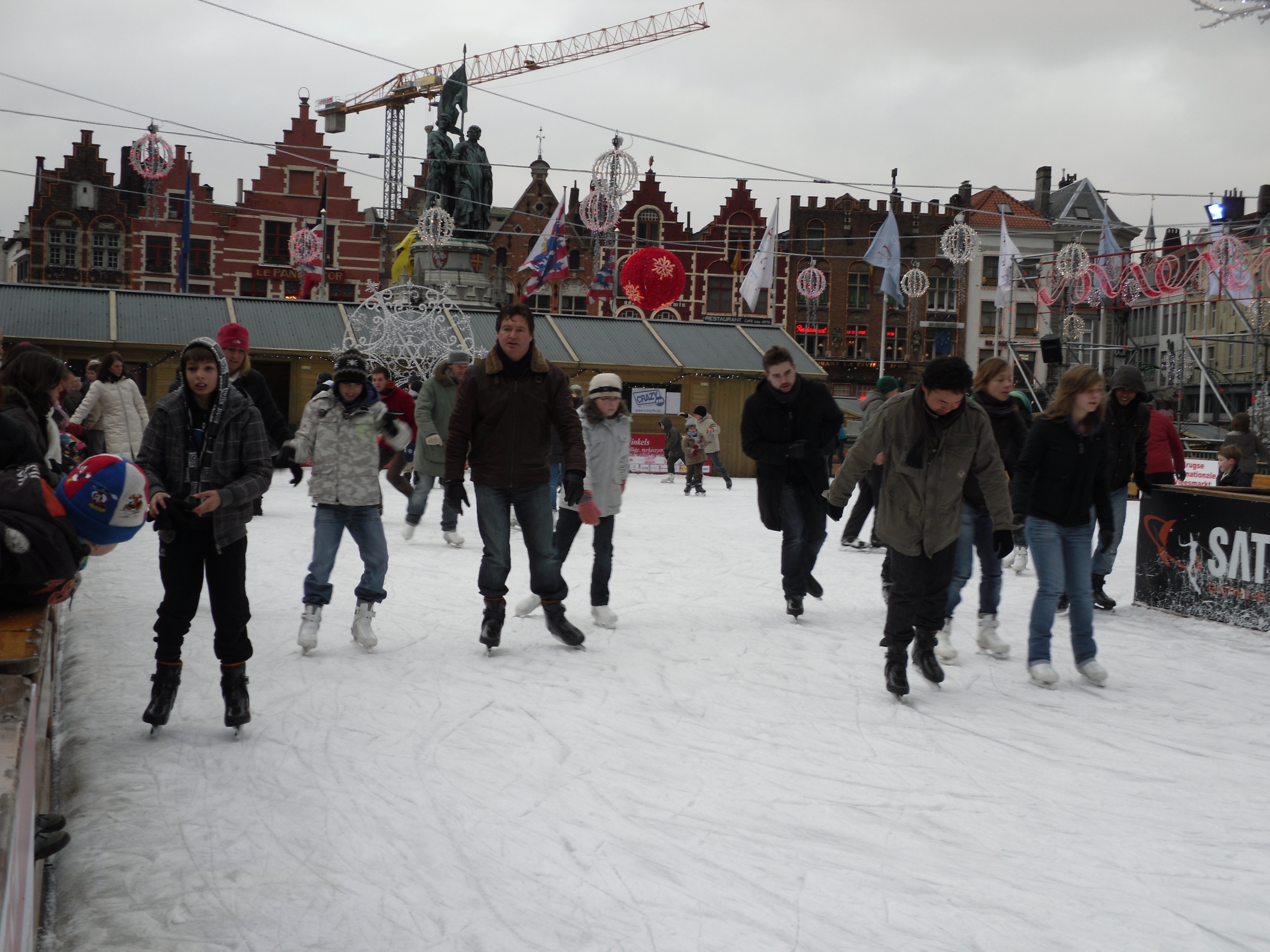
The photos in this post were all taken during my last visit to Bruges years ago just after Christmas Day. I chose this time of year as I’d heard about the stalls and the ice rink that bring extra bustle and cheer to The Markt during the holiday season. I was well compensated for this choice!

A misty view of Bruges from the top of the Belfort tower

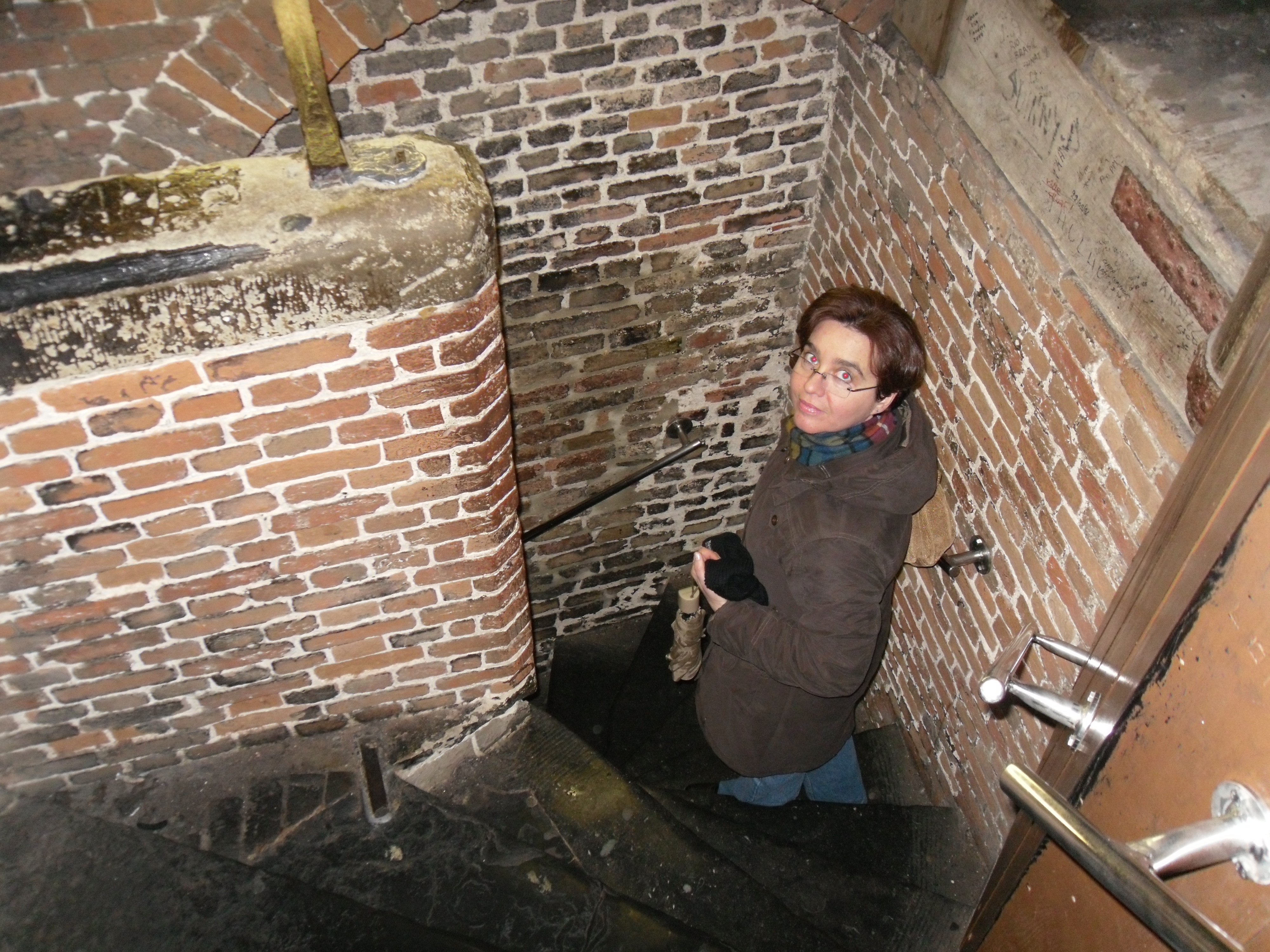
If you are fit enough to handle it, a visit to the Belfort (belfry) tower is a must. Beware: not for the faint-hearted or the claustrophobic.

The indoor spiral staircase seems to go up forever at no less than 366 steps. There are rooms at intermediate levels where visitors can stop to catch their breath before carrying on with their ascent. The view from the very top is spectacular and is definitely worth the trouble.

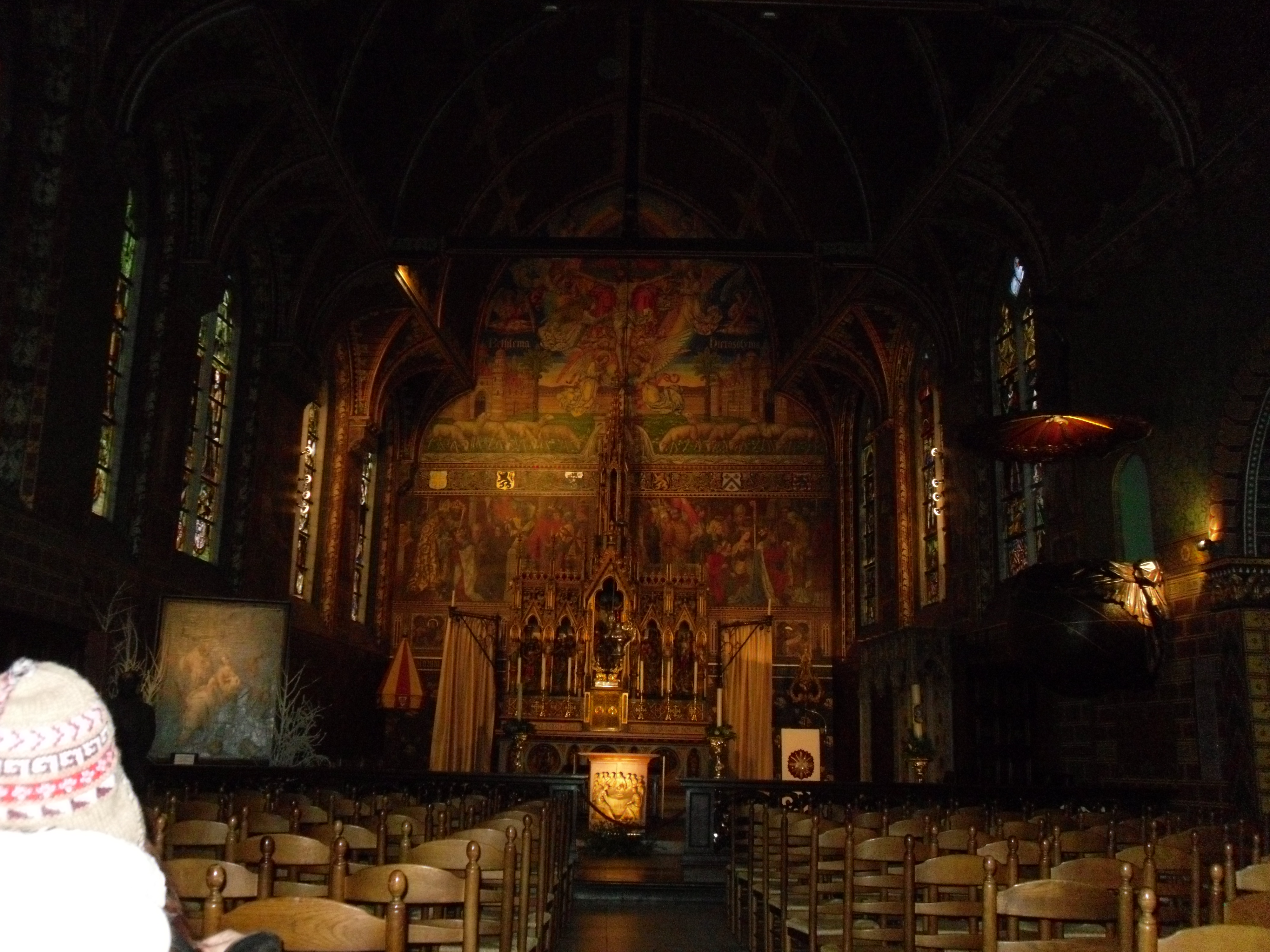
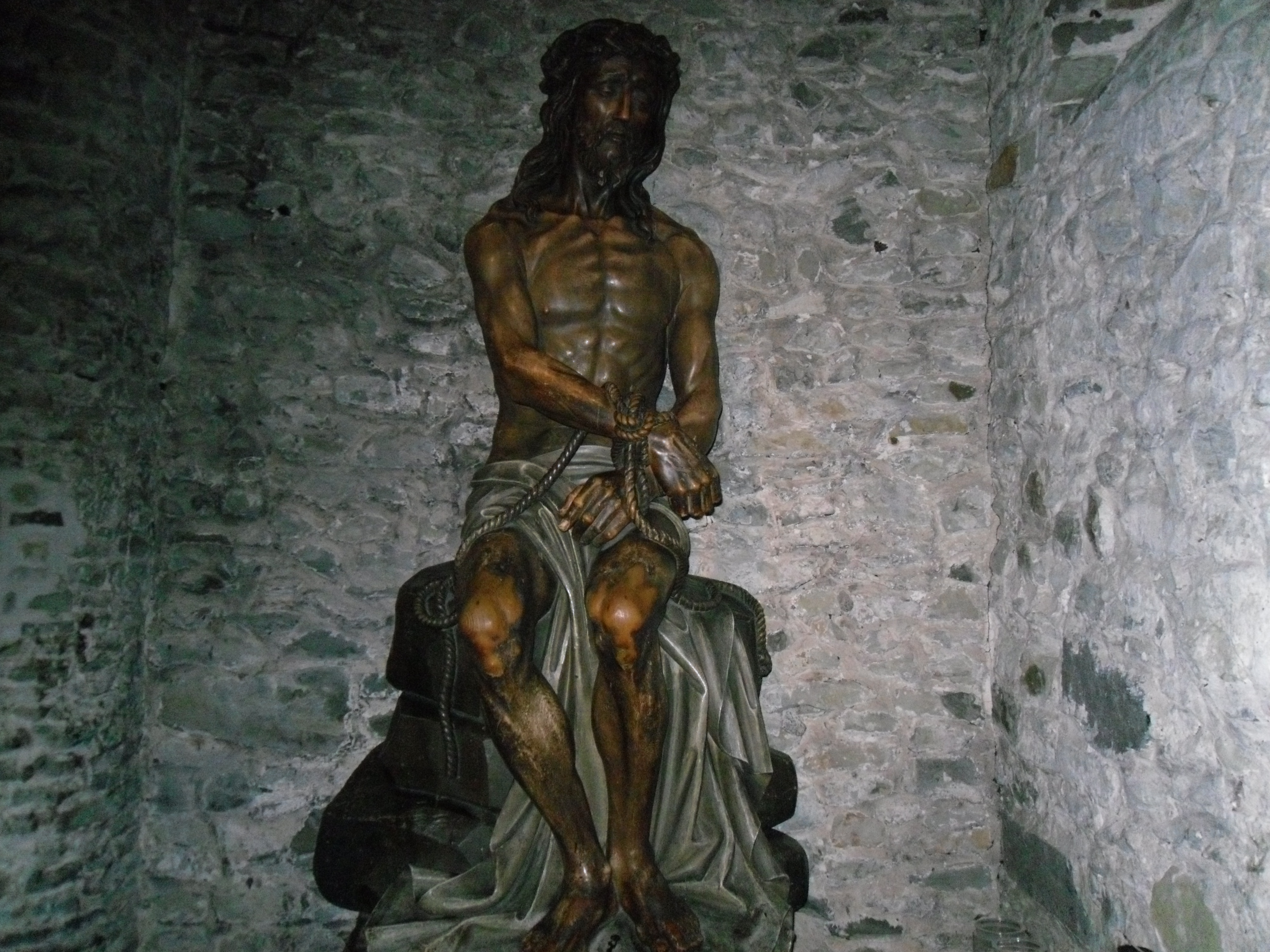
I personally never miss out on an opportunity to visit churches in historical towns and my findings in Bruges were most thrilling. First and foremost, there is The Basilica of The Holy Blood (Heilig Bloedbasiliek), a church that houses a precious holy relic: a phial that is said to contain drops of Christ’s blood. If you have watched the movie “In Bruges”, I bet you’re smirking right now! One of the most comical scenes in the movie involves Ray (Colin Farrell) begrudging Ken (Brendan Gleeson) for making him visit this church. The truth once again, is totally different. No one will fail to appreciate the beauty of this precious place of worship that was restored in Neo-Gothic style in the late 19th century. Before leaving the site, make sure to visit its hidden gem: St Basil’s chapel that is located underneath the Basilica. Although remarkably less ornate, it has a unique atmosphere and you’ll be rewarded for your time.

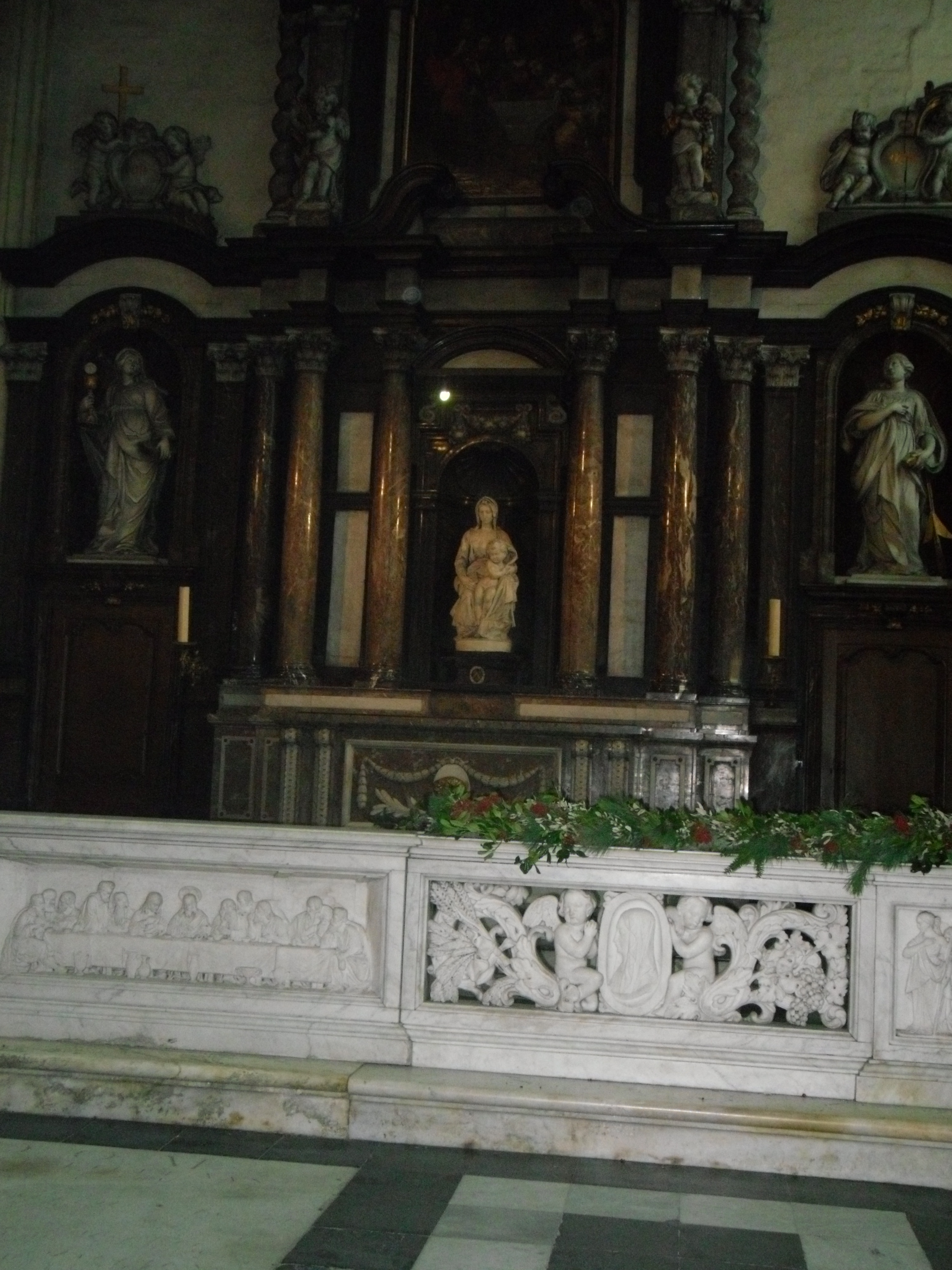
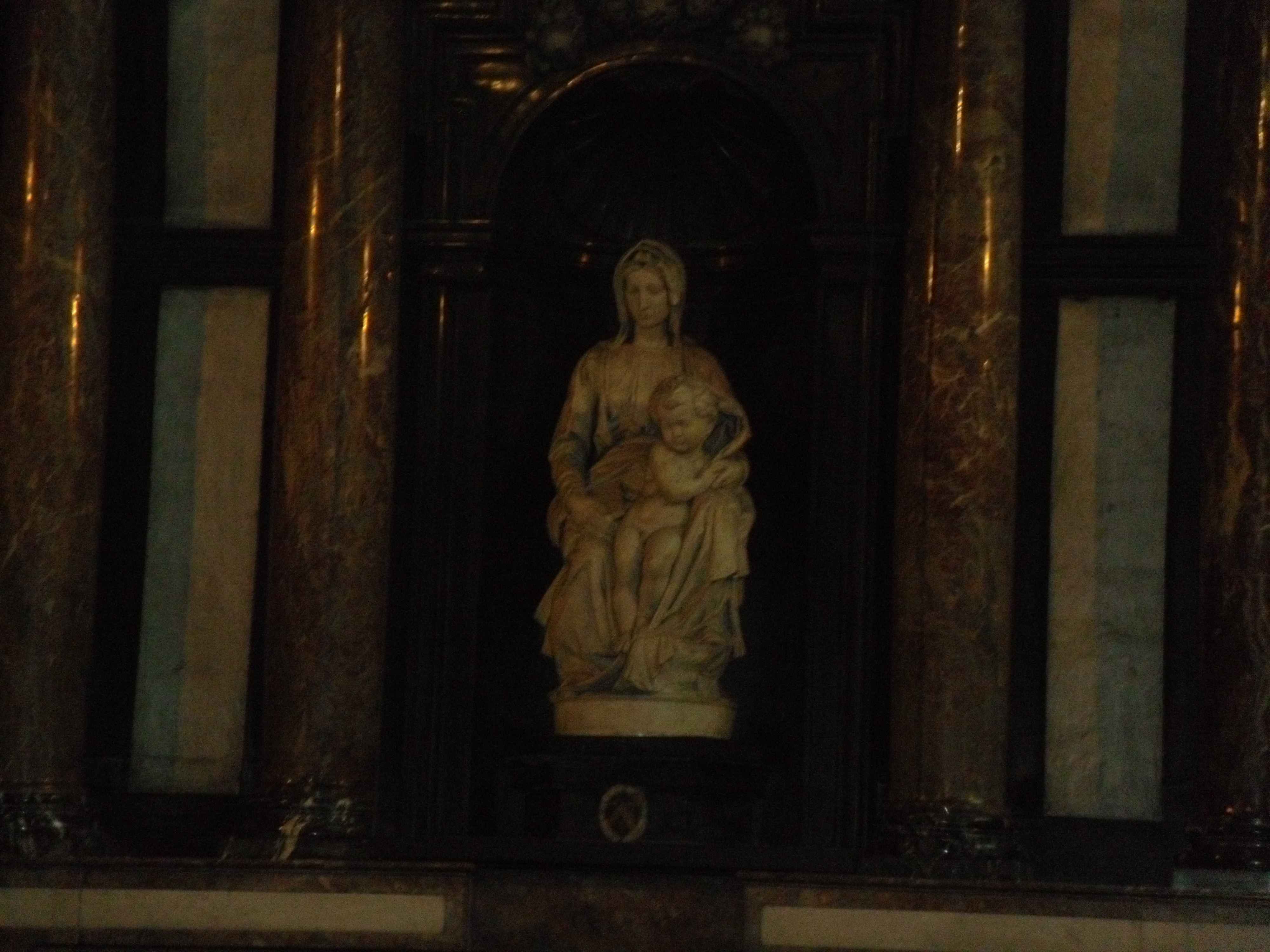
The Church of Our Lady (Onze-Lieve-Vrouwekerk) is also a must see. Its towering spire is a key landmark of the Bruges skyline. Although the exterior was built in an austere Gothic style, the interior is classically Gothic with touches of Baroque. This church is amazing in many ways but the most fascinating thing about it is that, surprisingly enough, it houses a unique treasure of Renaissance Italy: “Madonna and Child” (1504-1505) by the legendary Michelangelo.

Walking around Bruges is a real treat for the amateur photographer as you can see in the above pictures.


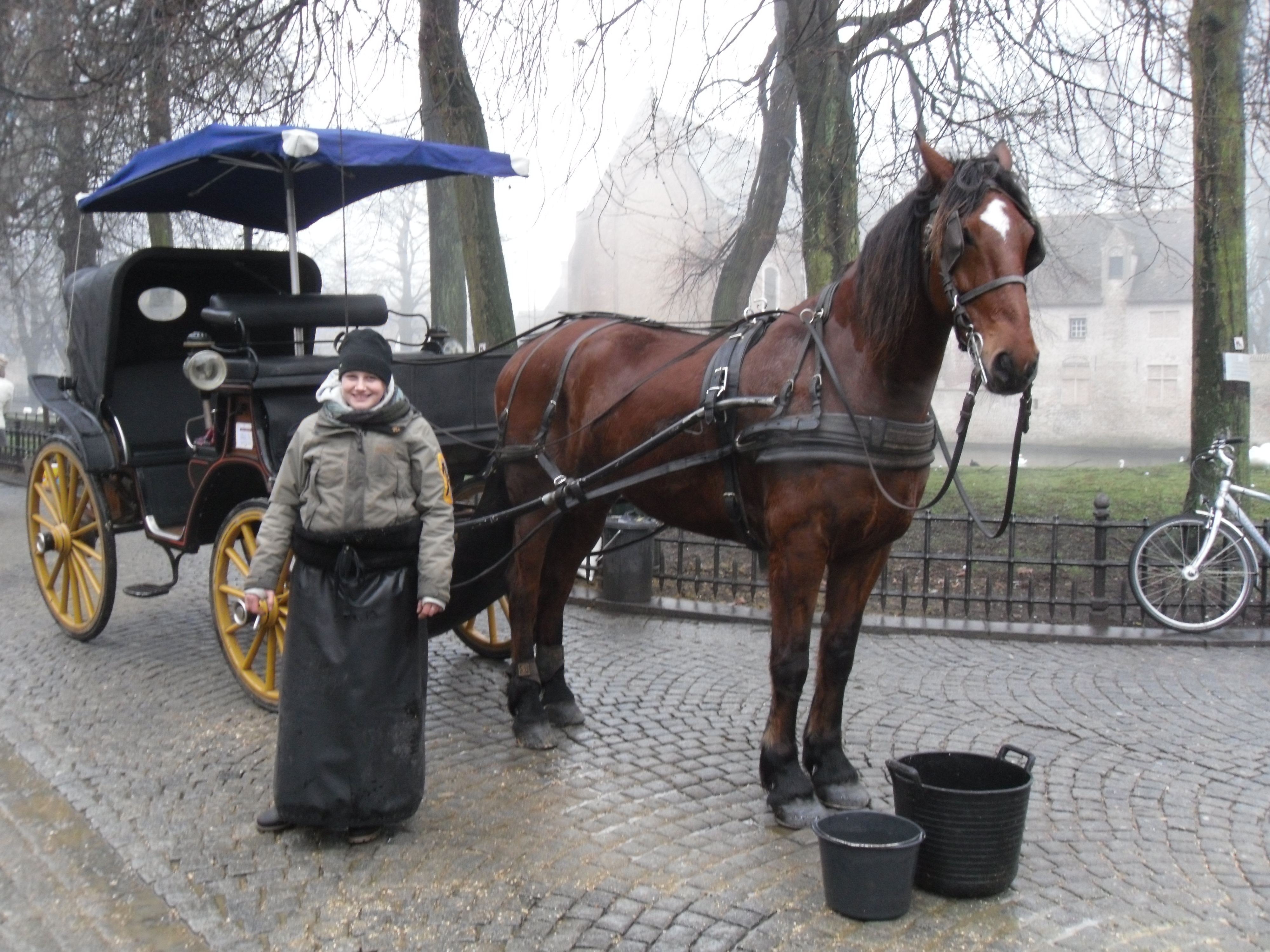
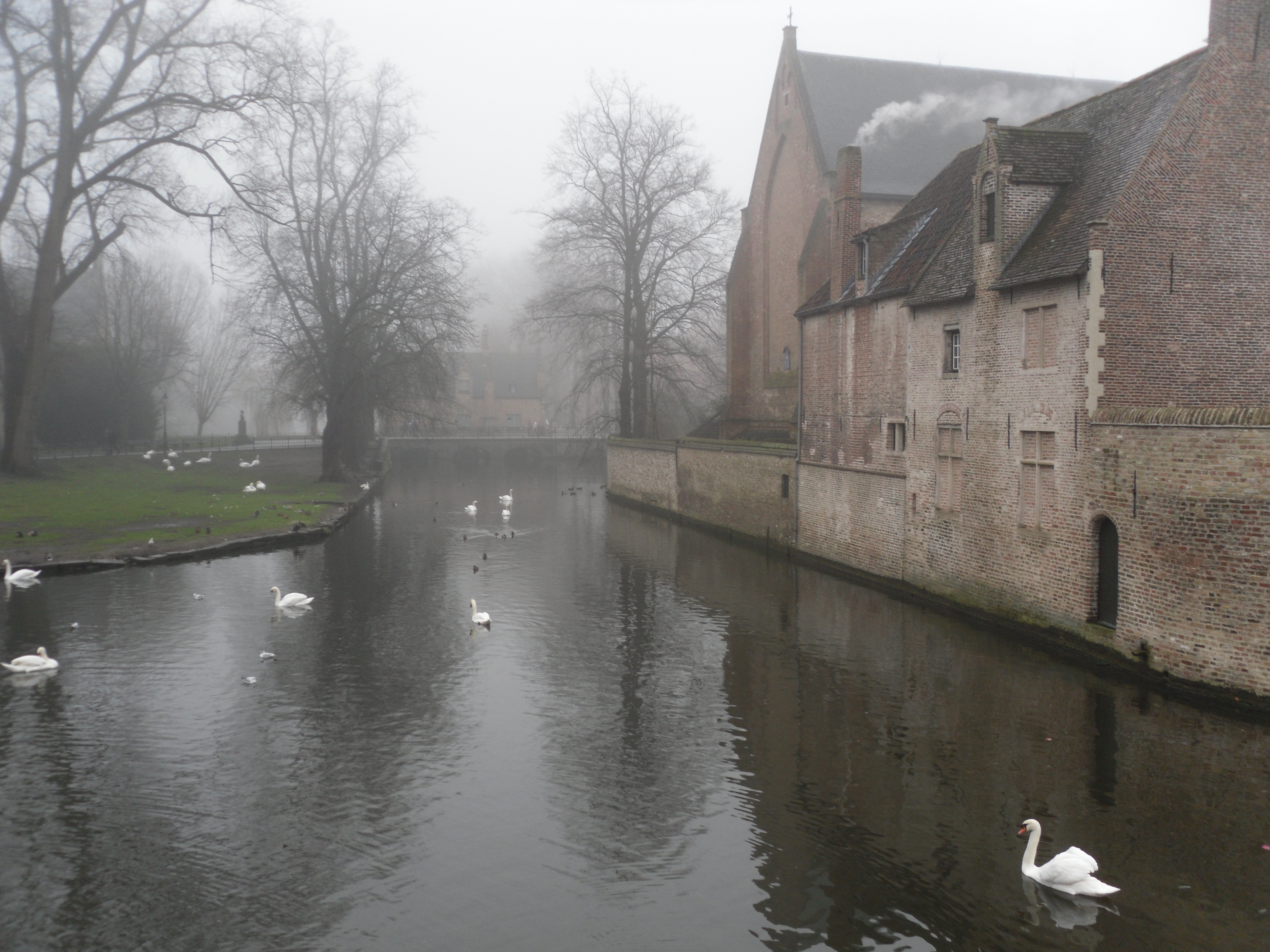
Yet, by far, my favorite part of Bruges is Minnewater, a tree-lined lake near Minnewaterpark. Truly, it’s like entering a fairytale land. The beauty of this place continues to haunt me today. Horse carriages stop there for a short sustenance break. This is a great chance to photograph beautiful horses and the forever smiling carriage drivers, as well as the multitude of swans and ducks on the canal.

Begijnhof

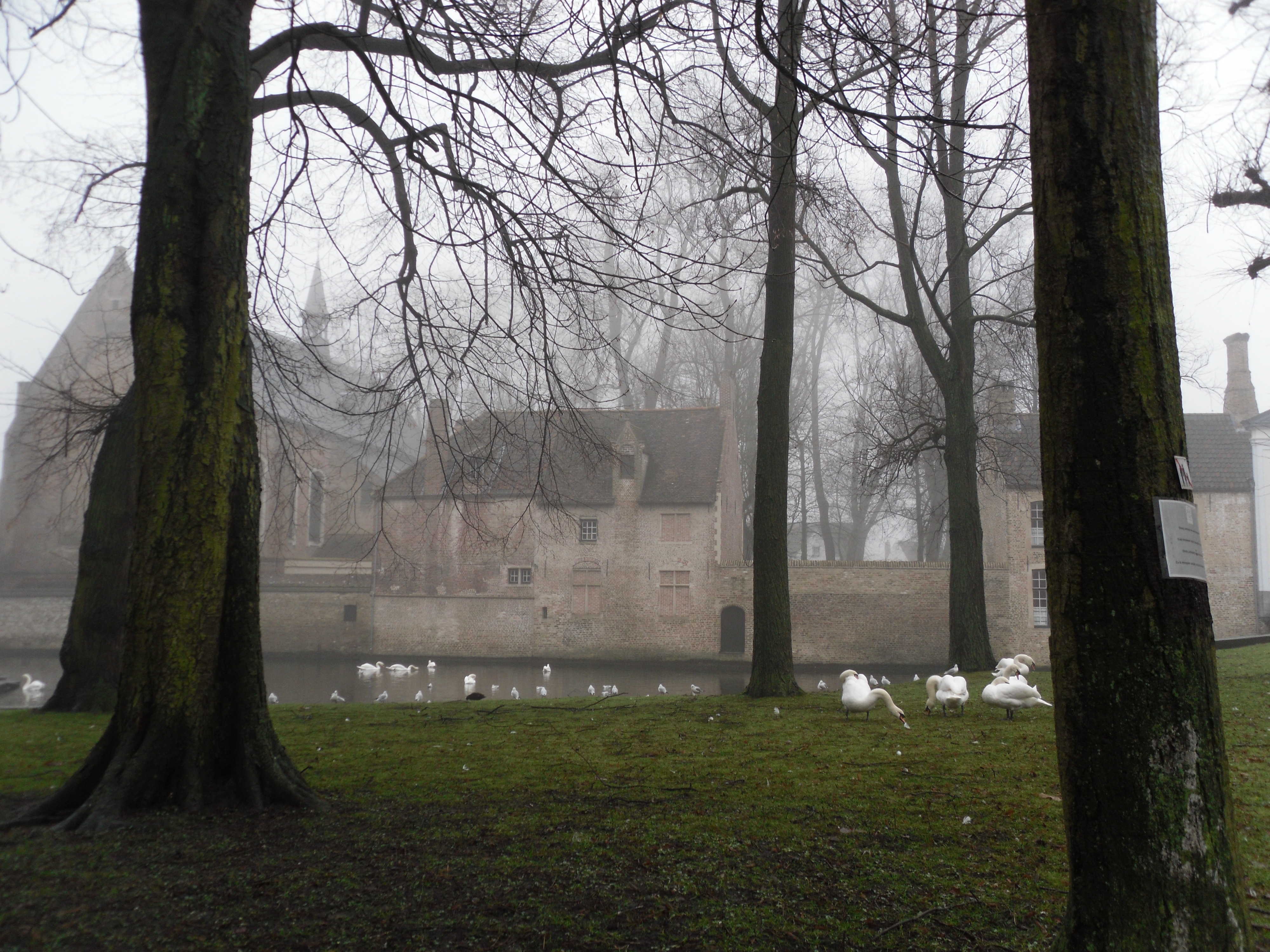
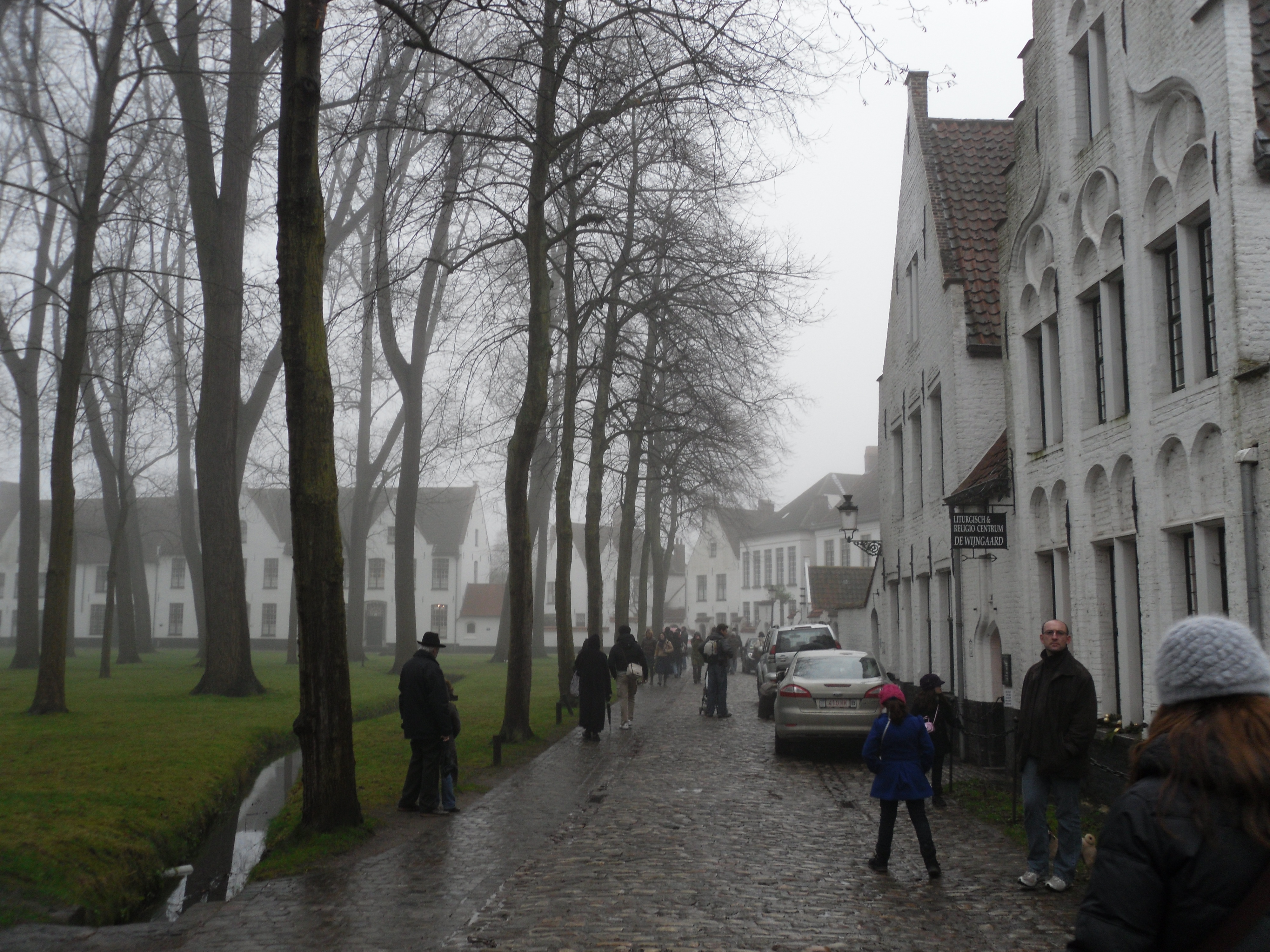
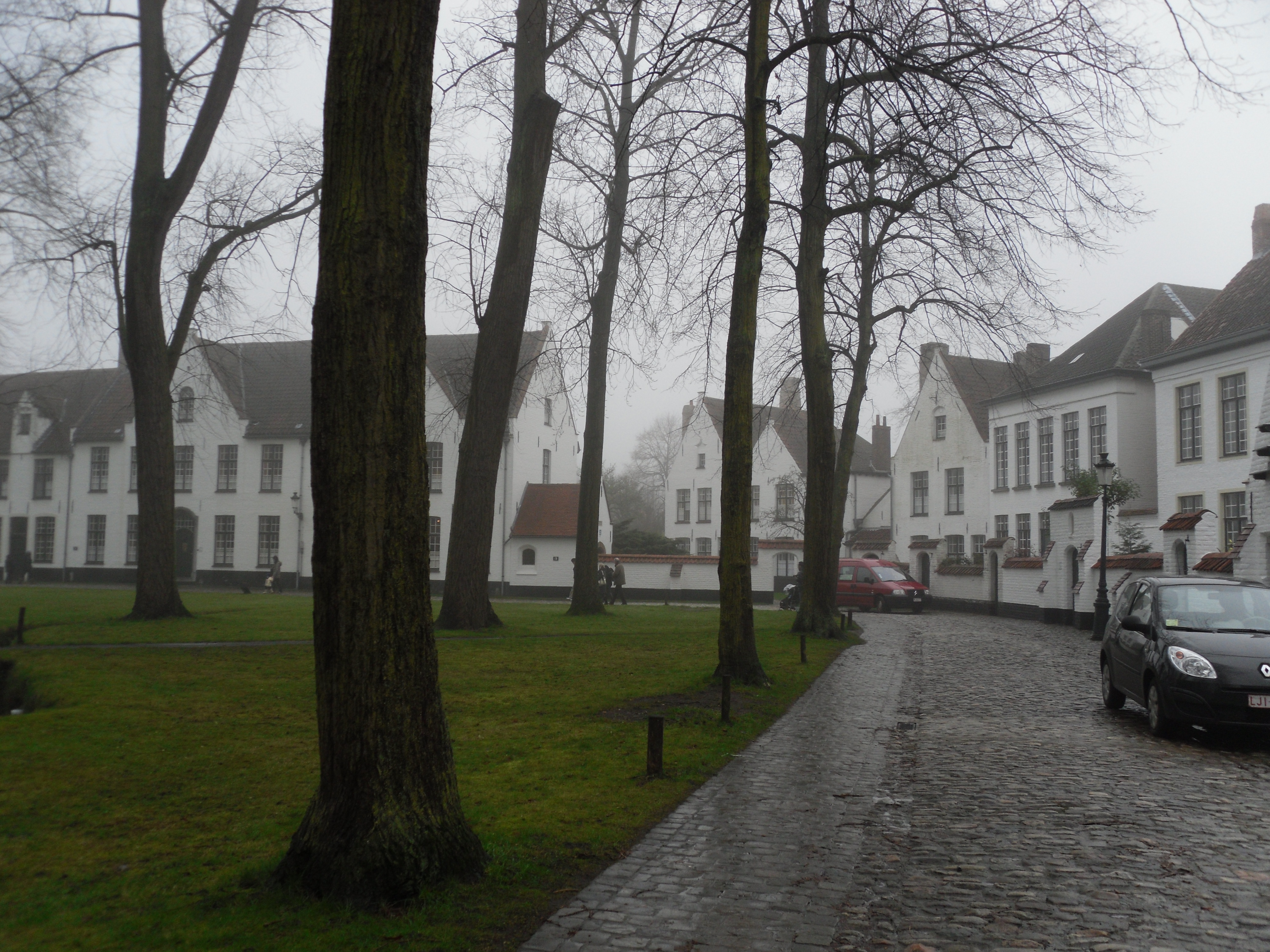
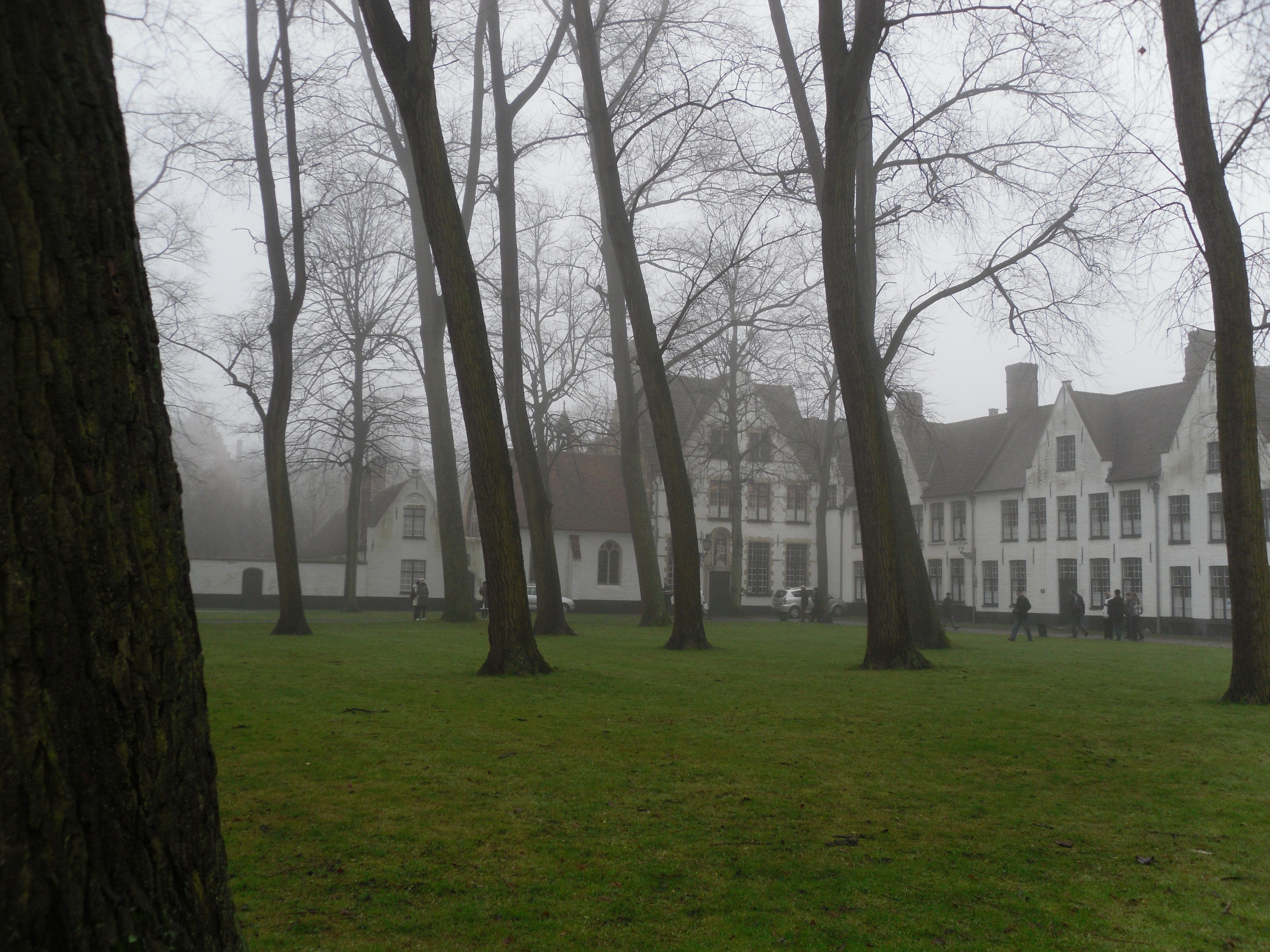
Catch two birds with one stone while you’re there and visit the Begijnhof as well with its eerie ancient walls and tree-lined expanses of greenery. This beautiful enclave almost feels haunted shrouded in the morning mist. Back in the 13th century, it used to house women (béguines) who were left single or widowed by the Crusades.

Are you an art lover?

There are two major museums in the area – The Groeninge and the Memling – both of late medieval art by various artists such as Jan Van Eyck and Hans Memling. There are several museums in Bruges and the truly insatiable for the arts can obtain a list at the tourist office located at The Burg (another central square close to The Markt).


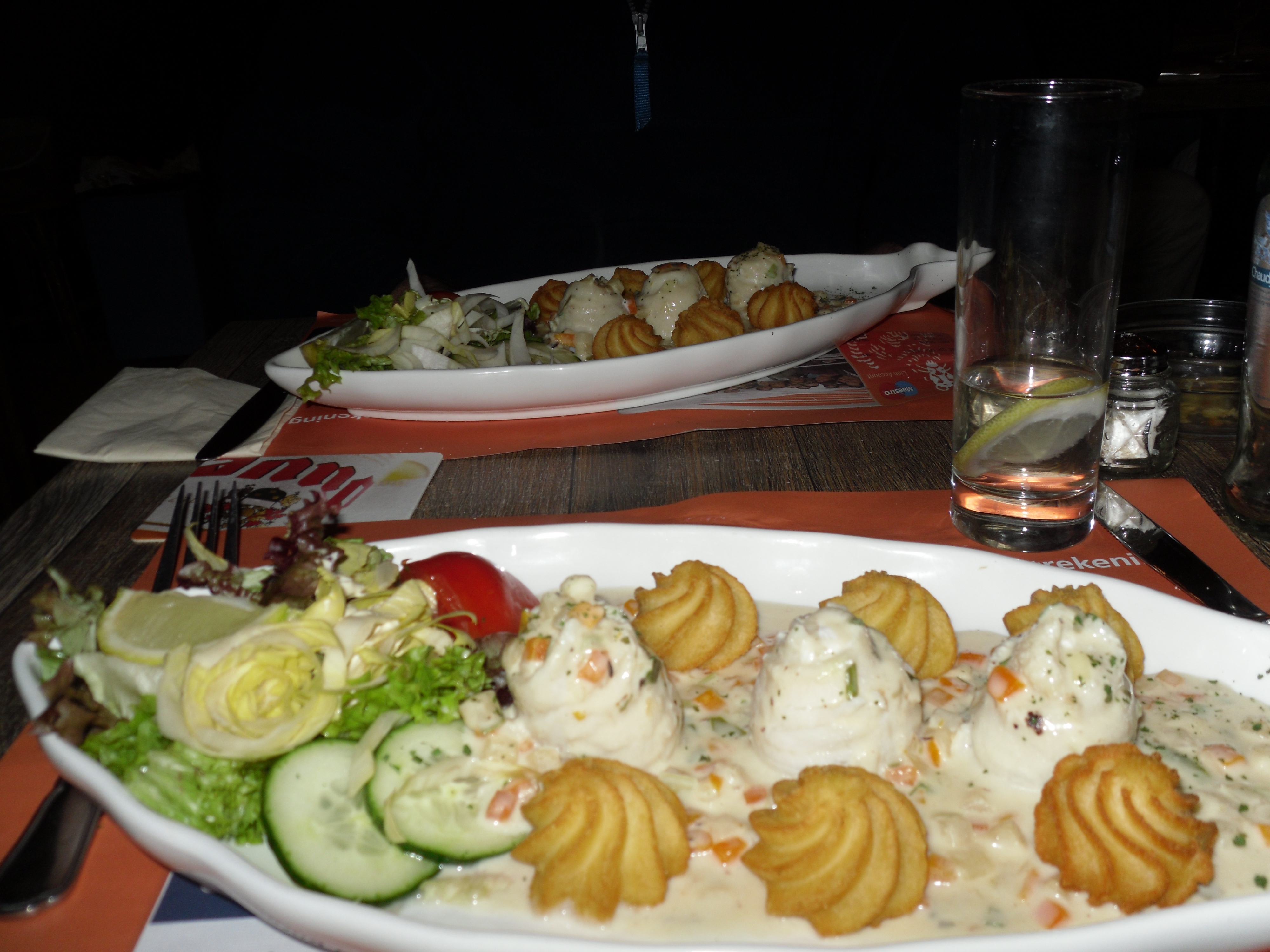
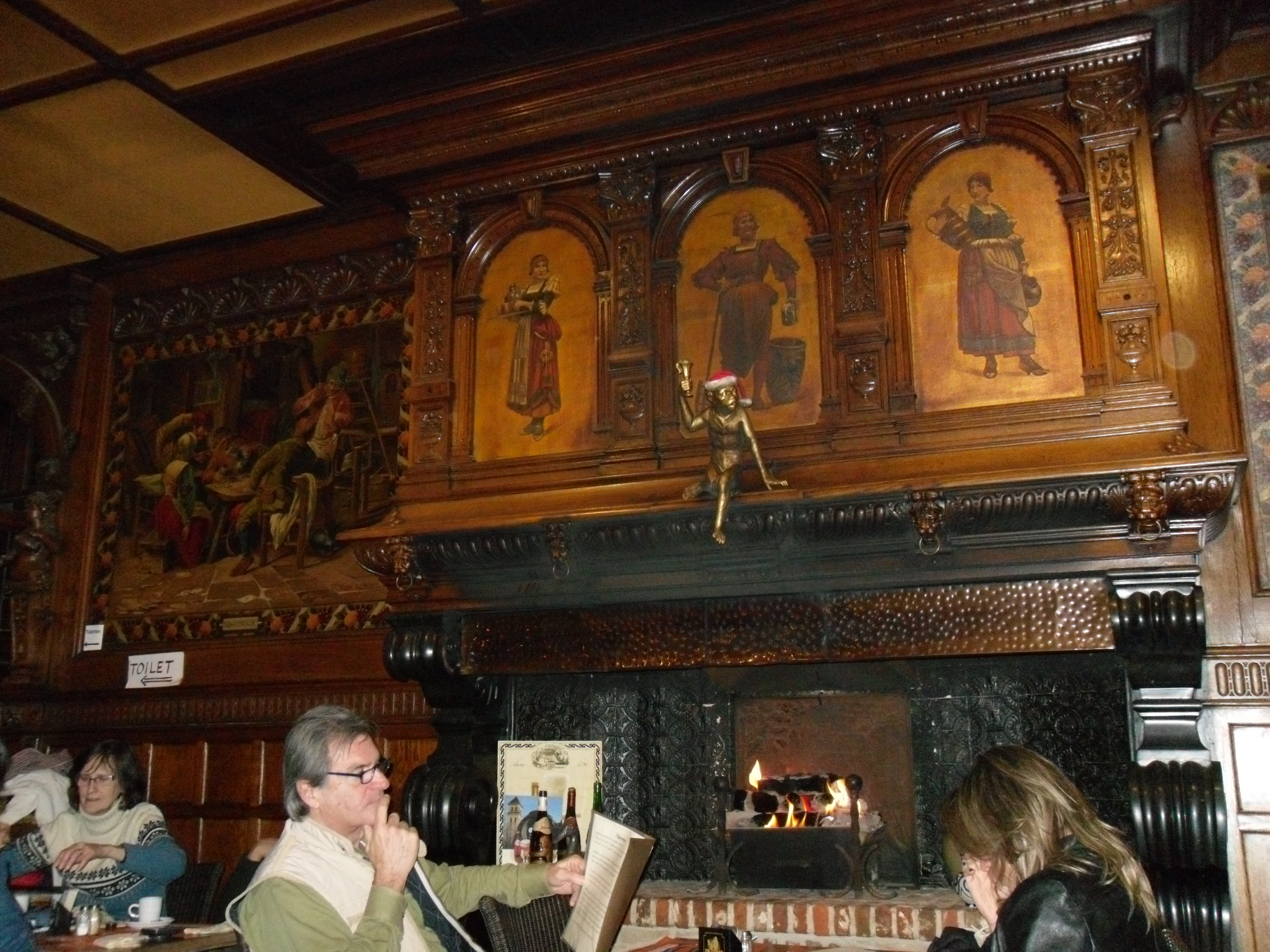
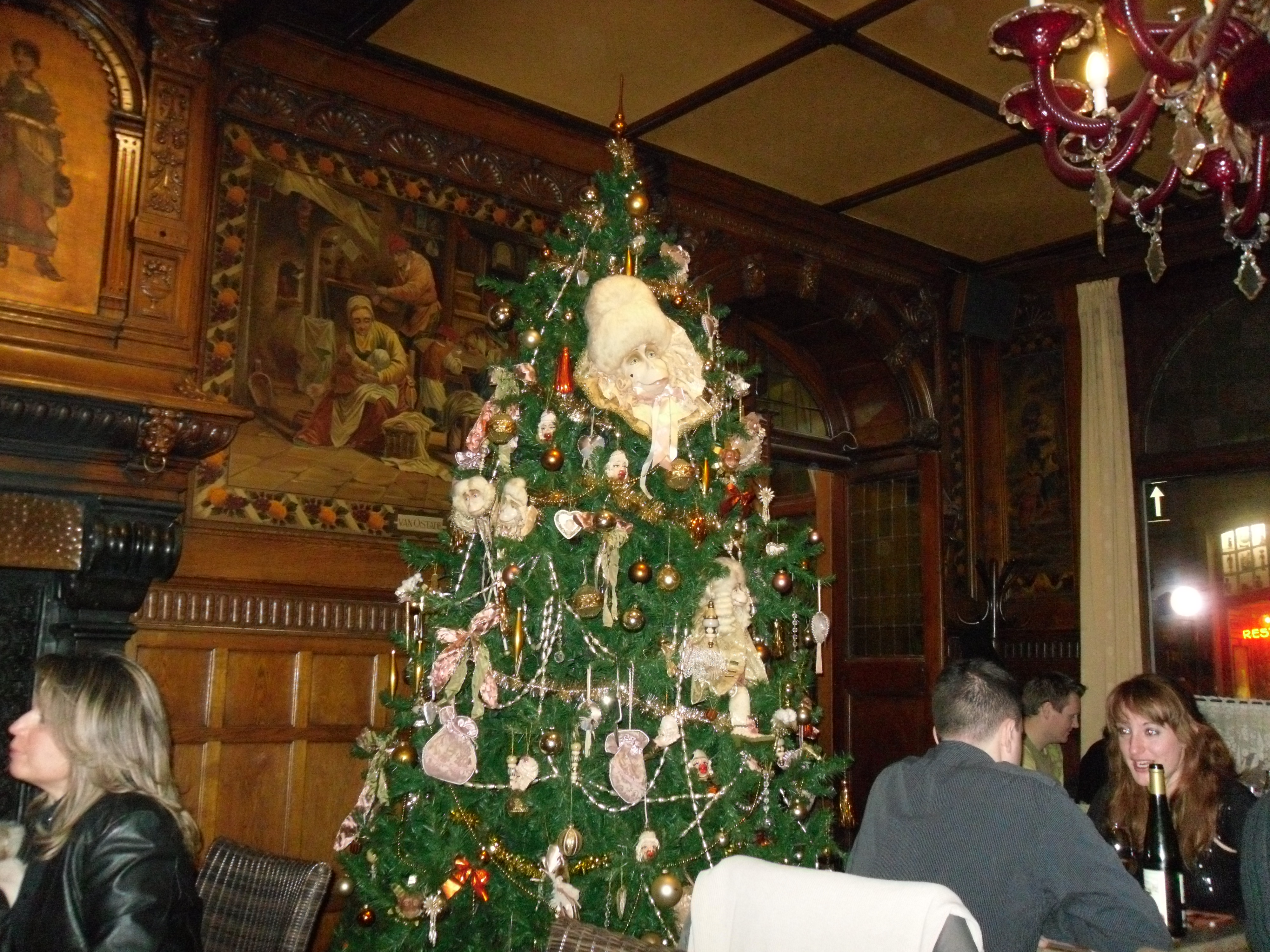
Our fish meal in Singe D’Or (Golden Monkey) was a visual feast!

Bruges is a town of many delights and the local food and drink could not be an exception. There’s fresh seafood, traditional Belgian stews and delicious beers of many different types such as Trappist, Kriek or Lambic beer. I rather stuck happily with “Brugse Zot” which is brewed locally. The jester on its logo seems to welcome you on the menu at every bar and restaurant in town.

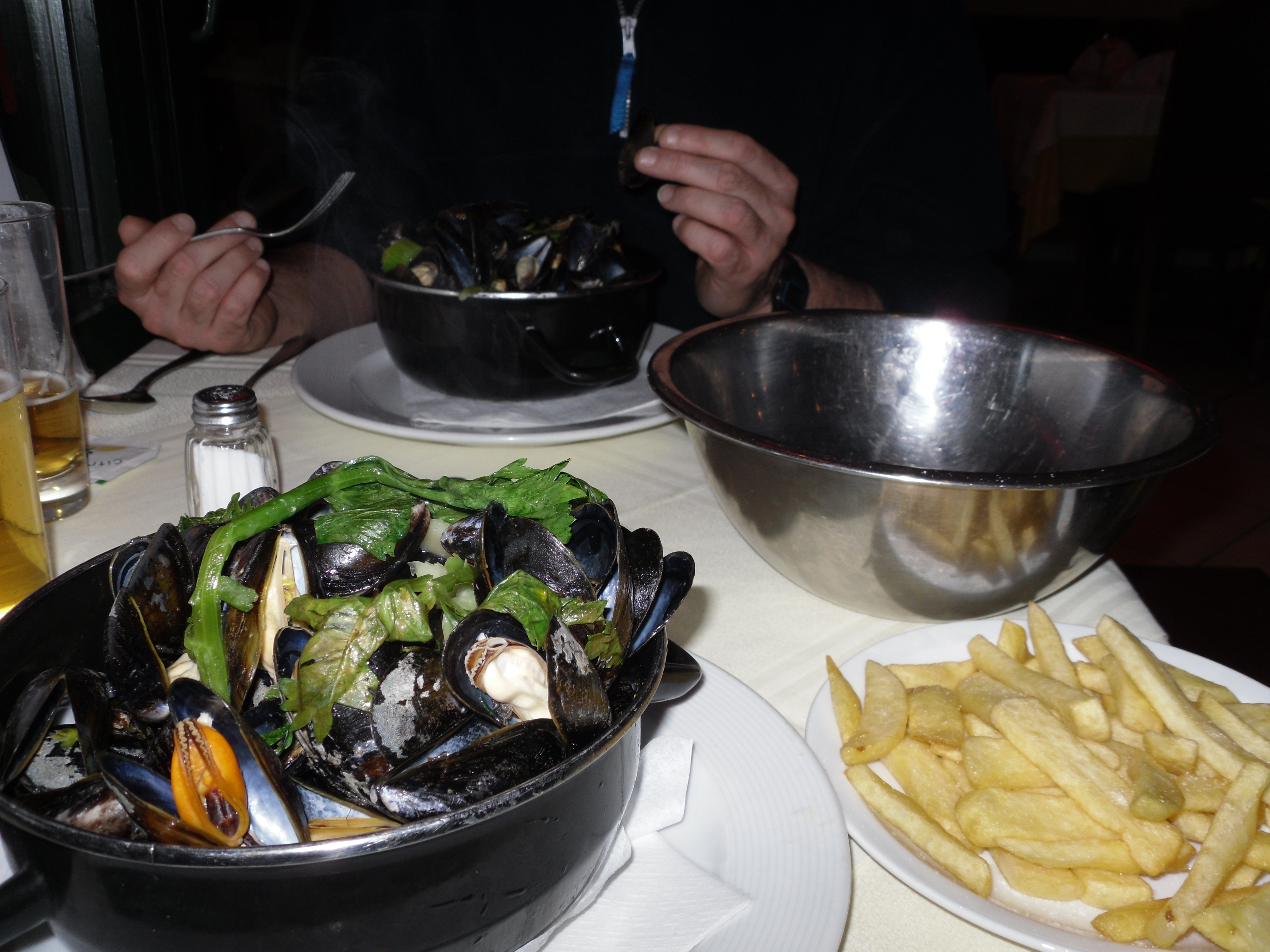
An order of mussels (clams) with fries is a must when in Belgium!

Staying in Bruges makes dinner time an absolute luxury. Among the local dishes I enjoyed Waterzoi (creamy fish in broth), Vlaamze Stoverij (beef stew cooked in Belgian beer), Moules Marinière e frites (steamed mussels in wine with celery and French fries) and the indispensable Chicons au Gratin (chicory leaves wrapped in ham and baked with a cheese sauce).

I highly recommend the following two restaurants:

Singe D’ Or (Golden Monkey)

I visited Singe D’ Or (Golden Monkey) in T. Zand Square for my New Year’s Eve dinner. It was reasonably priced, the ambiance was wonderful, and the seafood was fantastic!

Gran Kaffee De Passage in Dweersstraat 26 was difficult to find in the dark, but it was well worth the hassle, and you’ll do well to visit it at night too! The candlelit interior and the décor are enchanting, while the food and drink are as fantastic as can be.


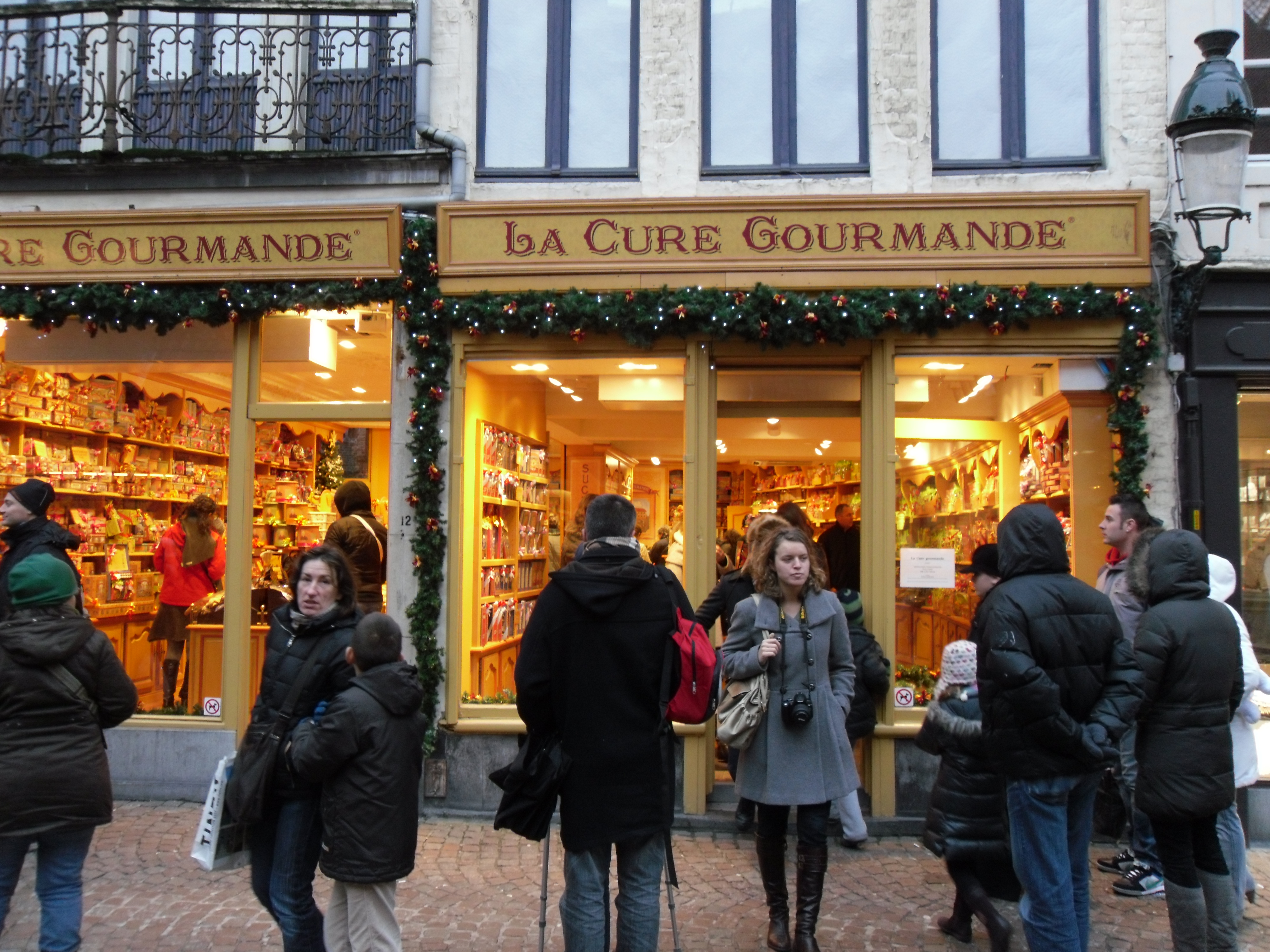
If you have a sweet tooth, you’ll find it hard to resist temptation in Bruges! Delicious Belgian chocolates and a wide selection of waffles are available everywhere you look.

Since I mentioned my favorite eateries in Bruges, I might as well also recommend the fabulous hotel we stayed at!

Hotel Ter Brughe is situated on a quiet canal and is a five minute walk from The Markt – the quaint market square of the town, and the Belfort tower. Our room had a view to the canal and stands out in my memory for its quaintness – I must say, I loved everything about this hotel. The service was impeccable and it was beautiful everywhere you looked – including the stunning dark beams on the ceilings. 

Thinking about Bruges, one word comes predominantly to mind: Perfect. To be frank, there’s only one thing wrong with this town; the longer you stay there, the more your heart breaks when it’s time to leave it behind. It is truly difficult to adjust to this familiar, modern world afterwards. Still, as you slowly return to the rhythms and routines of your daily life, it is comforting to know that Bruges awaits you still. The fairy tale will begin again someday, the moment you return.

Have you been to Bruges? Did you travel there at a different time of year, for a specific annual event maybe? Have I missed any places of interest? Have you watched the film ‘In Bruges?’ Comment below and let us know, I’d love to hear your input 🙂


SPREAD THE WORD WITH A TWEET:

#Bruges The stuff of fairytales! #Belgium #Brugge Share on X


3 FREE books for you! Sign up below to receive them instantly!

NEW! Clean Christmas romance. Single mother Cathy Roussos gave up on love long ago, and veterinarian Alex Rallis doesn’t believe in it, but one magical Christmas on a Santorini farm might just change everything…

Check it out on Amazon     Read a FREE sample!


A clean romantic suspense short read with an unreliable narrator that’ll keep you guessing! Vera is losing her mind over famous actor Yannnis Ksenos, except, she isn’t just a fan… Now, she plucks up the courage to ring his doorbell… Visit Amazon
 

For my delicious Greek recipes, go here
 
Planning to visit Greece? Check out my  FREE guide to south Corfu!

Visiting Athens at Christmas

Last weekend I had a wonderful time visiting Athens. Returning to the city where I was raised is a treat throughout the year, but the Christmas lights made the travel experience truly magical. This time round I visited two different areas for the first time too, which was very exciting!

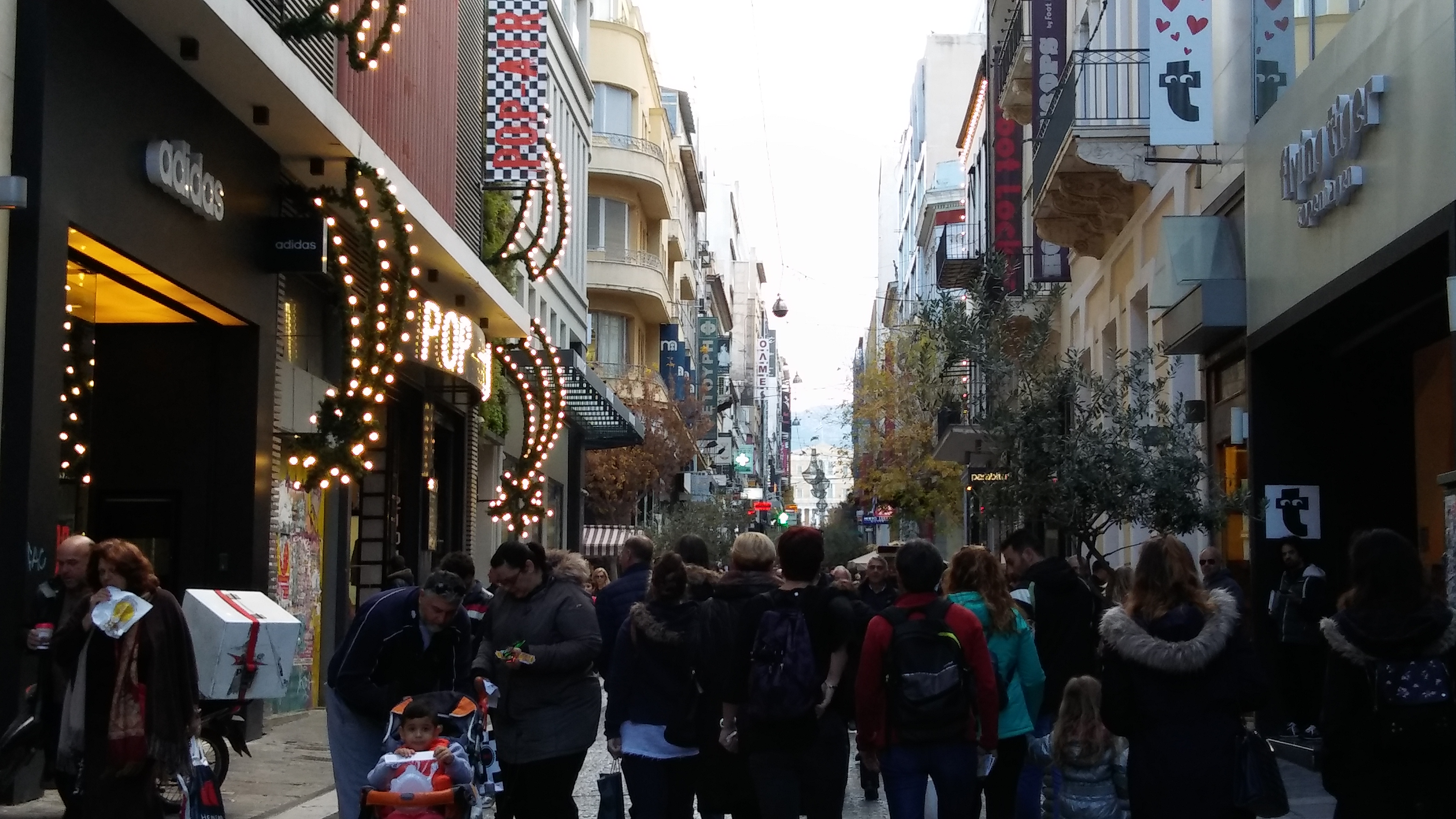
So, come! Take a walk with me around the busy streets of Athens, full of Christmas shoppers, and then join me at night too, when the Christmas lights turn the popular city corners into a magic wonderland!

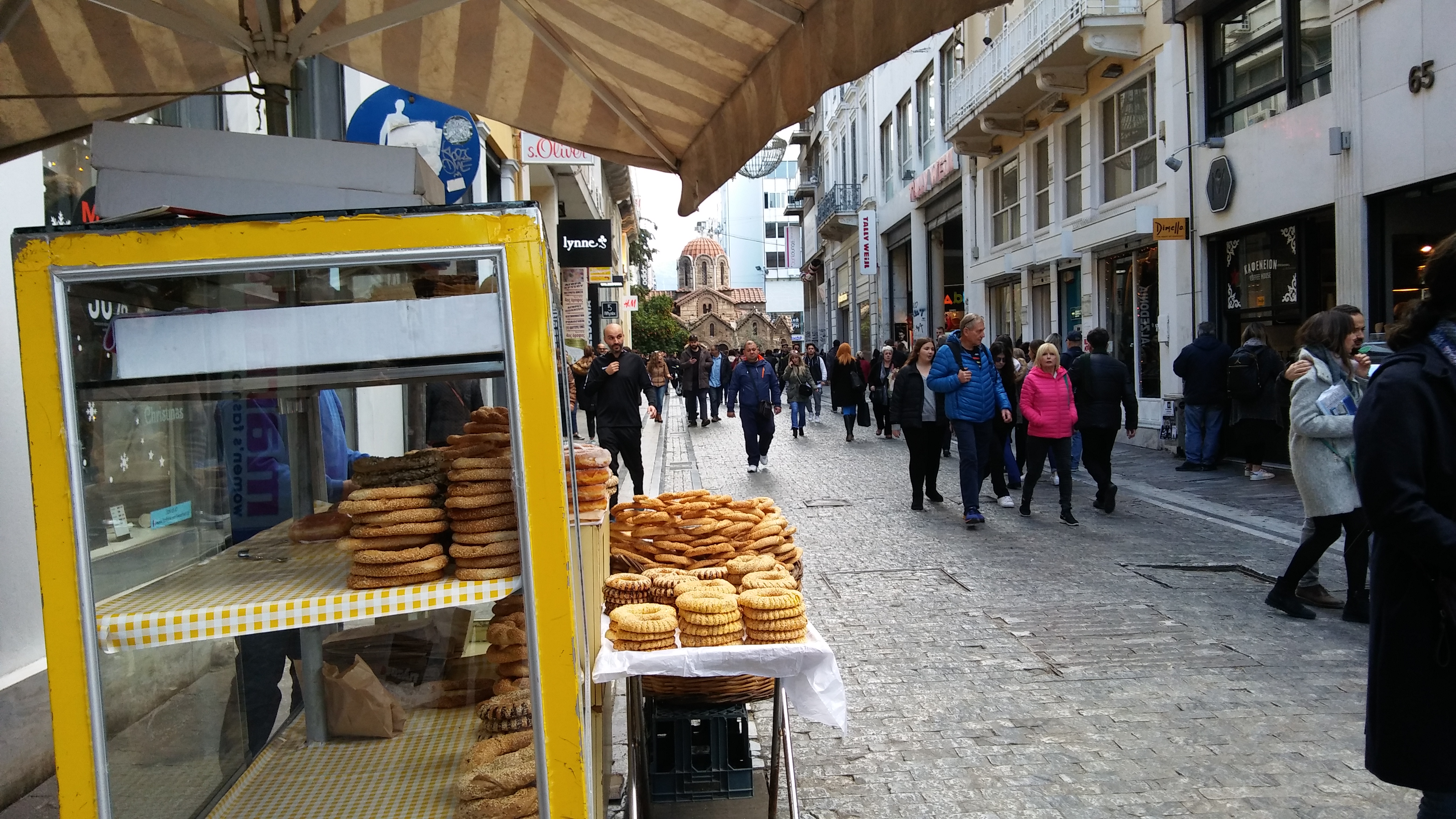
After a quick check-in at our hotel, my husband and I relaxed with a coffee and a hot toast at a corner cafe in Athinas Street. It was by the town hall; Kotzia Square across the street was empty at that hour, but the strong gushes of water at its fountain and the multitude of wild pigeons around it made it a pleasure to gaze over at. Half an hour or so later, we were walking down Athinas, then round the corner at the central meat & fish market to take in the vibe of the pedestrian shopping area of Aiolou Street. This leads to Ermou Street, as you may know, which is every Athenian shopper’s paradise.

Ermou was packed, which was no surprise, especially at this time of year. Everyone seemed to be clutching shopping bags or browsing at the festive shop windows.

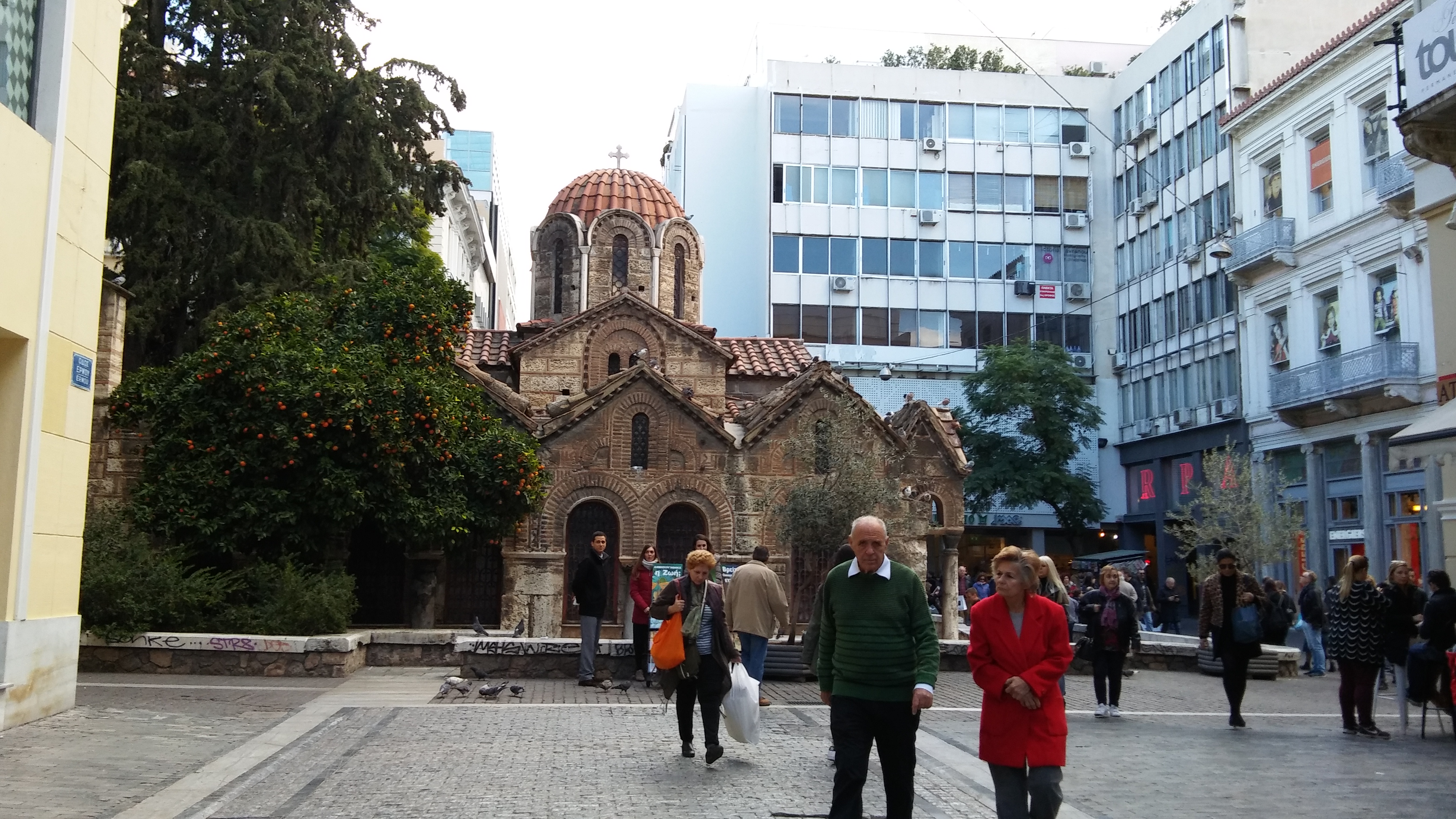
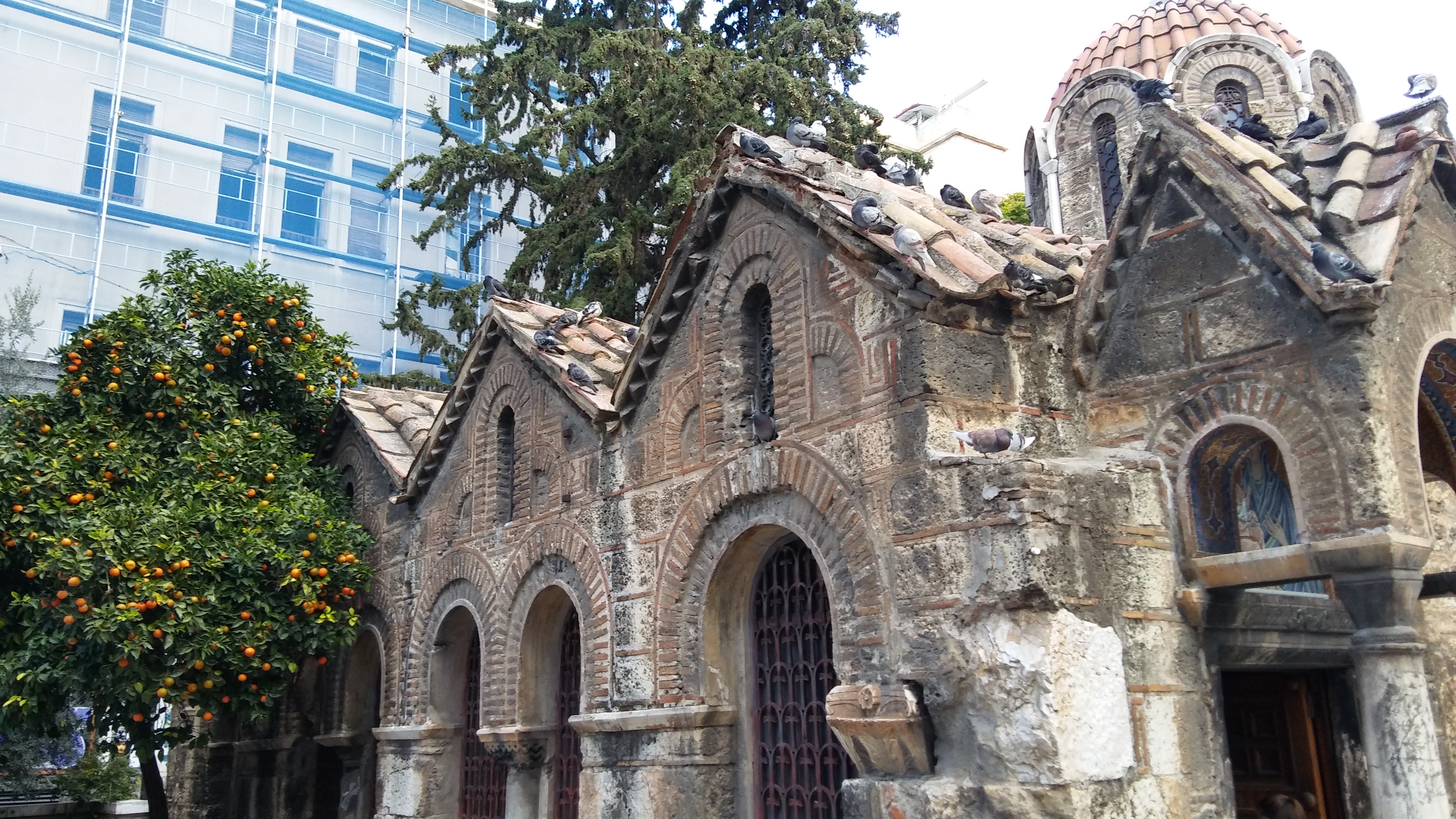
The famous landmark of Kapnikarea, an 11th-century Orthodox church, is situated right in the middle of Ermou Street. I loved the sight of it under the morning sunlight with a multitude of wild pigeons perching on its roof and the vibrant green bitter orange tree (neratzia) standing beside it.

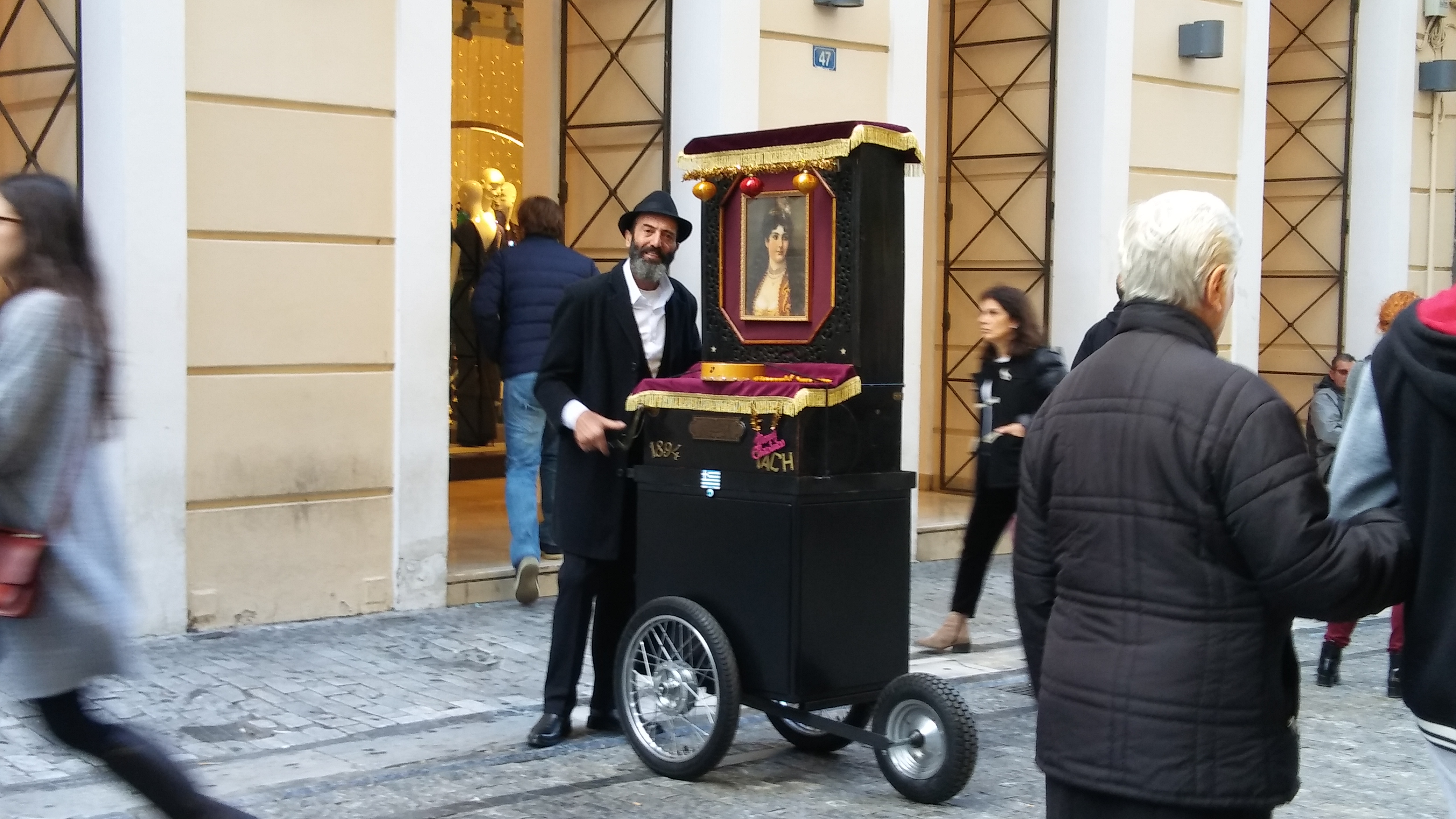
As we walked up Ermou towards Syntagma (Constitution Square), we came along a rare sight – a ‘laterna’ (barrel piano). Only a handful still survive around Athens. The sight of this elegant gentleman operating it simply begged for my camera to go clicking frantically as he turned the crank and filled the crisp air with the nostalgic tones of a bygone era.

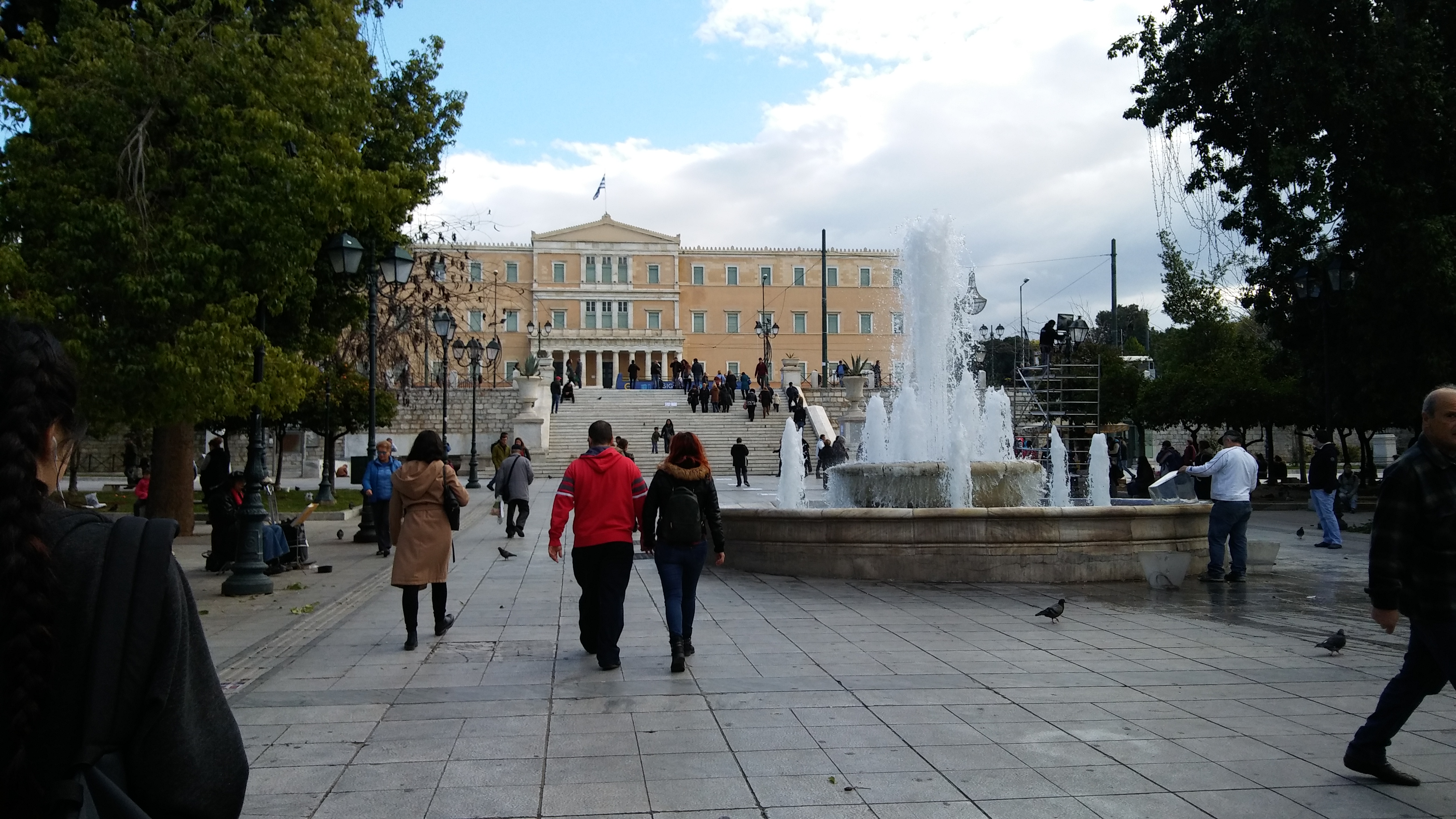
When we reached the lower part of Syntagma Square we realized our timing was off. Only a metal frame of the annual Christmas tree had been set up and the municipal workers were in the middle of putting it together. One of them, as you can see in this picture, was busy washing the covers of the street lanterns in the fountain 🙂

Note: The Christmas tree was lit up just two days after our visit. It’s very different and stylish this year and impressed the crowds that gathered to see it. You can take a look right here.
 

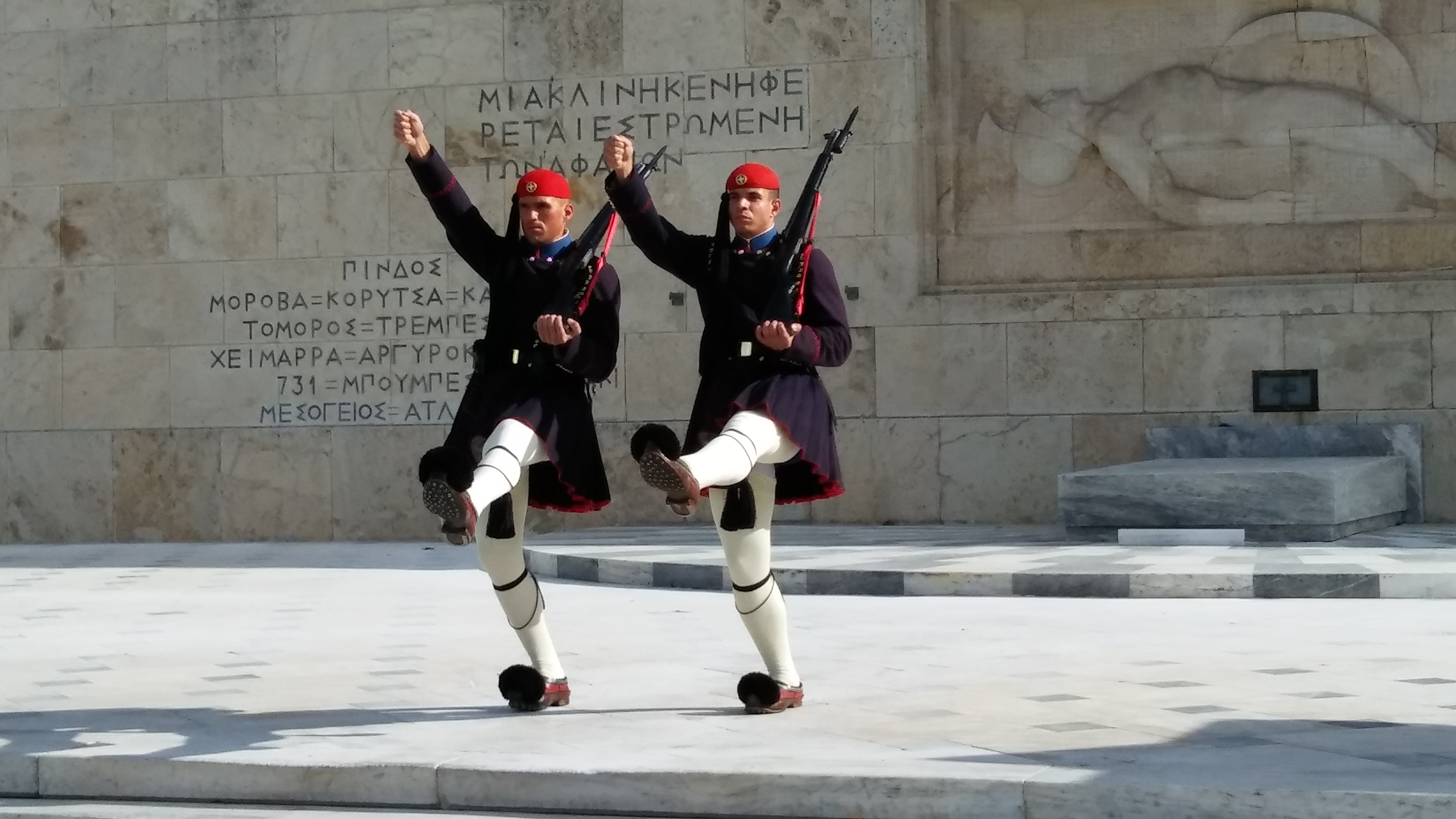
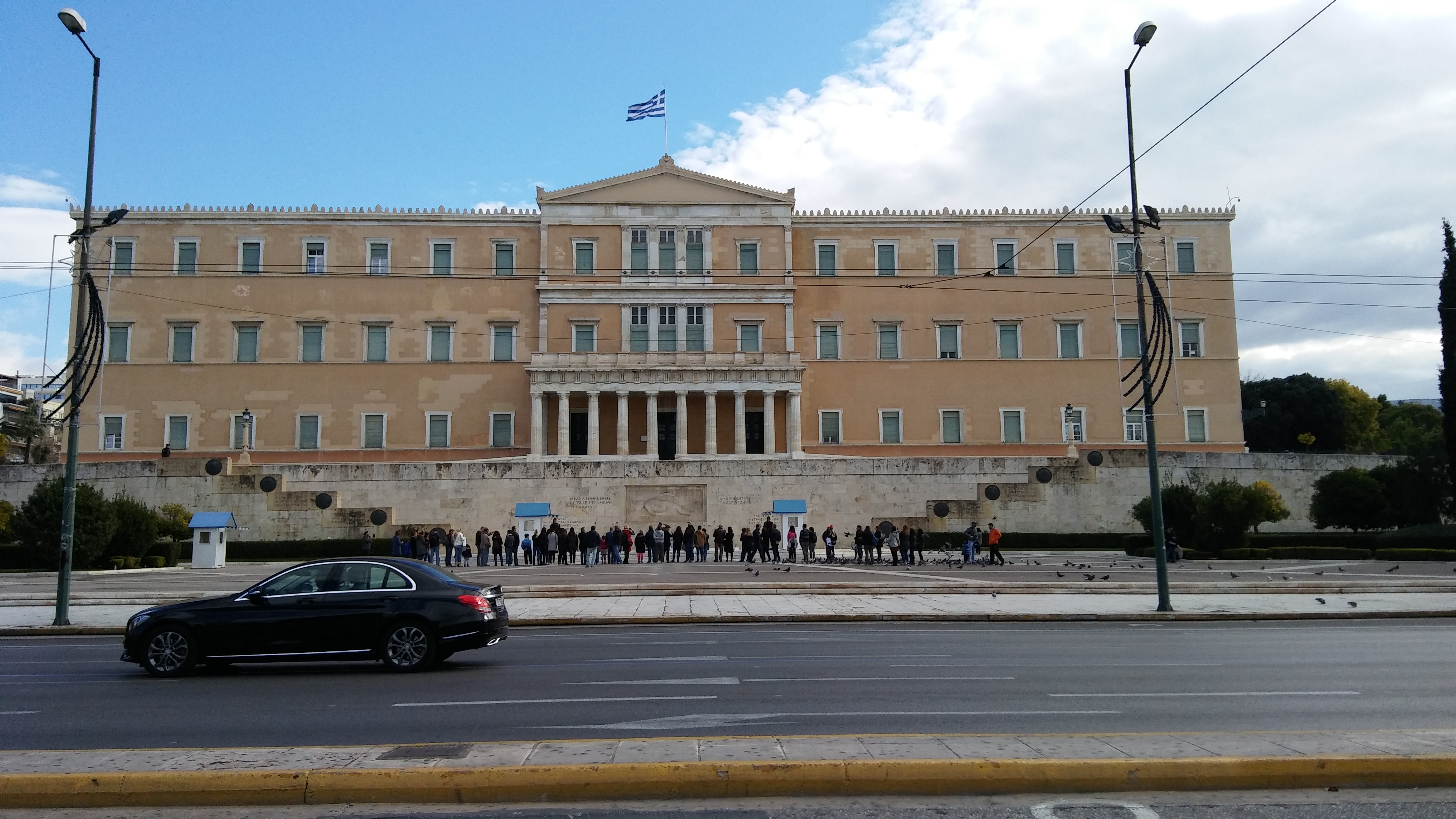
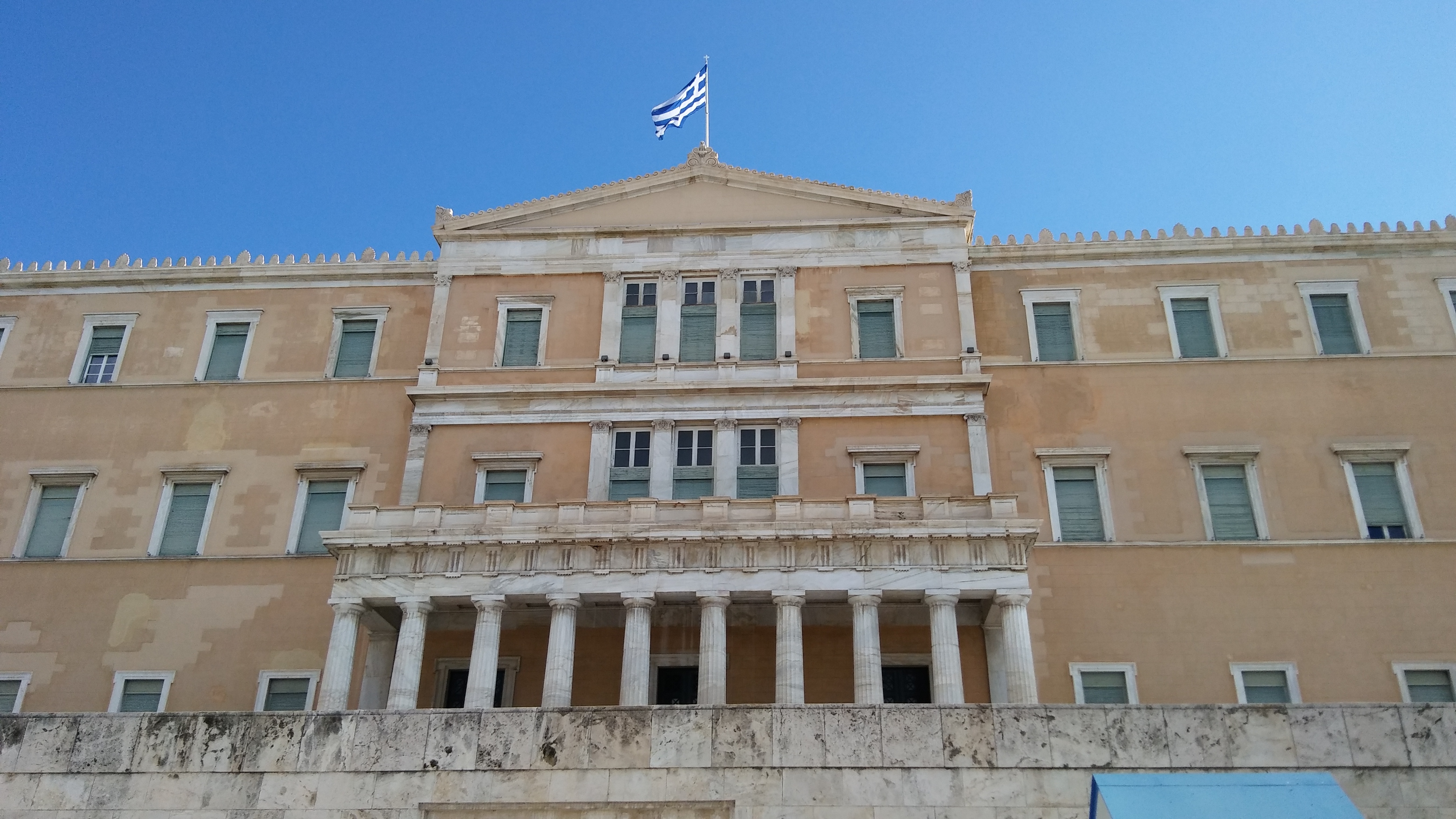
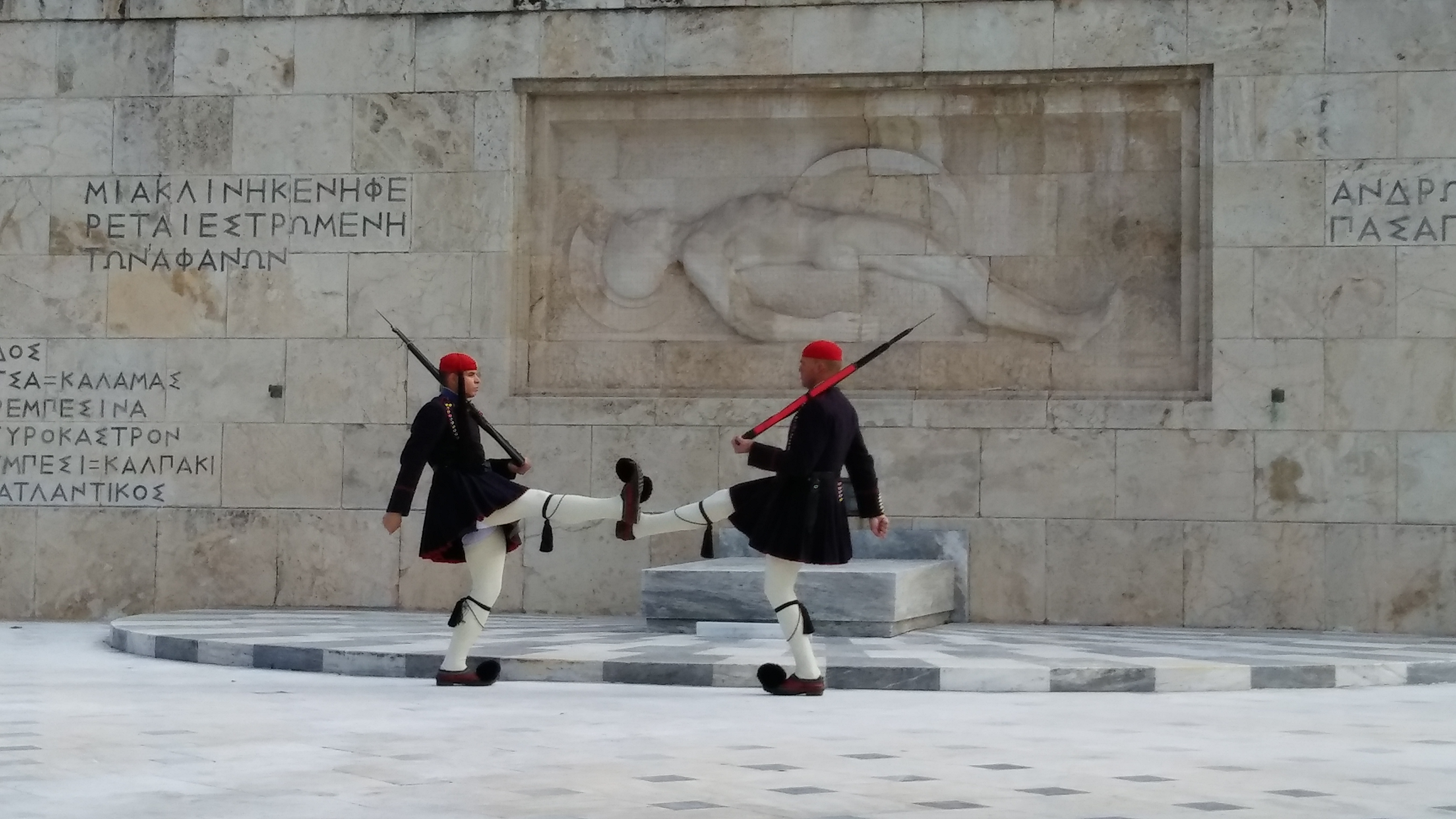
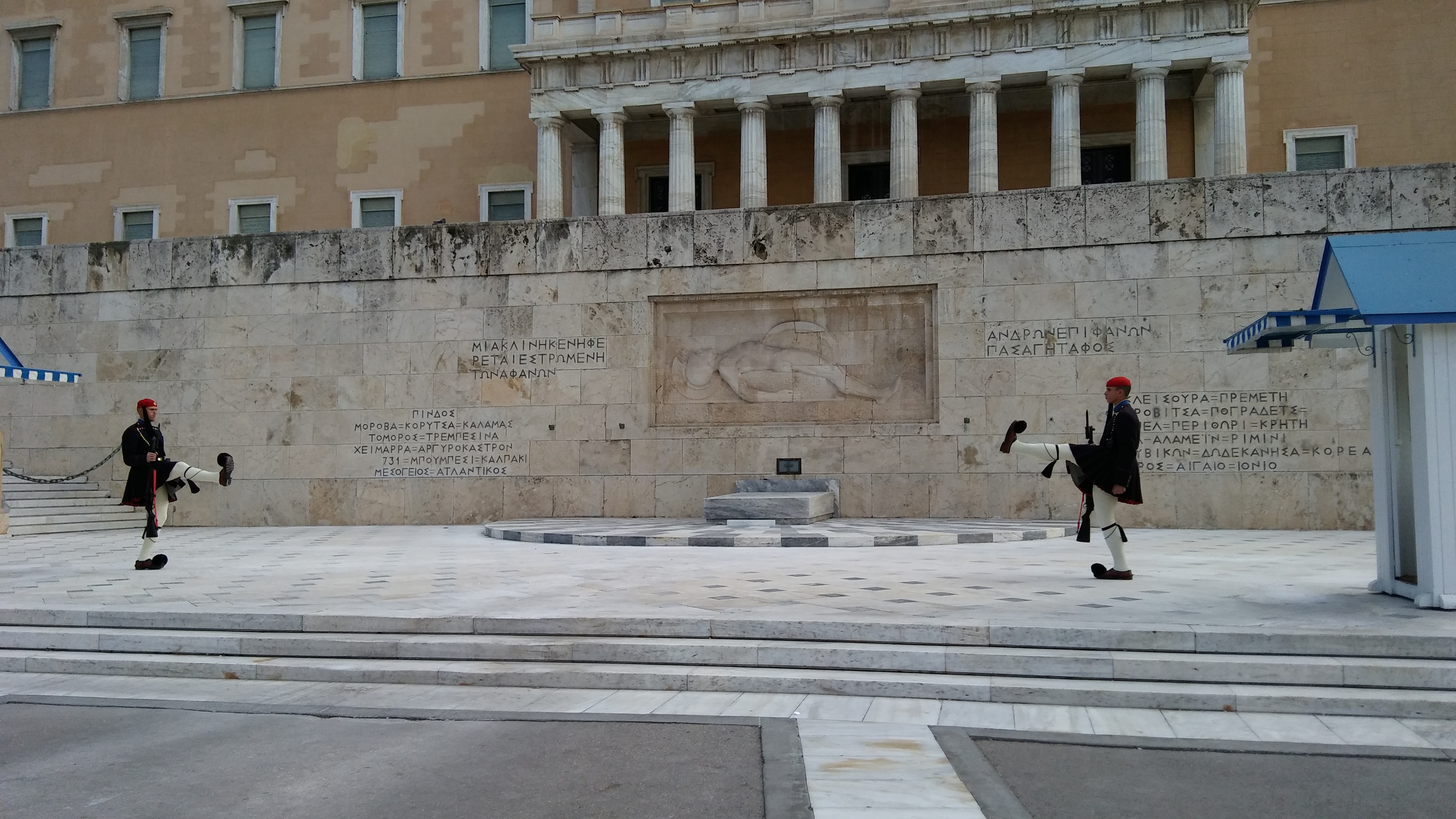
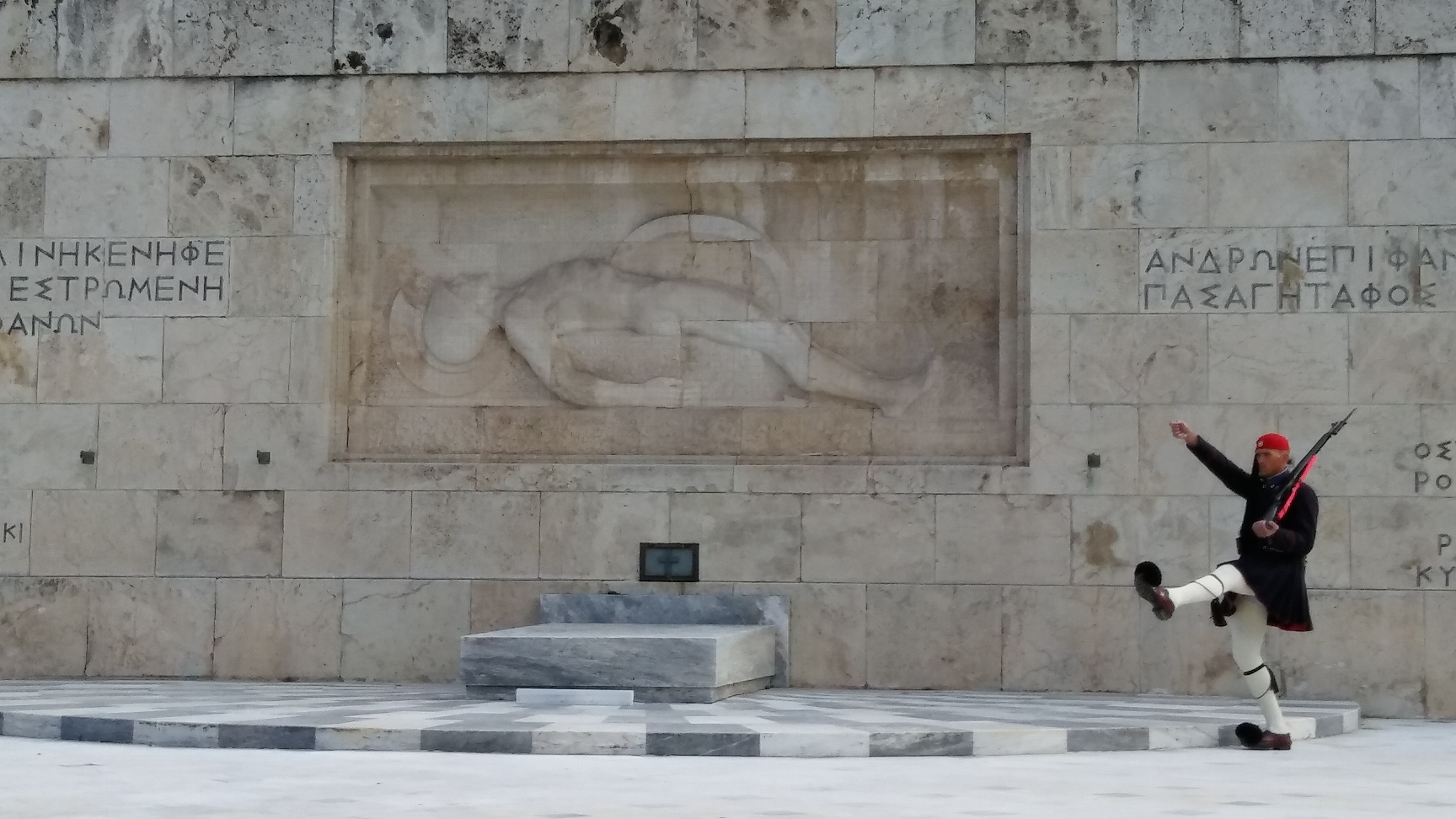
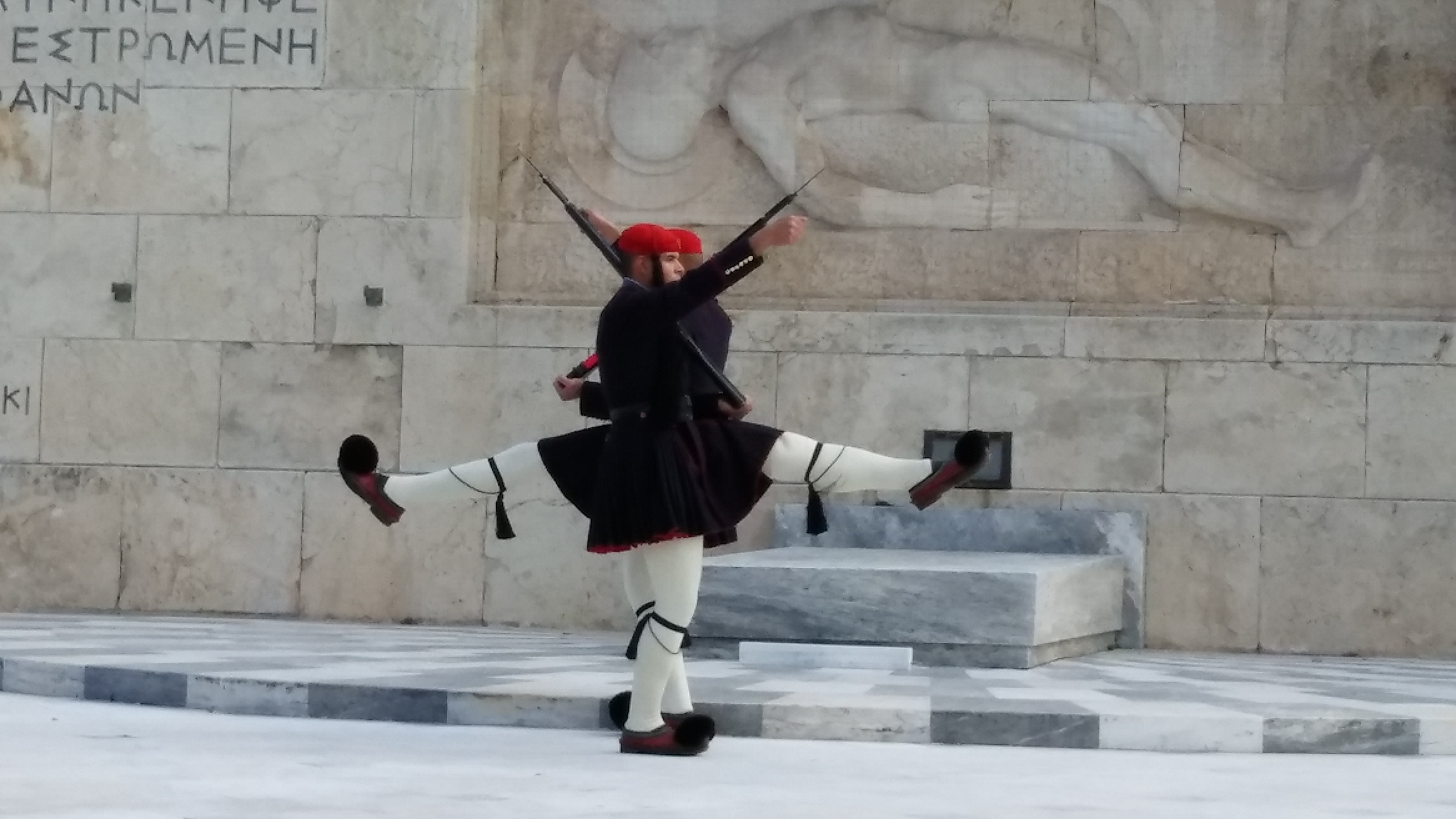
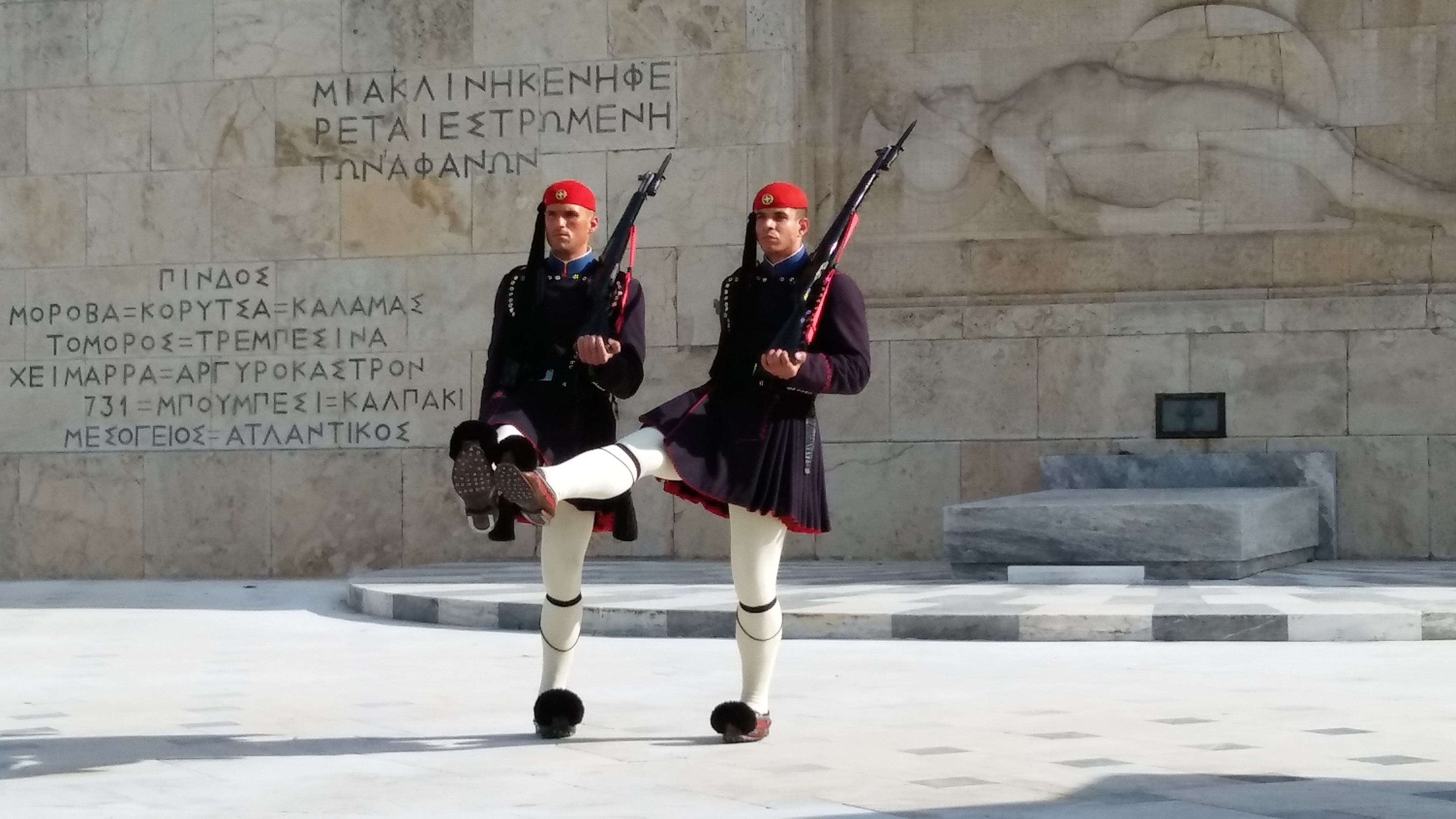
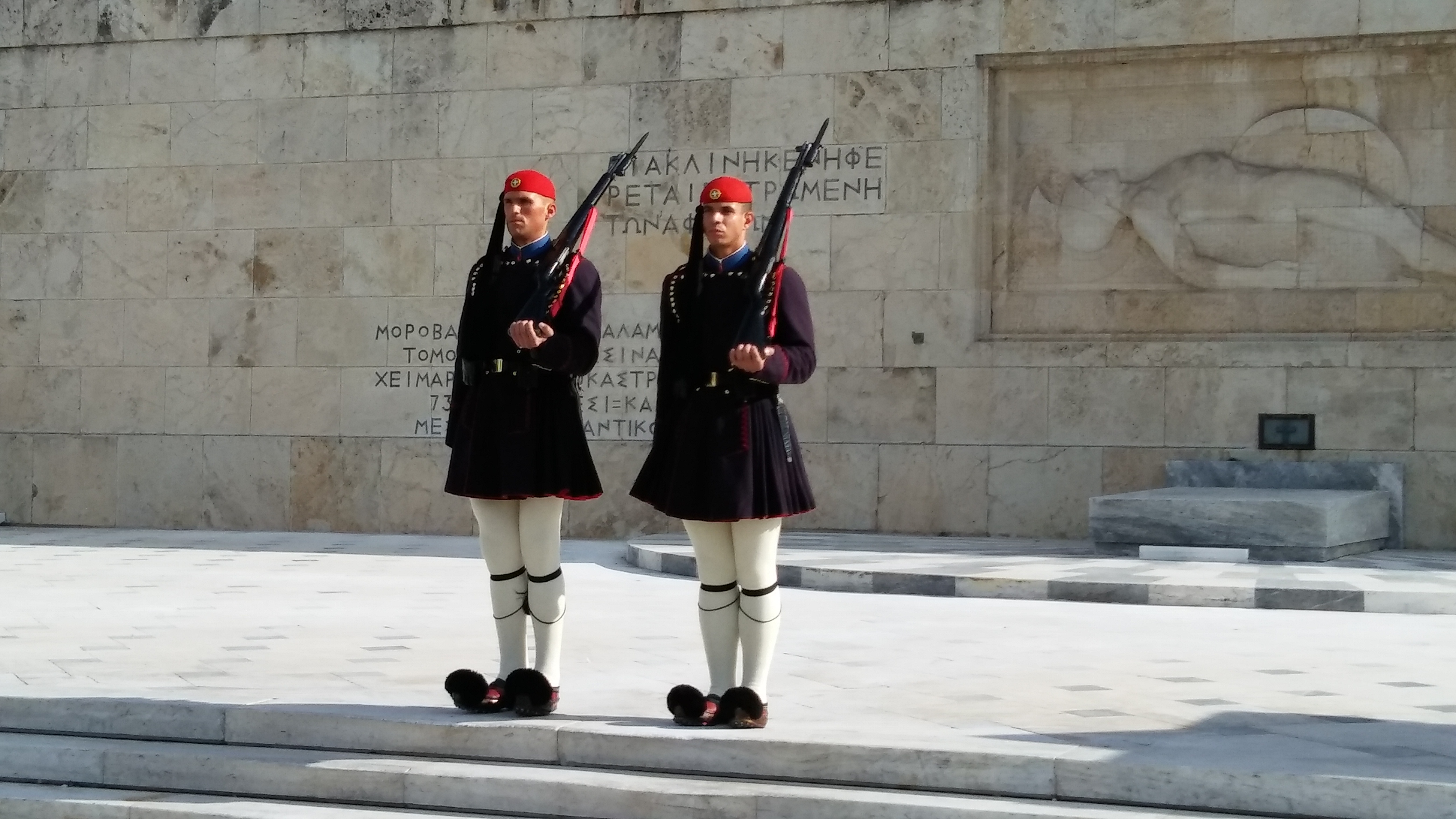
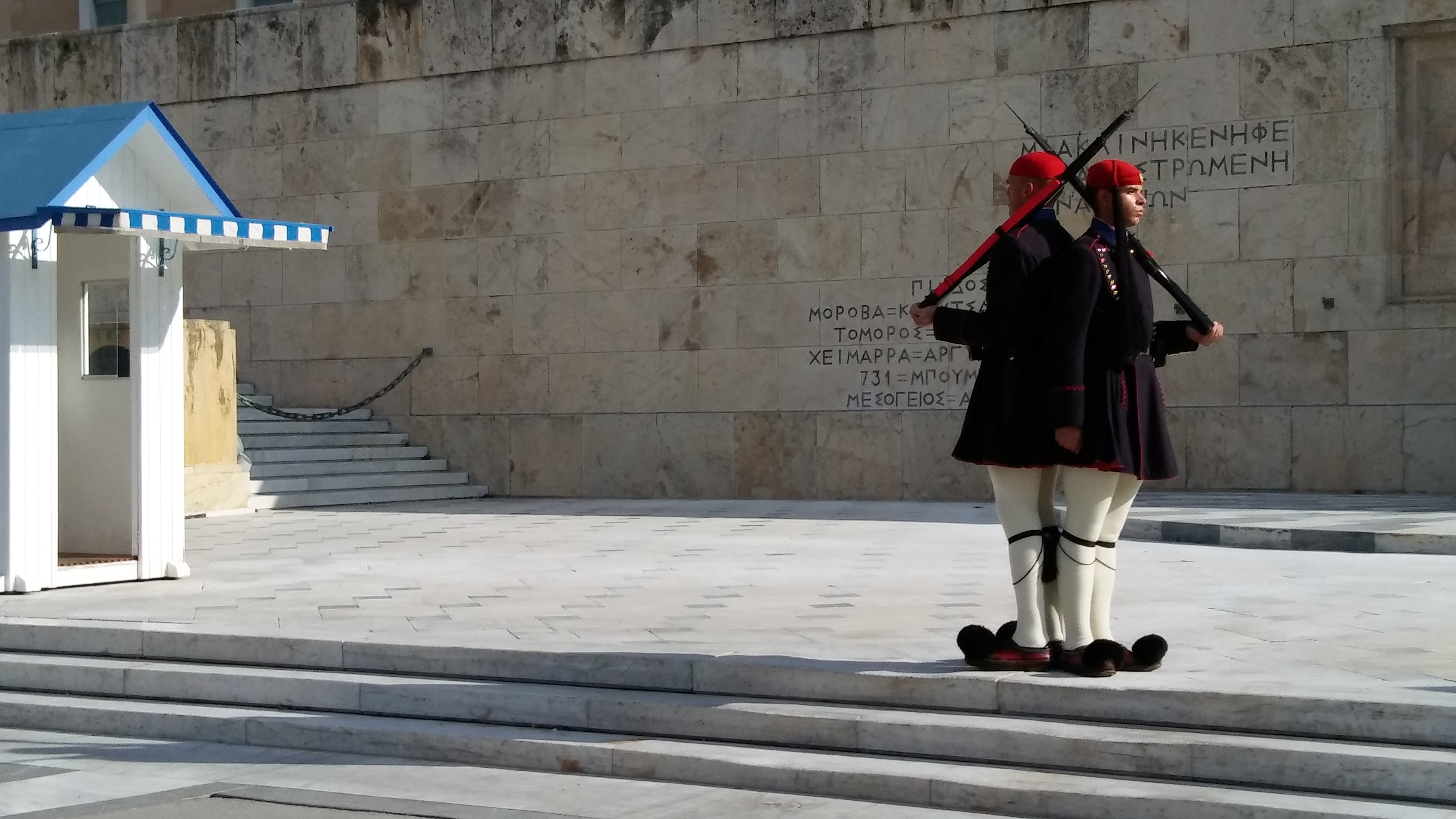
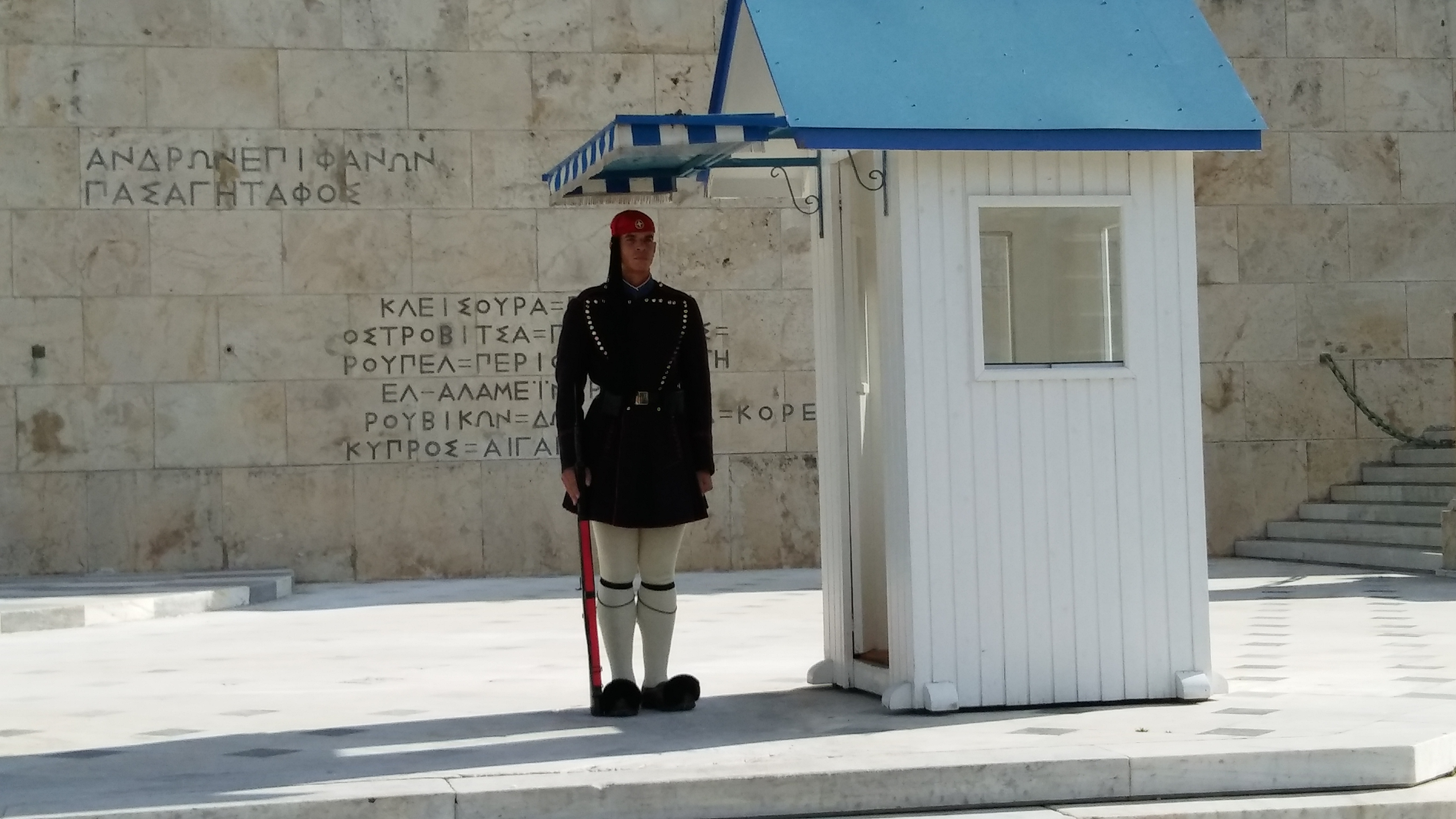
We felt disappointed that we weren’t going to see the Christmas tree during this visit to the city, but were compensated as soon as we went up the steps and walked over to Syntagma Square proper (and the Greek Parliament building). Just as we arrived, the guards at The Monument to the Unknown Soldier began to move. The sight of the evzones (also called tsoliades) is always a special treat!  Here’s a little taste of the perfect sync they displayed that morning:

Did you know? The foustanella (skirt of the evzon) has 400 pleats to symbolize the 400 years of slavery under the Othoman rule. Their red cap is a symbol of the blood shed by the Greeks in the Greek War of Independence in the 1820’s.

Hot tip: The evzones move around the monument like perfectly synchronized toy soldiers at half past every hour. They change over on the full hour and every Sunday at 11:00 a.m. the changing of the guards becomes a full-scale spectacle, so time your visit to Syntagma square right! The Evzones are not allowed to speak or move and can only blink to give their supervisor answers to his questions about a possible need – to ease an itch, to straighten their clothing or to wipe the sweat off their forehead, for instance. Tourists used to be allowed to stand beside them for a photo but now only children are allowed to do that. Adults stay strictly under the steps these days. The Evzones will not move from their post of their own accord, not even when their life depends on it! Back in 2001, a Molotov fell beside an evzon during a demonstration and his white-and-blue guardhouse caught fire. He didn’t bat an eyelid and only moved to save his life after receiving permission from his supervisor to do so! More info on the evzones, Greece’s pride and joy, here.
After the impressive display from the evzones (which never fails to lodge a knot in my throat!), we visited a nearby department store that sorted almost all of our Christmas shopping. By the time we finished we were ravenous so we took the Metro to our favorite area for chow 🙂 Where, I hear you say?

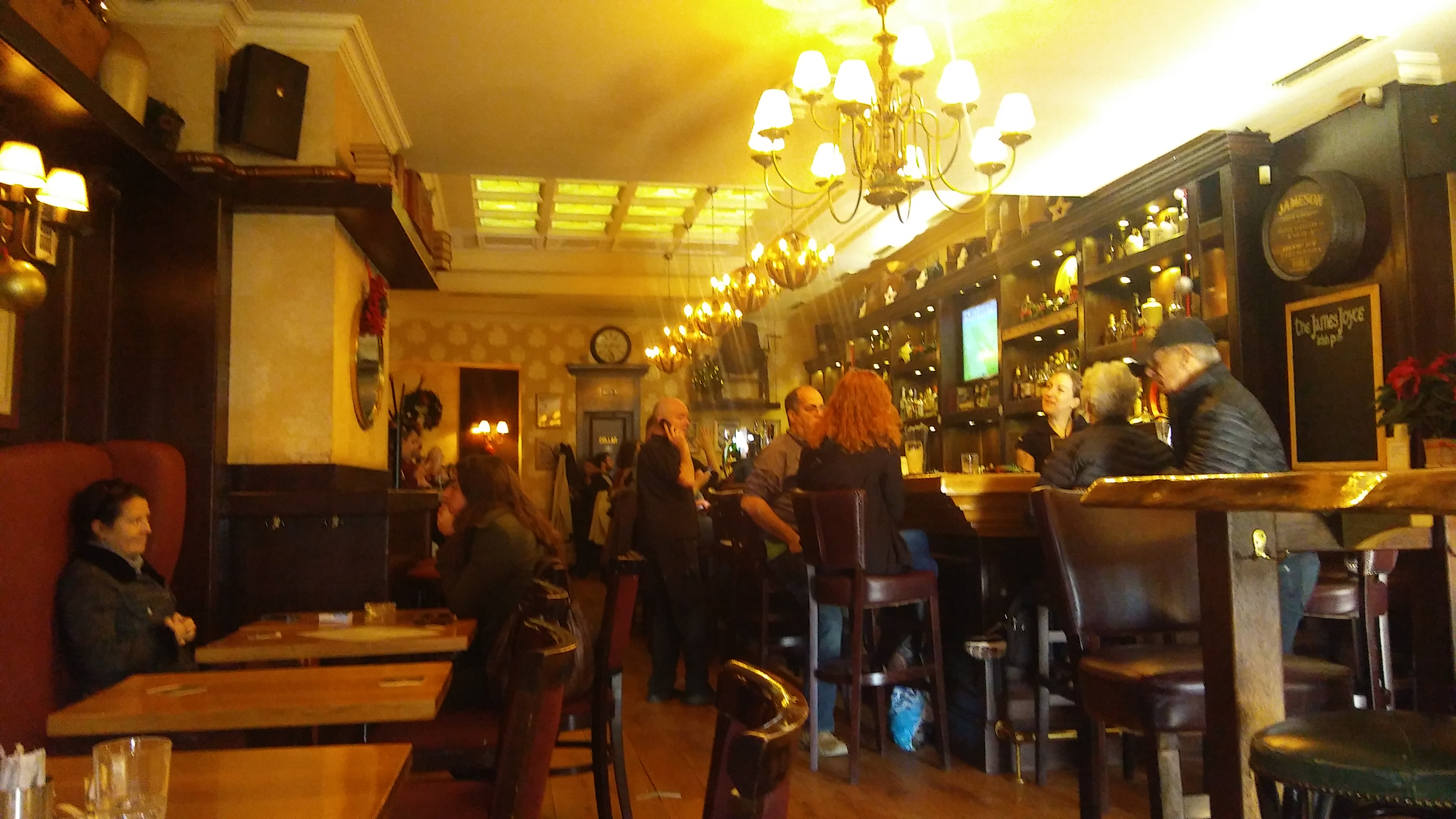
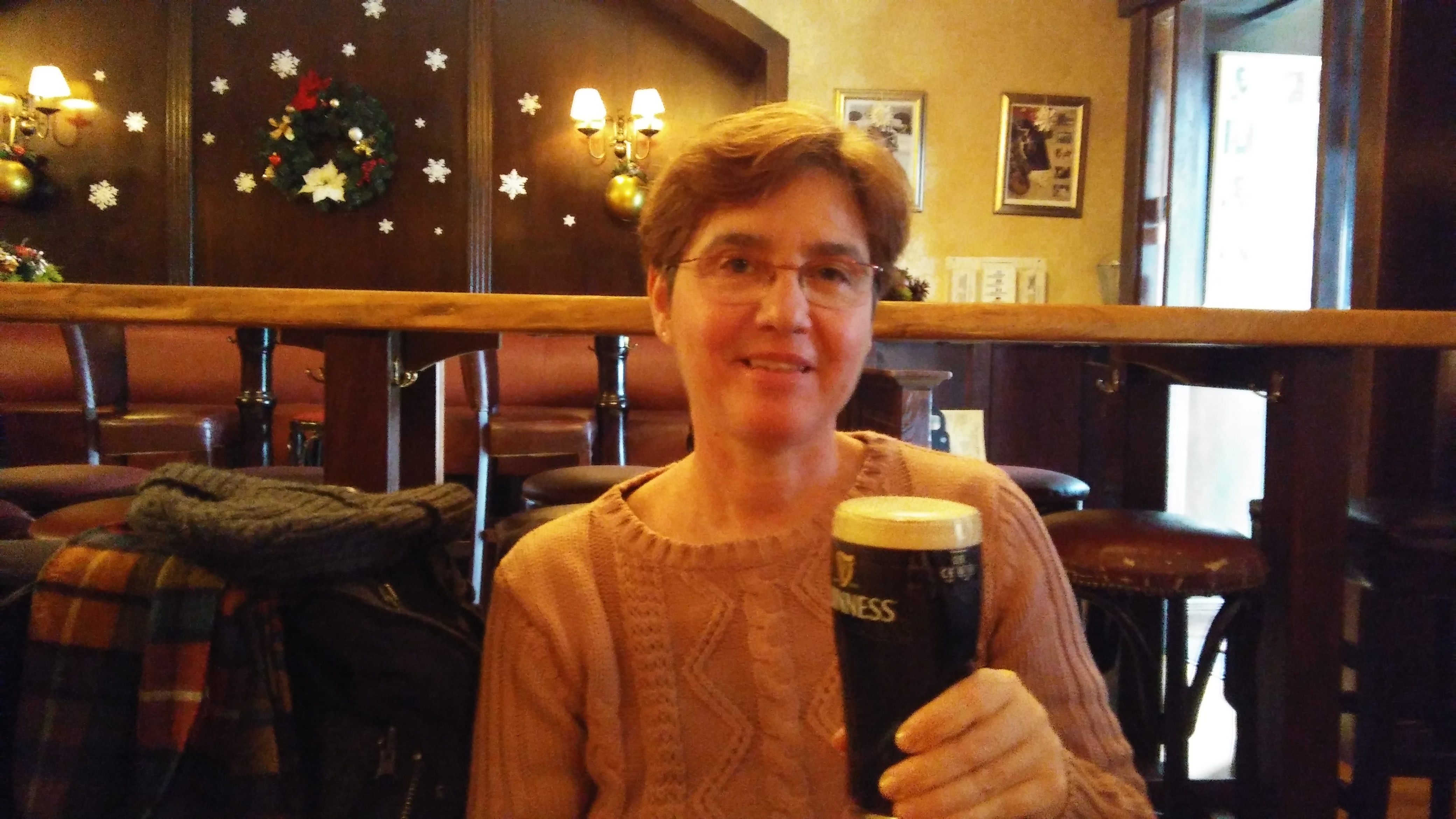
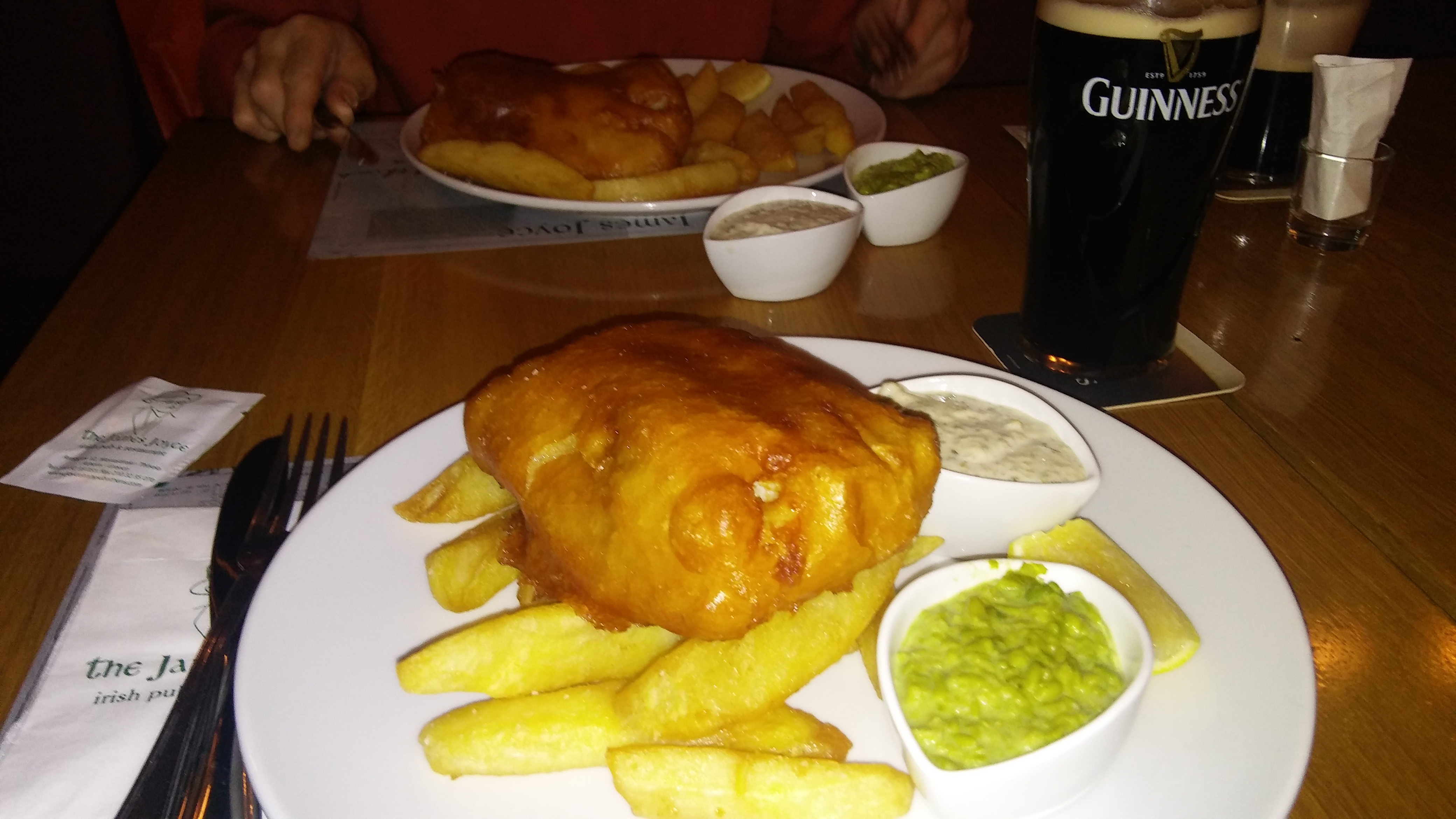
Well, Andy and I always wind up in Monastiraki for lunch. When it’s time for a special treat we tend to narrow our choices to either souvlaki, or fish and chips, and both are on offer there at exquisite establishments. For souvlaki we go to Bairaktaris or Savvas, for instance, but that day we both craved Guinness, mushy peas and tartar sauce 😛 So, off we went to our favorite haunt of The James Joyce Irish Pub.

We love this place, and the only thing wrong with it is it’s too far from home to enjoy more often! That’s what makes their delicious fish and chips and a pint of Guinness a memorable experience every time 😉 We didn’t go over the top, mind you, which meant we didn’t order the onion rings too, but boy, is it even better when we throw caution to the wind about our waistline! Well, next time maybe 😛

After a short rest and a shower back at the hotel, we barely had time for a cup of tea (courtesy of our generous hotel!) before heading back out, this time to enjoy the Christmas lights after nightfall.

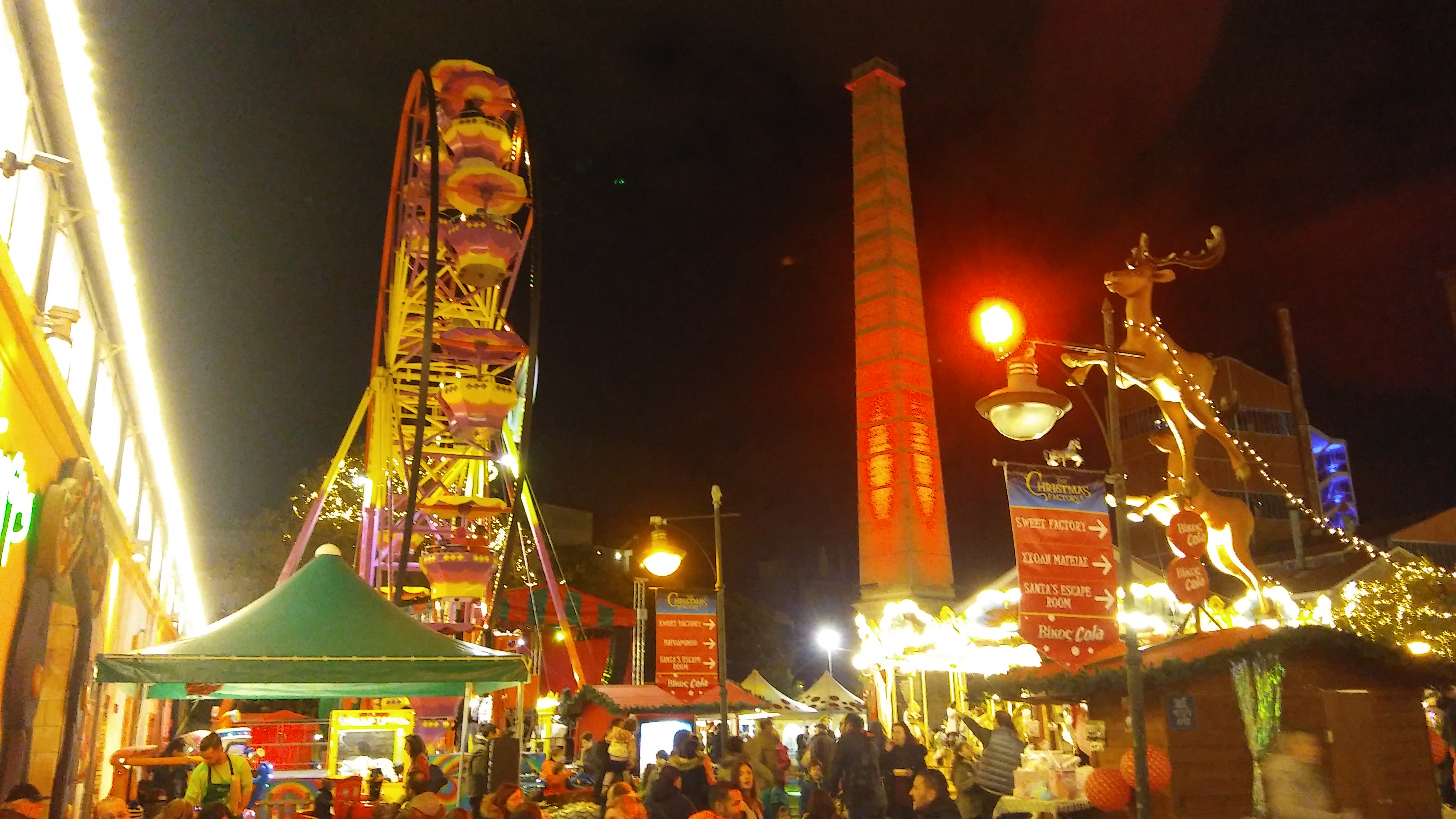
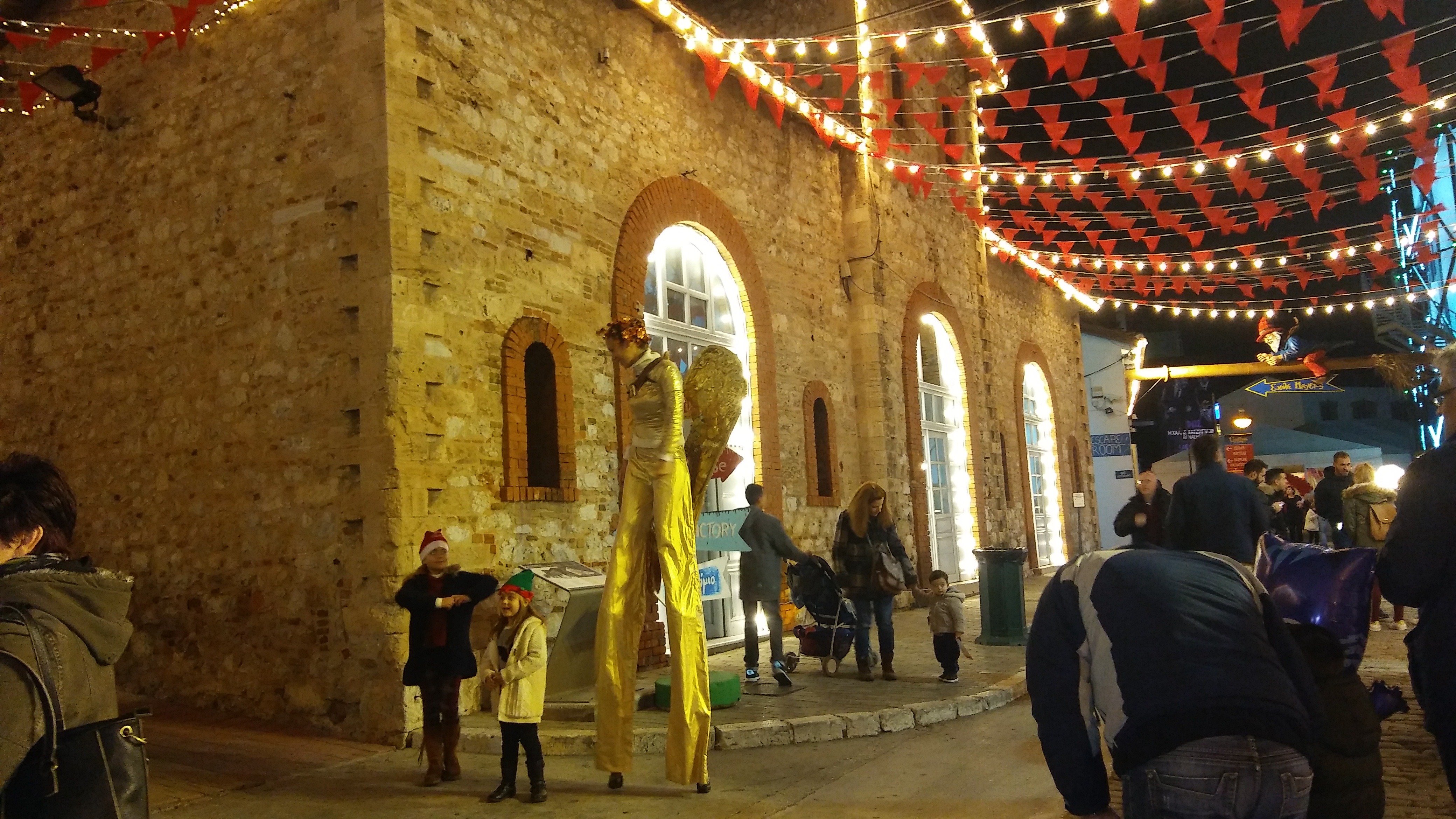
We took the Metro to Kerameikos and made a beeline for Technopolis-Gazi. It used to be a coal gas factory back in the day, but nowadays it’s a cultural center that hosts events and exhibitions. No matter when you’re planning to visit Athens, I urge you to visit its site and see what’s on!

This month it houses The Christmas Factory, a magical wonderland for kids. Emphasis on the ‘kids’. And here, I have to do something I never do, and share a little rant. The rather pricey ticket of 5.50 euros (for Greek standards) makes sense when you’re accompanying children as they can enjoy a plethora of things. For instance, they can meet Santa, make crafts, and even go through some kind of magic tests to get a ‘wizard certificate’. So yeah, I recommend this without any qualms if you have kids in tow. If you don’t, I’d give it a miss because as an adult, you’re getting nothing for your money. Unless, of course, walking around and browsing at stalls is worth 5.50 euros in your eyes 😉

The rides may look like fun but — beware — they are not included in the ticket. For those interested to visit, here’s the site of The Christmas Factory and I suggest you book online to avoid any long queues outside the venue.

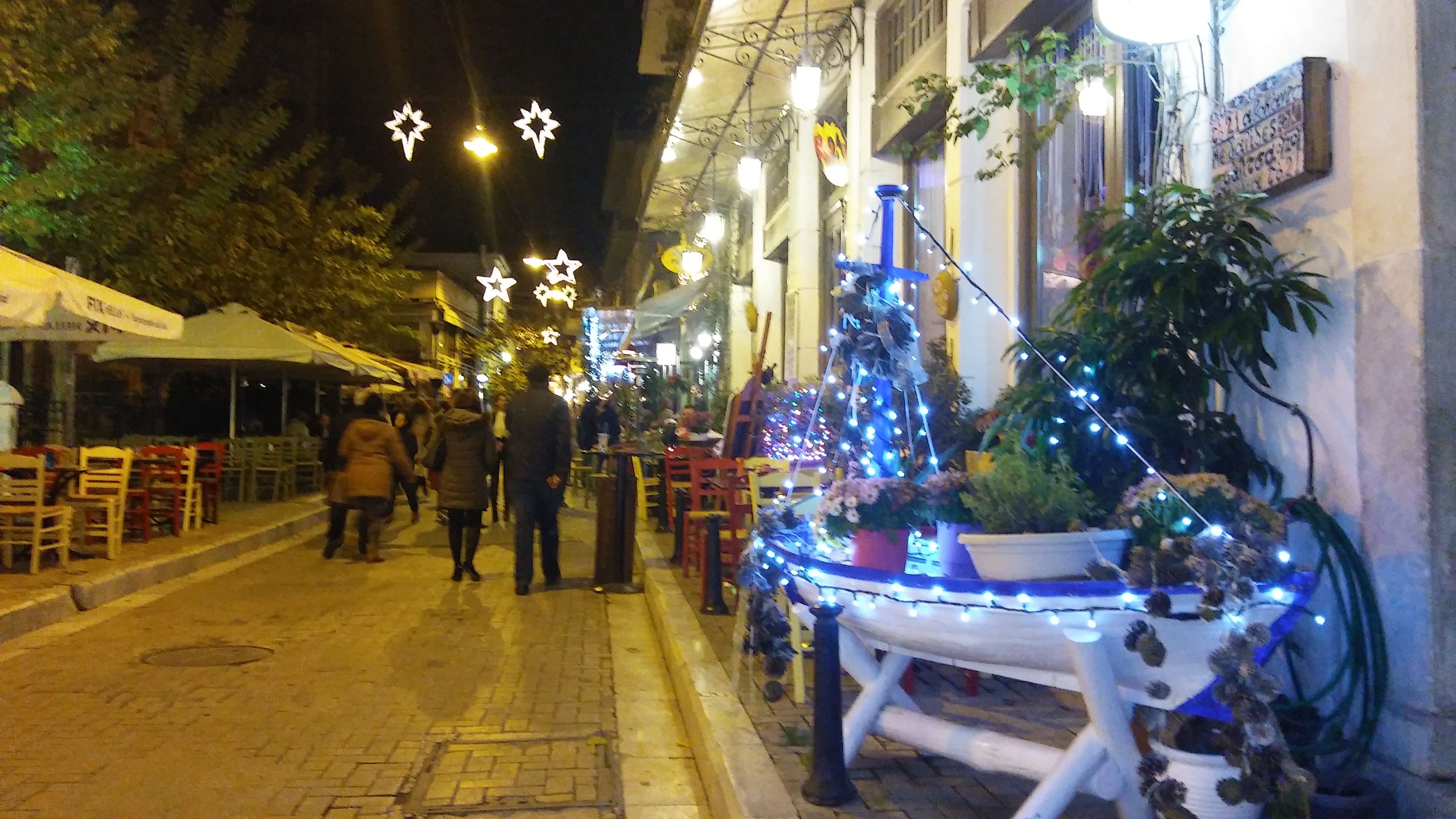
Thankfully, our good spirits were restored, and our Christmas spirit especially, when I suggested to visit Psirri. Now, I know this is silly, but I admit to have never visited Psirri before that day. In my defense, this place only became popular in the last ten years or so. Before, it was one of those shabby and grey, if not iffy, quarters of Athens not worth giving a second look. But, somehow, everyone kept banging on about it in the recent years, increasingly if I may add, so I thought it would be high time to see for myself what the fuss was all about.

Psirri is a minute away from Monastiraki square. Literally, you leave the square behind you with Ermou to your right, and enter the first lane you see in front of you across the street (like Agias Theklas or Pittaki). In under a minute you are in the vibrant heart of Psirri. The best time to visit is at nighttime as it’s bustling and magically transforms into something super-cool.

When we got there we were immediately dazzled by the lights, and overwhelmed by the nostalgic bouzouki music emanating from traditional tavernas such as the quaint ‘Orea Penteli’.

By the way, other highly recommended eateries in Psirri (from what I hear) include 21and ‘O Mavros Gatos’.

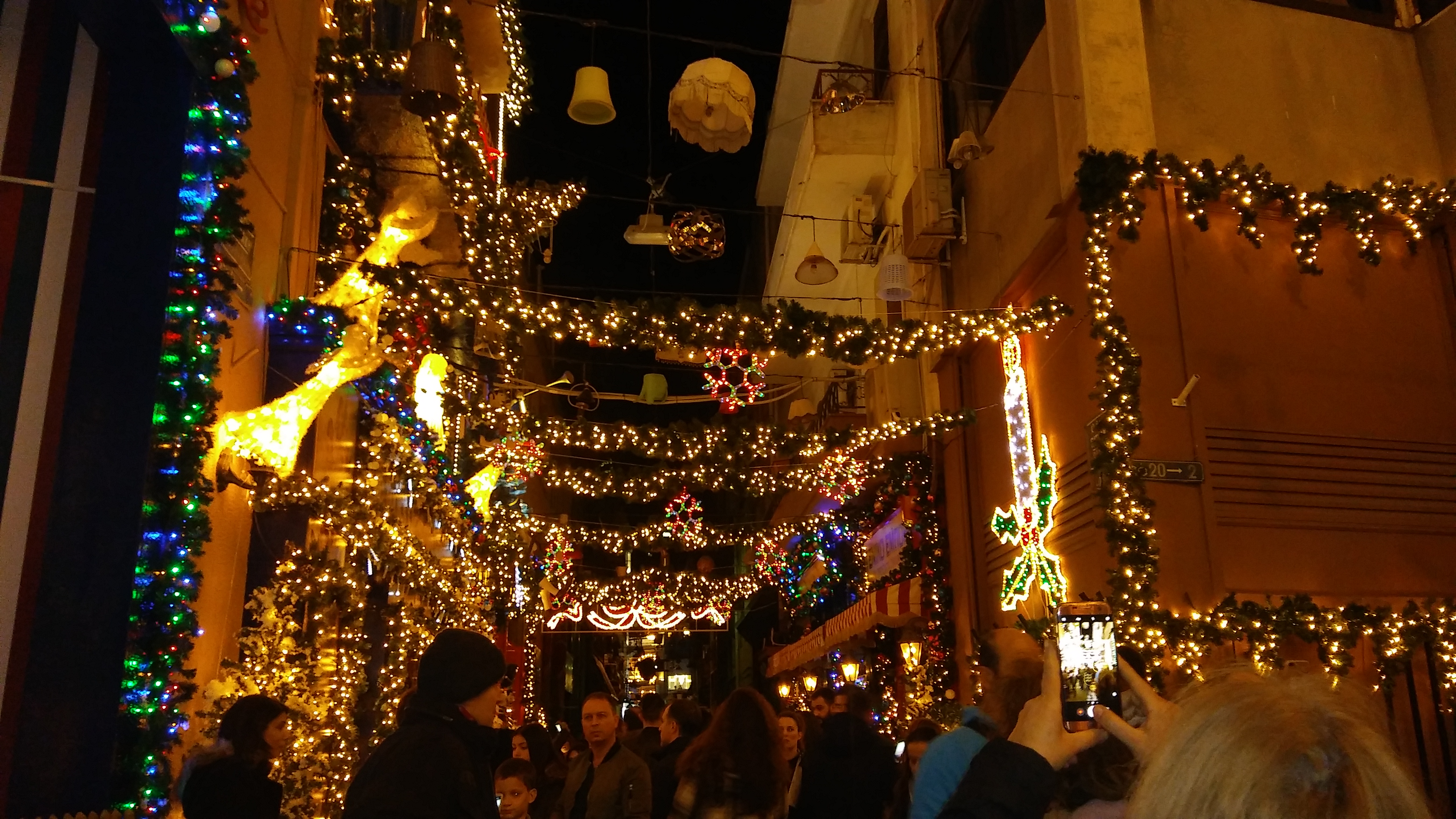
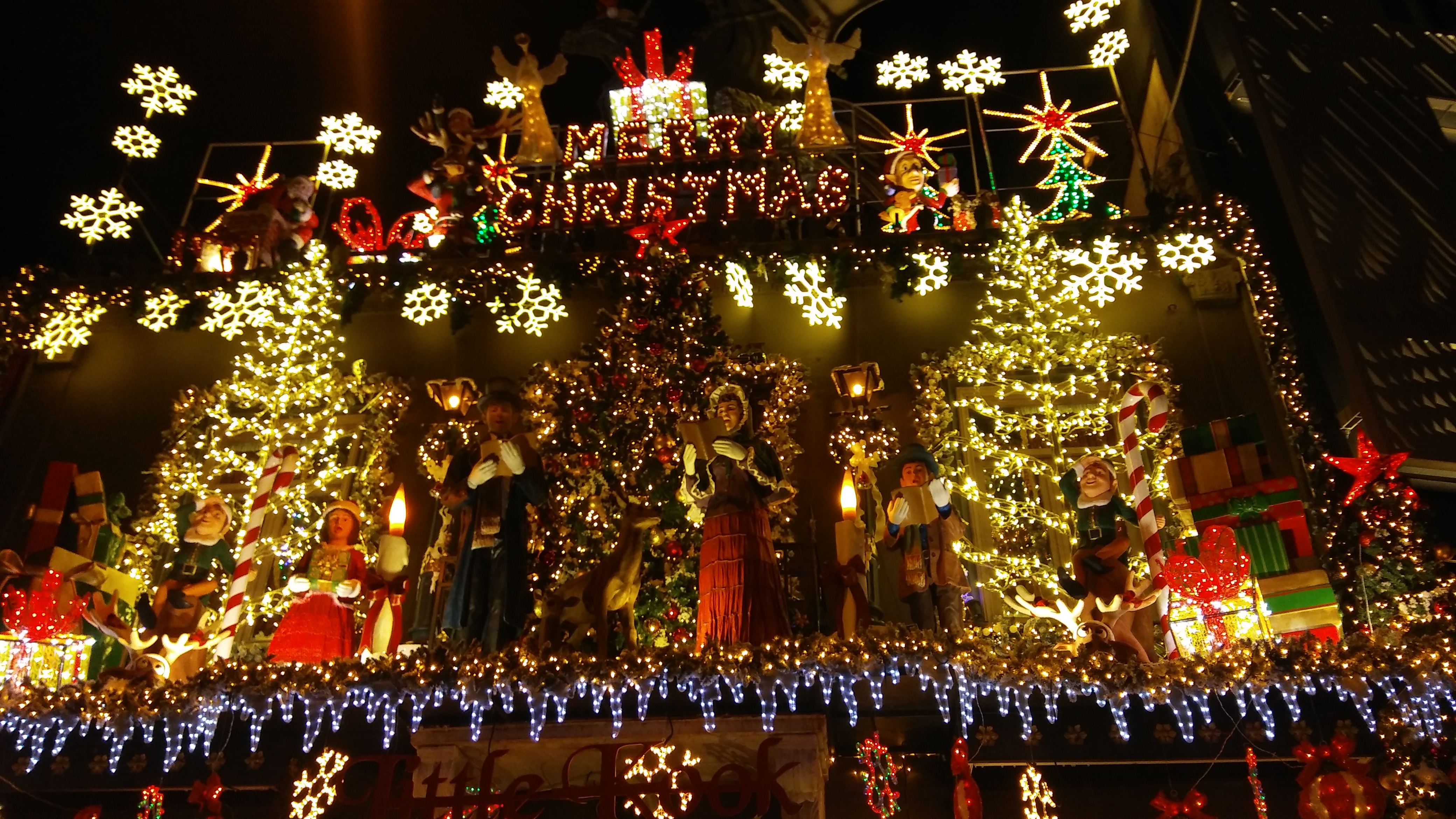
Quaint tavernas, cafes and bars greeted us from every corner as we explored Psirri. Tiny lanes under strings of Christmas lights beckoned to us to take a closer look and we felt compelled to do it. One specific little street – Pittaki – simply took our breath away, for that is where I saw the most beautiful Christmas display of my whole life.

I read the sign and the writings on the glass window and realized to my shame I didn’t have a clue. Now, I am one of those people that never goes anywhere without preparation. To find something so awesome in my own city that had dared to go under my radar all this time seemed preposterous. What on earth is Little Kook? I asked myself. I had never heard of this place! A quick google search told me all about it. Two Greek entrepreneurs had teamed up together to make Little Kook, its strange name owed to the imaginary friend one of these cool dudes had as a child.

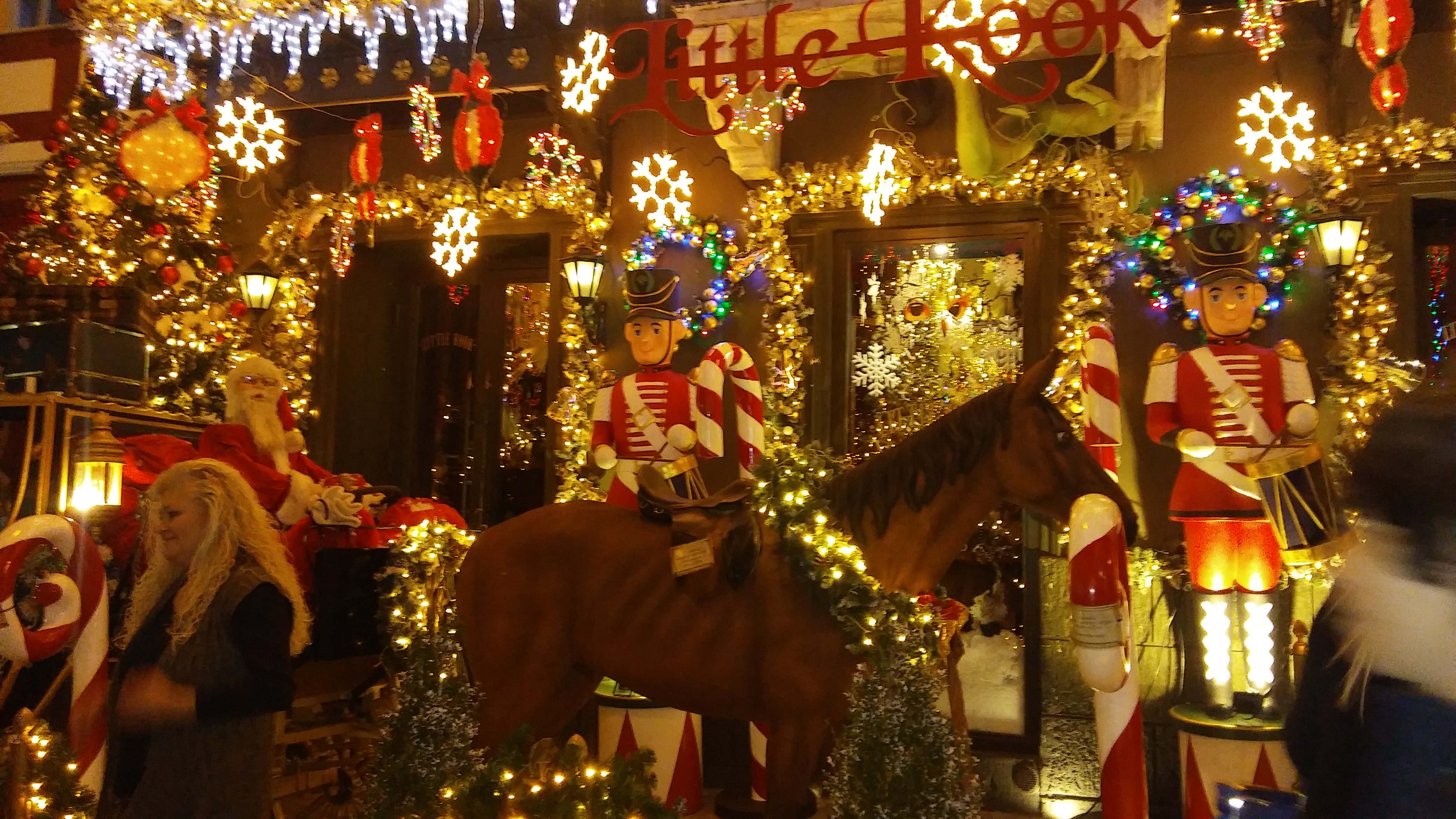
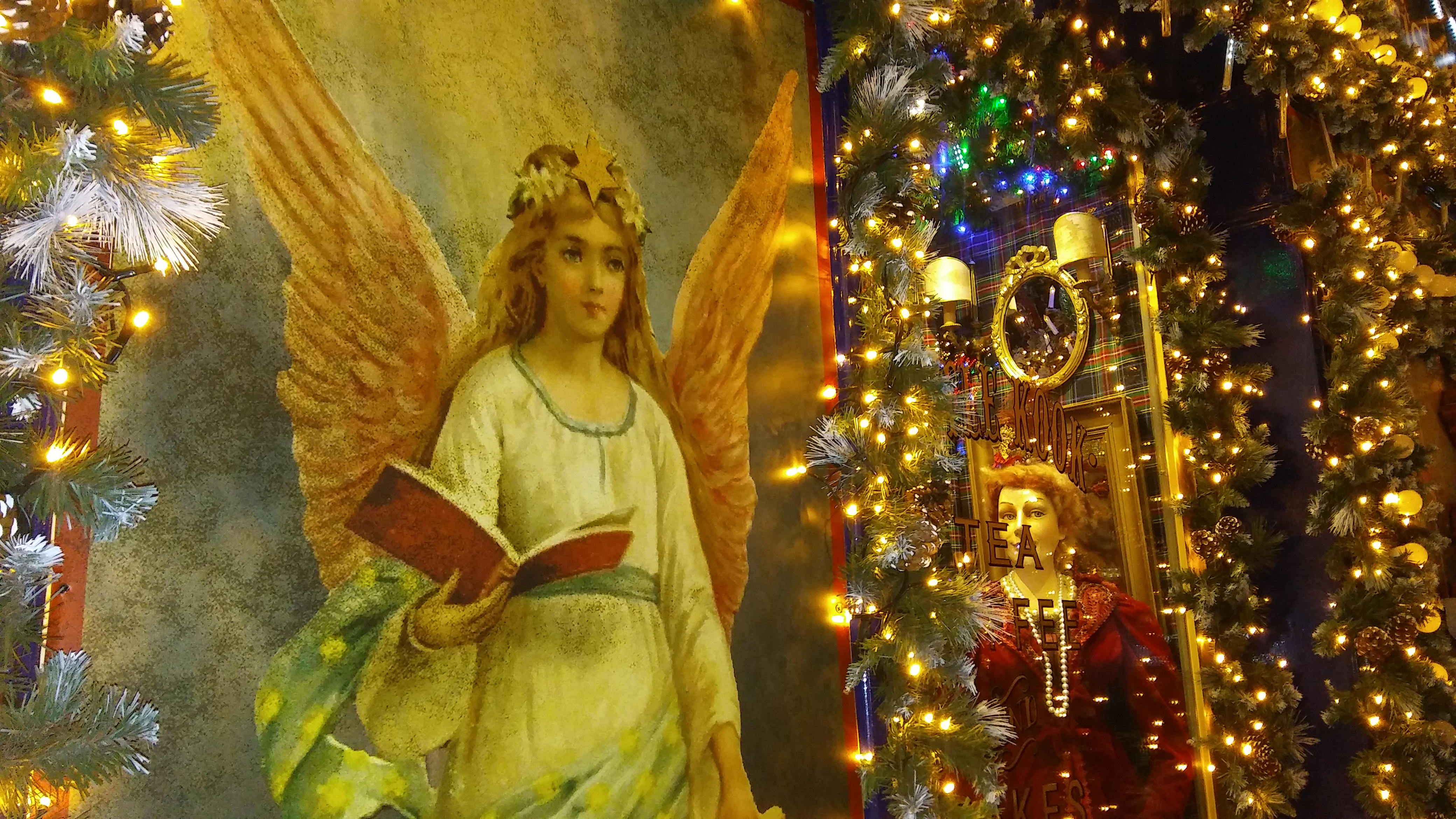
Little Kook serves fantastic sweets and cupcakes with a large selection of teas and coffees, but that’s not the reason why it’s hot. Those devilishly clever chaps made it infamous by decorating the hell out of it both inside and outside.

The outside of the building stood before me like Christmas incarnate, capable to charm the pants off the Christmas Grinch himself!

Only recently, the facade had been decorated in a Halloween theme, and earlier in the year it also had a circus theme according to the photos I saw on Trip Advisor. They all looked equally stunning. On the inside, there are a series of themed rooms where punters can enjoy their hot beverages and cakes. There is a ‘knights room’ and an ‘Alice in Wonderland’ room too, for instance. Among the pictures of cakes that I have seen on Trip Advisor, the Villa Hazelnut has already begun to haunt me as I am such a huge fan of praline and Ferrero Rocher.

Sadly, we were there at a popular hour and decided against joining the long queue to get in, but I’m definitely going back to venture inside and grab a piece of cake as soon as I can. Warning: Little Kook is pricey, very pricey. Something like 7 euro for a piece of cake and around 5 euro for a coffee. But if, like me, you think visiting a fairy tale wonderland is worth it, I am sure that won’t stop you 🙂

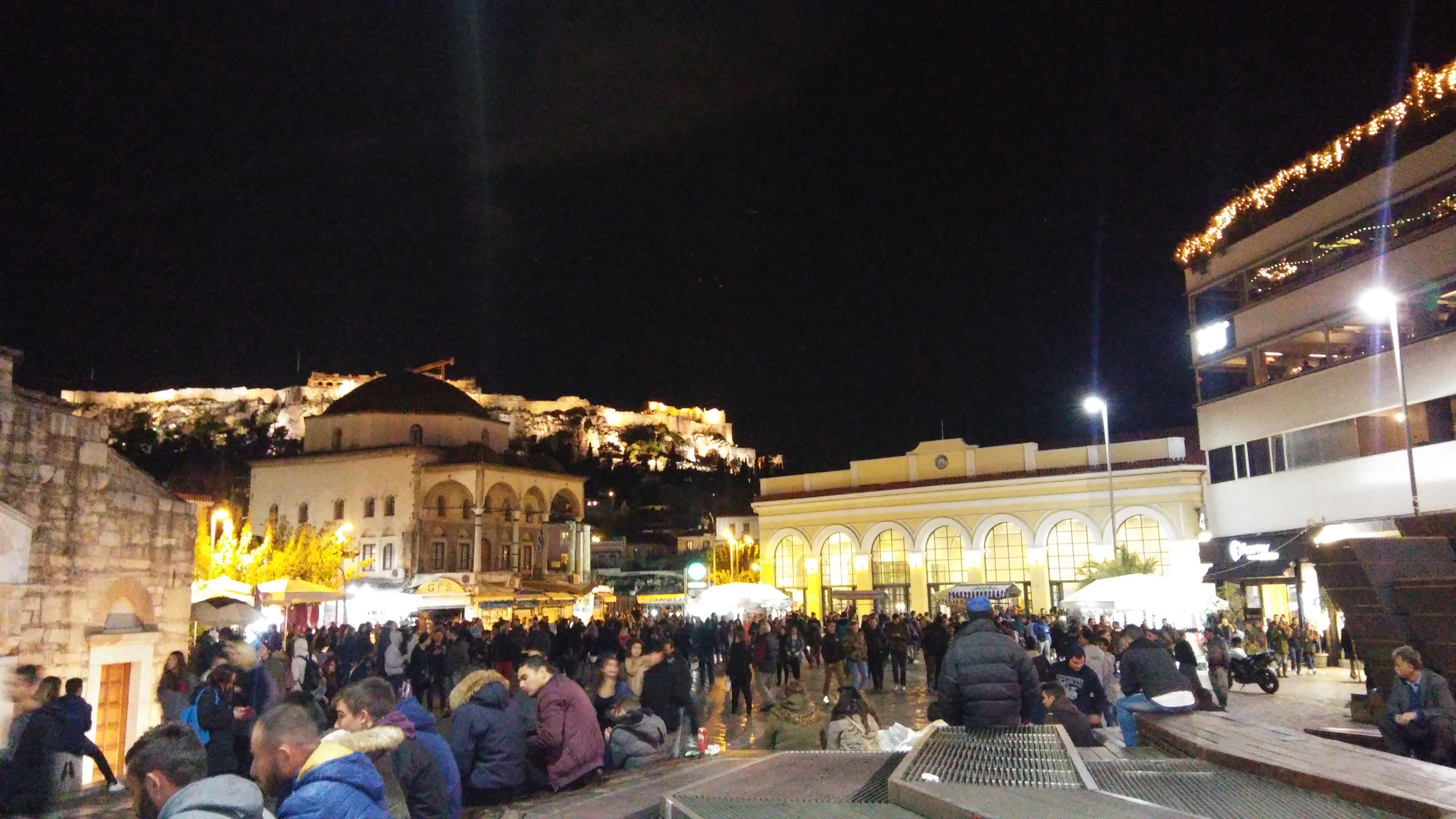
We left Psirri at around 8:00 p.m. to grab a quick bite in Monastiraki and found the square swimming with people, the odd firework shooting up to the sky every now and then. The Acropolis looked magnificent all lit up above it all. This spectacle concluded our magical, whimsical evening with sheer perfection. It made our falafel-filled arabic pittas and creamy praline croissants from Gregorys all the more divine.

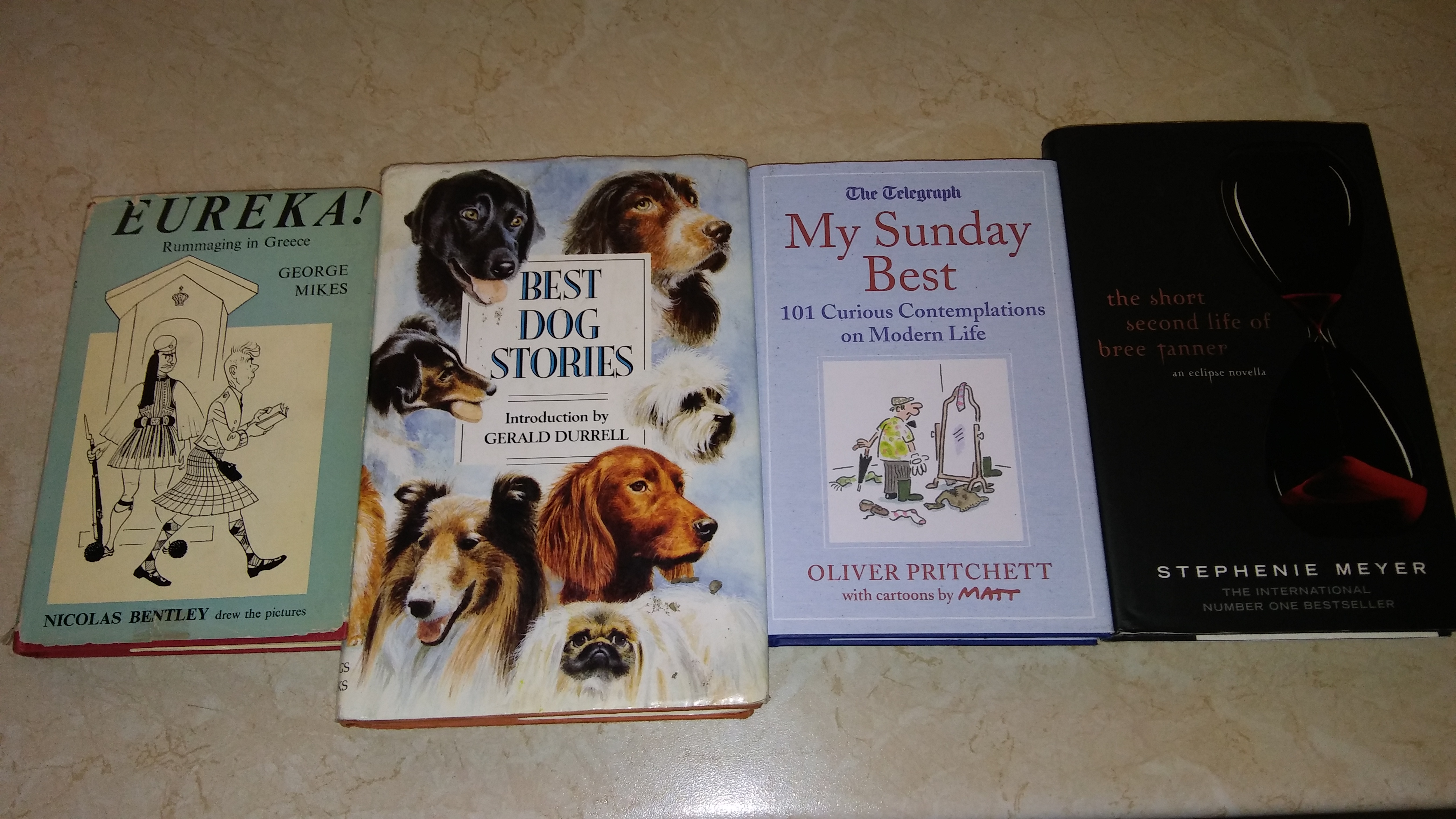
The next morning we were back in Monastiraki, this time to browse through its tiny second-hand bookshops. After picking up a few gems for mere peanuts, we made a short stop in Athinas Street to buy spices from a stall outside the city’s meat & fish market. I picked up sachets of ginger, turmeric, and black caraway for 1 euro each.

Sadly, it was Sunday, otherwise I would have gone down Evripidou street  like a shot from there to buy pastourma (pastirma) from Arapian or Miran (both are historical establishments founded by Armenian refugees in the early 1020-30s), but maybe another time… Walking down Evripidou street is a unique experience on a week day, by the way. The fragrant aromas of spices are rich in the air as you browse through the merchandise on display that spills out from every facade.

Soon, it was time to head home, and we were back in our little town in under an hour. The visit to the city was short and sweet but, somehow, it was such a change from the norm that we felt really rejuvenated. When we got home, it felt like we’d been gone for days on end – a sign that we had had a good time, and that our minds were overwhelmed by beautiful new memories 🙂

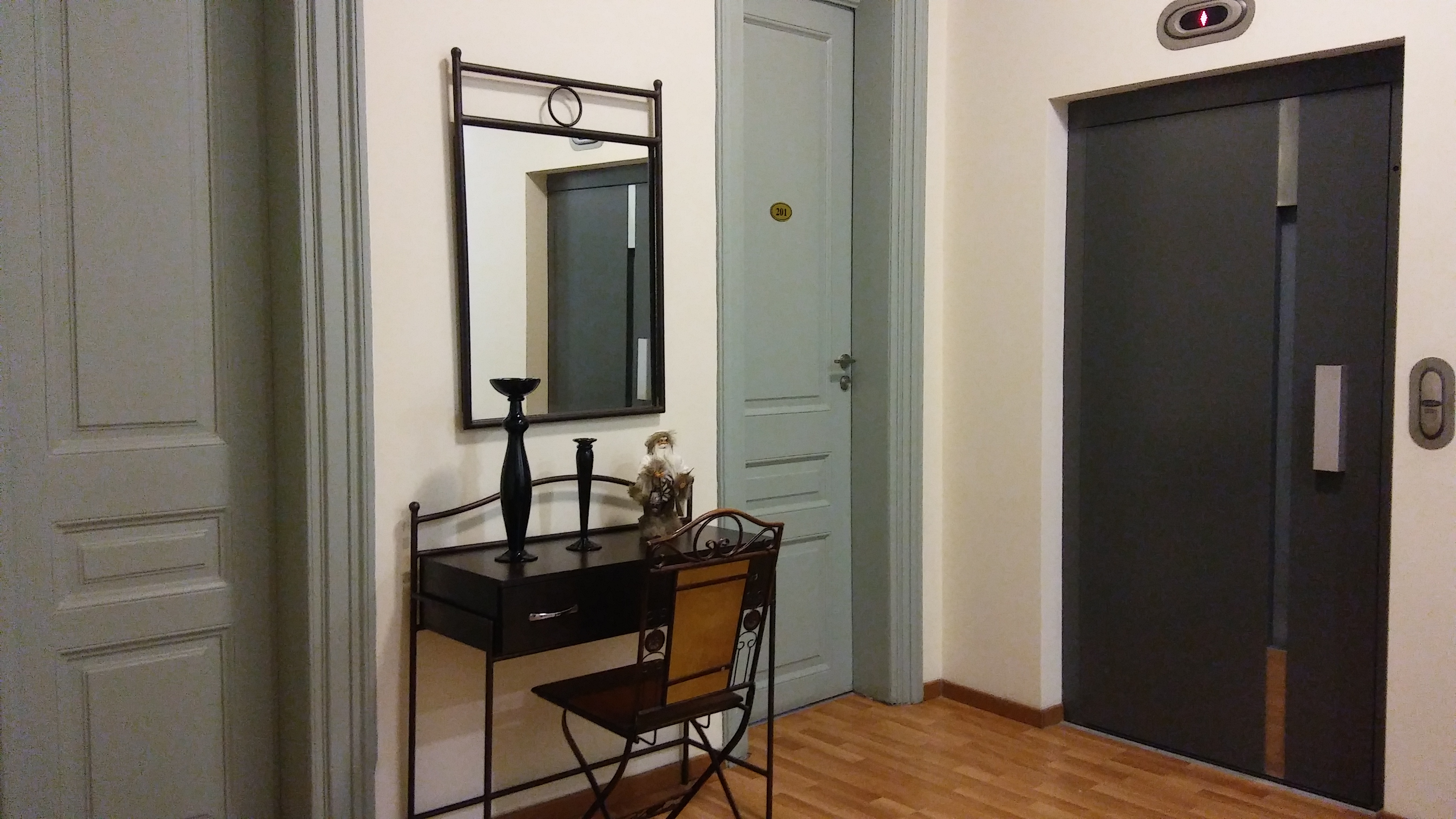
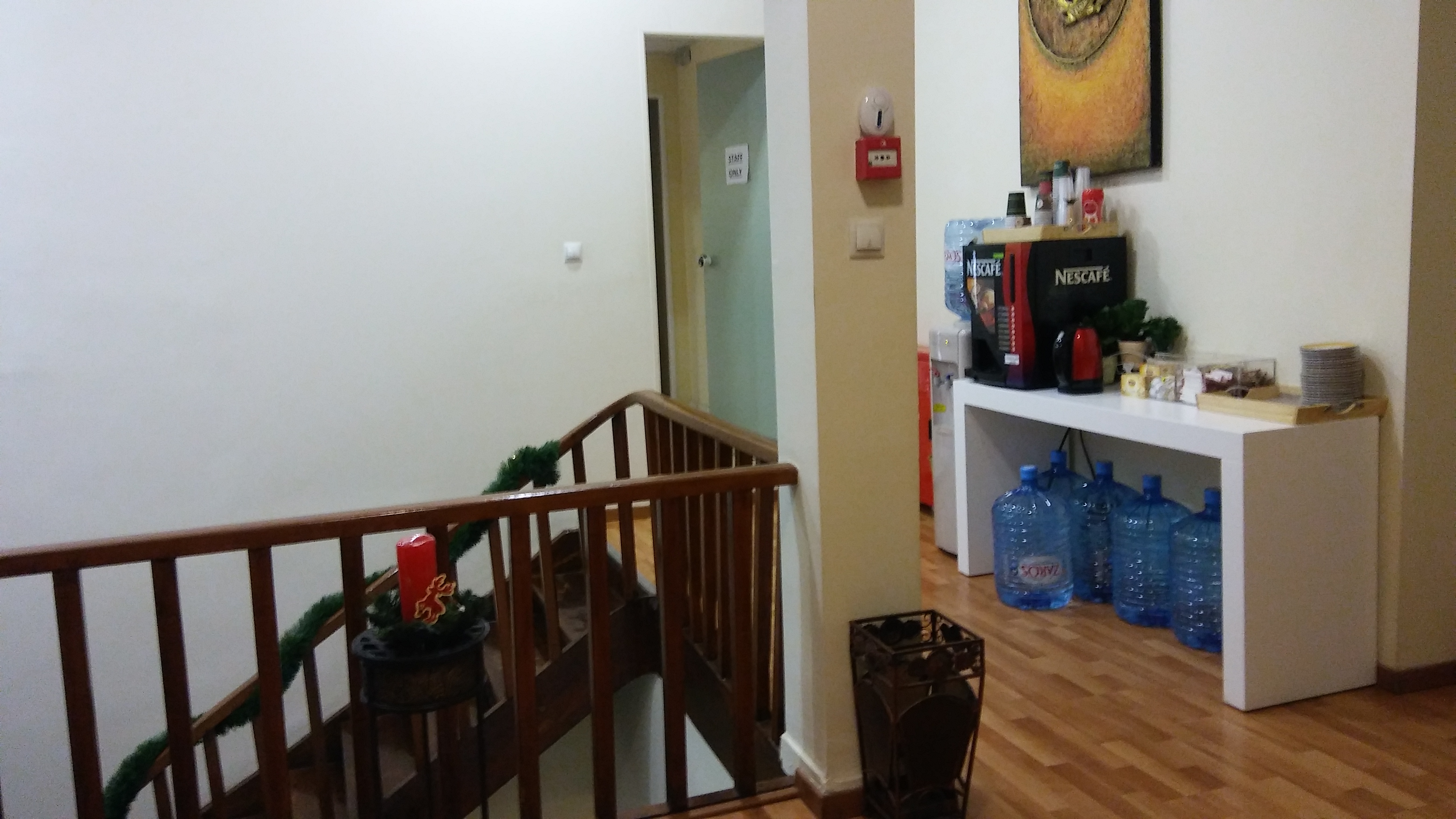
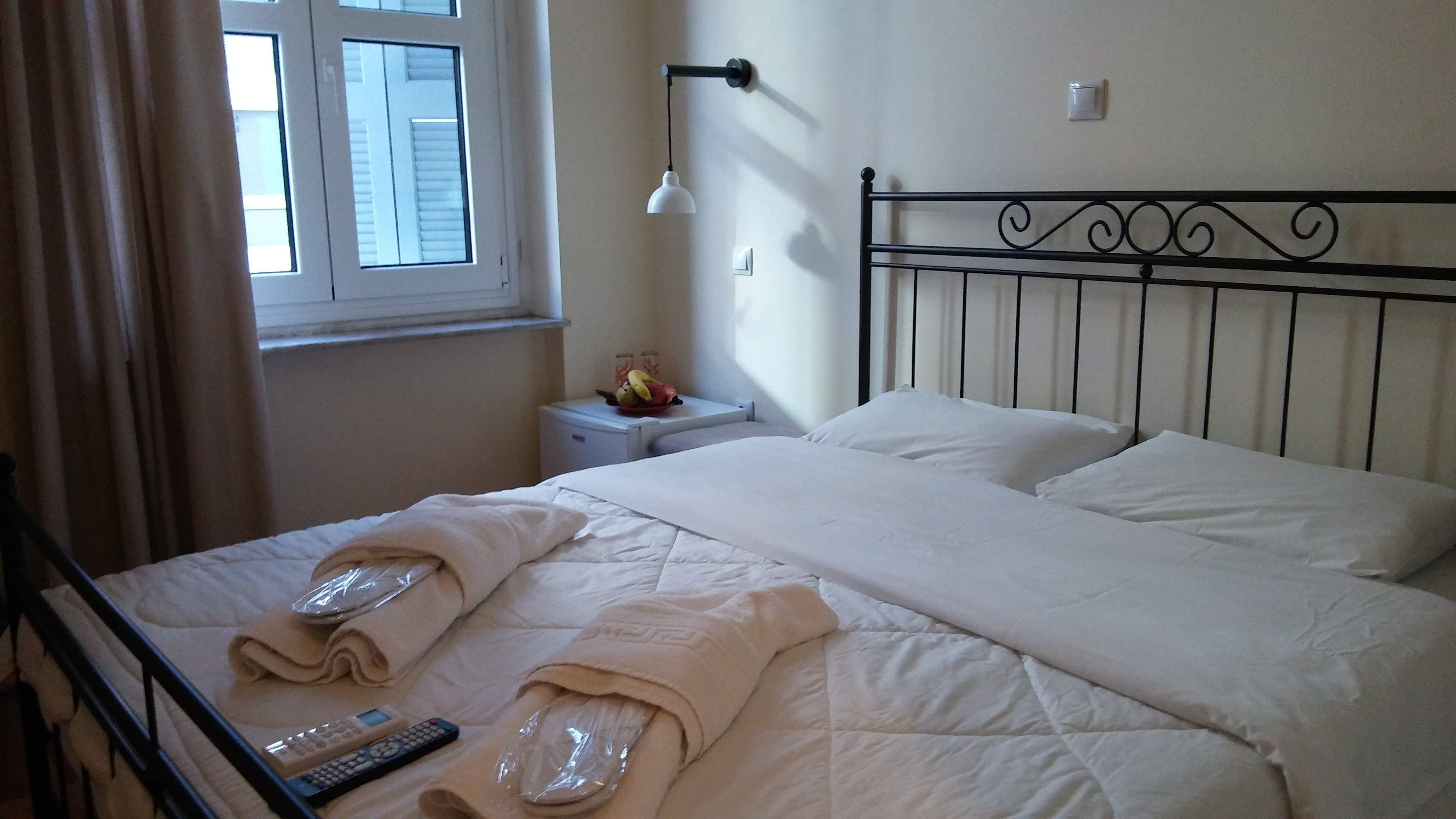
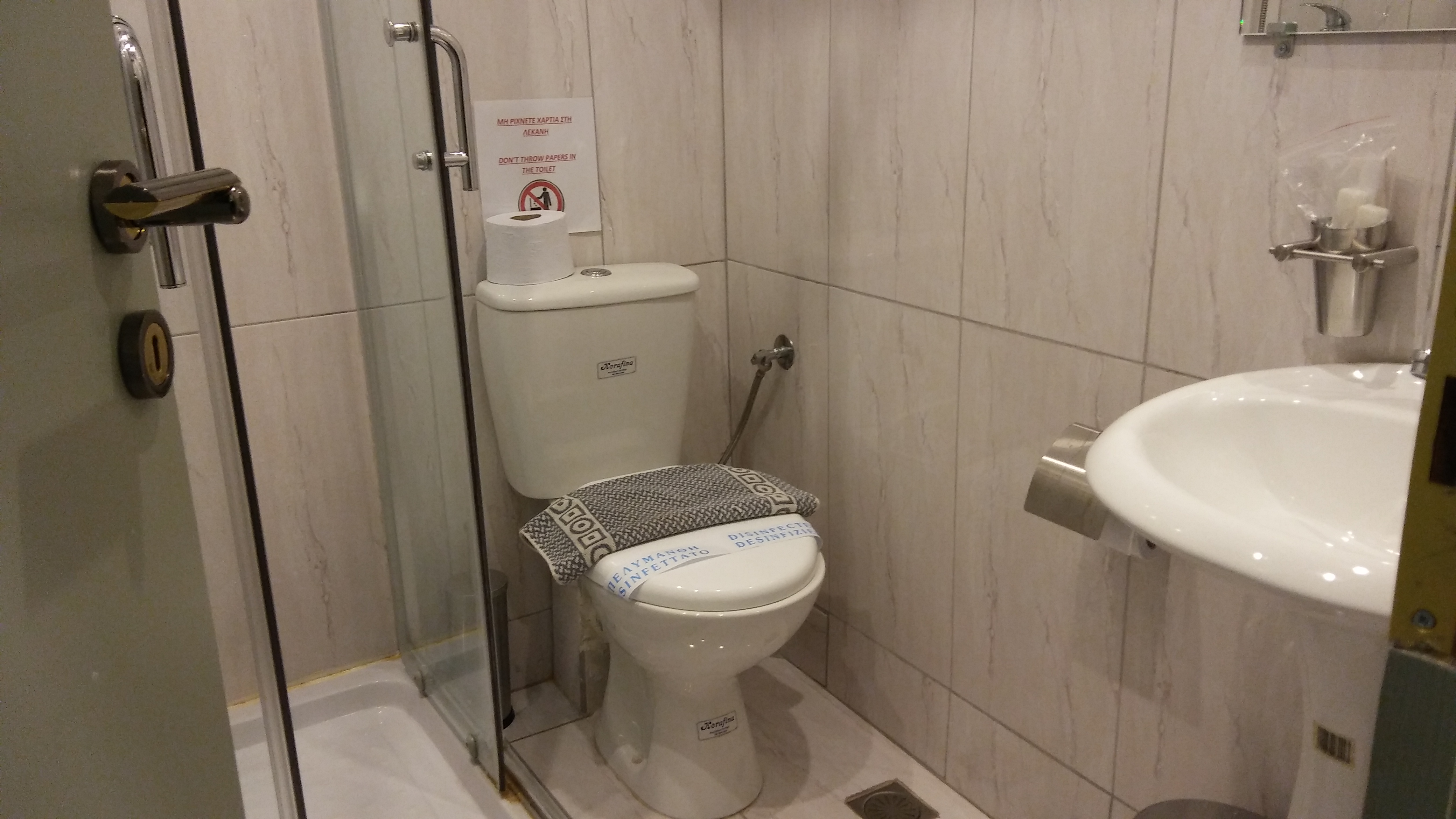
Before I go, to say we loved our hotel, the Athinas Street Inn! It is a stone’s throw away from Omonia square on Athinas street and is housed in a stunning neoclassical building. I have never visited a more generous hotel! Not only were we met with open smiles and were made to feel welcome at once, but were also offered fruit as a welcome treat. Furthermore, tea/coffee making facilities plus bottled water were available to us around the clock. The breakfast was also very generous. I particularly enjoyed the cheese omelet! The room and bathroom were squeaky clean and everything smelled fresh. The room, although rather small, had many commodities including a flat TV and free wifi. They also provided disposable slippers, toiletries, and even toothbrushes. Truly, I cannot recommend this hotel highly enough 🙂

I hope this post brought back fond memories from Athens if you have visited my city before. If not, I hope I have whetted your appetite for it 😉 My city, despite its many problems, retains its original charm. It was wonderful to walk along its avenues again that are lined with imposing neoclassical buildings, and to sample anew the bustle of its pedestrian shopping streets.

If you have a fond memory to share from Athens, or for any questions, I’d love to receive your comments! Wishing you and yours, a wonderful holiday season 🙂


Do you love Athens? How about Greek myths? My award-winning fantasy set in Plaka will delight you! Check it out now!


SPREAD THE WORD WITH A TWEET:

A visit to #Athens in December #Christmas #travel Share on X

3 FREE books for you! Sign up below to receive them instantly!

NEW! Clean Christmas romance. Single mother Cathy Roussos gave up on love long ago, and veterinarian Alex Rallis doesn’t believe in it, but one magical Christmas on a Santorini farm might just change everything…
Check it out on Amazon     Read a FREE sample!


A clean romantic suspense short read with an unreliable narrator that’ll keep you guessing! Vera is losing her mind over famous actor Yannnis Ksenos, except, she isn’t just a fan… Now, she plucks up the courage to ring his doorbell… Visit Amazon


For my delicious Greek recipes, go here
 
Planning to visit Greece? Check out my  FREE guide to south Corfu!

Greek travel: Sifnos, the sparkling gem of the Aegean

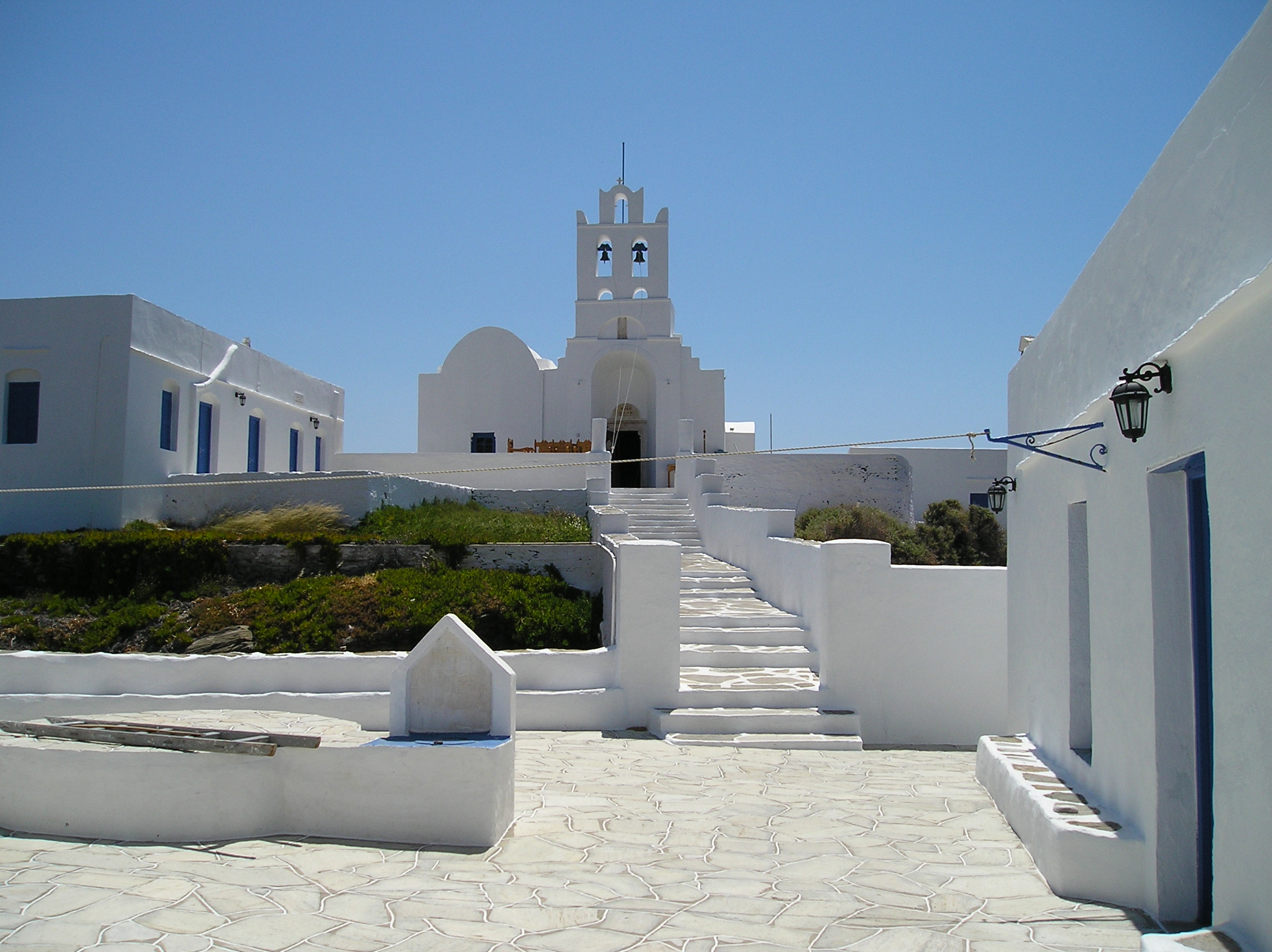
Kastro, Sifnos

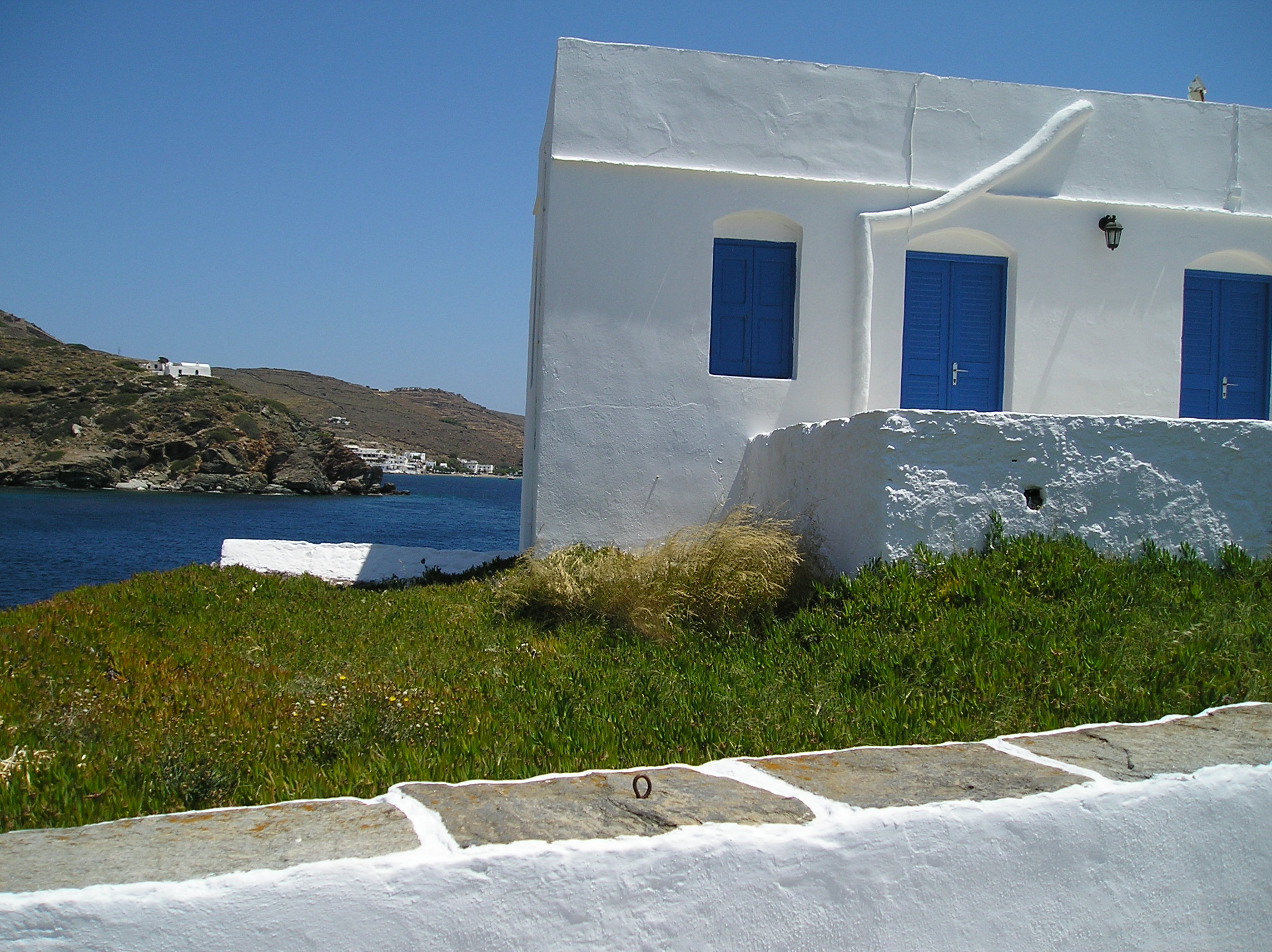
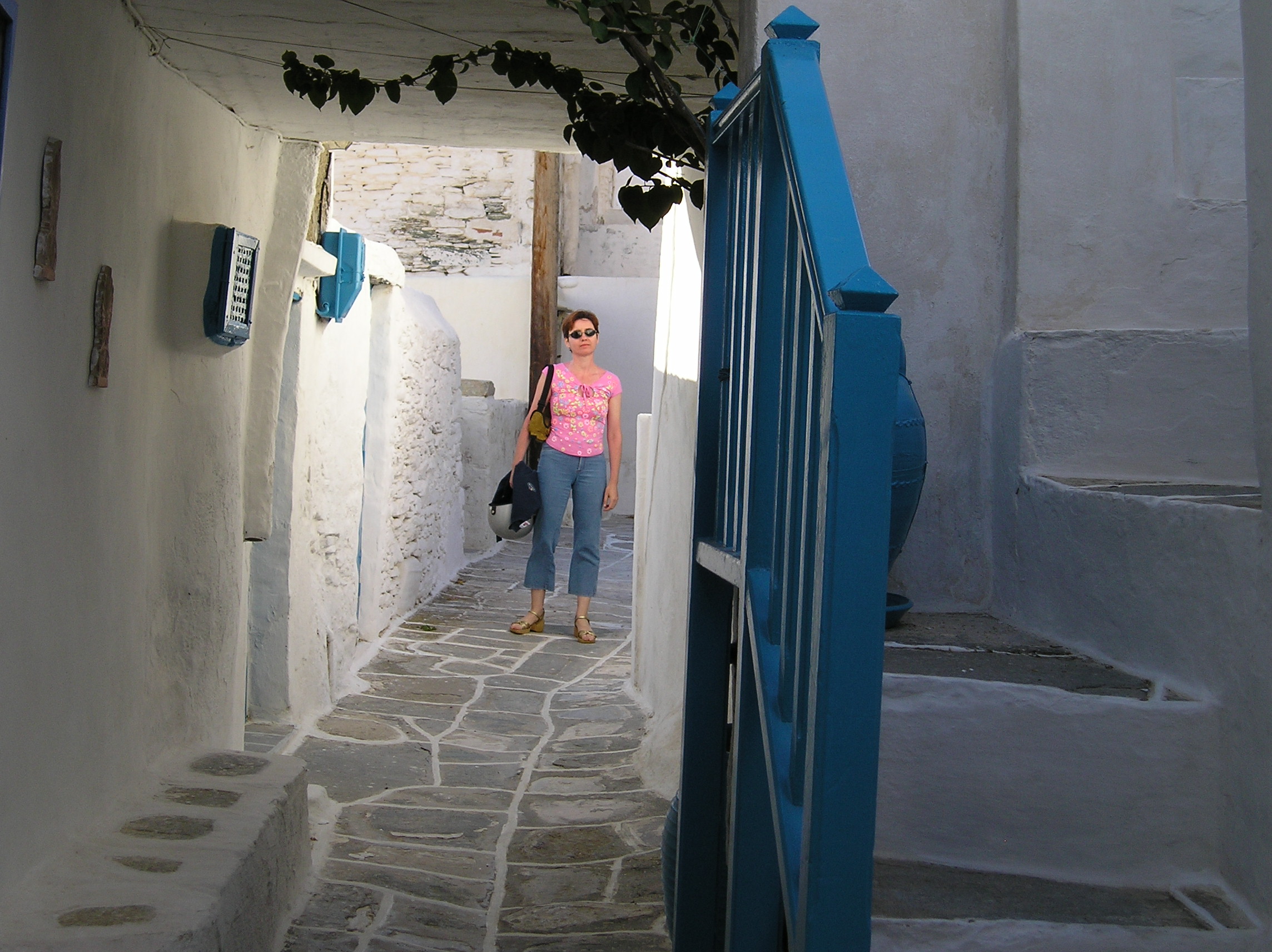
Pure white like a sundrenched pebble, and full of delights waiting to be found in every corner, the Cycladic island of Sifnos has the power to capture your heart and keep it forever. Then, you simply have no choice but to return again and again, retracing your steps to the same magnificent vistas, alluring beaches of fine sand, and the quaint white-washed yards that are bound to enchant you wherever you go. The same happened to me the first time I visited this island in my early twenties, and today, even though I’ve returned there several times over the years, its pull on me remains simply irresistible.

But don’t just take my word for it: walk with me today and see the beauty of Sifnos through my eyes: I promise you will be amazed, but make no mistake:  Sifnos is neither Mykonos nor Santorini. If Greek islands were women, Sifnos wouldn’t be a cosmopolitan chick, and not much of a socialite either. Sifnos would be shy and demure, yet drop dead gorgeous, an excellent cook, highly religious, and would dabble with pottery as a hobby. Hooked? Righ-y-o! Let the journey begin!

Kamares, Sifnos

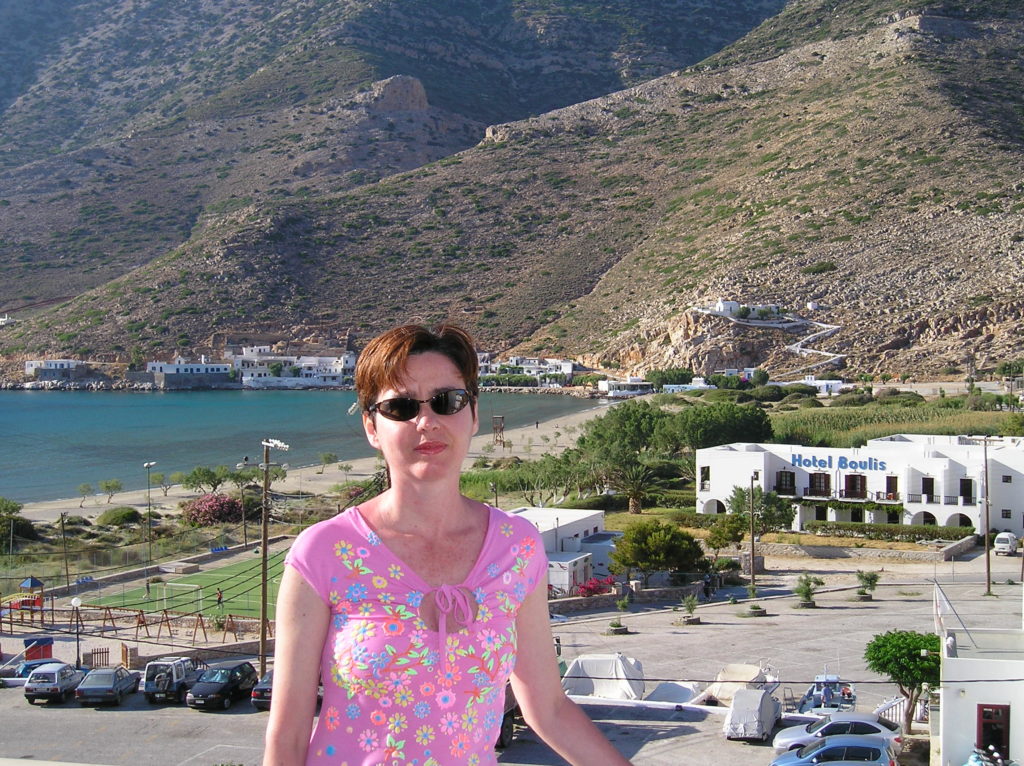
As soon as the ferry docks, you’re already in love. Kamares has a ragged beauty that renders you breathless from the ferry’s deck, before you even set foot on the island. White-washed buildings perch on dark rocky soil on the side of the hill, a quaint seafront is lined with tavernas, a golden beach of fine sand stretches beyond and, above all that, an imposing mountain with a church on its very top completes the magnificent vista. The idyllic sight makes you feel small, like you have just shrunk to nothing, which is why I can never arrive at Sifnos and escape that familiar sense of awe that always catches in my throat.

For me, Kamares is the ideal place to stay on Sifnos. You can swim straight after breakfast, then have a leisurely walk around the shops. Shops, tavernas and bars will be just a stone’s throw away from your room. And even a beautiful pottery lab or two to browse through. Don’t miss the chance to visit at least one of many pottery workshops all over the island – seeing it’s an old tradition here and the artifacts are exquisite.

Rent a car or scooter, or take a bus or taxi, and explore the rest of the island from Kamares.

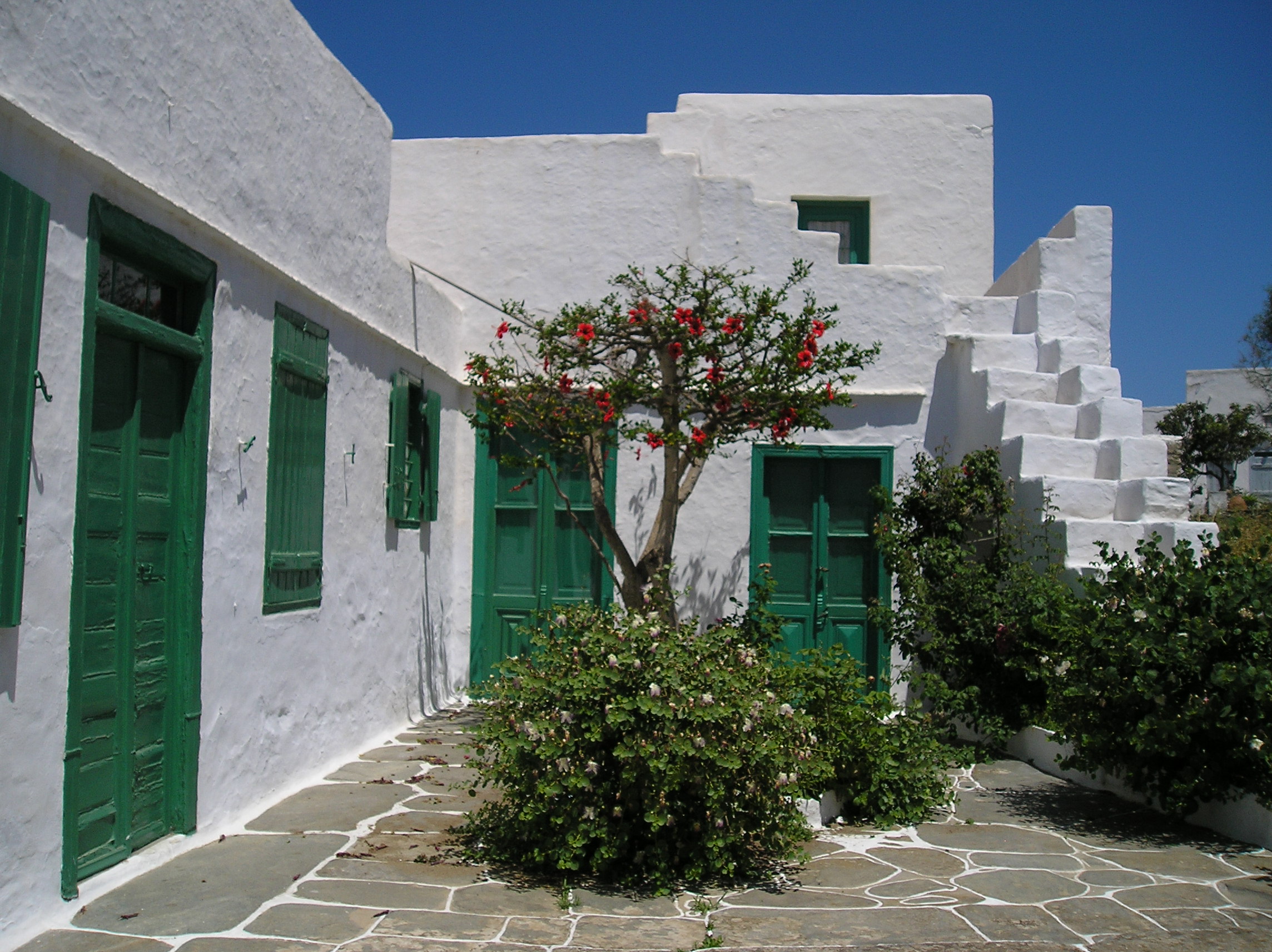
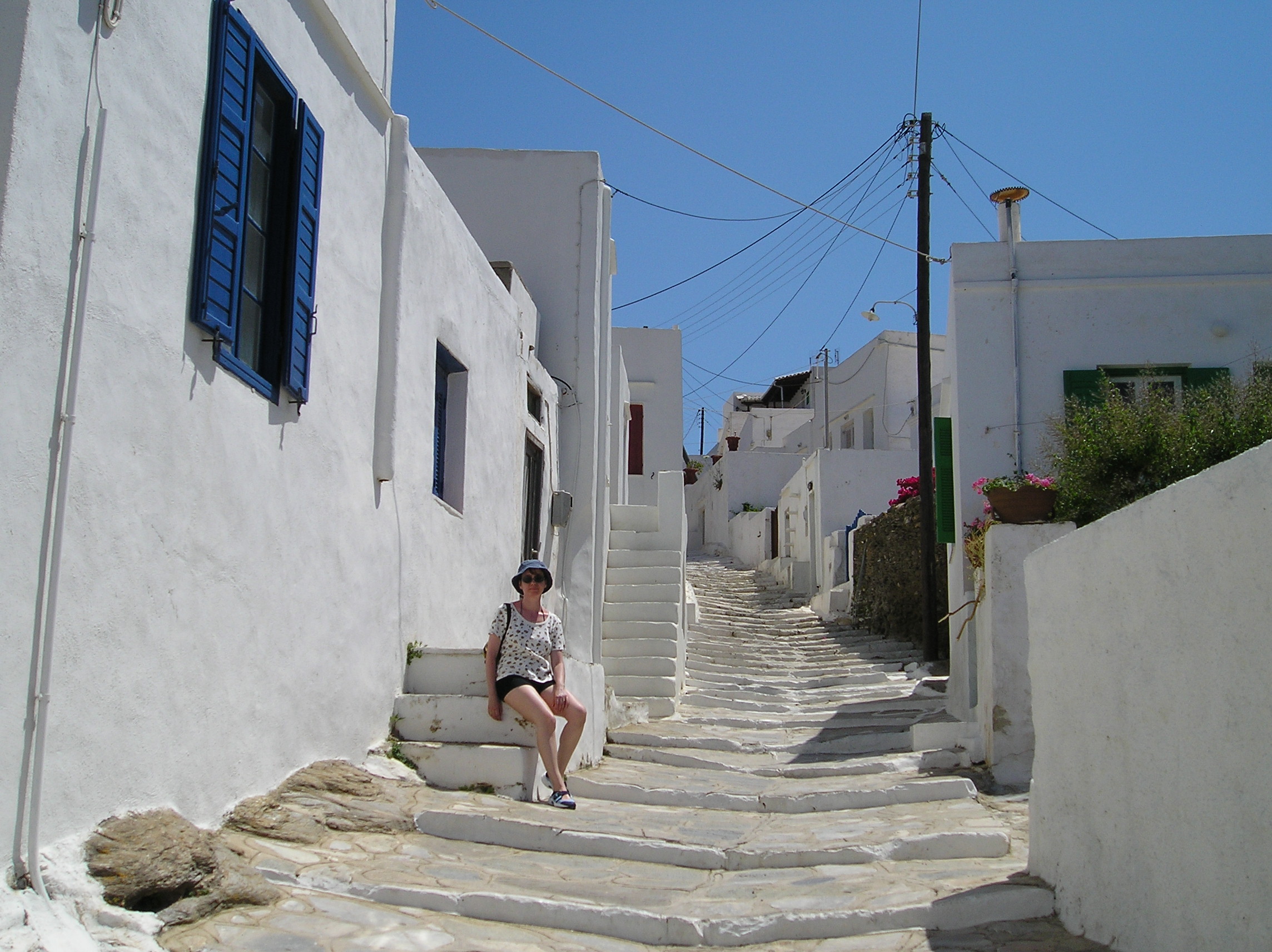
The island capital, Apollonia, takes its name from God Apollo and I find it suitable seeing that Apollo is the God of light and this town is simply dazzling! Apollonia is a pleasure to lose yourself in. Its whitewashed lanes and quaint edifices shine in the sunlight. The splashes of vibrant color, mainly from window shutters and flowers in the yards will find you using your camera fervently.

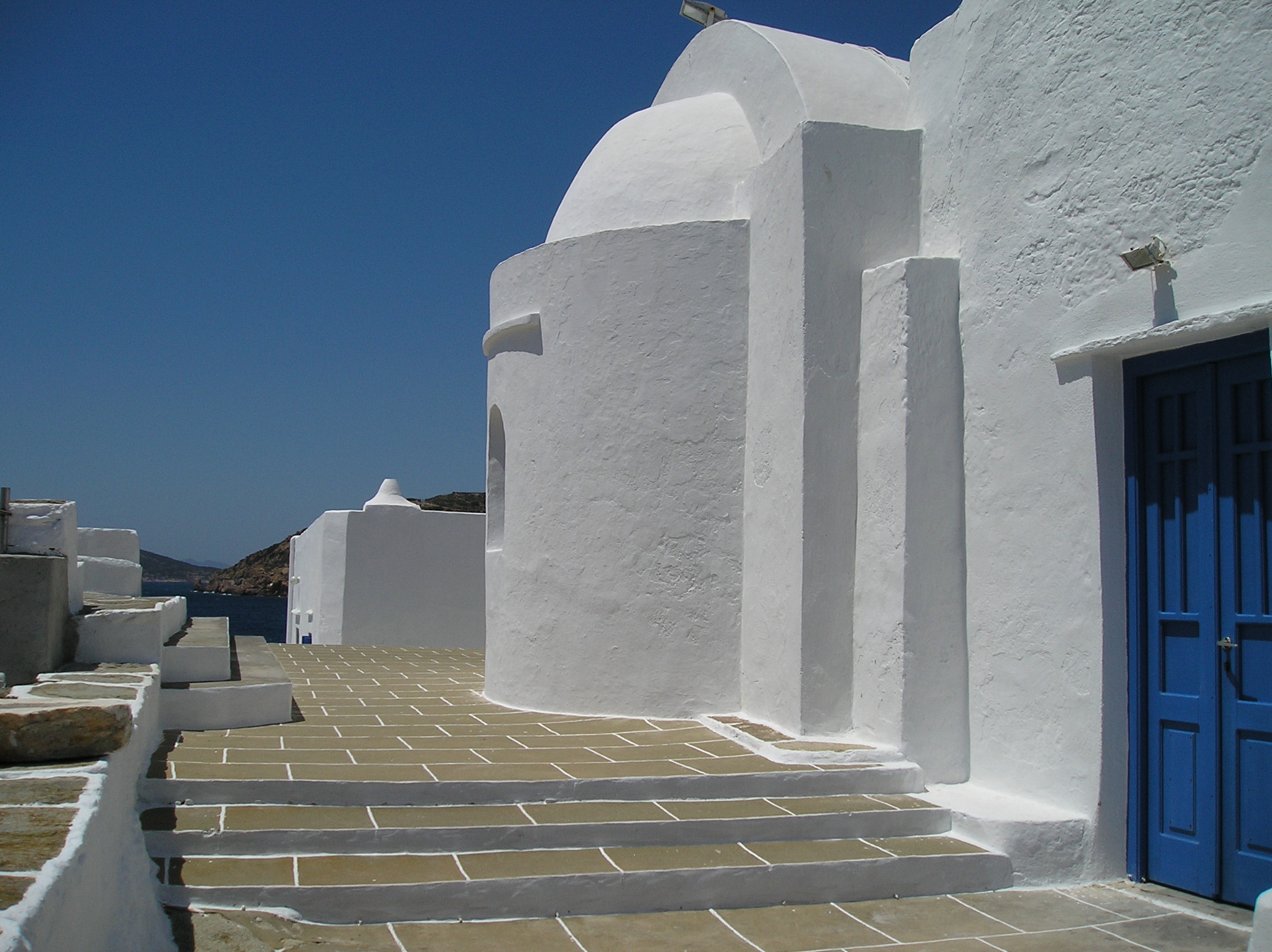
A short visit to the beautiful, whitewashed Monastery of Panayia Chrysopigi is a must as you drive from the capital towards the beach of Platis Yalos. Legend has it that when the Saracen pirates attempted to invade it, the Virgin Mary made a massive chunk of rock under their feet break away and plummet into the sea, taking them down with it.

A word of warning: Wandering around here in beachwear/shorts is fine but if you plan to go indoors to see the miraculous, ancient icon of the Virgin Mary, have a long skirt handy (for women) or long trousers (for men) as well as a shirt/top that covers your shoulders, otherwise you won’t be allowed entry. This is a strict rule observed in monasteries all over Greece, sometimes in churches too.

If you drive to Platis Yalos afterwards, it will start to reward you for your preference before you even get there – the stunning vista of the bay as you approach will take your breath away. Take your time to enjoy the beach. It has everything you need. Sparkling waters, fine sand, a good selection of tavernas and even more pottery on display if you feel up to it. Regarding the food: the meals you will sample in Sifnos will be exquisite no matter where you go. This is no surprise seeing that the very first famous Greek chef came from this island. His name was Tselemendes and his book, the first comprehensive cookery book that was ever published in Greece, became such a hit when it came out in the 1930s that, to this day, the word ‘tselemendes’ remains a synonym in Greek for ‘cookery book’.

Make sure to visit Kastro in the late afternoon and stay till the sunset as this can be a stunning spectacle from here. Besides, the light at this hour is ideal for taking photographs and, believe me, when you get there you’ll want to use a camera!
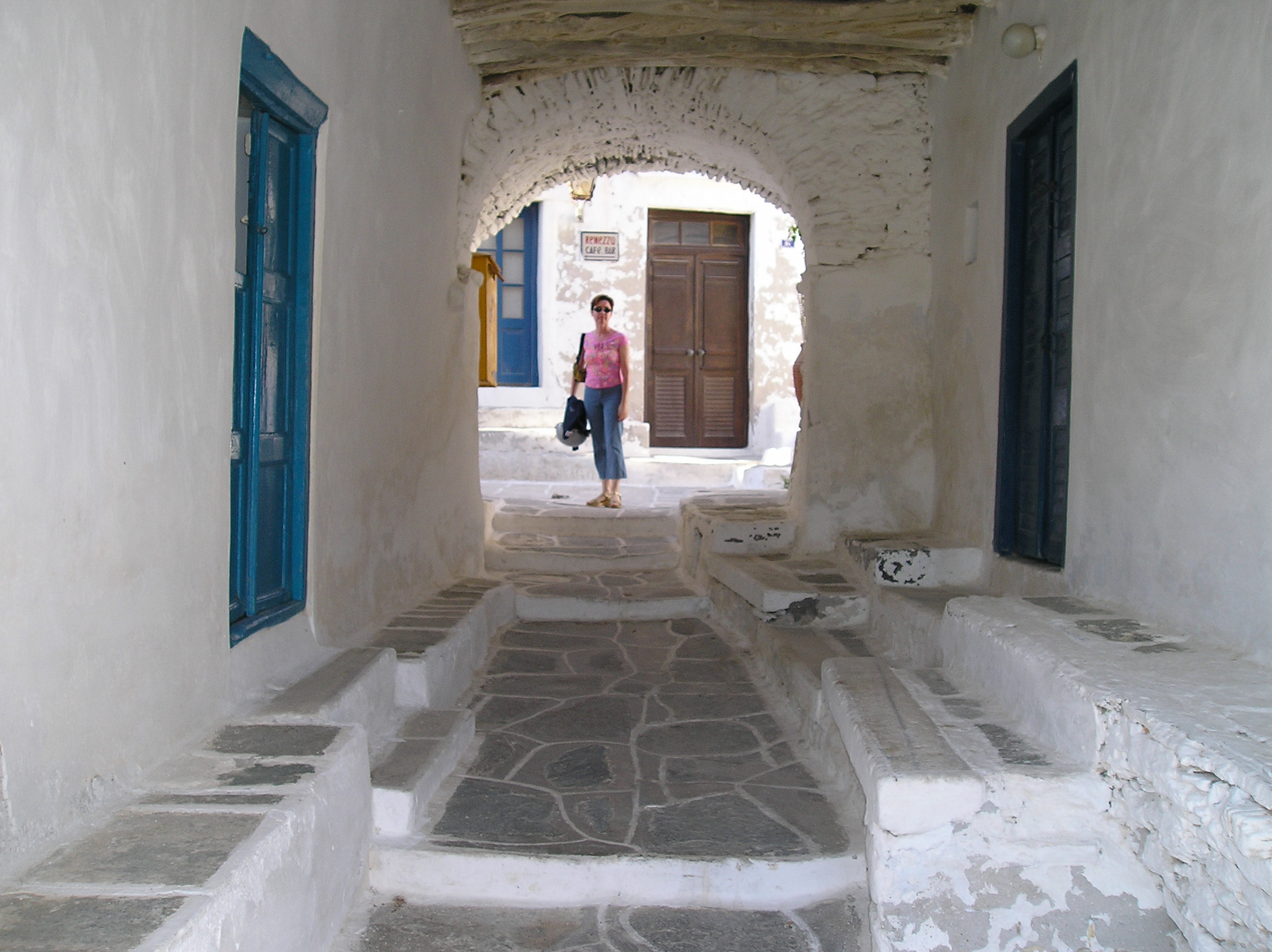
Kastro is a fortified cluster of ancient houses that takes you back in time and enchants you with every step you take. It was built high above the sea with walls and archways so the locals could fight off the Saracen pirates back in the day (9th century A.D.)

Make sure to scroll down to the bottom to watch a short video of me showing you around Kastro!


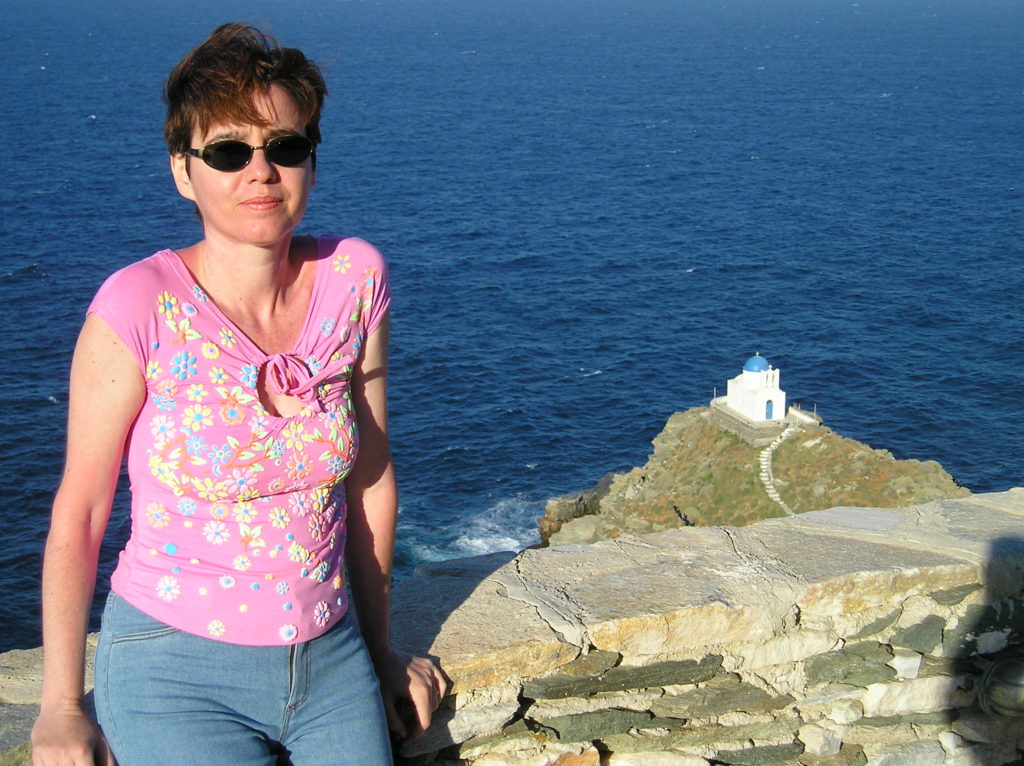
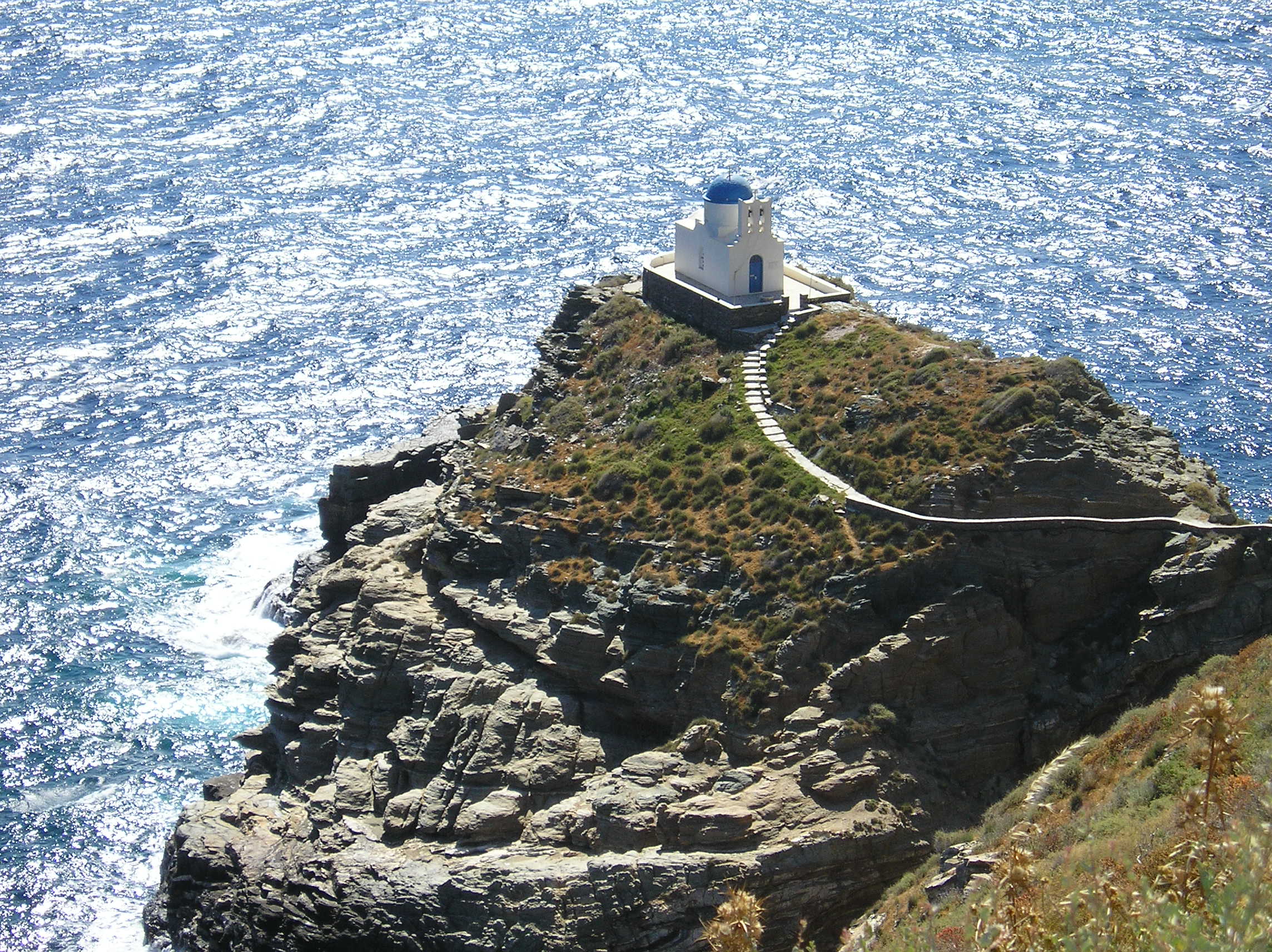
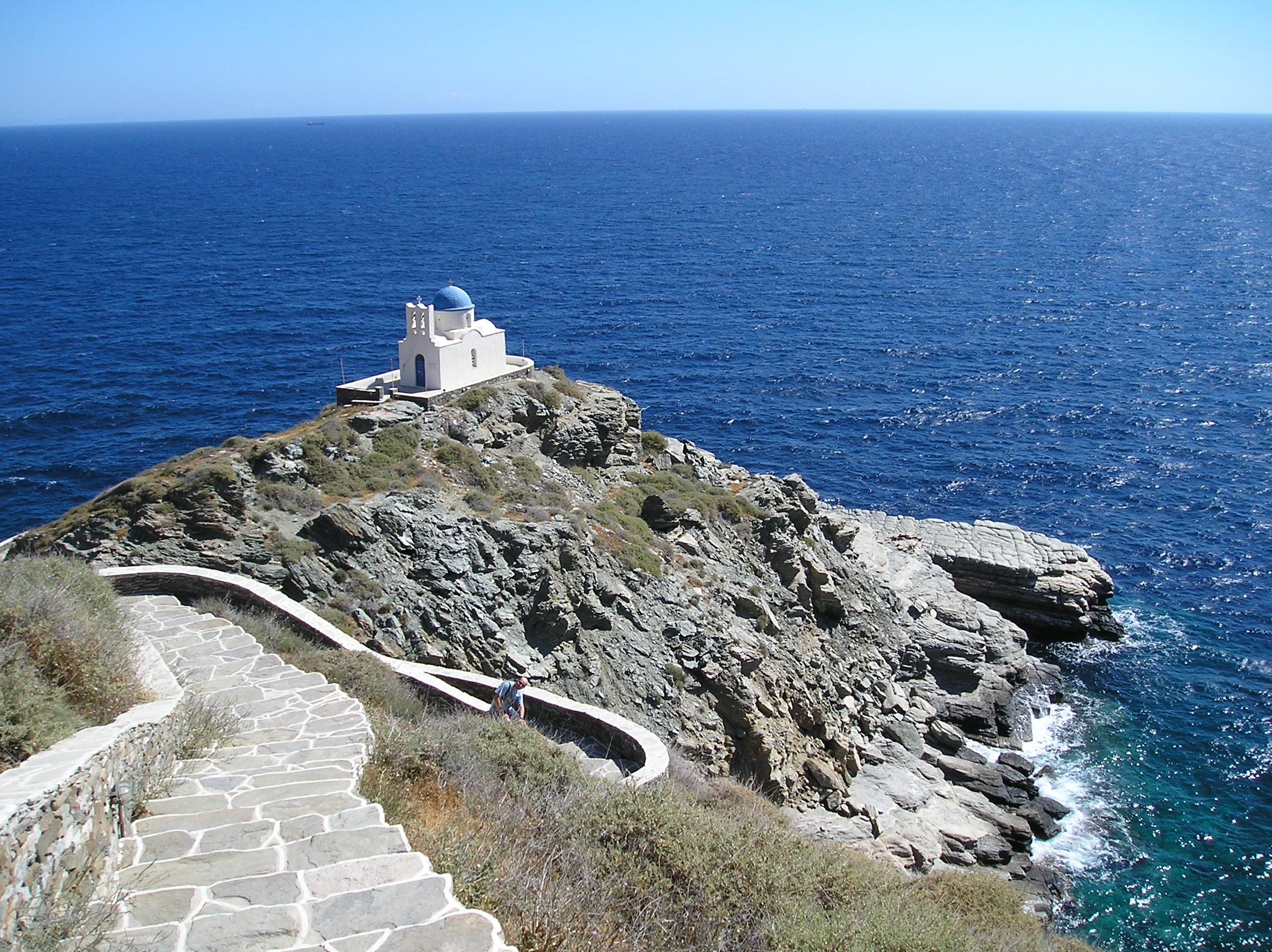
Below Kastro, at sea level, the whitewashed church of The Seven Martyrs (Epta Martyron) with its sky-blue dome is perched on the dark rock, a jewel to behold from above. A quaint stone stairway winds itself down to it, the view from the top so enchanting it always makes my heart stop.


Sea view from Artemonas, Sifnos at the old windmill (the site is now a tourist resort)

At a close distance From Kastro, you will find the village of Artemonas. Drive uphill to the old windmill (O Mylos tou Spitha). The view from up here is just as spectacular.

If you have several days to explore, other beautiful beaches worth visiting beside Platis Yalos are Faros and Heronissos and the one at Kastro.

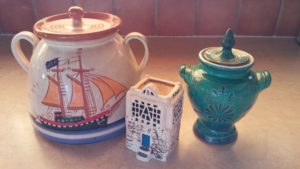
I’ve already mentioned the pottery, which is a traditional profession on the island. If you visit any pottery workshops you’ll probably feel compelled to get a little souvenir. Go for a tiny quaint vase with a lid, or a proper cooking pot, if only for making the fabulous chickpea soup the Sifnos way (Revithada). It is a notorious dish in Greece, not just for being extremely tasty, but also for the unusual way in which it is cooked: The people of Sifnos make it in wood ovens, cooking the meal overnight in a ceramic pot that’s been sealed with dough around its lid. Of course, urban housewives all over Greece make it in their ovens in a similar way, baking it for about 3-4 hours only – and it does get the consistency right.

Other than pottery, there are many other types of local produce you can buy, such as: local cheeses, sweets & pastries, organic thyme honey, capers, wine, herbs, handmade jewellery, and hand-woven blankets and rugs that are made on traditional looms. 

Sifnos is a small island, which means a stay of 3-4 days is enough to adequately explore all the places of interest mentioned here. Wander around, as far and wide as you wish, and you will be rewarded with enchanting beauty in every corner. For one, everywhere you look, the hedges glint under the sunlight thanks to a stone from the local quarries used heavily for building purposes here. It is this endearing sight of the sparkling stone that has caused me to pick the name ‘Asimi’ (silver) for the fictitious Sifnos village where I set my supernatural romantic comedy, The Amulet.
Katie has a guardian angel… she just doesn’t know it. Plus, she’s falling for him.

Check it out on Amazon US  UK

Another endearing sight around the island of Sifnos involves the traditional pigeon houses that are stunning to behold and can be found everywhere, sometimes standing on their own in the middle of fields. See here for more info:

http://www.wondergreece.gr/v1/en/Regions/Sifnos/Culture/Monuments_sights/2872-Pigeon_Houses

Before you go: Watch the below short video and let my hubby, Andy, and me show you around Kastro (well, down one lane mostly, but it’s a super-pretty one!)

Excuse the evident sunburn on my back – it’s owed to the long bike rides I had on the island that time sans suntan lotion! Yeah, I know. Live and learn 😛

FOR MORE INFO ON SIFNOS, VISIT THIS EXCELLENT TRAVEL SITE FOR GREECE: https://www.greektravel.com/greekislands/cyclades.htm#Sifnos


SPREAD THE WORD WITH A TWEET:

#Sifnos The sparkling gem of the Aegean #Greek #travel Share on X


3 FREE books for you! Sign up below to receive them instantly!

NEW! Clean Christmas romance. Single mother Cathy Roussos gave up on love long ago, and veterinarian Alex Rallis doesn’t believe in it, but one magical Christmas on a Santorini farm might just change everything…
Check it out on Amazon     Read a FREE sample!


A clean romantic suspense short read with an unreliable narrator that’ll keep you guessing! Vera is losing her mind over famous actor Yannnis Ksenos, except, she isn’t just a fan… Now, she plucks up the courage to ring his doorbell… Visit Amazon


For my delicious Greek recipes, go here
 
Planning to visit Greece? Check out my  FREE guide to south Corfu!

A journey through time to the Brighton seafront

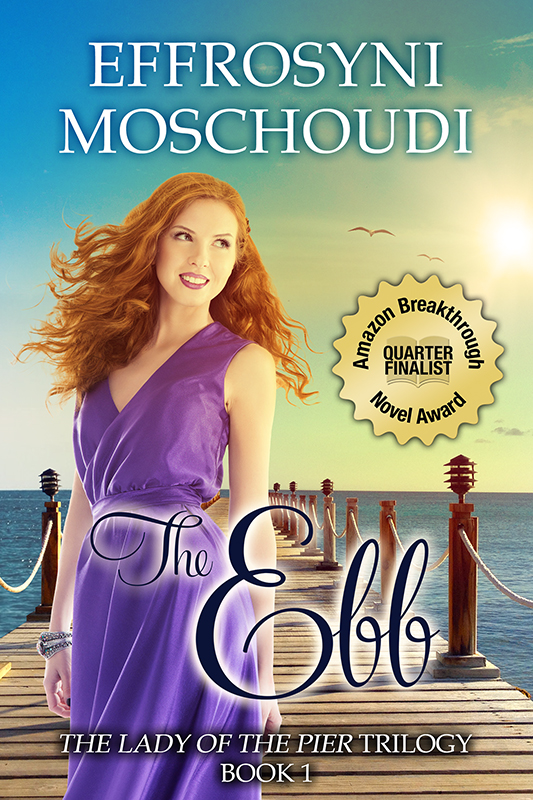
Today, I will be taking you all with me on a virtual journey through time to one of my favorite places: the seafront at Brighton, England – the infamous seaside town where the legendary West Pier once stood. The Pier, that was opened in 1866, has always fascinated me; hence, it’s no surprise that I wound up writing a romantic trilogy, The Lady of the Pier, telling its story while utilizing the Pier itself as the ultimate symbol of wistfulness,  nostalgia, and lost opportunities.
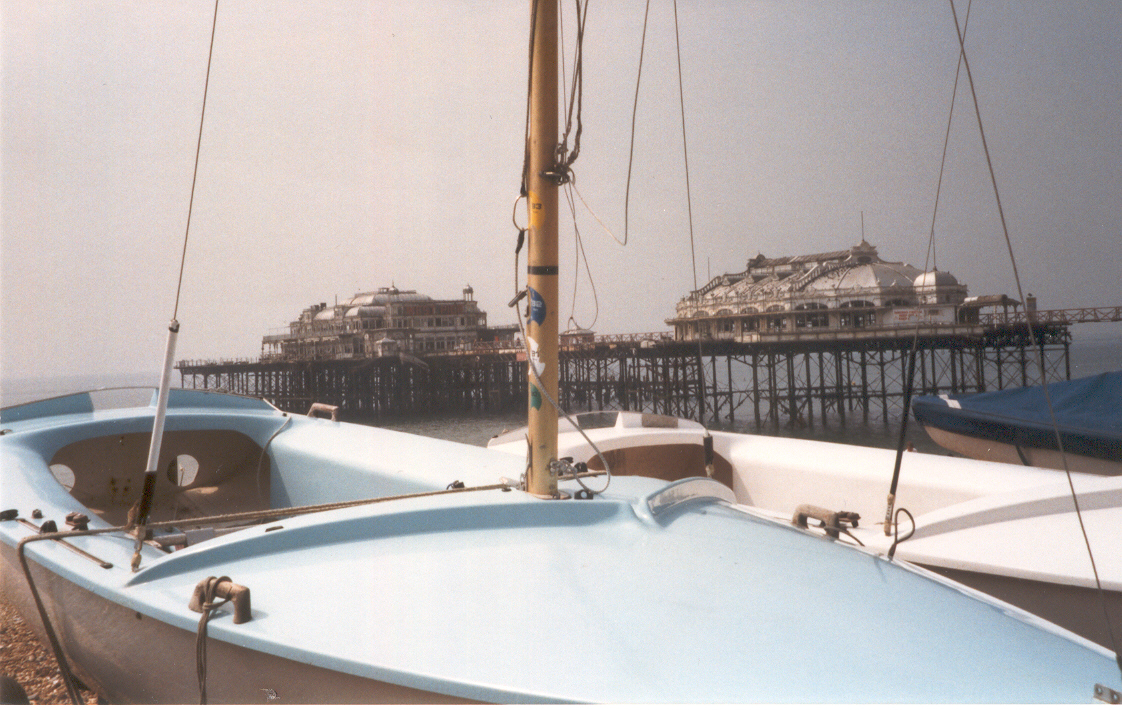
But, don’t let me get all misty. We have an exciting journey ahead of us and time is pressing for us all. For our first stop, let me take you to April 1997 . . . this is when I made my first trip to Brighton on a weekend break (at the time, I was working in Northamptonshire, England). Back then, albeit derelict and out of reach, the West Pier still stood and so, these photos, the only ones I have of the Pier and me in the same frame are precious to me like gold.

(Click on any image to enlarge)

Here are more pictures from that short break I had in Brighton; except for the one picture of the Royal Pavilion and its sublime minarets, all the rest are from the seafront. I hardly wandered away from there throughout my stay in town. You can also see the Brighton Pier, which still stands today, being more recent than the West Pier, and which back then was called Palace Pier.

(Click on any image to enlarge)

west pier3

The West Pier in 1997: at the pier head, you can see the theatre (the Pavilion) and to the right, the Concert Hall.

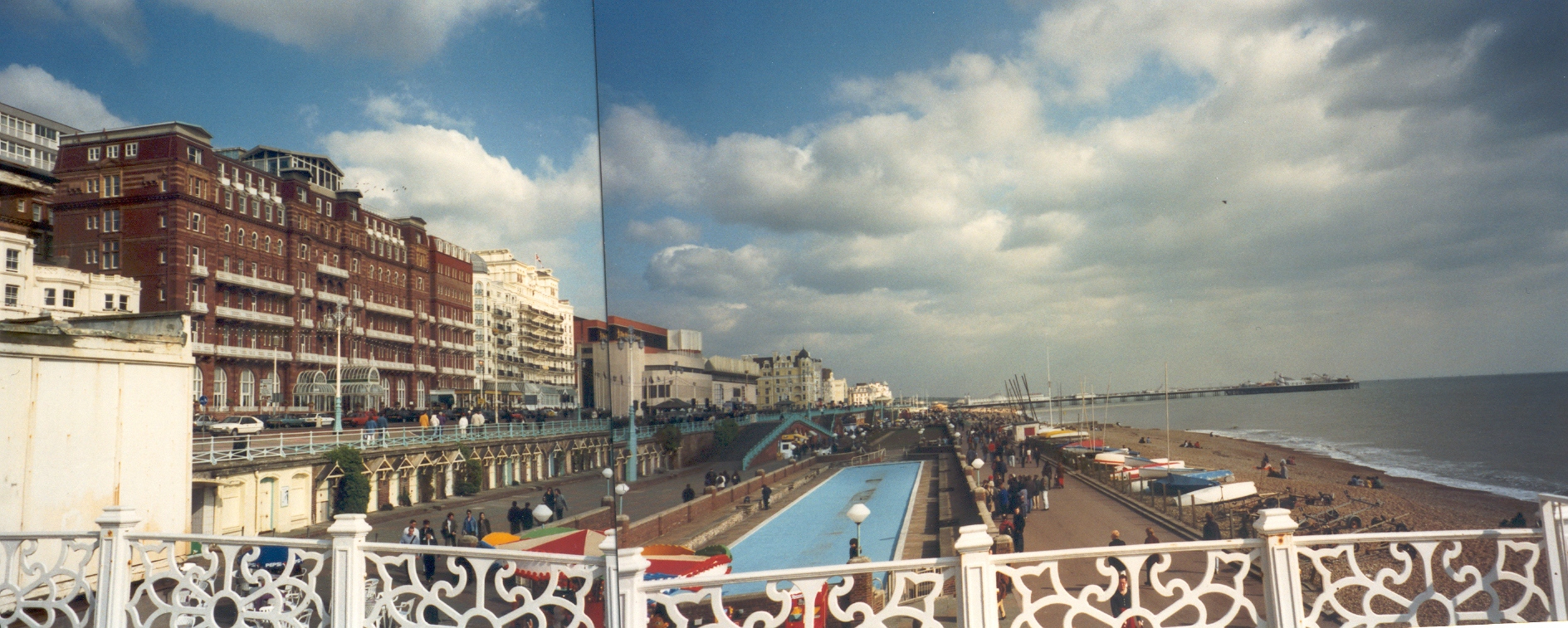
I took the following photo with two takes on an old film camera and then glued them together, so excuse the ugly seam (and poor resolution for that matter!). Still, I hope it gives you a good idea of how the seafront looked from the site of the West Pier back in 1997. You can see the Brighton Pier in the distance and the historical Metropole Hotel (big brown building) in the foreground.


Brighton-a1

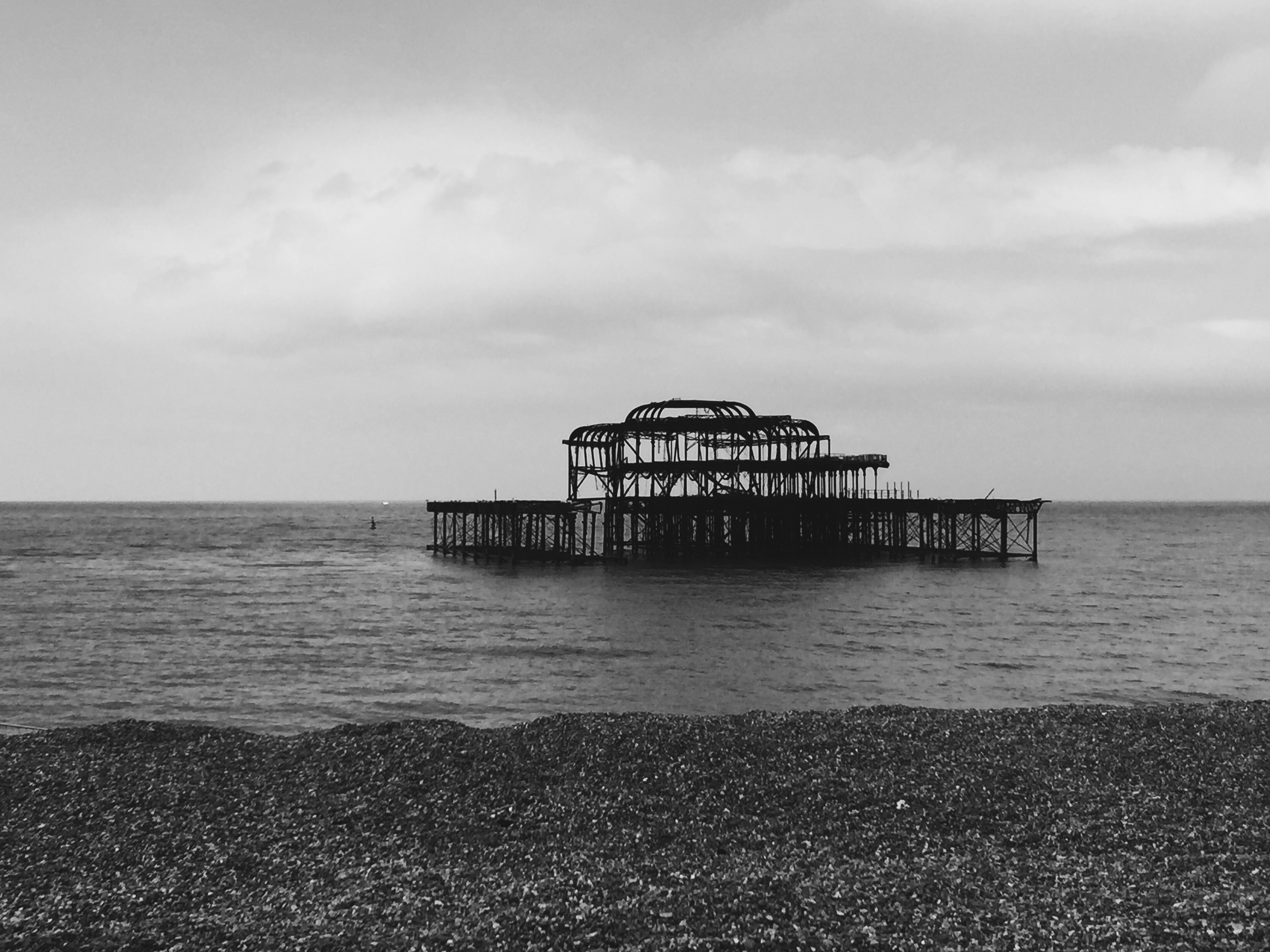
I was lucky to return once more to Brighton, in New Year’s Eve in 1999, to see The West Pier, more or less, in the same condition. Sadly, I never returned after that. Since the arson attacks and the devastating storms that took place between then and now, all that remains of the West Pier today (as I write this in 2015) is a skeletal ruin of its once magnificent theatre (the Pavilion) at the pier head.


(Below image provided courtesy of Ben Nuttall)

The remnant of the theatre is commonly referred to now by the locals as The Old Lady of Brighton, or The Grand Old Lady of Brighton. When I first heard the names a few months ago on Twitter, they brought shivers down my spine since my trilogy is about a spirit attached to the Pier, called The Lady of the Pier. This peculiar coincidence made the story in my head become more real, somehow.

But, let’s forget the past and return to the present time for a while, before I propel us all into the future, shall we?

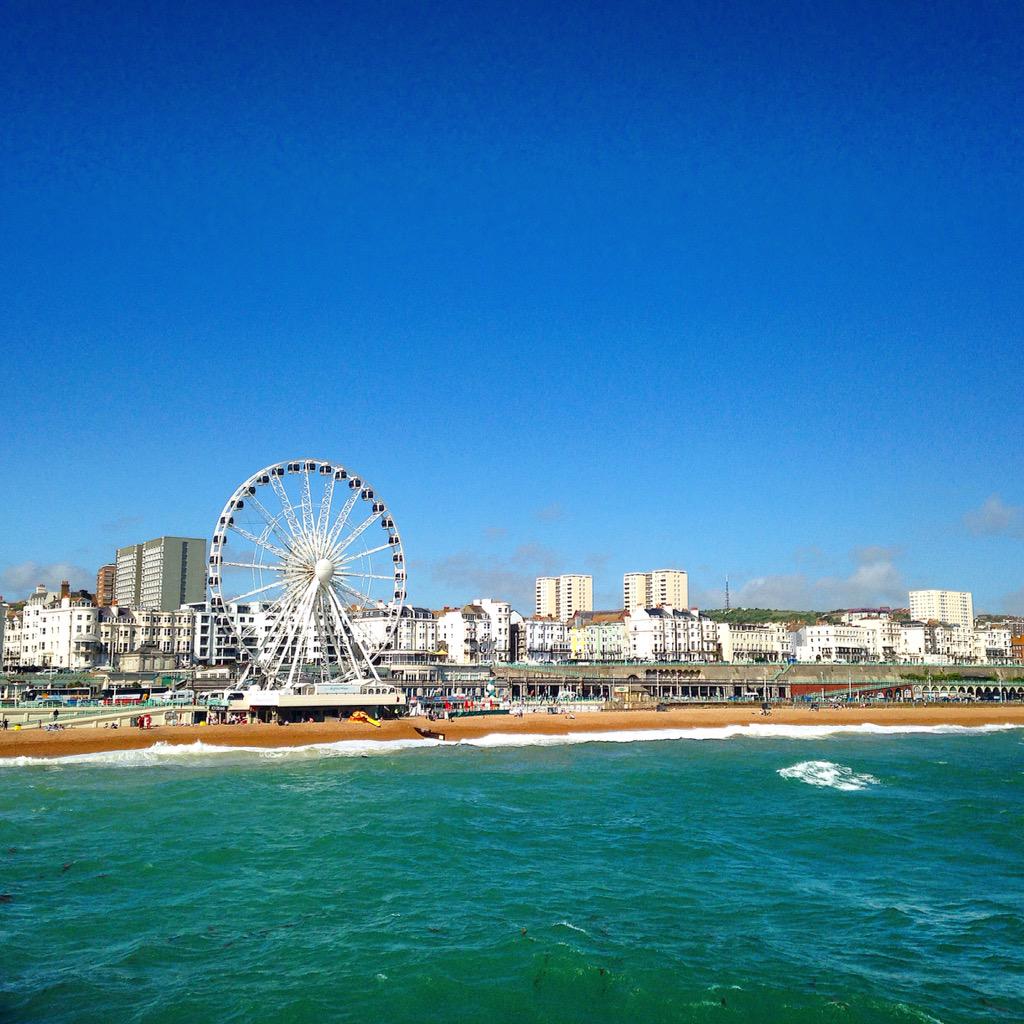
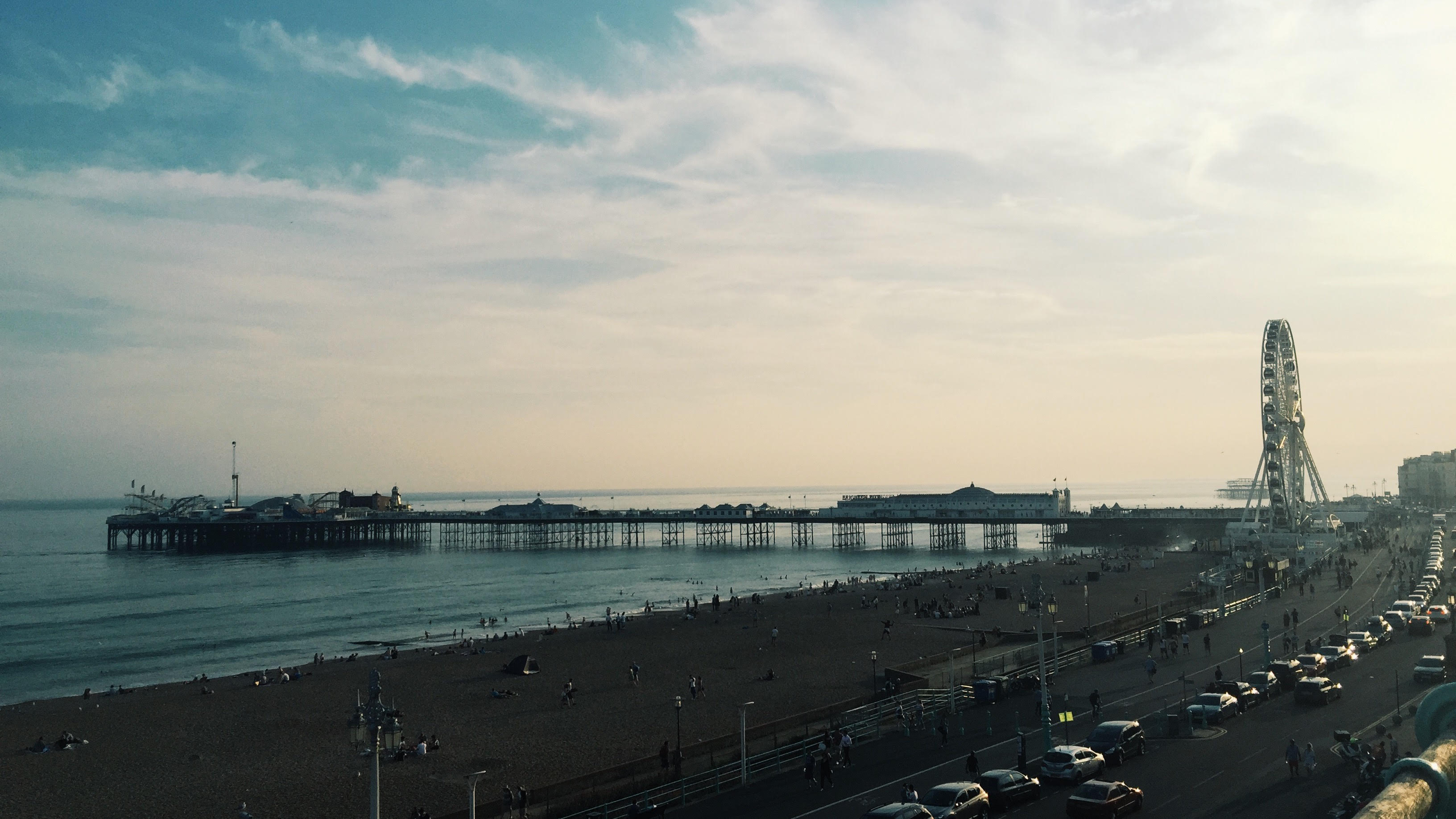
As I said earlier, the last time I visited Brighton was in 1999, so I was a bit stuck trying to find free images of Brighton’s seafront to post on this site. On the spur of the moment, I visited Twitter and searched for the hashtags #WestPier and #Brighton. I spoke to a few amateur photographers who posted stunning photos of the seafront, and two of them were happy to let me present them on this blog and post their images. One of them is a local of Brighton, Ben Nuttall, the other, as chance would have it, is a fellow Greek called Barbara Mama, visiting Brighton on a holiday break.

Without further ado, I’m delighted to present to you Barbara Mama, an engineer from Athens, and the wonderful photos she took of Brighton’s seafront during her recent holiday in this historical, British town.

(Click on any image to enlarge – following images provided courtesy of Barbara Mama)

Stunning huh? I was delighted to see the Brighton Pier is as popular as ever and that there’s also a big ferris wheel standing on the seafront now. Fantastic!

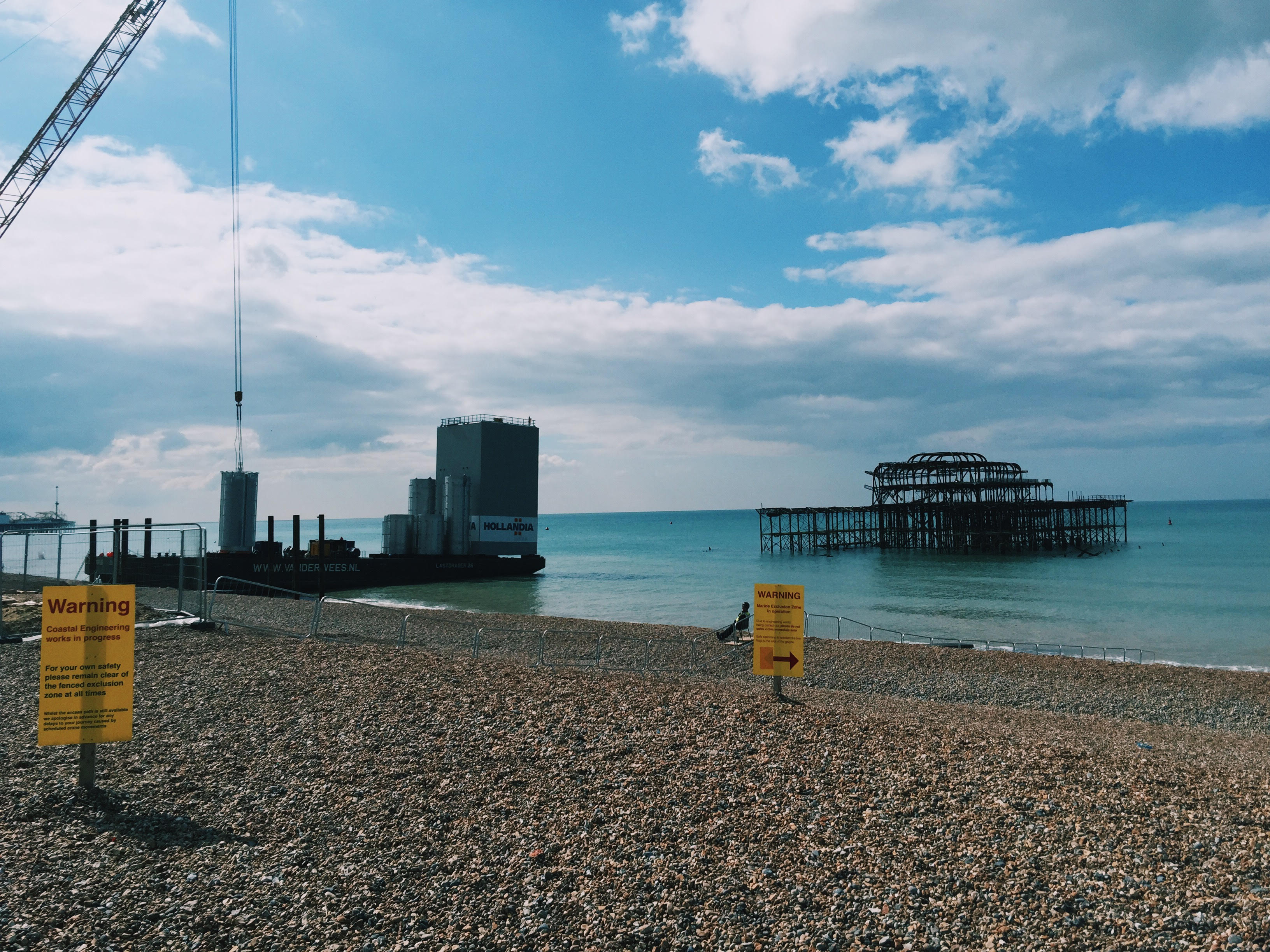
Before I press my magic buttons to offer you all a glimpse of the future, I must tell you this: the West Pier, or rather what’s left of it, is owned by the West Pier Trust, which nowadays looks to the future with bright hopes. Why? Well, an exciting landmark is being constructed as I write these lines in the same place where the entrance to the West Pier once stood. It’s a revolving, observation tower called i360. Its architects are the same people who brought the world the infamous London Eye. The purpose of the i360 is to give tourists a bird’s eye view of Brighton’s seafront while celebrating the West Pier and keeping its memory alive. The i360 opens in 2016 – not long now!

Here follows a short introduction of Ben Nuttall in his own words. Ben has been kind enough to include in the photos he sent me, a few from the construction of the i360. You’ll be amazed to know that when Ben doesn’t get approached by weird Greek authors pestering him for his photos, he has the BBC itself emailing him to ask for his latest video of Brighton’s extreme weather! No kidding!

Ben Nuttall

My name is Ben Nuttall. I’m 26 years old and live in Hove with my partner and our two cats Chester and Maggie. I moved here 4 years ago for work from Canterbury in Kent and love the vibrancy of Brighton & Hove. Everyone is very chilled out and there’s always something to do. I’m very much an amateur photographer. All the pictures you see here were taken on my iPhone 6 Plus, while out and about during my daily life. I use an app called VSCOcam to capture most of these pictures and add slight edits to them. You can view more of my photos on my Instagram page: Instagram.com/irbenji or on my Twitter: twitter.com/irbenji

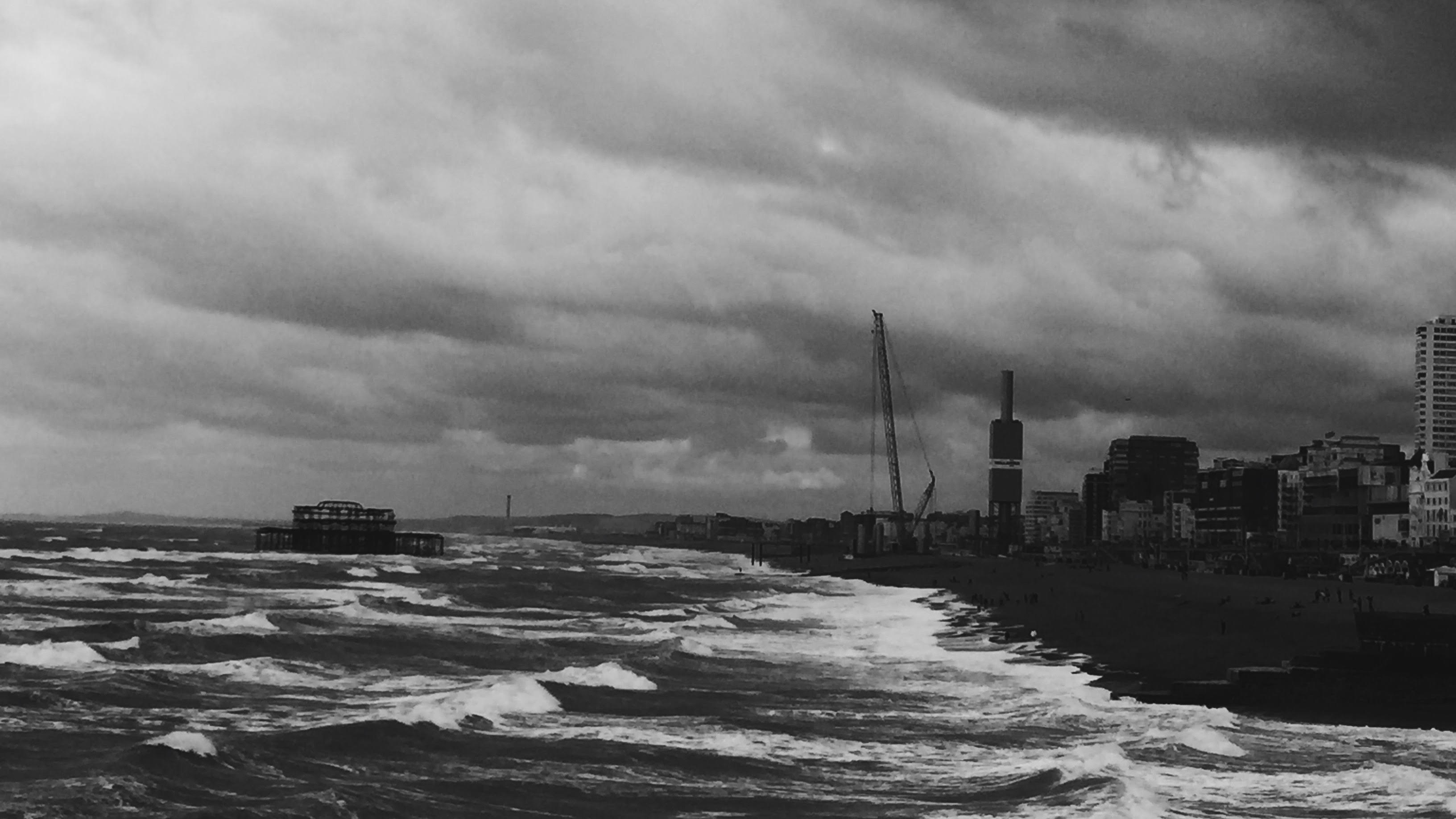
And now, here are Ben Nuttall’s amazing photos! Check out that artistic black & white one of the stormy sea. Is it me, or does it resemble a painting? Stunning!

(All images provided courtesy of Ben Nuttall)


Before I go, to say I’ve had a bit of exciting news from Brighton recently. The Chief Executive of the West Pier Trust, Rachel Clark, bought a copy of The Ebb, book 1 in The Lady of the Pier trilogy, and posted about it on the news page of the West Pier Trust website, recommending it to its members! Yippee! You should have seen me bouncing about like a kangaroo the day she emailed me to let me know. To find out more about the West Pier’s history, to see old photos of its heyday, and to hear the latest on the i360, visit the West Pier Trust site. If you love stories about the past, it will fascinate you! To keep up with the progress of the i360, follow these great Twitter accounts or check out these hashtags:


twitterwpt twitteri360

#Brightoni360 #i360 #westpier #Brightonbeach #Brightonpier #Brightonwheel #Brighton

Last but not least, here is a shout out, with heaps of gratitude on my part for the two amazing photographers who made this post possible today. Thank you, Ben and Barbara, Barbara and Ben!

#SO #WW These wonderful tweeps!

bmama bnuttall

Do you love Brighton? Would you enjoy reading about the West Pier’s history through WWII?

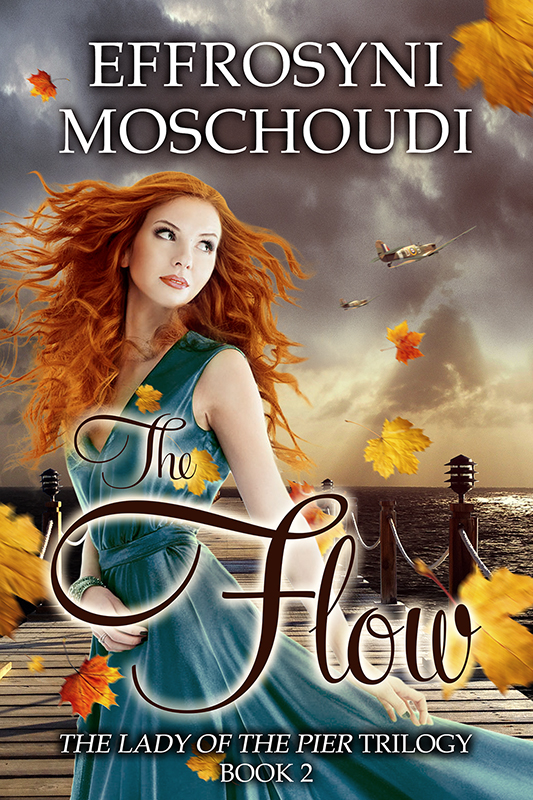
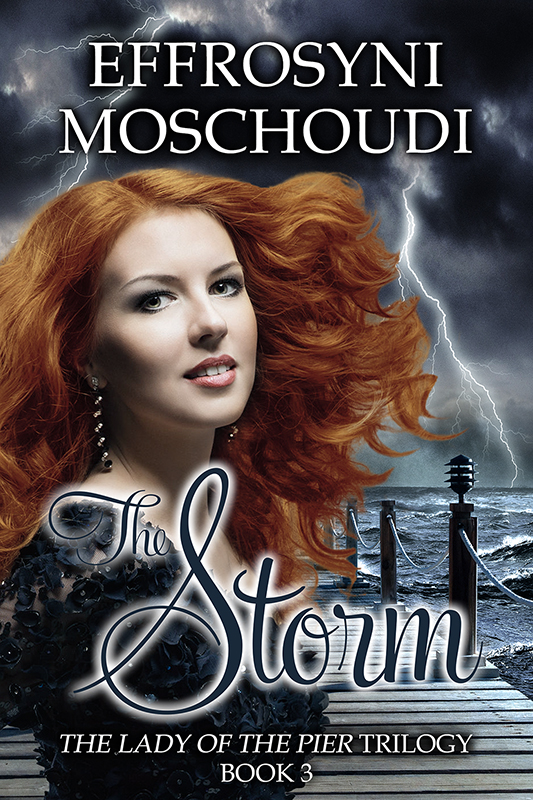
Check out my compelling paranormal romance trilogy, The Lady of the Pier!

FOR MORE INFORMATION GO HERE


3 FREE books for you! Sign up below to receive them instantly!

NEW! Clean Christmas romance. Single mother Cathy Roussos gave up on love long ago, and veterinarian Alex Rallis doesn’t believe in it, but one magical Christmas on a Santorini farm might just change everything…
Check it out on Amazon     Read a FREE sample!


A clean romantic suspense short read with an unreliable narrator that’ll keep you guessing! Vera is losing her mind over famous actor Yannnis Ksenos, except, she isn’t just a fan… Now, she plucks up the courage to ring his doorbell… Visit Amazon


For my delicious Greek recipes, go here
 
Planning to visit Greece? Check out my  FREE guide to south Corfu!